
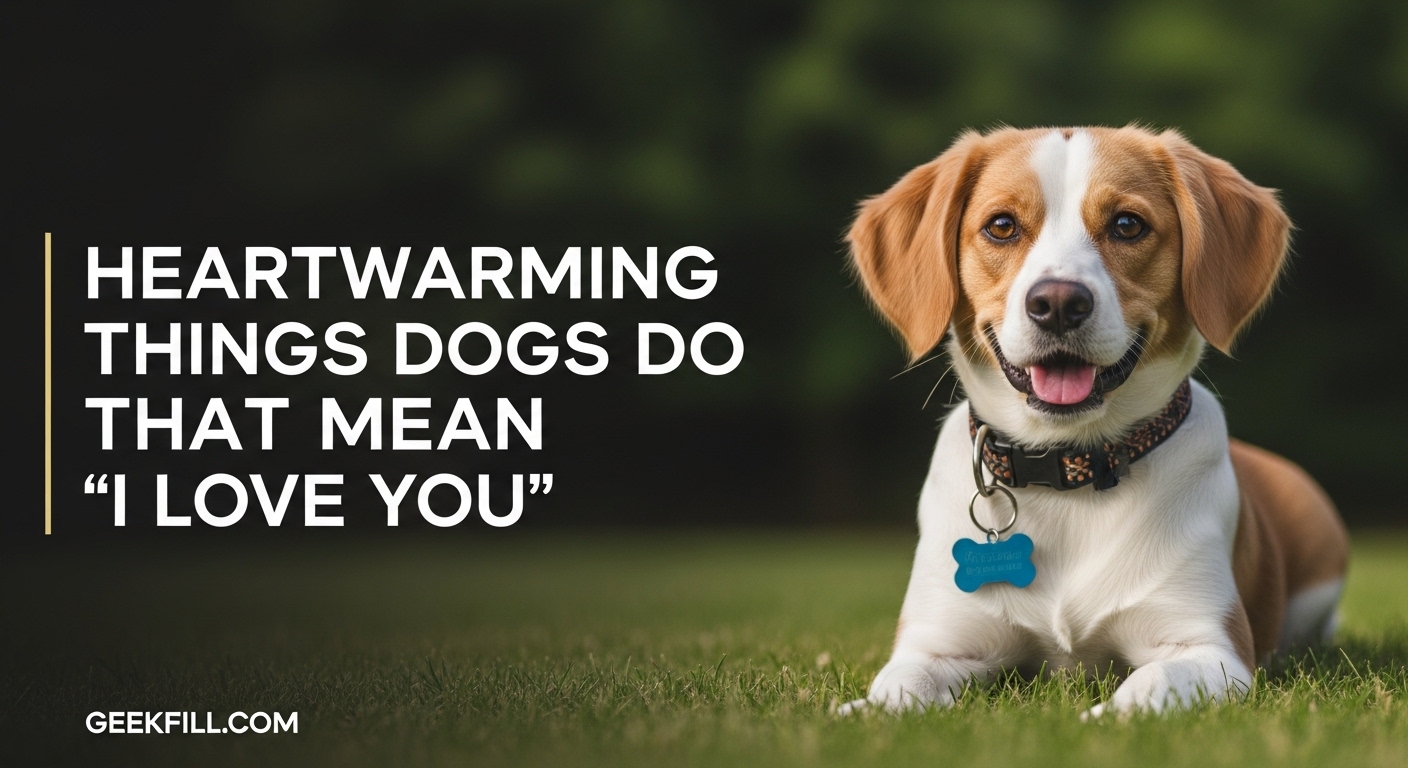
Dogs have been our companions for thousands of years, yet their ways of expressing love remain fascinating to decode. When your furry friend gazes into your eyes or wiggles with excitement at your return, they are not just being cute. They are speaking the only language they know to say “I love you.” Understanding these heartwarming things dogs do that mean I love you deepens the bond between you and your pet.
Scientists have discovered that the dog-human connection runs deeper than simple companionship. When dogs and their owners interact affectionately, both experience a surge of oxytocin, the same hormone that bonds mothers to infants. This biological explanation confirms what dog owners have always felt. Our dogs truly love us back.
Table of Contents
The Science Behind Dog Love
Research from Japanese scientists revealed that sustained eye contact between dogs and their owners triggers oxytocin release in both species. This mutual hormonal response creates a positive feedback loop that strengthens the emotional connection over time.
Unlike wolves, who avoid prolonged eye contact as a threat, dogs have evolved to use gazing as a communication tool with humans. This evolutionary adaptation shows how deeply dogs have integrated into human society and our emotional lives.
Understanding dog body language requires observing context and patterns. Single behaviors can have multiple meanings, but when several love signals appear together, your dog is sending a clear message of affection and trust.
8 Heartwarming Things Dogs Do That Mean I Love You
These eight behaviors represent the most common and scientifically supported ways dogs express love. Each one reveals something unique about the dog-human bond.
1. Sustained Eye Contact
When your dog looks into your eyes and holds that gaze, they are sharing a moment of connection that releases oxytocin in both of your brains. This hormone creates feelings of attachment and warmth.
Soft, relaxed eye contact differs from hard staring. A loving gaze includes relaxed facial muscles and often accompanies gentle blinking. My own dog will sometimes stare at me from across the room with what can only be described as pure adoration.
One Reddit user described this perfectly: “My dog grooms me with gentle nibbles and licking, then looks me deep into the eyes, all happy.” This combination of behaviors confirms what the science tells us. Eye contact paired with grooming signals deep affection.
2. The Helicopter Tail Wag
Not all tail wags are created equal. When your dog greets you with a tail that spins in a full circle like a helicopter, they are experiencing genuine joy at your presence.
A full-body wiggle often accompanies this tail movement. The more of their body involved in the greeting, the happier they are to see you. This behavior shows you are the center of their world.
According to research on dog body language, the direction of tail wagging also matters. A tail wagging more to the right indicates positive emotions, while left-leaning wags suggest uncertainty or negative feelings.
3. Gentle Licking
Licking is one of the most recognizable signs your dog loves you. From birth, puppies experience their mother licking them as grooming and comfort. When your dog licks your hand, face, or feet, they are treating you as family.
This behavior also releases endorphins that calm and comfort your dog. The act of licking is soothing to them, which is why anxious dogs sometimes lick excessively. When directed at you, it is both a sign of affection and a way to bond.
Many dog owners report their pets licking them after emotional moments. This appears to be an empathetic response, as dogs can sense human emotions and respond with comforting behaviors.
4. Bringing You Their Toys
Dogs are naturally possessive about their toys. When they bring you a favorite stuffed animal or ball, they are sharing something valuable with you. This gesture shows trust and a desire to include you in their world.
Some dogs bring toys as an invitation to play. Others simply want to share their treasure with their favorite person. Either way, this behavior indicates you rank high in their social hierarchy.
My neighbor’s Labrador brings her slippers every morning. This ritual has become their special bonding moment, a daily reminder that their connection matters to both of them.
5. Following You Everywhere
Shadowing behavior, where your dog follows you from room to room, demonstrates attachment and a desire to be near you. They simply want to be where you are.
As one dog owner shared on Reddit: “She has to be touching me at all times. Even if she cannot lie on my knee she will lean against me.” This constant physical proximity seeking shows deep emotional connection.
This behavior stems from pack instincts. Dogs are social animals who view their human family as their pack. Following you is their way of maintaining group cohesion and ensuring pack safety.
6. Sleeping Near You
Sleeping puts dogs in a vulnerable position. When they choose to sleep next to you or in your bedroom, they are showing ultimate trust. They feel safe enough to let their guard down completely.
Dogs who sleep touching their owners are demonstrating the strongest form of this trust. Many owners report their pets pressing against their legs or sleeping with a head on their lap.
This behavior also relates to pack sleeping patterns. Wild canids sleep together for warmth and protection. Your dog sleeping near you honors this ancient instinct while strengthening your modern bond.
7. The Eyebrow Raise
Research from the University of Portsmouth discovered that dogs use specific facial expressions to communicate with humans. Raising their eyebrows to expose the puppy-like whites of their eyes triggers nurturing responses in humans.
This expression makes dogs appear more infant-like, which activates our caregiving instincts. Dogs have essentially learned to manipulate our emotions through their facial muscles, but this manipulation is mutual. We get to care for them, and they get our attention.
Studies show that dogs produce this expression more when humans are looking at them. This proves it is intentional communication, not accidental facial movement.
8. Yawning When You Yawn
Contagious yawning is a well-documented phenomenon in humans and some primates. Dogs are among the few non-primate species that catch yawns from humans, and this indicates empathy and emotional connection.
Research published in Biology Letters showed that dogs are more likely to yawn after seeing their owner yawn than after seeing a stranger yawn. This suggests the contagious yawning response is tied to social bonding, not just mimicry.
When your dog yawns in response to your yawn, they are showing emotional synchrony. This same phenomenon occurs between bonded human pairs, suggesting dogs truly do experience emotional connection with their owners.
How to Say “I Love You” Back in Dog Language
Understanding your dog’s love language is only half the relationship. Learning to communicate affection back to them completes the bond. Here is how to speak their language:
Maintain gentle eye contact. Return their loving gaze with soft eyes and slow blinks. This tells them you trust them too.
Use positive touch. Most dogs love gentle petting, especially behind the ears or on the chest. Pay attention to their body language to learn their favorite spots.
Speak in a calm, loving tone. Dogs are sensitive to vocal tone. Even if they do not understand the words, they know when your voice conveys affection.
Spend quality time together. Simply being present with your dog matters. Whether it is walking, playing, or relaxing together, shared time strengthens your bond.
Frequently Asked Questions
What do dogs do to say I love you?
Dogs show love through sustained eye contact, tail wagging, gentle licking, bringing toys, following you everywhere, sleeping near you, raising eyebrows, and yawning when you yawn. These behaviors release oxytocin and demonstrate trust, affection, and emotional bonding.
What is the 7 7 7 rule for dogs?
The 7 7 7 rule refers to socializing a puppy by exposing them to 7 different people, 7 different surfaces, and 7 different sounds by 7 weeks of age. This helps puppies develop confidence and reduces fear-based behaviors later in life.
What is the 3-3-3 rule for dogs?
The 3-3-3 rule explains adjustment periods for rescued dogs. The first 3 days are for decompressing, the first 3 weeks are for learning routines, and the first 3 months are for building trust and full bonding. Understanding this helps set realistic expectations for rescue dogs.
How does a dog know you love them in psychology?
Psychologically, dogs recognize love through consistent positive interactions that trigger oxytocin release. When you pet, play with, or speak gently to your dog, both species experience this bonding hormone. Dogs also learn to associate your presence with positive outcomes like food, safety, and comfort.
How do we say I love you in dog language?
Say I love you to dogs through gentle eye contact, soft petting in their favorite spots, speaking in calm loving tones, spending quality time together, and respecting their body language. Learning their specific preferences for touch and play shows love in ways they understand.
Conclusion
Understanding the heartwarming things dogs do that mean I love you transforms how we view our daily interactions with our pets. Every tail wag, every gentle lick, and every moment of eye contact becomes a declaration of their devotion.
The science confirms what dog owners have always known. The bond between human and dog is real, biological, and mutual. Our dogs do not just tolerate us. They choose us as their family, their pack, their home.
Watch your dog today. Notice how they show affection in their unique way. Return that love through attention, touch, and presence. The relationship you build will be one of the most rewarding of your life.