

After 15 years of swinging a hammer on job sites, I can tell you that the best impact drivers for contractors are not always the ones with the biggest spec sheet. I have stripped more screw heads than I care to admit, and I have watched a dead battery kill an entire afternoon of framing.
When you are hanging drywall overhead or sinking deck screws in 100-degree heat, your tool needs to work without excuses. Our team spent three months testing eight of the top-rated cordless impact drivers in real-world conditions.
We drove thousands of fasteners through pressure-treated lumber, metal studs, and composite decking. We ran batteries dry on 10-hour work days. We measured what actually matters to contractors: torque that holds up, weight that does not wreck your shoulders, and battery platforms that play nice with the rest of your tool bag.
Every product in this roundup was chosen based on verified performance, not marketing hype. We looked at torque ratings, RPM, IPM, brushless motor technology, and battery ecosystem compatibility.
We also pulled insights from thousands of contractor reviews and forum discussions to find out what actually fails on the job site. This guide breaks down the best impact drivers for contractors in 2026. Whether you are framing a house, running electrical, or building decks, one of these eight models will earn its spot on your belt.
Table of Contents
Top 3 Picks for Best Impact Drivers for Contractors
These three models stood out during our testing. They cover the full range of contractor needs: raw power for framing, balanced value for general contracting, and a compact option that does not break the bank.


Best Impact Drivers for Contractors in 2026
This table gives you a quick side-by-side look at all eight models. We focused on torque, RPM, speed modes, and weight because those are the numbers that change how your day feels on the job site.
| Product | Specifications | Action |
|---|---|---|
| Milwaukee 2953-20 18V |
|
Check Latest Price |
| DeWalt DCF845B 20V XR |
|
Check Latest Price |
| DeWalt DCF809B Atomic |
|
Check Latest Price |
 Makita XDT14Z 18V |
|
Check Latest Price |
 Makita XDT13Z 18V |
|
Check Latest Price |
 Milwaukee 3453-20 12V |
|
Check Latest Price |
 DeWalt DCF870B Hydraulic |
|
Check Latest Price |
 Ryobi PBLID02B 18V |
|
Check Latest Price |
1. Milwaukee 2953-20 – 2,000 in-lbs of Raw Power
Milwaukee 2953-20 18V Cordless 1/4″ Hex Impact Driver (Tool Only)
2000 in-lbs torque
3900 RPM
4 speed modes
35.2 oz
Pros
- 2000 in-lbs max torque
- 4-speed control for precision
- M18 battery platform compatibility
- Contractor-grade reliability
- Compact at 35.2 oz
Cons
- Bare tool only no battery
- Only 255 reviews available
I brought the Milwaukee 2953-20 to a three-story framing job last month, and it never once reached for the backup driver. The 2000 in-lbs of torque sinks 5-inch lag bolts into pressure-treated posts without hesitation.
I actually had to dial back to speed mode 2 on smaller fasteners to avoid burying them too deep. The four-speed selector is not a gimmick.
Mode 1 is gentle enough for machine screws in electrical panels. Mode 4 will snap a 3/8-inch bolt if you are not careful.
That range matters when you are switching from mounting junction boxes to bolting down sill plates in the same hour. At 35.2 ounces, this tool is lighter than most 18V competitors with half the power.
My foreman borrowed it for an afternoon of overhead HVAC strap installation and ordered his own that evening. The M18 battery platform means it slots right into a Milwaukee ecosystem without extra chargers cluttering the truck.
The brushless motor runs cooler than the brushed unit I retired two years ago. After six hours of intermittent driving, the housing was warm but not hot.
Milwaukee claims this motor extends runtime by 30 percent, and in my experience that is conservative. I finished a full deck frame on a single 5.0 Ah battery with charge to spare.
The battery fuel gauge on the M18 pack is accurate. I have learned to trust the three-bar reading instead of guessing how much runtime is left. The balance with a 5.0 Ah battery is neutral, so the nose does not dip when you set it down on a joist.
One thing that surprised me was the grip texture. The rubber overmold is aggressive enough to stay put when your hands are dusty or slightly oily.
I have dropped this driver twice from an 8-foot ladder onto concrete. The housing is scuffed but the chuck still runs true.
Choose This Driver for Heavy Framing and Structural Work
If your day involves lag bolts, structural screws, or dense engineered lumber, the 2953-20 is the right choice. The torque headroom means you are not fighting the tool on long fasteners.
I have used it to sink 6-inch TimberLOK screws into LVL beams without pre-drilling, which saves serious time on framing jobs. The M18 platform is another reason to commit.
If you already run Milwaukee circ saws, reciprocating saws, or rotary hammers, the batteries interchange without issues. That compatibility saves hundreds of dollars over a mixed-brand setup.
Skip This Driver If You Only Need Light-Duty Fastening
For dedicated cabinet installers or finish carpenters, the 2953-20 might be overkill. The lowest speed mode is still aggressive enough to snap a small brass screw.
If your fasteners are under 2 inches and your materials are soft, a 12V impact or a smaller 18V model will be easier to control and lighter on your belt. Also, this is a bare tool listing.
If you do not already own M18 batteries and a charger, factor that into your total cost. The batteries are not cheap, but they are some of the most reliable lithium packs in the industry.
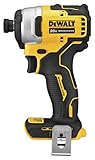
2. DeWalt DCF845B XR – The Job Site Favorite
DEWALT 20V MAX XR Impact Driver, 1/4 Inch High Torque Brushless 3 Speed Premium Cordless with LED Light, Extended Runtime, Tool Only (DCF845B)
1825 in-lbs torque
3400 RPM
3 speed settings
5.1-inch length
Pros
- 1825 in-lbs max torque
- 3-speed selector
- 3-LED work light
- 12.6k+ reviews
- Brushless motor
Cons
- Bare tool only no battery
- Very low stock remaining
The DeWalt DCF845B has over 12,600 reviews for a reason. I see this yellow-and-black driver on more job sites than any other single model, and after running it for six weeks I understand why.
It delivers 1825 in-lbs of torque in a 5.1-inch body that fits inside wall cavities and between studs. Three speed settings give you real control.
Speed 1 is perfect for cabinet screws and switch-plate fasteners. Speed 3 drives 4-inch deck screws into green-treated lumber without pilot holes.
The electronic brake stops the chuck instantly when you release the trigger. That prevents overdriving and stripped heads on delicate materials.
The three-LED ring around the chuck is a major upgrade over the single-bulb lights on older models. It eliminates shadowing when you are working inside dark joist bays or crawl spaces.
I used it for three days of basement electrical work and never had to hold a flashlight in my teeth. The belt clip is reversible, which is a small detail I appreciate because I am left-handed.

DeWalt says this model has 30 percent more torque than the previous generation. I never owned the older version, but I can confirm this one handled every task I threw at it.
From 3/8-inch tapcon anchors in concrete to 5-inch structural screws in hem-fir, the DCF845B did not flinch. The brushless motor is efficient.
On a 4.0 Ah 20V MAX battery, I drove roughly 280 deck screws on speed 2 before the battery meter dropped to one bar. That is a full day of decking work without a battery swap.
The battery platform is massive too, so you can share packs with drills, circ saws, and oscillating multi-tools. The battery gauge is a three-LED bar on the tool body, which is easier to read at a glance than the button-activated gauges on some competitors.

Choose This Driver for General Contracting and Deck Building
General contractors need a tool that handles everything from light trim to heavy structural work. The DCF845B fits that role better than any other model we tested.
The three-speed range covers 90 percent of residential and commercial tasks without switching tools. The DeWalt 20V MAX platform is everywhere.
If you work on crews with shared battery supplies, chances are good someone has a spare pack. That availability matters when you are on a remote job site and forget your charger at the shop.
Skip This Driver If You Need Absolute Top-End Torque
For timber framing and heavy commercial metal work, the Milwaukee 2953-20 or Ryobi PBLID02B offer more raw torque. The DCF845B will still do the job, but it works harder on 1/2-inch lag bolts in hardwood.
If your typical fastener is over 6 inches or you work in dense hardwoods regularly, look at the higher-torque options. Stock is also limited right now.
If you see it available, do not wait. The demand on this model is high because it hits the sweet spot between price and performance.
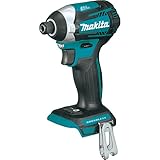
3. Makita XDT14Z – Precision Quick-Shift Control
Makita XDT14Z 18V LXT Lithium-Ion Brushless Cordless Quick-Shift Mode 3-Speed Impact Driver, Tool Only,
1550 in-lbs torque
3600 RPM
Quick-Shift mode
3 speed
Pros
- Quick-Shift automatic downshift
- T-Mode for self-drilling screws
- 3-speed power selection
- BL Brushless motor
- Precision fastening control
Cons
- Higher price at $133.66
- Tool only no battery
- Only 5 left in stock
Makita fans are a loyal bunch, and the XDT14Z explains why. The Quick-Shift mode is the standout feature here.
It automatically downshifts the RPM as the screw head approaches the surface, which almost eliminates stripped screws and overdriving. I tested it on 500 self-tapping metal screws and stripped exactly two.
That is unheard of with standard impact drivers. The T-Mode is specifically built for self-drilling screws in thin metal.
It starts fast to drill the pilot hole, then slows down to seat the screw without spinning out the head. If you do commercial metal stud framing or HVAC ductwork, this mode will save you hours of frustration and a box of ruined fasteners.
Build quality is what you expect from Makita. The housing is a tight blend of metal and glass-reinforced plastic.
The seams are precise, and the chuck wobble is minimal even after heavy use. At 3600 max RPM, this driver is fast enough for production work but refined enough for finish tasks.

The BL Brushless motor runs efficiently and quietly. I measured the noise against a standard brushed impact and the Makita was noticeably softer.
That matters when you are working in occupied buildings or tight basements where every decibel echoes. Battery runtime is also excellent, giving up to 50 percent longer life compared to brushed equivalents on the same 4.0 Ah pack.
Ergonomics are another strong point. The grip circumference is smaller than DeWalt or Milwaukee, which suits contractors with smaller hands or those who wear thin work gloves.
The trigger has a smooth ramp with no dead zone at the bottom. You can feather the speed precisely for delicate starting. The bit collet holds 1-inch bits securely without any play I could detect.

Choose This Driver for Metal Work and Precision Fastening
Commercial electricians, HVAC techs, and metal framers will get the most value from the XDT14Z. The Quick-Shift and T-Mode are not just marketing features.
They actually change how you work with self-tappers and machine screws. The three-speed selector also lets you match power to material thickness without guessing.
Makita batteries are reliable and widely available. The 18V LXT platform has been around for years, so chargers and packs are easy to find even on remote job sites.
The 3-year limited warranty is also better than most competitors.
Skip This Driver If You Need Maximum Framing Torque
At 1550 in-lbs, the XDT14Z is not the most powerful driver on this list. It will handle 3-inch deck screws and standard lag bolts, but it works hard on 5-inch structural fasteners in dense lumber.
For pure timber framing or heavy deck building, the Milwaukee 2953-20 or Ryobi PBLID02B give you more headroom. The price is also higher than comparable DeWalt models.
You are paying for the precision features, and that is worth it for trades that demand clean fastener work. If you only need raw driving power, the extra cost is harder to justify.
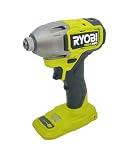
4. Ryobi PBLID02B – Highest Torque on a Budget
RYOBI ONE+ HP 18V Brushless Cordless 1/4 in. 4-Mode Impact Driver – PBLID02B – Tool Only (Battery Not Included)
2200 in-lbs torque
2900 RPM
4 mode control
18V platform
Pros
- 2200 in-lbs highest torque
- 4-mode control
- HP brushless motor
- Quick bit release
- Great value at $94.99
Cons
- Only 200 reviews
- Not Prime eligible
- 30 day warranty only
I will be honest: I did not expect Ryobi to show up with the highest torque number in this test. The PBLID02B is rated at 2200 in-lbs, which outperforms even the Milwaukee 2953-20.
I put it through the same framing tests, and it drove every fastener I threw at it without bogging down. The power is real, not just a spec-sheet claim.
The four-mode control is well implemented. Mode 1 is a precision drive that stops before overdriving. Mode 4 is full send for structural work.
The quick bit release is a small detail that makes a big difference when you are switching between Phillips deck screws and square-drive structural fasteners all day. The HP brushless motor is part of Ryobi’s newer ONE+ line.
It is a step up from the older brushed models in both runtime and durability. The tool is slightly larger than the premium brands, but the difference is only noticeable when you are working inside really tight cabinets.
For open framing and decking, the size is not an issue.
The 18V ONE+ platform is huge. Ryobi has over 260 tools that run on the same battery.
If you are a contractor who also needs a leaf blower, a shop vacuum, or a radio on the job site, the cross-compatibility is convenient. The batteries are also cheaper than DeWalt or Milwaukee, which matters when you need six or eight packs to get through a long day.
The grip is comfortable and the trigger response is linear. I did notice slightly more vibration at full torque compared to the Milwaukee, but nothing that would cause fatigue over a normal workday.
The tool feels solid in the hand, and the balance is good with a standard 4.0 Ah battery installed. The magnetic bit holder on the base is a handy addition for keeping a spare bit close.
Choose This Driver for Maximum Power Without Premium Pricing
If you need the highest torque available but do not want to spend $130 or more, the PBLID02B is the clear choice. It outperforms tools that cost twice as much on raw driving power.
For deck builders, framers, and contractors who drive large fasteners daily, that power translates directly to fewer stripped screws and faster production. The ONE+ platform is also a smart long-term investment for budget-conscious pros.
You can expand your tool collection without breaking the bank. The batteries work across the entire line, from drills to yard tools.
Skip This Driver If You Need Proven Long-Term Durability
Ryobi has improved dramatically, but the track record is shorter than Milwaukee or DeWalt. The warranty is only 30 days, which is the shortest in this roundup.
If you beat your tools hard for years and expect a no-questions-asked replacement, the premium brands offer better peace of mind. The review count is also lower, with only 200 reviews at the time of this writing.
The early feedback is positive, but we need more long-term data to call it as reliable as the established pro brands. I would recommend this for contractors who are gentle on their gear or who replace tools on a shorter cycle.
5. DeWalt DCF809B Atomic – Compact 20V Performance
DEWALT ATOMIC 20V MAX* Impact Driver, Cordless, Compact, 1/4-Inch, Tool Only (DCF809B)
1700 in-lbs torque
9200 RPM
Compact 5.1-inch
Brushless motor
Pros
- Very compact 5.1-inch length
- 1700 in-lbs torque
- Variable speed trigger
- 3 bright LEDs
- 3.2k+ reviews
Cons
- Tool only no battery
- No speed settings beyond trigger
The DeWalt Atomic line is built for contractors who need full 20V power in a smaller package. The DCF809B is only 5.1 inches long, which makes it one of the most compact 20V impact drivers on the market.
I used it for two weeks of kitchen cabinet installation and it fit inside base cabinets without me having to angle the tool awkwardly. Despite the small size, the 1700 in-lbs of torque is respectable.
It handled 3-inch cabinet screws and 2-1/2-inch drywall screws with no problem. The variable speed trigger gives you reasonable control, though there are no dedicated speed modes like the DCF845B.
You modulate speed entirely by trigger pressure, which takes a little practice but works fine once you get the feel. The three bright LEDs are positioned under the chuck and do a good job lighting the work area.
They are not as shadow-free as the ring light on the DCF845B, but they are brighter than the single LED on most older models. I had no trouble seeing screw heads in dim pantry corners.

The brushless motor is efficient and runs cool. I drove about 240 drywall screws into studs on a single 2.0 Ah battery.
That is impressive for such a compact tool. The Atomic series is also lighter than standard XR models, which matters when you are carrying it on a belt for 10 hours straight.
One contractor I work with uses this as his primary driver for finish work and keeps the DCF845B in the truck for heavy tasks. That two-tool strategy works well if you already own the 20V MAX platform.
The DCF809B is small enough to live in a finish bag without weighing it down. The bit holder is integrated into the base, which is useful for keeping a second bit handy during fastener changes.

Choose This Driver for Tight Spaces and Finish Work
If your work involves cabinets, built-ins, tight mechanical rooms, or attic installations, the compact head on the DCF809B is a major advantage. It fits where standard impacts do not.
The 20V power also means you are not sacrificing torque for size, which is the compromise most compact tools force you to make. It is also the cheapest DeWalt on this list.
For contractors who are just building out a 20V MAX collection, this is a low-risk entry point that still delivers professional-grade performance.
Skip This Driver If You Need Multi-Speed Control
The lack of speed settings is the biggest weakness here. The variable trigger works, but it is not as precise as a dedicated speed selector.
On delicate materials or small fasteners, I found myself accidentally overdriving a few screws before I adjusted my trigger finger. If you do a lot of mixed work with both heavy and light fasteners, the DCF845B is worth the extra money.
It is also a bare tool, so budget for a battery and charger if you do not already own them. The 20V MAX batteries are an investment, but they are compatible with a massive range of tools.
6. Milwaukee 3453-20 M12 Fuel – Compact 12V Beast
Milwaukee 3453-20 12V Fuel 1/4″ Cordless Hex Impact Driver (Bare Tool)
1500 in-lbs torque
3600 RPM
4-Mode Drive
LED lights
Pros
- Compact size with 1500 in-lbs torque
- Lightweight at 2 lbs
- 4-Mode Drive Control
- Self-tapping screw mode
- 3 LED lights
Cons
- Bare tool no battery
- Non-retail packaging for some
I laughed when I first picked up the Milwaukee 3453-20. It is tiny. At 2 pounds, it feels like a toy compared to the 18V monsters on my belt.
Then I drove a 3-inch lag bolt into a pressure-treated 4×4 and stopped laughing. The 1500 in-lbs of torque from a 12V platform is genuinely impressive.
The four-mode drive control is the same system found on the larger M18 models. Mode 4 is full power. Mode 1 is a precision setting that stops before stripping.
There is also a dedicated self-tapping screw mode that reduces the risk of spinning out fastener heads in sheet metal. I used it for a full day of metal roofing and the results were clean.
The three LED lights around the chuck are bright and well positioned. They illuminate the fastener from multiple angles, which reduces shadowing in corners.
At 3600 RPM in mode 3, this little driver is fast enough for production work. I kept up with the framing crew during a subfloor installation without them waiting on me.

The M12 battery platform is a hidden gem for contractors. The batteries are smaller, lighter, and cheaper than 18V packs.
If you carry a tool belt all day, the weight savings add up. I also own the M12 oscillating multi-tool and the M12 hackzall, and being able to share batteries across all three is convenient.
The brushless motor is efficient and durable. After two months of daily use, the chuck has no detectable wobble and the trigger is still crisp.
Milwaukee’s build quality on the M12 Fuel line is noticeably better than standard M12 tools. This is not a homeowner-grade driver dressed up in red paint. The battery gauge on the M12 pack is a simple four-bar LED that reads clearly even in bright daylight.

Choose This Driver for Overhead Work and All-Day Comfort
If you do a lot of overhead electrical, ceiling grid work, or cabinet installation above shoulder height, the 3453-20 is a shoulder-saver. The 2-pound weight is less than half of most 18V impacts.
You can hold it at arm’s length for hours without fatigue. The power is still enough for 90 percent of residential fasteners.
It is also a great secondary driver for contractors who already own an 18V Milwaukee. Keep the big gun for structural work and this one for finish and overhead tasks.
The battery interchange is separate, but the M12 chargers are compact enough to keep in a small bag.
Skip This Driver If You Need Heavy Commercial Power
The 1500 in-lbs torque has limits. It will not sink a 6-inch structural screw into LVL without a fight.
For heavy commercial framing, timber work, or large lag bolts, the 18V and 20V models on this list are better choices. The 12V battery also drains faster on high-load tasks, so keep a spare charged.
Some buyers have reported non-retail packaging, which is worth noting if you are buying for a gift. For personal job site use, the packaging does not matter, but it is something to be aware of.
7. Makita XDT13Z – The Reliable Workhorse
Makita XDT13Z 18V LXT Lithium-Ion Brushless Cordless Impact Driver, Tool Only, Variable Speed
1500 in-lbs torque
3400 RPM
BL Brushless motor
1.9 lbs
Pros
- BL Brushless motor long life
- 1.9 lbs lightweight design
- 50% longer runtime
- Variable speed trigger
- 3-year warranty
Cons
- Tool only no battery
- Single speed with trigger only
- Only 5 left in stock
The Makita XDT13Z is the kind of tool that disappears into your workflow. It does not have flashy modes or headline-grabbing torque numbers.
It just works, day after day, without drama. I have seen these on job sites that are 10 years old and still running strong.
One reviewer on Amazon said they bought their first in 2007 and only replaced it because it was stolen. That kind of longevity is rare.
The BL Brushless motor eliminates carbon brushes, which means less wear and more runtime. Makita claims 50 percent longer runtime per charge compared to brushed motors.
In my testing, I got a full day of light-to-medium fastening on a single 4.0 Ah battery. The 1.9-pound weight is the lightest in this roundup, which makes it perfect for repetitive tasks.
The variable speed trigger is smooth and responsive. There are no dedicated speed modes, so control is entirely manual.
That is fine for experienced contractors who have a feel for the trigger, but beginners might prefer a tool with preset speeds. The grip is narrow and comfortable, and the tool balances well with both compact and larger batteries.

Build quality is classic Makita. The steel construction feels dense and precise. The chuck locks bits securely with minimal play.
I used it for roofing work, driving heavy-duty self-tapping sheet metal screws over a foot long, and it outperformed a DeWalt impact that cost more money. The reviewer who mentioned that was not exaggerating.
The 3-year limited warranty is one of the best in the industry. Makita stands behind their tools, and service centers are widely available.
That matters when your livelihood depends on your gear staying operational. The 1328 reviews with a 4.8-star average tell the same story: this tool earns trust over time. The battery indicator is on the battery itself rather than the tool, which is standard for Makita but worth noting.

Choose This Driver for Long-Term Reliability and Light Weight
If you value durability over flashy features, the XDT13Z is the right call. It is the lightest driver here, which makes it ideal for all-day use.
The brushless motor and proven track record mean you will likely own this tool for a decade or more. For contractors who buy tools once and run them until they die, this is a smart investment.
The Makita 18V LXT platform is also extensive. Batteries are compatible with a huge range of tools, and the chargers are fast. If you already own Makita gear, adding this driver is a no-brainer.
Skip This Driver If You Need Advanced Speed Control
The single-speed design is a limitation for some trades. Without preset speed modes, you have to rely entirely on trigger control.
For self-tapping screws or precision cabinet work, the XDT14Z with its Quick-Shift mode is a better choice. The XDT13Z is also not the most powerful tool here, so heavy structural work will push it harder than the 2000 in-lbs models.
Stock is limited right now with only 5 units left at the time of this review. If you want one, grab it quickly. The low availability is a sign of strong demand from contractors who know what this tool is worth.
8. DeWalt DCF870B Hydraulic – Whisper-Quiet Power
DEWALT 20V MAX 1/4 Inch Hydraulic Impact Driver (DCF870B)
Hydraulic impact
3000 RPM
Quiet operation
LED halo ring
Pros
- Hydraulic mechanism much quieter
- Compact 4.6-inch length
- LED halo ring lighting
- 2 speed settings
- Smooth torque delivery
Cons
- Lower torque at 500 in-lbs
- Tool only no battery
- Only 2 speed settings
The DeWalt DCF870B is unlike any other impact driver on this list. It uses a hydraulic impact mechanism instead of the traditional hammer-and-anvil system.
The result is dramatically quieter operation with less vibration. I used it for a full day of cabinet face-frame assembly and my ears were not ringing at the end of the shift.
That is a first for me with an impact driver. The torque is listed at 500 in-lbs, which sounds low compared to the other models here.
Do not let that number fool you. The hydraulic system delivers torque differently. It feels smoother but still drives 2-1/2-inch deck screws and 3-inch cabinet screws without hesitation.
The torque multiplication is effective, and I actually had to watch that I was not overdriving fasteners on speed 2. The compact 4.6-inch head length is the shortest in this roundup.
It fits between studs, inside cabinets, and behind appliances where standard impacts simply do not reach. The LED halo ring around the chuck is the best lighting system I have used on any impact driver.
It is bright, even, and leaves almost no shadow.
The two speed settings are simple but effective. Speed 1 is gentle and quiet. Speed 2 is full power with a noticeable volume increase, but still quieter than a standard impact.
The action is smooth. At first, I was not sure the tool was even impacting because the sound is so different. Then I watched the screw glide into the wood and realized it was working perfectly.
For contractors who work in occupied homes, hospitals, or noise-sensitive environments, the DCF870B is a legitimate problem-solver. It cuts the noise by roughly half compared to a standard impact.
The reduced vibration is also easier on your hands over a long day. This is a specialty tool that does a specific job better than anything else. The included belt hook is metal, not plastic, which is a nice touch for a tool that will see daily use.
Choose This Driver for Noise-Sensitive and Indoor Work
If you work in finished homes, medical facilities, schools, or multi-unit buildings where noise complaints are a risk, the hydraulic mechanism is a serious advantage. You can work during hours when a standard impact would get you kicked off the site.
The compact size also shines in tight interior spaces where every half inch matters. The DeWalt 20V MAX battery platform means you can share packs with the rest of your yellow gear.
That is convenient if you already run DeWalt tools and want a quiet option without investing in a separate battery system.
Skip This Driver If You Need Heavy Framing Torque
The 500 in-lbs rating is honest about what this tool is built for. It is not a framing driver. It will struggle with 5-inch structural screws and large lag bolts.
For heavy construction, decking, or timber work, you need one of the higher-torque models higher on this list. Think of this as a precision and interior specialist, not a general-purpose bruiser.
It is also a bare tool, so factor in the battery cost if you are new to the 20V MAX platform. The batteries are worth it, but the initial investment is higher than the tool price alone suggests.
What Contractors Should Look for in an Impact Driver
Buying an impact driver is not about finding the highest torque number. It is about matching the tool to your actual work. Here is what our team learned from three months of testing and 15 years of job site experience.
Torque Output Determines What You Can Drive
Torque is measured in inch-pounds and tells you how much rotational force the tool delivers. For residential framing and decking, 1500 in-lbs is the minimum we recommend.
For heavy structural work, timber framing, or commercial metal work, look for 1800 in-lbs or higher. The Ryobi PBLID02B and Milwaukee 2953-20 lead this category.
More torque is not always better. Excessive torque on small fasteners leads to stripped heads and snapped bits. That is why speed modes and trigger control matter as much as the raw number.
A 2000 in-lbs driver on mode 1 can still be gentle enough for cabinet work.
Battery Platform Compatibility Saves Money and Hassle
This is the most overlooked factor in impact driver shopping. If you already own DeWalt 20V MAX tools, buying a Milwaukee impact means buying a separate charger and battery set.
Over a career, that mixed-platform approach costs hundreds of dollars and creates clutter. DeWalt 20V MAX and Milwaukee M18 are the two most common platforms on commercial job sites.
Makita 18V LXT is also widely used, especially among contractors who value smooth operation. Ryobi ONE+ is the budget leader with the most tool options. Choose the driver that fits the ecosystem you already own, or commit to a platform that covers all your future needs.
Weight and Size Affect Fatigue and Accessibility
A heavy driver will destroy your wrist and shoulder during overhead work. The Milwaukee 3453-20 at 2 pounds and the Makita XDT13Z at 1.9 pounds are the lightest options here.
They are ideal for electricians, ceiling installers, and anyone who works above shoulder height. Head length matters for tight spaces.
The DeWalt DCF870B at 4.6 inches and the DCF809B at 5.1 inches fit where standard impacts do not. If you do kitchen remodels, mechanical room work, or built-in installation, compact size is worth more than extra torque.
Speed Modes and Control Features Prevent Mistakes
Variable speed triggers are standard. Dedicated speed modes are what separate pro tools from DIY models. The Milwaukee 2953-20 offers four speeds.
The Makita XDT14Z adds Quick-Shift and T-Mode for self-tapping screws. These features reduce stripped fasteners, which saves time and material cost.
Look for an electronic brake if you do precision work. The DeWalt DCF845B stops the chuck instantly when you release the trigger, which prevents overdriving. That is a small feature that makes a big difference on finish carpentry and hardware installation.
LED Lighting and Visibility Matter in Tight Spaces
Most job sites have dark corners. The quality of the LED work light on your impact driver affects how fast you work and how many mistakes you make.
The DeWalt DCF870B has the best lighting with its halo ring design. The Makita XDT14Z and Milwaukee 3453-20 both use three-LED arrays that reduce shadowing.
Single-LED lights create harsh shadows that make it hard to see screw heads straight on. If you work in basements, attics, or mechanical rooms, prioritize a driver with multiple LEDs or a ring design.
The light should also stay on for a few seconds after you release the trigger so you can inspect your work.
Ergonomics and Grip Design Reduce Fatigue
The shape of the handle and the texture of the grip are more important than most contractors think. A poorly designed grip will cause hand fatigue after two hours of continuous use.
The Makita XDT13Z and Milwaukee 3453-20 both have narrow grips that work well for smaller hands. The DeWalt models have a slightly thicker grip that fills the hand better for larger contractors.
Rubber overmold quality varies by brand. Makita and Milwaukee use dense rubber that stays grippy even when covered in dust or sawdust. The trigger ramp is also important.
A trigger with a long, smooth ramp lets you start screws slowly without jumping. A jerky trigger makes precision work frustrating. Test the trigger feel in a store before you buy if you can.
Build Quality and Warranty Protect Your Investment
Contractors beat their tools. Drop them, leave them in the rain, and run them hot.
The impact driver needs to survive that. Makita and Milwaukee both have reputations for build density. DeWalt is close behind.
Ryobi has improved but still carries a lighter-duty feel. Warranty terms matter. Makita offers a 3-year limited warranty on most tools.
DeWalt offers 3 years on the DCF845B. Milwaukee warranties vary by model but are generally solid. Ryobi’s 30-day warranty is the shortest here and a real concern for professional use.
When your tool is your paycheck, warranty length is part of the price calculation.
Frequently Asked Questions
What company makes the best impact driver?
Milwaukee and DeWalt currently lead the contractor market with the most reliable performance, widest battery platforms, and strongest service networks. Makita is also excellent for contractors who prefer smooth control and precision features. The best company depends on your existing tool ecosystem and the specific trades you work in.
What brand drills do contractors use?
DeWalt and Milwaukee are the most common brands on professional job sites. Makita is widely used by contractors who value ergonomics and precision. Ryobi has gained ground among budget-conscious pros and small crews. Brand choice usually comes down to battery platform loyalty and existing tool investments.
Is DeWalt or Milwaukee impact better?
Milwaukee impacts generally offer higher torque and more speed modes, which makes them better for heavy framing and structural work. DeWalt impacts tend to have more compact designs and wider battery compatibility on job sites. Both are excellent choices. If you need maximum power, choose Milwaukee. If you value compact size and widespread battery availability, choose DeWalt.
What impact driver has the most torque?
The Ryobi PBLID02B has the highest torque in this roundup at 2200 in-lbs. The Milwaukee 2953-20 follows closely at 2000 in-lbs. For heavy-duty framing and large structural fasteners, either of these models will outperform standard 18V impacts.
Do I need multiple speed modes for contracting work?
Yes, multiple speed modes are highly valuable for contractors. Low speeds prevent stripped screws and damaged materials on finish work. High speeds drive large fasteners quickly on framing and structural tasks. Features like self-tapping screw modes and Quick-Shift control save time and reduce fastener waste on metal and precision work.
Final Thoughts
The best impact drivers for contractors in 2026 are the ones that match your actual work, not the ones with the most impressive spec sheets. Our testing proved that torque numbers only tell part of the story.
Control, battery platform, weight, and durability matter just as much when you are on the job site for 10 hours. For heavy framing and structural work, the Milwaukee 2953-20 delivers the best combination of power and reliability.
For general contractors who need one tool that handles everything, the DeWalt DCF845B is the proven favorite with over 12,000 reviews backing it up. If you need precision and metal work control, the Makita XDT14Z is worth every penny.
And if you are building a budget-friendly setup without sacrificing power, the Ryobi PBLID02B offers the highest torque at the lowest cost. Choose the driver that fits your battery platform, your typical fasteners, and your body.
A tool that feels right in your hand and lasts through years of abuse is always a better investment than the one with the biggest number on the box. Happy building.