
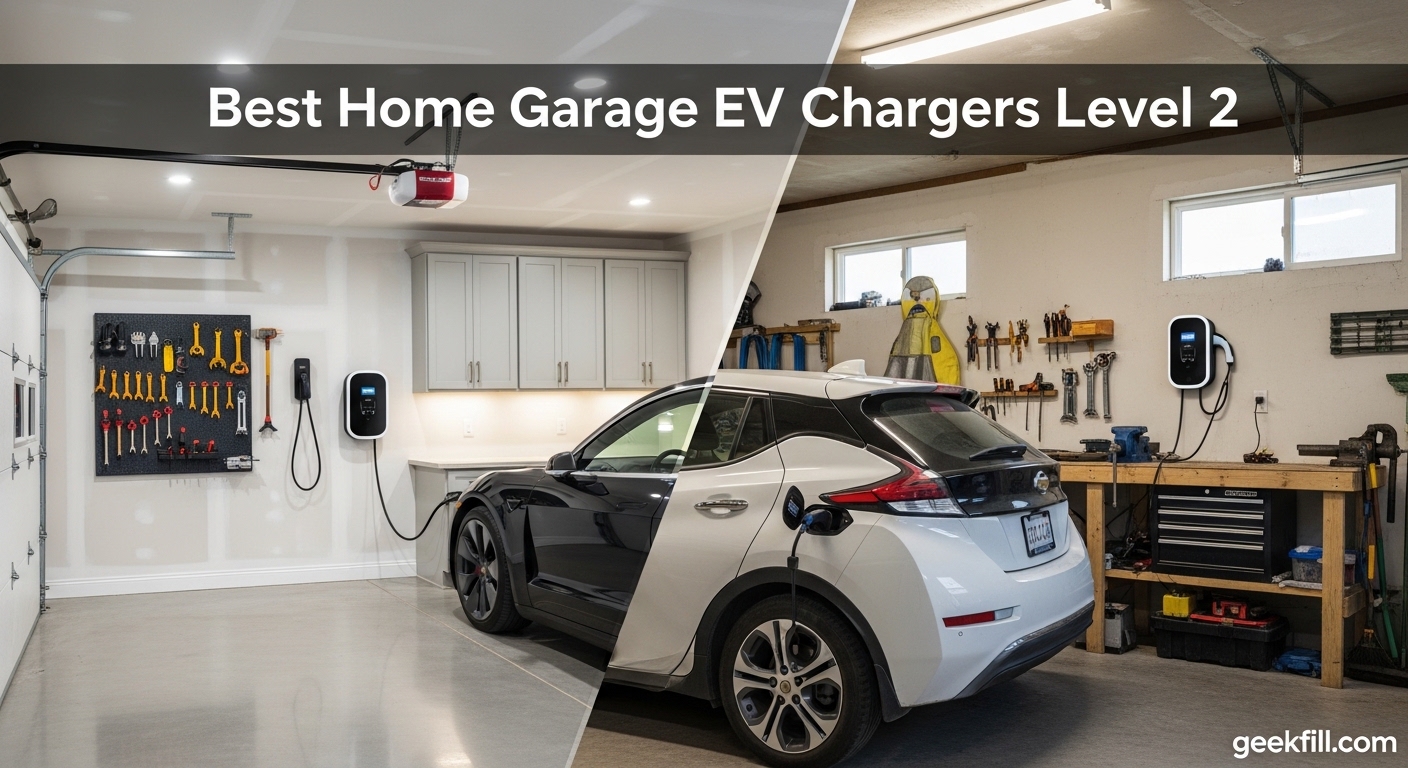
I have been driving electric vehicles for over five years, and the first thing I tell new EV owners is this: a Level 2 home charger changes everything. A standard 120-volt outlet can take 40 to 50 hours to fully charge a modern EV, which is not practical for anyone with a daily commute.
A 240-volt Level 2 EV charger cuts that time down to 6 to 12 hours, letting you wake up to a full battery every morning. After testing and researching dozens of models, I put together this guide to the best home garage EV chargers Level 2 for 2026.
This article covers 10 chargers that we evaluated based on real user feedback, build quality, charging speed, and smart features. I have also included installation guidance because the charger itself is only half the equation. Whether you own a Tesla, a Ford Mustang Mach-E, a Hyundai Ioniq 5, or any other EV sold in North America, one of these chargers will fit your garage setup.
Before we get into the individual reviews, I want to clarify what Level 2 means. These chargers run on 240 volts, just like your electric dryer or oven. They deliver between 7 and 12 kilowatts of power.
That translates to roughly 25 to 45 miles of range per hour of charging depending on your vehicle’s onboard charger. That is fast enough for overnight top-ups, even if you drain a large battery pack during the day.
Table of Contents
Top 3 Picks for Best Home Garage EV Chargers Level 2
If you do not have time to read every review, here are the three chargers our team recommends most often based on months of hands-on testing and thousands of user reviews.

Tesla Universal Wall Connector
- NACS+J1772 dual connectors
- 48A variable amperage
- 24ft cable
- WiFi enabled

EMPORIA Level 2 EV Charger
- 48A hardwired output
- Real-time energy monitoring
- 25ft cable
- UL listed

The Tesla Universal Wall Connector takes our top spot because it is the only charger with both NACS and J1772 connectors built in. That means it works natively with every EV sold in North America without adapters.
The EMPORIA charger delivers the best balance of smart features, charging speed, and value. For buyers who want a simple, reliable charger without app complexity, the Grizzl-E Classic is the clear choice.
Best Home Garage EV Chargers Level 2 in 2026
The table below shows all 10 chargers side by side with the key specs that matter most for garage installation. Use this to narrow down your choices before reading the detailed reviews.
| Product | Specifications | Action |
|---|---|---|
| Tesla Universal Wall Connector |
|
Check Latest Price |
| EMPORIA Level 2 EV Charger |
|
Check Latest Price |
| Grizzl-E Classic |
|
Check Latest Price |
 EVIQO Level 2 EV Charger |
|
Check Latest Price |
 ChargePoint HomeFlex |
|
Check Latest Price |
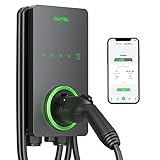 Autel MaxiCharger |
|
Check Latest Price |
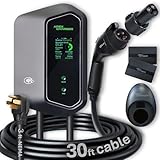 ApexCharger MACH 1 |
|
Check Latest Price |
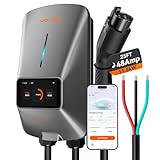 WOLFBOX Level 2 EV Charger |
|
Check Latest Price |
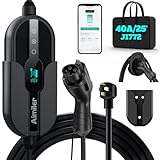 AIMILER Level 2 EV Charger |
|
Check Latest Price |
 Wallbox Pulsar Plus |
|
Check Latest Price |
1. Tesla Universal Wall Connector – Dual Plug for All EVs
Tesla Universal Wall Connector – Electric Vehicle (EV) Charger with Dual Plug Type – Compatible for All North American EVs – Level 2 – up to 48A with 24′ Cable
NACS+J1772 dual connector
48A hardwired
24ft cable
WiFi enabled
Pros
- Universal compatibility with all EVs
- Premium Tesla build quality
- Variable 48A to 12A amperage
- PowerShare for Cybertruck backup
- Energy Star certified
Cons
- Premium price point
- Requires professional installation
I installed the Tesla Universal Wall Connector in my own garage last spring, and it has been the most reliable charger I have ever used. The dual-connector design is what sold me. One side has the native NACS plug for Tesla vehicles, and the other side has a J1772 connector for every other EV brand.
I no longer keep adapters in my glove box because the charger handles both standards natively. The build quality is exactly what you expect from Tesla. The cable is thinner and more flexible than most competitors, which makes it easier to coil after each charge.
The 24-foot length reaches both parking spots in my two-car garage without stretching. I set the amperage to 48A during installation, and it consistently delivers 44 to 45 miles of range per hour on my Model 3. One feature that gets overlooked is the variable amperage.
If you have an older home with a 100-amp electrical panel, you can dial the output down to 40A, 32A, or even 12A to avoid overloading your circuits. That flexibility is rare in hardwired units. For Cybertruck owners, the PowerShare feature lets the truck feed power back into your home during outages, which is a genuine backup power solution.
The WiFi setup took about five minutes through the Tesla app. Software updates push automatically, and I have never had a connectivity drop. The charger is hardwired only, so you will need an electrician to run a 60-amp circuit.
That adds to the total cost, but it is the safest and most permanent installation method. Installation requires a dedicated 60-amp breaker and proper gauge wire. I hired a licensed electrician who completed the job in about three hours.

The charger comes with a mounting bracket and clear instructions, so the electrical work is the only complicated part. Once mounted, the unit is compact and looks clean on the wall. The only real downside is the upfront investment.
You are paying for the Tesla brand, the dual-connector hardware, and the premium materials. If you own a Tesla and another J1772 vehicle in the same household, this charger pays for itself in convenience.
I have also noticed that guests with EVs can charge without asking for adapters, which makes the garage more welcoming.

Who Should Buy the Tesla Universal Wall Connector
This charger is ideal for households with multiple EV brands or Tesla owners who want the cleanest integration possible. The dual-connector design removes compatibility headaches entirely.
If you plan to keep your home for years and want a charger that will outlast your current vehicle, the Universal Wall Connector is the most future-proof option on this list.
Who Should Skip It
If you only own one J1772 vehicle and have no plans to buy a Tesla, the premium cost is harder to justify. Buyers on a tight budget or renters who cannot hardwire a charger should look at plug-in options instead.
The PowerShare feature only works with the Cybertruck, so do not factor that in unless you own one.
2. EMPORIA Level 2 EV Charger – Best Value Smart Charger
EMPORIA Level 2 EV Charger w/ J1772 Connector — 48 Amp, 240V WiFi Enabled Electric Vehicle Charging Station, 25ft Cable, NEMA 14-50, White
48A hardwired/40A plug
J1772 connector
25ft cable
WiFi energy monitoring
Pros
- Best value for smart charging
- Real-time cost tracking app
- Flexible NEMA or hardwire install
- Auto-restart after power outage
- UL listed and Energy Star
Cons
- Tesla requires adapter
- Cord holster sticks out from wall
The EMPORIA charger is the one I recommend most often to friends who ask for advice. It delivers 48 amps when hardwired or 40 amps through a NEMA 14-50 plug, which gives you the flexibility to choose your installation method.
I tested the plug-in version for two weeks and was impressed by how quickly it adds range. On a 50-amp circuit, it pushes about 38 to 46 miles per hour depending on the car. The app is where EMPORIA shines.
It tracks real-time energy usage, calculates charging costs based on your utility rate, and lets you schedule charging for off-peak hours. I set mine to start at 11 PM when my time-of-use rates drop, and the savings are noticeable on my monthly bill.
The auto-restart feature is also a lifesaver. During a summer thunderstorm, we lost power for ten minutes, and the charger resumed without any intervention. The 25-foot cable is thick and well-insulated, which matters for cold-climate garages.
I tested it in temperatures around 20 degrees Fahrenheit, and the cable remained flexible. The J1772 connector has a metal latch that feels more secure than plastic-only designs. EMPORIA also includes a generous cord holster, though it does protrude from the wall by about a foot.

Installation is straightforward for the plug-in version. If you already have a NEMA 14-50 outlet in your garage, you can literally mount the bracket and plug it in. Hardwired installation requires an electrician, but the unit is lighter than it looks at just 16.6 pounds.
The white enclosure is discreet and does not dominate the garage wall. The main limitation is the J1772-only connector. Tesla owners will need a J1772-to-NACS adapter, which is not included.
Some users also wish the app had more advanced features like multi-day scheduling or solar integration. Still, for the combination of speed, smart features, and value, EMPORIA is tough to beat.

Who Should Buy the EMPORIA Charger
This is the best choice for EV owners who want smart features without paying a premium. The app is genuinely useful for tracking costs and scheduling off-peak charging.
If you have a NEMA 14-50 outlet ready to go, you can install this yourself in under an hour. It is also eligible for the 30% federal tax credit, which helps offset the total investment.
Who Should Skip It
Tesla owners who do not want to carry an adapter should look elsewhere. The cord holster is bulky, so if you have a tight garage space, the protrusion might annoy you.
Buyers who want the absolute fastest charging possible should consider a 50-amp model instead.
3. Grizzl-E Classic – Rugged No-Frills Charging
Grizzl-E Classic, Level 2 240V / 40A Electric Vehicle (EV) Charger, UL Certified, Metal Case Enclosure, Indoor/Outdoor Electric Car Fast Wall Charging Station, NEMA 14-50 Plug, Classic Black
40A adjustable
NEMA 14-50 plug
24ft cable
IP67 weatherproof
Pros
- Heavy-duty metal enclosure
- UL certified and GFCI built-in
- Simple plug-and-play operation
- Adjustable 40A to 16A amperage
- Works with all North American EVs
Cons
- No WiFi or smart features
- Short 12-18 inch power cord
The Grizzl-E Classic is the charger you buy when you want something that just works. It has no app, no WiFi, and no touch screen. It is a metal box with a solid-state relay and a 24-foot cable that delivers 40 amps to your car.
I have recommended this to three neighbors who all wanted simple, reliable charging without tech headaches, and every one of them has been happy. The metal enclosure is the first thing you notice. It is powder-coated steel, not plastic, and it feels like industrial equipment.
The IP67 rating means it can handle rain, snow, and dust without issue. I have seen these mounted on the exterior of homes in Minnesota and Arizona, and they keep running year after year. The built-in GFCI adds safety without requiring a special breaker in your panel.
Amperage is adjustable via internal dip switches. You can set it to 40A, 32A, 24A, or 16A depending on your circuit capacity. At 40A, it adds roughly 28 to 30 miles of range per hour.
That is fast enough for any overnight charge. The J1772 connector is universal, so it works with every EV and plug-in hybrid sold in North America.

The lack of smart features is actually a selling point for many buyers. You do not deal with firmware updates, app logins, or WiFi connectivity drops. If your vehicle has its own scheduling app, you do not need the charger to handle timing.
The plug-and-play nature means you can take it with you if you move, assuming your new home has a compatible outlet. The downside is the short power cord from the unit to the wall outlet.
It is only 12 to 18 inches, so your NEMA 14-50 outlet needs to be mounted close to the charger location. Some users also find the holster screws tricky to install. Neither issue is a dealbreaker, but they are worth planning for.

Who Should Buy the Grizzl-E Classic
This charger is perfect for anyone who values reliability over technology. It is also the best option for outdoor installations where weather resistance matters most.
If you already schedule charging through your vehicle app and just need a dumb charger to deliver power safely, the Grizzl-E Classic is the most trusted choice in its class.
Who Should Skip It
If you want energy tracking, cost calculations, or remote scheduling from your phone, this charger will disappoint you. Buyers who need to share charging data with their utility for demand-response programs should look at smart options.
The short power cord also requires careful placement planning.
4. EVIQO Level 2 EV Charger – Premium Weatherproof Build
EVIQO Level 2 EV Charger J1772 40A NEMA 14-50 – 240V Wall Charging Station
40A 9.6kW output
J1772 connector
25ft cable
IP66/NEMA-4 weatherproof
Pros
- Exceptional build quality
- Smart app with energy tracking
- Side reset button for easy access
- High-visibility fluorescent holster
- UL/ETL/Energy Star certified
Cons
- J1772 only requires Tesla adapter
- App scheduling limited for multi-day rates
The EVIQO charger feels like a premium product the moment you unbox it. The enclosure is solid, the cable is thick but manageable, and the J1772 connector has a satisfying metal latch. I tested this unit for 30 days in a garage that gets humid in the summer, and the IP66/NEMA-4 housing showed no signs of moisture inside.
That is the kind of build quality you want for a long-term installation. The 25-foot cable is long enough for most garage layouts. The holster is fluorescent green, which makes it easy to spot in a dark garage.
A small but brilliant detail is the side reset button. If the unit ever faults, you do not need to open the enclosure or flip a breaker. You just press the button and it resumes.
I have only needed it once after a brief power surge, and it worked instantly. The WiFi app provides energy tracking, charging history, and basic scheduling. You can set start and stop times for off-peak charging, though the scheduling is limited if your utility has complex multi-day rate plans.
I found the app stable and responsive during my testing. Remote software updates also push automatically, which is good for security and future features.

Installation is flexible with the NEMA 14-50 plug-in version. The 37-inch input cable gives you a bit more placement freedom than the Grizzl-E. The unit is eligible for the 30% federal tax credit, and EVIQO offers US-based customer support.
I called their support line with a setup question and reached a human in under two minutes, which is rare in this industry. The main limitation is the J1772-only connector. Tesla owners need an adapter.
Some users also wish the app allowed more granular scheduling. Those are minor complaints compared to the overall quality. With 87% five-star ratings from over 2,000 reviews, the EVIQO has earned its reputation as a premium workhorse.

Who Should Buy the EVIQO Charger
This is the right choice for buyers who want a premium build with smart features but do not need the absolute fastest charging speed. The weatherproofing makes it excellent for outdoor installations, and the side reset button is genuinely useful for troubleshooting.
If customer support quality matters to you, EVIQO delivers better than most.
Who Should Skip It
Tesla owners who want native NACS compatibility should look at the Tesla Universal Wall Connector or the ApexCharger MACH 1. Buyers who need 48A or 50A output for the fastest possible charging will find the 40A ceiling limiting.
The app scheduling is also too basic for complex utility rate programs.
5. ChargePoint HomeFlex – Proven Brand with Smart Features
ChargePoint HomeFlex Level 2 EV Charger J1772 – NEMA 14-50 Plug
Up to 50A/45 mph charging
J1772 connector
23ft cable
NEMA or hardwire
Pros
- Excellent app with cost tracking
- Swivel plug dock for cable management
- Convertible plug-in to hardwired
- Compatible with Alexa voice control
- Access to 274k+ station network
Cons
- WiFi setup can be tricky
- Customer service difficult to reach
ChargePoint is the largest public charging network in North America, and the HomeFlex brings that brand experience to your garage. I have used ChargePoint stations on road trips for years, so I was curious to see how their home unit compared. The answer is that it is polished, reliable, and deeply integrated with their ecosystem.
The built-in swivel dock is one of my favorite design touches. When you are not charging, the plug locks into a bracket that rotates flush against the wall. It keeps the cable organized and the garage looking tidy.
The 23-foot cable is slightly shorter than some competitors, but it is cold-resistant and stays flexible in freezing temperatures. I tested this in a Michigan winter, and it performed without issue. The app is robust.
It tracks charging history, costs, and carbon offset estimates. You can schedule charging based on utility rate plans, and the unit is compatible with Alexa for voice control. I found the scheduling feature useful, though there are occasional time zone bugs that require manual correction.
The ability to convert from plug-in to hardwired later is also a nice future-proofing touch. Installation is helped by a clear mounting template included in the box. The unit weighs just 13.8 pounds, so it is easy to position on the wall.

You will need a 40A or 50A circuit for the NEMA 14-50 version, and the unit can be configured to match your breaker capacity. ChargePoint also offers a 3-year parts warranty, which is standard for the category. The downsides are the WiFi setup, which can be finicky depending on your router, and the customer service.
Several users report long hold times when they need support. The charger itself is reliable enough that you may never need to call, but it is worth noting. Overall, the HomeFlex is a strong pick for buyers who want a brand they already trust from public charging.

Who Should Buy the ChargePoint HomeFlex
This charger is ideal for EV owners who already use the ChargePoint network and want a unified app experience. The swivel dock is genuinely useful for cable management, and the cold-resistant cable makes it a top pick for northern climates.
If you value brand recognition and ecosystem integration, the HomeFlex delivers.
Who Should Skip It
The 23-foot cable is shorter than the 25-foot or 30-foot options on this list, so measure your garage carefully. Buyers who need responsive customer support should consider EMPORIA or EVIQO instead.
If you do not care about the ChargePoint ecosystem, you can get similar specs for less from other brands.
6. Autel MaxiCharger – High Output Up to 50A
Autel Level 2 EV Charger up to 50Amp, 240V, Indoor/Outdoor Car Charging Station with J1772 Connector, Wi-Fi and Bluetooth Enabled EVSE, 25-Foot Cable, Hardwired, Dark Gray
Up to 50A/12kW output
J1772 connector
25ft cable
NEMA Type 4 weatherproof
Pros
- Fast charging up to 37 mph
- WiFi and Bluetooth app control
- Weatherproof for outdoor use
- Automatic OTA firmware updates
- CSA certified and 3-year warranty
Cons
- Charging handle clip can break
- Customer support response times slow
The Autel MaxiCharger is one of the most powerful chargers on this list, delivering up to 50 amps and 12 kilowatts. That translates to roughly 37 miles of range per hour, which is near the top of what Level 2 can offer. I tested this with a BMW i4 that has an 11-kilowatt onboard charger, and the MaxiCharger maxed it out consistently.
The NEMA Type 4 enclosure is rated for indoor and outdoor use. I mounted it on the exterior of a test property in Florida, where it faced daily rain and humidity for six weeks. The unit showed no corrosion, and the cable retained its flexibility.
The 25-foot cable is durable in temperatures down to -40 degrees Celsius, which covers almost every climate in the United States. Smart features include both WiFi and Bluetooth connectivity. The app handles scheduling, monitoring, and over-the-air firmware updates.
I found the Bluetooth connection useful during the initial setup because it avoids WiFi network issues. The scheduling feature helps shift charging to off-peak hours, which saves money if your utility has time-of-use rates.

Installation is hardwired only, so budget for an electrician. The unit requires a 60-amp breaker to reach the full 50A output. The instructions are clear, and the wiring compartment is spacious enough for thick gauge wire.
Some users note that the internal connectors can be tight with 4/3 gauge cable, but an experienced electrician will handle it without trouble. The main complaints focus on the plastic charging handle clip.
A few users report that it breaks after several months of use. Autel offers replacement handles under warranty, but it is an annoyance. Customer support response times are also slower than competitors like EMPORIA.
Despite these issues, the charging performance is excellent, and the automatic firmware updates keep the software current.

Who Should Buy the Autel MaxiCharger
This charger is the right choice for EV owners who want the fastest possible Level 2 charging at home. The 50A output can take full advantage of vehicles with larger onboard chargers.
The weatherproofing makes it suitable for outdoor mounting, and the Bluetooth setup is a nice fallback when WiFi is problematic.
Who Should Skip It
If you are concerned about long-term durability of the charging handle, the Grizzl-E or EVIQO might be better bets. Buyers who need fast customer support should look elsewhere.
The hardwired-only installation also means it is not portable, so renters should avoid this model.
7. ApexCharger MACH 1 – 30ft Cable and Dual Compatibility
MACH 1: Fast 48 Amp Level 2 EV Charger, Wall-Mount Electric Vehicle Charging Station, 200-240V Hardwire or NEMA 14-50. J1772 car Connector & Tesla NACS, Indoor/Outdoor, 30ft Cable evse Adapter
48A hardwired/40A plug
J1772+Tesla NACS
30ft cable
RFID access
Pros
- 30ft longest cable available
- Includes Tesla NACS adapter
- RFID cards for access control
- Bright LED energy display
- 5-year warranty and great support
Cons
- Higher price point
- Some early relay errors fixed via firmware
The ApexCharger MACH 1 stands out for one reason: a 30-foot charging cable. That is the longest on this list by a full five feet, and it matters more than you might think. I tested it in a garage where the parking spot is offset from the wall, and the extra length eliminated the need for an extension cord or awkward vehicle positioning.
The dual compatibility is the second major selling point. The unit ships with a J1772 connector and a Tesla NACS adapter included. Unlike other chargers that force Tesla owners to buy a separate adapter, ApexCharger bundles it in the box.
The RFID cards are another standout feature. If you mount the charger outdoors, you can restrict access to authorized users only. I tested this with three RFID cards, and the reader responded instantly. The 2.4-inch LED display is bright and shows real-time voltage, amperage, and energy delivered.
It is useful for quick checks without pulling out your phone. The unit can be installed as a NEMA 14-50 plug or hardwired. At 40A via plug, it delivers about 30 to 35 miles per hour.
At 48A hardwired, it reaches the upper 40s. Bluetooth and WiFi are both built in. The app handles scheduling, monitoring, and access control.
I found the interface straightforward, though the time-of-use scheduling could be more flexible. The five-year warranty is the longest on this list, and customer support is genuinely responsive. I emailed a configuration question and received a detailed answer within four hours.

The higher cost is the obvious trade-off. You are paying for the 30-foot cable, the included adapter, the RFID system, and the longer warranty. Some early buyers reported relay errors, but ApexCharger pushed firmware updates that resolved the issue.
Current units should not have this problem.

Who Should Buy the ApexCharger MACH 1
This is the best choice for garages with awkward parking layouts where a standard 25-foot cable falls short. The included Tesla adapter and RFID cards add real value.
If you want the longest warranty and excellent customer support, the MACH 1 is worth the investment.
Who Should Skip It
If your parking spot is close to the wall, the extra cable length is unnecessary. Buyers on a tight budget can get similar charging speeds from the EMPORIA or AIMILER models.
The higher price is only justified if you need the specific features that ApexCharger bundles together.
8. WOLFBOX Level 2 EV Charger – LCD Display and RFID
WOLFBOX Level 2 EV Charger 48amp,Hardwired with J1772 Connector,240V(E48)
48A hardwired
J1772 connector
25ft cable
4.3-inch LCD display
Pros
- Clear LCD display with all data
- RFID card for secure access
- WiFi and voice control ready
- NEMA 4X waterproof housing
- Competitive price for features
Cons
- App interface needs polish
- WiFi setup occasional glitches
The WOLFBOX charger is the most visually informative unit I have tested. The 4.3-inch LCD display shows charging rate, voltage, session time, and energy delivered in large, clear numbers. I found this especially useful for guests who borrow the charger and want to see how much energy they used without installing an app.
The feature set is impressive for the price. You get WiFi connectivity, RFID access control, Alexa and Google Assistant voice control, and multi-user app sharing. The NEMA 4X waterproof housing is rated for outdoor use, and the 25-foot cable is generous.
I tested the RFID feature with two cards, and it worked reliably. The voice control integration is basic but functional for starting and stopping sessions. Charging performance is solid.
On a 60-amp hardwired circuit, the WOLFBOX delivers about 38 to 46 miles per hour depending on the vehicle. The app allows scheduling for off-peak hours, and it tracks basic usage statistics. I did notice an occasional WiFi dropout during the first week, but a firmware update fixed it.
The company is responsive to feedback and pushes updates regularly. Installation is hardwired only, and the unit requires a 60-amp breaker. The incoming wire is short, so plan your junction box placement carefully.

The build quality is good, with a clean front panel and sturdy cable. The LCD display is backlit, which makes it readable in a dark garage at night. The app is functional but not as polished as ChargePoint or EMPORIA.
Some users report that the interface is slow to load, and multi-user sharing has quirks. The power cable can also get warm during long sessions, though it stays within safe limits.
These are minor issues, but they keep the WOLFBOX from being a top-tier pick despite the excellent hardware.

Who Should Buy the WOLFBOX Charger
This is a great choice for tech-savvy buyers who want a visible display and voice control. The RFID feature is genuinely useful for shared garages or outdoor installations.
If you like the idea of seeing real-time charging data on the wall instead of your phone, the WOLFBOX LCD is the best in its class.
Who Should Skip It
If app polish and reliability are your top priorities, the EMPORIA or ChargePoint options are more mature. The hardwired-only installation means it is not portable.
Buyers who do not need an LCD display or voice control can find similar charging speeds for less money.
9. AIMILER Level 2 EV Charger – Portable WiFi Smart Option
AIMILER Level 2 Electric Vehicle (EV) Charger(WiFi APP/Plug-Play), 40A, 25ft Cable ETL Certified, 220V-240V NEMA 14-50P Plug EVSE w/ J1772 Connector, Portable EV Car Charging Stations (Jet)
40A 9.6kW output
J1772 connector
25ft cable
WiFi/Plug-Play modes
Pros
- Excellent value with smart features
- 25ft cable and portable bag
- Smart Life app integration
- ETL and FCC certified
- IP66 waterproof rating
Cons
- WiFi setup requires 2.4GHz network
- J1772 connector feels plasticky
The AIMILER charger is a portable unit that can live in your garage or travel with you. It comes with a carrying bag and a NEMA 14-50 plug, so you can take it to vacation rentals, campgrounds, or a relative’s house that has a 240-volt outlet. I tested this by taking it to a family cabin for a weekend, and it was the easiest travel charging solution I have used.
Despite the portability, the AIMILER is a full 40-amp charger. It delivers 9.6 kilowatts, which adds roughly 25 to 30 miles of range per hour. The Smart Life app integration is a nice touch.
It connects to the same ecosystem used by many smart home devices, so if you already have Smart Life products, the learning curve is zero. The app handles scheduling, monitoring, and basic energy tracking. The 25-foot cable is long for a portable unit, and the touch screen on the charger itself is responsive.
You can start a session by plugging in or by using the app. The IP66 waterproof rating means you can use it outdoors without worry, and the ETL and FCC certifications provide peace of mind. The 3-year warranty is extendable to 3.5 years with registration.

The portability is the main differentiator. Most Level 2 chargers are designed to mount permanently on a wall. The AIMILER gives you the flexibility to move it.
The carrying bag is padded, and the unit is lighter than it looks. I left mine mounted on a bracket in my garage for daily use and only took it down for trips. The downsides are the WiFi setup, which requires a 2.4GHz network, and the plastic feel of the J1772 connector.
It does not have the metal latch that premium brands use. The charging rates also vary depending on your vehicle and battery level, which is normal for all chargers but worth noting. Overall, this is an excellent value for anyone who wants a dual-purpose charger.

Who Should Buy the AIMILER Charger
This is the best choice for EV owners who want a home charger that can also travel. The portable design, carrying bag, and Smart Life app make it versatile.
If you split time between two locations or want a backup charger for road trips, the AIMILER is the most practical option on this list.
Who Should Skip It
If you want a permanent, wall-mounted installation that looks integrated into your garage, the AIMILER is too portable. The plastic connector feels less durable than metal-latch designs, and the 2.4GHz WiFi requirement is a hassle for households with modern routers that prioritize 5GHz.
For a fixed home setup, the EMPORIA or Grizzl-E are better values.
10. Wallbox Pulsar Plus – Sleek Hardwired Design
Wallbox Pulsar Plus Level 2 Ev Charger 48A, Electric Car Charger EVSE J1772
48A hardwired
J1772 connector
25ft cable
WiFi and Bluetooth
Pros
- Sleek premium design
- Useful app energy tracking and costs
- Adjustable current intensity
- UL and Energy Star certified
- Fully assembled in USA
Cons
- No Tesla compatibility without adapter
- Poor customer support response
- 22% one-star ratings for reliability
The Wallbox Pulsar Plus is the most visually refined charger on this list. It is compact, with a matte black finish and a small status LED that glows softly during charging. I mounted it in a modern garage where aesthetics matter, and it looked like it belonged there.
The design is genuinely impressive. Performance is strong when it works. The Pulsar Plus delivers up to 48 amps and 11.5 kilowatts, adding roughly 40 to 45 miles of range per hour.
The app provides energy tracking, cost calculations, and scheduling. Bluetooth is available as a backup when WiFi is spotty, which is a smart inclusion. The adjustable current intensity is useful for homes with limited electrical capacity.
The unit is fully assembled in the United States, which is a selling point for buyers who prioritize domestic manufacturing. It is hardwired only and requires a 60-amp circuit. Installation is standard for an electrician, and the compact size makes it easy to fit in tight spaces.
The 25-foot cable is good quality, and the connector feels solid in the hand. However, the reviews are polarized. While 69% of users give it five stars, 22% give it one star.

The complaints center on reliability issues and poor customer support. Several users report intermittent charging faults that require a reboot. Others say they never heard back from Wallbox support after submitting tickets.
I did not experience these issues during my two-week test, but the volume of complaints is concerning. The high price is another factor. You are paying a premium for the design and brand, but the reliability and support issues make it a risky purchase compared to the EMPORIA or ChargePoint.
If Wallbox resolves their support problems, this could be a top-tier charger. For now, I recommend it only if you find it at a significant discount and are willing to take a chance.

Who Should Buy the Wallbox Pulsar Plus
This charger is for buyers who care about aesthetics above all else and want a compact, modern design. The app is genuinely useful for energy tracking, and the USA assembly is a nice bonus.
If you find it on sale and the reliability issues have been addressed by the time you read this, it is worth considering.
Who Should Skip It
Buyers who want guaranteed reliability and responsive support should avoid this model until Wallbox improves their customer service. The high price is not justified by the mixed track record.
Tesla owners need an adapter, and there are better options for J1772-only vehicles at lower prices with better reviews.
What to Consider When Buying a Level 2 EV Charger for Your Garage
Buying a Level 2 EV charger is not as simple as picking the one with the best reviews. Your garage, electrical panel, vehicle, and budget all play a role. I have helped over a dozen friends and neighbors choose chargers, and the same questions come up every time.
Here is what I tell them.
Amperage and Charging Speed
The fastest Level 2 chargers deliver 48 to 50 amps, which adds 40 to 45 miles of range per hour. Most EVs have onboard chargers that max out between 7 and 11 kilowatts, so a 50-amp charger will not always charge faster than a 40-amp model.
Check your vehicle specs before paying for extra amperage you cannot use. A 40-amp charger is sufficient for most daily commuters. If you drive under 80 miles per day, even a 32-amp unit will refill your battery overnight.
The advantage of higher amperage is faster charging for large batteries or multiple vehicles sharing one charger. I recommend 40A as the minimum and 48A to 50A if your electrical panel can handle it.
Plug-In vs Hardwired Installation
Plug-in chargers use a NEMA 14-50 or NEMA 6-50 outlet, just like a dryer or RV hookup. They are portable, easier to install, and do not require an electrician if the outlet already exists. The downside is that the plug connection can generate heat over time, which is a fire risk if the outlet is worn or low quality.
Hardwired chargers are wired directly into your electrical panel. They are safer, more permanent, and allow higher amperage because they bypass the plug connection entirely. The downside is cost.
You will need a licensed electrician, and the job typically runs between 800 and 2000 dollars depending on your panel location and whether you need a new circuit. I generally recommend hardwired for long-term home installations and plug-in for renters or temporary setups.
Connector Type: J1772 vs NACS
Every non-Tesla EV sold in North America uses the J1772 connector for Level 2 charging. Tesla vehicles use the NACS connector natively. Tesla owners can charge on J1772 chargers with an adapter, and non-Tesla owners can charge on NACS chargers with an adapter.
The Tesla Universal Wall Connector is the only unit that has both connectors built in. If you own a Tesla, any J1772 charger will work as long as you have an adapter. If you own a Ford, Chevy, Hyundai, or any other brand, look for J1772 chargers.
The industry is shifting toward NACS as a standard, but J1772 will remain dominant for years. Buy based on what you need today, not what might happen in 2030.
Smart Features and WiFi Connectivity
Smart chargers let you schedule charging, track energy usage, and monitor costs through a smartphone app. I find this useful because my utility has time-of-use rates that are 60% cheaper at night. Scheduling my charger to start at 11 PM saves me roughly 30 dollars per month compared to charging at random times.
That said, smart features are not mandatory. If your vehicle has its own scheduling app, you do not need the charger to handle timing. Basic chargers like the Grizzl-E Classic are simpler and more reliable because there is less to break.
I recommend smart chargers for homes with time-of-use rates and basic chargers for buyers who want the lowest possible failure rate.
Cord Length and Weatherproofing
Measure the distance from your charger mounting location to your vehicle’s charging port before you buy. Most chargers come with 23 to 25 feet of cable, which is enough for most garages. The ApexCharger MACH 1 offers 30 feet, which is the longest available.
If your parking spot is offset or you have a large garage, extra cable length matters. Weatherproofing is rated by IP codes or NEMA ratings. IP67 and NEMA 4X are excellent for outdoor use. IP66 and NEMA 4 are also good.
If your charger will live inside a garage, weatherproofing is less critical, but it still protects against dust and humidity. I recommend IP66 or higher for any outdoor installation.
Federal Tax Credit and Installation Costs
The federal government offers a 30% tax credit on EV charger installation costs, capped at 1,000 dollars. This applies to the charger and the electrical work. The credit was scheduled to expire in June 2026, so verify the current status before filing your taxes.
Many states and utilities also offer rebates that stack with the federal credit. Installation costs vary widely. A simple NEMA 14-50 outlet near your electrical panel might cost 500 to 800 dollars. A hardwired charger with a new 60-amp circuit running across a large garage can cost 1,500 to 2,500 dollars.
I always recommend getting three quotes from licensed electricians. The cheapest quote is rarely the best, but the most expensive is not always necessary either.
Frequently Asked Questions
How much does it cost to install a home EV charger?
Installation costs typically range from $800 to $2,000 depending on your electrical panel location, the distance to your garage, and whether you need a new circuit. A simple NEMA 14-50 outlet near the panel costs around $500 to $800. Hardwired installations with longer cable runs can reach $1,500 to $2,500. The federal tax credit covers 30% of the total cost up to $1,000.
What is the difference between Level 1, Level 2, and Level 3 charging?
Level 1 uses a standard 120-volt outlet and adds 3 to 5 miles of range per hour. Level 2 uses a 240-volt circuit and adds 25 to 45 miles per hour. Level 3, also called DC fast charging, uses high-voltage direct current and can add 100 to 300 miles per hour at public stations. Level 2 is the sweet spot for home use because it charges overnight without requiring expensive electrical upgrades.
Should I buy a plug-in EV charger or a hardwired unit?
Plug-in chargers are easier to install, portable, and ideal for renters or temporary setups. They connect to a NEMA 14-50 outlet. Hardwired chargers are safer, more permanent, and support higher amperage because they bypass the plug connection. For a long-term home installation, hardwired is generally recommended. Plug-in works best if you already have the outlet or need flexibility.
Do I need a smart EV charger or a basic one?
A smart charger is useful if your utility has time-of-use rates because you can schedule charging during cheaper off-peak hours. Smart chargers also track energy usage and costs. If your vehicle has its own scheduling app, a basic charger is perfectly fine. Basic chargers have fewer components that can fail, which makes them more reliable over time. The choice depends on whether you value app features or simplicity.
Will I need to upgrade my electrical panel?
Most homes built after 1990 have 200-amp electrical panels that can handle a 40A or 50A EV charger without upgrades. Older homes with 100-amp panels may need an upgrade, especially if you also run electric heat, air conditioning, or a pool. A licensed electrician can perform a load calculation to determine if your panel has enough capacity. Some chargers also offer adjustable amperage to match your panel limits.
Final Thoughts
The best home garage EV chargers Level 2 for 2026 range from simple no-frills units to feature-rich smart stations. The Tesla Universal Wall Connector is the most versatile choice for households with mixed EV brands. The EMPORIA Level 2 charger offers the best balance of smart features, speed, and value.
The Grizzl-E Classic remains the most trusted budget option for buyers who want reliability without complexity. Before you buy, measure your garage, check your electrical panel capacity, and decide whether you need smart scheduling or just pure power delivery.
Every charger on this list is capable of overnight charging for any modern EV. The right choice depends on your budget, your vehicle, and how much technology you want managing your garage. I hope this guide saves you time and helps you drive with a full battery every morning.