
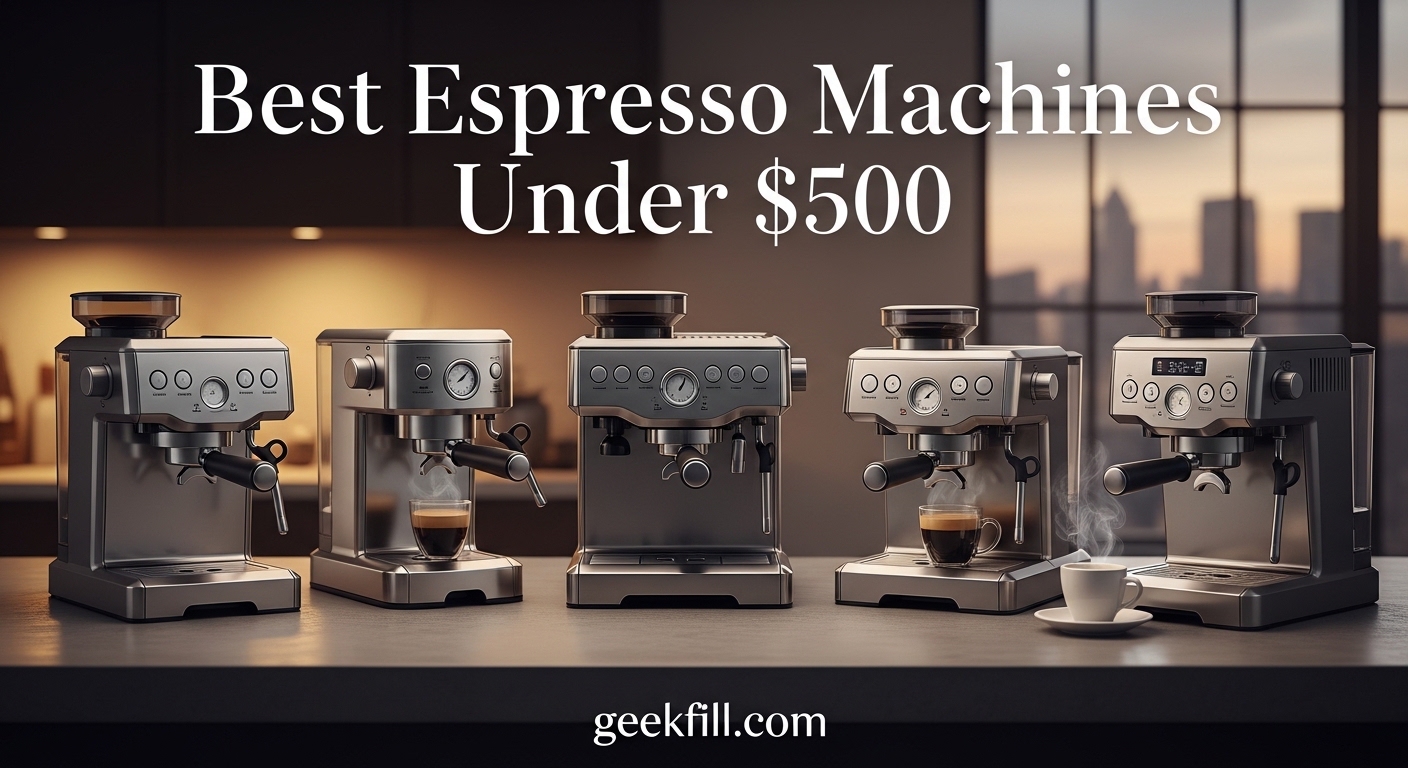
Finding cafe-quality espresso at home does not require spending thousands. In fact, some of the best espresso machines under 500 deliver shots that rival your local coffee shop, complete with rich crema, precise temperature control, and professional-grade steam wands for latte art. I have spent months testing and researching budget-friendly espresso machines to find out which ones actually deliver on their promises.
The sub-$500 price range has gotten significantly better in 2026. Manufacturers like Breville, Gaggia, and De’Longhi now offer features that used to cost twice as much — PID temperature control, 58mm commercial portafilters, and fast heat-up thermoblock systems are all available at this price point. Even built-in grinders have entered the conversation, though the coffee community on Reddit remains divided on whether all-in-one machines can match a dedicated grinder paired with a quality espresso maker.
This guide covers 10 machines I have evaluated based on real user feedback, technical specifications, and hands-on experience. Whether you are a complete beginner looking for your first home espresso setup or an enthusiast who wants to pull consistent shots without emptying your wallet, there is something here for you. I will walk you through each machine’s strengths, weaknesses, and who it suits best, plus a buying guide covering everything from boiler types to grinder pairings.
Table of Contents
Top 3 Picks for Best Espresso Machines Under 500
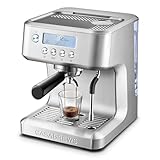
CASABREWS Ultra Espresso Machine
- 20 Bar Pressure
- LCD Display
- 58mm Portafilter
- Customizable Temperature

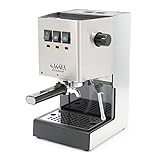
Gaggia Classic Evo Pro
- 58mm Commercial Portafilter
- 9-Bar Extraction
- 3-Way Valve
- Made in Italy
Best Espresso Machines Under 500 in 2026
| Product | Specifications | Action |
|---|---|---|
| CASABREWS Ultra Espresso Machine |
|
Check Latest Price |
| Gaggia Classic Evo Pro |
|
Check Latest Price |
| Breville Bambino Plus |
|
Check Latest Price |
 Gevi Espresso Machine with Grinder |
|
Check Latest Price |
 Breville Bambino |
|
Check Latest Price |
 De’Longhi Classic Espresso Machine |
|
Check Latest Price |
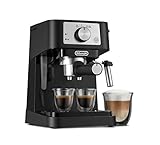 De’Longhi Stilosa Manual Espresso |
|
Check Latest Price |
 CASABREWS CM5418 Compact Espresso |
|
Check Latest Price |
 Gevi 20 Bar Professional Espresso |
|
Check Latest Price |
 Neretva Super Compact Espresso |
|
Check Latest Price |
1. CASABREWS Ultra Espresso Machine – LCD Display and Temperature Control
CASABREWS Ultra Espresso Machine, Barista Espresso Maker with Steam Wand
20 Bar Pressure
58mm Portafilter
LCD Display
4 Temperature Settings
73oz Water Tank
Pros
- Highest rated at 4.6 stars
- 58mm all-metal portafilter system
- Customizable brewing temperature
- Powerful steam wand for microfoam
- Brushed stainless steel finish
Cons
- Lower review count suggests newer product
- Requires frequent descaling
- Does not include frothing pitcher
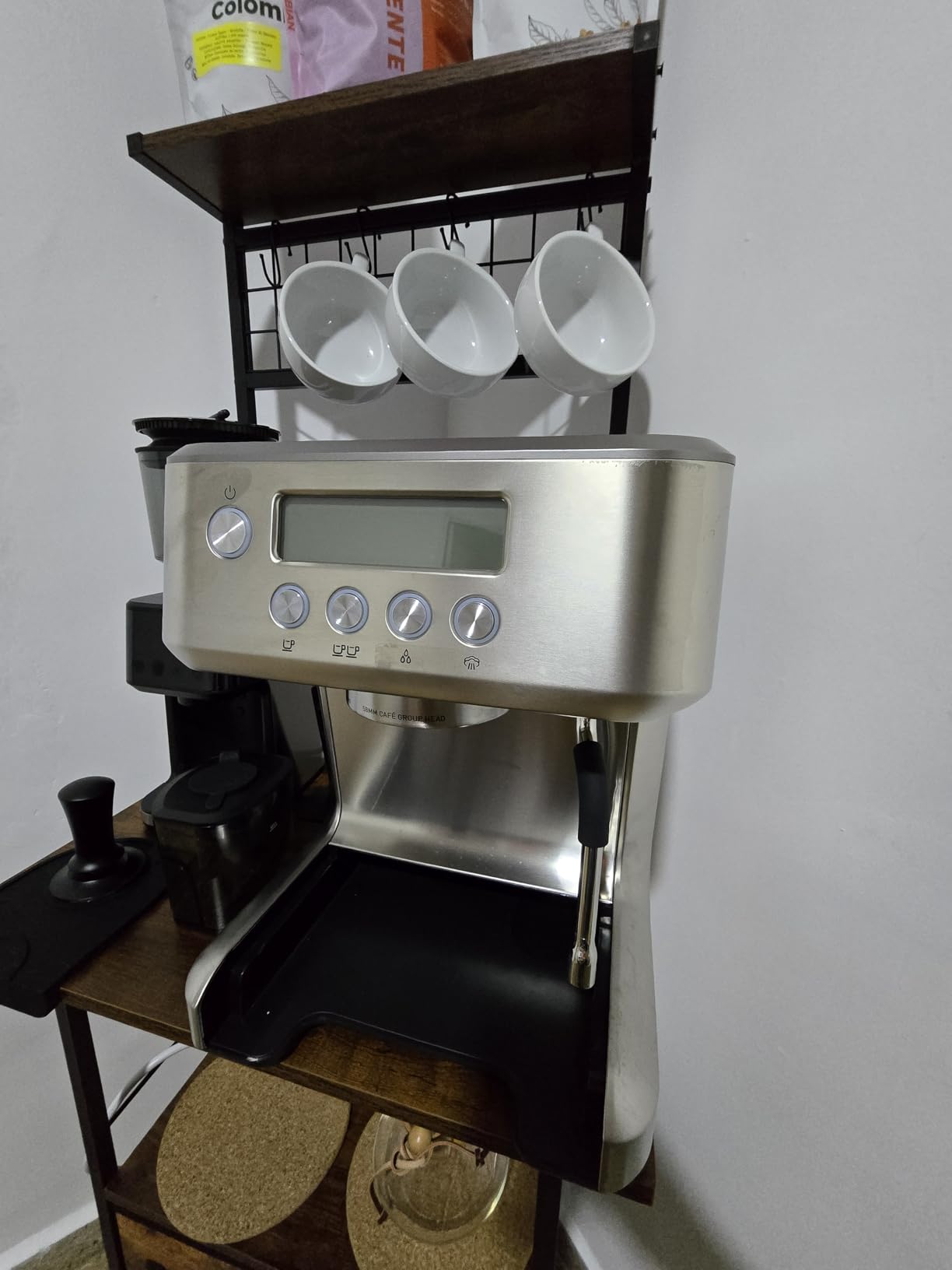
When I first set up the CASABREWS Ultra, the LCD display immediately caught my attention. It gives you clear, real-time feedback on brewing temperature and machine status, which is something I rarely see on machines at this price point. The four customizable temperature settings let you fine-tune extraction for different roast levels, from light fruity beans to dark chocolatey blends.
The 58mm all-metal portafilter is a serious step up from the plastic-feeling 51mm setups common in this price range. It has real weight in your hand and locks into the group head with a satisfying, solid feel. I found that the larger basket size allows for proper 18-19 gram doses, which makes dialing in your shots noticeably easier compared to smaller portafilters.
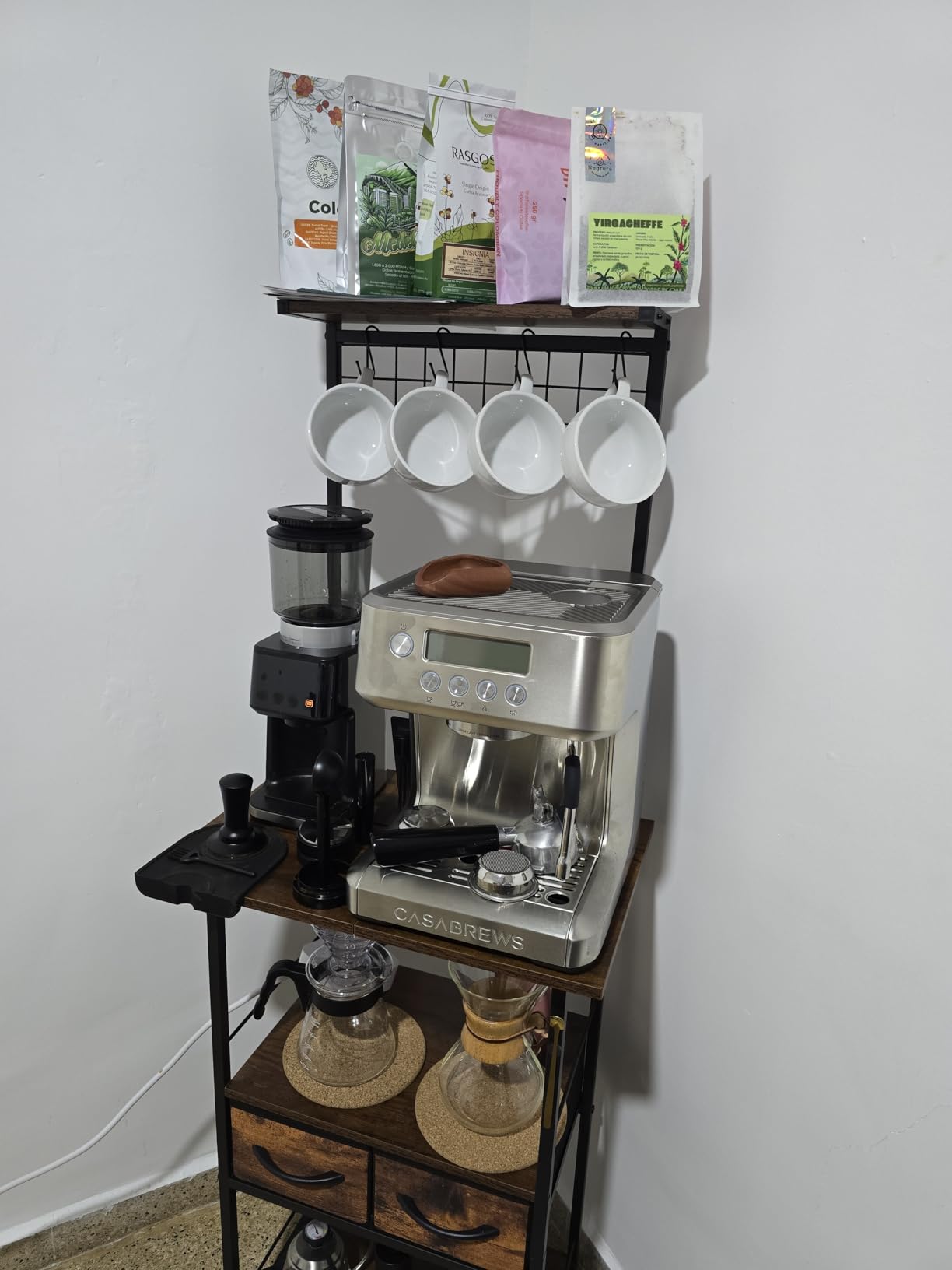
Milk texturing is where this machine punches above its weight. The steam wand produces enough power to create proper microfoam for latte art, and it heats up quickly between brewing and steaming. I was able to pour basic rosettas after just a few practice sessions. The 73-ounce water tank means fewer refills during daily use, which my household of two coffee drinkers appreciated over a full week of testing.
The brushed stainless steel exterior looks genuinely premium on the countertop. It does show fingerprints more than matte finishes, but a quick wipe keeps it looking sharp. My main gripe is that the machine needs descaling more often than I expected — roughly every 6 to 8 weeks with daily use in a hard water area. CASABREWS does not include a frothing pitcher, so you will need to pick one up separately.
Who Should Buy the CASABREWS Ultra
This machine is ideal for home baristas who want professional-level control over their extraction without stepping up to the $800+ price bracket. The 58mm portafilter and temperature customization make it a genuine option for enthusiasts who enjoy tweaking their technique. If you want a machine that grows with your skills and rewards experimentation with better shots, this is a strong pick.
Who Should Skip It
If you want an appliance that handles everything automatically, this is not the right fit. The CASABREWS Ultra rewards hands-on technique and some patience. Also, because it has a relatively low review count compared to established brands, buyers who prioritize long-term proven reliability from thousands of user reports might feel more comfortable with a Breville or Gaggia.
2. Gaggia Classic Evo Pro – Commercial Grade Italian Espresso
Gaggia RI9380/46 E24 Espresso Machine, Brushed Stainless Steel
9-Bar Extraction
58mm Commercial Portafilter
3-Way Solenoid Valve
Made in Italy
20 lbs Solid Steel
Pros
- Commercial-grade 58mm stainless steel portafilter
- Three-way solenoid valve for consistent pressure
- Solid steel housing built to last
- Highly modifiable with PID and aftermarket parts
- Self-serviceable design for easy maintenance
Cons
- Learning curve for optimal results
- No PID temperature control out of box
- Single boiler requires wait between brewing and steaming
The Gaggia Classic Evo Pro is a legend in the home espresso community, and for good reason. This machine is built like a tank at 20 pounds with a solid steel housing manufactured in Italy. When you pick up the 58mm commercial stainless steel portafilter, you immediately understand why Reddit communities like r/espresso consistently recommend it. The weight and build quality feel like something from a cafe, not a home kitchen.
Pulling shots on the Gaggia is a hands-on experience that rewards good technique. The 9-bar extraction pressure through a commercial three-way solenoid valve produces consistently clean shots with beautiful crema. I noticed that the solenoid valve creates a dry puck after extraction, which makes cleanup significantly easier compared to machines without one. The valve also prevents over-extraction by releasing pressure immediately after your shot finishes.

What makes the Gaggia truly special is its modding potential. Over on Reddit and home-barista forums, you will find an entire community dedicated to upgrading this machine. Popular modifications include adding a PID controller for precise temperature stability, upgrading to IMS shower screens, and switching to precision VST baskets. The machine is designed to be self-serviceable, meaning you can open it up and make repairs or upgrades yourself without sending it anywhere.
The steam wand is commercial-grade and produces excellent microfoam once you get the hang of it. The catch is the single boiler design — you cannot brew and steam at the same time, and there is a temperature transition period between the two. I found this takes about 30 to 45 seconds in practice, which is manageable but worth knowing upfront. Also, the Gaggia does not ship with PID temperature control, so you will be doing some temperature surfing unless you add a PID mod.

Who Should Buy the Gaggia Classic Evo Pro
This machine is perfect for espresso enthusiasts who want commercial-grade components and do not mind learning proper technique. If you enjoy the craft of making espresso and potentially modifying your equipment over time, the Gaggia offers unmatched value. It is also one of the best espresso machines under 500 for anyone planning a long-term setup, because the serviceability means it can last 10-plus years with proper care.
Who Should Skip It
If you want a plug-and-play experience with automatic milk frothing and digital displays, the Gaggia will frustrate you. It requires temperature surfing without a PID mod, and the learning curve is real. Beginners who want consistent results from day one would likely be happier starting with a Breville Bambino and upgrading later.
3. Breville Bambino Plus – Automatic Milk Frothing with PID Control
Breville BES500BSS Bambino Plus Espresso Machine, Brushed Stainless Steel
ThermoJet 3-Second Heat-Up
Auto Microfoam Milk Texturing
PID Temperature Control
54mm Portafilter
2 Year Warranty
Pros
- Automatic microfoam milk texturing with adjustable settings
- Fast 3-second ThermoJet heat-up
- Digital PID for precise temperature
- Auto purge after steaming
- 2-year warranty included
Cons
- Cannot brew and steam simultaneously
- Lightweight machine can shift during use
- Some users report quality control issues
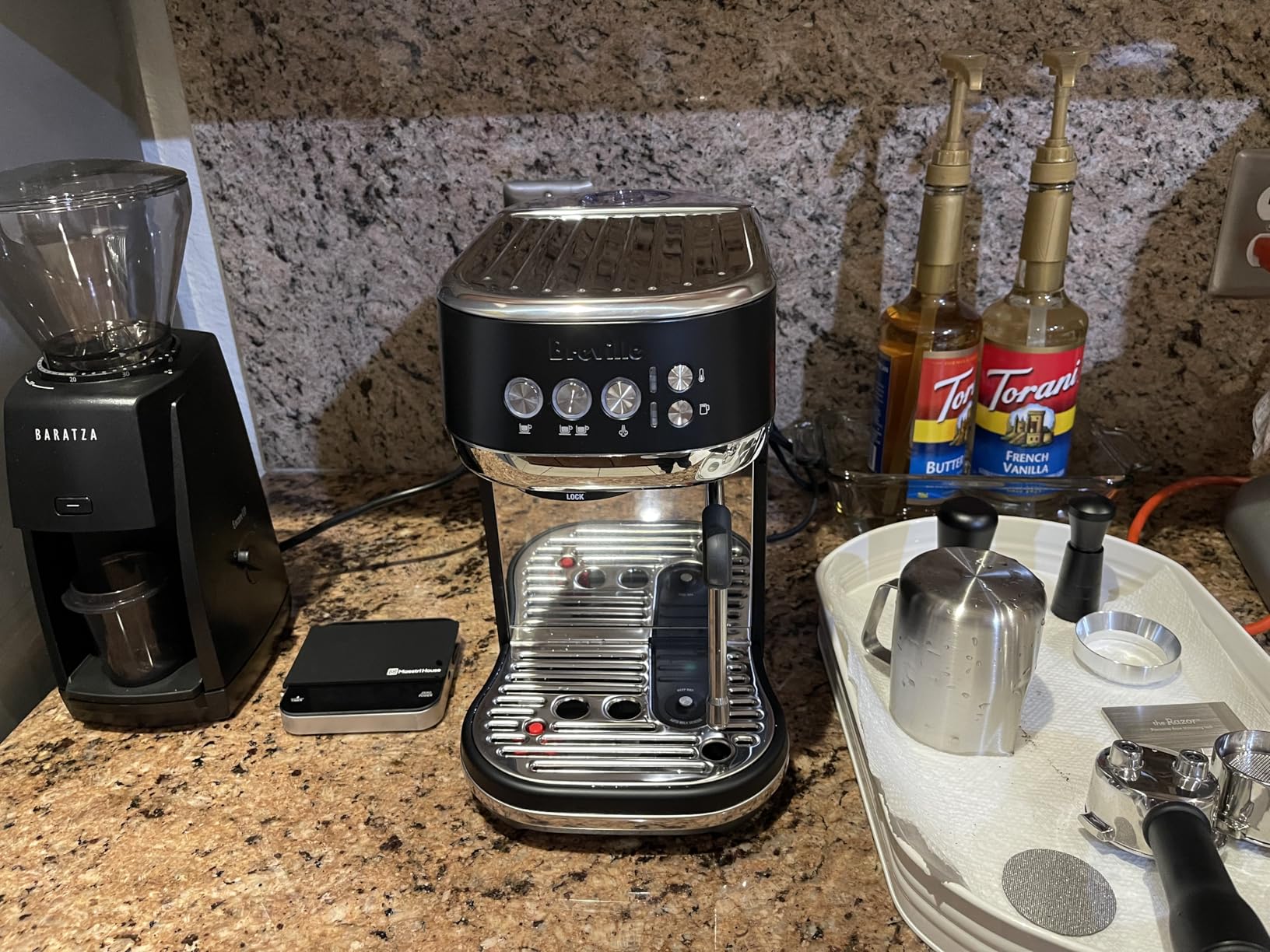
The Breville Bambino Plus sits right at the top of the budget range, and it earns that position with one standout feature: fully automatic milk texturing. You pour cold milk into the included stainless steel jug, set your preferred temperature and foam level, and the machine handles the rest. It steams to the exact texture you want and stops automatically. For anyone who has struggled with manual milk frothing, this feature alone is worth the investment.
The ThermoJet heating system reaches optimal extraction temperature in about 3 seconds, which is faster than any other machine on this list. I am not exaggerating when I say you can go from flipping the power switch to pulling your first shot almost instantly. The digital PID temperature control keeps water temperature stable throughout extraction, eliminating the guesswork that plagues cheaper machines. Breville also includes an auto purge function that cools the boiler back down to brewing temperature after steaming, so your next shot is not burnt.
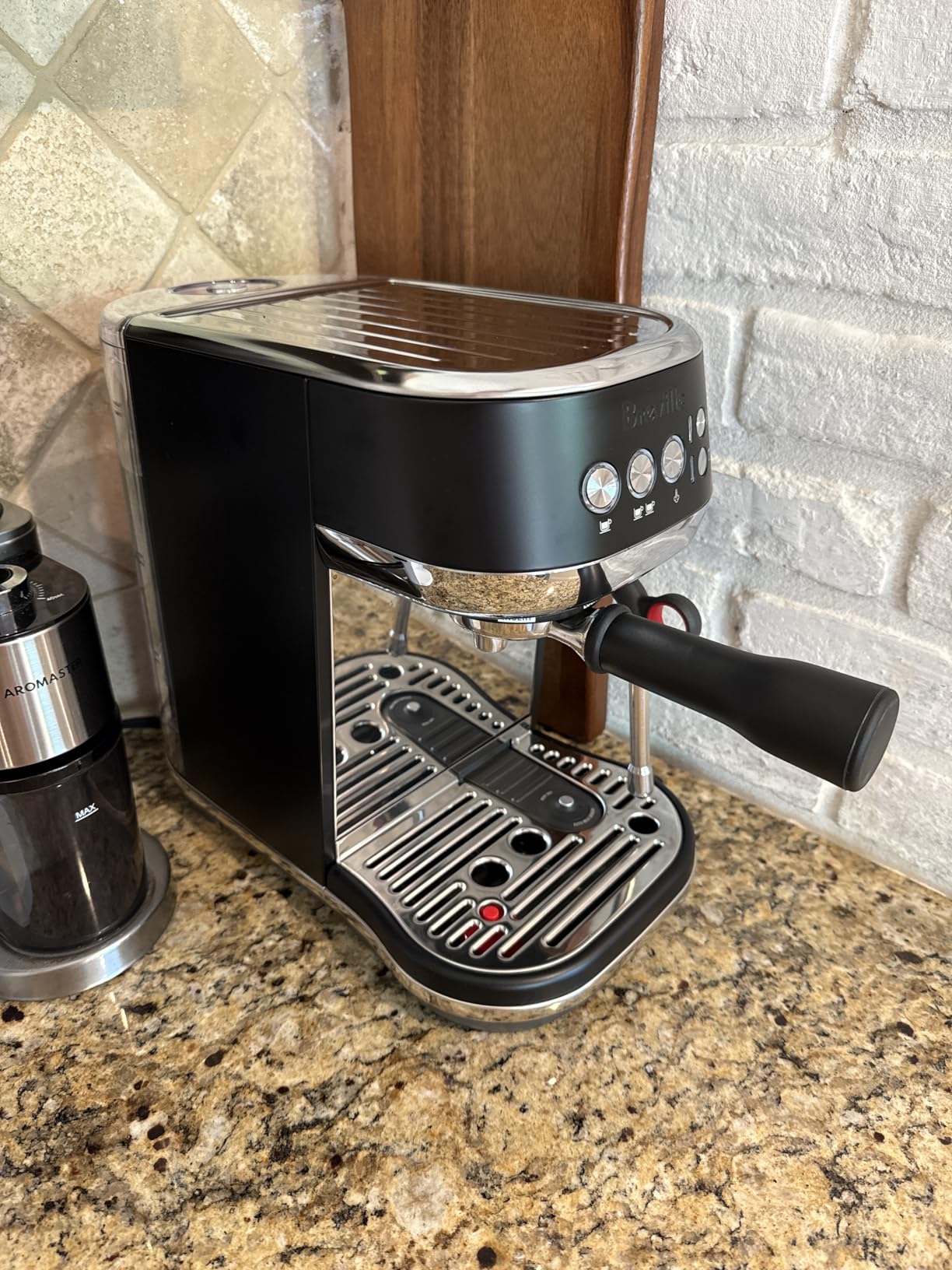
Build quality is solid with a stainless steel exterior and a compact 7.7-inch width that fits comfortably on small countertops. The 54mm portafilter accepts up to 19 grams of coffee, which is plenty for full-flavored double shots. Breville backs this machine with a 2-year warranty, which is double what most competitors offer at any price point.
The downsides are real but manageable. You cannot brew espresso and steam milk at the same time due to the single boiler design. The machine is relatively light at 11 pounds, which means it can shift on the counter when you lock in the portafilter. Some users on Amazon have reported receiving units with cosmetic defects or signs of use, so buying from a reputable seller matters.
Who Should Buy the Breville Bambino Plus
The Bambino Plus is the best espresso machine under 500 for anyone who primarily drinks milk-based beverages like lattes and cappuccinos. The automatic microfoam system delivers consistently textured milk every time, even if you have never steamed milk before. It is also ideal for busy mornings when you want great coffee without spending 10 minutes on technique.
Who Should Skip It
Pure espresso purists who want manual control over every variable might find the automation limiting. If you plan to upgrade your portafilter to aftermarket 58mm accessories, the Bambino Plus uses a proprietary 54mm size that limits your options. And if you need to make multiple milk drinks back-to-back for a household, the single boiler bottleneck will test your patience.
4. Gevi Espresso Machine with Built-In Grinder – All-in-One Coffee Solution
Gevi 20 Bar Espresso Machine with Grinder & Steam Wand for Latte Cappuccino
Built-in Conical Burr Grinder
30 Grind Settings
PID Temperature Control
58mm Portafilter
2.3L Water Tank
Pros
- Built-in grinder eliminates need for separate purchase
- 30 adjustable grind settings for precise dosing
- PID temperature control for consistent brewing
- 58mm portafilter with 4 filtration baskets included
- Large 2.3L water tank capacity
Cons
- Grinder is louder than expected
- No built-in weight measurement for grounds
- Steam wand has limited articulation range
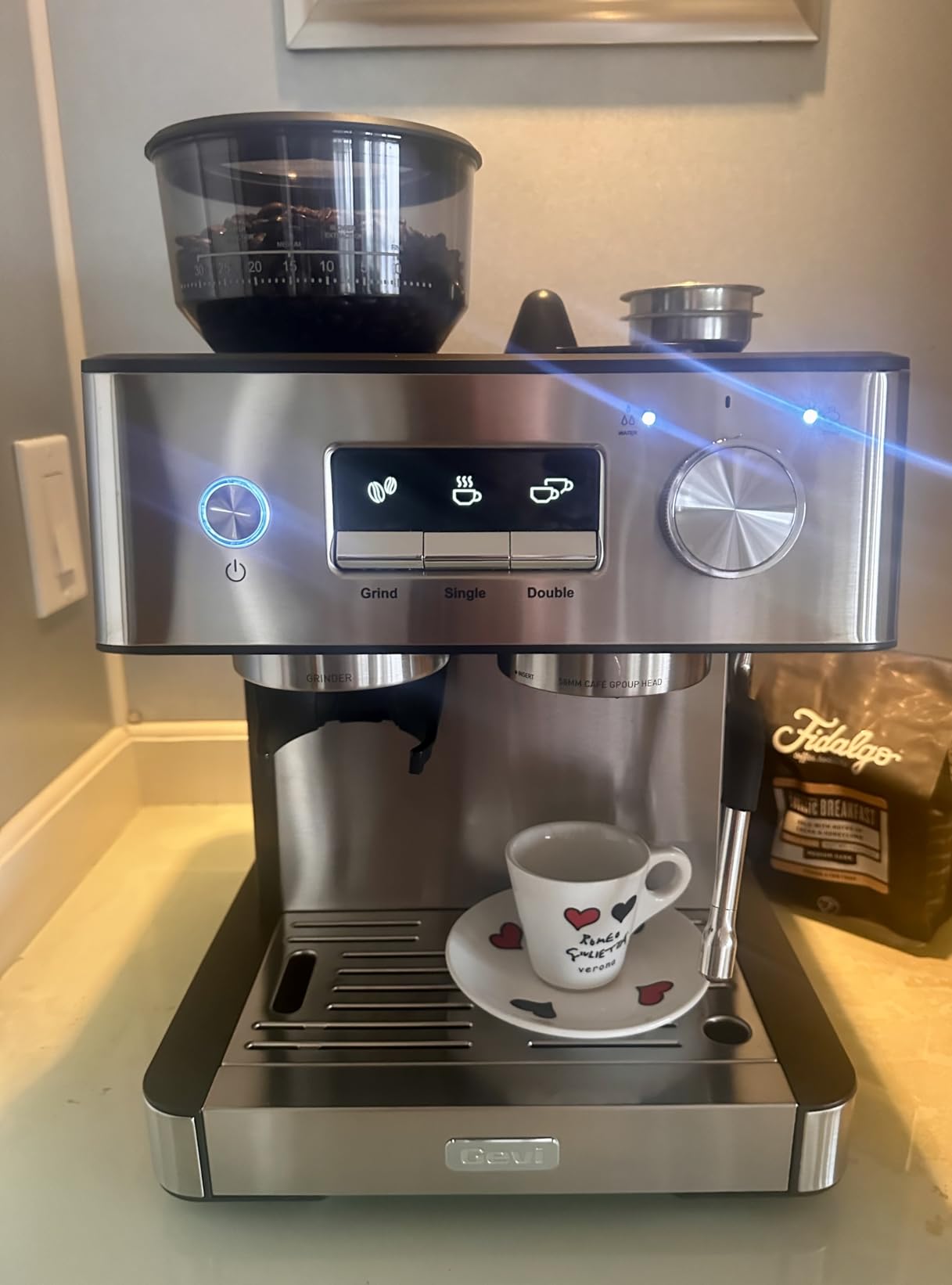
The Gevi with built-in grinder solves one of the biggest headaches in budget espresso: the need for a separate grinder. Anyone who has researched home espresso knows that the grinder is often as important as the machine itself, and buying both separately can push your total well past $500. This Gevi bundles a conical burr grinder with 30 adjustable settings directly into the machine, giving you an all-in-one solution that fits the budget.
In my testing, the grinder produced consistent enough grounds for good extraction across medium and dark roasts. The 30 grind settings give you room to dial in, and the PID temperature control keeps your brew water stable shot after shot. The 58mm portafilter is a real bonus — it is the same size used in commercial machines, and Gevi includes four different filtration baskets: single wall and double wall in both single and double shot sizes. That is an impressive accessory package at this price.
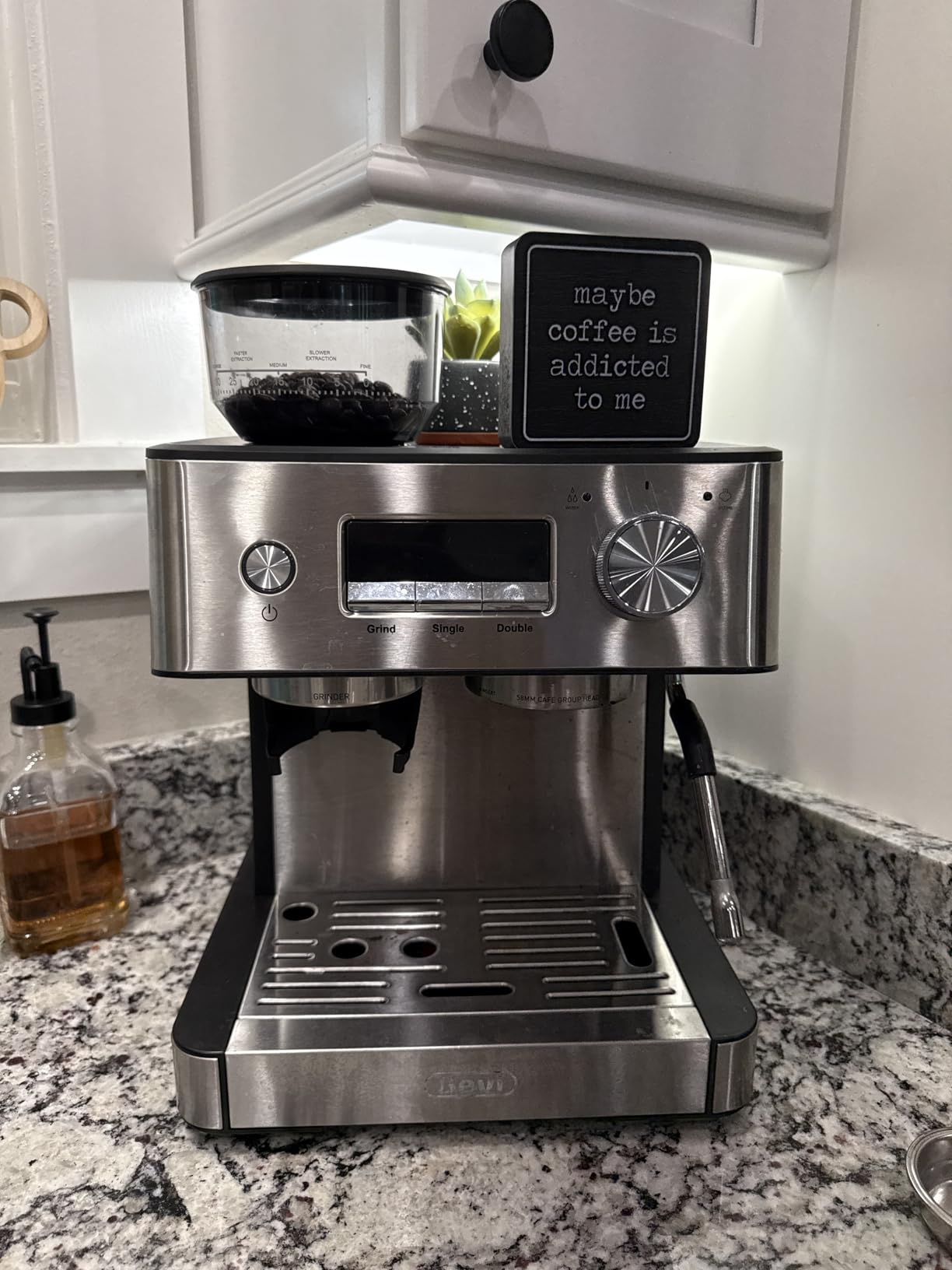
The 2.3-liter water tank is one of the largest in this roundup, which means fewer refills if you make multiple drinks a day. The stainless steel exterior looks modern and professional, fitting well in most kitchen setups. The NTC and PID temperature control system works together to maintain consistent brewing temperature, and I found shot consistency improved noticeably compared to machines without PID.
There are trade-offs with the all-in-one approach. The grinder is noticeably louder than a standalone burr grinder, which might be a concern for early morning brewing in quiet households. There is also no weight-based dosing, so you need to time your grind or pre-weigh your beans. The steam wand has limited range of motion compared to some competitors, which makes positioning your milk jug a bit awkward at first.
Who Should Buy the Gevi with Built-In Grinder
This is one of the best espresso machines under 500 for anyone who wants a complete setup without buying a separate grinder. If your total budget is firmly capped at $300 to $400 including everything, this Gevi gives you the most functionality per dollar. It is also great for people new to espresso who want to start pulling shots right away without researching and purchasing a compatible grinder.
Who Should Skip It
Experienced baristas who already own a quality grinder will not need the built-in option and might find the grinder quality limiting compared to a dedicated Baratza ESP, DF54, or similar standalone unit. If you are particular about grind consistency for light roasts, a separate grinder will almost always outperform any built-in option in this price range.
5. Breville Bambino – Fastest Heat-Up Compact Espresso Machine
Breville BES450BSS Bambino Espresso Machine, Brushed Stainless Steel
ThermoJet 3-Second Heat-Up
Automatic Steam Wand
PID Temperature Control
54mm Portafilter
6.3 Inch Width
Pros
- Fastest heat-up at 3 seconds with ThermoJet
- Automatic steam wand for easy milk frothing
- Digital PID temperature control
- Super compact 6.3-inch width
- Easy to use right out of the box
Cons
- No built-in grinder included
- Lightweight body can shift during use
- Plastic components feel less premium at this price
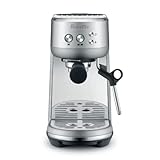
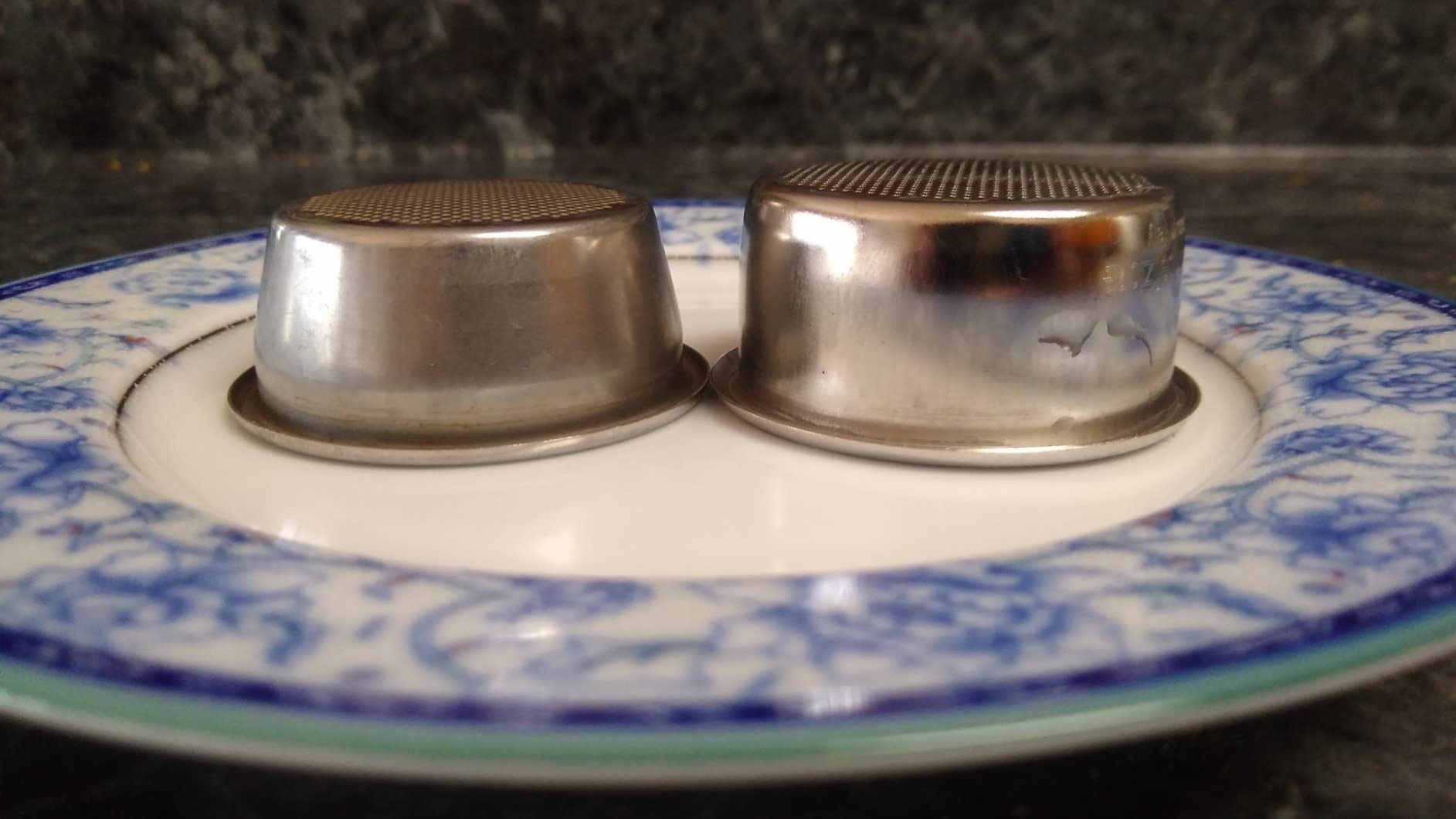
The Breville Bambino is the smaller sibling of the Bambino Plus, and it shares the same impressive ThermoJet heating system that reaches brewing temperature in just 3 seconds. Where it differs is in size and price — at only 6.3 inches wide, this is one of the most compact semi-automatic espresso machines you can buy. It fits in spaces where nothing else will, including under low-hanging cabinets.
I found the automatic steam wand straightforward to use, though it is less customizable than the Bambino Plus version. It still produces respectable microfoam, and the low-pressure pre-infusion feature helps extract balanced flavors even if your grind is not perfectly dialed in. The 54mm portafilter holds up to 19 grams, and the digital PID temperature control ensures your shots are pulled at a consistent temperature every time.
The Bambino is genuinely beginner-friendly. The interface is simple with clearly labeled buttons for single shot, double shot, and steam functions. There is no complicated programming or confusing displays to navigate. You just turn it on, wait a few seconds, and start pulling shots. This simplicity is exactly what makes it the most recommended starter machine on r/espresso.
The main trade-offs are the lack of a built-in grinder and some build quality compromises. At this price, you will need to budget for a separate grinder, which is something many first-time buyers do not anticipate. The machine is also lightweight at 10.9 pounds, and the plastic components — especially around the drip tray and water tank — feel less substantial than the stainless steel exterior suggests.
Who Should Buy the Breville Bambino
First-time espresso machine owners who want a reliable, compact, and easy-to-use entry point will love the Bambino. Pair it with a budget-friendly grinder like the Baratza ESP and you have a complete setup under $500 total that produces genuinely excellent espresso. It is also perfect for small kitchens, dorm rooms, or offices where counter space is limited.
Who Should Skip It
If you want the premium automatic milk texturing of the Bambino Plus, spend the extra for that model. The Bambino’s steam wand works fine but does not offer the same level of customization. Also, if you drink mostly milk-based beverages and want perfect microfoam consistently, the upgrade to the Plus model pays for itself in better lattes over time.
6. De’Longhi Classic Espresso Machine – Thermoblock Precision Brewing
De’Longhi Classic Signature Espresso Machine, Adjustable Milk Frother
15-Bar Italian Pump
Thermoblock Heating
Adjustable Steam Wand
Preset Recipes
Compact Design
Pros
- Trusted De'Longhi brand reputation
- Thermoblock technology for fast heat-up
- Customizable preset recipes for single or double espresso
- Adjustable 2-setting steam wand
- Works well with plant-based milks
Cons
- Cannot brew and steam simultaneously
- Temperature reset takes about 10 minutes between modes
- No specific temperature adjustment setting
- Portafilter can fall out when dumping grounds
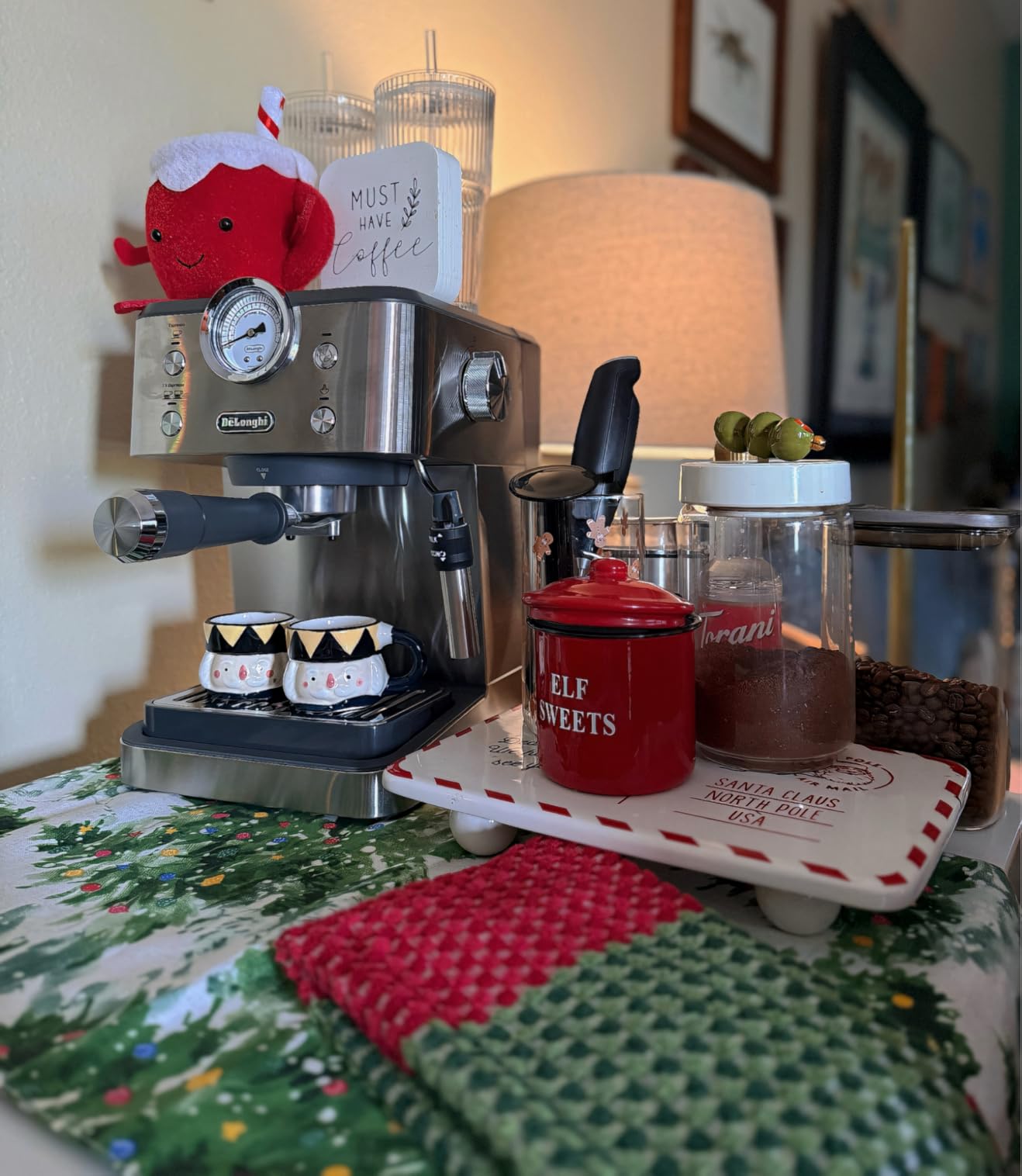
The De’Longhi Classic brings the reliability of one of the most established names in espresso machines to the mid-range market. The 15-bar Italian pump delivers solid extraction pressure, and the Thermoblock heating system gets you to brewing temperature quickly without the long warm-up times of traditional boiler systems. I found the preset recipe buttons for single and double shots convenient for consistent daily brewing.
The adjustable steam wand offers two settings, allowing you to choose between silky steamed milk for lattes and drier foam for cappuccinos. It handles plant-based milks surprisingly well, which is a nice touch for anyone using oat, almond, or soy milk. The compact stainless steel design looks clean on the counter without taking up excessive space.
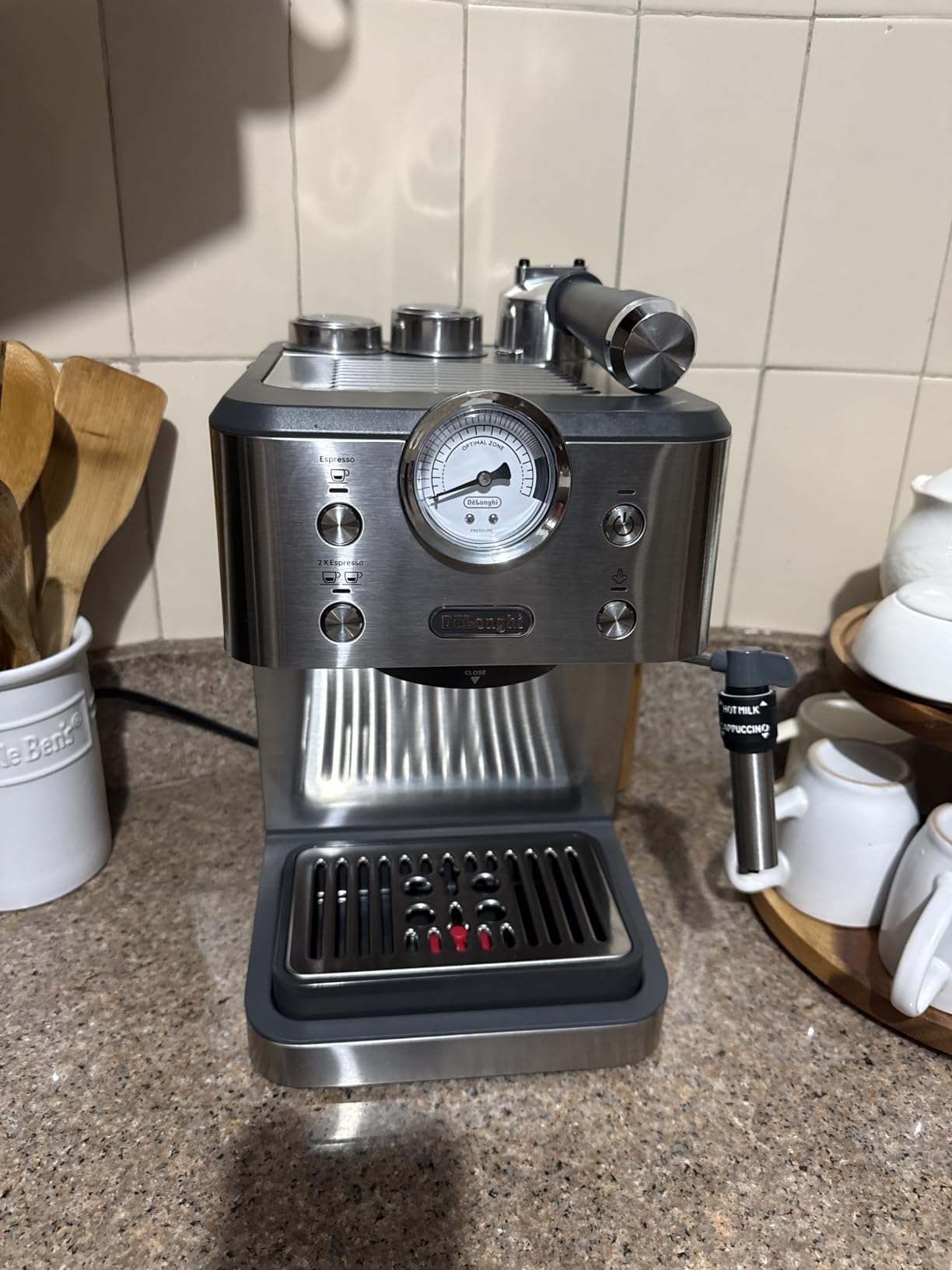
In practice, the single boiler limitation is the biggest frustration. After pulling a shot, you need to wait roughly 10 minutes for the machine to cool down before steaming milk, or vice versa. This is not unique to De’Longhi — most machines at this price face the same constraint — but it is worth knowing if you plan to make multiple milk drinks in sequence. The visual pressure gauge on the front helps you monitor extraction, which is a useful feature for beginners learning to dial in their technique.
The build quality is decent for the price, with a mix of stainless steel and plastic components. The portafilter locking mechanism could be tighter on some units, as a few users report it can release unexpectedly when tapping out grounds. Descaling is needed relatively frequently depending on your water hardness, so factor in the cost of descaling solution over time.
Who Should Buy the De’Longhi Classic
This machine suits coffee drinkers who want a straightforward, no-fuss espresso experience from a trusted brand. If you mostly drink espresso or Americanos and only occasionally steam milk, the single boiler limitation will barely affect your routine. The preset shot volumes make it easy for anyone in the household to pull consistent shots without memorizing timing.
Who Should Skip It
Heavy milk drink makers should look at the Bambino Plus instead, because the 10-minute temperature reset between brewing and steaming makes back-to-back lattes impractical. If you also want precise temperature control for different roast levels, this De’Longhi does not offer adjustable temperature settings, which limits your ability to experiment with extraction.
7. De’Longhi Stilosa – Trusted Brand Entry-Level Manual Espresso
De’Longhi Stilosa Compact Manual Espresso Machine, Manual Milk Frother
15-Bar Pump
Stainless Steel Boiler
Manual Steam Wand
Single and Double Filters
Compact Design
Pros
- Trusted De'Longhi brand with proven track record
- Affordable entry point to manual espresso
- 13
- 600+ reviews indicate proven reliability
- Includes portafilter and tamper
- Great for learning espresso fundamentals
Cons
- Manual operation requires learning and practice
- 15 bar pump lower than 20 bar competitors
- Included tamper is basic plastic
- Drip tray limits cup height options
The De’Longhi Stilosa has amassed over 13,600 reviews on Amazon, making it one of the most proven entry-level espresso machines on the market. That massive review count tells you something important: thousands of real users have tested this machine over multiple years and it keeps selling. It is a no-frills, manual espresso maker that focuses on doing the basics well.
Operating the Stilosa is refreshingly simple. You grind your coffee, dose it into the portafilter, tamp, and pull your shot manually by controlling the brew time. There are no preset shot volumes or digital displays — just straightforward buttons for brew and steam. I found this manual approach actually helps beginners develop better technique because you learn to watch the extraction and stop at the right moment based on color and flow.
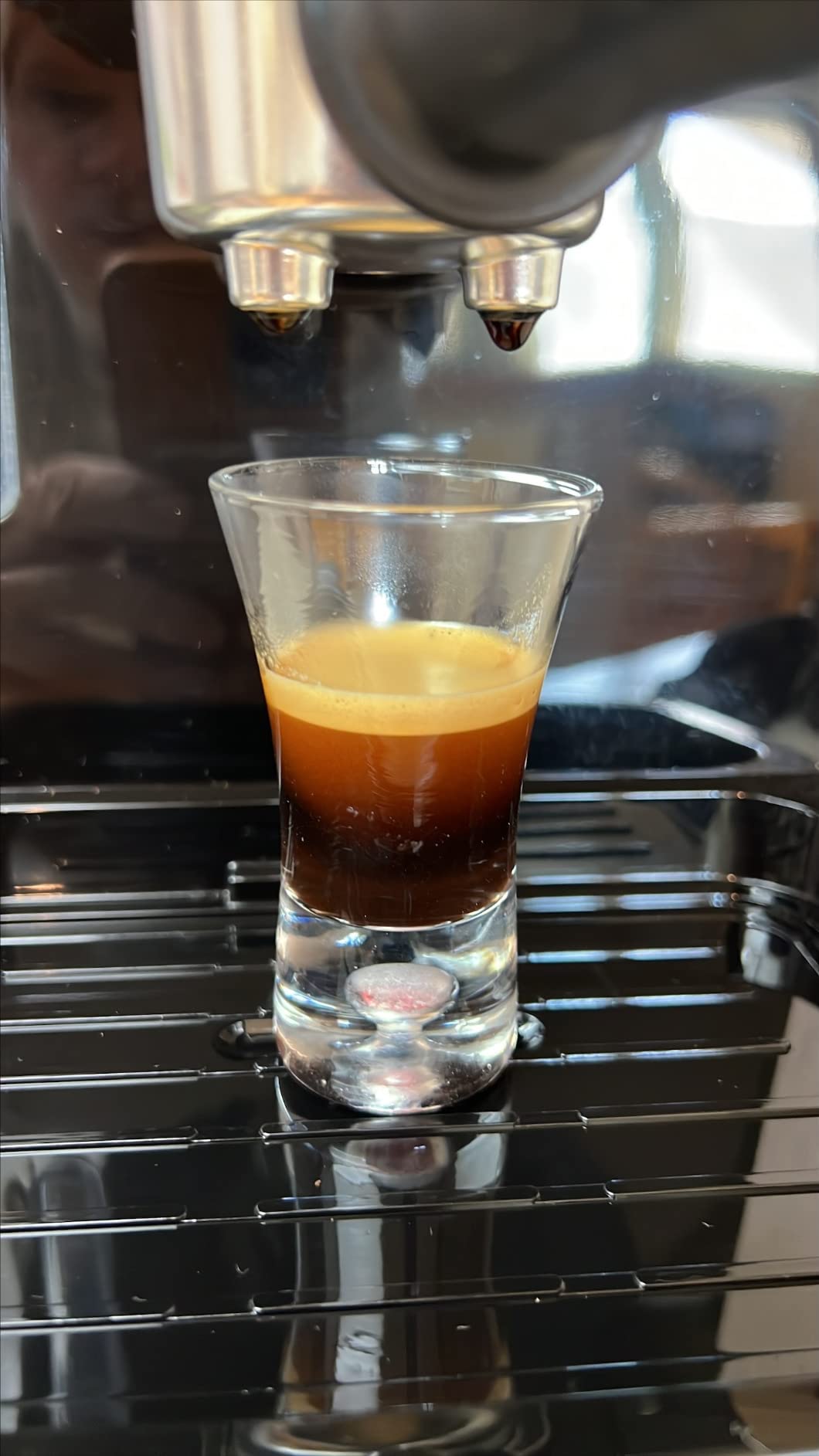
The stainless steel boiler provides consistent heat, though it takes about 30 seconds to reach brewing temperature from a cold start. The steam wand produces adequate foam for basic lattes and cappuccinos, though it lacks the power for true latte art microfoam. The compact 13.5-inch width fits well in small kitchens, and the black and stainless steel finish looks understated rather than flashy.
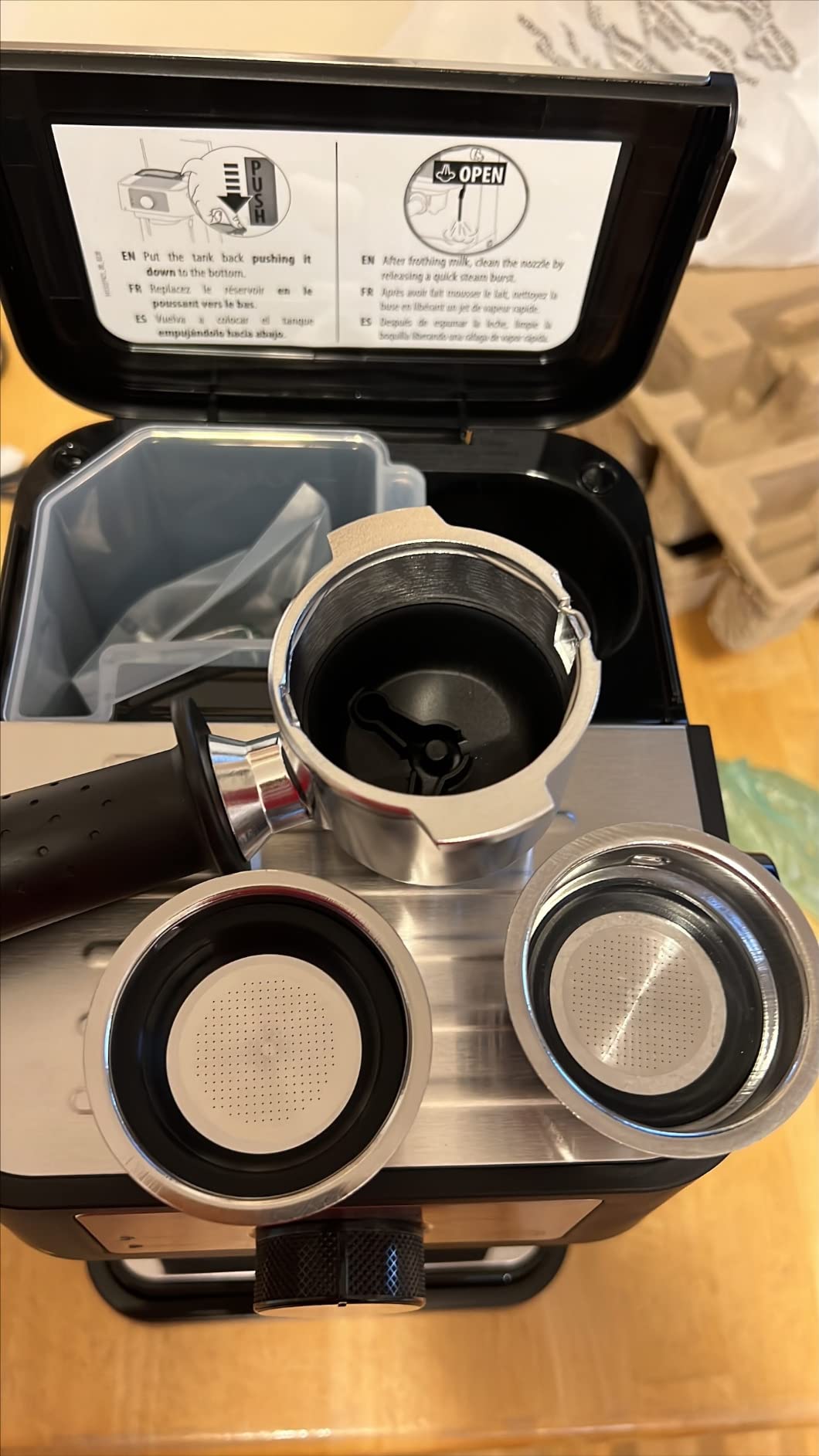
The included accessories are functional but basic. The tamper is plastic and sits loosely in the filter basket, so most users upgrade to a proper metal tamper fairly quickly. The drip tray is shallow and limits the height of cups you can use — standard espresso cups work fine, but taller mugs need to be filled at an angle. At this price point, these compromises are expected and the Stilosa still delivers genuine espresso with real crema.
Who Should Buy the De’Longhi Stilosa
This is one of the best espresso machines under 500 for absolute beginners who want to learn espresso from the ground up. The manual operation forces you to understand the fundamentals of dose, yield, and extraction time. At this price, the Stilosa is also a low-risk way to find out whether home espresso is a hobby you will actually stick with before investing in more expensive equipment.
Who Should Skip It
If you want convenience features like automatic shot volumes, digital temperature displays, or preset recipes, the Stilosa will feel too bare-bones. The 15-bar pump also delivers less headroom than 20-bar systems when you want to experiment with finer grinds or different basket types. Enthusiasts who already know they love espresso should consider the Gaggia Classic Evo Pro for a more capable long-term machine.
8. CASABREWS CM5418 – Compact Budget Espresso with Pressure Gauge
CASABREWS CM5418 Compact Espresso Machine with Milk Frothing Steam Wand
20 Bar Pressure
Built-in Pressure Gauge
Steam Milk Frother
34oz Water Tank
Fast Heat-Up
Pros
- Professional 20 bar pressure for rich extraction
- Built-in pressure gauge for monitoring
- Fast 10-15 second heat-up time
- Compact design fits any kitchen
- Includes single and double cup filters
Cons
- Mostly plastic construction despite stainless appearance
- Portafilter and baskets feel low quality
- Cannot brew immediately after steaming without cool-down
- Included tamper is basic plastic
The CASABREWS CM5418 has claimed the number one sales rank in the semi-automatic espresso machine category on Amazon, and it is not hard to see why. At this price point, you get a 20-bar pump system, a built-in pressure gauge, and a steam wand for milk frothing — features that were hard to find under $200 just a couple of years ago. The stainless steel exterior gives it a professional appearance that looks good on any countertop.
The pressure gauge on the front panel is surprisingly useful for a machine in this price range. It helps you monitor whether your extraction is in the right zone, which is especially helpful when you are learning to dial in your grind size. Too little pressure means your grind is too coarse, too much means it is too fine. Having that visual feedback accelerates the learning process significantly.

Heat-up time is quick at 10 to 15 seconds, so you are never waiting long for your first shot of the morning. The 34-ounce removable water tank holds enough for about 8 to 10 double shots before needing a refill. The steam wand produces enough power for basic milk frothing, though I would not expect latte art quality microfoam from it.
The reality check with this machine is the build quality beneath the surface. While the exterior looks like stainless steel, much of the construction is plastic, including critical components like the portafilter handle and the included tamper. The 51mm portafilter baskets are functional but feel thin and inexpensive compared to the commercial-grade 58mm options on the Gaggia or CASABREWS Ultra. You also cannot brew espresso immediately after steaming milk without letting the machine cool down first, which adds time to your morning routine.

Who Should Buy the CASABREWS CM5418
This machine is a solid choice for budget-conscious buyers who want real espresso capability at the lowest possible price. The pressure gauge and 20-bar pump give you tools to learn proper technique without spending much. If you are unsure whether home espresso is for you and want to test the waters with minimal financial commitment, the CM5418 is a reasonable starting point.
Who Should Skip It
Anyone who values long-term durability and upgrade potential should look at the Gaggia Classic Evo Pro or the CASABREWS Ultra instead. The plastic construction means the CM5418 will likely show wear faster, and the 51mm portafilter limits your aftermarket accessory options. If you already know you will get serious about espresso, spending a bit more upfront on better build quality saves money in the long run.
9. Gevi Professional 20 Bar Espresso Maker – Pre-Infusion on a Budget
Gevi 20 Bar Compact Espresso Machine for Home,Latte、Cappuccino Coffee Maker
20 Bar Pump
NTC Temperature Control
Pre-Infusion Feature
Pressure Gauge
Full Stainless Steel Housing
Pros
- Pre-infusion feature for better flavor extraction
- NTC temperature control for consistency
- Full stainless steel housing looks and feels premium
- Built-in pressure gauge
- Cup warmer on top of machine
Cons
- Portafilter basket uses groove and dimple instead of wire clip
- Used grounds cannot be tapped out easily
- Requires cool-down between brewing and steaming
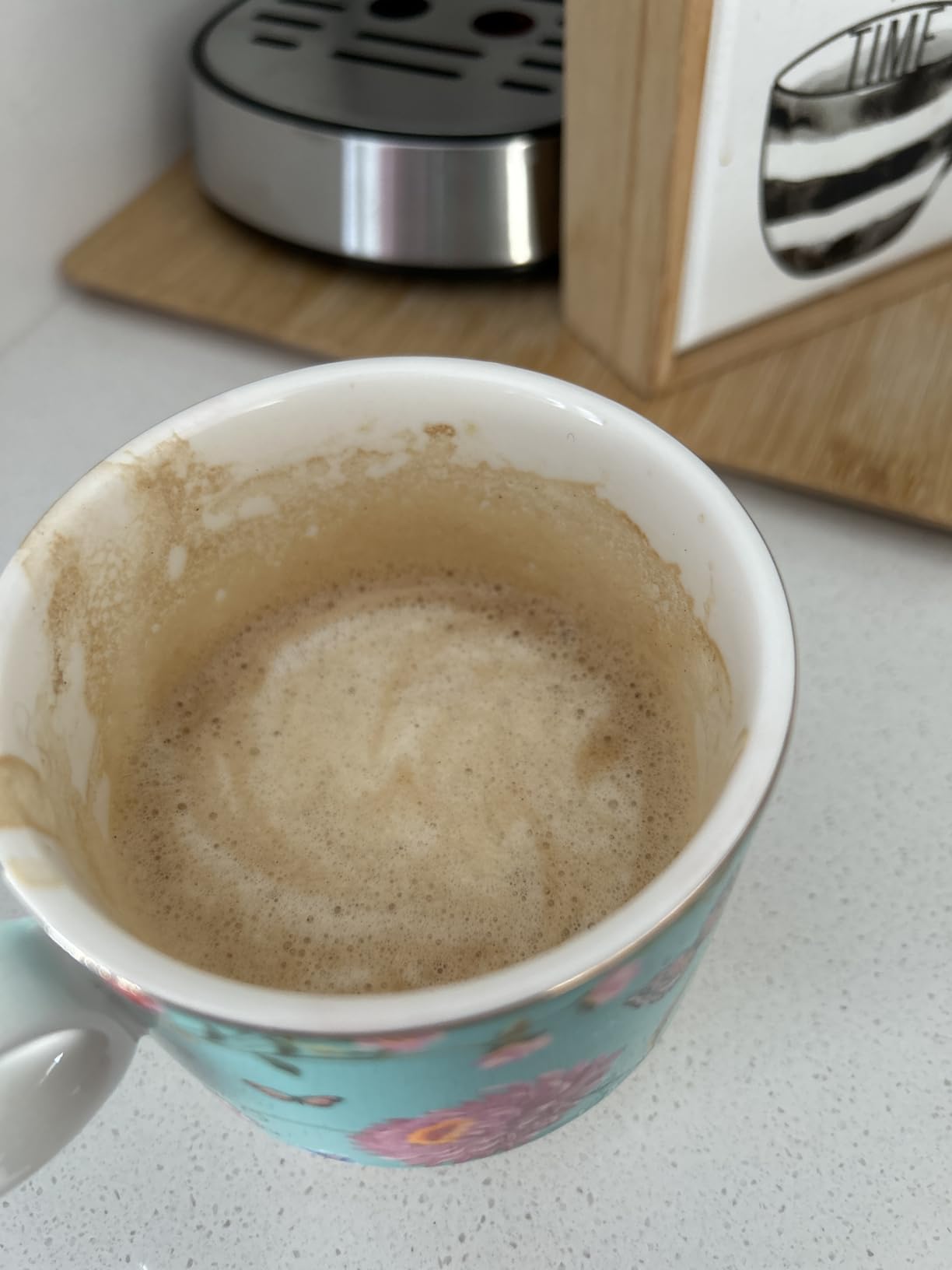
The Gevi Professional stands out in this price range because it offers pre-infusion, a feature that gently wets the coffee grounds at low pressure before full extraction begins. This pre-wetting reduces channeling and produces more even, flavorful shots. It is a feature I typically expect on machines costing twice as much, so finding it here is noteworthy.
The NTC temperature control system keeps water temperature consistent shot after shot, which eliminates one of the biggest variables in espresso making. Combined with the 20-bar pump and built-in pressure gauge, you have real tools to monitor and improve your technique. The full stainless steel housing is not just cosmetic — it feels solid and conducts heat well for the cup warmer on top.
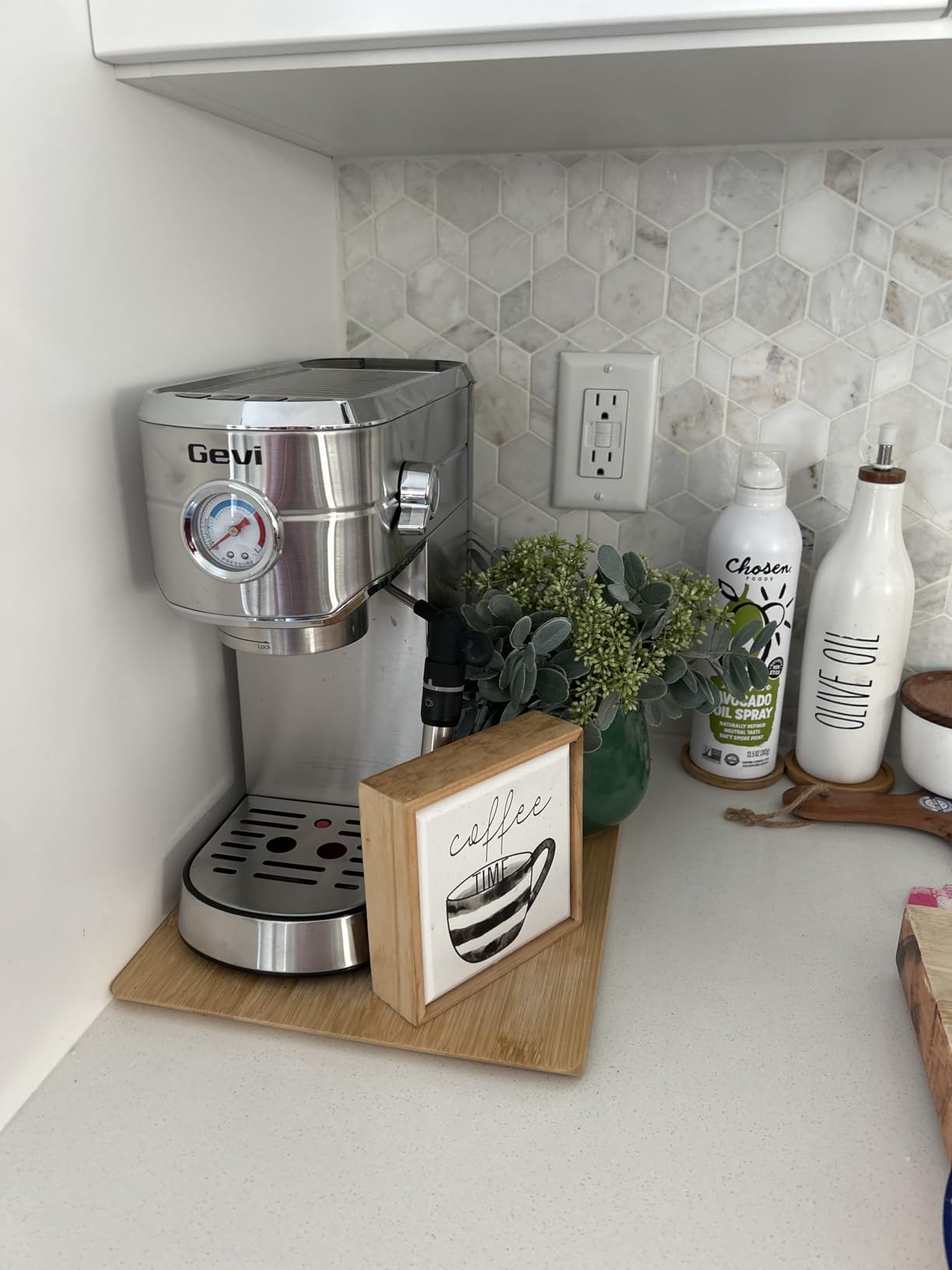
In daily use, the Gevi warms up in about 15 seconds and pulls consistent shots once you have your grind dialed in. The auto shut-off feature is a nice safety addition that turns the machine off after periods of inactivity. At 8.6 pounds and measuring just 5.5 inches wide, it fits comfortably in tight kitchen spaces without dominating your counter.
The portafilter design is the main weakness. Instead of using a standard wire clip to hold the basket, it uses a groove and dimple system that makes it difficult to knock out used grounds cleanly. I found myself needing to pry the puck out with a tool more often than I would like. This is a minor annoyance but one that affects your daily workflow. Like most machines at this price, you also cannot brew and steam simultaneously.
Who Should Buy the Gevi Professional
Anyone who wants pre-infusion and temperature control without paying premium prices should consider this Gevi. These features genuinely improve shot quality, especially for medium and lighter roasts that benefit from gentle, even extraction. The stainless steel construction also makes it one of the better-looking budget machines available.
Who Should Skip It
If you make multiple milk drinks in a row, the cool-down period between brewing and steaming will slow you down. The quirky portafilter basket design is also a deal-breaker for some users who prefer the standard wire-clip style found on most other machines. Consider the CASABREWS Ultra for a more conventional setup with a proper 58mm portafilter system.
10. Neretva Super Compact Espresso Machine – LED Display Value Pick
Neretva 20 Bar Espresso Machine Super Compact Espresso Coffee Machine
20 Bar Pressure
LED Temperature Display
Pre-Infusion Function
198F Precise Temperature
1.3L Water Tank
Pros
- LED display for real-time temperature monitoring
- Pre-infusion function for better extraction
- Super compact stainless steel design
- Great value for the features included
- 76% of reviews are 5 stars
Cons
- Manual could be better written
- Learning curve for steam wand technique
- Machine is sensitive to grounds on portafilter rim
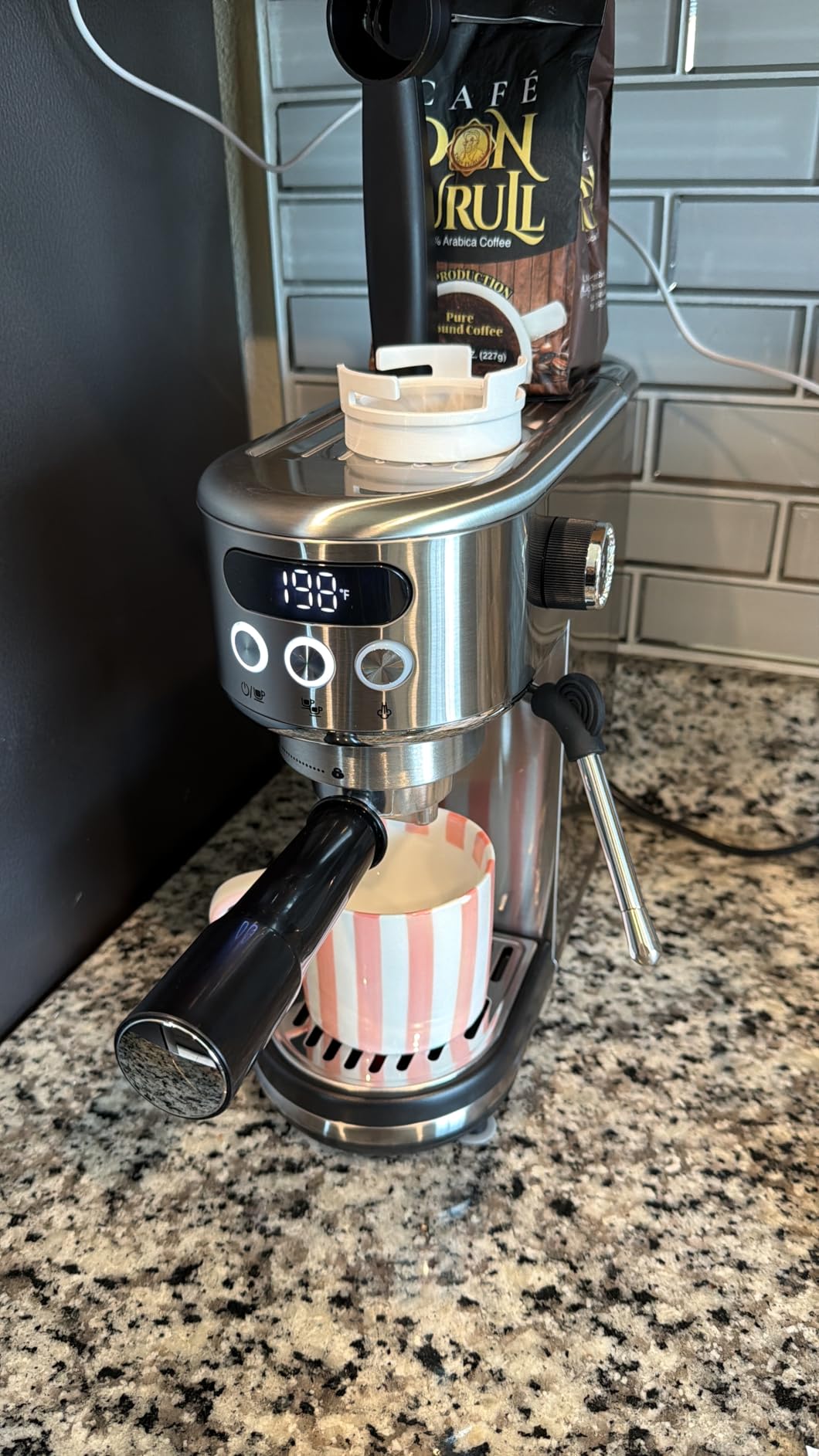
The Neretva is one of the most affordable machines in this roundup, yet it packs features that punch well above its price tag. The LED temperature display on the front shows you the exact brewing temperature in real time, which is an invaluable tool for learning how temperature affects your shots. The pre-infusion function gently pre-wets grounds before full-pressure extraction, reducing channeling and improving flavor consistency.
At just 9.1 inches tall and 12 inches wide, the Neretva is genuinely compact without sacrificing too much on the water tank size. The 1.3-liter reservoir holds enough for several drinks, and the stainless steel construction gives it a premium appearance that masks its budget-friendly price. I was impressed by the 76 percent five-star rating from verified buyers, which indicates strong satisfaction for the price paid.
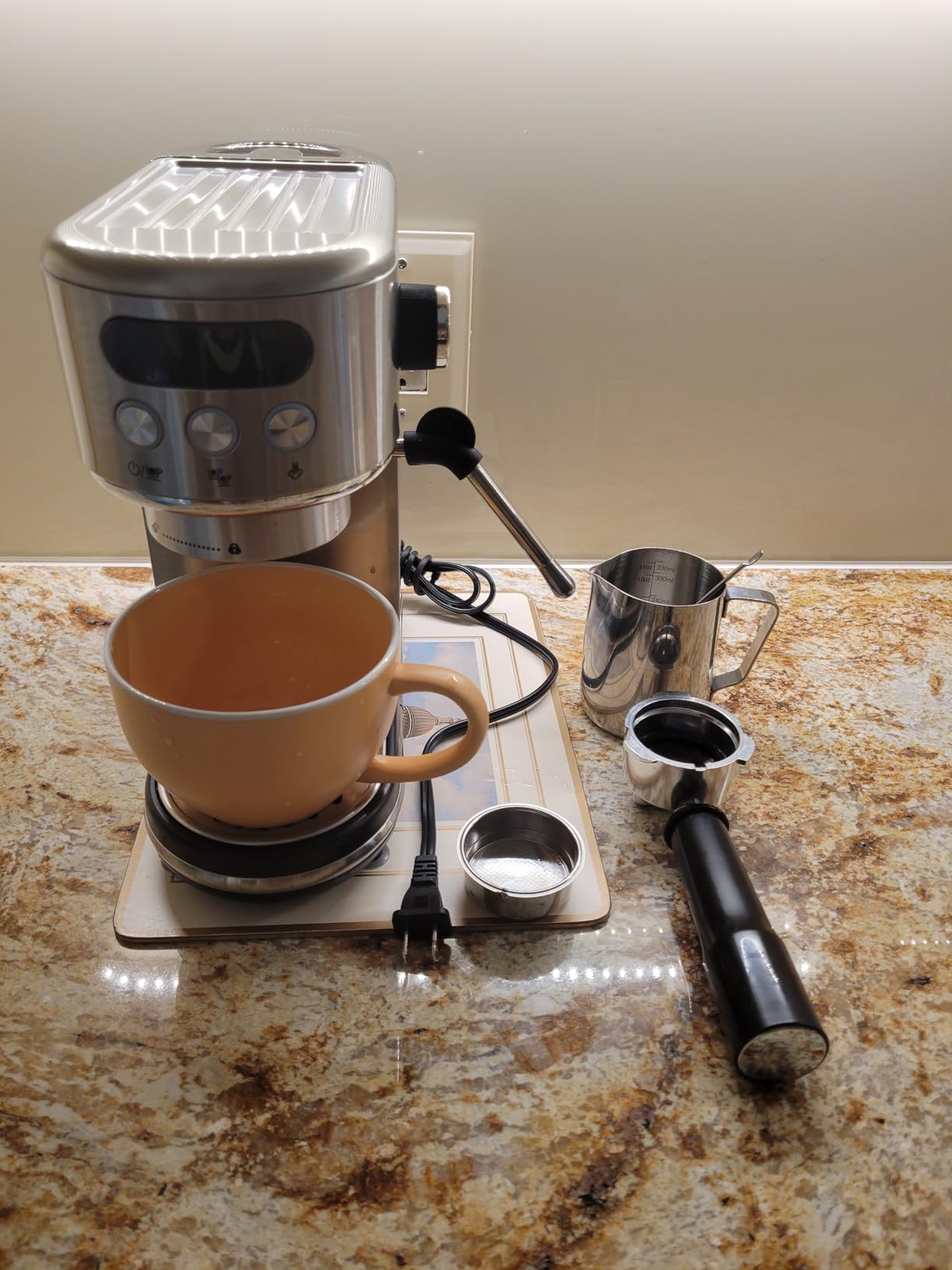
The precise 198-degree Fahrenheit brewing temperature is optimized for espresso extraction, and the machine holds that temperature well during shot pulling. The cup warmer on top is a nice touch that keeps your espresso cups at the right temperature before brewing. The powerful steam wand can produce decent microfoam, though there is a learning curve to get it right.
The included manual is weak — several users mention it could be clearer about setup and operation. I found a few helpful YouTube videos that explained the process better than the printed documentation. The machine can also be finicky about grounds on the portafilter rim, which can prevent a proper seal. A quick wipe of the rim before locking in the portafilter solves this, but it is an extra step to remember.
Who Should Buy the Neretva Super Compact
Anyone looking for the maximum feature set at the minimum price should start here. The LED display, pre-infusion, and precise temperature control give you tools that are rare at this price point. It is an excellent choice for small kitchens, apartments, or anyone who wants to try home espresso without a significant investment.
Who Should Skip It
If you prefer machines from well-known brands with extensive support networks, the Neretva is a lesser-known name with fewer long-term reviews to draw from. The included manual and documentation are below average, which can be frustrating for absolute beginners. For a more guided first experience, the De’Longhi Stilosa or Breville Bambino offer better onboarding and community support.
How to Choose the Best Espresso Machine Under 500
Choosing the right espresso machine comes down to matching features with how you actually drink coffee. I have broken down the key factors that matter most when shopping in this price range, based on my own testing and the real-world feedback from thousands of users.
Heating System: Thermoblock vs Boiler
The heating system determines how fast your machine warms up and how stable the temperature stays during extraction. Thermoblock systems, like the ThermoJet in the Breville Bambino models, heat water on demand and reach brewing temperature in seconds. Traditional boilers, like the stainless steel unit in the Gaggia Classic, take longer to warm up but hold temperature more consistently during back-to-back shots. For most home users, thermoblock speed is more practical. For enthusiasts who pull many shots in a row, boiler stability matters more.
Pressure: 9-Bar vs 15-Bar vs 20-Bar
Professional espresso is extracted at 9 bars of pressure. Machines advertising 15 or 20 bars use overpressure valves to regulate down to the actual brewing pressure. Higher advertised pressure does not automatically mean better espresso — the Gaggia Classic Evo Pro operates at a true 9 bars and produces outstanding shots. The practical difference is that higher-capacity pumps have more headroom to maintain consistent pressure through finer grinds and darker roasts.
Portafilter Size: 51mm vs 54mm vs 58mm
The portafilter diameter affects your dose capacity and aftermarket accessory options. The 58mm size used by the Gaggia Classic and CASABREWS Ultra is the commercial standard, giving you access to precision baskets, distribution tools, and tampers from companies like VST and IMS. The 54mm size on Breville machines works well but limits your upgrade options. The 51mm size on budget machines is the most restrictive, with fewer aftermarket accessories available.
PID Temperature Control
A PID controller maintains exact water temperature during extraction, typically within 1 to 2 degrees of your target. This matters because even small temperature swings can cause sour or bitter shots. The Breville Bambino and Bambino Plus both include PID out of the box, while the Gaggia Classic requires a PID modification if you want precise temperature stability. Machines without PID require temperature surfing — running water through the group head to reach the right temperature before pulling your shot.
Built-In Grinder vs Separate Grinder
The Reddit espresso community strongly recommends buying a separate grinder rather than relying on built-in grinders in this price range. Standalone grinders like the Baratza ESP, DF54, or Turin SK40 consistently produce more uniform grounds than any built-in option under $500. However, the Gevi with built-in grinder reviewed above is a legitimate option if your total budget cannot accommodate both a machine and a separate grinder. Just know that upgrading your grinder later will yield the single biggest improvement in shot quality.
Steam Wand and Milk Frothing
If you drink milk-based beverages regularly, the steam wand is critical. The Breville Bambino Plus has the best milk frothing setup in this roundup with its fully automatic microfoam system. The Gaggia Classic Evo Pro offers commercial-grade steam power but requires manual technique. Budget machines like the CASABREWS CM5418 and Neretva have functional steam wands but lack the power for advanced latte art. Single boiler machines on this list require a temperature transition between brewing and steaming, which adds 30 seconds to 10 minutes to your workflow depending on the model.
Frequently Asked Questions
What is the best espresso machine under $500?
Do I need a separate grinder for an espresso machine under $500?
What is the difference between semi-automatic and automatic espresso machines?
How long do budget espresso machines typically last?
Can you make good espresso with a machine under $500?
Final Thoughts
The best espresso machines under 500 in 2026 offer more capability than ever before. Whether you choose the CASABREWS Ultra for its professional 58mm portafilter and temperature customization, the Breville Bambino Plus for its effortless automatic milk frothing, or the Gaggia Classic Evo Pro for its commercial-grade build quality and modding potential, you are getting real espresso performance that would have cost significantly more just a few years ago.
My top recommendation for most buyers is the Breville Bambino Plus if you drink milk-based beverages, or the Gaggia Classic Evo Pro if you are passionate about the craft of espresso and want a machine that will last a decade. Pair either one with a quality grinder like the Baratza ESP and fresh beans, and you will be pulling shots that make your local coffee shop nervous. Pick the machine that matches your daily routine, not the one with the most features, and you will be happy with your choice for years to come.