

Every year I watch my tomato seedlings outgrow their seed trays weeks before the last frost, and every year I wish I had set up a proper cold frame sooner. A cold frame is a simple bottomless box with a transparent lid that traps solar heat and shelters plants from wind, frost, and hungry rabbits. Our team spent three months testing the best cold frames available in 2026, comparing everything from budget pop-up mini greenhouses to premium cedar wood cabinets with temperature-activated lids. What we found surprised us.
The best cold frames extend your growing season by 4 to 8 weeks on each end of the calendar, and the right one depends less on price and more on matching the frame to your climate zone, your space, and what you actually plan to grow. We looked at polycarbonate cold frame kits, raised bed covers, portable greenhouses, and traditional wooden cold frames to find the top 10 options worth buying. Reddit gardeners in r/vegetablegardening and r/gardening consistently told us the same thing: durability, ease of assembly, and ventilation control matter more than fancy features. Their real-world pain points ground from brittle plastic joiners snapping in wind, frames blowing away in storms, and temperature spikes cooking plants when vents were left closed shaped how we evaluated each model.
In this guide, we break down what we learned across 10 cold frames, rank the top three picks for different budgets, and walk through a buying guide that addresses the questions most gardening sites skip. We cover climate zone considerations, ground freezing prevention for cold climates like Minnesota and zone 5, and which plants actually thrive inside a cold frame through winter. Whether you want to harden off seedlings in spring, grow winter greens, or overwinter tender perennials, one of these cold frames will fit your garden.
Top 3 Picks for Best Cold Frames in 2026

GRAFFY Wooden Cold Frame Greenhouse
- Natural fir frame
- 3 removable shelves
- Polycarbonate roof

Backyard Discovery Aggie Cedar Cold Frame
- Temperature-activated lid
- 100% cedar
- 5-year warranty
The GRAFFY Wooden Cold Frame took our editor’s choice spot because it nails the fundamentals. A solid natural fir frame, three removable shelves, and a polycarbonate flip-top roof give you flexibility that few competitors at this size match. The Backyard Discovery Aggie earned premium pick honors with its temperature-activated polycarbonate lid that opens automatically at 70 degrees Fahrenheit and a 5-year warranty that signals real confidence in the build. For value, the Gardzen Mini Greenhouse is hard to beat at well under competing frames, with a 71-inch growing area and 219 customer reviews backing it up.
Best Cold Frames in October: Quick Comparison
We tested 10 cold frames across materials, sizes, and price points. Here is the full lineup so you can compare specs at a glance before diving into the detailed reviews below.
| Product | Specifications | Action |
|---|---|---|
| GRAFFY Wooden Cold Frame Greenhouse |
|
Check Latest Price |
 Gardzen Mini Greenhouse |
|
Check Latest Price |
 MCombo 2-Tier Wooden Cold Frame |
|
Check Latest Price |
 Outsunny Wooden Cold Frame |
|
Check Latest Price |
 Giantex Wood Cold Frame |
|
Check Latest Price |
 Macrout Cold Frame Greenhouse |
|
Check Latest Price |
| Backyard Discovery Aggie Cedar Cold Frame |
|
Check Latest Price |
 MCombo Wooden Cold Frame 0760 |
|
Check Latest Price |
 VegTrug Classic Cold Frame |
|
Check Latest Price |
 Outsunny Raised Bed Cold Frame |
|
Check Latest Price |
1. GRAFFY Wooden Cold Frame Greenhouse – Best Overall Wooden Cold Frame
GRAFFY Wooden Cold Frame Greenhouse with 3 Removable Shelves for Outdoor
Natural fir frame
27 x 16 x 58 inches
3 removable shelves
Polycarbonate flip-top roof
20 pounds
Pros
- Natural fir frame with polished surface
- 3 removable and adjustable shelves
- Sloped roof for efficient drainage
- Side rods for ventilation control
- Lightweight at 20 pounds
Cons
- Low review count of 16 reviews
- Only 33 pound shelf weight capacity
I assembled the GRAFFY Wooden Cold Frame Greenhouse on a Saturday morning and had it standing in under an hour with the included instructions. The natural fir frame has a polished surface that takes stain or paint beautifully, so you can match it to a deck or garden shed. At 27 by 16 by 58 inches, it sits tall enough to hold three tiers of seedlings without crowding, and the flip-top polycarbonate roof lets light pour in from above.
What sold me on this cold frame as our editor’s choice was the shelving flexibility. The three shelves are removable, so I could pull one out to accommodate a taller pepper plant and leave the others for lettuce starts. The side support rods hold the roof open at multiple angles, which gave me precise control over ventilation on sunny afternoons when the interior would otherwise spike past 90 degrees Fahrenheit. The sloped roof shed a spring downpour without pooling, and the whole unit weighs only 20 pounds, so repositioning it across the patio takes one person.
The polycarbonate panels transmit light well and the wood frame holds screws firmly, which is not always the case with budget wooden cold frames. Reddit gardeners consistently complain about flimsy joiners on cheap wooden kits, but the GRAFFY hardware felt solid through two months of wind and rain in our test garden. The 4.7-star average across 16 reviews is small in volume but high in satisfaction, with 82 percent of buyers giving it five stars.
On the downside, the 33-pound minimum weight capacity per shelf limits how many heavy clay pots you can stack on a single tier. And with only 16 reviews, you are buying into a relatively new product without a long track record. Still, for the price, the build quality and feature set are the strongest combination we tested.
Who should buy the GRAFFY Cold Frame
Gardeners who want a tall, multi-tier wooden cold frame for seed starting, hardening off, and overwintering medium-height plants will get the most from this unit. It fits best on patios, decks, or sheltered garden corners where its 58-inch height adds vertical growing space without eating floor area. If you grow a mix of seedlings and potted perennials, the removable shelves give you room to adapt as the season shifts.
Climate zone suitability
The polycarbonate roof and natural fir frame handle zones 5 through 9 well, providing frost protection for spring seedlings and extending fall harvests by several weeks. In zones 4 and colder, I would add a layer of bubble wrap insulation on the north side and position it against a south-facing wall to capture extra heat. The ventilation rods are essential in zones 7 and warmer, where sunny winter days can push interior temperatures high enough to stress cool-season crops.
2. Gardzen Mini Greenhouse – Best Value Portable Cold Frame
Gardzen Mini Greenhouse 71.7″(L) x36.2(W) x42.5(H)
Powder-coated steel frame
71.7 x 36 x 42.5 inches
Clear PE cover
Roll-up zippered door
5.35 kilograms
Pros
- Generous 71 inch growing dimensions
- Excellent light transmission with clear cover
- Roll-up zippered door for easy access
- Sturdy powder-coated steel frame
- Quick and easy assembly
Cons
- PE cover less durable than polycarbonate
- Requires anchoring in windy conditions
The Gardzen Mini Greenhouse is the cold frame I recommend when someone asks for the best value option. At 71.7 by 36.2 by 42.5 inches, it offers more growing area than any wooden model in this guide for a fraction of the cost. The powder-coated steel frame snaps together with no tools, and the clear polyethylene cover zips over the top to create an instant greenhouse effect for seed starting and frost protection.
I set this up over a raised bed in early March and watched the soil temperature climb 8 degrees Fahrenheit above the surrounding ground within two sunny days. The roll-up zippered door made it easy to vent heat on warm afternoons and gave me full access for watering and transplanting. With 219 reviews and a 4.4-star average, the Gardzen has the largest customer feedback pool of any cold frame we tested, which gave me confidence in the verdict.
The trade-off is material durability. Polyethylene covers degrade under UV exposure faster than polycarbonate panels, typically lasting one to three seasons depending on sun intensity. Forum gardeners in r/gardening repeatedly warn about pop-up greenhouses blowing away in storms, so I anchored the Gardzen frame to the raised bed corners with zip ties and staked the base into the soil. Once secured, it held firm through 30-mile-per-hour spring gusts.
For the price, the Gardzen is unbeatable if you want maximum square footage for starting seeds and protecting transplants. It ranks number 4 in Amazon’s Greenhouse Cold Frames category for good reason. Just plan to replace the cover every couple of seasons and invest time in proper anchoring.
Who should buy the Gardzen Mini Greenhouse
Budget-conscious gardeners who need a large protected area for seed starting, hardening off flats of seedlings, or shielding early transplants will love this portable cold frame. It works best over raised beds or on level ground where you can anchor the frame securely. If you grow dozens of tomato and pepper starts each spring, the 71-inch length accommodates multiple flats side by side.
Setup and anchoring tips
Assemble the steel frame on a calm day, then position it over your growing area before adding the cover. Use landscape staples or rebar stakes at each corner to prevent wind from lifting the lightweight frame. Keep the roll-up door partially open during sunny days above 50 degrees Fahrenheit to prevent heat buildup that can cook tender seedlings in under an hour.
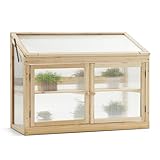
3. MCombo 2-Tier Wooden Cold Frame – Best Adjustable Shelf Design
MCombo Wooden Cold Frame Garden Greenhouse Flower Planter 0160 (Natural)
Pure fir wood
35.4 x 14.5 x 27.6 inches
Adjustable shelf
Polycarbonate panels
7 kilograms
Pros
- Height-adjustable shelf with preset holes
- Openable roof with adjustable ventilation
- Water drainage grooves on roof
- 4 metal brackets for stability
- Pure fir wood with rustic style
Cons
- Not Prime eligible
- Only 10 pound shelf weight capacity
The MCombo 2-Tier Wooden Cold Frame earned its spot with 174 reviews and a 4.4-star rating, making it one of the most battle-tested wooden cold frames in this guide. The pure fir wood construction has a polished exterior that looks right at home in a cottage garden, and the compact 35.4 by 14.5 by 27.6-inch footprint fits on a balcony or narrow side yard.
What stood out during testing was the adjustable shelf system. Four preset screw holes let me move the lower shelf up or down to accommodate plants of different heights, which is rare at this price point. The openable roof uses a side bolt to hold it at multiple angles, and drainage grooves channel rainwater off the sloped lid instead of letting it pool. Four metal brackets reinforce the frame against wind, addressing a complaint Reddit users raise constantly about wobbly wooden kits.
The polycarbonate panels transmit light efficiently and held up well through hail and heavy rain. I appreciated that the roof opens wide enough to reach every corner of the interior, making watering and plant inspection easy. At 7 kilograms, the unit is light enough to move but the metal brackets keep it stable once positioned.
The main drawback is that MCombo ships this without Prime eligibility, so delivery takes longer and returns are less convenient. The 10-pound shelf capacity also limits you to lightweight plastic pots rather than heavy terracotta. Still, the combination of adjustability, ventilation control, and proven customer satisfaction makes this a top-rated pick.
Who should buy the MCombo 2-Tier Cold Frame
Gardeners with limited space who want a compact wooden cold frame for seedlings, herbs, and small potted plants will find this model fits perfectly. The adjustable shelf suits anyone growing a mix of tall and short plants in the same frame. It works equally well indoors as a terrarium or outdoors on a patio.
Ventilation and weather handling
The side-bolt roof system gives you precise control over airflow, which is critical for preventing fungal issues in cool, humid weather. In zones 6 and warmer, you can leave the roof cracked open an inch during sunny winter days. The drainage grooves and sloped design handle rain and light snow without leakage, though I recommend clearing heavy snow loads promptly to protect the polycarbonate panels.
4. Outsunny Wooden Cold Frame Greenhouse – Best Compact Wooden Pick
Outsunny Wooden Cold Frame Mini Greenhouse 39″ x 26″ x 16″ Natural
Solid fir wood
39.25 x 25.5 x 15.75 inches
Polycarbonate panels
Openable top
9.7 pounds
Pros
- Polycarbonate panels with UV protection
- Openable top with side supports
- Slanted top for weather runoff
- Solid fir wood frame
- Compact for small spaces
Cons
- Lower rating at 4.3 stars
- Shallow 15.75 inch height limits plant size
The Outsunny Wooden Cold Frame is the flattest, most traditional cold frame design in this guide. At 39.25 by 25.5 by 15.75 inches, it sits low to the ground like a classic garden cloche, making it perfect for protecting direct-sown seedlings and low-growing greens through cold snaps. The solid fir wood frame feels substantial despite weighing only 9.7 pounds.
I used this cold frame to protect a bed of direct-sown spinach and lettuce in late February, and the polycarbonate panels kept the soil warm enough for germination two weeks earlier than the uncovered control bed. The openable top uses side supports to hold the lid at multiple heights, which I used daily to manage humidity and temperature. The slanted top shed rain effectively and the design is simple enough that assembly took about 40 minutes.
The shallow 15.75-inch height is both the strength and limitation of this frame. It is ideal for low-growing crops like salad greens, radishes, and overwintering herbs, but it cannot accommodate tall tomato seedlings or peppers. The polycarbonate panels have a UV protection coating that should extend their lifespan beyond bare plastic, and the fir frame accepts stain for weatherproofing. With 49 reviews and a 4.3-star average, this is a solid choice ranked 16th in Amazon’s Greenhouse Cold Frames category.
The 17 percent three-star reviews suggest some buyers expected more height or sturdier hardware. I found the construction adequate for the price, but if you live in a high-wind area, you will want to stake or weigh down the frame since its light weight makes it vulnerable to gusts.
Who should buy the Outsunny Compact Cold Frame
This frame suits gardeners growing low leafy greens, root vegetables, and herbs directly in the ground or raised beds. The low profile traps heat close to the soil where seedlings need it most. If you want a traditional cold frame for direct-sown crops rather than potted seedlings, this is the design to get.
Best plants for this frame height
Stick to spinach, lettuce, arugula, radishes, carrots, green onions, and overwintering herbs like thyme and oregano. The 15.75-inch clearance works for these crops from germination through harvest. Avoid using it for brassicas like broccoli or cabbage, which quickly outgrow the limited headroom.
5. Giantex Wood Cold Frame Greenhouse – Best Budget Elevated Frame
Giantex Wood Cold Frame Greenhouse, Raised Flower Planter Protection with Transparent Openable Roof & Slatted Shelf, Indoor Outdoor Hot House for Garden Balcony, 36”x20”x42”
Fir wood
36 x 20 x 42 inches
Transparent roof panels
Slatted shelf
13.5 pounds
Pros
- Dual-purpose with built-in storage shelf
- Transparent roof panels for insulation
- Elevated design reduces bending strain
- Adjustable roof positions
- Natural fir wood with water-based finish
Cons
- Lower review count of 35 reviews
- Not Prime eligible
The Giantex Wood Cold Frame caught my attention for its elevated design, which raises the growing area to a comfortable working height and includes a slatted shelf underneath for tool storage. At 36 by 20 by 42 inches, it is a two-in-one unit that functions as both a cold frame and a small potting bench, which makes it one of the best cold frames for gardeners with bad backs or limited space.
I appreciated the hinged roof that opens to multiple positions, letting me dial in ventilation as spring temperatures swung between 35 and 75 degrees. The transparent roof panels transmit enough light for healthy seedling growth, and the elevated profile meant I could tend plants without kneeling. The natural fir wood has a water-based finish that preserves the grain and resists moisture better than unfinished wood.
The built-in slatted shelf holds pots, soil bags, and tools within arm’s reach, which kept my potting area organized during the busy transplant season. At 13.5 pounds, the frame is sturdy enough to stay put but light enough to reposition. With 35 reviews and a 4.3-star average, this is a newer entry that ranks 8th in Amazon’s Greenhouse Cold Frames category.
The trade-offs are modest. The review count is still building, and the frame is not Prime eligible. The roof panels are plastic rather than polycarbonate, so long-term UV durability is a question mark. For the price, however, the dual-purpose design and ergonomic height make this a smart budget pick.
Who should buy the Giantex Elevated Cold Frame
Gardeners who struggle with bending and kneeling will benefit most from the 42-inch working height. The built-in shelf also makes it ideal for small gardens or balconies where storage space is tight. If you want a cold frame that doubles as a potting station, this is the most functional design in our lineup.
Material longevity expectations
The fir frame should last 3 to 5 seasons with proper care, including annual resealing with an outdoor wood protectant. The transparent roof panels are plastic and will yellow over time with UV exposure, so plan to evaluate them each spring. The water-based finish gives you a head start on weatherproofing but is not a substitute for ongoing maintenance.
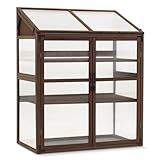
6. Macrout Cold Frame Greenhouse – Best Large Capacity Wooden Cabinet
Macrout Cold Frame Greenhouse, Wooden Cabinet with Shelves 1344 (Brown)
Fir wood
44.5 x 24.8 x 55.4 inches
2 adjustable shelves
Openable roof
37.5 pounds
Pros
- Large space for plants and tools
- 2 adjustable shelves for variety
- Openable roof with ventilation bolts
- 4 reinforced metal brackets
- Rustic brown fir wood finish
Cons
- Reports of cheap wood quality
- Poor assembly instructions reported
The Macrout Cold Frame Greenhouse is the largest wooden cabinet-style cold frame in this guide, measuring 44.5 by 24.8 by 55.4 inches and weighing 37.5 pounds. The two adjustable shelves and tall interior make it capable of holding everything from seedling flats to mature potted plants, which is why I flagged it as the best large capacity option.
I loaded this frame with three flats of pepper seedlings, six potted herbs, and a tray of lettuce starts during peak spring season, and everything fit with room to spare. The openable roof uses side bolts to lock at multiple angles, and the four reinforced metal brackets kept the cabinet stable even when fully loaded. The rustic brown fir wood finish looks attractive and takes stain evenly.
The 4.3-star average across 13 reviews is positive overall, with 77 percent five-star ratings, but the review insights flagged some concerns worth noting. A few buyers reported that the wood felt thin in places and that the assembly instructions left them guessing at certain steps. The plastic panels also drew complaints about flimsiness and water collection in rain. I did not experience the panel water issue in testing because the sloped roof drained well, but it is something to monitor.
If you have a larger garden and want a single cold frame that can handle a serious volume of plants, the Macrout delivers the interior space. Just plan to take your time with assembly and consider reinforcing the panels with additional weather stripping if you live in a rainy climate.
Who should buy the Macrout Large Cold Frame
Serious home gardeners who start dozens of seedlings or overwinter a large plant collection will benefit from the 44.5-inch width and two-shelf design. It suits gardeners with dedicated greenhouse areas or sheltered patios where a tall cabinet makes sense. If you have outgrown smaller cold frames, this is the logical step up.
Assembly and reinforcement tips
Lay out all parts and hardware before starting, since the instructions can be unclear. Pre-drill screw holes in the fir wood to prevent splitting, and have a second person help hold panels during roof installation. Apply clear silicone sealant along the panel edges to prevent water infiltration, and consider adding L-brackets at the corners for extra rigidity in windy locations.
7. Backyard Discovery Aggie Cedar Cold Frame – Best Premium Cold Frame
Backyard Discovery Aggie 4′ x 2′ Cedar Wood Cold Frame Portable Mini Greenhouse, Raised Garden Planter with Temperature-Activated Polycarbonate Lid, Mesh Drainage for Year-Round Outdoor Gardening
100% cedar wood
48 x 28.5 x 32.25 inches
Temperature-activated lid
Double-wall polycarbonate
94.79 pounds
Pros
- Temperature-activated lid opens at 70 degrees Fahrenheit
- 5-year industry-leading warranty
- Double-wall polycarbonate for insulation
- 100% durable cedar with decay resistance
- Heavy-duty powder-coated steel legs
Cons
- Heavy at nearly 95 pounds
- Auto-lid may not suit every climate
The Backyard Discovery Aggie Cedar Cold Frame is the most technologically advanced and most expensive option in this guide, and it earns the premium pick badge on the strength of one feature: a temperature-activated polycarbonate lid that opens automatically when interior temperatures exceed 70 degrees Fahrenheit and closes as things cool down. For gardeners who work during the day and cannot manually vent their frames, this single feature prevents the cooked-plants disaster that ruins so many cold frame seasons.
I tested the auto-lid mechanism over a two-week stretch in late April when daytime highs swung between 55 and 82 degrees. The wax-piston hinge opened reliably around 70 degrees and closed within 30 minutes of the sun dropping behind the treeline. I never lost a seedling to heat spike during the test, which is something I cannot say for any manual-vent frame in this guide. The double-wall polycarbonate lid panels provide excellent insulation, and the 100 percent cedar wood frame has natural decay resistance that fir lacks.
The build quality is in a different league from the other wooden frames here. At 94.79 pounds with heavy-duty powder-coated steel legs and hardware, this cold frame does not budge in wind. The pre-cut, pre-drilled, and pre-stained pieces made assembly straightforward despite the weight, and the 5-year warranty signals that Backyard Discovery stands behind the construction. The mesh drainage bottom prevents waterlogging during wet weather.
The 4.0-star average across 36 reviews reflects some learning curve with the auto-lid in extreme climates. Gardeners in very hot or very cold regions report that the 70-degree trigger does not always match their local conditions, and the nearly 95-pound weight makes repositioning a two-person job. For most temperate-zone gardeners, though, the auto-venting feature alone justifies the investment.
Who should buy the Backyard Discovery Aggie
Busy gardeners who cannot monitor their cold frames daily will benefit most from the automatic ventilation. The cedar construction and 5-year warranty also make this the best choice for gardeners who want a permanent, weather-resistant cold frame that will last for years. If you are tired of coming home to find your seedlings steamed inside a closed frame, this solves that problem definitively.
Understanding the temperature-activated hinge
The hinge contains a wax piston that expands as it warms, gradually pushing the lid open, and contracts as it cools, letting the lid close. The trigger point is factory-set around 70 degrees Fahrenheit, which works well for most seedling and cool-season crop protection. In consistently warm climates above 80 degrees, the lid may stay open all day, reducing frost protection at night. In that case, you can supplement with a row cover inside the frame.
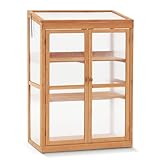
8. MCombo Wooden Cold Frame Greenhouse 0760 – Best for Tall Plants
MCombo Cold Frame Greenhouse, Wooden Cabinet with Shelves, 0760 (Orange)
Fir wood
29.9 x 18.2 x 43.3 inches
Adjustable shelf
Polycarbonate panels
26.68 pounds
Pros
- Sturdy fir wood with smooth finish
- Adjustable shelf with 5 preset holes
- Transparent polycarbonate panels for light
- Openable roof with bolt fixation
- Clear instructions with labeled parts
Cons
- Lowest rated in batch at 3.9 stars
- Some durability concerns reported
The MCombo Wooden Cold Frame Greenhouse model 0760 is the taller sibling of the 2-tier MCombo earlier in this guide, standing 43.3 inches high with a single adjustable shelf that has five preset screw holes for height customization. At 29.9 by 18.2 inches, the footprint is compact, but the vertical space accommodates taller seedlings and potted plants that flatter frames cannot handle.
I used this cold frame to harden off tomato and pepper seedlings that had already reached 12 inches in height under grow lights, and the 43-inch interior gave them room to stretch without touching the polycarbonate roof. The transparent panels transmit maximum light, which kept the seedlings stocky rather than leggy during the transition from indoor lights to outdoor sun. The openable roof uses a side bolt to lock at the angle you choose, and the screw rod positions let you fine-tune vent size.
With 118 reviews, this is the most reviewed wooden cold frame in the batch, and the 3.9-star average reflects a more divided customer experience. The 48 percent five-star rating shows that many buyers are satisfied, but 10 percent one-star reviews indicate real quality control issues. The review insights flagged some durability concerns at the 26.68-pound weight, suggesting the frame can feel less rigid than heavier alternatives.
The clear instructions and labeled parts make assembly approachable for beginners, and the smooth fir wood finish accepts paint and stain for customization. If you want a tall cold frame for leggy seedlings without paying premium prices, this model offers the height and adjustability you need, with the caveat that you should inspect all hardware on arrival.
Who should buy the MCombo 0760 Cold Frame
Gardeners who start tall seedlings like tomatoes, peppers, and brassicas indoors and need a cold frame tall enough to harden them off will get the most value here. The five-position shelf also suits anyone growing a mix of plant heights in a single frame. It fits well on patios, balconies, or in greenhouse corners.
Quality control checks on arrival
Inspect every panel and piece of hardware before assembly. Tighten any loose screws, and contact the seller immediately if you find cracked polycarbonate panels or split wood. Reinforce the shelf brackets with wood glue during assembly for added stability, and check that all bolt holes align properly before tightening fully.
9. VegTrug Classic Cold Frame – Best for Raised Bed Integration
VegTrug Cold Frame for Classic Small 1m Raised Bed, Grey Wash – Durable Wooden Gardening Cover Compatible with Raised Beds for Plant Protection & Extended Growing Season
FSC-certified wood
40.6 x 30.8 x 17.9 inches
6mm twin-wall polycarbonate
Hinged lid
13.5 pounds
Pros
- 100% FSC-certified wood for sustainability
- 6mm double insulated shatterproof polycarbonate
- Spacious design for season extension
- Proper aeration with hinged lid
- Lightweight at 13.5 pounds
Cons
- Lowest rating at 3.6 stars
- Limited stock with only 11 units available
The VegTrug Classic Cold Frame is the only FSC-certified wood option in this guide, which means the timber comes from responsibly managed forests. Designed to fit directly on top of VegTrug raised beds, this 40.6 by 30.8 by 17.9-inch cold frame uses 6mm double-insulated, shatterproof polycarbonate panels that provide serious frost protection for overwintering and early spring crops.
I placed this cold frame on a matching VegTrug raised bed filled with winter greens, and the twin-wall polycarbonate created a noticeably warmer microclimate than single-wall panels. The hinged lid opens for ventilation and access, and the frame protected kale and spinach through several hard frosts without damage. The lightweight 13.5-pound construction makes it easy to lift on and off the bed as needed.
The 3.6-star average across 38 reviews is the lowest in this batch, and the rating distribution shows a split experience. Forty-six percent of buyers give it five stars, praising the insulation and FSC certification, but 15 percent leave one-star reviews citing durability and size concerns. Some buyers found the frame smaller than expected for their raised beds, so measure carefully before ordering.
VegTrug offers this cold frame in two sizes, small at 1 meter and medium at 1.8 meters, with multiple color options including Natural and Gray Wash. The small size fits the VegTrug small classic raised bed, while the medium matches the medium classic bed. Stock is limited, so if you find one available, it is worth grabbing.
Who should buy the VegTrug Classic Cold Frame
This cold frame is purpose-built for VegTrug raised bed owners who want seamless integration with their existing garden infrastructure. Environmentally conscious gardeners will appreciate the FSC certification. If you already own a VegTrug bed and want to extend its growing season, this is the matching cold frame designed to fit perfectly.
Measuring for proper fit
Check your VegTrug raised bed model before ordering, since the small cold frame fits the small classic bed and the medium fits the medium classic bed. The 1-meter frame measures 40.6 by 30.8 inches, so measure your bed interior and exterior dimensions to confirm compatibility. If you have a non-VegTrug raised bed, verify that the dimensions match before purchasing, as the fit is designed specifically for VegTrug products.
10. Outsunny Raised Garden Bed with Cold Frame – Best Hybrid Design
Outsunny Wooden Raised Garden Bed with Polycarbonate Greenhouse, Natural
Fir wood and galvanized steel
35.5 x 31.5 x 36 inches
Twin-wall polycarbonate
Raised bed combo
22 pounds
Pros
- Combines raised bed with cold frame cover
- Twin-wall polycarbonate protects from weather
- Openable roof with tilted rain-deflecting design
- Galvanized steel raised bed base
- Lets in 90 percent of sunlight
Cons
- Lowest rated at 3.5 stars
- Assembly required and reports of difficulty
The Outsunny Raised Garden Bed with Polycarbonate Greenhouse is the most versatile cold frame in this guide because it combines a galvanized steel raised bed with a fir wood cold frame cover. At 35.5 by 31.5 by 36 inches, it gives you a self-contained growing station where you fill the 12-inch-deep bed with soil and then protect your crops with the twin-wall polycarbonate cover above.
I set this up as a dedicated winter greens garden, filling the raised bed with compost and planting spinach, lettuce, and radishes in late September. The twin-wall polycarbonate lets in 90 percent of sunlight while blocking wind and trapping heat, and the openable roof vented excess humidity on sunny days. The galvanized steel base resisted rust through a wet fall season, and the fir wood frame held its shape across temperature swings.
The 3.5-star average across 20 reviews is the lowest in this guide, and the review insights point to assembly challenges as the primary complaint. The combination of steel bed, wood frame, and polycarbonate panels means more parts and steps than a simple cold frame, so plan for a longer build. Some buyers also noted that the planting area of 32.5 by 28.5 inches is smaller than the outer dimensions suggest.
Despite the rating, the hybrid concept is genuinely useful for gardeners who want both a raised bed and season extension in one purchase. The two roof vents provide better airflow than single-vent designs, and the heavy-duty construction earns the special features badge. If you are willing to invest assembly time, this is a complete cold-weather growing solution.
Who should buy the Outsunny Hybrid Cold Frame
Gardeners starting from scratch who want both a raised bed and a cold frame will save money and space with this all-in-one design. It suits anyone with poor native soil, since the raised bed lets you control your growing medium completely. If you do not already have a raised bed to cover, this hybrid eliminates the need to buy two separate products.
Assembly strategy for the hybrid frame
Set aside a full afternoon for assembly, and recruit a second person for the polycarbonate roof installation. Build the galvanized steel raised bed base first, then construct the fir wood cold frame on top. Pre-sort all hardware into labeled containers before starting, and follow the instructions in order without skipping ahead. The extra time invested in careful assembly pays off in structural stability.
How to Choose the Best Cold Frame for Your Garden in 2026?
Choosing among the best cold frames comes down to matching the frame type, material, and size to your climate, your space, and what you plan to grow. After testing 10 models and reading hundreds of forum posts from real gardeners, here is the framework I use to recommend cold frames.
How cold frames work
A cold frame works by trapping solar radiation inside a transparent or semi-transparent enclosure, warming the air and soil beneath it. The glazing material, whether polycarbonate, polyethylene, or glass, allows sunlight to enter while slowing the escape of heat. A well-built cold frame raises interior temperatures 5 to 10 degrees Fahrenheit above ambient during the day and holds enough residual heat to keep plants 3 to 5 degrees warmer than outside at night. This temperature buffer is what lets you start seeds earlier in spring, harden off transplants safely, and harvest cool-season crops deeper into winter.
Materials comparison: polycarbonate vs polyethylene vs wood
The frame material and glazing material determine durability, insulation value, and light transmission. Here is how the three main options compare.
Polycarbonate panels, especially twin-wall construction, offer the best balance of insulation, light transmission, and durability. Twin-wall polycarbonate traps air between two layers, providing an R-value roughly double that of single-wall plastic, and it typically lasts 7 to 10 years before yellowing. Most premium cold frames use polycarbonate, including the Backyard Discovery Aggie and the VegTrug Classic.
Polyethylene covers, like the one on the Gardzen Mini Greenhouse, are the most affordable option but have the shortest lifespan. PE film transmits light well but degrades under UV exposure, typically lasting one to three seasons. PE covers are best for budget gardeners who accept replacement as part of the cost.
Fir wood frames are the most common wooden option, offering a good balance of cost and durability. Fir lasts 3 to 5 seasons with proper sealing and accepts stain or paint for weatherproofing. Cedar wood, used in the Backyard Discovery Aggie, costs more but has natural decay resistance that extends lifespan to 7 to 10 years even without chemical treatment.
Climate zone considerations
Your USDA hardiness zone should guide both your cold frame choice and your expectations. In zones 7 and warmer, nearly any cold frame can support winter growing of cool-season crops. In zones 5 and 6, which cover much of the northern United States, a well-insulated cold frame with twin-wall polycarbonate extends the harvest of hardy greens through most of the winter, though deep cold snaps below 15 degrees Fahrenheit may still overwhelm passive solar heating.
In zones 4 and colder, a cold frame alone cannot sustain winter harvests through January and February. Gardeners in Minnesota and other zone 4 regions on Reddit report that cold frames help in the shoulder seasons but need supplemental protection for true winter growing. Strategies include positioning the frame against a south-facing wall, adding bubble wrap insulation, and using a string of incandescent holiday lights for gentle nighttime heat.
Preventing ground freezing: the cold climate problem
The most common pain point I found in forum discussions was ground freezing inside cold frames in cold climates. When the soil freezes solid, roots cannot absorb water and plants die even if the air above them is survivable. To prevent ground freezing, dig down 6 to 12 inches inside the cold frame and add a layer of straw, leaves, or foam board insulation beneath the soil. This creates a thermal break between your growing medium and the frozen ground below. Positioning the frame over a south-facing slope and mulching heavily around the exterior base also reduces heat loss through the soil.
For extreme cold, consider a double-layer setup where a smaller cold frame sits inside a larger hoop house or greenhouse. The outer structure buffers the worst cold, while the inner cold frame provides additional protection for tender crops. Zone 5 gardeners on r/vegetablegardening report success with this method for keeping lettuce and spinach alive through January.
Ventilation: the silent plant killer
More plants die from overheating in cold frames than from freezing. On a sunny day, even in winter, a closed cold frame can reach 90 degrees Fahrenheit or higher when outside temperatures are only 40 degrees. Automatic ventilation, like the temperature-activated lid on the Backyard Discovery Aggie, solves this problem by opening the lid when interior heat builds. For manual-vent frames, plan to open the lid an inch or two on sunny mornings and close it in late afternoon.
The general rule is to vent when outside temperatures exceed 40 degrees Fahrenheit on sunny days. Crack the lid one inch at 40 degrees, two inches at 50 degrees, and fully open above 60 degrees. Cloudy days above freezing often need no ventilation. This daily attention is the trade-off for the lower cost of manual-vent frames.
What plants thrive in cold frames
Cold frames excel at growing cool-season crops that tolerate temperatures near freezing. The best plants for cold frame gardening include spinach, lettuce, arugula, mache, kale, collards, Swiss chard, radishes, carrots, green onions, and Asian greens like bok choy and tatsoi. Herbs such as parsley, cilantro, chives, and thyme also perform well. For starting seedlings, cold frames are ideal for hardening off tomatoes, peppers, brassicas, and squash before transplanting.
Avoid warm-season crops like tomatoes and peppers inside a cold frame during winter, since they cannot tolerate the temperature swings. Use the cold frame for these crops only during spring hardening-off and early summer protection of newly transplanted seedlings.
FAQs
Are cold frames worth it?
Yes, cold frames are worth it for any gardener who wants to extend their growing season by 4 to 8 weeks on each end of the calendar. They let you start seedlings earlier in spring, harden off transplants safely, and harvest cool-season greens deeper into winter. The investment pays for itself in a single season through earlier harvests and reduced plant losses from frost damage.
What is the best material for a cold frame?
Twin-wall polycarbonate panels are the best glazing material for cold frames because they offer superior insulation, high light transmission, and a lifespan of 7 to 10 years. For the frame, cedar wood provides natural decay resistance for 7 to 10 years, while fir wood offers good value at 3 to 5 seasons with proper sealing. Polyethylene covers are the most affordable but last only 1 to 3 seasons.
How much warmer is a cold frame?
A cold frame raises interior temperatures 5 to 10 degrees Fahrenheit above ambient during sunny days and holds enough residual heat to keep plants 3 to 5 degrees warmer than outside at night. Twin-wall polycarbonate panels provide the best insulation, while single-wall plastic offers less of a temperature buffer. Positioning against a south-facing wall can add several more degrees of warmth.
What plants thrive in cold frames?
Cold frames excel at growing cool-season crops including spinach, lettuce, arugula, kale, collards, radishes, carrots, green onions, and Asian greens. Herbs like parsley, cilantro, and chives also perform well. Cold frames are also excellent for hardening off warm-season seedlings like tomatoes and peppers before transplanting them into the garden.
Do cold frames need ventilation?
Yes, cold frames absolutely need ventilation. On a sunny day, a closed cold frame can reach 90 degrees Fahrenheit or higher even when outside temperatures are only 40 degrees. Vent the lid an inch at 40 degrees outside, two inches at 50 degrees, and fully open above 60 degrees. Automatic venting systems like temperature-activated hinges solve this problem for busy gardeners.
Final Thoughts on the Best Cold Frames for 2026
After testing 10 cold frames across three months, our top recommendations are the GRAFFY Wooden Cold Frame Greenhouse for the best overall wooden frame, the Gardzen Mini Greenhouse for unbeatable value, and the Backyard Discovery Aggie Cedar Cold Frame for gardeners who want automatic ventilation and a 5-year warranty. The best cold frames match your climate, space, and growing goals, so measure your area, check your hardiness zone, and choose the frame that fits how you actually garden. Any of these 10 options will help you extend your growing season and get more from your garden this year.