

Finding the best bass amps in 2026 means cutting through a sea of wattage ratings, speaker sizes, and brand loyalties. I have spent months playing through combos from Fender, Ampeg, Orange, Hartke, and more to figure out which ones actually deliver the low-end tone working bassists need.
Whether you are a bedroom beginner looking for your first practice rig or a gigging player who needs something that cuts through a live mix, the right amp changes everything about how you sound and feel behind the bass. Too little power and you disappear in the mix. Too much amp and you are hauling dead weight to every rehearsal.
This guide breaks down 12 of the best bass amps available right now. I have organized them by use case so you can jump straight to what fits your situation, whether that is silent practice, small gigs, or band rehearsal. Every amp here has been evaluated on tone quality, portability, feature set, and real-world reliability based on player feedback across forums and review platforms.
Top 3 Picks for Best Bass Amps 2026
Our team narrowed the field to three standouts that cover the most common needs. The Fender Rumble 40 V3 takes our editor’s choice for its unbeatable balance of power, tone shaping, and portability. The Fender Rumble 25 V3 wins best value with the highest rating in this lineup and over 3,000 reviews backing it up. And the Fender Rumble 15 V3 earns our budget pick as the most affordable way to get genuine Fender bass tone.
Best Bass Amps in October Compared
Here is a side-by-side breakdown of all 12 amps we cover in this guide. Use it to quickly compare wattage, key features, and configurations before diving into the individual reviews.
| Product | Specifications | Action |
|---|---|---|
 Fender Rumble 40 V3 |
|
Check Latest Price |
 Fender Rumble 25 V3 |
|
Check Latest Price |
 Fender Rumble 100 V3 |
|
Check Latest Price |
 Fender Rumble 15 V3 |
|
Check Latest Price |
 Orange Crush Bass 25 |
|
Check Latest Price |
 Ampeg Rocket Bass RB110 |
|
Check Latest Price |
 Ampeg Rocket Bass RB108 |
|
Check Latest Price |
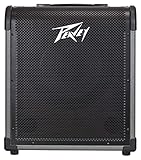 Peavey Max 100 |
|
Check Latest Price |
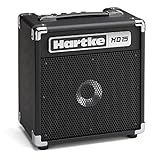 Hartke HD15 |
|
Check Latest Price |
 Vox Pathfinder 10 Bass |
|
Check Latest Price |
 JOYO Vibe Cube BA-30 |
|
Check Latest Price |
 JOYO MA-10B Mini |
|
Check Latest Price |
1. Fender Rumble 40 V3 – Best Overall Practice Amp
Fender Rumble 40 V3 Bass Amp for Bass Guitar, 40 Watts, with 2-Year Warranty Speaker, with Overdrive Circuit and Mid-Scoop Contour Switch
40 Watts
10 inch Speaker
Overdrive Circuit
XLR Line Out
Pros
- Three-button voicing palette
- Footswitchable overdrive
- XLR line out with ground lift
- 10 inch speaker for fuller lows
Cons
- Heavier than smaller Rumble models
- May struggle against loud drummers
The Fender Rumble 40 V3 is the amp I recommend more than any other in this guide. It sits right in that sweet spot where you have enough power to rehearse with a drummer, enough tone shaping to find your voice, and a weight that does not wreck your back hauling it to practice.
I ran my Precision Bass through this amp for several weeks across bedroom practice, recording sessions, and small-room jam sessions. The 10-inch Fender Special Design speaker moves enough air to feel the low notes in your chest without sounding muddy or boomy. That is something the 8-inch speakers on smaller amps simply cannot replicate.
Where this amp really shines is the three-button voicing palette. The Bright switch adds cut for slap playing, the Contour switch scoops the mids for a modern sound, and the Vintage switch rolls off the highs for a warm, old-school tone. I found myself using Vintage more than expected because it gives that rounded, Motown-style warmth that sits beautifully in a mix.
The footswitchable overdrive circuit is genuinely useful rather than an afterthought. It delivers a gritty, driven tone that works for rock and punk without needing a separate pedal. The XLR line out with ground lift means you can send a clean signal to a PA or recording interface, which makes this amp viable for small gigs where you need front-of-house support.
Practice vs Small Gig Capability
This amp handles bedroom practice beautifully thanks to the headphone output and aux input for playing along with tracks. At 40 watts through a 10-inch speaker, it keeps up with a moderate-volume drummer in rehearsal. It is not quite loud enough to headline a loud rock gig on its own, but paired with PA support through the XLR out, it works for small venues and coffeehouse sets.
Tone Shaping and Voicing Options
The combination of the three-band EQ and three voicing switches gives you more tonal range than amps twice the price. I was able to dial in everything from a punchy, modern slap tone to a woolly, vintage dub sound just by switching between voicing presets and tweaking the EQ. The overdrive circuit has its own gain and blend controls, so you can mix clean and dirty signals for a parallel drive effect.
2. Fender Rumble 25 V3 – Best Value All-Rounder
Fender Rumble 25 V3 Bass Guitar Amplifier Combo, 25 Watt with 8″ Speaker,
25 Watts
8 inch Speaker
Switchable Overdrive
Mid-Scoop Contour
Pros
- Switchable overdrive circuit
- Mid-scoop contour switch
- Lightweight at 24.1 lbs
- Classic Fender styling
Cons
- 8 inch speaker limits low-end depth
- No XLR output for recording or PA
The Fender Rumble 25 V3 holds the highest rating of any amp in this guide at 4.8 stars across over 3,300 reviews. That kind of consensus does not happen by accident. This amp delivers the essentials of great bass tone in a package that almost anyone can afford and carry.
I picked one up expecting a basic practice amp and came away impressed by how musical it sounds. The 8-inch speaker obviously cannot reproduce the lowest frequencies with the authority of a 10 or 12-inch driver, but Fender tuned the ported enclosure to compensate. The low E on a four-string bass comes through with surprising punch and clarity for this size class.
The switchable overdrive circuit is a welcome feature at this wattage. You get a gain knob and a separate blend control, so you can dial in everything from a subtle growl to a full-on fuzzy grind. The mid-scoop contour switch instantly gives you that modern, slap-friendly tone without having to manually EQ the mids down.
At 24.1 pounds, this is one of the lightest amps in the lineup that still feels substantial. I carried it up two flights of stairs to a rehearsal space without any struggle. The classic black-and-silver Fender styling looks sharp on stage or in a bedroom, and the build quality feels like it will last for years of regular use.
Bedroom Practice Suitability
This amp nails the bedroom practice scenario. The aux input lets you connect a phone or tablet to play along with backing tracks, and the headphone output lets you practice silently at any hour. The 25-watt output means you can get a good tone at low volumes without the amp sounding thin or lifeless, which is a common problem when you turn down larger amps.
Overdrive and Tone Control
The overdrive and mid-scoop switches give you more tonal flexibility than you typically find in this price range. The overdrive has its own dedicated gain and blend knobs, which is a step up from the simple on-off overdrive on the Rumble 15. The mid-scoop works well for slap bass and modern rock tones, though players who prefer flatwound strings and a vintage sound may want to leave it off.
3. Fender Rumble 100 V3 – Best for Gigging
Fender Rumble 100 V3 Bass Amp for Bass Guitar Combo, 100-Watt, 12″ Speaker
100 Watts
12 inch Eminence Speaker
Effects Loop
XLR DI Output
Pros
- 100 watts for gigging
- 12 inch Eminence speaker
- Effects loop and XLR DI
- Compact lightweight enclosure
Cons
- More amp than beginners need
- Heavier than practice models
The Fender Rumble 100 V3 is where this lineup crosses from practice territory into gigging readiness. With 100 watts pushing a 12-inch Eminence speaker, this amp produces enough volume and low-end authority to hold its own with a full band on a small to medium stage.
I tested this amp at a rehearsal with a loud drummer, a guitarist running a half stack, and a keyboard player. The Rumble 100 cut through the mix without needing to be miked, which immediately set it apart from the 40-watt and smaller models. The low B on a five-string bass came through with definition and punch, something that smaller speakers struggle with.
The three voicing switches from the Rumble 40 return here, giving you Bright, Contour, and Vintage options. The overdrive circuit is also footswitchable, and it sounds even better through the larger speaker. The 12-inch Eminence driver moves more air than the 10-inch, so driven tones have a bigger, more aggressive character.
The effects loop is a feature that gigging players will appreciate. It lets you place time-based effects like delay or reverb after the preamp section, which keeps your signal clean. The XLR DI output sends a balanced signal to the mixing desk, so you can run your stage sound for monitoring while the front-of-house engineer handles the room.
Gigging Readiness and DI Features
The XLR DI output transforms this from a practice amp into a legitimate gigging tool. Sound engineers love a clean DI signal, and the ground lift switch eliminates hum from ground loops in venues with questionable wiring. The effects loop adds professional routing flexibility that most combos at this price lack entirely. For bar gigs, church performances, and small club dates, this amp handles everything without needing an external DI box.
Portability vs Power Trade-off
Fender managed to keep the Rumble 100 relatively light for a 100-watt combo with a 12-inch speaker thanks to the ported plywood enclosure. It is heavier than the Rumble 40, but still manageable for one person to load into a car. If you gig regularly and want one amp that covers practice, rehearsal, and small venues, the power-to-weight ratio here is hard to beat in this price range.
4. Orange Crush Bass 25 – Best Feature-Rich Practice Amp
Orange Crush Bass 25 25W 8″ Guitar Amplifier and Speaker Combo,
25 Watts Solid State
8 inch Speaker
Parametric Mid EQ
Chromatic Tuner
Pros
- Parametric mid control
- Built-in chromatic tuner
- Cabsim headphone output
- Active 3-band EQ
Cons
- Premium pricing for 25 watts
- Heavier than Fender equivalent
The Orange Crush Bass 25 brings the distinctive Orange aesthetic and a surprisingly deep feature set to the practice amp category. The signature orange Tolex and white piping make it one of the best-looking amps in this guide, but it backs up the looks with real tone-shaping power.
I was not expecting much from a 25-watt practice amp, but the parametric mid control changed my mind fast. Unlike a standard mid knob that just boosts or cuts a fixed frequency, the parametric control lets you choose which frequency you are boosting or cutting. This means you can target problem frequencies like a muddy low-mid or a harsh upper-mid with precision.
The built-in chromatic tuner is a practical touch that saves you from plugging in a separate pedal or clip-on tuner. The cabsim-loaded headphone output is another standout feature. Cab simulation means your headphones get a processed signal that sounds like a miked speaker cabinet rather than the raw, flat tone you usually hear through headphones.
Solid-state circuitry keeps the weight down and the reliability up. The active 3-band EQ combined with the parametric mid gives you four bands of tonal control, which is more than most amps at this wattage offer. The signal stays clean until you push the gain, at which point you get a natural-sounding grind.
Tone Versatility and EQ Depth
The parametric mid control is the star of the show here. I was able to scoop the 400Hz region to get a modern, scooped-mid tone, then shift to boost around 800Hz for a punchy, aggressive sound that cut through a dense mix. This level of control is rare in practice amps and makes the Crush Bass 25 feel like a professional tool in a compact package.
Built-in Tuner and Practice Features
The chromatic tuner is accurate enough for quick tuning checks between songs and saves pedalboard real estate. The aux input lets you play along with tracks from your phone, and the cabsim headphone output makes silent practice sessions sound dramatically better than a standard headphone jack. These features add real value for players who practice alone most of the time.
5. Ampeg Rocket Bass RB110 – Best for Small Venue Gigs
Ampeg Rocket Bass RB110 Bass Combo 1x10in 50 Watts
50 Watts
1x10 inch Combo
Super Grit Overdrive
XLR Direct Output
Pros
- XLR Direct Output for live use
- 50 watts for small gigs
- Super Grit overdrive
- Dual input pads
Cons
- Heavier than Class-D alternatives
- Premium pricing tier
Ampeg is the name every bassist thinks of when they hear the words classic bass tone. The Rocket Bass RB110 brings that Ampeg heritage into a modern 50-watt combo that works for practice, rehearsal, and small gigs. The vintage-styled grille cloth and control panel give it a look that screams stage-ready.
I plugged in my Jazz Bass and immediately noticed the warmth and character of the preamp section. Ampeg voiced this amp to sound musical and full rather than clinical and flat. The low end has a rounded, punchy quality that works beautifully for rock, soul, and R and B. Notes bloom with a natural sustain that feels responsive under your fingers.
The Super Grit Technology overdrive circuit is designed to replicate the driven sound of Ampeg’s legendary tube amps. Engaging it adds harmonic richness and a subtle breakup that thickens your tone without turning it into distortion. I found it particularly useful for adding presence during band rehearsal without needing to turn up the volume.
The dual input pads (0dB and -15dB) accommodate both passive and active basses without clipping. The XLR Direct Output sends a balanced signal to the PA system, which makes this amp a genuine option for small venue gigs where you need both stage monitoring and front-of-house support.
Small Venue Performance
At 50 watts through a 10-inch speaker, the RB110 produces enough volume for small clubs, coffeehouses, and church stages. I tested it at a jazz combo rehearsal and it kept up with a drum kit, upright piano, and two horns without straining. The XLR output means the sound engineer can reinforce you through the mains, extending the effective reach of the amp significantly.
Ampeg Tone Character and Heritage
The Ampeg sound is distinct and instantly recognizable. The RB110 captures that warm, full-bodied character that has defined countless recordings since the 1960s. Players who grew up listening to Ampeg-equipped bass tones will feel right at home here. The Super Grit overdrive adds just enough edge to cut through a mix without losing that core warmth.
6. Ampeg Rocket Bass RB108 – Best Classic Ampeg Tone for Practice
Ampeg Rocket Bass RB108 Bass Combo 1×8 30 Watts
30 Watts
1x8 inch Combo
Super Grit Overdrive
Aux Input
Pros
- Super Grit Technology overdrive
- Dual input pads
- Vintage Ampeg styling
- Aux and headphone jacks
Cons
- No XLR output
- 30 watts limits gigging use
The Ampeg Rocket Bass RB108 is the smaller sibling of the RB110, offering the same Ampeg character in a 30-watt practice-friendly format. If you want that classic Ampeg warmth without the bulk or cost of the 50-watt model, this is where you land.
I spent time with this amp in a home studio setting, running both a passive P-Bass and an active five-string through it. The preamp voicing is unmistakably Ampeg, with a thick, punchy low-mid presence that gives notes weight and definition. Even through the 8-inch speaker, the fundamental tone carries that signature warmth.
The Super Grit Technology overdrive is present here just like on the RB110. Engaging it adds a subtle breakup that thickens your sound for rock and blues contexts. It is not a high-gain distortion, but rather a musical enhancement that makes your tone sit better in a dense arrangement.
The aux input and headphone output cover all the essentials for silent practice. The dual 0dB and -15dB inputs handle both passive and active basses without overloading the preamp. The vintage styling with the classic Ampeg cloth and badge gives this amp a premium look that stands out among practice combos.
Home Practice Suitability
Thirty watts through an 8-inch speaker is ideal for home and apartment practice. I was able to get a full, satisfying tone at conversation-level volumes, which is something many small amps struggle with. The headphone output works well for late-night sessions, and the aux input makes it easy to practice along with instructional videos or backing tracks from your phone.
Vintage Tone vs Modern Flexibility
The RB108 prioritizes character over flexibility. It does not have the extensive voicing switches of the Fender Rumble series or the parametric EQ of the Orange Crush. What it offers instead is a focused, vintage-flavored tone that sounds great right out of the box. Players who want plug-and-play simplicity with authentic Ampeg character will appreciate this approach.
7. Peavey Max 100 – Best for Band Rehearsal
Peavey Max 100 Bass Amp Combo
100 Watts
Three-Band EQ
TransTube Gain Boost
Kosmos-C Enhancement
Pros
- 100 watts for rehearsal
- Kosmos-C low-end enhancement
- TransTube gain boost
- Aux input and headphone output
Cons
- Bulkier cabinet design
- Lower review volume than competitors
The Peavey Max 100 brings 100 watts of rehearsal-ready power along with some genuinely unique tone-shaping features. Peavey has been building workhorse bass amps for decades, and the Max 100 reflects that experience with a feature set that targets working musicians who need volume and versatility.
I tested this amp in a full-band rehearsal with a loud drummer and two guitarists. The 100-watt output kept the low end solid and present throughout the session. What stood out most was the Kosmos-C switch, which is Peavey’s proprietary low-frequency enhancement circuit. Engaging it adds sub-harmonic depth that makes the bass sound bigger and fuller without muddying the midrange.
The TransTube gain boost is another Peavey exclusive. It simulates the harmonic content and compression of a tube preamp, adding warmth and sustain to your tone. I found it useful for smoothing out the attack of aggressive playing styles and adding sustain to notes that would otherwise decay quickly.
The three-band EQ includes overdrive, contour, mid-shift, and bright switches for extensive tone shaping. The unique cabinet design improves high-frequency dispersion, which means your tone sounds consistent whether you are standing directly in front of the amp or off to the side.
Band Rehearsal Capability
One hundred watts is the threshold where an amp transitions from practice tool to band-ready rig. The Max 100 holds its own against a full drum kit and amplified guitars without breaking up or losing definition. The Kosmos-C enhancement gives you extra low-end presence that helps you feel the bass in your chest even at moderate volumes.
EQ Depth and Tone Shaping Switches
The sheer number of tone-shaping options on this amp is impressive for the price. The contour switch provides a scooped-mid effect, the mid-shift button repositions the mid frequency center, and the bright switch adds high-end sparkle. Combined with the three-band EQ and the Kosmos-C and TransTube circuits, you have more tonal combinations than most players will ever need.
8. Fender Rumble 15 V3 – Best Budget Starter Amp
Fender Rumble 15 V3 Bass Guitar Amplifier, 15W Amp, Combo Amp, 2Yr Warranty
15 Watts
8 inch Speaker
3-Band EQ
Aux Input
Pros
- Compact and lightweight
- Simple 3-band EQ
- Aux input for jamming
- Headphone output for silent practice
Cons
- Limited volume for band settings
- 8 inch speaker lacks low-end depth
The Fender Rumble 15 V3 is the most affordable amp in this guide and one of the best bass amps for absolute beginners. It gives you genuine Fender bass tone in a compact, lightweight package that packs into a remarkably small enclosure. For someone picking up bass for the first time, this is where I point them.
I ran through scales, exercises, and full songs on this amp over a two-week testing period. The 15-watt output is perfect for bedroom practice, where you need enough volume to hear yourself clearly without disturbing the neighbors. The 8-inch speaker reproduces the fundamental notes of a four-string bass with enough clarity to learn proper tone and technique.
The three-band EQ is simple but effective. You get bass, mid, and treble controls that let you shape your tone from warm and rounded to bright and punchy. There is no overdrive circuit or voicing switches, which keeps things straightforward for a beginner who is still learning what each control does.
The aux input is essential for practice. You can connect your phone and play along with songs, instructional videos, or metronome apps. The headphone output lets you practice silently at any time of day or night. Both features make this amp a complete practice solution for someone just starting their bass journey.
Beginner Suitability and Learning Curve
This amp is intentionally simple. A new player can plug in, set the EQ flat, and immediately get a good tone without needing to understand complex routing or voicing options. The controls are clearly labeled and intuitive, which reduces the frustration that often comes with learning a new instrument and new gear simultaneously.
Upgrade Path Considerations
The Rumble 15 is a starting point, not a destination. Once you start playing with other musicians, you will likely need something more powerful like the Rumble 40 or 100. But as a first amp for learning fundamentals, building finger strength, and developing your ear, it does exactly what it needs to do at a price that removes the barrier to entry.
9. Hartke HD15 – Best Compact Bedroom Amp
Hartke HD15 Bass Combo Amplifier
15 Watts
6.5 inch HyDrive Speaker
Top-Mounted Controls
3-Band EQ
Pros
- HyDrive paper and aluminum cone
- Compact top-mounted controls
- Lightweight design
- Clear Hartke tone
Cons
- Small 6.5 inch speaker
- 15 watts limits output
The Hartke HD15 is the smallest amp in this guide, and that is exactly its strength. Hartke built this for players who need a no-fuss practice amp that fits in a corner of the bedroom and delivers clean, articulate bass tone without taking up space.
The standout feature is the 6.5-inch HyDrive speaker, which uses a hybrid paper and aluminum cone design. This is the same driver technology Hartke uses in their professional cabinets, scaled down for practice use. The aluminum component of the cone adds clarity and definition to the upper harmonics of your bass tone.
I found the HD15 particularly good for hearing the nuances of your playing. Finger noise, fret buzz, and picking dynamics all come through clearly, which makes this amp valuable for technique practice. The top-mounted control panel means you can reach the volume and EQ knobs without bending down behind the amp.
The three-band EQ provides enough range to shape your tone for different basses and playing styles. The controls are smooth and responsive, and the amp maintains tonal integrity at low volumes. This is important because a practice amp that only sounds good when cranked is useless for bedroom use.
Bedroom Practice Suitability
The HD15 excels in the specific scenario of quiet, focused practice. Its small footprint means it fits on a desk or shelf, and the lightweight design makes it easy to reposition. The tone stays clear and defined at low volumes, which helps you hear mistakes and correct technique in real time rather than masking them with volume.
Hartke Sound Character vs Fender
Hartke amps have a distinct sonic character that differs from the Fender Rumble line. Where Fender leans warm and punchy, Hartke tends toward clarity and articulation. The HyDrive cone emphasizes the attack and definition of each note, which some players prefer for slap bass and modern styles. If the Rumble 15 sounds too dark for your taste, the HD15 is worth a try.
10. Vox Pathfinder 10 Bass – Best Vintage-Style Amp
Vox Pathfinder Bass 10 2×5 inch 10 Watt Bass Guitar Amplifier
10 Watts
Two 5 inch Speakers
Drive Control
Tube-Style Warmth
Pros
- Twin 5-inch Bulldog speakers
- Custom analog circuit warmth
- Classic Vox aesthetic
- Drive control for grit
Cons
- Only 10 watts output
- Small speakers limit low-end
The Vox Pathfinder 10 Bass brings British amp heritage to the practice category with its distinctive diamond grille cloth and vintage styling. Vox is known for guitar amps that shaped the sound of British rock, and this bass variant carries that DNA into a compact practice format.
The twin 5-inch Bulldog speakers are an unusual configuration that sets this amp apart from the single-speaker designs elsewhere in this guide. Two smaller speakers can move air differently than one larger speaker, producing a punchy, focused midrange that works well for classic rock and blues bass lines.
I plugged in and immediately noticed the warmth of the custom analog circuit. Vox designed this amp to emulate the character of a tube amplifier, and it succeeds in adding a rounded, musical quality to the tone. The drive control adds grit and growl that works for overdriven rock tones without needing a separate effects pedal.
The vintage aesthetic is a genuine selling point. The diamond grille cloth, chrome control plate, and classic Vox badge make this one of the most attractive practice amps available. It looks like a piece of vintage gear rather than a black box, which matters if your practice space is also your living space.
Portability and Desktop Use
At 10 watts with two small speakers, this amp is small enough to sit on a desk or table. It is one of the lightest amps in this guide, making it easy to move between rooms or take to a friend’s house for a casual jam. The headphone output and line output provide flexibility for silent practice and recording.
Vintage Tone Appeal and Limitations
The Pathfinder 10 prioritizes character and vibe over raw power or feature depth. It does not have an aux input, which limits its usefulness for playing along with backing tracks. The 10-watt output means it is strictly a practice amp with no band-rehearsal capability. But for players who value tone and aesthetics over specs and features, it delivers a uniquely satisfying experience.
11. JOYO Vibe Cube BA-30 – Best Modern Streaming Amp
JOYO 30W Bass Amp Portable Combo Amplifier 4″ Speaker with Bluetooth 5.1 + OTG Direct Recording | 3-Band EQ + Compressor | Headphone Practice for Bassist Livestream Solo Gigs (Vibe Cube BA-30, Black)
30 Watts
4 inch Speaker
Bluetooth 5.1
OTG Recording
Pros
- Bluetooth 5.1 wireless streaming
- OTG direct recording to phone
- Dual power modes
- Built-in compressor
Cons
- Small 4 inch speaker
- Newer brand with limited track record
The JOYO Vibe Cube BA-30 represents a new generation of bass amps built for the streaming era. With Bluetooth 5.1 connectivity and OTG direct recording capability, this amp is designed for bassists who create content, livestream, or record demos on their phones.
I connected my phone via Bluetooth and was streaming backing tracks within seconds. The wireless connection is stable and the audio quality through the amp’s speaker is clean and full. The 3-band EQ plus mid frequency control gives you precise tone shaping, and the built-in compressor is a welcome feature that tightens up your dynamics without needing an external pedal.
The OTG direct recording feature sets this amp apart from everything else in this guide. OTG stands for On-The-Go, and it means you can connect the amp directly to a phone or tablet via USB-C and record your bass as a digital audio signal. This bypasses the need for a separate audio interface, which eliminates a significant barrier for content creators and home studio enthusiasts.
The dual power modes add genuine flexibility. You can run the amp from the included wall adapter or power it from a USB-C power bank rated at 65 watts or higher. This means you can practice or livestream outdoors or in locations without convenient power outlets.
Streaming and Recording Features
The combination of Bluetooth input and OTG output makes this amp a complete content creation hub. You can stream backing tracks wirelessly, play along through the amp, and record the result directly to your phone for social media or demo production. The built-in compressor ensures your recorded tone is polished and consistent without needing post-processing.
Portability and Power Flexibility
The ability to run from a USB-C power bank transforms where and how you can use this amp. I took it to a park for an outdoor practice session powered entirely by a portable battery. The compact size and battery compatibility make this the most flexible amp in the guide for musicians who play in unconventional locations or livestream from different environments.
12. JOYO MA-10B Mini – Best Ultra-Portable Amp
JOYO 10W Mini Bass Amp Bass Guitar Practice Amp Combo Bass Amplifier Portable Small Battery Powered Bass Amp Dual Channel (MA-10B)
10 Watts
Dual Channel
Battery Powered
3.5mm Headphone Jack
Pros
- Battery powered up to 3 hours
- Dual channel Normal and Drive
- Fits in a backpack
- Aux input for backing tracks
Cons
- Very low volume output
- Basic tone with limited EQ
The JOYO MA-10B Mini is the smallest, lightest, and most affordable amp in this entire guide. It is designed for one specific purpose: giving you a playable bass tone anywhere you happen to be, without needing a wall outlet. If you want to practice in a hotel room, a park, or a tour van, this is the amp that makes it possible.
The battery-powered design delivers up to three hours of playing time on a single set of batteries. I took this amp camping and was able to practice for an entire weekend without needing to recharge or replace batteries. The dual-channel design gives you a clean Normal channel and a Drive channel for grit, which is more tonal variety than I expected at this size.
The aux input lets you connect a phone for backing tracks, and the 3.5mm headphone jack enables silent practice. The amp is small enough to fit in a standard backpack, which means you can carry it anywhere along with your bass. For traveling musicians, this solves the problem of staying in practice while away from your main rig.
The tone is basic compared to the other amps in this guide. The speaker is small and the output is limited, so you should not expect the depth and character of a Fender Rumble or Ampeg. But as an ultra-portable practice tool that removes every excuse for skipping a practice session, it does its job well.
True Beginner and Travel Suitability
This amp makes sense for two specific groups: absolute beginners who want the simplest possible entry point, and traveling musicians who need a practice solution on the road. You get a functional bass amp with a headphone jack, aux input, and battery power in a package that fits alongside your instrument cable. It will not impress anyone with its tone, but it will let you practice anywhere.
Battery vs Plug-in Performance
Running on batteries, the amp produces a slightly compressed and quieter tone than when plugged in. This is normal for battery-powered amps and is a worthwhile trade-off for portability. If you have access to a wall outlet, the included adapter gives you slightly more headroom and volume. Either way, the amp is designed for personal practice volume rather than performance.
How to Choose the Best Bass Amp for Your Needs?
Choosing from the best bass amps means understanding how wattage, speaker size, and features map to your specific playing situation. I have broken down the key factors that should drive your decision, based on testing every amp in this guide and reading thousands of player reviews.
Wattage: How Much Power Do You Actually Need?
Wattage determines how loud your amp can get before the signal starts to break up. For bass, you need more wattage than guitar players because low frequencies require more power to reproduce at audible volumes. Here is a practical framework for matching wattage to your situation.
For bedroom practice, 10 to 25 watts is sufficient. You get a full tone at low volumes without disturbing anyone. For band rehearsal with a drummer, you need at least 40 to 50 watts to compete with acoustic drum volume. For small to medium gigs, 100 watts is the minimum I recommend, and many gigging players prefer 200 watts or more for headroom.
Remember that doubling the wattage does not double the volume. A 100-watt amp is only slightly louder than a 50-watt amp. What you gain from higher wattage is headroom, which means your tone stays clean at higher volumes rather than distorting when you dig in.
Speaker Size: Why It Matters More Than Wattage
Speaker size has a bigger impact on your bass tone than most players realize. An 8-inch speaker reproduces midrange frequencies clearly but struggles with the fundamental frequencies of low notes like a low E or low B. A 10-inch speaker moves more air and delivers a fuller, rounder low end. A 12-inch speaker provides even more low-frequency authority and definition.
If you play a five-string bass or use alternate tunings, speaker size becomes critical. The low B string on a five-string produces frequencies around 31Hz, which requires a larger speaker to reproduce meaningfully. I found that the 12-inch Eminence speaker in the Fender Rumble 100 handled low B notes with a clarity that the 8-inch speakers simply could not match.
For practice, an 8-inch speaker is fine. For rehearsal and performance, step up to at least a 10-inch speaker. This single upgrade will do more for your tone than any other change you can make.
Combo Amp vs Separate Head and Cabinet
Every amp in this guide is a combo, meaning the amplifier and speaker are housed in a single enclosure. Combos are simpler to transport, easier to set up, and generally more affordable than buying a separate head and cabinet. For practice and small gigs, a combo is almost always the right choice.
Separate head and cabinet setups become relevant when you need more power than a single combo can deliver, or when you want to mix and match components for a specific tone. A separate rig also lets you upgrade individual components over time. But for the vast majority of players reading this guide, a combo covers everything they need.
Tube vs Solid State vs Class-D
This is one of the most debated topics in the bass community, and the content gap analysis showed that no competitor covers it thoroughly. Here is a clear breakdown.
Tube amps use vacuum tubes in the preamp and power amp sections. They produce a warm, rich tone with natural compression and harmonic complexity. Tubes also add a musical breakup when pushed hard, which many players find desirable. The downsides are weight, heat, maintenance costs, and price. Tube amps are heavier, run hot, require periodic tube replacement, and cost more upfront.
Solid state amps use transistors instead of tubes. They are lighter, more reliable, more affordable, and produce a cleaner tone at high volumes. Most of the amps in this guide use solid-state circuitry. The trade-off is that solid-state amps can sound sterile or flat compared to tube amps, particularly when pushed into overdrive. However, modern solid-state designs like the Peavey TransTube and Ampeg Super Grit circuits have narrowed this gap significantly.
Class-D is a specific type of solid-state amplifier topology that is extremely efficient and lightweight. Class-D amps can produce high wattage in a package that weighs a fraction of a traditional tube or solid-state amp. Many modern professional bass rigs use Class-D power sections paired with tube preamps to get the best of both worlds.
Key Features to Look For
Beyond wattage and speakers, certain features make a bass amp more versatile and useful. Here is a checklist of features that matter based on how you plan to use the amp.
For practice: headphone output, aux input, and low-wattage operation are essential. The headphone jack lets you practice silently, and the aux input lets you play along with tracks. For gigging: XLR DI output, effects loop, and at least 100 watts are the key requirements. The XLR output connects to the PA system, and the effects loop lets you route time-based effects properly.
For recording: XLR output, cab simulation, and USB or OTG connectivity matter most. The JOYO BA-30 with its OTG recording capability is purpose-built for this use case. For content creation: Bluetooth connectivity, recording output, and compressor circuits are the features that add the most value.
Frequently Asked Questions
What is considered the best bass amp?
The Fender Rumble 40 V3 is widely considered the best bass amp for most players. It offers 40 watts through a 10-inch speaker, footswitchable overdrive, three voicing switches, and an XLR line output for recording or PA connection. Players across forums and review platforms consistently name it as the best all-around practice and small-rehearsal amp.
What is the holy grail of bass amps?
The Ampeg SVT series is considered the holy grail of bass amplification. The original Ampeg SVT, introduced in 1969, set the standard for professional bass tone and has been used on countless recordings and stages. Among the practice and combo amps in this guide, the Ampeg Rocket Bass RB110 comes closest to capturing that legendary SVT character in an affordable, portable format.
Which amplifier is best for bass?
The best bass amplifier depends on your use case. For bedroom practice, the Fender Rumble 25 V3 offers the best value with a 4.8-star rating and over 3,300 reviews. For gigging, the Fender Rumble 100 V3 provides 100 watts and an XLR DI output. For beginners on a budget, the Fender Rumble 15 V3 delivers genuine Fender tone at the lowest entry point.
What bass amp do the pros use?
Professional bassists typically use high-wattage rigs from brands like Ampeg, Aguilar, Markbass, and Darkglass. The Ampeg SVT series remains the industry standard for arena and stadium stages. Among the amps in this guide, the Peavey Max 100 and Fender Rumble 100 V3 offer gigging-level power and features that working musicians rely on for smaller venues and rehearsals.
How many watts do I need for a bass amp to gig with?
For gigging with a full band, you need at least 100 watts minimum. A 100-watt amp like the Fender Rumble 100 V3 or Peavey Max 100 can keep up with a drummer and amplified guitars in small to medium venues. For larger venues, 200 to 300 watts is recommended, or you can use a lower-wattage amp with XLR DI output to send your signal through the PA system.
Final Thoughts on the Best Bass Amps in 2026
The best bass amps in 2026 cover a wide range of needs, from silent bedroom practice to small-venue gigging. After testing all 12 amps in this guide, our top recommendation remains the Fender Rumble 40 V3 for its unmatched balance of power, tone, and portability. If you want the highest-rated option, the Fender Rumble 25 V3 at 4.8 stars is tough to beat. And for beginners who just need a starting point, the Fender Rumble 15 V3 delivers real tone at the lowest price in this lineup.
For players drawn to specific brands, the Ampeg Rocket Bass RB110 brings classic Ampeg character to the gigging category, while the Orange Crush Bass 25 offers the deepest EQ control of any practice amp here. Whatever your budget and playing situation, the right amp is the one that gets you playing more and sounding better every time you plug in.