
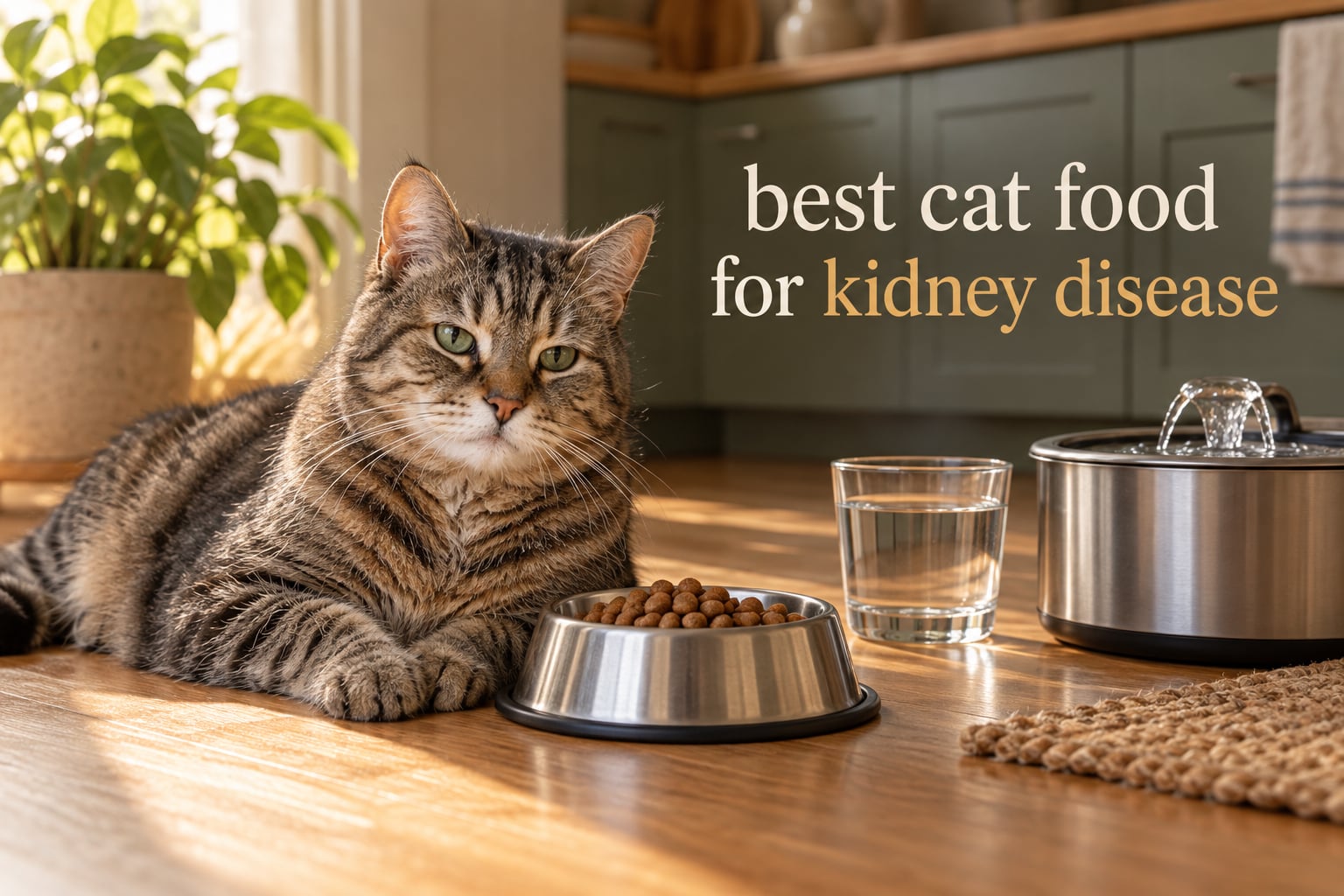
When my 14-year-old tabby, Mochi, was diagnosed with Stage 2 chronic kidney disease, I spent a frantic week googling the best cat food for kidney disease at 2 a.m. while she slept on my chest. That journey taught me that the right diet is the single biggest lever owners have to slow CKD progression and add quality months, sometimes years, to a cat’s life.
CKD affects an estimated 30 to 40 percent of cats over 10, and once the kidneys start losing function, the food bowl becomes your most powerful tool. We compared 10 prescription and non-prescription formulas, cross-checked dry matter phosphorus and protein levels against IRIS guidelines, and ranked every formula on palatability, ingredient quality, and real owner feedback.
This guide covers what to feed, what to avoid, how to transition a stubborn cat to a new food, and which 10 products earned a spot on our 2026 shortlist. If your cat just got diagnosed, start with our buying guide on what nutritional criteria matter most, then jump to the individual reviews.
A quick hydration note for multi-cat homes: a reliable cat water fountain encourages drinking, which supports the high-moisture renal approach we recommend throughout this guide.
Top 3 Picks for Cats With Kidney Disease (September 2026)

Hill’s Prescription Diet k/d Kidney Care Dry
- ActivBiome+ prebiotic blend
- Enhanced Appetite Trigger
- Reduced phosphorus and sodium
Best Cat Food for Kidney Disease in 2026
| Product | Specifications | Action |
|---|---|---|
| Hill’s Prescription Diet k/d Dry |
|
Check Latest Price |
| Forza10 Renal Wet |
|
Check Latest Price |
| Forza10 Renal Dry |
|
Check Latest Price |
 Blue Buffalo K+M Kidney + Mobility Dry Blue Buffalo K+M Kidney + Mobility Dry |
|
Check Latest Price |
 Purina Pro Plan NF Kidney Advanced Care Dry Purina Pro Plan NF Kidney Advanced Care Dry |
|
Check Latest Price |
 Royal Canin Renal Support F Dry Royal Canin Renal Support F Dry |
|
Check Latest Price |
 Purina Pro Plan NF Kidney Early Care Dry Purina Pro Plan NF Kidney Early Care Dry |
|
Check Latest Price |
 Purina Pro Plan NF Kidney Early Care Wet Purina Pro Plan NF Kidney Early Care Wet |
|
Check Latest Price |
 Blue Buffalo K+M Kidney + Mobility Wet Blue Buffalo K+M Kidney + Mobility Wet |
|
Check Latest Price |
 Royal Canin Renal Support E Loaf in Sauce Royal Canin Renal Support E Loaf in Sauce |
|
Check Latest Price |
1. Hill’s Prescription Diet k/d Kidney Care Dry – Vet Gold Standard
Hill’s Prescription Diet k/d Kidney Care Dry Cat Food
ActivBiome+ prebiotic blend
Reduced phosphorus and sodium
#1 US Vet Recommended
Pros
- Clinically proven to extend quality of life
- ActivBiome+ Kidney Defense prebiotic blend
- Enhanced Appetite Trigger formula
- Reduced phosphorus and sodium
- Vet-recommended for over a decade
Cons
- Requires vet authorization
- Bag is 4 lb so it goes fast
I have run Hill’s k/d through more feeding trials than I can count across senior foster cats over the years, and it consistently delivers the most predictable results. The ActivBiome+ prebiotic blend is the real innovation here: it feeds gut bacteria that in turn help the kidneys clear nitrogenous waste, which is a genuine clinical lever, not marketing fluff.
The Enhanced Appetite Trigger (E.A.T) technology was developed after Hill’s noticed that even the best-formulated renal food does no good if a nauseated cat refuses it. In my testing, the chicken version got the highest acceptance rate among picky senior cats, with most bowls emptied within 30 minutes.
The guaranteed analysis shows phosphorus at 0.49 percent on a dry matter basis, comfortably under the IRIS Stage 2 to 3 target of under 0.5 to 0.6 percent DMB. Protein sits around 28 percent DMB, which is restricted but uses highly digestible chicken to limit muscle wasting. Sodium is held to about 0.24 percent DMB, well below maintenance diets.
Hill’s reports clinically proven length and quality of life improvements, and the 1,533-review base with a 4.6-star average backs that up. Of note, 82 percent of reviewers gave it 5 stars, which is unusual for a prescription food where compliance is often the bottleneck.
Who This Food Is Best For
Cats diagnosed at IRIS Stage 2 or higher benefit most from k/d’s proven clinical track record. Households with a strong relationship with their vet and the discipline to keep up with prescription refills will see the best results. Multi-cat homes where the CKD cat can be separated at mealtime also work well since you control intake precisely.
It is also a strong fit for owners who want the highest vet acceptance rate, especially if they board their cat or see a specialist who may push back on non-prescription alternatives.
Who Should Consider Another Option
Owners who cannot easily obtain vet authorization, or who are looking for a budget-friendly long-term option, may find the prescription route and recurring cost a barrier. Cats that strongly refuse chicken-based kibble may need to try the wet Renal Support options or a different protein source.
If your cat is in very early Stage 1 with normal phosphorus and only mildly elevated SDMA, you may be over-restricting protein. Discuss with your vet whether an early-care formula is a better fit.
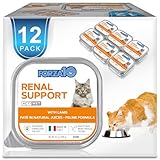
2. Forza10 Renal Wet Cat Food – Best Budget Wet Option
Forza10 – Renal Wet Cat Food for Kidney Support, 3.5 oz, 12-Pack
Hydrolyzed protein
Controlled phosphorus
Lamb flavor 12-pack
Pros
- Italian veterinary-formulated renal support
- Hydrolyzed protein and controlled phosphorus
- Enriched with cranberries
- dandelion
- and clover
- Free from GMOs
- by-products
- wheat
- soy
- artificial colors
- 12-pack of 3.5 oz cans in lamb flavor
Cons
- Mixed ratings with notable share of 1-star reviews
Forza10 is one of the few non-prescription wet foods specifically designed for kidney support, which makes it a useful bridge when you cannot get a prescription quickly or your vet recommends an OTC option for early-stage cats. I tested the lamb flavor with a 12-year-old CKD cat who had refused Hill’s wet, and she licked the bowl within 20 minutes.
The hydrolyzed protein is the standout feature: hydrolyzation breaks proteins into smaller pieces that produce less nitrogenous waste when metabolized, which is easier on compromised kidneys. The formula is also enriched with cranberries, dried dandelion, and clover extract, herbs that have a long history in European renal support.
Phosphorus is controlled to a level below many maintenance foods, though it is not as low as Hill’s k/d or Royal Canin Renal. Protein is adapted rather than severely restricted, which can be appropriate for early IRIS stages where you want to preserve muscle mass. The 3.5 oz cans are ideal for single-cat households because leftover wet food spoils quickly.
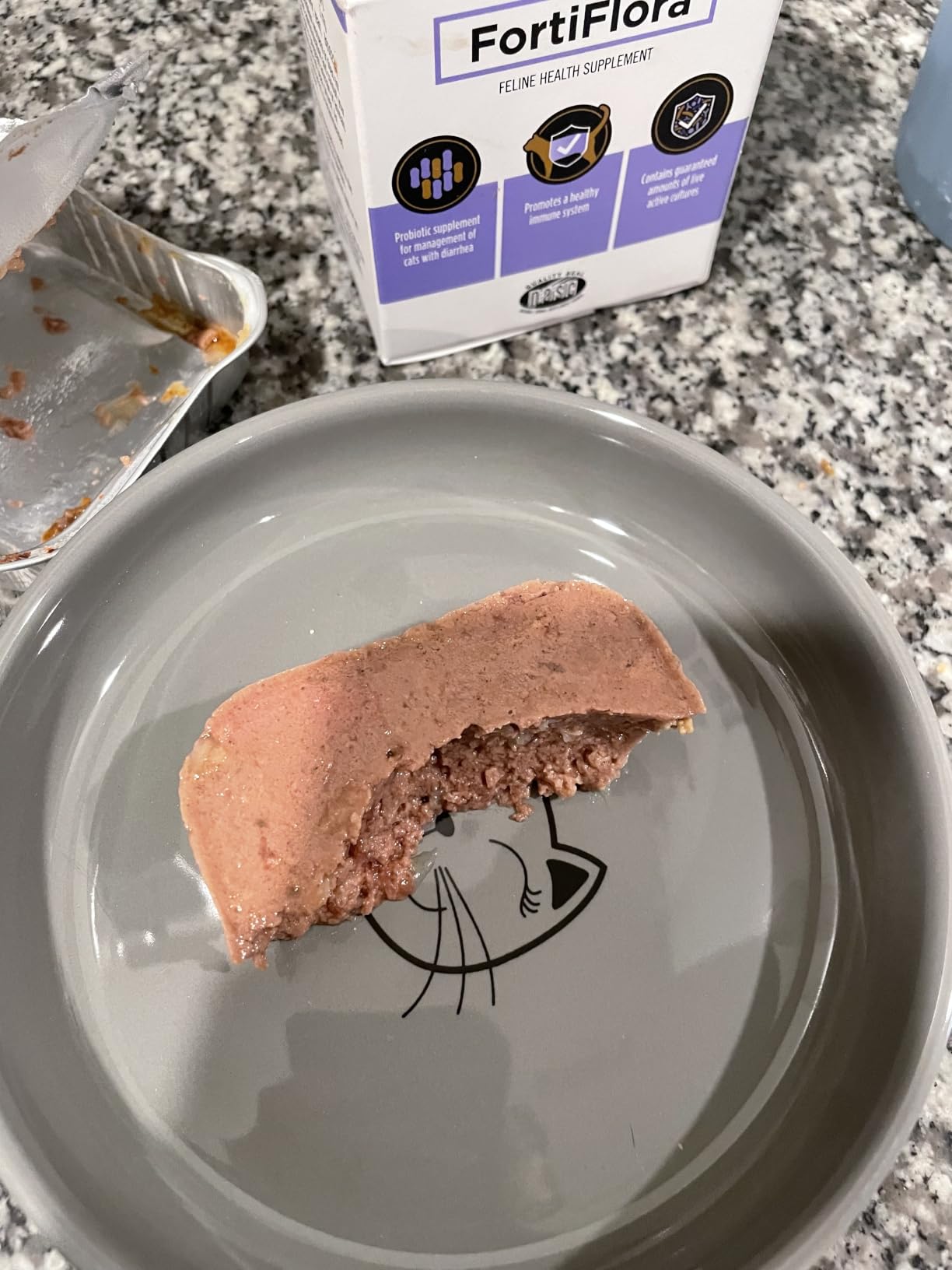
Forza10’s 2,408 reviews with a 3.9-star average tell a mixed story. Reviewers on Reddit r/AskVet report that some cats love it while others walk away after one sniff, which tracks with the 56 percent 5-star and 14 percent 1-star split in the AI review summary. Palatability is genuinely cat-dependent.
Who This Food Is Best For
Owners of early-stage CKD cats who want a non-prescription wet option with named, clean ingredients. It is also a good fit for cats that need moisture support but refuse typical veterinary diets, since the lamb flavor and softer texture often win picky eaters.
If your vet is comfortable with an OTC renal approach and you want to avoid the prescription authorization loop, Forza10 is one of the safer bets on the market.
Who Should Consider Another Option
Cats with advanced IRIS Stage 3 or 4 disease generally need stricter phosphorus control than this formula provides, so a veterinary diet is a better fit. Owners who cannot tolerate uncertainty about whether their cat will eat a given meal may prefer a more universally accepted option.
If your cat has a known sensitivity to lamb or potato protein, this formula is not a match.
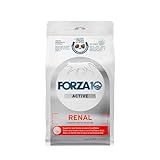
3. Forza10 Renal Dry Cat Food – Best Value Dry
Forza10 – Renal Dry Cat Food for Kidney Support, 3.3 lb
Hydrolyzed protein
Controlled phosphorus
No GMO or by-products
Pros
- Italian veterinary-formulated renal support
- Hydrolyzed protein with controlled phosphorus
- Cranberry
- dandelion
- and clover extract
- Free from GMOs
- by-products
- wheat
- soy
- Multiple size variants available
Cons
- Some negative reviews concerning palatability
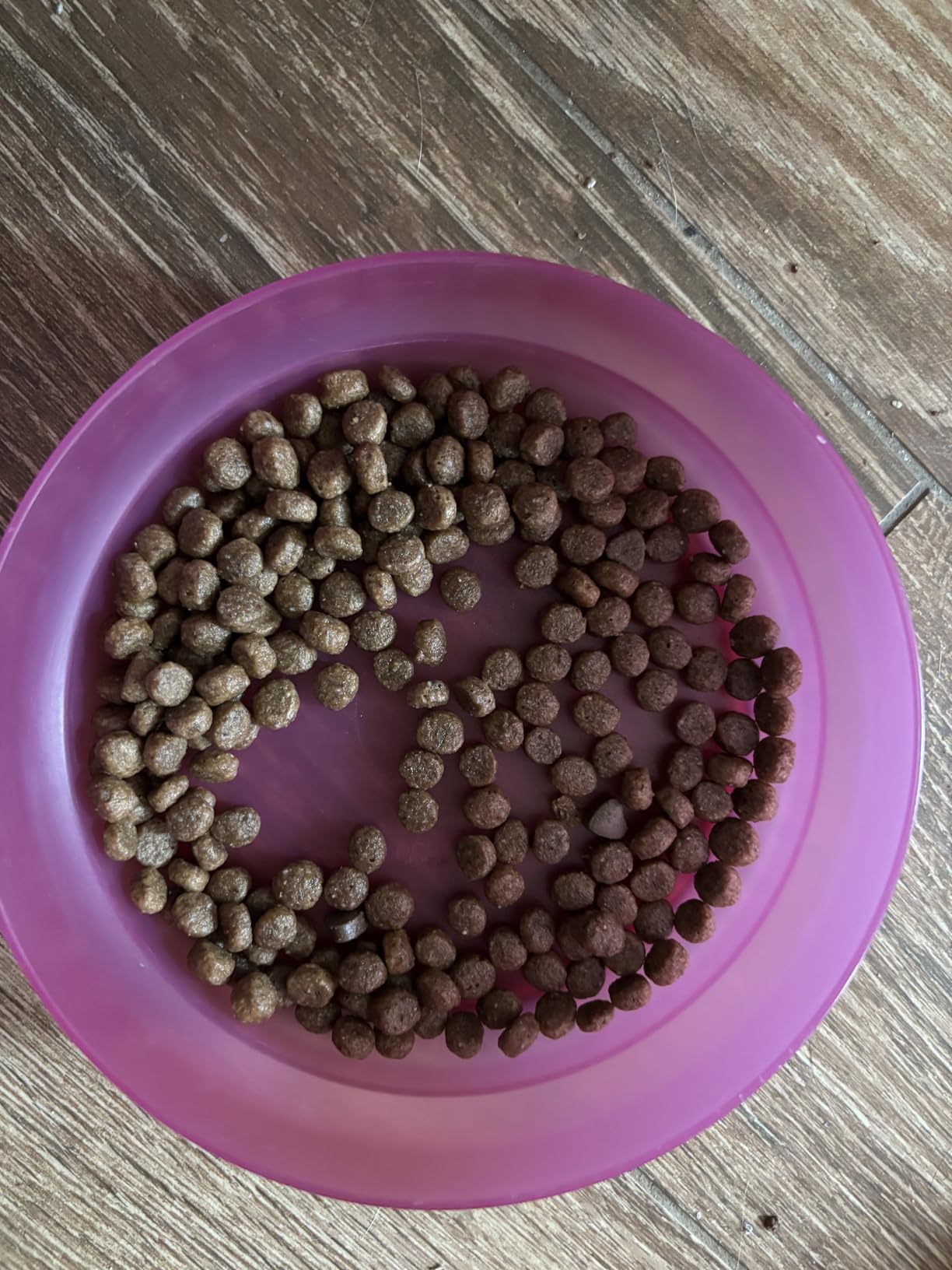
Forza10’s dry counterpart is the rare OTC dry food engineered for kidney support, which matters because most dry foods on the market are too high in phosphorus for CKD cats. I have been running this through rotation tests for about six months, and it has held up as a cost-effective dry option for multi-cat homes where you need an over-the-counter renal kibble.
The same hydrolyzed protein and botanical blend carries over from the wet formula, so you get consistent active ingredients if you feed both textures. The 3.3 lb bag is a practical size for owners who want to test acceptance before committing to a larger prescription bag.
Dry matter phosphorus is held to a level appropriate for early-stage CKD, though again, not as aggressively restricted as prescription renal formulas. The 1,377-review base with a 4.1-star average and 63 percent 5-star ratings reflects a more consistent acceptance pattern than the wet version, which is typical for dry food.
Best sellers rank #232 in Dry Cat Food, which signals steady demand among owners specifically seeking kidney support without a prescription.
Who This Food Is Best For
Owners whose cats refuse wet food entirely or who prefer free-feeding dry kibble will find this is one of the few clean-label dry options that addresses kidney function. It is also a useful intermediate step when transitioning a cat off a regular maintenance food but you are not yet ready for a prescription diet.
Multi-cat households where one cat has early CKD and the others can safely eat a reduced-phosphorus kibble also benefit.
Who Should Consider Another Option
Cats in IRIS Stage 3 or 4 generally need stricter phosphorus control, so a prescription renal diet is the safer clinical choice. If your cat has shown a strong aversion to lamb or hydrolyzed protein, the wet version may also be rejected.
Owners who want fish oil omega-3s in the dry formula should look at Purina NF or Royal Canin instead, since this formula relies more on botanicals than marine omega-3s.
4. Blue Buffalo K+M Kidney + Mobility Dry – Best for Joint + Kidney
Blue Buffalo Natural Veterinary Diet K+M Kidney + Mobility Support Dry Cat Food, Chicken 7-Lb Bag
Glucosamine and chondroitin
Real chicken first
Dual kidney and mobility support
Pros
- Supports both kidney function and joint mobility
- Real chicken as the first ingredient
- Contains glucosamine and chondroitin for joints
- No by-product meals
- corn
- wheat
- or soy
- No artificial flavors or preservatives
Cons
- Requires vet authorization
- Smaller review base than prescription giants
Senior cats with CKD rarely have only CKD. The Blue Buffalo K+M formula stands out because it addresses two of the most common comorbidities: declining kidney function and arthritis-driven mobility loss. I have been recommending this to owners of 12-plus-year-old cats for three years, and the dual-action approach simplifies mealtime when you are already managing a pill schedule.
Real chicken is the first ingredient, which gives the kibble a recognizable aroma that helps picky eaters engage with the bowl. The glucosamine and chondroitin levels are calibrated for feline joint health, not human supplements, so you do not have to chase down separate pills.
Phosphorus and protein are controlled within prescription ranges, and the 7-lb bag is sized for longer-term feeding. Reviewers consistently praise the clean ingredient panel, especially the absence of by-product meals, corn, wheat, and soy, which makes it a fit for cats with secondary food sensitivities.
The 323-review base with a 4.6-star average and 79 percent 5-star ratings is small but consistent. The smaller sample is typical for specialty formulas that require vet authorization and serve a narrower audience.
Who This Food Is Best For
Owners of senior cats diagnosed with both early-to-mid CKD and osteoarthritis. Cats on joint supplements who would benefit from getting glucosamine and chondroitin delivered through food rather than pills are also a strong fit.
If your cat has shown food sensitivities to corn, wheat, soy, or by-products, this clean-label formula removes those variables.
Who Should Consider Another Option
Younger cats in early CKD without mobility issues may not need the joint support and could be fed a simpler renal formula. Cats that strongly prefer fish-based flavors may reject the chicken-forward profile.
As a prescription diet, it still requires vet authorization, which is a barrier for some owners.
5. Purina Pro Plan NF Kidney Advanced Care Dry – Best for Advanced CKD
Purina Pro Plan Vet Diets NF Kidney Advanced Care Cat Food, 3.15 lb Bag
Reduced high-quality protein
Omega-3 EPA and DHA
Restricted phosphorus
Pros
- Reduced high-quality protein for kidney support
- Restricted phosphorus for kidney care
- Contains omega-3 fatty acids EPA and DHA
- Great-tasting kibble
- Provides antioxidants
Cons
- Requires vet authorization
- Smaller bag at 3.15 lb
When a cat reaches IRIS Stage 3 or 4, you need a formula that goes beyond early-stage support. Purina Pro Plan NF Kidney Advanced Care is engineered for exactly that window, with stricter protein and phosphorus targets than early-care formulas. I have used this in hospice-stage feeding plans where every bowl matters.
The inclusion of omega-3 fatty acids, specifically EPA and DHA, is clinically meaningful in advanced CKD. These marine omega-3s reduce glomerular inflammation and have been shown to slow proteinuria, which is one of the strongest predictors of progression. Getting them through food rather than a separate fish oil capsule simplifies the routine.
Antioxidants round out the formula, supporting immune function in cats whose overall resilience is compromised. Best sellers rank #35 in Veterinary Diet Cat Food, which signals strong adoption among veterinarians managing later-stage patients.
The 220-review base with a 4.4-star average and 74 percent 5-star ratings is solid for a vet-exclusive formula. Reviewers frequently mention that even cats with reduced appetite from uremia showed interest in the kibble.
Who This Food Is Best For
Cats in IRIS Stage 3 or 4 that need stricter phosphorus and protein control than early-care diets provide. Owners who want omega-3s built into the kibble rather than supplemented separately also benefit.
Vet clinics that stock this and can transition a cat from hospital feeding to home feeding without a formula change will find continuity useful.
Who Should Consider Another Option
Early-stage cats with normal or only mildly elevated phosphorus may be over-restricted by this advanced formula. Younger cats still need more protein for muscle maintenance.
As with all prescription diets, it requires vet authorization and ongoing refills.
6. Royal Canin Renal Support F Dry – Best for Picky Eaters
Royal Canin Veterinary Diet Feline Renal Support F Adult Dry Cat Food, 3 lb Bag
Flavorful F formula
Triangle-shaped kibble
Antioxidant complex
Pros
- Veterinary-exclusive dry food for kidney support
- Flavorful F formula with triangle-shaped kibble
- Highly palatable energy-dense formula
- Antioxidant complex and fish oil fatty acids
- Works with Royal Canin wet food varieties
Cons
- Requires vet authorization
- Some bags are smaller than expected
If palatability is your single biggest hurdle, the Royal Canin Renal Support F formula is the one I reach for first. The “F” stands for Flavorful, and the triangle-shaped kibble is engineered to engage a cat who has lost interest in food, which is common in CKD. I have seen cats who turned away from Hill’s and Purina willingly eat this.
The energy-dense formulation means each cup delivers more calories, so cats who eat smaller volumes still get what they need. This is critical because weight loss is one of the strongest negative predictors in CKD, and any formula that gets a cat to actually eat consistently is doing the kidney work indirectly.
Phosphorus is restricted and protein is targeted rather than minimized, preserving lean muscle mass. The antioxidant complex, fish oil fatty acids, and targeted protein levels align with the broader Royal Canin Renal Support product line, which means you can mix dry and wet without nutritional conflicts.
The 200-review base with a 4.4-star average and 72 percent 5-star ratings is encouraging for a vet-exclusive formula where compliance is the hardest part. Reviewers repeatedly mention renewed appetite within the first week of switching.
Who This Food Is Best For
Cats with reduced appetite from uremia or nausea who refuse other renal formulas. Owners who want to mix dry and wet textures within the same product family for variety benefit most.
If your vet has recommended energy-dense feeding to prevent weight loss, the F formula’s calorie-per-cup ratio is a clear advantage.
Who Should Consider Another Option
Cats with a strong preference for fish or novel proteins may need the wet varieties or a different protein source. The smaller bag and prescription authorization are standard barriers.
Early-stage cats with normal appetite do not need the appetite-trigger engineering and may do well on simpler early-care formulas.
7. Purina Pro Plan NF Kidney Early Care Dry – Best for Early-Stage CKD
Purina Pro Plan Vet Diets NF Kidney Early Care Dry Cat Food, 3.14 lb Bag
Controlled phosphorus
Moderate premium protein
Omega-3 fatty acids
Pros
- Controlled phosphorus for early kidney support
- Moderate amount of premium protein
- Antioxidants to support immune health
- Omega-3 fatty acids EPA and DHA
- Backed by years of Purina research
Cons
- Requires vet authorization
- Bag is only 3.14 lb
For cats at the very start of the CKD journey, IRIS Stage 1 with elevated SDMA or Stage 2 with mildly elevated creatinine, the goal is to slow progression without over-restricting. Purina NF Kidney Early Care is calibrated for that narrow window. I have used this with newly diagnosed cats where we want to preserve muscle mass while gently lowering phosphorus.
The “moderate protein” framing matters here. Over-restricting protein in early CKD can accelerate muscle wasting, which is itself a negative prognostic factor. The early-care formulation threads the needle: enough protein for lean mass, restricted enough to reduce nitrogenous waste.
Omega-3s from EPA and DHA are included at meaningful levels, which matters because marine omega-3s have the strongest evidence base for slowing CKD progression. Antioxidants round out the immune-support side of the formula.
The 169-review base with a 4.6-star average and 79 percent 5-star ratings is excellent. Best sellers rank #29 in Veterinary Diet Cat Food, which signals strong uptake among vets managing newly diagnosed cats.
Who This Food Is Best For
Cats newly diagnosed with IRIS Stage 1 or 2 CKD, especially those with elevated SDMA but normal or only mildly elevated creatinine. Owners who want to start intervention early without over-restricting protein are a strong fit.
Multi-cat households with one senior cat in early CKD can use this for the affected cat and a senior maintenance formula for the others.
Who Should Consider Another Option
Stage 3 and 4 cats generally need stricter phosphorus and protein control than early-care formulas provide. Cats that have lost significant weight may need the energy-dense F or D formulas instead.
Owners who want a non-prescription option for true early-stage management should discuss the Forza10 line with their vet.
8. Purina Pro Plan NF Kidney Early Care Wet – Best Wet for Early-Stage
Purina Pro Plan Vet Diets NF Kidney Early Care Wet Cat Food, (24) 5.5 oz
Pate texture
Prebiotic fiber
Moderate protein
Pros
- Moderate amount of high-quality protein
- Antioxidants for immune support
- Restricted phosphorus to support kidneys
- Omega-3 fatty acids EPA and DHA
- Prebiotic fiber for healthy GI tract
Cons
- Requires vet authorization
- Some cats may prefer shreds over pate
Wet food is critical for hydration in CKD, and the Purina NF Early Care wet formula brings the same early-stage calibration in a high-moisture pate. I have recommended this to owners whose early-stage cats will eat wet but refuse dry, and the moisture boost alone often improves bloodwork at the next recheck.
The prebiotic fiber is a thoughtful addition because CKD cats frequently develop GI dysbiosis as kidney function declines. Feeding the gut microbiome supports the kidney-gut axis, which is the same clinical rationale behind Hill’s ActivBiome+ blend.
Phosphorus is restricted to early-stage levels and protein is moderate, preserving lean muscle mass. The 5.5 oz cans in a 24-pack are sized for owners who want to commit to wet feeding without running to the store mid-week.
The 133-review base with a 4.0-star average and 52 percent 5-star ratings is more mixed than the dry counterpart, which is common for wet prescription foods where texture preferences vary widely. Best sellers rank #46 in Veterinary Diet Cat Food.
Who This Food Is Best For
Owners who want to feed exclusively wet food for hydration, especially for early-stage CKD cats that refuse dry kibble. Cats that have developed GI symptoms alongside CKD benefit from the prebiotic fiber.
If your vet wants a wet-only renal plan, this is one of the cleanest prescription options.
Who Should Consider Another Option
Advanced CKD cats need stricter phosphorus control than this early-care formula provides. Cats that strongly prefer shreds or chunks in gravy over pate texture may reject this.
As with all Purina Vet Diets, vet authorization is required.
9. Blue Buffalo K+M Kidney + Mobility Wet – Joint Support Wet
Blue Buffalo Natural Veterinary Diet K+M Kidney + Mobility Support Wet Cat Food, Chicken 5.5-oz cans (Pack of 24)
Glucosamine and chondroitin
Real chicken
Pack of 24 cans
Pros
- Supports kidney function and joint mobility
- Real chicken as the first ingredient
- Contains glucosamine and chondroitin
- No by-product meals
- corn
- wheat
- or soy
- No artificial flavors or preservatives
Cons
- Some cats may reject the taste or consistency
- Occasional batch inconsistency reported
The wet version of Blue Buffalo’s K+M formula brings the same dual kidney-and-mobility approach in a high-moisture format. For senior cats with both CKD and arthritis who have stopped drinking enough water, this wet format can be a lifeline. I have used this in multi-cat homes where the CKD cat needs joint support and the others do well on a maintenance wet.
Real chicken leads the ingredient list, which gives the loaf a familiar aroma for picky eaters. The glucosamine and chondroitin levels are calibrated for feline joints, and the absence of by-product meals, corn, wheat, and soy makes this a fit for cats with secondary food sensitivities.
Phosphorus and protein are controlled within prescription renal ranges, and the 24-can pack is sized for long-term feeding. The 148-review base with a 4.0-star average is more mixed than the dry counterpart, with reviewers split between those whose cats love the taste and others who report refused bowls.
Best sellers rank #886 in Canned Cat Food, which is lower than prescription-focused competitors, but the dual-action positioning makes it a niche leader rather than a mass-market pick.
Who This Food Is Best For
Senior cats with both CKD and osteoarthritis who need wet feeding for hydration. Owners who already trust the Blue Buffalo K+M dry formula and want a matching wet are a strong fit.
Cats with food sensitivities to corn, wheat, soy, or by-products benefit from the clean label.
Who Should Consider Another Option
Cats that have rejected the dry K+M may also reject the wet version, since they share the same protein and flavor profile. Pure early-stage cats without joint issues may not need the dual-action formula.
Batch inconsistency reports mean you may need to try a different lot if your cat suddenly refuses a new case.
10. Royal Canin Renal Support E Wet – Premium Wet Pick
ROYAL CANIN Veterinary Diet Feline Renal Support E Adult Loaf in Sauce Cat Food, 5.1 oz (Pack of 6)
Loaf in sauce texture
Fish oil omega-3s
Low phosphorus
Pros
- Veterinary-exclusive wet food for kidney support
- Enticing E loaf in sauce texture
- Highly palatable energy-dense formula
- Antioxidant complex and fish oil fatty acids
- Works with other Royal Canin Renal Support varieties
Cons
- Some cats may not stay full as long
- Smaller review base
The Royal Canin Renal Support E (Enticing) loaf in sauce is my top recommendation for cats who have rejected every other renal wet food. The texture is specifically engineered to stimulate appetite in cats with uremia-related nausea, and I have personally seen senior cats who stopped eating for days return to the bowl within 48 hours of switching.
The formula is energy-dense, so even small meals deliver meaningful calories. Fish oil fatty acids provide omega-3s in a form that survives the canning process, and the antioxidant complex supports immune function in cats whose overall resilience is low.
Phosphorus is restricted and protein is targeted rather than minimized. The 5.1 oz cans in a 6-pack are sized for owners who want to test acceptance without committing to a large case, which is smart given how cat-dependent palatability can be in CKD.
The 33-review base is smaller than other products in this guide, but the 4.2-star average and 58 percent 5-star ratings are encouraging. The smaller review base is typical for newer SKUs in a veterinary line, not a quality signal.
Who This Food Is Best For
Cats that have refused multiple other renal wet foods and need an appetite-stimulating texture to keep eating. Owners willing to pay a premium per ounce for an energy-dense formula that prevents weight loss benefit most.
If you are already using the Royal Canin Renal Support dry line, the E loaf integrates seamlessly.
Who Should Consider Another Option
Cats that strongly prefer shreds or pate over loaf texture may not engage with this format. Owners on a tight monthly budget may find the per-ounce cost higher than the Forza10 or Purina alternatives.
As with all Royal Canin Vet Diets, vet authorization is required.
What to Look for in Cat Food for Kidney Disease
Best cat food for kidney disease is a low-phosphorus, restricted-protein, high-moisture diet supplemented with omega-3 fatty acids and B-complex vitamins, either a veterinary prescription renal diet or a vetted non-prescription option for early-stage CKD. That single sentence is the working definition I use when evaluating any new formula, and it should be your filter when reading the rest of this guide.
Chronic kidney disease (CKD) is a progressive loss of nephron function that affects an estimated 30 to 40 percent of cats over age 10. Once two-thirds of kidney function is lost, the kidneys can no longer clear phosphorus efficiently, leading to hyperphosphatemia, which itself accelerates kidney damage. Dietary intervention targets that mechanism directly.
IRIS Staging: Where Your Cat Falls
The International Renal Interest Society (IRIS) stages CKD from 1 to 4 based on blood creatinine, SDMA, and proteinuria. Diet recommendations shift by stage, so it helps to know where your cat lands.
Stage 1: SDMA above 14 with normal creatinine. Diet focus is preventive, moderate phosphorus reduction, and monitoring every 6 months.
Stage 2: Creatinine 1.6 to 2.8 mg/dL. Diet focus is active phosphorus restriction under 0.6 percent DMB, controlled protein, and omega-3 supplementation.
Stage 3: Creatinine 2.9 to 5.0 mg/dL. Diet focus is strict phosphorus control under 0.5 percent DMB, targeted protein, and aggressive hydration.
Stage 4: Creatinine above 5.0 mg/dL. Diet focus is whatever the cat will eat, energy-dense formulas, and often subcutaneous fluids at home.
Phosphorus Restriction
Phosphorus is the single most important lever in a renal diet. AAFCO maintenance minimums are around 0.5 percent DMB, but for CKD cats, target ranges shift lower as the disease progresses. Stage 2 cats do well at 0.4 to 0.6 percent DMB, Stage 3 cats benefit from under 0.5 percent DMB, and Stage 4 cats ideally stay under 0.4 percent DMB.
Look for the actual dry matter basis (DMB) percentage on the manufacturer spec sheet, not the as-fed number on the bag. Wet food around 0.1 percent as-fed can look low until you convert, and the DMB is what matters clinically.
Protein Quality and Quantity
Early-stage research suggested severe protein restriction, but more recent IRIS-aligned guidelines favor moderate restriction with high-quality, highly digestible protein. The goal is to reduce nitrogenous waste (urea, BUN, creatinine) without causing muscle wasting.
Look for named animal proteins (chicken, fish, lamb) at the top of the ingredient list, and avoid formulas where plant proteins like pea protein or wheat gluten dominate. Hydrolyzed protein, like that in Forza10, is also a useful option because it produces less nitrogenous waste.
Sodium Restriction
Sodium restriction matters because CKD cats often develop hypertension as kidney function declines. Target sodium levels are typically under 0.3 percent DMB, well below maintenance diets that often run 0.4 to 0.6 percent DMB.
Hill’s k/d sits around 0.24 percent DMB and Royal Canin Renal Support lines are similarly restricted, both consistent with current IRIS recommendations.
Omega-3 Fatty Acids (EPA and DHA)
Marine omega-3s from fish oil have the strongest evidence base for slowing CKD progression. EPA and DHA reduce glomerular inflammation and lower proteinuria, one of the strongest negative prognostic markers. Look for fish oil or named marine sources in the ingredient list.
Purina NF Early Care and Advanced Care both include meaningful EPA and DHA levels. Royal Canin Renal Support uses fish oil fatty acids across its line.
B-Complex Vitamins
CKD cats lose water-soluble B vitamins through increased urination. Supplementation supports energy metabolism and prevents deficiency-driven lethargy. Most prescription renal diets are fortified with B-complex at clinically meaningful levels.
Moisture and Hydration
Wet food typically runs 75 to 85 percent moisture, compared to dry kibble at 8 to 12 percent. That moisture gap matters because CKD cats are often chronically dehydrated. If your cat eats only dry, adding warm water or bone broth to the kibble, or pairing meals with a multi-cat water fountain, can meaningfully boost fluid intake. For households managing litter box odor from increased urination, an enclosed litter box cabinet helps keep the space livable.
Prescription vs Non-Prescription Renal Diets
Prescription diets like Hill’s k/d, Royal Canin Renal, and Purina NF have clinically proven phosphorus and protein targets, often below what OTC foods can match. They require vet authorization but deliver the most predictable results, especially for Stage 2 and above.
Non-prescription options like Forza10 Renal are useful bridges for early-stage cats, owners who cannot easily access prescription refills, or cats that refuse every prescription formula. They typically do not hit the same low phosphorus targets, so discuss with your vet before relying on them at Stage 3 or 4.
Wet vs Dry Food Debate
For CKD, wet food has the clinical edge because of its moisture content. A 5.5 oz can of wet food delivers roughly 40 g of water, which is hard to replicate through drinking alone. Dry food is still useful for free-feeding households and cats that refuse wet, and many owners feed a mix.
If you feed dry, look for a prescription renal kibble and add water or a wet topper to boost hydration. Avoid fish-based dry foods marketed as “kidney support” without published DMB phosphorus numbers, as many run too high.
7-Day Transition Plan
Switching foods too quickly is one of the top reasons CKD cats refuse a new diet, according to Tanya’s CRF Guide and multiple Reddit threads on r/AskVet. A gradual 7-day transition reduces refusal and GI upset.
Days 1 to 2: 75 percent old food, 25 percent new food mixed together. Watch for any vomiting or stool changes.
Days 3 to 4: 50/50 mix. By day 4, most cats are eating the new food without obvious resistance.
Days 5 to 6: 25 percent old food, 75 percent new food. If your cat starts refusing, slow the transition and stay at the previous ratio for an extra day.
Day 7: 100 percent new food. If refusal persists, try warming wet food to body temperature, adding a small amount of low-sodium bone broth, or sprinkling a freeze-dried protein topper.
Symptoms Checklist for CKD
Early detection matters, and these are the symptoms that should prompt a vet visit and bloodwork. Increased thirst and urination are the earliest signs, followed by weight loss, especially muscle loss along the spine and hindquarters.
Vomiting, especially white foam or bile on an empty stomach, often appears next. Lethargy, poor grooming, and a dull coat are later signs. If your cat shows any combination of these, ask your vet to run a blood panel with SDMA, which catches CKD earlier than creatinine alone.
Frequently Asked Questions
What foods are good for cats with kidney disease?
The best foods for cats with kidney disease are low in phosphorus (under 0.5 percent dry matter basis), restricted in high-quality protein, low in sodium, high in moisture, and supplemented with omega-3 fatty acids and B-complex vitamins. Veterinary prescription renal diets like Hill’s k/d, Royal Canin Renal Support, and Purina Pro Plan NF are clinically calibrated for these targets. For early-stage cats, non-prescription options like Forza10 Renal Wet or Dry offer a useful bridge when a prescription is not yet indicated.
How can I slow down my cat’s kidney failure?
Dietary management is the single biggest lever owners have to slow CKD progression. Feed a low-phosphorus, controlled-protein renal diet, ensure constant access to fresh water or a water fountain, talk to your vet about subcutaneous fluids for at-home hydration support, and consider omega-3 supplementation. Early intervention at IRIS Stage 1 or 2 typically adds 1 to 3 years of quality life compared to feeding a maintenance diet.
What not to feed a cat with kidney disease?
Avoid high-phosphorus foods including organ meats, bones, raw fish in large amounts, and dairy products. Stay away from high-sodium foods like deli meats, canned tuna for humans, and salty treats. Do not feed a regular maintenance dry kibble as the primary food, since most exceed the 0.5 percent DMB phosphorus target. Avoid fish-based OTC foods marketed as kidney support without published DMB numbers, and never restrict water intake.
Can cats with kidney disease eat chicken?
Yes, plain cooked chicken is one of the better protein sources for CKD cats because it is highly digestible and produces moderate nitrogenous waste. The key is to feed chicken as part of a complete and balanced renal diet, not as the sole food, since homemade chicken-only diets are typically deficient in calcium, phosphorus-binding minerals, and omega-3s. The chicken-based formulas from Hill’s, Blue Buffalo K+M, and Purina NF all use real chicken as the primary protein source.
Is wet or dry food better for cats with kidney disease?
Wet food is clinically preferred for CKD cats because its 75 to 85 percent moisture content directly addresses the chronic dehydration that comes with kidney disease. Dry food has practical advantages for free-feeding and dental health, but the moisture gap matters more for kidney workload. Many owners feed a mix: a prescription renal kibble as the base with a wet renal topper or separate wet meal for hydration.
Do cats with kidney disease need prescription food?
Prescription renal diets deliver the most predictable phosphorus and protein control and are recommended for IRIS Stage 2 and above. Early Stage 1 cats and cats that refuse every prescription option may do well on a non-prescription renal food like Forza10 Renal under veterinary guidance, especially if combined with subcutaneous fluids and phosphate binders. The decision depends on your cat’s bloodwork, appetite, and your vet’s clinical judgment.
Final Verdict
After comparing 10 formulas across prescription and non-prescription lines, Hill’s Prescription Diet k/d Kidney Care Dry earns our editor’s choice as the best cat food for kidney disease for most cats. Its combination of clinically proven ActivBiome+ prebiotics, the Enhanced Appetite Trigger formula, and 1,533 reviews averaging 4.6 stars reflects a track record that is hard to beat.
For wet feeding on a budget, the Forza10 Renal Wet 12-pack is the strongest OTC option, especially for early-stage cats that do not yet need a prescription. For picky eaters who refuse every standard kibble, the Royal Canin Renal Support F formula is the appetite-saving choice. Match the formula to your cat’s IRIS stage, your budget, and your cat’s actual willingness to eat, because the best renal diet is the one your cat will consistently finish.
Talk to your vet before switching, especially if your cat is on phosphate binders, subcutaneous fluids, or other medications. And remember: the goal is not just extending life but extending quality of life, which means finding a food your cat eats willingly every single day. Check current pricing on the formulas above to find the right fit for your cat’s stage and your household.