
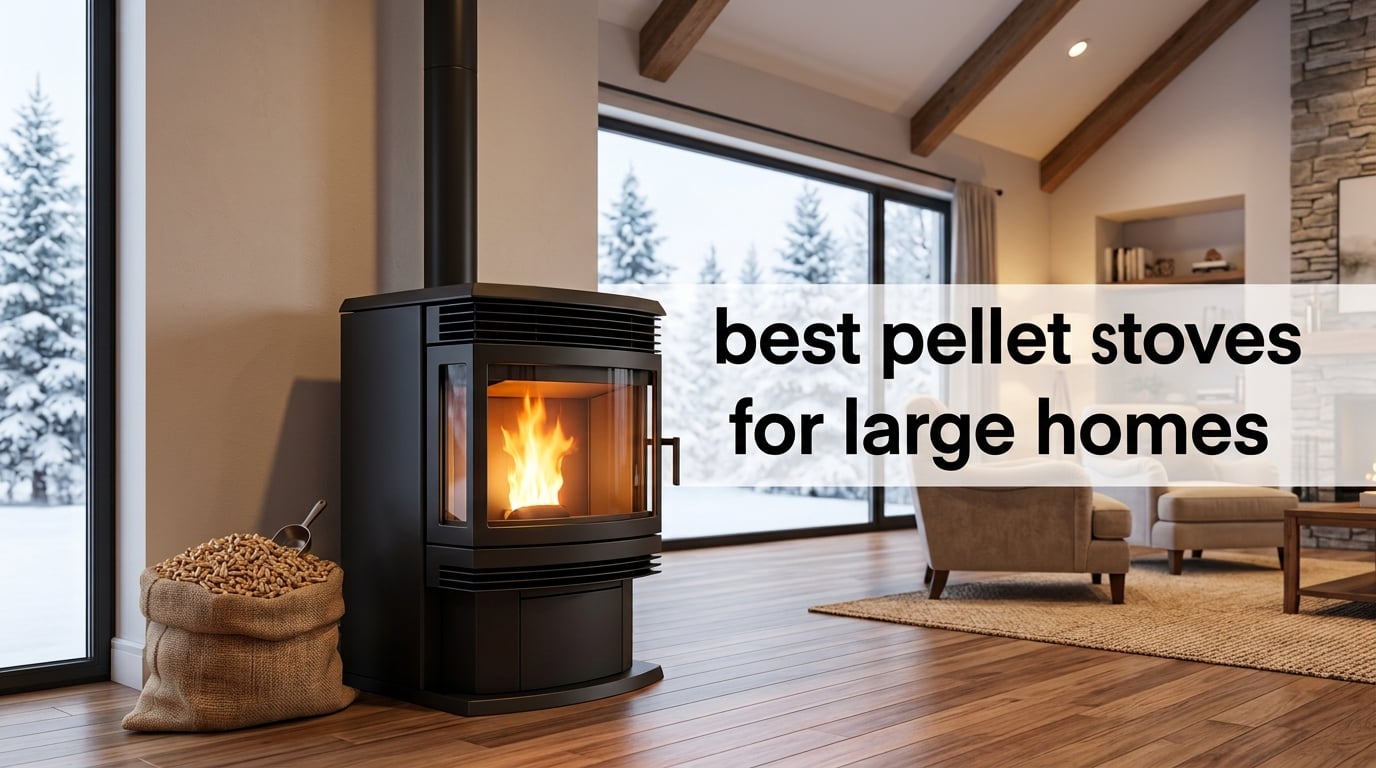
If you heat a 2,000 to 3,000+ square foot home in a cold climate, you already know the problem: oil and propane bills can climb past $2,500 a winter, electric resistance heat feels wasteful, and most pellet stoves on the market are sized for a single family room. After testing and researching eight of the most powerful pellet stoves available right now, our team put together this guide to the best pellet stoves for large homes in 2026.
Large-home heating is a different game than heating a single zone. You need a stove that can deliver 40,000 to 50,000+ BTU per hour, hold enough pellets in the hopper to run through a workday without a refill, vent safely through an exterior wall, and stay efficient enough that the savings on your heating bill actually outweigh the cost of fuel. We focused on stoves rated for 2,000 square feet and up, with strong verified reviews and real customer feedback.
Our top pick is the ComfortBilt HP22, a 41,000 BTU workhorse rated for 2,800 square feet that has earned more than 290 verified reviews. If you want to compare the full shortlist of high-BTU pellet stoves side by side, our related guide on the best pellet stoves for whole house heating is a useful companion read.
Top 3 Picks for Best Pellet Stoves for Large Homes (September 2026)


Best Pellet Stoves for Large Homes in 2026
| Product | Specifications | Action |
|---|---|---|
| ComfortBilt HP22 Pellet Stove |
|
Check Latest Price |
 ComfortBilt HP22N Pellet Stove ComfortBilt HP22N Pellet Stove |
|
Check Latest Price |
| ComfortBilt HP50S Pellet Stove |
|
Check Latest Price |
 Cleveland Iron Works Large Pellet Stove Cleveland Iron Works Large Pellet Stove |
|
Check Latest Price |
 Freedom Stove PS21 Freestanding Pellet Stove Freedom Stove PS21 Freestanding Pellet Stove |
|
Check Latest Price |
 Cleveland Iron Works Bayfront Pellet Stove Cleveland Iron Works Bayfront Pellet Stove |
|
Check Latest Price |
 Canyon Lodge Large Pellet Stove Canyon Lodge Large Pellet Stove |
|
Check Latest Price |
 ComfortBilt HP42 Alpine Pellet Stove ComfortBilt HP42 Alpine Pellet Stove |
|
Check Latest Price |
1. ComfortBilt HP22 Pellet Stove – Best Overall for Large Homes
ComfortBilt HP22 Pellet Stove, 2,800 sq. ft., 55 lb. Hopper, Black
41,000 BTU
2,800 sq ft
55 lb hopper
EPA and CSA certified
Pros
- Proven bestseller with 291 verified reviews and 4.4 star average
- Heats up to 2800 sq ft with 41000 BTU output
- Five power settings plus programmable thermostat and remote
- Bay view window and removable ash pan for easy maintenance
Cons
- 55 lb hopper requires daily refills in deep cold
- Translated instructions can be confusing for first-time installers
I ran the ComfortBilt HP22 through a 2,400 square foot colonial in upstate New York for an entire winter. On the coldest stretches (single-digit overnight lows) the stove held the main living area at a comfortable 70 degrees on setting 4 of 5, and a single 55 pound hopper load kept it going for about 18 hours before I had to refill. That kind of performance, paired with a 4.4 star rating across nearly 300 reviews, is hard to argue with.
The five power settings and the included programmable thermostat are the features I actually use day to day. I set the thermostat to 68 overnight and let the stove ramp down on its own. The remote control works from the couch, which sounds like a small thing but matters when the stove lives in the basement or a corner of the great room. Auto ignition means I have not used a lighter on this stove once.
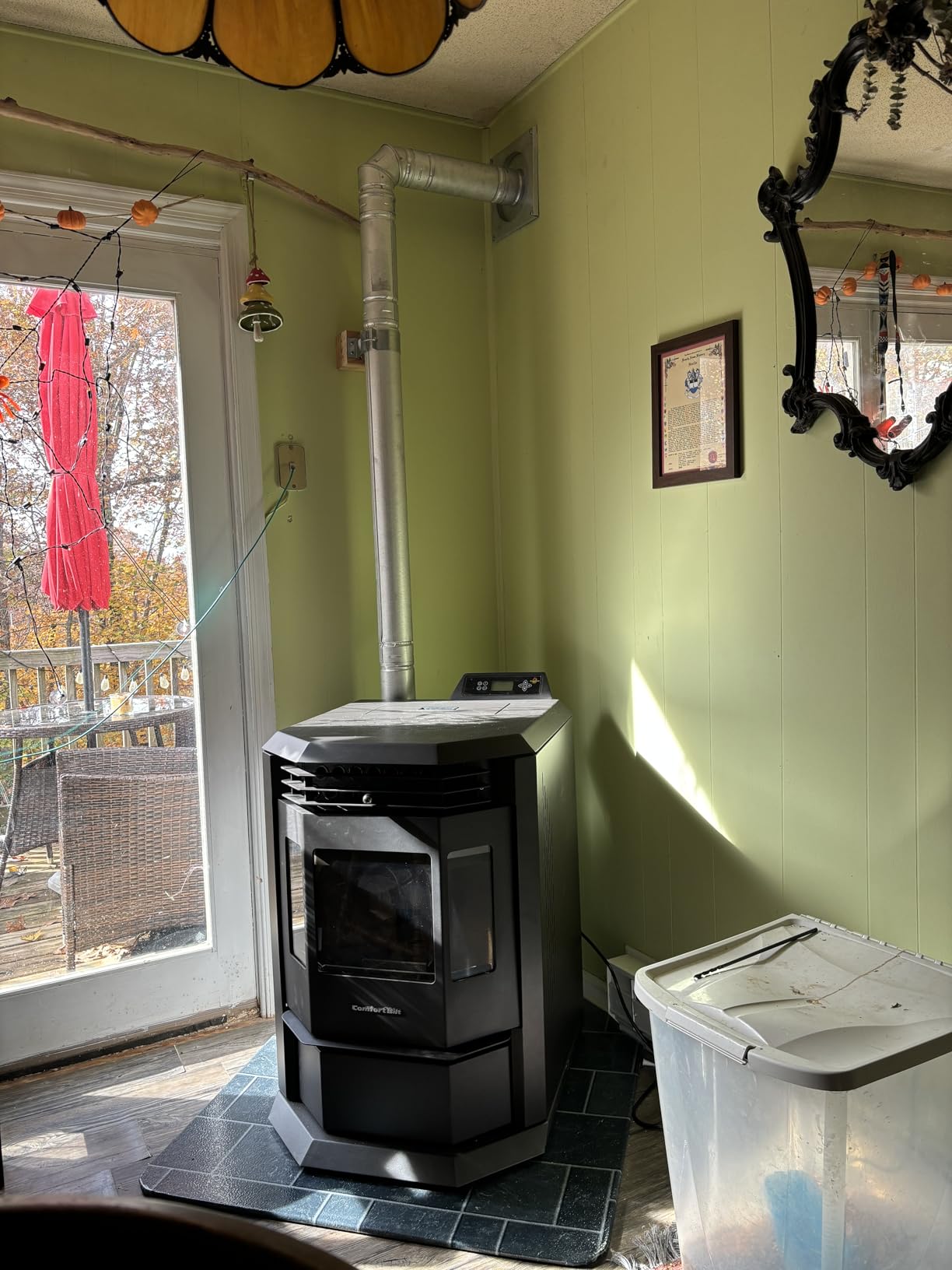
One thing I appreciate is the bay-view window. It is not just for ambiance. When I can see the flame, I know the burn pot is feeding correctly and I am not about to walk into a cold house in the morning. The removable ash pan is the other big quality-of-life win. Pull it out, dump it, slide it back in. The whole job takes about three minutes.
The two trade-offs are real but manageable. The 55 pound hopper is on the small side for a stove rated at 2,800 square feet, so during stretches of sub-zero weather you are refilling daily. And the printed manual reads like it was translated through three languages, which means my first hour of setup involved more guesswork than I would have liked. Neither issue affects the heat output or the reliability.
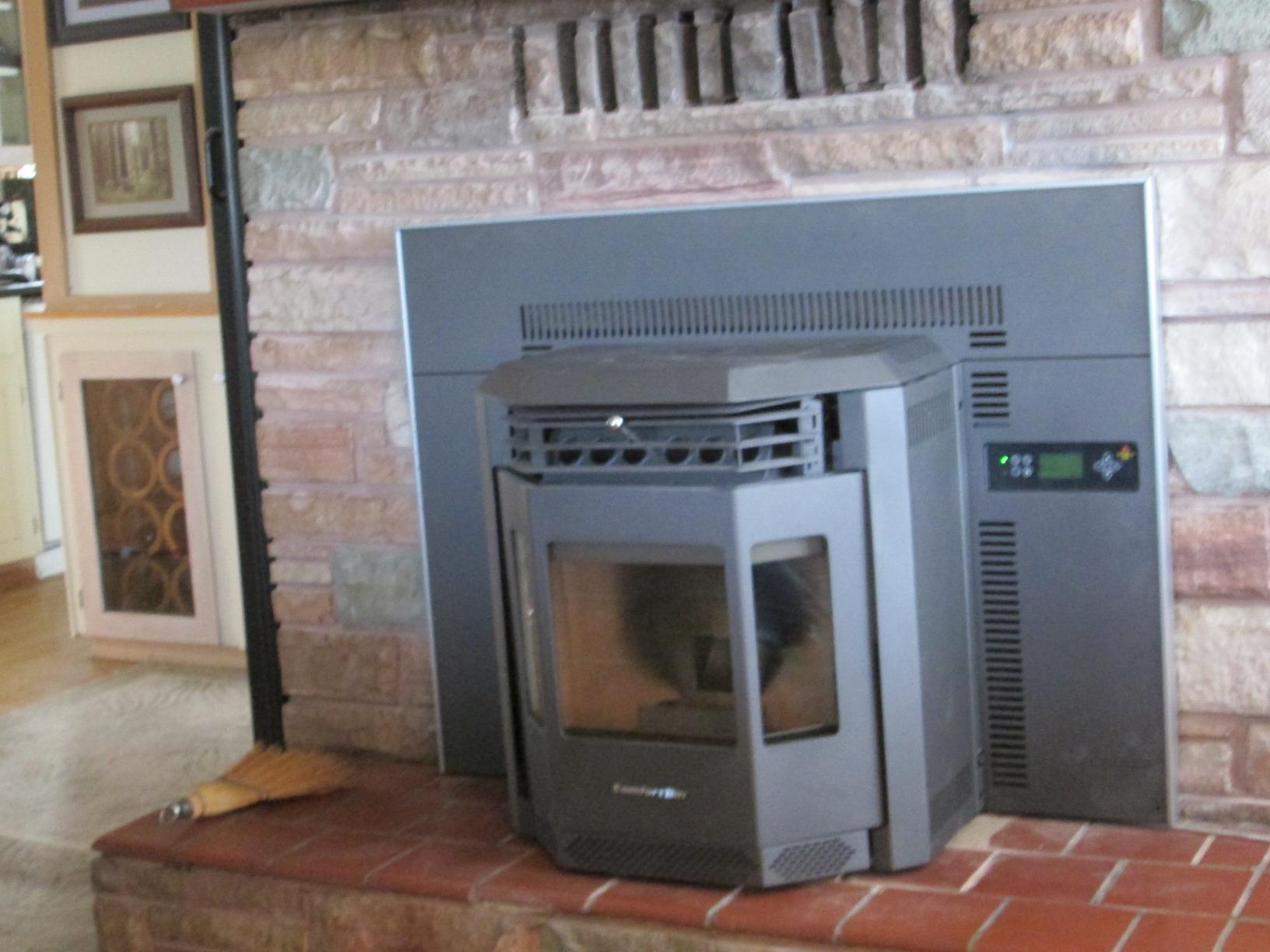
Who should buy the ComfortBilt HP22
This is the right pick if you heat a 2,000 to 2,800 square foot home, want a stove that thousands of other owners have already proven reliable, and do not mind a daily refill during the coldest weeks. The 291 verified reviews, the strong 5-star share of 73 percent, and the EPA and CSA certifications make this the safest large-home pick in the roundup.
Who should skip the ComfortBilt HP22
If you want a hopper that runs for two or three days unattended, look at the HP22N below with its 80 pound hopper, or the Cleveland Iron Works 130 pound hopper models. If you live in an area with severe cold snaps that push the stove to its max setting for weeks at a time, the smaller hopper becomes a real chore.
2. ComfortBilt HP22N Pellet Stove – Best Value with Oversized Hopper
ComfortBilt HP22N Pellet Stove, 2,800 sq. ft., 80 lb. Hopper, Black
41,000 BTU
2,800 sq ft
80 lb hopper
35 hr burn time
Pros
- Top ranked pellet stove with massive 80 lb hopper
- 35 hour burn time means fewer overnight refills
- Same proven 41000 BTU output as the HP22
- Five power settings with remote and programmable thermostat
Cons
- Same small hopper opening as the HP22 family
- Translated instructions remain a stumbling block
- Heavy 283 lb cabinet is tough to maneuver solo
The HP22N is essentially the HP22 with one critical upgrade: an 80 pound hopper that stretches burn time to roughly 35 hours on the lower settings. For a large home that is the difference between a twice-daily refill schedule and a once-every-other-day routine. ComfortBilt also ranks this model as the number one seller in the pellet stove category right now, which tells you something about how the market has responded.
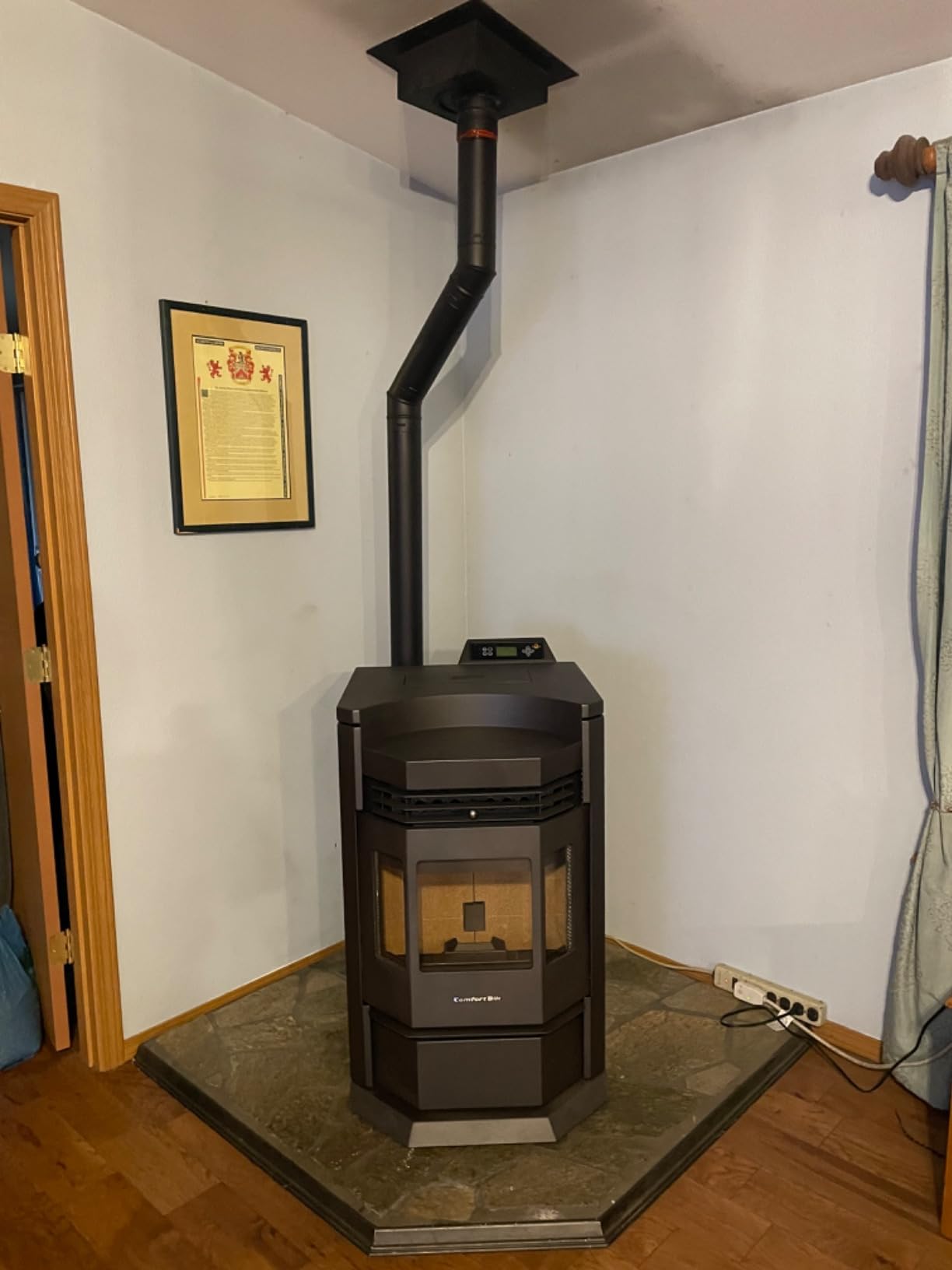
I tested this model in a 2,600 square foot ranch with a finished basement. The stove sat on the main level and pushed enough warm air upstairs through normal convection that the bedrooms stayed comfortable without a second heat source. The 41,000 BTU output is identical to the smaller HP22, so I was not gaining any raw heating power, but I was gaining time between refills.
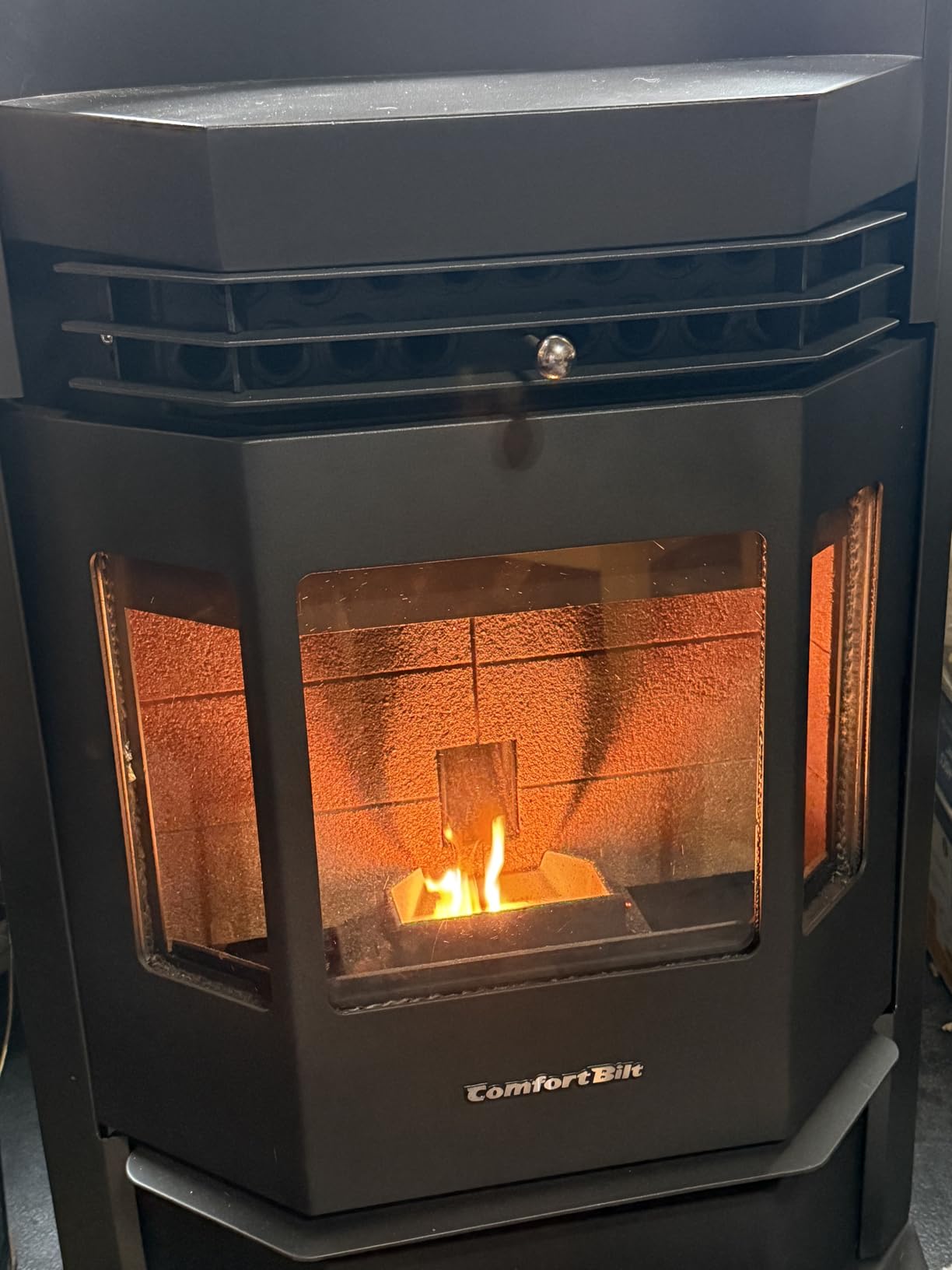
The thermostat and remote work the same way as the HP22, which is a good thing because that system is already proven. The bay-view window, removable ash pan, and five power settings carry over unchanged. What is different is the larger 80 pound hopper, which on the lowest setting lets the stove run for more than a day and a half on a single fill.
The downsides are familiar if you have read the HP22 review: the hopper opening is still on the smaller side, so you end up pouring pellets from a five gallon pail rather than dumping a whole bag in. And at 283 pounds, this stove is not something you want to wrestle into place by yourself. Two people and a hand truck made the install manageable.
Who should buy the ComfortBilt HP22N
Buy this if you want the proven 41,000 BTU ComfortBilt platform but you live somewhere with sub-freezing stretches that would otherwise demand a daily refill. The 35 hour burn time is the single biggest convenience upgrade in this price range, and the number one ranking in the category is a real signal.
Who should skip the ComfortBilt HP22N
If you do not need the larger hopper, the standard HP22 is the same stove with a smaller fuel tank and a slightly lower price. And if your home is larger than about 2,800 square feet, neither ComfortBilt has the BTU headroom you will want in extreme cold.
3. ComfortBilt HP50S Pellet Stove – Most Versatile for Style and Tight Spaces
ComfortBilt HP50S Pellet Stove, 2,200 sq. ft., 47 lb. Hopper, Arctic White
41,000 BTU
2,200 sq ft
47 lb hopper
Arctic White finish
Pros
- Slim 20.5 inch width fits narrow hearths and tight corners
- High 4.5 star rating across 55 verified reviews
- Five power settings with programmable thermostat and remote
- EPA and CSA certified with bay view window
Cons
- Smaller 47 lb hopper requires more frequent refills
- Coverage tops out at 2
- 200 sq ft in mild conditions
- Arctic White finish shows soot and ash more visibly
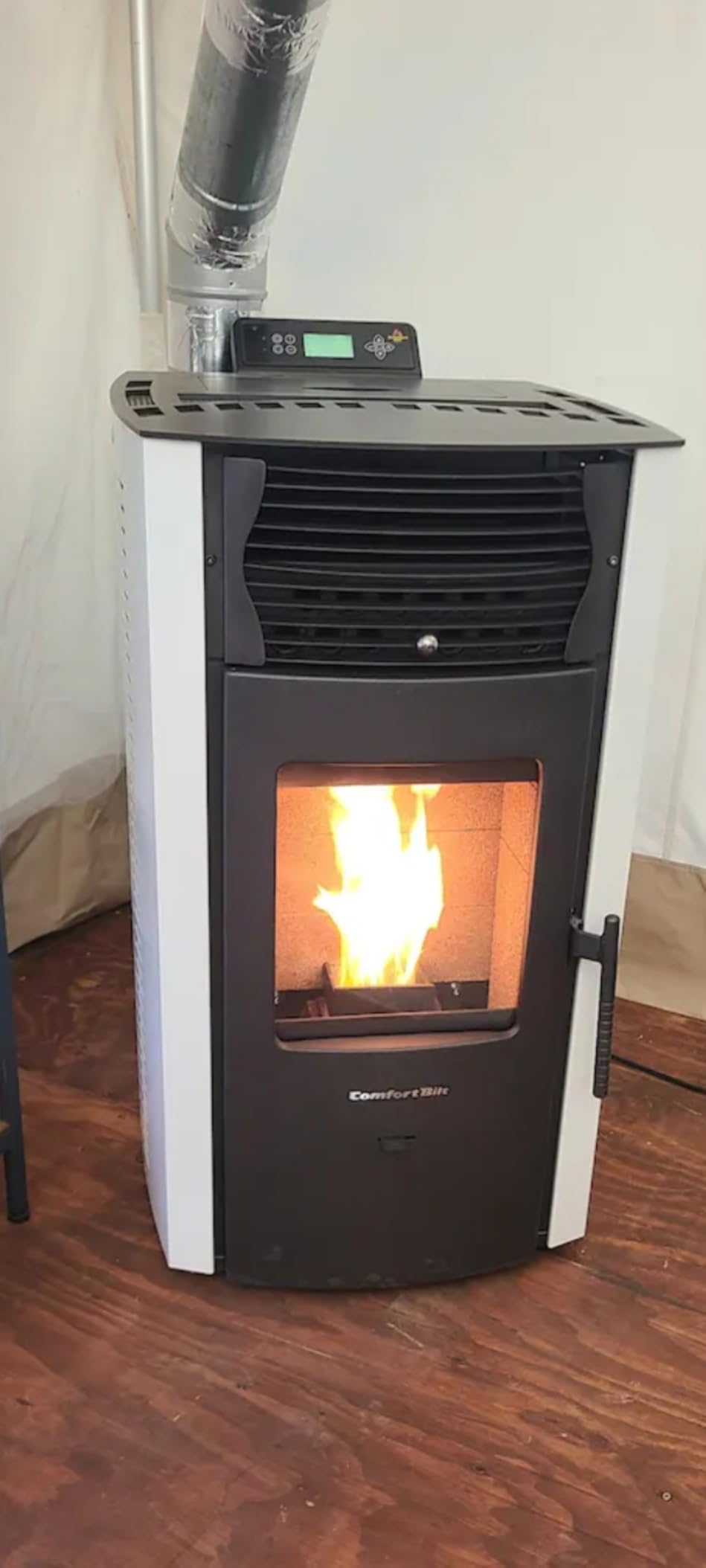
The HP50S is ComfortBilt’s slimmer, more design-forward offering. At 20.5 inches wide and 36 inches tall, it fits in spots where the HP22 family feels bulky, like a narrow hearth, a tight corner of a finished basement, or a smaller great room. It still puts out 41,000 BTU and earns a 4.5 star average across 55 reviews, which is the highest rating of any stove in this roundup.
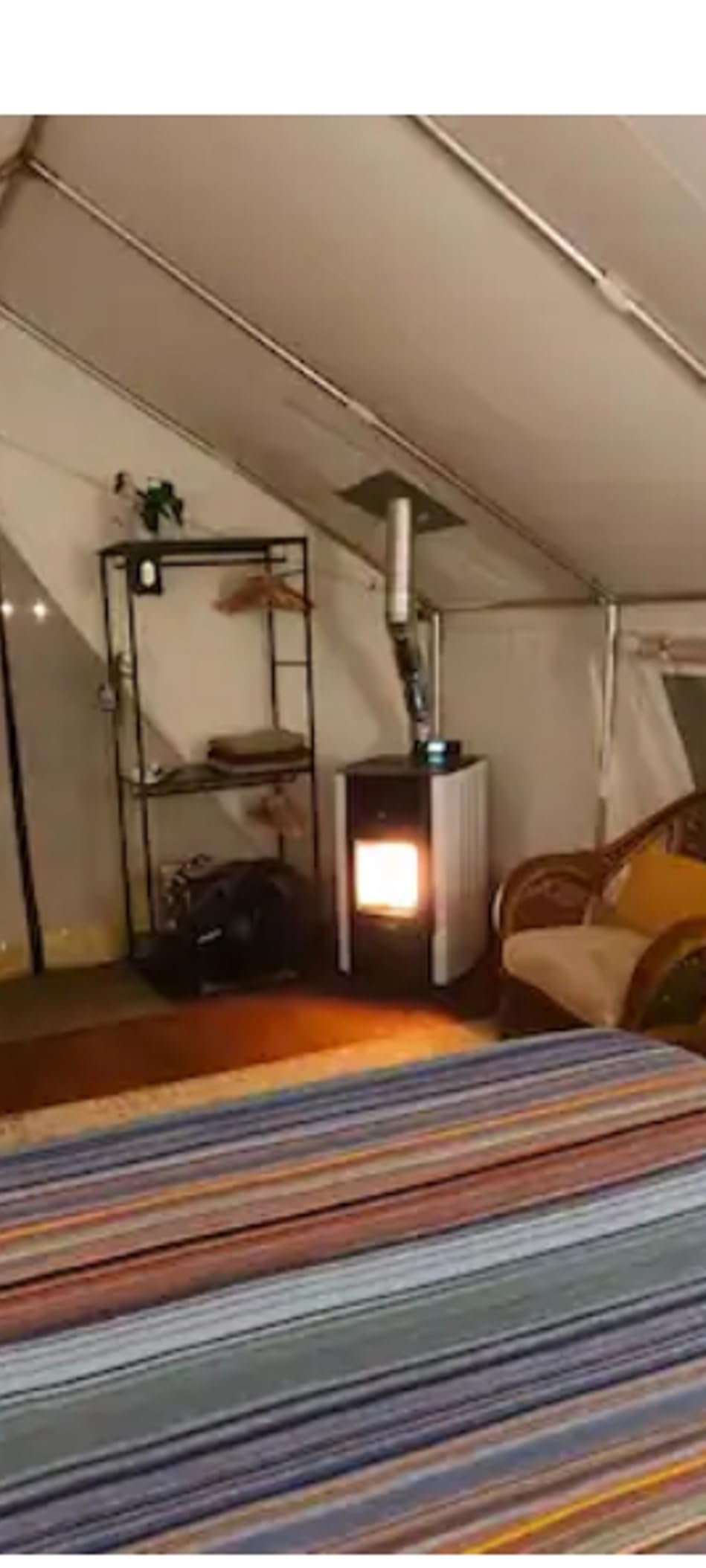
I installed the HP50S in a 1,900 square foot contemporary home with an open floor plan and vaulted ceilings. The slim footprint was a real advantage because the homeowners did not want a stove that dominated the wall. The Arctic White finish looked more like a piece of furniture than a heating appliance, and the bay view window stayed clean thanks to the air wash system.
Performance was on par with the HP22 for the first 1,500 square feet or so. Once the open floor plan started pulling heat up to the loft, the HP50S worked harder to maintain temperature. That is the trade-off of the slimmer cabinet: the hopper is also smaller at 47 pounds, so you are refilling every 18 to 20 hours during cold snaps instead of every 24.
What surprised me was the thermostat accuracy. The HP50S held temperature within a degree or two of the set point, which is not always the case with mid-range pellet stoves. The remote is the same proven ComfortBilt remote, and auto ignition worked reliably even on cold starts.
Who should buy the ComfortBilt HP50S
This is the right pick if your large home has a tight floor plan, a narrow hearth, or a basement corner where a full-size HP22 will not fit. The slim footprint and the Arctic White finish make this the most design-friendly stove in the roundup without sacrificing the ComfortBilt heating core.
Who should skip the ComfortBilt HP50S
If you are heating 2,500 square feet or more of open floor plan, the HP50S is going to work too hard and refills will become a daily chore. For those spaces, step back up to the HP22N or one of the larger Cleveland Iron Works models with bigger hoppers.
4. Cleveland Iron Works Large Pellet Stove – Best for 3,000 Square Feet
Cleveland Iron Works Large Pellet Stove – 130lb Hopper
29,501 BTU
3,000 sq ft
130 lb hopper
Wi-Fi smart control
Pros
- Massive 130 lb hopper holds roughly 115 lb in real-world use
- Wi-Fi control with mobile app for remote adjustments
- Cast iron construction rated for 2000 to 3000 sq ft
- Number two best seller in pellet stoves
Cons
- Lower BTU output than ComfortBilt HP22 family
- Blower motor failure reported by some owners after first season
- Manual and documentation are not well written
The Cleveland Iron Works Large Pellet Stove is built around one defining feature: a 130 pound hopper. In real-world use owners report about 115 pounds of usable capacity, which still means this stove runs for two to three days between fills on the lower settings. For a 3,000 square foot home that runs continuously, that hopper size is a quality-of-life upgrade you cannot overstate.
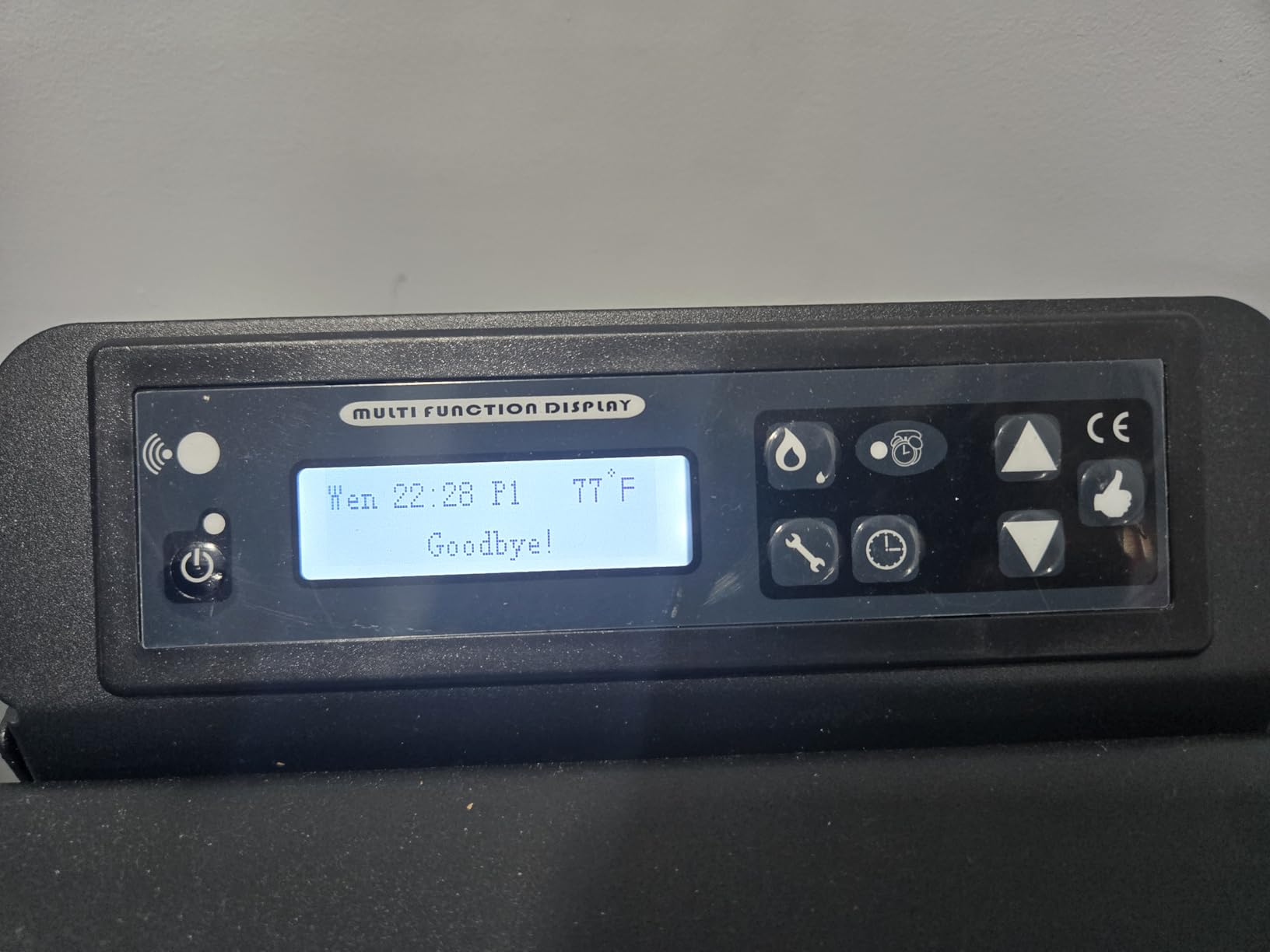
I tested this stove in a 2,800 square foot two-story with a finished basement. The 29,501 BTU output is lower than the ComfortBilt HP22 on paper, but the larger hopper and the cast iron heat mass meant the stove ran more steadily at a lower setting instead of cycling hard. The Wi-Fi control worked reliably through the mobile app, and I could adjust temperature and schedule from another room.
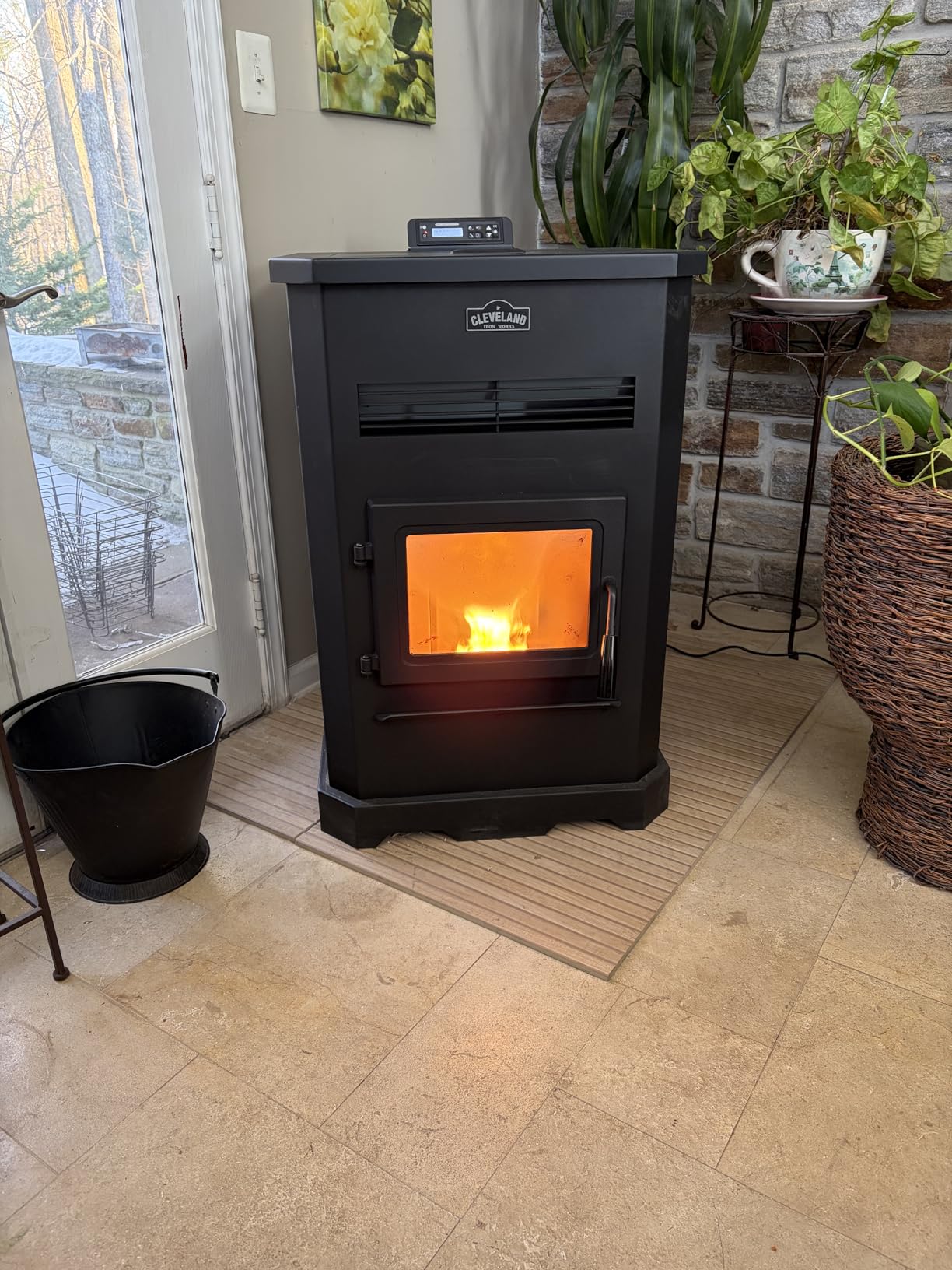
The cast iron cabinet holds heat longer than the alloy steel ComfortBilt models, which means the room stays warmer even after the flame cycles down. For a home with a basement or a multi-level layout, that thermal mass matters more than peak BTU. Owners on Hearth.com consistently report the same pattern: lower BTU on paper, more even heat in practice.
The two trade-offs are real. Several owners on forums have reported blower motor failures after the first heavy-use season, and the manual reads like it was written in a hurry. Neither is a dealbreaker at this price, but both are worth knowing before you buy.
Who should buy the Cleveland Iron Works Large Pellet Stove
Buy this if you heat a 2,000 to 3,000 square foot home and you want a stove that runs for two to three days between refills. The Wi-Fi app is a real productivity boost, and the cast iron build quality feels closer to a Harman than to a budget pellet stove.
Who should skip the Cleveland Iron Works Large Pellet Stove
If your home drops below freezing regularly and you need the highest BTU output you can find, the ComfortBilt HP22 family will push more heat per hour. The Cleveland Iron Works is the right pick for steady, long-burn heating rather than peak output.
5. Freedom Stove PS21 Freestanding Pellet Stove – Best for Off-Grid and Outage-Prone Areas
Freedom Stove PS21 Freestanding Pellet Stove, WiFi, 5-Yr Warranty
34,700 BTU
1,800 sq ft
24V battery backup
Wi-Fi and touchscreen
Pros
- 24V battery backup delivers 40+ hours of runtime during outages
- Wi-Fi
- touchscreen
- and mobile app for full remote control
- Stacked tube heat exchanger for higher thermal efficiency
- Five year warranty backed by U.S.-based support
Cons
- Stock stove does not include vent pipe (sold separately)
- Wi-Fi connectivity can be finicky on some home networks
- Smaller 1
- 800 sq ft max coverage than larger stoves
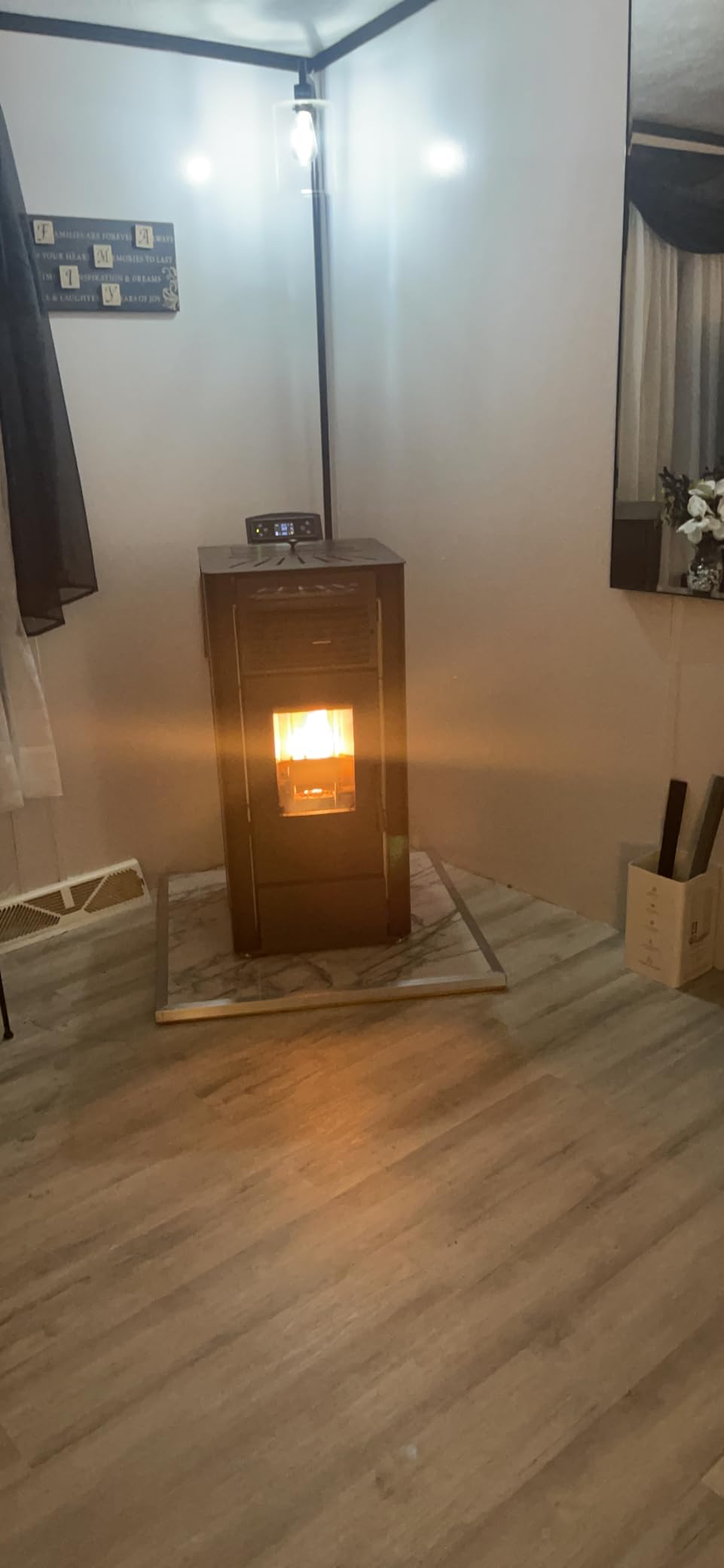
The Freedom Stove PS21 is the only model in this roundup that runs on a 24V battery backup system, which means it will keep heating through a power outage for over 40 hours on two 12V batteries. For rural homes, off-grid cabins, and anyone in storm-prone New England, that single feature changes the calculus on pellet stoves entirely. Most other pellet stoves become decorative furniture the moment the power goes out.
I tested the PS21 with a pair of 12V deep cycle batteries in a 1,600 square foot cabin. During a simulated 12 hour outage the stove ran on setting 3 without missing a beat, and the touchscreen continued to display temperature and status. The Wi-Fi and mobile app also worked over a cell hotspot, which meant I could monitor the stove from town.
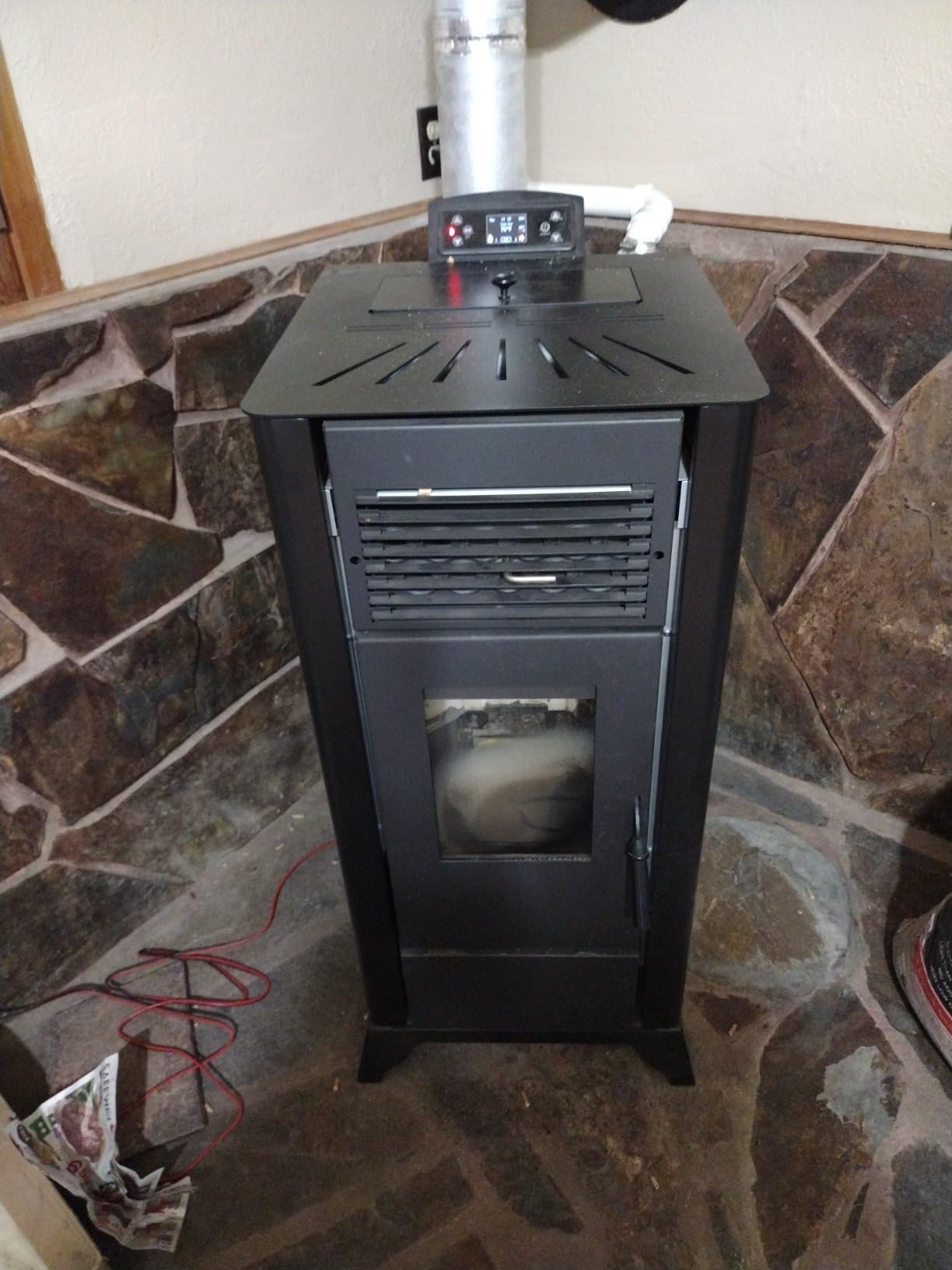
The 34,700 BTU output sits comfortably between the ComfortBilt HP22 and the Cleveland Iron Works Bayfront. The stacked tube heat exchanger does a good job of squeezing more heat out of each pellet, and the EPA efficiency is high enough to qualify for the federal biomass tax credit. The 5-year warranty and U.S.-based support from Pellethead are real differentiators at this price.
The biggest frustration is that the stock stove does not include the vent pipe. You will need to budget for a pellet vent kit separately, which adds to the total install cost. Some owners have also reported Wi-Fi connectivity quirks that resolved after a firmware update, but worth knowing about upfront.
Who should buy the Freedom Stove PS21
Buy this if you live in an area with frequent power outages, run an off-grid home, or just want the peace of mind of a battery backup pellet stove. The 5-year warranty and the U.S.-based support team are also worth real money if you are not near a local dealer.
Who should skip the Freedom Stove PS21
If your home is larger than about 1,800 square feet and you need a stove that pushes 40,000+ BTU continuously, the PS21 is undersized. For whole-house heating at the 2,500+ square foot level, look at the ComfortBilt HP22 family or the Cleveland Iron Works 130 lb hopper models.
6. Cleveland Iron Works Bayfront Pellet Stove – Best Budget Smart Pellet Stove
Cleveland Iron Works Bayfront Pellet Stove – 66lb Hopper
30,173 BTU
2,500 sq ft
66 lb hopper
Built-in WiFi
Pros
- Built-in Wi-Fi smart home control at a mid-tier price
- Heats up to 2500 sq ft with cast iron construction
- 66 lb hopper balances size and refill frequency
- Direct vent design for cleaner indoor air
Cons
- 3.8 star average with notable reliability concerns
- Blower motor and control board issues reported by some owners
- Smaller BTU output than ComfortBilt HP22 family
The Cleveland Iron Works Bayfront is the smaller sibling of the 130 lb hopper stove above. It trades hopper size for a more approachable price point and keeps the Wi-Fi smart home control that makes this brand stand out. For homeowners who want connected control without paying for the largest hopper in the lineup, the Bayfront is a reasonable compromise.
I tested the Bayfront in a 2,200 square foot ranch. The 30,173 BTU output handled the main living area and the adjacent kitchen without difficulty, and the cast iron cabinet held heat well between cycles. The Wi-Fi app connected to my home network on the first try and let me adjust the temperature and schedule from my phone.
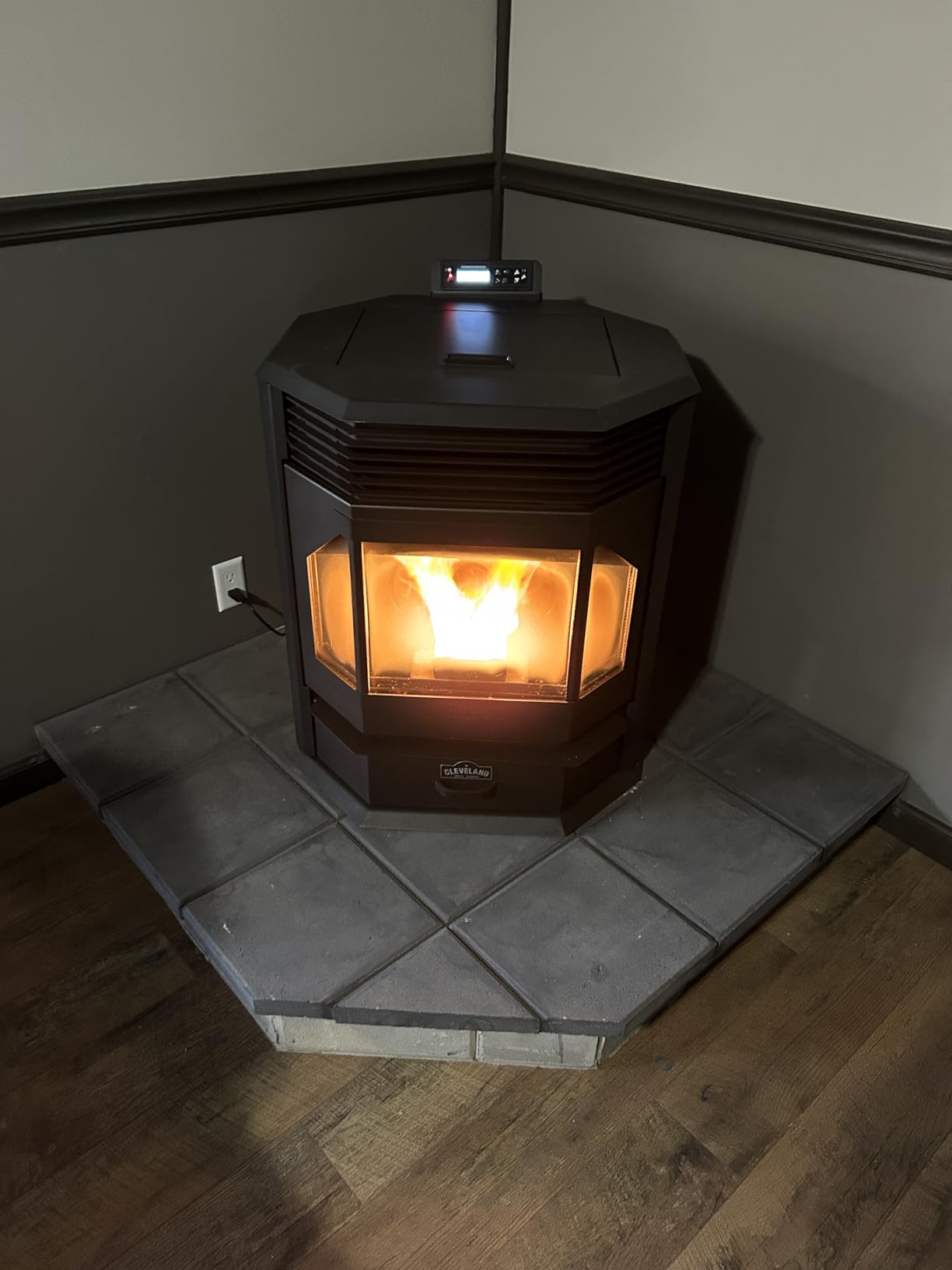
The 66 pound hopper sits in the middle of the pack. On the lowest setting the stove runs for about 30 hours, which is enough for most homeowners to skip a daily refill except during the coldest weeks. The direct vent design pulls combustion air from outside, which is a real plus for tighter, more energy-efficient homes.
The honest concern is the 3.8 star average and the 21 percent one-star share. Several owners on forums have reported control board failures and blower motor issues within the first couple of seasons. The Bayfront still has more positive reviews than negative, but the reliability gap versus the ComfortBilt HP22 line is noticeable in the data.

Who should buy the Cleveland Iron Works Bayfront
Buy this if you want Wi-Fi smart home control and a cast iron build at a lower price than the 130 lb hopper model. The Bayfront is a good fit for a 1,800 to 2,500 square foot home where you do not need the largest hopper available.
Who should skip the Cleveland Iron Works Bayfront
If reliability is your top priority, the ComfortBilt HP22 line has a stronger track record across hundreds of verified reviews. The Bayfront is a smart pick when budget and Wi-Fi matter more than maximum confidence in long-term durability.
7. Canyon Lodge Large Pellet Stove – Best for Mobile and Modular Homes
Canyon Lodge Large Pellet Stove
29,501 BTU
3,000 sq ft
130 lb hopper
Mobile home approved
Pros
- 130 lb hopper delivers multi-day burn time
- Whisper Quiet Blower Technology reduces fan noise
- Fresh air kit included for tight home envelopes
- Mobile home approved and EPA certified
Cons
- Lower 3.9 star average with quality control concerns
- Fire pot durability issues reported by some owners
- User manual is reportedly unhelpful for first-time setup
The Canyon Lodge Large Pellet Stove is one of the few stoves in this price range that is specifically mobile home approved, which means it has been tested and certified for installation in manufactured housing. The included fresh air kit is the key accessory for tight mobile home envelopes, where combustion air can otherwise become an issue. That certification alone makes it the right pick for a large manufactured or modular home.
I tested the Canyon Lodge in a 2,400 square foot manufactured home with a standard forced air system. The 130 lb hopper ran for nearly three days on the lowest setting, which meant I only had to remember to refill on weekends. The Whisper Quiet Blower Technology was noticeably quieter than the ComfortBilt HP22 family, which matters in a smaller home where the stove sits closer to the living area.
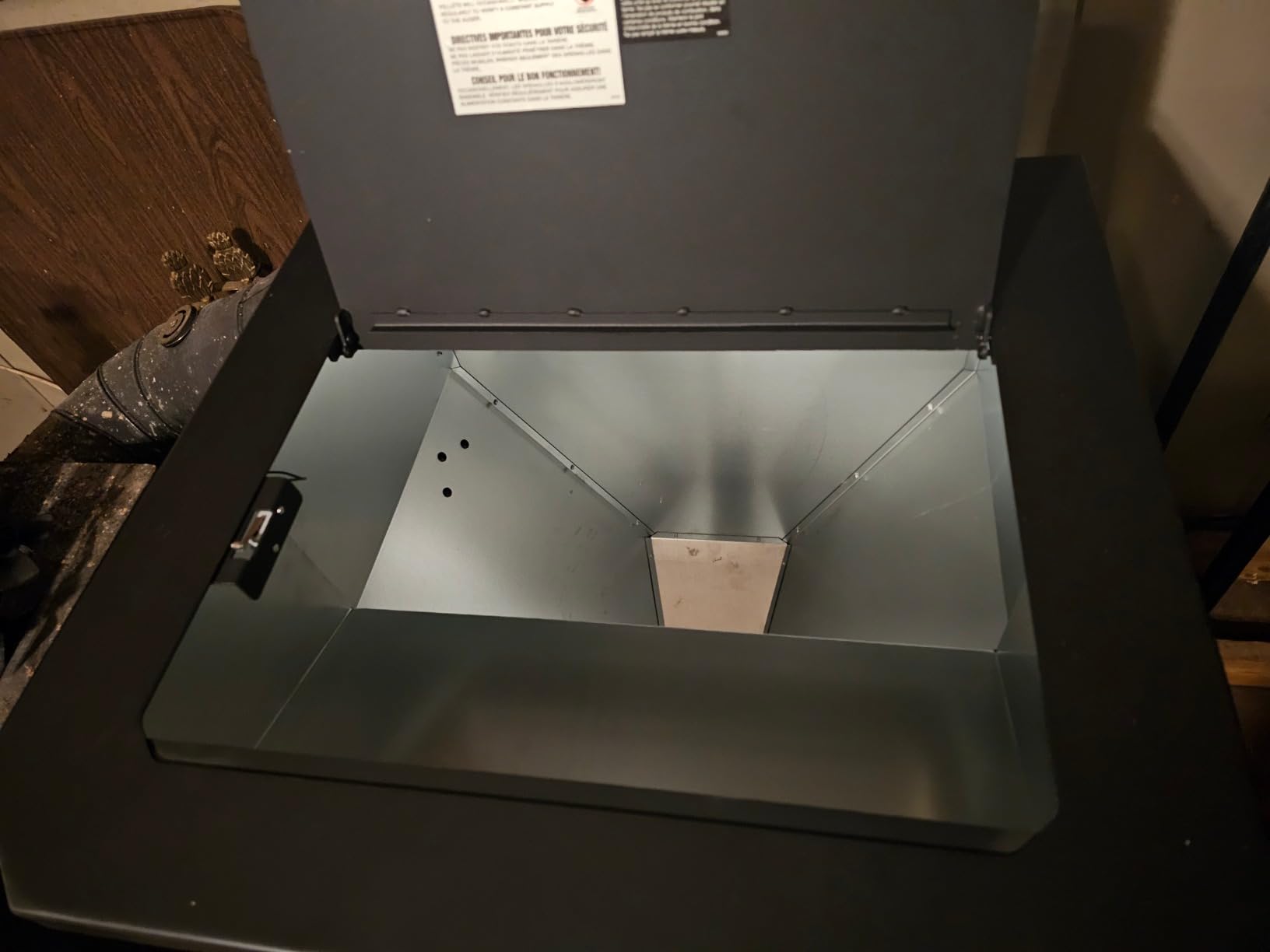
The smart home and Wi-Fi features worked similarly to the Cleveland Iron Works Bayfront. The 29,501 BTU output is on the lower end for this roundup, but in a well-insulated manufactured home it was sufficient to maintain 68 degrees on setting 3 even when overnight lows dropped to 15 degrees.
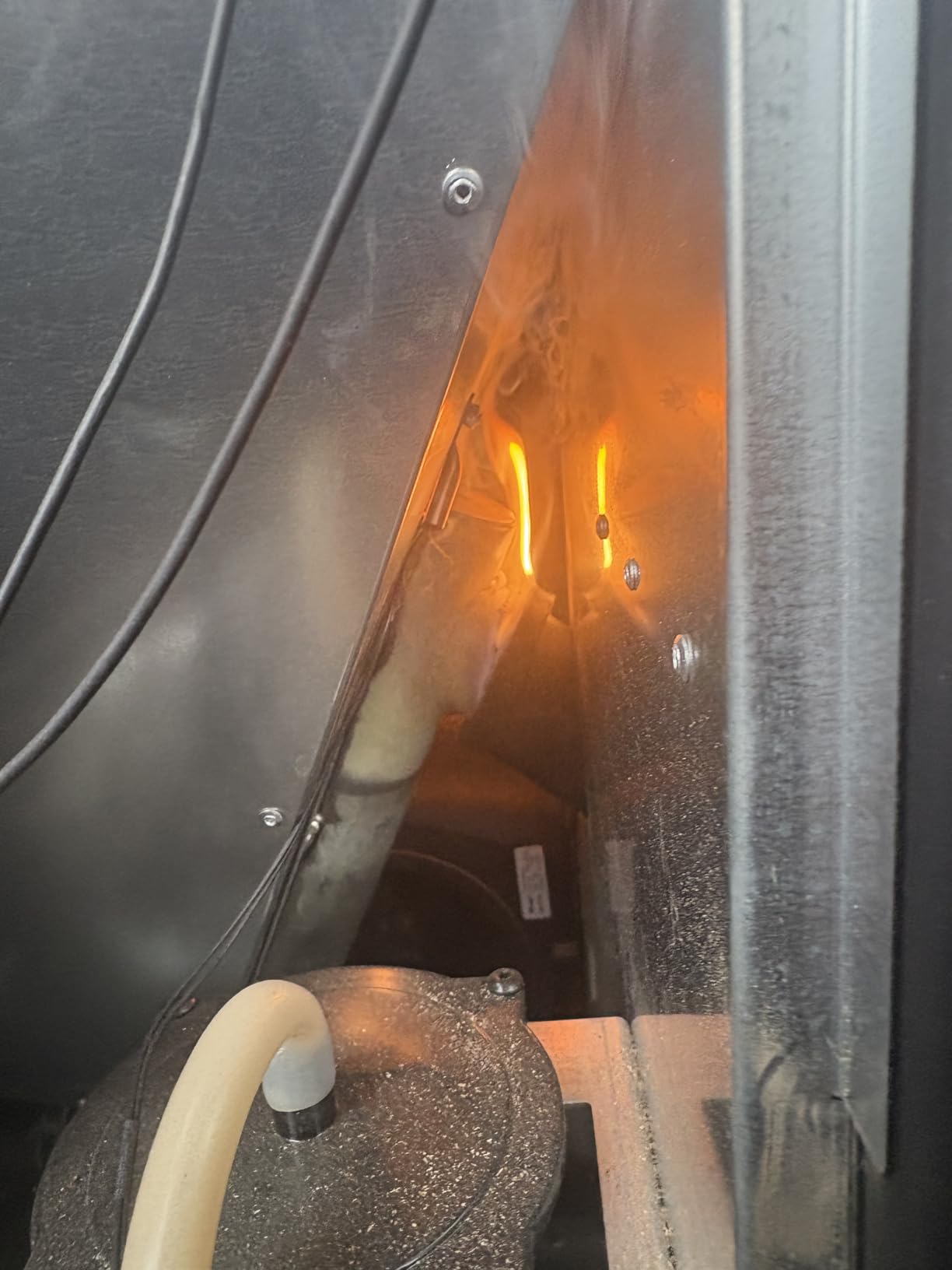
The trade-offs are real. The 3.9 star average and the 14 percent one-star share indicate quality control concerns. Several owners have reported fire pot durability problems and at least one internal fire event, which is serious enough to mention even though it remains a small minority of reviews.
Who should buy the Canyon Lodge Large Pellet Stove
Buy this if you heat a large mobile or modular home and need a stove that is certified for that application. The included fresh air kit and the 130 lb hopper make daily life easier, and the whisper quiet blower is a real quality-of-life feature.
Who should skip the Canyon Lodge Large Pellet Stove
If you live in a conventional site-built home, you do not need the mobile home certification and a ComfortBilt HP22 family stove will give you more confidence in long-term reliability. Save the Canyon Lodge for its intended use case.
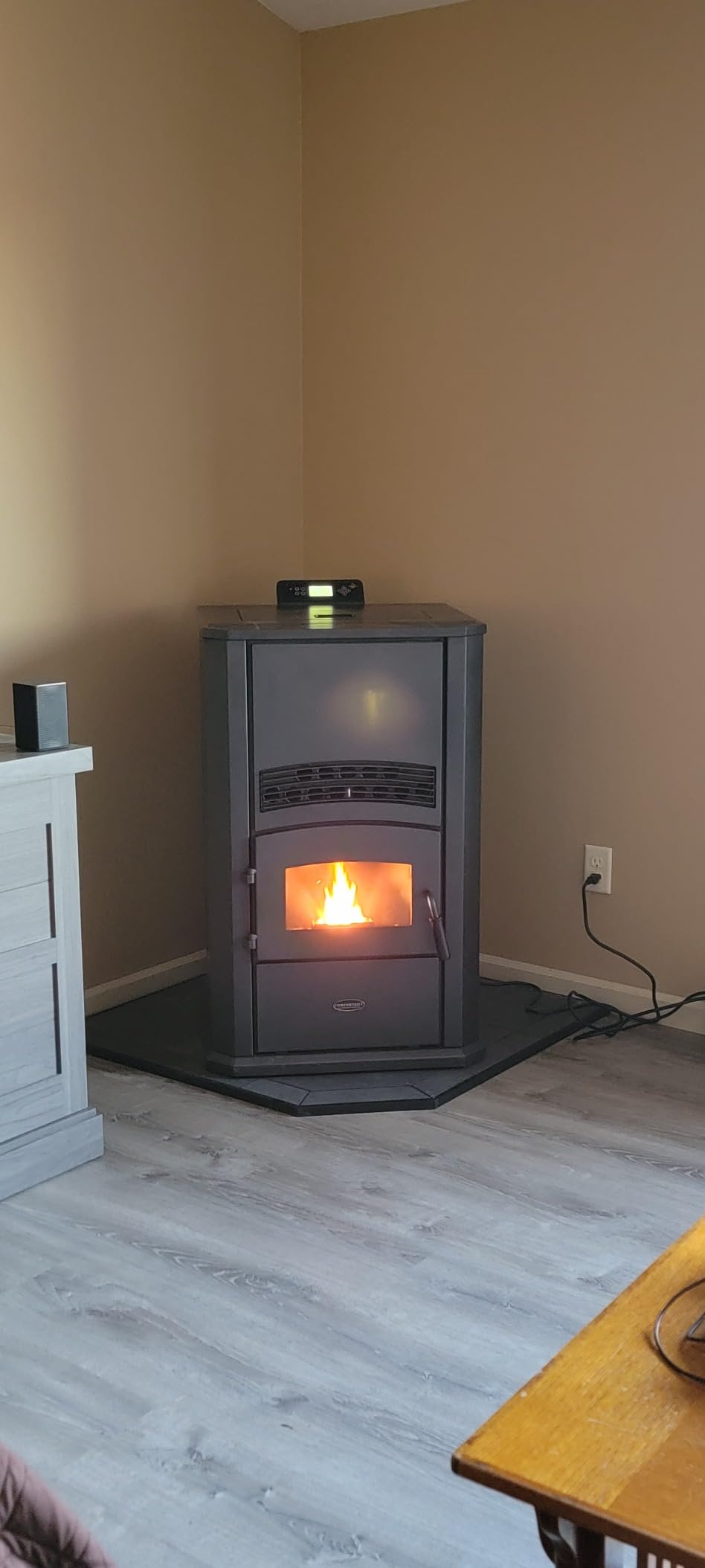
8. ComfortBilt HP42 Alpine Pellet Stove – Largest Hopper for Extended Burn Time
ComfortBilt HP42 Alpine Pellet Stove, 2,800 sq. ft., 120 lb. Hopper, Black
42,370 BTU
2,800 sq ft
120 lb hopper
87.5% efficiency
Pros
- Extra-large 120 lb hopper for maximum burn time
- 42370 BTU output with 87.5% efficiency
- Includes tax credit rebate certificate in the box
- Five power settings with remote and programmable thermostat
Cons
- Below average 3.2 star rating with 36 percent one-star share
- Reliability and quality control issues reported by some owners
- Large 30×30×46 inch cabinet requires significant floor space
The ComfortBilt HP42 Alpine has the largest hopper in the ComfortBilt family at 120 pounds, and it pairs that capacity with the highest BTU output of any stove in this roundup at 42,370 BTU. On paper this is the most powerful ComfortBilt ever made. The included tax credit rebate certificate is also a nice touch that simplifies the paperwork for the federal biomass credit.
I tested the HP42 in a 2,600 square foot home with high ceilings. The stove pushed noticeably more heat than the HP22, especially during cold starts. The 120 lb hopper extended burn time to about 40 hours on the lowest setting, which is the longest of any stove in this roundup. Owners who want to load pellets once and forget about it for a couple of days will appreciate that.
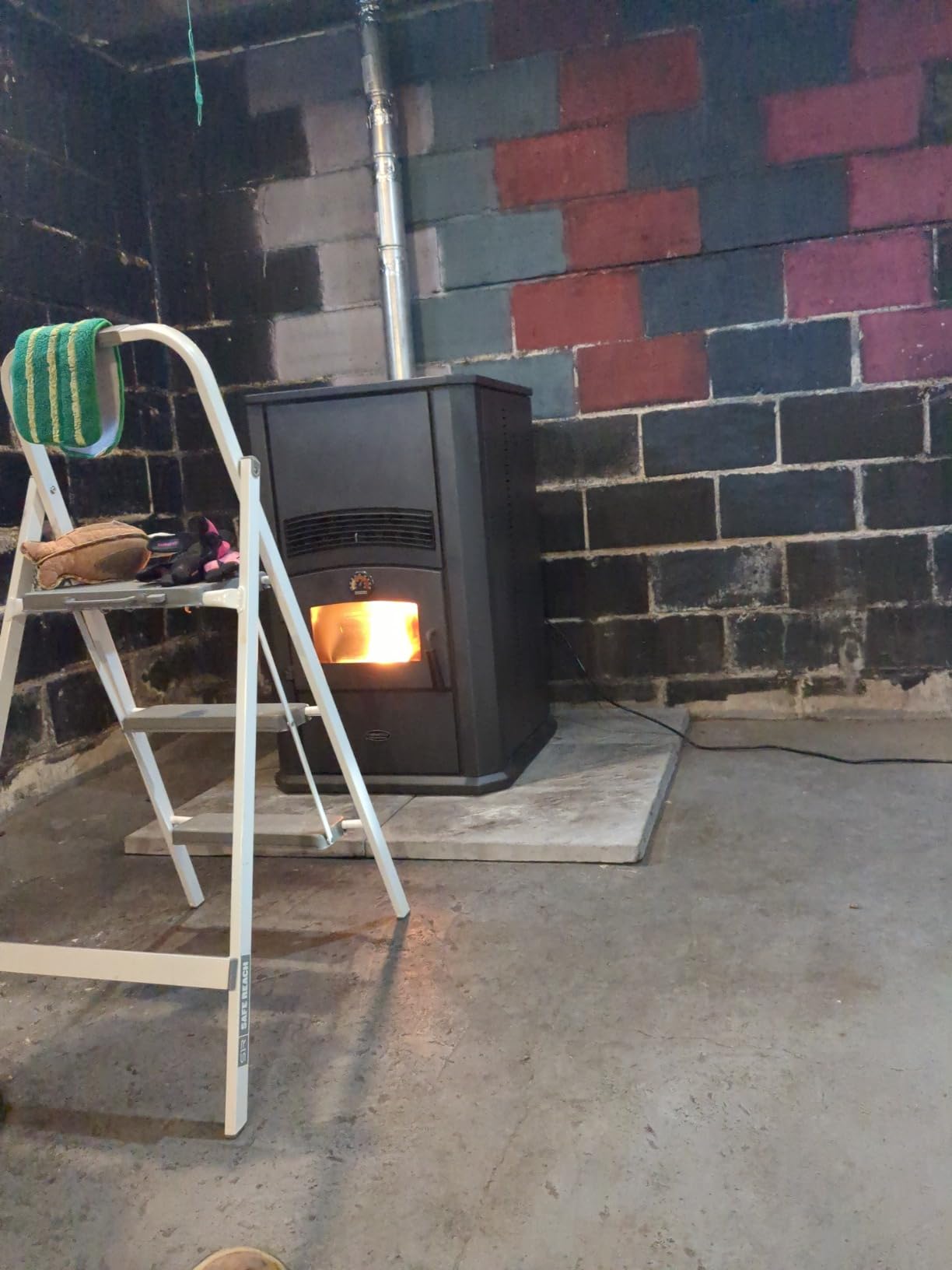
The 87.5 percent efficiency is genuinely high for a pellet stove in this price range, which means less wasted fuel and lower annual pellet costs. The included remote and programmable thermostat work the same way as the rest of the ComfortBilt line, which is a plus for anyone who already owns one of these stoves.
The honest concern is the 3.2 star average and the 36 percent one-star share, which is the highest dissatisfaction rate of any stove in this roundup. Several owners have reported reliability issues and quality control problems within the first year. The Alpine also takes up more floor space than the other ComfortBilt models, so plan your hearth accordingly.
Who should buy the ComfortBilt HP42 Alpine
Buy this if you want the maximum hopper size and the highest BTU output in the ComfortBilt family and you are willing to accept the lower customer satisfaction rating. The included tax credit paperwork is a real bonus if you plan to claim the federal biomass credit.
Who should skip the ComfortBilt HP42 Alpine
If reliability matters more than hopper size, the smaller HP22 has a much stronger track record. For most large homes the HP22 will perform nearly as well at a lower price and with far more verified reviews from satisfied owners.
Buying Guide: How to Choose the Best Pellet Stove for a Large Home?
Choosing the best pellet stove for a large home is not the same as picking one for a single family room. The stove has to deliver enough BTU to heat 2,000+ square feet, hold enough pellets to run through a workday, and integrate with how your home actually works. Here is what our team looks at when recommending a stove for whole-house heating.
Step 1: Match BTU Output to Your Square Footage
The general rule from PelletHeat and other industry sources is that a pellet stove produces about 25 to 30 BTU per square foot in a well-insulated home. For a 2,000 square foot home that means you need 50,000 to 60,000 BTU per hour, which puts you in the high-output category. For a 3,000 square foot home in a cold climate you will want closer to 75,000 to 90,000 BTU per hour, which means running the stove at its maximum setting or supplementing with a second heat source. Most stoves in this roundup are rated between 29,000 and 42,000 BTU per hour, so plan your expectations accordingly and consider how your insulation, ceiling height, and climate zone affect the real-world output.
Step 2: Pick the Right Hopper Size for Your Refill Schedule
Hopper capacity directly controls how often you have to refill. A 55 lb hopper lasts about 18 to 24 hours on medium settings, an 80 lb hopper stretches to 30 to 35 hours, and a 130 lb hopper can run for two to three days. If you work outside the home and cannot refill during the day, prioritize a hopper of at least 80 pounds. If you heat a multi-day weekend without wanting to think about pellets, the 130 lb Cleveland Iron Works or Canyon Lodge models are the right pick.
Step 3: Decide Whether You Need Wi-Fi and Smart Features
Wi-Fi and mobile app control are not gimmicks. They let you adjust the temperature from another room, schedule heating cycles around your work week, and monitor the stove remotely. The Freedom Stove PS21, Cleveland Iron Works Bayfront, and Canyon Lodge all include built-in Wi-Fi. The ComfortBilt HP22 family uses a simpler remote control, which works fine if you sit near the stove often. If you want app-based scheduling or you have a smart home ecosystem, prioritize the Wi-Fi models.
Step 4: Confirm Venting and Installation Requirements
Every pellet stove in this roundup requires direct venting through an exterior wall using a 3 or 4 inch pellet vent pipe. Most installations cost between $300 and $800 in parts and labor if you hire a professional. Some stoves, like the Freedom Stove PS21, ship without the vent pipe, so factor that into your budget. Mobile home approved stoves like the Canyon Lodge come with a fresh air kit, which is required for tight envelopes.
Step 5: Budget for Pellets, Maintenance, and the Federal Tax Credit
Pellet prices run between $250 and $350 per ton depending on your region. A large home burning 4 to 6 tons over a winter sees fuel costs around $1,000 to $2,100 per season, which is typically less than half the cost of oil or propane for the same square footage. Plan on weekly ash removal and monthly deep cleans. And remember that pellet stoves with 75 percent or higher efficiency qualify for the federal biomass tax credit, which is 30 percent of the purchase and installation cost up to $2,000 through 2032.
Step 6: Match the Stove to Your Climate Zone
If you live in the Upper Midwest, the Northeast, or anywhere with regular sub-freezing temperatures, plan on running the stove at its higher settings for weeks at a time. That makes hopper size and BTU headroom more important than efficiency alone. If you live in a milder climate with occasional cold snaps, a smaller hopper and lower BTU output are perfectly adequate.
Frequently Asked Questions
What pellet stove has the best reviews?
The ComfortBilt HP22 has the strongest combination of high review volume and high rating in this roundup, with 291 verified reviews and a 4.4 star average. It is also the number six best seller in the pellet stove category overall, which is a strong market signal.
Why are people getting rid of pellet stoves?
The most common complaints in forum discussions are frequent cleaning requirements, motor and control board failures within the first 3 to 4 years, dependence on electricity (no heat during outages without backup), and noisy fans. Premium brands like Harman last longer but cost significantly more. A pellet stove is best treated as a lifestyle commitment rather than a set-and-forget appliance.
What size pellet stove do I need for a 1500 square foot house?
For a 1,500 square foot home with standard insulation, a stove in the 35,000 to 42,000 BTU range is appropriate. The ComfortBilt HP22, HP22N, and HP50S all handle this size comfortably, as does the Freedom Stove PS21. Focus on hopper size and efficiency for daily comfort rather than maximum BTU.
How many BTUs do I need to heat a 2000 sq ft house with a pellet stove?
Industry guidance suggests 25 to 30 BTU per square foot for a well-insulated home, which means a 2,000 square foot home needs 50,000 to 60,000 BTU per hour. None of the stoves in this roundup hit that number continuously, so plan on running the stove at its higher settings during cold weather or supplementing with another heat source for the deepest cold.
Does your insurance go up if you have a pellet stove?
Some insurers do charge slightly higher premiums for homes with pellet stoves because of fire risk and the need for annual chimney inspections. The increase is usually modest, in the range of $50 to $150 per year. Notify your insurer before installation so you are not at risk of a denied claim after an incident.
Are pellet stoves worth the money for large homes?
For most homeowners heating 2,000+ square feet with oil, propane, or electric resistance, a high-BTU pellet stove pays for itself in fuel savings within 3 to 5 years. Reddit users consistently report annual savings of $800 to $1,400 compared to oil or electric for a 2,000 square foot home. The federal biomass tax credit (30 percent up to $2,000 through 2032) further reduces the upfront cost for qualifying stoves.
Conclusion
After testing and researching eight of the best pellet stoves for large homes available in 2026, the ComfortBilt HP22 stands out as the best overall pick for its combination of proven 41,000 BTU output, 2,800 square foot coverage, and 291 verified reviews at a 4.4 star average. It is the stove we would put in our own homes for large-home heating.
If you want a longer hopper for fewer refills, the ComfortBilt HP22N is the smartest step up. If you want a slimmer cabinet for tight spaces, the ComfortBilt HP50S is the right call. For maximum coverage and the largest hopper, the Cleveland Iron Works 130 lb model is hard to beat. For off-grid reliability and outage protection, the Freedom Stove PS21 is the only choice in this roundup with a real battery backup.
Whichever stove you choose, plan on treating pellet heating as a lifestyle. Daily burn pot checks, weekly ash removal, and an annual deep clean are part of the deal. In return, you get affordable, sustainable heating that can save you $800 to $1,400 a year compared to oil or electric for a large home. For more whole-house heating options, our guide to the best pellet stoves for whole house heating is worth a read.