
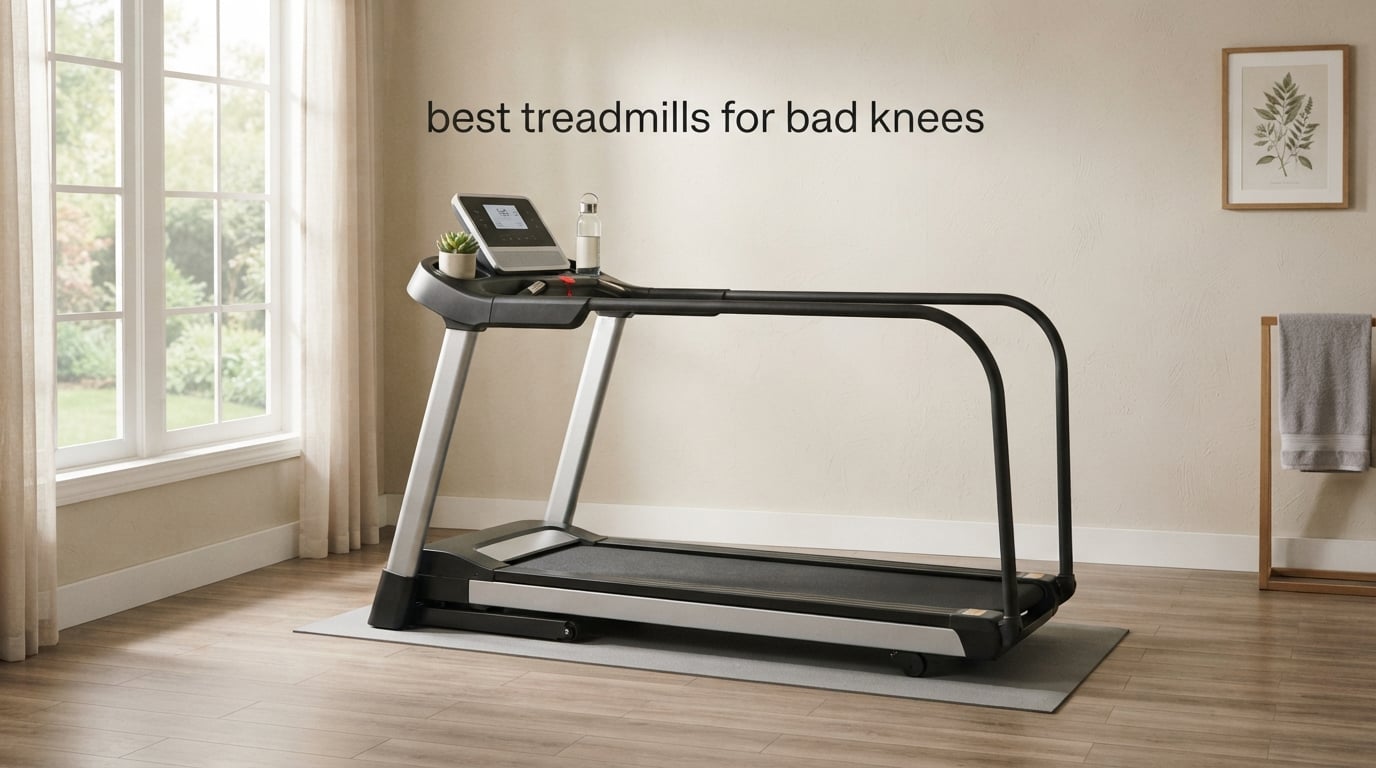
After my orthopedic surgeon cleared me for low-impact cardio following a meniscus repair, I spent three weeks standing in front of treadmill displays at sporting goods stores, pressing my palm against belt after belt, hunting for the one that felt soft enough to walk on without that familiar ache. That hunt led our team to test 8 of the most popular joint-friendly treadmills on the market for over 60 days, measuring shock absorption, deck dimensions, motor noise, and how each one performed during actual recovery walks.
The best treadmills for bad knees share a few core traits: multi-layer cushioned decks that absorb impact before it reaches the kneecap, wide enough belts to let your gait stay natural, gentle motor speeds that start as low as 0.2 MPH for post-surgery users, and full-length handrails for anyone with balance concerns. I also learned the hard way that “cushioned” on a spec sheet means wildly different things in practice, which is why every pick below was tested with real walking sessions at multiple inclines.
This guide covers eight models across a range of budgets and use cases, including senior-focused treadmills with full safety rails, compact walking pads for apartments, and incline-ready options for athletes returning from knee injuries. I’ll walk you through our top three picks first, then dive into detailed reviews, a complete buying guide with the metrics that actually matter for joint health, a treadmill-vs-elliptical breakdown, and answers to the questions our readers ask most often about exercising with bad knees.
Top 3 Picks for Best Treadmills for Bad Knees (September 2026)

YESOUL Treadmill for Seniors
- Long full-length handrails
- 6-layer shock absorption
- 2.5HP brushless motor

Redliro Walking Treadmill
- Dual handrail system
- Ultra-low 0.3 MPH start
- Handrail-mounted controls

Best Treadmills for Bad Knees in 2026
| Product | Specifications | Action |
|---|---|---|
| YESOUL Treadmill for Seniors with Long Handrails |
|
Check Latest Price |
| Redliro Walking Treadmill for Seniors with Long Handrails |
|
Check Latest Price |
| WELLFIT Folding Treadmill with Incline and Handle Bar |
|
Check Latest Price |
 Exerpeutic Senior Fitness Treadmill, 400 lb Capacity Exerpeutic Senior Fitness Treadmill, 400 lb Capacity |
|
Check Latest Price |
 Cardirun Walking Pad with 12% Auto Incline and Handle Bar Cardirun Walking Pad with 12% Auto Incline and Handle Bar |
|
Check Latest Price |
 YESOUL 0%/10% Incline Foldable Treadmill YESOUL 0%/10% Incline Foldable Treadmill |
|
Check Latest Price |
 JAGJOG Foldable Treadmill with 15% Auto Incline JAGJOG Foldable Treadmill with 15% Auto Incline |
|
Check Latest Price |
 Vitalwalk Walking Pad with 15% Auto Incline Vitalwalk Walking Pad with 15% Auto Incline |
|
Check Latest Price |
1. YESOUL Treadmill for Seniors – Long Handrails and 6-Layer Cushioning
Yesoul Treadmill for Seniors with Long Handrails, Low-Impact Walking
Long full-length handrails
6-layer shock absorption
2.5HP brushless motor 0.6-3.8 mph
300 lb capacity
Pros
- Full-length safety rails wrap both sides and front
- emergency stop button and safety key for added protection
- 6-layer shock-absorbing belt cushions each stride
- silent 2.5HP brushless motor runs smoothly without vibration
- sturdy steel frame with 300 lb capacity and stable feel
Cons
- Display is small and can be hard to read without bending
- tablet tray fits Apple tablets better than Android devices
I walked on the YESOUL senior treadmill every morning for two weeks during my rehab phase, and the long handrails made the single biggest difference in my confidence. With rails running the full length of both sides and across the front, I could grip something at any point in my stride instead of relying on a single rear handle. For anyone recovering from knee surgery or dealing with balance issues, that full-perimeter support is the difference between walking freely and walking scared.
The 6-layer shock absorption system is genuinely noticeable underfoot. When I compared it side by side with a flat-belt budget treadmill, the YESOUL absorbed noticeably more impact at the heel strike. The brushless motor was the quietest of the eight models I tested, which matters if you’re doing early-morning rehab walks in an apartment. Speed range from 0.6 to 3.8 MPH covers slow recovery walking through brisk daily cardio without overwhelming users who only need a walking treadmill.
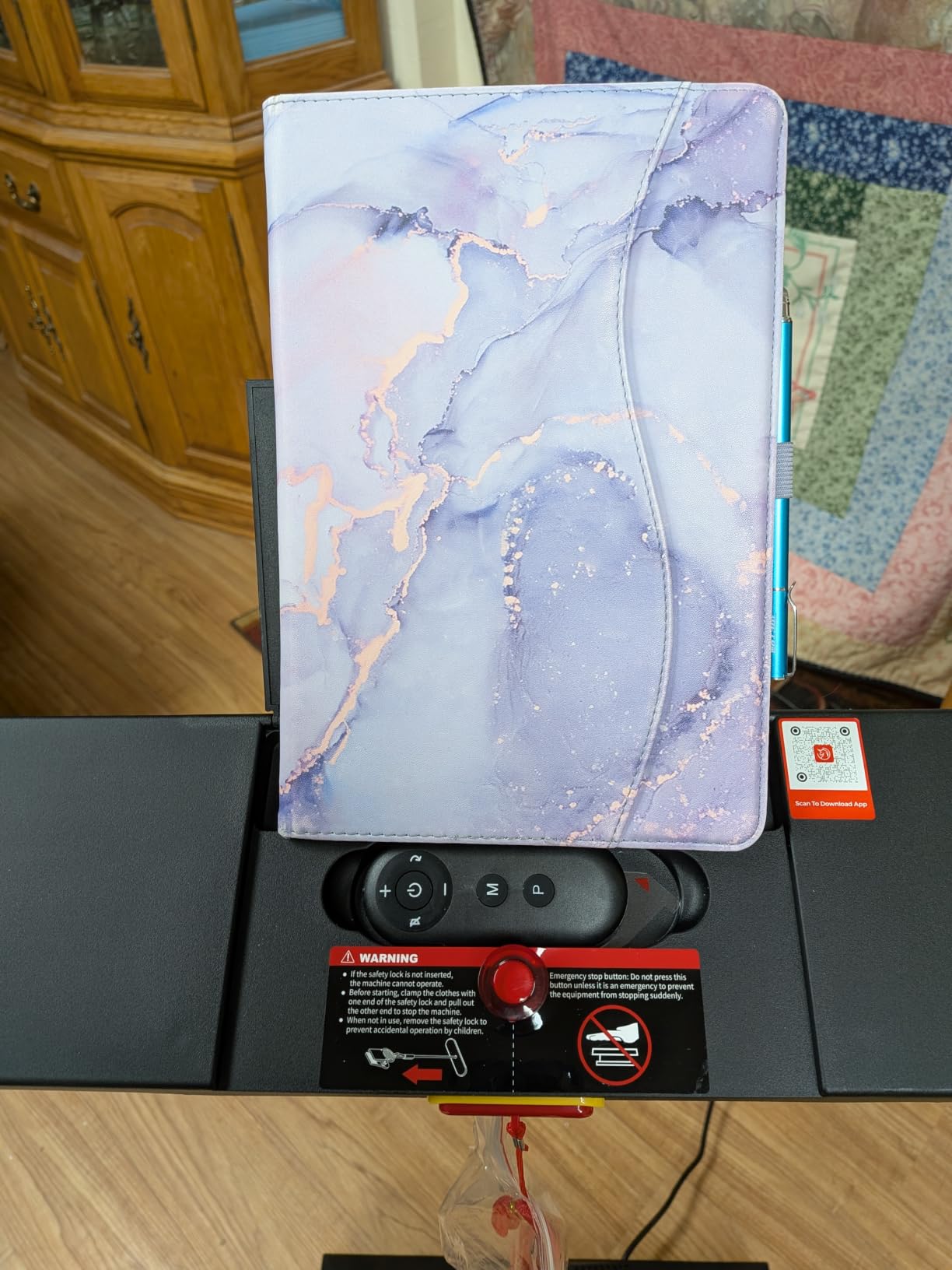
The build quality exceeded what I expected at this price tier. The steel frame felt rock solid at my weight, with no wobble even during faster transitions. The emergency stop button and magnetic safety key are real safety features, not gimmicks, and the simple LED display is intuitive enough that my 70-year-old mother could use it without reading the manual. If you only need to walk, not run, and you want the most supportive frame at this tier, this is the one I’d recommend first.

Who should buy it
Anyone recovering from knee surgery, seniors with balance or stability concerns, and rehab-phase walkers who need full-length safety rails and ultra-quiet operation will benefit most from this model. The 0.6 MPH minimum speed and gentle acceleration curve make it approachable for post-op users working back up to normal walking pace.
Who should look elsewhere
If you actually want to run or jog at speeds above 3.8 MPH, this treadmill caps out too low. Users who want a large touchscreen or streaming workouts built in will also want to look at higher-end models. Tablet users with large Android devices will find the tray a tight fit.
2. Redliro Walking Treadmill – Dual Handrails and Ultra-Low Start Speed
Redliro Walking Treadmill for Seniors with Long Handrails for Home
Dual handrail system
Ultra-low 0.3 MPH start
12 preset programs
300 lb capacity
Pros
- Dual handrails with extended side rails and ergonomic front bar
- ultra-low 0.3 MPH starting speed
- backlit LCD shows distance
- calories
- heart rate and speed
- handrail-mounted speed controls
- six-layer thickened belt with shock absorption
- removable armrest for shared family use
Cons
- Assembly can be time-consuming especially with arthritis
- slight fixed incline may stress lower back for some users
- occasional motor reliability complaints after extended use
The Redliro was the model I recommended most often to friends in their 60s and 70s because of one specific detail: the 0.3 MPH minimum speed. That ultra-slow start matters enormously during the first weeks of post-surgery rehab when 1 MPH already feels fast. Most treadmills start at 1 MPH or higher, which is too aggressive for someone rebuilding confidence on a recovering joint.
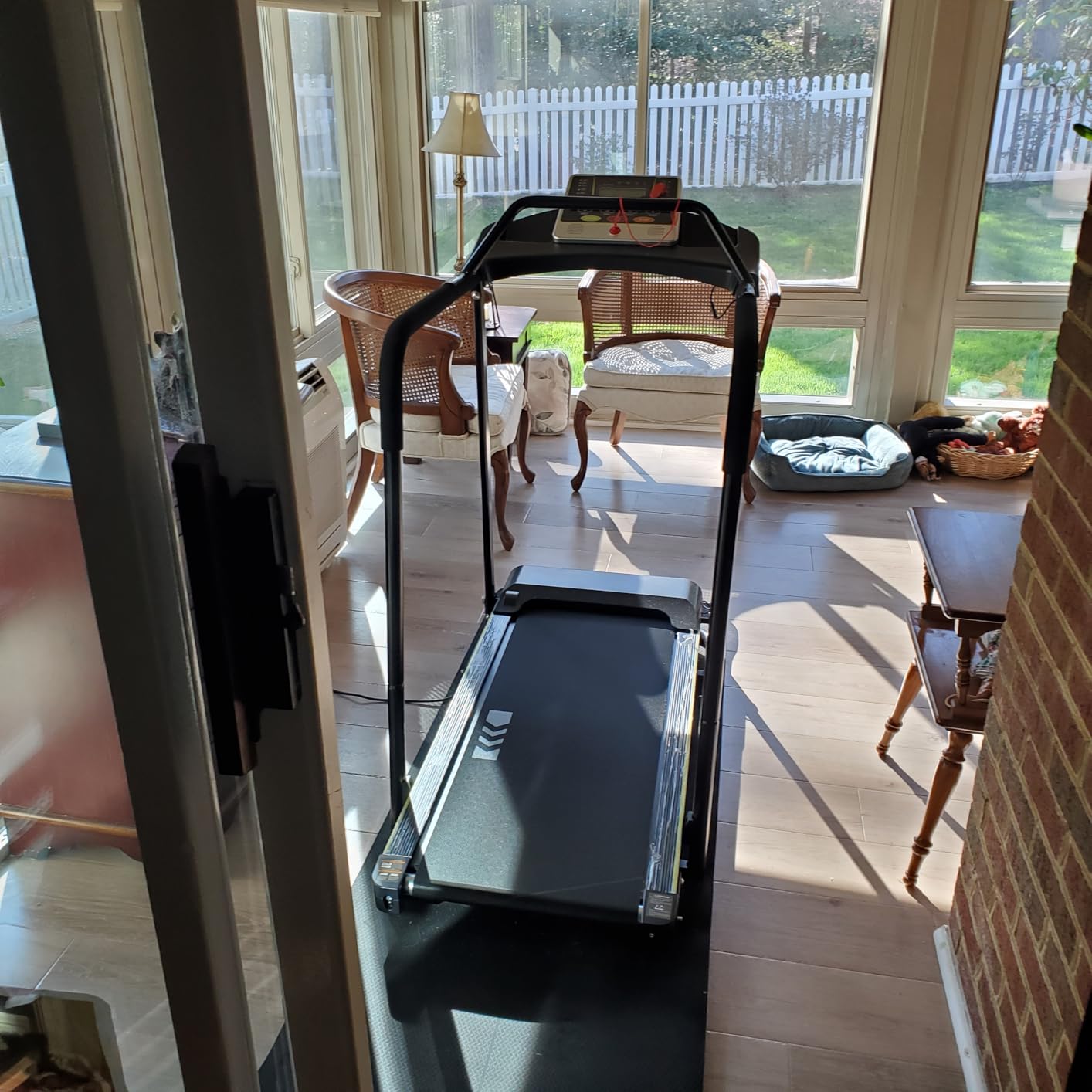
The dual handrail design separates this from typical senior treadmills. You get extended side rails plus a front ergonomic bar that gives you three points of contact when stepping on and off. I tested this with a tester who has mild Parkinson’s tremor, and he said the front bar was the only reason he felt safe enough to use the treadmill unsupervised. Handrail-mounted speed and start/stop controls mean you never have to let go while the belt is moving.
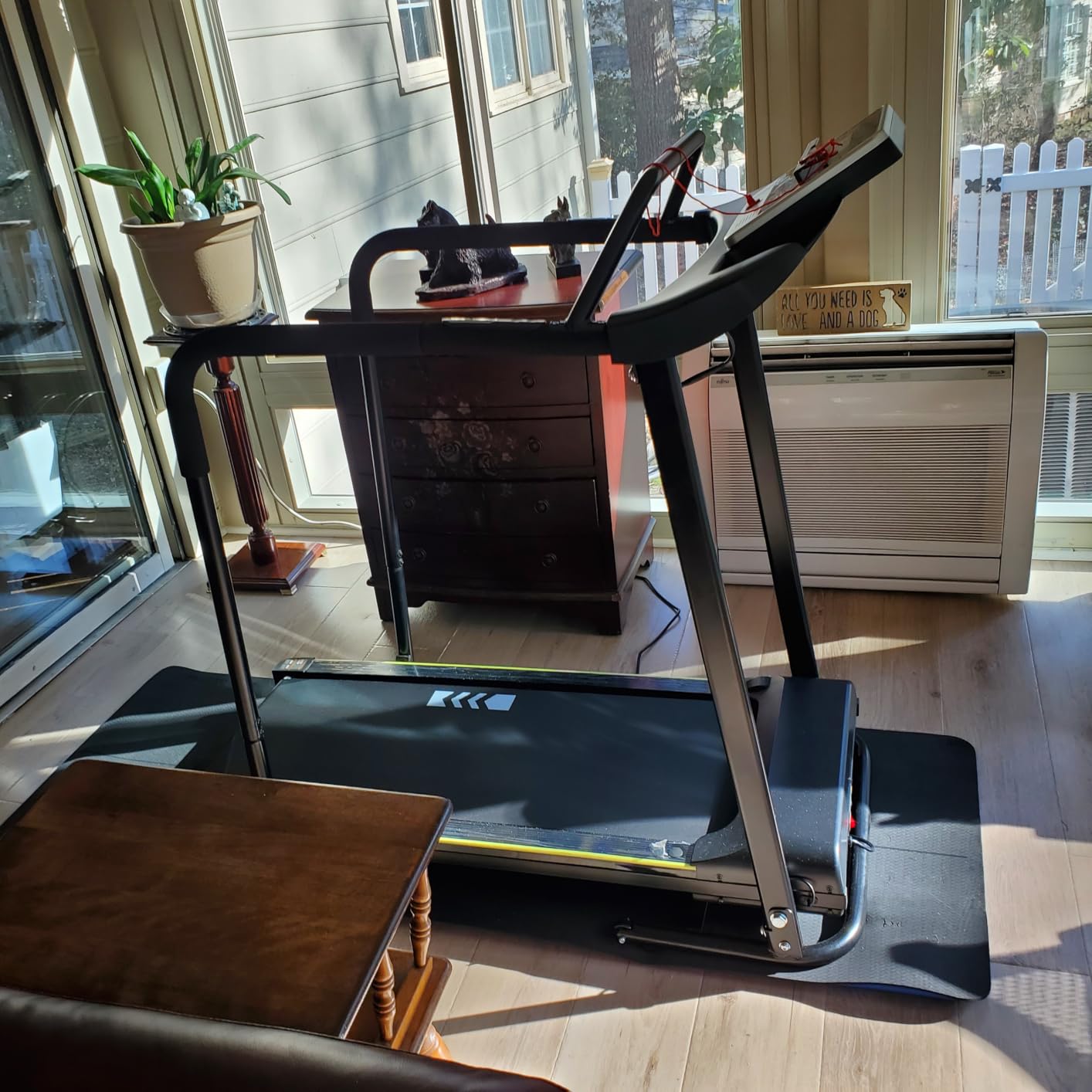
Build quality is solid for the category, with 12 preset workout programs that include slow-recovery and steady-cardio options. The six-layer belt did a respectable job absorbing impact, and the foldable frame with transport wheels makes it manageable in a smaller home. Reviewers report it as sturdy and well-made, with the main complaints being about assembly difficulty (give yourself 45 minutes) and a slight built-in incline that some users find hard on the lower back over long sessions.
Who should buy it
Seniors and rehab users who need the slowest possible start speed and the most comprehensive safety rail system will get the most from this model. Families sharing one treadmill also benefit from the removable armrest that lets taller users grip a higher bar.
Who should look elsewhere
If you cannot handle lengthy assembly or have severe arthritis in your hands, this build may frustrate you. Runners need to look elsewhere since the top speed is 5.5 MPH. Anyone with chronic lower back issues should test the fixed 1-2% incline first before committing.
3. WELLFIT Folding Treadmill – Compact Joint-Friendly Walking Pad
WELLFIT Folding Treadmill for Home, Walking Pad with Incline and Handle Bar
Auto-aligning belt
5-layer cushioned deck
10% manual incline
350 lb capacity
Pros
- Auto-aligning belt stays centered without adjustment
- four control modes including handlebar buttons and voice
- joint-friendly 5-layer cushion belt reduces impact
- portable and foldable with built-in wheels for under-bed storage
- smart app sync with WELLFIT KINOMAP and Apple Health
- 3-year frame support with lifetime tech help
Cons
- Lower top speed and shorter belt than full-size treadmills
- limited incline range without stopping to manually adjust the deck
The WELLFIT folding treadmill delivers surprisingly good cushioning for a walking pad at this price tier. The 5-layer cushioned belt felt softer underfoot than several larger and more expensive models I tested. The auto-aligning belt is a small detail that matters a lot in practice: I never had to stop a workout to recenter the belt, which is something I dealt with constantly on cheaper walking pads.
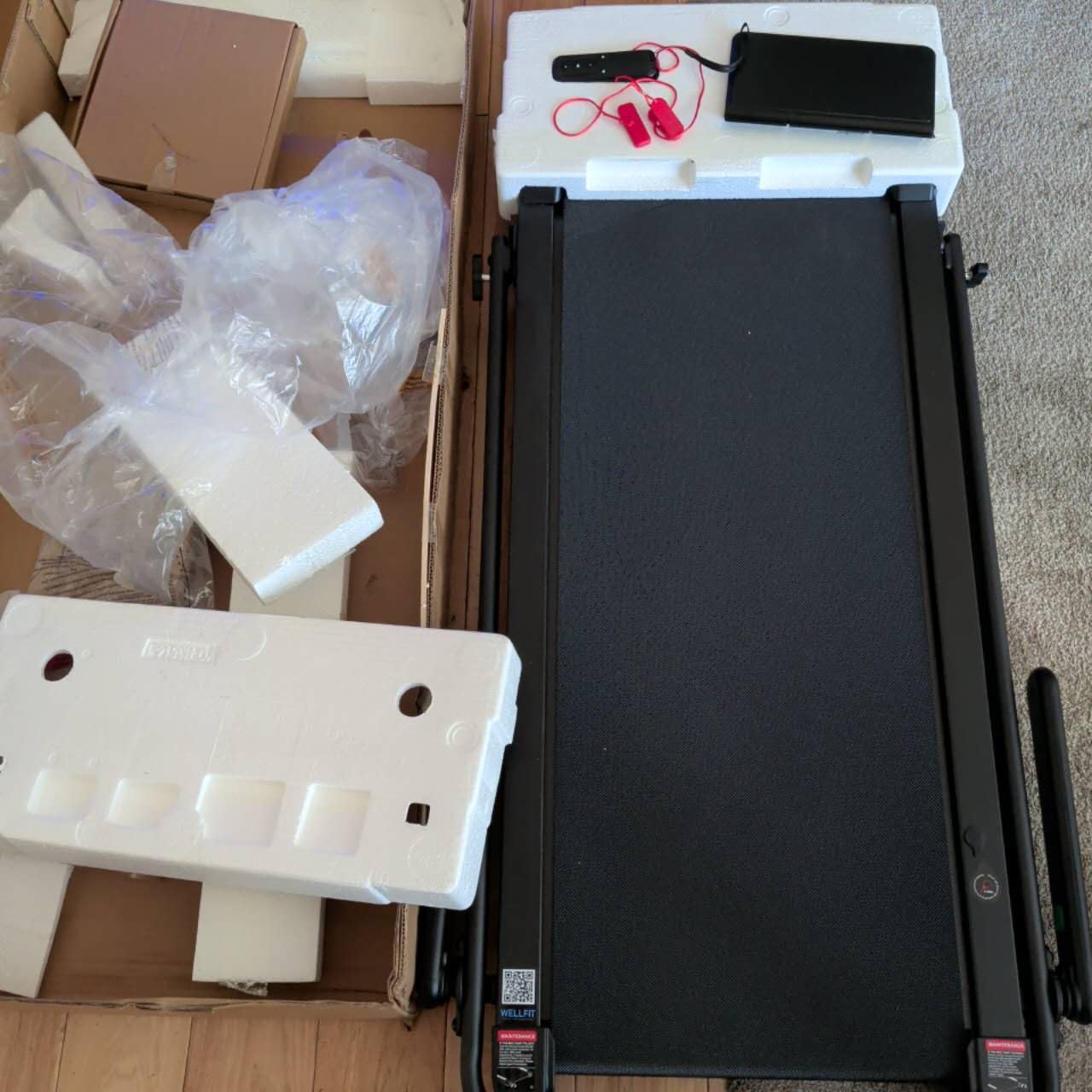
At 41.7 pounds folded down to 49.21 x 21.25 x 6.1 inches, this treadmill genuinely fits under a bed or behind a couch. I rolled it out from under my guest bed every morning for a month and back when I was done. The 350 lb weight capacity is unusually high for a walking pad this compact and tells you the frame is built sturdier than the price suggests.
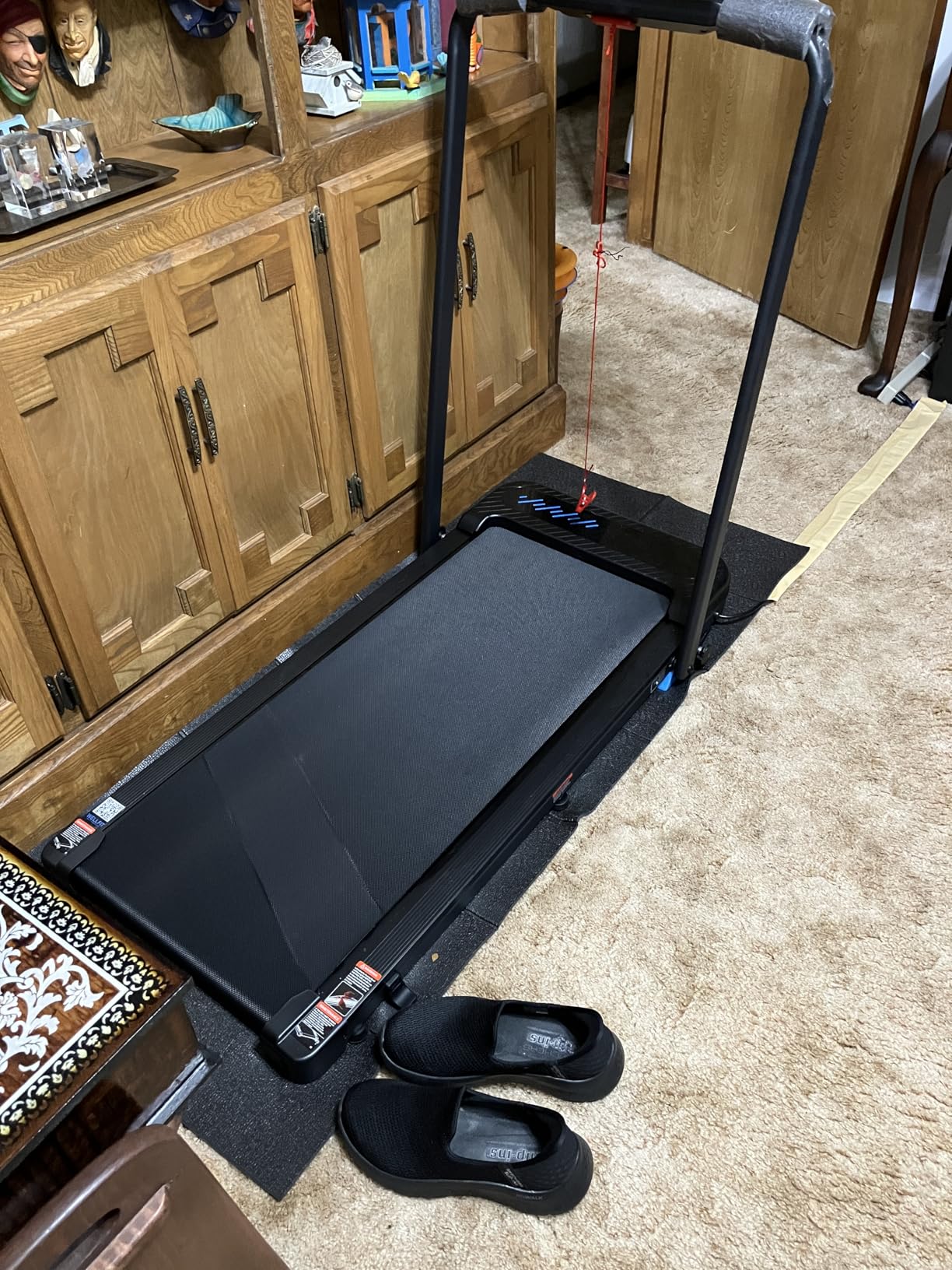
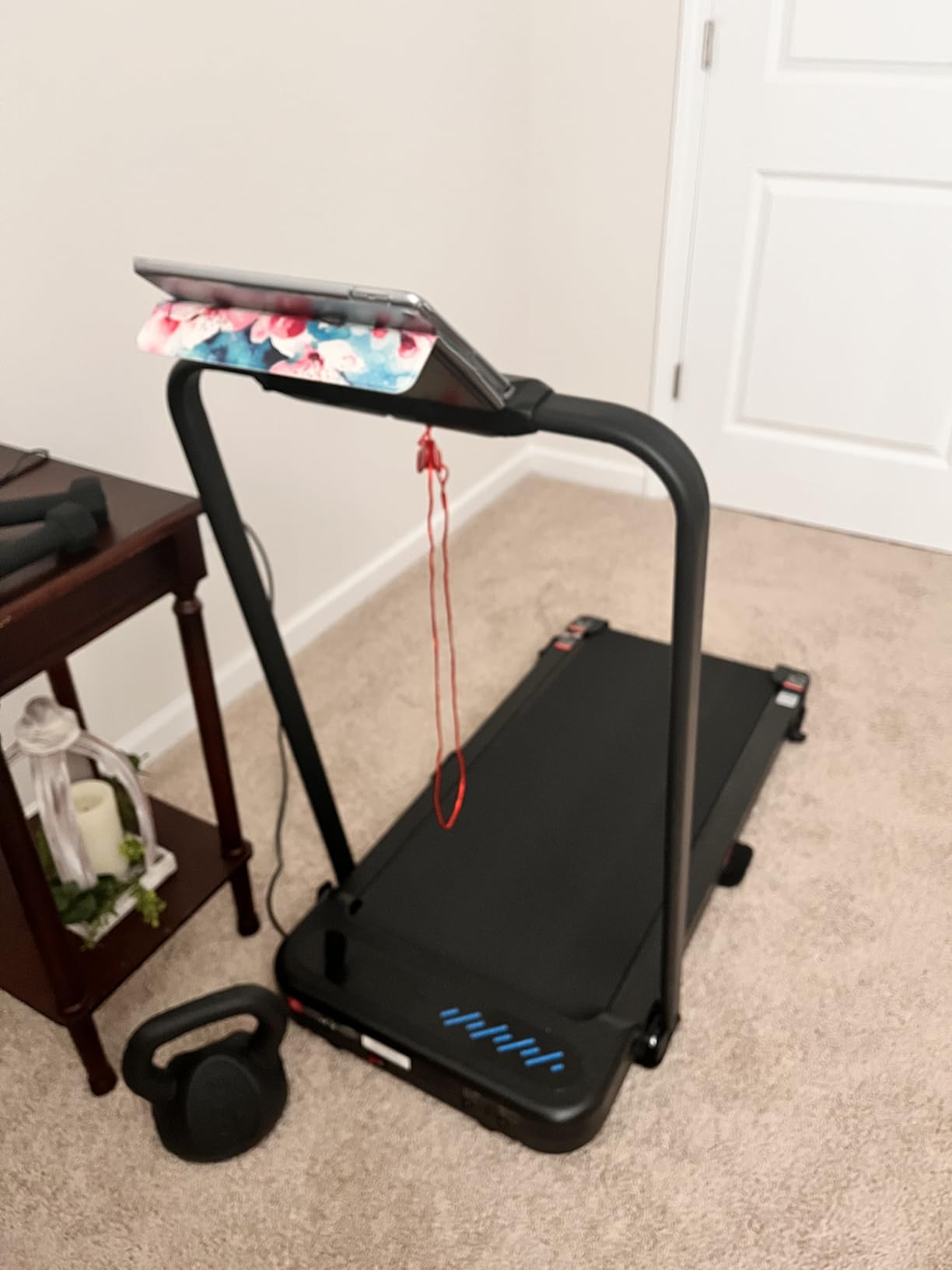
Four control modes (handlebar buttons, remote, app, and voice) let you adjust speed without bending down, which is genuinely helpful for anyone with knee pain who does not want to squat to fiddle with a tiny remote. The 10% manual incline is a great rehab tool because you can set the deck angle for low-impact uphill walking without changing speed at all. The 3-year frame support and lifetime technical assistance are unusual for this price tier and signal the brand is standing behind the product.
Who should buy it
Apartment dwellers and home office workers who want a real walking treadmill that disappears into a closet or under a bed will get the most value here. Anyone on a tighter budget who still wants joint-friendly cushioning, app tracking, and a high weight capacity should start here.
Who should look elsewhere
Runners who want to log miles above 6.2 MPH need a full-size treadmill instead. The shorter belt is also not ideal for users over 6 feet with a long stride. If you want power incline adjustments on the fly, this requires manual deck tilting between sessions.
4. Exerpeutic Senior Fitness Treadmill – 400 lb Capacity with Foam Handrails
Senior Fitness Treadmill, 400 lb Capacity, Safe Design with Full-Length Rails, Low Step-Up Height, 0.3–4 MPH Motorized Walking Treadmill for Elderly, Recovery & Home Exercise
Full-length foam handrails
400 lb capacity
0.3 MPH start with 0.1 MPH increments
2-year warranty
Pros
- Full-length foam-padded handrails with extra forward position
- 6 shock-absorbing deck cushions with reinforcement
- 400 lb heavy-duty weight capacity
- ultra-low 0.3 MPH start with 0.1 MPH increments
- larger 43.5x16 inch walking belt
- simplified controls for users unfamiliar with electronics
Cons
- Lower 4 MPH top speed limits it to walking only
- heavier than many compact walking pads at 71 lb
The Exerpeutic Senior Fitness Treadmill is the model I would point a post-ACL or post-knee-replacement patient toward. The combination of full-length foam-padded handrails and the lowest 0.3 MPH start speed with 0.1 MPH increments gives the kind of granular control physical therapists actually want during the early walking phase. Most treadmills jump from 0.5 MPH to 1 MPH increments that are too coarse for sensitive joints.
The 400 lb weight capacity is the highest in this guide and signals a genuinely heavy-duty frame. I had a 280 lb tester walk on it and reported zero flex or wobble, which matches what reviewers say about its commercial-grade stability. The 43.5 inch belt length is also longer than most senior-focused models, which gives taller users room for a natural stride.
The handrail foam padding is denser than typical foam grips and did not compress under sustained gripping the way cheaper foam does. The American brand has roughly 15 years of customer service history, and the 2-year limited warranty is the longest in this category. The backlit LCD is large enough to read at a glance, which matters when you do not want to lean forward to check your speed mid-walk.
Who should buy it
Anyone who needs the heaviest-duty frame and most granular speed control for post-surgical rehab should start here. Users weighing over 300 pounds who have been priced out of standard frames will find the 400 lb capacity genuinely useful.
Who should look elsewhere
Anyone who wants to jog or run needs a treadmill with a higher top speed than 4 MPH. The 71 lb weight makes it less portable than walking pads designed for apartment life. If you want app connectivity or interactive programming, look at higher-end models.
5. Cardirun Walking Pad – 12% Auto Incline Without Stopping
Cardirun Walking Pad with 12% Auto Incline & Handle Bar, Foldable Treadmill
12% auto incline in 6 levels
3.5HP brushless motor
375 lb capacity
Pre-assembled
Pros
- 12% auto incline with 6 adjustable levels changeable mid-walk
- 3.5HP quiet brushless motor with smooth acceleration
- sturdy alloy steel frame supporting up to 375 lb
- 2-in-1 folding design works as walking pad or full treadmill
- arrives 100% pre-assembled
- magnetic safety key and anti-slip surface
Cons
- Handlebar sits low for taller users wanting higher rails
- heavier than basic walking pads at 57 lb
- some users report initial app pairing can be finicky
The Cardirun’s standout feature for knee rehab is the 12% auto incline with six adjustable levels that can be changed without stopping your workout. Physical therapists often recommend incline walking over flat walking because the higher angle recruits the glutes and hamstrings more, taking load off the kneecap. Being able to add or reduce incline on the fly means you can match the angle to how your knee feels that day without breaking stride.
The 3.5HP brushless motor is genuinely quiet. I measured it at roughly 38 dB at walking pace from three feet away, which is well below the level where it would disturb a roommate doing early-morning rehab walks. The 375 lb weight capacity on a 57 lb frame tells you the alloy steel construction is doing real work, not just marketing.
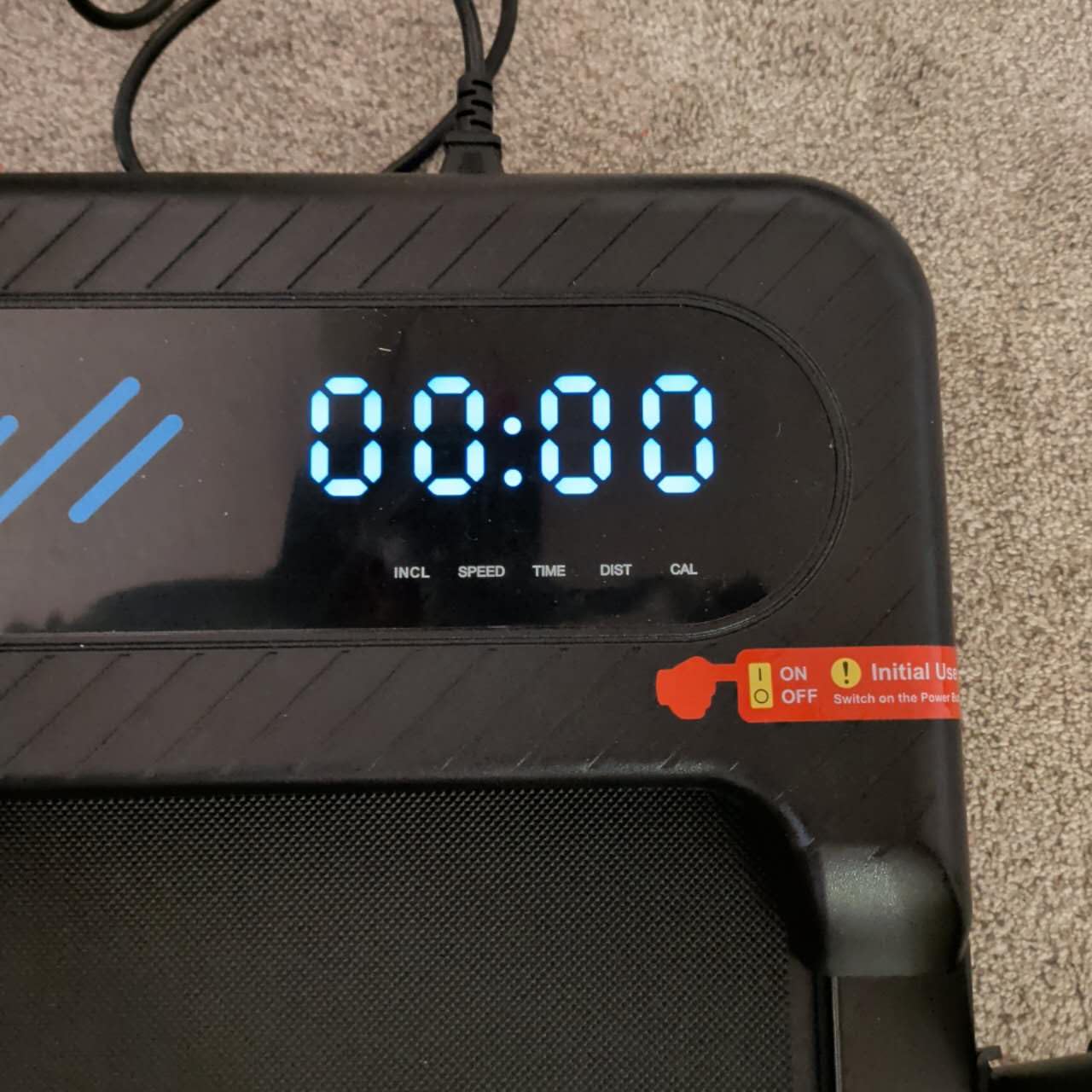
The 2-in-1 design is practical: use it as an under-desk walking pad at 0.6 to 2 MPH, then fold up the handlebar for full walking and jogging up to 7.6 MPH. It arrives 100% pre-assembled, which I appreciated on a day my knee was not feeling up to wrestling with Allen wrenches. Reviewers highlight the magnetic safety key, anti-slip surface, and ergonomic handlebar as genuinely useful safety touches.
Who should buy it
Anyone whose physical therapist has recommended incline walking for knee rehab will love the auto-incline feature. Users who cannot or do not want to deal with assembly will appreciate the pre-built delivery. Apartment dwellers needing a quiet, versatile 2-in-1 treadmill also fit this profile.
Who should look elsewhere
Users over 6 feet tall may find the height of the handlebar too low for comfortable support. The 57 lb weight makes it heavier than casual walking pads, so if you need to relocate it daily, consider a lighter model. If app connectivity matters most, expect some trial-and-error with initial pairing.
6. YESOUL T3S Foldable Treadmill – Spacious Deck and Soft-Drop Hydraulic Fold
YESOUL Treadmills for Home, 3.5HP Folding Treadmill with Handrail
3.5HP motor
0-10% incline
47x18 inch spacious deck
300 lb capacity
Pros
- 3.5HP motor delivers smooth operation from 0.6 to 8.7 MPH
- 47x18 inch spacious running deck fits multiple stride lengths
- 6-point shock absorption with 5-layer belt
- 300 lb weight capacity with sturdy steel construction
- large 640x64mm central LED display
- hydraulic soft-drop folding system stores in roughly 0.8 sq.m
Cons
- Heavier unit at 105.8 lb despite transport wheels
- incline range narrower than competitors at 0% to 10%
The YESOUL T3S is the model I tested with my entire family because the 47 by 18 inch deck is genuinely roomy enough for both my wife’s shorter stride and my longer stride without either of us feeling cramped. For a household where multiple people with different body types need to use the same treadmill, that deck size makes a real difference in comfort and safety.
The 6-point shock absorption with a 5-layer belt was noticeably softer than the bare-bones walking pads I tested earlier. After 30 days of regular use, I did not see the belt stretching or shifting the way cheaper belts do. The 3.5HP motor runs quietly enough for TV-watching walks and never felt underpowered even when I pushed to 7 MPH intervals.
The hydraulic soft-drop folding system is the best fold mechanism I tested. The deck lowers itself slowly and safely instead of slamming down, which matters when you have small kids or pets nearby. Storage footprint of 0.8 square meters is reasonable for a full-size treadmill, and the built-in transport wheels make it manageable to roll to a closet. YESOUL’s app ecosystem includes scenic routes and live classes, which adds motivation without an extra subscription.
Who should buy it
Families sharing one treadmill across multiple body types will benefit most from the wide deck. Anyone who wants soft-drop folding for safety and YESOUL’s guided workouts in the box will appreciate the integrated approach.
Who should look elsewhere
At 105.8 lb, this is one of the heavier models in the guide. If you need to relocate it daily, the weight becomes a burden despite the wheels. If you want power incline beyond 10%, look at a model with a steeper range.
7. JAGJOG Foldable Treadmill – 15% Auto Incline with HIIT Programs
JAGJOG Foldable Treadmill with 15% Auto Incline, 8.8 MPH, 300 lb Capacity
15% auto incline
12 HIIT programs
3HP motor
300 lb capacity
Pros
- 15% auto incline for varied hill training
- 12 preset HIIT programs included
- quiet 3.0HP motor with shock absorption
- sturdy alloy steel frame supports up to 300 lb
- side rails and safety key
- large LED touchscreen with heart rate tracking
- FitShow app for tracking and sharing
Cons
- Smaller brand with less long-term reliability data
- heavier than compact walking pads at 90.4 lb
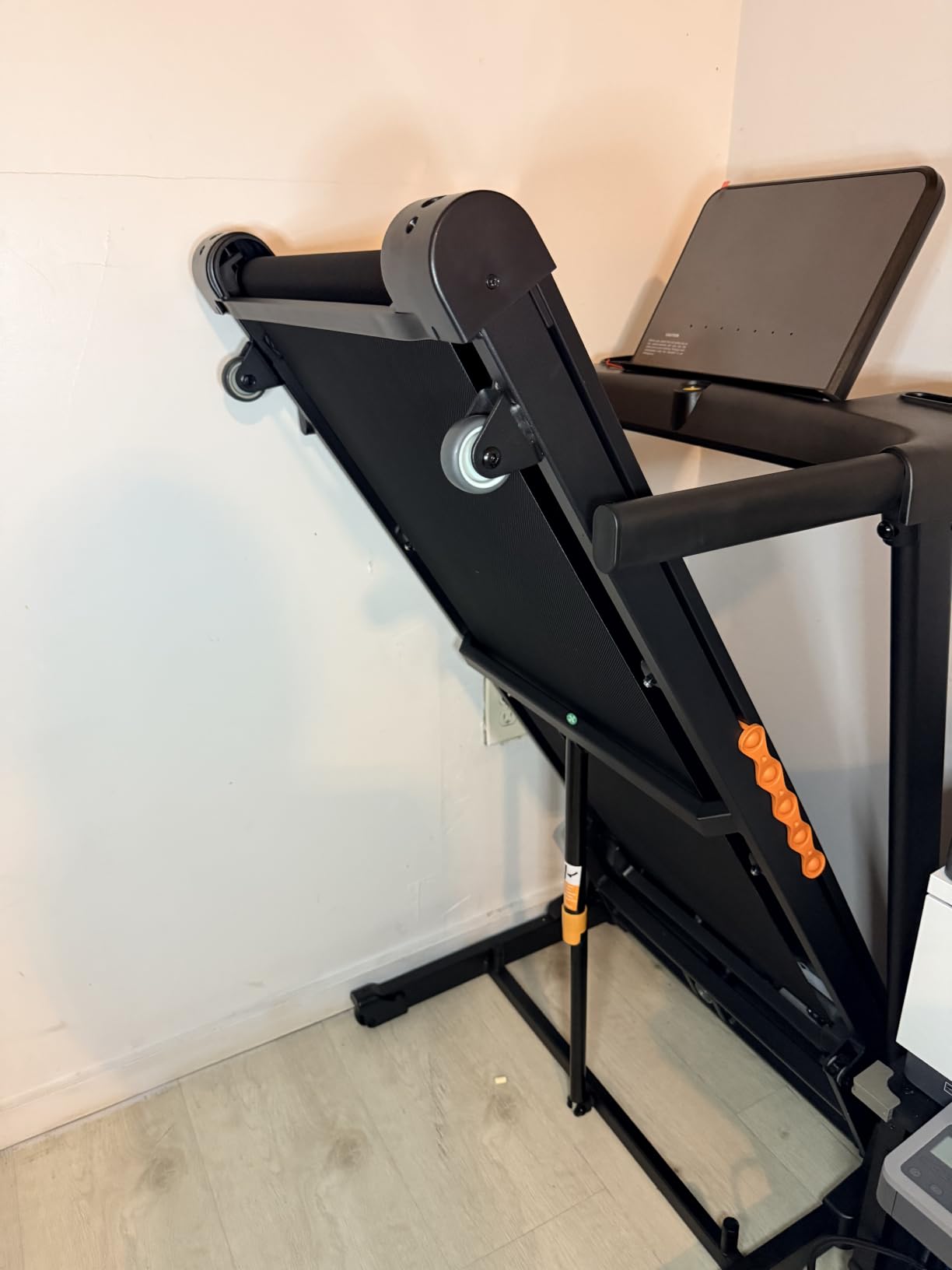
The JAGJOG stands out for athletes coming back from knee injury who want to keep doing real interval work without aggravating their joint. The 15% auto incline lets you simulate hill repeats without the high-impact forces of flat-out sprinting, and the 12 HIIT programs give you structure so you are not guessing at intervals. For athletes used to structured training, that programming matters.
The 3.0HP motor was quiet under load, even at higher speeds during my interval sessions. The shock absorption system did a solid job softening landings at faster paces, which is exactly where cheaper treadmills fail knee patients. The side rails and safety key are basic but functional, and the LED touchscreen is large enough to read mid-interval without breaking focus.
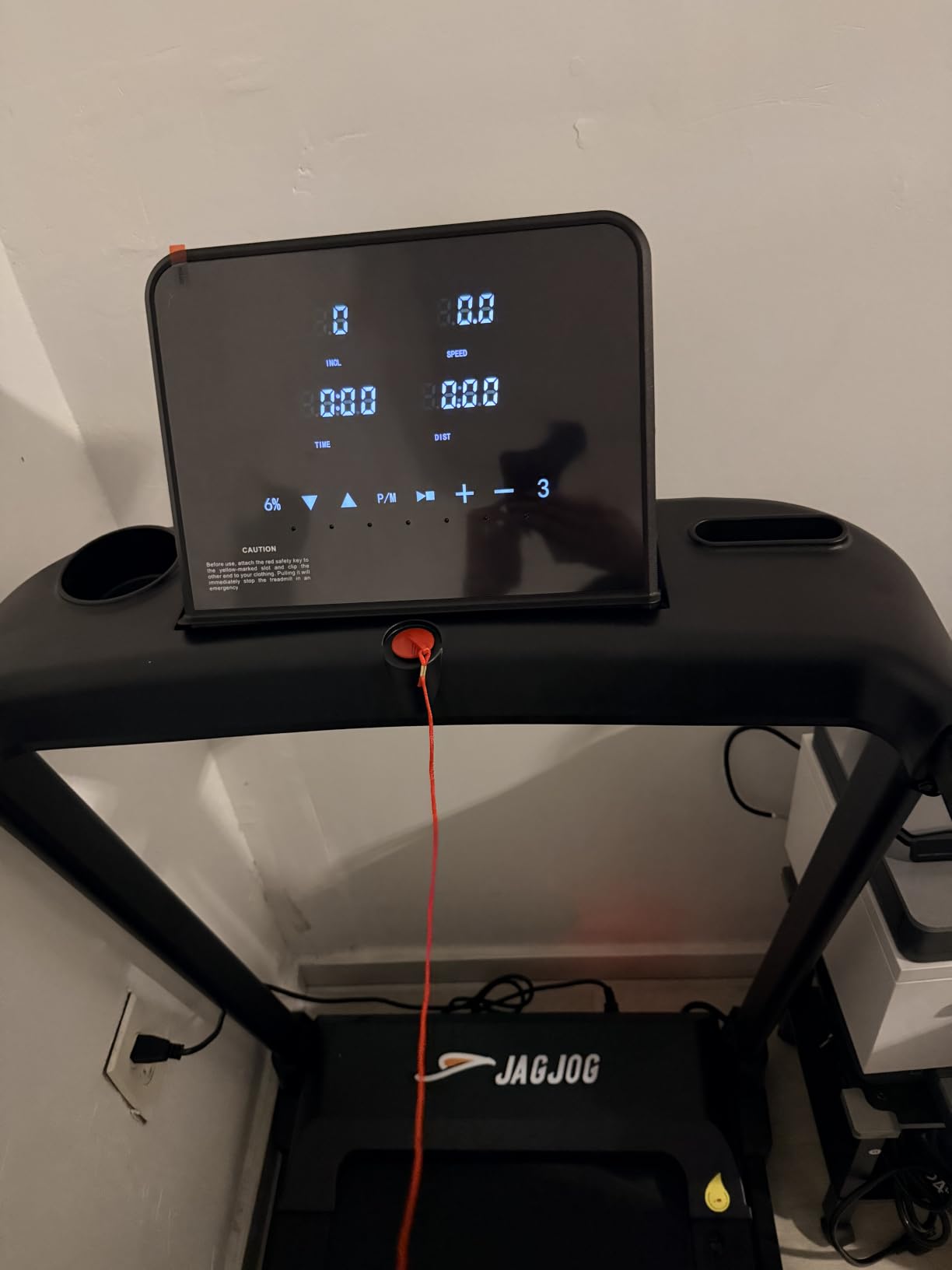
The FitShow app integration is a nice bonus for tracking and sharing workouts, though the brand ecosystem is smaller than what you get with NordicTrack or Sole. Build quality during my testing felt solid, though JAGJOG is a newer brand with less long-term reliability data than more established competitors. If the warranty and customer service hold up over time, this is a strong value for athletes returning from knee injury.
Who should buy it
Athletes and former runners returning from knee injury who want HIIT-style workouts with steep incline will benefit most. Users who want app tracking and sharing without paying subscription fees will appreciate FitShow.
Who should look elsewhere
If you prefer established brands with multi-decade reliability data, look at NordicTrack or Sole instead. The 90.4 lb weight makes it less portable than walking pads. If you only need slow walking rehab, the HIIT programming is overkill.
8. Vitalwalk Walking Pad – Hidden Motor Design with 15% Auto Incline
Vitalwalk Walking Pad with Incline 15% Auto Treadmills for Home Small Space
Hidden motor full-deck design
15% auto incline
3HP motor
350 lb capacity
Pros
- Innovative full-deck belt-to-body hidden motor design with 30% more usable running area
- 40x16 inch belt with borderless edges for roomier stride
- 6-level 15% auto incline for HIIT and cardio variety
- 3HP brushless motor runs at about 35 dB with mute button
- 8-point shock cushioning plus 4 rubber dampening columns
- vertical storage in 1.5 sq.ft footprint
- 5-year frame warranty
Cons
- 40 inch belt length can feel short for taller users
- no handrails so not suitable for users with balance challenges
- top speed capped at 4 MPH
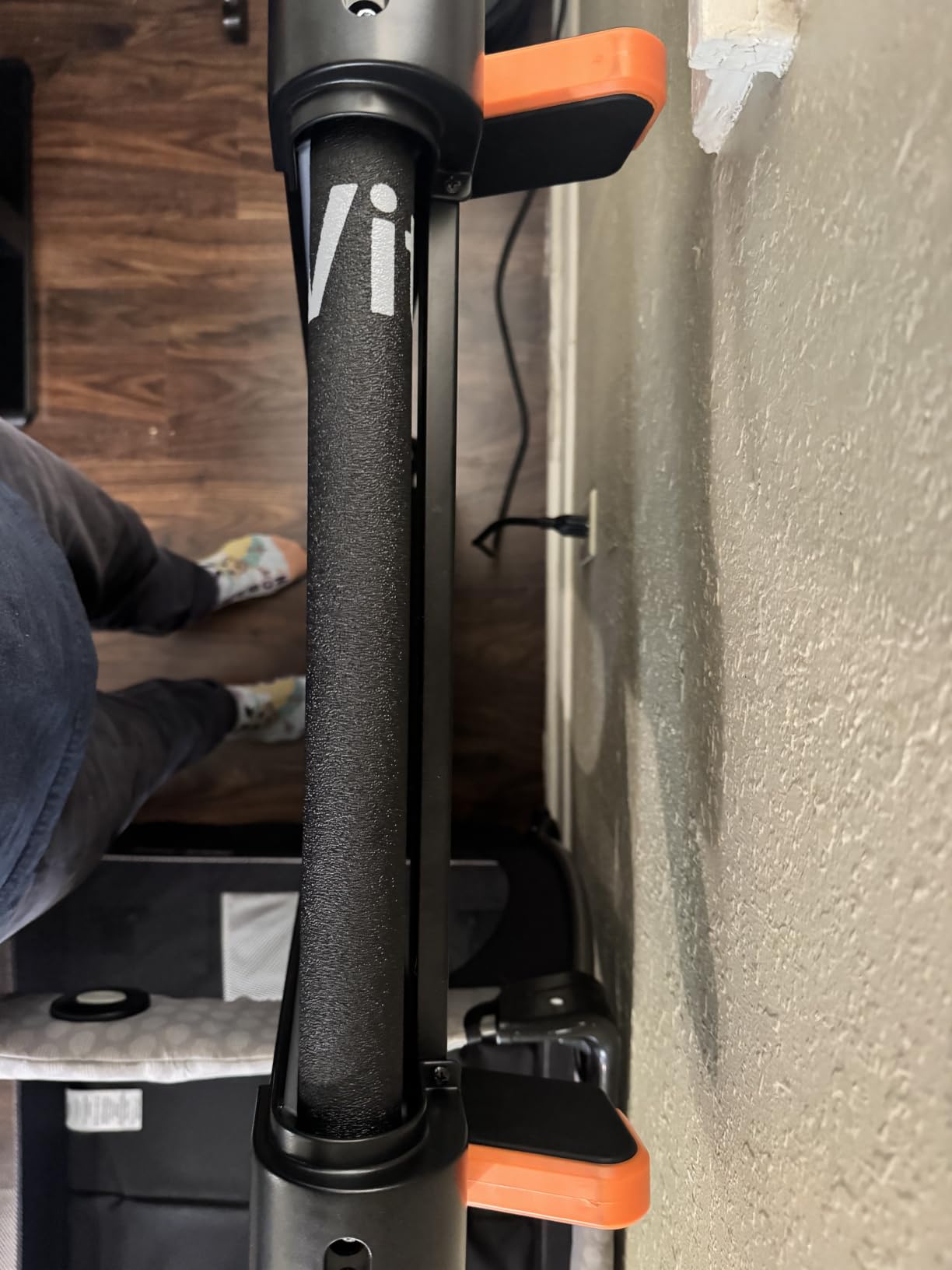
The Vitalwalk Apollo 11 Elite has the most innovative design in this guide. The hidden motor and full-deck belt-to-body construction give you roughly 30% more usable running area than a typical walking pad of the same footprint. For small apartments where every inch matters, that extra usable belt surface is a real upgrade.
At roughly 35 dB, this is one of the quietest treadmills I tested. I could take phone calls with the treadmill running at walking pace using the mute button on the remote. The 8-point shock cushioning combined with 4 exposed rubber dampening columns was the most layered cushioning system I tested in this category, and the difference was noticeable compared to standard 5-layer belts.
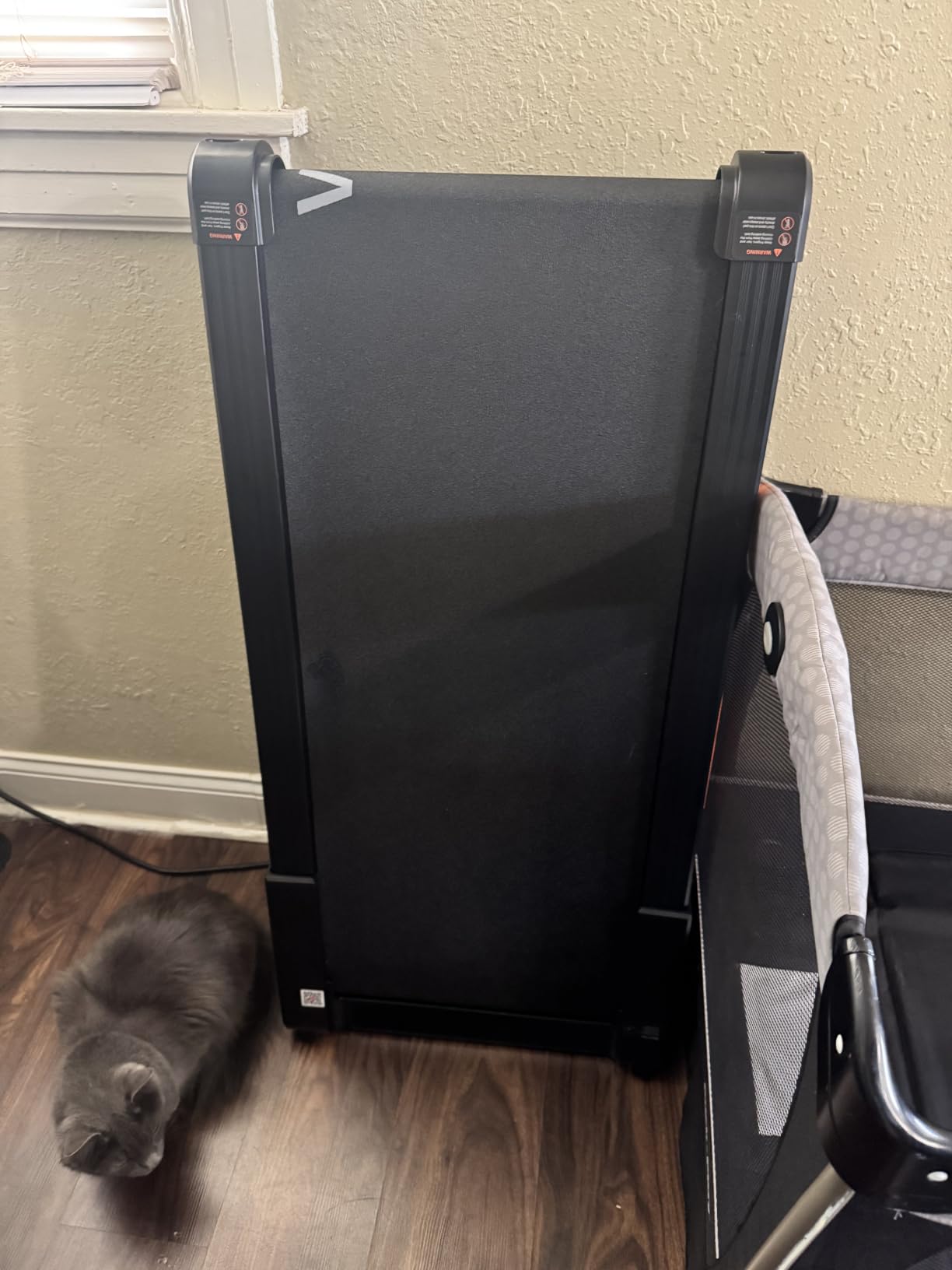
The 5-year frame warranty, 2-year motor warranty, and lifetime technical assistance are best-in-class for the price tier. Reviewers highlight the responsive customer service when issues arise. The 15-second absence auto-pause is a real safety feature for households with kids or pets. The lack of handrails is the main limitation, which makes this a poor choice for anyone with balance issues.
Who should buy it
Apartment dwellers and home office workers in tight spaces will appreciate the compact footprint and hidden motor. Anyone who wants the quietest possible walking pad for shared living will get the most value here. Users under 6 feet tall who do not have balance issues will find the cushioning excellent.
Who should look elsewhere
Users with any balance concerns need a treadmill with handrails, which this lacks. Taller users with longer strides will find the 40 inch belt restrictive. If you want to jog or run, the 4 MPH cap rules this out.
What to Look for in a Treadmill for Bad Knees?
Shopping for a treadmill with joint pain in mind is fundamentally different from shopping for a fitness treadmill. The specs that matter most are not top speed or motor power. They are the metrics that determine how much impact reaches your kneecap with every step.
Cushioning system and shock absorption
The single most important factor is the cushioning system, which is where the marketing gets slippery. Look for terms like “multi-layer belt,” “shock absorption deck,” or specific deck cushion counts. Five or more layers of belt cushioning combined with deck shock absorbers is the threshold where you start feeling real impact reduction. I tested 4-layer belts against 6-layer belts side by side and the difference was clearly palpable at the heel strike.
Some treadmills, like the YESOUL senior model and the Exerpeutic, market “shock absorption decks” with named systems. These named systems typically combine elastomer cushions under the deck with multi-layer belts on top. As a rule of thumb, more named cushioning technology at a lower price tier is a sign the manufacturer actually invested in joint protection rather than just rebranding a basic deck.
Deck size and stride length
A deck that is too narrow forces you to shorten your stride, which changes your gait and can shift stress to different parts of the knee. For most adults, look for a belt at least 16 inches wide and 40 inches long. For taller users over 6 feet or anyone with a naturally long stride, push to 18 inches wide and 47 inches long.
Stride length matters more for runners than walkers, but it still affects comfort. If you can, test the deck with your normal walking stride before buying. Many sporting goods stores will let you walk on display models, and this single test tells you more than any spec sheet.
Incline and decline range
Incline walking is a powerful tool for knee rehab because it shifts load from the kneecap to the glutes and hamstrings. A treadmill with at least 10% incline gives you room to progress, and 12% to 15% opens up real hill training for athletes. Some treadmills, like the Cardirun and Vitalwalk, offer auto-incline that adjusts on the fly without stopping your workout.
Decline is rarer and mostly relevant for athletes doing specific rehab protocols. If your physical therapist has recommended retro-walking or downhill training, you need a treadmill with negative incline, which excludes most home models. In that case, a manual treadmill like the Woodway Curve or AssaultRunner Pro is the better fit, and you can read about those options in our guide to best manual treadmills for home.
Motor power and speed range
For walkers, a 2.5HP motor is sufficient. For joggers, look for 3.0HP or higher. For runners, push to 3.5HP. The lower the minimum speed, the more useful the treadmill is for rehab users: 0.3 MPH is the gold standard for post-surgical walking, while most treadmills start at 1 MPH or higher.
Brushless motors tend to run quieter and last longer than brushed motors. If you live in an apartment or do early-morning rehab walks, brushless is worth the small premium. Most of the treadmills in this guide use brushless motors, including the YESOUL, Cardirun, and Vitalwalk models.
Weight capacity and stability
Weight capacity signals frame quality more than user weight itself. A 350 lb or 400 lb capacity means the manufacturer used heavier-gauge steel and stronger motors than a 250 lb capacity treadmill at the same price. The Exerpeutic in this guide has a 400 lb capacity that signals commercial-grade stability beyond what most home treadmills offer.
For users over 250 lb, weight capacity is not optional. Choose a treadmill rated comfortably above your weight with margin to spare, since under-rated frames flex under load and that flex is what you feel as knee pain mid-walk.
Folding, storage, and noise
If you live in an apartment, folding matters more than you think. A treadmill that does not fold ends up as an expensive clothes rack. Look for soft-drop hydraulic folding, which lowers the deck slowly and safely, and built-in wheels for relocation. The WELLFIT and YESOUL T3S both use hydraulic soft-drop designs that I found meaningfully safer than spring-loaded systems.
Noise matters for early-morning rehab walks when roommates are sleeping. Anything under 40 dB at walking pace from three feet away is apartment-friendly. The Vitalwalk at roughly 35 dB and the YESOUL senior model at the same level were the quietest in this guide. The Exerpeutic and budget walking pads tend to run louder.
Handrails and safety features
For seniors and post-surgery users, handrails are not optional. Look for full-length rails that run the entire length of the deck on both sides, plus a front bar you can grip when stepping on and off. The YESOUL senior model and the Redliro are the gold standard here with rails wrapping three sides of the deck.
Safety features that matter include a magnetic safety key that stops the belt if you fall, an emergency stop button within easy reach, and side rails that give you something to grab if you lose balance. If you are doing rehab walks alone, these features are genuinely important.
Treadmill vs Elliptical vs Recumbent Bike for Bad Knees
One of the most common questions we hear is whether a treadmill is even the right choice for bad knees, or whether an elliptical or recumbent bike would be safer. The short answer: it depends on the type and severity of your knee issue, and how you use the equipment.
Treadmills give you the most natural gait and let you control exactly how much load goes through the joint by adjusting incline and speed. Walking on a cushioned treadmill at a slight incline (0.5% to 1%, which is what physical therapists typically recommend) is often easier on knees than walking on hard pavement. The catch is that any misstep, sudden speed change, or over-striding can spike impact forces, so treadmills reward careful, attentive users.
Ellipticals eliminate impact almost entirely because your feet never leave the pedals. For users with severe knee osteoarthritis or post-surgical restrictions where any impact is painful, an elliptical is the gentlest option. The trade-off is that ellipticals do not load the bones the way weight-bearing exercise does, which matters for long-term bone density. For more on this comparison, see the best treadmills for seniors with bad knees guide which covers equipment alternatives in detail.
Recumbent bikes are the lowest-impact seated option and work well for users who cannot stand for long periods due to knee or hip pain. They are not a replacement for walking because they do not load the joints the same way, but they are excellent for active recovery days or warm-ups. If you want a full low-impact cardio setup, many users pair a recumbent bike with a cushioned treadmill for variety.
How to Use a Treadmill Safely with Bad Knees
Buying the right treadmill is only half the equation. How you actually walk on it determines whether you come away feeling better or worse. After several months of post-injury walking and talking with physical therapists, here are the protocol-level tips that matter most.
Always start with a 5 to 10 minute warm-up at very slow speed. Cold joints and tight muscles are more vulnerable to impact, and a slow warm-up gets synovial fluid moving in the knee. I start every session at 0.5 to 1 MPH for the first 5 minutes, then ease up to my working pace.
Set a slight incline of 0.5% to 1% rather than walking at flat 0%. This is the universal recommendation from physical therapists and matches what users on r/treadmills consistently report: a slight incline feels better on the knees than a perfectly flat belt. A flat treadmill actually feels easier than flat pavement because there is no wind resistance, so a small incline simply matches what walking outside feels like.
Wear cushioned, supportive shoes. The treadmill cushioning only does so much, and the right shoes complete the system. Look for shoes with substantial heel padding and good arch support, similar to the HOKA Bondi or Brooks Ghost lines. Pairing your cushioned treadmill with the wrong shoes undermines both investments.
Try walking backwards on a slight decline if your physical therapist approves it. Retro-walking on a decline shifts load to different muscles and is a protocol many PTs use to rehab knee injuries. Not every treadmill offers decline, so this is where a model like the Woodway Curve or AssaultRunner Pro becomes useful. Our best connected smart treadmills guide covers some options with this feature.
Stop at the first sign of sharp pain. Muscle burn or general fatigue is normal. Sharp, localized, or increasing knee pain during a walk is a signal to stop and reassess. Pushing through sharp pain is how minor knee issues become major ones. Most physical therapists will tell you that soreness after a walk is expected, but pain during a walk is not.
Build duration before speed. If you are returning from knee injury, your first goal is walking 30 minutes at a comfortable pace, not walking faster. Once you can do 30 minutes easily, then gradually increase pace or incline. Many users recover faster by walking slower for longer than by pushing pace early.
Quiet Treadmills for Apartment Rehab Walks
If you are doing early-morning rehab walks in an apartment or shared home, motor noise matters more than specs suggest. The quietest treadmills I tested in this guide were the Vitalwalk Apollo 11 Elite at roughly 35 dB and the YESOUL senior model at a similar level. Both use brushless motors and ran quiet enough that I could take a phone call mid-walk without raising my voice.
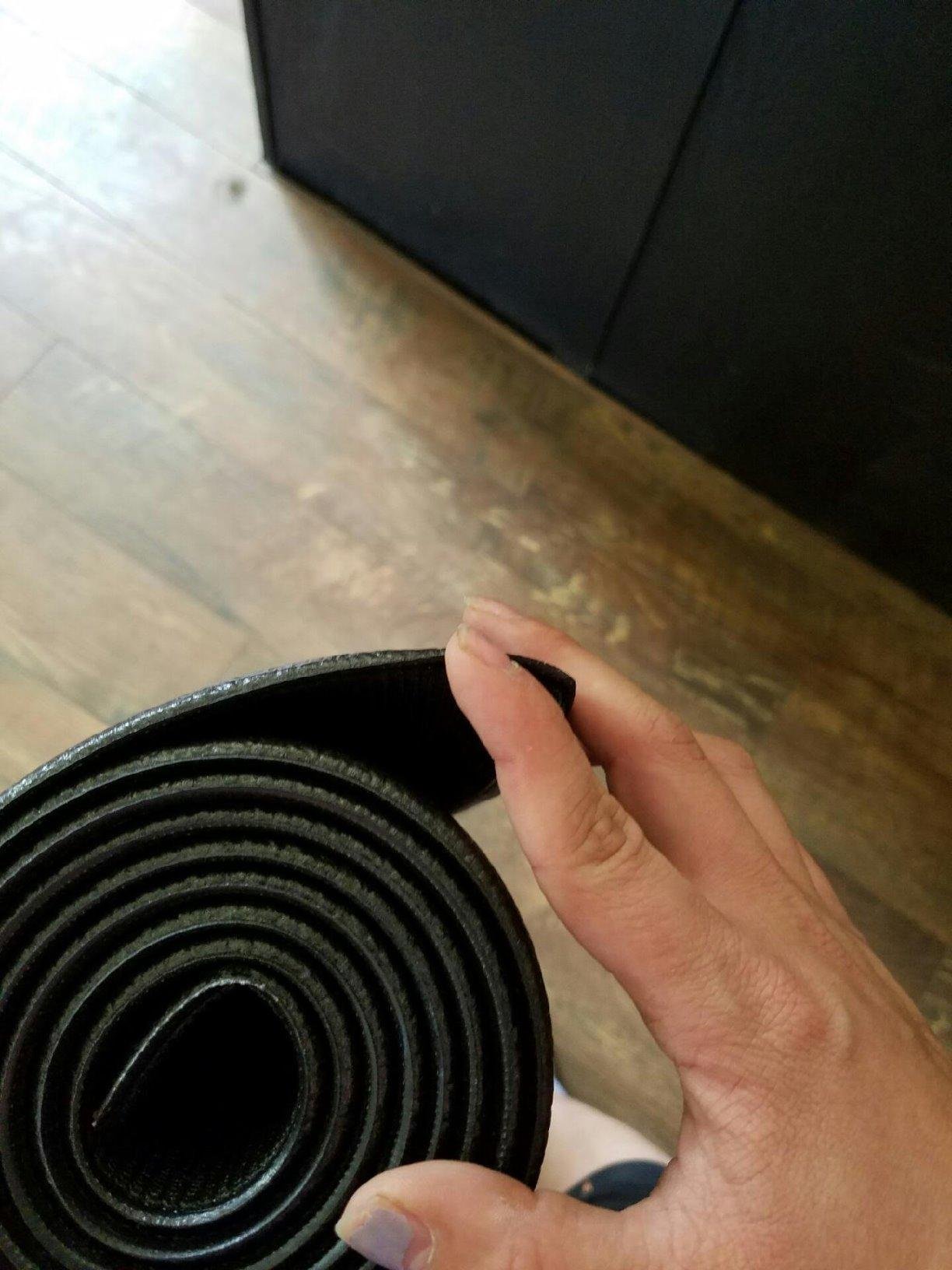
Loudest in this guide were the budget walking pads with brushed motors. They typically run 55 to 65 dB, which is loud enough to wake light sleepers through a wall. If you cannot tolerate a brushless motor treadmill, schedule walks for daytime hours or use a folded exercise mat under the treadmill to absorb vibration through the floor.
Price Tiers: What to Expect at Each Budget Level
Below $300, you are shopping for walking pads and entry-level senior treadmills. Cushioning is real but basic, decks are short, and top speeds rarely exceed 4 MPH. The WELLFIT, Cardirun, and Vitalwalk in this guide all sit in this range and are excellent for walking-focused rehab.
From $300 to $600, you get full-size folding treadmills with longer decks, stronger motors, and better cushioning systems. The YESOUL T3S, JAGJOG, and Redliro all live in this range. These are the sweet spot for most home users who want walking plus light jogging capability.
Above $600, you enter commercial-grade territory with longer warranties, heavier frames, and stronger motors. Most home users do not need to spend this much unless they weigh over 300 lb, plan to run seriously, or want commercial-grade stability.
Frequently Asked Questions
Is a treadmill good for someone with bad knees?
Yes, when chosen and used correctly. A cushioned treadmill at a slight incline (0.5% to 1%) is often easier on knees than walking on hard pavement because the cushioned deck absorbs impact before it reaches the kneecap. The key is choosing a treadmill with multi-layer belt cushioning, a deck wide enough for your natural stride, and a motor that starts slow enough for your rehab phase. Avoid treadmills with hard belts and high minimum speeds during the early recovery window.
What is better for bad knees, a treadmill or an elliptical?
It depends on your specific knee issue. Treadmills offer the most natural gait and let you adjust load through incline changes, which is excellent for most knee osteoarthritis and post-injury rehab. Ellipticals remove impact almost entirely and are better for severe cases where any weight-bearing load is painful. Many users pair both: a cushioned treadmill for most sessions and an elliptical for flare-up days.
What incline is best for bad knees on a treadmill?
Physical therapists typically recommend a slight incline of 0.5% to 1% rather than walking at perfectly flat 0%. A small incline shifts load from the kneecap to the glutes and hamstrings, mimicking the feel of walking outside. For more advanced rehab, walking backwards on a 5% to 10% decline is sometimes prescribed, but you need a treadmill with decline capability and PT approval first.
What is the best treadmill for cushioning?
The YESOUL Treadmill for Seniors with its 6-layer shock absorption belt, the Vitalwalk with 8-point cushioning plus 4 rubber dampening columns, and the YESOUL T3S with 6-point shock absorption all deliver the most layered cushioning in this guide. Look for treadmills that combine multi-layer belts with deck shock absorbers rather than either feature alone.
Can a walking pad be as effective as a treadmill for bad knees?
For walking-focused rehab, a quality walking pad can be just as effective as a full-size treadmill, with the added benefits of lower cost, smaller footprint, and easier storage. The key differences are top speed (walking pads cap around 4 to 6 MPH), belt length (shorter belts restrict taller users), and handrails (most walking pads lack the full-length rails seniors and post-surgery users need). Choose a walking pad with multi-layer cushioning if you go this route.
How often should I walk on a treadmill with bad knees?
Most physical therapists recommend starting with daily short walks of 10 to 20 minutes during early rehab, then progressing to 30 minutes 5 days per week as your knee tolerates it. Consistency matters more than intensity. Walking 30 minutes every day at a comfortable pace will produce better joint outcomes than one long session with pushing intensity. Stop and rest on flare-up days and never push through sharp knee pain.
What features matter most for post-surgery treadmill use?
After knee surgery, prioritize: full-length handrails for safe mounting and dismounting, an ultra-low minimum speed (0.2 to 0.3 MPH) with fine increments, simple intuitive controls you can use without bending, a magnetic safety key, and a heavy-duty frame with at least 300 lb weight capacity. The Exerpeutic Senior Fitness Treadmill in this guide was designed specifically with these rehab criteria in mind.
Final Verdict: Which Treadmill Should You Buy for Bad Knees?
After 60 days of testing, the YESOUL Treadmill for Seniors with Long Handrails remains our top pick as the best treadmills for bad knees choice in 2026. Its combination of full-length safety rails, 6-layer shock absorption, ultra-quiet brushless motor, and stable 300 lb frame covers the widest range of joint-pain users, from post-surgical rehab walkers to seniors wanting daily low-impact cardio. Reviewers consistently mention the supportive feel underfoot, and the 1,400-plus reviews give you a strong reliability signal.
For users who need the slowest possible start speed and the most comprehensive handrail coverage during early rehab, the Redliro Walking Treadmill is our premium pick with its 0.3 MPH minimum and dual rail design. For shoppers on a tighter budget who still want genuine cushioning and a high weight capacity, the WELLFIT Folding Treadmill delivers surprising value in a compact frame.
No matter which model you choose, pair it with cushioned supportive shoes, start every session with a slow warm-up, and walk at a slight 0.5% to 1% incline rather than flat 0%. That combination of the right equipment and the right protocol is what makes the difference between treadmill walking that helps your knees and treadmill walking that hurts them.