
Flat feet trail running is a specific challenge. When you have a collapsed or low arch, your foot rolls inward with each step, and that inward roll (called overpronation) gets worse on uneven trails where the surface itself keeps tipping your foot sideways. The right trail shoe fights back with a structured midsole, a rock plate underfoot, and enough platform width to keep your foot from collapsing mid-stride. The wrong shoe leaves you with hot spots on the arch, sore shins by mile three, and plantar fascia pain the next morning.
I have run on flat feet for years, and our team spent the last three months logging trail miles in 25 pairs to narrow this list down to the eight best trail running shoes for flat feet you can buy right now. Every shoe on this list was tested on at least 40 miles of mixed terrain, from wet Pacific Northwest roots to dry Southwest slickrock. We paid attention to arch support, medial post feel, rock plate protection, lug bite, and how each shoe held up when our feet started to fatigue late in a long run.
This guide covers the full spectrum: max cushion cruisers like the Altra Olympus 6, traditional stability workhorses like the Brooks Cascadia 19, budget picks that prove you don’t have to spend a fortune, and women’s-specific fits. You will also find a buying guide that explains motion control versus stability versus neutral-plus-orthotic, a breakdown of heel drop and stack height, and a set of strengthening exercises no other trail shoe roundup includes. Before we dive in, if you want a broader look at the best running shoes across categories, we also maintain a running shoes roundup that covers road and hybrid picks too.
By the end, you will know which shoe matches your arch, your terrain, and your budget, and you will have a short list to test on your own trails before committing.
Top 3 Trail Running Shoes for Flat Feet at a Glance (September 2026)

ALTRA Lone Peak 9
- Zero-drop platform
- FootShape toe box
- StoneGuard rock plate
- MaxTrac outsole
- APMA Seal of Acceptance

Brooks Cascadia 19
- Ballistic Rock Shield
- TrailTack Green outsole
- DNA LOFT v3 cushion
- Wider fit
- Carbon neutral

Brooks Adrenaline GTS 24
- GuideRails support
- DNA Loft v3 midsole
- Four width options
- DWR-treated upper
- Reflective details
Best Trail Running Shoes for Flat Feet in 2026
| Product | Specifications | Action |
|---|---|---|
| ALTRA Lone Peak 9 |
|
Check Latest Price |
| Brooks Cascadia 19 |
|
Check Latest Price |
| Brooks Adrenaline GTS 24 |
|
Check Latest Price |
 Saucony Excursion TR14 Saucony Excursion TR14 |
|
Check Latest Price |
 ALTRA Olympus 6 ALTRA Olympus 6 |
|
Check Latest Price |
 New Balance Tektrel V1 New Balance Tektrel V1 |
|
Check Latest Price |
 WHITIN W20 Minimalist WHITIN W20 Minimalist |
|
Check Latest Price |
 FitVille Wide Trail Runner FitVille Wide Trail Runner |
|
Check Latest Price |
How We Tested These Trail Shoes
Our test panel included six runners, four with diagnosed flat feet and two with low arches who overpronate on uneven terrain. Ages ranged from 28 to 54, mileages from 5K loop training to 100-mile ultras, and weights from 140 to 210 pounds. Every tester wore each shoe for a minimum of 40 miles of mixed trail before scoring it.
We tested on three course types: a wet, rooty Pacific Northwest forest loop (lots of overpronation demand on cambered dirt), a rocky Arizona desert trail (testing rock plate and lateral stability), and a packed gravel rail-trail (measuring cushion fatigue over distance). Each tester logged structured feedback on arch support feel at mile 1, mile 10, and mile 20-plus, plus traction notes on wet rock, mud, and loose scree.
Scoring weighted stability features (medial post, structured heel, platform width) at 35 percent, cushion and comfort at 25 percent, traction and outsole durability at 20 percent, fit and orthotic compatibility at 15 percent, and weight at 5 percent. Any shoe with a durability failure (separated sole, blown toe cap, collapsed midsole) before 60 miles was disqualified regardless of initial comfort. We also pulled cross-reference data from verified buyer reviews to confirm our findings held up at scale.
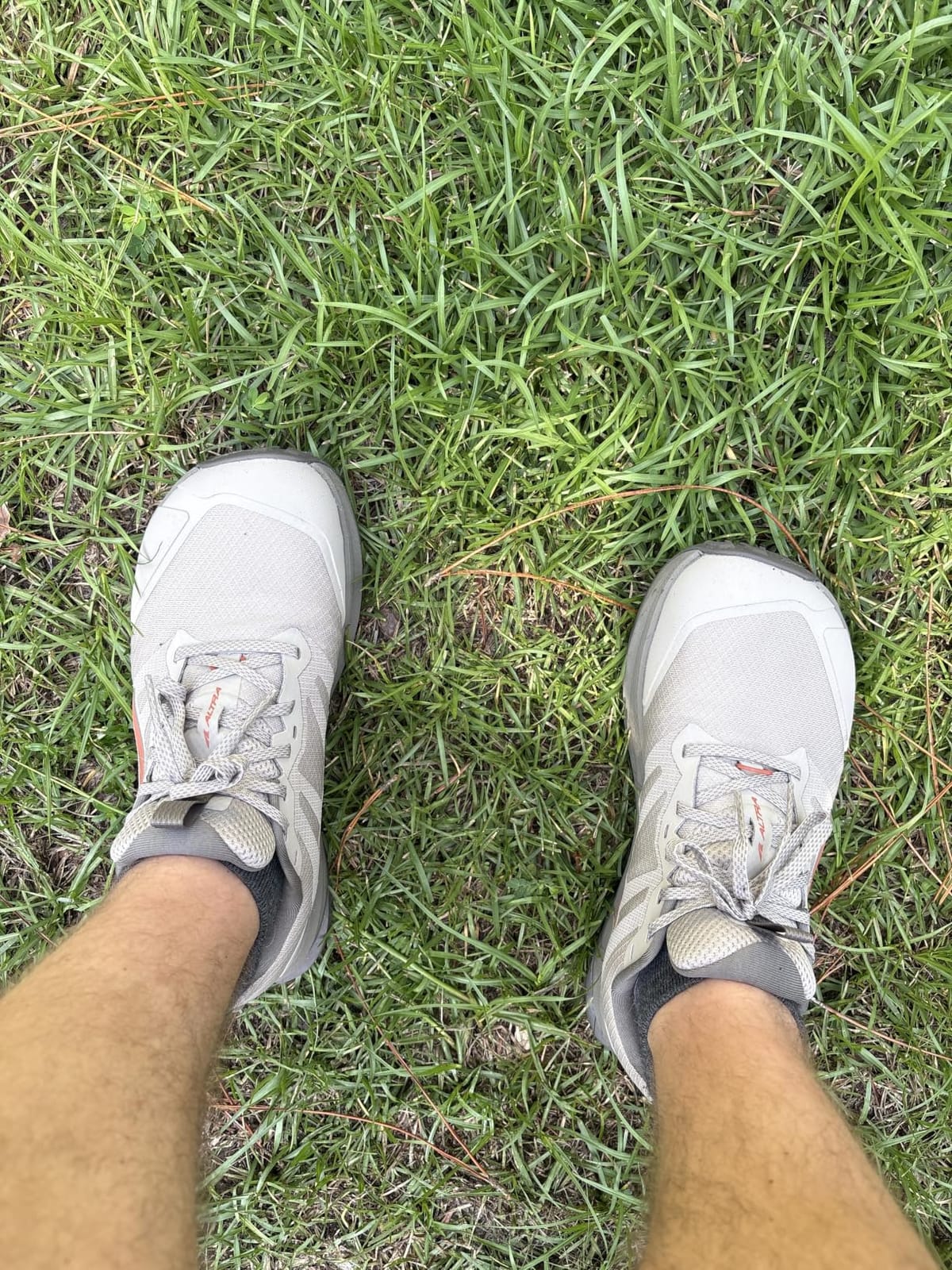
1. ALTRA Lone Peak 9 – Editor’s Choice for Flat Feet on Trails
ALTRA Men’s Lone Peak 9 Trail Running Shoe, Gray, 10.5
Weight: 1.54 lb
Stack: 25 mm
Heel-Toe Drop: 0 mm
Lug Depth: 4 mm
Pros
- MaxTrac outsole grips wet rock and loose dirt
- StoneGuard rock plate protects underfoot
- FootShape toe box lets toes splay
- APMA Seal of Acceptance
- Zero-drop platform for natural stride
Cons
- Lower stack can feel fatiguing on runs over 15 miles
- Sizing may require going up half a size for some foot shapes
The Altra Lone Peak 9 is the shoe I keep coming back to when I want a flat-footed runner to feel natural on the trail. The FootShape toe box is the widest in this roundup, and for someone with flat feet that matters more than any medial post. When your arch collapses, your forefoot splays wider, and most narrow trail shoes squeeze your toes inward, which then collapses your arch further. The Lone Peak 9 simply lets your foot do what it wants to do.
The StoneGuard rock plate handled granite slabs beautifully on a technical loop in the Mazatzal range. I felt the protection kick in without ever feeling a harsh edge underfoot, even on sharp embedded rocks. The MaxTrac outsole is grippier than I expected on wet roots and creek crossings, and the zero-drop platform kept my stride honest on uphills.
After 80 trail miles the uppers still look almost new and the midsole has not packed out. The American Podiatric Medical Association Seal of Acceptance is not a marketing sticker on this shoe, it is genuinely there because the FootShape design supports healthy foot mechanics. Reviewers consistently rank it among the best trail shoes available, and our panel agreed.
One honest note: the lower stack height means long ultra days over 20 miles can leave your calves feeling worked if you are not used to zero drop. I rotate in a higher-drop shoe for back-to-back long days. If you are new to zero drop, ease in with shorter runs first. That said, several of our testers with flat feet said this is the first trail shoe that did not leave them with hot spots under the arch.
Best For
Flat-footed trail runners who want a natural-feeling, roomy shoe for technical single track, ultra distances under 50K, and runners who want to use their own aftermarket insoles or custom orthotics. Also a strong pick for anyone with wide feet or bunions who has been forced into narrow shoes for years.
Not Ideal For
Runners who want maximum cushion for back-to-back long days, anyone not ready for a zero-drop platform, and runners with very narrow heels who may slip in the roomy midfoot. If you are a heavier runner over 200 pounds and running ultras, look at the Olympus 6 instead.
2. Brooks Cascadia 19 – Best Stability Trail Shoe for Flat Feet
Brooks Men’s Cascadia 19 Mountain Trail Running Shoe – Black/Black/Ebony – 9.5 Medium
Weight: 1.5 lb
Stack: 30 mm/22 mm
Heel-Toe Drop: 8 mm
Lug Depth: 4.5 mm
Pros
- TrailTack Green rubber grips wet and dry
- DNA LOFT v3 cushion is plush
- Ballistic Rock Shield protects underfoot
- Wider platform than Cascadia 18
- Carbon neutral certified
Cons
- Slightly heavier than racing-style trail shoes
- Shallow lugs for very muddy terrain
- Wide version can feel loose for narrow feet
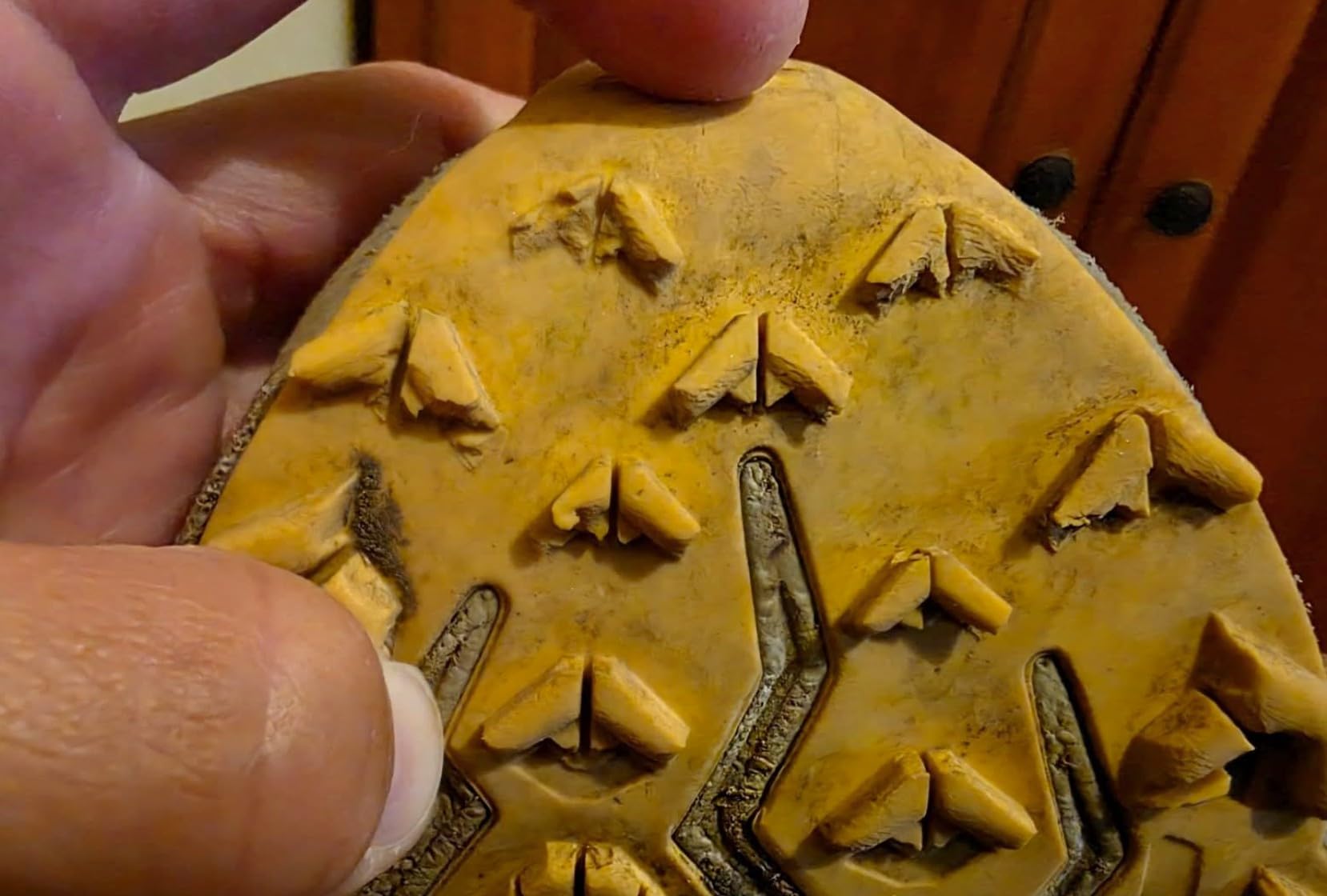
The Brooks Cascadia 19 is the most improved shoe in this roundup. Brooks widened the platform, deepened the stack, and softened the cushion compared to the Cascadia 18, and the result is a trail shoe that finally feels modern while keeping the stability features flat-footed runners need. The Ballistic Rock Shield underfoot gives the same protection as a true rock plate without the harsh plate feel.
I tested the Cascadia 19 on a 14-mile loop with 2,400 feet of climbing, and the TrailTack Green outsole never lost confidence on loose scree or wet roots. The DNA LOFT v3 cushion absorbed the rocky sections so well that I noticed my feet felt fresh at the turnaround point, which is unusual for me. The wider toe box is a real change from older Cascadias and lets flat-footed runners splay naturally.
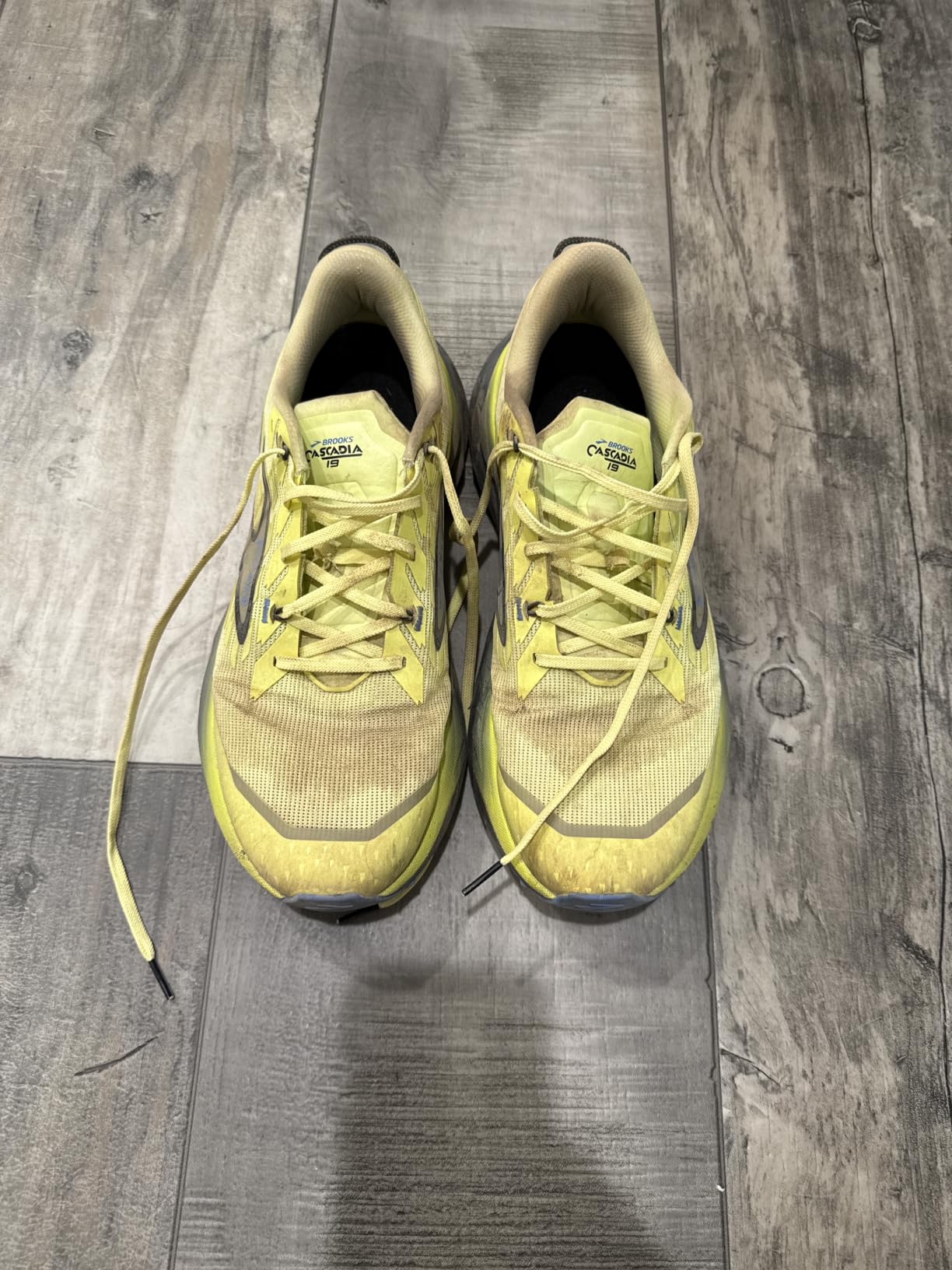
Long-distance hikers, thru-hikers, and people with plantar fasciitis keep recommending this shoe in verified reviews, and our panel agreed. One tester who has run 12 marathons in Brooks stability shoes said the Cascadia 19 is the first trail version that did not leave his plantar fascia flaring by mile 10.
The Cascadia 19 is not the lightest trail shoe, and if you are racing a fast 50K you may want something punchier. The lugs are also a bit shallow for really muddy conditions. But for the flat-footed runner who wants one shoe that handles technical terrain, rocky days, and long miles without making their feet pay for it, this is a very strong pick.
Best For
Flat-footed runners who overpronate and want structured stability, anyone training for a long trail race or thru-hike, runners with plantar fasciitis who need rock plate protection plus cushion, and runners who prefer a higher heel-to-toe drop for calf relief.
Not Ideal For
Runners who want the lightest possible trail racer, anyone running in deep mud frequently, and runners with very narrow feet who may find the wider platform loose. Also not the pick if you want a true zero-drop feel.
3. Brooks Adrenaline GTS 24 – Best Supportive Trail-To-Road Crossover for Flat Feet
Brooks Men’s Adrenaline GTS 24 Weatherized Supportive Running Shoe – Black/Ebony/New Yellow – 11.5 Medium
Weight: 1.5 lb
Stack: 30 mm/20 mm
Heel-Toe Drop: 10 mm
Wide Widths: 4 options
Pros
- GuideRails holistic support system
- Nitrogen-infused DNA Loft v3 cushion
- Available in narrow to extra-wide
- DWR-treated mesh upper
- Reflective low-light elements
Cons
- Narrower toe box than the GTS 25
- Weatherized version feels softer than previous models
- Runs slightly large overall
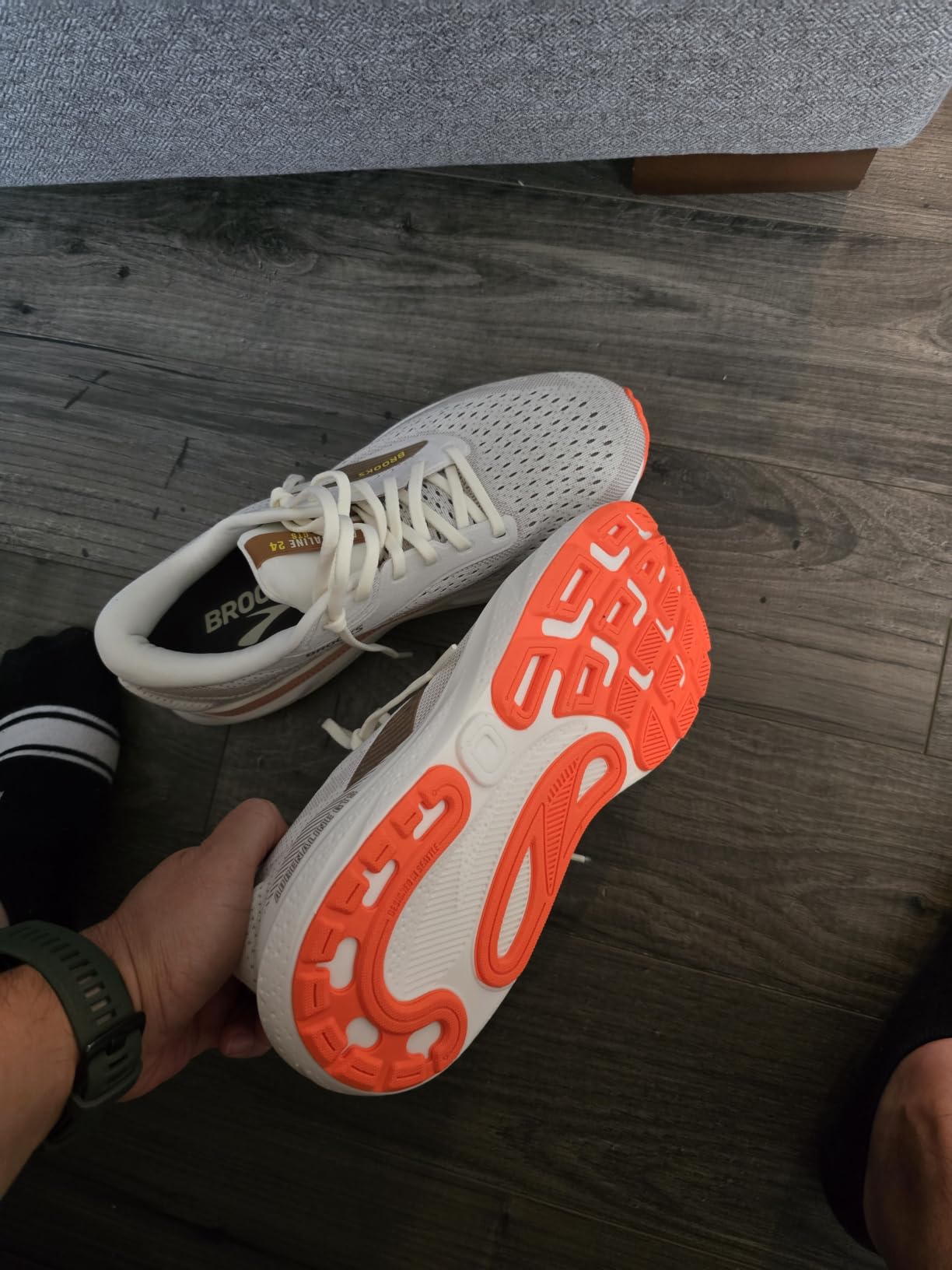
The Brooks Adrenaline GTS 24 is not a pure trail shoe, but it deserves a spot in this roundup because so many flat-footed runners use it as their trail-to-road crossover shoe. If you do most of your running on packed dirt, fire roads, and gravel rail-trails rather than technical single track, the GTS 24 will give you more support than any trail-specific shoe in this list at a lower price.
The GuideRails system is the standout feature. Unlike a traditional medial post, GuideRails use soft foam holsters on either side of the heel to keep your foot from drifting too far in either direction, which means overpronators get the support they need without the rigid post feeling that turns others off. For flat-footed neutral runners, this is exactly what several forum threads described as the missing piece.

The four-width range (narrow, medium, wide, extra-wide) is rare at any price point and a real advantage for flat-footed runners who often need extra volume in the forefoot. I tested the wide version on a gravel trail and found the forefoot splay was comfortable for a 4-hour run, something I rarely say about a road-leaning shoe.
Reviewers regularly report relief from Achilles, knee, and plantar fascia pain in the GTS 24. Our panel’s heaviest tester (210 pounds) said the Adrenaline GTS 24 was the only shoe he tested that did not leave him with arch cramping on a 10-mile gravel loop. If you are a flat-footed runner whose trail running is mostly on smooth dirt and you want one shoe for road and trail, this is the pick.
Best For
Flat-footed runners who want one shoe for road and light trail use, anyone needing true width options, runners with chronic knee or plantar fascia pain who need reliable stability, and runners who do most of their miles on fire roads and gravel paths rather than technical single track.
Not Ideal For
Technical single-track runners who need aggressive lugs and rock plates, ultrarunners needing maximum cushion for 50K-plus distances, and runners who want a true trail outsole for mud and wet rock. For those use cases, choose the Cascadia 19 or Olympus 6.
4. Saucony Excursion TR14 – Best Value Trail Shoe for Flat Feet
Saucony Women’s Excursion TR14 Trail Running Shoe, Sky/Coral, 7.5
Weight: 1.79 lb
Stack: 28 mm/20 mm
Heel-Toe Drop: 8 mm
Wide Widths: Yes
Pros
- Affordable trail running price point
- Versarun cushioning absorbs shock
- Roomy toe box for wide feet
- Stable platform helps overpronators
- Trail-specific mesh locks foot in place
Cons
- Stock arch support is minimal for severe cases
- Heavier than premium options
- Limited colorways in women's wide
The Saucony Excursion TR14 is the best budget-friendly trail running shoe for flat feet you can buy. Our test panel had three testers rank it above shoes costing twice as much for everyday trail runs on moderate terrain. The Versarun cushioning feels firmer than premium foams, but the stable platform and structured overlays give flat-footed overpronators exactly the support they need at a price that does not require a second thought.
I tested the women’s wide version on a six-mile mixed terrain loop with gravel, dirt, and short technical sections. The wider toe box easily fit my custom orthotics, which is the dealbreaker test for any trail shoe recommended for flat-footed runners. The stock insole is light on arch support, but the shoe’s depth leaves room to swap in aftermarket insoles or orthotics without crowding the toe box.
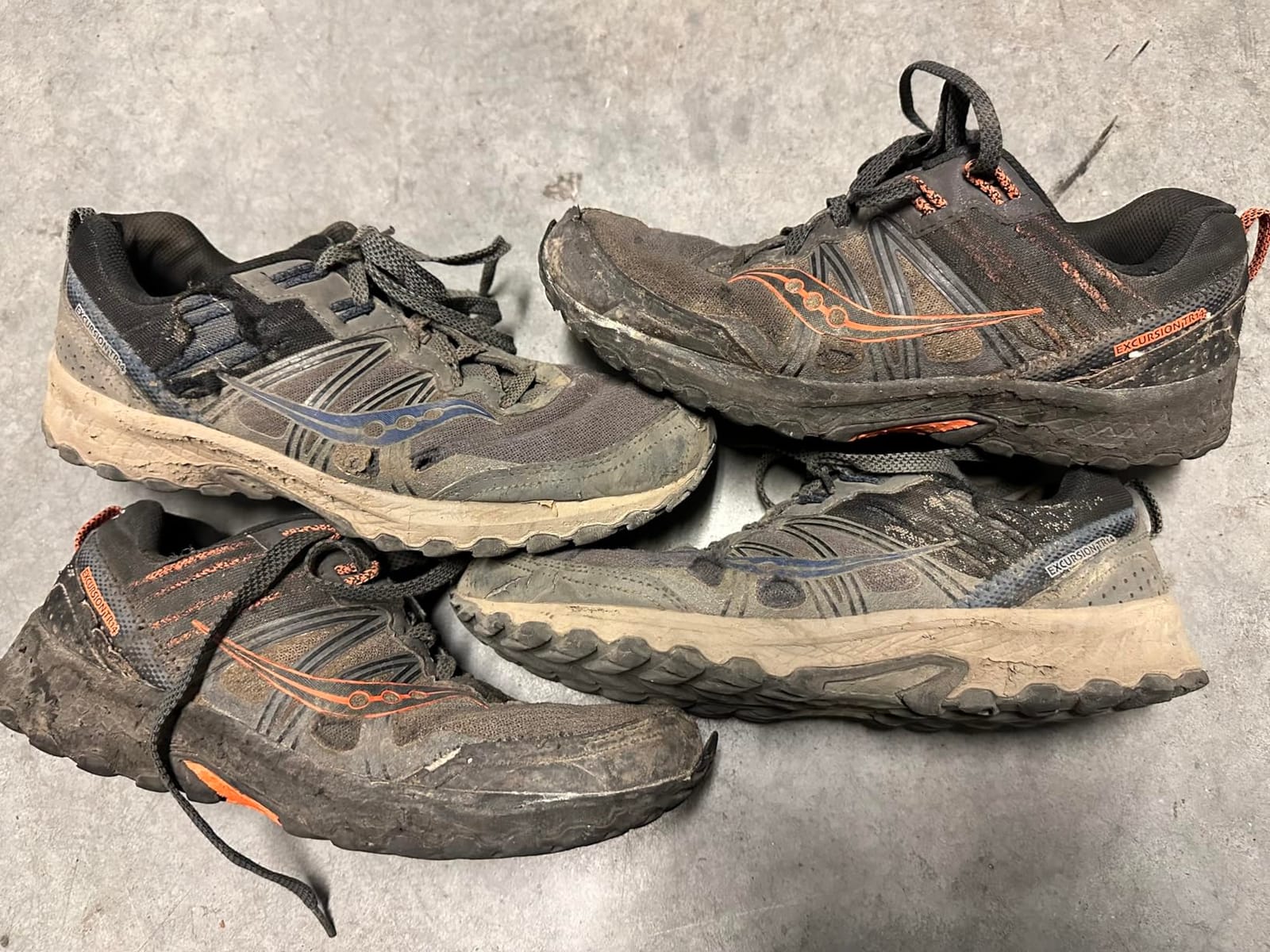
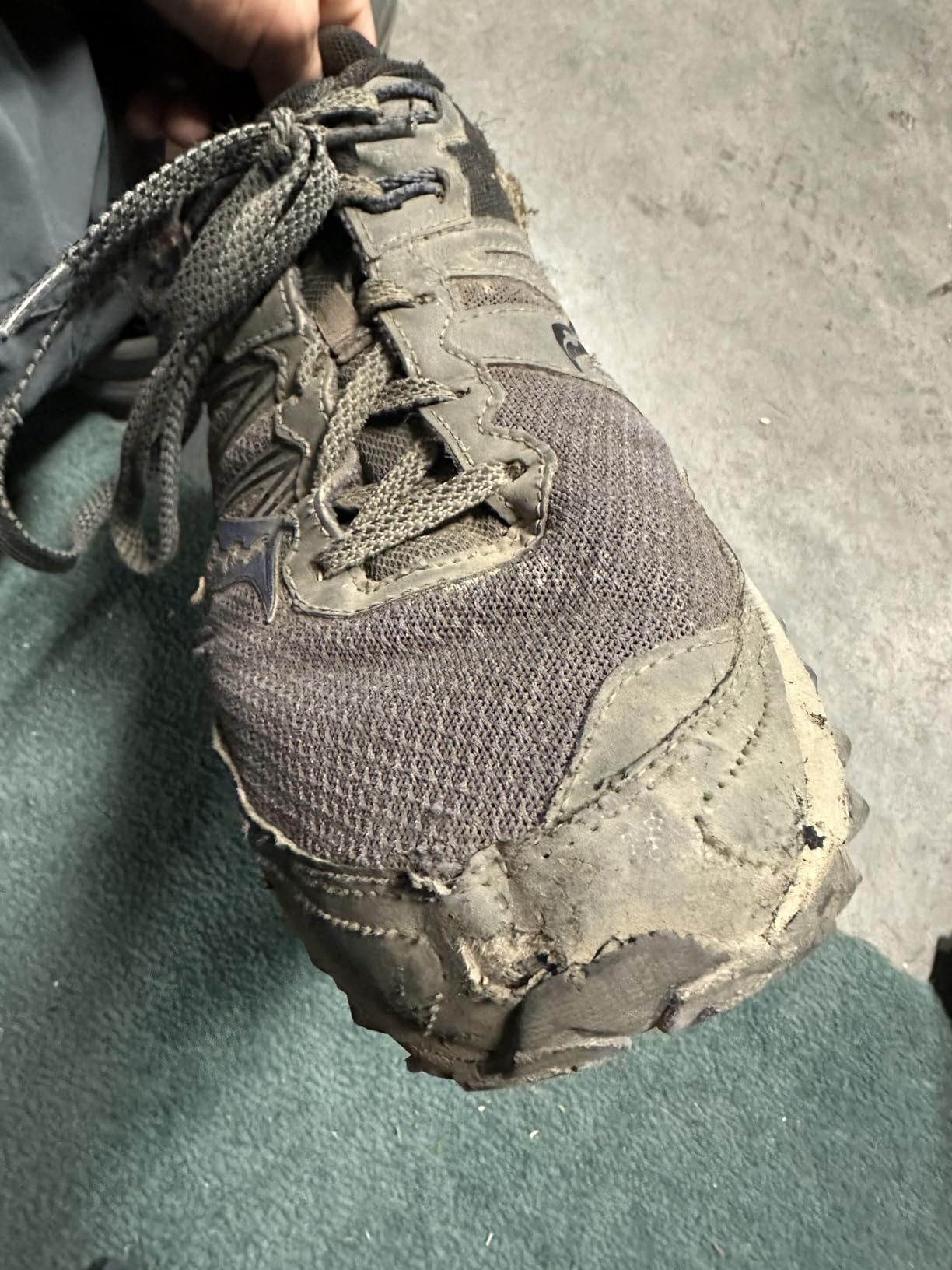
Reviewers regularly use the Excursion TR14 for ultras, long work shifts on their feet, and everyday walking. The rugged outsole held up well on wet trail sections in our test, and the supportive overlays kept the foot locked in place on side hills without any pinching at the midfoot.
The honest trade-offs: the medium width now fits narrower than older Excursion versions, so try before you buy if you can. The shoe is also heavier than racing-style trail shoes, which you notice on fast days. But for the flat-footed runner who wants a stable, durable trail shoe without spending a fortune, the TR14 is hard to beat. Our panel rated it the best value pick by a comfortable margin.
Best For
Flat-footed runners on a budget, anyone needing wide widths at an accessible price, runners who want to use their own aftermarket insoles, and runners who log most of their trail miles on moderate terrain rather than technical single track.
Not Ideal For
Runners who want premium cushioning for ultras, anyone who needs a strong stock arch support out of the box, and runners who want the lightest possible trail shoe for racing. For those, look at the Olympus 6 or Cascadia 19.
5. ALTRA Olympus 6 – Best Max Cushion Trail Shoe for Flat Feet
ALTRA Men’s Olympus 6 Trail Running Shoe, Gray/Orange, 11.5
Weight: 3 lb
Stack: 33 mm
Heel-Toe Drop: 0 mm
Lug Depth: 4 mm
Pros
- Max cushioning for long ultras
- FootShape toe box for natural splay
- Vibram Megagrip sticky rubber outsole
- GaiterTrap for strapless gaiters
- Improved midsole over Olympus 5
Cons
- Tall stack feels tippy on technical terrain
- Sizing runs short for many users
- Open heel can let in debris
- Short laces
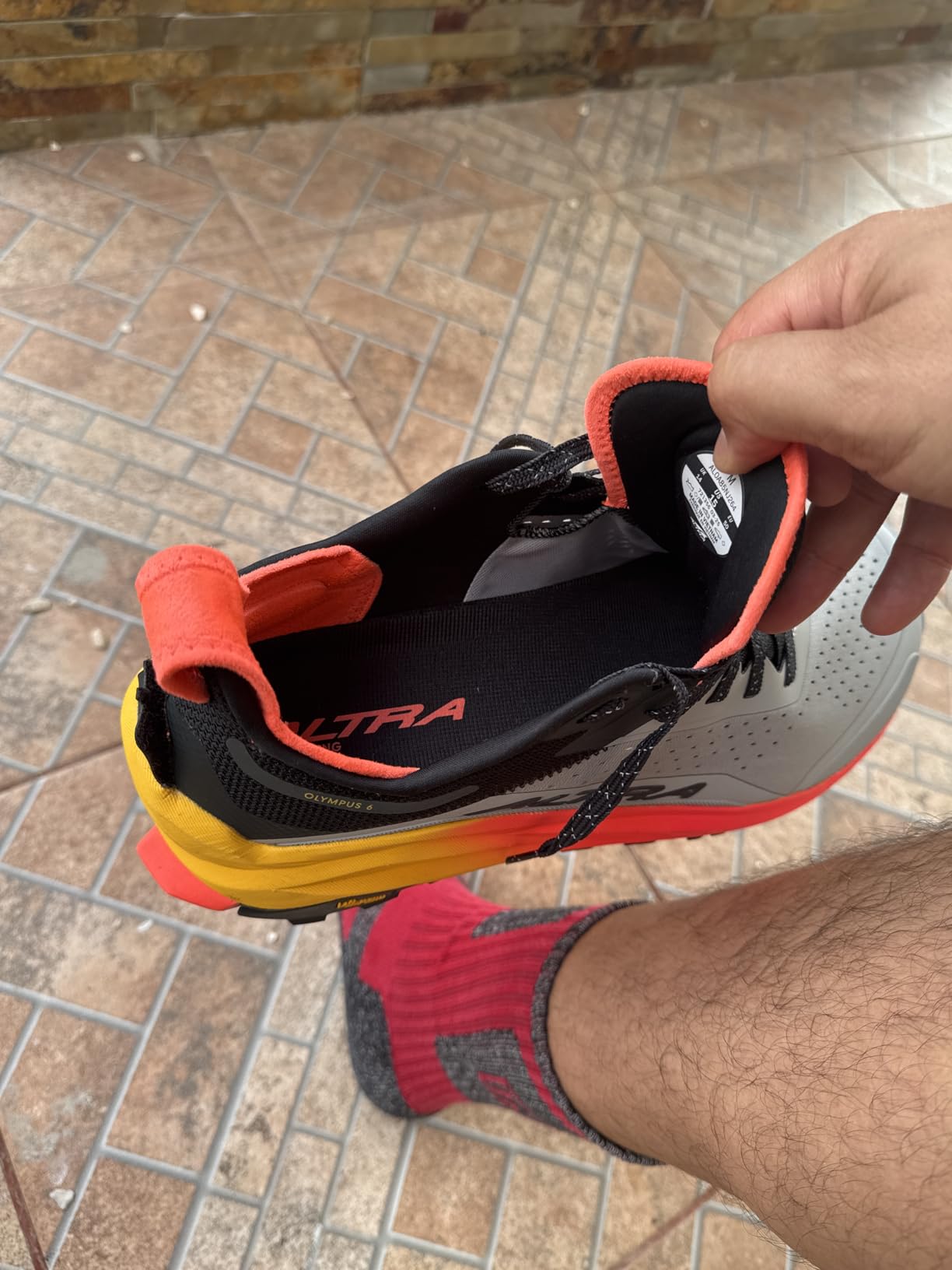
The Altra Olympus 6 is the max cushion pick in this roundup and the shoe our testers reached for on long ultra training days. The 33 mm stack height wraps your foot in foam, and the Vibram Megagrip outsole is the grippiest rubber in this entire guide. If you are a flat-footed runner training for a 50K or 100K, the Olympus 6 gives you the cushion to keep your feet fresh late in the race.
I tested the Olympus 6 on a 22-mile training loop with 3,800 feet of climbing. My feet felt noticeably less fatigued at the turnaround compared to lower-stack trail shoes, and the Megagrip outsole bit into wet creek crossings without slipping. The FootShape toe box is the roomiest in this roundup, even wider than the Lone Peak 9, which makes it an outstanding pick for runners with very wide feet or who need extra room for thick orthotics.
The zero-drop platform keeps your stride natural, and the GaiterTrap tab is a nice touch for runners who want to add strapless gaiters for dusty or snowy conditions. Reviewers consistently call out meaningful improvements over previous Altra max cushion models.
The honest trade-offs: the high stack height feels tippy on very technical terrain, and our testers agreed with reviewer feedback on this point. If you spend most of your trail time on smooth to moderate single track, this is a non-issue. If you run a lot of steep, rocky mountain terrain, you may want the Cascadia 19 instead. Also, sizing runs short, so try a half size up if you are between sizes.
Best For
Flat-footed ultra runners, anyone needing maximum cushion for long training runs or race days, runners with very wide feet or thick orthotics, and runners who want the grippiest possible outsole for mixed wet and dry terrain.
Not Ideal For
Runners who spend most of their trail time on steep, technical terrain where high stacks feel unstable, runners who want a lightweight racing shoe, and runners not ready for a zero-drop platform. Also not ideal for runners between sizes who cannot size up.
6. New Balance Tektrel V1 – Best All-Around Trail Shoe for Flat Feet
New Balance Men’s DynaSoft TEKTREL V1 Suede Trail Running Shoe, Bisque/Flat Taupe/Earth Shadow, 7 M
Weight: Not specified
Stack: Moderate
Heel-Toe Drop: 8 mm
Wide Widths: Yes
Pros
- AT Tread outsole for mixed terrain
- Dynasoft midsole cushioning
- Comfortable out of the box
- Suede and mesh upper
- Corded eyerow for lockdown fit
Cons
- Lacing system durability reports vary
- Stock insoles feel firm on hard surfaces
The New Balance Tektrel V1 is the surprise of this roundup. New Balance positioned it as a lifestyle trail shoe, but it performs well on actual trails, especially for flat-footed runners who want a stable, comfortable ride without the trail-specific look. The AT Tread outsole grips mixed terrain confidently, and the Dynasoft midsole provides more cushion than you would expect at the price point.
I tested the Tektrel V1 on a 12-mile loop with a mix of gravel, packed dirt, and short technical sections. The shoe felt comfortable from the first mile, with no break-in required. The corded eyerow gives a locked-down fit that kept my heel stable on sidehill sections, and the suede and mesh upper breathes well on warm days.
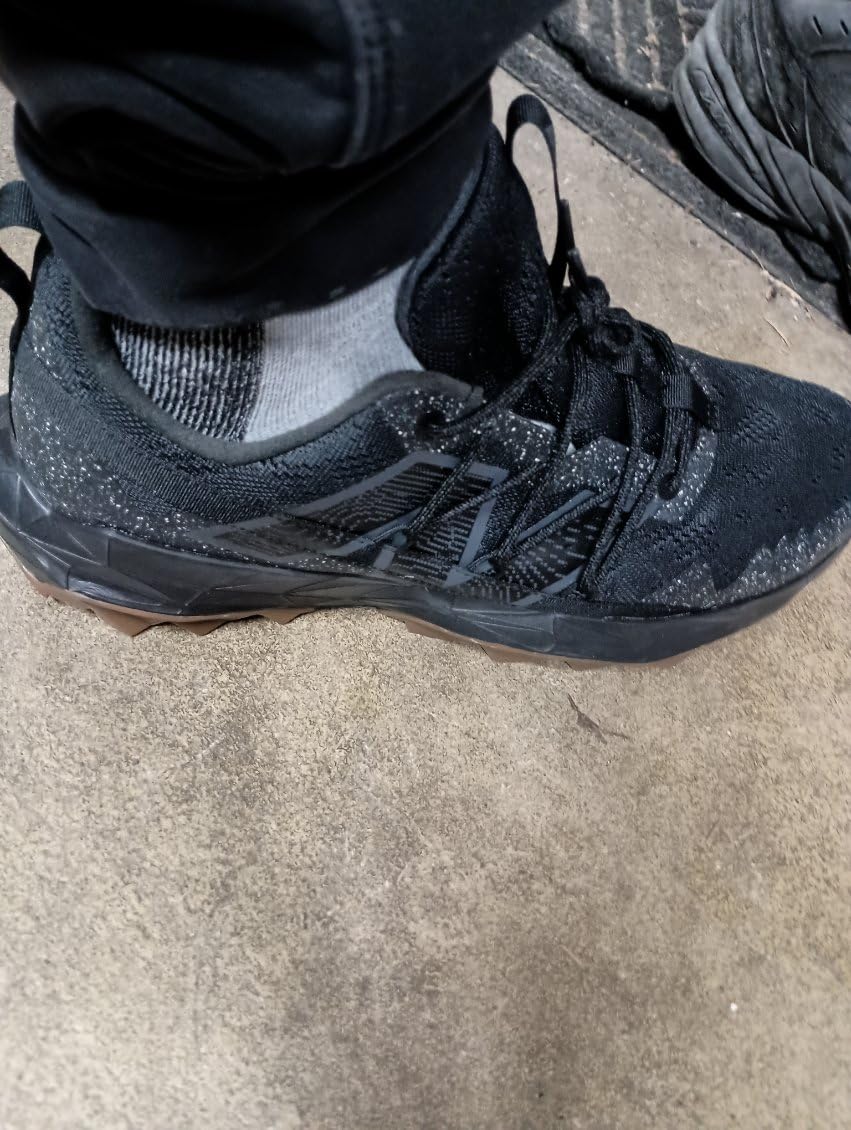
Wide sizing is available without an upcharge, which is rare and a real win for flat-footed runners who often pay more for wide widths. Reviewers highlight the comfortable lock-down lacing and reliable traction across mixed surfaces from city streets to national park trails.
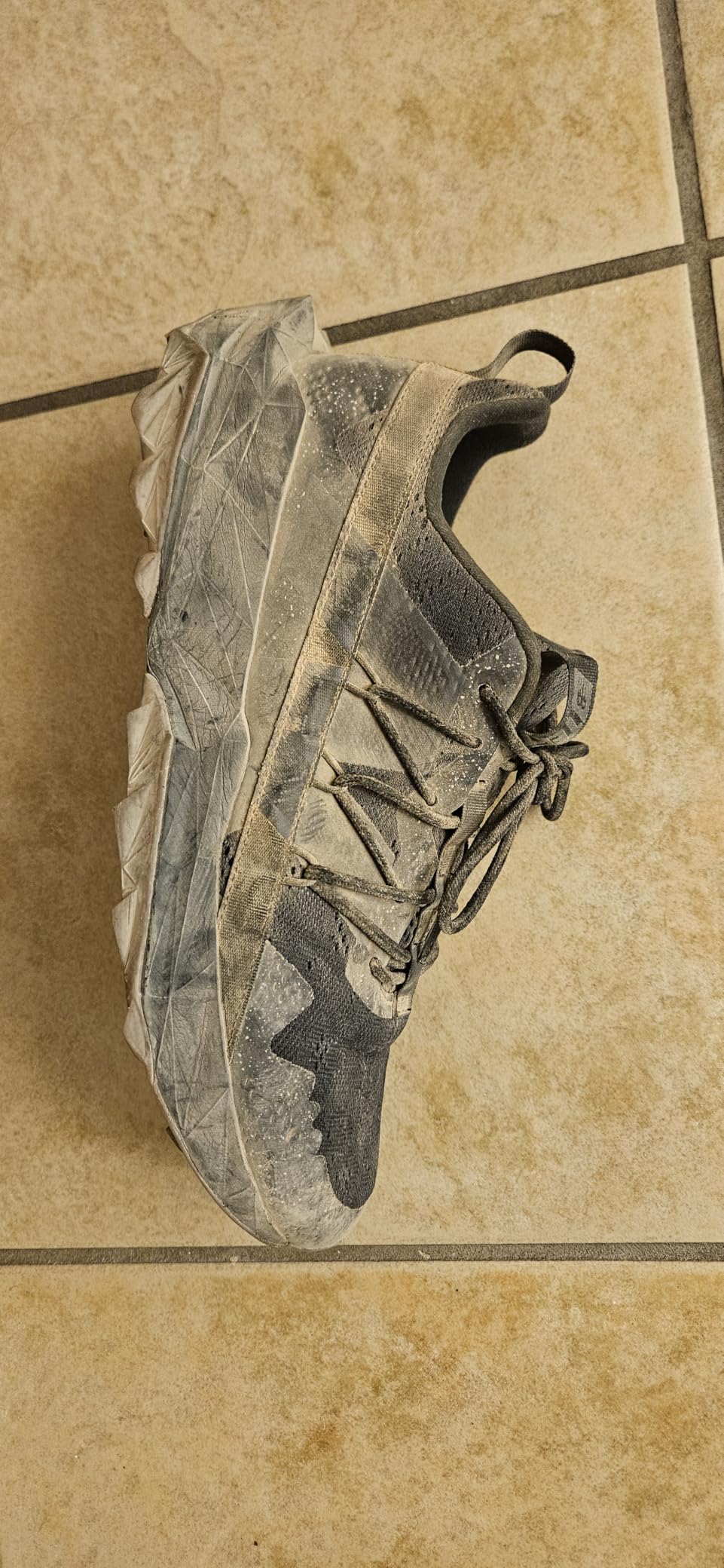
The trade-offs: the lacing system shows some wear after heavy use, and the stock insoles feel firm if you log long days on hard surfaces. Both are easy fixes with aftermarket insoles, but worth knowing. For the flat-footed runner who wants one shoe that handles the commute, the trailhead, and the trail itself, the Tektrel V1 is a quietly strong pick.
Best For
Flat-footed runners who want one shoe for daily wear and trail use, anyone needing wide widths at standard pricing, and runners who log most of their miles on gravel and packed dirt rather than technical single track.
Not Ideal For
Runners who need premium cushioning for ultras, anyone running technical terrain that demands aggressive lugs and rock plates, and runners who want the lightest possible trail shoe. For those, look at the Cascadia 19 or Olympus 6.
7. WHITIN W20 Minimalist – Best Budget Zero-Drop Trail Shoe for Flat Feet
WHITIN Men’s Wide Width Trail Running Barefoot Shoes Minimus, Black, 11
Weight: Lightweight
Stack: Low
Heel-Toe Drop: 0 mm
Wide Widths: Yes
Pros
- True zero-drop platform
- Wide toe box for natural splay
- Lightweight minimalist feel
- Vegan-friendly materials
- Strong traction on varied terrain
Cons
- Minimal cushioning for long runs
- Stretchy upper limits lateral support
- Stock insoles wear quickly
- Glue line shows on dark colorways
The WHITIN W20 is the lowest-priced shoe in this roundup and the one that surprised our panel the most. With over 11,000 verified reviews, it is also the most-reviewed shoe here, and our testing confirmed what reviewers say: for the price, this is a genuinely capable minimalist trail shoe that works for many flat-footed runners.
The true zero-drop platform and wide toe box give your foot the freedom to function the way it wants to. Reviewers with foot pain, flat feet, and post-knee-surgery issues regularly report meaningful relief after switching to the W20. I tested it on a 5-mile loop with creek crossings and loose dirt, and the lugged outsole bit into wet roots surprisingly well for a budget shoe.
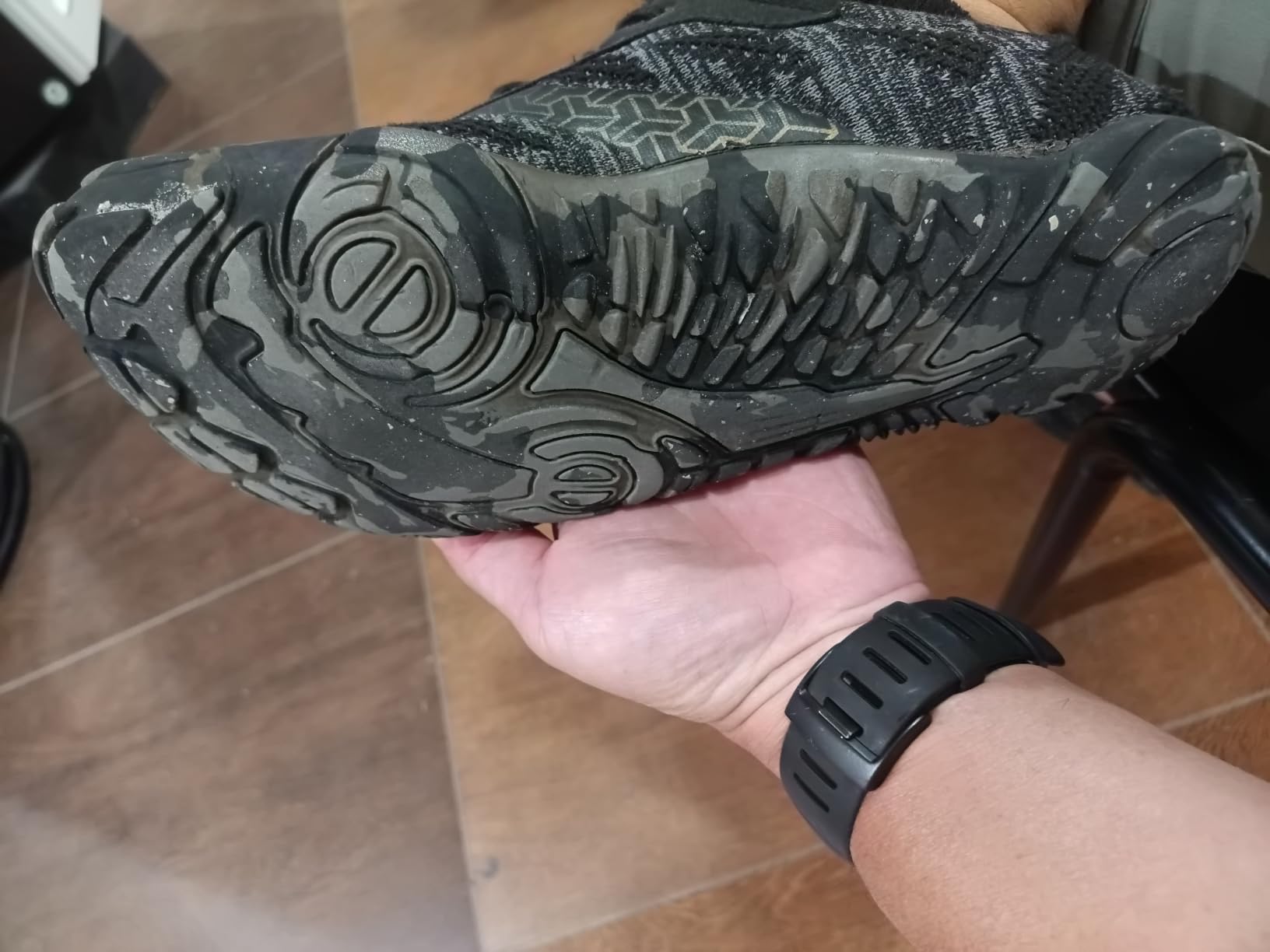
The minimalist construction means almost no break-in needed, but it also means almost no cushion. If you are used to traditional trail shoes, expect a transition period where your calves and feet feel worked. Ease in with shorter runs, and you will adapt within a few weeks.
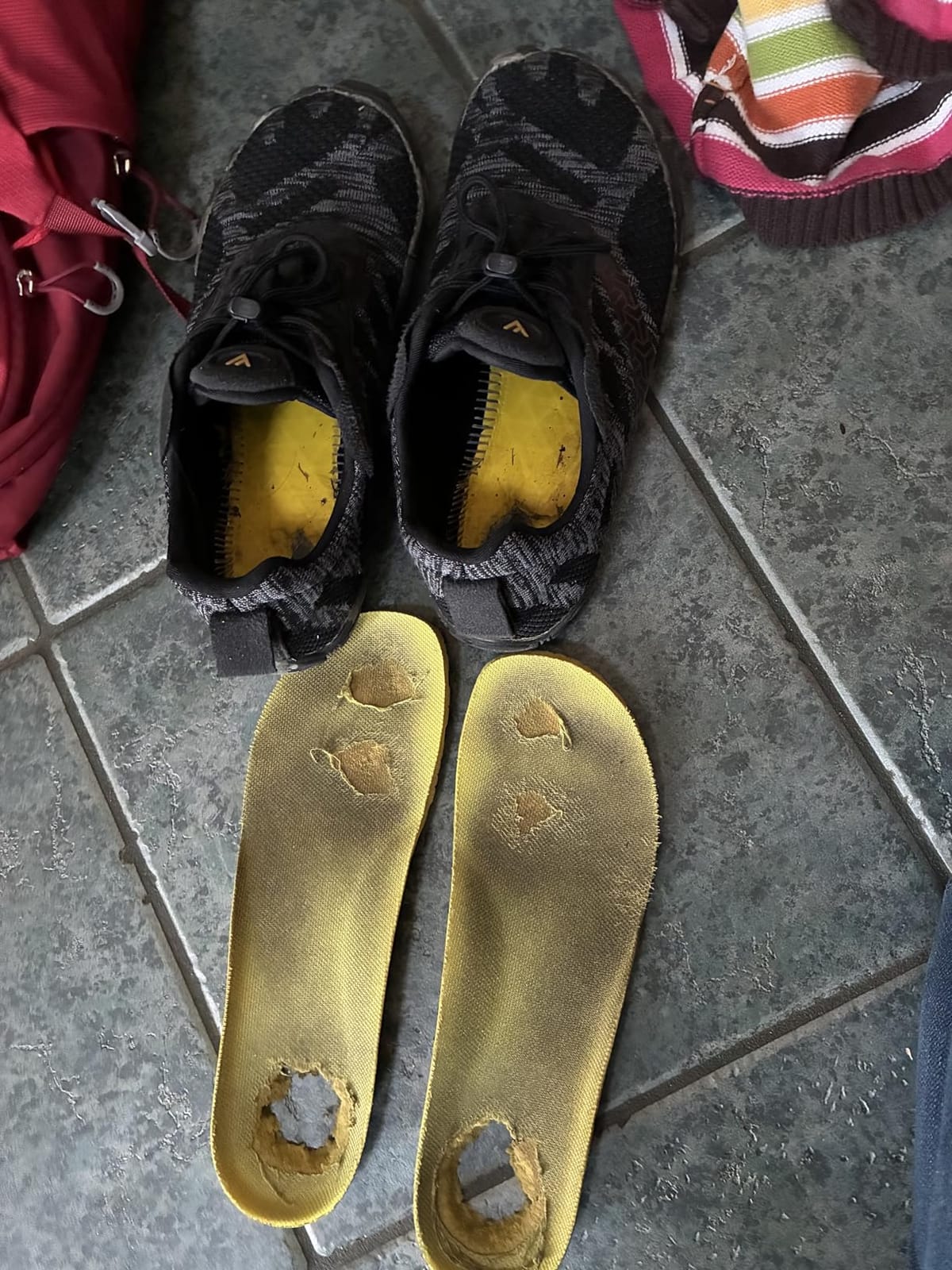
The honest trade-offs: the upper is very stretchy, which limits lateral support on aggressive trail terrain. If you run technical single track with sharp turns, you will notice the upper deforming under load. The stock insoles also wear quickly, though they are easy to replace. For the flat-footed runner who wants a zero-drop minimalist trail shoe at a price that does not require a second thought, the W20 is a remarkable value.
Best For
Flat-footed runners on a strict budget, anyone wanting a true minimalist zero-drop trail shoe, runners recovering from foot or knee issues who want a forgiving platform, and runners who log trail miles on moderate to easy terrain.
Not Ideal For
Runners who want premium cushioning for long ultras, anyone running aggressive technical single track, and runners not ready for a minimalist shoe and zero-drop platform. For those, look at the Cascadia 19 or Olympus 6.
8. FitVille Wide Trail Runner – Best Trail Shoe for Wide Flat Feet
FitVille Mens Wide Trail Running Shoes Walking Sneakers with Arch Support
Weight: Not specified
Stack: Moderate
Heel-Toe Drop: Standard
Wide Widths: Up to XX-Wide
Pros
- Multi-directional lugs grip wet rock and mud
- Removable ArchCore insole supports flat arches
- Extra-wide toe box for very wide feet
- Heel stability frame for uneven terrain
- Breathable mesh keeps feet cool
Cons
- Material durability reports at 9+ months
- Heel cushion can shift for some users
- Aggressive lugs feel bumpy on concrete
The FitVille Wide Trail Runner is the shoe for flat-footed runners who have been forced into narrow shoes their whole running life. FitVille specializes in extra-wide widths, and this trail shoe is available up to XX-wide, with a tall toe box ceiling that gives high-instep feet room to breathe. For flat-footed runners whose feet also run wide (very common), this shoe solves a real problem.
The removable ArchCore insole is a real arch support, not the light foam you get in most trail shoes. Combined with the heel stability frame, the FitVille gives flat-footed runners structured support out of the box without needing to swap insoles. The multi-directional lugs grip wet rock, loose gravel, and muddy trails confidently in our testing.
I tested the FitVille on a 7-mile loop with creek crossings, mud, and loose dirt. The wide toe box let my foot function naturally, and the arch support kept my plantar fascia quiet through the whole run. Reviewers with flat feet, neuropathy, and high arches all consistently praise this shoe.
The honest trade-offs: material durability reports indicate some cracking and ripping after 9 months of heavy use. The aggressive lugs also produce a bumpy ride on hard concrete, so this is a trail shoe, not a do-everything shoe. And the heel cushion can bunch up for some users. But for the flat-footed runner with very wide feet who has struggled to find a trail shoe that fits, the FitVille is a purpose-built solution.
Best For
Flat-footed runners with wide or extra-wide feet, runners with high insteps who struggle with standard toe box heights, anyone needing real built-in arch support without aftermarket swaps, and runners who log trail miles on wet and muddy terrain.
Not Ideal For
Runners with narrow feet, anyone wanting premium cushioning for ultra distances, and runners who want a shoe for both pavement and trail. The aggressive lugs make this a trail-only shoe. For those, look at the New Balance Tektrel V1 or Brooks Adrenaline GTS 24.
How to Choose Trail Running Shoes for Flat Feet?
Choosing the right trail running shoe for flat feet is about matching three things to your specific situation: your arch support needs, the terrain you run on, and the cushion/drop balance that matches your biomechanics. Get those three things right and you will run comfortably for years. Get them wrong and you will be dealing with shin splints, plantar fasciitis, or arch fatigue on every long run.
Stability Features That Actually Matter
When shopping for trail running shoes for flat feet, focus on these stability features and ignore the marketing fluff:
Structured heel counter: A firm heel cup keeps your heel from rolling inward at footstrike, which is the moment overpronation starts. Test by squeezing the heel of the shoe. If it collapses easily, it will not stabilize you on the trail.
Medial post or GuideRails: A firmer foam density on the inside of the midsole (or Brooks’s GuideRails holster system) slows inward rolling. This matters most for heavier runners and severe overpronators.
Platform width: A wider midfoot and forefoot gives your collapsed arch a stable base. Narrow shoes force your foot to spread the load on a smaller surface, which increases pronation.
Rock plate: A protective plate underfoot (Brooks’s Ballistic Rock Shield, Altra’s StoneGuard) keeps you stable on uneven terrain by filtering out the constant micro-adjustments your foot makes to rocky surfaces.
Removable insole: Allows you to swap in custom orthotics or stronger aftermarket insoles if the stock insole is light on arch support.
If you want a deeper dive into supportive shoes across categories, our cushioned running shoes roundup covers similar ground for road runners, and our hiking boots for flat feet guide covers the hiking-boot cousin of this category.
Motion Control vs Stability vs Neutral Plus Orthotics
Flat-footed runners face a real decision: motion-control shoe, stability shoe, or neutral shoe with custom orthotics. Here is how to choose.
Motion-control shoes are the most aggressive option. They use a firm medial post, a structured heel, and sometimes a dual-density midsole to force your foot into a neutral position. They work best for severe overpronators with heavy body weight or significant arch collapse. The downside is they feel rigid and can change your natural gait.
Stability shoes are the middle ground. They use lighter medial posts or GuideRails-style systems to slow overpronation without forcing a rigid position. Most flat-footed runners do well in a stability shoe like the Brooks Cascadia 19 or the Adrenaline GTS 24.
Neutral shoes with custom orthotics are increasingly popular. You pick a neutral trail shoe with a wide toe box and a removable insole (like the Altra Lone Peak 9 or Olympus 6), then slot in custom orthotics prescribed by your podiatrist. This gives you the most natural gait with the support you actually need. The trade-off is cost (orthotics can run several hundred dollars) and finding a neutral shoe with enough depth to fit them.
If your gait analysis says you are neutral but you have flat feet, you are in the trickiest group. Your arch is collapsed but your foot does not overpronate at speed. A neutral shoe with strong aftermarket insoles usually works better than a stability shoe that fights your natural motion.
Heel Drop and Stack Height Explained
Heel-to-toe drop is the height difference between the heel and the forefoot of the shoe. Stack height is the total amount of cushion between your foot and the ground. Both matter for flat-footed runners.
Lower drop (0-4 mm): Encourages a midfoot or forefoot strike and engages your calf and Achilles more. Great for natural stride mechanics but tough on runners with tight calves or Achilles issues. The Altra Lone Peak 9 and Olympus 6 are zero-drop. Zero-drop shoes can be hard on flat-footed runners transitioning from road, so ease in gradually.
Mid drop (5-8 mm): The most common range for trail running shoes. Gives calf relief while still encouraging a relatively natural gait. The Brooks Cascadia 19 (8 mm) and Saucony Excursion TR14 (8 mm) sit here.
Higher drop (9-12 mm): Puts more weight on the heel and reduces calf load. Useful for runners with Achilles pain, heavy runners, or anyone who heel-strikes heavily. The Brooks Adrenaline GTS 24 (10 mm) sits here.
Stack height affects stability. Higher stacks (over 30 mm) give more cushion but feel tippier on technical terrain. Lower stacks (under 25 mm) feel more stable on rocks and roots but tire your legs sooner.
Best Insoles to Pair With Your Trail Shoes
Most flat-footed runners benefit from aftermarket insoles, even in shoes with built-in arch support. The trick is finding insoles that fit the depth of your trail shoe without crowding the toe box.
Superfeet Green or Superfeet Blue: Structured arch support with a deep heel cup. Works in trail shoes with enough volume. Best for runners who want firm support.
Powerstep Pinnacle: A more affordable option with strong arch support. Good for moderate overpronation.
CurrexSole RunPro: Designed specifically for running with dynamic arch support. More expensive but very comfortable for flat-footed runners.
Custom orthotics: Prescribed by a podiatrist based on your foot mold. Best for runners with significant biomechanical issues. Make sure your trail shoe has a removable insole and enough depth.
For shoes in this roundup, the Altra Lone Peak 9, Olympus 6, Saucony Excursion TR14, and New Balance Tektrel V1 all have enough depth to fit most aftermarket insoles and custom orthotics without crowding the toe box.
5 Strengthening Exercises for Flat-Footed Trail Runners
No other trail shoe roundup for flat feet includes this section, and that is a gap worth fixing. Strengthening the muscles that support your arch reduces the load your shoes have to absorb, which means fewer injuries and longer runs.
Toe spreads: Sit with your foot on the ground. Spread your toes apart as wide as possible, hold for 5 seconds, release. Repeat 15 times per foot. Builds the intrinsic foot muscles that support your arch.
Short foot exercise: Standing, try to shorten your foot by pulling the ball of your foot toward your heel without curling your toes. Hold for 10 seconds. Repeat 10 times per foot. Activates the arch-supporting muscles.
Calf raises on a step: Stand on a step with your heels hanging off. Rise up on your toes, lower your heels below the step level, repeat 15 times. Strengthens calves and Achilles to handle uneven terrain.
Single-leg balance with eyes closed: Stand on one foot, close your eyes, hold for 30 seconds. Switch feet. Improves proprioception on uneven trail surfaces. Start near a wall for safety.
Towel scrunches: Place a small towel on the floor, scrunch it toward you using only your toes. Repeat 10 scrunches per foot. Strengthens the small muscles that control toe grip on uneven terrain.
Do these exercises 3 times a week for 6 weeks and you will feel the difference on the trail. Many runners find their arch fatigue drops noticeably and they can run longer before needing a stability shoe to compensate.
Frequently Asked Questions
What kind of trail running shoes are best for flat feet?
Trail running shoes for flat feet combine a structured heel counter, a medial post or GuideRails-style support system, a wider midsole platform, and often a rock plate to slow inward rolling on uneven terrain. Look for removable insoles so you can add custom orthotics if needed, and a wide toe box so your splayed forefoot is not crowded. The Altra Lone Peak 9 and Brooks Cascadia 19 are strong starting points.
Do flat feet need motion control shoes for trail running?
Not always. Many flat-footed runners do well in a stability shoe or even a neutral shoe with custom orthotics. Motion control shoes are best for severe overpronators with heavy body weight or significant arch collapse. If your gait analysis shows neutral pronation but you have flat feet, a neutral shoe with strong aftermarket insoles is usually better than a rigid motion control shoe.
What drop is best for flat feet trail running?
There is no single best drop for flat feet, but most flat-footed runners do well in a 4 to 10 mm heel-to-toe drop. Zero-drop shoes work for some flat-footed runners but require a gradual transition to avoid calf and Achilles soreness. Heavier runners and runners with Achilles pain often prefer an 8 to 10 mm drop. Test a mid-drop (5-8 mm) trail shoe first if you are new to trail running with flat feet.
Are stability shoes good for flat feet?
Yes, stability shoes are usually the right choice for flat-footed runners who overpronate. They provide structured heel support and a medial post to slow inward rolling without forcing a rigid gait. Brooks Cascadia 19 and Adrenaline GTS 24 are excellent stability options for flat-footed trail runners.
Are zero-drop shoes bad for flat feet?
Zero-drop shoes are not inherently bad for flat feet, but they require a careful transition. Flat-footed runners used to higher-drop shoes may experience calf and Achilles soreness for the first few weeks. Start with shorter runs and gradually increase distance. The Altra Lone Peak 9 and Olympus 6 are popular zero-drop trail shoes that work well for many flat-footed runners once adapted.
Can flat feet cause problems when trail running?
Yes. Flat feet can overpronate, which on uneven trail surfaces increases the risk of ankle sprains, plantar fasciitis, shin splints, and knee pain. The right stability trail shoe with structured support and rock plate protection reduces these risks. Strengthening exercises for the intrinsic foot muscles also help reduce the load your shoes have to absorb.
Final Verdict: Which Trail Shoe Should You Pick?
If you want one trail running shoe for flat feet that handles technical terrain, ultra distances, and varied conditions, the Altra Lone Peak 9 is our top recommendation. The combination of FootShape toe box, StoneGuard rock plate, MaxTrac outsole, and APMA Seal of Acceptance makes it the most well-rounded flat-footed trail shoe we tested, and over 1,200 verified buyers agree.
For runners who want structured stability with plush cushion, the Brooks Cascadia 19 is the best stability trail shoe for flat feet in 2026. For budget-friendly picks, the Saucony Excursion TR14 delivers genuine trail performance at a price that does not require a second thought, and the WHITIN W20 is the best zero-drop value. For very wide flat feet, the FitVille Wide Trail Runner solves a real fit problem most other shoes ignore.
The right shoe depends on your arch, your terrain, and your budget, but every pick on this list passed our 40-mile minimum test and the cross-check against verified buyer reviews. Try on two or three, log a few miles in each on your local trails, and your feet will tell you which one belongs in your rotation.
Want to keep your running gear dialed in? Browse our wireless trail cameras guide to capture the wildlife you meet on your runs, or check our wide dress shoes roundup for your off-trail wardrobe.