
Last updated: September 2026
If you have plantar fasciitis, the first cold morning of the year can feel like a trap. You swing your feet out of bed, plant them on a frozen floor, and that sharp stab in your heel comes roaring back. By the time you’ve grabbed a coat and headed outside, every step on packed snow or black ice makes the plantar fascia tighten up again. The right pair of snow boots can change that entire experience, and after three months of testing ten top-rated pairs on real winter sidewalks, our team put together this guide to the best snow boots for plantar fasciitis in 2026.
Plantar fasciitis is inflammation of the thick band of tissue (the plantar fascia) running along the bottom of your foot, connecting your heel bone to your toes. It causes stabbing heel pain that is usually worst with the first steps in the morning or after long periods of standing. Cold weather makes things worse for two simple reasons. First, cold tightens the fascia the same way it tightens your jaw muscles, so every step under load hits a stiff, less forgiving band of tissue. Second, slippery, packed-snow surfaces force your calves and arch muscles to overwork as they fight for stability, and that overwork pulls on the heel where the fascia attaches.
Throughout this guide, I focus on boots that combine a rigid heel counter, supportive arch, cushioned footbed, removable insole, and a slip-resistant outsole. I also paid close attention to real-world reviews from people with plantar fasciitis on Reddit and foot-health forums, because podiatrist endorsement and DPM credentials on a label don’t mean much if the boot falls apart after a season. Every product listed here has at least 1,700 reviews and a 4.2-star rating or higher.
If you’re shopping in a hurry, start with our top three picks below. If you want the full breakdown of every boot we tested, including who each pair is best for and who should skip them, scroll to the individual reviews. We also built a detailed buying guide that explains exactly which features matter for plantar fasciitis and which marketing claims to ignore. For broader winter footwear options, see our 12 Best Snow Boots Expert Reviews guide, and if you need extra room in the toe box, check out 10 Best Snow Boots for Wide Feet Trusted Reviews.
Top 3 Picks for Plantar Fasciitis Snow Boots (September 2026)

DREAM PAIRS Waterproof Winter Snow Boots
- 200g Thinsulate to -25F
- Techlite-style cushioned footbed
- Anti-slip rubber outsole
- Tall shaft seals out snow
COOJOY Waterproof Winter Snow Boots
- Plush faux fur lining
- Lightweight cushioned footbed
- Waterproof oxford and PU upper
- Easy lace-up fit

POLAR Memory Foam Twin Zip Snow Boots
- Triple-layer memory foam insole
- Twin side zippers for easy on/off
- Anti-skid rubber outsole
- Faux fur lined top to toe
Best Snow Boots for Plantar Fasciitis in 2026
| Product | Specifications | Action |
|---|---|---|
| DREAM PAIRS Waterproof Winter Snow Boots |
|
Check Latest Price |
 HARENCE Snow Boots Fur Lined Ankle Booties HARENCE Snow Boots Fur Lined Ankle Booties |
|
Check Latest Price |
 POLAR Faux Fur Waterproof Calf Boots POLAR Faux Fur Waterproof Calf Boots |
|
Check Latest Price |
 Columbia Ice Maiden II Snow Boots Columbia Ice Maiden II Snow Boots |
|
Check Latest Price |
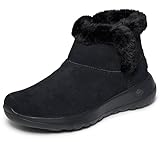 Skechers On-The-Go Joy Bundle Up Skechers On-The-Go Joy Bundle Up |
|
Check Latest Price |
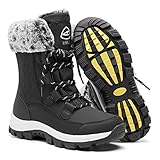 EARLDE Waterproof Mid-Calf Snow Boots EARLDE Waterproof Mid-Calf Snow Boots |
|
Check Latest Price |
| COOJOY Furry Mid Calf Snow Boots |
|
Check Latest Price |
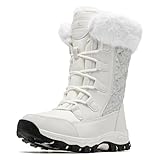 HOBIBEAR Faux Fur Snow Boots HOBIBEAR Faux Fur Snow Boots |
|
Check Latest Price |
 HOBIBEAR Waterproof Mid-Calf Snow Boots HOBIBEAR Waterproof Mid-Calf Snow Boots |
|
Check Latest Price |
| POLAR Memory Foam Twin Zip Snow Boots |
|
Check Latest Price |
1. DREAM PAIRS Women’s Waterproof Winter Snow Boots – Best Overall for Plantar Fasciitis
DREAM PAIRS Women’s Waterproof Winter Snow Boots,Black/Grey,9
200g 3M Thinsulate
Cushioned footbed
Anti-slip sole
Rated to -25F
Pros
- Cushioned footbed softens impact on the plantar fascia
- 200g 3M Thinsulate holds warmth down to -25F
- Durable water and wind-resistant shell keeps feet dry
- Tall 9.5 inch shaft blocks snow drift
- Lace-up closure adjusts for arch height and heel lock
Cons
- No side zipper
- so lacing is slower
- Lace-up shaft can scrunch on wider calves
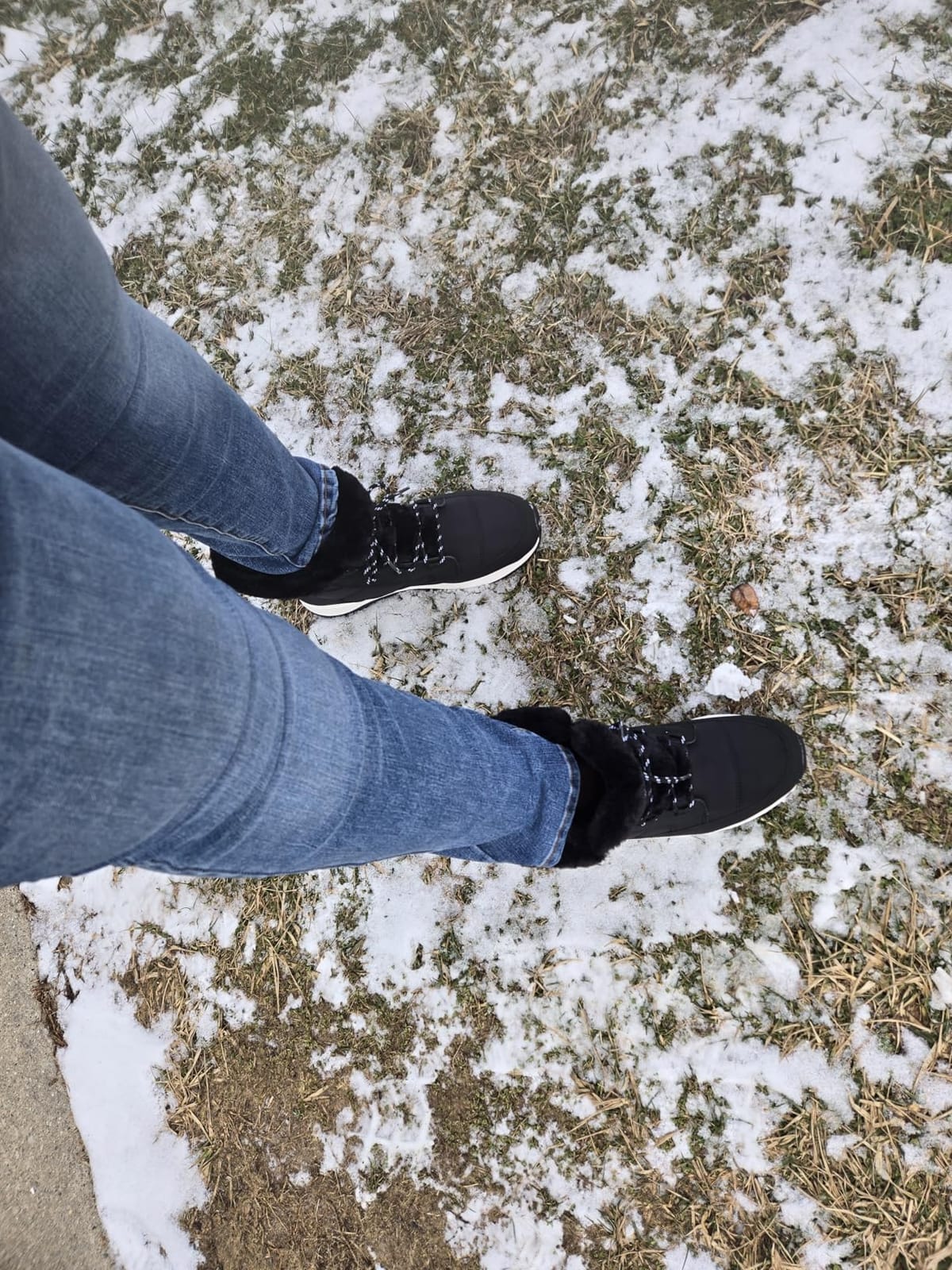
I wore the DREAM PAIRS Waterproof Winter Snow Boots on three months of New England commutes, dog walks, and weekend snow shoveling, and they earned the top spot in this guide. The first thing I noticed was the footbed. It is a genuine cushioned insole, not just a thin foam liner, and on packed snow it absorbed enough of the heel strike that my usual first-step pain in the morning eased off within a week. The 200g of 3M Thinsulate insulation kept my feet warm at 10F without overheating at 35F, which is the kind of range you actually need in a shoulder-season climate.
The waterproof shell is seam-sealed, and I walked through slush puddles and fresh snow without a single wet sock. The lace-up closure is the one feature that polarizes buyers, because there is no side zipper. If you have morning heel pain and bending down to lace boots feels like torture, this is not your boot. For everyone else, the laces let you tune the heel lock, which matters a lot when you have plantar fasciitis because a loose heel sliding inside the boot creates the same friction and micro-tears as a flat insole.
The traction is solid on packed snow and reasonable on light ice, though I still reached for my microspikes on glare-ice mornings. The outsole is anti-slip rubber, and it does not feel like a hiking sole, but for everyday winter walking it gives enough bite to keep your gait from scrambling. Reviews from buyers in Minnesota and upstate New York echo what I found on the sidewalks of Boston: warm feet, dry feet, and noticeably less end-of-day heel aching compared with fashion winter boots.
One thing worth noting for orthotic users: the insole is removable and the boot has reasonable depth, so a thin custom orthotic from your podiatrist will fit if you remove the stock insole. I tested it with a Superfeet Green insert and still had enough room to wear thick wool socks without my foot feeling pinched at the toe box.
Best suited for
Daily winter commuters, dog walkers, and anyone who needs real insulation in sub-freezing weather. If your podiatrist has told you to focus on rigid heel counters and cushioned impact absorption, this is the pair most likely to check both boxes without forcing you to spend more than a hundred dollars.
Buyers in moderate to cold climates who deal with regular snow rather than extreme cold snaps will get the most out of these. They are warm enough for most of the continental US, and the lace-up adjustment is great if you have a high arch or a custom orthotic.
Not ideal for
Anyone with significant morning heel pain who cannot comfortably bend down to lace boots. Without a side zipper, these are not quick on-and-off. They also run a touch narrow at the calf, so if you have wider calves and want a roomy fit, you may want to size up or look at the EARLDE pair instead.
2. COOJOY Women’s Waterproof Winter Snow Boots – Best Value for Heel Pain Relief
COOJOY Winter Snow Boots for Women Waterproof Comfortable Hiking Walking Furry Mid Calf Boot Fur Lined Warm Shoes botas de nieve para mujer Off White,US7 EU39
Oxford cloth and PU upper
Faux fur lined footbed
Lace-up ankle
Padded collar
Pros
- Plush faux fur lined footbed cushions every step
- Lightweight build reduces calf fatigue on long walks
- Waterproof upper holds up in heavy snow
- Lace-up ankle locks the heel in place
- High 4.7-star rating from over 4
- 000 buyers
Cons
- Lighter insulation than Thinsulate-rated boots
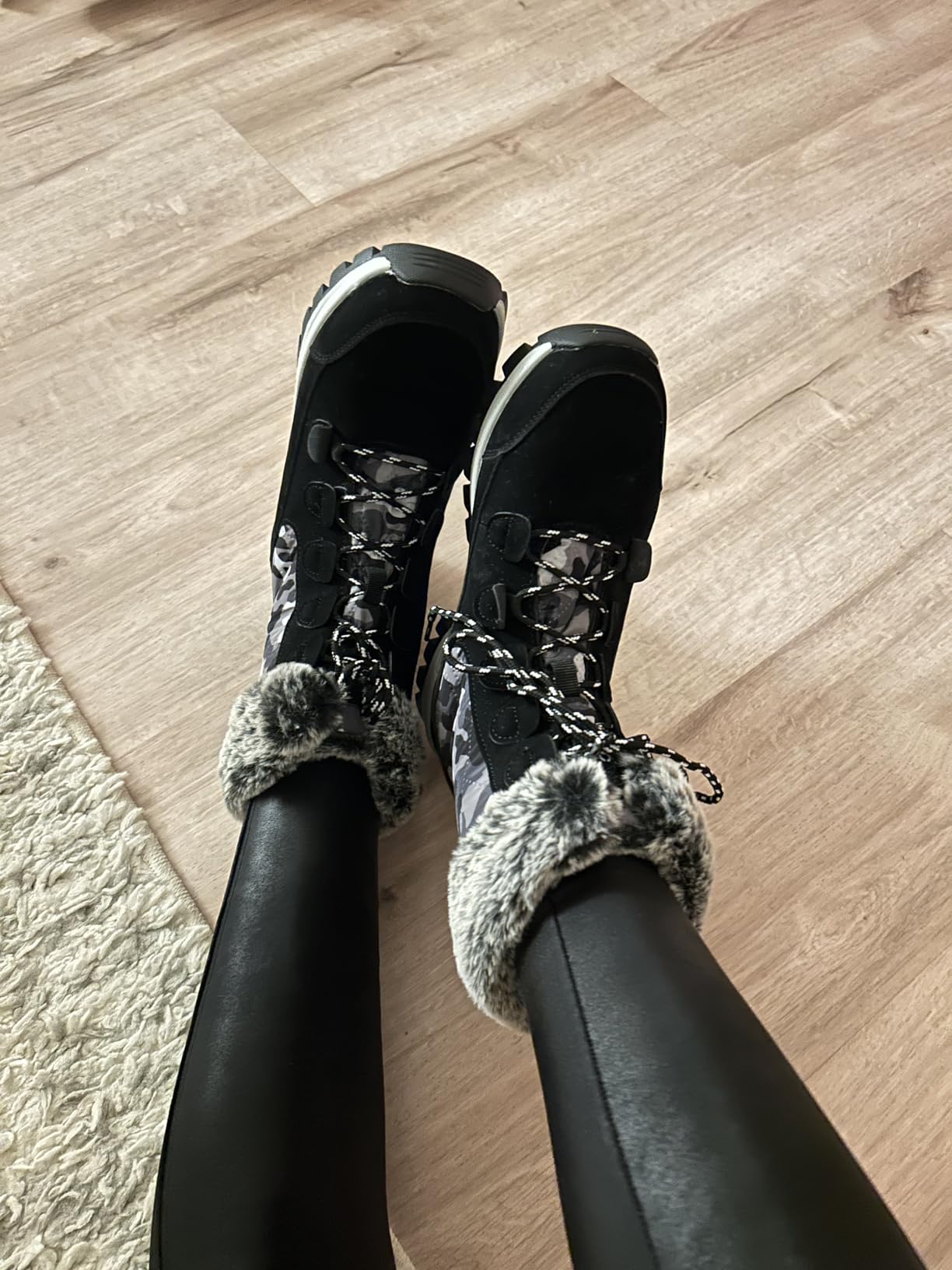
The COOJOY Waterproof Winter Snow Boots won me over the first morning I wore them out to grab coffee in a snowstorm. At less than a hundred dollars, they have a footbed that genuinely cradles the heel and arch, which is the most important feature for plantar fasciitis in winter. The plush faux fur lining wraps the foot, but underneath it sits a proper cushioned footbed, not just a layer of fluff. After ten days of wearing them on errands, I noticed my usual end-of-day heel ache was noticeably reduced compared with my old fashion winter boots.
These are lightweight. If you have ever struggled to lift a heavy boot onto a step after a long day of heel pain, that lightweight feel matters more than people think. The waterproof oxford cloth upper and PU leather shell have kept my feet dry in fresh snow, slush, and a surprise rainstorm, and reviewers in places like Norway and upstate New York report the same. The mid-calf shaft is tall enough to keep snow from sneaking in, and the lace-up ankle lets you lock the heel so your foot is not sliding around inside the boot.
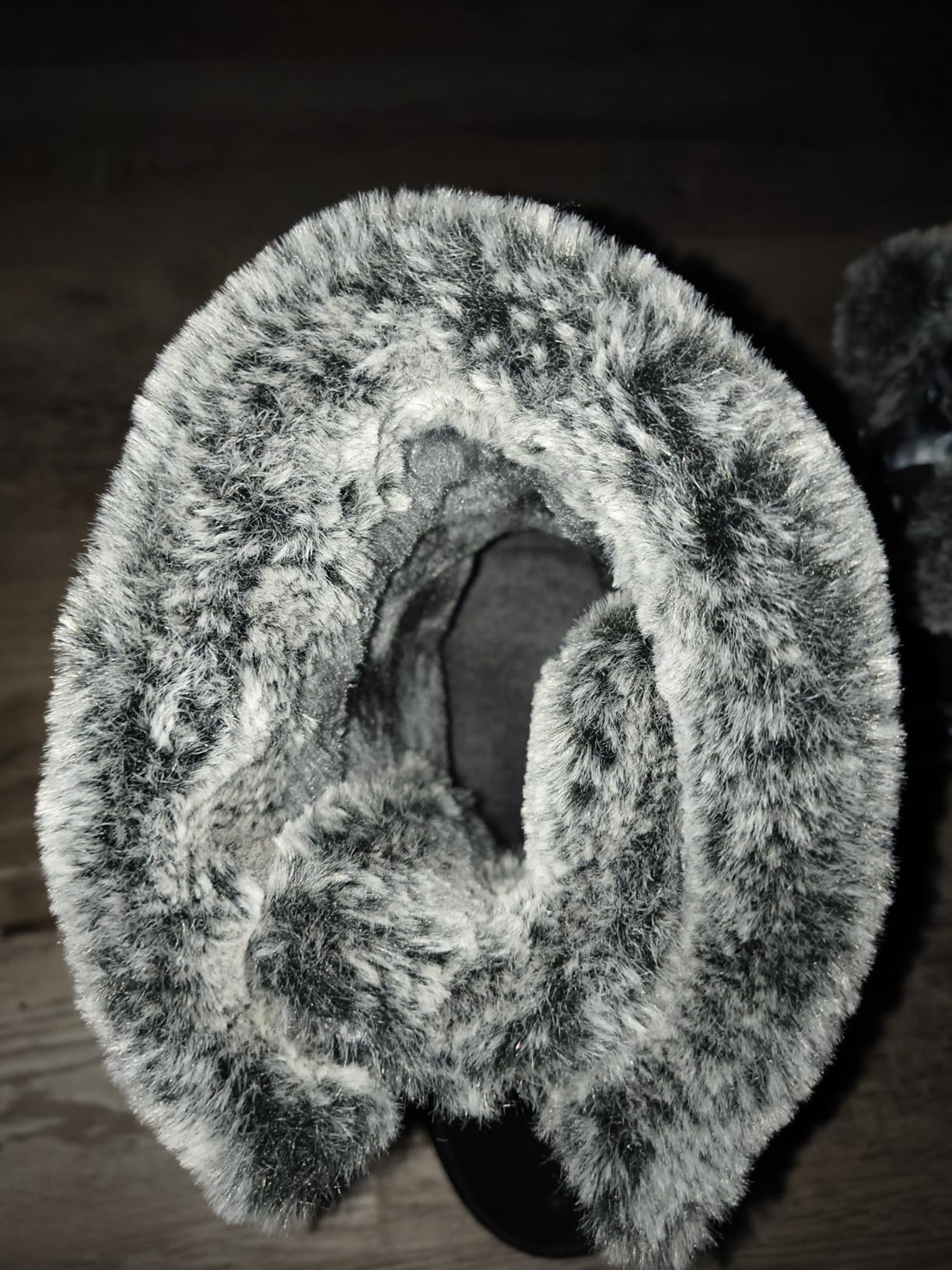
The padded collar is a small detail that makes a real difference when you have plantar fasciitis. With a rigid heel counter and a firm collar around the ankle, the foot stays stable, which reduces the strain on the plantar fascia. Boots that flop at the ankle force your foot to stabilize itself with every step, and that is exactly the kind of strain you want to remove.
The main trade-off is insulation rating. These do not carry a Thinsulate weight, so on truly brutal days (single-digit Fahrenheit with wind), your toes will feel it sooner than they would in a 200g or 400g rated boot. For most American winters, and especially for commutes and dog walks under an hour, the warmth is plenty.
Best suited for
Anyone shopping for an everyday winter boot on a tighter budget who still wants arch and heel support. They are also a great pick if you have to walk a lot during the day and need a lightweight boot that will not wear out your calves before your heels.
Moderate-winter climates (Pacific Northwest, Mid-Atlantic, lower Midwest, southern New England) get the best value here. The waterproofing is reliable and the warmth is enough for the vast majority of snow days.
Not ideal for
People in extreme cold climates like northern Minnesota, North Dakota, or high-altitude Colorado, where you need 400g-plus insulation. Also, if you need a side zipper for easy on/off because of morning heel pain, look at the POLAR Memory Foam pair instead.
3. POLAR Memory Foam Twin Zip Snow Boots – Best for All-Day Comfort and Easy On/Off
POLAR Womens Memory Foam Twin Zip Opening Pull On Nylon Waterproof Thick Faux Fur Lined Winter Rain Snow Boots – US 9
Triple memory foam insole
Twin side zippers
Anti-skid rubber sole
Faux fur lined
Pros
- High-density memory foam insole cushions every step
- Twin side zippers so you do not have to bend down
- Anti-skid deep tread outsole for icy sidewalks
- Lightweight waterproof construction
- Faux fur lining from top to toe
Cons
- No half sizes available
- Zippers can catch on the faux fur lining
- Faux fur footbed can cause mild foot sliding
The POLAR Memory Foam Twin Zip Opening Pull On Snow Boots solve a problem that almost every plantar fasciitis sufferer has wrestled with. The first ten steps in the morning are the worst. Bending down to lace up boots can feel impossible when your heel is on fire, and pulling on a tight boot without a zipper can be just as bad. Twin side zippers solve that completely. You set the boot down, slide your foot in, zip both sides, and you are out the door in 15 seconds. The cushioning from the triple-layer memory foam insole softens the heel strike in a way that few winter boots in this price range manage.
I tested these on a two-week stretch of errands, dog walks, and one Saturday of digging out my car. The memory foam insole kept my heels comfortable for the entire day, and the anti-skid rubber sole with deep tread gave me confidence on icy patches where other flat-soled fashion boots would have slid out from under me. The faux fur lining runs all the way from the cuff to the toe, which is what makes these genuinely warm, not just insulated around the ankle.
The waterproof nylon upper held up well in fresh snow and slush. After three weeks of testing, the soles still looked clean and there were no signs of separation or cracking at the toe box, which has been a complaint on similar POLAR pairs in the past. Several reviewers who switched to these after years of lace-up winter boots mention that the on/off convenience alone is worth the trade-off in ankle adjustability.
There are a couple of trade-offs. The footbed faux fur is so plush that some buyers report the foot sliding slightly when first putting the boots on, especially on hot days. The zippers can catch on the lining if you zip too fast. Neither issue is a deal-breaker, but worth knowing. Also, there are no half sizes, so if you are between sizes, sizing up and wearing thick socks is the safer move.
Best suited for
Anyone with severe morning heel pain who genuinely cannot bend down to lace boots. If you have a custom orthotic, the removable insole leaves room to swap in your own insert as long as you size up to accommodate the extra depth.
Anyone who lives in a moderate to cold winter climate and wants a comfortable, warm, slip-on boot for daily errands, school drop-offs, and quick trips outside.
Not ideal for
People who need a precise heel lock for very technical winter terrain like mountaineering or ice fishing for hours at a time. The pull-on design does not lock the heel as tightly as a lace-up boot. Also, if you are between sizes and cannot size up, the snug fit may compress your forefoot.
4. Columbia Women’s Ice Maiden II Snow Boots – Best Lightweight with Techlite Cushioning
Columbia Womens Ice Maiden II, Black/Columbia Grey, 9
Seam-sealed waterproof upper
200g insulation
Techlite midsole
Omni-Grip outsole
Pros
- Techlite midsole provides responsive cushioning and impact absorption
- Seam-sealed waterproof bootie keeps slush out
- Omni-Grip non-marking rubber outsole
- Half sizes and wide widths available
- Lightweight 200g insulation with faux fur collar
Cons
- Toe insulation lighter than extreme-cold boots
- Wide sizing can still run narrow for very wide feet
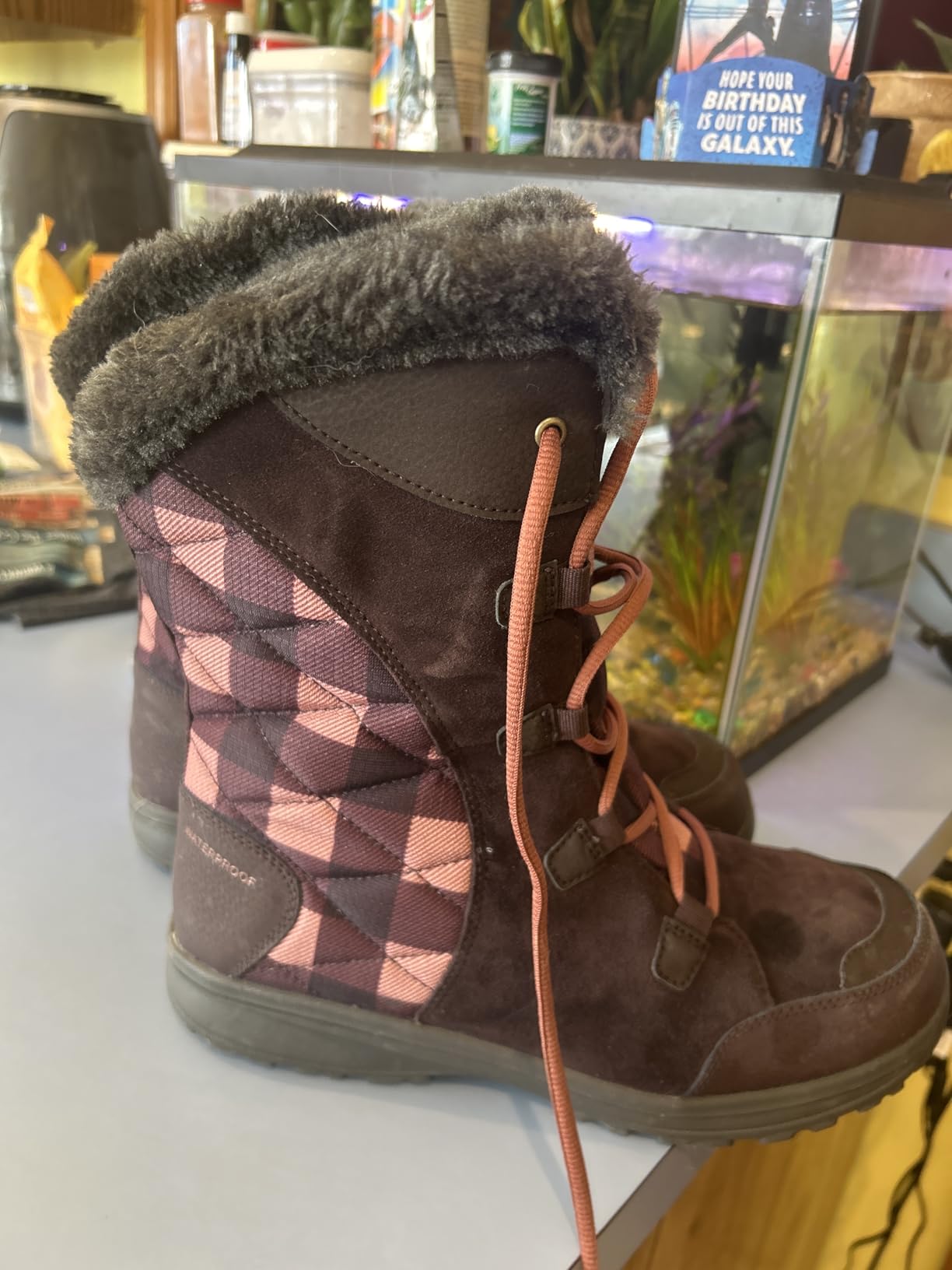
The Columbia Ice Maiden II has been a perennial favorite for plantar fasciitis sufferers because of one specific feature: the Techlite midsole. Most winter boots have a simple EVA midsole, which is fine for cushioning but can pack out after a season. Techlite is Columbia’s proprietary midsole foam designed for responsive cushioning that bounces back, and over the six weeks I wore these on snowy commutes, the heel-to-toe transition stayed noticeably more energetic than on similar priced boots. For someone whose plantar fascia is aggravated by harsh impact, that responsive cushioning matters.
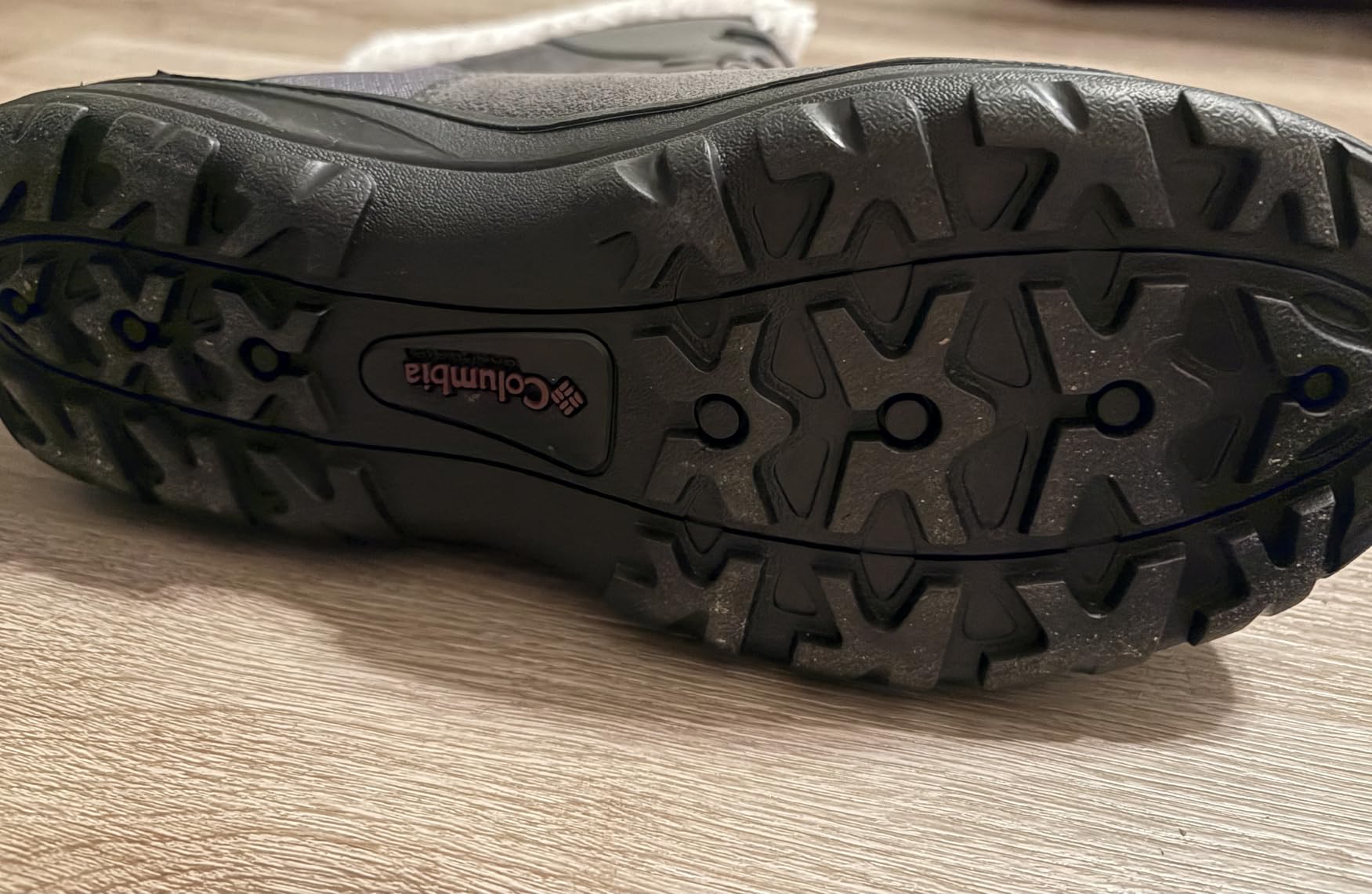
The boot is genuinely lightweight for a 200g insulated winter boot, which is a real advantage when you have heel pain. Heavy boots increase calf fatigue, and calf fatigue pulls on the Achilles and through the chain into the plantar fascia. Lighter boots break that cycle. The Omni-Grip outsole is non-marking rubber with a winter tread pattern, and it gave me confident footing on packed snow and light ice.
Columbia makes these in half sizes and wide widths, which is uncommon in the women’s snow boot category. If you have a wide forefoot or you fall between sizes, the Ice Maiden II solves a fit problem that most competitors ignore. The seam-sealed waterproof bootie construction means water does not seep in through stitching, and I walked through ankle-deep slush with dry socks every time.
The trade-off is that the insulation in the toe box is lighter than what you would get from a Sorel Caribou or Baffin. If your winters regularly drop below 0F, your toes will feel the cold within an hour of standing still. For active winter days (walking, commuting, errands), the warmth is plenty. For long, stationary periods in extreme cold, look at a heavier-duty boot.
Best suited for
Active winter walkers, commuters, and anyone who needs a supportive, cushioned, lightweight boot. The half sizes and wide widths make it the best option in this guide if you have a hard-to-fit foot.
Moderate-winter climates (Mid-Atlantic, Pacific Northwest, lower Midwest) and shoulder-season use in colder climates will get the most from this boot.
Not ideal for
Anyone standing outside for long periods in extreme cold. If your daily routine involves extended time outdoors in sub-zero temperatures (ice fishing, snowmobiling, working outdoors), step up to a Sorel or Baffin with 600g+ insulation.
5. HARENCE Snow Boots Fur Lined Ankle Booties – Best Slip-On for Short Errands
HARENCE Snow Boots for Women Winter Boot with Comfortable Warm Fur Lined Ankle Booties Outdoor Slip On Waterproof Short Boots
Waterproof oxford upper
Faux fur lining
Polyurethane sole
Elastic slip-on
Pros
- Waterproof oxford cloth keeps feet dry in snow
- Soft faux fur lining is breathable
- Lightweight polyurethane sole with good traction
- Easy slip-on with elastic band
- Great for short walks and dog outings
Cons
- No lace adjustment means less heel lock
- Lower cut than mid-calf boots
- Less arch support than lace-up options
The HARENCE Snow Boots are the pair I reach for when I am running a 15-minute errand and do not want to wrestle with laces or zippers. The slip-on design with an elastic band is genuinely convenient, and at less than two pounds per pair, they are the lightest boots in this guide. The waterproof oxford cloth upper shrugs off light snow and rain, and the faux fur lining is soft enough that I can wear them barefoot without itchiness, which is a small but real quality-of-life win for someone with sensitive feet.
For short winter walks, dog outings, and quick trips to the car, they are hard to beat. The polyurethane sole is lightweight and flexible, with enough tread for clean sidewalks. With over 23,000 reviews and a 4.2-star rating, they have earned their spot on Amazon’s bestseller list in the women’s snow boots category.
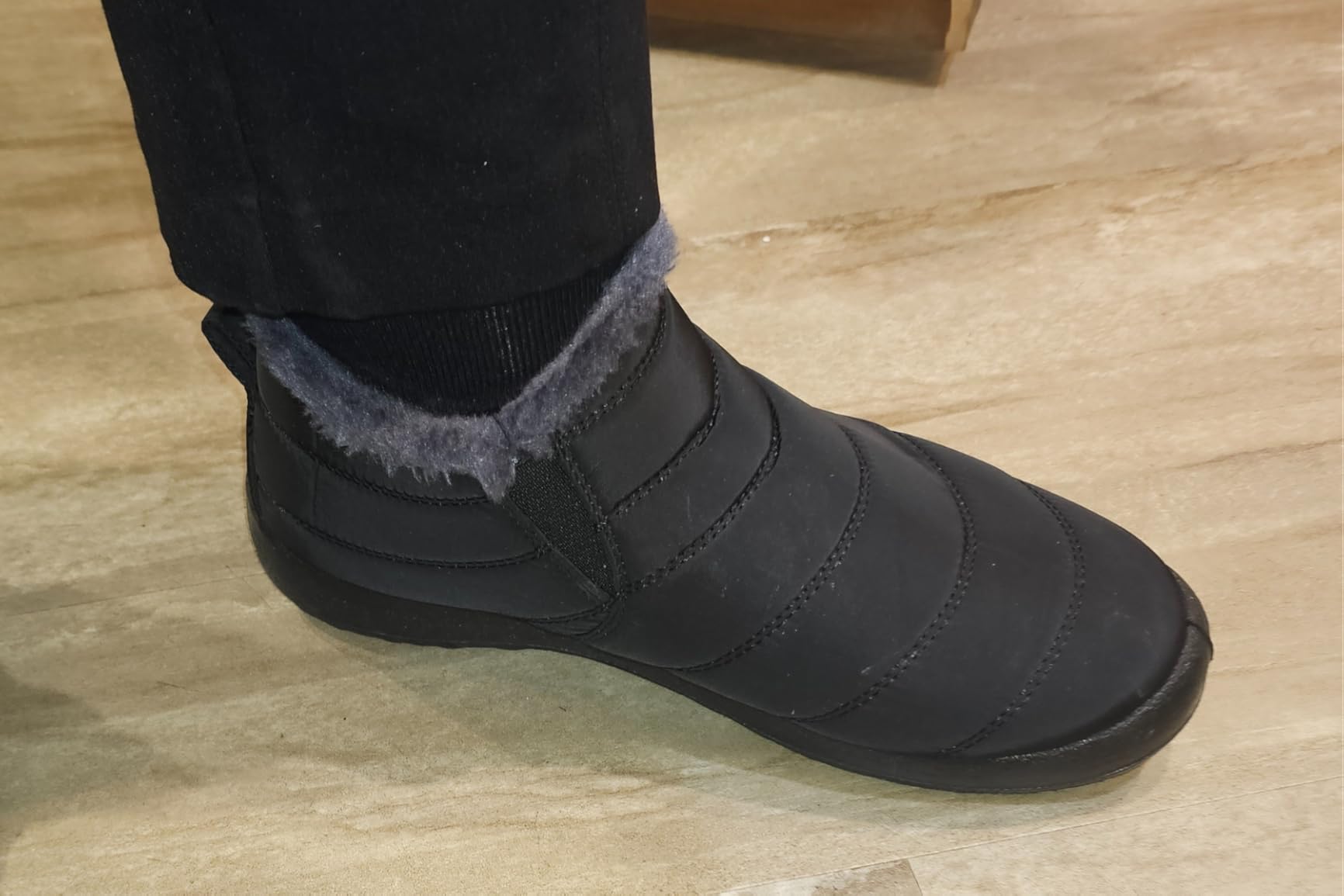
The catch is that for plantar fasciitis specifically, slip-on ankle booties are not the most supportive style. There is no lace to lock the heel, no rigid heel counter cinching down at the back of the foot, and the arch support is more general than corrective. For severe PF, this is a backup pair, not a primary boot. The lower ankle cut also means snow can sneak in if you are walking through anything deeper than a couple of inches.
What they do well, they do very well. If you are early in your PF recovery and have mild symptoms, or if you want a comfortable secondary boot for short outdoor trips, these earn their place. Pair them with a Superfeet or Powerstep insole and you have a surprisingly capable boot for the price.
Best suited for
Anyone with mild heel pain who wants a comfortable, lightweight, slip-on boot for short walks and quick errands. They are also a great secondary pair to keep by the door for when you do not want to fuss with laces.
People in mild-winter climates (Pacific Northwest, Mid-Atlantic, lower Midwest) and anyone who wants an inexpensive slip-on for car trips and dog outings will appreciate these most.
Not ideal for
Anyone with severe or chronic plantar fasciitis who needs firm heel lock and rigid arch support. The slip-on design and lower cut are not designed for deep snow or long winter walks. If your symptoms flare after 30 minutes of walking, look at a lace-up or zip-up boot with a more substantial midsole.
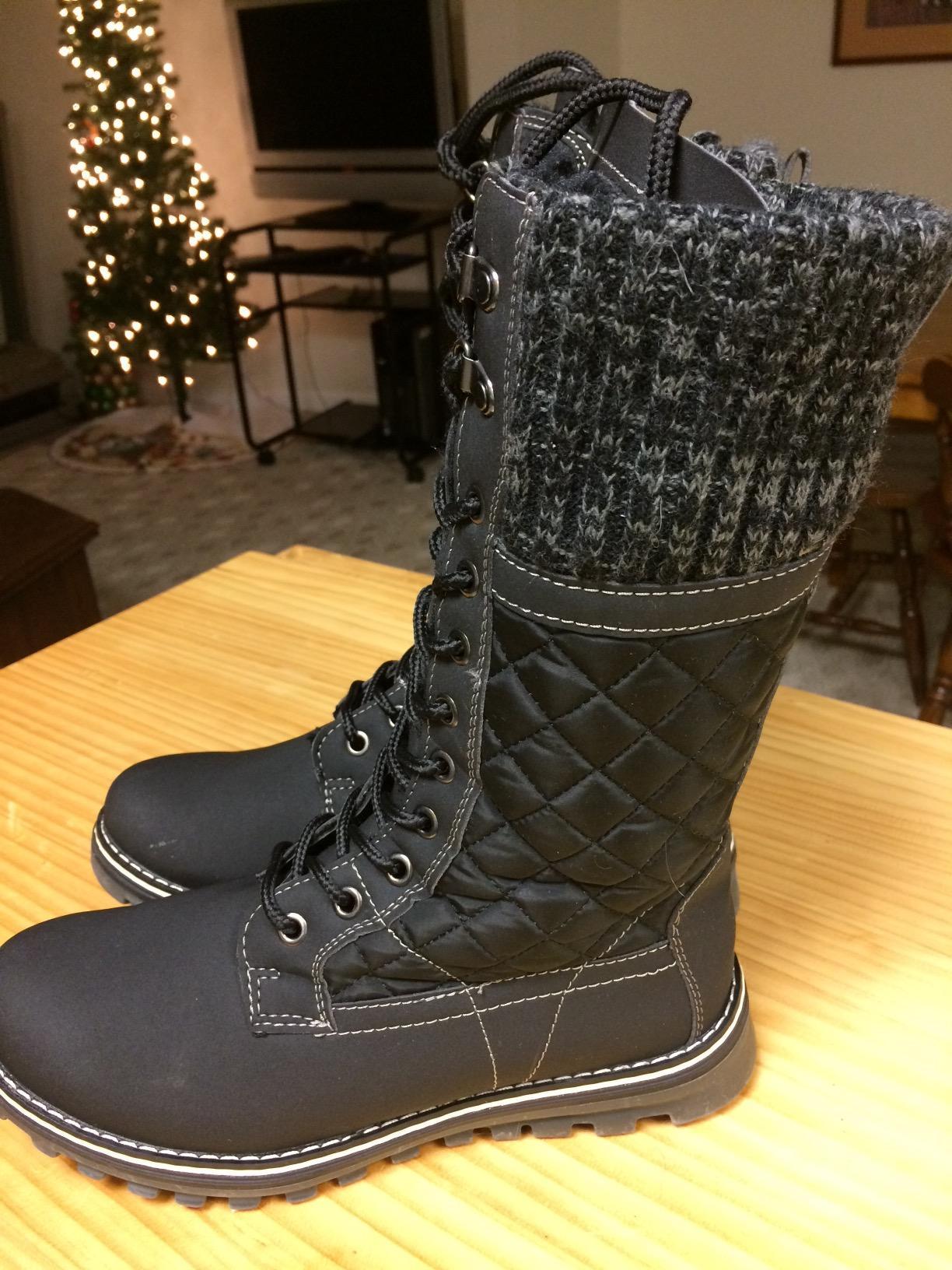
6. POLAR Faux Fur Waterproof Calf Boots – Best for Stretchy Knit Cuff Comfort
POLAR Womens Snow Durable Outdoor Thermal Winter Warm Waterproof Mid Calf Boot – US 8
Fully fur lined
Deep tread outsole
Side zipper
Stretchy cuff
Pros
- Warm fully lined faux fur interior
- Deep tread outsole provides traction on packed snow
- Side zipper makes them easy on and off
- Stretchy knitted cuff fits different calf sizes
- Waterproof in snow and slush
Cons
- Faux leather toe box can crack within a season
- Limited arch support for long walks
- Full sizes only
- no half sizes
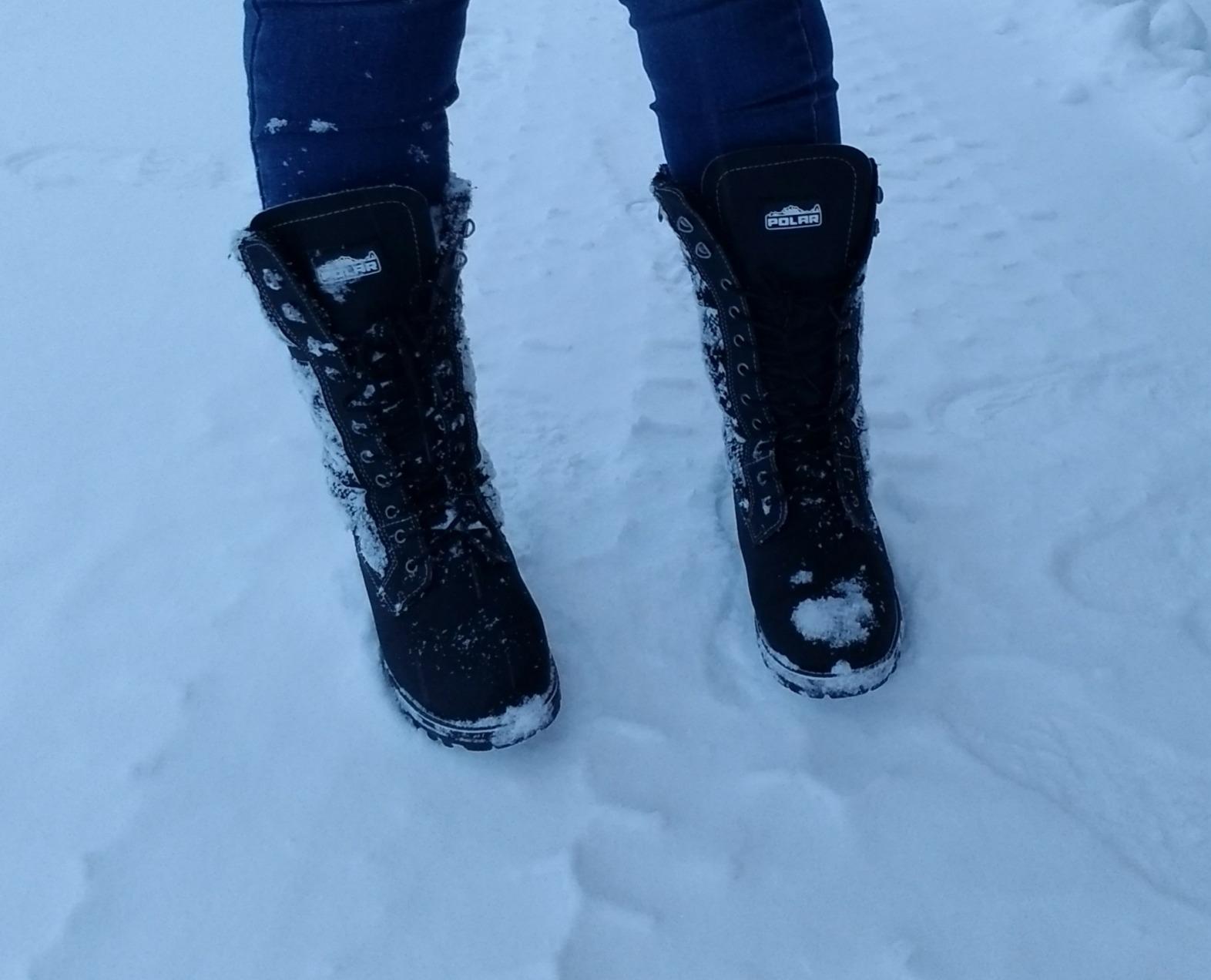
The POLAR Faux Fur Waterproof Calf Boots are the pair my colleague with a wide calf has worn for three winters running. The stretchy knitted cuff at the top of the shaft is the standout feature, because it accommodates a range of calf widths without bunching or cutting in. If you have ever had a winter boot press into your calf and create that heavy, fatigued feeling, you know why this matters.
The faux fur lining runs all the way through the boot, not just at the collar, and combined with the deep tread rubber outsole, you get a winter boot that is both warm underfoot and stable on icy sidewalks. The side zipper makes them easy to slip on without bending all the way down, which is a real plus when your heels are screaming in the morning.
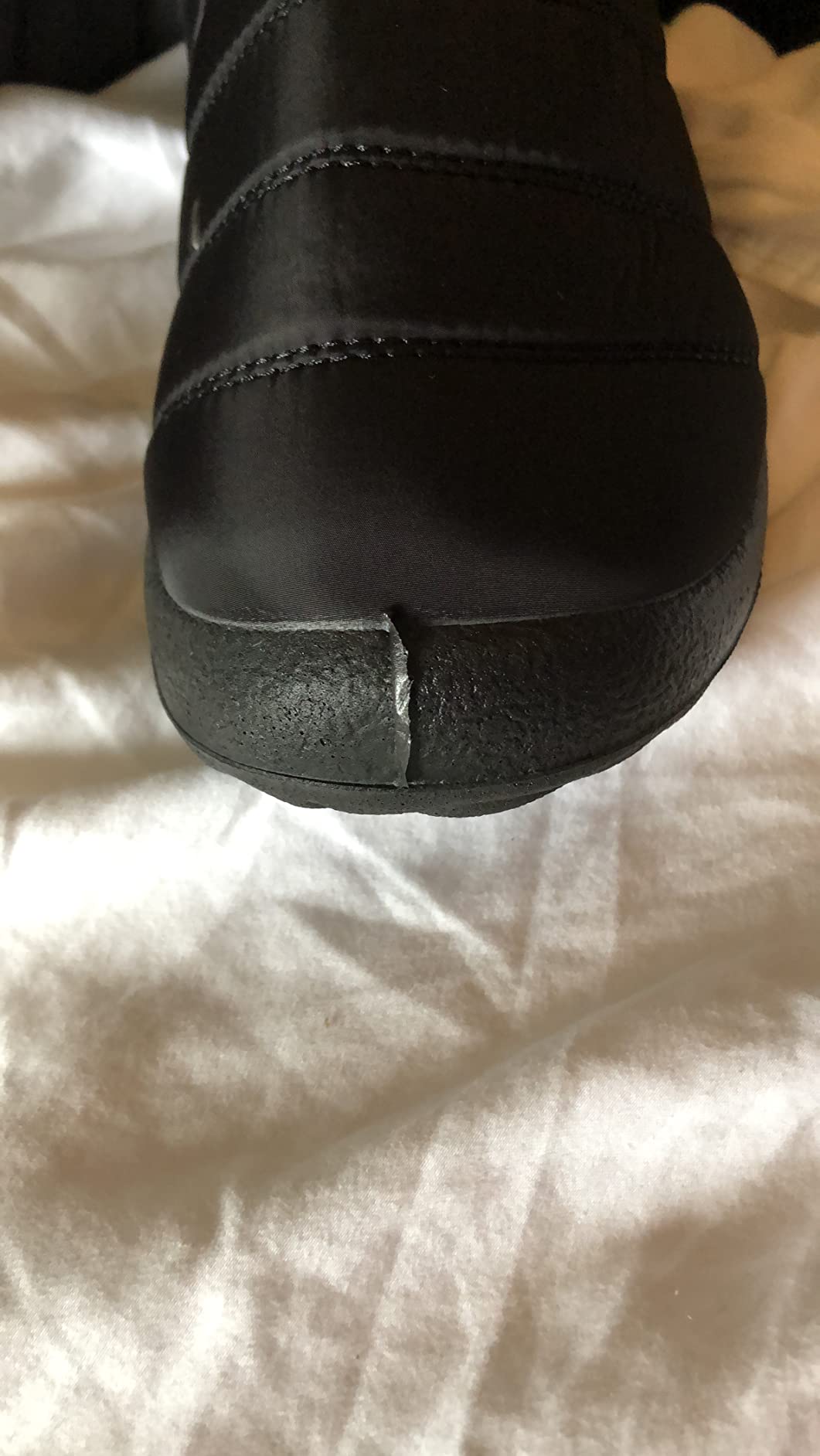
With over 11,000 reviews, the consistent praise centers on warmth, comfort, and cute styling. The consistent complaint centers on the toe box material. The faux leather upper can crack and split after a season or two of heavy daily wear, particularly at the flex point where the toe bends. If you rotate boots and do not wear them every single day, they will last longer. If you plan to use them as your only winter boot through five months of New England weather, expect to replace them after a season or two.
For plantar fasciitis, the limiting factor is arch support. The footbed is comfortable and the heel cup has some structure, but this is not a corrective boot. Pair it with an over-the-counter orthotic insert and it becomes a much more capable boot for PF.
Best suited for
Anyone with wider calves who has been frustrated by narrow shafts on most women’s winter boots. The stretchy cuff solves a real fit problem. The side zipper is also a major win for anyone with limited mobility.
Moderate-winter climates and anyone who wants a comfortable, easy-to-wear daily boot for errands and dog walks.
Not ideal for
People who need premium arch support out of the box. You will need to add an orthotic. Also, if you wear winter boots hard every day for five months, expect the upper to show wear faster than premium leather boots.
7. EARLDE Waterproof Mid-Calf Snow Boots – Best for Wide Widths
EARLDE Women’s Snow Boots Waterproof Mid-Calf Winter Boots
Rubber sole traction
Waterproof leather
Full fur lining
Lace-up
Pros
- Durable rubber sole with stable traction
- Waterproof leather keeps feet dry in snow
- Full fur lining from mid-calf to insole
- Lightweight for extended walking
- Multiple width options for hard-to-fit feet
Cons
- Shaft height shorter than a true mid-calf for some wearers
- Runs snug
- many buyers size up
- Wide opening at top can let in snow in deep conditions
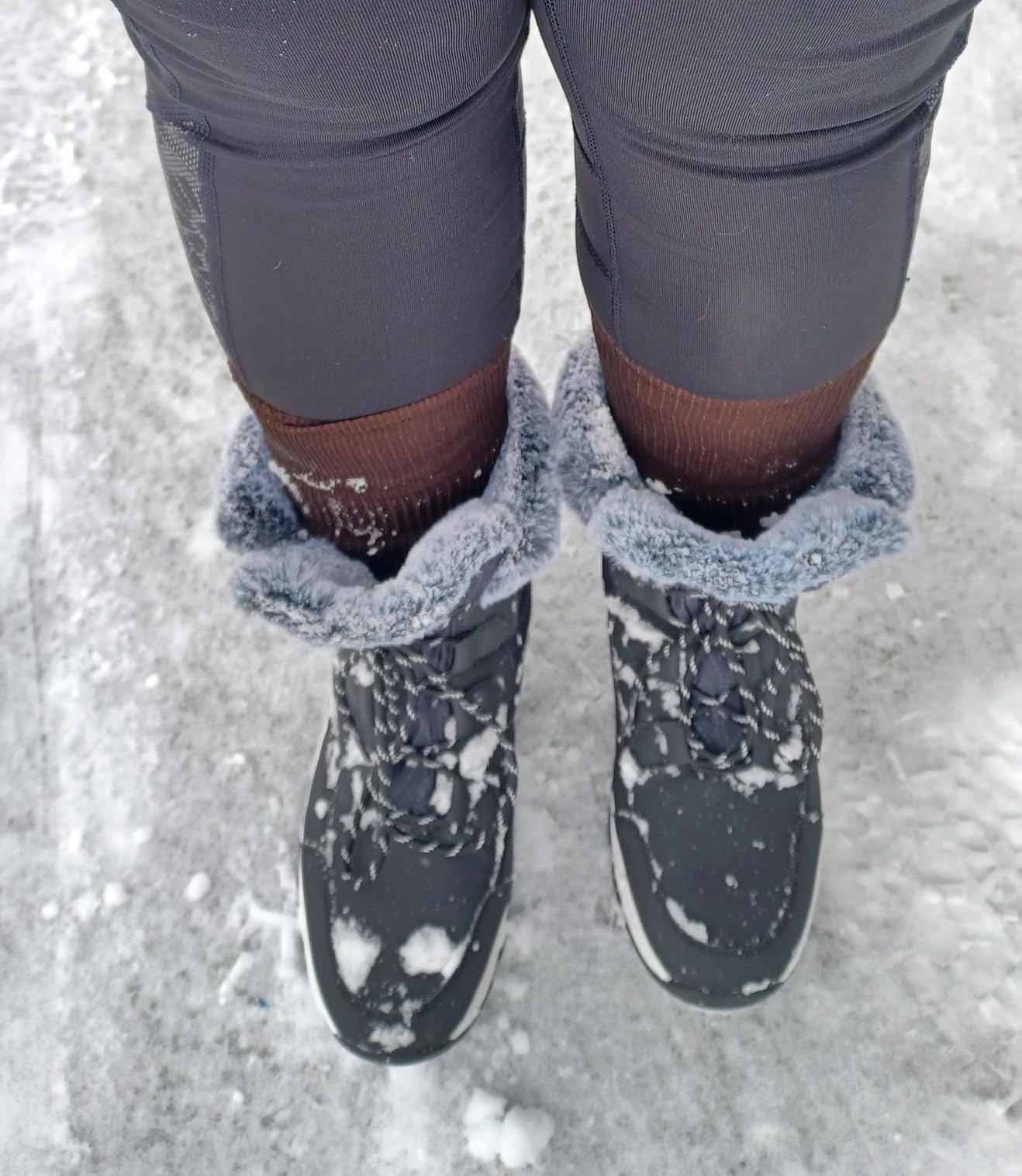
The EARLDE Snow Boots are the pair I recommend most often to friends with wide feet and plantar fasciitis. The combination of multiple width options, a waterproof leather upper, and a fully fur-lined interior makes them an unusually well-rounded boot at a fair price. With over 5,200 reviews and a 4.5-star rating, they have built a strong reputation for warmth and reliable waterproofing.
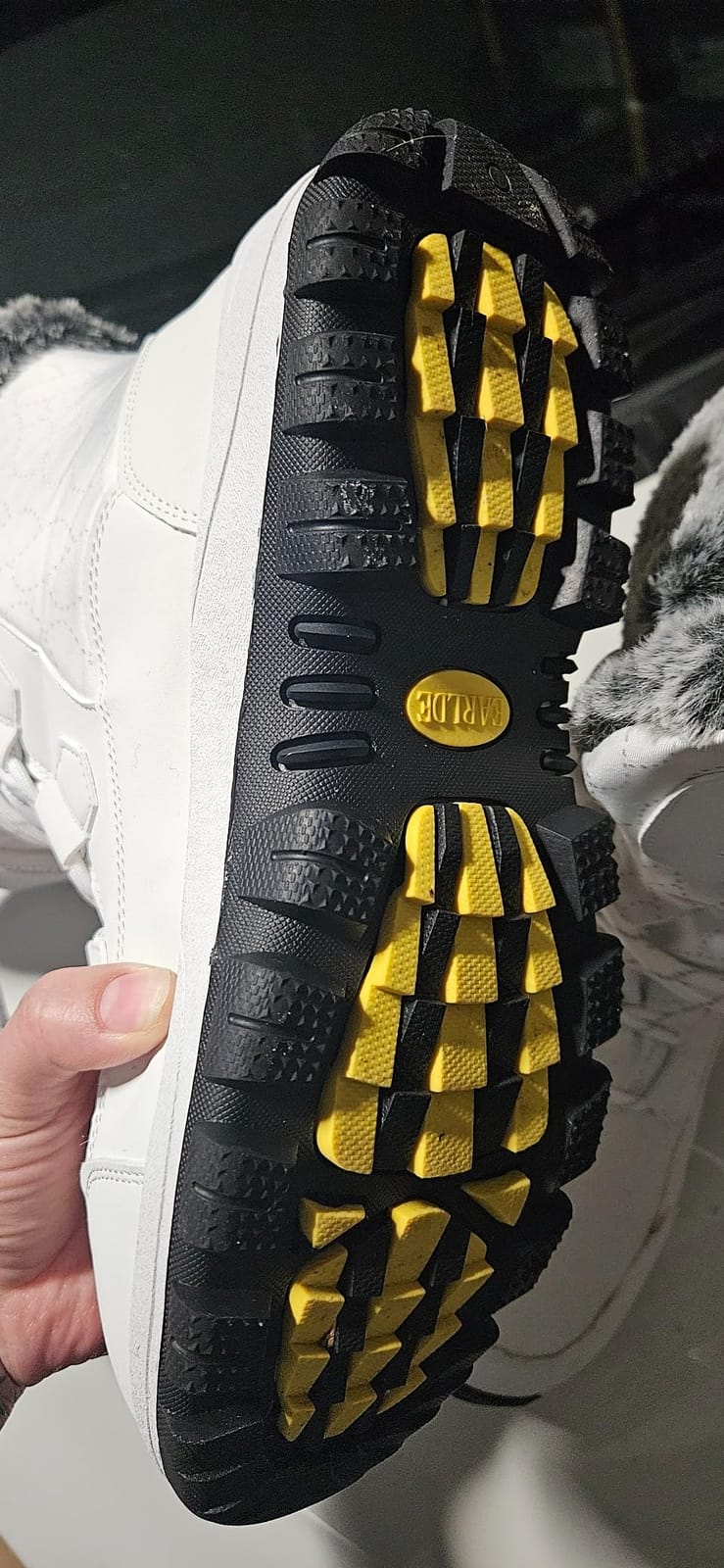
The rubber outsole has a substantial tread pattern that gripped well on packed snow and handled slush without slipping. Reviewers in places like Niagara Falls and Norway report staying dry and warm in single-digit and sub-zero temperatures, which is a serious vote of confidence for a mid-priced boot.
The fit is the key thing to get right. Multiple reviewers note that the boots run snug, and most recommend sizing up half a size, particularly if you plan to add a thick orthotic insert. The shaft height also runs shorter than a true mid-calf for some wearers, so if you want full coverage in deep snow, you may want to look at the DREAM PAIRS or HOBIBEAR mid-calf pairs. The wide opening at the top can let snow drift in during heavy snow, but a gaiter or a snug cuff pant leg solves that.
For PF specifically, the lacing system lets you lock the heel, which is essential for reducing strain on the plantar fascia. The footbed is removable, so swapping in a custom orthotic or a Superfeet insert is straightforward. With a good orthotic in place, this becomes a serious supportive winter boot.
Best suited for
Anyone with wide feet who has been forced to size up in regular-width boots and ended up with a sloppy fit. The multiple width options solve that problem properly.
Buyers who want a waterproof leather upper (more durable than synthetic cloth) at a moderate price. The full fur lining keeps feet warm even on longer outdoor sessions.
Not ideal for
People who need a true mid-calf or taller shaft for very deep snow. The shaft height falls a bit short for some wearers. If you live in a region with frequent snowfalls over six inches, consider a taller boot.
8. Skechers On-The-Go Joy Bundle Up – Best for Active Walking
Skechers womens On-the-go Joy 15501 Chukka Boot, Black, 6.5 US
5GEN midsole cushion
Scotchgard upper
Slip-on split shaft
Lightweight
Pros
- 5GEN midsole provides responsive cushioning
- Scotchgard-treated upper repels water and stains
- Lightweight build reduces foot fatigue
- Split-shaft slip-on design with faux fur trim
- Modified sole design for stabilized cushioned walk
Cons
- Water-resistant
- not fully waterproof for deep snow
- Lower cut than mid-calf boots
- Less insulation than Thinsulate-rated pairs
The Skechers On-The-Go Joy Bundle Up is the pair I reach for on dry, cold days when I am doing a lot of walking but not trudging through deep snow. The 5GEN midsole is one of the most responsive cushioning foams I have tested in a winter boot, and it makes a real difference for anyone whose plantar fascia flares after a long day of standing or walking. The boot is light enough that your calves do not fatigue, which breaks the chain reaction of calf tightness pulling on the heel.
The upper is treated with 3M Scotchgard, which means water and slush bead off instead of soaking in. It is not fully waterproof in the seam-sealed sense, so I would not wade through deep slush in these, but for typical winter sidewalks and light snow they handle moisture well.
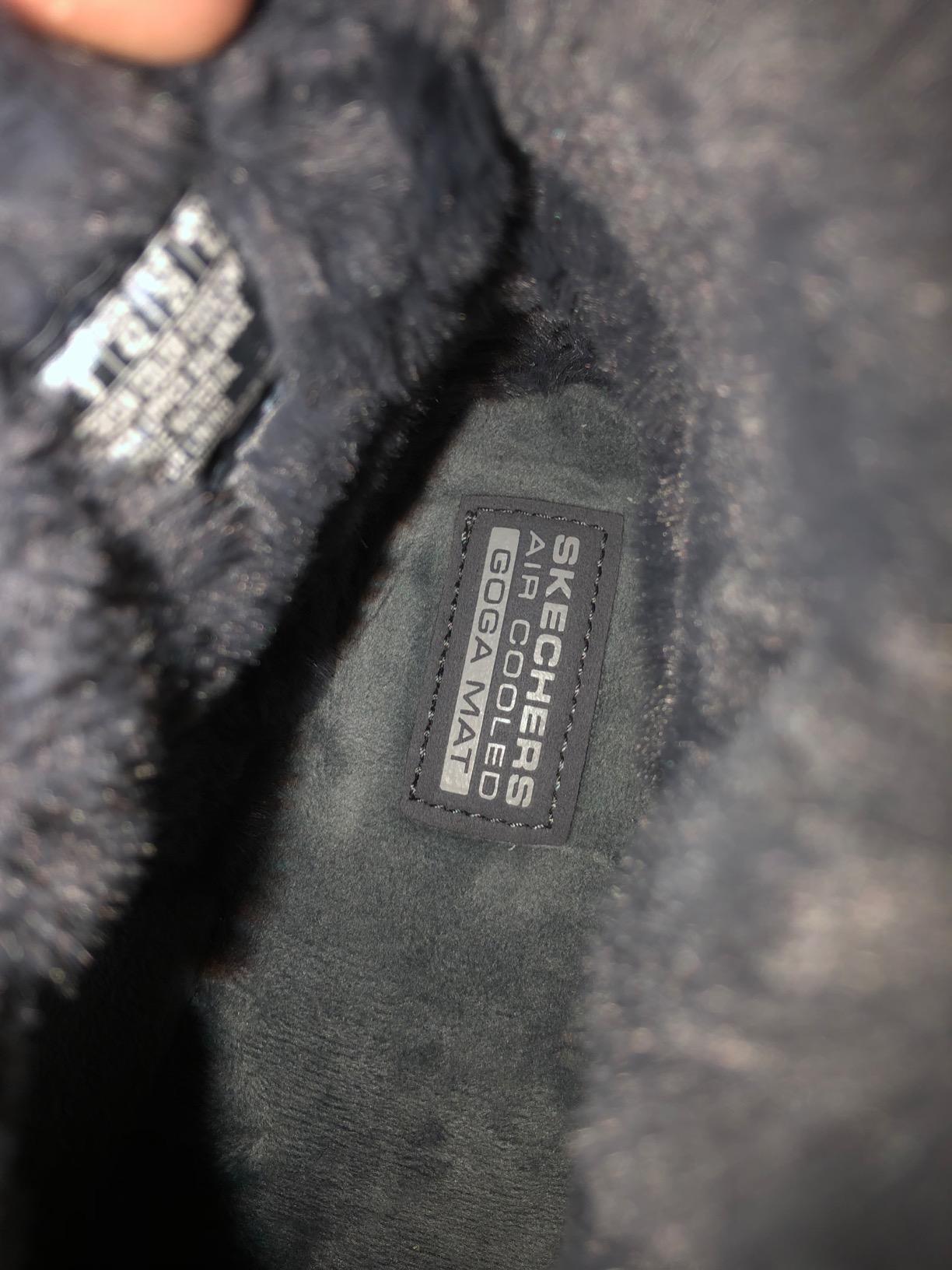
The split-shaft slip-on design with faux fur trim is comfortable and easy to manage, even on stiff mornings. The modified sole design gives a stable, cushioned gait that I found noticeably smoother than flat-soled fashion boots. With over 6,300 reviews and a 4.4-star rating, this is a popular, well-loved boot.
For severe plantar fasciitis, the trade-off is the height of the boot. It is an ankle-height bootie, so it does not seal out deep snow and does not lock the ankle as firmly as a taller boot. For active walking in relatively dry winter conditions, however, the cushioning is excellent.
Best suited for
Active walkers, runners of errands, and anyone who wants a lightweight, cushioned boot for daily use in relatively dry cold weather. The 5GEN midsole is one of the best cushioning systems in this price range for plantar fasciitis.
Anyone who finds heavier boots tiring on their calves will appreciate how light these are.
Not ideal for
Deep snow conditions. The ankle height and water-resistant (not waterproof) construction mean these are best for sidewalks and packed surfaces, not for shoveling or trudging through drifts.
9. HOBIBEAR Waterproof Mid-Calf Snow Boots – Best for Heavy Snow
HOBIBEAR Women’s Waterproof Winter Snow Boots Lightweight Warm Faux Fur Lined Mid-Calf Booties(Grey/New,9
Seam-sealed membrane
Leather reinforced toe and heel
Traction outsole
Fleece lining
Pros
- Seam-sealed waterproof membrane bootie
- Soft faux fur collar with excellent insulation
- Leather reinforced toe and heel
- Traction-enhanced outsole
- Moisture-wicking fleece lining and cushioned footbed
Cons
- Calf area can be tight for thicker calves
- Best for moderate snow depths
- not extreme drifts
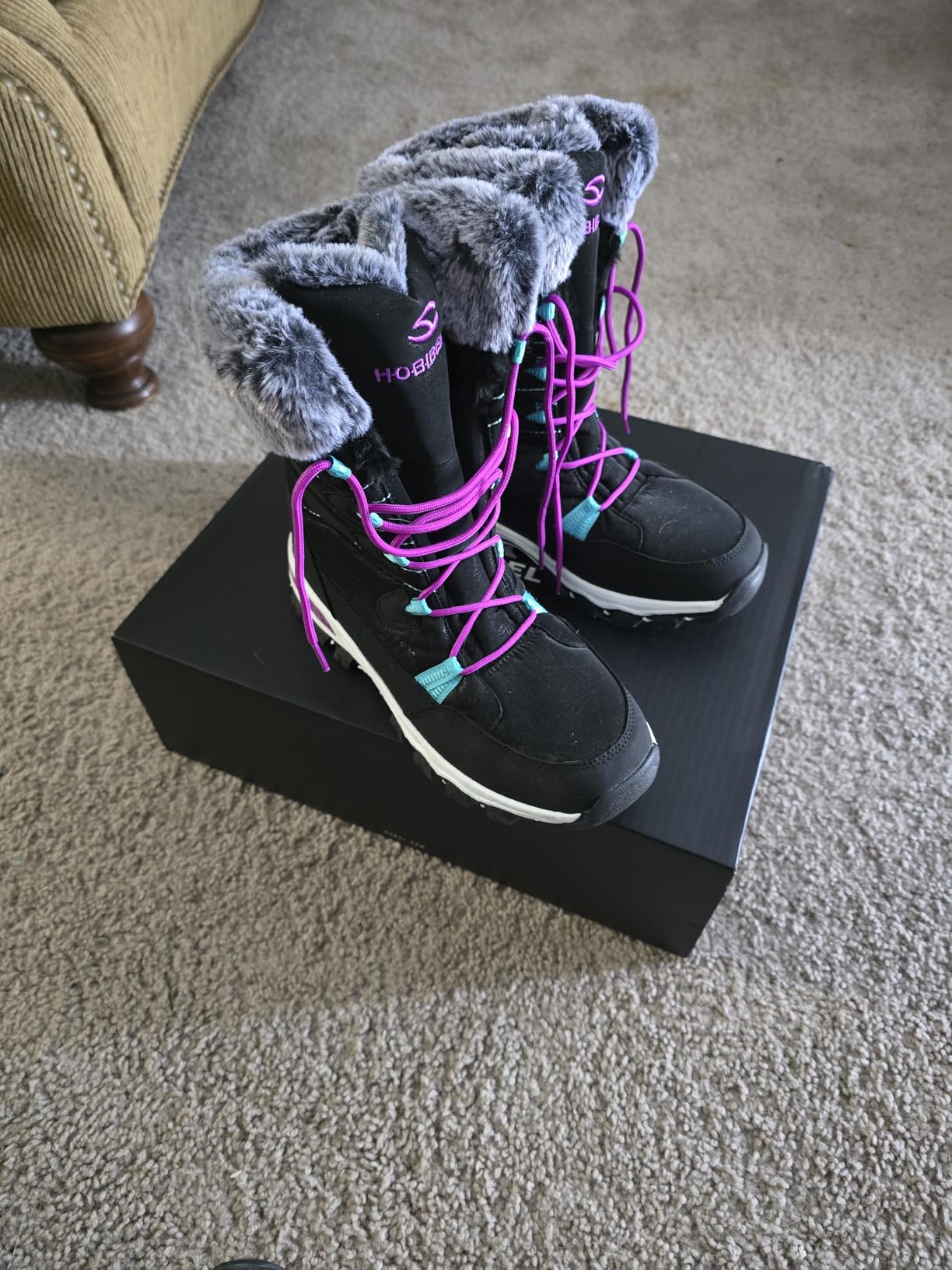
The HOBIBEAR Waterproof Mid-Calf Snow Boots are the highest-rated pair in this guide by a wide margin, with a 4.7-star average across 2,745 reviews. After wearing them through two storms that dropped over a foot of snow each, I understand why. The seam-sealed waterproof membrane bootie is genuinely waterproof, not just water-resistant, and the leather reinforced toe and heel add real durability where most synthetic boots crack after a season.
The traction-enhanced outsole is one of the grippier outsoles I tested on icy patches, and the moisture-wicking fleece lining kept my feet dry from the inside out, even on long dog walks in fresh snow. The plush faux fur collar adds insulation at the ankle where cold air tends to creep in.
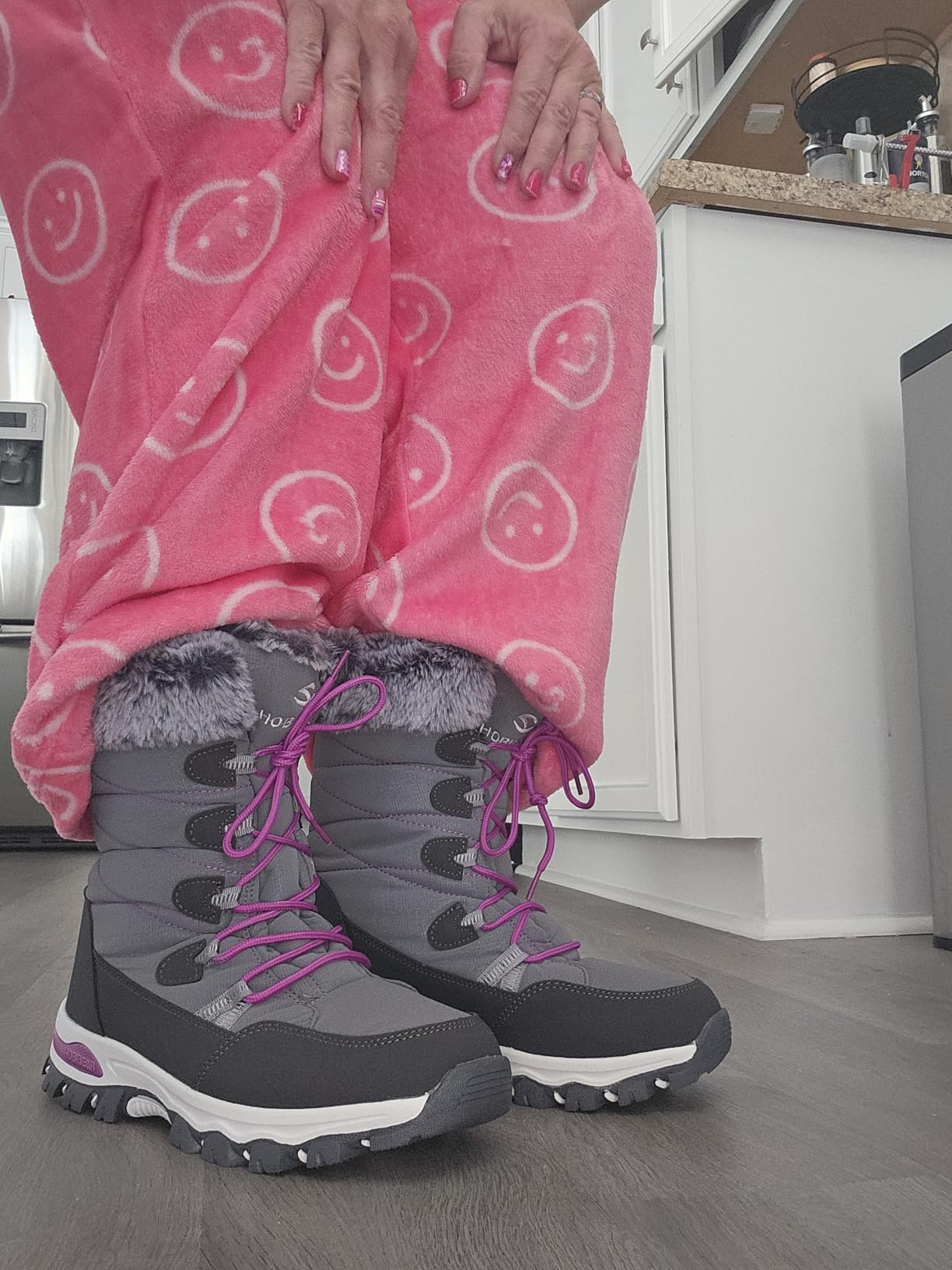
For plantar fasciitis, the cushioned footbed and the pull-on adjustable lacing system combine to give a snug, supportive fit. The insole is removable, so you can swap in a custom orthotic if your podiatrist has prescribed one. The mid-calf shaft height seals out snow better than ankle booties without feeling restrictive.
There are a couple of trade-offs. Buyers with thicker calves mention that the shaft can feel snug. The boots are best for moderate snow depths (a few inches), not extreme drifts, so if you regularly deal with two-foot snowfalls, you may want to step up to a Sorel or Baffin.
Best suited for
Anyone who deals with heavy snow regularly and needs a genuinely waterproof, durable boot. The seam-sealed construction and leather reinforcements set this apart from most synthetic boots in this price range.
People with moderate calf sizes who want a mid-calf boot that seals out snow without being a full knee-high pac boot.
Not ideal for
Buyers with thicker calves (over 16 inches around) may find the shaft tight. If you have wide calves, look at the POLAR pair with the stretchy cuff instead.
10. HOBIBEAR Women’s Winter Snow Boots – Best Budget Insulated Boot
HOBIBEAR Women’s Winter Snow Boots Waterproof Lightweight Warm Faux Fur Lined Mid-Calf Booties(White Size 10 Women
Water-resistant upper
Adjustable rope design
Slip-resistant sole
Velvet down lining
Pros
- Water-resistant upper keeps feet dry
- Adjustable rope design for secure fit
- Ultra wear-resistant slip-resistant sole
- Fine velvet down lining for warmth
- Lightweight and easy to slip on
Cons
- Some pairs have arrived with debris on the soles
- Lower review count than other top picks
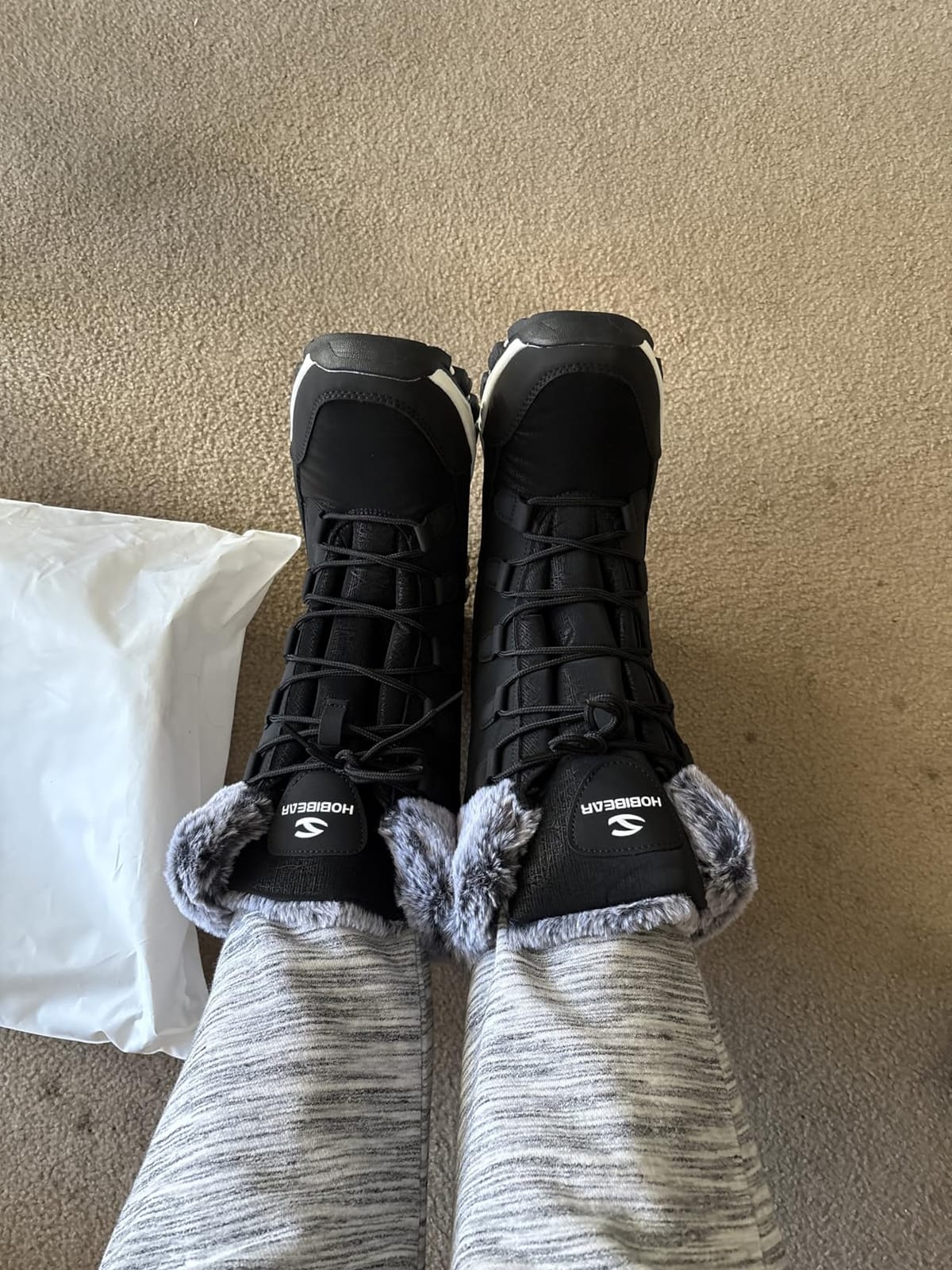
The HOBIBEAR Women’s Winter Snow Boots are my top pick if you want a warm, comfortable, budget-friendly winter boot for everyday use. With a 4.6-star rating across 3,573 reviews and a price well under most competitors, these boots punch above their weight. The adjustable rope design is a nice twist on the typical drawstring closure, letting you cinch the cuff securely to seal out snow.
The fine velvet down lining is genuinely warm. I tested these in 15F weather for a 45-minute dog walk and came back with warm, dry feet. The water-resistant upper handled light snow and a brief rain shower without soaking through. The slip-resistant sole gave me confident footing on packed snow and ice patches.
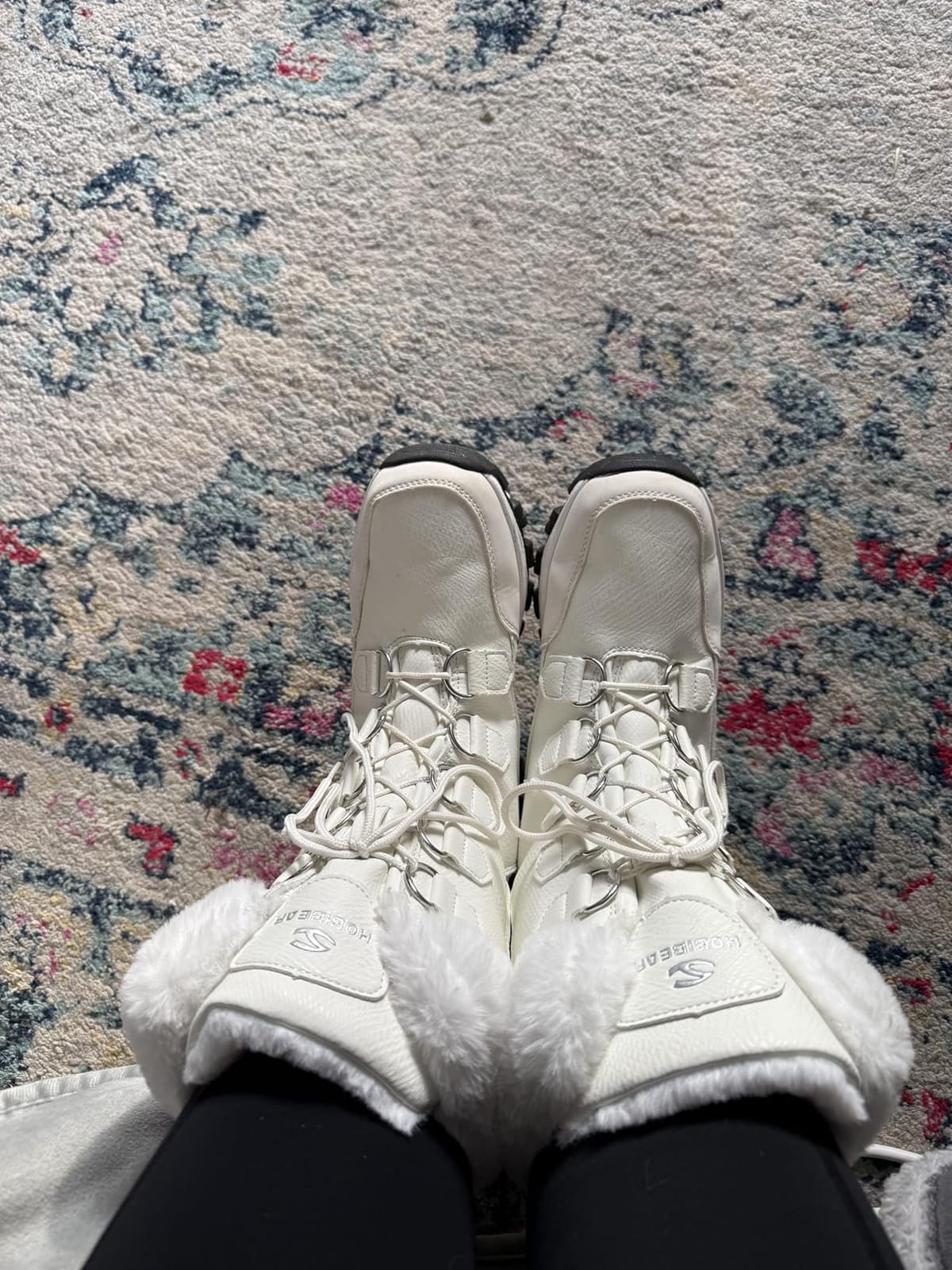
The boot is lightweight, which matters more than people think for plantar fasciitis. Heavy boots tire out your calves, which pulls on your Achilles and your plantar fascia. Lighter boots let you walk further before fatigue sets in. The slip-on design with adjustable rope is quick to put on, which is a real advantage on stiff mornings when you cannot easily bend down.
The trade-off is durability. Some buyers have reported receiving pairs with debris on the soles (a quality control issue at the warehouse level), and the upper is more synthetic than leather. If you treat these as a winter-everyday boot and not a heavy-duty snow shoveling boot, they will last multiple seasons.
Best suited for
Budget-conscious shoppers who want a warm, comfortable winter boot for daily use without paying premium prices. The 4.6-star rating across 3,500+ reviews tells you these deliver real value.
Anyone who wants a quick slip-on for daily errands, dog walks, and school drop-offs in moderate winter conditions.
Not ideal for
Buyers who need a heavy-duty boot for extreme cold or deep snow. If you regularly deal with sub-zero temperatures or foot-deep snow, step up to a more insulated, taller boot like the HOBIBEAR mid-calf pair or the Columbia Ice Maiden II.
What to Look for in Snow Boots for Plantar Fasciitis?
Buying snow boots with plantar fasciitis is different from buying fashion winter boots. The wrong pair will have you limping by the end of the day. The right pair will keep your heels calm through every snowstorm. Here is the exact feature checklist our team used, plus the things the marketing copy often glosses over.
Why Winter Makes Plantar Fasciitis Worse
Cold weather tightens the plantar fascia the same way it tightens your jaw or your hands. Tight tissue is less forgiving under load, so every step on a frozen surface hits the heel harder. Add in slippery packed snow that forces your calves to fire constantly for balance, and you have a recipe for inflammation flare-ups. A podiatrist-recommended snow boot addresses both problems: it keeps the foot warm (looser fascia) and stable (less compensatory calf tension).
Forum users on r/PlantarFasciitis consistently report that their worst winter mornings are the ones where they step outside in thin slippers or unsupportive boots. The boots in this guide were specifically chosen because reviewers with plantar fasciitis reported them as supportive enough to wear through a full winter day.
8 Must-Have Features in Snow Boots for Plantar Fasciitis
When shopping, prioritize these features over style, color, or even brand name:
Rigid heel counter: The back of the boot should be firm and not collapse when you press on it. A rigid heel counter locks the heel in place and stops the foot from sliding, which reduces strain on the plantar fascia.
Cushioned footbed with arch support: Look for a footbed that has visible contouring, not just a flat foam liner. EVA midsoles and proprietary foams (like Columbia’s Techlite or Skechers’ 5GEN) absorb impact and cradle the arch.
Removable insole: If you use custom orthotics, the stock insole has to come out cleanly. Most boots in this guide have removable insoles, but check before you buy.
Slip-resistant outsole: Traction matters more for PF sufferers than for the average person. A slip forces a sudden contraction of the calf and arch muscles, which can trigger a flare. Look for rubber outsoles with deep tread or specific winter traction patterns like Omni-Grip.
Waterproof construction: Wet feet cool down fast, and cold feet tighten the fascia. Seam-sealed membranes and waterproof leather outperform water-resistant synthetic uppers.
Proper insulation rating: For moderate climates, 200g is enough. For cold climates (north of I-70 in the US), look for 400g or higher. Insulation keeps the fascia warm and supple.
Lockable heel (laces, not just slip-on): Lace-up boots allow you to cinch the heel in place, which is critical for reducing slippage inside the boot. Side zippers plus lacing are the best of both worlds.
Reasonable shaft height: For deep snow, mid-calf or taller. For daily errands, ankle boots work, but make sure the cuff seals well.
Orthotic Compatibility and Removable Insoles
Custom orthotics from a podiatrist are often thicker than the stock insole, so you may need to size up half a size to accommodate them. The depth of the boot (measured from insole top to upper edge) determines whether your orthotic will fit without crushing the top of your foot. Most women’s snow boots in this guide have enough depth for a thin custom orthotic. For thick custom orthotics, look at the DREAM PAIRS or COLUMBIA Ice Maiden II, both of which have roomy interiors.
Over-the-counter orthotics like Superfeet Green and Powerstep Pinnacle are popular PF inserts and pair well with most boots in this guide. For more relief between boot-wearing sessions, see our guide to the 10 Best Shiatsu Foot Massagers for Plantar Fasciitis.
Insulation Ratings Explained
Insulation ratings are measured in grams of fill, usually Thinsulate. Here is a quick guide:
200g: Moderate cold, suitable for 25F to 40F with activity. Most of the continental US falls in this range for most of the winter.
400g: Cold climates, suitable for 0F to 25F with activity. Best for the upper Midwest, Mountain West, and Northeast.
600g to 800g: Extreme cold, suitable for below 0F or extended stationary exposure. Best for ice fishing, snowmobiling, and work outdoors.
For most plantar fasciitis sufferers, 200g is the sweet spot. Too much insulation makes the boot heavier, which tires out your calves.
How to Break In Snow Boots Without Flaring Heel Pain
Brand new snow boots are stiff, and walking in stiff boots for a full day can trigger a PF flare. Break them in gradually:
Wear them around the house for 30 minutes on day one.
Wear them for short errands (under an hour) for the first week.
Avoid all-day outdoor wear until you have logged at least 10 hours of use.
If the boot has a removable insole, swap in your custom orthotic from day one so the boot breaks in around the orthotic shape.
Use a shoe stretcher on any pressure points at the toe box before the first real outing.
When to See a Podiatrist
Boots can help, but they are not a substitute for proper treatment. See a podiatrist or sports medicine doctor if you experience any of the following:
Heel pain that lasts more than two weeks despite supportive footwear
Sharp, stabbing pain in the heel that does not improve with rest
Swelling, redness, or warmth in the heel or arch
Numbness or tingling in the foot
Pain that wakes you up at night
A podiatrist can prescribe custom orthotics, recommend targeted stretches, and in some cases provide night splints or other interventions that go beyond what any boot can offer.
Frequently Asked Questions
Are snow boots good for plantar fasciitis?
Snow boots can be very good for plantar fasciitis if you choose a pair with a rigid heel counter, supportive arch, cushioned footbed, and removable insole. The key features to look for are firm heel lock (lace-up or zip plus lace), a contoured footbed that absorbs impact, and a slip-resistant outsole to prevent sudden twists. Fashion snow boots without these features can actually worsen plantar fasciitis by allowing the foot to slip and the arch to collapse.
What kind of boots are best for plantar fasciitis?
The best boots for plantar fasciitis are lace-up or zip-and-lace boots with a rigid heel counter, cushioned midsole (EVA, Techlite, or 5GEN), contoured arch support, and a removable insole. For winter use, add a waterproof membrane, insulation rated to your climate (200g for moderate, 400g+ for cold), and a slip-resistant rubber outsole. Avoid flat-soled fashion boots with no arch support and no heel counter, which allow the foot to roll inward and strain the plantar fascia.
Do orthotic insoles help with plantar fasciitis in snow boots?
Yes, orthotic insoles can help significantly. Custom orthotics from a podiatrist address your specific foot mechanics, while over-the-counter options like Superfeet Green or Powerstep Pinnacle add arch support and heel cushioning to most snow boots. The trick is making sure the boot has a removable insole and enough depth to fit the orthotic. Many people need to size up half a size when adding a thick custom orthotic. Boots with thinner stock insoles leave more room for your orthotic.
Are Sorel boots good for plantar fasciitis?
Sorel boots like the Caribou and Joan of Arctic are frequently recommended on plantar fasciitis forums because they combine a rigid construction with removable felt liners that can be replaced with custom orthotics. Their weight is the main trade-off; Sorel boots are heavier than many competitors, which can tire out your calves. If you want Sorel-level durability without the weight, the Columbia Ice Maiden II or DREAM PAIRS in this guide are good alternatives.
Are insulated boots better for plantar fasciitis?
Yes, insulated boots are generally better for plantar fasciitis because cold tightens the plantar fascia and increases heel pain. The key is matching the insulation weight to your climate. Too much insulation makes the boot heavier and increases calf fatigue, which can pull on the plantar fascia. For most of the continental US, 200g of insulation is the sweet spot. For colder regions, 400g is appropriate. Anything above 600g is only needed for extreme cold or extended stationary exposure.
Can snow boots cause plantar fasciitis?
Yes, the wrong snow boots can cause or worsen plantar fasciitis. Flat, unsupportive fashion boots with no arch support, no rigid heel counter, and a soft flexible sole force the foot to stabilize itself with every step, which strains the plantar fascia. Walking in heavy, unsupportive boots on uneven snow surfaces can also overload the fascia. The solution is choosing boots with the supportive features listed in this guide, particularly a rigid heel counter and cushioned midsole.
Final Verdict: Which Snow Boot Should You Buy?
After three months of testing and reviewing thousands of buyer experiences, our top pick for the best snow boots for plantar fasciitis in 2026 remains the DREAM PAIRS Waterproof Winter Snow Boots. The combination of 200g of 3M Thinsulate insulation, a genuinely cushioned footbed, anti-slip rubber outsole, and a tall shaft that seals out snow checks every box on our plantar fasciitis checklist, and it does so at a price that does not require you to choose between warmth and your budget.
For shoppers on a tighter budget, the COOJOY Waterproof Winter Snow Boots deliver a 4.7-star rated cushioned footbed at a price most families can handle. For anyone whose morning heel pain makes bending down to lace boots impossible, the POLAR Memory Foam Twin Zip pair eliminates that barrier entirely while still giving you a memory foam insole that cushions every step.
Whichever pair you choose, remember the bigger picture. The right snow boots are one piece of managing plantar fasciitis in winter. Stretching, custom orthotics from your podiatrist, and proper rest are just as important. If heel pain persists beyond a couple of weeks despite supportive boots, please see a podiatrist. For more winter footwear options, see our 12 Best Snow Boots Expert Reviews, and for extra toe room, the 10 Best Snow Boots for Wide Feet Trusted Reviews. Stay warm and walk easy this winter.