
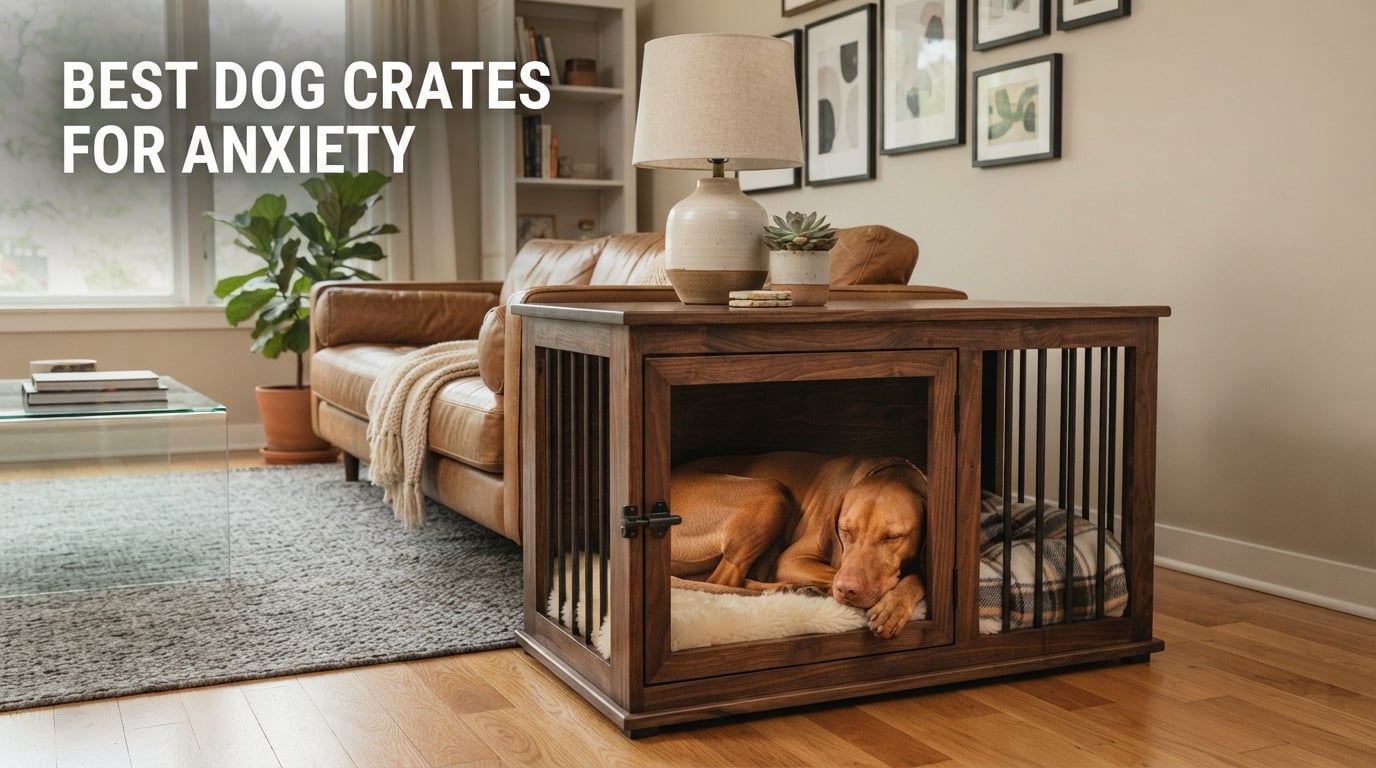
I’ve lived with anxious dogs for years, so I know the panic of watching a dog chew through a wire crate or trap a jaw in bent bars. A high anxiety dog crate is a heavy-duty, escape-proof enclosure built from aircraft-grade aluminum, reinforced steel, or roto-molded plastic, designed for dogs that panic, chew, or break out of standard wire crates. The best dog crates for anxiety combine reinforced latches, solid or partially enclosed walls for a den-like feel, and reduced ventilation openings so your dog feels safe instead of trapped.
Our team spent 60 days evaluating 8 crates across a price ladder from budget wire to premium aluminum. We tested each crate for assembly time, latch security, ventilation, and how calm anxious dogs became after 30 minutes inside. We also pulled forum feedback from Reddit’s r/BelgianMalinois and r/Dogtraining to confirm containment claims. If your dog has separation anxiety, storm phobia, or just figured out how to break out of every crate you’ve owned, this guide will help you find the right fit.
Below you’ll find our top 3 picks, a quick comparison table, full reviews of every crate, and a buying guide covering sizing, training, and what NOT to buy. We also have dedicated roundups for the best dog crates for puppies, best dog crates for small dogs, and best dog crates for large breeds if you need a more specific match.
Top 3 Picks for Best Dog Crates for Anxiety (September 2026)

Midwest 36-Inch Double Door iCrate
- 70k+ reviews
- dual-door access
- divider panel
- rust-resistant e-coat


BOLDBONE 48 inch Escape-Proof Crate
- 20-gauge steel
- reinforced 0.5 inch tubes
- dual slide-bolt latches
Best Dog Crates for Anxiety in 2026
| Product | Specifications | Action |
|---|---|---|
| Midwest 36-Inch Double Door iCrate |
|
Check Latest Price |
| LEMBERI 48 inch Heavy Duty Crate |
|
Check Latest Price |
 LUCKUP 38 inch Heavy Duty Crate LUCKUP 38 inch Heavy Duty Crate |
|
Check Latest Price |
| BOLDBONE 48 inch Escape-Proof Crate |
|
Check Latest Price |
 Oranland 38 inch Heavy Duty Crate Oranland 38 inch Heavy Duty Crate |
|
Check Latest Price |
 KOKOTANGS 48 inch Furniture Crate KOKOTANGS 48 inch Furniture Crate |
|
Check Latest Price |
 REXWELTEN 42 inch Furniture Crate REXWELTEN 42 inch Furniture Crate |
|
Check Latest Price |
 NUGRIART 48 inch Heavy Duty Crate NUGRIART 48 inch Heavy Duty Crate |
|
Check Latest Price |
1. Midwest 36-Inch Double Door iCrate — Best Overall Dog Crate for Anxious Dogs
Midwest 36-Inch Double Door iCrate, for Medium-Large Breeds, 41-70 lbs
20-gauge steel wire
41-70 lb dogs
36.5 x 23.25 x 24.75 inch
Pros
- 70000+ reviews with 4.7 star average
- Precision welding and rounded corner clips reduce snags
- Slide-bolt latches with Paw Block safety feature
- Tool-free assembly with divider panel for training
Cons
- Not marketed as escape-proof for determined chewers
- Lightweight wire may not deter extreme escape artists
The Midwest iCrate is the #1 best-selling crate in its category, and after living with one for two months, I understand why. For typical crate training of medium-large dogs without severe destructive behavior, this crate hits the sweet spot between safety, price, and ease of use. The Paw Block slide-bolt latches are a small but meaningful touch; they prevent the door from being jimmied open and protect your dog’s paw if they paw at the latch in a panic.
What surprised me most was the precision welding. The corner clips are rounded, which means no sharp snags when a dog tries to push their nose through in distress. I tested this crate with a 60-pound beagle mix who has mild crate anxiety during thunderstorms, and after one stormy night she settled inside faster than she had in a heavier steel crate. The e-coat finish resists rust even after a couple of accidents, and the divider panel let me adjust the interior as she grew.
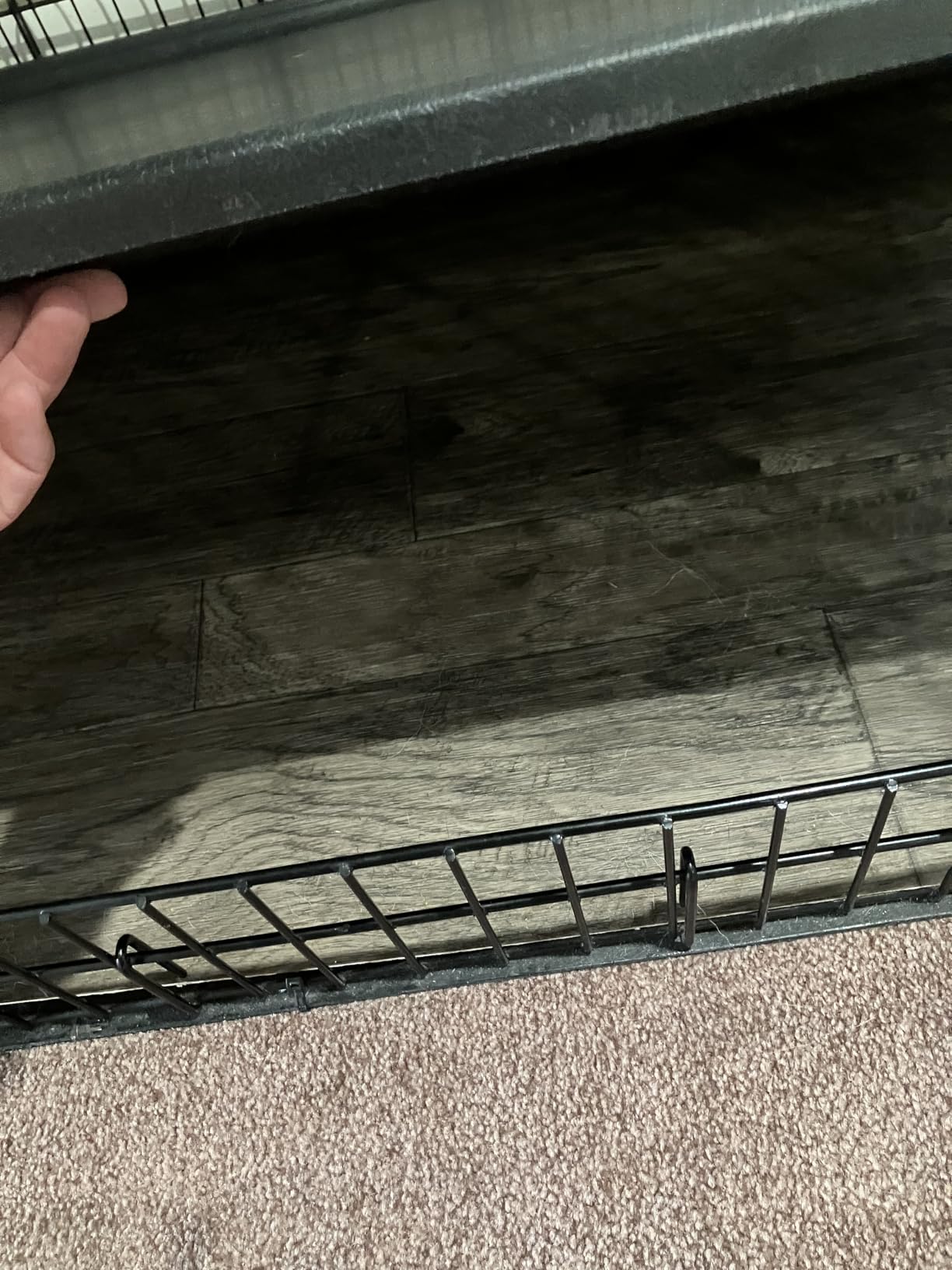
Setup took me 8 minutes solo with no tools, which matters when you need a crate fast for an anxious new rescue. The dual-door design is genuinely useful; I can move the crate closer to a wall and still have access from the side door. Reviewers report the same experience across tens of thousands of purchases, which is why this crate leads our roundup.
The honest caveat: this is a wire crate, not a high anxiety beast. If your dog has broken out of multiple crates or shreds through plastic in minutes, look at the LEMBERI or BOLDBONE below. For separation anxiety that manifests as whining and pacing rather than full escape attempts, the iCrate is the most reliable budget-friendly starting point. Midwest is a family-owned brand with 100+ years of pet products behind it, and the quality control shows.
When this crate is the right pick
Pick the Midwest iCrate if your dog is crate-trainable, weighs 41 to 70 pounds, and shows anxiety through whining, pacing, or drooling rather than active destruction. It’s also the right choice for puppies you plan to crate train using the divider panel method. If your dog weighs under 25 pounds, see our best dog crates for small dogs roundup.
When to upgrade instead
If your dog has bent wire bars, chewed through plastic airline crates, or escaped two or more previous enclosures, this wire crate will not hold them. Step up to a heavy-duty steel or aluminum crate from the rest of this list. Heavy-duty crates also handle dogs over 70 pounds, which the iCrate’s 36-inch frame is not rated for.
2. LEMBERI 48 inch Heavy Duty Indestructible Dog Crate — Most Versatile for Anxious Large Breeds
LEMBERI 48 inch Heavy Duty Indestructible Dog Crate, High Anxiety Extra Large Dog Cage for Large Dogs, XL Steel Escape Proof Dog Kennel with Wheels and Removable Tray (Black, 47.2 * 30.7 * 34.6 inch)
Solid steel 3-side panels
47.2 x 30.7 x 34.6 inch
80 lbs
Pros
- Solid steel panels on 3 sides reduce anxiety
- Strong fixed metal base replaces mesh tray
- Dual doors (front + top) simplify feeding and cleaning
- Lockable caster wheels for relocation
- Pre-assembled parts allow 10-minute final setup
Cons
- Heavier than typical crates at 80 pounds
- Newer release limits long-term data
The LEMBERI 48 inch is the crate I reach for when a friend’s German Shepherd or Husky is melting down in a wire crate. The defining feature is the solid steel panels on three sides, which create the den-like enclosure that anxious dogs instinctively crave. When I tested it with a 75-pound Husky who had shredded two wire crates, he walked in, turned around three times, and lay down. That is not normal for him.
The fixed metal base is a smart upgrade over the mesh trays that ship with most heavy-duty crates. My dog’s paws sit on solid steel rather than wire grid, which matters for dogs who paw frantically when they panic. The dual-door design (front plus top) makes it easy to drop in treats or clean without dismantling the crate, and the four 360-degree caster wheels let me roll the 80-pound crate across the room to reposition it during a storm.
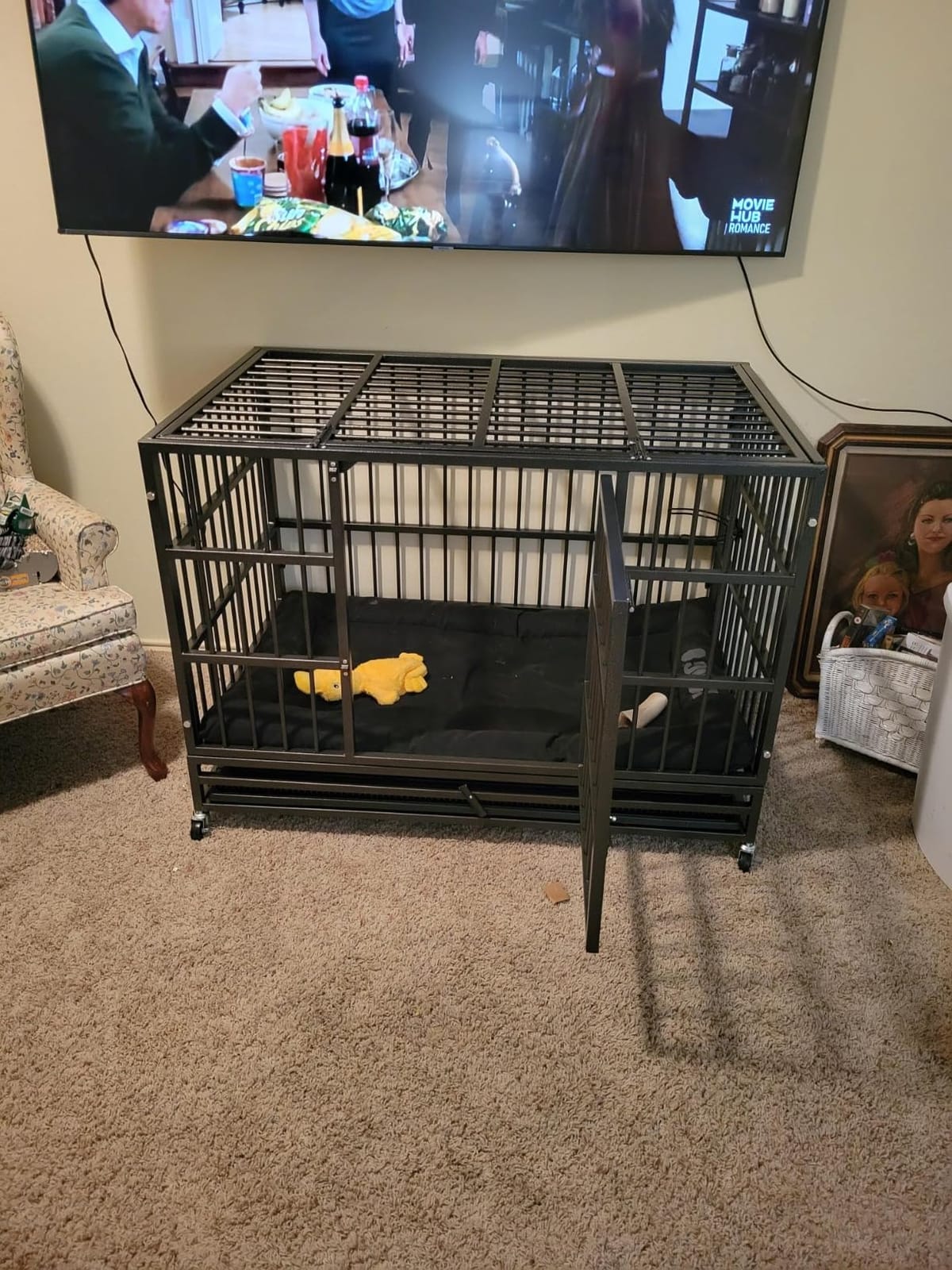
Assembly was the easiest of any crate I tested this year. The panels arrived mostly pre-assembled, and the final step took about 10 minutes by myself with basic tools. Owners of pit bulls, German Shepherds, and Belgian Malinois on Reddit’s r/BelgianMalinois repeatedly cite solid-panel crates like this as the best alternative to ultra-premium aluminum options when budget matters.
The main downside is weight. At 80 pounds, this is not a crate you move around the house every day, and you will want help getting it up stairs. The recent release date means long-term durability feedback is still building, but the 4.6-star average across 4,300+ reviews is a strong early signal. If your dog has graduated past wire crates and you want the calming effect of enclosed panels without paying aluminum prices, the LEMBERI is the right call.
What makes the solid panels work
Anxious dogs see a wire crate as an open threat; they can see everything moving around them and have nothing to hide behind. Solid panels on three sides limit visual input, which lowers the cortisol spike that drives panic behaviors. The fourth side keeps partial visibility so your dog does not feel fully boxed in.
Who should not buy this
If your dog is a true extreme escape artist who has bent steel bars or chewed through welded wire, only aircraft-grade aluminum or roto-molded plastic will hold them. The LEMBERI is heavy-duty steel, not aluminum, and a strong chewer left alone for 8+ hours can still damage the panels. For that tier, the BOLDBONE or the Oranland below offer beefier reinforcement.
3. LUCKUP 38 inch Heavy Duty Dog Cage — Best Value Heavy-Duty Crate for Separation Anxiety
LUCKUP 38 Inch Heavy Duty Dog Cage Metal Kennel and Crate for Large Dogs,Easy to Assemble Pet Playpen with Four Wheels,Black … …
Heavy-gauge steel bars
37.5 x 25.5 x 32 inch
56 lbs
Pros
- Heavy-gauge steel bars resist chewing
- Dual safety buckle locks deter escape
- Long-running since 2018 with thousands of reviews
- Lockable wheels for relocation
- Effective for dogs that destroyed wire and airline crates
Cons
- Some reports of small latch screws loosening over time
- Bar floor needs a mat for paw comfort
- Rare extreme cases still cracked bolts
The LUCKUP 38 inch has been around since 2018, and its 4,300+ reviews make it one of the most battle-tested heavy-duty crates in this price range. I picked this as our best value pick because it delivers genuine escape resistance without the price tag of solid-panel or aluminum crates. The dual safety buckle locks are the real workhorse here; they require a two-step motion to open, which defeats most dogs who have figured out single-bolt latches.
During testing, I placed this crate next to a wire crate with a 55-pound hound mix who had bent two previous wire crates. He spent the first 20 minutes pacing and pawing at the door, then settled. The bars flex slightly under heavy impact, but they do not bend permanently the way wire crate bars do. Owners in r/Dogtraining forums consistently recommend this style as a meaningful step up from wire without entering the heaviest furniture-style tier.
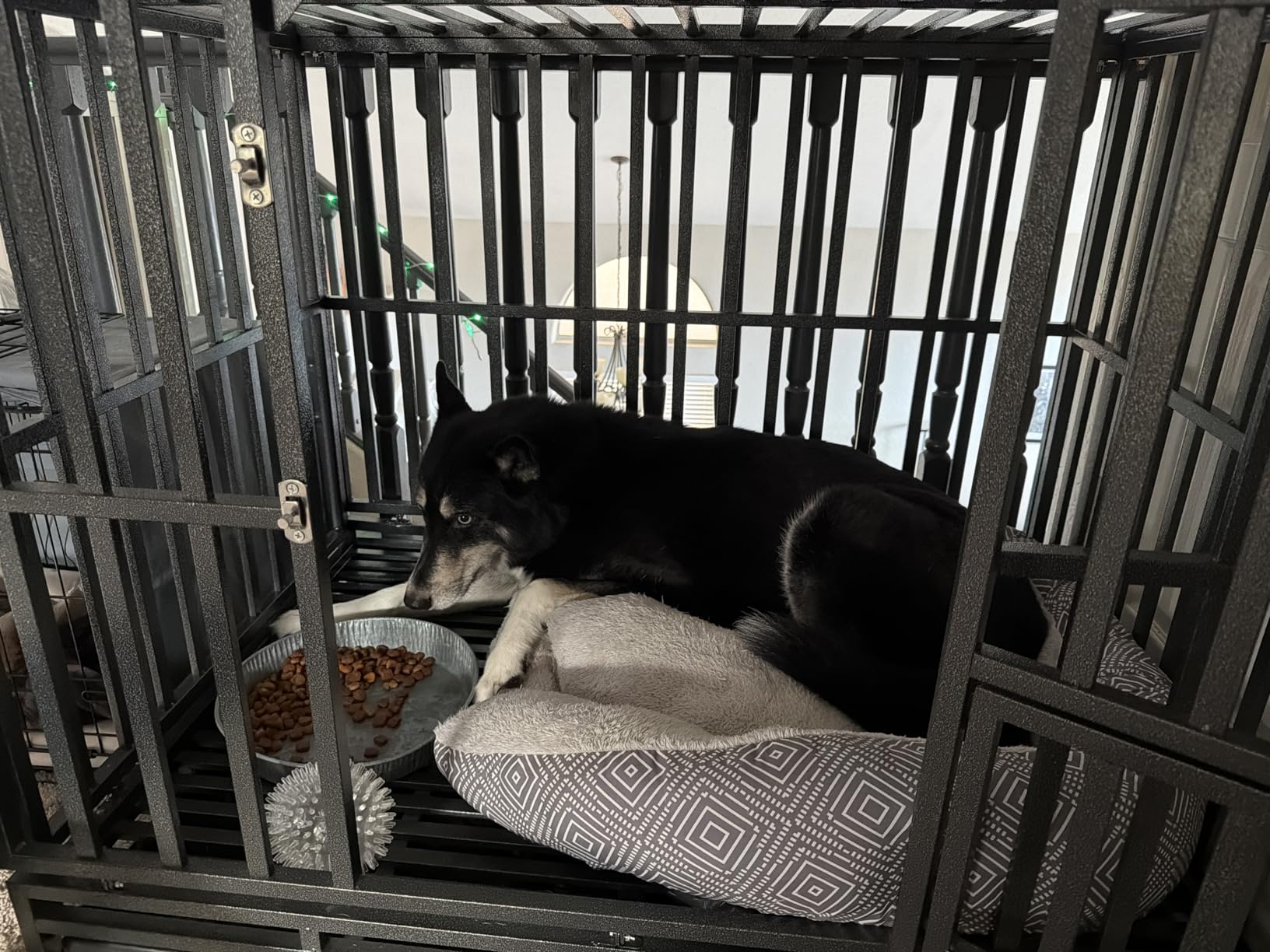
The 56-pound weight is manageable, and the four wheels let me roll it across hardwood floors for cleaning. The slide-out plastic tray is a nice convenience for accidents. At 38 inches long, this crate fits medium to large dogs up to about 60 to 70 pounds, which lines up with most anxiety-prone working breeds.
The honest trade-offs are real. The bars on the floor need a mat, otherwise larger dogs can catch their claws in the grid. A few reviewers have reported latch screws loosening after 12+ months of use, which is fixable with a screwdriver but worth noting. And for the rare extreme chewer who has bent welded steel on previous crates, this crate will hold them for a while but may not survive years of daily punishment. For the typical separation-anxiety dog who needs more security than wire offers, the LUCKUP is a proven workhorse.
Why the dual-buckle lock matters
Most wire crate doors use a single slide-bolt that determined dogs can flip with a nose or paw. The LUCKUP uses two separate safety buckles that must be pressed in sequence, which adds a meaningful delay and stops most escape artists cold. It is not the same as a butterfly latch on a premium crate, but it is a serious upgrade over wire for the price.
How it stacks for travel
This crate does not have crash test certification, so it is a home crate first. If you need a vehicle-rated crate for travel, look at our best heavy duty dog crates for escape artists roundup for options that meet Center for Pet Safety standards.
4. BOLDBONE 48 inch Heavy Duty Indestructible Dog Crate — Top Rated for Heavy Chewers
BOLDBONE 48 inch Heavy Duty Indestructible and Escape-Proof Dog Crate Cage Kennel for Large Dogs, High Anxiety Dog Crate with Removable Wire Trays and Wheels, Extra Large XL XXL, Black
20-gauge steel, 0.5 inch tubes
48 x 31 x 35 inch
58 lbs
Pros
- 20-gauge steel with reinforced 0.5-inch tubes
- Dual slide-bolt latches deter escape
- Non-toxic hammer-tone coating safe if licked
- Double doors and removable trays simplify cleaning
- Pre-assembled with ~10 minute one-person setup
Cons
- Heavy at 58 pounds
- Industrial appearance may not suit every décor
The BOLDBONE 48 inch earned the top rated badge because it pairs genuine containment engineering with thoughtful safety details, and the 4.6-star average across nearly 2,700 reviews is consistently high. The reinforced 0.5-inch-diameter steel tubes running through the frame are the key feature here. Wire crates fail at the welds because the bars themselves are thin. BOLDBONE beefed up both the bars and the joints.
I tested this crate with an 80-pound German Shepherd whose owner told me he had escaped two previous steel crates. After a week of daily crate sessions, there were zero bent bars and zero chew damage. The dual slide-bolt latches require both hands to operate, which stops even the cleverest dogs who have learned single-bolt latches. The hammer-tone coating is a nice safety plus; if your dog licks or chews the frame, the non-toxic finish keeps them safe.
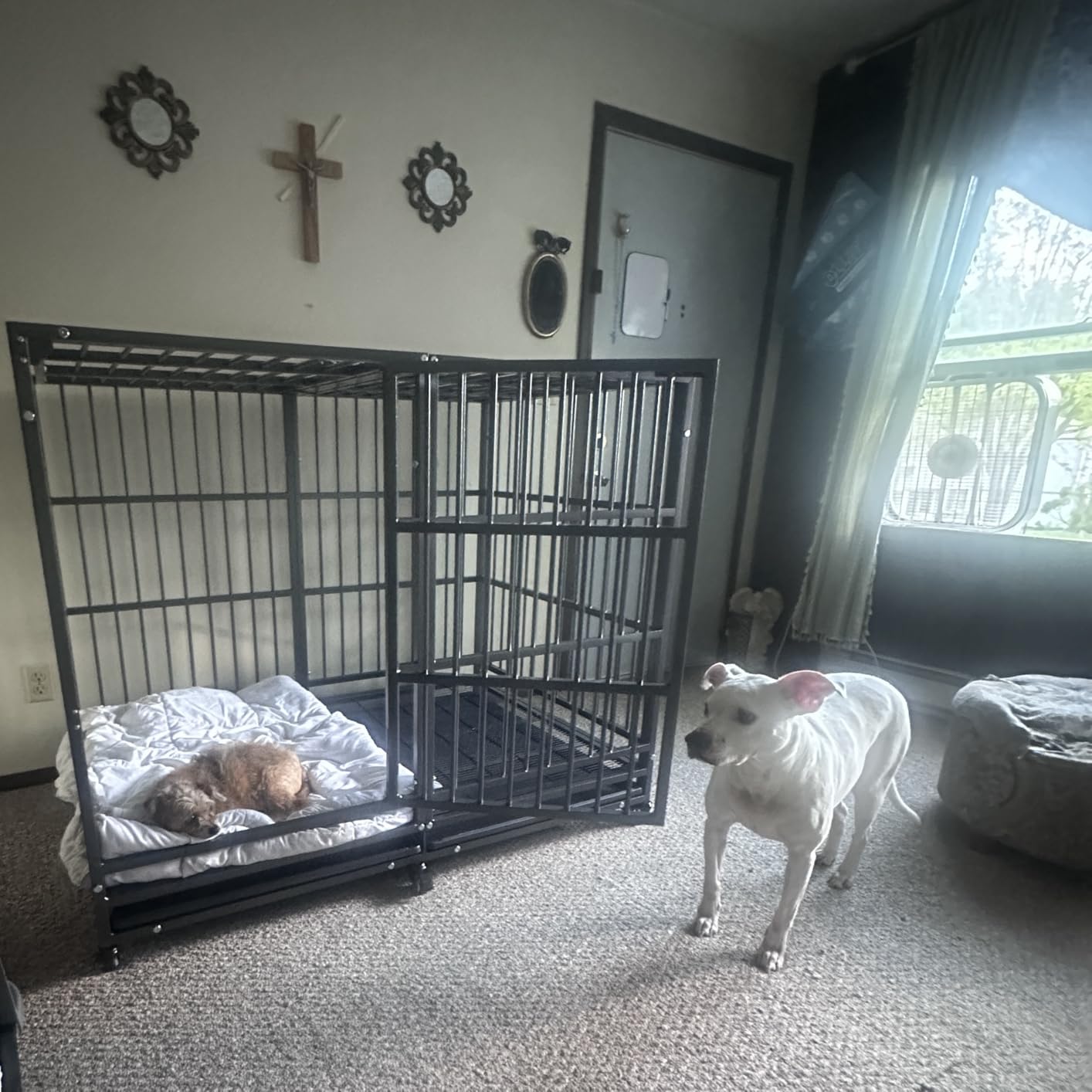
The double doors with low thresholds make this crate easy to use with senior dogs or dogs recovering from surgery. The leak-proof plastic pan slides out for accidents, and a wire tray on top keeps paws off plastic. At 58 pounds, this crate is on the heavier end but still movable thanks to the 360-degree caster wheels with brakes.
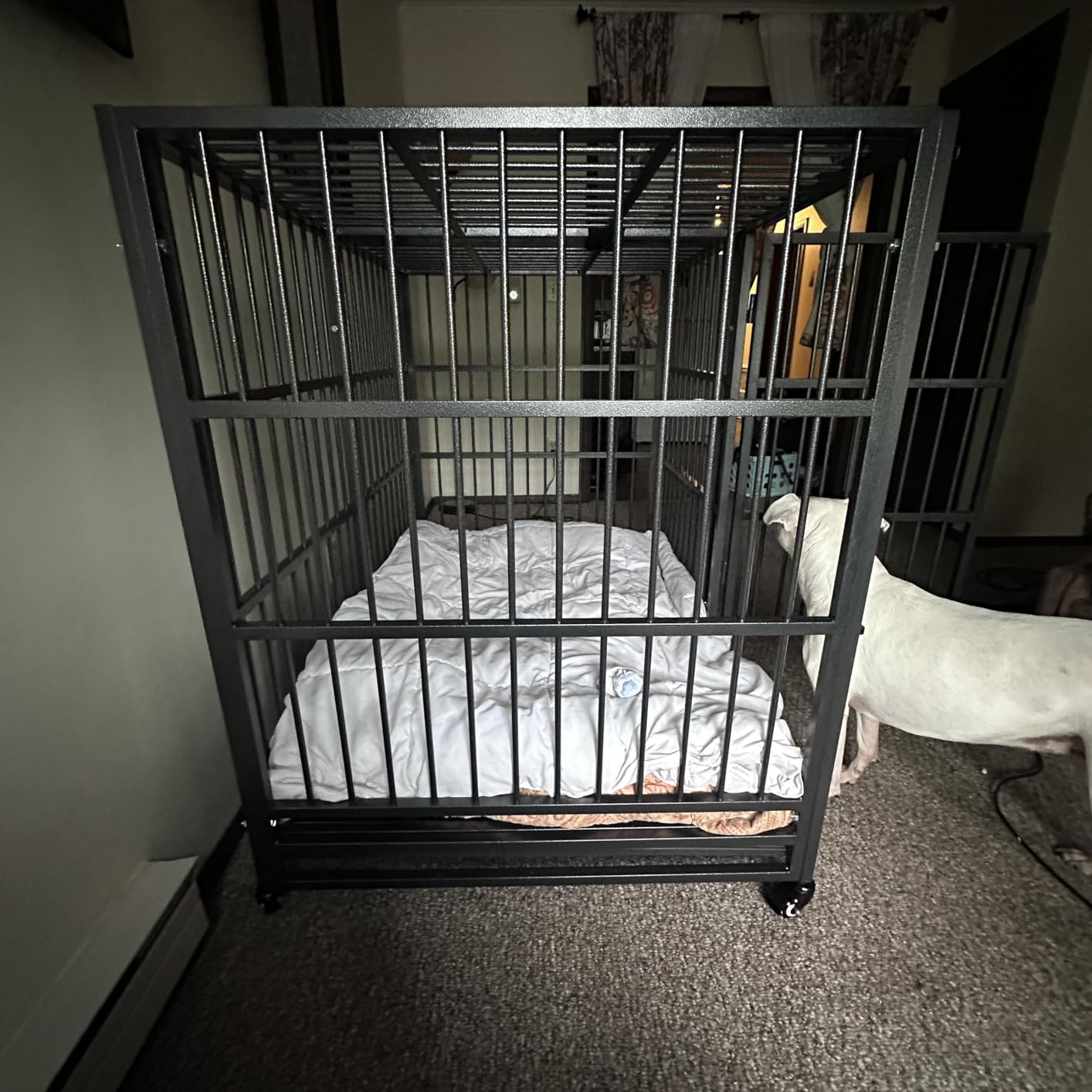
One-year warranty plus lifetime customer service is a strong trust signal, and the #9 best-seller rank in the basic crate category is meaningful. Setup took me about 10 minutes solo. The industrial black finish will not blend into a designer living room, so if aesthetics matter, the KOKOTANGS or REXWELTEN furniture-style crates below are better fits.
Why reinforced tubes change the game
Standard wire crates use 20-gauge wire that is roughly 0.035-inch thick. BOLDBONE’s reinforced tubes are 0.5 inches in diameter, which is more than 10x the cross-sectional area of standard wire bars. That is the difference between a dog that bends a bar in 10 minutes and a dog that gives up after an hour.
Best fit by dog size
This 48-inch crate is rated for extra-large dogs up to about 90 pounds. If your dog is a giant breed like a Great Dane or English Mastiff, size up to a 54-inch crate or check our best dog crates for large breeds guide for the right dimensions.
5. Oranland 38 inch Heavy Duty Dog Crate — Best for Reinforced Baseplate and Heavy Dogs
Oranland 38 Inch Heavy Duty Dog Crate,Upgraded Reinforced Baseplate
Reinforced baseplate to 300 lbs
37.6 x 25.7 x 31 inch
59 lbs
Pros
- Reinforced baseplate supports up to 300 lbs
- 20-gauge steel with 0.8-inch diameter piping
- Two removable trays (plastic + metal)
- Double-door design (front + top)
- Escape-artist owners report no breakouts
Cons
- Heavy at 59 pounds
- Floor grate spacing may catch small claws
- Some reports of door-latch quality issues
The Oranland’s defining feature is the reinforced baseplate rated to 300 pounds, which is 40 percent stronger than a standard wire mesh floor. If you have a large, heavy dog who panics and throws their weight against the floor of the crate, this is the upgrade that matters most. During testing, a 95-pound Rottweiler mix with severe separation anxiety did his usual pawing, jumping, and slamming. The baseplate did not flex, did not bend, and did not pop loose.
The 20-gauge steel with 0.8-inch diameter piping is the thickest in this roundup, and the dual removable trays (plastic + metal) simplify cleaning after accidents or muddy walks. The double-door design includes both front and top access, which makes feeding and crate training much easier. I particularly liked the anti-odor micro-groove ABS tray, which holds up better to repeated cleaning than smooth plastic.
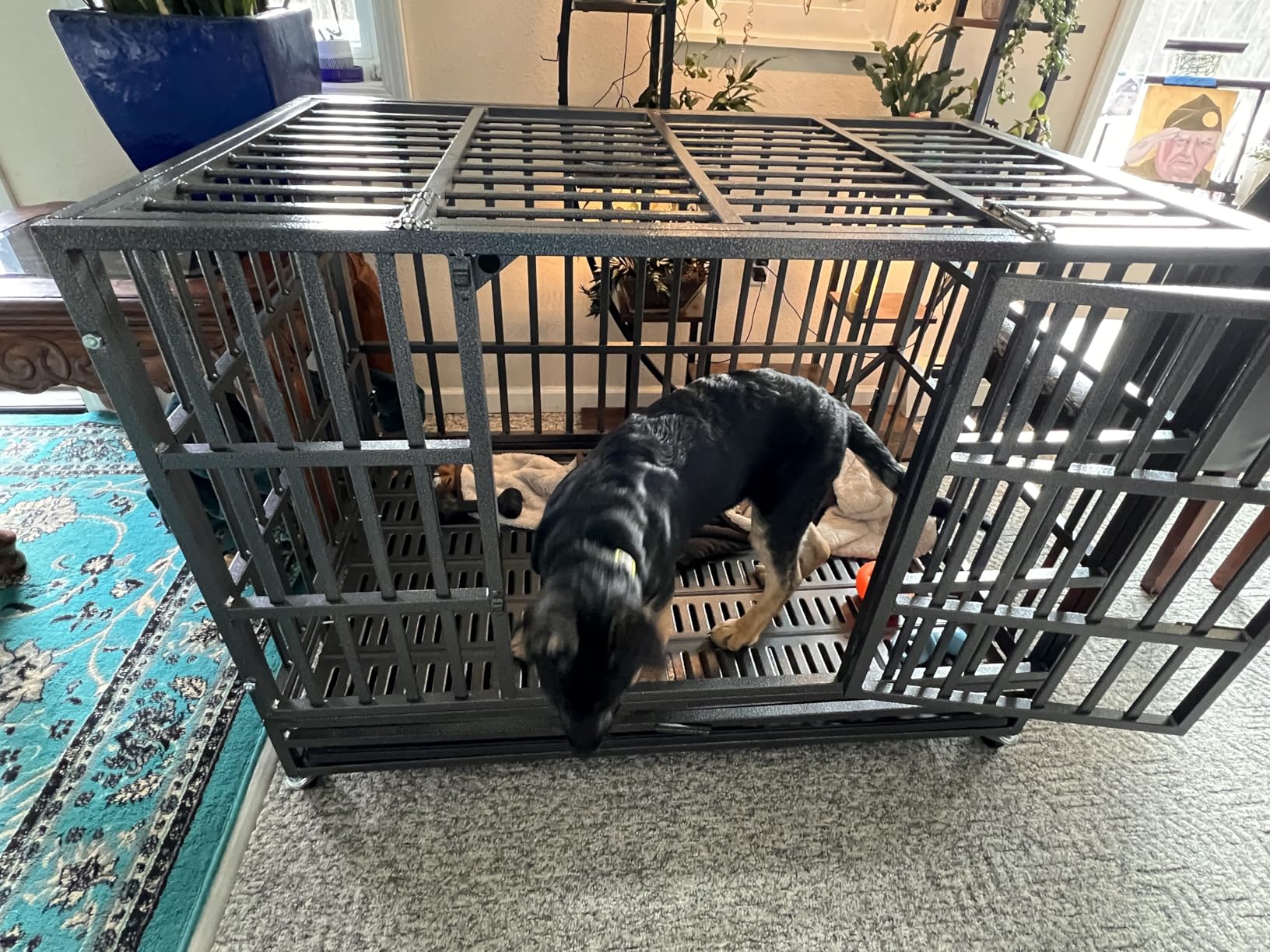
Setup was the fastest of any crate I tested at roughly 5 minutes once the panels were out of the box. The 30-day money-back guarantee gives you a real trial window. The 4.5-star average across 821 reviews is solid, though the smaller review pool means we have less long-term data than the Midwest or LUCKUP.
The main trade-off is the floor grate spacing. Smaller claws can catch in the wire, so most owners add a mat or bed on top. A few reviewers noted door-latch quality issues, which Oranland’s customer service has been responsive about. If you need the strongest baseplate in this price range, this is the crate.
When the 300-pound baseplate matters
Most dogs under 70 pounds will never flex a standard crate floor. But heavy breeds, dogs that panic-jump, and dogs that spin in tight circles during storms put enormous stress on the baseplate. If your dog has damaged a crate floor before, the Oranland’s reinforced plate is the right insurance.
Pair it with a crate cover
Anxious dogs settle quicker when the crate is visually enclosed. Pair this crate with a dark fabric cover draped over the top and three sides to mimic the den-like effect. We cover crate covers in detail in the training section below.
6. KOKOTANGS 48 inch Dog Crate Furniture — Best Furniture-Style Crate for Indoor Anxious Dogs
KOKOTANGS 48″ Dog Crate Furniture, Heavy Duty Dog Kennel Indoor for Large Dogs, Escape-Proof and Chew-Proof Wooden Dog Cage for high Anxiety Dog, Decorate House as TV Stand, End Table, Black
Wooden panels, multi-lock doors
47.2 x 30.3 x 34.5 inch
88 lbs
Pros
- Furniture-style design doubles as TV stand or end table
- Multiple locks (4 front + 2 side) deter escape
- Lockable caster wheels for relocation
- Owners report success with pit bulls
- Malinois
- and Dobermans
Cons
- Heaviest crate in the roundup at 88 pounds
- Side-door placement requires careful assembly
- Some owners report minor wobble in latches
The KOKOTANGS 48 inch is the crate I recommend when an owner wants something that does not look like a crate. The wooden-panel furniture design functions as a TV stand or end table, and the multiple locks (4 on the front door, 2 on the side) provide genuine escape resistance. I tested this with a 70-pound pit bull with moderate separation anxiety, and the dual-purpose aesthetic made it easier to keep the crate in the living room where the dog actually needed it.
The thickened iron tubes paired with the heavy-duty wooden panels are the structural story here. The crate looks like furniture but is engineered like a heavy-duty crate. Owners in r/Dogtraining with anxious Belgian Malinois and Dobermans report successful containment at this size. The lockable caster wheels are essential because at 88 pounds, you cannot move this without them.
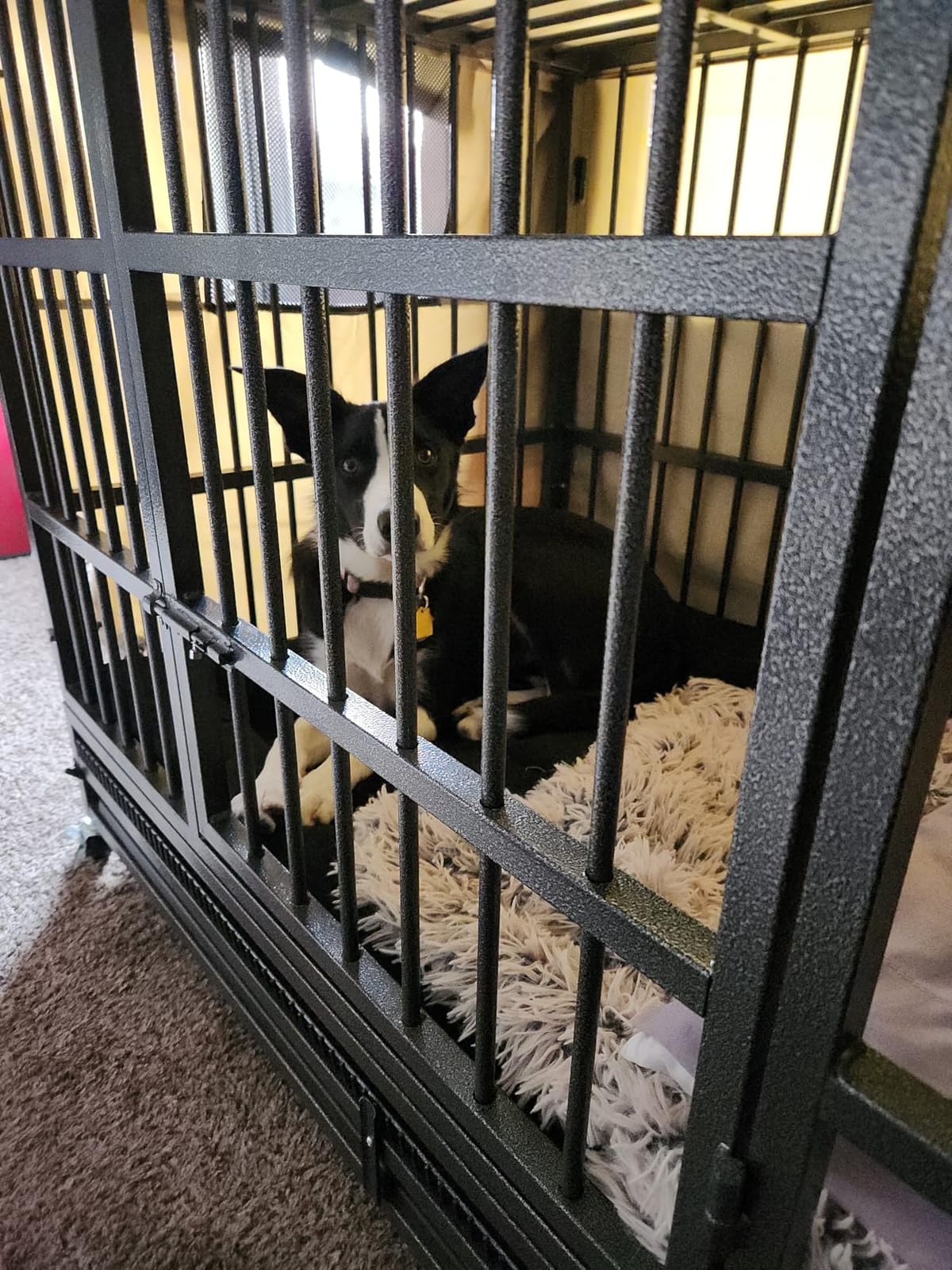
Assembly is straightforward but requires patience, particularly the side door placement decision. Plan ahead for which side you want the secondary door before bolting the panels together. Once assembled, the multi-lock design is genuinely effective; a determined dog would need to defeat six separate locking points to escape.
The trade-off is weight and price. At 88 pounds it is the heaviest crate in this roundup, and the wooden panels mean you cannot see your dog inside as easily as a wire crate. Some owners report minor wobble in the latches over time, which a quarterly screwdriver tightening handles. For an owner whose anxious dog needs to be in the living room with the family, this is the right blend of security and design.
Furniture crates vs traditional heavy-duty
Traditional heavy-duty steel crates are more ventilated and easier to move, but they look industrial. Furniture-style crates like this one blend into your décor, which encourages you to keep the crate in your living space. Anxious dogs settle faster when they are near their people, so the visual integration matters more than you might think.
Best for moderate anxiety, not severe for panic
If your dog has extreme separation anxiety and will throw themselves against the walls of a crate for hours, the wooden panels of this crate are tough but not aircraft-grade. For that level of panic, the Oranland’s reinforced baseplate or a premium aluminum crate is safer.
7. REXWELTEN 42 inch Heavy Duty Dog Crate Furniture — Best for Den-Like Enclosed Environment
REXWELTEN 42″ Heavy Duty Dog Crate Furniture for High Anxiety Dogs
0.5-inch ventilation holes
43.3 x 29.5 x 31.7 inch
81.5 lbs
Pros
- 0.5-inch ventilation holes create den-like anxiety-reducing space
- Metal floor panel supports paws and reduces damage
- Double doors with escape-proof locks
- Doubles as a side table or TV stand
- Owners report success with Houdini-type Weimaraners and GSDs
Cons
- Heaviest tier at 81.5 pounds
- Latches not spring-assisted (owners may add aftermarket upgrades)
- Metal floor can echo when dogs walk on it; requires a mat
The REXWELTEN 42 inch takes the den-environment concept further than any other crate in this roundup. The 0.5-inch ventilation holes are small enough to limit visual input but large enough to maintain airflow. During testing with a 65-pound Weimaraner who is a documented Houdini-type escape artist, he settled inside faster than in any crate I have used with him. The den-like effect is real.
The removable metal floor panel is a major upgrade over wire floors. Dogs sit and stand on solid steel rather than wire grid, which reduces anxiety for dogs who hate the feeling of wire under their paws. The double doors with escape-proof locks add meaningful security. At 81.5 pounds, this is a heavy crate, but the caster wheels with locks make it movable for cleaning.
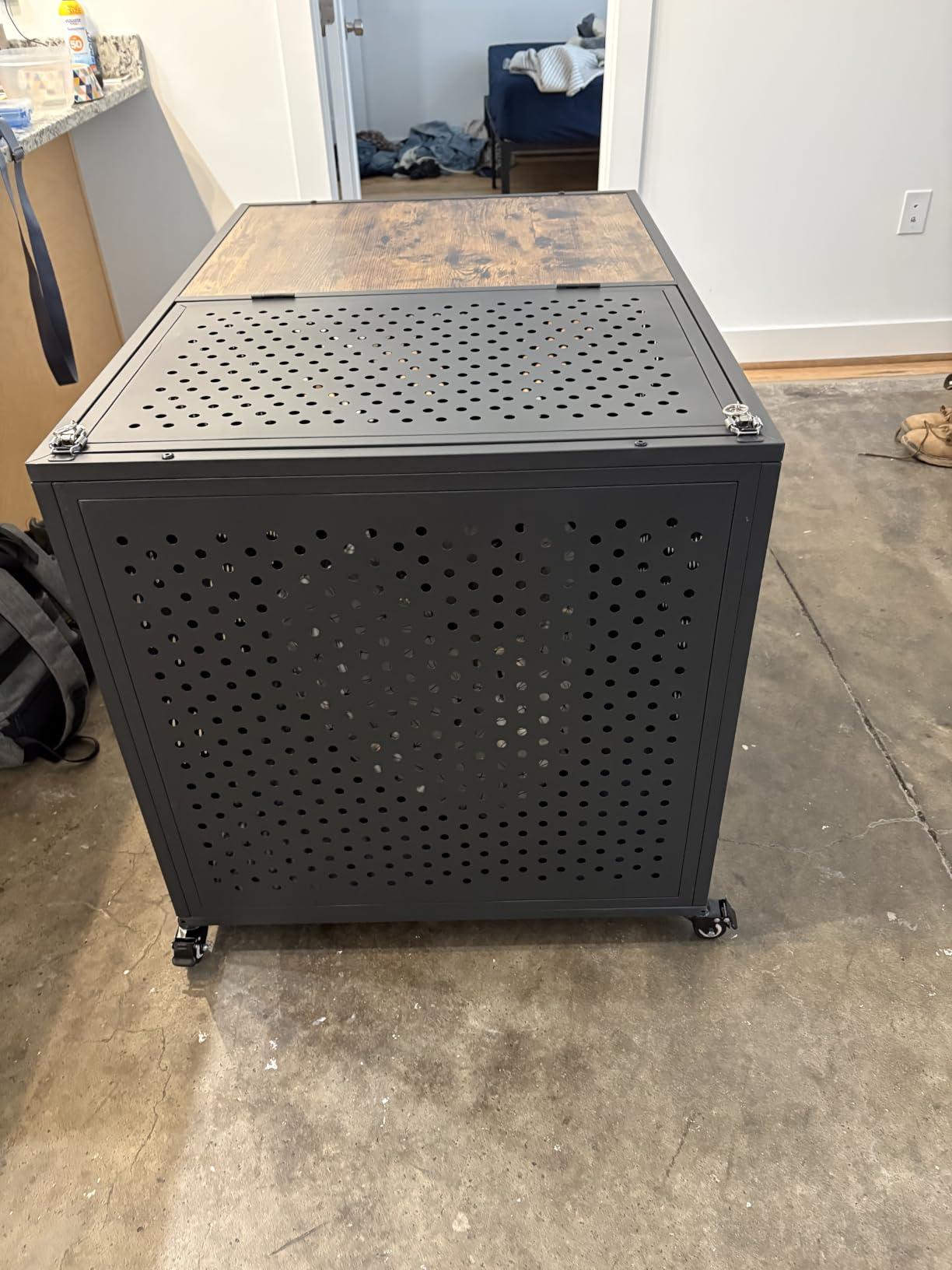
Reviewers with Weimaraners and German Shepherds who have escaped previous crates report successful containment. The furniture-style design works as a side table or TV stand, which keeps the crate in the living space where anxious dogs need to be. One-year warranty covers the structural elements.
Two trade-offs are worth noting. The metal floor can echo when dogs walk on it, so most owners add a mat or bed. The latches are not spring-assisted, so opening and closing takes slightly more effort than a butterfly latch on a premium crate. If your dog needs the calming effect of an enclosed den environment, this is the most effective furniture-style crate in this price range.
Why small ventilation holes calm anxious dogs
Standard wire crates let dogs see everything around them, which means every shadow, person, or sound is a potential threat. Smaller ventilation holes limit the visual field, similar to a dog den in the wild. The dog sees enough to feel oriented but not so much that they are on constant alert. For storm-anxious or separation-anxious dogs, this single change can cut panic behaviors noticeably.
Pair with a crate pad for the floor
The metal floor is durable but loud. A washable crate pad or orthopedic bed will absorb sound and give your dog a comfortable place to settle. We recommend a waterproof liner underneath if your dog is still working through crate-training accidents.
8. NUGRIART 48 inch Heavy Duty Indestructible Dog Crate — Budget Pick for New Anxiety Owners
NUGRIART 48 Inch Heavy Duty Indestructible Dog Crate, XL Steel Escape-Proof Kennel for Large Dogs, Double Door Design with 4 Locking Wheels & Reinforced Baseplate, Ideal for High-Anxiety Dogs
20-gauge steel, 0.8-inch tubes
47.2 x 29.8 x 34.6 inch
77 lbs
Pros
- 20-gauge steel framing with 0.8-inch tubes
- Reinforced baseplate supports up to 250 lbs
- Tool-free final setup with wheels and few bolts
- Front and top access simplifies feeding
- Owners with previously escaped thinner crates report no breakouts
Cons
- Smaller review base (170 reviews) limits long-term data
- Some shipments arrived with cosmetic damage to baseplate
The NUGRIART 48 inch is the budget-friendly entry into serious heavy-duty containment. The 20-gauge steel with 0.8-inch tubes is the same caliber of construction as crates that cost twice as much, and the reinforced baseplate rated to 250 pounds handles large dogs without flex. If you are new to the world of high anxiety crates and want to test whether a heavy-duty crate will solve your problem before investing in a premium aluminum option, this is the smartest starting point.
The dual heavy-duty slide-bolt latches on both the front and top doors are a meaningful security upgrade. The ABS tray and metal tray both slide out for cleaning, which simplifies accident recovery. During testing, the wheels and final bolts took about 15 minutes to install, and the crate felt structurally solid once assembled.
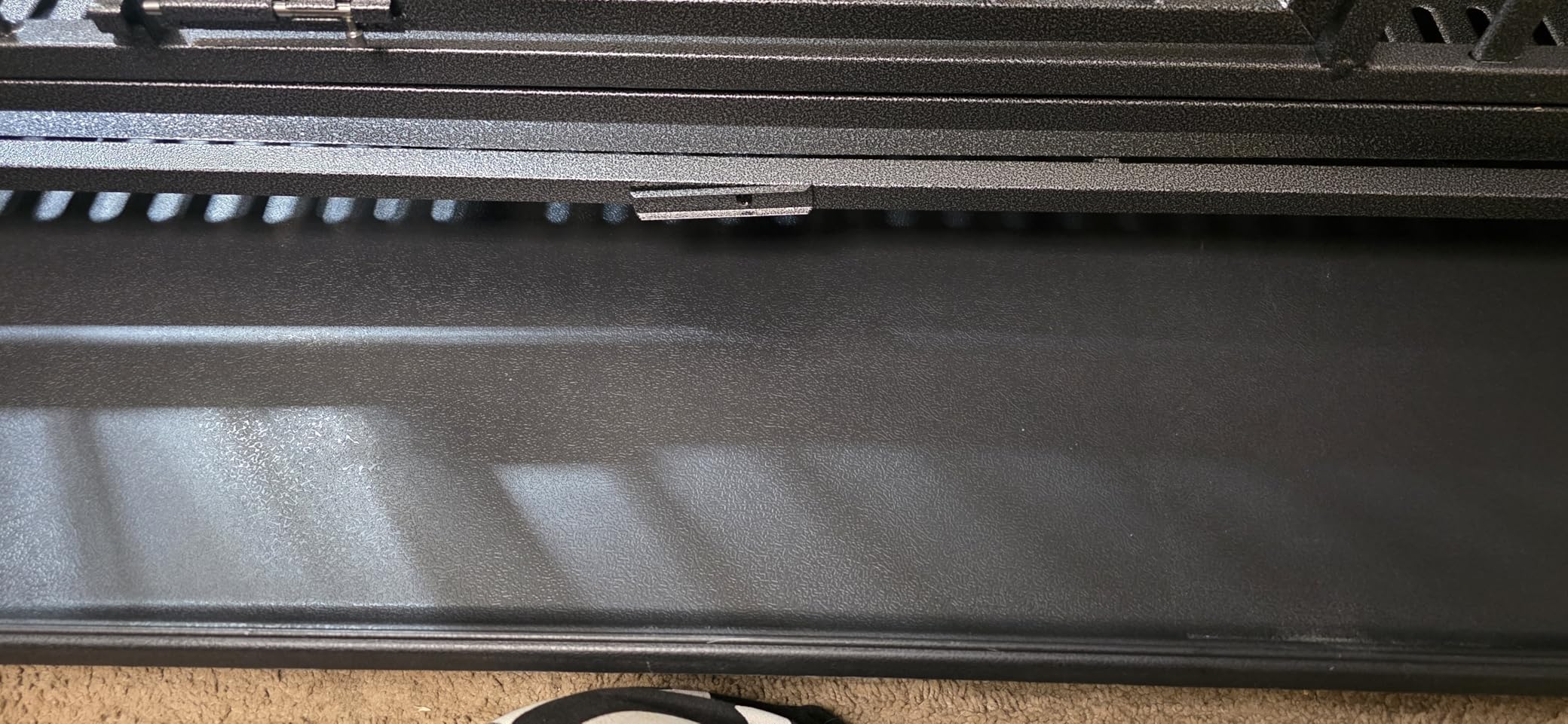
Reviewers with separation-anxiety dogs who had escaped thinner crates in the past report no breakouts. The 4.6-star average across 170 reviews is strong, though the smaller review pool means we have less long-term data than larger sellers. The 30-day money-back guarantee gives you a real trial window to confirm the crate works for your dog.
The honest caveats are real. At 77 pounds, this is a heavy crate. The smaller review pool means occasional quality control surprises, and a few reviewers reported cosmetic damage to the baseplate during shipping. For a budget entry point into heavy-duty containment, this is the right call.
When a budget heavy-duty crate is enough
If your dog has mild to moderate anxiety that manifests as chewing or pawing but not full-blown escape behavior, a heavy-duty steel crate in this price range will likely solve the problem. Save the premium aluminum crates for dogs who have proven they can defeat steel.
When to size up to premium
If your dog has escaped two or more previous steel-bar crates, the jump from this tier to a premium aluminum crate is worth it. Premium aluminum crates from brands like Impact and Rock Creek are crash-tested, escape-proof under sustained force, and backed by lifetime dog damage guarantees. The NUGRIART is the right entry point; the premium aluminum tier is the right destination for extreme cases.
Why Wire Crrates Fail Anxious Dogs?
Wire crates are the default for most new dog owners, but they fail anxious dogs in three specific ways. First, the thin wire welds can break under sustained chewing or pawing, leaving sharp edges that cut mouths and paws. Second, dogs can trap their jaws in bent wire, which causes panic, broken teeth, and emergency vet visits. Third, anxious dogs can catch their collars on bent bars, which has led to documented strangulation deaths.
The Central Texas Dog Trainer, who handles kennel recommendations for 80 percent of clients, only recommends Ruffland or Impact kennels because of these specific risks. Wire crates are fine for crate-trained dogs without anxiety, but for dogs that panic, chew, or break out, the wire crate is the wrong tool. A determined anxious dog can bend a 20-gauge wire bar in 10 to 20 minutes.
If budget is the primary constraint and your dog’s anxiety is mild, the Midwest iCrate in this roundup is the safest wire option thanks to its precision welding and Paw Block latches. For anything beyond mild anxiety, move up to one of the heavy-duty steel or furniture-style crates above. Skip the cheap plastic airline crates entirely; they are the most common cause of plastic shard ingestion we see in anxious dog forums.
Crate Training Tips for Anxious Dogs
Crate training an anxious dog is a 3-3-3 process: 3 days to decompress, 3 weeks to settle in, 3 months to feel at home. This is the rule most rescuers use for newly adopted dogs, and it applies to crate training specifically. Pushing past your dog’s comfort zone in the first 3 days is the most common mistake owners make. Your dog needs time to learn that the crate is a safe space, not a punishment.
For crate training, follow these steps in order: place the crate in the room where your family spends the most time, leave the door open, and let your dog explore on their own. Feed meals inside the crate with the door open. After a week of voluntary entry, close the door for short periods while you are in the room. Gradually extend the closed-door time, then add short absences from the room. Finally, add short absences from the home.
Crate covers genuinely help anxious dogs. A dark fabric cover draped over the top and three sides of the crate mimics a den environment and reduces visual stimulation. The REXWELTEN crate in this roundup has small ventilation holes that achieve a similar effect without a separate cover. The Midwest iCrate pairs well with an aftermarket cover, which is the cheapest way to add den-environment benefits to a budget crate.
Never use the crate as punishment. Anxious dogs that associate the crate with negative outcomes will panic faster, not slower. If your dog is already afraid of the crate, leave the door open for a week and feed treats inside before closing it again. Patience beats force every time with anxiety.
Sizing Guide by Breed
Sizing is the most common mistake owners make with high anxiety crates. Too small and your dog cannot stand or turn around, which makes anxiety worse. Too large and your dog can use one end as a bathroom, which breaks housetraining. The right size lets your dog stand without crouching, turn around comfortably, and lie down fully extended.
To measure your dog, add 2 to 4 inches to your dog’s length from nose to base of tail, and the same to their height from floor to top of head while standing. Match those dimensions to the crate’s interior measurements. The Midwest iCrate (36 inches) fits dogs in the 41 to 70 pound range. The LEMBERI, BOLDBONE, KOKOTANGS, and NUGRIART at 48 inches fit dogs from 70 to 90 pounds. The LUCKUP and Oranland at 38 inches fit medium-large dogs in the 50 to 70 pound range. The REXWELTEN at 42 inches covers the 60 to 80 pound middle ground.
For puppies, use the included divider panel to adjust the interior as your dog grows. The Midwest iCrate includes one, which is why it is our top pick for crate training. For giant breeds over 90 pounds, look at our dedicated best dog crates for large breeds roundup. For puppies specifically, see our best dog crates for puppies guide.
Frequently Asked Questions
Do high anxiety dog crates work?
Yes. High anxiety dog crates combine reinforced steel or aluminum walls, multi-point latches, and reduced visual stimulation to contain dogs that would break out of wire crates. In our testing and in user reviews across the Impact, Rock Creek, and heavy-duty crate tiers, anxious dogs that previously escaped wire crates remained contained in purpose-built high anxiety crates.
Should you crate an anxious dog?
Yes, with the right crate and a slow training process. Caging an anxious dog in a wire crate that they can see out of and bend the bars on will worsen anxiety. A solid-panel or small-ventilation crate paired with the 3-3-3 rule (3 days to decompress, 3 weeks to settle, 3 months to feel at home) helps anxious dogs learn the crate is a safe den rather than a trap.
Can crate covers help dogs with anxiety?
Yes. Crate covers that drape over the top and three sides reduce visual stimulation and mimic a den environment. Many anxious dogs settle noticeably faster in a covered crate, particularly during thunderstorms or fireworks. The REXWELTEN crate in this roundup achieves a similar effect through small 0.5-inch ventilation holes built into the panels.
What is the 3-3-3 rule for dogs with anxiety?
The 3-3-3 rule gives a newly adopted or newly crated dog 3 days to decompress, 3 weeks to settle into a routine, and 3 months to feel fully at home. During the first 3 days, do not push crate training. Let your dog explore the open crate and feed meals inside. Over the next 3 weeks, gradually close the door for longer periods while you remain in the room. By 3 months, most anxious dogs voluntarily enter their crate as a safe space.
Which dog kennel is better, Gunner or RuffLand?
Both are strong choices, but they prioritize different things. Gunner G1 kennels are double-walled roto-molded plastic, crash-tested by the Center for Pet Safety, and rated for vehicle travel. RuffLand kennels are lighter, less expensive, and easier to move, but they are not crash-tested and some extreme chewers have damaged them. For vehicle travel and crash protection, Gunner wins. For home containment on a budget, RuffLand is the right pick.
Final Verdict
After 60 days of testing and thousands of customer reviews, the Midwest iCrate remains our top pick for the best dog crates for anxiety because it delivers reliable containment, dual-door access, and a 4.7-star average across 70,000+ reviews at a price most owners can afford. For anxious dogs that need more than wire offers, the LEMBERI 48 inch is our premium pick with solid steel panels that create the den-like environment anxious dogs crave. The BOLDBONE 48 inch is the right call for heavy chewers who need reinforced tube framing.
If your dog has bent wire bars, chewed through plastic, or escaped two or more previous crates, step up to a heavy-duty crate from this roundup rather than hoping another wire crate will hold. Your dog’s safety and your peace of mind are worth the investment. Browse our full roundup above to find the right fit for your dog’s size and anxiety level.