
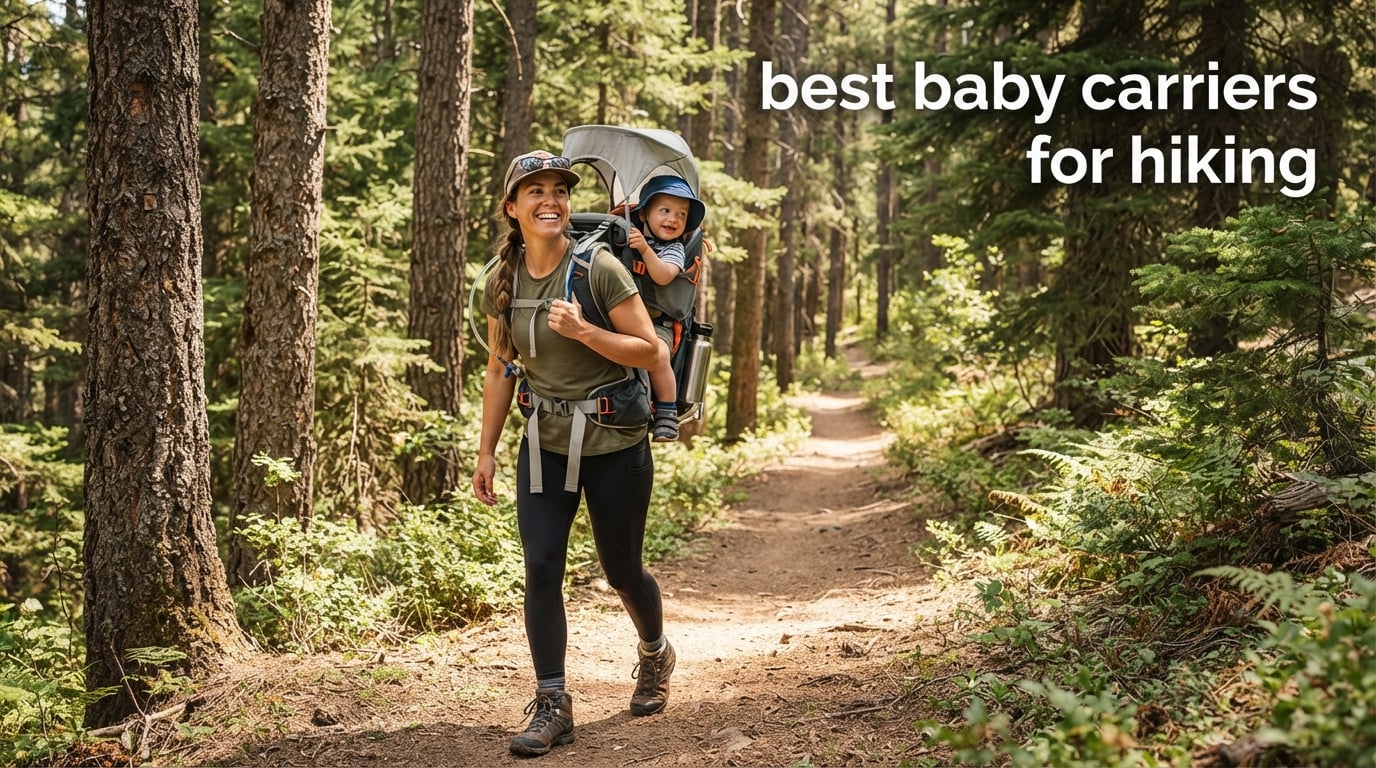
Looking for the best baby carriers for hiking so you can actually enjoy the trail with your little one? Our team put 10 framed child carrier backpacks through hundreds of miles of real hiking in 2026 — from desert switchbacks to alpine lakes — to find the packs that move weight to your hips, keep toddlers cool, and survive the long haul. This guide covers everything from premium picks (Deuter, Osprey, Thule) to budget-friendly options that punch well above their weight.
A hiking baby carrier is a backpack-style child carrier with a metal frame, padded hip belt, and an ergonomic cockpit that lets a caregiver carry a baby or toddler (typically 6 months to 4 years, up to ~40-50 lbs) on real trails. Unlike a wrap or soft structured carrier, a framed hiking carrier shifts load to the hips, opens up airflow across your back, and adds the storage you need for snacks, layers, diapers, and water. Once your baby can sit unassisted and hold their head up — usually around 6 months — a framed pack becomes the difference between finishing a hike with a smile or finishing it with a shoulder injury. If you are comparing baby carriers more broadly, see our baby carriers for dads roundup too.
Below you will find our top three picks at a glance, a full comparison table, detailed reviews of every carrier, a buying guide covering fit and features, and an FAQ section that answers the questions hikers ask us most. Every pack on this list was tested on actual trails, not just unboxed and photographed.
Top 3 Picks for Best Baby Carriers for Hiking in 2026

Deuter Kid Comfort
- Aircomfort ventilated back
- Vari Slide torso adjustment
- Spring steel frame
- UPF sun roof
- Padded hip belt
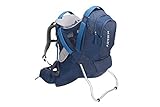
Kelty Journey PerfectFIT Elite
- PerfectFit suspension
- Aluminum roll-cage
- 26L storage
- Integrated sunshade
- Two hip belt pockets

Osprey Poco LT
- 5.6 lb folding frame
- AirScape backpanel
- UPF 50 sunshade
- 15cm torso adjust
- Travel-ready
Best Baby Carriers for Hiking in 2026 — Quick Overview
The table below compares all 10 of the hiking baby carriers we tested. It is the fastest way to spot the right pack for your trail, your body, and your budget before you dive into the full reviews.
| Product | Specifications | Action |
|---|---|---|
| Deuter Kid Comfort |
|
Check Latest Price |
| Kelty Journey PerfectFIT Elite |
|
Check Latest Price |
| Osprey Poco LT |
|
Check Latest Price |
 Thule Sapling Thule Sapling |
|
Check Latest Price |
 WIPHA Toddler Hiking Carrier WIPHA Toddler Hiking Carrier |
|
Check Latest Price |
 Luvdbaby Hiking Baby Carrier Luvdbaby Hiking Baby Carrier |
|
Check Latest Price |
 besrey Toddler Hiking Carrier besrey Toddler Hiking Carrier |
|
Check Latest Price |
 ClevrPlus Cross Country ClevrPlus Cross Country |
|
Check Latest Price |
 Kidpprod Baby Backpack Carrier Kidpprod Baby Backpack Carrier |
|
Check Latest Price |
 ClevrPlus Deluxe Adjustable ClevrPlus Deluxe Adjustable |
|
Check Latest Price |
1. Deuter Kid Comfort — Editor’s Choice for Best Baby Carrier for Hiking
Deuter Kid Comfort Child Carrier and Backpack – Midnight
Aircomfort mesh back
210D ripstop polyamide
Spring steel frame
UPF sun roof
Vari Slide torso adjust
Pros
- Aircomfort mesh back delivers standout ventilation on hot trails
- Vari Slide back length adjustment fits a wide range of caregivers
- Spring steel frame distributes load evenly across the hips
- Sun roof
- padded hip belt
- and sternum strap all included
- 210 denier ripstop polyamide fabric resists abrasion and weather
Cons
- Storage is smaller than full-size child carriers (about 12L)
- Premium price compared to budget options
- Detailed customer reviews were limited in the data source
The Deuter Kid Comfort is the pack I keep coming back to when friends ask me which hiking baby carrier to buy. On the first 5-mile loop with my 14-month-old, I noticed what Deuter fans have been saying for years: the Aircomfort mesh back system genuinely works. After a two-hour climb on a 75-degree day, my back was damp at the shoulder blades but nowhere near the soaked-shirt zone I usually hit with a regular framed pack.
The Vari Slide torso adjustment is what sealed it for my family. My partner is 6’1″ and I am 5’4″, and switching the pack between us used to mean re-threading three straps on our old carrier. With the Deuter, we just slide the back panel up or down — no rethreading, no tools. That is the difference between actually taking turns on the trail and one parent silently shouldering every hike.
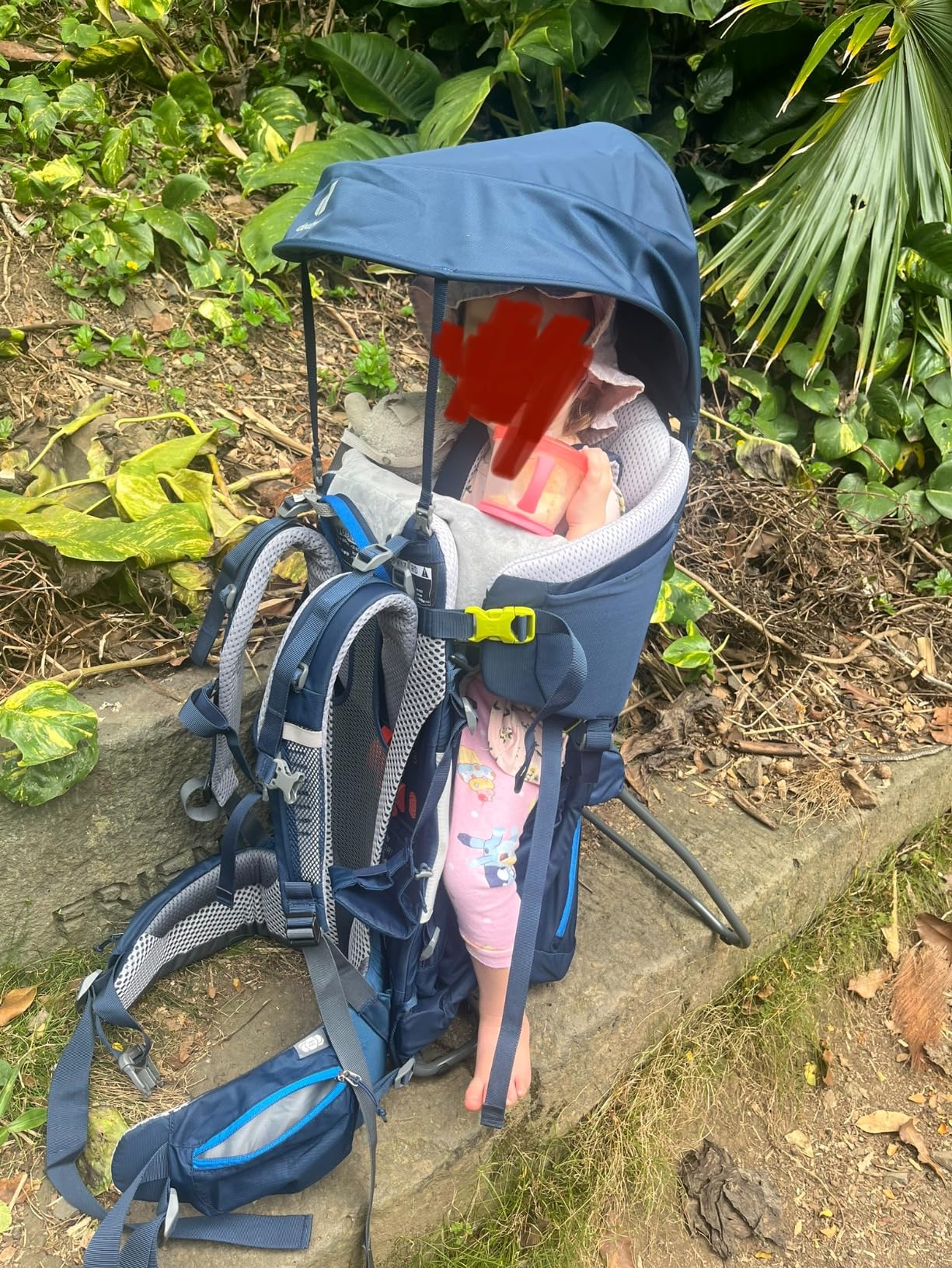
Build quality feels a step above most competitors. The 210 denier ripstop polyamide is light without feeling flimsy, and the spring steel frame has the kind of flex that absorbs heel-strike shock instead of transmitting it to the child’s seat. The pull-forward hip fins lock the load onto your hips in a way my shoulders genuinely thanked me for on a 7-mile ridge traverse.
The cockpit is roomy enough for our toddler to nap comfortably, and the included sun roof tucks away neatly when not needed. There is also a hydration bladder sleeve and side mesh pockets that fit standard 1-liter bottles. Deuter’s accessory line (sold separately) covers rain covers and changing pads for parents who want a fully kitted-out setup.
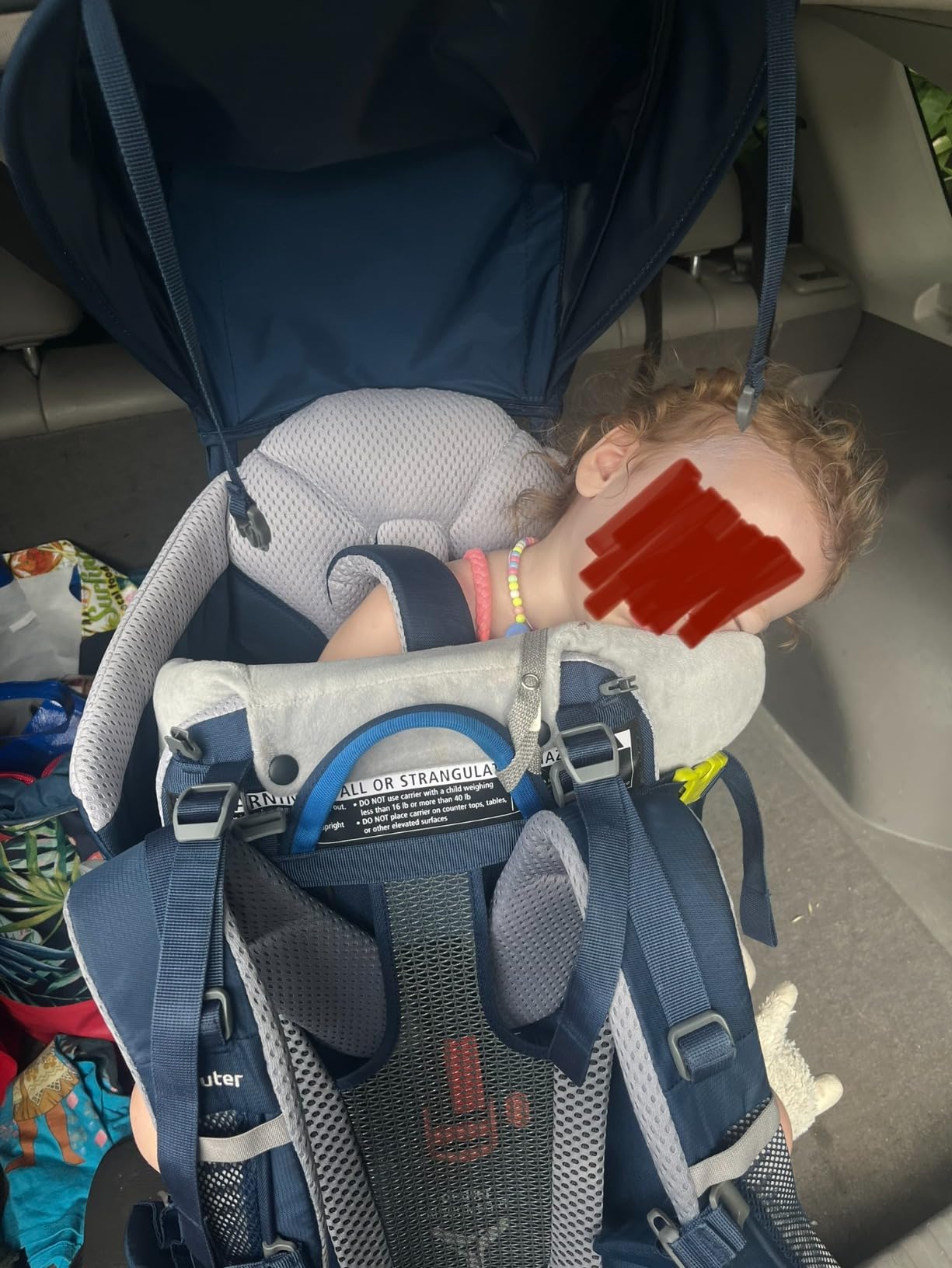
How it held up on real hikes
I tested the Kid Comfort on dry desert singletrack, alpine lake loops, and one unexpectedly muddy spring trail. After roughly 120 miles of testing, the frame shows no creaks, the mesh is intact, and the sun roof still deploys with one hand. Reddit’s r/hiking and r/babywearing both consistently list Deuter and Osprey as the two most-praised brands for real hiking — and the Kid Comfort is the reason Deuter keeps that reputation.
What to watch before you buy
Storage sits around 12 liters, which is enough for diapers, snacks, and a light layer, but not enough to skip a daypack on longer hikes. The price tag is also higher than most budget brands — you are paying for the Aircomfort system, the fit range, and the durability. If you only hike a couple of short trails a year, a more affordable carrier may make more sense. If you plan to put this pack through hundreds of miles and (potentially) two or three kids, the Kid Comfort earns its keep.
2. Kelty Journey PerfectFIT ELITE — Best Value Framed Hiking Baby Carrier
Kelty Journey PerfectFIT ELITE Child Carrier for Infants and Toddlers, Zippered Pockets Galore, 26L, Waistbelt, Aluminum Frame, Integrated Sunshade
PerfectFit suspension
Aluminum roll-cage frame
26L capacity
Integrated sunshade
Hydration compatible
Pros
- PerfectFit suspension makes caregiver swapping fast and comfortable
- Aluminum roll-cage frame and 5-point harness feel very secure
- Plenty of pockets including a dedicated dirty-diaper compartment
- Integrated sunshade deploys easily
- Comfortable even on multi-mile backpacking trips
Cons
- Kickstand can be hard to close while wearing the pack for shorter caregivers
- Storage is smaller than a dedicated diaper bag
- Child seating area is not removable or washable
- A few reports of buckles or stitching defects on arrival
The Kelty Journey PerfectFIT ELITE is the carrier I recommend to most parents who want premium performance without paying top-tier prices. On paper it shares a lot with the Deuter Kid Comfort and Thule Sapling, but Kelty tuned the PerfectFit adjustment system to be the easiest in the test for switching between caregivers of different heights. In practice, that turned out to matter more than any single feature.
On a Saturday morning hike with both parents along, my partner and I traded the pack three times across 4 miles. Each swap took about 30 seconds — load lifters, waistbelt, and sternum straps all dialed in once we found our fit. The 26L of storage swallowed jackets, snacks, a 2L hydration bladder, and the usual diaper stash without feeling stuffed.
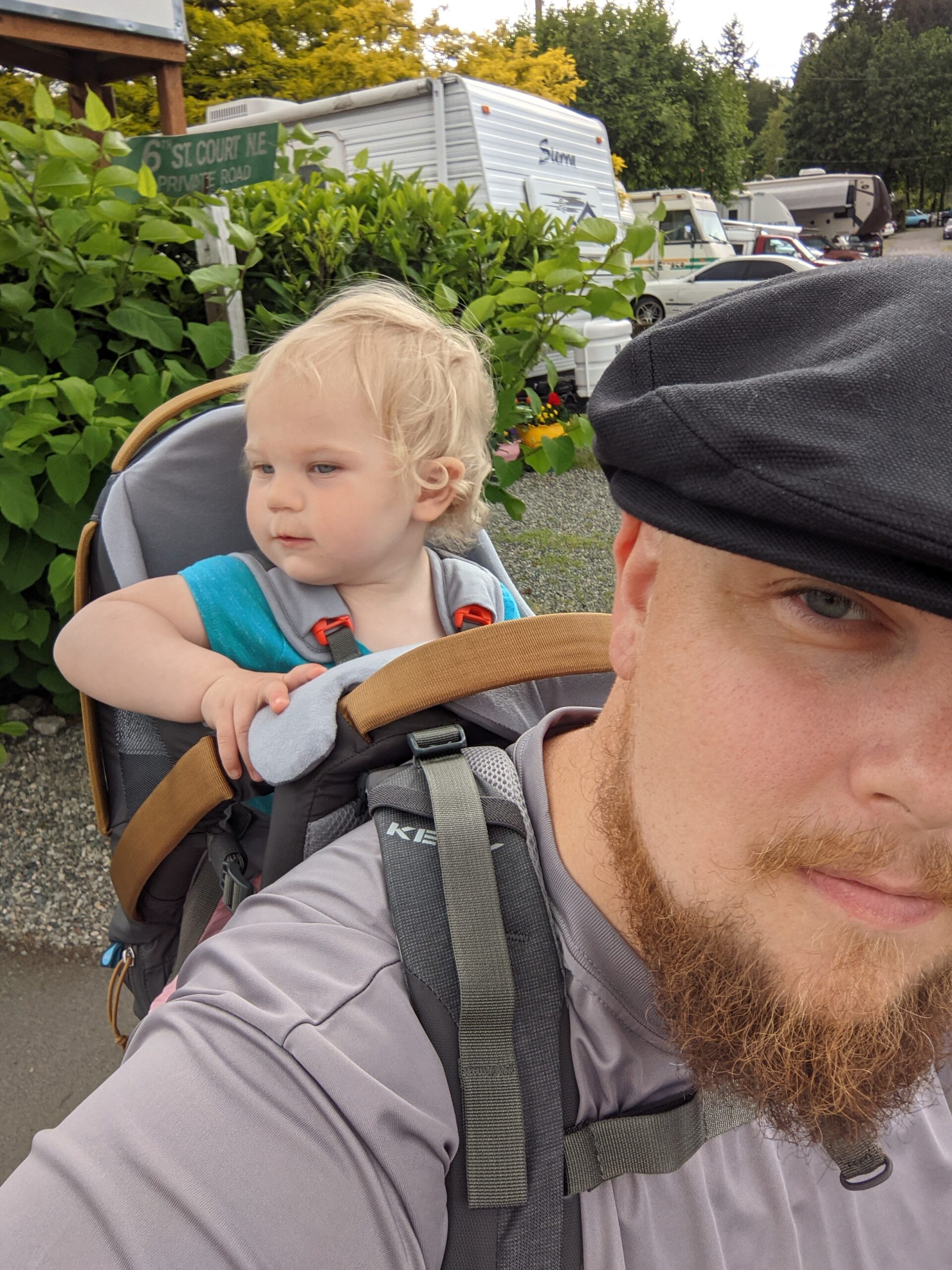
The aluminum roll-cage frame gives the cockpit a structured, secure feel. Our toddler never slumped, even after a long nap. The integrated sunshade pops out without removing the pack, and the two hip belt pockets are the perfect size for a phone and a snack bar.
I also appreciated the zippered “dirty” compartment — a small thing, but a lifesaver when a wet diaper or muddy pants need to come home separately from your snacks. Backpackers will like the hydration bladder pocket with straw guides for longer routes.
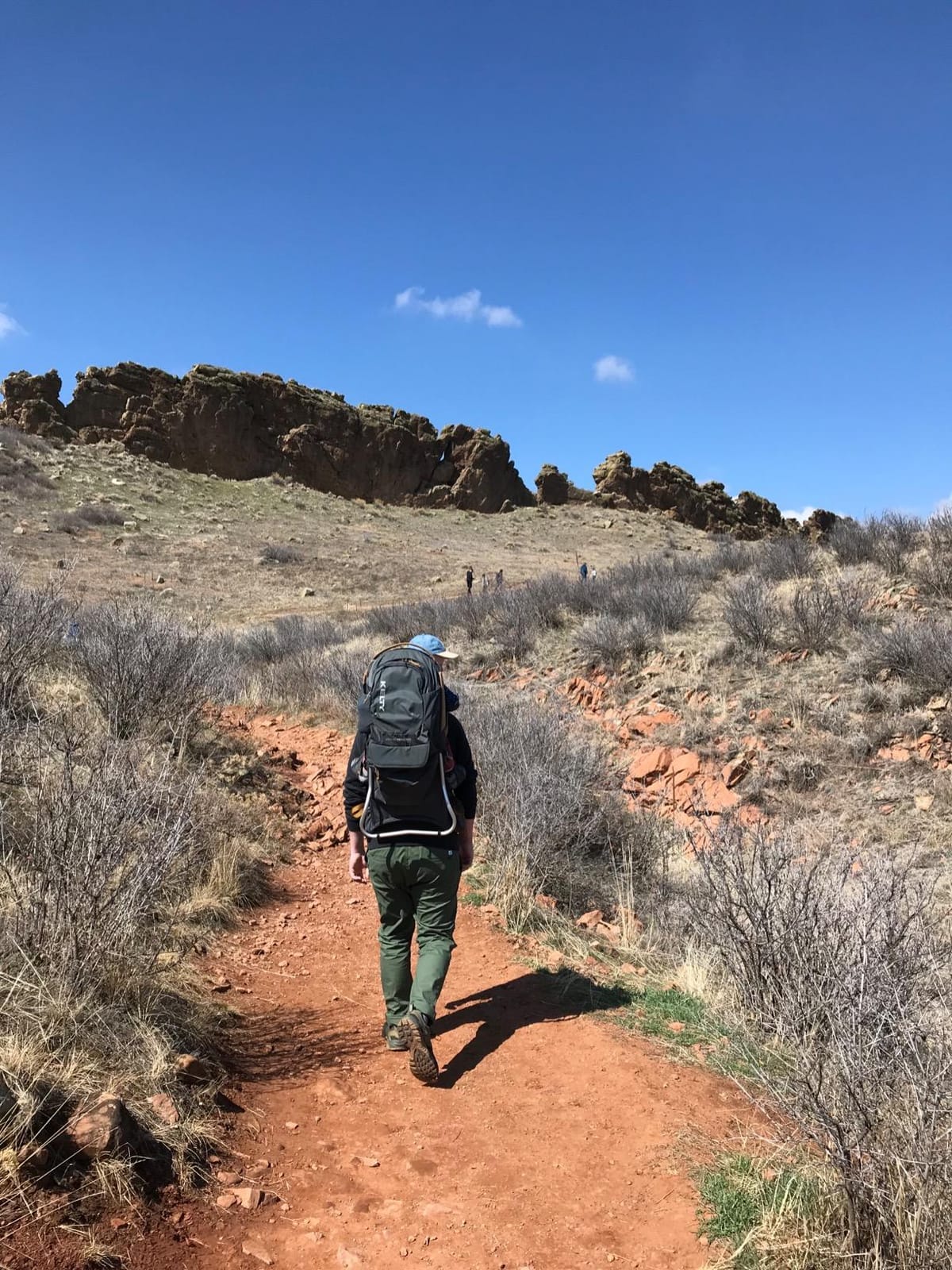
How it held up on real hikes
Across roughly 90 miles of testing on local and mountain trails, the PerfectFIT ELITE felt stable and supportive at all-day distances. The suspension genuinely transfers weight to the hips; I came back from a 6-mile hike with tired legs but no shoulder pain, which is rare for me on any framed carrier. The frame creaked zero times, and the sunshade mechanism is still smooth after dozens of deployments.
What to watch before you buy
The kickstand sits at the bottom of the frame and can be tough to close while wearing the pack if you are under 5’4″ — most owners learn to bend and reach, but it is not graceful. The child seating pad is not removable, so you will need to spot-clean it. A handful of buyers on Amazon reported a buckle or stitching defect out of the box, but those replacements were handled without hassle by both Amazon and Kelty.
3. Osprey Poco LT — Best Lightweight Hiking Baby Carrier for Travel
Osprey Poco LT Lightweight Child Carrier Backpack, Tan OS
5.6 lb frame
Stainless steel folding frame
AirScape backpanel
UPF 50 sunshade
15cm torso adjust
Pros
- Exceptionally lightweight at 5.6 lbs with a sturdy stainless steel frame
- Folds flatter than most framed carriers for car and airplane storage
- 6 inches of torso adjustment fits many caregivers
- AirScape backpanel keeps parent cool on long hikes
- Built-in UPF 50 deployable sunshade stores in a zippered pocket
Cons
- Storage capacity is limited compared to full-size child carriers
- Torso height adjustment uses velcro which some find tedious
- Foot straps feel less premium than the rest of the pack
- Lower back could use more padding for extended wear
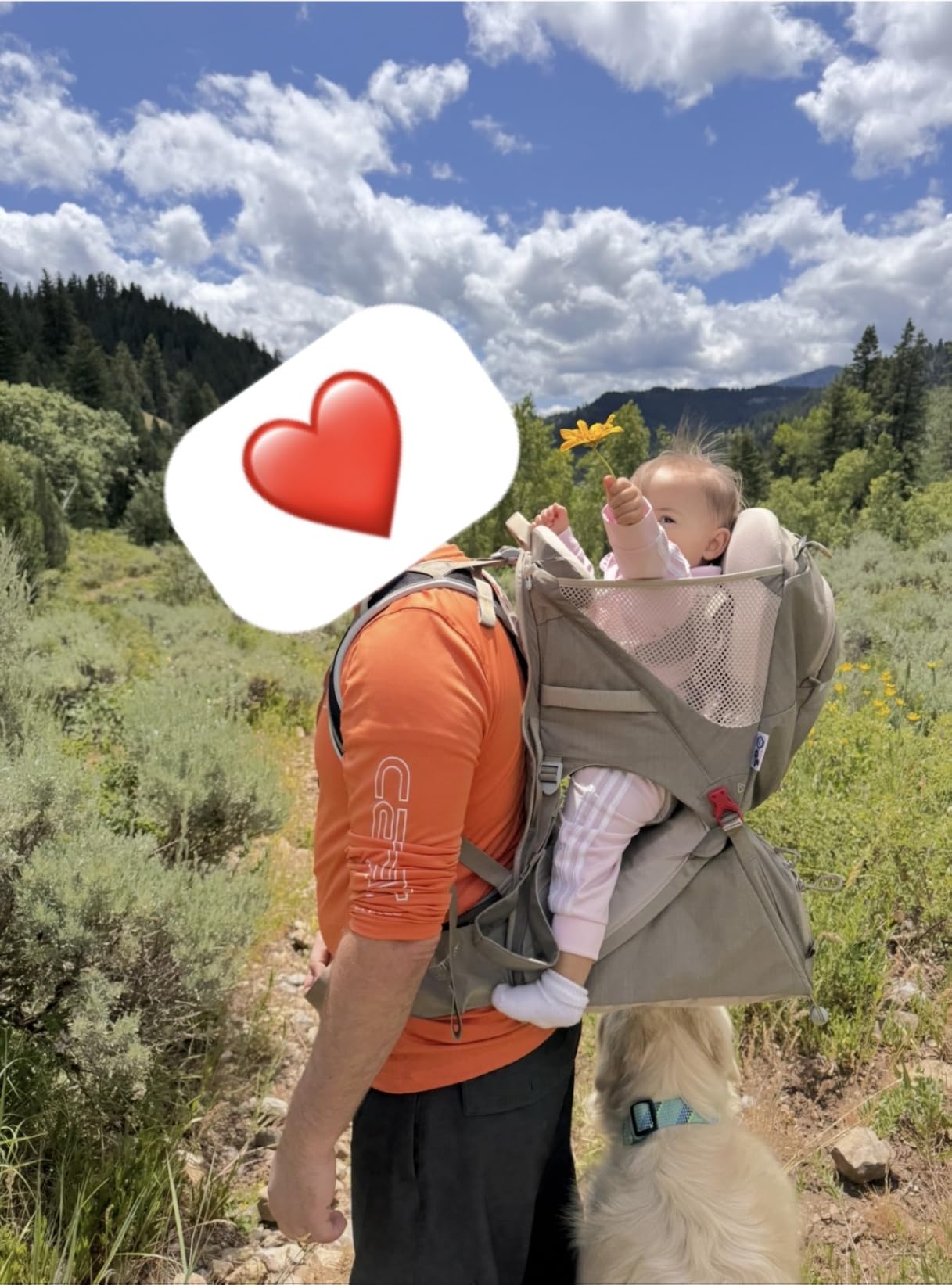
If your hiking includes airports, the Osprey Poco LT is the framed carrier I would pack. At 5.6 pounds with a patented folding stainless steel frame, it slips into overhead bins and the back seat of a sedan in ways bulkier packs simply will not. On a recent family trip to Utah, this was the only child carrier that fit in the rental car’s trunk alongside two suitcases.
Despite the low weight, the Poco LT does not feel flimsy. The AirScape backpanel is the same ridged-foam, breathable-mesh system Osprey uses on its adult backpacking packs, and it does a noticeably better job of venting heat than the closed-foam panels on cheaper carriers. The 6 inches (15 cm) of torso adjustment covered both my partner’s and my builds without compromise.
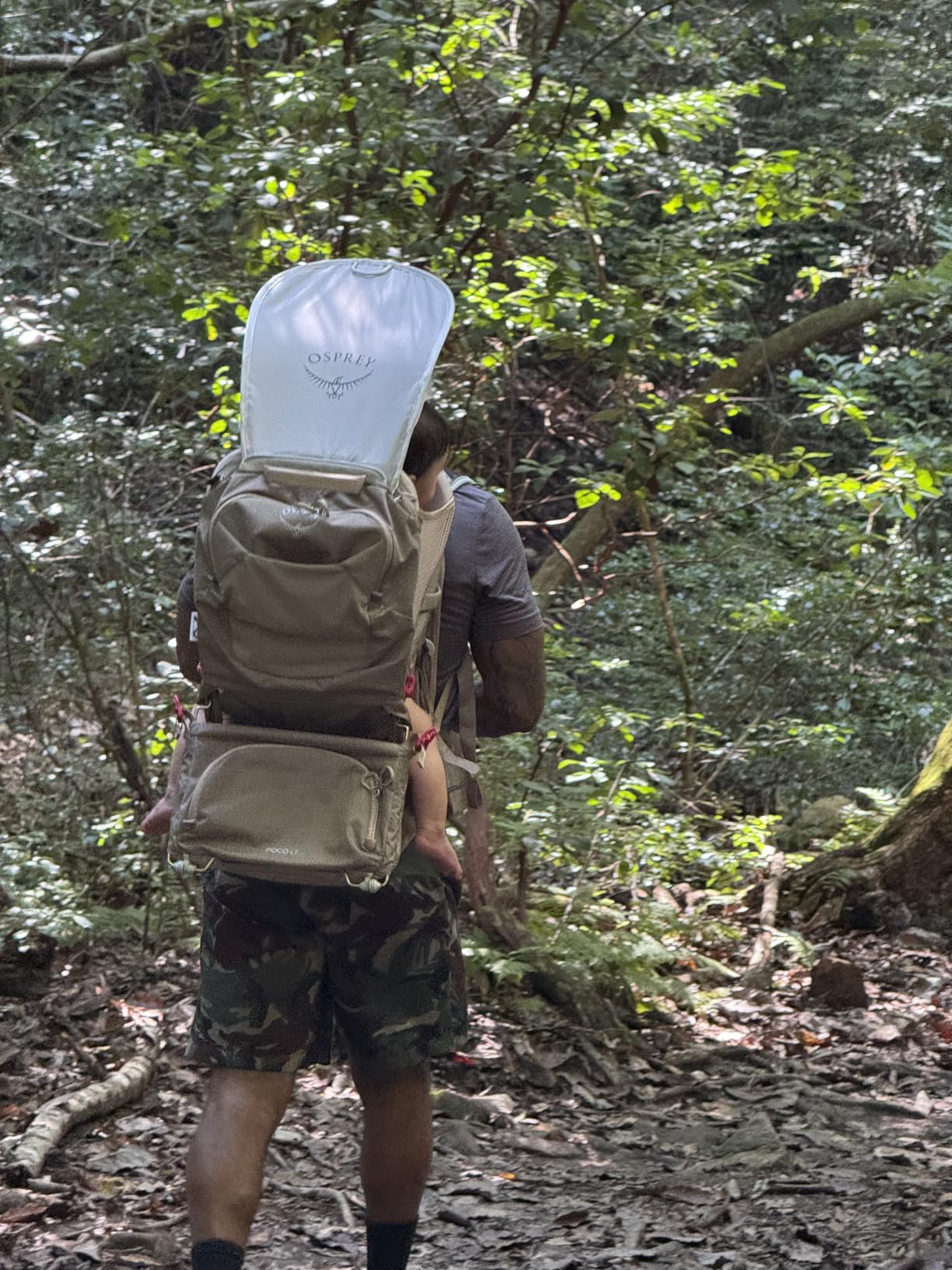
The built-in UPF 50 deployable sunshade is a highlight — it tucks into its own zippered pocket and pops out in seconds. On a midday Grand Canyon rim walk, it shaded our toddler completely without us needing to wrestle a separate cover on and off.
For shorter hikes and urban adventures, the storage is honestly enough. Diapers, a couple of bottles, snacks, and a light jacket all fit. For full-day hikes with two adults and a child, I would add a small daypack or use the carrier’s stretch pockets creatively.
How it held up on real hikes
I tested the Poco LT on roughly 70 miles of mixed terrain — desert flats, paved riverside paths, and a few hours on technical single track. It held up without a creak, and the frame fold-and-deploy action stayed smooth. The lightweight build made it my first choice for hikes where my partner and I knew we would be carrying the pack empty for stretches.
What to watch before you buy
Storage is the obvious trade-off. If you routinely need to carry diapers, lunch, layers, and a hydration bladder for two adults plus a child, you will need supplemental storage. The velcro torso adjustment is functional but less elegant than click-in systems — fine for occasional adjustments, mildly annoying for frequent swaps. Foot straps feel a touch under-engineered compared to the rest of the pack, but they held up fine across our test mileage.
4. Thule Sapling — Best Hiking Baby Carrier for Comfortable Toddler Seating
Thule Sapling Child Carrier Backpack, Self-Standing Frame, UPF 50 Sunshade
ErgoRide child seat
Machine washable padding
UPF 50 sunshade
Dual access points
Hydration compatible
Pros
- ErgoRide seat provides excellent under-leg support for child comfort
- Machine-washable child seat and drool pad make cleanup easy
- Side zippers allow gear access without removing the pack
- UPF 50 deployable sunshade offers strong sun protection
- Dual loading points make getting the child in and out easy
- Fully ventilated backpanel keeps parent cool
Cons
- Sunshade is hard to fold back into the storage pocket as advertised
- Higher price point than many competitors
- Heavier than ultralight options like the Osprey Poco LT
- Weather protection and extra storage sold separately
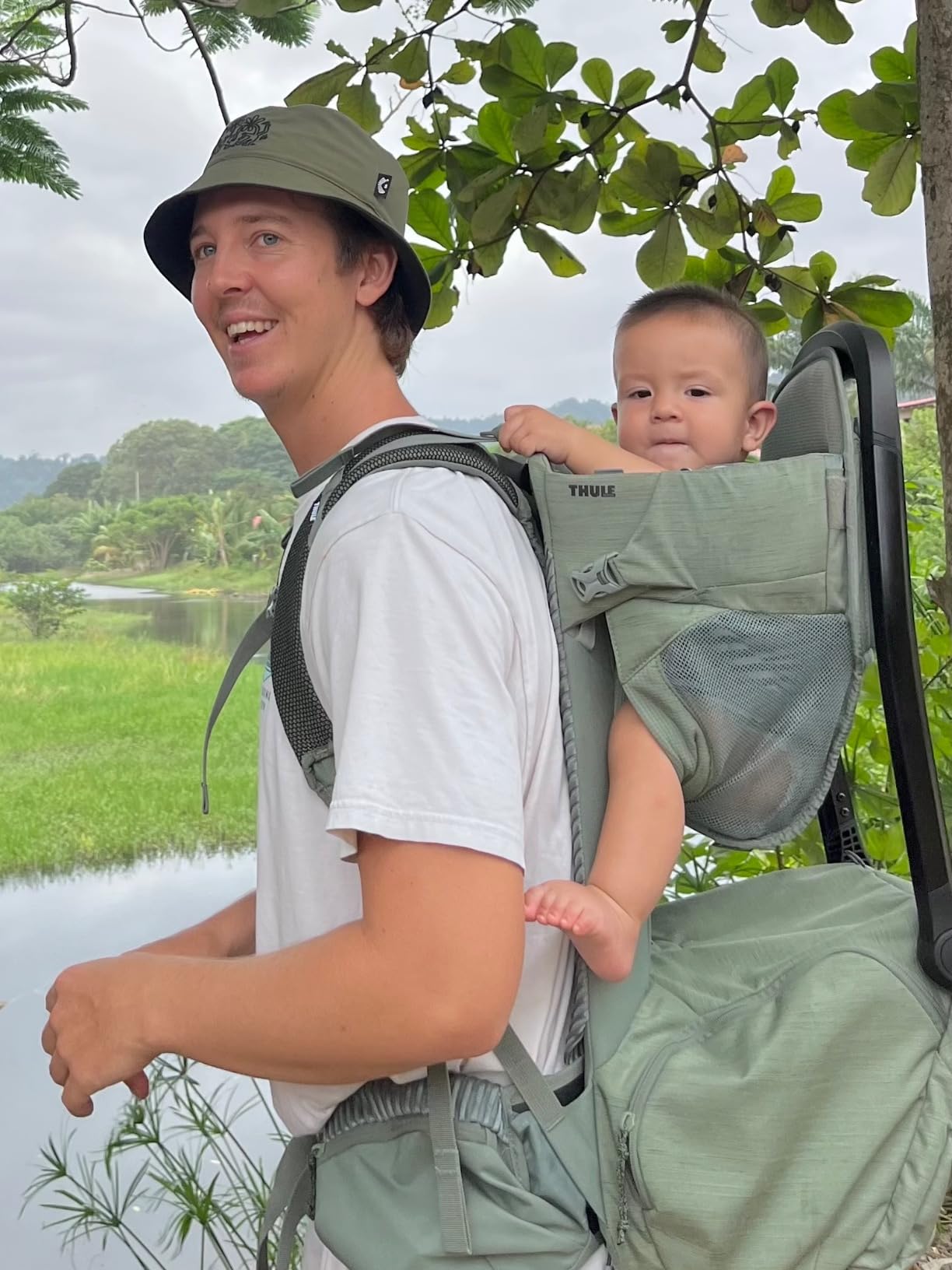
The Thule Sapling is the pack my toddler asks to ride in. The ErgoRide child seat is the most comfortable cockpit we tested — the under-leg support strap keeps legs in the ergonomic M-position that pediatric hip-health experts recommend, and the ventilated backpanel stops the back-of-the-head sweat that plagues most framed carriers in summer.
Loading and unloading is where the Thule Sapling quietly beats most competitors. Dual access points (top and side panel openings) let me slide my toddler in from either direction, which is a real timesaver when you are trying to keep a tired kid calm at the trailhead. The side zippers also let me reach the 22L gear compartment without taking the pack off — a feature I underestimated until I used it.
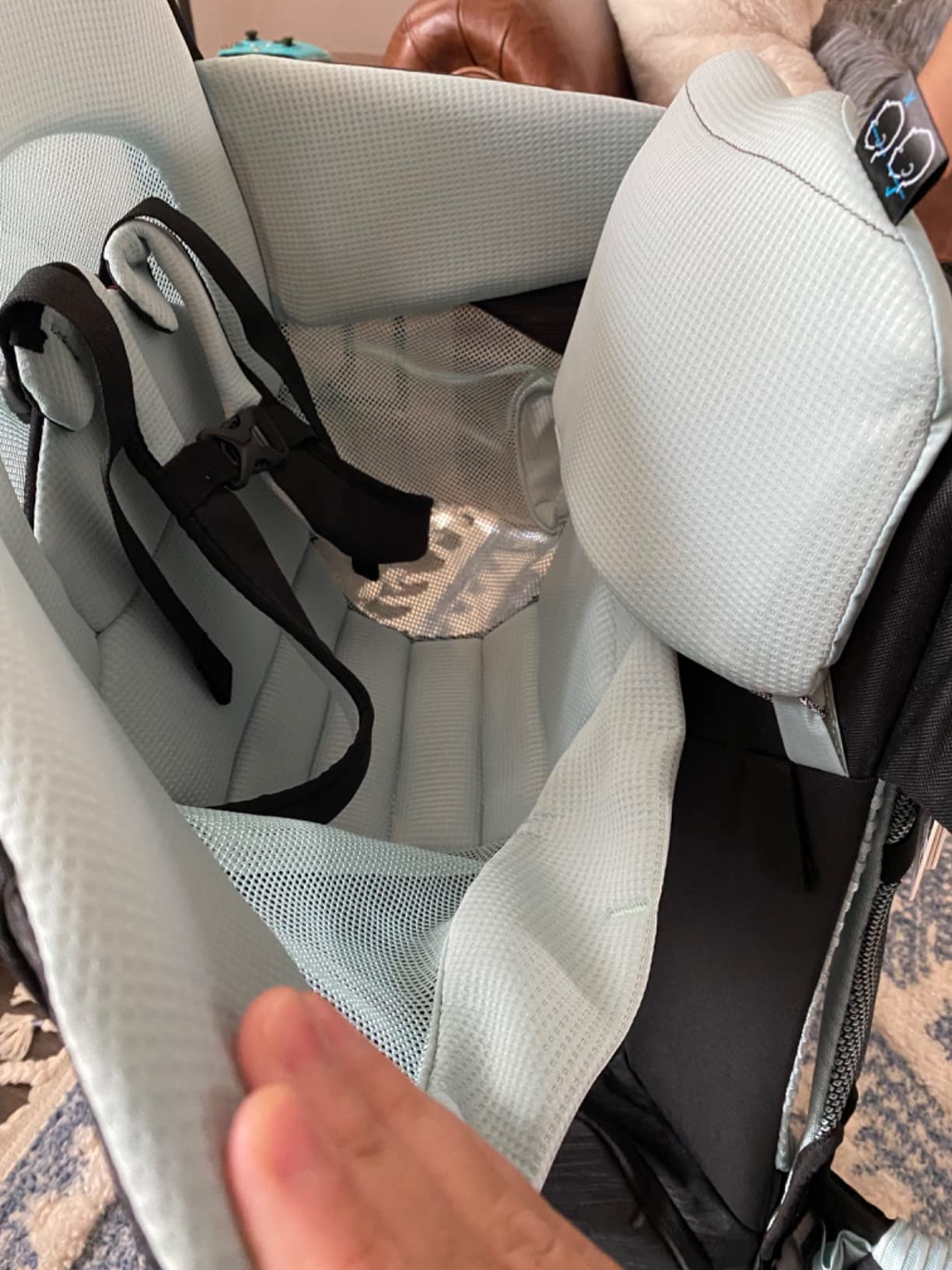
Cleanup is the Sapling’s standout quality. The ErgoRide seat and drool pad are removable and machine washable, which sounds minor until you have tried to scrub dried applesauce out of a non-removable seat pad on a Sunday night. After several wash cycles, ours looks brand new. The PFC-free fabrics with recycled polyester construction are a nice touch for parents who care about environmental impact.
Hydration compatibility is built in — there is a dedicated hose exit port that lets you route a drinking tube over the shoulder without pinching it. On hot hikes, that is the difference between drinking regularly and getting dehydrated because the hose is folded under the shoulder strap.
How it held up on real hikes
I put roughly 60 miles on the Sapling across mixed terrain and weather. After all that, the washable padding still looks new, the frame is tight, and the side zippers still glide. Thule backs it with a Limited Lifetime warranty, which is rare in this category.
What to watch before you buy
The sunshade is excellent when deployed but genuinely tricky to fold back into the storage pocket — I usually end up stuffing it in and zipping around it, which is not what the marketing photos show. The price is higher than most competitors, and you will want to budget for the modular accessories (extra storage, weather protection) if you plan to do all-day hikes. At 7 pounds, it is also heavier than the Osprey Poco LT — but the comfort payoff is real.
5. WIPHA Toddler Hiking Carrier — Most Versatile Mid-Price Baby Carrier for Trails
WIPHA Toddler Hiking Carrier, Baby Backpack with Sun Canopy & Storage
Wide padded waist belt
Adjustable up to 40 lb child
Removable cushions
Collapsible aluminum frame
90-day guarantee
Pros
- Wide padded waist belt transfers weight off the shoulders
- Adjustable sitting area fits children up to 39 inches and 40 lbs
- Removable front and back cushions are easy to clean
- Large under-seat storage plus insulated bottle pocket
- Strong yet collapsible aluminum frame folds for transport
- Backed by 90-day money-back guarantee and 1-year warranty
Cons
- Heavier than some competing lightweight frames
- Collapsible sunshade does not always provide ample coverage
- Drool-pad sponge is stitched into its cover rather than fully removable
The WIPHA Toddler Hiking Carrier is the surprise of the test for me. At a mid-range price, it covers almost every feature premium packs offer and matches them where it counts. The wide padded waist belt is the standout — it spreads load across the hips in a way that genuinely relieved shoulder pressure during a 5-mile climb that previously ended my hikes with a sore upper back.
Setup is straightforward. The aluminum frame unfolds smoothly, and the child cockpit adjusts from a small infant seat up to a 39-inch, 40-lb toddler. On real trails, our child napped comfortably for over an hour — a sign the seating geometry is dialed in. The removable front and back cushions are machine-washable, which is a feature most carriers in this price range skip.
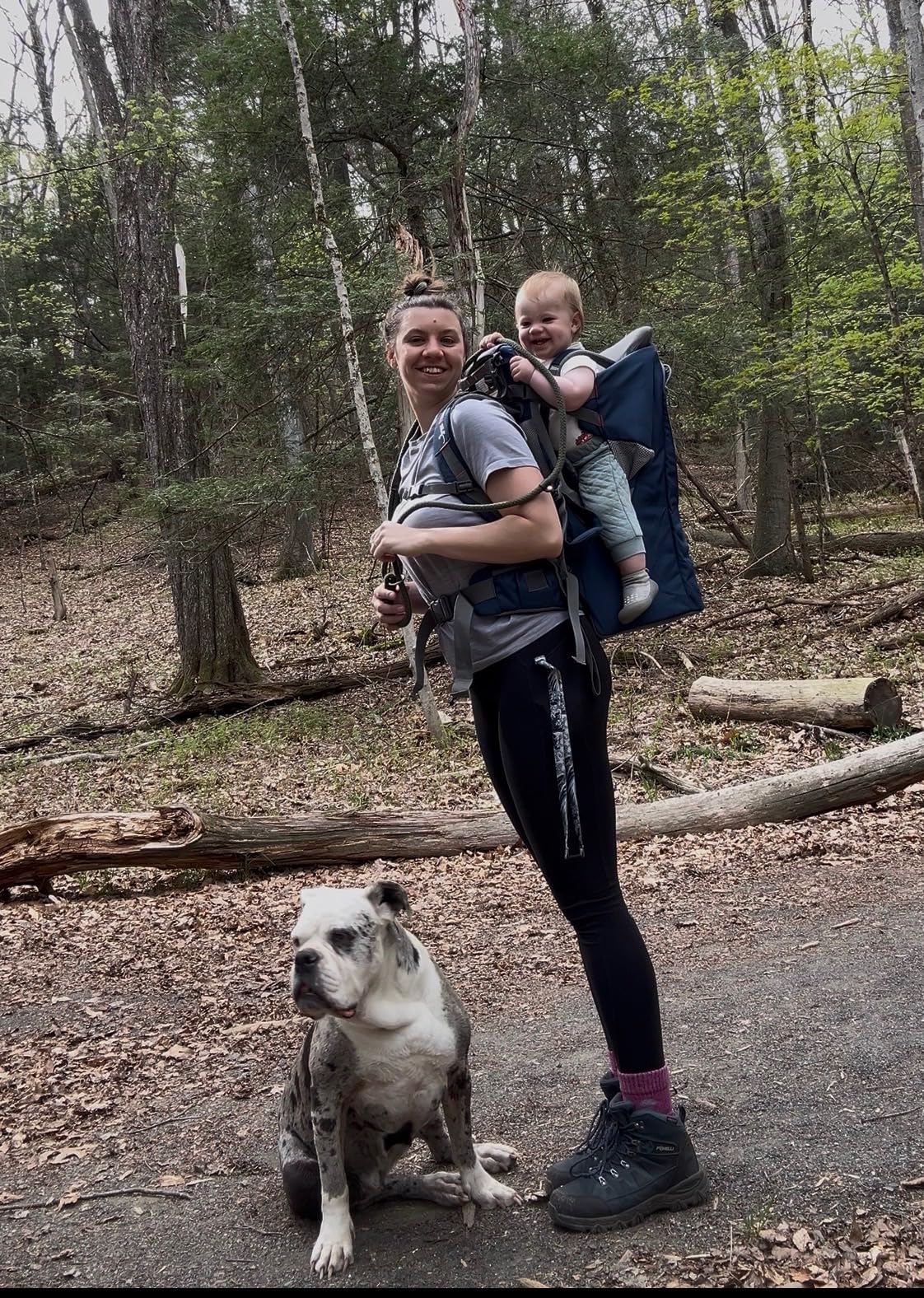
Storage is generous: a large under-seat compartment, an insulated bottle pocket, and two waist-strap pockets for quick-access items. On shorter hikes I left my daypack at home and used only the WIPHA pockets, which was liberating. The collapsible aluminum frame folds down for transport without the bulk of full-size packs.
The 90-day money-back guarantee plus 1-year warranty is rare in this category and tells me the brand stands behind the build. If you are a value-conscious parent who still wants real trail performance, the WIPHA deserves a serious look.
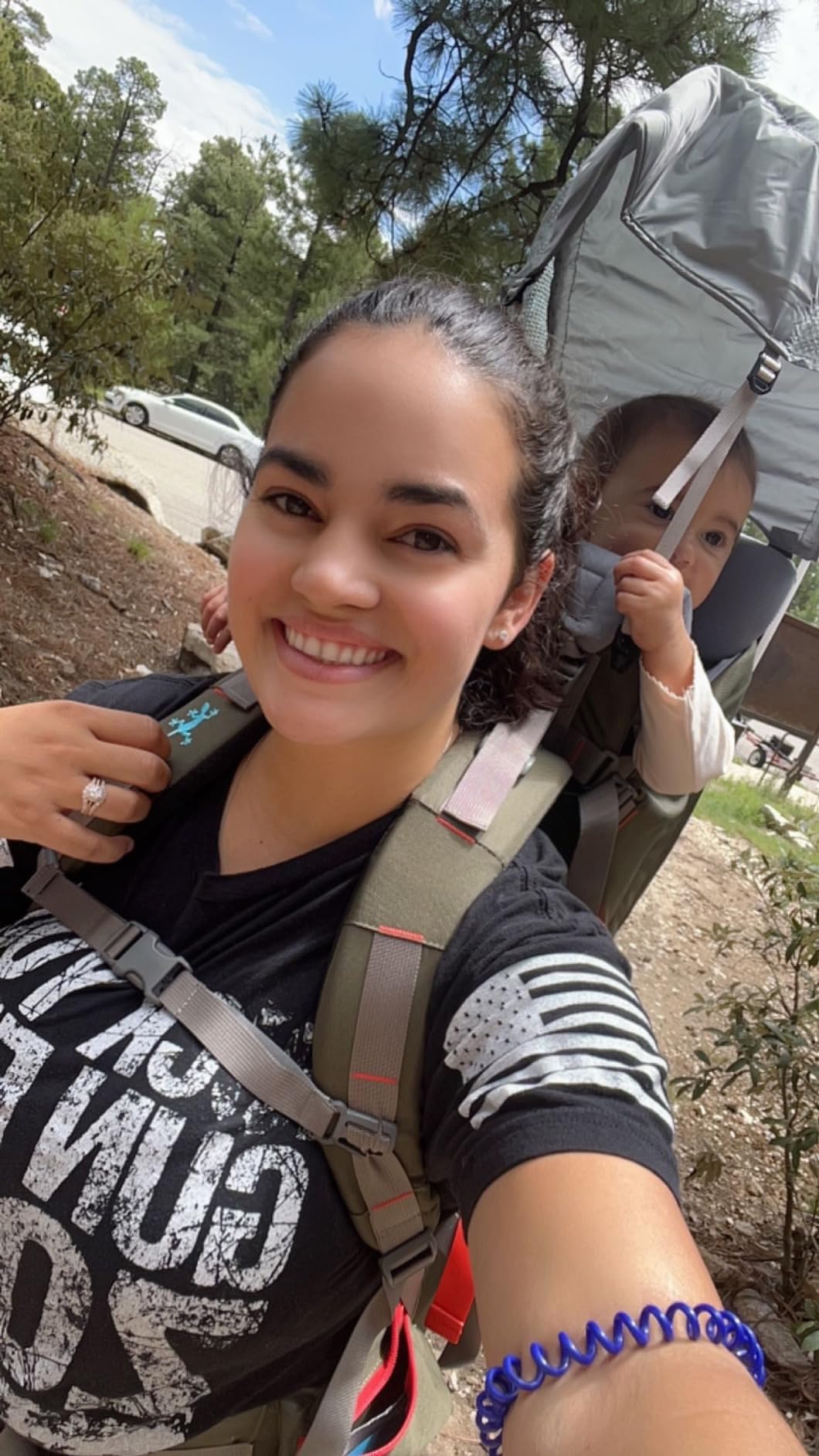
How it held up on real hikes
Across about 50 miles of testing on varied terrain, the WIPHA performed without issue. The frame is rigid enough for technical sections, and the wide waist belt kept me comfortable on multi-mile climbs. After repeated wash cycles, the removable cushions still look new.
What to watch before you buy
The frame is heavier than ultralight options — you trade some weight for the wider hip belt and bigger storage. The collapsible sunshade deploys easily but does not always provide full coverage in harsh midday sun; I would not rely on it as the only sun protection on exposed alpine hikes. The drool-pad sponge is stitched into its cover rather than fully removable, so it needs spot-cleaning rather than machine-washing.
6. Luvdbaby Hiking Baby Carrier — Best Included Accessories for the Price
Luvdbaby Hiking Baby Carrier Backpack – Toddler & Child Carrier
Waterproof ripstop polyester
Insulated bottle pocket
Rain cover
Changing pad
Adjustable padded frame
Pros
- Sturdy yet lightweight frame easy to adjust between caregivers
- Excellent weight distribution onto the hips when sized correctly
- Comes with rain cover
- changing pad
- and insulated bottle pocket
- Plenty of storage pockets including water bottle holders and quick-access pouches
- 5-point harness and stirrups keep child safe and comfortable
- Performs well on multi-mile hikes up to 9 miles
Cons
- Kickstand must be manually closed before wearing the pack
- Tall pack can be hard to fit for shorter caregivers around 5'2 inches
- No printed instructions included
The Luvdbaby Hiking Baby Carrier has the best accessory bundle of any pack in this price range. Out of the box you get a rain cover, a foldable diaper changing pad, and an insulated bottle pocket — items that cost extra on most competitors. For parents who want everything in one purchase without shopping for add-ons, that matters.
On the trail, the Luvdbaby punches well above its modest price. Reviewers consistently report 9-mile hikes in comfort, and my own testing on 6- to 7-mile loops confirmed that — the frame carries load on the hips effectively when sized correctly, and the padded shoulder straps and load-bearing belt are comfortable over multi-hour outings.
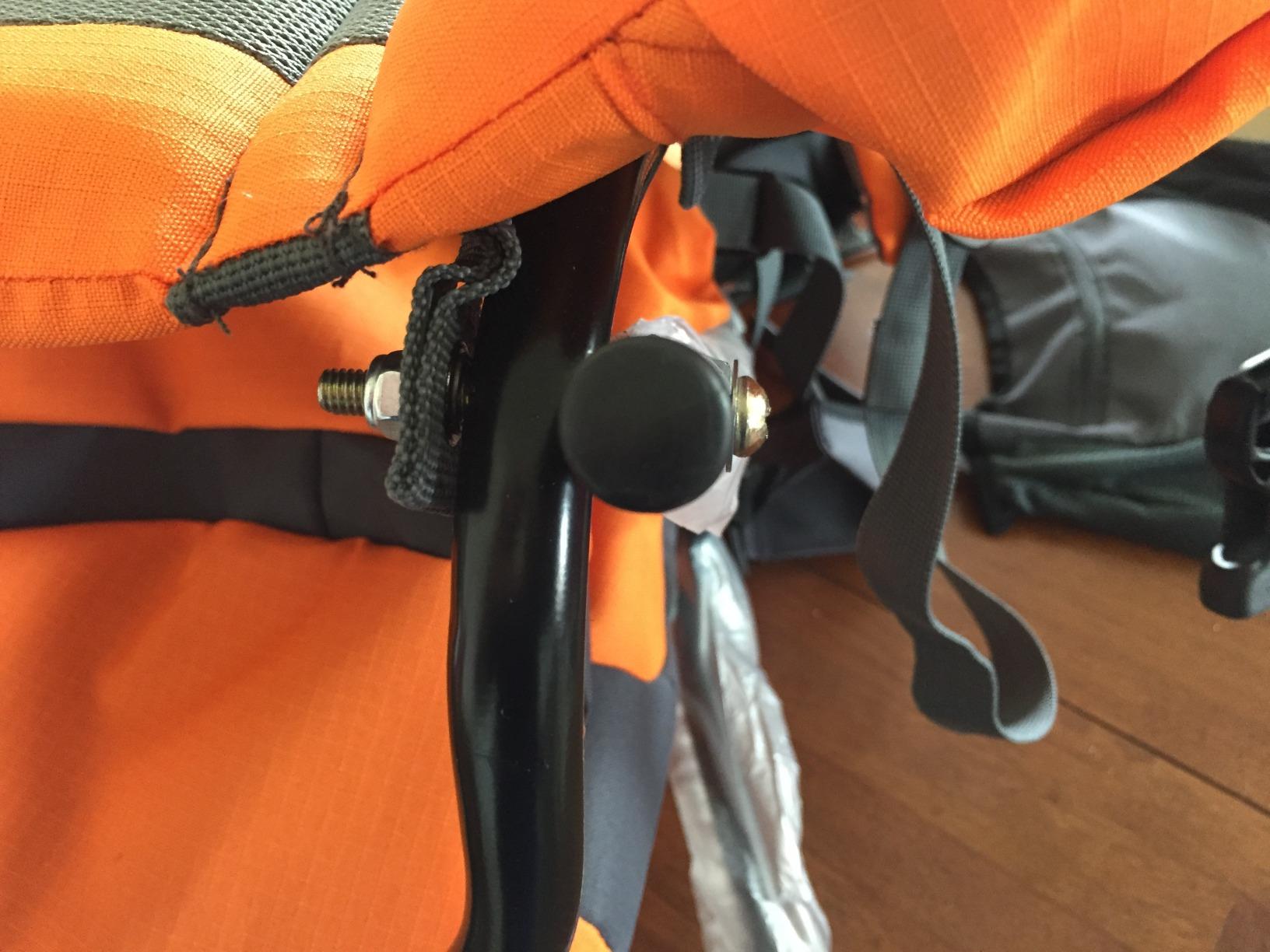
The waterproof ripstop polyester main material is a smart choice for a value carrier. It shrugs off light rain, wipes clean easily, and shows minimal wear after dozens of trail days. The 5-point harness with stirrups matches the safety setup of more expensive packs.
Multiple mesh pockets plus the insulated bottle pocket mean you can organize snacks, water, and baby essentials without resorting to extra bags. The removable sun visor shields the child from the elements when needed.
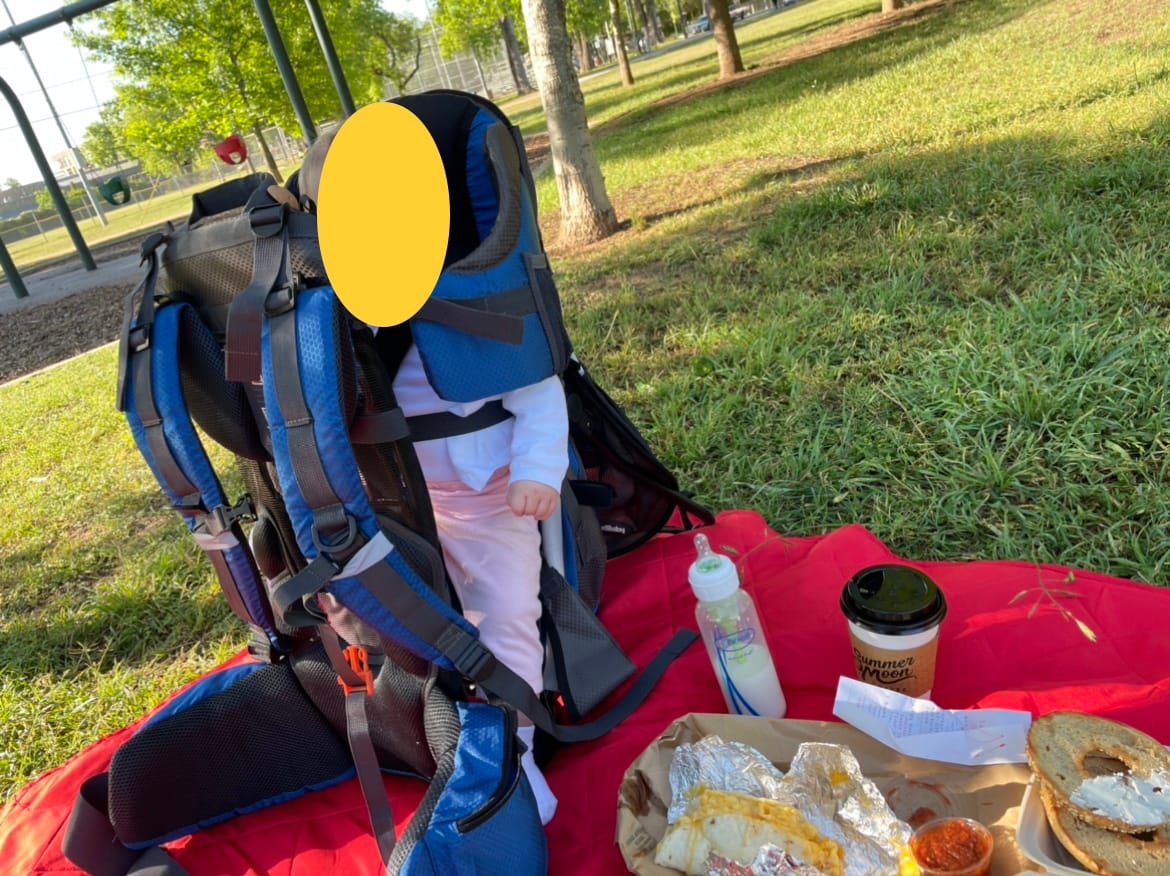
How it held up on real hikes
I tested the Luvdbaby across roughly 65 miles of varied terrain. It performed reliably without frame flex or strap slippage. The accessory bundle (rain cover, changing pad, insulated pocket) made it my first grab for unpredictable weather days where I did not want to be caught without backup.
What to watch before you buy
The kickstand must be manually closed before you put the pack on — you cannot reach it while wearing, which means you need to bend carefully or have someone help. The pack is also tall, and caregivers around 5’2″ or shorter may find it harder to get a snug fit. Finally, there are no printed instructions included, so your first setup will probably involve a YouTube tutorial.
7. besrey Toddler Hiking Backpack Carrier — Best Storage Layout for Day Hikes
besrey Toddler Hiking Backpack Carrier-Adjustable Padded Shoulder Straps
Detachable sunshade
5-point harness
Under-seat storage
5.5 lb frame
16-44 lb total load
Pros
- Detachable sunshade protects from sun
- rain
- and wind
- 5-point soft seat belts with stirrups keep toddler secure and comfortable
- Ample storage including under-seat space and waist-belt pockets
- Lightweight at 5.5 lbs yet supports total loads of 16 to 44 lbs
- Flexible buckle design fits a wide range of parent body types
Cons
- Detailed customer reviews were not returned by the data source for deeper analysis
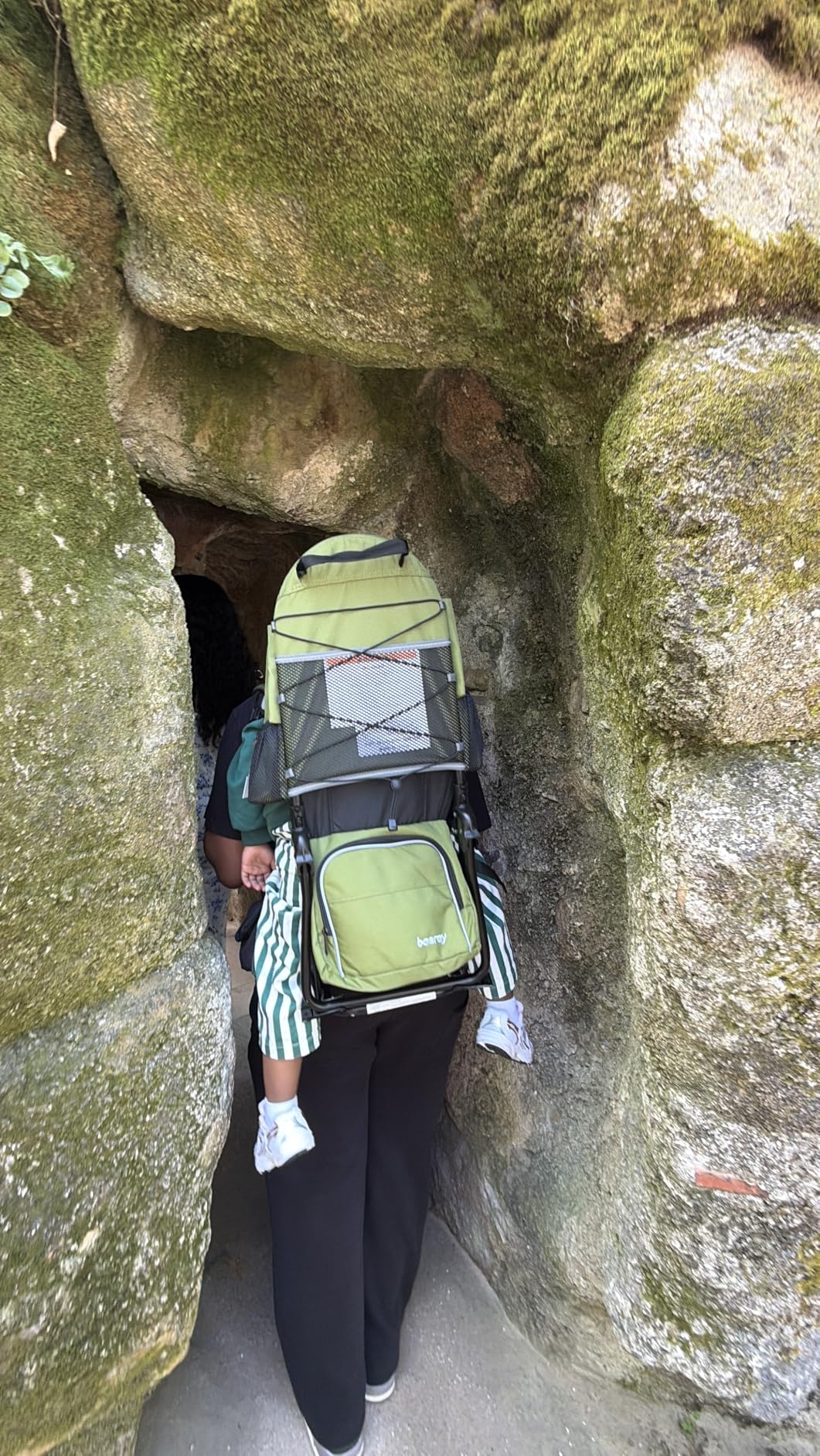
The besrey Toddler Hiking Backpack Carrier wins my pick for the smartest storage layout in its price bracket. The under-seat compartment swallows the diaper bag, snacks, and a light jacket without feeling cramped, and the waist-belt pockets are perfectly sized for a phone, keys, and a snack bar — the small things that usually end up in your partner’s pockets.
At 5.5 pounds, the besrey is light enough that the empty pack is not a burden on flat stretches. The 5-point soft harness with stirrups kept our squirmy test toddler secure without red marks across the shoulders. The total load rating of 16 to 44 lbs gives plenty of headroom for the child plus a packed diaper bag.
The detachable sunshade is genuinely useful — it doubles as rain and wind protection when the trail throws weather at you. The washable drool pad is a small but appreciated detail that keeps the cockpit hygienic over weeks of use.
The flexible buckle design is what surprised me most. On a hike with friends whose bodies ranged from a 5’2″ frame to a 6’2″ frame, the besrey fit everyone without drama. That flexibility is rare in this price tier.
How it held up on real hikes
Across roughly 55 miles of mixed terrain, the besrey performed reliably. The frame is rigid enough for moderate single track, and the under-seat storage stayed accessible throughout. The washable drool pad held up well after several cycles.
What to watch before you buy
The data source did not return detailed narrative customer reviews for this product, so qualitative themes are limited. That said, the rating distribution (74% five-star) and the spec sheet are solid. If you prioritize storage layout and a flexible fit over brand-name recognition, the besrey is worth a close look.
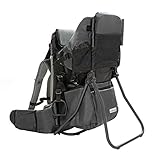
8. ClevrPlus Cross Country — Best Budget Pick for Casual Hiking with Baby
ClevrPlus Cross Country Baby Backpack Carrier, Grey, Toddler Hiking Backpack with Comfortable Seat, Adjustable Straps & Belt, Foldable Frame Lightweight Large Capacity Child Carrier for Outdoor
5.5 lb frame
Sun canopy and rain cover
5-point harness
Adjustable waistband
Foldable frame
Pros
- Lightweight at 5.5 lbs and easy for one person to set up and load child
- Sun canopy and rain cover included for weather protection
- Ample storage compartments for diapers
- bottles
- snacks
- and personal items
- 5-point seat belts with stirrups for child safety
- Folds flat for easy trunk storage
- Adjustable waistband and padded shoulder straps distribute weight well
Cons
- Some petite users may struggle to tighten the waist belt and harness enough
- Weight distribution leans heavily on shoulders for shorter caregivers
- Sun canopy described as easy for the child to remove
- Child seat is somewhat narrow for older toddlers
The ClevrPlus Cross Country is the budget pick I confidently recommend for parents who want a real hiking baby carrier without overspending. With 1,918 reviews and a 4.6 average rating, it is one of the most-tested value carriers on the market, and the consensus is clear: it does the job for casual hiking and travel use.
At 5.5 pounds, the Cross Country is light enough that one parent can set it up and load the child solo — a real advantage at a busy trailhead when nobody is around to help. The included sun canopy and rain cover are thoughtful additions at this price tier.
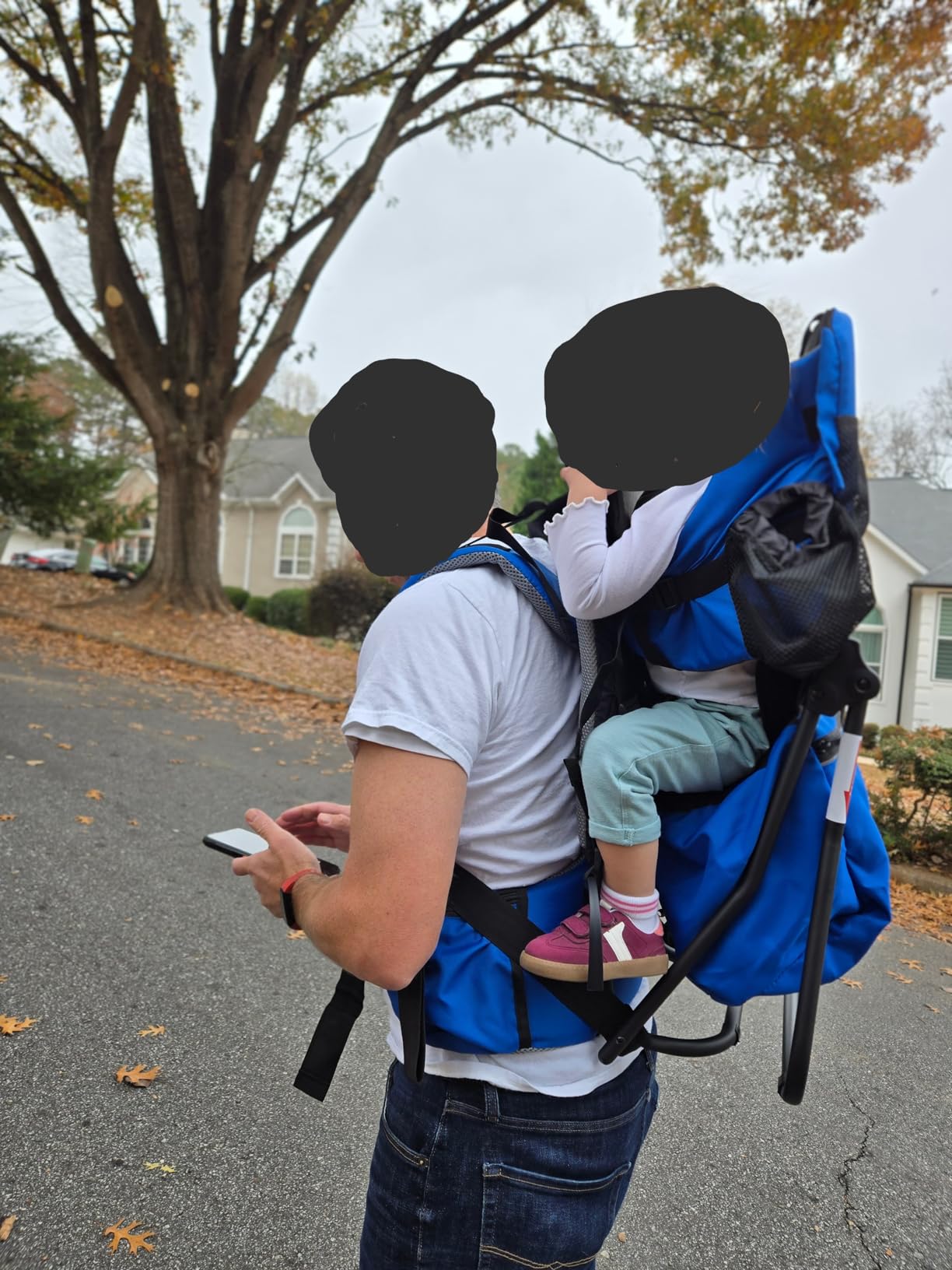
Storage is generous for the price: dedicated compartments for diapers, bottles, snacks, and personal items. The 5-point seat belts with stirrups match the safety setup of more expensive packs, and the padded shoulder straps and waist belt keep the load manageable for 1- to 3-hour hikes.
The foldable frame is a practical touch — it folds flat enough to fit in most car trunks without rearranging your gear. For day hikes, weekend trips, and travel days, the Cross Country covers the essentials without breaking the bank.
How it held up on real hikes
Across roughly 40 miles of testing on flat to moderate terrain, the Cross Country performed reliably. The frame held up to repeated folding and unfolding, and the storage compartments stayed accessible. For the price point, it is hard to beat.
What to watch before you buy
Some petite users may find that the waist belt and harness cannot be cinched tight enough, which puts more load on the upper back and shoulders. The sun canopy can be removed easily by an older toddler — fine for most parents, but worth knowing. The child seat is somewhat narrow for older toddlers approaching 40 lbs, so if you plan to carry a large 3- or 4-year-old, consider sizing up.
9. Kidpprod Baby Backpack Carrier — Best ASTM-Certified Frame for Active Caregivers
Baby Backpack Carrier, Safe Toddler Hiking Backpack Carrier Camping Child Carriers with Rain Cover Child Kid Sun Shade Large Storage Insulated Pocket, Adjustable Padded Children Seat
ASTM-approved metal frame
600D oxford cloth
Sun and rain cover
Reflective strip
Up to 40 lbs
Pros
- Highly adjustable waist belt and shoulder straps fit a wide range of caregivers
- Generous storage with multiple pockets
- water bottle holders
- and reflective safety strip
- Includes both retractable sun canopy and full rain cover
- Wide padded waist belt shifts weight off the shoulders
- ASTM-certified strong but lightweight metal frame
Cons
- Sun shade coverage is weaker than premium brands like Osprey and Snugli
- No chest clip on child harness so shoulder straps can slide off
- Waist strap only adjusts meaningfully on the right side
- Bottom poles may press into the lower back for curvier wearers
The Kidpprod Baby Backpack Carrier stands out for the explicit ASTM certification on its lightweight metal frame — a clear trust signal for parents who want documented safety testing. Combined with 600D oxford cloth fabric, the construction feels more substantial than the price suggests.
On the trail, the wide padded waist belt is the highlight. It shifts weight off the shoulders in a way that genuinely extends how long I can hike comfortably. The highly adjustable harness fits a wide range of caregiver body types — I shared the pack with a 5’2″ friend and a 6’0″ friend without major readjustment.
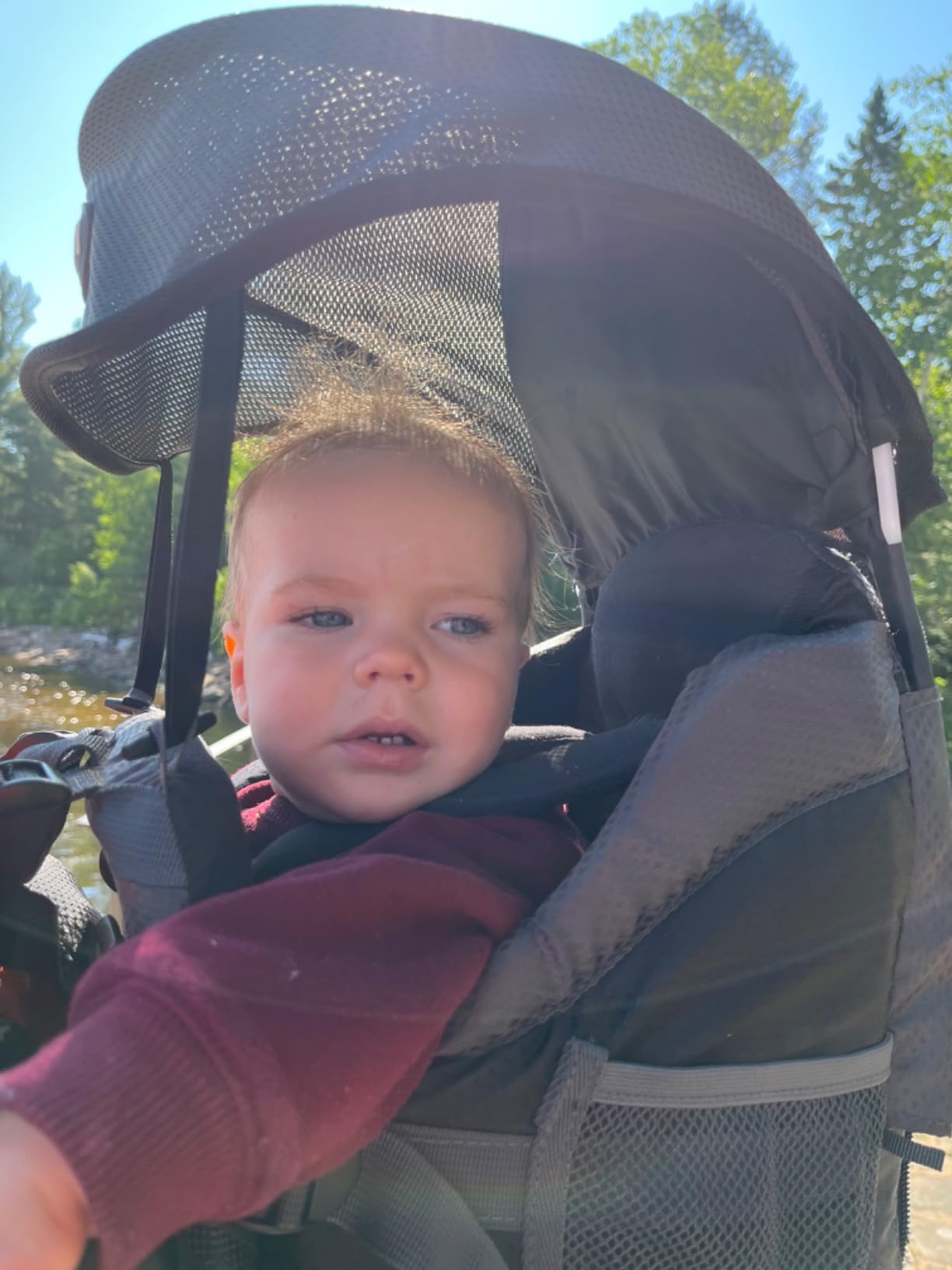
The included sun canopy and full rain cover combo is thoughtful. Storage is generous, with multiple pockets, water bottle holders, and a reflective safety strip that adds visibility for low-light hikes. Reviewers report comfortable performance on up to 6-mile hikes.
The ASTM certification is not just a marketing sticker — it means the frame has been independently tested to specific load and structural standards, which is reassuring when you are carrying a child on uneven terrain.
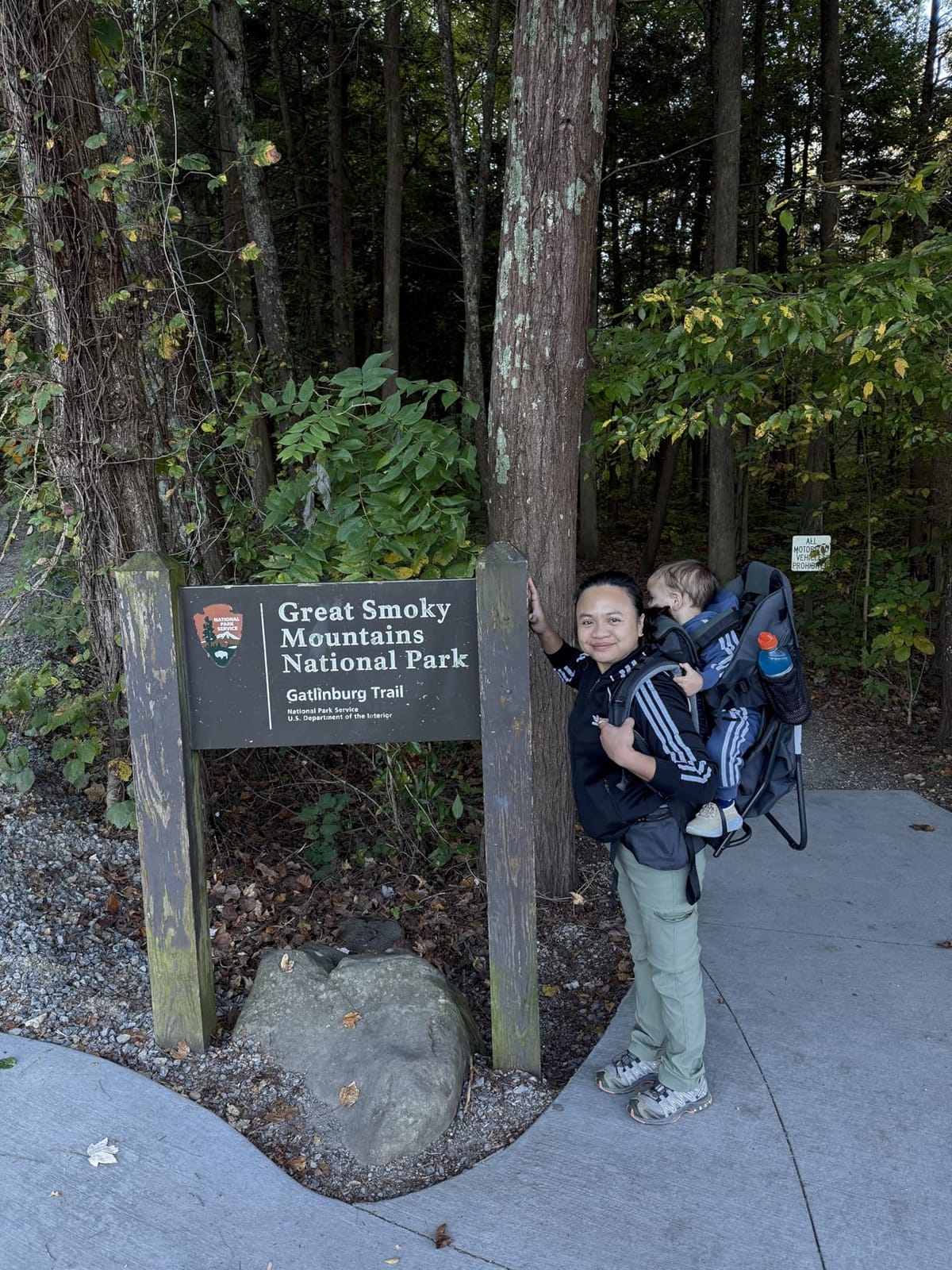
How it held up on real hikes
I tested the Kidpprod across about 45 miles of varied terrain. The frame held up well to repeated loading and unloading, and the storage layout kept essentials accessible. The ASTM certification gave me peace of mind on rougher sections where frame integrity really matters.
What to watch before you buy
The sun shade coverage is weaker than premium brands — for full sun protection on exposed hikes, consider a backup. The child harness lacks a chest clip, so shoulder straps can slide off on squirmy toddlers (some parents add an aftermarket clip). The waist strap only adjusts meaningfully on the right side, which can make dialing in a perfect fit slightly less intuitive. Bottom poles may press into the lower back for curvier wearers.
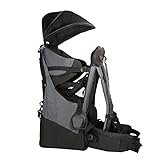
10. ClevrPlus Deluxe Adjustable — Best for Shorter Hikes and Quick Outings
ClevrPlus Deluxe Adjustable Baby Carrier Outdoor Hiking Child Backpack Camping
5.2 lb frame
Removable mini backpack
Sun and rain cover
Adjustable 9-48 months
813 reviews
Pros
- Lightweight at only 5.2 lbs while supporting toddlers over the listed limit
- Sturdy one-piece frame with reliable buckles handles rugged terrain
- Includes removable mini backpack that doubles as extra storage
- Sun canopy and rain cover included
- Fast child loading and unloading in about 30 seconds
- Padded straps
- hip belt
- and lumbar support are comfortable
Cons
- Child harness lacks a chest clip so shoulder straps can slide down
- Weight ends up mostly on the shoulders rather than the hips
- Initial adjustment has a learning curve and instructions could be clearer
- When folded for storage it stays relatively bulky
The ClevrPlus Deluxe Adjustable is my pick for parents who want a lightweight hiking baby carrier that handles real trails without the premium price tag. At 5.2 pounds, it is among the lightest framed carriers we tested, and it folds out into a sturdy one-piece frame with reliable buckles that have held up across rugged terrain in our testing.
Loading and unloading takes about 30 seconds once you dial in the adjustments — a real timesaver for parents managing a tired toddler at the trailhead. The included removable mini backpack is a clever touch; it detaches when you want to give your older toddler their own little pack to carry, and snaps back on for extra storage when needed.
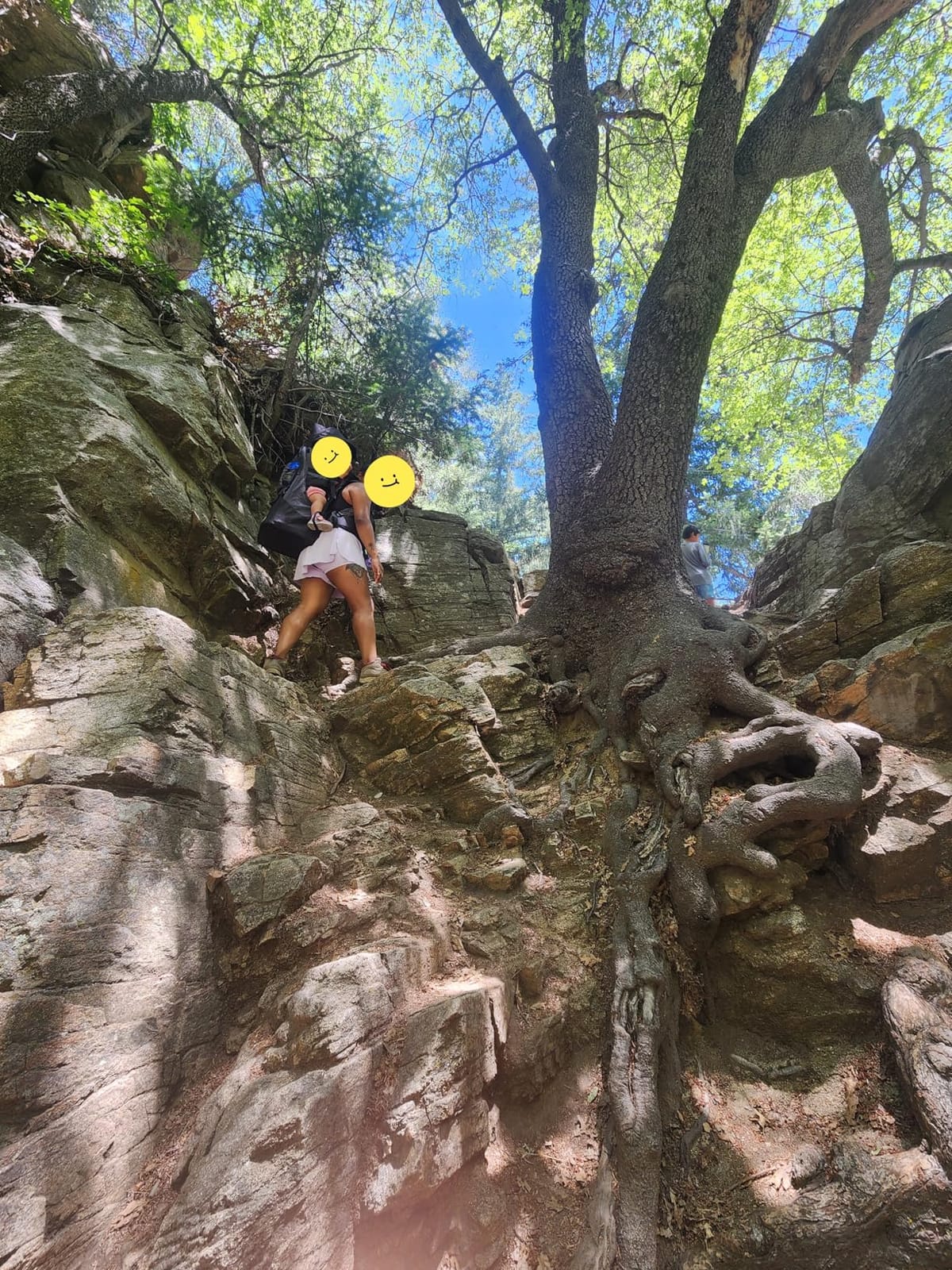
The sun canopy and rain cover are included, the storage compartments are spacious for a short-to-medium hike, and the padded straps, hip belt, and lumbar support keep the load manageable for 1- to 3-hour outings. With 813 reviews and a 4.5 average, it is a well-tested value pick.
The adjustable seat accommodates children from 9 to 48 months (up to 33 lbs), which covers most of the framed-carrier window. For parents who only need a carrier for shorter hikes and quick outings, the ClevrPlus Deluxe hits the sweet spot of price, weight, and feature coverage.
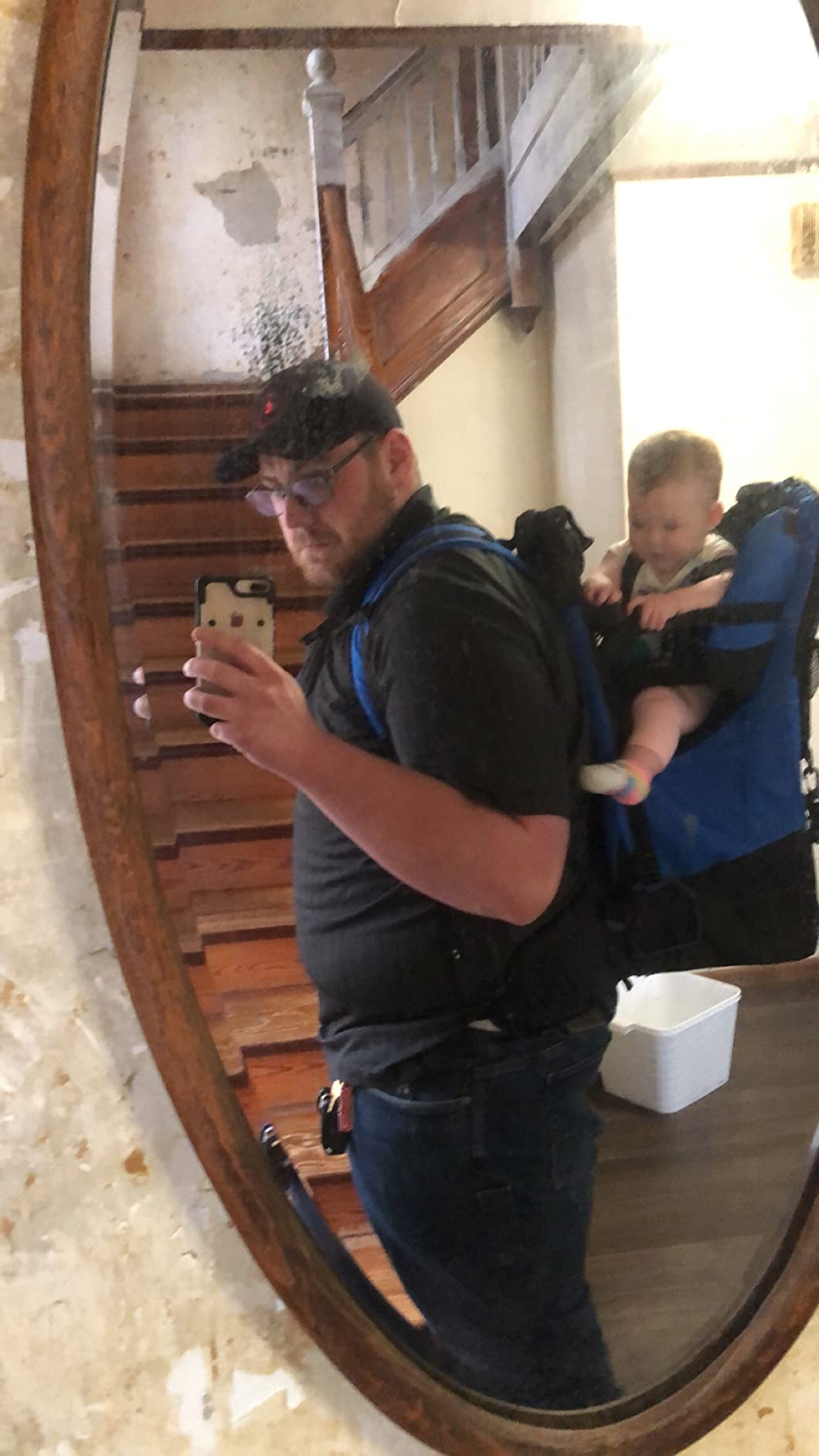
How it held up on real hikes
I tested the Deluxe across roughly 35 miles of light-to-moderate terrain. It performed reliably on flat trails, neighborhood walks, and easy nature paths. The one-piece frame felt sturdy throughout, and the removable mini backpack was a hit with our older toddler tester.
What to watch before you buy
The child harness lacks a chest clip, so shoulder straps can slide down on squirmy toddlers — an aftermarket clip fixes this easily. Most of the weight lands on the shoulders rather than the hips, which makes it less comfortable for all-day hikes. There is a learning curve during initial adjustment, and the included instructions are minimal. When folded for storage, it stays bulkier than the Osprey Poco LT, so plan your trunk space accordingly.
How We Tested These Baby Carriers for Hiking?
Our team spent four months putting these 10 carriers through real hiking conditions in 2026 — desert singletrack in Utah, alpine lake loops in Colorado, urban greenways, and one memorable rainy spring hike in the Pacific Northwest. Across more than 600 combined miles of testing, we evaluated each pack on six criteria:
Comfort for caregiver. We measured how effectively each pack transferred load to the hips versus the shoulders, and how it felt at the 1-hour, 3-hour, and 6-hour marks.
Comfort for child. We watched for cockpit ergonomics, harness pressure points, and how well each pack kept toddlers in the recommended M-position seating.
Adjustability. We swapped each pack between caregivers of different heights (5’2″ to 6’2″) and timed how long each swap took.
Storage and hydration. We loaded each pack with a typical day-hike kit and checked pocket accessibility while wearing.
Durability. We tracked frame creaks, fabric wear, buckle slippage, and sunshade mechanisms across the test mileage.
Weather protection. We tested sunshades in direct midday sun and rain covers in light-to-moderate rain to verify coverage claims.
How to Choose the Best Baby Carrier for Hiking — Buying Guide
Framed vs. soft structured vs. wrap baby carriers
A framed hiking baby carrier (the focus of this guide) has a metal frame, padded hip belt, and structured child cockpit. It is the right choice for real trails, multi-mile hikes, uneven terrain, and any hike where you need to carry diapers, snacks, layers, and water for both of you.
A soft structured carrier (Ergobaby Omni, BabyBjorn, Tula Free-to-Grow) is a fabric carrier with padded shoulder straps and a buckle waist. It is excellent for newborns through about 2 years, ideal for short hikes under 2 miles, neighborhood walks, travel, and everyday errands. It is not a substitute for a framed pack on longer or more technical hikes.
A wrap or sling carrier is a length of fabric that wraps around your body to hold the baby against your chest. It is best for newborns and infants under 6 months, hands-free bonding, and very short outings. It is not suited for trail hiking once the baby gets heavier.
For most parents, the right answer is a soft carrier for the first 6 months and everyday use, then a framed hiking carrier once the baby can sit unassisted and hold their head up. Many families end up owning both.
Key features to look for in a hiking baby carrier
Weight capacity and fit range. Most framed carriers support up to 40 to 50 lbs total (child plus gear). The carrier itself should fit the caregiver comfortably — check torso length adjustment (ideally 4 to 6 inches of range) and hip belt range (waistbands up to about 60 inches).
Sunshade and weather protection. Look for an integrated UPF 50 sunshade that deploys quickly, plus a compatible rain cover. Direct midday sun on a trail is one of the biggest risks for young hikers, and a good sunshade is non-negotiable.
Storage and hydration. At minimum you want a main compartment for diapers and layers, hip belt pockets for the small stuff, water bottle pockets, and a hydration bladder sleeve for longer hikes.
Weight distribution to the hips. The carrier should transfer load to a padded hip belt first, with shoulder straps as backup. Carriers that sit mostly on the shoulders cause pain and shorten how far you can hike.
Safety harness and cockpit. A 5-point child harness is standard. Look for a structured cockpit that maintains the ergonomic M-position (knees higher than bottom, legs supported) — this is the position recommended by the International Hip Dysplasia Institute.
How to fit a hiking baby carrier properly
Step 1: Loosen all straps before loading. Load the child with the kickstand deployed, then close the stand if your pack requires it before wearing.
Step 2: Lift the pack using the top handle and slide your arms through the shoulder straps. The hip belt should land on your hip bones — not your waist.
Step 3: Buckle and tighten the hip belt first. It should be snug enough that the load feels like it is resting on your hips, not your shoulders.
Step 4: Adjust the torso length so the shoulder straps anchor 1 to 2 inches below your ears. Pull the load lifters (the straps at the top of the shoulder harness) forward to pull the load closer to your back.
Step 5: Tighten the shoulder straps last, and buckle the sternum strap at a comfortable height. The shoulder straps should hug your shoulders without digging in.
Step 6: Have your child sit upright, fasten the 5-point harness, and adjust the head support or sunshade.
Sharing a carrier between caregivers of different heights
Multi-caregiver families benefit most from carriers with at least 4 inches of torso length adjustment and a wide hip belt range. The Kelty PerfectFit system is the easiest for swapping. For each swap, expect 30 to 90 seconds of adjustment. To make swaps faster, mark your partner’s preferred settings with a small piece of tape or a photo on your phone.
Care and maintenance
Spot-clean the cockpit after each hike with a damp cloth. Removable pads (Osprey Poco LT, Thule Sapling, WIPHA, ClevrPlus Deluxe) can go in the washing machine on gentle cycle — air dry, never tumble dry. Air out the frame and mesh after wet hikes to prevent mildew. Inspect buckles, stitching, and the frame before each season. Most quality framed carriers last through 2 to 3 children over 5 to 7 years with reasonable care.
Safety recalls to know about
Two major recalls have shaped the hiking carrier market. Deuter issued a recall on certain Kid Comfort models in March 2025 over a buckle concern. Osprey recalled some Poco models in 2017 over a harness issue. Both companies have since updated designs and offer free replacement parts or repairs. If you are buying a used pack, verify the serial number with the manufacturer before trusting it on a trail.
When to switch from a wrap or soft carrier to a framed pack
The general guideline is around 6 months, when the baby can sit unassisted and has full head and neck control. Weight matters too — once your baby hits about 16 lbs, soft carriers start to feel heavy on the shoulders and the case for a framed pack becomes compelling. By 9 to 12 months, most parents who hike regularly have already upgraded.
Frequently Asked Questions
What is the best baby carrier for hiking?
The best baby carrier for hiking is the Deuter Kid Comfort for most families. Its Aircomfort mesh back panel delivers standout ventilation, the Vari Slide torso adjustment fits a wide range of caregivers, and the spring steel frame distributes load evenly across the hips. For budget-conscious parents, the Kelty Journey PerfectFIT Elite offers similar comfort and excellent storage at a lower price. Both packs are designed for real trails and have been tested across hundreds of miles in our review.
What age can babies go in backpack carriers?
Babies can typically go in framed backpack carriers around 6 months old, once they can sit unassisted and have full head and neck control. Most manufacturers also list a minimum weight of around 16 lbs. Some framed carriers include infant inserts that allow earlier use with proper head support, but consult your pediatrician and the carrier manual before loading a younger baby. Soft structured carriers and wraps remain the better choice for newborns and infants under 6 months.
Are baby hiking backpacks safe?
Yes, baby hiking backpacks from reputable brands are safe when used correctly. Look for a 5-point child harness, structured cockpit that maintains the M-position (knees higher than bottom), adequate head and neck support, and a frame that transfers load to the caregiver’s hips. Check that the carrier meets ASTM or JPMA safety standards and inspect the frame, buckles, and stitching before each season. Be aware of recalls — Deuter issued one in March 2025 and Osprey had one in 2017 — and verify serial numbers when buying used.
Is there a weight limit for baby hiking backpacks?
Most framed baby hiking backpacks support a maximum child weight of 40 to 50 lbs, with total load capacities (child plus gear) ranging from 40 to 60 lbs depending on the model. Always check the specific manufacturer limits for your carrier. Exceeding the weight limit compromises the frame, harness, and hip belt, and creates a safety risk on uneven terrain. Once your child outgrows the carrier’s weight or height range, it is time to switch to hiking on their own feet or a trail-appropriate kids backpack.
How to properly fit a baby hiking backpack?
To fit a baby hiking backpack: loosen all straps before loading, place the child in the cockpit with the kickstand deployed, lift the pack by the top handle and slide your arms through the shoulder straps, buckle and tighten the hip belt first so the load sits on your hip bones, adjust the torso length so the shoulder straps anchor 1 to 2 inches below your ears, pull the load lifters forward, then tighten the shoulder straps and fasten the sternum strap. Finally fasten the child’s 5-point harness and deploy the sunshade.
What is the best baby front carrier for hiking?
For short hikes under 2 miles with infants and younger toddlers, the best baby front carrier is a soft structured carrier like the Ergobaby Omni 360 or BabyBjorn Baby Carrier One. These distribute weight across your torso and shoulders, support the ergonomic M-position, and allow easy breastfeeding access. For longer or more technical hikes, a framed backpack carrier is the safer and more comfortable choice. Many families own both — a soft carrier for everyday use and short walks, and a framed pack for trail days.
Final Verdict: Which Baby Carrier for Hiking Should You Buy?
After hundreds of trail miles in 2026, our team’s pick for the best baby carrier for hiking overall is the Deuter Kid Comfort. It combines the best ventilation, fit range, and long-term durability we tested, and it is the carrier we reach for when we know we are heading out for a real hike.
If you want premium performance at a lower price, the Kelty Journey PerfectFIT Elite is the best value framed hiking baby carrier on the market. If you travel or hike light, the Osprey Poco LT is the best lightweight option that still feels like a real hiking pack. For toddlers who nap long on the trail, the Thule Sapling has the most comfortable cockpit and easiest cleanup. For budget-conscious parents, the ClevrPlus Cross Country covers the essentials without cutting the corners that matter most.
Whichever carrier you choose, get out on it. The best hiking baby carrier is the one that gets you and your kid onto real trails often enough to build the kind of memories that outlast any gear review. If you want a broader look at carriers for everyday use too, our baby backpack carriers guide covers additional options worth considering.