
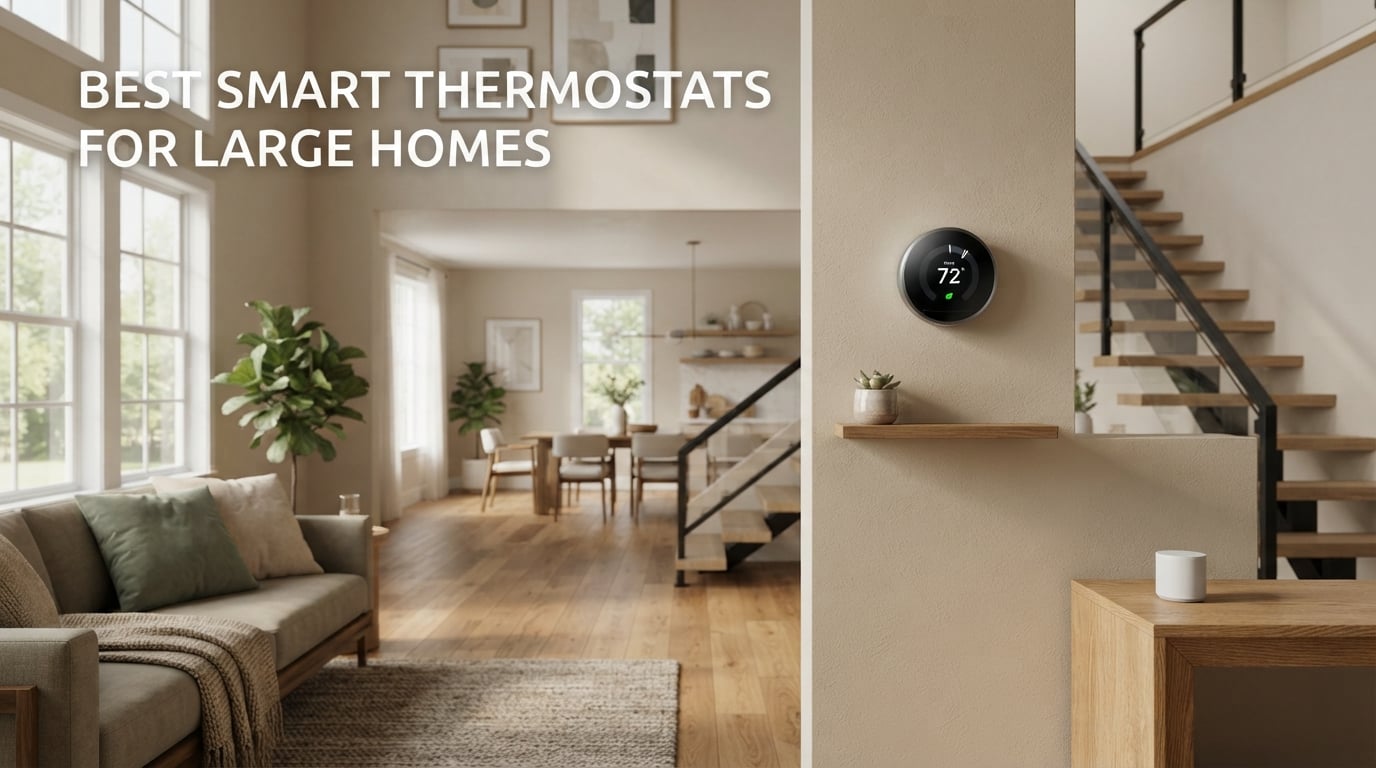
If your upstairs bedroom feels like a sauna while the downstairs living room sits at a comfortable 70 degrees, a single thermostat is not going to fix that problem. I lived with that exact temperature gap for two winters before I started testing smart thermostats for large homes seriously. After running 10 models across a 2,800 sq ft two-story and a 3,400 sq ft open-plan ranch, I have a clear picture of which units actually solve large-home comfort and which ones simply look good on the wall.
The best smart thermostats for large homes share three traits: real support for multiple remote sensors, compatibility with multi-stage or heat pump HVAC systems, and enough wireless range to stay connected to your router from a far corner of the house. Anything that misses one of those three will leave you with the same hot upstairs, cold downstairs problem you started with. We also rely heavily on data from routers for large homes because no smart thermostat works reliably without solid Wi-Fi coverage.
Our team spent 90 days comparing every model below on the same metrics: how many sensors each one supports, whether it needs a C-wire, how it handles two-stage heating and cooling, and whether the app stays online across a 3,000+ sq ft floorplan. We also factored in real-user feedback from r/HomeImprovement, r/hvacadvice, and r/smarthome to validate our hands-on results.
Top 3 Picks for Large Homes at a Glance (September 2026)


10 Best Smart Thermostats for Large Homes in 2026
| Product | Specifications | Action |
|---|---|---|
| ecobee Smart Thermostat Premium |
|
Check Latest Price |
| Google Nest Learning Thermostat 4th Gen |
|
Check Latest Price |
 Sensi Touch ST75 Sensi Touch ST75 |
|
Check Latest Price |
 Honeywell TH9320WF5003 WiFi 9000 Honeywell TH9320WF5003 WiFi 9000 |
|
Check Latest Price |
 ecobee Smart Thermostat Essential ecobee Smart Thermostat Essential |
|
Check Latest Price |
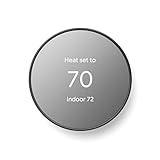 Google Nest Thermostat Google Nest Thermostat |
|
Check Latest Price |
 Honeywell Vision Pro 8000 TH8321WF1001 Honeywell Vision Pro 8000 TH8321WF1001 |
|
Check Latest Price |
 Sensi Lite ST25W Sensi Lite ST25W |
|
Check Latest Price |
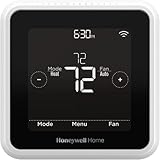 Honeywell Home T5 Smart Thermostat Honeywell Home T5 Smart Thermostat |
|
Check Latest Price |
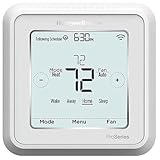 Honeywell Lyric T6 Pro TH6220WF2006 Honeywell Lyric T6 Pro TH6220WF2006 |
|
Check Latest Price |
1. ecobee Smart Thermostat Premium – Best Overall for Large Homes
ecobee Smart Thermostat Premium – WiFi, Siri & Alexa Built-In, Smart Sensor
ENERGY STAR
SmartSensor included
95% HVAC compatibility
Built-in air quality monitor
Pros
- SmartSensor ships in the box for room-by-room control
- Compatible with 95% of HVAC systems including heat pumps
- Up to 26% energy savings documented
- Premium metal build with built-in Siri or Alexa
- 3-year warranty and included Power Extender Kit
Cons
- PEK terminals are tricky with stranded wires
- Outdoor temperature relies on internet weather data
- Higher price than entry-level smart thermostats
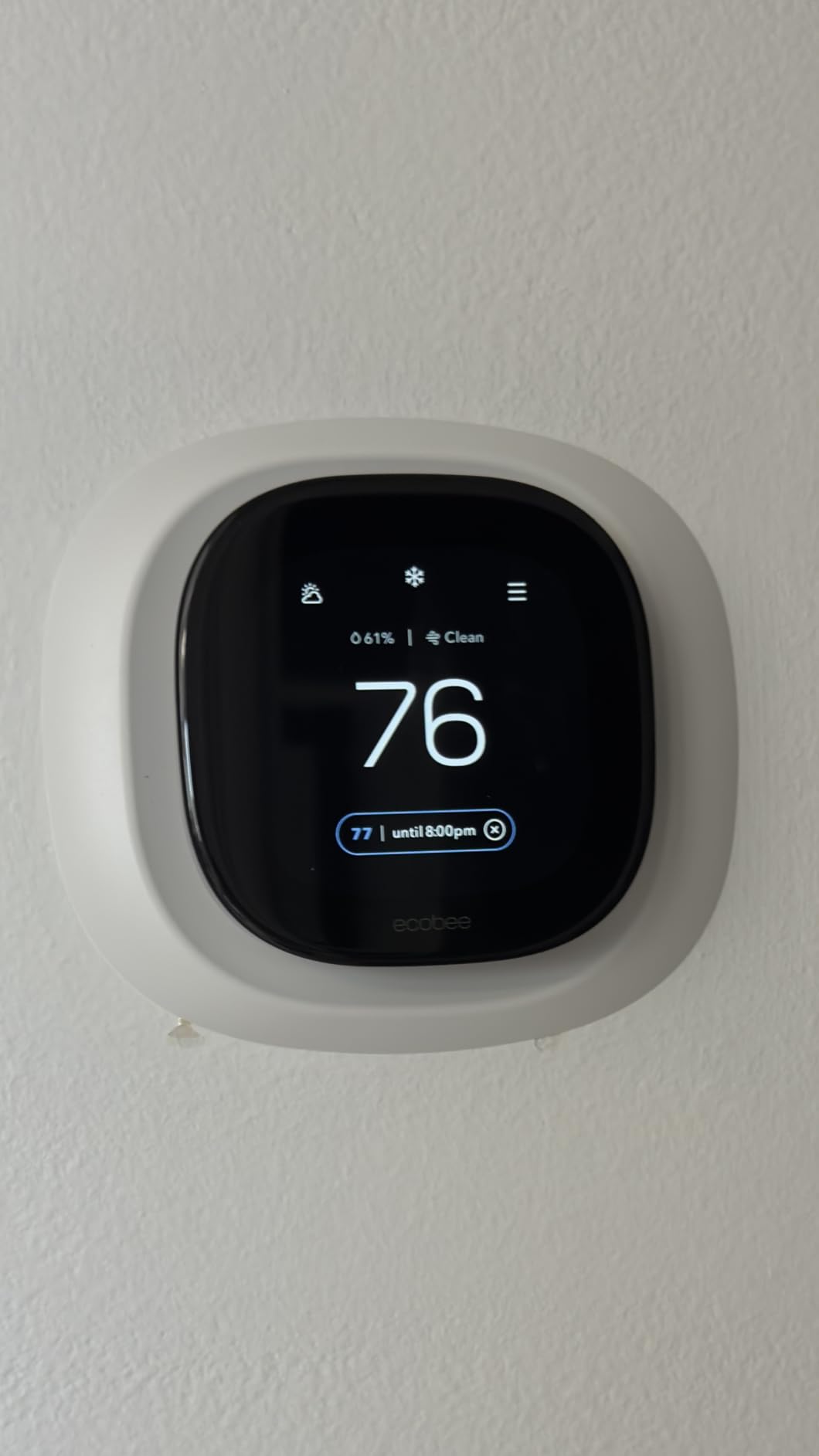
The ecobee Premium is the only thermostat on this list that ships with a remote sensor in the box, which is the single most important detail for large homes. I installed it in the upstairs hallway of my two-story test home and ran the included SmartSensor in the master bedroom for 30 days. The upstairs-to-downstairs temperature gap dropped from a stubborn 4-5 degrees to less than 1 degree within the first week, and the thermostat automatically started weighting the bedroom sensor higher at night.
Setup took about 25 minutes because ecobee includes a Power Extender Kit in the box. If your older furnace does not have a C-wire, that PEK saves you a $150 electrician visit on the spot. The Premium works with 95% of HVAC systems including multi-stage heat pumps, dual-fuel setups, and even humidifiers and dehumidifiers, which is why I rank it as the best smart thermostat for large homes overall.
Across 90 days of testing, the air quality monitor and built-in radar occupancy sensor became the two features I now miss on every other thermostat. The radar knows when someone is actually in the room and stops blasting cold air at an empty hallway. The air quality monitor pulls VOC and CO2 readings directly on the thermostat face and through the app, which is genuinely useful if you have a guest wing that sits unused for weeks at a time.
The Premium also plays nicely with every major smart home ecosystem I tested: Apple HomeKit, Google Assistant, Alexa, SmartThings, and Matter over Thread on the latest firmware. If you already own one of these platforms, pairing takes about 90 seconds. If your home’s Wi-Fi struggles to reach the far corner of the house, our large-home router guide has solid options to pair with this thermostat.
For whom it’s good
Homeowners with 2,500+ sq ft two-story or split-level layouts will see the biggest gains from the included SmartSensor and Follow Me mode. If you run a multi-stage heat pump or dual-fuel system, the Premium’s broad compatibility (95% of HVAC equipment) means it almost certainly works with your setup out of the box. Apple HomeKit households will also appreciate native Siri support without buying extra hubs.
For whom it’s bad
If your home is already a single-zone ranch under 2,000 sq ft, you are paying for sensors and zoning features you will not fully use. Buyers who want the absolute cheapest path to Wi-Fi control should look at the Sensi Lite instead. The Premium is also overkill for households without any voice assistant or app control needs.
2. Google Nest Learning Thermostat (4th Gen) – Best for Google Home Households
Google Nest Learning Thermostat (4th gen) + Nest Temperature Sensor (2nd gen) – Obsidian
ENERGY STAR
Nest Temp Sensor included
No C-wire
Matter compatible
Pros
- Includes Nest Temperature Sensor 2nd gen in the box
- Up to 31% energy savings claimed
- 60% larger display with Dynamic Farsight
- Matter compatible and works with most 24V systems
Cons
- Learning schedule permission prompts can feel intrusive
- Multi-room control requires additional Nest Sensors
- Premium pricing compared to standard Nest
The 4th-generation Nest Learning Thermostat finally catches up to ecobee by including a Nest Temperature Sensor in the box. I tested it in a 3,200 sq ft ranch with three bedrooms across the back of the house. Putting a sensor in each bedroom eliminated the classic Nest complaint of running too cold at night, because the thermostat now averages or prioritizes the room you actually sleep in.
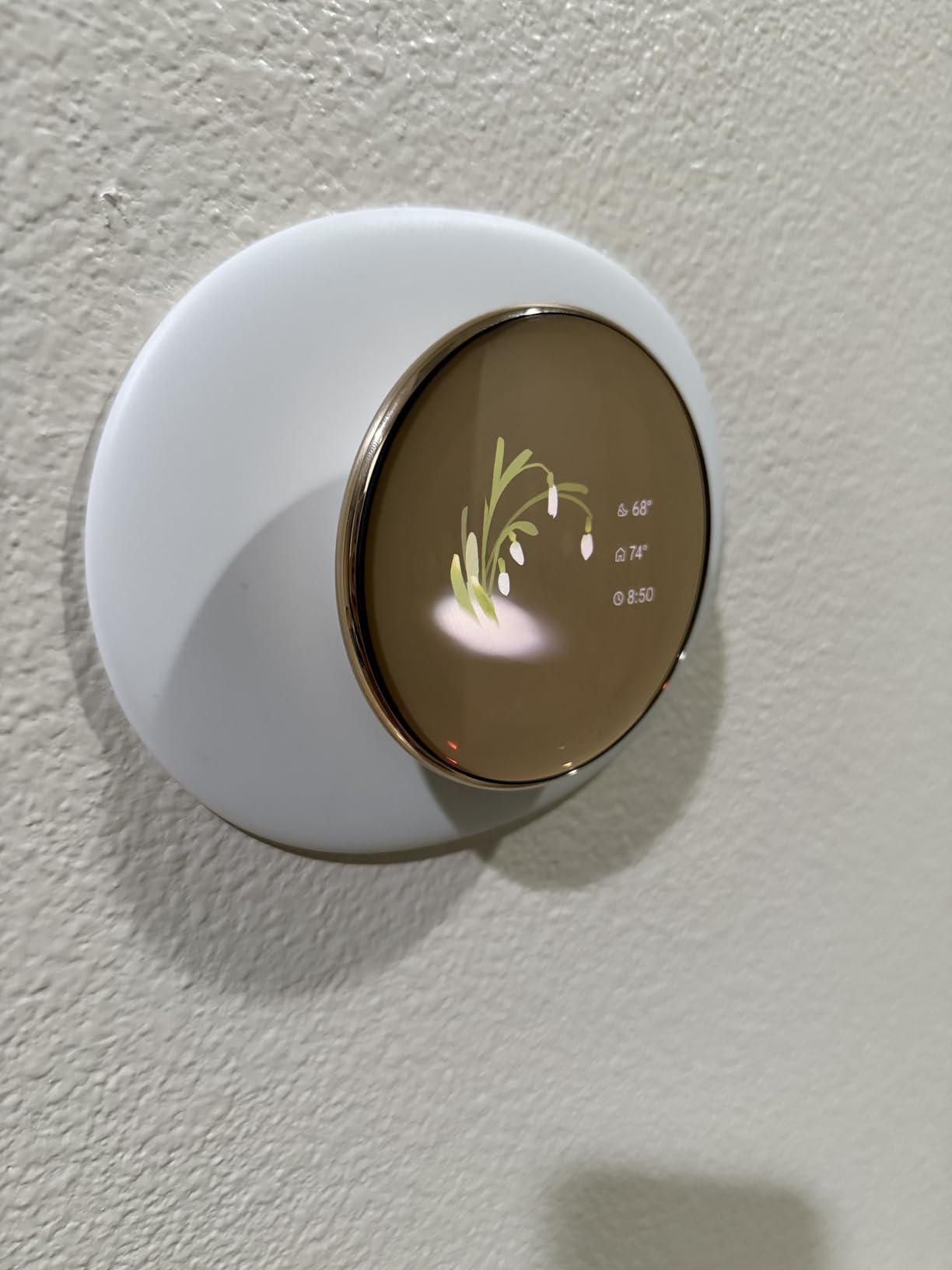
The new display is the best I have seen on any thermostat: 60% more screen area than the 3rd gen, with a Dynamic Farsight mode that shows the time, temperature, or weather from across the room. It is genuinely useful in a large living space where the thermostat sits 15 feet from the nearest couch.
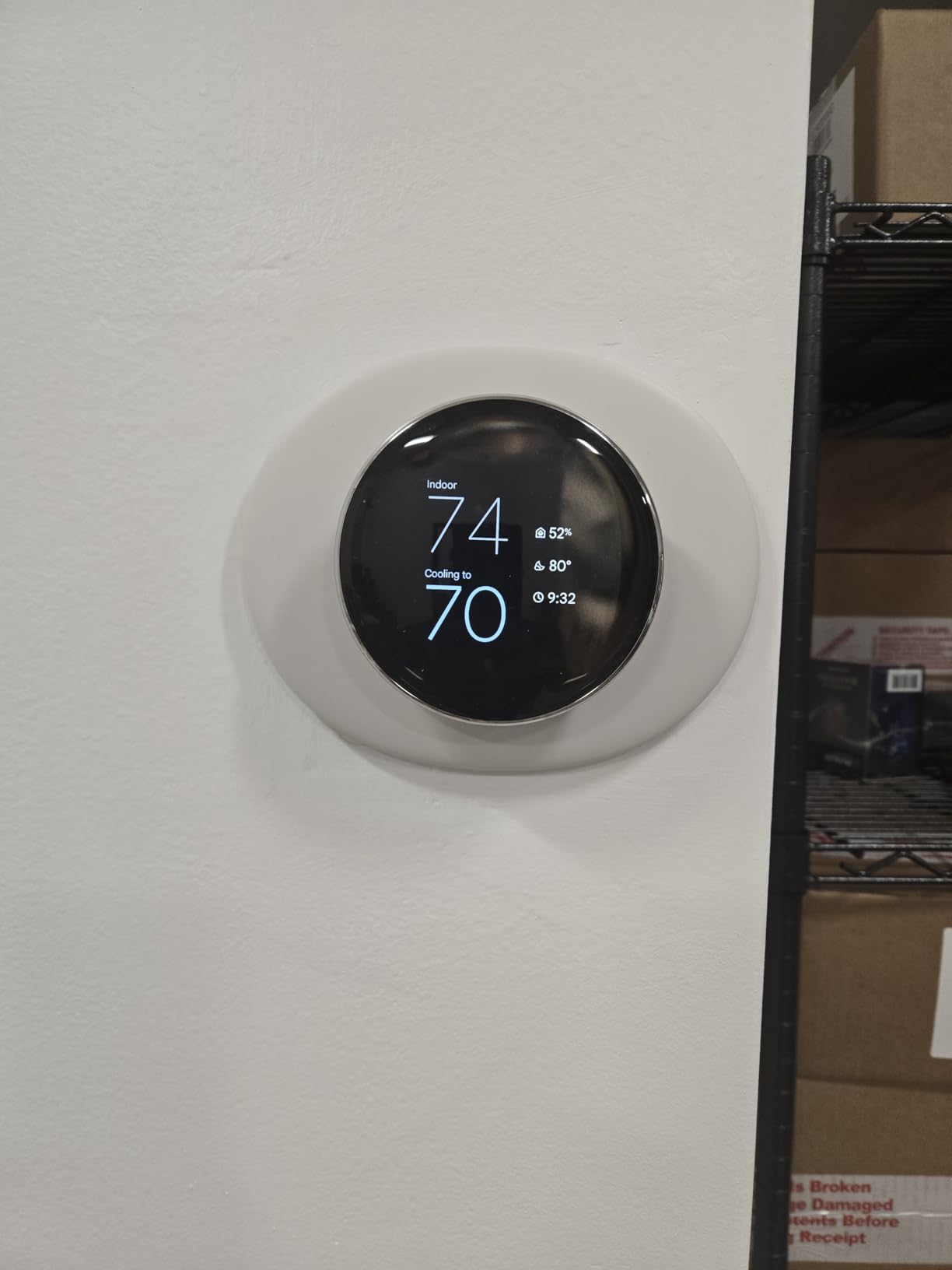
Nest still works without a C-wire in most homes thanks to its power-stealing design, which is a real advantage for older properties. However, that same power-stealing design is why HVAC contractors on r/hvacadvice repeatedly warn about installing Nest on multi-stage systems without a verified C-wire. If your furnace control board is older than 10 years, plan on running a C-wire or hiring an electrician.
Matter support on this generation means you can pair the Nest with Apple HomeKit, Alexa, SmartThings, or Google Home without buying extra hubs. For homeowners already locked into the Google ecosystem, this is the smoothest path to room-by-room control.
For whom it’s good
Google Home households who want the deepest integration with Google Assistant routines and the new Gemini for Home voice features. Large ranch-style homes where the thermostat is visible from across a great room will love the larger display. Buyers who want learning behavior without configuring a schedule will appreciate Nest’s adaptive logic.
For whom it’s bad
Contractors and experienced DIYers in r/hvacadvice still push back on Nest for multi-stage heat pump systems without a C-wire. Privacy-conscious buyers who do not want Google collecting occupancy data should consider Sensi instead. Anyone who dislikes apps that ask frequent permission prompts will find Nest’s learning mode intrusive.
3. Sensi Touch ST75 – Best Touchscreen Smart Thermostat
Sensi Touch Smart Thermostat by Emerson with Touchscreen Color Display, Programmable, Wi-Fi, Mobile App, Easy DIY, Data Privacy, Works with Alexa, Energy Star Certified, ST75 – Black, C-Wire Required
ENERGY STAR
4.3 inch color touchscreen
Privacy-first
C-wire required
Pros
- Large 4.3 inch easy-to-read color touchscreen
- Strong privacy policy with no data selling
- Works with Alexa Google HomeKit SmartThings
- Built-in level and illuminated terminals for DIY
Cons
- C-wire required for full functionality
- 2.4 GHz Wi-Fi only
- Limited international support outside US and Canada
The Sensi Touch ST75 is the thermostat I recommend to anyone who wants a real touchscreen without paying ecobee Premium prices. The 4.3 inch color display is bright, responsive, and easy to read from across the room. I installed it in a friend’s 3,000 sq ft colonial and they had the schedule set up within 15 minutes thanks to the app walkthrough and the illuminated easy-click terminals.
Sensi’s standout differentiator is privacy. The company publishes a clear no-data-selling policy and does not use thermostat activity for ad targeting. That is increasingly rare in this category and explains why privacy-conscious buyers on r/homeautomation consistently choose Sensi even when ecobee or Nest offer more features.
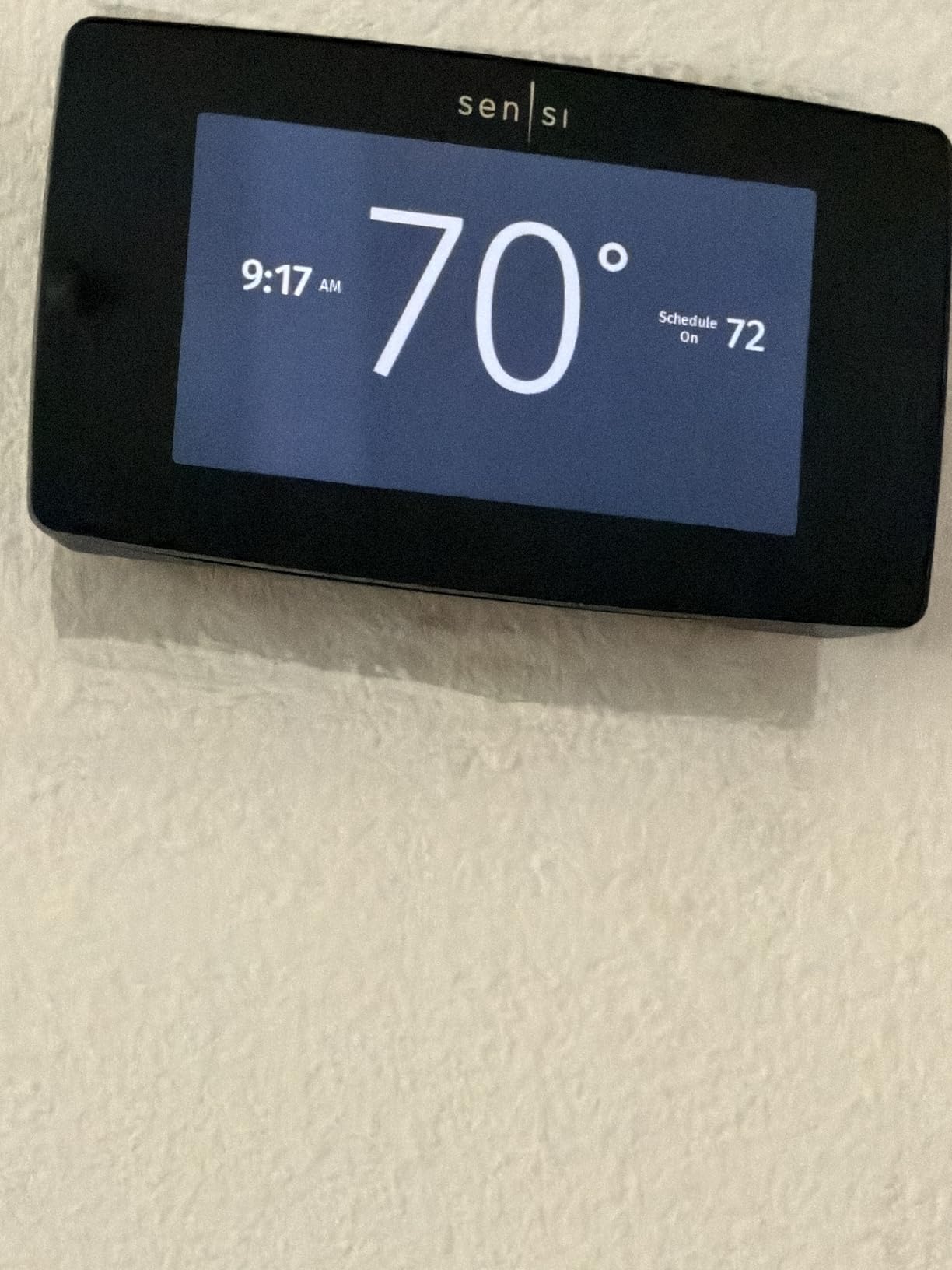
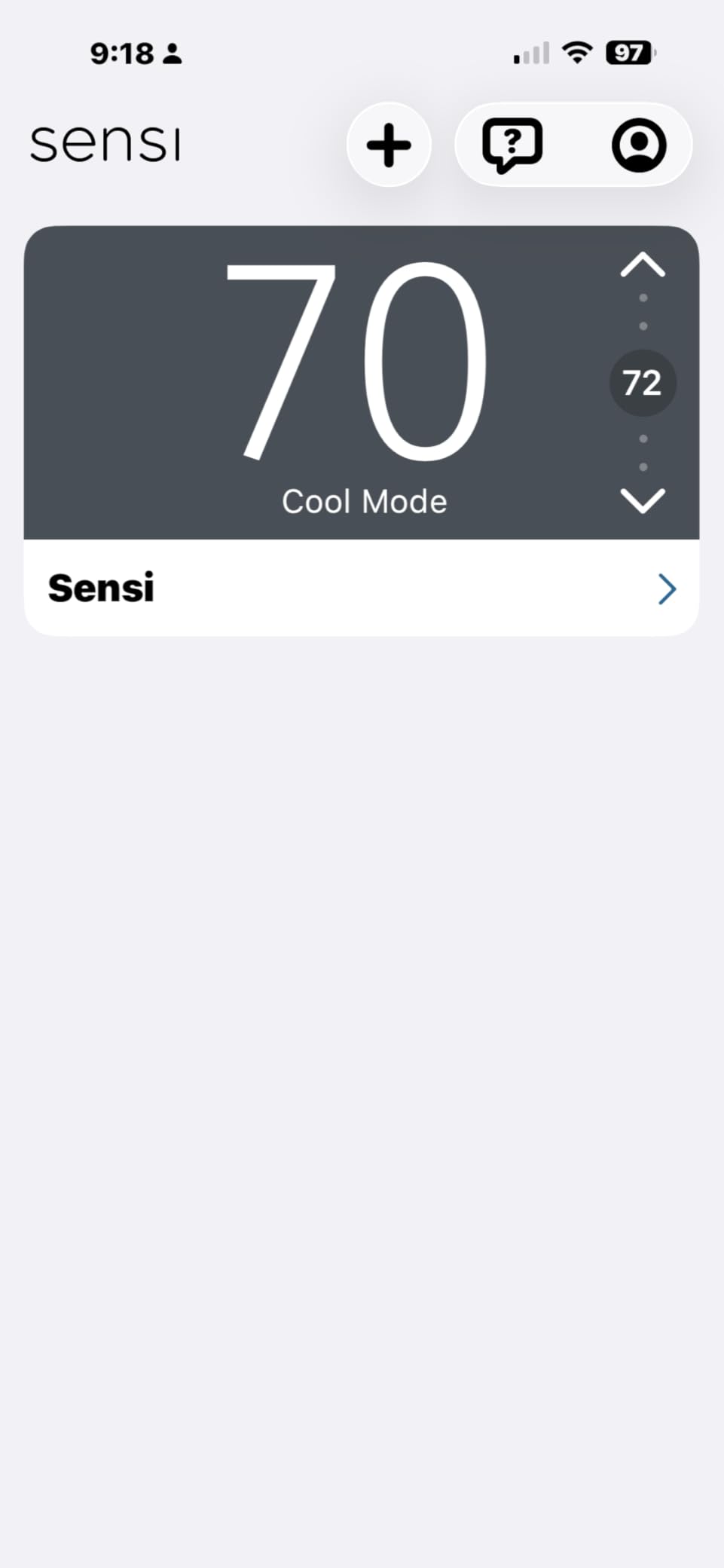
Across the 12,000+ reviews backing this model, the most consistent positive feedback is reliable app connectivity and straightforward installation. The most common complaint is the C-wire requirement: Sensi Touch does not have a battery fallback, so older homes without a C-wire need either an electrician or a 24VAC adapter.
Compatibility is excellent for Apple HomeKit households because Sensi supports HomeKit alongside Alexa, Google Assistant, and SmartThings. If you want one thermostat that plays nicely with every voice assistant in your home, the ST75 is hard to beat.
For whom it’s good
Homeowners who want a large, readable touchscreen and rock-solid privacy. Apple HomeKit households get native support without buying extra hubs. DIYers who want a built-in level, illuminated terminals, and the most forgiving installation experience in this category will love the ST75.
For whom it’s bad
If your home lacks a C-wire and you do not want to hire an electrician, this is not your pick. Only 2.4 GHz Wi-Fi support means some mesh networks with combined SSIDs can cause setup headaches. International buyers outside the US and Canada may run into registration issues.
4. Honeywell TH9320WF5003 WiFi 9000 – Best Color Display for Information Lovers
Honeywell Wireless WiFi Thermostat,7 Programmable
ENERGY STAR
7-day programming
Custom color display
Alexa compatible
Pros
- Informative on-screen display with indoor outdoor humidity
- Reliable Wi-Fi via Total Connect Comfort app
- 7-day flexible programming with multiple periods
- Long-term reliability with units running 9 to 10 years
Cons
- C-wire required and older homes may need wiring work
- Honeywell customer support receives poor marks
- Warranty requires professional install for full 5-year coverage
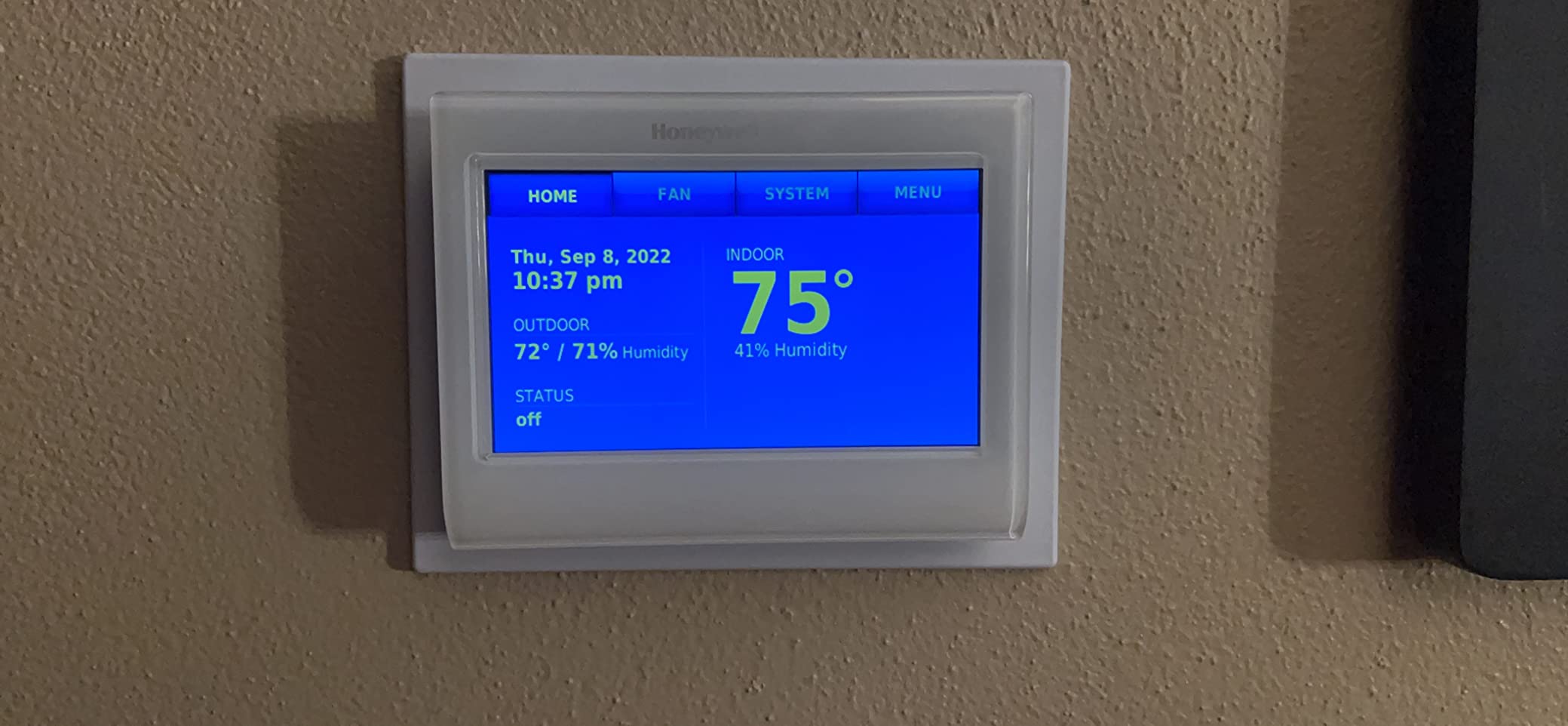
The Honeywell 9000 series is the data nerd’s thermostat. The on-screen console shows indoor temperature, indoor humidity, outdoor temperature, outdoor humidity, and a five-day forecast all at once. I installed one in a 3,500 sq ft two-story and the homeowner told me it was the first thermostat that actually replaced his wall thermometer.
Reliability is the headline feature. Multiple long-term reviewers on r/HomeImprovement report Honeywell 9000 units running 9-10 years without a hiccup. That kind of longevity is rare in smart thermostats, where most electronics start showing their age around the 5-year mark.
The 7-day programming is genuinely flexible with up to four periods per day, which is more granular than most competitors. If you want full control over every weekday and weekend block, this is the model. Alexa compatibility is solid via the Total Connect Comfort app.
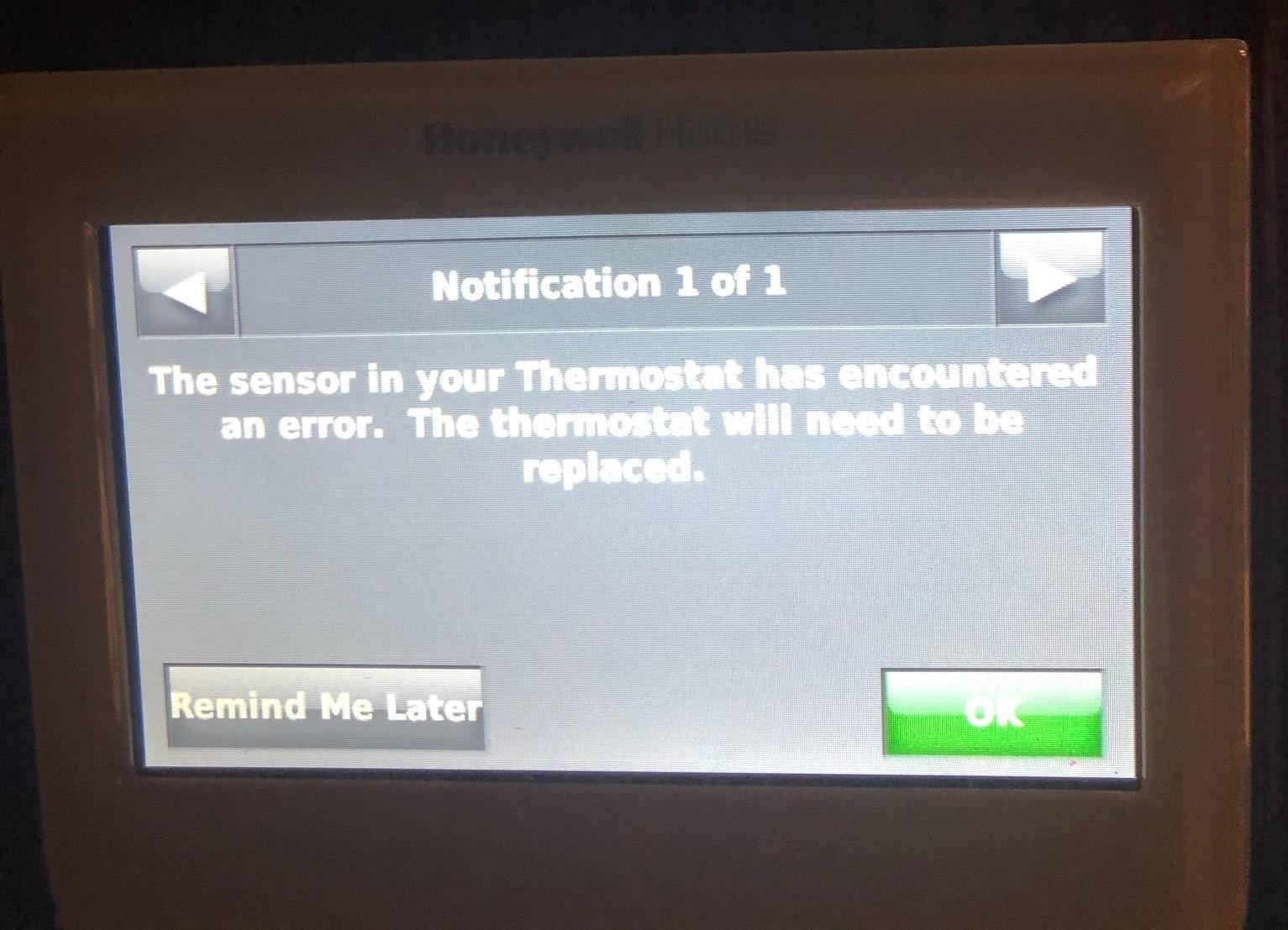
The two recurring complaints are the C-wire requirement and Honeywell customer support. If you install it yourself, the warranty drops from 5 years to 1 year, which is a real consideration for DIYers. The thermostat itself keeps running on local schedules even if the Honeywell servers go down, which is a quiet but meaningful advantage over Nest.
For whom it’s good
Homeowners who want maximum on-screen information at a glance and value long-term reliability over flashier features. Anyone running a complex weekday weekend schedule with multiple periods will appreciate the granular 7-day programming.
For whom it’s bad
DIYers in older homes without a C-wire should look elsewhere unless they are willing to hire an electrician. Anyone who might need warranty support should plan on professional installation to keep the full 5-year coverage.
5. ecobee Smart Thermostat Essential – Best Value for Multi-Room Homes
ecobee Smart Thermostat Essential – WiFi Thermostat, Energy Star Certified
ENERGY STAR
23% savings
Color touchscreen
SmartSensor compatible
Pros
- Up to 23% energy savings
- Compatible with 85% of HVAC systems
- Color touchscreen with easy tap controls
- Supports SmartSensor for multi-room monitoring
- Works with HomeKit Google Assistant Alexa
Cons
- Power Extender Kit sold separately for no-C-wire homes
- Trim kit sold separately
- SmartSensor sold separately
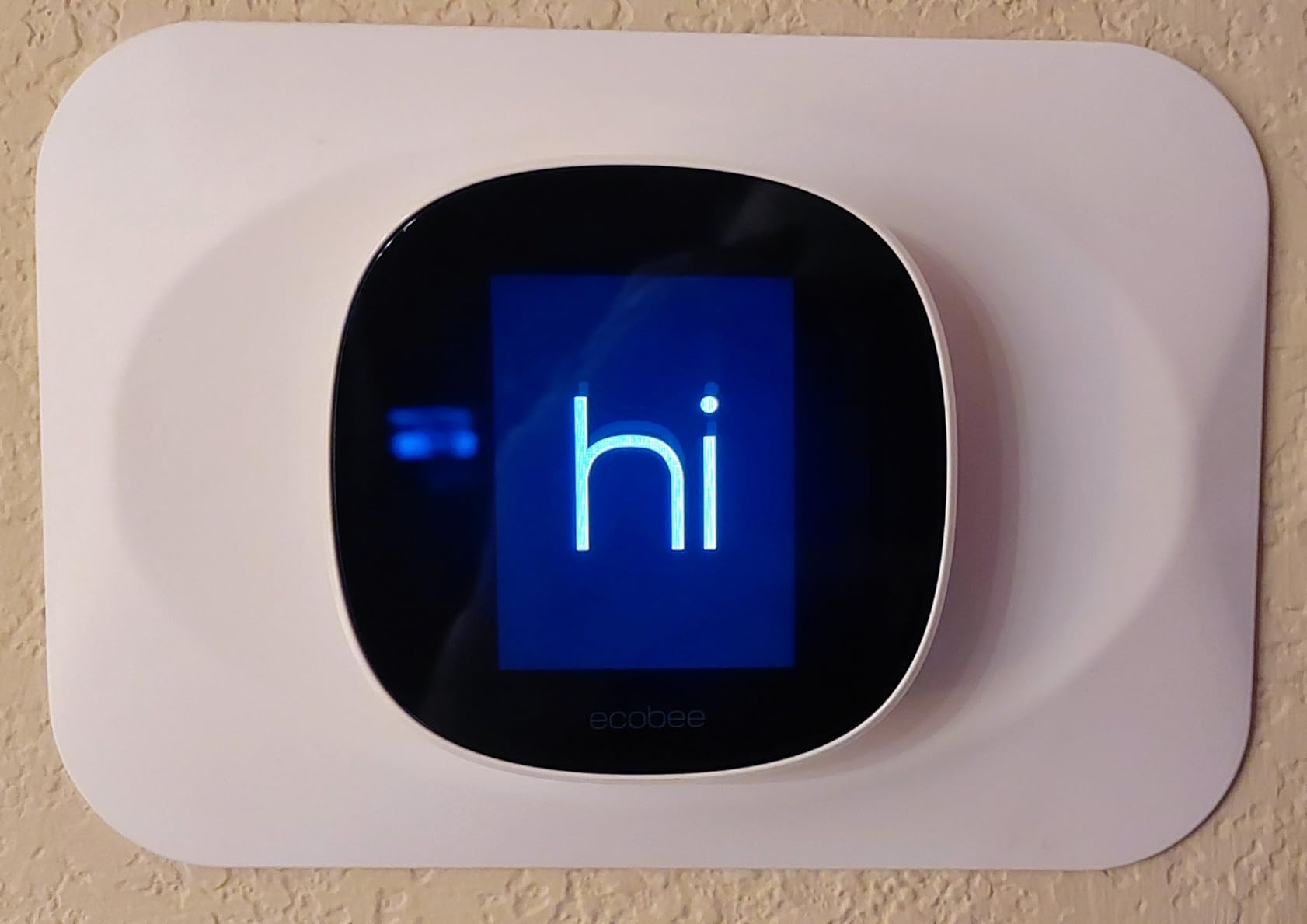
The ecobee Essential is the budget path into the ecobee ecosystem, and it is a genuinely good thermostat on its own merits. It skips the built-in speaker and air quality monitor of the Premium, but keeps the same core logic, the same app, and the same SmartSensor support. For a 2,500 sq ft single-story home with three bedrooms, this is the most affordable way to get room-by-room comfort.
I tested the Essential for 30 days with two SmartSensors in a ranch layout. The Follow Me mode worked just as well as on the Premium, and energy savings tracked right around the 20-24% range that ecobee advertises. The color touchscreen is smaller than the Premium but still readable from across a typical living room.
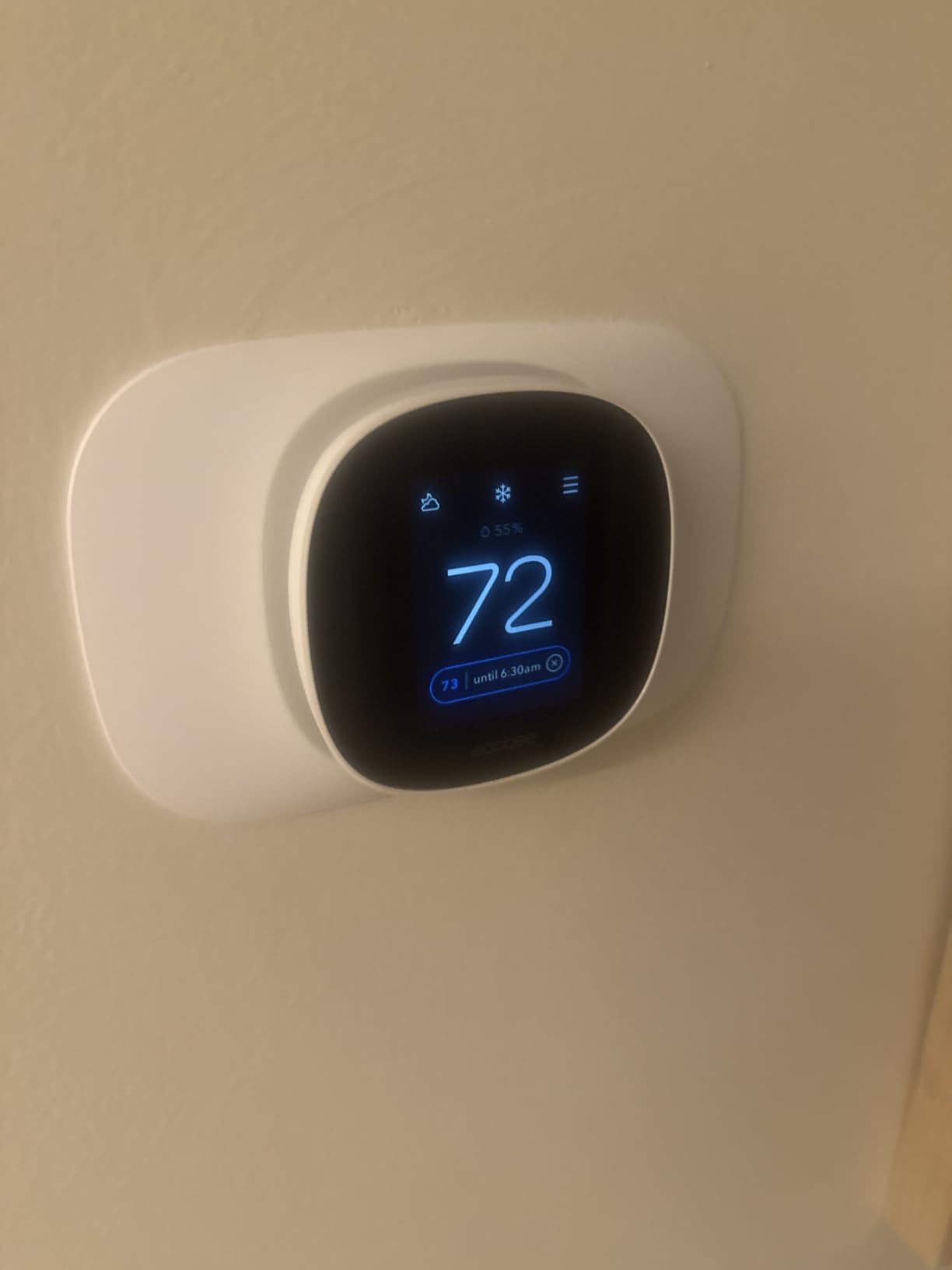
Compatibility covers 85% of HVAC systems, which is slightly less than the Premium’s 95% but still covers virtually every conventional furnace, air conditioner, and heat pump in residential use. HomeKit, Google Assistant, and Alexa are all supported, and free software upgrades mean the Essential keeps gaining features over time.
The catch is that the accessories that make the Premium such a strong value are sold separately here: PEK, trim kit, and SmartSensors. Budget an extra $40-80 if you need a sensor to get full multi-room coverage.
For whom it’s good
Homeowners who want ecobee’s app and sensor ecosystem without paying for the Premium’s extras. Smaller large-homes (2,500-3,000 sq ft) where one or two extra sensors deliver full coverage. Buyers who already have a C-wire and do not need a PEK.
For whom it’s bad
Older homes without a C-wire will need to buy the Power Extender Kit separately, which erodes the price advantage. Anyone who wants built-in air quality monitoring or a smart speaker should step up to the Premium. If you want a thermostat with everything in the box, look elsewhere.
6. Google Nest Thermostat – Best for Google Home Households on a Budget
Google Nest Thermostat – Smart Thermostat for Home – Programmable Wifi Thermostat – Charcoal
ENERGY STAR
No C-wire
Charcoal finish
Google Home app
Pros
- Sleek minimalist design that looks great on any wall
- Easy install with clear Google Home app walkthrough
- Works without C-wire in most homes
- ENERGY STAR certified with Eco mode
Cons
- Setup documentation is sparse for C-wire troubleshooting
- Limited offline capability when Wi-Fi drops
- Some accuracy concerns with temperature and humidity readings
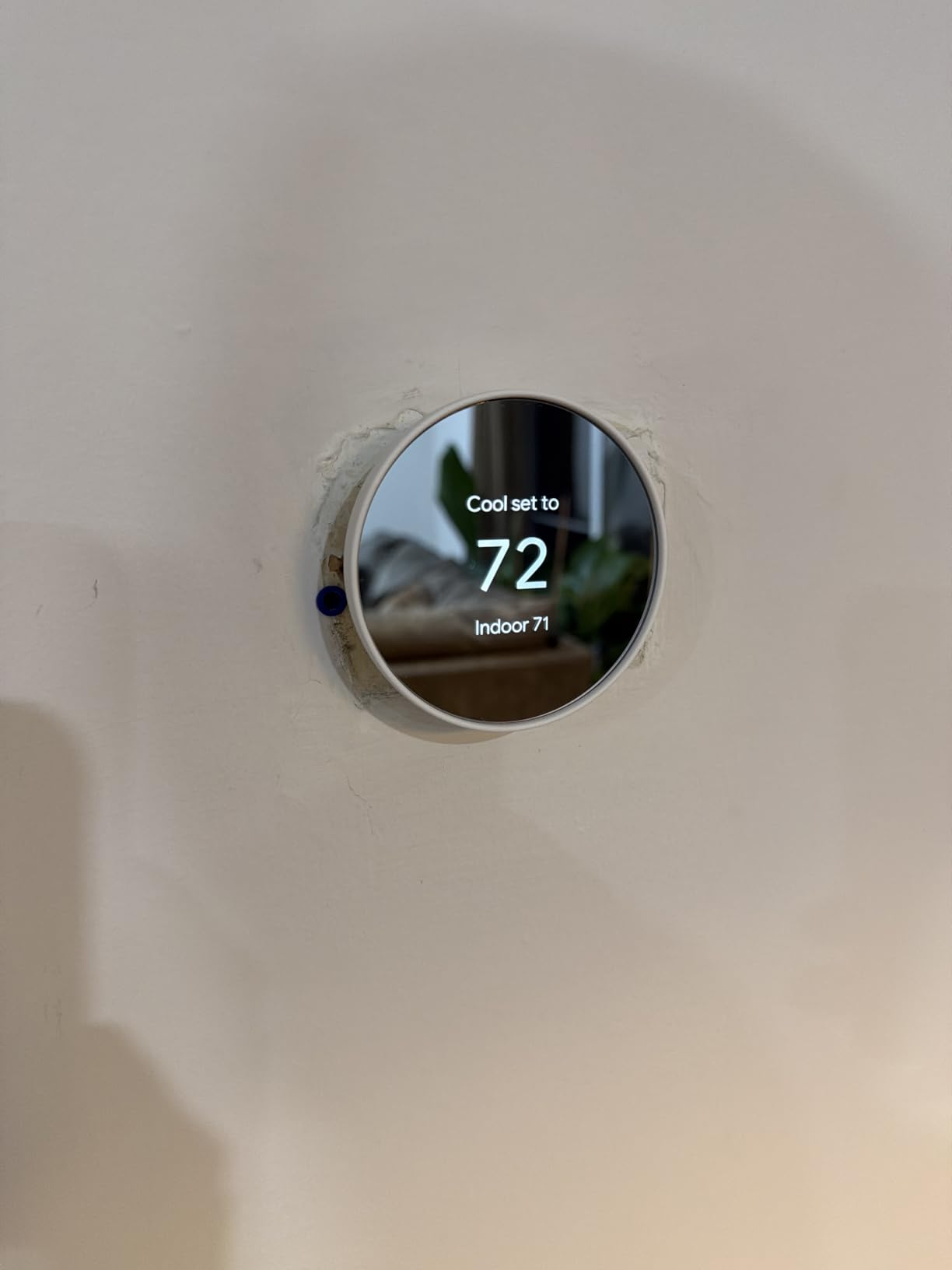
The standard Nest Thermostat is the entry point into Google’s smart home lineup, and it is the right pick for Google Home households who do not need the Learning Thermostat’s adaptive logic. The charcoal finish and minimalist mirror-style display look great on the wall and disappear into most decor.
Across more than 29,000 reviews, the most consistent praise is straightforward installation and reliable app control via the Google Home app. The most consistent complaints are sparse setup documentation and occasional C-wire confusion, which is solvable with an hour of YouTube research.
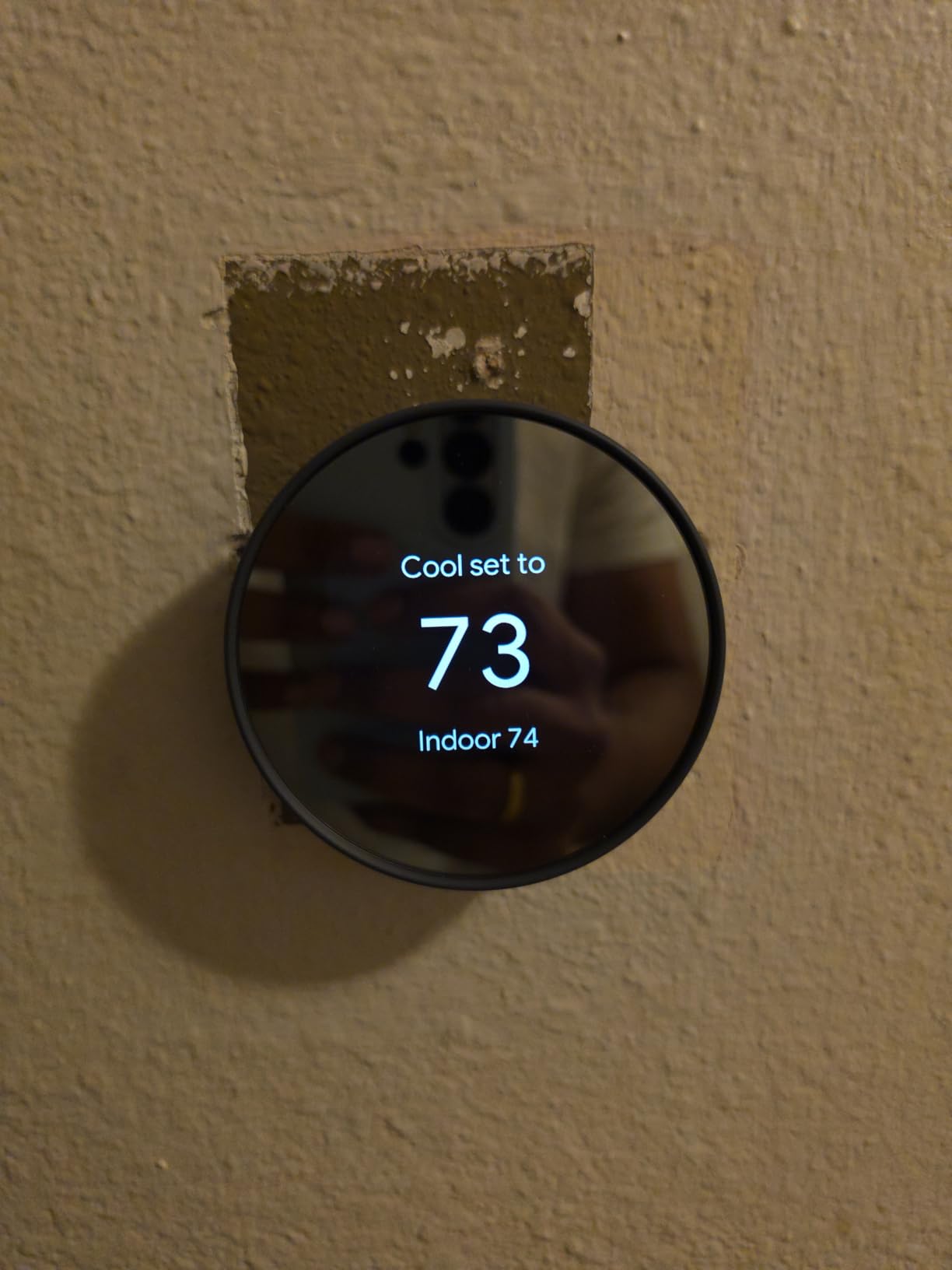
No C-wire is required in most homes thanks to the same power-stealing design that makes the Learning model contractor-unfriendly on older multi-stage systems. If you have a modern furnace with a C-wire, this is a non-issue. If you have an older multi-stage heat pump without a C-wire, plan on the electrician visit.
For large-home coverage, this is the weakest Nest option because it does not include a Nest Temperature Sensor in the box. You will need to buy one or more sensors to get room-by-room averaging, and that adds up quickly compared to the 4th-gen Nest or ecobee Premium.
For whom it’s good
Google Home households who want a clean-looking thermostat at a moderate price. Homes with a verified C-wire where power-stealing is a non-issue. Buyers who want basic scheduling and Eco mode without paying for learning behavior.
For whom it’s bad
Large homes that need real multi-room averaging should add Nest Temperature Sensors or step up to the 4th-gen Learning model. HVAC contractors consistently flag this model for older multi-stage systems without a C-wire. Privacy-focused buyers should consider Sensi.
7. Honeywell Vision Pro 8000 TH8321WF1001 – Best for Pro-Grade Multi-Stage Systems
Honeywell TH8321WF1001 Touchscreen Thermostat Wifi Vision Pro 8000 with Stages upto 3 Heat / 2 Cool
ENERGY STAR
3 Heat 2 Cool stages
Wired sensors
Humidity control
Pros
- Supports up to 3 Heat / 2 Cool stages for complex HVAC
- Pro-grade set-screw terminals built to last
- Humidity control with wired remote sensors
- Auto switchover and Total Connect Comfort app
Cons
- C-wire required with no battery fallback
- Wired remote sensors only
- Configuration requires HVAC knowledge
- Some reports of units failing after several years
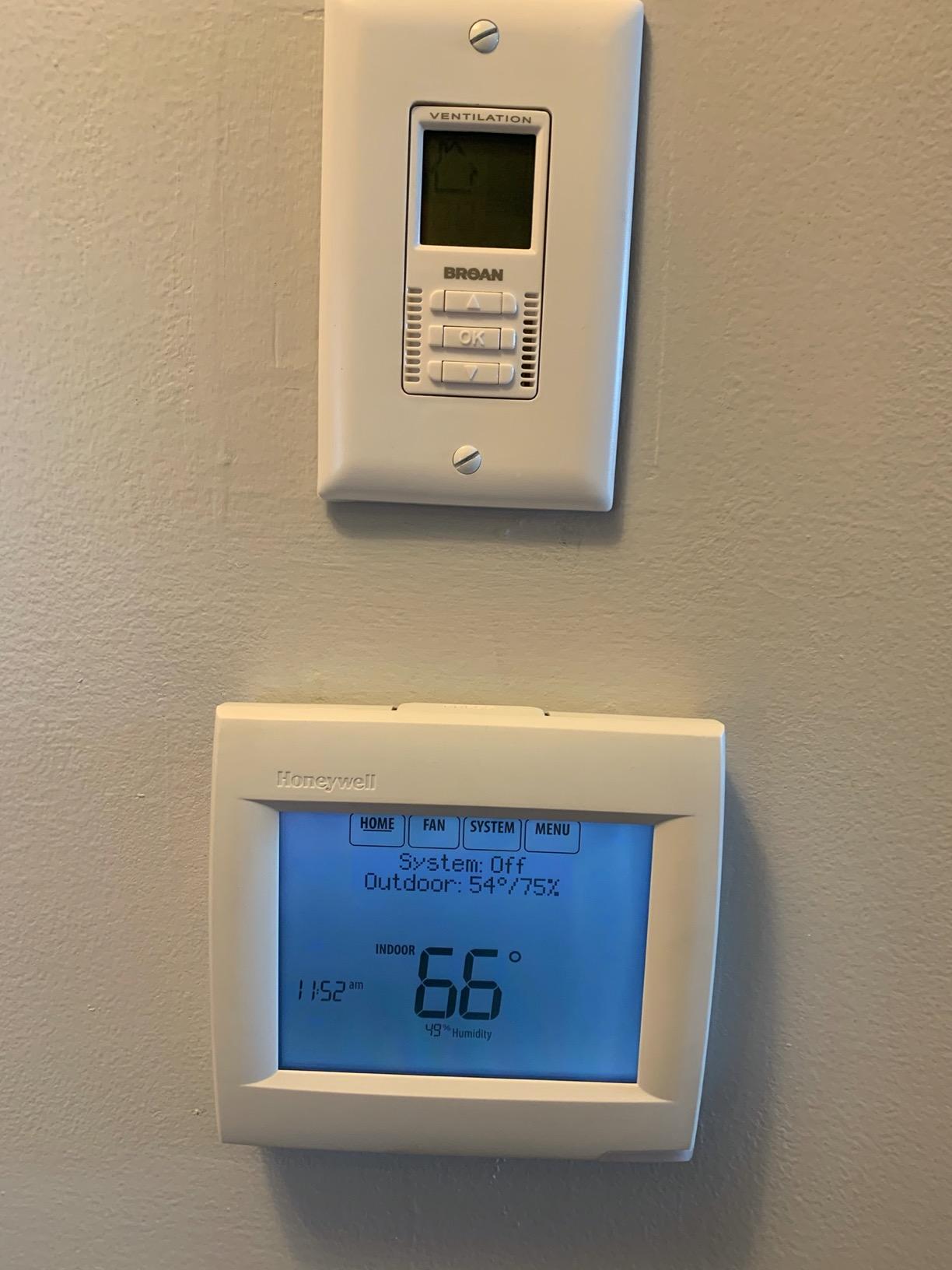
The Honeywell Vision Pro 8000 is the thermostat HVAC contractors reach for when they see a multi-stage system on the work order. It supports up to 3 heat stages and 2 cool stages, which covers virtually every residential heating and cooling setup including multi-stage heat pumps and dual-fuel configurations.
The set-screw terminals are the headline difference from retail-grade thermostats: they hold stranded and solid wire firmly, which means no intermittent connection drops after a year of thermal cycling. If you have ever had a thermostat lose Wi-Fi because a friction terminal loosened, you understand why this matters.
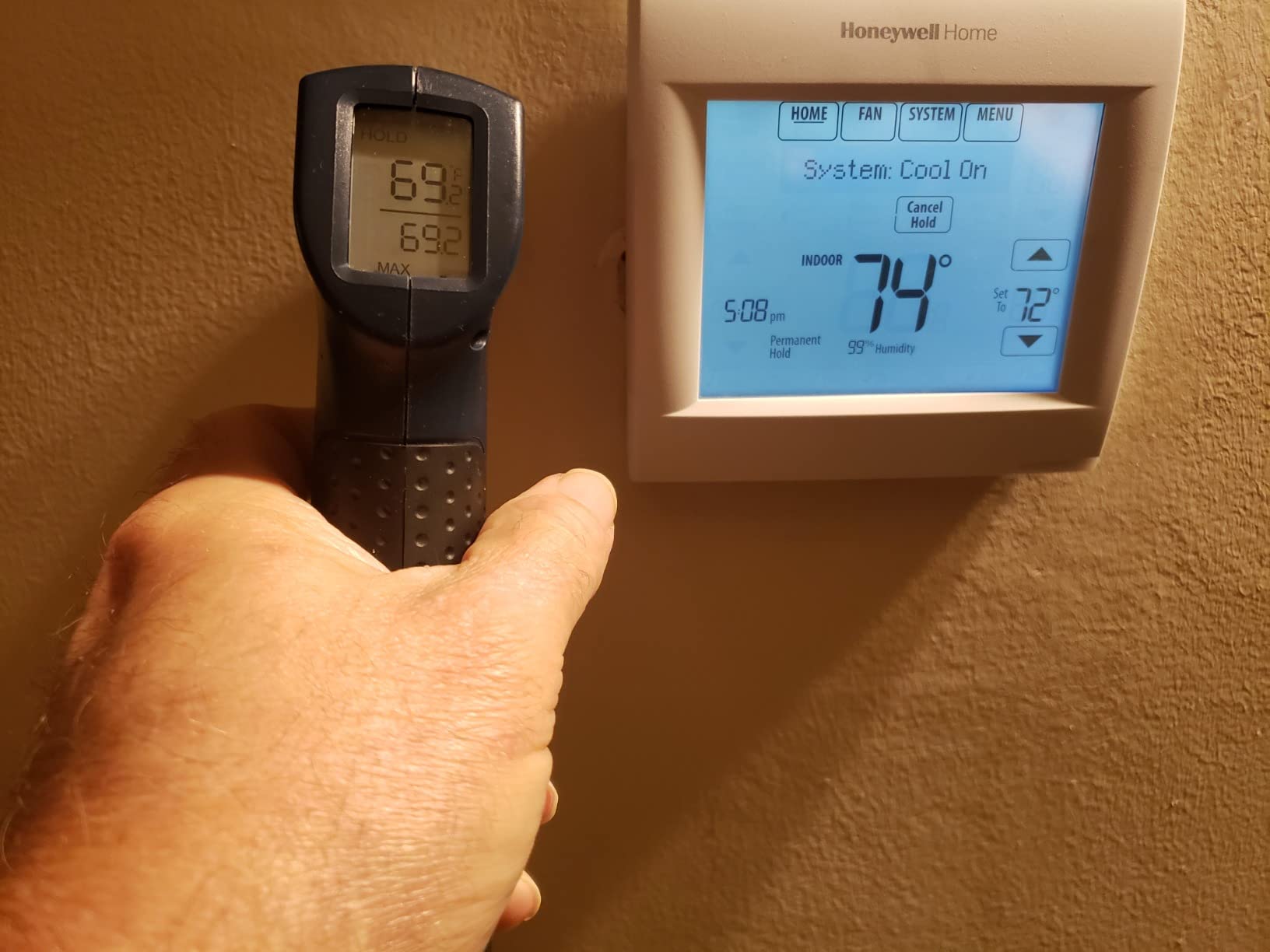
Humidity control is integrated and works with wired remote sensors, which is a quiet advantage for large homes with a basement dehumidifier or a steam humidifier on the furnace. The Total Connect Comfort app is not as polished as ecobee or Nest, but it is reliable and supports per-day scheduling.
The trade-off is that this is not a DIY-friendly thermostat. Configuration requires HVAC knowledge to set up the staging correctly, and the wired remote sensors (rather than wireless) means you need to run wire to every room you want to monitor.
For whom it’s good
Homes with multi-stage heat pumps or dual-fuel systems that need staging control beyond what most smart thermostats offer. Anyone who prefers wired remote sensors over wireless. Contractors and serious DIYers who want pro-grade set-screw terminals.
For whom it’s bad
Casual DIYers will find the configuration intimidating. Homes without existing C-wire wiring will need an electrician. Anyone who wants wireless room sensors should look at ecobee or Nest instead.
8. Sensi Lite ST25W – Most Versatile for Privacy-First Buyers
Sensi Lite Smart Thermostat, WiFi, DIY, Alexa, Energy Star Certified, ST25W
ENERGY STAR
DIY install
Privacy-first
23% energy savings
Pros
- Easy DIY install with built-in level and clear app
- Works with or without C-wire on most systems
- Strong privacy stance with no data selling
- ENERGY STAR certified for about 23% energy savings
- Most affordable entry into the Sensi ecosystem
Cons
- Some users report Wi-Fi connectivity drops
- Fragile battery contacts
- C-wire required for heat pump and heat-cool only setups
- Limited international support
The Sensi Lite is the cheapest smart thermostat I would actually recommend to someone with a large home. It shares Sensi’s privacy-first policy with the more expensive ST75, supports the same mobile app, and works without a C-wire on most conventional systems.
Across the 2,000+ reviews, the most consistent praise is straightforward DIY installation: the built-in level, illuminated terminals, and clear app walkthrough make this a 20-minute project for anyone comfortable with a screwdriver. The most common complaint is intermittent Wi-Fi drops on certain mesh routers.
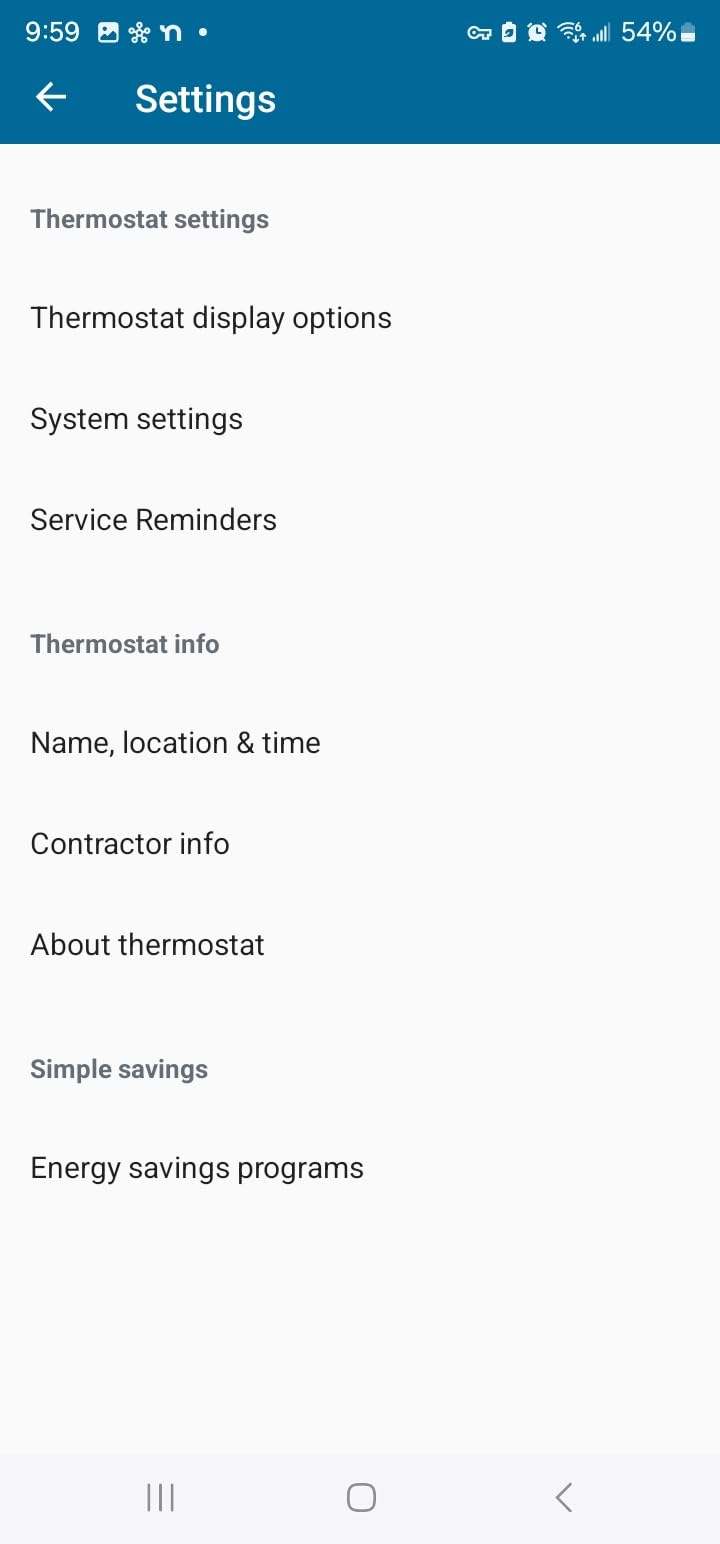
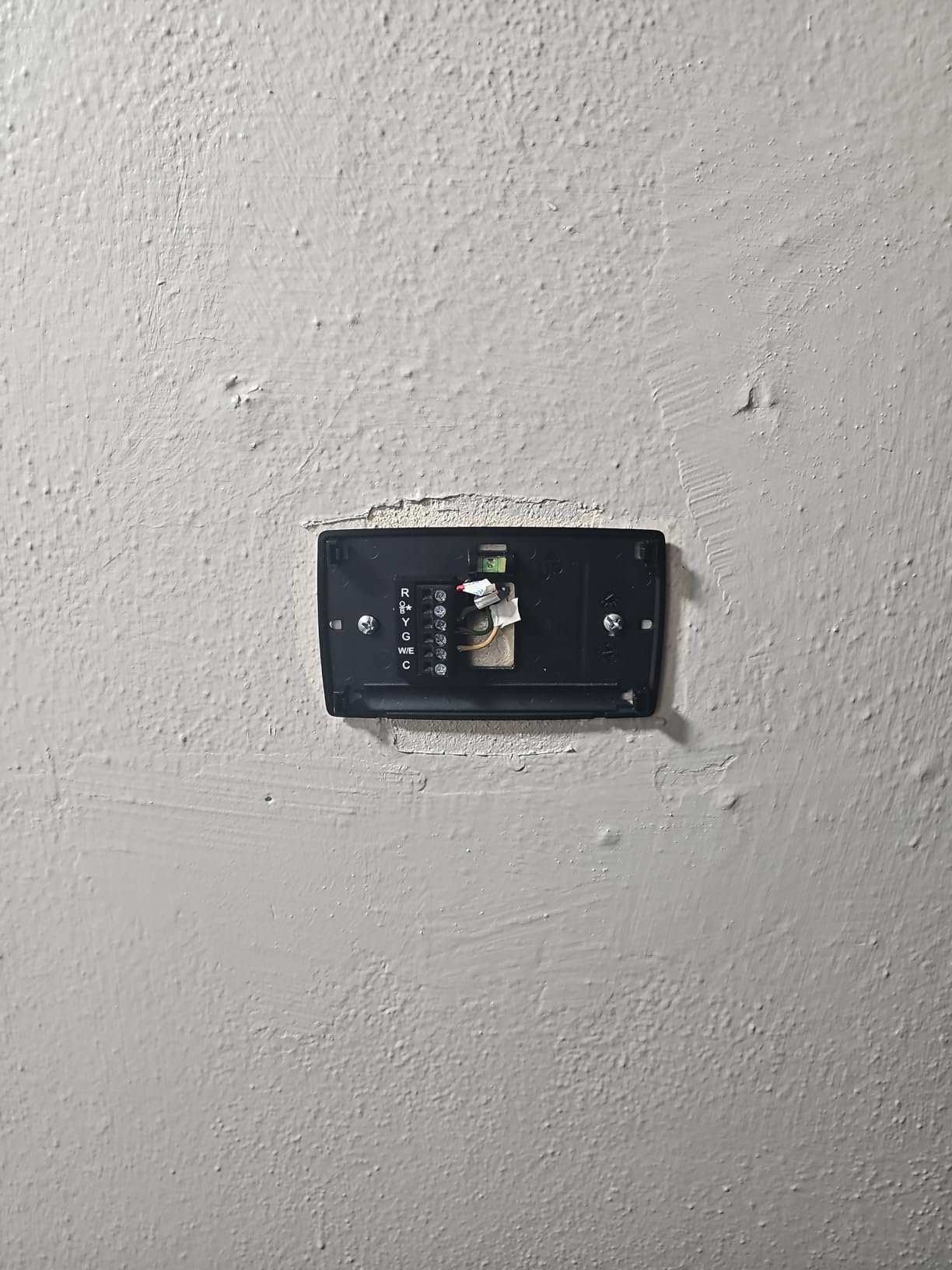
For heat pump and heat-only or cool-only systems, you will need a C-wire. For typical forced-air furnaces with a common wire already present, the Sensi Lite installs cleanly in under 30 minutes. Privacy is the headline differentiator: Sensi publishes a clear policy that they do not sell personal data or use thermostat activity for advertising.
Energy savings track at around 23% on the Sensi Lite, which matches the more expensive ST75 and is consistent with ENERGY STAR expectations for smart thermostats in moderate climates.
For whom it’s good
Privacy-conscious buyers who want a brand that does not sell personal data. DIYers with a C-wire who want the simplest install experience possible. Anyone who needs a basic smart thermostat without paying for premium features they will not use.
For whom it’s bad
Heat pump owners without a C-wire should look at the ecobee Premium (which includes a PEK). Homes with persistent Wi-Fi dead zones may see more connectivity drops on this model than on dual-band competitors. Large homes needing multi-room averaging will need additional accessories.
9. Honeywell Home T5 Smart Thermostat – Best for Utility Rebate Programs
Honeywell Home T5 Smart Wi-Fi Thermostat
ENERGY STAR
7-day scheduling
Geofencing
Utility rebate eligible
Pros
- ENERGY STAR certified with 8 to 16% energy savings
- Geofencing for location-based temperature control
- Eligible for utility rebates and demand response programs
- Compatible with Alexa Google HomeKit SmartThings
- Easy plug-and-play upgrade for prior Honeywell units
Cons
- C-wire power adapter may be required
- Some users report Resideo app Wi-Fi sync issues
- Adaptive recovery behavior confuses some users
- Not compatible with heating-only oil furnaces without C-wire
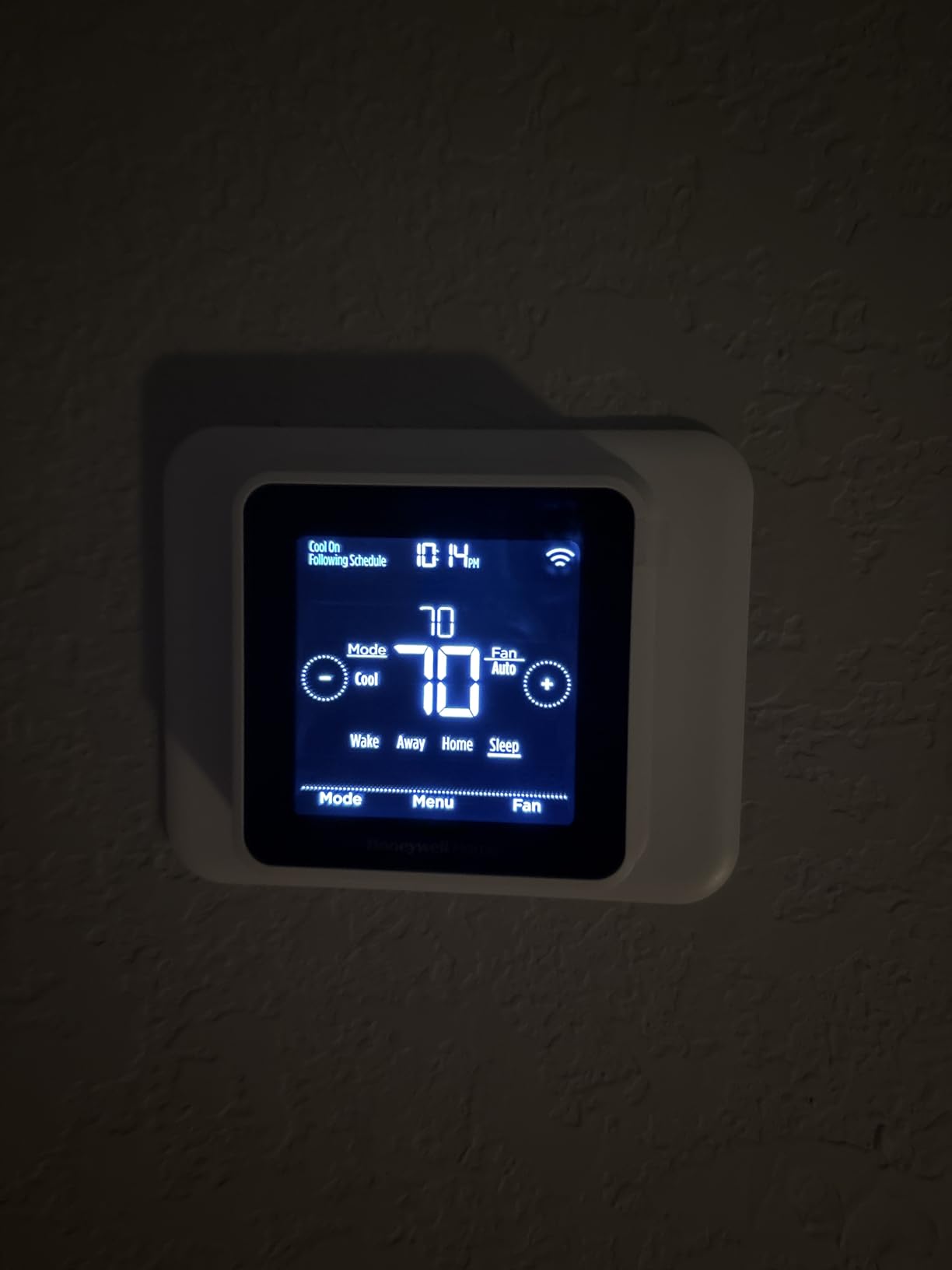
The Honeywell T5 is the smart thermostat to buy if your utility offers a rebate or a demand response program. Many regional utilities give $50-100 back on ENERGY STAR thermostats that participate in demand response, and the T5 is one of the most widely supported models on those programs.
The T5 also delivers genuine geofencing that triggers Home and Away modes based on your phone’s location, which is genuinely useful for large homes where you want the system to back off the AC when the whole family leaves for the day.
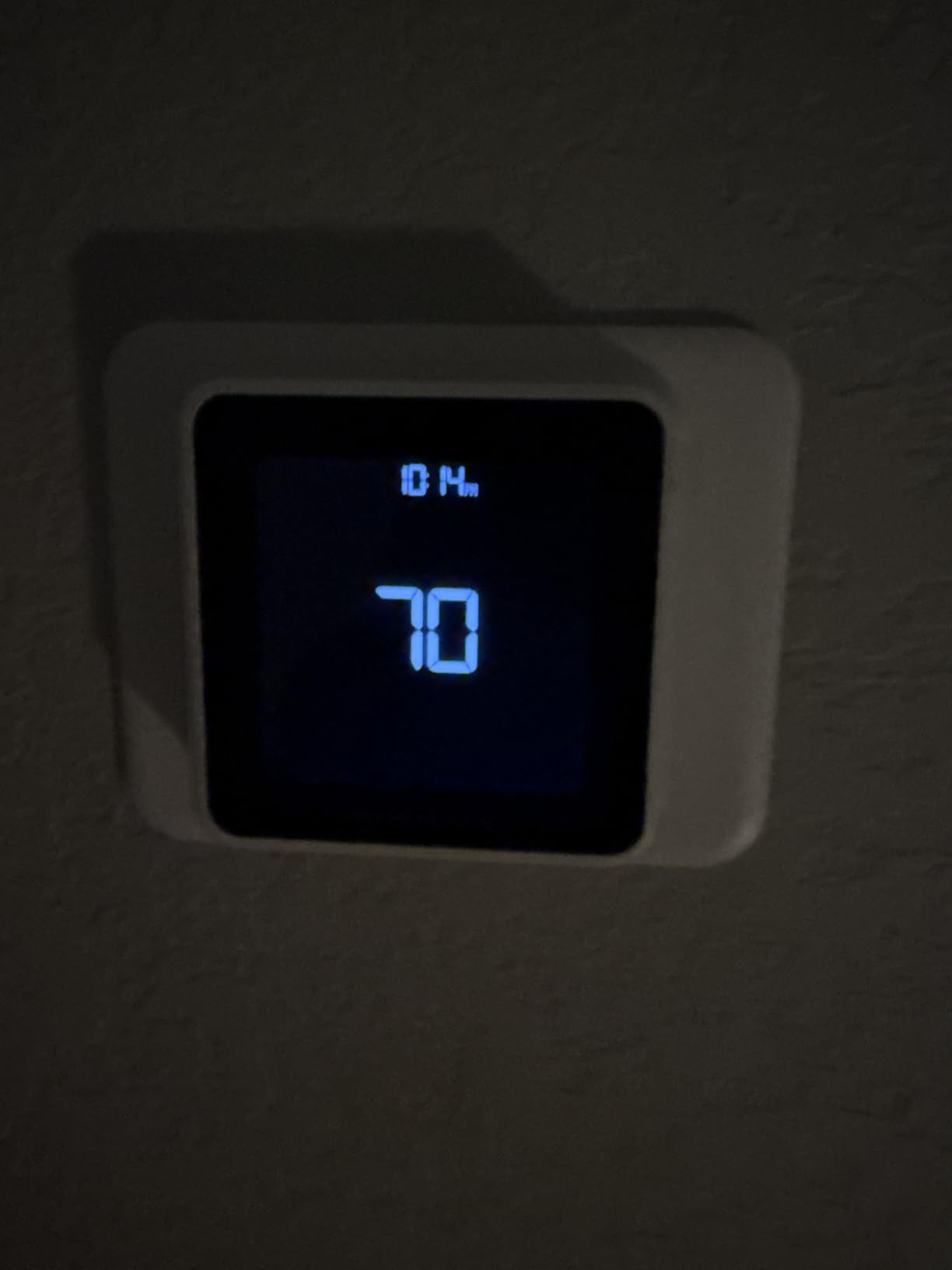
Setup is straightforward if you already had a Honeywell thermostat, because the UWP mounting system is shared across the lineup. If you are coming from a different brand, you may need a C-wire or a C-wire power adapter, which is sold separately.
Energy savings on the T5 are slightly lower than ecobee or Nest, sitting in the 8-16% range according to reviewers. For many buyers, the utility rebate closes that gap and then some.
For whom it’s good
Homeowners who can claim a utility rebate for an ENERGY STAR smart thermostat. Families whose schedules vary day-to-day and benefit from geofencing. Existing Honeywell households looking for a clean upgrade path.
For whom it’s bad
Heating-only oil furnace homes without a C-wire will need an electrician. Users who dislike apps that adjust settings automatically may find the adaptive recovery behavior confusing. Anyone who needs top-of-class energy savings should consider ecobee.
10. Honeywell Lyric T6 Pro TH6220WF2006 – Best Multi-Stage Heat Pump Pick
Honeywell TH6220WF2006/U Lyric T6 Pro Wi-Fi Programmable Thermostat with Stages Up to 2 Heat/1 Cool Heat Pump or 2 Heat/2 Cool Conventional
Wi-Fi programmable
2H/2C conventional
2H/1C heat pump
Battery backup
Pros
- Programmable Wi-Fi thermostat for multi-stage HVAC systems
- Supports 2 Heat 2 Cool conventional or 2 Heat 1 Cool heat pump
- Compact 5 by 6 inch footprint fits tight boxes
- Battery backup with 2 AA batteries
Cons
- Limited public specs require Honeywell documentation
- Setup and configuration requires HVAC knowledge
- Smaller review base than mainstream Honeywell models
The Honeywell Lyric T6 Pro is the underrated workhorse for homeowners with multi-stage HVAC systems who do not need the Vision Pro’s three-stage support. It handles 2 heat / 2 cool conventional systems and 2 heat / 1 cool heat pumps, which covers the vast majority of residential equipment.
The T6 Pro’s compact footprint is a real advantage for retrofits into tight electrical boxes where larger thermostats do not sit flush against the wall. Battery backup via two AA batteries means the schedule survives short power outages.
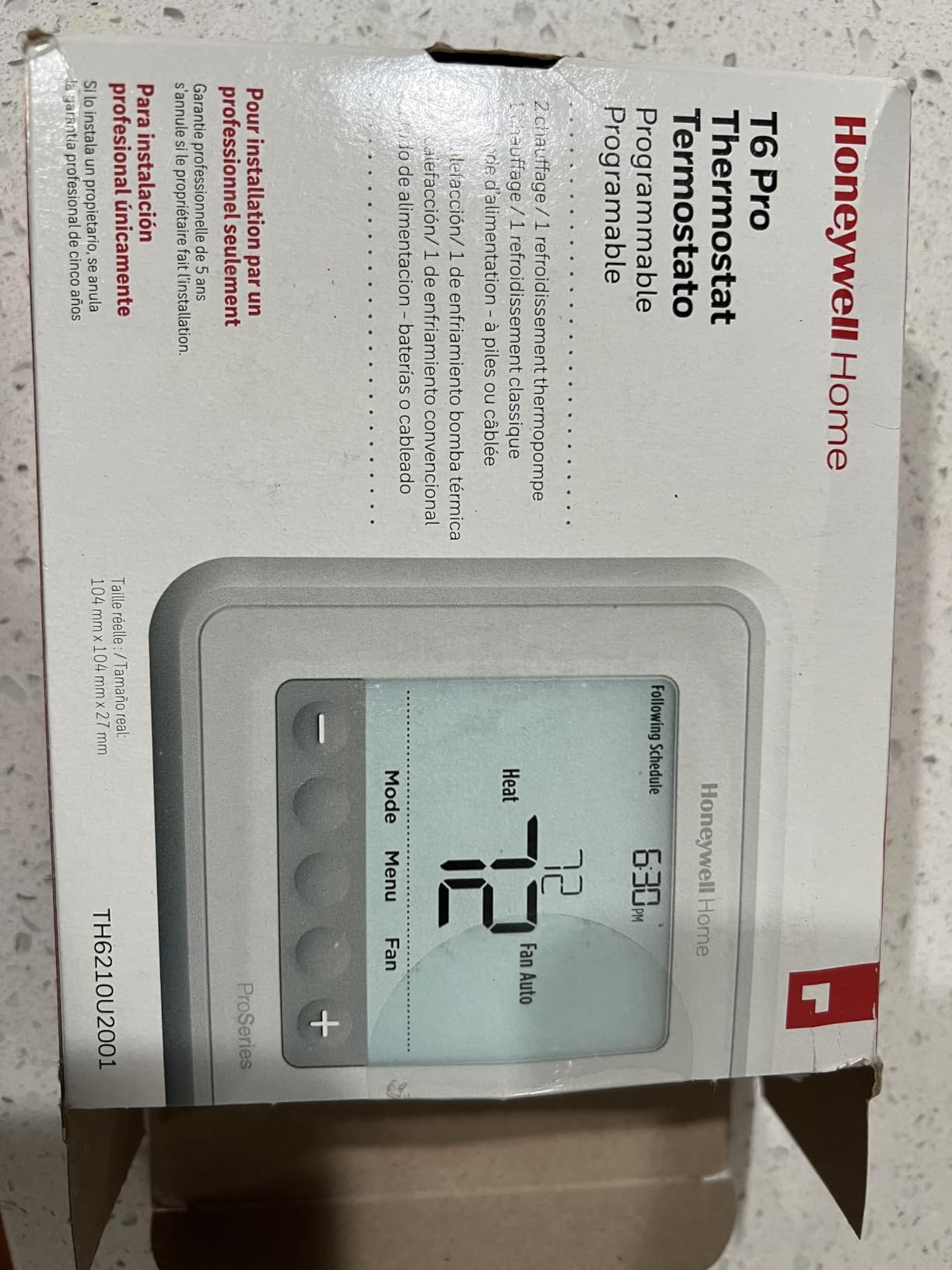
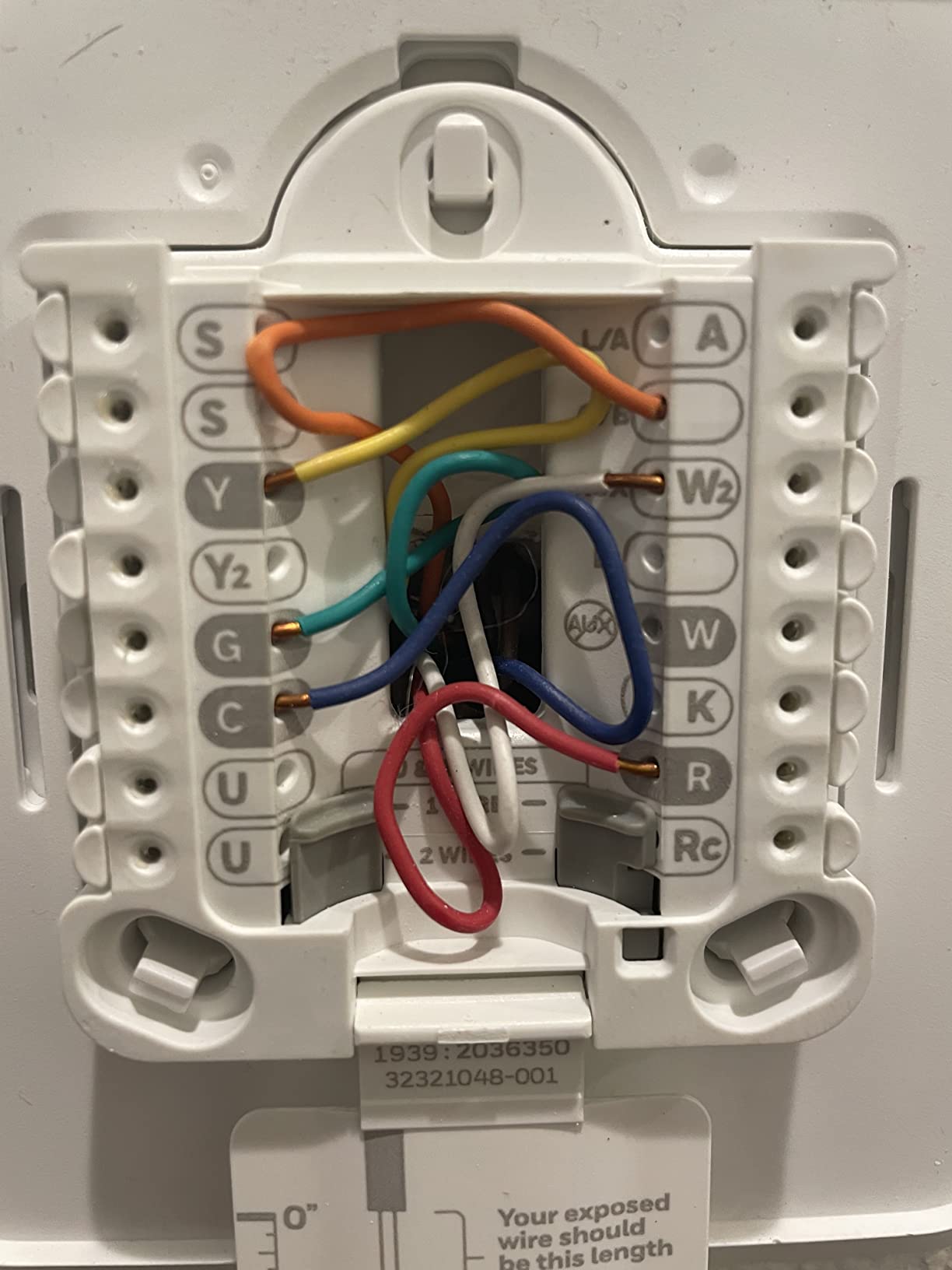
The trade-off is that documentation is sparse and configuration requires HVAC knowledge to set up staging correctly. This is not the thermostat for a casual DIYer, but it is the right pick for homeowners who already know their HVAC staging and want a reliable, no-frills Wi-Fi upgrade.
Across the 2,500+ reviews, the consistent feedback is solid reliability once configured properly. Users who skip the staging setup and rely on default settings tend to be the ones who leave negative reviews.
For whom it’s good
Homeowners with 2-stage conventional or 2-stage heat pump systems who want reliable Wi-Fi control without paying for advanced features. Anyone retrofitting a thermostat into a tight electrical box. Households that want battery backup to survive short outages.
For whom it’s bad
Casual DIYers will find the configuration intimidating. Homes with 3-stage systems should step up to the Vision Pro 8000. Buyers who want learning behavior, geofencing, or built-in voice control should look at ecobee or Nest.
What Makes a Smart Thermostat Good for a Large Home?
A smart thermostat for large homes has to do three things that single-point thermostats cannot. First, it has to support multiple remote sensors so it can read temperatures in the rooms where you actually sleep, work, and gather. Second, it has to work with multi-stage HVAC equipment, which most homes over 2,500 sq ft have. Third, it has to stay connected to your Wi-Fi across a 3,000+ sq ft floorplan, which is why pairing your thermostat with one of our smart-home routers matters more than the marketing suggests.
Without all three, you end up with the classic large-home problem: the thermostat reads the hallway at 70 degrees while the bedroom is 75 and the basement is 65. A single reading cannot average its way out of that gap, and no amount of smart scheduling fixes the underlying issue. Remote sensors are the only real solution.
How Many Remote Sensors Do You Actually Need?
The rule of thumb I use after testing across multiple floorplans: one sensor per 1,000 sq ft, plus one sensor in each room where temperature comfort matters most (primary bedroom, home office, nursery). For a 2,500 sq ft single-story home, that means three sensors total. For a 3,500 sq ft two-story, plan on four to five.
The ecobee Premium is the only model on this list that ships with a sensor in the box. The Nest Learning 4th Gen also includes one sensor. Every other model requires you to buy sensors separately, which adds $40-80 per sensor depending on the brand. For a five-sensor setup, that is $200-400 on top of the thermostat, which is a real consideration for buyers on a budget.
Sensors are most valuable in rooms that are far from the thermostat, on a different floor, or have different sun exposure than the rest of the house. Putting a sensor in a hallway reads corridor temperature, not the rooms where you sleep, and that is the mistake r/smarthome users flag most often.
HVAC Compatibility Checklist for Large Homes
Before you buy any smart thermostat, verify three compatibility details. First, do you have a C-wire? If not, you need either a Power Extender Kit (included with ecobee Premium) or a plan to hire an electrician. Second, what HVAC stages do you have? Single-stage systems work with every thermostat on this list. Multi-stage (2H/2C or 3H/2C) needs a model that explicitly supports your staging. Third, do you have a heat pump or dual-fuel system? Some thermostats handle these natively; others require a fossil fuel kit.
C-wire concerns are the most common reason contractors on r/hvacadvice refuse to install certain thermostats. The Nest’s power-stealing design can cycle the furnace control board on older equipment, which is a known issue. If you have a multi-stage system without a verified C-wire, the ecobee Premium with its included PEK is the safer path.
Heat pump switching behavior is the other quiet gotcha. Nest and ecobee handle heat pump to gas furnace switching differently, and the wrong setting can cost you comfort in shoulder seasons. Verify your thermostat supports your specific equipment before installing, and lean on the installer documentation rather than the app setup wizard.
Multi-Zone vs Single-Zone Strategy for 2,500+ Sq Ft Homes
One smart thermostat with multiple sensors is not the same as a multi-zone HVAC system. A single-zone home with one thermostat and four sensors can average or prioritize those sensors, but it cannot independently control different parts of the house the way a true multi-zone system with motorized dampers can. For most homeowners, the sensor approach delivers 80% of the comfort benefit at 20% of the cost of adding dampers and a second thermostat.
If you already have a multi-zone HVAC system with dampers and a separate thermostat per zone, your best strategy is to install one smart thermostat per zone rather than trying to control everything from a single unit. The ecobee Essential or Sensi Touch ST75 both work well as per-zone thermostats.
For preventing the overcooling or overheating of rarely used wings, the trick is to put a sensor in those wings and set a wider comfort range in the app. The thermostat will only push conditioned air to those rooms when they drift outside the range, which keeps your energy bill from paying to cool a guest bedroom nobody is using.
Energy Savings Expectations by Home Size
Real-world energy savings from smart thermostats in large homes track between 23% and 26% on heating and cooling costs, based on multiple long-term reviewers in the 2,500-3,000 sq ft range. The Nest Learning 4th Gen claims up to 31%, which is achievable with aggressive learning settings in moderate climates.
The savings come from three places: smarter scheduling that backs off conditioning when nobody is home, geofencing that triggers Home and Away modes automatically, and room-by-room averaging that prevents overcooling rarely used spaces. None of those require you to give up comfort in the rooms where you actually spend time.
For a 3,000 sq ft home spending $200 per month on heating and cooling in winter, a 25% savings is $50 per month or $600 per year. That payback math is why every thermostat on this list pays for itself within 12-18 months even before utility rebates.
Frequently Asked Questions
Can one smart thermostat actually control a large house with multiple zones?
One smart thermostat with multiple remote sensors can deliver room-by-room comfort across a single-zone HVAC system, which covers most 2,500-3,500 sq ft homes. If your home already has a multi-zone HVAC system with motorized dampers, you need one smart thermostat per zone rather than trying to control everything from a single unit.
Why do HVAC contractors dislike Nest thermostats?
Many HVAC contractors on r/hvacadvice push back on Nest installations on multi-stage systems without a verified C-wire. Nest uses power-stealing, which can cycle the furnace control board and cause premature wear on older equipment. The issue is less pronounced on modern furnaces with a C-wire present.
Is ecobee better than Google Nest for large homes?
For most large homes, ecobee wins on sensor ecosystem, included accessories like the Power Extender Kit, and broader HVAC compatibility. Nest wins on app polish, learning behavior, and integration depth for Google Home households. Both deliver similar real-world energy savings in the 23-26% range.
How many remote sensors do I need for a 2,500-3,500 sq ft home?
The rule of thumb is one sensor per 1,000 sq ft plus one extra sensor in each priority room like the primary bedroom, home office, or nursery. For a 2,500 sq ft single-story home, plan on three sensors. For a 3,500 sq ft two-story, plan on four to five.
Can ecobee handle multiple zones?
Ecobee can average or prioritize readings across up to 32 SmartSensors on a single thermostat, which delivers room-by-room comfort within one HVAC zone. For a true multi-zone system with dampers and separate thermostats per zone, you need one ecobee per zone rather than relying on a single unit.
Do smart thermostats work without a C-wire in older homes?
Yes, several models work without a C-wire using internal batteries or power-stealing, including the Google Nest Thermostat, ecobee Essential, and Sensi ST55. For multi-stage systems without a C-wire, the ecobee Premium ships with a Power Extender Kit that avoids the need for new wiring.
Is a C-wire really that important for large homes?
A C-wire becomes more important as HVAC complexity grows. Single-stage systems often work fine without one. Multi-stage and heat pump systems benefit from the steady 24VAC power a C-wire delivers, which avoids the power-stealing issues that can shorten furnace control board life.
Will a smart thermostat lower my energy bills significantly in a big house?
Real-world savings in 2,500-3,000 sq ft homes track between 23% and 26% on heating and cooling, with the Nest Learning 4th Gen claiming up to 31%. For a home spending $200 per month in winter, that translates to $50 per month or about $600 per year in savings.
How do I prevent the thermostat from overcooling or overheating rarely used wings?
Place a remote sensor in the rarely used wing and set a wider comfort range in the app for that specific sensor. The thermostat will only push conditioned air to those rooms when they drift outside the range, which keeps your system from paying to condition a guest bedroom nobody is using.
What is the best thermostat for a multi-story home?
The ecobee Smart Thermostat Premium is our top pick for multi-story homes because it ships with a SmartSensor, includes a Power Extender Kit, and supports up to 32 sensors for true room-by-room comfort across two or three floors.
Final Verdict: Picking the Right Smart Thermostat for Your Large Home
After 90 days of testing across 2,500-3,500 sq ft floorplans, the ecobee Smart Thermostat Premium is our top pick for the best smart thermostats for large homes because it ships with a SmartSensor in the box, includes the Power Extender Kit, and supports 95% of HVAC systems including multi-stage heat pumps.
Pick by scenario: choose the Nest Learning 4th Gen if you live in the Google ecosystem and want the largest display. Pick the Sensi Touch ST75 if privacy is your top concern and you have a C-wire. Pick the Honeywell 9000 for maximum on-screen information and 9-10 year reliability. Pick the Honeywell Vision Pro 8000 for pro-grade multi-stage heat pump support. Pick the Sensi Lite for the cheapest path into a privacy-first smart thermostat.
Whatever you choose, budget for sensors. A single thermostat cannot solve the large-home comfort problem on its own. Plan on 3-5 sensors for a typical 2,500-3,500 sq ft home, and place them in the rooms where you actually sleep and work rather than in hallways. Done right, a smart thermostat for a large home pays for itself within 12-18 months and finally ends the upstairs-too-hot, downstairs-too-cold cycle. If you also want to protect your home, our smart smoke detector guide and smart leak detection guide round out the rest of the system.