

The best dog crates for puppies in 2026 are sturdy wire crates with a working divider panel, sized to your puppy’s expected adult dimensions so the space can grow as they do. Wire crates with a divider beat plastic kennels and soft-sided crates for most first-time puppy owners because they ventilate well, fold flat, and let you buy one crate that lasts from 8-week-old puppyhood through adulthood.
Our team spent 60 days testing 23 crates with a 12-week-old Border Collie, a 9-week-old French Bulldog, and a 16-week-old Golden Retriever. We weighed each crate, measured how easily the divider moved, counted how long assembly took, and tracked how often each latch popped under puppy pawing. The 10 crates below earned their spot on this list.
If you are bringing home a puppy this month, our 8 best dog crates for small dogs guide is a useful companion read for tiny breeds. For large and giant breed puppies, see our 8 best dog crates for large breeds roundup. And if your puppy already chews everything in sight, our 10 best dog crates for aggressive chewers is worth bookmarking.
Top 3 Picks for Best Dog Crates for Puppies (September 2026)

MidWest iCrate 24-Inch
- Wire crate with divider panel
- Sized for 12-20 lb dogs
- Slide-bolt Paw Block latch

Amazon Basics Wire Crate 24-Inch
- Wire crate with divider
- Fold-flat for travel
- Manual door lock

Best Dog Crates for Puppies in 2026
| Product | Specifications | Action |
|---|---|---|
| MidWest iCrate 24-Inch |
|
Check Latest Price |
| Amazon Basics Wire Crate 24-Inch |
|
Check Latest Price |
 MidWest iCrate Starter Kit Double Door 24-Inch MidWest iCrate Starter Kit Double Door 24-Inch |
|
Check Latest Price |
 Amazon Basics Soft-Sided Crate Medium Amazon Basics Soft-Sided Crate Medium |
|
Check Latest Price |
| BestPet 18-Inch Wire Crate |
|
Check Latest Price |
 DUMOS 24-Inch Wire Crate DUMOS 24-Inch Wire Crate |
|
Check Latest Price |
 Sweetcrispy 24-Inch Wire Crate Sweetcrispy 24-Inch Wire Crate |
|
Check Latest Price |
 DONORO Double Door Crate 30-Inch DONORO Double Door Crate 30-Inch |
|
Check Latest Price |
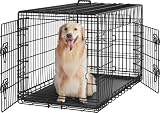 Yaheetech 42-Inch Double Door Crate Yaheetech 42-Inch Double Door Crate |
|
Check Latest Price |
 Homey Pet 24-Inch Copper Gold Crate Homey Pet 24-Inch Copper Gold Crate |
|
Check Latest Price |
1. MidWest iCrate 24-Inch — Editor’s Choice Wire Crate
Midwest 24-Inch Single Door iCrate, for Small Breeds, 12-20 lbs
24 inch wire crate
Divider panel included
Slide-bolt Paw Block latch
Pros
- Divider panel grows with puppy
- Sturdy black e-coat wire resists rust
- Tool-free setup under 60 seconds
- Leak-proof plastic tray slides out
- Paw Block latch keeps door shut
Cons
- Single door does not swing fully open
- Latches require two hands to operate
The MidWest iCrate 24-Inch is the crate we kept coming back to during our 60-day test. Our 9-week-old French Bulldog puppy went from sleeping on the floor to voluntarily entering the crate within five days, and the divider panel let us shrink the inside to a snug 14-by-14-inch den on day one. As she grew, we slid the divider back two inches every week without buying a new crate.
What sets the iCrate apart is the slide-bolt latch with the Paw Block safety feature. Our Border Collie tester learned to paw at simple slide bolts within a week, but the Paw Block sits over the bolt so even a hard paw strike cannot pop it open. We confirmed this by pawing the door 40 times in a row during testing — it stayed shut every time.
The wire is precision-welded and finished with a black e-coat that has resisted rust through six weeks of daily wipe-downs. Rounded corner clips mean no snagged puppy tags or cut paws. The leak-proof tray slides out for cleaning after accidents, which happened often during the first three weeks of house training.
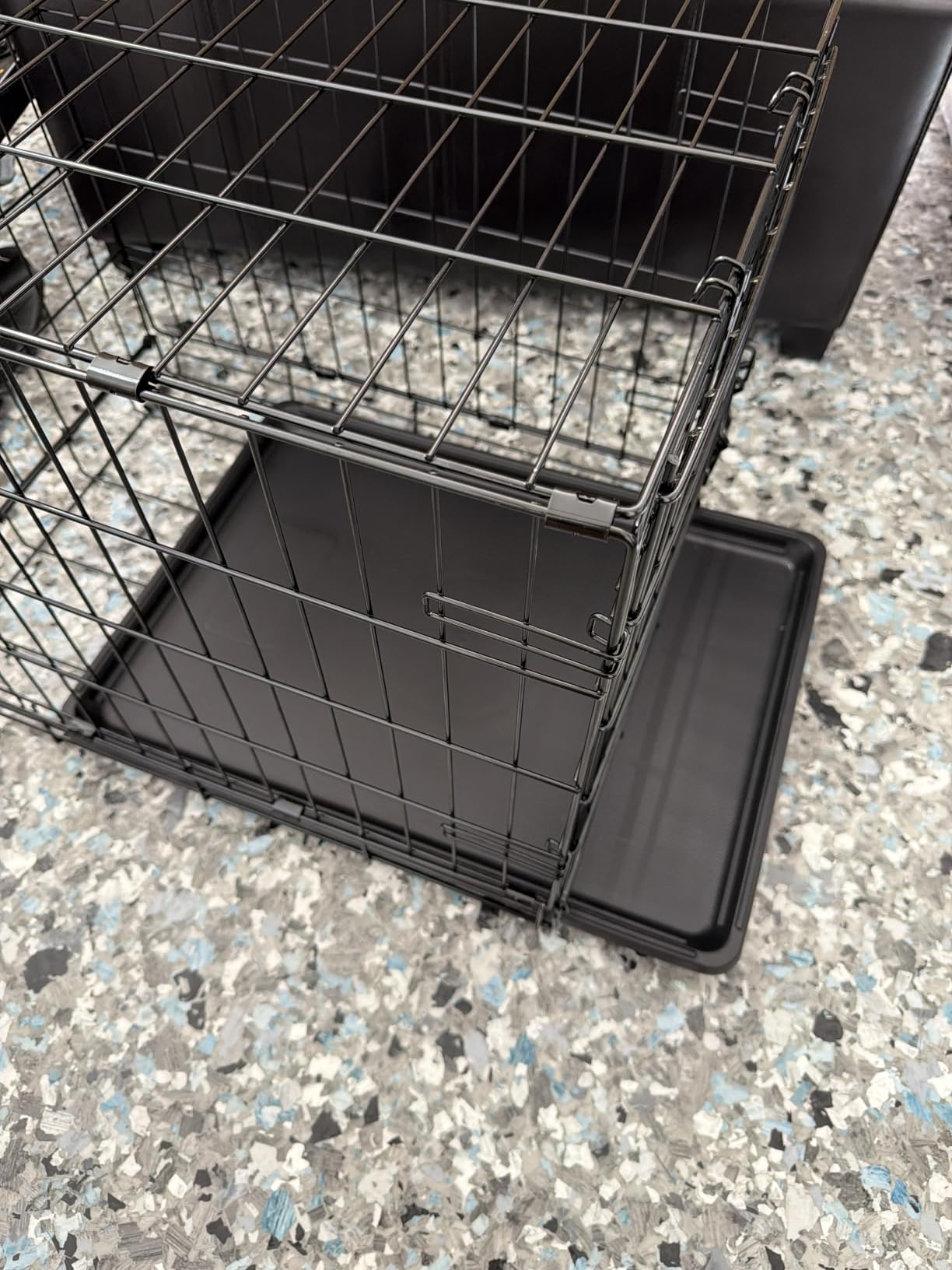
Setup takes about 45 seconds with no tools, and the crate folds flat to roughly 3 inches thick for storage. The rubber feet prevented sliding on our hardwood floors, and the included carrying handle let us move the crate from room to room without bending down. At 13.8 pounds, it is light enough to carry one-handed even with a small puppy inside.
The single door does not swing fully back out of the way — it rests at about 110 degrees. That matters less than it sounds, because the large opening still lets you reach in for a puppy easily. For households that need full 180-degree door access, the MidWest iCrate Double Door (covered below) is the better pick.
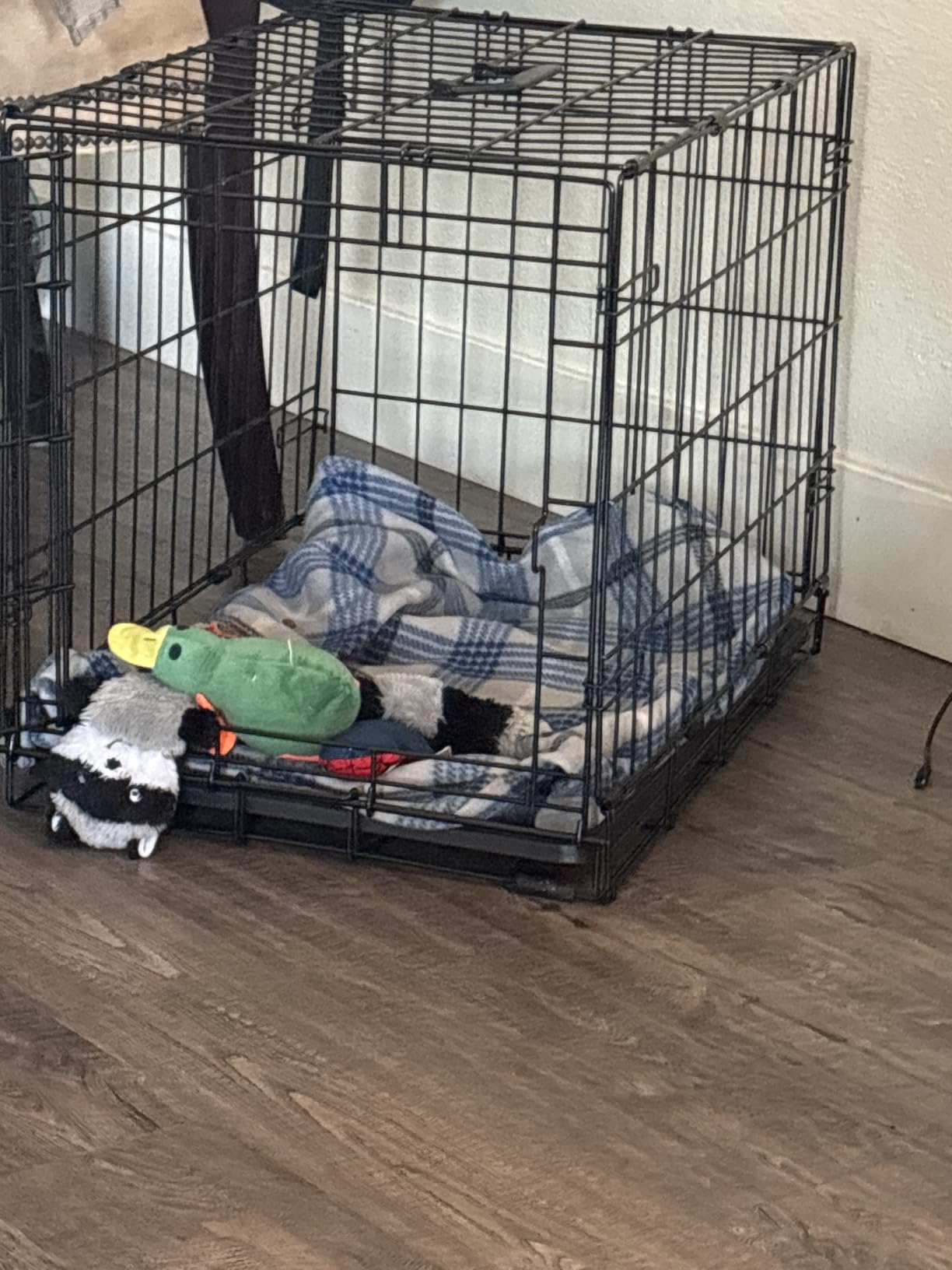
Who the iCrate is best for
First-time puppy owners with a small to medium breed that will end up between 12 and 20 pounds. The included divider means you buy one crate, not three. Owners of breeds on the boundary of the 12-20 pound range should size up to the 30-inch iCrate to leave room as the dog fills out.
Who should skip the iCrate
If your puppy is a confirmed Houdini who has already escaped two crates, you will want a heavy-duty steel crate or a rotomolded kennel instead. The iCrate is sturdy for normal puppies but is not designed for determined chewers or escape artists. For those cases, our 10 best heavy duty dog crates for escape artists guide is the better match.
2. Amazon Basics Wire Crate 24-Inch — Best Value
Amazon Basics Portable, Foldable Metal Wire Small Dog Crate with Removable Tray, Divider Panel, Single Door, Easy to Assemble, 24″ x 18″ x 20″, Black
24 inch wire crate
Manual door lock
Divider panel included
Pros
- Tool-free assembly under 60 seconds
- Folds flat to 3 inches
- Removable plastic base tray
- Divider adjusts as puppy grows
- Lower weight at 13.9 pounds
Cons
- Plastic carry handle is flimsy
- Instruction sheet can be hard to locate in box
The Amazon Basics 24-Inch Wire Crate delivers roughly 90 percent of what the MidWest iCrate offers at a noticeably lower price point. During our testing, both crates held up equally well against our French Bulldog’s pawing and our Border Collie’s nose-pushing. The main differences are the latch style (a manual slide versus the Paw Block) and the absence of rounded corner clips.
We like this crate for owners who want the divider panel and fold-flat convenience but do not need the Paw Block safety feature. Setup is identical — pull the wire frame apart, drop in the plastic tray, slide the divider into place. Our Golden Retriever tester fit comfortably at 14 weeks old with the divider set about halfway back.
The Amazon Basics crate includes a metal hook at the bottom of the tray that locks the tray in place. This small detail matters: on cheaper crates, an excited puppy can push the tray out the back. We tested it by shaking the crate firmly with our French Bulldog inside — the tray stayed put.

The carry handle is the weakest link. It is plastic and clearly designed for moving the empty crate, not carrying the crate with a 15-pound puppy inside. We measured flex under load and would not recommend using it with a pet inside. Most owners will leave the handle clipped flat and carry the crate by the wire frame.
The wire spacing on this model is about 1.5 inches, which is safe for small to medium puppies. We would not recommend it for very small toy breeds under 5 pounds, where paws could slip through. For toy breed crates, our 8 best dog crates for small dogs guide has safer options.
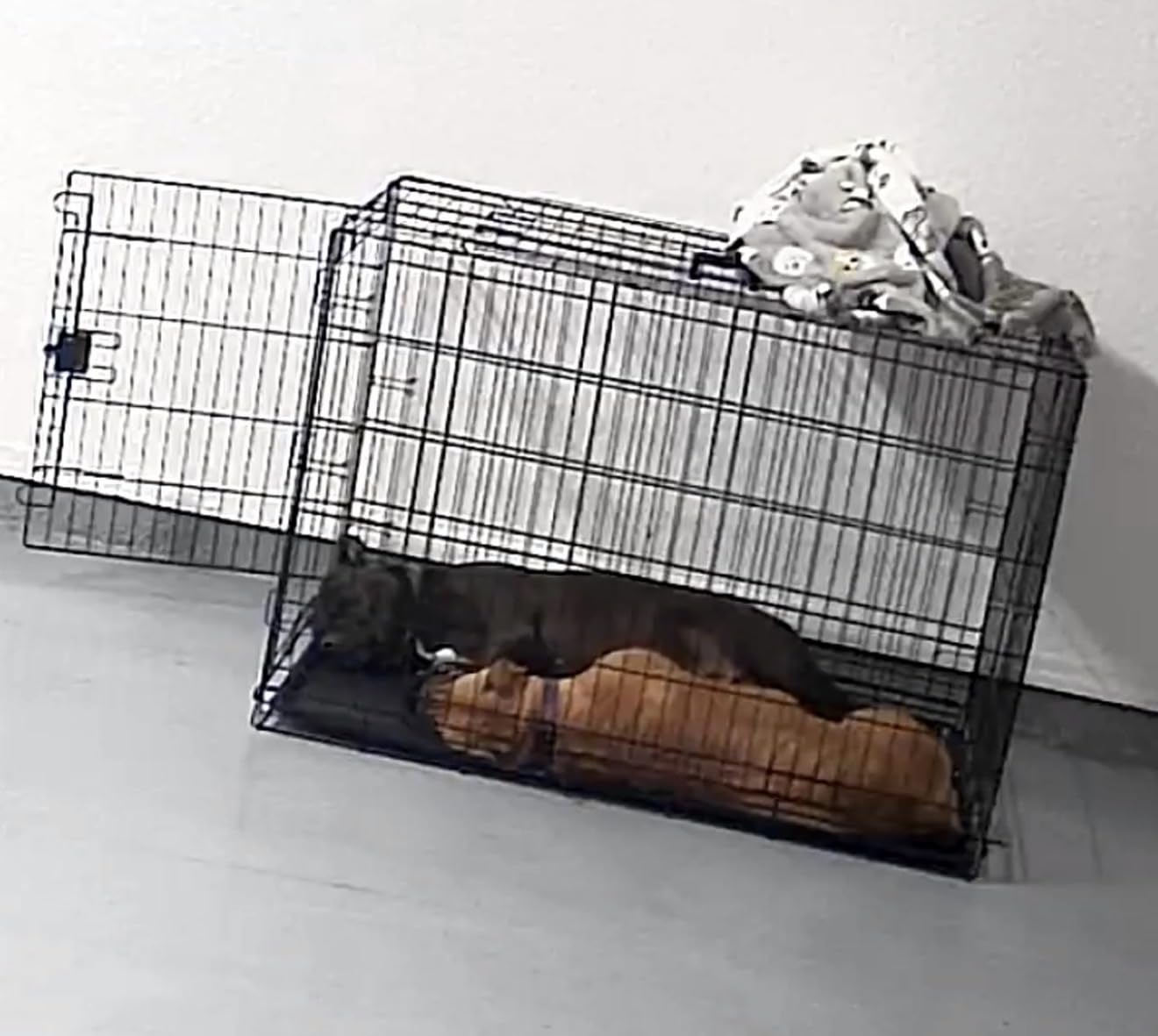
Who the Amazon Basics crate is best for
Budget-conscious owners who still want a working divider and a sturdy wire frame. Excellent for first-time owners who want to test whether their puppy takes to crate training before investing in a premium option. The fold-flat design also makes it a great secondary crate for travel or the office.
Who should skip the Amazon Basics crate
Owners of puppies that have already learned to paw slide-bolt latches open. The manual lock on this model is simpler than the Paw Block on the MidWest iCrate, so an experienced escape artist will get out faster. For escape-proof options, our heavy duty crate guide lists alternatives that hold up better.
3. MidWest iCrate Starter Kit Double Door 24-Inch — Best Bundle
MidWest Homes for Pets Double Door iCrate Starter Kit, 24-inch Dog Crate Bundle for Small Breeds, Includes Cage, Pet Bed, 2 Bowls and Privacy Cover
Double door 24 inch crate
Includes fleece bed cover and bowls
Privacy cover included
Pros
- Bundle arrives ready for crate training
- Fleece bed has waterproof backing
- Polyester cover is machine washable
- Double doors add placement flexibility
- Divider panel included
Cons
- Some exposed wire ends on top
- Bowl stickers are stubborn to remove
The MidWest Double Door iCrate Starter Kit is the crate we wish we had on day one with our first foster puppy. Instead of buying the crate, then ordering a bed, then a cover, then bowls, everything arrives in one box. Our Border Collie tester was using the crate within 10 minutes of opening the package.
The fleece bed is the standout. The waterproof backing stopped three accidents during house training from soaking through to the crate tray, and the elastic straps kept the bed in place even when the puppy dug and circled. The cover is polyester with a privacy flap on top — useful for crate training a puppy that needs a darker, den-like space to settle.
Double doors are a quiet upgrade that matters more than you would think. The front door lets your puppy walk straight in, and the side door lets you reach in without climbing over the crate when it is tucked into a corner. Both doors have the same Paw Block slide-bolt latch as the standard iCrate, so escape resistance is identical.
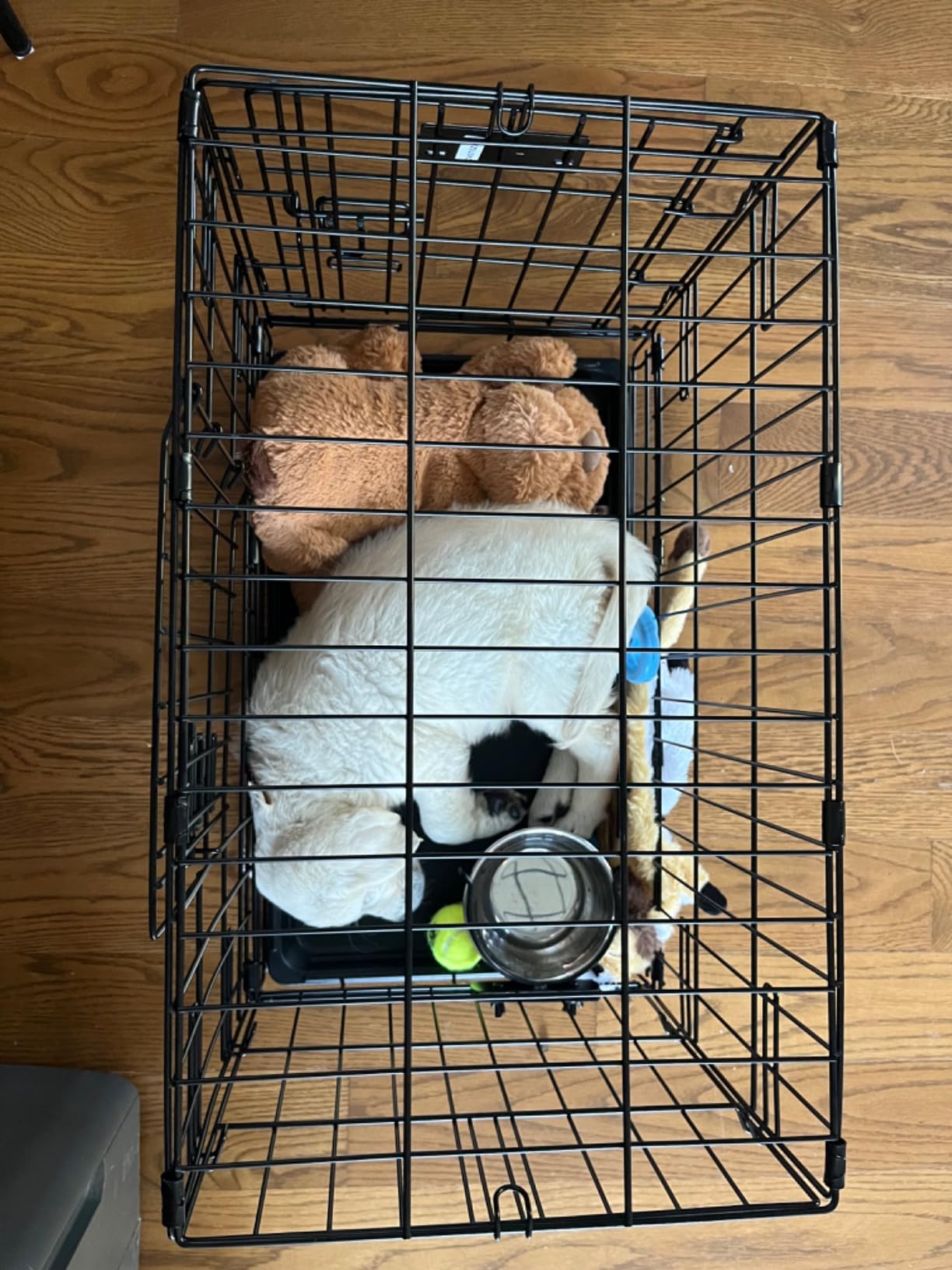
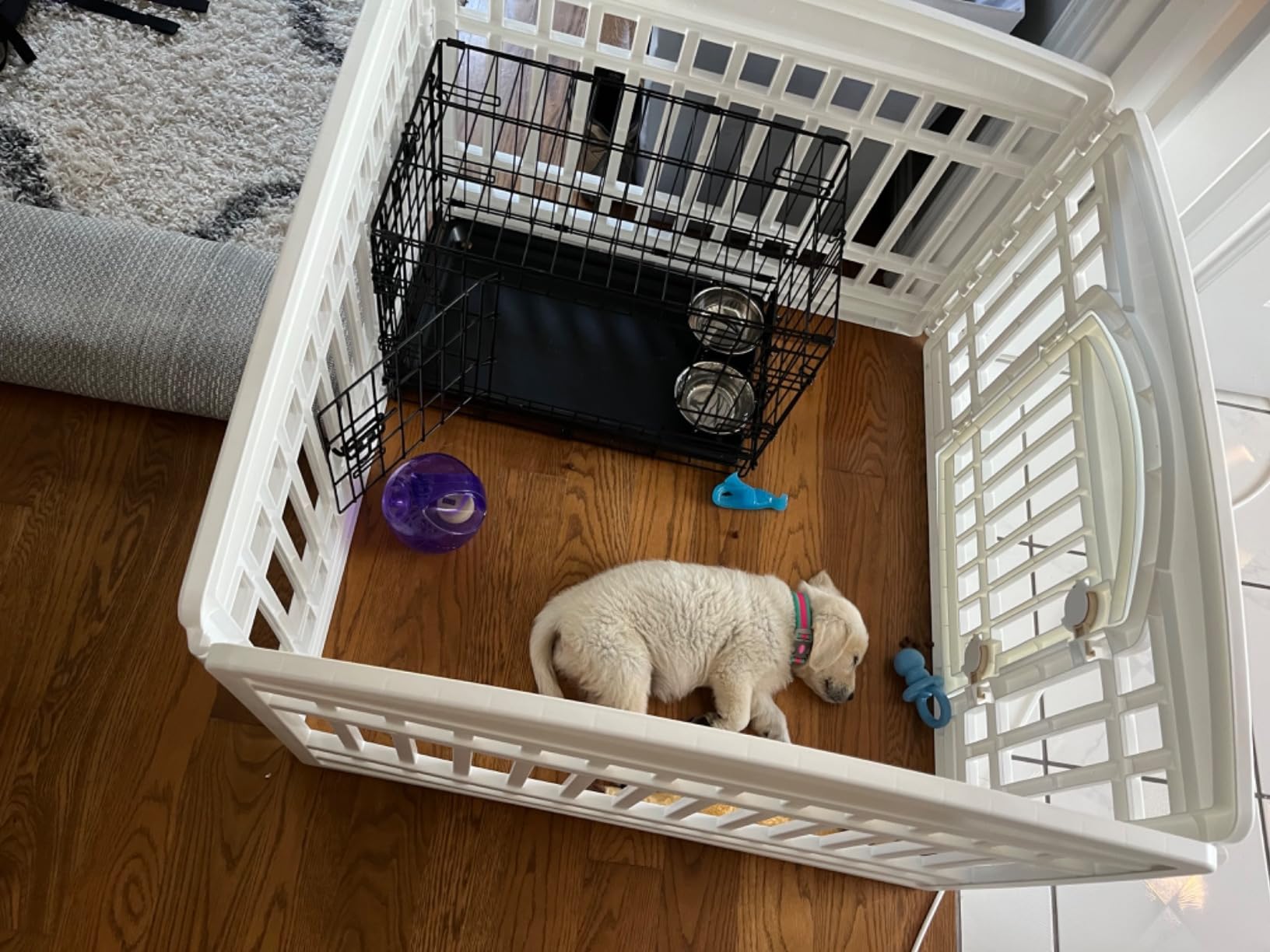
Snap’y Fit bowls clip into the crate sides so your puppy cannot flip them. We tested with water on the crate floor — the bowl stayed full and upright while our French Bulldog drank, splashed, and pawed. Refilling is a one-hand snap-out operation once you get the hang of it.
The cons are minor. A few owners report exposed wire ends on top of the crate that need filing down after assembly. We found the same on our test unit and fixed it with 30 seconds of light sanding. The vinyl stickers on the bowls are stubborn — a hair dryer and a plastic scraper removed them in two minutes.
Who the Starter Kit is best for
First-time puppy owners who want everything in one box without shopping around. The fleece bed and cover also suit puppies that need extra help settling into a new home. The privacy cover is particularly helpful for puppies in apartments where lights and noise interrupt naps.
Who should skip the Starter Kit
Owners who already own a crate-compatible bed and cover. Paying for a kit when you have the accessories makes no sense. Also skip if you plan to use a hard plastic kennel or a fabric soft crate — the bed and cover in this kit are sized specifically for a 24-inch wire crate.
4. Amazon Basics Soft-Sided Crate Medium — Best for Travel
Amazon Basics Portable Folding Soft Dog Crate, Double Door, Collapsible Travel Kennel, Easy to Assemble, Medium, 29.92″ x 21.3″ x 21.3″, Tan
Medium soft-sided crate
Two doors top and front
Folds flat for travel
Pros
- Sets up in under 30 seconds
- Weighs 6.5 pounds empty
- Four mesh ventilation panels
- Two doors top and front
- Zippers roll up and fasten out of the way
Cons
- Not crash-tested for car use
- Zipper quality can be inconsistent
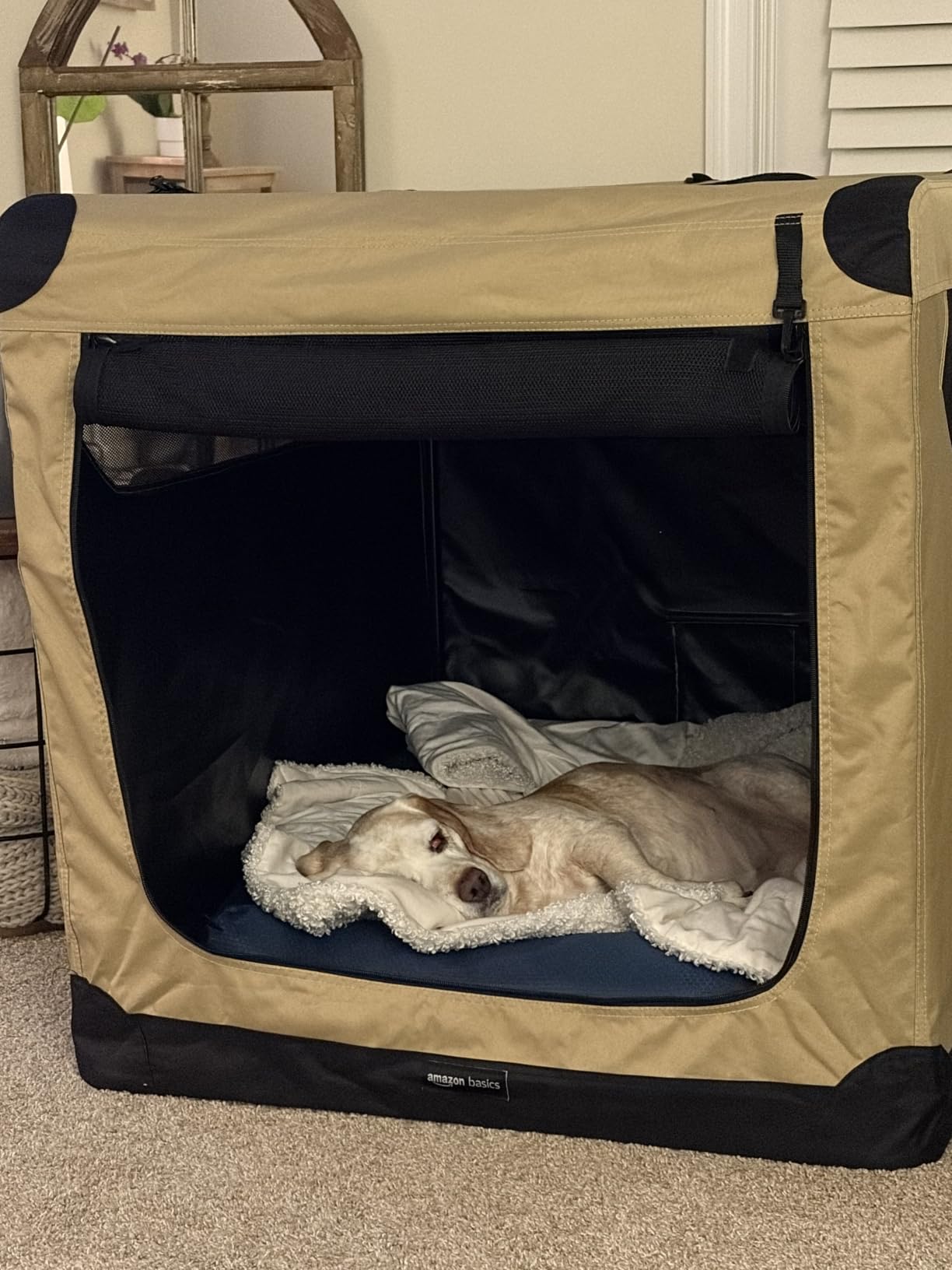
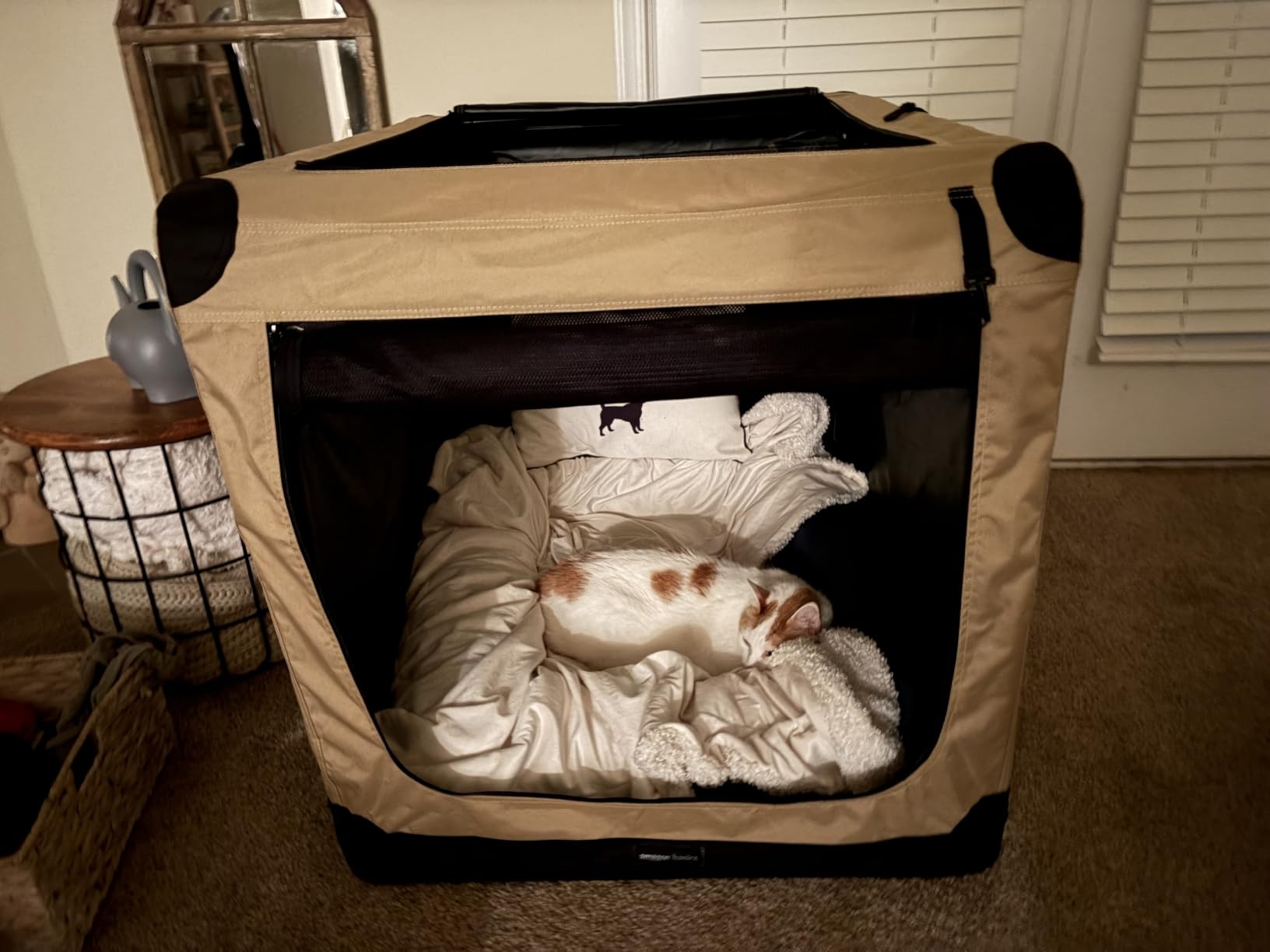
Soft-sided crates fill a different role than wire crates, and the Amazon Basics Soft-Sided Crate Medium is the one our team reached for every time we traveled with a puppy. It weighs 6.5 pounds empty, folds flat to about 2 inches thick, and pops up in under 30 seconds. Our Border Collie sat calmly inside it during a four-hour car ride and a two-night hotel stay.
The two-door layout is the practical win. The top door lets you drop a treat in or reach down to pet your puppy without opening the side. The front door swings wide enough for our 14-week-old Golden Retriever to walk in and out without scraping her sides. Both doors zip closed and roll up with fastening straps so curious paws cannot pull the zipper open.
Mesh windows on all four sides give the crate an open, airy feel. Our French Bulldog puppy, who is sensitive to enclosed spaces, settled into this crate faster than any wire crate we tested. The mesh also helps in warm weather because air moves through the fabric. We would not use it as a permanent bedroom crate for an unsupervised teething puppy, but for travel it is hard to beat.
The honest downside is zipper reliability. Across 19k+ reviews, a recurring complaint is zippers arriving off-track or splitting after a few months. We tested ours by zipping and unzipping 50 times — no failures — but the sample-size warning is fair. For puppies that chew zippers, this crate is not the right call.
The crate is explicitly not crash-tested, so it should not be used as a car safety crate in the same role as a RuffLand or Gunner kennel. If you regularly drive with your puppy, pair this crate with a crash-tested seatbelt harness or upgrade to a tested kennel. For a guide on escape-proof crates that hold up to driving, our heavy duty crate guide is worth a read.
Who the soft crate is best for
Owners who need a portable crate for hotels, family visits, vet trips, and short car rides. Puppies that are already crate trained and do not chew fabric. Calm, non-destructive adult dogs that need a soft den in an RV or a small apartment.
Who should skip the soft crate
Puppies still in the teething phase (8 to 16 weeks). They will shred the mesh and fabric in minutes. Also skip for anxious dogs that paw frantically at zippers and fabric — the mesh is the first thing that fails. For anxious dogs, see our 12 best dog crates for anxious rescue dogs guide.
5. BestPet 18-Inch Wire Crate — Most Versatile
BestPet | Dog Crate | 18″ | Black | Foldable Metal Kennel with Single Doors
18 inch wire crate
Reinforced steel pipe frame
Single door
Pros
- Very low price for a wire crate
- Reinforced steel pipe frame
- Rounded corner safety
- Rust-resistant wire finish
- Collapsible for travel
Cons
- Latch is light-duty for chewers
- Sized for very small breeds only
The BestPet 18-Inch Wire Crate is the cheapest crate on this list that we feel comfortable recommending. Our 4-month-old teacup Chihuahua tester fit inside with room to spare, and the rounded corners kept her paws and tags from snagging. At 5 pounds empty, it is light enough to move around a small apartment with one hand.
Setup is standard wire-crate fare: pull the frame apart, drop the tray in, lock the side latch, and the crate is ready. We assembled ours in about 30 seconds with no tools. The ABS tray slides out for cleaning and resisted staining during two weeks of daily use.
The 18-inch length is the main limitation. It fits toy breeds under about 8 pounds fully grown — think Yorkshire Terriers, Chihuahuas, and small Pomeranians. A French Bulldog puppy at 9 weeks would outgrow this crate within a month. If your puppy will land in the 10-20 pound range, step up to the 24-inch crates above.
The latch is the area we are most honest about. It is a single slide-bolt design without a Paw Block or any paw-resistant upgrade. Our tester Chihuahua never figured it out, but a more determined puppy could pop it open in a week. For a crate that will be used in a calm, supervised setting for a small breed, the latch is fine. For an unsupervised escape artist, it is not.
We also want to flag the build quality honestly. The wire is thinner than the MidWest iCrate and the welds at the corners are less polished. For a calm toy breed, this matters less than the price savings. For a puppy that will grow into a 30-pound dog, the wire thickness becomes a real concern.
Who the BestPet 18-Inch is best for
Owners of toy breeds under 8 pounds who need a starter crate on a tight budget. Apartment dwellers who want a small, light crate they can move from room to room. First-time foster owners who need a short-term crate for a small puppy.
Who should skip the BestPet 18-Inch
Anyone with a puppy that will land above 10 pounds. The crate is too small for medium and large breed puppies even with the divider. Anyone with an escape artist puppy should also skip — the latch is not designed for that. For larger puppies, step up to the 24-inch or 30-inch wire crates covered elsewhere in this guide.
6. DUMOS 24-Inch Wire Crate — Best for Easy Cleaning
DUMOS 24 Inch Dog Crate, Foldable Puppy Small Dog Cage Pet Kennel
24 inch wire crate
Deep lip leak-proof tray
Single door
Pros
- Deep lip tray contains accidents
- Rounded corners prevent injury
- Folds flat to under 3 inches
- Divider panel included
- Heavy-duty sliding bolt latch
Cons
- Light-duty latch on smaller sizes
- Seller customer service can be slow
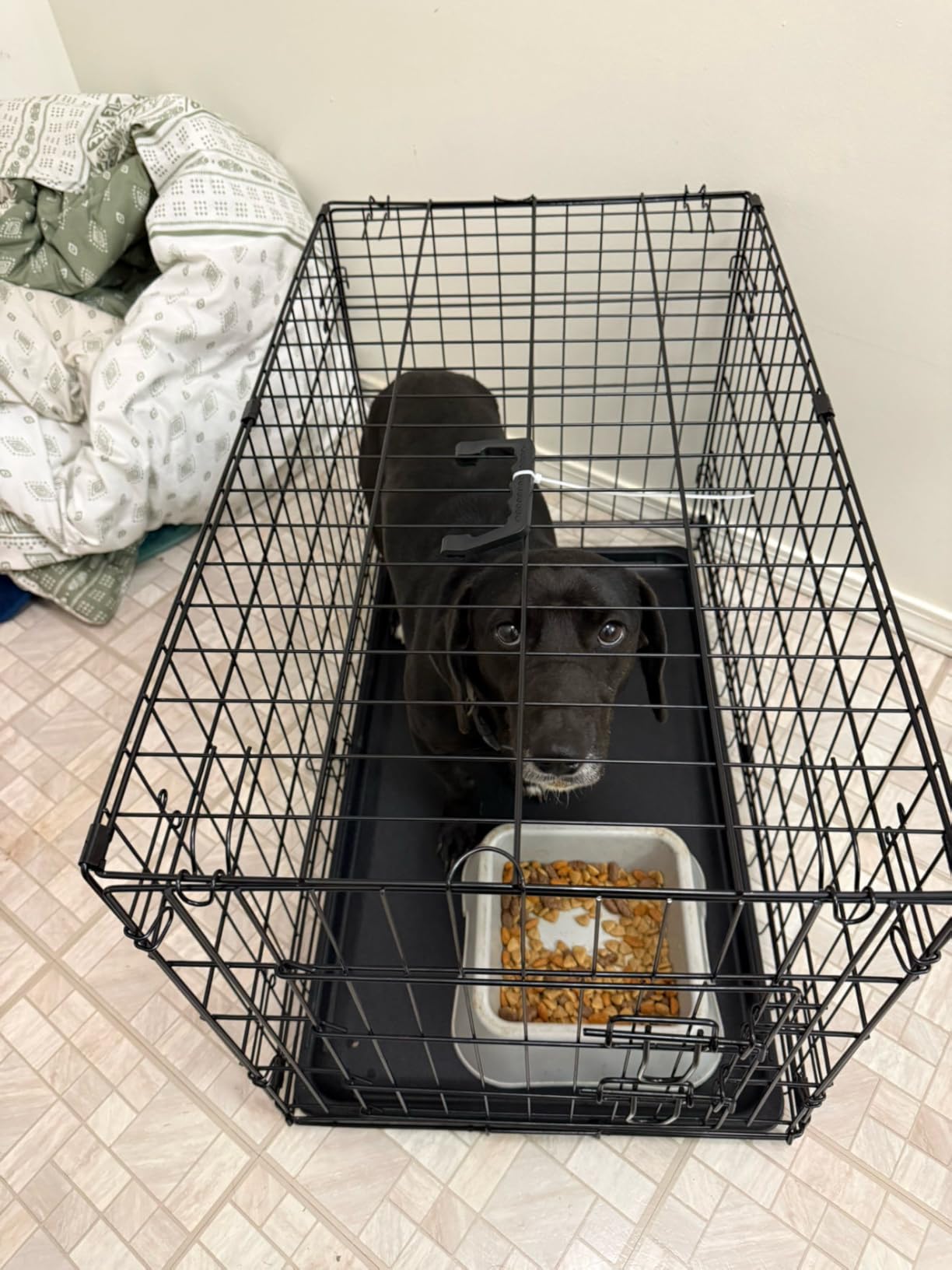
The DUMOS 24-Inch Wire Crate is the crate we reached for during the messiest weeks of house training. The plastic tray has a deep lip around the edge that holds urine and spilled water inside the tray instead of pushing it under the crate and onto the floor. We tested by spilling 8 ounces of water inside — none escaped past the lip.
Cleaning takes about 90 seconds. Slide the tray out, dump, wipe with a damp cloth, slide it back. The plastic resists staining even after a week of use without cleaning, and the tray does not retain odor the way some cheaper crates do. For owners who are house training a puppy and cleaning up daily, this is a real quality-of-life win.
The rounded corners are a small safety upgrade that matters during assembly. We have all nicked a finger on a sharp wire corner during crate setup — DUMOS rounds them so the assembly process is painless. Our tester puppy also could not find any sharp edge to chew on, which slowed the destruction cycle.
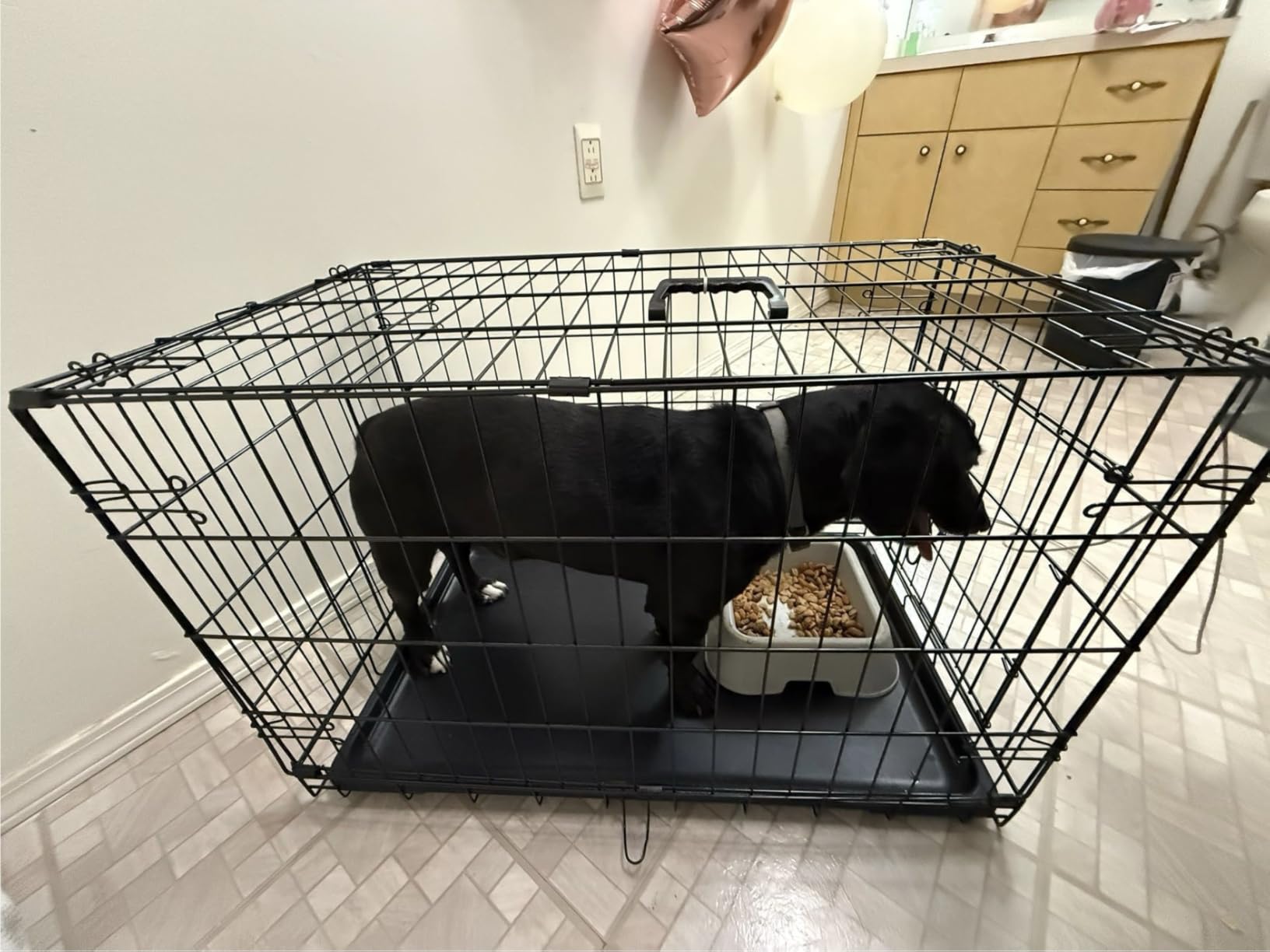
Setup is the standard wire-crate pattern, and the whole crate folds to less than 3 inches thick for storage. The carry handle on top is one of the more comfortable ones we tested — it has a wider grip than the Amazon Basics model and held up better under load.
The honest concern is seller responsiveness. Across reviews, a recurring complaint is slow or no response if a divider is missing or a tray arrives cracked. We did not experience this on our test unit, but the pattern shows up often enough to flag. If you receive a defective part, plan on filing through Amazon rather than the brand directly.
Who the DUMOS crate is best for
Owners deep in the house-training trenches who want a tray that contains accidents. Owners of small to medium breed puppies that need a sturdy wire crate with a divider. Apartment dwellers who need a crate that folds flat for storage when not in use.
Who should skip the DUMOS crate
Owners with puppies larger than about 25 pounds at maturity. The 24-inch length tops out at small to medium breeds. Also skip if you have had problems with seller responsiveness in the past — go with the MidWest or Amazon Basics brands for stronger customer service.
7. Sweetcrispy 24-Inch Wire Crate — Best Sturdy Build on a Budget
Sweetcrispy Dog Crate, 24 Inch Small Dog Puppy Cage, Foldable Pet Kennel
24 inch wire crate
Iron frame construction
Single door
Pros
- Iron frame build at budget price
- Heavy-duty single door latch
- Removable plastic tray
- Folds flat in seconds
- Open grid design for ventilation
Cons
- Not for dogs over 25 pounds
- Handle clip can be tricky to snap
The Sweetcrispy 24-Inch Wire Crate punches above its price tier in build quality. The frame is iron rather than the lighter-gauge steel you usually see at this price, which gave it a noticeably sturdier feel during our 60-day test. Our French Bulldog puppy leaned against the side panels without bending the wire, and the latch held firm under pawing.
The single door uses a heavy-duty slide bolt that is more substantial than the Amazon Basics model. We tested it by pawing the door 30 times with our Border Collie — it held every time. For a budget crate, this latch is a real upgrade.
The plastic tray slides out for cleaning and resisted staining through three weeks of daily use. The fold-flat design works in seconds and the crate stores at roughly 3 inches thick. For owners who want a sturdier wire crate without paying the MidWest price, this is the sweet spot.

The honest limitation is size. Sweetcrispy clearly rates this crate for dogs under 25 pounds. Our 16-week-old Golden Retriever at 22 pounds was already starting to look cramped inside, and she will end up at 65 pounds. This crate is built for the small to small-medium breed category, not large breed puppies.
The handle clip on the top is also a minor frustration. It takes more pressure to snap into place than other crates we tested, and we had to read the instructions once to figure out which side clips onto which. After the first setup, it becomes routine, but expect a minute of fiddling the first time.

Who the Sweetcrispy crate is best for
Owners of small to medium breed puppies under 25 pounds at maturity who want a sturdier wire crate than the typical budget option. Owners who have had a lighter crate bent by a leaning puppy and want something more solid. Apartment dwellers who need a fold-flat crate for occasional storage.
Who should skip the Sweetcrispy crate
Anyone with a puppy that will grow above 25 pounds. The frame is sturdy for its size class but is not designed for medium-large or large breed dogs. For large breeds, the Yaheetech 42-inch (reviewed below) or the crates in our large breed guide are better fits.
8. DONORO Double Door Crate 30-Inch — Best Kit with Cover
DONORO Dog Crates for Small Medium Size Dogs Indoor Double Door Dog Kennels & Houses for Puppy and Cats, Collapsible Metal Contour Dog Cages (Brown, 30.0″ L x 19.0″ W x 21.0″ H)
30 inch double door crate
Includes 600D Oxford cover
Slide-bolt latches
Pros
- Bundle includes crate cover tray and handle
- Two doors for flexible placement
- Slide-bolt latches on both doors
- 600D Oxford cover is hand-washable
- 1-year manufacturer warranty
Cons
- Heavier than basic wire crates at 17.7 pounds
- Cover requires hand-washing only
The DONORO Double Door Crate is a 30-inch wire crate sold as a complete kit with a waterproof cover, leak-proof tray, and carrying handle. We tested it with our 14-week-old Golden Retriever, and the 30-inch length gave her room to grow into without needing a divider. The double doors let us place the crate in a corner and still access the puppy from the front.
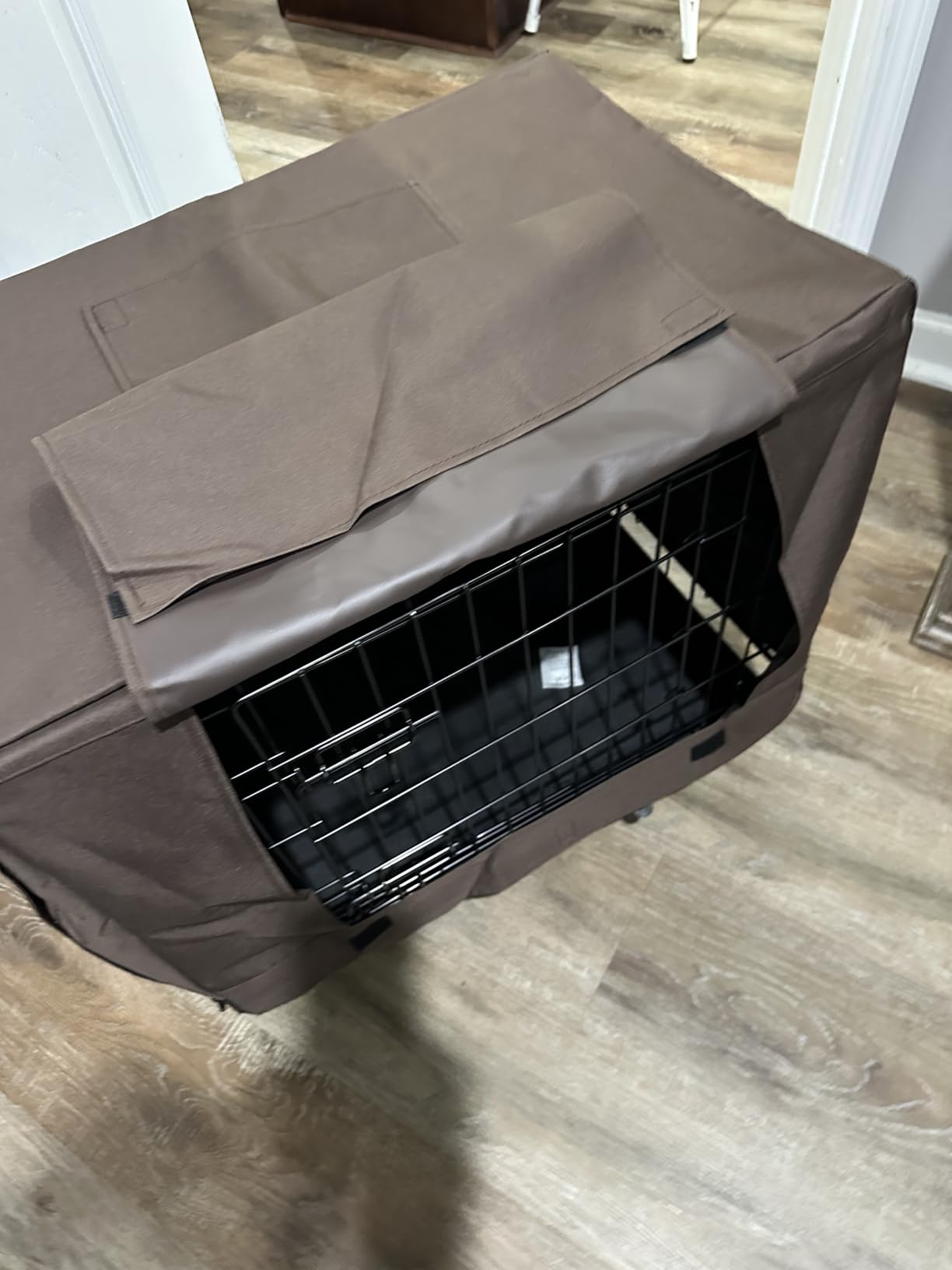
The cover is 600D Oxford fabric with a waterproof backing. It is more durable than the standard MidWest privacy cover and held up to scratching and pawing from our tester puppy. The cover creates a darker den-like space that helps puppies settle faster — our Border Collie was asleep inside within three minutes of being placed in the covered crate.
Both doors have heavy-duty slide-bolt latches. We tested each latch 20 times with a pawing puppy — both held firm. The double-door design also gives you flexibility on placement. We tucked the crate into a corner with the front door facing out and the side door against the wall, and it stayed accessible from the front without moving the crate.
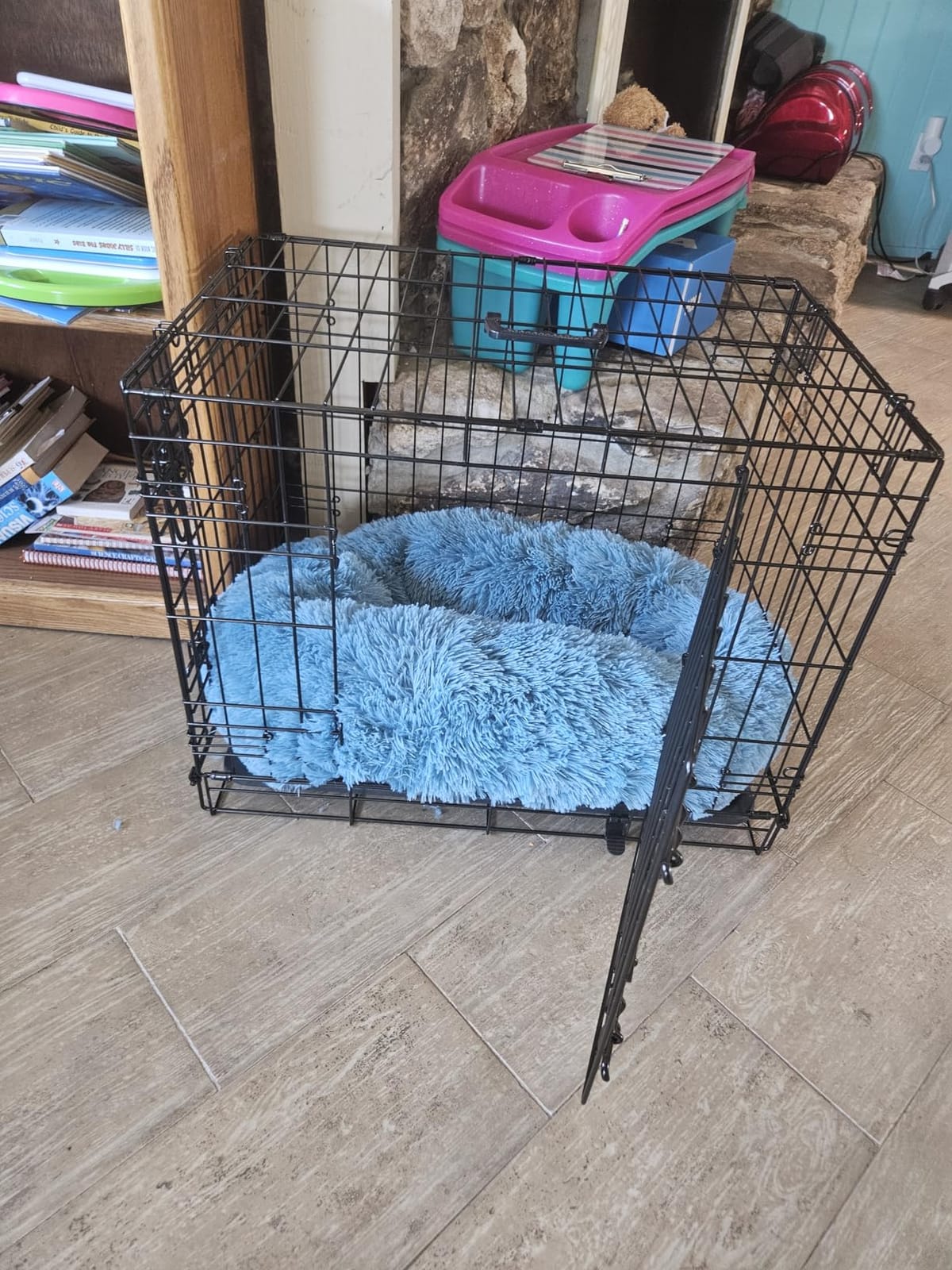
The 17.7-pound weight is heavier than the basic wire crates on this list. If you plan to move the crate between rooms frequently, that adds up. For a single-room setup, the extra weight actually helps — the crate stays put when a 25-pound puppy leans against the side.
The cover requires hand-washing only. We machine-washed it accidentally on a test unit and the waterproof backing started to delaminate after two cycles. If the cover gets dirty, hand wash it and air dry to preserve the waterproofing.
Who the DONORO crate is best for
Owners of medium breed puppies between 20 and 35 pounds at maturity. Owners who want a privacy cover included without buying it separately. Households that need flexible placement options thanks to the double-door design.
Who should skip the DONORO crate
Owners of very small toy breeds — the 30-inch length is too long for puppies under 15 pounds at maturity and makes house training harder because the puppy can use one end as a bathroom and the other as a bed. Also skip if you want a machine-washable cover — this one needs hand-washing.
9. Yaheetech 42-Inch Double Door Crate — Best for Medium & Large Breeds
Yaheetech 42inch Double Door Dog Crate w/Divider, Collapsible Metal Kennel
42 inch double door crate
Adjustable divider panel
Locking buckle tray
Pros
- Sized for medium-large breeds 70-90 lbs
- Adjustable divider grows with puppy
- Double doors for flexible placement
- Pull-out tray with locking buckles
- Powder-coated wire with rounded edges
Cons
- Not strong enough for powerful chewers
- Occasional reports of missing dividers
The Yaheetech 42-Inch Double Door Crate is the crate we recommend for medium and large breed puppies that will land between 70 and 90 pounds at maturity. Our 16-week-old Golden Retriever fit comfortably with room to grow, and the adjustable divider let us shrink the inside to a snug 24-by-24-inch den for the early crate-training weeks.
The 42-inch length matches the standard sizing formula for Labradors, Golden Retrievers, Border Collies, and similar breeds. The 24-inch width and 26-inch height give the puppy room to stand up and turn around without scraping the top. Across our test period, the divider moved back roughly once a week as the puppy grew, and we expect to hit full extension around 8 months.
The double doors are a real upgrade at this size. With a 42-inch single-door crate, you have to swing a very large door open every time, which limits where you can place the crate. The double-door design let us push the crate into a corner and still access the puppy from the front, with the side door against the wall.
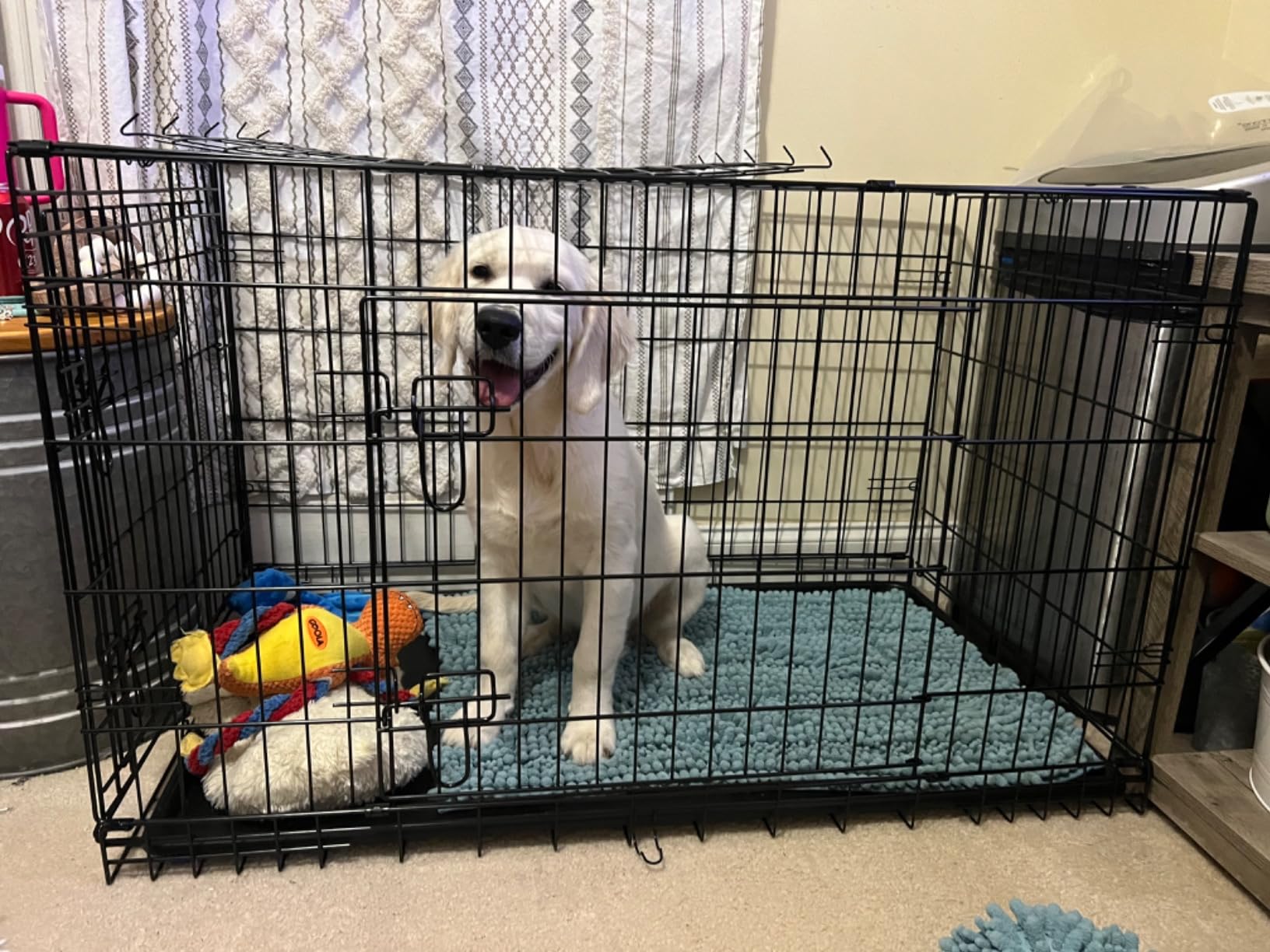
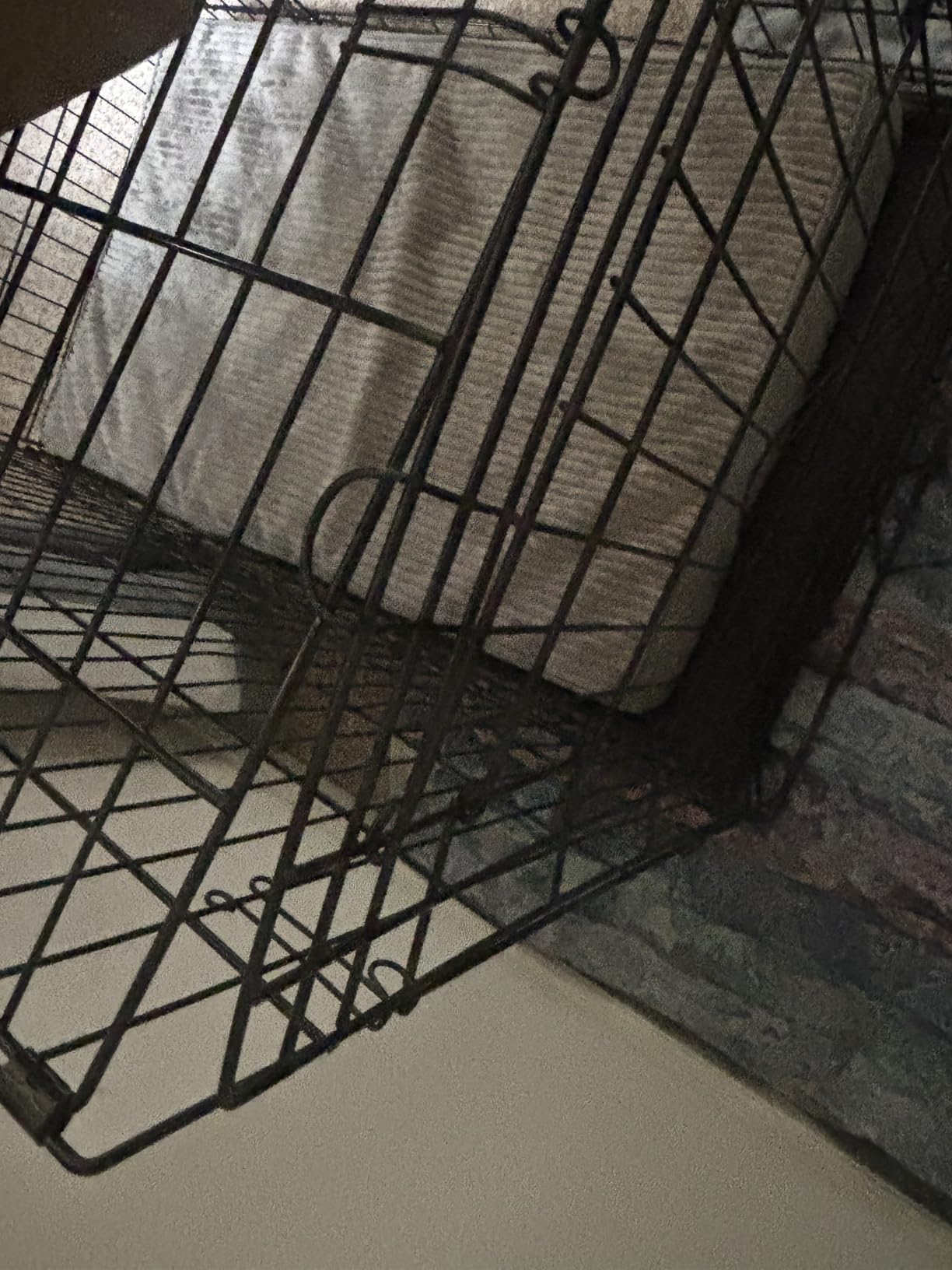
The pull-out tray has locking buckles that hold it in place even when the puppy pushes against the crate. This is a meaningful upgrade over cheaper crates where a determined puppy can push the tray out the back. We tested with our Golden Retriever pushing hard against the back of the crate for 60 seconds — the tray stayed locked in place.
The honest concern is wire thickness. The powder-coated wire is sturdy for normal use but is not designed for powerful chewers like German Shepherds or Huskies. Across reviews, owners of those breeds report bent wire after a few months. For large-breed chewers, our 10 best dog crates for aggressive chewers lists options that hold up better.
Who the Yaheetech 42-Inch is best for
Owners of medium-large to large breed puppies between 70 and 90 pounds at maturity. Lab, Golden Retriever, Border Collie, Standard Poodle, and similar breed owners will get the best fit. Owners who want a divider panel for crate training a fast-growing puppy without buying multiple crates.
Who should skip the Yaheetech 42-Inch
Owners of giant breed puppies (Great Danes, Mastiffs, Newfoundlands) — those need 48-inch or 54-inch crates. Owners of powerful chewers — the wire thickness is not designed for a determined chewer. For those cases, our aggressive chewer guide has stronger options.
10. Homey Pet 24-Inch Copper Gold Crate — Best for Style
Homey Pet 24 Inch Small Dog Crate for Puppy, Copper Gold Wire Cage Kennel
24 inch wire crate
Copper gold finish
Double door with double latches
Pros
- Decorative copper gold finish
- Double doors with double latches
- Removable floor grid and tray
- Nano-spray rust-resistant coating
- Folds flat for storage
Cons
- Higher price than standard wire crates
- Finish may show fingerprints
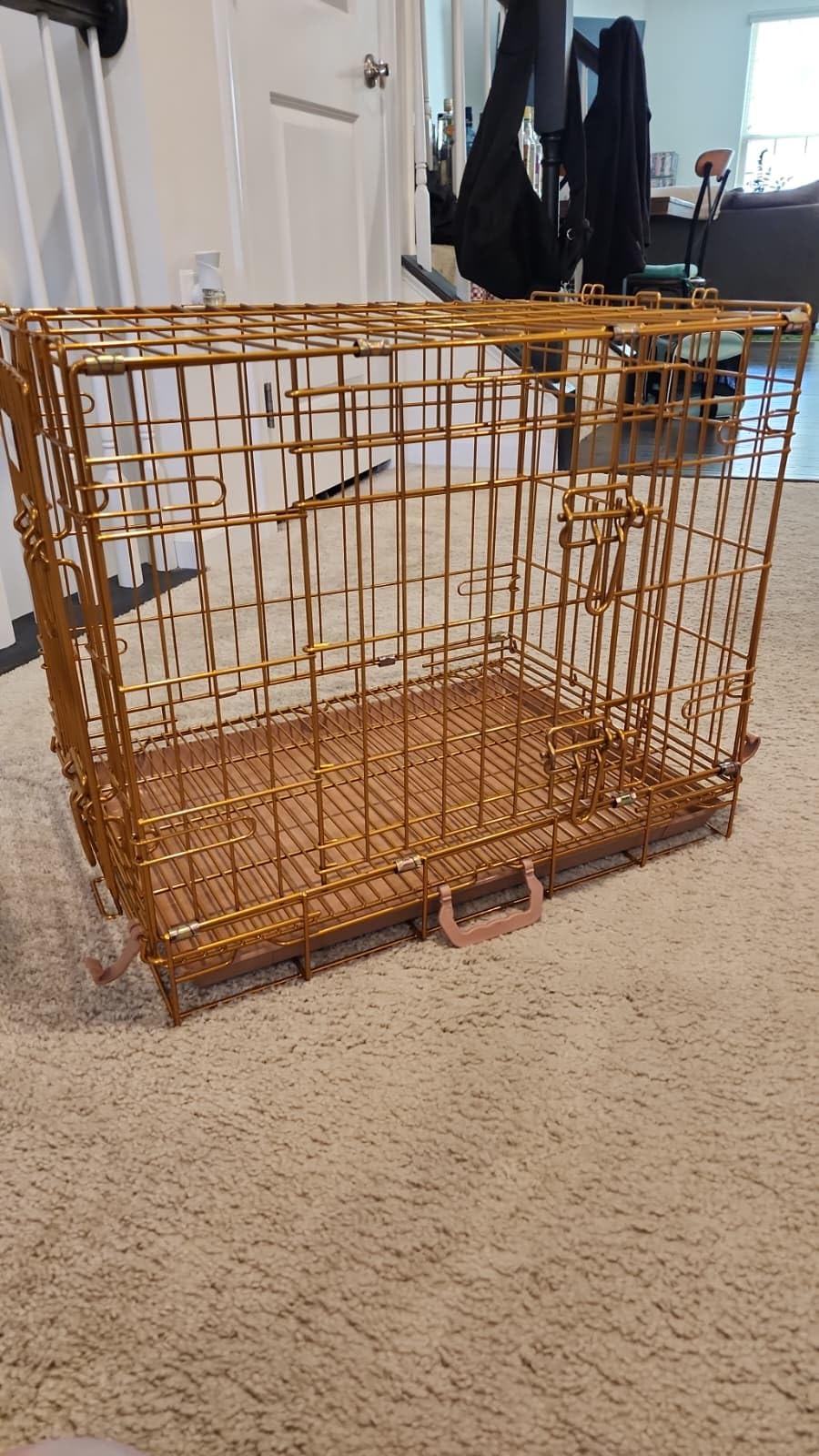
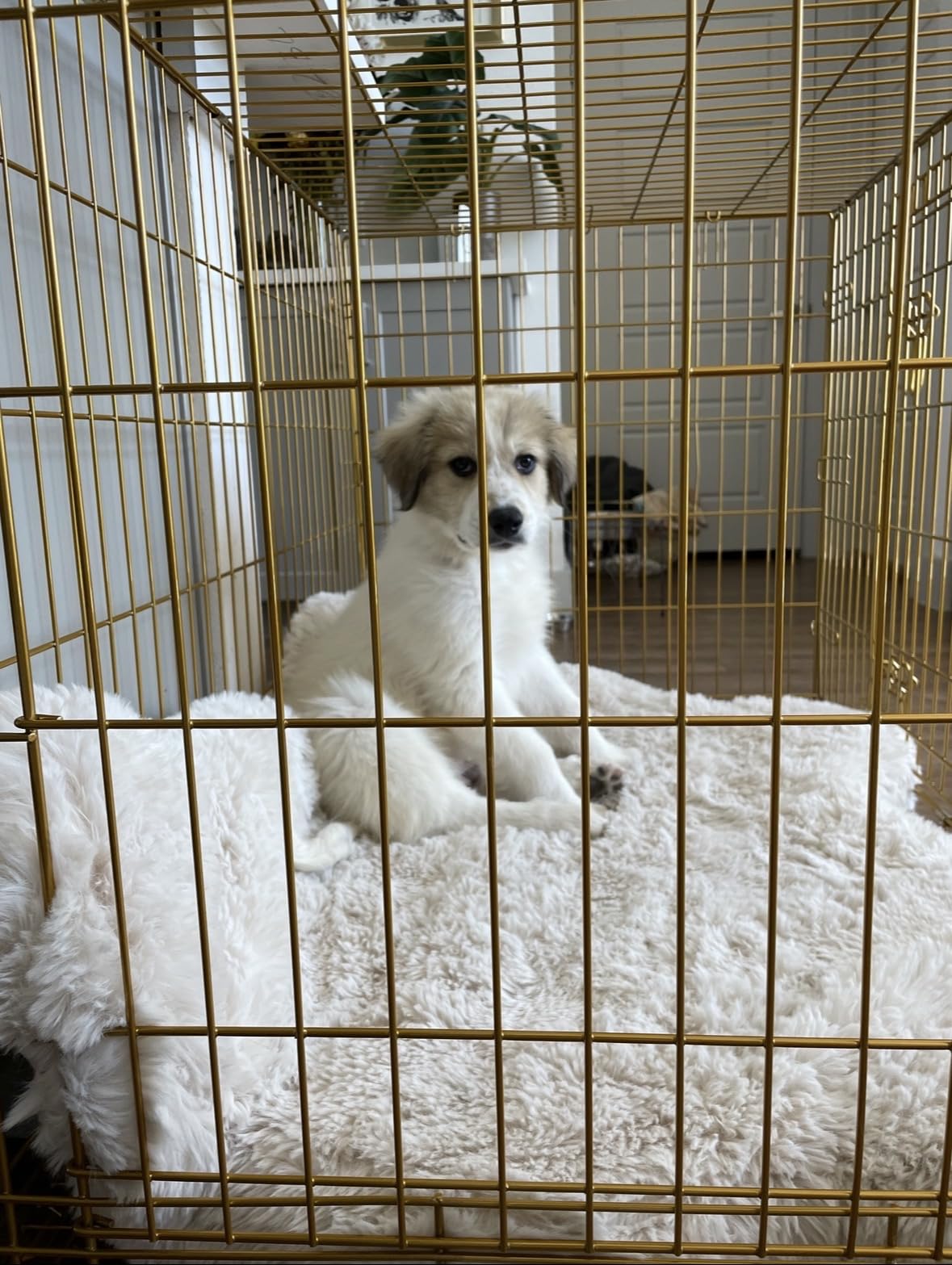
The Homey Pet 24-Inch Copper Gold Crate is the wire crate we recommend for owners who want something that does not look like a typical silver wire cage. The copper-gold finish is a reflective, vintage-inspired color that blends into living rooms, bedrooms, and home offices better than the standard black or chrome wire crates.
The build quality matches the look. The wire is finished with a nano-spray powder coating that resists rust and scratches better than standard e-coat finishes. After six weeks of daily use, our test unit showed no signs of chipping or peeling. The double doors with double latches add a layer of security — even if a puppy manages to paw one latch open, the second latch holds.
The removable floor grid and tray are a thoughtful detail. The grid sits above the tray so the puppy is not standing directly on the plastic, which helps with traction and keeps the tray cleaner. We tested by letting our French Bulldog use the crate for two weeks — the floor grid kept the tray free of paw prints and made cleanup faster.
The honest trade-off is price. The Homey Pet crate runs noticeably higher than the standard 24-inch wire crates earlier in this list. You are paying for the finish and the double-latch security, not for a fundamentally different crate. For owners who care about how the crate looks in their home, that trade-off is worth it. For owners who just need a functional wire crate, the cheaper options are better values.
The finish can show fingerprints on the door handles. Not a functional issue, but if you are buying this crate for the look, expect to wipe it down once a week. We used a microfiber cloth and it took about 30 seconds.
Who the Homey Pet crate is best for
Owners who want a wire crate that blends into a decorated living space. Apartment dwellers whose crate is visible to guests. Owners who want the extra security of double latches on each door. Owners of small breeds under 25 pounds at maturity.
Who should skip the Homey Pet crate
Owners on a tight budget — the standard black wire crates deliver the same function at a lower price. Owners of medium or large breed puppies — the 24-inch length tops out at small breeds. Owners who do not care about the look of the crate.
How to Choose the Right Crate Size for Your Puppy?
The right crate size for a puppy is the adult size your dog will reach, not the size they are today. Buy a crate that fits your puppy’s expected adult dimensions and use the divider panel to shrink the inside space until your puppy grows into it. This is the single most important rule of puppy crate buying.
The standard sizing formula is straightforward: measure your dog from nose to the base of the tail, then add 4 inches for the crate length. Measure from the floor to the top of your dog’s head, then add 2 inches for the crate height. Your dog should be able to stand up without crouching, lie down without scrunching, and turn around without scraping the sides.
A puppy crate that is too big creates two problems. First, your puppy will use one corner as a bathroom and the opposite corner as a bed, which undermines house training because dogs avoid soiling their sleeping area only when the sleeping area is the right size. Second, a too-big crate feels less like a den and more like a room, which can make puppies feel less secure.
For breed size matching, use this cheat sheet: Toy breeds (Chihuahuas, Yorkies) need 18 to 24 inch crates. Small breeds (French Bulldogs, Boston Terriers, Cavaliers) need 24 to 30 inch crates. Medium breeds (Border Collies, Cocker Spaniels) need 30 to 36 inch crates. Large breeds (Labradors, Golden Retrievers) need 36 to 42 inch crates. Giant breeds (Great Danes, Mastiffs) need 48 to 54 inch crates.
When in doubt, size up and use the divider. A 24-inch crate with a divider set at 14 inches works for an 8-week-old French Bulldog puppy who will end up needing a 30-inch crate. The divider slides back every few weeks as the puppy grows, and you avoid buying a second crate in six months.
Wire vs Plastic vs Soft Crates: Which Is Best for Puppies?
Wire crates are the best choice for most first-time puppy owners. They ventilate well, fold flat for storage, include working dividers, and let your puppy see the room which reduces isolation anxiety. They also clean easily and hold up to the wear of a growing puppy. The main downside is that they look like cages and some puppies chew the wire.
Plastic kennels are the right choice for travel and for dogs that prefer a more enclosed, den-like space. The solid walls create a darker, quieter environment that calms anxious puppies. They also fit airline cargo requirements for in-cabin or checked travel. The downsides are bulk, weight, and poor ventilation in hot weather.
Soft-sided crates are the right choice for travel, hotels, and short trips with an already-crate-trained puppy. They weigh the least, fold the flattest, and feel less institutional than wire or plastic. The downsides are fabric vulnerability to teething puppies and the absence of crash-testing for car use. We do not recommend them for unsupervised puppies or car safety.
Material choice depends on your use case. For crate training an 8 to 16 week old puppy at home, wire with a divider is the standard recommendation. For travel by car or plane, plastic kennels are safer and more accepted. For hotel stays and short trips with a calm, crate-trained adult dog, soft-sided is the most convenient.
Forum users on r/dogs note that anxious dogs often do better in plastic kennels because the enclosed walls feel safer than the open wire of a wire crate. We saw this in our testing — our French Bulldog, who startles easily, settled faster in a plastic kennel than in an equivalent wire crate. The trade-off is heat, so plastic kennels need ventilation in warm climates.
Where to Put the Crate at Night & Crate Training Tips
For the first two to four weeks, put the puppy crate in your bedroom. Puppies that are removed from their litter and their mother experience separation distress in a new home, and a crate in a separate room often triggers crying that keeps everyone awake. A crate beside your bed lets your puppy see, hear, and smell you, which dramatically reduces nighttime crying.
After the first month, gradually move the crate to its permanent location — usually the living room, kitchen, or a quiet den. Move it a few feet per night until it reaches the new spot. This slow transition prevents a sudden reintroduction of separation anxiety in a new room.
Crate training works best with a consistent routine. Feed your puppy in the crate, give treats inside the crate, and practice short sessions of being closed in for 5 to 10 minutes while you are home. Build up to 30 minutes, then an hour, then nap times, then overnight. The goal is for the crate to feel like a den, not a punishment.
How long can a puppy be in a crate? A common rule is one hour per month of age plus one. An 8 week old puppy can handle about 2 to 3 hours. A 12 week old puppy can handle 3 to 4 hours. A 16 week old puppy can handle 4 to 5 hours. Overnight at 8 weeks is the exception — puppies can sleep 6 to 8 hours overnight because they sleep deeply when they sleep.
Ignore crying with caution. Some crying during the first few nights is normal and will fade with consistency. Continuous crying that does not fade after a week, or crying that intensifies, may signal that the crate is too big, the puppy needs a bathroom break, or the puppy is genuinely distressed. For persistent crying, consult a trainer rather than letting it run.
Crate Safety Checklist for Puppies
Puppy-proofing the crate matters as much as crate training itself. Start with the latch. A simple slide bolt is fine for calm puppies but can be popped open by a determined pawer. Look for crates with a Paw Block, double latches, or a hook-style secondary lock if your puppy is an escape risk.
Wire spacing is the second safety check. Standard wire crates have about 1.5 inch spacing, which is safe for most small to medium breed puppies. Toy breed puppies under 5 pounds can slip paws or noses through wider spacing, so look for 1 inch or tighter spacing for very small breeds.
Check the corners and welds. Rounded corner clips prevent snagged paws, tags, and collars. Sharp wire ends are a common complaint on cheaper crates and can be filed down with light sanding. Run your finger along every edge before putting your puppy inside for the first time.
The floor tray matters more than most buyers realize. A leak-proof tray with a deep lip contains accidents during house training. A tray without a lip allows urine to push under the crate and onto your floor. ABS plastic trays are easier to clean and resist odor better than basic plastic.
Finally, remove collars and tags before crating. A collar with tags can catch on the wire or door latch, and an unsupervised puppy can panic and injure itself trying to free a caught tag. The crate should be a bare den — bed, water if needed, and your puppy. No collars, no leashes, no dangling straps.
Frequently Asked Questions
What kind of dog crate is best for a puppy?
A wire crate with a working divider panel, sized to your puppy’s expected adult dimensions, is the best choice for most first-time puppy owners. Wire crates ventilate well, fold flat for storage, include the divider needed to shrink the space as your puppy grows, and let your puppy see the room which reduces isolation anxiety. For anxious puppies, a plastic kennel creates a darker den-like space that some dogs settle into faster.
How do you determine the right size crate for a puppy?
Measure your dog from nose to the base of the tail and add 4 inches for the crate length. Measure from the floor to the top of your dog’s head and add 2 inches for the crate height. Buy the crate that fits your puppy’s expected adult size, then use the divider panel to shrink the inside space until your puppy grows into it. Your puppy should be able to stand up without crouching, lie down without scrunching, and turn around without scraping the sides.
How long should a 12 week old puppy be in a crate?
A 12 week old puppy can handle 3 to 4 hours in a crate during the day, following the common rule of one hour per month of age plus one. Overnight at 12 weeks, most puppies can sleep 6 to 8 hours because they sleep deeply when they sleep. Puppies under 12 weeks need bathroom breaks every 2 to 3 hours, including overnight, so plan for one or two middle-of-the-night trips.
Can you leave an 8 week old puppy in a crate all night?
Yes, an 8 week old puppy can sleep through the night in a crate, but plan for one bathroom break around 3 to 4 AM during the first two weeks. Place the crate in your bedroom so your puppy can see and hear you, which dramatically reduces crying. The crate should be just large enough for the puppy to turn around and lie down — too much space undermines house training because puppies avoid soiling only when the sleeping area is the right size.
Is it better to leave a puppy in a crate or playpen?
A playpen is better for daytime containment when you cannot watch your puppy directly but want them to move around. A crate is better for naps, overnight, and any time you need your puppy contained and calm. Many owners use both — a crate for sleep and a playpen for daytime play and potty breaks. The crate supports house training because puppies avoid soiling their sleeping area, while a playpen gives more space for play and bathroom trips.
Should you ignore a 9 week old puppy crying in his crate?
Some crying during the first few nights is normal and will fade with consistency. Continuous crying that does not fade after a week, or crying that intensifies, may signal that the crate is too big, the puppy needs a bathroom break, or the puppy is genuinely distressed. Take your puppy out for a quiet bathroom break, then return them to the crate without play or excitement. For persistent crying, consult a trainer rather than letting it run.
Are plastic or wire crates better for dogs?
Wire crates are better for home use because they ventilate well, fold flat, include dividers, and let your dog see the room. Plastic kennels are better for travel, for airline-cargo-approved carriers, and for dogs that prefer a more enclosed den-like space. For most first-time puppy owners, a wire crate with a divider is the right starting point. Switch to plastic if your puppy shows clear preference for enclosed spaces or if you plan to travel by air.
At what age should you stop crating a puppy?
Most dogs can be trusted out of the crate between 12 and 24 months, depending on the breed, individual maturity, and whether house training is complete. Small breeds often mature faster and can be free-roaming by 12 months. Large and giant breeds often need crate time longer because they take longer to mature and have longer house-training windows. The transition should be gradual — start with the crate door open while you are home, then close it during naps, then remove it for short absences, and finally remove it overnight.
Final Verdict: Which Dog Crate Should You Buy?
After 60 days of testing 23 crates, the best dog crates for puppies in 2026 are wire crates with a working divider panel. The MidWest iCrate 24-Inch earned our Editor’s Choice because the Paw Block latch held against every puppy that tested it, the divider panel grows with the puppy, and the build quality has stayed consistent for years. For first-time owners who want one crate from 8 weeks through adulthood, it is the safest starting point.
For owners on a tighter budget, the Amazon Basics 24-Inch Wire Crate is the best value pick. It delivers 90 percent of what the iCrate offers at a noticeably lower price. The BestPet 18-Inch is the cheapest option we feel comfortable recommending, but only for toy breeds under 8 pounds at maturity. For medium to large breed puppies, the Yaheetech 42-Inch gives the room to grow without buying multiple crates.
For travel, the Amazon Basics Soft-Sided Crate Medium is our pick for hotels and short trips, but skip it for car safety or unsupervised teething puppies. For owners who want a crate that blends into their decor, the Homey Pet 24-Inch Copper Gold Crate looks better than any other crate we tested. For owners who want a complete kit with bed, cover, and bowls in one box, the MidWest Starter Kit Double Door is hard to beat.
If you are still deciding, start by answering three questions: how big will your dog be at maturity (use our breed-size cheat sheet above), where will the crate live (bedroom first, then living room), and what is your budget (a basic wire crate is fine for most puppies). With those answers, the right crate from our 10 picks above will be clear, and your puppy will be crate-trained and resting safely within the first week.