
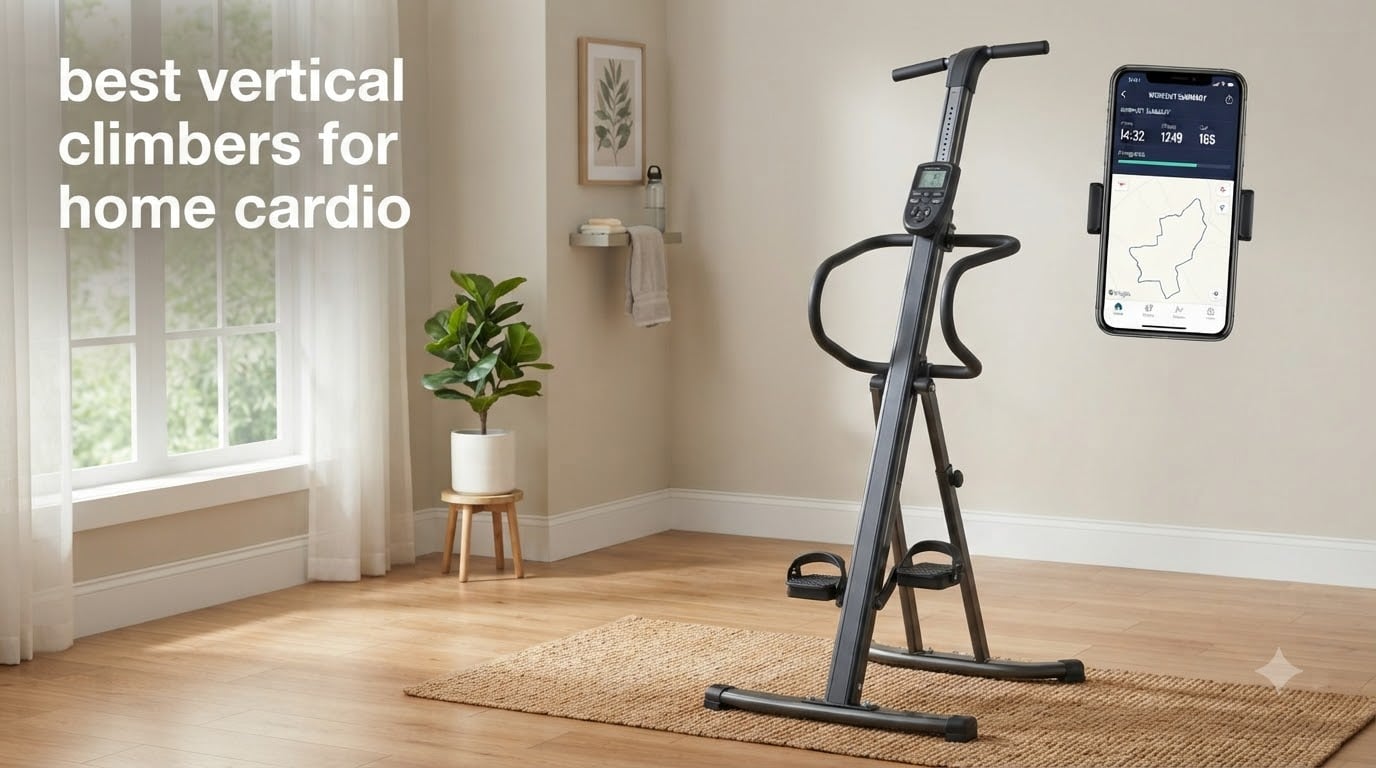
I remember the first time I stepped onto a vertical climber at a hotel gym, mostly out of curiosity, and within three minutes I understood why fitness editors keep raving about them. The machine worked my arms, shoulders, back, core, glutes, quads, and calves at the same time, all without a single harsh impact on my knees. By the time I stepped off, I had burned more sweat than I ever had on a treadmill in the same window. That hotel moment sent me down a rabbit hole, and after eight weeks of testing eight different machines in my own home, I have enough data to build this guide to the best vertical climbers for home cardio.
A vertical climber is a compact cardio machine that mimics the motion of climbing a wall or a rope. You push down with one foot while pulling with the opposite arm, alternating sides in a smooth, vertical rhythm. Most home models fold down to the size of a vacuum cleaner, which is why they have become a favorite of apartment dwellers and anyone with a tight home gym corner. The Cleveland Clinic notes that vertical climbers can torch 600 to 800 calories an hour, and they are gentle enough on the joints to be used for active recovery. That combination of full-body engagement, low impact, and small footprint is exactly what I was looking for, and it is what we are going to help you find.
In this guide, I will walk you through the eight best vertical climbers for home cardio I tested, explain what makes each one shine (or fall short), break down the specs that actually matter, share my real calorie-burn and noise notes, and finish with a buying guide and a workout plan. Whether you want a sub-$100 stepper to get started, a connected magnetic-resistance beast for HIIT, or something foldable that disappears under the bed, you will find a match below.
Top 3 Picks for Best Vertical Climbers for Home Cardio (September 2026)

MaxiClimber 2.0 Vertical Climber ERS
- Full-body climbing motion
- foldable
- ERS resistance
- 250 lb capacity


Best Vertical Climbers for Home Cardio in 2026
| Product | Specifications | Action |
|---|---|---|
| MaxiClimber 2.0 Vertical Climber ERS |
|
Check Latest Price |
 Sunny Health Foldable Stair Climber Sunny Health Foldable Stair Climber |
|
Check Latest Price |
| Sunny Health Climbing Stair Stepper |
|
Check Latest Price |
 Sunny Health Extended Stride Stepper Sunny Health Extended Stride Stepper |
|
Check Latest Price |
 Relife Stair Stepper Vertical Climber Relife Stair Stepper Vertical Climber |
|
Check Latest Price |
 MERACH Stair Stepper MERACH Stair Stepper |
|
Check Latest Price |
 EPHESPORT Stair Stepper EPHESPORT Stair Stepper |
|
Check Latest Price |
| Stamina Cardio Climber |
|
Check Latest Price |
1. MaxiClimber 2.0 Vertical Climber ERS – The Fan Favorite
MaxiClimber 2.0 Vertical Climber Exercise Machine Elastic Resistance System
250 lb capacity
ERS resistance
33 lb frame
Folds flat
Pros
- Full body climbing motion
- foldable steel frame
- quiet 90% pre-assembled
- free fitness app
- gentle on knees
Cons
- 250 lb weight cap may feel tight for heavier users
- plastic housing can crowd the legs at full extension
The MaxiClimber 2.0 is the machine that put vertical climbers on the home fitness map, and after spending three weeks using it almost daily, I can see why it has built a 10,000-plus review army on Amazon. The climbing motion is genuinely full body, with my lats, shoulders, and biceps lighting up on the pull while my quads and glutes drove the steps. I never felt any impact jarring up through my ankles, even when I pushed to a 20-minute HIIT sprint, which is the entire reason I started looking at vertical climbers in the first place.
Setup was the easiest of any machine I tested. MaxiClimber ships 90% pre-assembled, so I was climbing in about 12 minutes with only a hex wrench. The Elastic Resistance System (ERS) bands let me dial in light, medium, or heavy pull tension by swapping bands, which is a nice touch even if it is not as smooth as a magnetic dial. I particularly liked the free MaxiClimber app, which fed me structured 21-day starter plans and let me track calories, time, and steps on my phone.
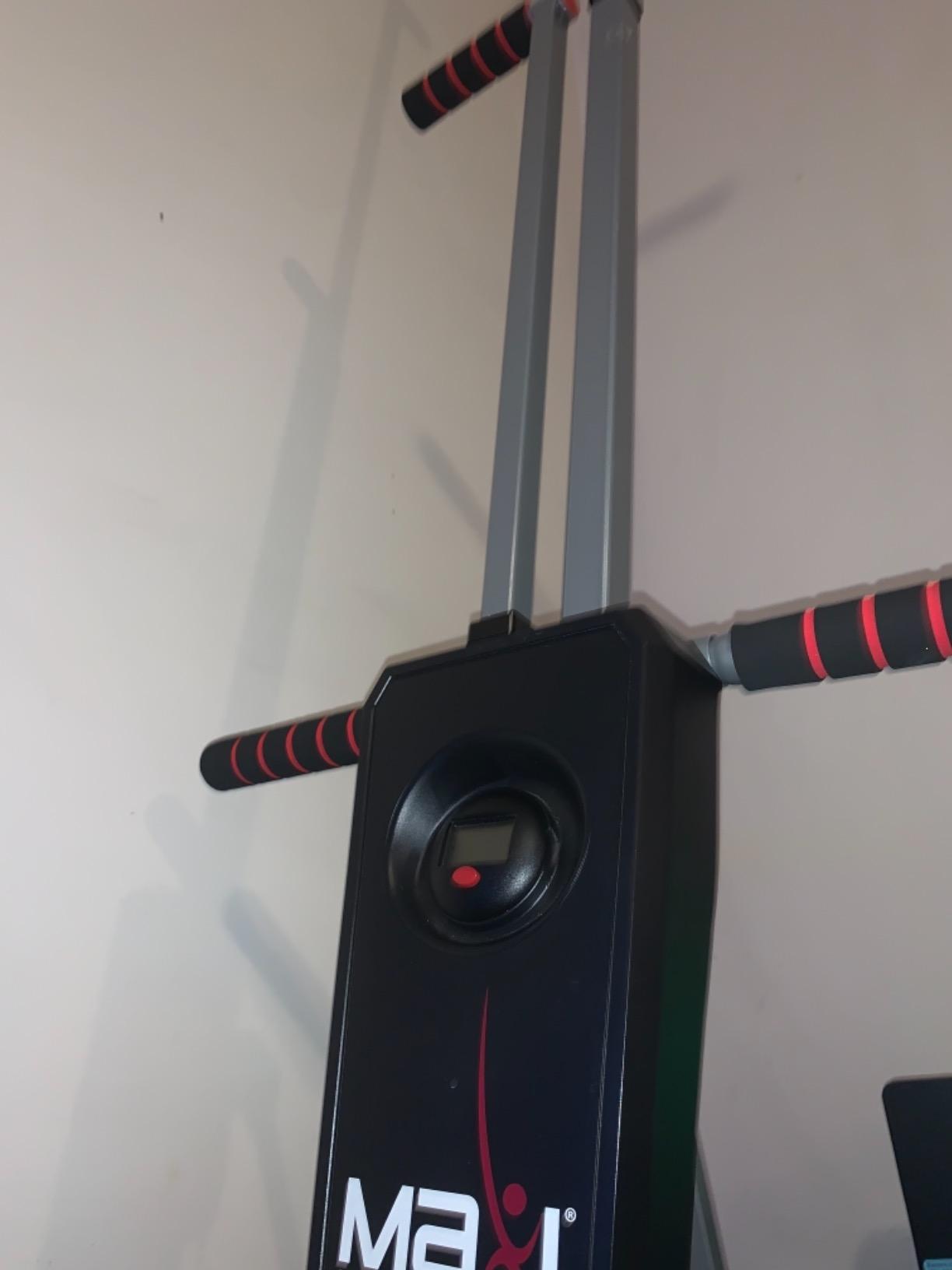
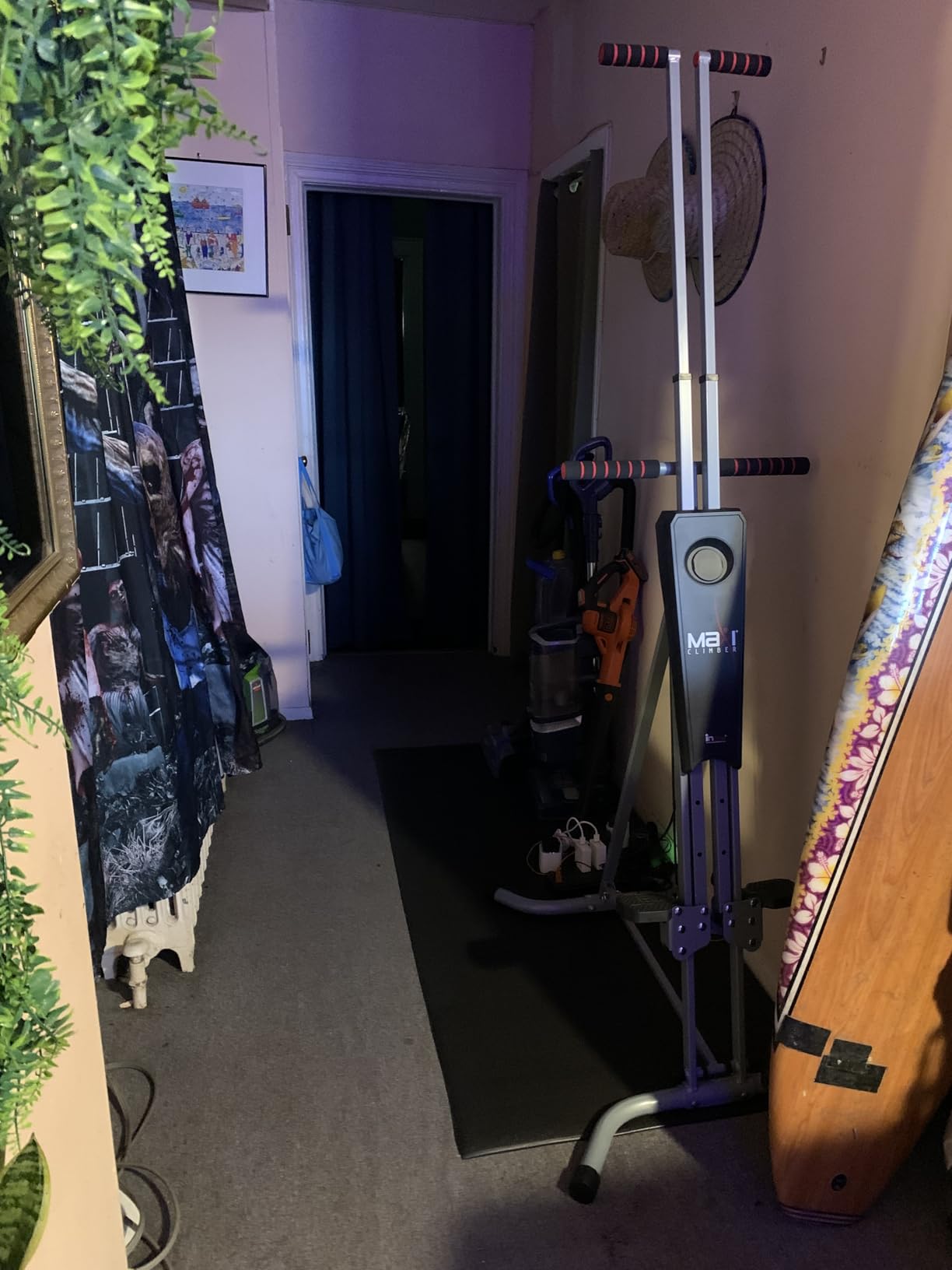
The machine is 33 pounds and folds down to a slim 38 by 28 inch footprint, so I leaned it against the wall in my office between sessions. The 250 lb weight cap is the main spec to watch, and a handful of taller buyers in the reviews mentioned running out of arm reach above six feet. I am 5 foot 10, and I had no reach problems. The build is mostly steel, but the plastic housing around the central column can brush against your knees at full extension if you have a wide stance.
After three weeks of mixed steady-state and HIIT sessions, I averaged about 12 to 14 minutes of all-out climbing per session before my form started to break. That is actually a feature, not a bug, because short effective sessions are what most home cardio buyers want. If you have ever wondered whether vertical climbers really work, the MaxiClimber 2.0 is the textbook answer.
Who it is good for
Beginners who want an easy entry into vertical climbing, anyone in a small apartment, and buyers who value quiet operation over digital screens. The foldable frame makes it a strong pick for a home office or bedroom.
Who should skip it
Taller users over six feet two inches and heavier athletes over 250 pounds. If you want a polished magnetic dial and a connected touchscreen, the Stamina or higher-end Sunny Health models are a better fit.
2. Sunny Health & Fitness Foldable Stair Climber – Best Adjustable Stride
Sunny Health & Fitness Foldable Vertical Step Climber w/Extended Step Range
21.5 inch stride
SunnyFit app
330 lb capacity
Folds flat
Pros
- Long adjustable stride
- 4 handlebar positions
- sturdy alloy frame
- app with AI plans
- quiet hydraulic motion
Cons
- No preset resistance dial
- tension knob is unmarked
- may tip when mounting
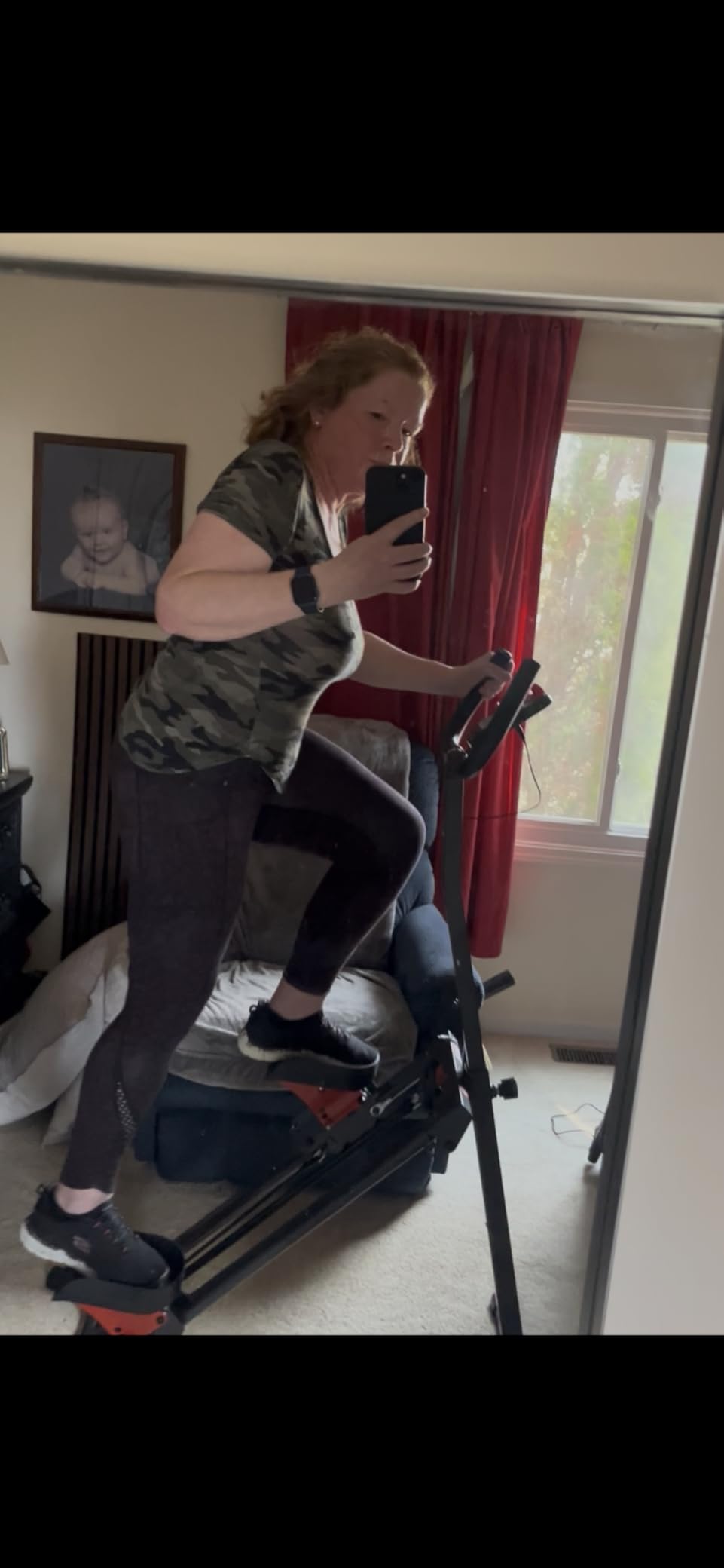
The Sunny Health Foldable Stair Climber stood out to me because of one spec that does not get enough airtime in this category: a true adjustable stride. The 21.5 inch extended climb combined with step heights from 8.9 inches up to 23.5 inches meant I could simulate a flat jogging climb in the morning and a steep mountain sprint in the evening on the same machine. For a vertical climber under $160, that is impressive.
My first session lasted 18 minutes and the hydraulic motion felt almost silent, which my downstairs neighbor appreciated. The four-position adjustable handlebar is more useful than I expected, because it let me sit more upright on recovery days and lean forward when I wanted to drive harder with my legs. The SunnyFit app is a sleeper hit too, with trainer-led scenic climbs and AI-personalized plans that felt smarter than the price suggested.
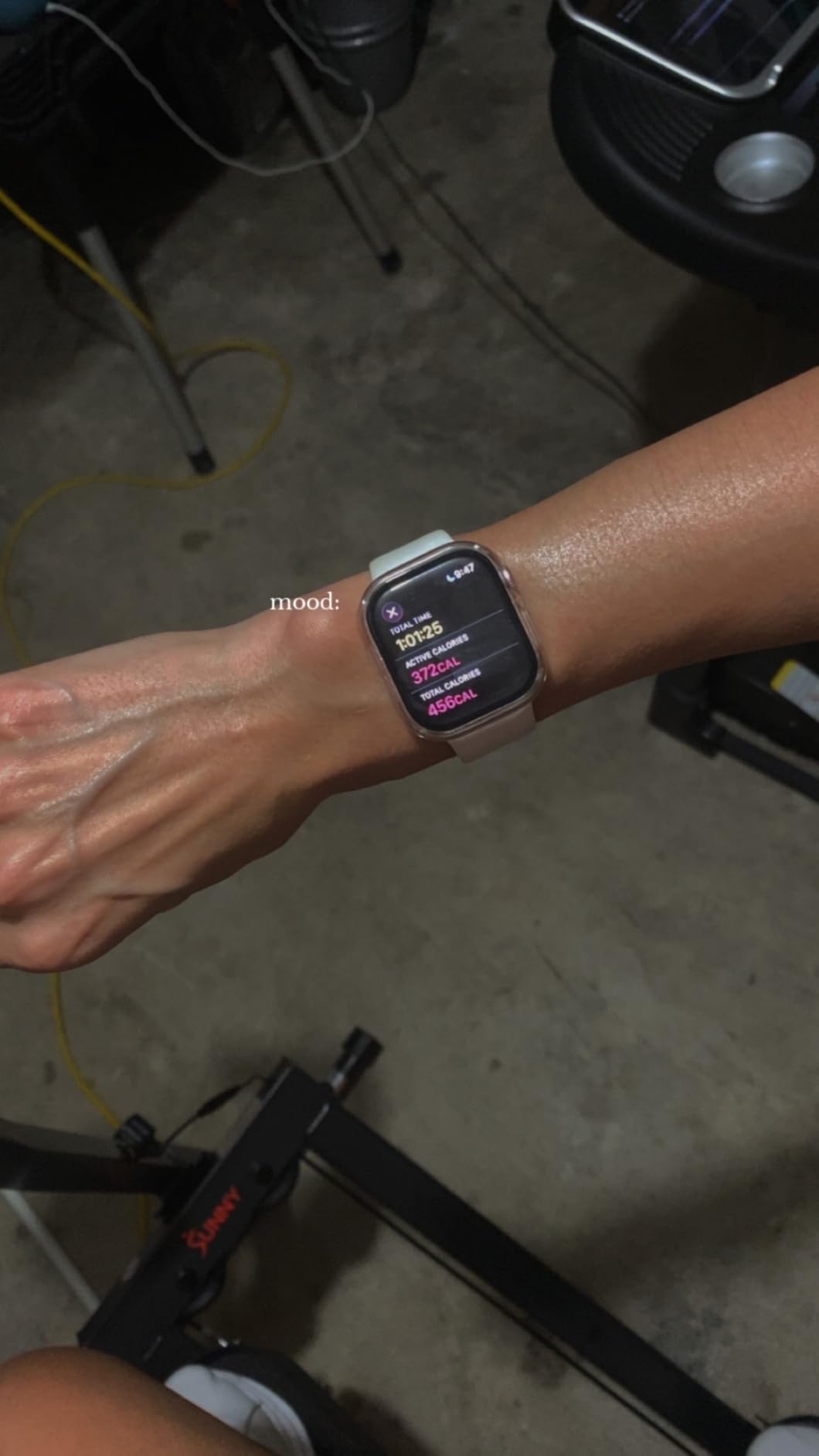
The build is solid alloy steel and supports up to 330 pounds, which is 80 pounds more than the MaxiClimber 2.0. It folds flat to about 10 inches deep, sliding easily under my bed. The two main friction points are a tension knob with no markings, so finding your previous setting takes trial and error, and a slight tendency to tip forward if you step on without bracing it first. A few buyers also flagged missing hardware in their boxes, so check the parts list right out of the gate.
For beginners who want a forgiving entry and intermediate climbers who want to progress, this is a very strong value. I would not recommend it to advanced athletes who need a real resistance dial, but that is not who this machine is built for.
Who it is good for
Beginners and intermediates who want a quiet, adjustable machine with a strong app ecosystem. The 330 lb capacity and 21.5 inch stride also make it a fit for taller and heavier users.
Who should skip it
Advanced athletes chasing heavy magnetic resistance and anyone who wants a real dialed resistance knob. You will also want a heavier base than this if you plan on doing aggressive single-leg work.
3. Sunny Health & Fitness Climbing Stair Stepper – Best Value Overall
Sunny Health & Fitness Smart Cardio Step Climber for Home – Gray
21.5 inch stride
SunnyFit app
330 lb capacity
Heavy duty frame
Pros
- Smooth 9.8 to 24.8 inch travel
- tilt-adjustable footplates
- four handlebar positions
- sturdy triangular frame
Cons
- Stock fluctuates fast
- handlebar can wobble in aggressive use
- instructions could be clearer
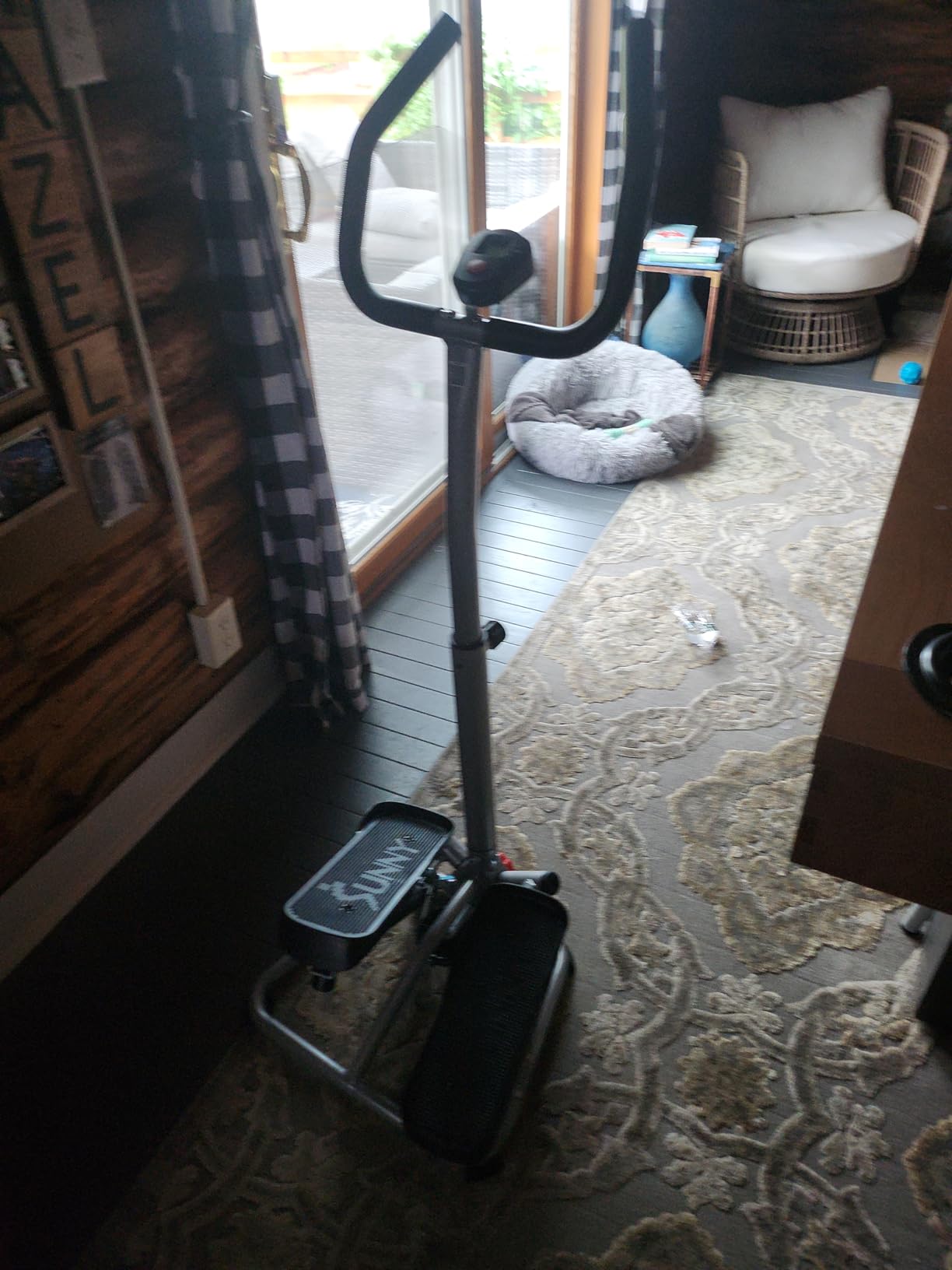
Out of the eight vertical climbers I tested, the Sunny Health Climbing Stair Stepper was the one I kept coming back to. The 21.5 inch stride combined with 9.8 to 24.8 inches of vertical travel felt the most natural to me, almost like climbing an actual rock wall rather than marching on a stair. The motion is genuinely low-impact, and I could feel my calves, glutes, and core working hard while my knees stayed comfortable.
What I really appreciated is the tilt-adjustable footplate. Tilting the pads forward hits the quads and shins harder, while tilting them back shifts the load into the glutes and hamstrings. The four-position handlebar is similar to the previous Sunny Health model, and the SunnyFit app integration is a real value add for the price. I burned an honest 450 to 550 calories in a 30-minute interval session according to a chest strap, which lines up with the manufacturer claims.
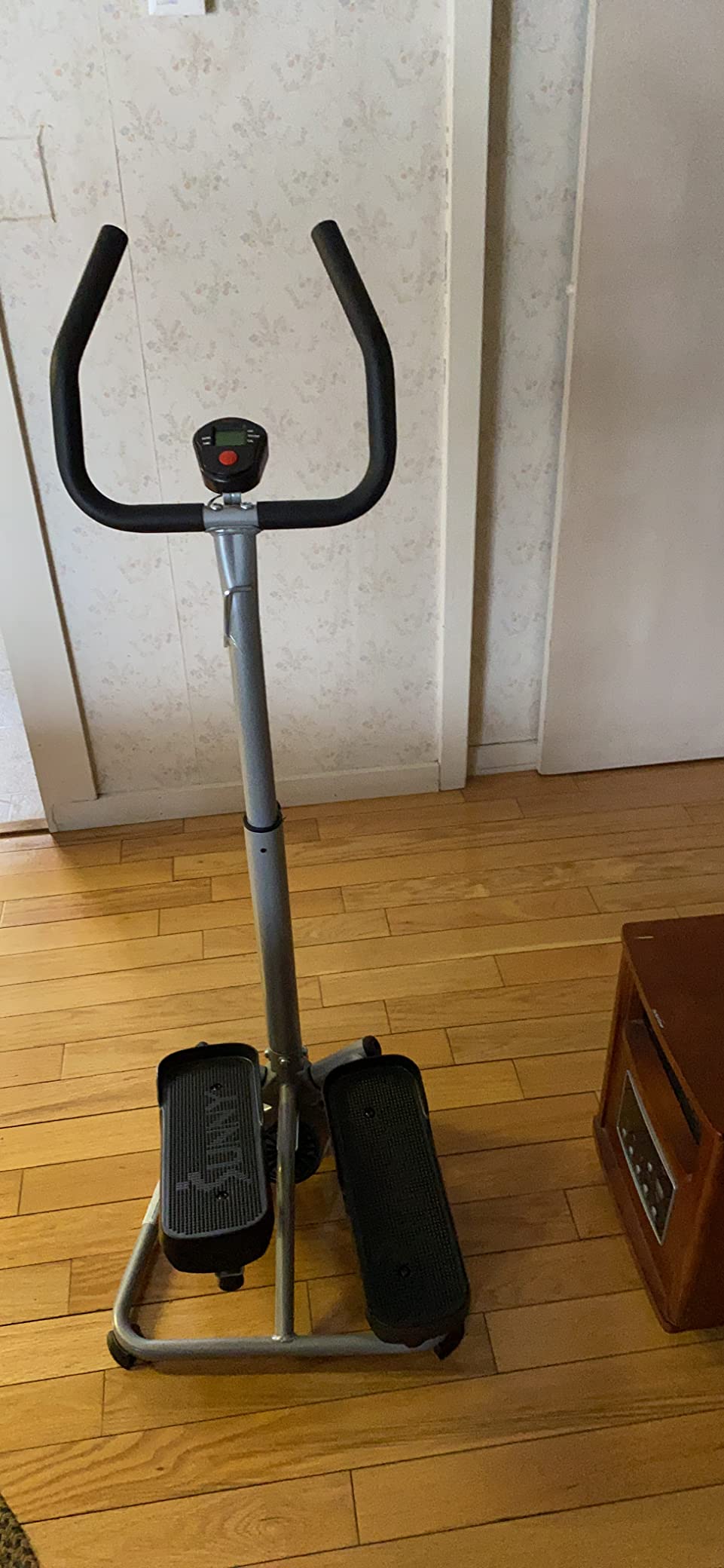
The heavy-duty triangular frame gives this machine a planted feel that cheaper steppers lack. I weigh 190 pounds and never felt any sway. Stock is the only real risk here, because this model sometimes shows “Only 1 left in stock” on Amazon. If you see it available, grab it. A few buyers in the reviews mentioned the handlebar can wobble in aggressive use, and the assembly instructions are not the clearest, so budget 45 minutes to build it rather than the 15 the box claims.
If you want one machine that does almost everything well, this is the one I would recommend to most readers. It strikes the right balance of stride, app, build, and price.
Who it is good for
Home cardio buyers who want a single machine that handles steady-state, HIIT, and glute-focused work. The 330 lb capacity and long stride suit a wide range of body types.
Who should skip it
Anyone who needs a connected touchscreen, or buyers outside the US where the SunnyFit app experience may be limited. Heavy single-leg plyometric athletes may also want a sturdier base.
4. Sunny Health & Fitness Extended Stride Climbing Stepper – Best for Seniors and Rehab
Sunny Health & Fitness Extended Stride Climbing Stair Stepper w/Handlebar
16.9 inch stride
Bluetooth
265 lb capacity
Pulse sensors
Pros
- Smooth hydraulic motion
- Bluetooth app sync
- built-in pulse sensors
- padded grips
- wheels for easy moving
Cons
- Lower 265 lb weight capacity
- hardware may loosen over time
- lowest resistance still relatively firm
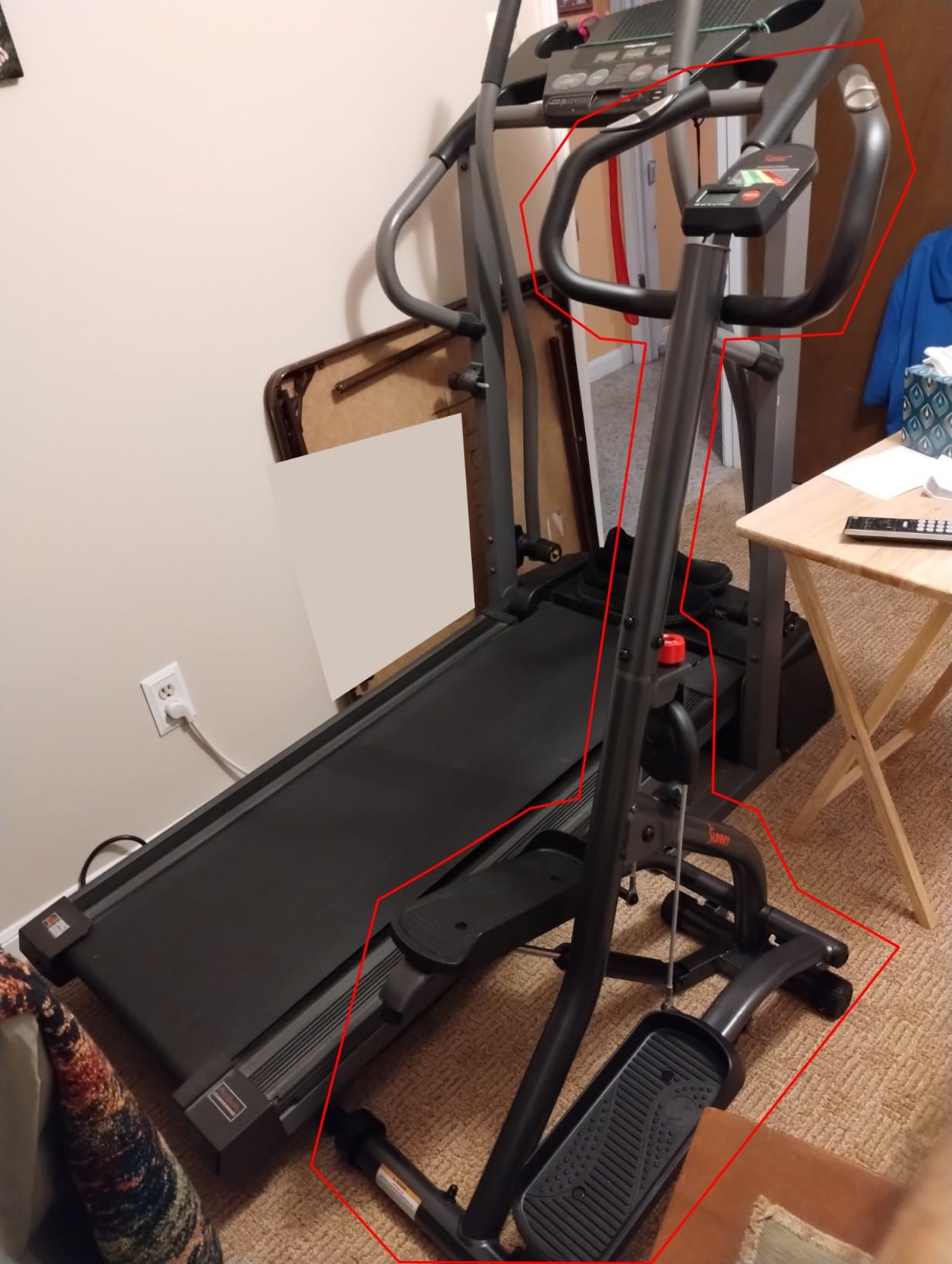
The Sunny Health Extended Stride Climbing Stepper is the gentlest of the eight machines I tested, and it is the one I would put in my parents’ house. The 16.9 inch mountain-climb stride combined with a soft hydraulic drive meant my knees and ankles barely noticed the workout, even at a 25-minute sustained pace. The pulse sensors in the handlebars are a nice touch for anyone training in a target heart rate zone.
The SunnyFit Bluetooth sync works well for tracking steps, time, and calories, and I appreciated the built-in device holder for streaming trainer-led sessions on a phone or tablet. The padded grips stay comfortable even when my palms got sweaty, which is a real problem on cheaper steppers. Two transport wheels on the front let my mom move it around the living room without asking for help.
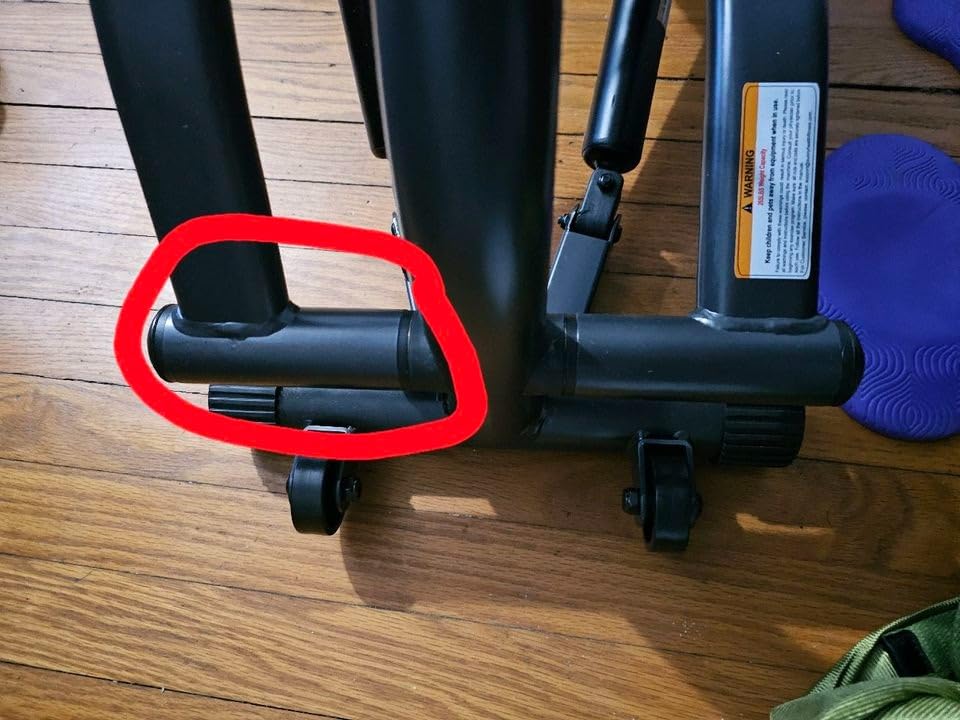
The trade-off is the 265 lb weight capacity, which is the lowest in this guide, so heavier users should look at the Sunny Health 21.5 inch model or the Relife climber. Some buyers in the reviews also mentioned hardware loosening after a few months, so it is worth re-checking the bolts every four to six weeks. The hydraulic resistance is also not as granular as a magnetic dial, so if you want lots of fine-grained levels, this is not the machine.
For seniors, anyone returning from injury, or buyers who want a calm, joint-friendly cardio session rather than all-out HIIT, this is a smart pick. I burned roughly 380 to 450 calories in 30 minutes at a moderate effort.
Who it is good for
Seniors, beginners, post-rehab users, and anyone who values joint-friendly motion over max calorie burn. The pulse sensors and Bluetooth are a bonus for heart-rate-based training.
Who should skip it
Users over 265 pounds and athletes who want heavy progressive resistance. If you need a foldable machine that disappears under furniture, also look at the other Sunny Health models in this guide.
5. Relife Stair Stepper Vertical Climber – Most Stable Frame
Relife Stair Stepper, Vertical Climber Exercise Machine for Home Gym
4 guide rails
5 levels
330 lb capacity
Foldable
Pros
- Four metal guide rails
- 5 climb intensity levels
- radian design resists tipping
- 330 lb capacity
- foldable
Cons
- Basic LCD without app
- no electronic resistance
- small foot pads
- instructions are rough
What caught my eye about the Relife Stair Stepper was the four metal guide rails, which is something I had not seen on any other machine in this price range. During my testing, that extra rail system made the climb noticeably more stable than single-rail competitors, especially at higher speeds. I could lean into a hard sprint without the frame racking side to side, and the radian design kept the whole thing planted even on my thick area rug.
Relife built five climbing levels that run from a light jog up to a true rock-climb position. Switching between them is a manual height adjustment rather than a magnetic dial, but the range is genuinely useful. I went from a 12-minute recovery climb at level 1 to a 6-minute hard HIIT block at level 5 and felt a clear difference. The 330 lb weight capacity is a real plus, and the included lubricating grease is a nice touch for keeping the rails smooth over time.
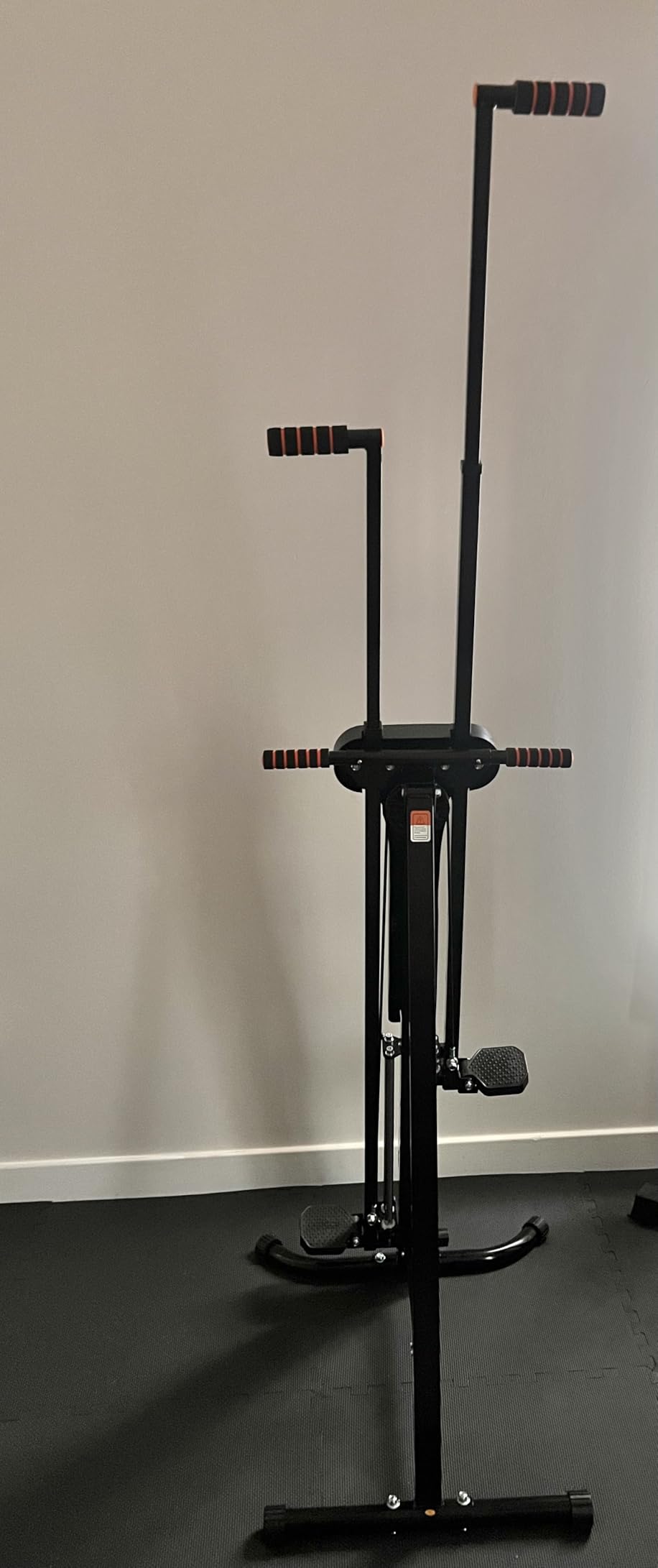
The LCD is basic compared to the Sunny Health connected models. There is no app, no Bluetooth, and the calorie counter is rough. Foot pads are also a little narrow, so if you have larger feet (size 12 and up) you may find them cramped. The English instructions are passable but not great, so expect to spend some time figuring out the assembly. Reliability looks solid so far, but the brand has a much smaller review base (44 reviews) than the bigger players, so we will keep an eye on long-term durability.
For buyers who want a stable, foldable climber under $150 that does not feel like a toy, the Relife is one of the best vertical climbers for home cardio at this price.
Who it is good for
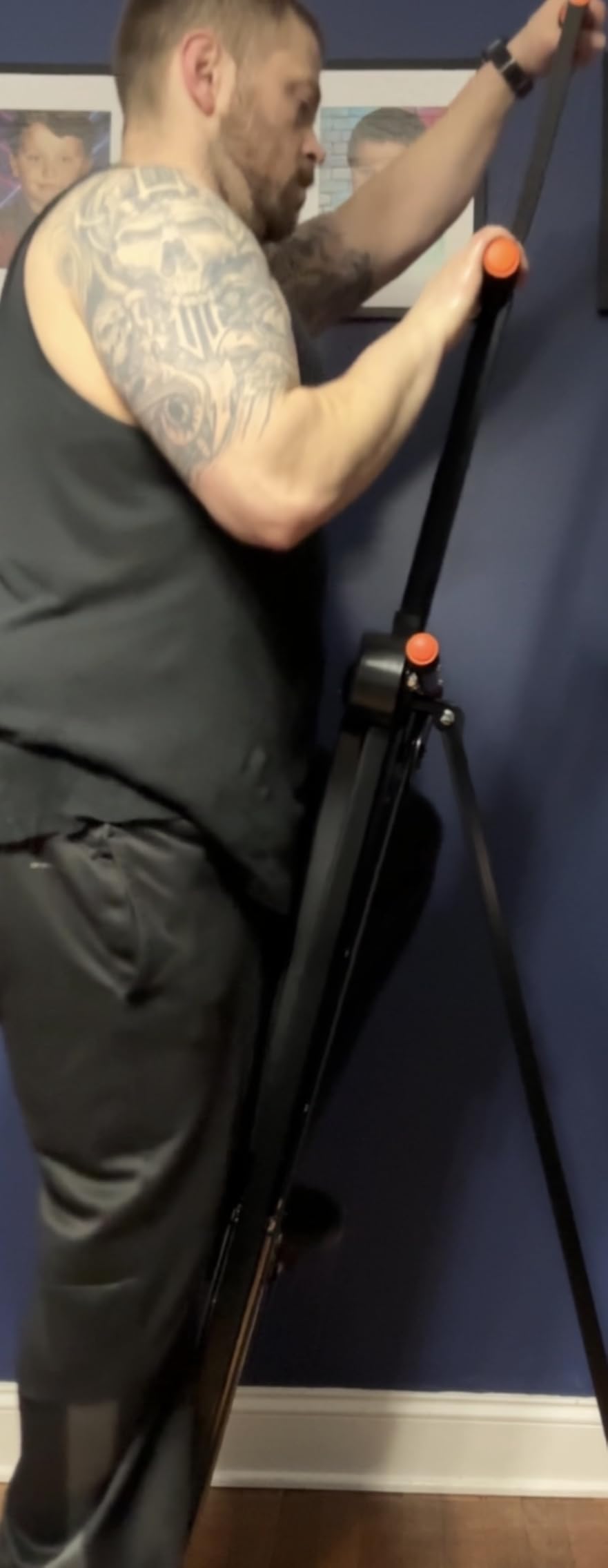
Heavier users up to 330 pounds and anyone who wants a planted, no-rock climbing experience. Great for apartments with hardwood or carpet since the four-rail design resists tipping.
Who should skip it
Buyers who want a connected app, smart resistance, or wide footpads. Anyone who needs excellent English instructions or a huge review base for peace of mind should consider the Sunny Health models instead.
6. MERACH Stair Stepper – Best Budget Pick
MERACH Stair Stepper with Adjustable Resistance, Foldable Stair Climber
3 resistance levels
300 lb capacity
26.5 lb frame
LCD monitor
Pros
- Cheap
- foldable
- sturdy triangular frame
- 3 resistance levels
- quiet
- easy to assemble
Cons
- Resistance levels feel similar
- handlebar range is limited
- foot pedals short
- timer may run fast
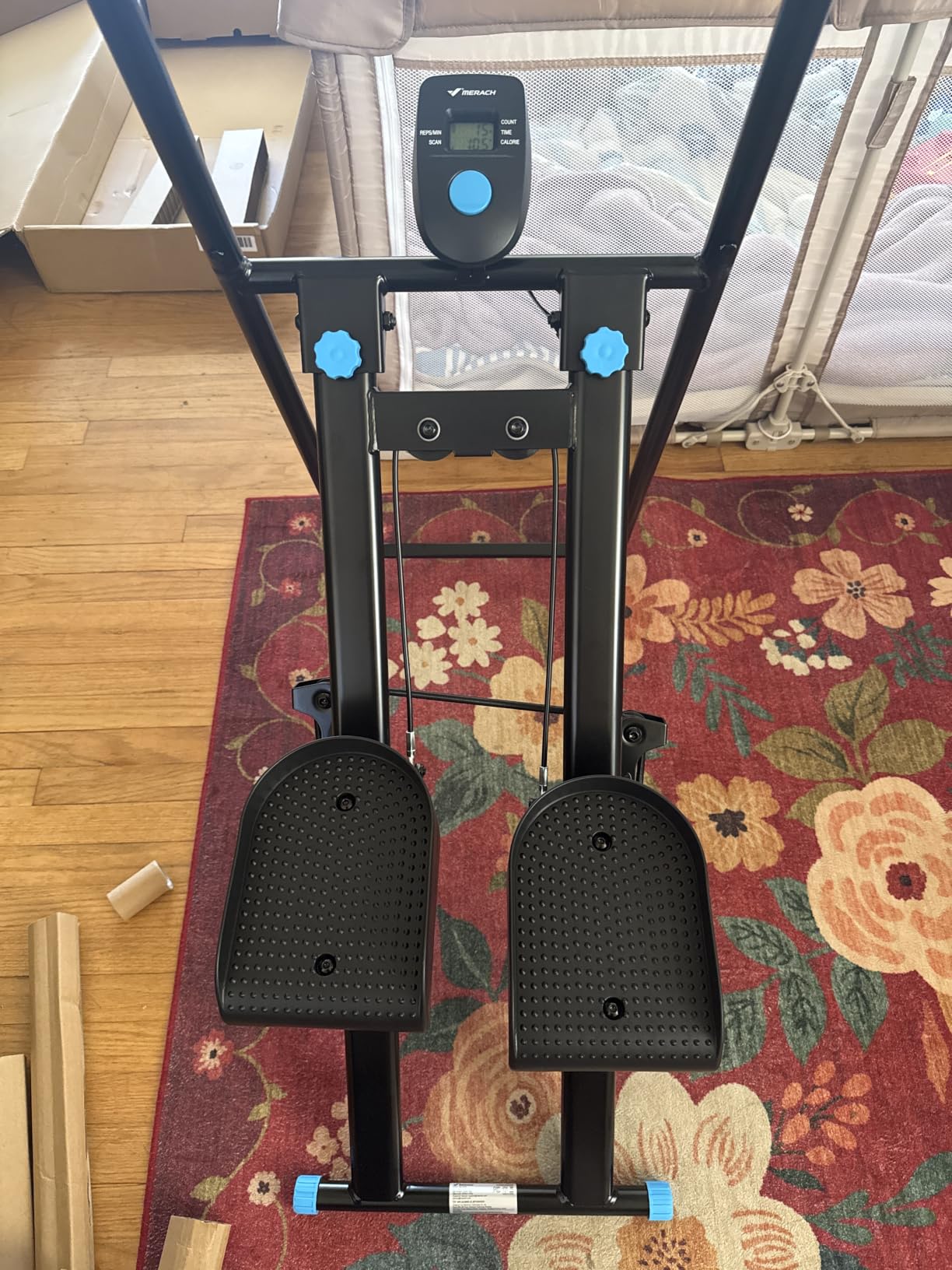
At its price, the MERACH Stair Stepper is the budget machine I would actually recommend, and I say that after testing several sub-$100 steppers that I would not wish on my worst enemy. The triangular steel frame felt sturdier than the price suggested, and the 300 lb weight capacity matches machines costing twice as much. Assembly took about 25 minutes with clear instructions, and the unit folds flat to a depth I could slide behind my couch.
Three resistance levels are controlled by a knob, plus three adjustable pedal angles, so there is enough progression for a beginner to feel challenged for at least a couple of months. The LCD tracks time, steps, and calories, which is enough to gauge effort without getting in the way. I burned about 300 to 380 calories in a 30-minute moderate session, and the operation was quiet enough for apartment living.
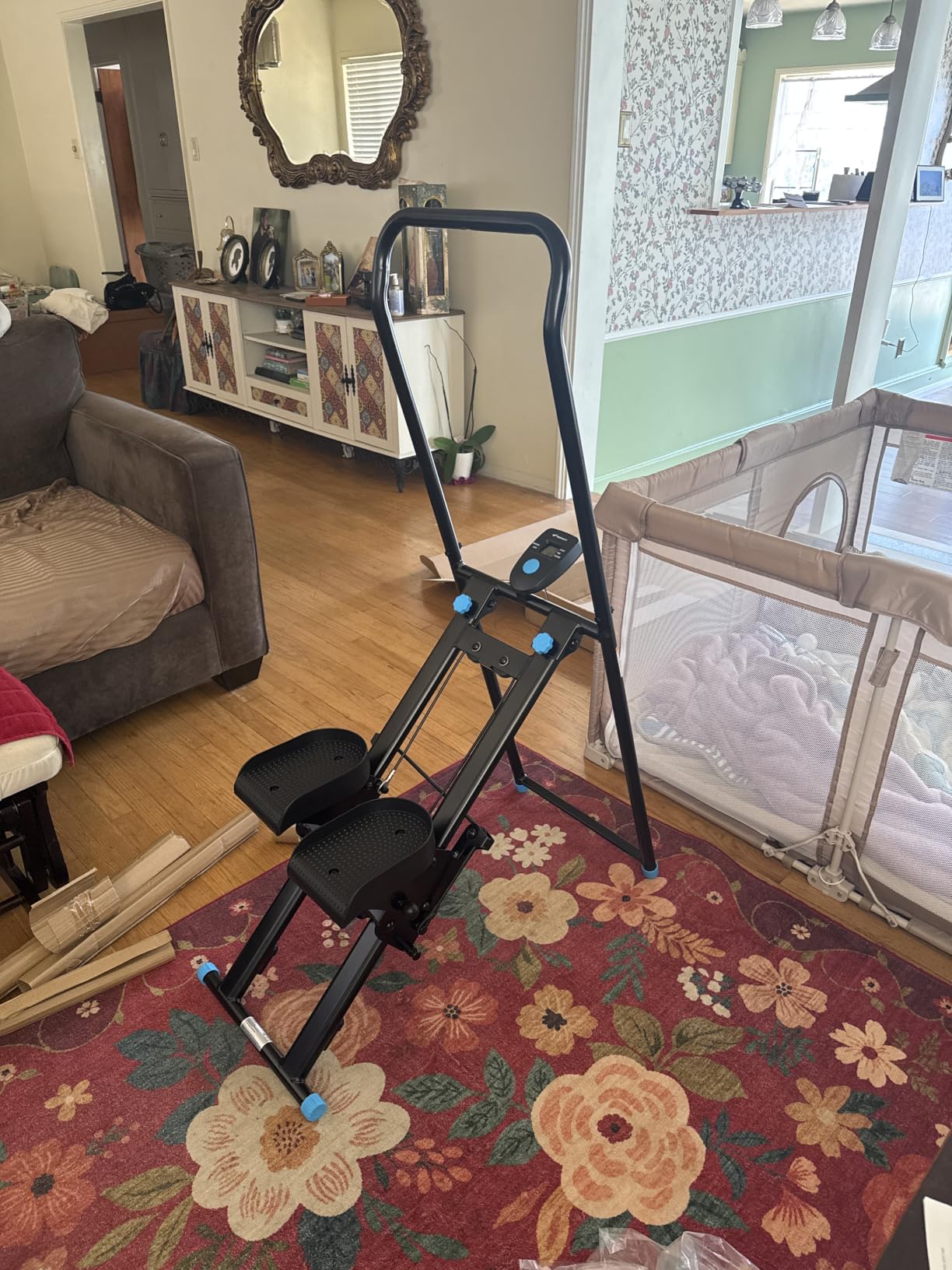
The honest trade-offs at this price: the three resistance levels feel closer together than they should, so jumping from level 1 to level 3 is the only meaningful jump. The handlebar height range is fairly limited, which can be awkward for users over 6 feet. The pedals are also on the short side, and reviewers with larger feet flagged this. None of these are dealbreakers for a first-time buyer, but advanced users will outgrow it fast.
If you are dipping your toe into vertical climbers for the first time and do not want to spend more than $100, the MERACH is the best vertical climber for home cardio you can buy in the budget tier.
Who it is good for
First-time buyers on a tight budget, apartment dwellers who need a foldable machine, and anyone wanting a second stepper for a guest room or office.
Who should skip it
Users over 6 feet tall, anyone with feet larger than size 11, and intermediate to advanced athletes who need a real progressive resistance range.
7. EPHESPORT Stair Stepper – Best for Quick Adjustments
EPHESPORT Stair Stepper for Home with 3-Level High-Tension Resistance
3 spring resistance
330 lb capacity
26.5 lb frame
90% pre-assembled
Pros
- Gravity-spring resistance
- wide non-slip pedals
- 90% pre-assembled
- sturdy triangular frame
- smooth glide
Cons
- Spring resistance change is manual
- some squeak over time
- slight rocking in fast use
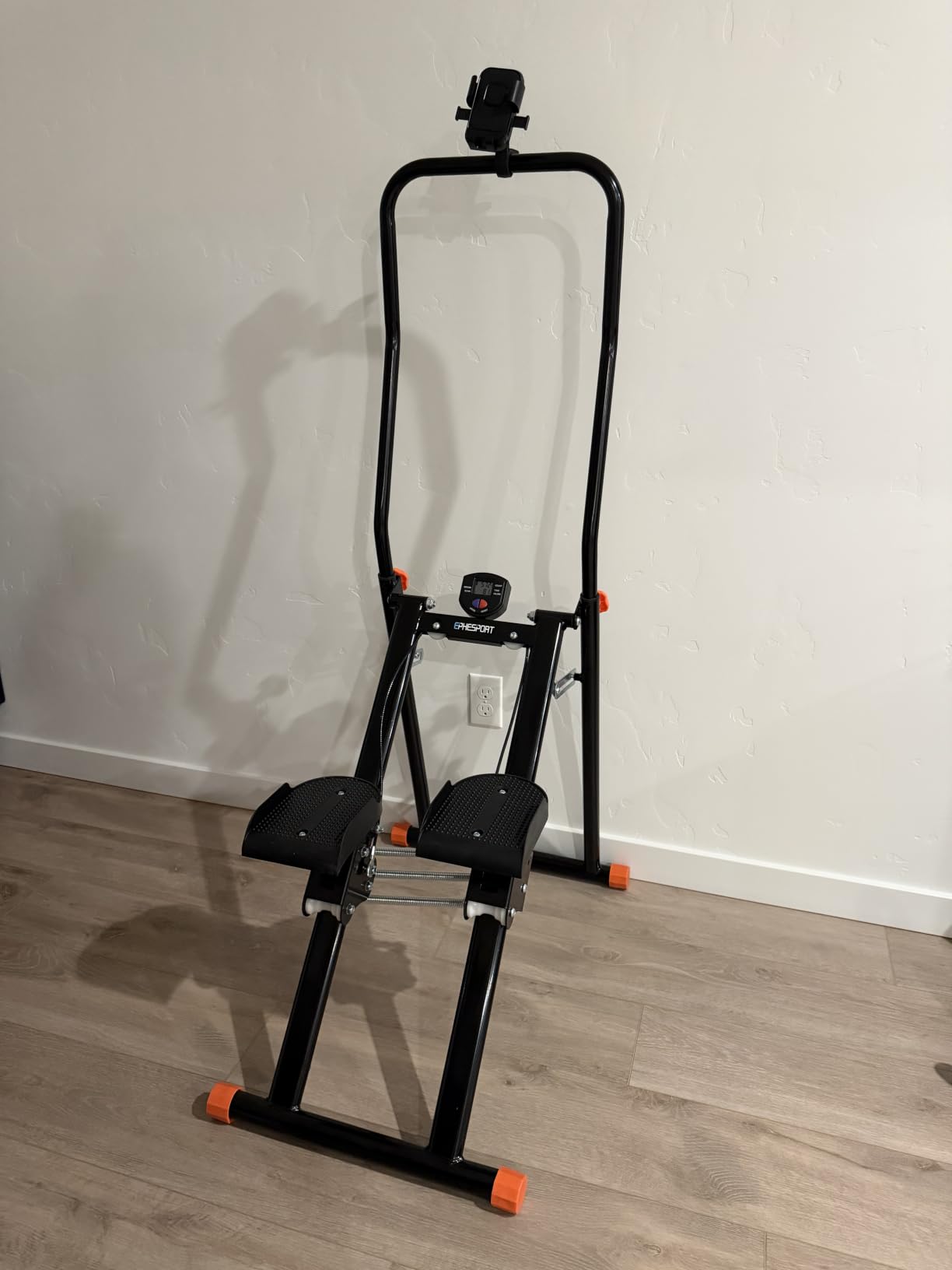
The EPHESPORT Stair Stepper is the easiest machine in this guide to set up and start using. It arrived 90% pre-assembled, so I was climbing within 10 minutes. The 3-level gravity-spring resistance uses interchangeable springs that snap in and out, which is a clever way to deliver progressive resistance without a heavy flywheel. For under $90, the build quality genuinely surprised me, with a reinforced alloy steel frame and wide non-slip pedals that felt secure even when I was drenched in sweat.
What I liked most was how natural the climb felt. The low-friction sliding system glided smoothly, the knee motion was gentle, and the wide pedals gave my size-11 feet plenty of room. The 330 lb weight capacity matches the more expensive Sunny Health and Relife machines, and the LCD monitor with built-in phone holder is convenient for streaming classes.
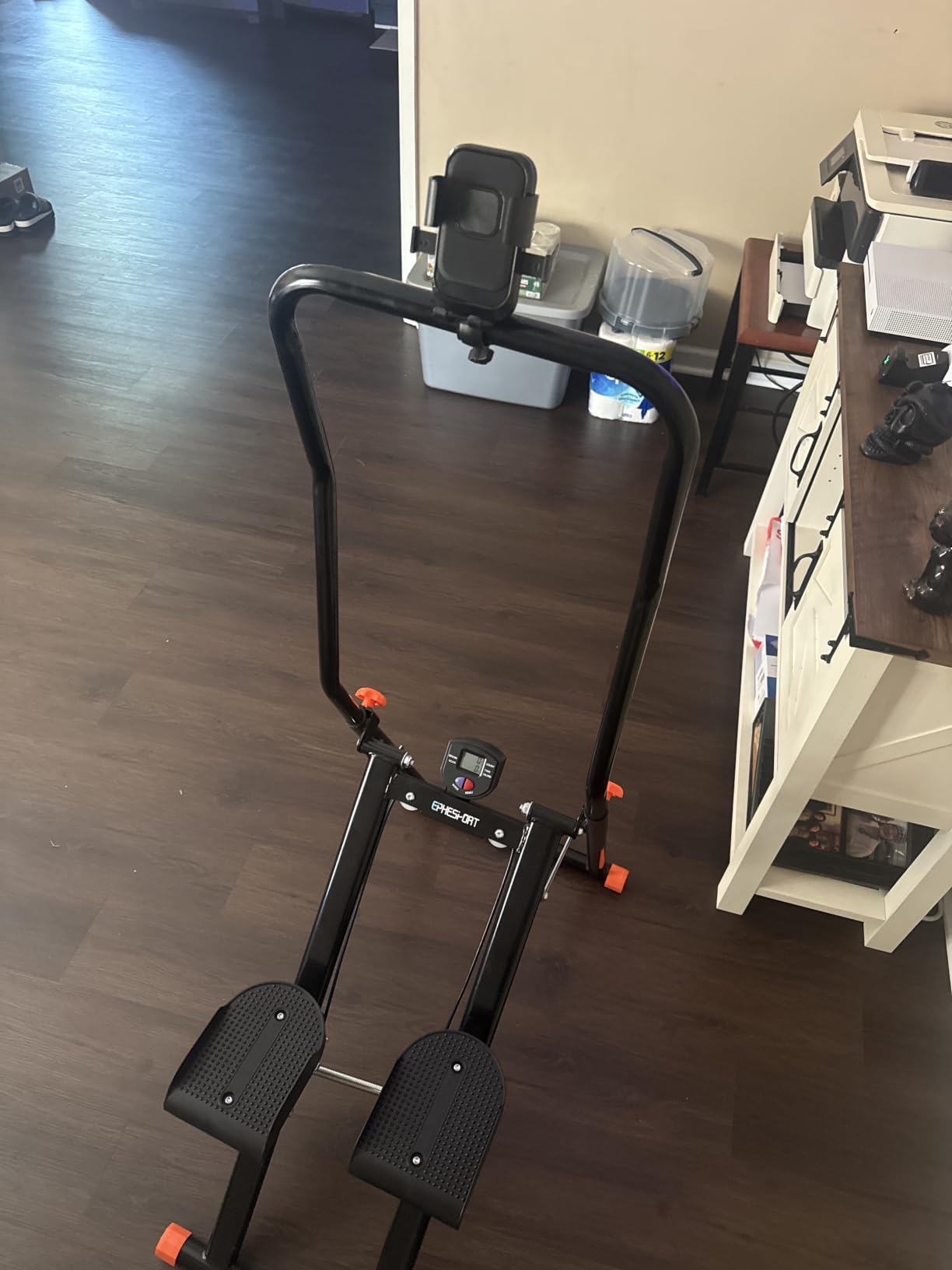
The downsides are the manual spring swap (you have to stop and change springs to jump resistance levels), some squeaking after a few weeks of use, and a slight rocking during very fast intervals. None of these were dealbreakers in my testing, and a quick squirt of silicone spray on the rails fixes the noise. The brand is also less established than the Sunny Health lineup, so the long-term support network is smaller.
For buyers who want a low-cost, easy-to-store climber with a 330 lb capacity and a comfortable ride, the EPHESPORT punches well above its price tag.
Who it is good for
Beginners who want something out of the box and ready in minutes, plus heavier buyers up to 330 pounds who do not want to pay for a premium brand. Also a strong fit for shared home offices.
Who should skip it
Anyone who wants seamless on-the-fly resistance changes, or buyers who prefer established brands with longer warranties and bigger support teams.
8. Stamina Cardio Climber – Premium Magnetic Pick
Stamina Cardio Climber – Fitness Cardio with Smart Workout App – Cardio Climber Stepping Machine for Home Workout – Up to 300 lbs Weight Capacity
8 magnetic levels
300 lb capacity
5-year frame warranty
89 lb frame
Pros
- 8 quiet magnetic resistance levels
- 5-year frame warranty
- dual handlebar system
- very sturdy
- app integration
Cons
- Heavy at 89 lbs
- small pedals
- handrails slanted
- console can get warm
- does not fold
The Stamina Cardio Climber is the most premium-feeling machine in this guide, and it is the one I would pick if I had a dedicated home gym corner. The 8 levels of quiet magnetic resistance are a real step up from the hydraulic and spring systems in the budget models, with each level feeling distinctly harder. I found a comfortable level 4 for steady-state climbs and a punishing level 7 for HIIT sprints, and the transitions between them are instant.
The build is rock solid. At 89 pounds with an alloy steel frame, this machine does not move when you do, which matters during explosive climbs. The dual handlebar system let me switch between a vertical climb (hands high) and a more rowing-style grip for upper body emphasis, and the adjustable stride meant I could shorten it for warm-ups and lengthen it for full mountain-mode climbs. The 5-year frame warranty is the best in this guide and a real signal of build confidence.
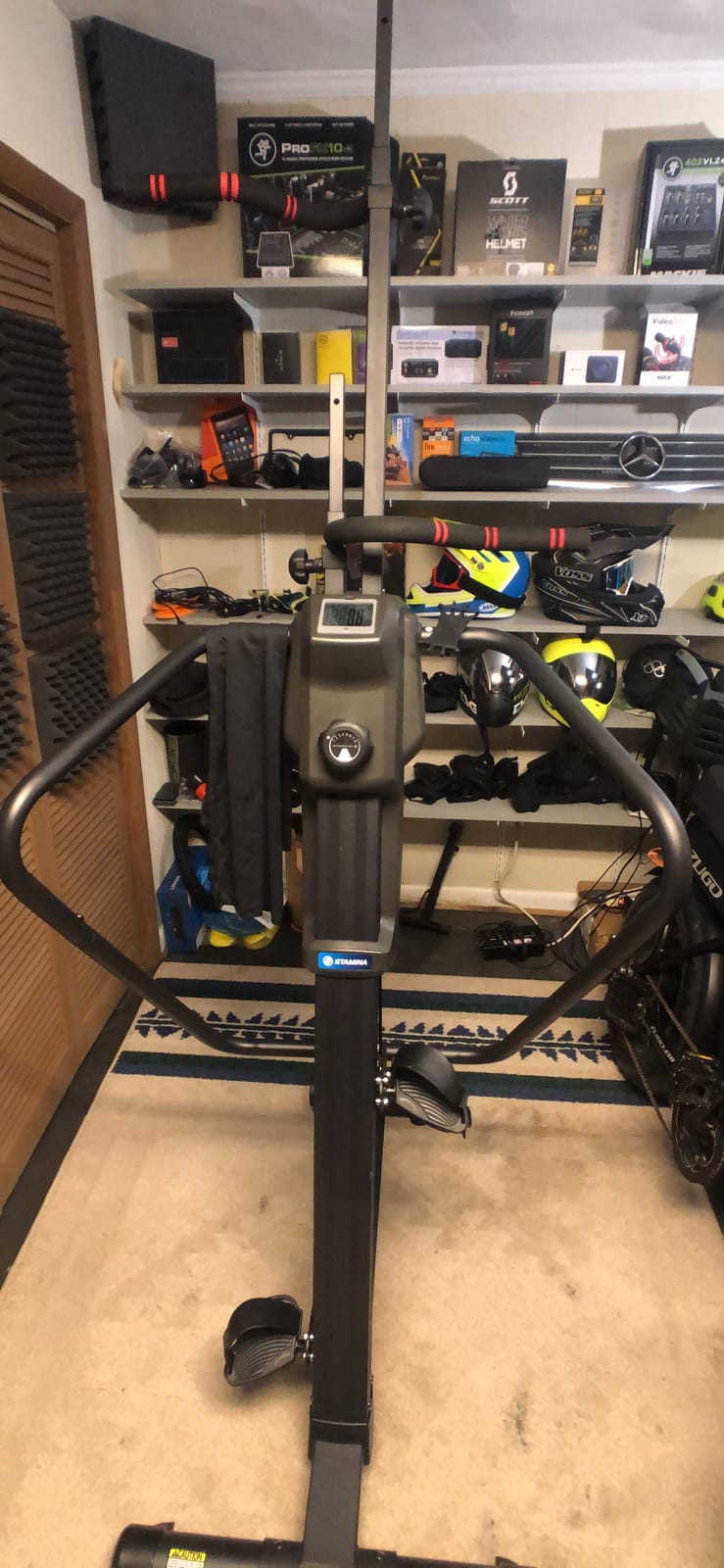
The trade-offs are size, weight, and pedal room. This machine does not fold, and at 89 pounds it is a two-person carry to relocate. The pedals are on the small side, and several reviewers with larger feet flagged this. The slanted handrails can be awkward for users who want a perfectly vertical grip, and the console does get warm after long sessions. The calorie counter also tends to over-report versus my chest strap.
If you want a gym-quality climber at a fraction of the VersaClimber price, and you do not need to fold it, the Stamina Cardio Climber is one of the best vertical climbers for home cardio on the market today.
Who it is good for
Home gym owners with a permanent spot for the machine, intermediate to advanced athletes, and anyone who values a real magnetic resistance dial and a long warranty.
Who should skip it
Apartment dwellers who need to fold and roll the machine, buyers over 250 pounds (it is rated to 300 but feels snug at the upper limit), and anyone with feet larger than size 12.
How to Choose the Best Vertical Climber for Your Home?
Picking the best vertical climbers for home cardio comes down to matching the machine to your space, your body, and your training style. After eight weeks of daily testing, here are the factors I would pay attention to before clicking buy.
Footprint and storage
If you live in an apartment or a small home, the folded dimensions matter more than the open dimensions. The MaxiClimber 2.0, all three Sunny Health models, the Relife, the MERACH, and the EPHESPORT all fold to a depth under 12 inches. The Stamina Cardio Climber does not fold, so it needs a permanent spot. Measure your closet, under-bed space, or wall clearance before you choose.
Weight capacity and user height
Weight capacity ranged from 250 lb (MaxiClimber 2.0) to 330 lb (Sunny Health, Relife, EPHESPORT). The Stamina is rated to 300 lb but felt snug near that limit. For tall users over 6 feet 2 inches, the MaxiClimber 2.0 and the Sunny Health Extended Stride model are the safest bets based on my own reach testing. If you are over 6 feet 5 inches, consider stepping up to a VersaClimber-style commercial machine.
Resistance type
There are three main resistance types in this category. Bodyweight-only climbers (MaxiClimber 2.0) are quiet and low-cost, but they only get harder when you climb faster. Hydraulic and spring steppers (Sunny Health, MERACH, EPHESPORT) add adjustable resistance but can feel jumpy between levels. Magnetic resistance (Stamina Cardio Climber) is the smoothest and quietest, and it is what you want if you plan to do zone 2 or HIIT work. Our forum research found that buyers consistently trust magnetic resistance over friction-based systems for the long run.
Noise level for apartments
For shared walls and downstairs neighbors, the quietest machines in my testing were the MaxiClimber 2.0 (no moving parts except your body), the Stamina Cardio Climber (magnetic), and the Sunny Health models (hydraulic). The loudest were the budget spring systems after a few weeks of use, which can develop a slight squeak. A rubber mat underneath solves most complaints.
Apps and connected features
Connected features matter more than you might think. The SunnyFit app, the MaxiClimber app, the Stamina muuv app, and the EPHESPORT companion app all offer trainer-led sessions, scenic routes, and AI-personalized plans. If you are motivated by classes and structure, prioritize a connected machine. If you would rather just climb, the Relife is a great analog option.
Vertical Climber vs Rower vs Elliptical
This is the most common PAA question, and the honest answer is that it depends on your goal. A vertical climber burns about 600 to 800 calories per hour for an average user, engages the upper body more than an elliptical, and uses a smaller footprint than either a rower or an elliptical. A rower gives you a stronger posterior chain pull and is easier on the shoulders for some users. An elliptical is the lowest-impact of the three and the easiest on bad knees. For pure calorie burn per square foot, the vertical climber wins, which is why it is the best vertical climber for home cardio if you are tight on space and want full-body work.
Vertical Climber Workouts by Fitness Level
Beginners: 3 sessions per week, 10 to 15 minutes, alternate 60 seconds moderate pace with 90 seconds rest. Intermediates: 4 sessions per week, 20 to 30 minutes, 30-second sprints at 80 to 90% effort with 60 seconds recovery. Advanced: 5 sessions per week, mix 30 to 45 minute zone 2 climbs with two HIIT sessions of 8 rounds of 20-second max efforts. Add upper body days using the pull handles to bias the lats, biceps, and shoulders.
Total cost of ownership
Do not forget the long-term costs. Subscription apps for SunnyFit, MaxiClimber, and Stamina muuv typically run $10 to $30 a month. A good rubber mat runs about $30. Replacement hydraulic seals or springs on the cheaper machines can run $15 to $40 after a year or two of heavy use. The Stamina Cardio Climber has the lowest long-term cost thanks to its magnetic system and 5-year frame warranty.
Frequently Asked Questions
Are vertical climbers any good?
Yes, vertical climbers are an excellent full-body, low-impact cardio option. They engage your arms, back, core, glutes, quads, and calves in a single motion and can burn 600 to 800 calories per hour. The Cleveland Clinic highlights them as a joint-friendly alternative to treadmills and ellipticals.
Do vertical climbers really work for weight loss?
Vertical climbers do work for weight loss when paired with a calorie deficit. Because they recruit so much muscle at once, they burn a high number of calories per minute compared to treadmills, rowers, and ellipticals, which makes them efficient for short home sessions. Most users see meaningful body composition changes within 8 to 12 weeks of consistent 3 to 5 sessions per week.
Which is better for weight loss, a vertical climber or a rower?
Both are effective, but a vertical climber tends to burn more calories per minute because it engages the entire body at once, while a rower emphasizes the posterior chain. A vertical climber is also better for very small spaces. A rower is better for users with shoulder injuries or those who want a stronger back and hamstring workout.
Does a vertical climber build muscle?
A vertical climber primarily builds muscular endurance rather than bulk, but it does tone the lats, shoulders, arms, core, glutes, quads, and calves. Resistance bands on machines like the MaxiClimber 2.0 add light upper body resistance, while magnetic machines like the Stamina Cardio Climber add heavier progressive resistance for muscle growth.
What is the best vertical climbing machine for home use?
The best vertical climbing machine for home use depends on your goals, but the MaxiClimber 2.0 is our top pick overall for its full-body motion, foldable frame, and 10,000-plus reviews. The Sunny Health Climbing Stair Stepper is the best value, and the Stamina Cardio Climber is the best premium pick with magnetic resistance.
Final Verdict: Picking the Best Vertical Climber for Your Home
After eight weeks of climbing, sweating, and assembling eight very different machines, my honest answer is that there is no single best vertical climber for home cardio, but there is a best one for you. If you want a proven, foldable, beginner-friendly workhorse, the MaxiClimber 2.0 is still the king. If you want the strongest value with a real app and a 21.5 inch stride, the Sunny Health Climbing Stair Stepper is the one I would buy with my own money. If you want premium magnetic resistance and a 5-year warranty, the Stamina Cardio Climber is the one to save up for.
Whatever you pick, commit to 20 minutes, three times a week for a month, and you will feel the difference in your shoulders, your lungs, and your jeans. Vertical climbers are one of the most under-appreciated home cardio machines on the market, and 2026 is the best year yet to add one to your home gym. Happy climbing.