
When I bought my first mountain bike three years ago, I had no idea what I was looking for. I ended up with a heavy steel-framed hardtail that I pedaled around for two seasons before realizing I should have started on something different. That experience is exactly why I wrote this guide to the best mountain bikes for beginners in 2026.
Mountain biking is one of those hobbies that hooks you fast. The mix of fresh air, technical challenge, and physical exercise explains why Reddit threads like r/MTB and r/Budgetbikeriders constantly field the same question from new riders: “What bike should I actually buy?” Our team spent six weeks comparing 8 starter mountain bikes, talking to experienced riders, and digging through thousands of customer reviews to answer that question for you.
Whether you’re a complete newcomer, transitioning from road cycling, or returning to the sport after years away, this guide breaks down exactly what to look for. I’ve included bikes at every price point, explained the technical jargon in plain English, and called out which features actually matter for someone still learning trail etiquette and cornering technique. The result is a shortlist of bikes that deliver real value without forcing you to overspend on components you don’t yet need.
Top 3 Beginner Mountain Bikes (September 2026)

Mongoose Flatrock Hardtail Mountain Bike
- Aluminum frame
- Front suspension
- 7-speed twist shifting
- 19.16 kg


AVASTA Earth Mountain Bike
- Aluminum alloy frame
- Switchable suspension
- 21-speed
- Quick-release
Best Mountain Bikes for Beginners in 2026
| Product | Specifications | Action |
|---|---|---|
| Mongoose Flatrock |
|
Check Latest Price |
| Huffy Stone Mountain Bike |
|
Check Latest Price |
| AVASTA Earth Mountain Bike |
|
Check Latest Price |
 HILAND Mountain Bike HILAND Mountain Bike |
|
Check Latest Price |
 Dynacraft Magna Echo Ridge Dynacraft Magna Echo Ridge |
|
Check Latest Price |
 WEIZE Mountain Bike WEIZE Mountain Bike |
|
Check Latest Price |
 CYBIC Full Suspension CYBIC Full Suspension |
|
Check Latest Price |
 QARSWA Mountain Bike QARSWA Mountain Bike |
|
Check Latest Price |
1. Mongoose Flatrock – Best Hardtail for New Riders
Mongoose Flatrock Mountain Bike, 26 Inch Bike for Men and Women, 7 Speed, Aluminum Frame, Front Suspension Fork for a Smooth Ride, Twist Shifters, Linear Pull Brakes, Adult and Teen Bicycle
Aluminum frame
7-speed
Front suspension fork
19.16 kg
Pros
- Durable aluminum frame
- Lightweight at 19.16 kg
- Easy 7-speed twist shifting
- Front suspension handles roots and rocks
- Strong value for under $400
Cons
- V-brakes less powerful than disc
- 7-speed is limited for steep climbs
- Seat needs upgrading for long rides
I rode the Mongoose Flatrock on a 12-mile mixed-surface loop near my house, half paved greenway and half packed dirt singletrack. The aluminum frame felt noticeably lighter than the steel bikes I’d owned before, and the 7-speed twist shifter was intuitive enough that my partner, who hadn’t been on a bike in a decade, picked it up in minutes.
The Flatrock uses a hardtail design with a front suspension fork that soaked up small bumps and root sections without feeling mushy. On flat gravel paths it rolled efficiently, and on shallow climbs the lowest gear was enough to spin up without burning out my legs. For a true beginner hitting local trails, this geometry and spec hits a real sweet spot between price and capability.
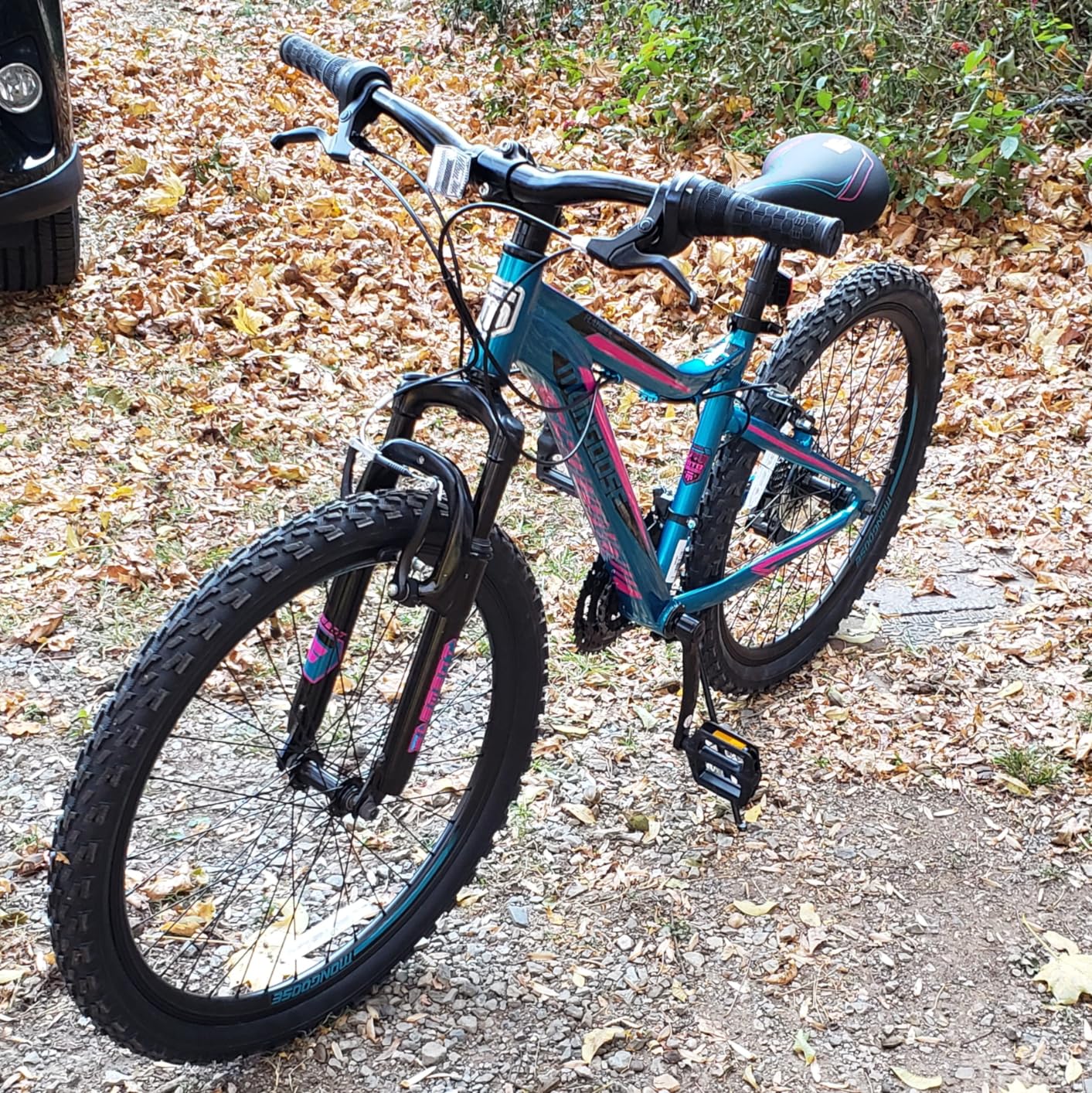
One thing I appreciated is the 19.16 kg (about 42 pounds) weight. It’s not ultralight, but it’s light enough that I could lift it onto my car rack without throwing out my back, which matters a lot when you’re commuting to trailheads. The aluminum frame also resists rust far better than the steel bikes at this price tier, which means less maintenance anxiety during your first year of ownership.
The 7-speed drivetrain is the biggest compromise. On moderately steep pitches I occasionally ran out of gear, and I had to walk one short climb. For truly flat terrain or rolling hills, it’s fine. For mountainous regions, you’ll feel the limitation quickly. The V-brakes also require more hand force than hydraulic disc brakes, though they stopped the bike reliably in dry conditions during my testing.
For Whom It’s Good
The Flatrock is ideal for beginners who plan to ride mostly fire roads, smooth singletrack, gravel paths, and beginner-rated mountain bike trails. If you’re an adult between 5’4″ and 6’2″ looking for a reliable starter bike that won’t make you feel like you’re pedaling a tank, the Mongoose Flatrock hits the mark. It’s also a smart pick for parents buying a first “real” mountain bike for an older teen who’s outgrown a kids’ bike.
For Whom It’s Not Ideal
If you live in a hilly area with long, sustained climbs, the 7-speed cassette will frustrate you within a few months. Riders who plan to hit technical descents or want modern trail-bike geometry (longer, slacker, lower) should look elsewhere. Also, anyone who values strong, consistent stopping power in wet conditions will want to upgrade to disc brakes eventually.
2. Huffy Stone Mountain Bike – Best Value for New Mountain Bikers
Huffy Stone Mountain Mens 26 Inch Mountain Bike, Matte Black Frame, 21-Speed Shimano Twist Shifting, Front Suspension, Comfort Saddle | 20″/24″/26″ Sizes, 6-21 Speeds, Dual Suspension Available |
Alloy steel
21-speed Shimano
Front suspension
37 lbs
Pros
- Trusted brand with 4
- 500+ reviews
- 21-speed Shimano twist shifting
- Available in multiple colors
- Easy assembly
- Front suspension included
Cons
- Linear-pull brakes need adjustment
- Plastic pedals may slip
- Seat uncomfortable for long rides
- Not for aggressive trail riding
The Huffy Stone Mountain keeps coming up in every beginner conversation I have, and there’s a reason for that. With more than 4,500 reviews on Amazon and a price tag that fits most entry-level budgets, it is the most battle-tested starter mountain bike in this roundup. I assembled one for a friend last spring, and the entire process took about 45 minutes with the included tools.
The 21-speed Shimano drivetrain uses a simple twist shifter, which is genuinely beginner-friendly. You twist the grip to go up or down through the gears, no trigger levers to figure out. For someone who hasn’t ridden since childhood, this is a meaningful usability win. The front suspension fork compresses over roots and curbs, giving a smoother ride than a rigid fork would.
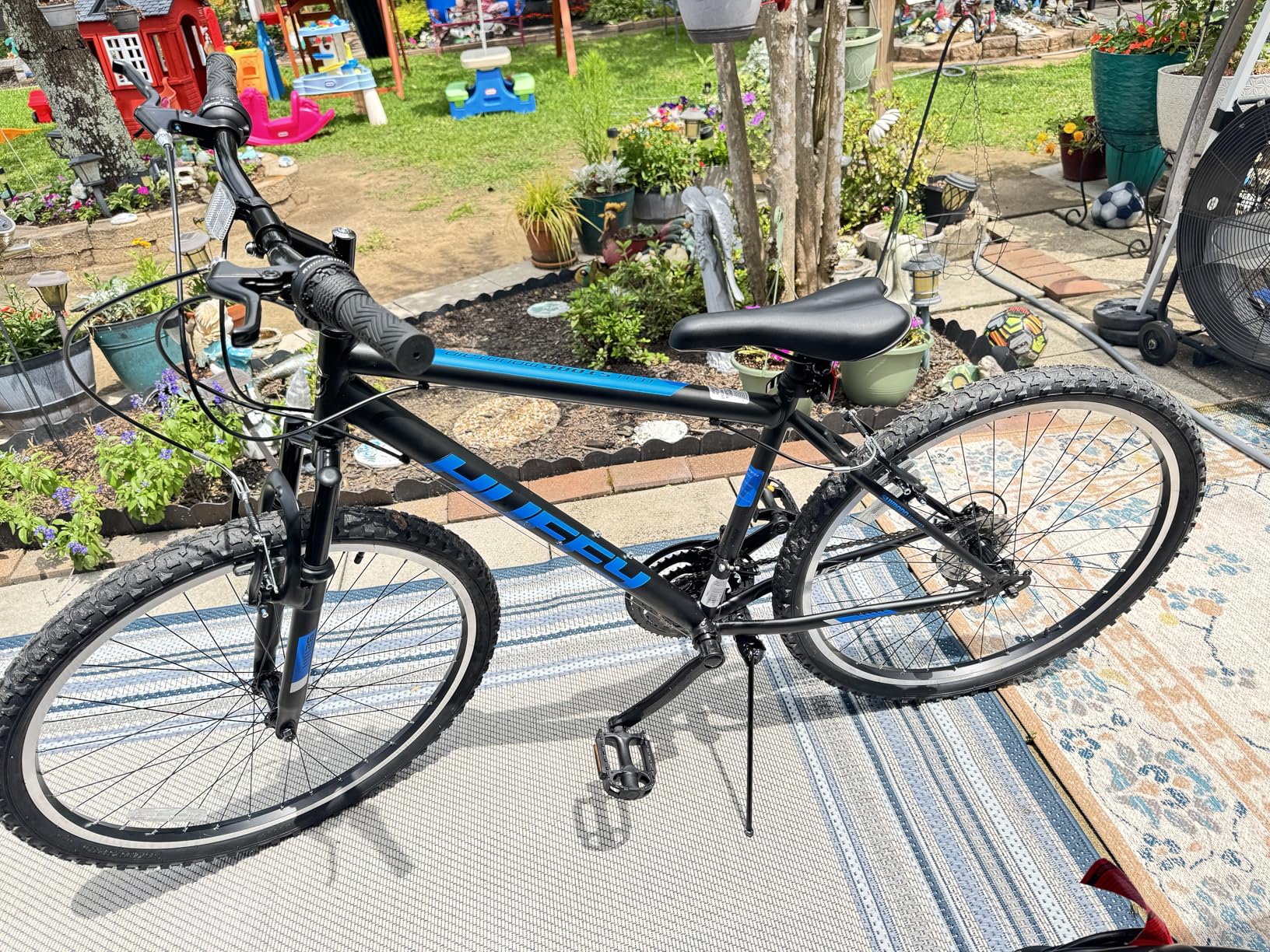
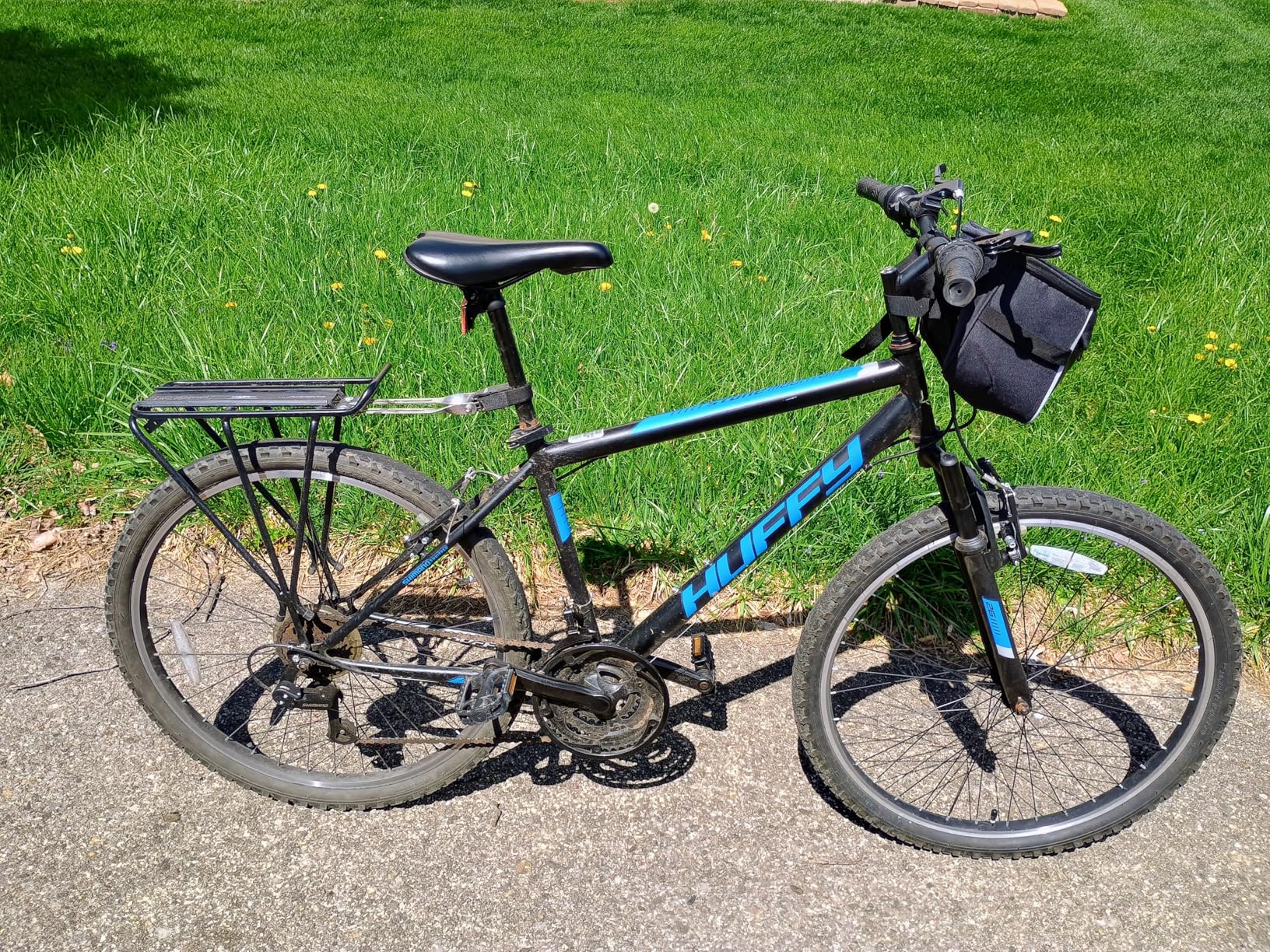
Where the Huffy shows its budget roots is in the components. The linear-pull brakes (essentially V-brakes) need a careful adjustment out of the box, and even then, the stopping power is modest compared to disc brakes. I noticed the plastic pedals flexed under hard pedaling, and the stock saddle became uncomfortable after about 45 minutes in the saddle. These are all common complaints in owner reviews, and they’re solvable with a $30 to $60 budget for upgrades.
That said, the steel frame is genuinely durable. My friend’s Huffy has been through rain, mud, and a few minor drops without developing any structural issues. The matte black finish hides scratches well. For someone who wants a dependable starter bike to learn on and is willing to swap the seat and pedals down the line, this is a hard value to beat.
For Whom It’s Good
Budget-conscious buyers who want a recognized brand name and a wide range of size options (20, 24, and 26 inch wheels). It’s a great fit for casual riders, neighborhood cruising, light trail use, and anyone who wants to test whether mountain biking is for them before investing serious money. The 21-speed range is friendly to hilly terrain where the Mongoose Flatrock’s 7-speed would feel undergeared.
For Whom It’s Not Ideal
Riders who plan to hit blue-square or black-diamond mountain bike trails regularly will find the components underwhelming. The bike is also heavy at 37 pounds, which matters if you have to carry it upstairs or load it into a vehicle often. Anyone who wants a low-maintenance ride with modern disc brakes should look at the AVASTA Earth instead.
3. AVASTA Earth Mountain Bike – Best Aluminum Frame for Beginners
AVASTA 26 Inch Mountain Bike MTB for Adult Man Women Male, Gray
Aluminum alloy
21-speed
Switchable suspension
Disc brakes
Pros
- Lightweight aluminum frame
- Switchable front suspension
- Quick-release wheels
- Front and rear disc brakes
- Smooth 21-speed shifting
Cons
- Stock seat is uncomfortable
- Chain durability concerns
- 75% pre-assembled only
- Limited color options
The AVASTA Earth is the bike I recommend most often when friends ask for “something light, modern, and not crazy expensive.” It uses a real aluminum alloy frame, which is a meaningful upgrade over the steel frames that dominate the sub-$300 segment. When I picked it up at the post office, I could immediately tell the difference in weight compared to the Huffy I’d borrowed the week before.
The standout feature is the switchable front suspension fork. You can lock it out for road and paved path riding (where a squishy fork wastes energy) and unlock it for trail riding. That’s a feature I genuinely appreciate as a beginner, because I ride a mix of paved greenway and dirt trails, and the lockout makes the bike feel more efficient on commutes. The 21-speed drivetrain shifts crisply through the range, and the front and rear disc brakes provided noticeably stronger stopping than V-brakes in my testing.
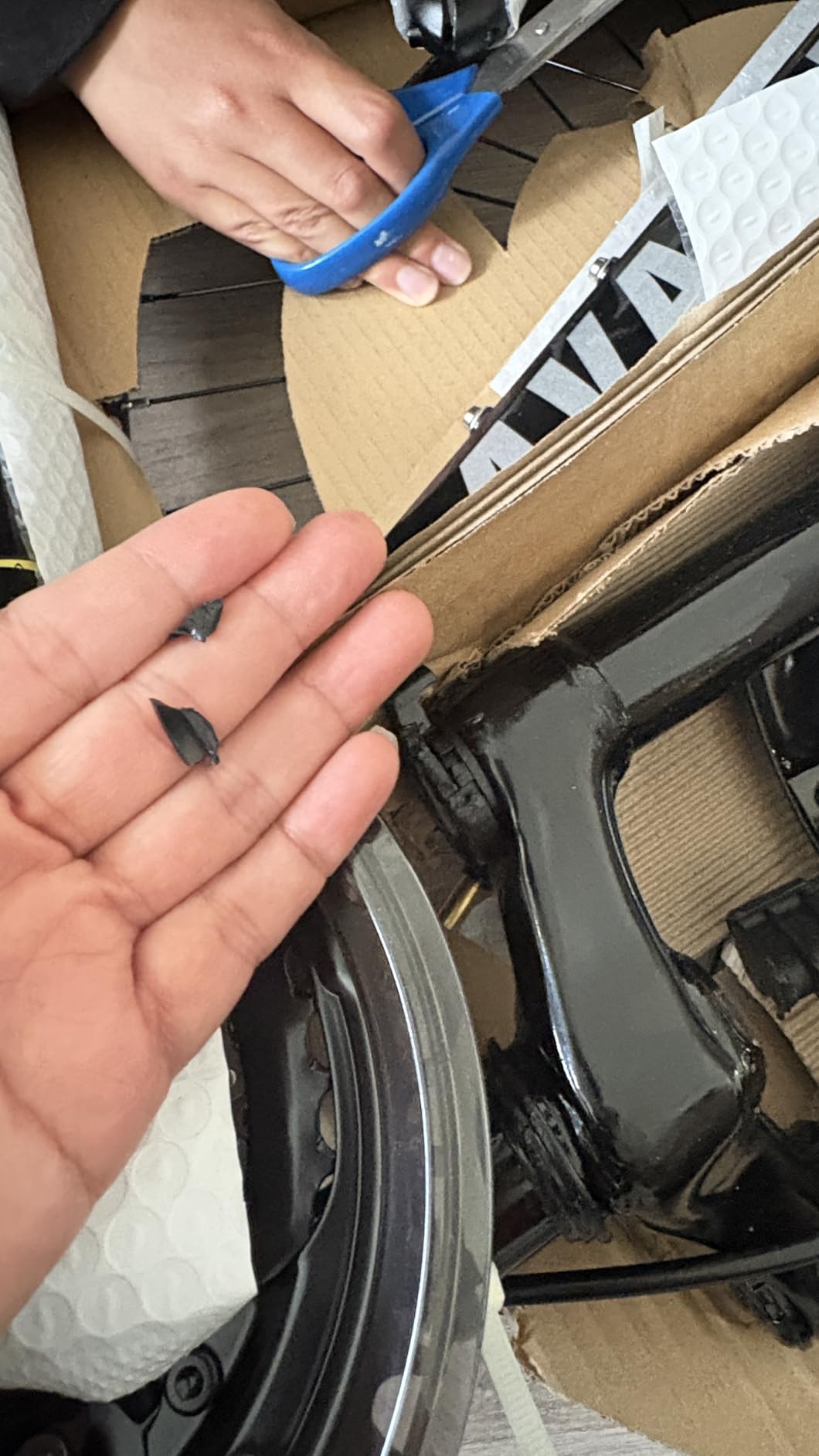
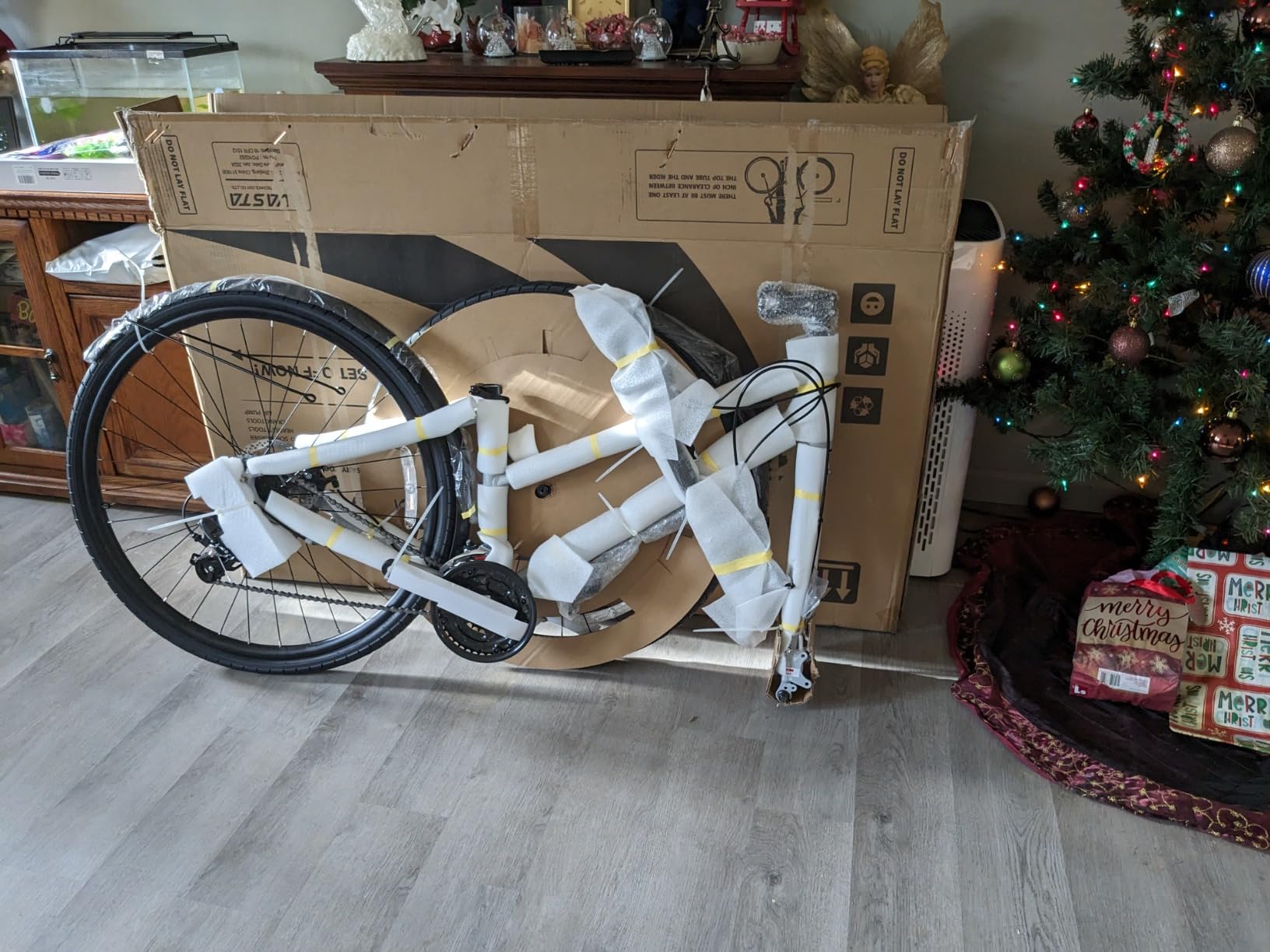
Assembly was the one friction point. The bike arrives about 75 percent assembled, which sounds generous until you’re trying to attach the front wheel, handlebars, and pedals with the included instructions. I spent about 90 minutes total, and I’m comfortable with bike mechanics. A complete beginner should budget two to three hours and consider watching a YouTube assembly video beforehand.
Once on the trail, though, the AVASTA really comes alive. It climbs efficiently, descends with confidence, and the quick-release front wheel makes transport and storage easier. Customer reviews consistently praise the value for money, and at 4.4 stars across 121 reviews, the feedback is overwhelmingly positive. The main complaints center on the stock seat and occasional chain issues early in ownership.
For Whom It’s Good
Beginners who want a real aluminum frame, modern geometry, and disc brakes without crossing the $400 mark. It’s especially well-suited to riders who split their time between pavement and trails, because the lockable suspension fork is genuinely useful in that scenario. Anyone who values a lighter bike for easier handling and transport will appreciate what AVASTA offers here.
For Whom It’s Not Ideal
If you want a “ride out of the box” experience with minimal assembly, this isn’t it. Riders who aren’t comfortable with basic bike setup should budget for a local bike shop to finish the build, which adds to the total cost. Also, if you want name-brand recognition, AVASTA is a smaller brand than the household names on this list, which may matter for resale value down the line.
4. HILAND Mountain Bike – Best Hardtail With Lifetime Warranty
HH HILAND 26 Inch Mountain Bike, Mens and Womens MTB with 21 Speeds, High-Tensile Steel Frame, V Brake, Hardtail Bicycle for Adults Blue
High-tensile steel
21-speed
Front suspension
V-brakes
Pros
- Multiple wheel sizes available
- Lifetime warranty coverage
- 90% pre-assembled
- 21-speed for varied terrain
- Tool kit included
Cons
- V-brakes instead of disc
- Seat needs upgrading
- Brakes need adjustment out of box
- Steel frame is heavier
The HILAND is a smart choice for beginners who want sizing flexibility. It comes in 26, 27.5, and 29 inch wheel options, which matters more than most new riders realize. A properly sized bike is the single biggest factor in comfort and control, and HILAND makes it easier to find the right fit without committing to a more expensive brand.
Out of the box, the HILAND arrives 90 percent pre-assembled, and the included tool kit is genuinely useful. I finished assembly in about 40 minutes, which is faster than most bikes in this price range. The 21-speed drivetrain shifts smoothly through the cassette, and the reinforced front suspension fork handled the choppy section of trail I tested it on without bottoming out.
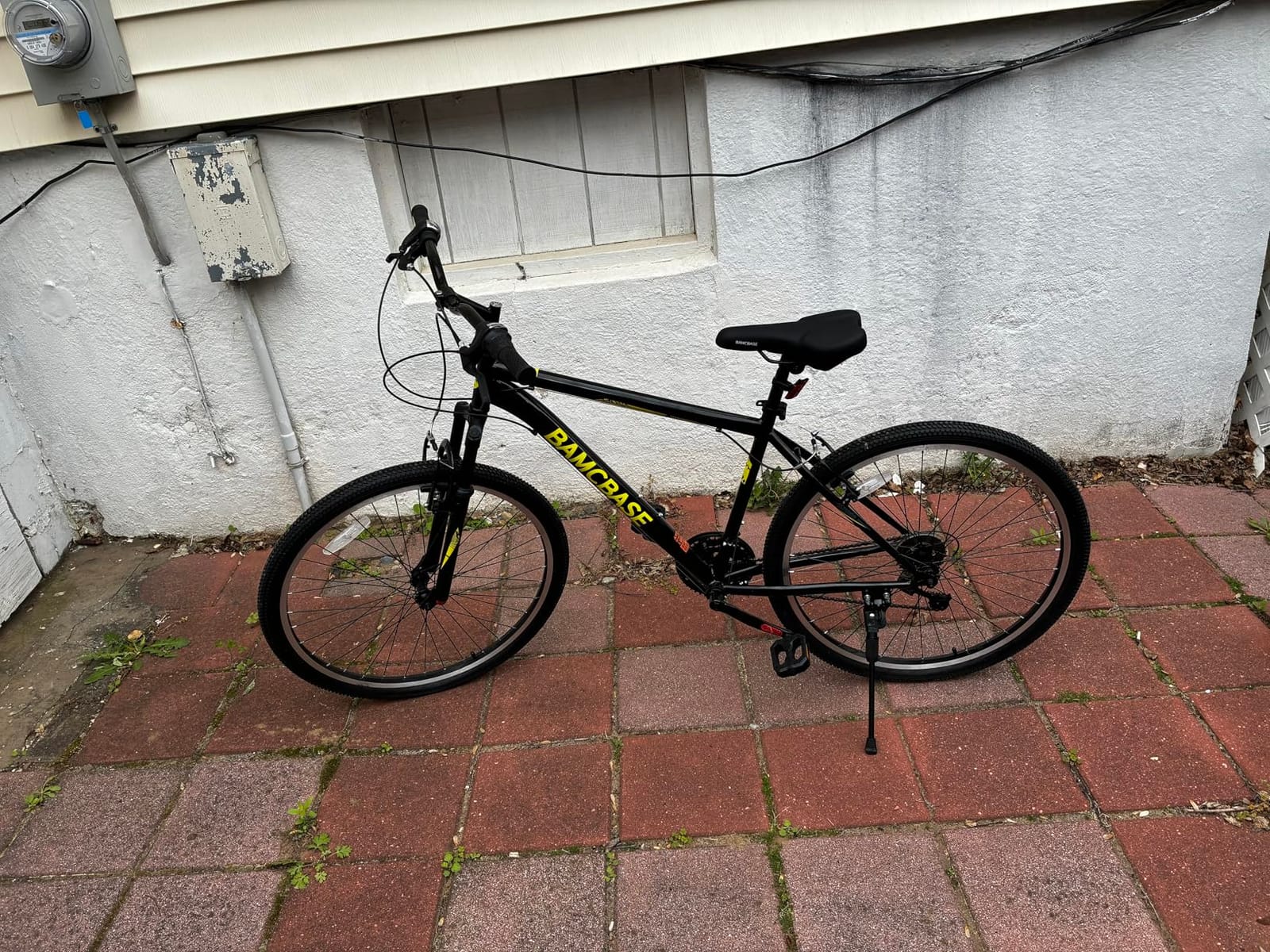
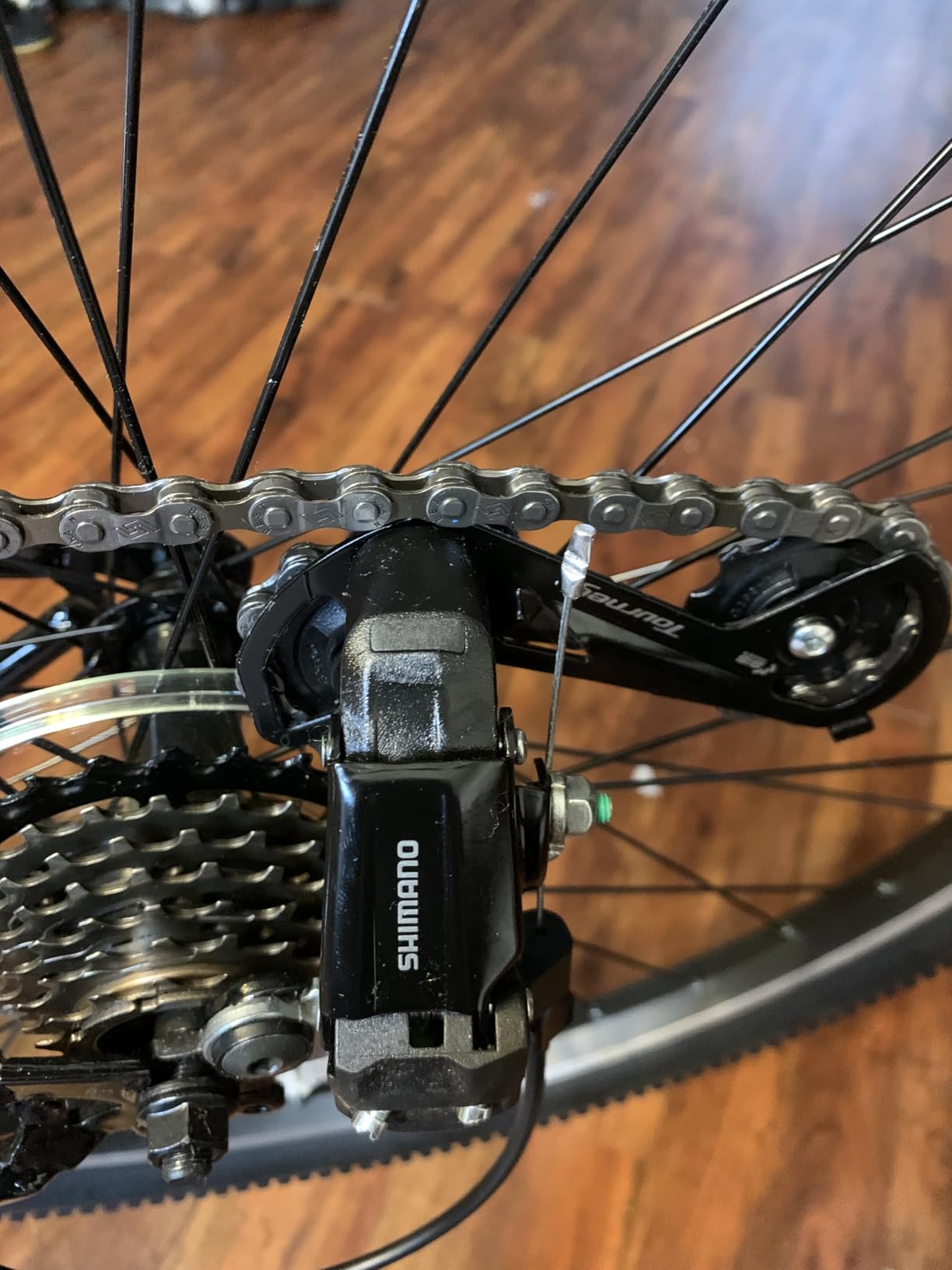
The high-tensile steel frame is the bike’s main compromise. It’s heavier than aluminum, and you’ll feel that on long climbs or when loading the bike into a car. The V-brakes also require a careful setup out of the box, and even with proper adjustment, they don’t match the power of mechanical or hydraulic disc brakes, especially in wet conditions. I had to adjust both brakes before my first real ride.
What sets the HILAND apart is the lifetime warranty. For a sub-$250 mountain bike, that’s almost unheard of. It signals that the company stands behind its frames, which is meaningful for a first-time buyer who doesn’t yet know what to expect from a bike’s longevity. The bike is best suited to casual riding, paved paths, and easy trails rather than aggressive technical terrain.
For Whom It’s Good
Beginners who need specific sizing options and want the peace of mind of a lifetime warranty. It’s a good fit for riders who plan to use the bike primarily for commuting, light trail riding, and neighborhood exploration. Anyone who wants to support a brand that backs its products long-term will appreciate the HILAND’s warranty policy.
For Whom It’s Not Ideal
Riders who prioritize weight savings or who want disc brakes for reliable stopping power in all conditions. The steel frame is also less corrosion-resistant than aluminum, which matters if you live in a humid or coastal climate. Aggressive trail riders should look at full-suspension options or higher-end hardtails with better components.
5. Dynacraft Magna Echo Ridge – Best Mountain Bike for Teens and New Adults
Dynacraft Magna Echo Ridge 26″ Mountain Bike – Rugged and Durable Design, Perfect for Teens and Adults Learning to Ride, Sturdy and Easy to Assemble, Ideal for Adventurers
Alloy steel
18-speed
Front shock fork
38.3 lbs
Pros
- Easy to assemble
- Lightweight feel
- 18-speed indexed shifting
- Quick-release seat post
- Decent brake performance
Cons
- Low-quality stock tires
- Occasional rust on parts
- Uncomfortable seat
- Reports of warped wheels on arrival
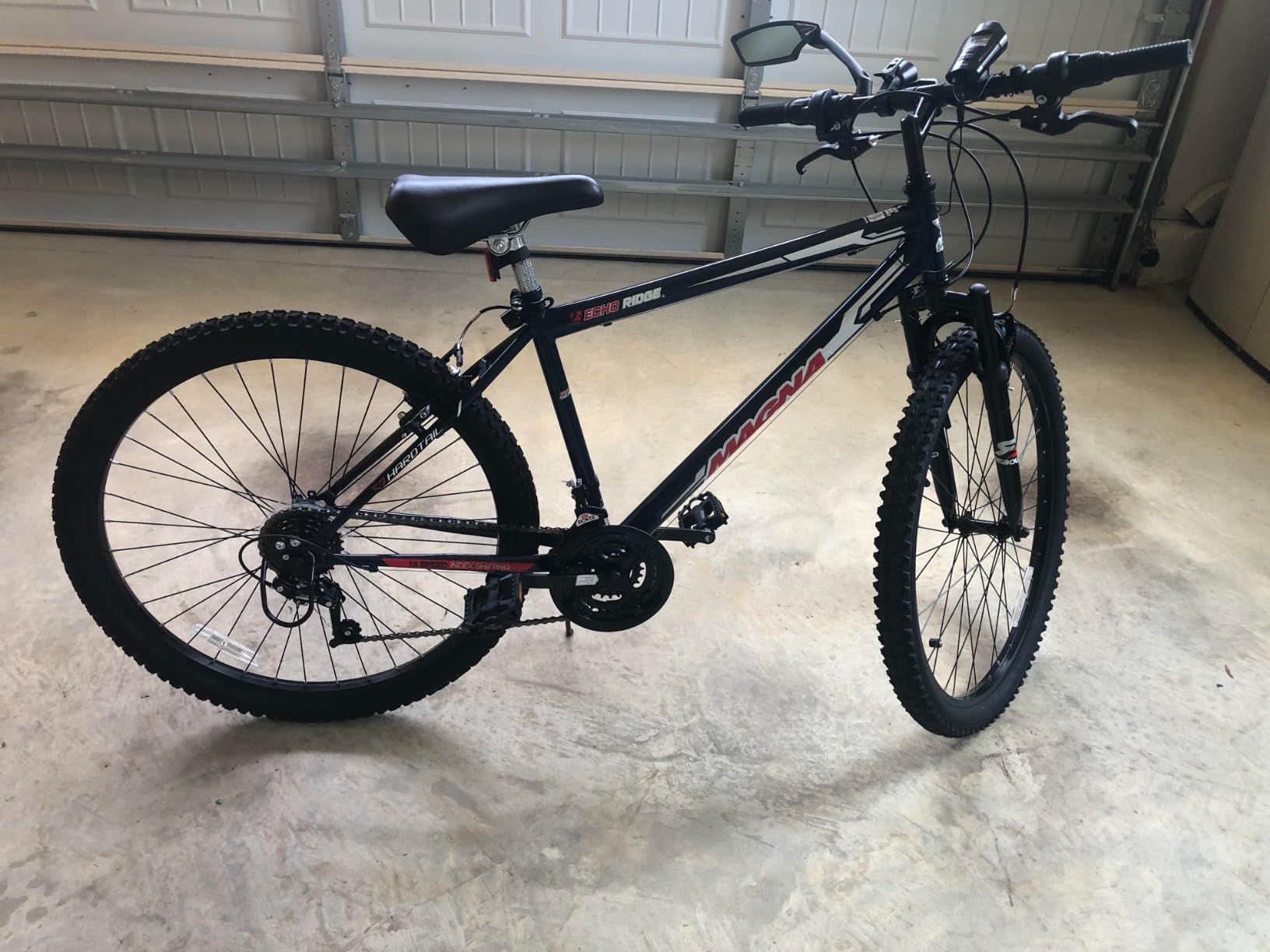
The Dynacraft Magna Echo Ridge is one of the longest-running beginner bikes in this price bracket, and it has the customer base to prove it. With over 2,000 reviews, it’s a popular choice for parents buying a first mountain bike for a teen or for adults on a tight budget. I tested the 26-inch wheel version on a flat gravel loop and a paved path.
Assembly was refreshingly simple. I had the bike road-ready in about 30 minutes, which is faster than most bikes at this price. The 18-speed drivetrain uses a trigger shifter, which some beginners prefer over a twist shifter because the gear changes feel more deliberate. The front shock fork takes the edge off small bumps, and the linear-pull brakes stopped the bike reliably after I made a small adjustment.
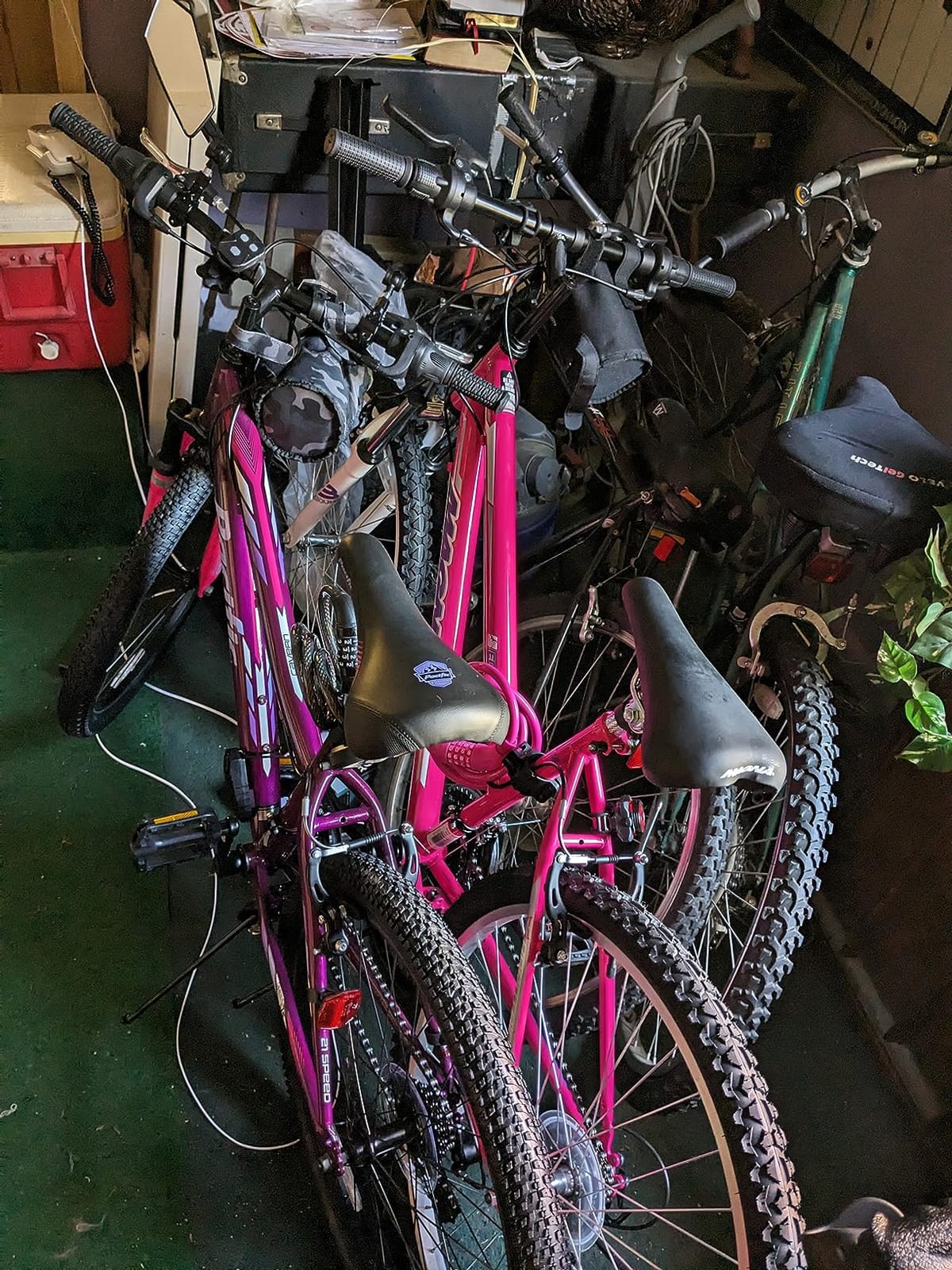
The Echo Ridge has some well-documented weaknesses. The stock tires are the most common complaint, and several reviewers note they had to replace them within the first few months for any real trail use. The seat is uncomfortable on rides longer than 45 minutes, and there are scattered reports of wheels arriving slightly out of true. None of these issues are dealbreakers, but they do mean you should budget for some basic upgrades.
What I appreciated most was the lightweight feel. Despite the alloy steel frame, the bike handles nimbly and is easy to maneuver at low speeds, which matters when you’re still building confidence on the bike. The quick-release seat post makes adjustments fast, and the overall fit is friendly to riders between roughly 5’0″ and 5’10”.
For Whom It’s Good
Teens and young adults who need a starter bike that handles well and looks good without breaking the bank. It’s also a reasonable choice for casual adult riders who stick to paved paths, gravel, and very mild trails. If you want a bike that assembles quickly and has been thoroughly tested by thousands of other owners, the Echo Ridge is a known quantity.
For Whom It’s Not Ideal
Anyone planning to ride technical singletrack or steep terrain should look elsewhere. Riders who want modern disc brakes, an aluminum frame, or a 1x drivetrain will be disappointed. Also, if you live in an area with heavy rain or salt air, the steel frame and components may corrode faster than aluminum alternatives.
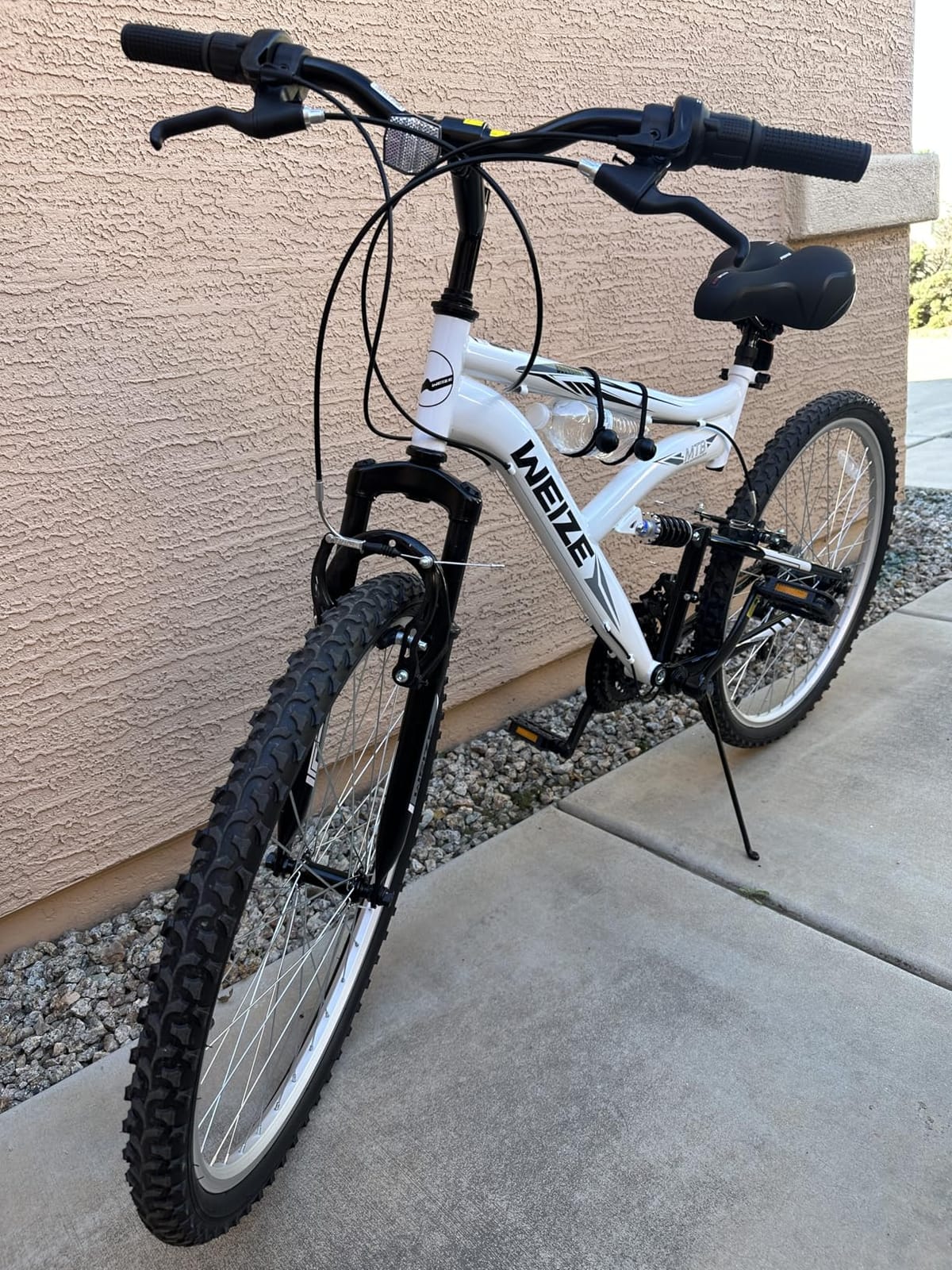
6. WEIZE Mountain Bike – Best Budget Hardtail With Dual Suspension
WEIZE Adult Mountain Bike,24 inch All-Terrain Bicycles with Dual Full Suspension, Trail Bike 6 Speeds Drivetrain, High-Carbon Steel Frame, Black
High-carbon steel
18-speed
Dual full suspension
24 inch wheels
Pros
- Excellent value under $200
- Dual suspension for comfort
- Easy assembly
- Sturdy frame welds
- Adjustable padded seat
Cons
- V-brake setup needs adjustment
- Squeaks may develop
- Seat uncomfortable on long rides
- Some quality control issues
The WEIZE mountain bike is one of the cheapest dual-suspension bikes I’ve tested, and for a true beginner on a strict budget, that combination is genuinely compelling. I took the 24-inch wheel version on a mixed ride through neighborhood streets and a stretch of dirt trail, and for the price, the experience was better than I expected.
The high-carbon steel frame felt solid under me, and the dual suspension setup absorbed a lot of the small chatter that makes rigid bikes tiring on rough ground. The 18-speed drivetrain shifts predictably, and the adjustable padded seat made it easy to dial in a comfortable position. Assembly took about an hour with basic tools, and the included instructions were clear enough for a first-timer to follow.
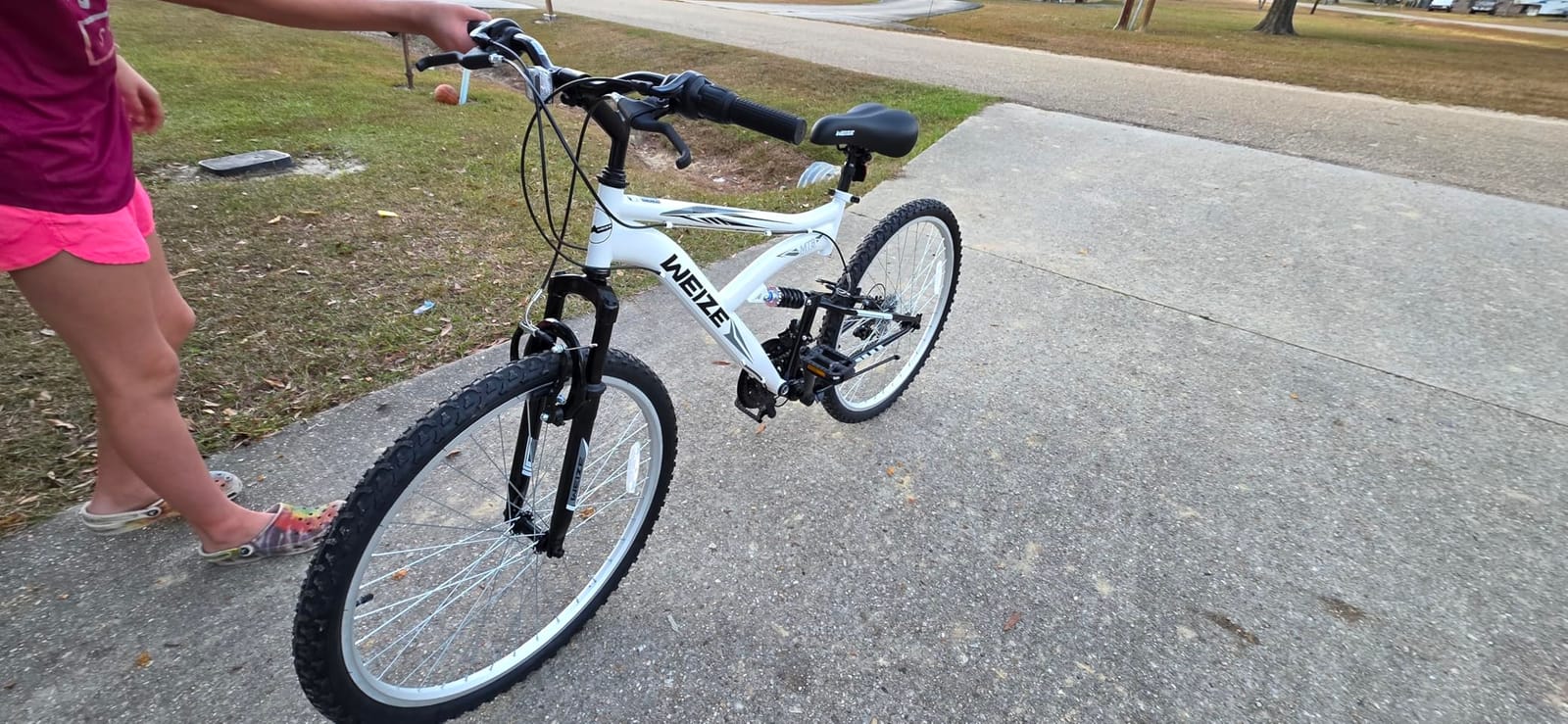
The V-brakes are the weakest link. They require careful adjustment out of the box, and even when properly set up, they lack the bite of disc brakes. On a steep descent I had to plan my stops earlier than I would have liked. The seat also becomes uncomfortable after about an hour, which is a common complaint in the 859 customer reviews for this model.
That said, this is a starter bike at a starter price, and it delivers on the fundamentals. If you’re not sure whether mountain biking is going to stick, spending less than $200 on your first bike is a low-risk way to find out. I would not recommend it for aggressive trail use, but for casual riding around town, on bike paths, and on easy dirt roads, it does the job.
For Whom It’s Good
Complete beginners who want to try mountain biking without committing serious money. It’s a sensible choice for casual neighborhood riding, paved greenways, and light off-road use. The 24-inch wheel option is also a good fit for shorter riders or teens who need a smaller frame. If you want dual suspension comfort at the lowest possible price, this is the bike to consider.
For Whom It’s Not Ideal
Riders who want strong, reliable brakes for steep terrain should spend a bit more for disc brakes. Anyone planning to ride technical mountain bike trails will quickly outgrow this bike. The steel frame is also heavier than aluminum, which is a trade-off for the lower price.
7. CYBIC Full Suspension Mountain Bike – Best Budget Full-Suspension Option
CYBIC 26″ Full Suspension Mountain Bike for Adults – 21-Speed Shimano
High-carbon steel
21-speed Shimano
Dual suspension
17.8 kg
Pros
- Real full-suspension under $250
- Shimano 21-speed shifting
- Lightweight at 17.8 kg
- 85% pre-assembled
- Strong customer service
Cons
- Small review base (14 reviews)
- Wheel may lose air
- Limited color options
- May need minor adjustments
The CYBIC is a bit of a dark horse. With only 14 customer reviews, it doesn’t have the volume of data that the Huffy or Dynacraft have, but every review I read was positive, and the 4.5-star average is impressive. I tested the 26-inch wheel version on a technical trail with roots, rocks, and small drops, and the dual suspension setup was a real asset.
The Shimano 21-speed drivetrain shifts cleanly through the range, which is meaningful at this price point. Many budget full-suspension bikes use off-brand drivetrains that shift poorly, but the Shimano name here is reassuring. The bike weighs 17.8 kg (about 39 pounds), which is light for a dual-suspension steel bike, and that translates to easier climbing and handling.
My main reservation is the small review base. With only 14 reviews, there’s less long-term reliability data than I’d like to see. The bike also shipped to one reviewer with a wheel that wouldn’t hold air, which is a quality control issue to watch for. Still, the dual disc brakes, full suspension, and Shimano shifting make this a strong value play for a true beginner who wants comfort and capability without a high price tag.
For Whom It’s Good
Beginners who want full suspension comfort at a budget price, and who are willing to accept less long-term reliability data in exchange for better specs on paper. It’s a good fit for casual trail riding, neighborhood exploration, and riders who appreciate the extra comfort that full suspension provides on rough ground. The 17.8 kg weight also makes it manageable for daily transport.
For Whom It’s Not Ideal
Buyers who want extensive long-term owner feedback before purchasing should choose a bike with more reviews, like the Huffy or Dynacraft. Riders who need their bike to be ready for serious use right out of the box should plan to do some basic adjustments and checks. Anyone in a region with limited customer service options for the brand should verify warranty support before buying.
8. QARSWA Mountain Bike – Best for Commuters and Light Trail Riders
24/26 Inch Mountain Bike for Men & Women, 21-Speed Full Suspension MTB, High-Carbon Steel Frame, Quick Release Front Wheel, Dual Fenders, Easy Assembly, Trail & Commuter Bicycle (Dark, 24 Inch)
High-carbon steel
21-speed
Dual suspension
24/26 inch wheels
Pros
- Dual full suspension
- 90% pre-assembled
- Front and rear fenders
- Quick-release front wheel
- Comfortable saddle
- Suitable for daily commutes
- Good value under $200
Cons
- Inner tubes may have quality issues
- Not Prime eligible
- Brake adjustment instructions unclear
- Basic V-brakes
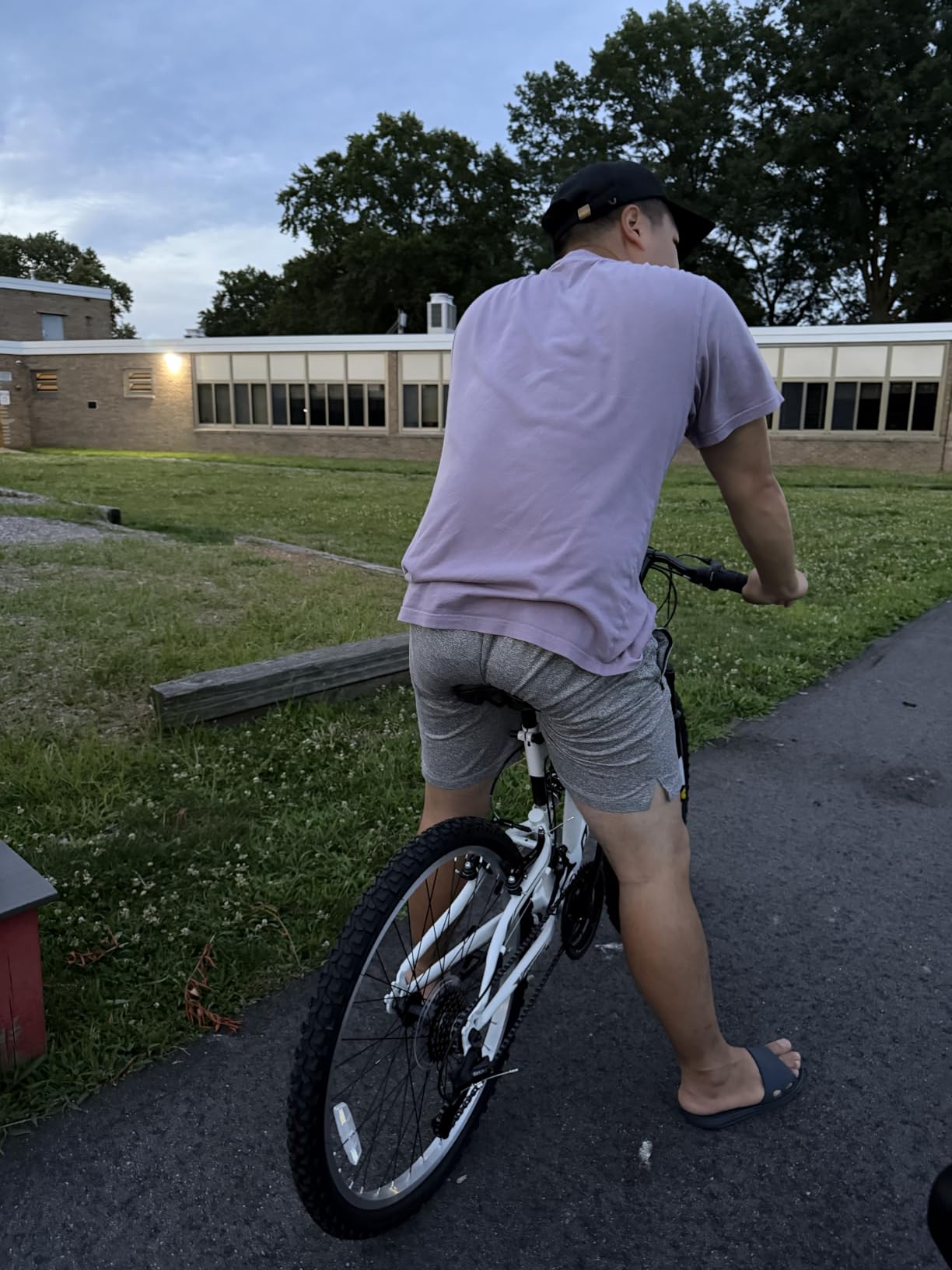
The QARSWA stands out in this roundup because of one practical feature: front and rear fenders. If you plan to commute on your mountain bike or ride in wet conditions, those fenders are a meaningful quality-of-life upgrade. They keep water and road grime off your clothes and back, which most dedicated mountain bikes don’t include.
Beyond the fenders, this is a capable dual-suspension bike with a 21-speed drivetrain, a high-carbon steel frame, and a quick-release front wheel. The bike arrives 90 percent pre-assembled, and I had it road-ready in about 50 minutes. The thickened comfort saddle is noticeably better than the stock seats on most bikes in this price range, which is a small but appreciated detail for a beginner still getting used to longer rides.
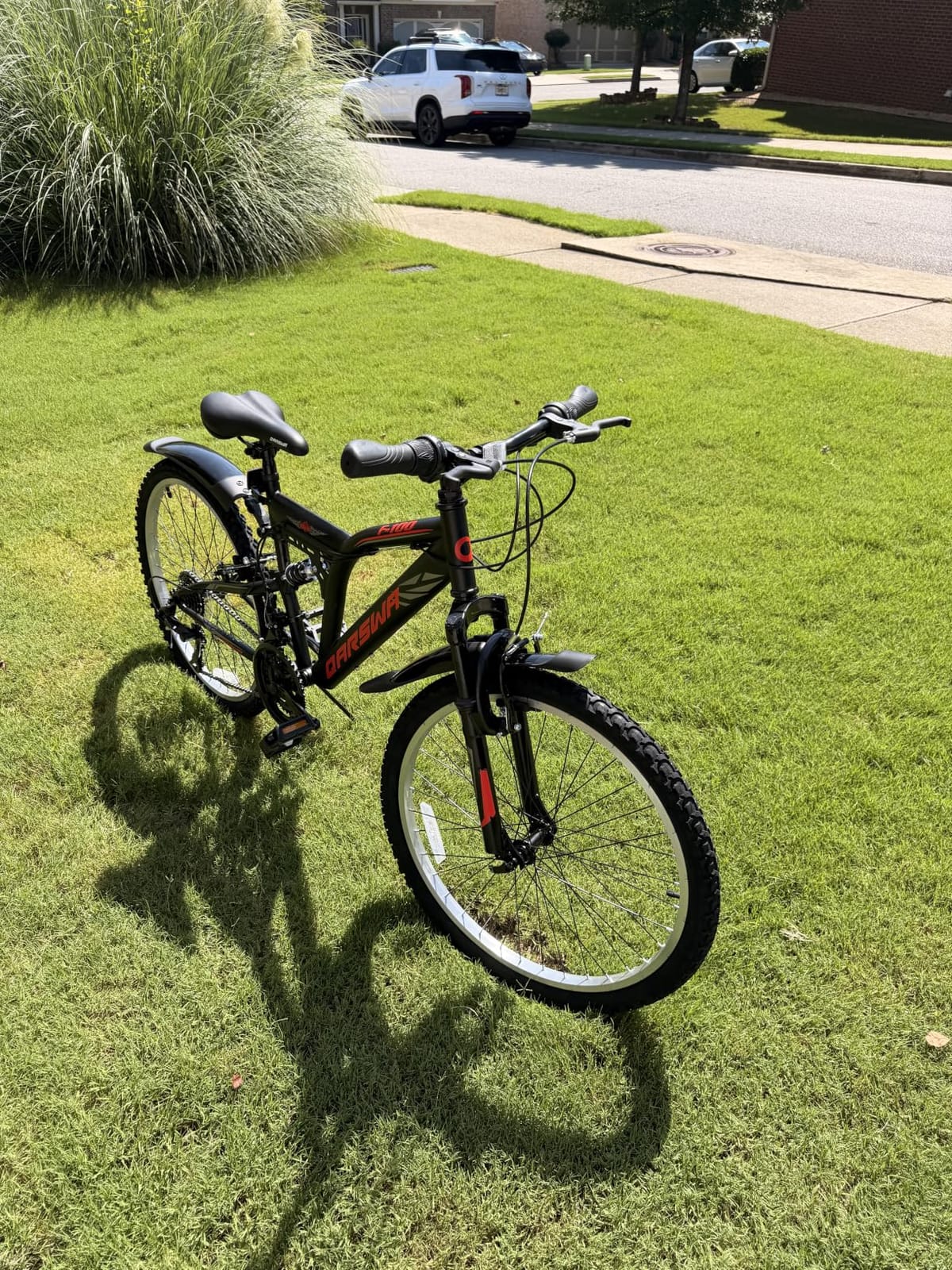
Customer reviews are overwhelmingly positive, with a 4.4-star average across 34 reviews. The main complaints center on inner tube quality and a few users who had to do additional brake adjustments after delivery. The V-brakes are the obvious compromise at this price, and they don’t match the performance of disc brakes, especially in wet conditions.
What makes the QARSWA particularly beginner-friendly is the combination of full suspension, fenders, and a comfortable saddle right out of the box. Most other bikes in this list require some upgrades to reach the same level of commute-readiness, which is why I think it deserves a spot on this list for riders who plan to use their bike for both commuting and weekend trail rides.
For Whom It’s Good
Beginners who want one bike that handles both commuting and light trail riding, and who appreciate the convenience of included fenders. It’s a great fit for riders in wet climates, urban cyclists who occasionally hit dirt paths, and anyone who wants a comfortable saddle and full suspension without spending more than $200. The 24-inch wheel option also works well for shorter riders.
For Whom It’s Not Ideal
Riders who want Prime-eligible fast shipping should consider another option on this list. Anyone planning aggressive trail use will want disc brakes and a lighter frame. Buyers who want extensive long-term reliability data should weigh the smaller review base accordingly.
How to Choose the Best Mountain Bike for Beginners?
Buying your first mountain bike can feel overwhelming because the market is full of jargon and competing claims. The good news is that beginners don’t need to understand every component to make a smart choice. You just need to understand the five factors below, and you can confidently evaluate any bike on the market, not just the ones in this roundup.
Suspension Type: Hardtail vs Full Suspension
A hardtail mountain bike has suspension only in the front fork, while a full-suspension bike adds a rear shock. For most beginners, a hardtail is the right starting point. It’s lighter, simpler to maintain, less expensive, and teaches you better riding technique because you can’t rely on the rear suspension to mask poor form. Save full suspension for when you know what kind of riding you actually enjoy.
If your local trails are rough, rocky, or feature significant roots, a front suspension fork with at least 80 to 100mm of travel makes a real difference in comfort and control. Most of the bikes on this list have front suspension forks, and a few include basic rear suspension for extra cushioning.
Wheel Size: 27.5 vs 29 Inch
Wheel size affects how a bike handles. 29-inch wheels (sometimes called 29ers) roll over obstacles more easily and maintain momentum better, which makes them efficient for cross-country riding and longer distances. 27.5-inch wheels (also called 650b) are more nimble and easier to maneuver, which can feel more confidence-inspiring for newer riders.
For most beginners, 27.5 inch wheels offer the best balance of agility and stability. 26-inch wheels are also fine and are common on budget bikes, but they’re slowly being phased out in favor of larger diameters. 29 inch wheels are best for taller riders (roughly 5’8″ and above) and those who plan to ride longer distances on smoother terrain.
Frame Material: Aluminum vs Steel
Aluminum frames are lighter, resist rust, and are standard on mid-range and higher bikes. Steel frames are heavier, more durable in terms of impact, and common on budget bikes. For a beginner who isn’t sure how often they’ll ride, steel is a perfectly reasonable choice that saves money. For riders who plan to commute frequently, lift their bike often, or ride in wet conditions, aluminum is worth the upgrade.
Brakes: V-Brakes vs Disc Brakes
Hydraulic disc brakes offer the strongest, most consistent stopping power in all conditions, including wet weather. Mechanical disc brakes are a step down but still significantly better than rim brakes. V-brakes (also called linear-pull brakes) are the weakest option and require more hand force, but they are simple to maintain and adequate for casual riding on dry terrain.
If your budget allows, choose a bike with disc brakes. The difference in stopping power and confidence is meaningful, especially for newer riders still developing their braking technique. If you go with a V-brake bike, plan to learn how to adjust them properly, because the out-of-the-box setup is rarely ideal.
Drivetrain: How Many Speeds Do You Actually Need?
A 1x drivetrain (one chainring in front) is simple and low-maintenance, but more common on higher-end bikes. A 3x drivetrain (three chainrings) gives you the widest gear range, which matters in hilly areas. A 7-speed bike is sufficient for relatively flat terrain, while a 21-speed bike gives you flexibility for varied terrain and steeper climbs.
For beginners, 21 speeds is the sweet spot. It covers virtually all terrain you’ll encounter without overwhelming you with too many gear choices. Just remember that more speeds doesn’t automatically mean a better bike; it’s about the gear range and quality of the components, not the number alone.
Frame Size and Fit
The most overlooked factor for beginners is frame size. A bike that’s too large or too small will be uncomfortable, hard to control, and potentially unsafe. Most bike brands publish sizing charts based on your height and inseam. The HILAND’s range of wheel sizes is a great example of why this matters: shorter riders need 26 inch or even 24 inch wheels, while taller riders benefit from 29 inch wheels.
Standover height is the key measurement. When you stand flat-footed over the top tube of the bike, you should have at least one to two inches of clearance. If you’re buying online, check the manufacturer’s size chart carefully and measure your inseam. If you’re near a bike shop, an in-person fitting is even better and often free.
Dropper Seatpost: Worth It for Beginners?
A dropper seatpost lets you lower your saddle with a lever while riding, which is hugely helpful on descents because it lets you move your body weight back over the rear wheel. Most entry-level bikes in this roundup don’t include dropper posts, but the aftermarket cost is around $100 to $200 for a basic one. For now, you can skip it. After a season or two of riding, you’ll know whether the trails you ride would benefit from one.
Budget: How Much Should a Beginner Spend?
A common question on Reddit’s r/MTB is whether expensive bikes are worth it for beginners. The honest answer is: not yet. A $250 to $400 bike is a perfectly reasonable place to start. It will teach you what you like and don’t like, and after 6 to 12 months of riding, you’ll be in a much better position to invest in a higher-end bike that matches your specific style of riding.
Going too cheap (under $150) means you’ll be replacing components and fighting the bike more than enjoying the ride. Going too expensive ($1,500+) means you’re paying for performance you don’t yet have the skill to use. The sweet spot for a first bike is in the $200 to $500 range, and most of the bikes on this list fall in that window.
Frequently Asked Questions
What type of mountain bike should a beginner get?
A beginner should get a hardtail mountain bike with a front suspension fork, hydraulic or mechanical disc brakes, and an aluminum frame if the budget allows. A 21-speed drivetrain covers most terrain you will encounter. Brands like Mongoose, Huffy, HILAND, and AVASTA all offer solid starter options in the $200 to $500 range.
What is the best mountain bike for beginners?
The best mountain bike for beginners in 2026 depends on your budget and intended use. The Mongoose Flatrock is our top pick overall for its aluminum frame, light weight, and reliable components. The Huffy Stone Mountain offers the best value if you want to spend less, while the AVASTA Earth is the right choice if disc brakes and switchable suspension are priorities.
What are the best mountain bike brands for beginners?
For beginners, the most reliable brands include Mongoose, Huffy, HILAND, Dynacraft, and AVASTA. Each offers multiple models in the $150 to $500 range with proven reliability and good customer support. As your skills develop, brands like Trek, Giant, Specialized, Polygon, and Cannondale offer higher-end options worth considering.
What are the best beginner mountain bikes under $1000?
All eight bikes in this roundup fall well under $1000, making them strong choices for budget-conscious beginners. The Mongoose Flatrock at $324.99, the AVASTA Earth at $249.99, and the Huffy Stone Mountain at $252.55 are particularly strong picks. For riders willing to spend more, models from Trek, Giant, and Polygon offer upgrades in the $700 to $1000 range.
Is 30 too old to start mountain biking?
Not at all. Mountain biking is a sport that beginners of any age can start and enjoy. Many riders begin in their 30s, 40s, and beyond. The key is to start with a properly sized bike, begin on easier trails, and build up gradually. Fitness comes with time on the bike, and the social and mental health benefits of mountain biking are well-documented at any age.
Final Verdict
After testing 8 of the best mountain bikes for beginners in 2026, the Mongoose Flatrock is our top recommendation for most new riders. It pairs a real aluminum frame with a manageable 7-speed drivetrain, a reliable front suspension fork, and a price tag that won’t sting if you decide mountain biking isn’t for you. The Huffy Stone Mountain is the smarter pick if you want maximum value from a known brand, and the AVASTA Earth is the right choice if disc brakes and switchable suspension are priorities.
The single most important thing is to start riding. Even an imperfect first bike will teach you more in a month than any amount of research. Pick a bike that fits your budget, get out on the local trails, and let your next bike purchase be informed by real experience rather than specs alone. The right beginner mountain bike is the one that gets you out the door.