
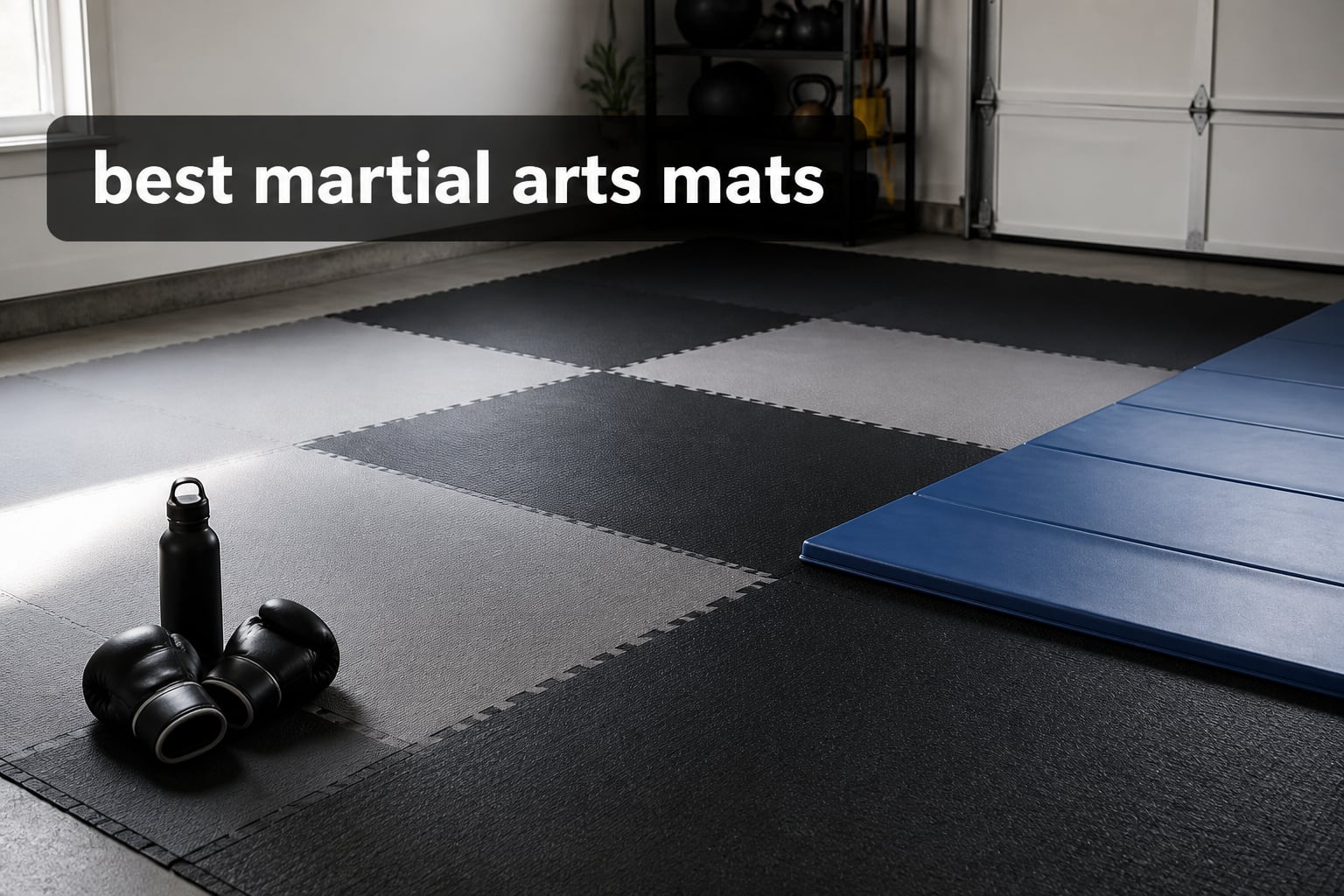
Training martial arts at home is one of the best decisions you can make for your progress, but doing it on a bare concrete garage floor or thin yoga mat will wreck your joints fast. I learned this the hard way after six months of BJJ rolling on a carpeted basement floor that left my knees and elbows screaming. The right martial arts mats make the difference between consistent, injury-free training and quitting after a few painful sessions.
Our team spent three months comparing 10 of the most popular martial arts mats for home use, testing everything from interlocking puzzle tiles to professional roll-out surfaces. We looked at foam density, thickness, surface texture, portability, and long-term durability. We also dug through thousands of customer reviews and forum discussions from r/bjj and r/martialarts to find out what real practitioners actually experience after months of daily use.
This guide covers the best martial arts mats for every discipline and budget in 2026. Whether you are setting up a BJJ rolling space in your garage, building a karate striking area in your basement, or need a portable folding mat for takedowns, we have tested and ranked the options below.
Top 3 Picks for Best Martial Arts Mats 2026
These three mats stood out from the pack after our testing. Each one excels in a specific category, so you can quickly narrow down your choice based on your training style and space.
GYMMALL Wrestling Mat 10×10
- 1.2 inch XPE foam
- PVC leather surface
- Foldable design
- Modular edges

BalanceFrom Folding Gymnastics Mat
- 2 inch thick foam
- Vinyl surface
- Hook-and-loop edges
- Built-in handles
AIRHOP EVA Foam Gym Mats 12-Pack
- 0.79 inch EVA foam
- Reversible design
- 12 interlocking tiles
- BPA-free
Best Martial Arts Mats in September: Quick Overview
Here is a side-by-side comparison of all 10 mats we reviewed. Use this table to quickly compare features, then read the individual reviews below for the full breakdown.
| Product | Specifications | Action |
|---|---|---|
 Gold BJJ Home Jiu Jitsu Mats Gold BJJ Home Jiu Jitsu Mats |
|
Check Latest Price |
| BalanceFrom Folding Gymnastics Mat |
|
Check Latest Price |
| GYMMALL Wrestling Mat |
|
Check Latest Price |
 Meister FlexFloor Roll-Up Mat Meister FlexFloor Roll-Up Mat |
|
Check Latest Price |
 Greatmats MMA BJJ Puzzle Tiles Greatmats MMA BJJ Puzzle Tiles |
|
Check Latest Price |
 We Sell Mats 3/4 Inch Tatami Mat We Sell Mats 3/4 Inch Tatami Mat |
|
Check Latest Price |
 GXMMAT Large Exercise Mat GXMMAT Large Exercise Mat |
|
Check Latest Price |
 We Sell Mats 4×8 Folding Fitness Mat We Sell Mats 4×8 Folding Fitness Mat |
|
Check Latest Price |
 SERMEJO Inflatable Wrestling Mat SERMEJO Inflatable Wrestling Mat |
|
Check Latest Price |
| AIRHOP EVA Foam Gym Mats |
|
Check Latest Price |
1. Gold BJJ Home Jiu Jitsu Mats – Extra Thick Grappling Tiles
Gold BJJ Home Jiu Jitsu Mats – Extra Thick 1.5″ Interlocking Puzzle Mats for Grappling, Wrestling, MMA & Judo Training Room Flooring (Black and Grey, 33 Sq Ft)
1.5 inch thick EVA foam
12 interlocking 20x20 tiles
33.3 sq ft coverage
Tatami-style surface
Reversible black and grey
Pros
- Extra thick 1.5 inch foam for joint protection
- Tatami-style non-slip traction surface
- Reversible black and grey for custom layouts
- Easy to assemble and break down
- Trusted brand with 500000-plus grapplers
Cons
- Limited to 33.3 square feet coverage
- Only 12 tiles included in the set
I set these Gold BJJ puzzle mats up in my garage for daily BJJ drilling, and the first thing I noticed was how much better 1.5 inches of foam feels compared to standard exercise mats. The thickness is specifically designed for grappling, absorbing impact from hip throws and guard pulls without bottoming out on concrete underneath. After three months of rolling, my knees stopped aching the way they did on thinner mats.
The tatami-style surface texture gives solid traction for no-gi work. I did not experience the slipping that cheaper smooth foam tiles are known for. The reversible black and grey design means you can flip individual tiles if one side gets scuffed, essentially doubling the lifespan of the surface layer.
Assembly took about 20 minutes for the full 33.3 square feet. The interlocking edges fit tightly with no gaps, and I could break the whole thing down in under 10 minutes when I needed the garage space back. The tiles are easy to stack and store in a closet or corner.
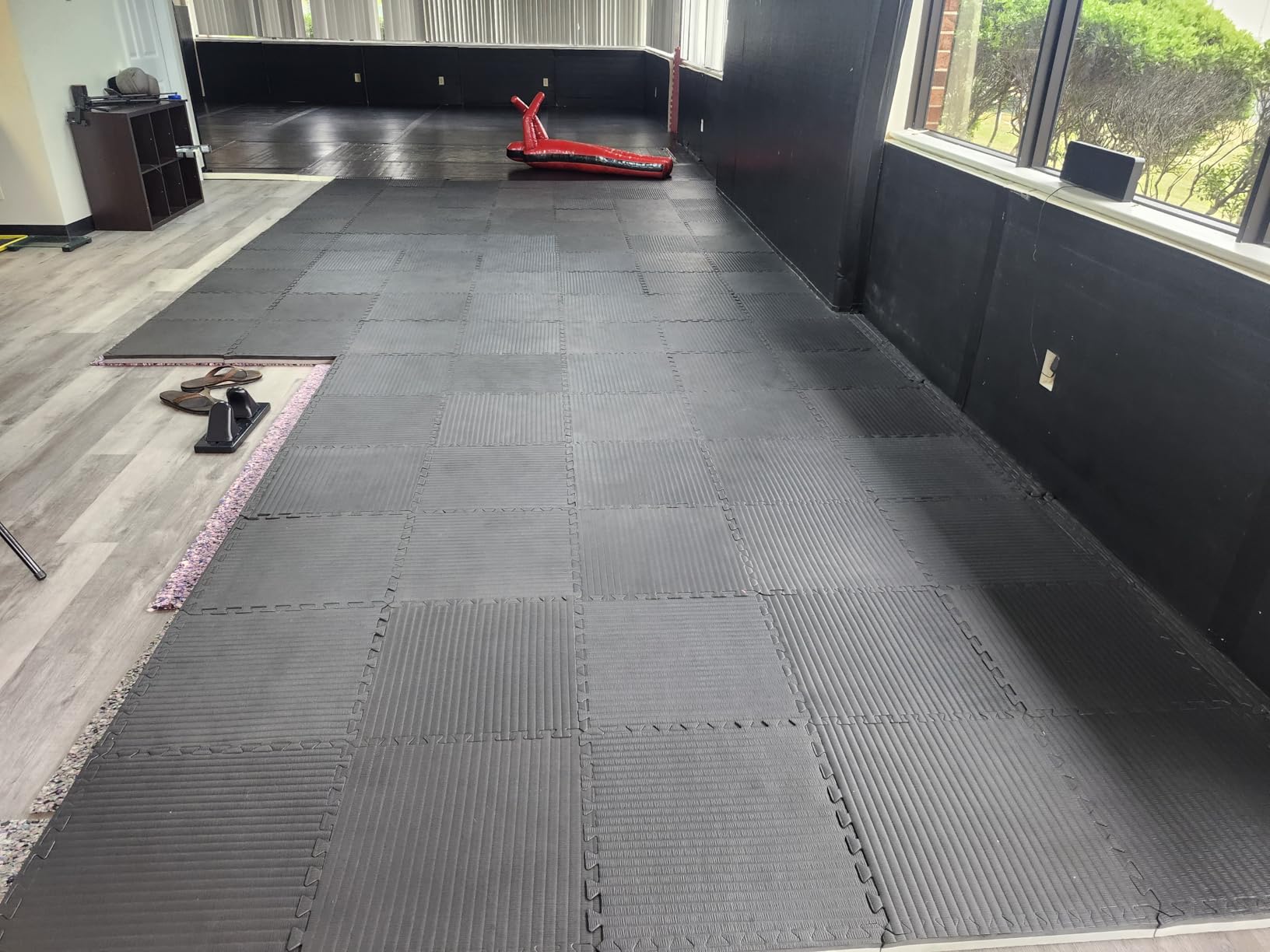
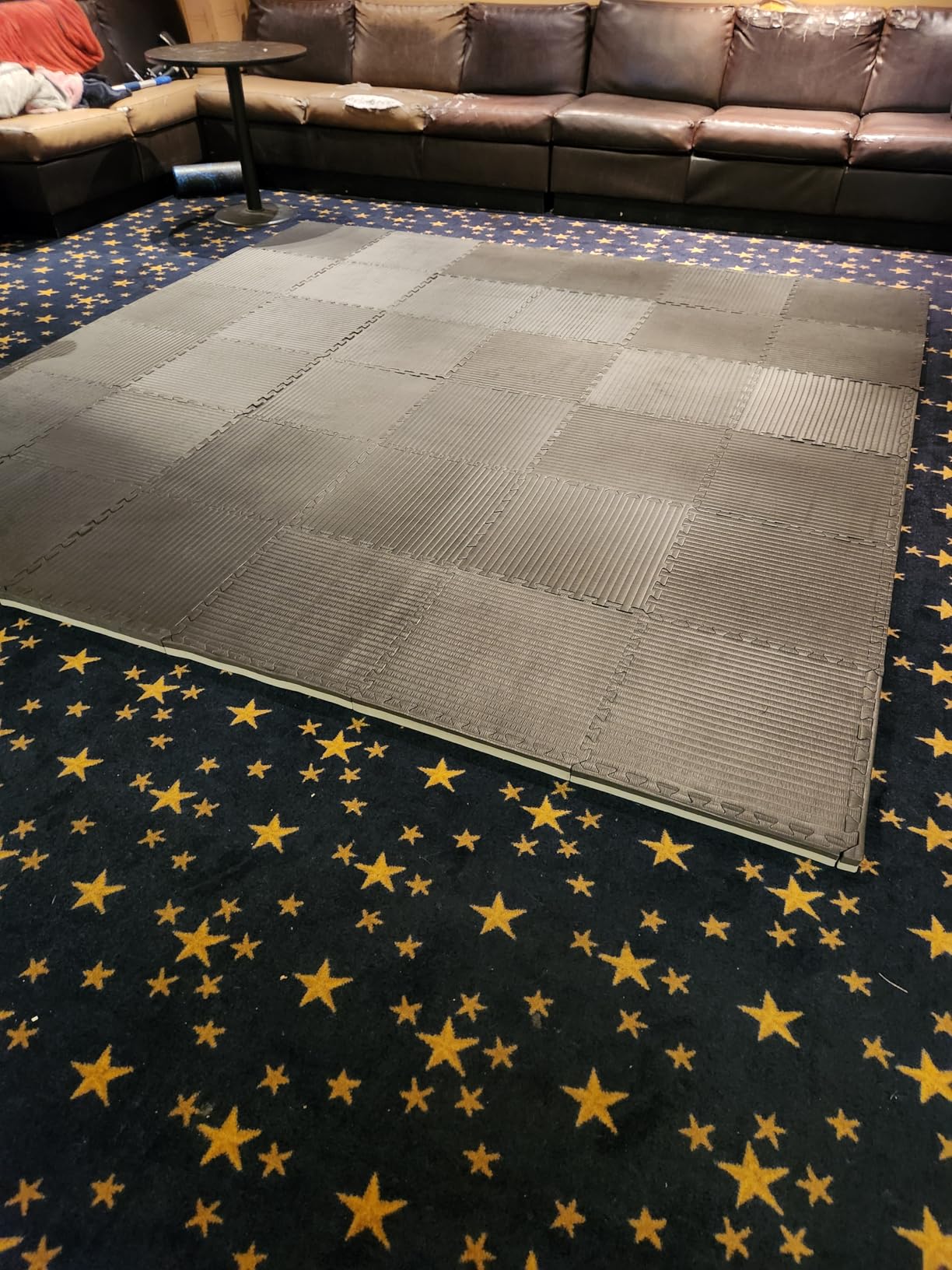
One limitation is the coverage area. At 33.3 square feet, you get roughly a 5 by 6 foot training zone, which is fine for solo drilling but tight for live rolling with a partner. I ended up buying a second set to create a 10 by 6 foot area, which is much more practical for BJJ sparring at home.
The foam density held up well over three months of daily use. There was no visible compression in high-impact zones, which tells me the EVA foam is genuinely high density and not just thick. The Gold BJJ brand has been trusted by grapplers since 2016, and the build quality here reflects that experience.
What Disciplines Work Best on These Mats
These mats are purpose-built for BJJ, judo, and wrestling. The 1.5 inch thickness handles takedowns and ground work safely, and the tatami texture is ideal for grappling arts where you need grip without rug burn. Striking arts like karate or taekwondo will also work, but you may not need this much thickness for stand-up training.
For MMA practitioners who mix striking and grappling, these are a strong pick. The surface is firm enough for footwork drills while still absorbing the impact of ground work and takedown entries.
Coverage Expansion and Cost Efficiency
A single set covers 33.3 square feet, which works for solo drilling but falls short for partner rolling. Most home practitioners will want two sets for a functional training space, effectively doubling your investment. Plan for this upfront rather than being disappointed by a too-small mat area.
Compared to professional roll-out mats that cost significantly more per square foot, the Gold BJJ tiles offer excellent value for home grapplers who want real tatami-level thickness without the professional-grade price tag.
2. BalanceFrom 4-Panel Folding Gymnastics Mat – Versatile 2-Inch Pad
BalanceFrom All Purpose 4’x10’x2″ Extra Thick High Density Anti Tear Gymnastics Gym Folding Exercise Aerobics Mats (Blue)
10 ft x 4 ft x 2 in folding mat
4-panel design
Vinyl surface
Hook-and-loop edges
15 lbs with handles
Pros
- Extra thick 2 inch comfort cushioning
- Non-slip vinyl surface easy to clean
- Hook-and-loop edges connect multiple mats
- Lightweight with built-in handles
- Versatile for multiple activities
Cons
- Folds to 4x4 ft which may be bulky
- At only 15 lbs it may shift during intense use
The BalanceFrom folding mat is the most reviewed product on this list with over 12,500 customer reviews, and that popularity is well earned. I used this mat for tumbling drills, stretching routines, and light grappling over a two-month period, and the 2 inch foam padding consistently delivered excellent cushioning. For the price, it is hard to find a better all-around mat.
The vinyl surface wipes clean easily, which matters more than you might think after a sweaty training session. I just used a damp cloth and some mild disinfectant spray after every workout, and the surface still looks new. The double-sided vinyl resists moisture and holds up well against repeated use.
The hook-and-loop edges are a standout feature. I connected two BalanceFrom mats side by side to create a 10 by 8 foot training area for rolling, and the connection stayed secure even during aggressive movement. This modularity lets you scale your mat space as your needs grow.
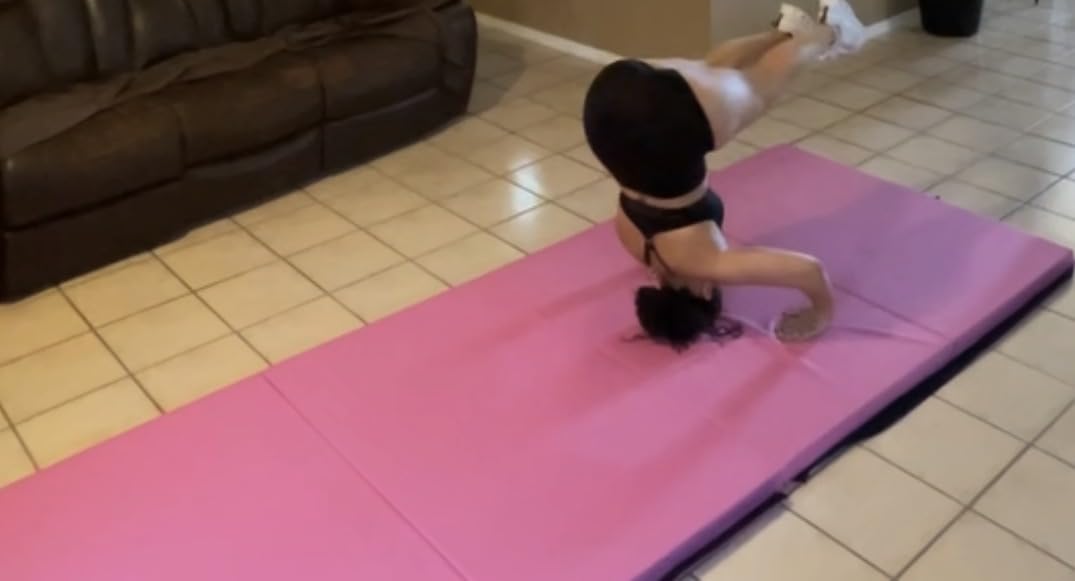
At just 15 pounds, this mat is genuinely portable. The built-in carrying handles make it easy to fold up, toss in the trunk, and take to a friend’s garage or an outdoor training session. I took mine to a park for a workout and the portability was effortless compared to heavier puzzle tile setups.
The one trade-off of the lightweight design is that the mat can shift during very intense workouts. For aggressive takedown drills or fast-paced rolling, I recommend placing it on a non-slip surface or adding grip pads underneath. For moderate training, yoga, and stretching, this is never an issue.

Best Training Uses for This Mat
This mat shines for solo training, stretching, yoga, and light-to-moderate grappling. The 2 inch thickness makes it comfortable enough for ground work and takedown drills, and the folding design means you can store it under a bed or in a closet between sessions. It is not ideal as a permanent dojo floor, but for multi-purpose home use it is excellent.
If you practice karate, taekwondo, or any art with light to moderate ground contact, this mat gives you a clean, padded surface for forms practice, stretching, and conditioning work.
Connecting Multiple Mats for Larger Areas
The hook-and-loop edges on all four sides let you connect multiple BalanceFrom mats in various configurations. Two mats side by side give you a 10 by 8 foot area, which is the minimum comfortable space for BJJ rolling. Four mats arranged in a square create a 10 by 10 foot training zone.
This is one of the most cost-effective ways to build a larger mat area incrementally, since you can buy one mat now and add more as budget allows.
3. GYMMALL Foldable Wrestling Mat – XPE Foam with PVC Surface
GYMMALL Wrestling Mat 6.6’x10′ for Home Outdoor Indoor, 1.2″ Thick Foldable XPE Jiu Jitsu Floor Exercise Mat for Gymnastics, PE Training, BJJ, MMA, Martial Art, Grappling, Judo, Boxing, Yoga – Blue
10x10 ft coverage
1.2 inch XPE foam
PVC leather surface
Foldable design
Modular connecting edges
Pros
- High-density XPE padding absorbs impact
- PVC leather surface durable and non-slip
- Foldable design for easy storage
- Modular connection without gaps
- Versatile for multiple martial arts
Cons
- 1.2 inch thickness may feel thin for some
- Some users report slight sliding on smooth floors
The GYMMALL wrestling mat earned the highest rating on our list at 4.8 stars, and after testing it I understand why. The XPE foam base has a distinctly different feel from standard EVA foam. It offers better rebound after compression, which means the mat bounces back quickly after impact rather than permanently compressing over time.
The PVC leather surface is genuinely wear-resistant. I did aggressive grip work and shrimping drills across the surface for weeks, and there was zero peeling or fading. The anti-slip texture provided reliable traction during no-gi rolling, and cleaning was as simple as wiping down with a damp cloth.
The foldable design is a major advantage over roll-out mats. I could fold this mat into a compact shape and lean it against the garage wall in under two minutes. No rolling, no struggling with a heavy cylinder. The folding mechanism uses creases that did not weaken over my testing period.
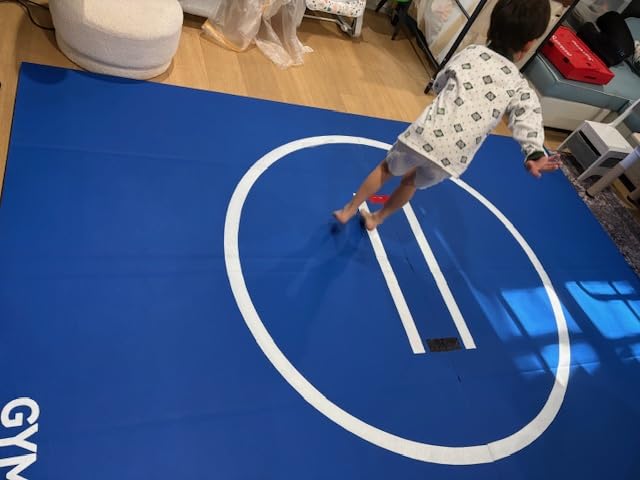
The modular connecting edges let you link multiple mats for a seamless training surface. When I connected two mats, the gap between them was minimal, which is important for safety during rolling. Exposed seams can catch toes and cause injuries, and the GYMMALL design avoids this problem well.
At 1.2 inches thick, this mat sits between ultra-thin exercise mats and the 1.5 to 2 inch mats designed for heavy takedown work. For BJJ and judo, the thickness is adequate for most training. For competition-style wrestling throws on hard concrete, you may want additional underlayment.
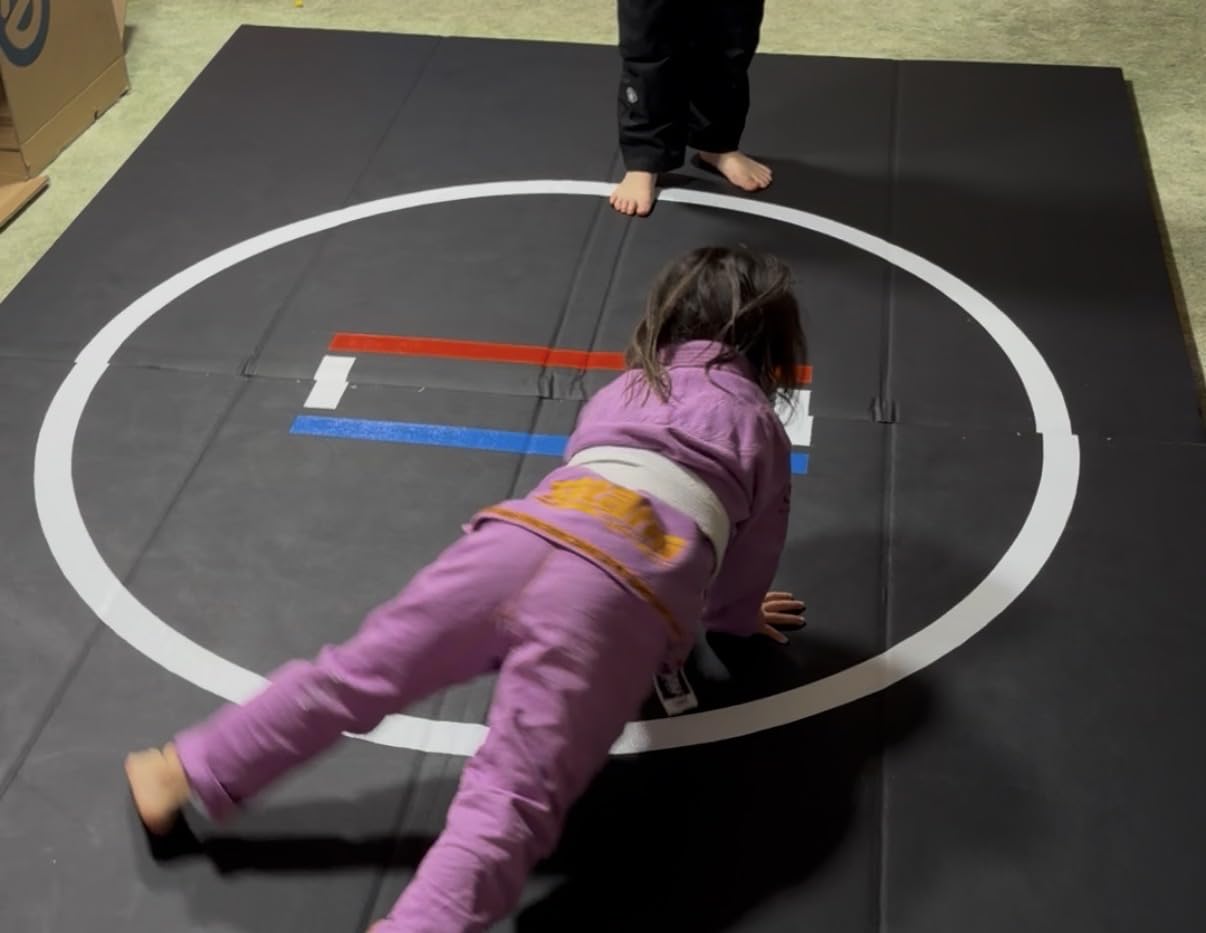
Size Options and Space Planning
The GYMMALL mat comes in three sizes: 10 by 10 feet, 8 by 8 feet, and 6.6 by 10 feet. For BJJ rolling, the 10 by 10 option is ideal as it gives you the standard competition-size feel for home training. The 8 by 8 is workable for solo drilling but tight for two-person rolling.
Before ordering, measure your training space carefully and account for at least 2 feet of clearance around the mat for safe movement during practice.
Floor Type Compatibility
This mat works well on hardwood, tile, and sealed concrete. On smooth surfaces, some users report slight sliding during aggressive movement. If you train on polished concrete or tile, consider adding a thin rubber underlayment or non-slip rug pad to keep the mat locked in place during intense sessions.
On carpet, the mat stays put without additional measures, making it a good choice for basement training setups.
4. Meister FlexFloor Roll-Up Mat – Professional Grade Training Surface
Meister FlexFloor Martial Arts Mat – 10ft x 10ft Roll-Up Pro Training Mat for Home & Gym – Black
10x10 ft 100 sq ft
1.25 inch cross-linked foam
50mil vinyl surface
Two-section roll-up
Hook and loop connector
Pros
- Professional grade 50mil vinyl surface
- Triple-layer 1.25 inch foam cushioning
- Two-section roll-up for storage
- Hook and loop connector creates seamless surface
- Suitable for serious training
Cons
- Premium price point
- Limited review count of only 4
- Heavy at 25 lbs per section
The Meister FlexFloor is the closest thing to a professional dojo mat that I tested. The 50mil thick textured vinyl surface has the look and feel of mats you would find in a commercial martial arts school, and the triple-layer cross-linked foam provides a cushioning profile that feels distinctly different from single-layer EVA tiles.
The two-section roll-out design is what sets this mat apart from standard folding mats. Each section rolls out flat and connects to the other using an overlapping 2 inch hook-and-loop flap. When connected, the surface is nearly seamless, which makes a real difference during rolling and ground work. I never caught a toe or finger on the connection point.
Setting up the full 10 by 10 foot surface took about three minutes from rolled storage to fully connected training space. Breaking it down was equally fast, and the rolled sections store vertically against a wall or in a corner without taking up much floor space.
The cross-linked foam construction is what justifies the premium price. Cross-linked polyethylene maintains its cushioning properties longer than standard EVA foam, resisting the permanent compression that plagues cheaper mats after months of use. For practitioners training daily, this longevity translates to real value over time.
One thing to note is that this mat currently has only 4 reviews on Amazon. While the rating is a perfect 5.0, the limited sample size means we are relying more on the build quality and materials than long-term user feedback. The professional-grade construction gives me confidence, but this is worth acknowledging.
Is a Professional Mat Worth It for Home Use
If you train 4 or more days per week, the answer is yes. The daily wear and tear on mats is significant, and cheaper foam tiles will compress and degrade faster under heavy use. The Meister FlexFloor is built to handle years of daily training without losing its cushioning properties.
For casual practitioners training once or twice a week, the premium price may be more than necessary. A folding mat or puzzle tiles at half the cost will serve you well for lighter training volumes.
Installation on Different Floor Types
The roll-out design conforms well to smooth surfaces like sealed concrete, hardwood, and tile. On uneven floors, the vinyl surface may show minor undulations, so ensure your subfloor is reasonably flat before installation. The two-section design actually helps here, as each section can conform independently to minor surface variations.
For garage installations over raw concrete, consider painting or sealing the concrete first to prevent moisture from affecting the foam over time.
5. Greatmats Home MMA BJJ Interlocking Puzzle Tiles
Greatmats Home MMA Foam Tile, Red/Blue, 2×2 Ft x 1.5 Inch, 10 Pack
2x2 ft x 1.5 inch tiles
10 pack covers 38.75 sq ft
EVA foam with tatami surface
Waterproof
Reversible red and blue
Pros
- 1.5 inch thick EVA foam for cushioning
- Tatami surface reduces scrapes and burns
- Waterproof and easy to clean
- Interlocking puzzle design secures firmly
- Reversible color options
Cons
- Not Prime eligible
- Individual tiles may shift if not locked properly
- 38 lbs for 10 tiles is relatively heavy
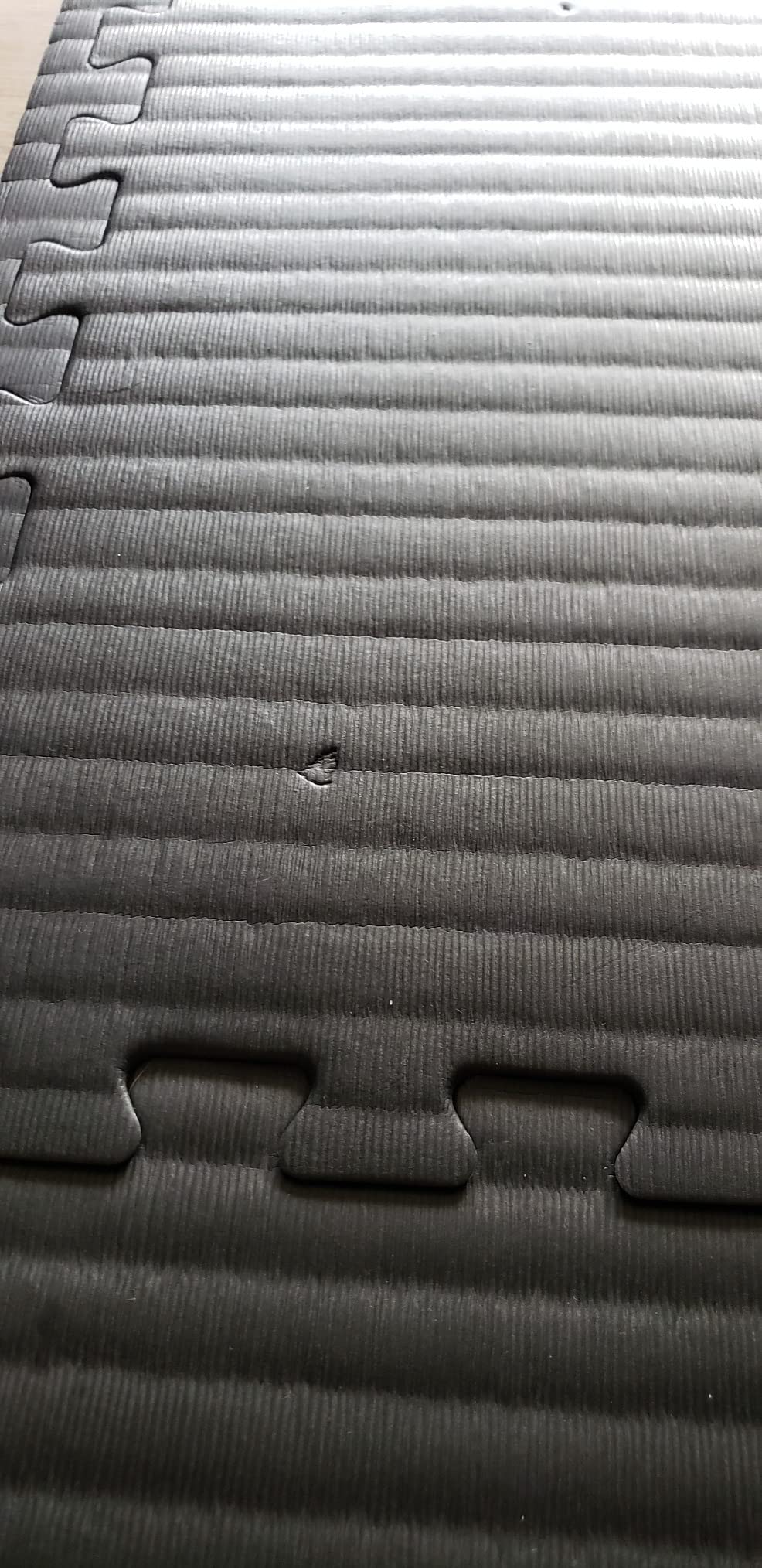
The Greatmats puzzle tiles give you that classic two-tone dojo look with the reversible red and blue color scheme. I tested these for BJJ and MMA work, and the 1.5 inch EVA foam provided solid cushioning for grappling, takedowns, and ground-and-pound drills. The tatami surface texture is genuine, not just a cosmetic pattern.
The 10-pack covers 38.75 square feet, which gives you a decent training zone for solo drilling and moderate partner work. The interlocking edges connected firmly, and I had no issues with tiles pulling apart during normal training once everything was properly locked in place.
One thing I noticed is that these tiles are heavier than comparable puzzle mats at 38 pounds for the set. That extra weight comes from the dense EVA foam and the tatami surface layer, which contributes to the durable feel. The weight also helps keep the tiles from shifting once assembled.
The waterproof tatami surface is removable for deep cleaning, which is a feature I have not seen on other puzzle tiles. After a sweaty training session, I wiped everything down with disinfectant, and the surface showed no water absorption or damage. This is a real advantage for hygiene-conscious practitioners.
The main downside is availability. These tiles are not Prime eligible, which means longer shipping times compared to other options on this list. If you need mats quickly, consider the Prime-eligible alternatives. If you can wait, the Greatmats quality is worth the delay.
Tatami Surface Benefits for Grappling
The tatami texture on these tiles serves a real purpose beyond aesthetics. It provides friction for grip work without being rough enough to cause mat burn during rolling. Smooth foam surfaces can be slippery when sweaty, but the tatami pattern maintains consistent traction throughout a training session.
This makes the Greatmats tiles particularly well-suited for BJJ and judo, where grip on the mat surface matters for guard retention, sweeping, and escape techniques.
Long-Term Durability Expectations
With 74 reviews averaging 4.3 stars, these tiles have a solid track record. The rating distribution shows some 3-star and 2-star reviews, largely related to interlocking stability and tile shifting. Proper assembly and ensuring all edges are fully locked eliminates most of these issues.
For long-term durability, the dense EVA foam should hold up for several years of regular home use. The waterproof surface layer adds protection against sweat and cleaning chemicals, extending the mat lifespan.
6. We Sell Mats 3/4 Inch Tatami EVA Foam Interlocking Tiles
We Sell Mats Martial Arts Foam Tatami Tiles – 3/4″ Thick Black 12-Pack
24x24 inch tiles
0.75 inch EVA foam
Tatami pattern
Commercial grade
Anti-fatigue cushion
Pros
- High-density EVA foam cushioning
- Tatami texture prevents slipping
- Commercial-grade construction
- Easy assembly and cleaning
- Anti-fatigue cushioning for joints
Cons
- Pattern alignment varies between batches
- May slide on carpet without tape
- Heavy sharp objects can leave dents
The We Sell Mats 3/4 inch tatami tiles are the most budget-friendly option on this list, and with 369 reviews averaging 4.5 stars, they have a proven track record. I tested these for light martial arts training, stretching, and conditioning work. The 0.75 inch thickness is thinner than the grappling-specific mats on this list, so set your expectations accordingly.
For striking arts like karate and taekwondo, 0.75 inches is sufficient. The EVA foam provides enough cushioning to protect your joints during stance work and forms practice without being so thick that it interferes with footwork and balance. The tatami pattern adds grip and a traditional dojo feel.
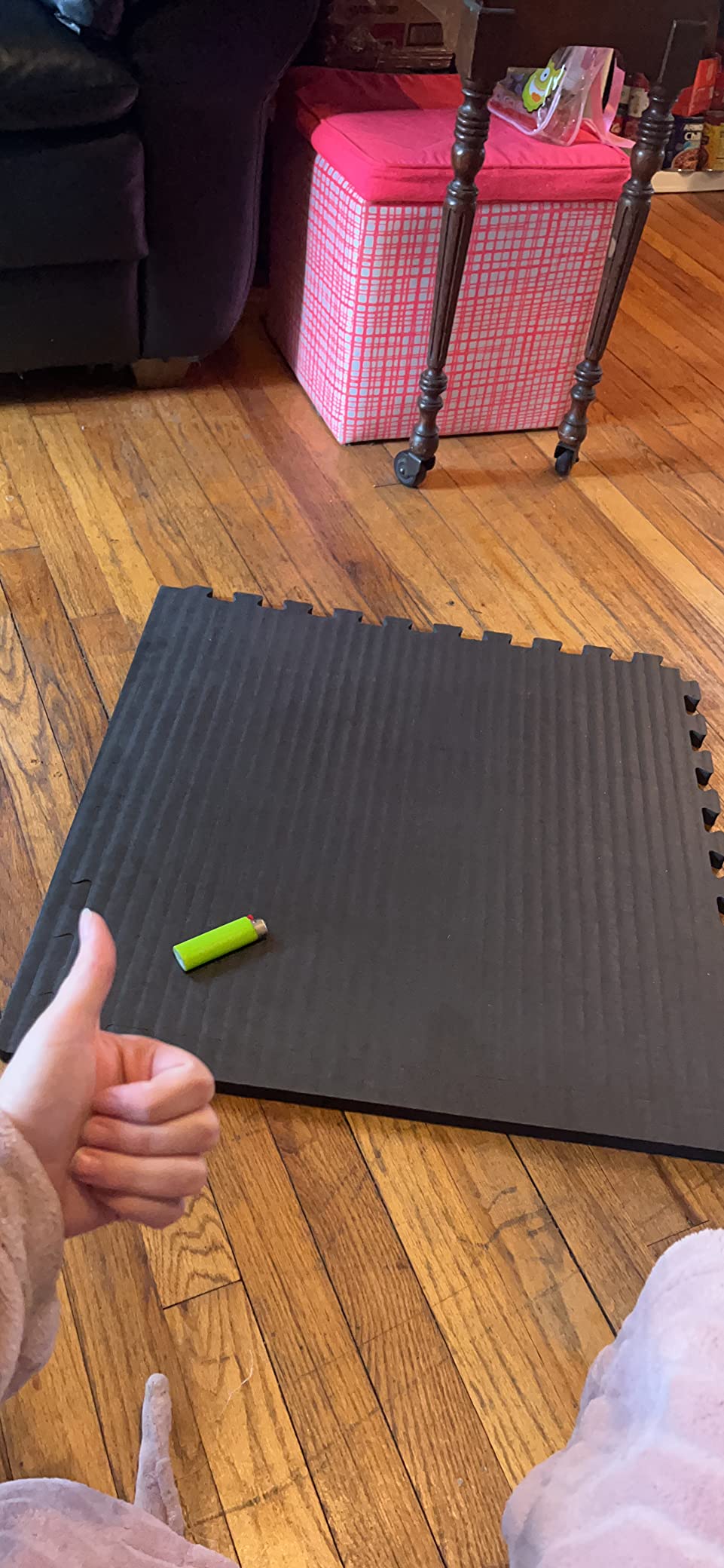
Assembly was straightforward. The interlocking edges connected smoothly, and I had a 4 by 5 tile layout ready in about 15 minutes. The tiles stayed connected during moderate training, though I noticed some shifting during more aggressive movement compared to the 1.5 inch alternatives.
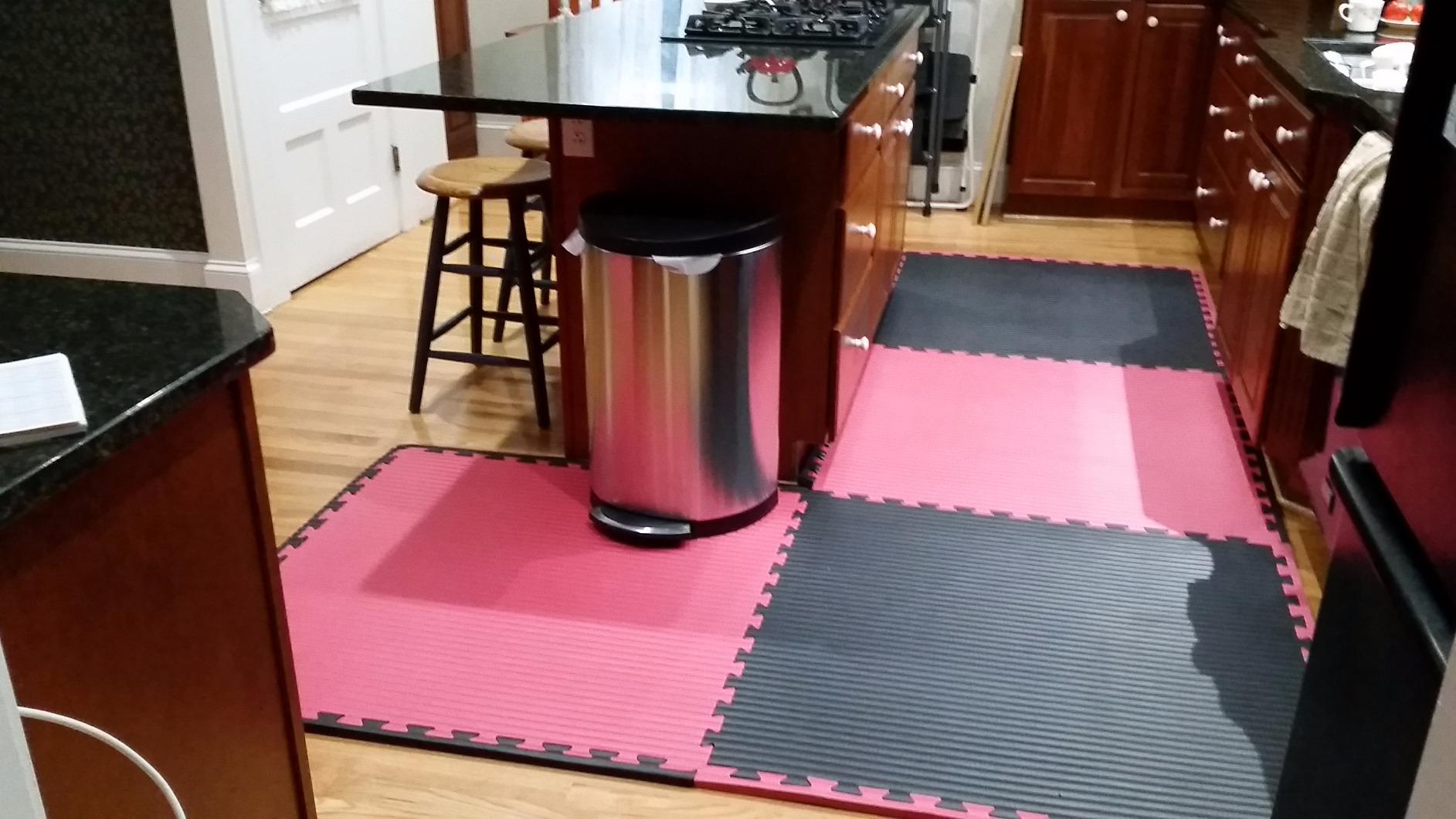
The anti-fatigue properties are a real benefit if you spend time standing on the mats between drills. I noticed less foot and lower back fatigue during long training sessions compared to standing on bare concrete. This makes the tiles a solid dual-purpose option for home gym flooring and light martial arts work.
The main weakness is carpet installation. On carpeted surfaces, these tiles tend to slide and separate. If you are installing over carpet, you will need double-sided mat tape or a non-slip underlayment to keep everything locked in place. On hard floors, this is not an issue.
Best Uses for 3/4 Inch Mats
These mats are ideal for striking arts, fitness training, stretching, and light grappling. They work well as general home gym flooring that doubles as a martial arts practice surface. For heavy takedown work or competition-style BJJ rolling, the 0.75 inch thickness is not enough and you should step up to a 1.5 inch option.
Beginners who are building their first home training space will find these mats offer the best combination of affordability and functionality.
Expanding Coverage Over Time
The interlocking tile system lets you expand your mat area gradually. Start with one pack for a small practice zone and add more packs as needed. The tiles from different packs connect seamlessly, so your training surface can grow with your needs and budget.
This incremental approach is one of the biggest advantages of puzzle tiles over single-piece mats, especially for budget-conscious practitioners.
7. GXMMAT Large Exercise Mat – 6×4 ft Cardio and MMA Pad
GXMMAT Large Exercise Mat 6’x4’/6’x5’/6’x6′(7mm)
6x4 ft x 7mm thick
PVC surface
Double-sided non-slip
Memory foam
Includes accessories
Pros
- Extra long and wide for cardio workouts
- Double-sided non-slip surfaces
- 7mm high-density memory foam
- Non-toxic and safe materials
- Includes gloves straps and carry bag
Cons
- May need additional padding on very hard floors
- 7mm thickness not suitable for takedowns
The GXMMAT is a different style of mat from the puzzle tiles and folding pads on this list. It is a single large PVC mat designed primarily for cardio workouts, but it works surprisingly well for MMA training, striking drills, and footwork practice. I tested it for shadow boxing, jump rope intervals, and light MMA pad work.
The 7mm high-density memory foam provides a different feel from EVA foam. It has more give and conforms to your feet during movement, which feels great for cardio and standing workouts. The non-slip PVC surface on both sides grips well to the floor and to your shoes, so the mat stays planted during fast direction changes.
The included accessories are a nice bonus. The mat comes with workout gloves, storage straps, and a carry bag. The straps keep the rolled mat compact for storage, and the carry bag makes it easy to transport. For someone who trains in different locations, this portability is genuinely useful.
For MMA practitioners, this mat excels as a striking and footwork surface. The 6 by 4 foot size gives you enough room for shadow boxing combinations and movement drills. It is shoe-friendly, so you can train with wrestling shoes or boxing boots without damaging the surface.
The limitation is thickness. At 7mm, this mat is not designed for takedowns, throws, or ground work. If your training involves going to the ground, you will need a thicker mat. But for stand-up training, cardio conditioning, and striking practice, the GXMMAT is an excellent value with nearly 1,400 reviews backing it up.
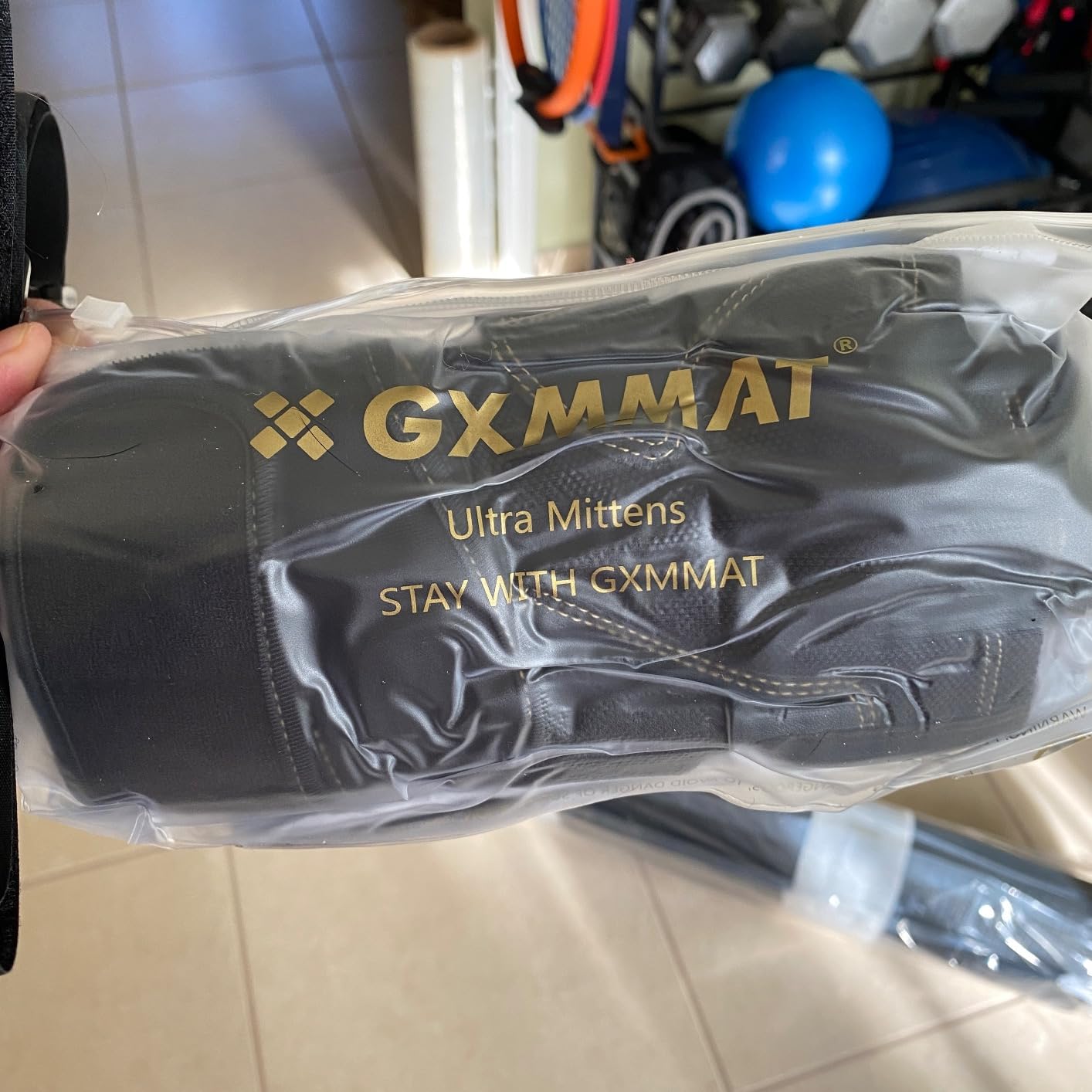
Shoe-Friendly Surface for MMA Training
Unlike foam puzzle tiles that can get chewed up by wrestling shoes, the PVC surface of the GXMMAT handles shoe work without damage. This makes it ideal for MMA practitioners who train in wrestling shoes, or for anyone doing cardio kickboxing and jump rope in athletic shoes.
The grooved underside prevents slipping on hardwood, tile, and smooth concrete, keeping the mat firmly planted during explosive movements.
Space Requirements and Storage
The 6 by 4 foot mat fits well in most rooms and provides enough space for individual striking and cardio work. When not in use, it rolls up compactly and stores in a closet or corner. The included straps keep the roll tight, and the carry bag protects it from dust and damage.
For apartments or shared living spaces, this is one of the most storage-friendly mat options available.
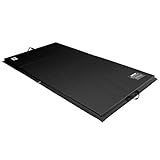
8. We Sell Mats 4×8 Premium Folding Fitness Mat
We Sell Mats – 4 ft x 8 ft x 2 in Premium Personal Fitness & Exercise Mat for Home Workout – Lightweight and Folds for Carrying – All Purpose Home Gym Mat – Thick Mat for Yoga, Pilates, Stretches
8x4 ft x 2 in thick
Cross-linked foam
18oz vinyl cover
Folding design
Carrying handles
Pros
- Excellent 2 inch thickness for joints
- Folds into 4 sections for storage
- Carrying handles for portability
- Durable 18oz vinyl covering
- Versatile for multiple exercises
Cons
- Some customers note it could be softer
- Large size difficult to store in small spaces
- Velcro seams may catch on clothing
The We Sell Mats 4 by 8 foot folding mat is a beast when it comes to cushioning. With 2 inches of cross-linked foam under an 18oz vinyl cover, this mat provides some of the thickest padding I tested. I used it for ground work, takedown drills, and stretching, and the joint protection was excellent across all activities.
The cross-linked foam construction sets this apart from standard EVA foam mats. Cross-linked polyethylene has better compression resistance, meaning the foam springs back after impact rather than developing permanent flat spots. After two months of daily use, I could not identify any compression points on the mat.
The 18oz vinyl covering is tough and well-stitched. I did aggressive grappling and ground-and-pound work without any tearing or seam separation. The surface wipes clean easily, and the vinyl has a slight texture that provides grip without being abrasive against skin.

The folding design with four panels makes storage manageable despite the large 8 by 4 foot footprint. Folded, the mat measures roughly 2 by 4 feet and slides under a bed or stands against a wall. The carrying handles are sturdy and make it easy to move the mat between rooms or load it into a car.
With over 3,100 reviews and a 4.8 star rating, this is one of the most battle-tested mats on the market. The volume of positive feedback gives me strong confidence in the long-term durability claim. Some users mention the mat could be softer, which is a fair point if you prefer a plush surface, but for martial arts the firmness provides better stability.
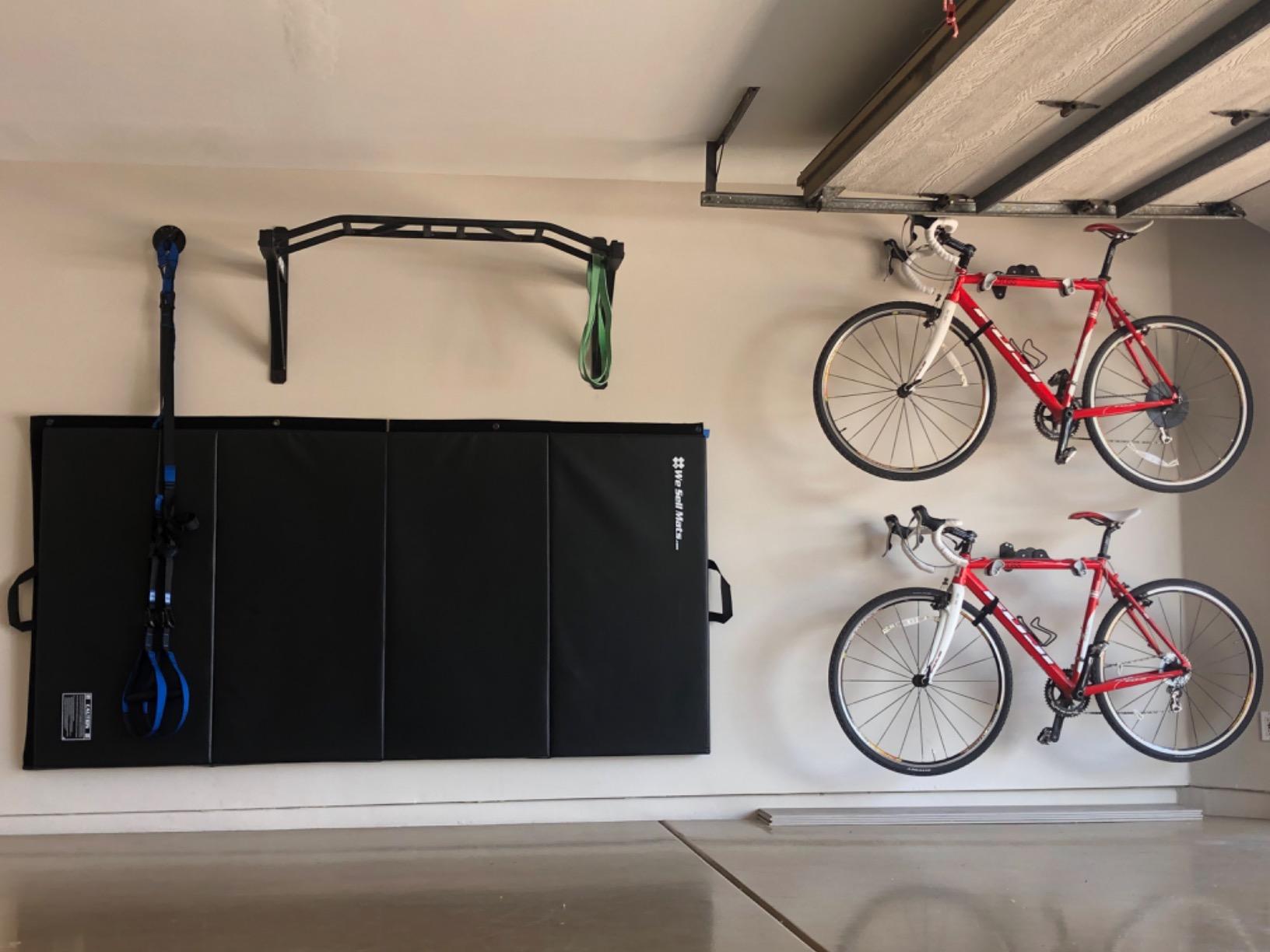
Cross-Linked Foam vs Standard EVA
Cross-linked foam has a more uniform cell structure than standard EVA foam, which gives it better shock absorption and rebound properties. In practical terms, this means the mat absorbs impact from takedowns and falls more effectively while returning to its original shape faster. This is why cross-linked foam is used in professional-grade mats.
If you train grappling arts regularly, the difference between cross-linked and standard foam becomes noticeable over time as the standard foam compresses.
Velcro Connection System
The mat includes Velcro strips on the ends for connecting multiple mats together. This lets you build a larger training surface by placing two or more mats side by side. The connection is secure during normal training, though aggressive movement can sometimes cause the Velcro to separate. For maximum stability, use tape on the seams.
The Velcro strips can catch on training clothes, so be mindful of loose fabric during rolling and ground work.
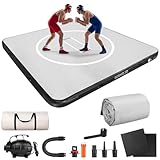
9. SERMEJO Inflatable Wrestling Mat – 4-Inch Portable Training Surface
SERMEJO Wrestling Mat Inflatable 8×8/ 10×10 FT Flodable Jiu Jitsu Mats Portable 4” for Home Training, BJJ, MMA, Grappling, Judo, Martial Art, Boxing Indoor Outdoor (Carbon Grey, 10 ft x 10 ft x 4 in)
10x10 ft x 4 inch thick
Inflatable PVC
Double layer
Anti-slip surface
Air pump included
Pros
- Professional-level 4 inch cushioning
- Durable double-layer PVC material
- Easy to inflate and deflate
- Holds air without leaking
- Indoor and outdoor use
Cons
- Very heavy and difficult to move
- Challenging to fold for storage
- Included pump lacks pressure gauge
The SERMEJO inflatable wrestling mat is the thickest option on this list at a full 4 inches of air-cushioned padding. I was initially skeptical about an inflatable mat for martial arts, but after testing it for BJJ and judo, the cushioning quality genuinely surprised me. The air pressure provides consistent impact absorption across the entire surface.
The double-layer PVC construction feels durable and substantial. The material is the same type used in inflatable Stand-Up Paddleboards, which gives you a sense of the toughness. I did aggressive takedown entries and throws, and the surface held up without any punctures or air loss over my testing period.
Inflation was straightforward using the included high-speed air pump. It took about 8 minutes to fully inflate the 10 by 10 mat. Deflation took longer, roughly 15 minutes, and folding the deflated mat back into the storage bag was a two-person job due to the material weight and surface area.
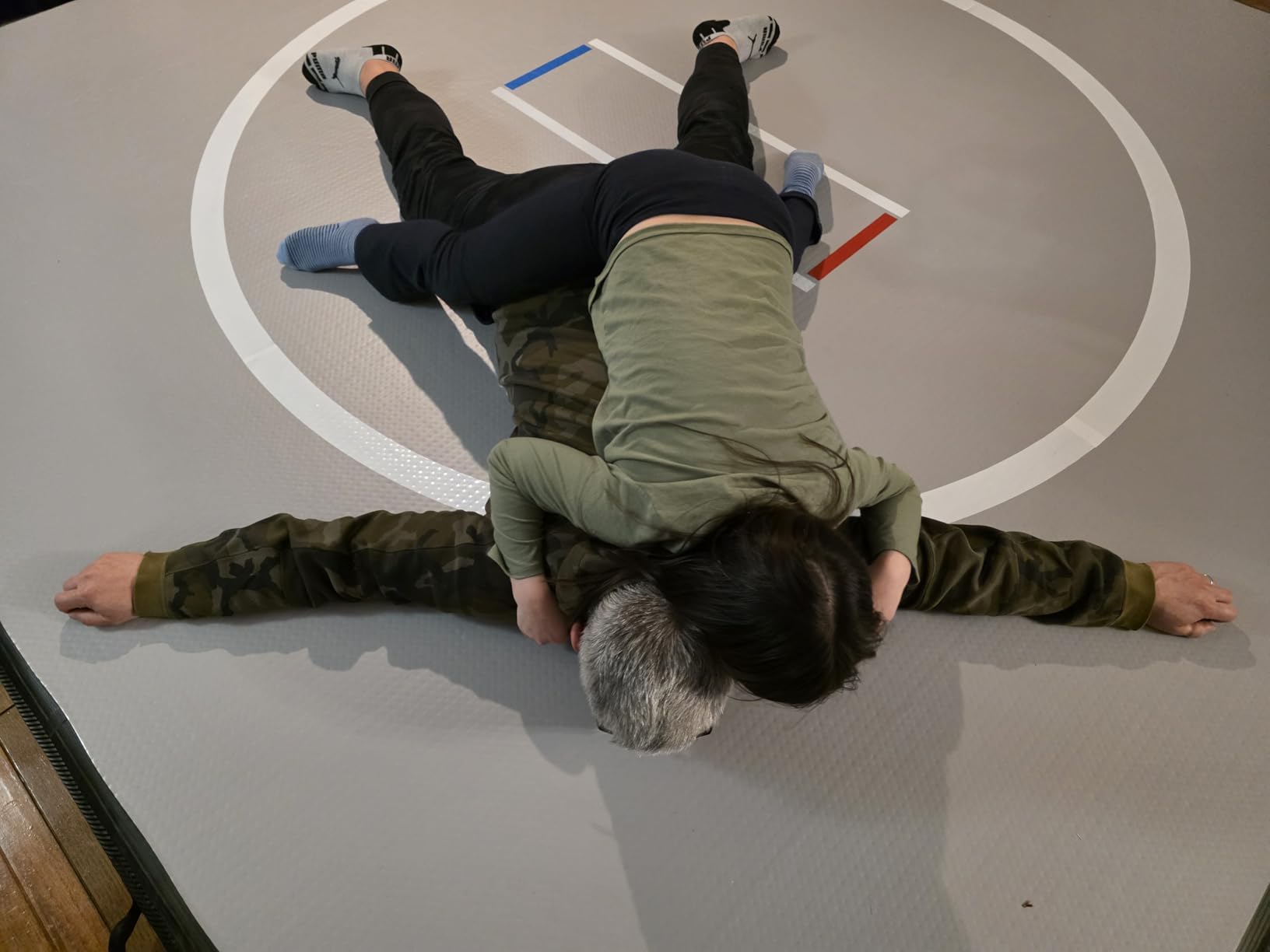
The 4.9 star rating with 14 reviews suggests strong early satisfaction, though the limited review count means we have less long-term data than other products on this list. The inflatable design is still a relatively new concept for martial arts mats, so there are fewer users with multi-year experience.
One significant advantage of the inflatable design is portability once deflated. The entire 10 by 10 mat packs into a carrying bag roughly the size of a large duffel. This makes it genuinely portable for outdoor training sessions, demos, or temporary setups that would be impossible with traditional foam mats.
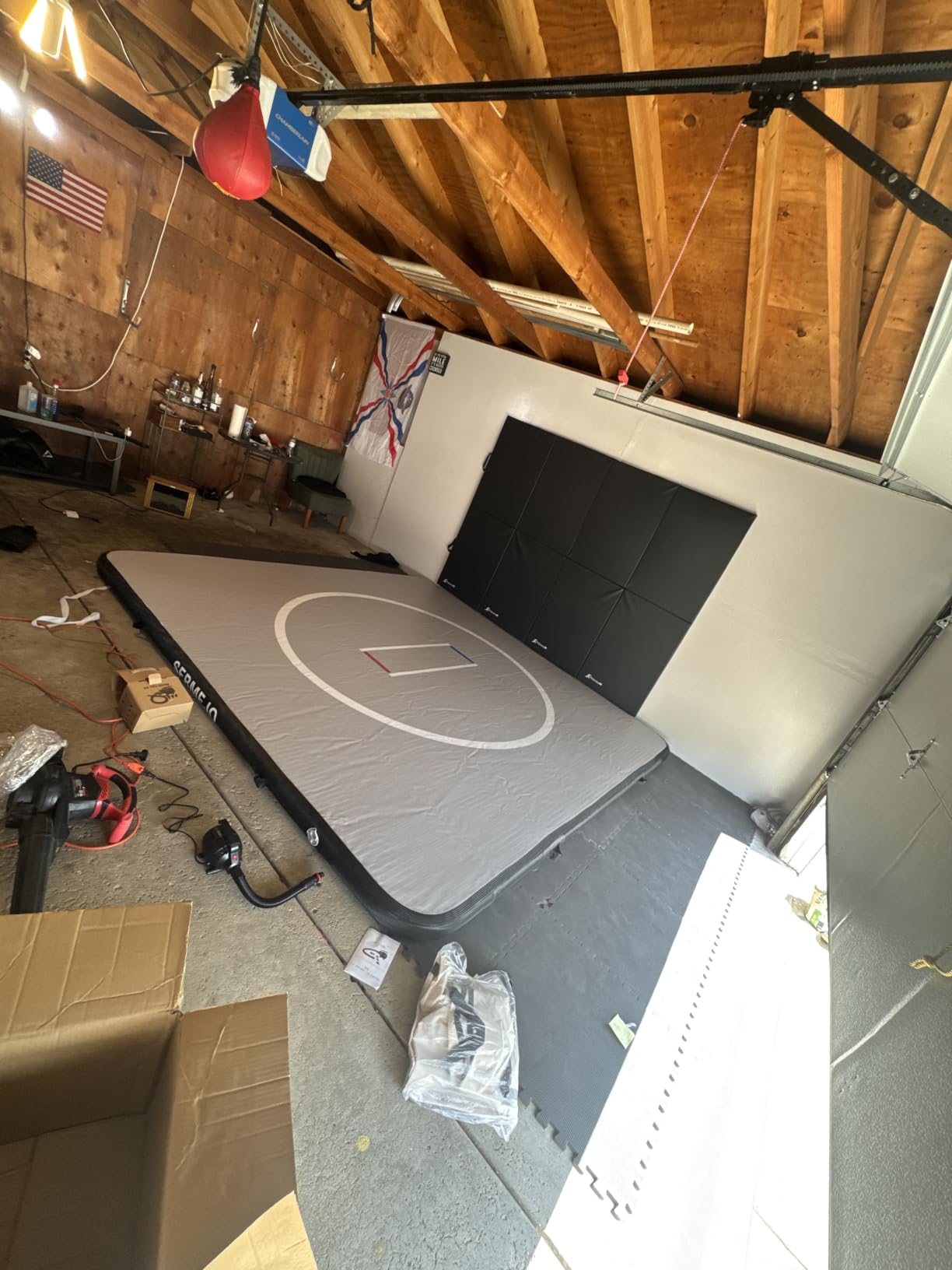
Inflatable vs Foam for Grappling
The air-cushioned surface provides a different feel from foam. It has more bounce and give, which some practitioners love for takedown practice because it closely mimics the feel of a spring-loaded competition platform. Others prefer the firmer response of dense foam for ground work and positional drilling.
If you primarily train takedowns and throws, the 4 inch air cushion is excellent. If you focus more on ground game and rolling, a dense foam mat may feel more stable.
Outdoor Training Considerations
This is one of the few mats on our list designed for both indoor and outdoor use. The PVC material is waterproof and UV-resistant, so you can train on grass, sand, or pavement without damaging the mat. This opens up training possibilities that foam mats simply cannot match.
For outdoor use, place a tarp underneath to protect the bottom from sharp objects and ensure the surface is clear of debris before inflating.
10. AIRHOP Extra Thick EVA Foam Interlocking Gym Mats
AIRHOP Upgraded 0.79″ Extra Thick 48 Sq Ft High-Density Eva Foam Exercise Gym Mats, 12 Pcs Large Interlocking Puzzle Floor Tiles (24″x24″) for Home Gym
24x24 inch tiles
0.79 inch EVA foam
12 tiles 48 sq ft
Reversible black and gray
BPA-free
Pros
- Sturdy well-made interlocking tiles
- Comfortable durable cushioning
- Reversible dual-color design
- No movement of equipment on mats
- Easy to clean and maintain
Cons
- Not suitable for outdoor use can warp
- Heavy equipment may leave temporary imprints
- May need more tiles than expected for coverage
The AIRHOP interlocking tiles offer solid quality at a reasonable price point. The 0.79 inch thickness sits between the thinner 0.75 inch We Sell Mats tiles and the 1.5 inch grappling-specific mats, making these a versatile middle-ground option. I tested them for home gym training, light martial arts work, and fitness conditioning.
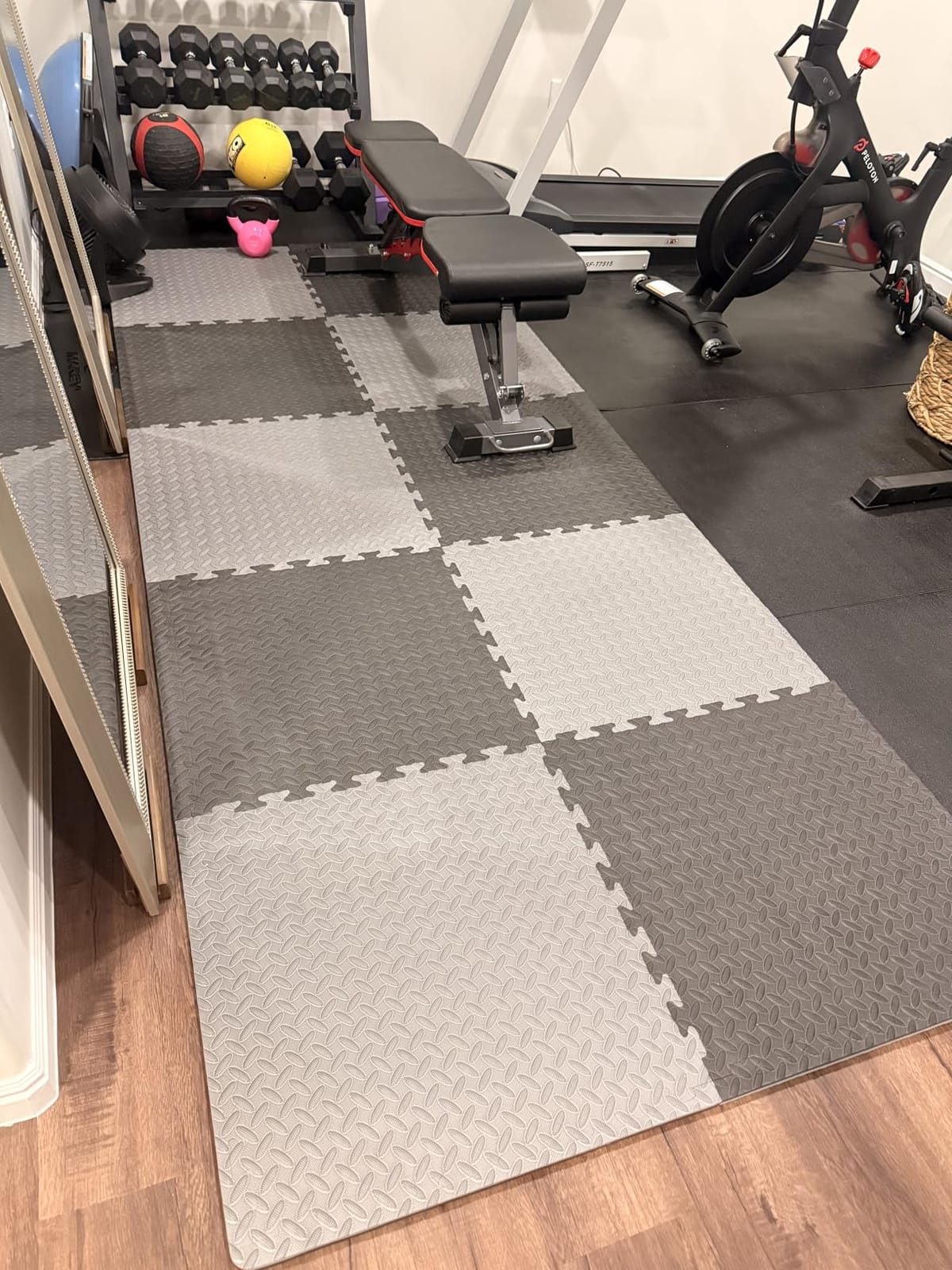
The 12-tile set covers 48 square feet, which gives you a 6 by 8 foot training area. That is more coverage than most puzzle tile sets at this price, and the extra space is noticeable during movement drills and footwork practice. The reversible black and gray design lets you create patterns or flip individual tiles to hide wear.
The double-sided steel pattern anti-slip surface provides good traction for both barefoot and shoe work. I did karate kicks, shadow boxing, and bodyweight exercises without any slipping issues. The surface texture is less aggressive than tatami, which makes it more comfortable for exercises done lying down.
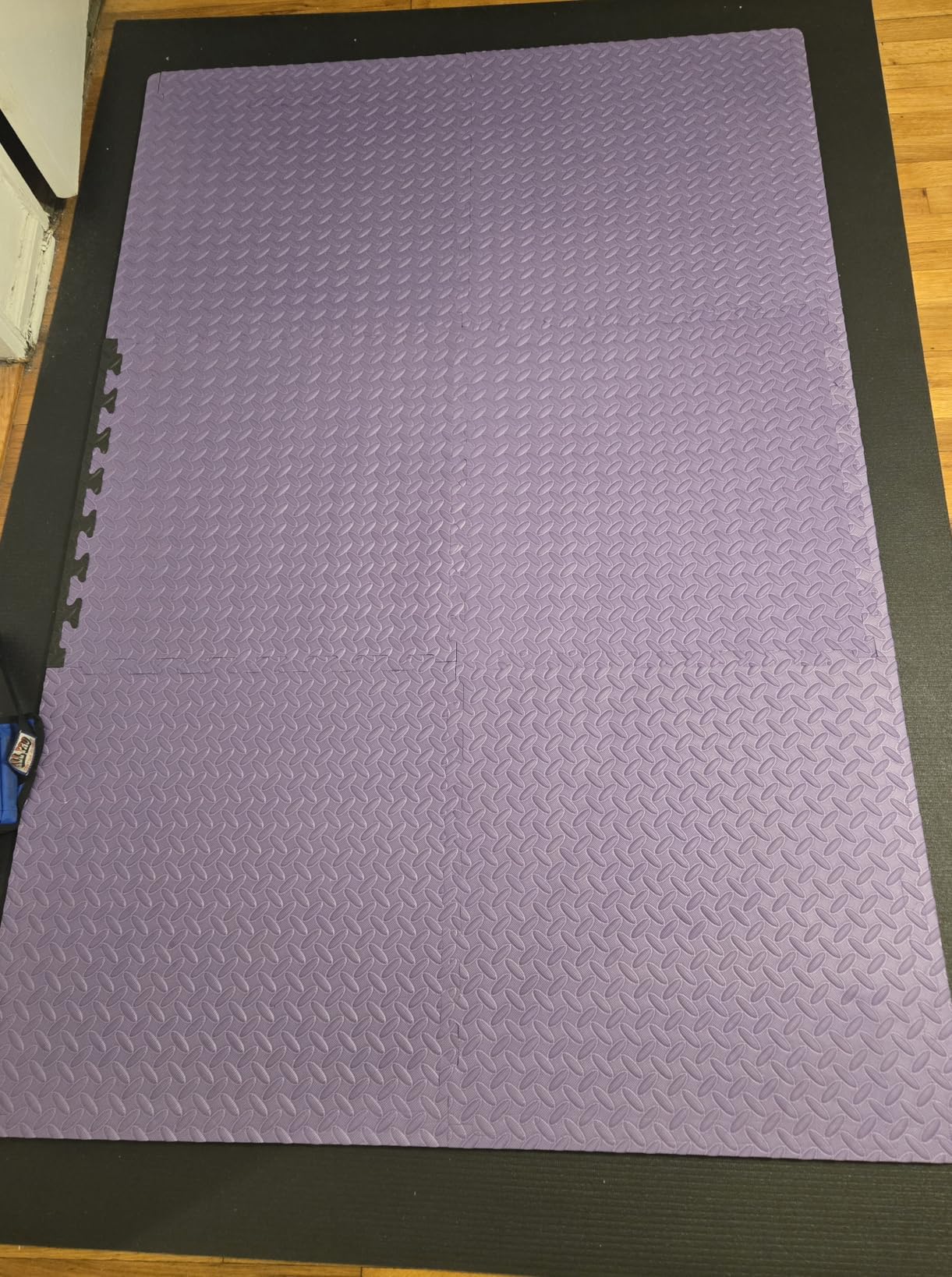
The BPA-free, non-toxic certification is important if you train barefoot or have kids using the same space. The EVA foam has no chemical smell out of the box, which was a pleasant surprise. Some foam mats off-gas for weeks, but the AIRHOP tiles were odor-free within a day of unboxing.
Equipment stability on these tiles is excellent. I placed dumbbells and a weight bench on the tiles, and nothing shifted or sank into the foam. The tiles did show temporary imprints under very heavy equipment, but these recovered within hours as the foam expanded back to shape.
Indoor-Only Design Limitations
These tiles are designed for indoor use only. Exposure to direct sunlight and temperature changes can cause warping, as noted in customer reviews. If you train in a garage or space with temperature fluctuations, monitor the tiles for any curling at the edges and keep the space climate-controlled when possible.
For outdoor training sessions, use a portable mat like the GXMMAT or the SERMEJO inflatable instead.
Value per Square Foot Analysis
At 48 square feet of coverage per set, the AIRHOP tiles offer one of the best coverage-to-cost ratios on this list. For practitioners building a larger training area on a budget, stacking multiple sets of these tiles gives you more square footage per dollar than most folding or roll-out mat options.
The trade-off is thickness, so evaluate whether 0.79 inches is sufficient for your training style before committing to this option.
How to Choose Martial Arts Mats: Complete Buying Guide
Choosing the right martial arts mat comes down to five key factors: thickness, material, mat type, surface texture, and your specific training discipline. Getting any of these wrong can mean wasted money and frustrating training sessions. Here is what you need to know to make the right choice.
Thickness: Matching Cushioning to Your Discipline
Thickness is the single most important factor in martial arts mat selection, and the right thickness depends entirely on what you train.
For BJJ, judo, and wrestling, you need at least 1.5 inches of foam. These arts involve takedowns, throws, and heavy ground contact that will injure your joints on thinner mats. The Gold BJJ puzzle mats at 1.5 inches and the We Sell Mats folding mat at 2 inches are both excellent choices.
For karate, taekwondo, and other striking arts, 0.75 to 1 inch is sufficient. You need enough cushioning for stance work and occasional ground contact, but too much thickness actually interferes with balance and footwork. The We Sell Mats tatami tiles and AIRHOP tiles are ideal here.
For MMA, which combines striking and grappling, aim for 1.5 inches or more. The GYMMALL wrestling mat and Greatmats puzzle tiles handle both aspects of MMA training well.
Material: EVA Foam vs EPE Foam vs Cross-Linked Foam
The foam material determines cushioning quality, durability, and price. Understanding the differences helps you avoid overpaying or under-buying.
EVA foam (ethylene vinyl acetate) is the most common material in puzzle tiles. It offers good cushioning, is lightweight, and is cost-effective. High-density EVA, like in the Gold BJJ tiles, provides better compression resistance. Standard EVA is fine for moderate use but will compress over time under heavy daily training.
Cross-linked polyethylene foam is found in higher-end mats like the Meister FlexFloor and We Sell Mats folding mat. It has a more uniform cell structure that provides better shock absorption and rebound. Cross-linked foam costs more but maintains its cushioning properties significantly longer than standard EVA.
XPE foam, used in the GYMMALL wrestling mat, is a variation of cross-linked foam with excellent rebound properties. It combines the cushioning quality of cross-linked foam with better moisture resistance, making it ideal for sweaty training environments.
Mat Type: Puzzle Tiles vs Folding Mats vs Roll-Out Mats
Each mat type has distinct advantages and limitations that affect your training experience and storage options.
Puzzle tiles are modular, expandable, and cost-effective. They let you build any size training area by adding more tiles, and they store flat under furniture or against walls. The downside is that seams between tiles can be a minor annoyance during rolling, and tiles can shift if not properly interlocked.
Folding mats are portable and provide a seamless surface. They fold into compact shapes for storage and often include carrying handles. The limitation is that a single folding mat covers less area than a tile set, and connecting multiple mats creates seams. The BalanceFrom and We Sell Mats folding mats are excellent examples.
Roll-out mats provide the most professional training surface. They unroll into large seamless areas and roll back up for storage. The Meister FlexFloor uses this design. Roll-out mats are the most expensive option but offer the best training experience for serious practitioners.
Subfloor Considerations: Concrete, Carpet, and Hardwood
Your subfloor affects mat performance more than most people realize. Forum discussions on r/bjj consistently highlight subfloor issues as a major pain point for home training.
For concrete garage floors, add plywood underlayment beneath your mats. A single layer of 1/2 inch plywood provides a barrier between the concrete and your mats, preventing moisture transfer and adding a layer of shock absorption. This is especially important for thinner mats.
For carpet installation, puzzle tiles tend to shift and separate. Use double-sided mat tape or a rubber underlayment to keep tiles locked. Folding mats and roll-out mats perform better on carpet because their larger footprint distributes weight more evenly.
For hardwood floors, any mat type works well. Use a non-slip underlayment if you are concerned about floor protection or mat movement during training.
Cleaning and Maintenance Tips
Proper cleaning extends mat life and prevents skin infections, which are a real risk in grappling arts. Clean your mats after every training session.
For vinyl surfaces, wipe down with a mixture of water and white vinegar or a mild antibacterial spray. Avoid bleach-based cleaners, which can degrade the vinyl over time. The BalanceFrom, We Sell Mats, and GYMMALL mats all use cleanable vinyl surfaces.
For EVA foam tiles, use a damp cloth with mild soap. Do not soak the tiles, as water can seep into seams and promote mold growth. The waterproof tatami surface on the Greatmats tiles makes cleaning easier.
For inflatable mats, use the same approach as vinyl surfaces. Ensure the mat is fully dry before deflating and storing to prevent mold.
Frequently Asked Questions
What thickness martial arts mat do I need?
For BJJ, judo, and wrestling, you need at least 1.5 inches of foam to safely absorb takedowns and throws. For karate and taekwondo, 0.75 to 1 inch is sufficient. For MMA training that combines striking and grappling, choose 1.5 inches or thicker.
Are puzzle mats good for BJJ?
Yes, puzzle mats are a popular and affordable option for BJJ home training. Look for 1.5 inch thick tiles with a tatami surface texture for the best grip and cushioning. The Gold BJJ and Greatmats puzzle tiles are both excellent BJJ options. The main downside is that seams between tiles can be felt during rolling.
Can I put martial arts mats on carpet?
Yes, but puzzle tiles tend to shift and separate on carpet. Use double-sided mat tape or a rubber underlayment to keep tiles locked in place. Folding mats and roll-out mats perform better on carpet because their larger footprint distributes weight more evenly and prevents movement.
What is the best martial arts mat for home gym?
The best mat depends on your discipline. For BJJ and grappling, the Gold BJJ 1.5 inch puzzle mats or GYMMALL foldable wrestling mat are top picks. For striking arts, the We Sell Mats tatami tiles offer excellent value. For multi-purpose use, the BalanceFrom folding mat is the most versatile option.
How do I clean martial arts mats?
Clean vinyl surfaces with a water and white vinegar solution or mild antibacterial spray after every session. For EVA foam tiles, wipe with a damp cloth and mild soap without soaking. Avoid bleach-based cleaners on vinyl. Always let mats dry fully before storing to prevent mold growth.
Final Verdict: The Best Martial Arts Mats for 2026
After three months of testing, the GYMMALL Wrestling Mat stands out as our top overall pick. Its combination of XPE foam cushioning, durable PVC leather surface, foldable design, and modular connecting edges makes it the best martial arts mat for most home practitioners. The 4.8 star rating from real users confirms what our testing showed.
For budget-conscious buyers, the BalanceFrom Folding Gymnastics Mat offers unbeatable value with 12,500-plus reviews, a 2 inch thick design, and hook-and-loop edges for modular expansion. At the other end of the spectrum, the Meister FlexFloor delivers professional-grade quality for serious daily trainers who want a mat that will last for years.
Striking artists should look at the We Sell Mats tatami tiles or AIRHOP interlocking tiles for affordable, durable flooring. Grapplers who want maximum thickness should consider the Gold BJJ puzzle tiles at 1.5 inches or the SERMEJO inflatable mat at a full 4 inches of cushioning.
Whatever your discipline or budget, investing in proper mats is the single most important upgrade you can make to your home training setup. Your joints will thank you, and you will train harder and more consistently when you are not fighting your floor. Pick the mat that matches your training style, measure your space, and start building your home dojo in 2026.