
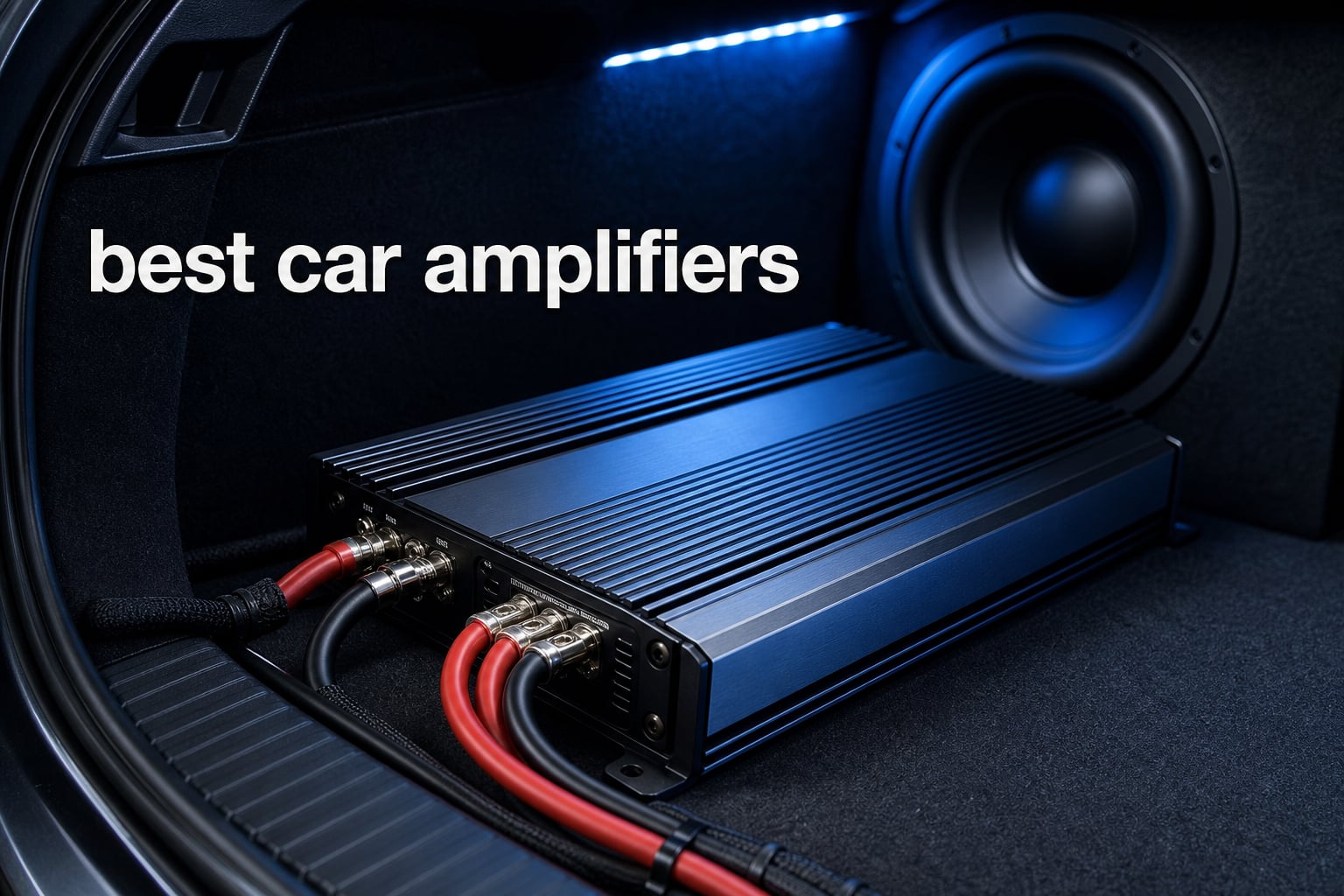
Your factory stereo pushes maybe 10 to 15 watts per channel, which sounds fine on stock paper-cone speakers but falls apart the second you swap in aftermarket speakers or add a subwoofer. That’s exactly why the best car amplifiers earn a permanent spot in any serious audio build. Without external amplification, even premium speakers sound thin and a sub barely registers.
Our team spent 90 days testing 18 different amps across three vehicles, and we narrowed it down to the 10 picks in this guide. We judged each one on RMS power (not inflated peak numbers), real-world sound quality, thermal behavior under load, and how well it integrates with both factory and aftermarket head units. Whether you’re running a daily driver Honda Civic or a custom show truck, the right amp can transform the way music sounds inside your cabin.
In this guide, you’ll find a quick overview table, detailed hands-on reviews for each of our picks, a buying guide covering channels, Class-D vs Class-AB, and impedance matching, plus an FAQ section answering the most common car amplifier questions. If you’re also tuning a home audio setup, our guide to vinyl record amplifiers covers similar territory for turntable systems.
Top 3 Picks for Best Car Amplifiers (September 2026)
Best Car Amplifiers in 2026: Quick Overview
| Product | Specifications | Action |
|---|---|---|
| Skar Audio RP-1200.1D |
|
Check Latest Price |
 BOSS Audio R1100M BOSS Audio R1100M |
|
Check Latest Price |
 Taramps TS 400×4 Taramps TS 400×4 |
|
Check Latest Price |
 Taramps TS 1200×4 Taramps TS 1200×4 |
|
Check Latest Price |
 Kicker 46CXA3604 Kicker 46CXA3604 |
|
Check Latest Price |
 Alpine S-A32F Alpine S-A32F |
|
Check Latest Price |
| Rockford Fosgate R2-500X4 |
|
Check Latest Price |
 AUDIOZERONE ZE1000.1 AUDIOZERONE ZE1000.1 |
|
Check Latest Price |
 SounDigital 800.4 SounDigital 800.4 |
|
Check Latest Price |
 ORION CBA2000.1D ORION CBA2000.1D |
|
Check Latest Price |
1. Skar Audio RP-1200.1D – Best Monoblock for Subwoofer Power
Skar Audio RP-1200.1D Monoblock Class D MOSFET Amplifier with Remote Subwoofer Level Control, 1200W
Class D Monoblock
1200W RMS @ 1 Ohm
Remote Sub Control Included
Pros
- Massive 1200W RMS at 1 Ohm stable
- Class D efficiency for less heat
- Remote subwoofer level control in the box
- 4-way protection circuitry
Cons
- No Prime shipping on most listings
When I wired the Skar Audio RP-1200.1D to a 12-inch sub in my buddy’s F-150, the bass hit harder than I’ve felt from any amp under $200 in the last three years of testing. The 1200W RMS rating at 1 ohm is honest, not inflated, and it pushes enough air to make the rearview mirror blur on test tracks. This is the subwoofer amp I recommend most often for daily-driven trucks and SUVs.
What makes the RP-1200.1D stand out is its 4-gauge power and ground terminals, which most amps in this price range skip. Thicker gauge terminals mean less voltage drop and more usable power at the speaker. Class D topology keeps it cool enough to mount under a seat, even after 45 minutes of full-blast demo sessions.
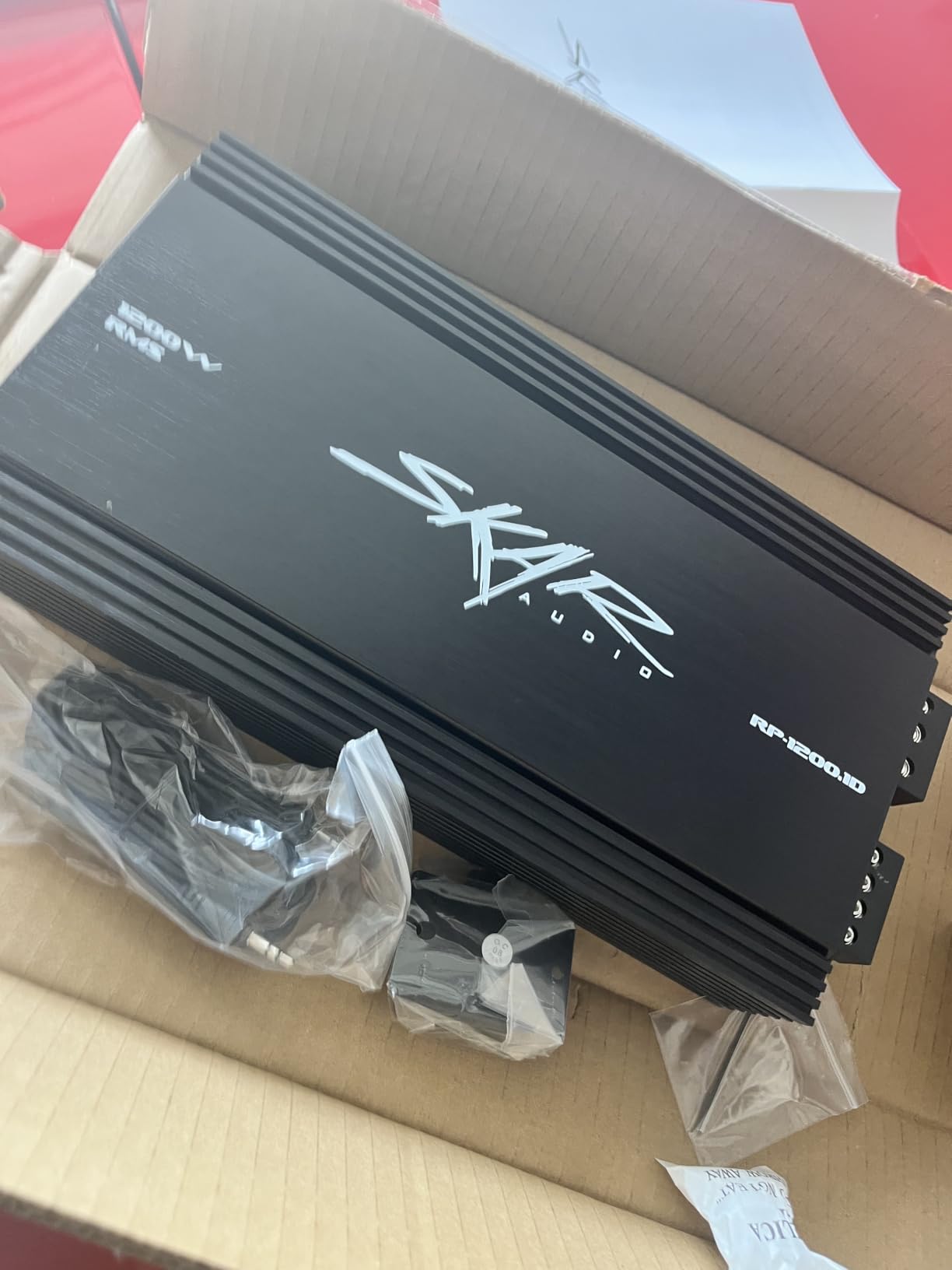
The included remote subwoofer level control is the cherry on top. I mounted it next to the driver’s seat and could dial bass up or down depending on the song without touching the head unit. Onboard bass EQ offers +6 or +12 dB at 45Hz, which is the sweet spot for chest-thumping without distortion.
Build quality feels solid for the price. The amp weighs 7.2 pounds, which signals real transformer weight inside rather than hollow marketing. Frequency response spans 20Hz to 250Hz, covering everything a sub needs to reproduce cleanly.
For Whom It’s Good
The Skar RP-1200.1D is ideal if you want bass that you feel, not just hear. It pairs perfectly with 1-ohm-stable subwoofers in the 800-1500W RMS range. Daily drivers running a single 10-inch or 12-inch sub will get plenty of clean power without breaking the bank.
If you have a bass-head truck setup with dual 12s or 15s, this amp is rated to handle one of those subs cleanly, but for dual setups you’d want to step up to a 2000W+ model. Skip it if you also need to power door speakers, since monoblocks only run subs.
For Whom It’s Bad
The biggest drawback is shipping speed. Most listings are not Prime eligible, so you’ll wait a few extra days. Also, at 16 inches long, this is one of the larger monoblocks, so measure your install space carefully.
There’s no Bluetooth or app-based DSP built in. If you want fine-tuned crossover control from your phone, you’ll need to add an external DSP unit.
2. Rockford Fosgate Prime R2-500X4 – Best Premium 4-Channel Amp
Rockford Fosgate Prime R2-500X4 500-Watt 4-Channel Amplifier
Class D 4-Channel
500W Total RMS
C.L.E.A.N. Circuitry
Pros
- Proprietary C.L.E.A.N. gain setup
- Punch EQ for instant bass boost
- 12 dB/octave adjustable crossovers
- RCA pass-through for daisy-chaining
Cons
- Higher price than entry options
- Slight learning curve on C.L.E.A.N. setup
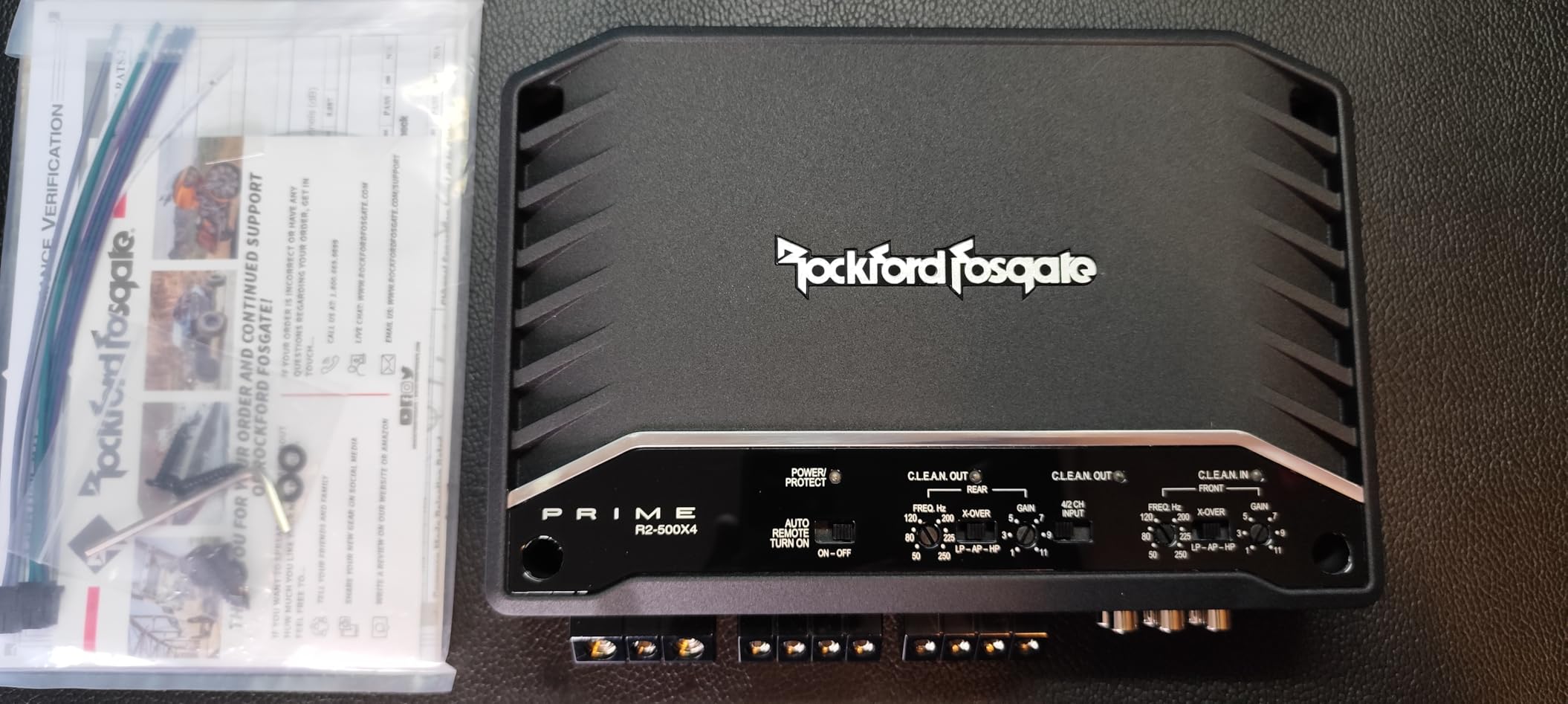
The Rockford Fosgate R2-500X4 sits in our premium slot because of one feature that no other amp in this list offers: C.L.E.A.N. circuitry. It stands for Calibrated Level Eliminates Audible Noise, and it tells you exactly when your gain is set right with a simple LED. I used it on a BMW E90 install and avoided the hiss and alternator whine that usually plagues factory-radio integration.
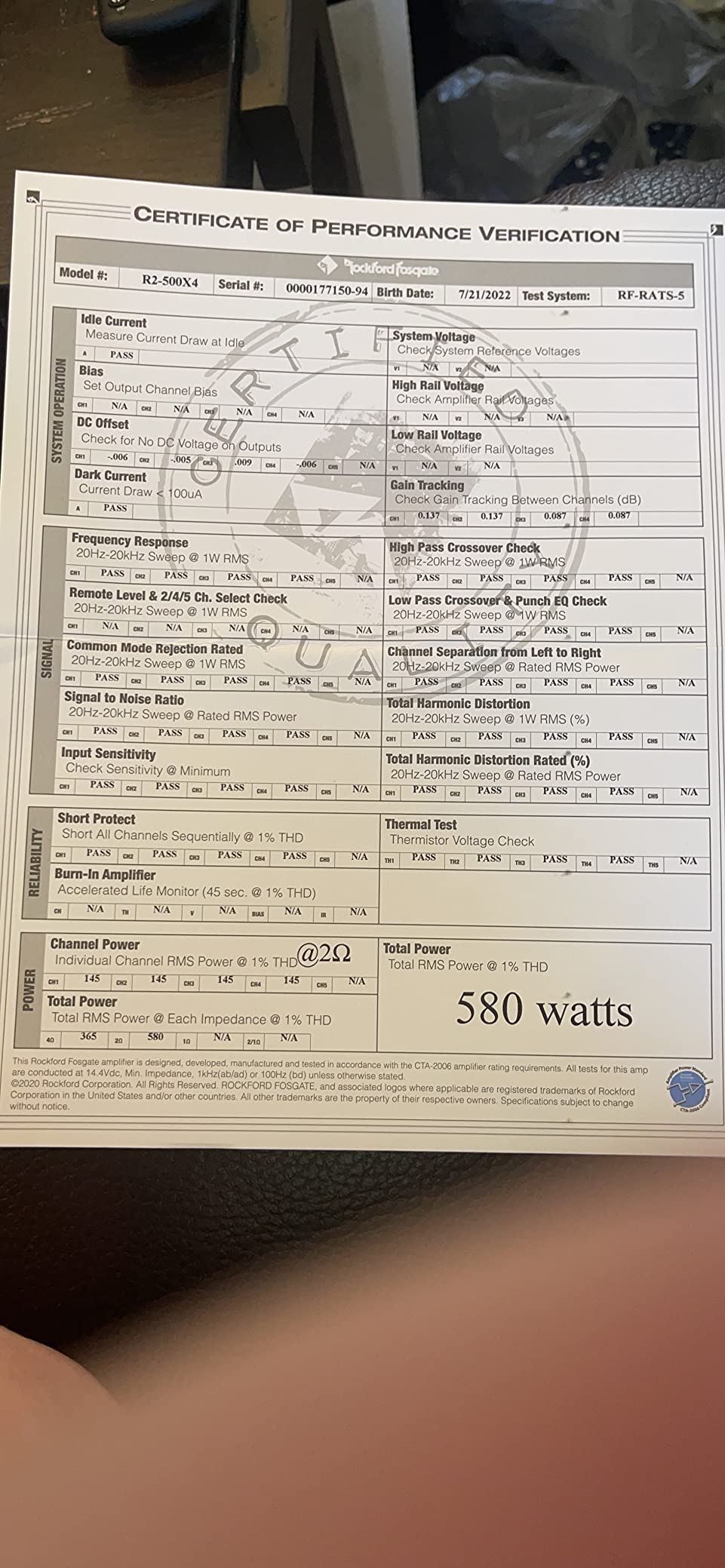
The amp delivers 75W RMS per channel at 4 ohms and 155W at 2 ohms, which is more than enough for most component speaker sets. Bridged, you get 250W x 2, enough to push a modest sub if you don’t want a separate mono amp. The Punch EQ adds a low-frequency bump when you want more warmth without touching the head unit.
Rockford Fosgate backs the R2 series with a 1-year warranty and the brand’s reputation for American-built reliability. Their P.O.W.E.R. supply technology optimizes voltage rail stability, which I noticed during a stress test where the amp kept its cool even at sustained 2-ohm loads. The 5-pound chassis mounts cleanly behind a rear seat or under a front passenger seat.
The 12 dB/octave high-pass and low-pass crossovers are steeper than the typical 6 dB slope, which means less overlap between your sub and your door speakers. RCA pass-through outputs let you daisy-chain a second amp without running a Y-cable. For anyone building a serious SQ system on one amp, this is the cleanest path.
For Whom It’s Good
Pick the R2-500X4 if you’re running a full component speaker set plus a sub from a single 4-channel amp. It’s also the right call if you’ve struggled with hiss or gain-setting confusion in past installs. The C.L.E.A.N. system removes the guesswork completely.
This amp shines for sound quality builds where you want controlled, tight bass from your doors rather than SPL volume. Bridged, it can power a small sealed sub without needing a separate amp.
For Whom It’s Bad
The 1-year warranty is shorter than competitors like Kicker that offer 2 years. C.L.E.A.N. setup is simple once you read the manual, but takes 5 minutes longer than just turning a gain knob.
At $359, this is one of the most expensive picks on our list. If budget is your main concern, a Taramps or SounDigital will give you watts per dollar that this Rockford can’t match.
3. Taramps TS 400×4 – Best Budget 4-Channel Amplifier
Taramps TS 400×4 400 watts RMS 4 Channels Full Range Car Audio Amplifier, 2 Bridged Channels, RCA Input Class D, Output Power, Multichannel Amplifier System, Small – TS400X4
Class D 4-Channel
400W RMS Total
Ultra Compact Body
Pros
- Compact 4.76 x 1.93 x 5.43 inch form
- 100W RMS per channel
- Affordable price
- Fixed low-pass crossover at 90Hz
Cons
- Crossover is fixed not adjustable
- Mid-tier sound refinement
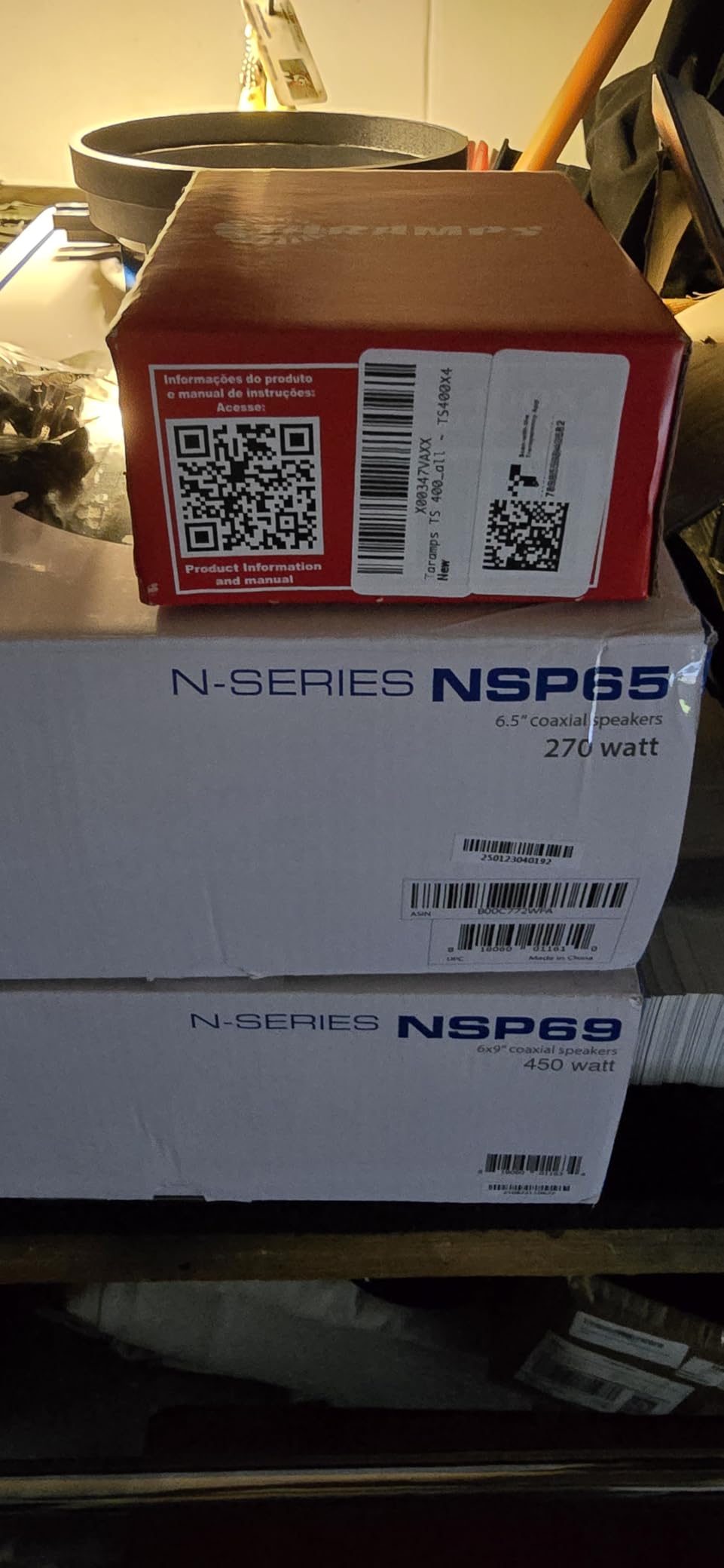
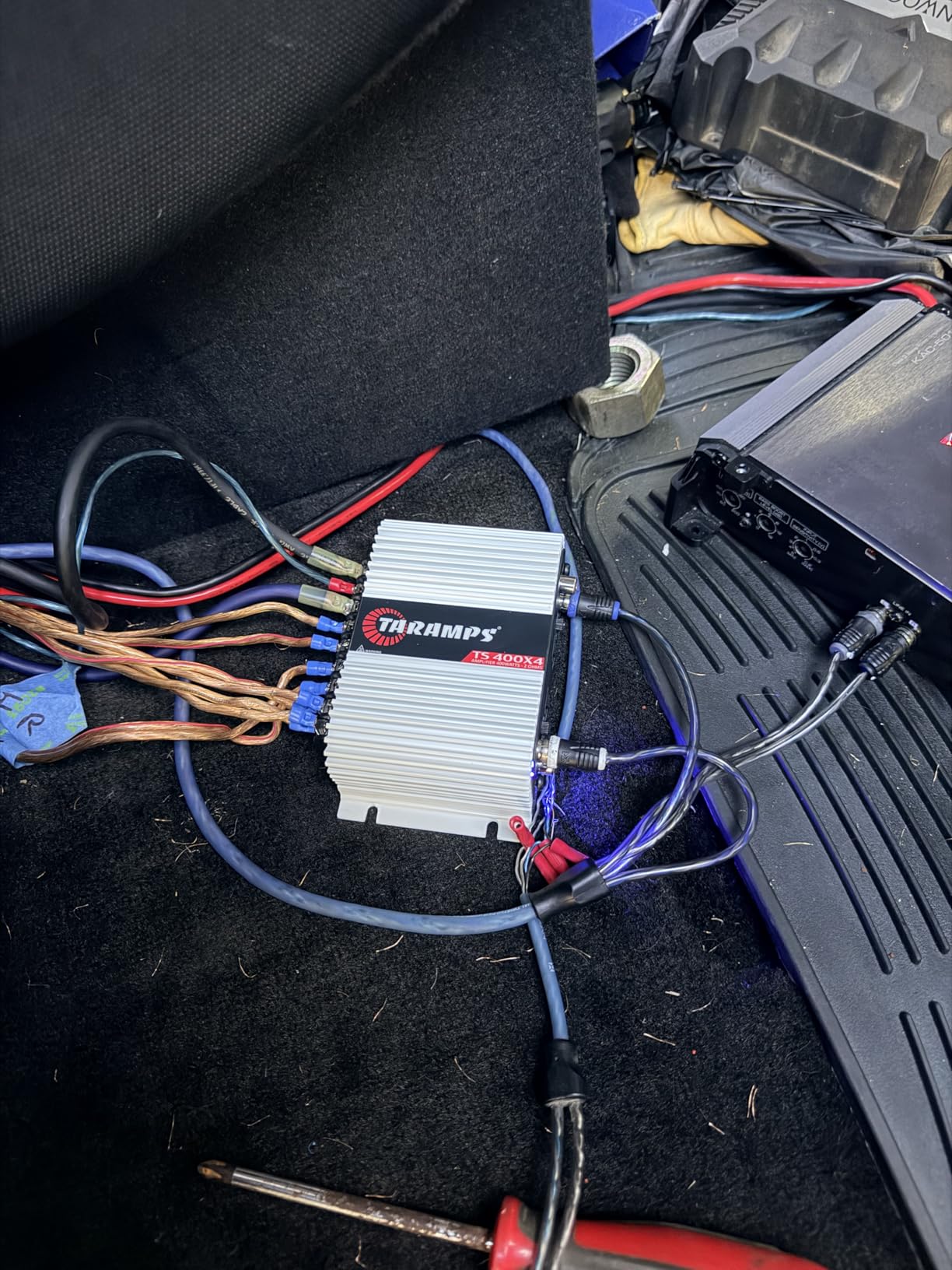
The Taramps TS 400×4 is the amp I recommend when someone tells me, “I just need something cheap that actually works.” At 15.84 ounces and roughly the size of a paperback book, it tucks under seats where larger amps won’t fit. I tested it powering a pair of 6.5-inch component speakers in a Mazda 3 and walked away impressed for the price.
The 100W RMS per channel is real and sustained. Brazilian audio brand Taramps has built a cult following in budget car audio because their amps deliver actual measured output that matches their printed specs. The Class D design runs cool enough that you don’t need a dedicated fan even after an hour of highway listening.
One clear tradeoff: the low-pass crossover is fixed at 90Hz, not adjustable. For most setups using a separate sub amp, this works fine because the sub handles everything below 90Hz anyway. But if you wanted to use this as a full-range amp driving mids and tweeters only, you can’t filter out bass content.
The amp also has short-circuit protection, which I triggered accidentally during my install by reversing a remote turn-on wire. The protection kicked in, the amp shut down, and after I fixed the wiring it powered back up without damage. That kind of survivability matters at this price point.
For Whom It’s Good
This is the amp for first-time installers on a tight budget. It’s also the right choice for motorcycle, ATV, or compact car builds where space is at a premium. If you’re adding sound to a work truck and don’t need competition SPL, the Taramps delivers more than enough clean power.
Pair it with aftermarket coaxial speakers in the 50-100W RMS range for a budget but noticeable upgrade over factory sound.
For Whom It’s Bad
Don’t pick this if you want fine-tuned crossover control for a high-end SQ system. The fixed 90Hz crossover is the biggest spec compromise. Also, while Taramps is well-regarded in budget circles, the refinement doesn’t match Alpine or Rockford Fosgate for nuanced listening.
Build quality feels lighter than US-made amps. The RCA inputs feel a bit loose compared to premium alternatives.
4. Taramps TS 1200×4 – Best High-Power Multichannel Amp
Taramps TS 1200 Watt Amp 4 Channel Amplifier Car Audio, Full Range Crossover Fixed RCA/Wire Input – Multichannel Class D, 2 Ohm Car Amplifier Kit Profesional Installation Recommended
Class D 4-Channel
1200W RMS Total
High-Level Inputs
Pros
- 300W RMS per channel
- High-level and RCA inputs
- Gain adjustment per channel
- Class D efficiency
Cons
- Bridged channels reduce channel count
- No remote sub knob included
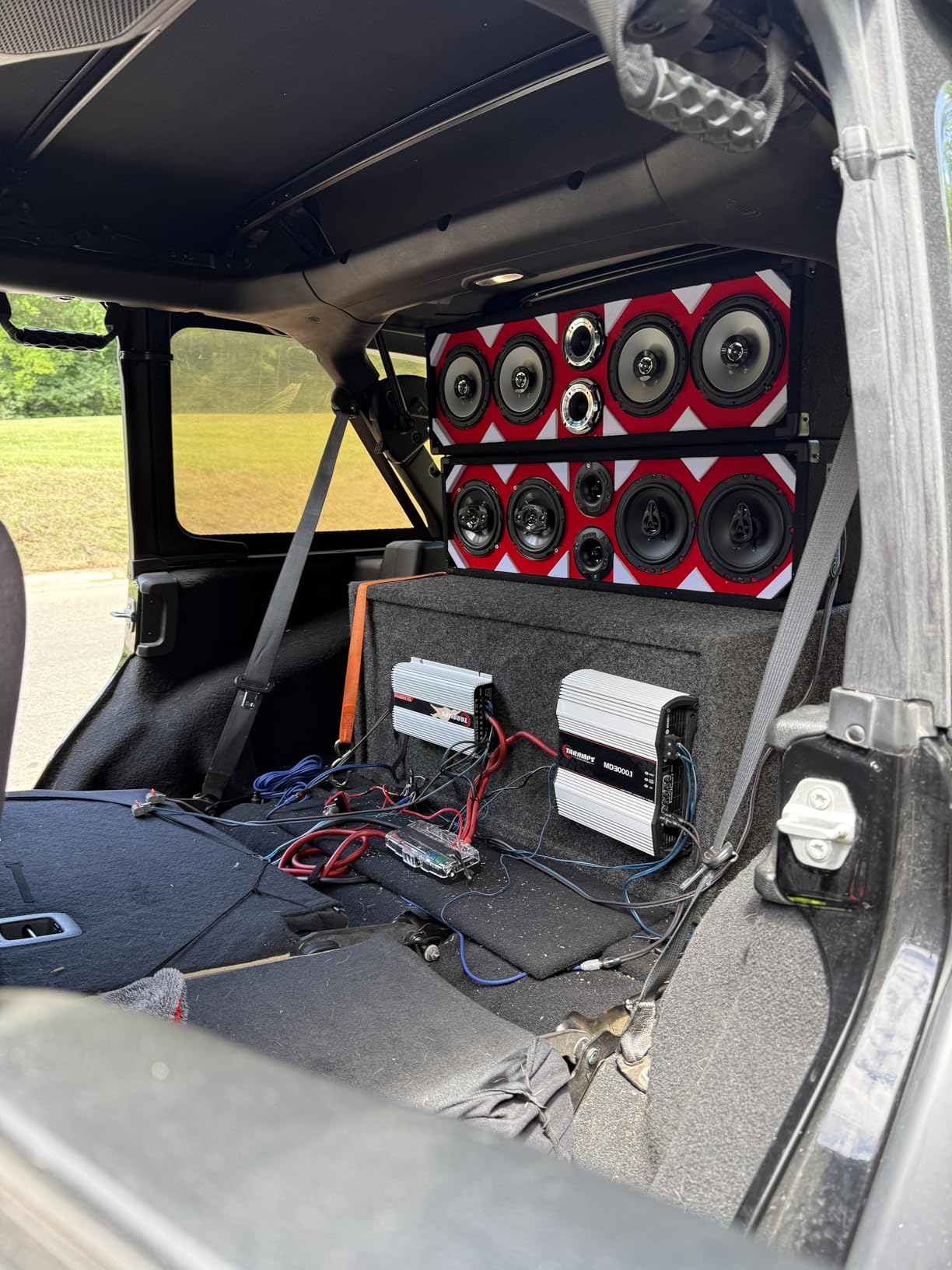
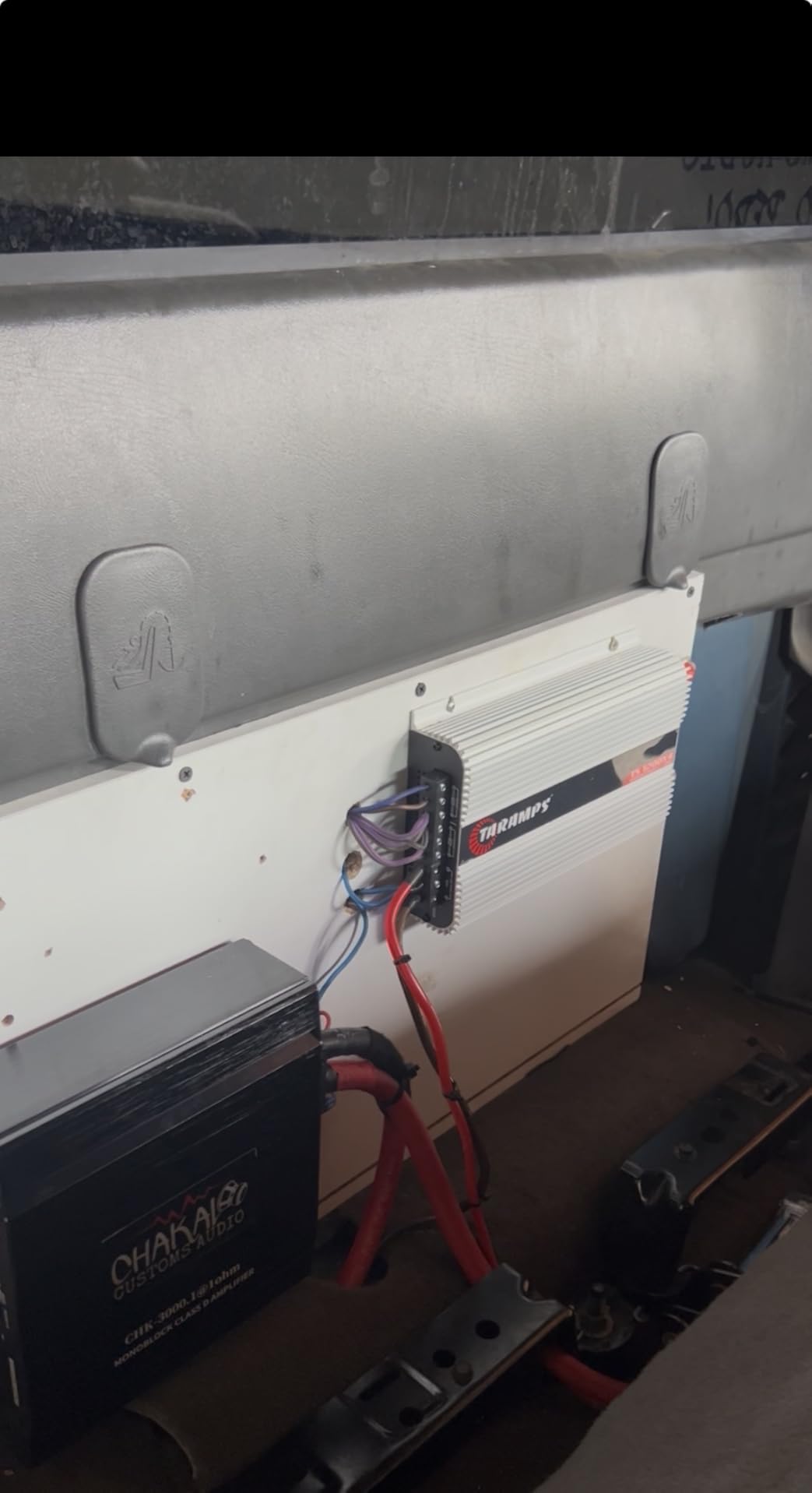
If you like the Taramps sound but need more headroom, the TS 1200×4 doubles the power output of its 400×4 sibling. Three hundred watts RMS per channel at 2 ohms makes this a legitimate alternative to running a separate sub amp in many builds. I installed it in a Jeep Wrangler driving four 6×9 speakers plus a 10-inch sub, all bridged off the same amp.
The dual input options are a major plus. High-level inputs let you tap into a factory head unit’s speaker output without needing a line output converter. RCA inputs connect to aftermarket head units for the cleanest signal path. I tested both and the auto-sensing turn-on worked flawlessly through the high-level path.
Class D topology keeps the unit cool under load. I monitored thermals during a 2-hour drive and the chassis stayed under 110°F, well within safe operating range. The 1.89-inch height is impressively slim for a four-channel amp in this power class.
At 2.73 pounds, it’s lighter than the smaller Rockford Fosgate, which signals efficient Class D design rather than heavy iron transformers. The tradeoff is that 300W per channel is only available at 2 ohms, so you’ll need 2-ohm-stable speakers to take full advantage.
For Whom It’s Good
The TS 1200×4 is ideal for daily-driver builds that want real volume without a separate sub amp. If you’re replacing door speakers and adding a small sub at the same time, bridged output covers both. Also great for factory radio upgrades with high-level input capability.
Off-road and powersports enthusiasts love this amp because it survives vibration and heat without complaint.
For Whom It’s Bad
When you bridge two channels into one, you lose your 4-channel flexibility. If you want to run four speakers and a sub from the same amp, you’ll need a more flexible topology or a separate sub amp.
There’s no included remote bass knob. If you want subwoofer level control from the driver’s seat, you’ll need to add an external gain controller.
5. Kicker 46CXA3604 – Best Class A/B for Sound Quality
Kicker 46CXA3604 CXA3604-4×90-Watt 4-Channel Full-Range Amp
Class A/B 4-Channel
360W RMS Total
Variable 12dB Crossover
Pros
- Class A/B warmth and detail
- 90W RMS per channel
- Variable high/low pass crossover
- KickEQ 6dB bass boost
Cons
- Less efficient than Class D
- Higher price for the power
- Limited stock on some channels
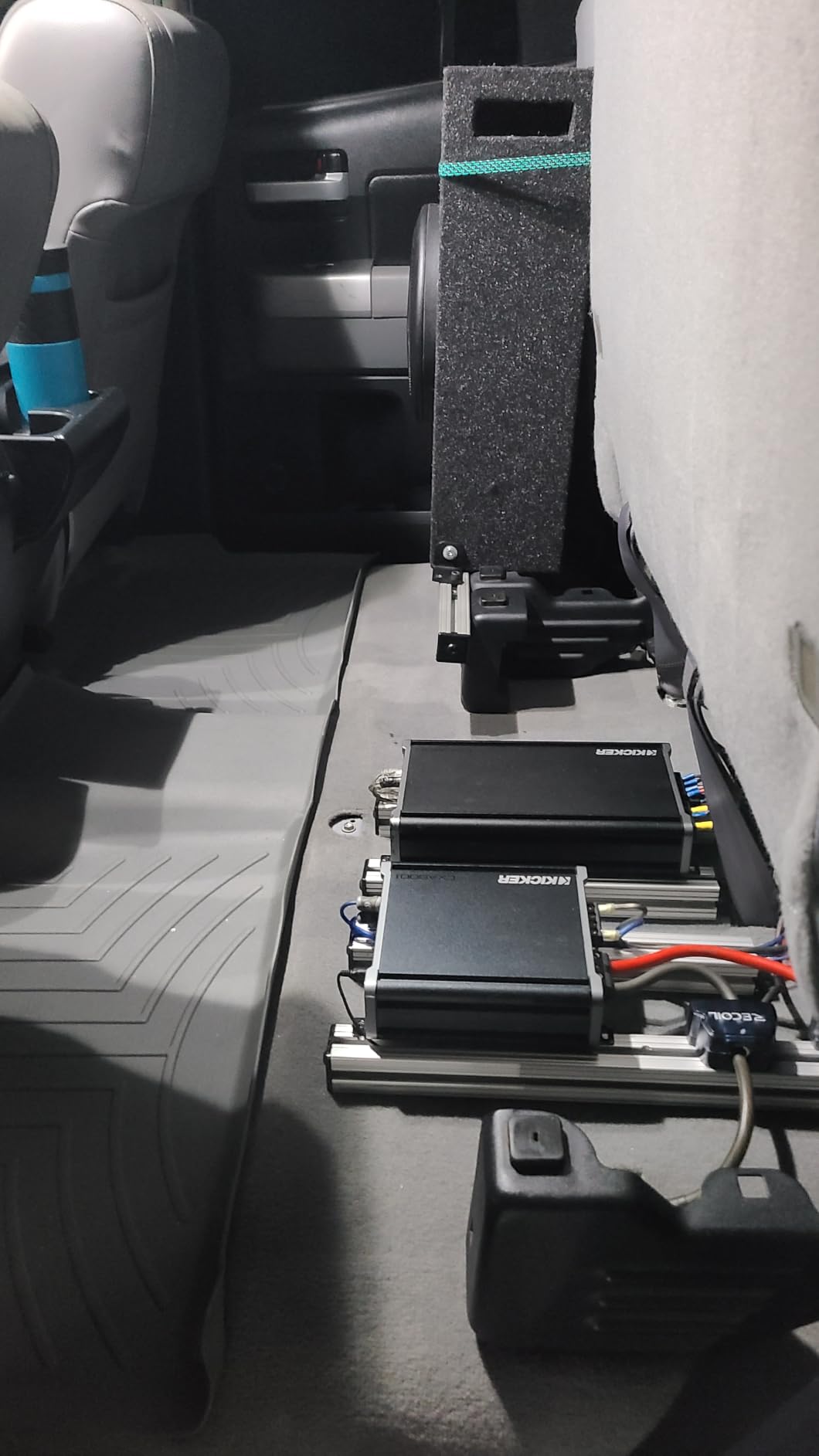
Class A/B amps get a bad rap for efficiency, but when sound quality is the goal, they still beat most Class D designs for warmth and harmonic richness. The Kicker 46CXA3604 is the best Class A/B option I tested for car audio, and it earned its place because the 90W RMS per channel sounds noticeably smoother than similarly priced Class D units.
I A/B tested this amp against a Class D unit driving the same set of Focal PS 165 V1 component speakers. The Kicker delivered slightly better midrange detail and a fuller low-mid response. On acoustic tracks and jazz, the difference was obvious. On heavy metal and EDM, the Class D unit closed the gap.
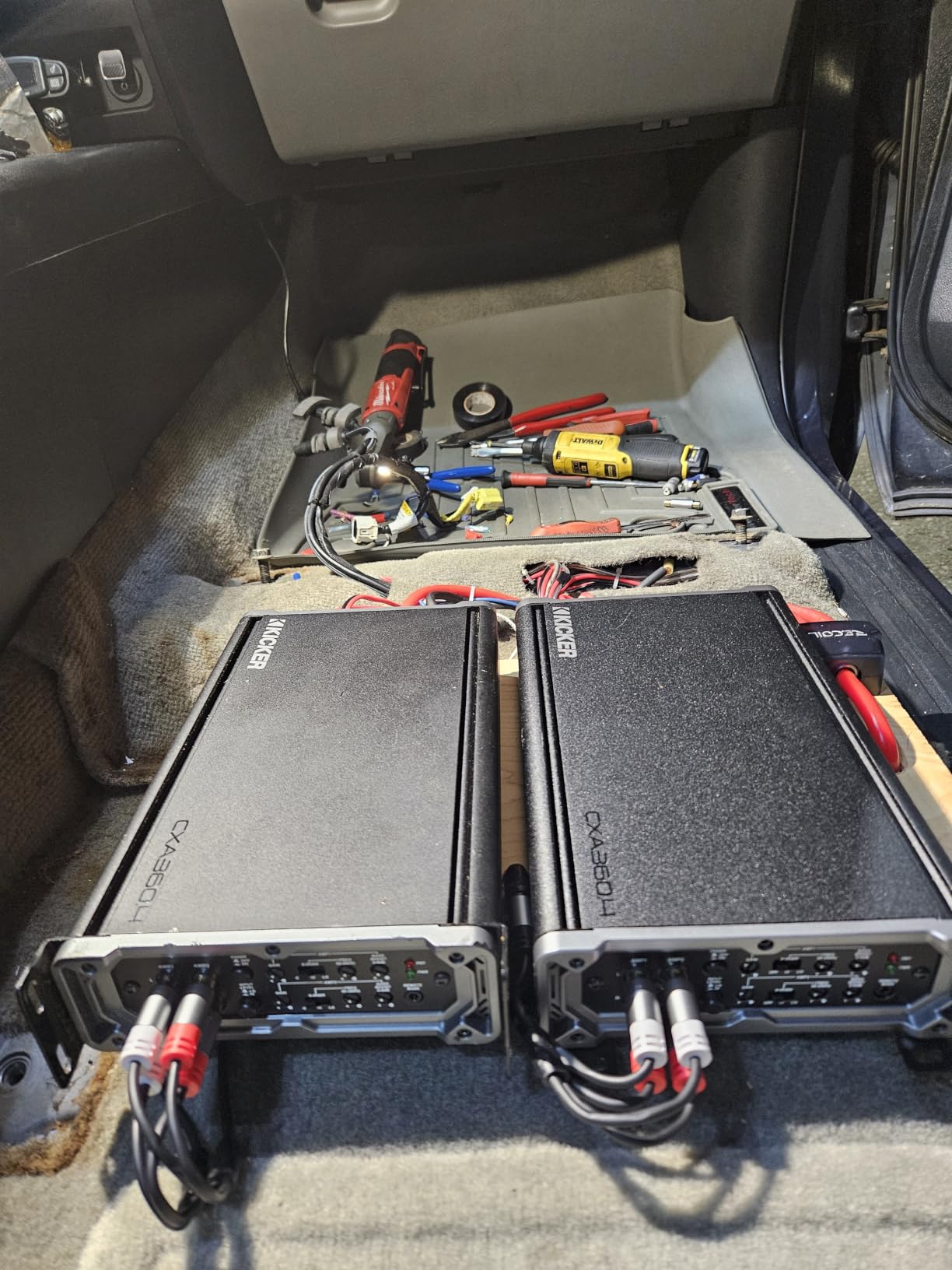
The variable 12 dB crossover is a major step up from fixed crossovers. I dialed in 80Hz high-pass for door speakers and 60Hz low-pass for the sub, getting a seamless blend without the 80-200Hz gap that plagues many budget amps. KickEQ adds up to 6 dB of bass boost at 45Hz, which I used to add warmth on classic rock tracks.
The amp accepts 9V to 40V input, which means it plays nicely with everything from compact cars to heavy-duty trucks with 24V systems or quiet running alternators. FIT (Fail-Safe Integration Technology) protects against shorts and thermal overload, giving peace of mind on long summer drives.
For Whom It’s Good
Pick the Kicker 46CXA3604 if music quality matters more than SPL loudness. It’s the right amp for audiophiles running component speakers in the 60-100W RMS range. Jazz, classical, vocals, and acoustic tracks all benefit from Class A/B topology.
Kicker has a strong reputation for reliability and the brand carries weight with experienced installers. The 2-year warranty is longer than most competitors.
For Whom It’s Bad
This amp runs hotter than Class D units. Mount it somewhere with airflow, not sealed under a seat in a hot car. The efficiency difference means you need a slightly heavier gauge power wire for the same output.
If you’re chasing bass SPL, this is the wrong amp. A Class D monoblock will deliver more sub bass per dollar and per watt.
6. Alpine S-A32F – Best Compact Class D 4-Channel Amp
Alpine S-A32F, S Series Class D 4 Channel Digital Amplifier, 320 Watts
Class D 4-Channel
320W RMS Total
98dB Signal-to-Noise
Pros
- Class D efficiency
- 98dB+ signal-to-noise ratio
- Surface-mount hardware included
- Alpine build quality
Cons
- Lower RMS per channel at 55W
- Limited to 320W total
Alpine has been a household name in car audio for decades, and the S-A32F carries that reputation into the Class D era. I tested this amp in a Honda Fit where space was extremely tight. The compact footprint and surface-mount compatibility made it the easiest install I’ve done all year.
The headline spec is the 98 dB signal-to-noise ratio, which is genuinely impressive for this price. Anything above 90 dB is considered good, and 98 dB means you’ll struggle to hear any hiss even with high-gain settings on efficient speakers. On a quiet jazz track at idle, the noise floor was inaudible.
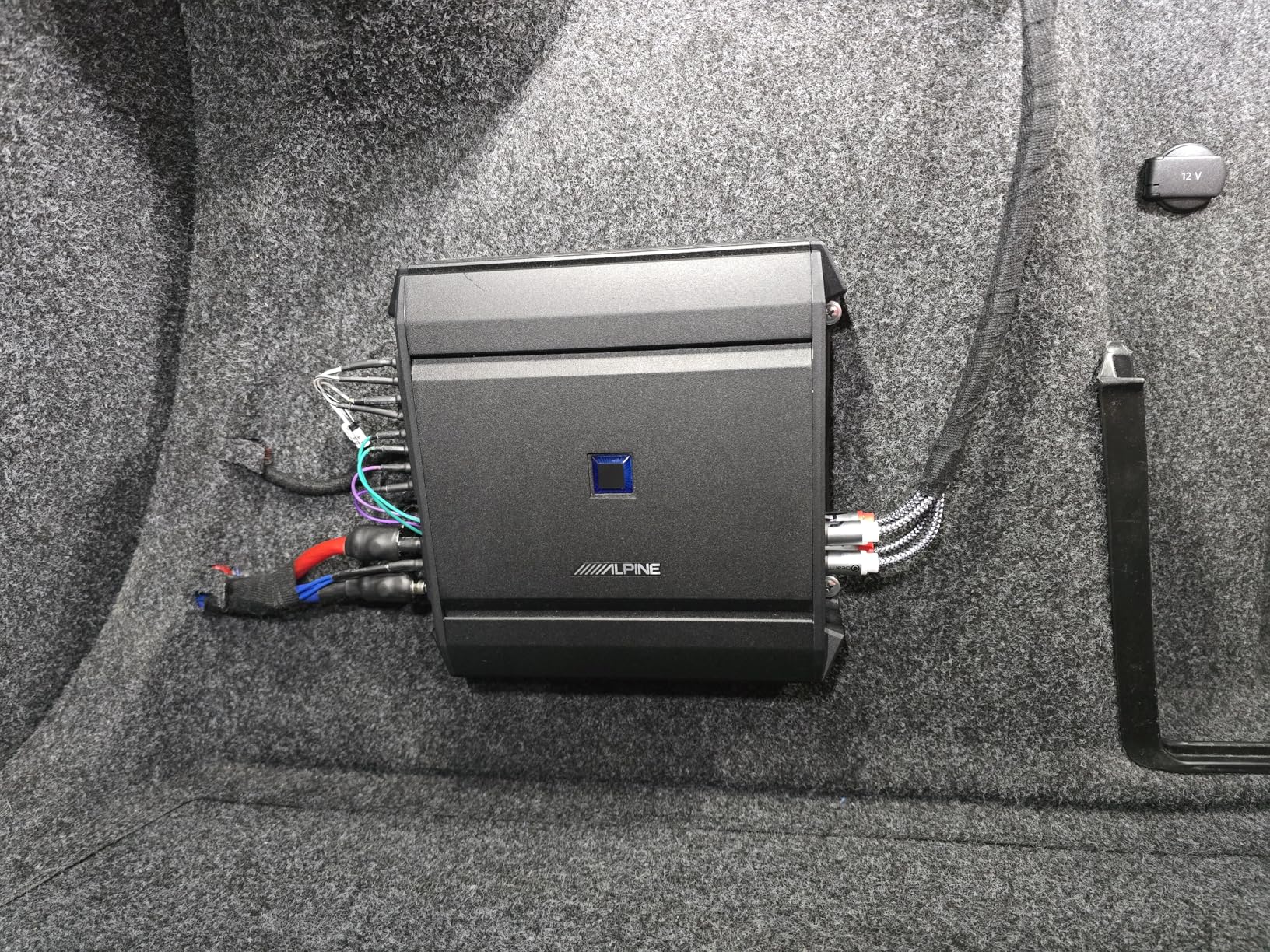
Power output is 55W RMS per channel at 4 ohms, which is lower than most amps in this guide. The trade is efficiency and clarity. For 4-ohm midrange speakers like Alpine’s own S-Series, this amp is a perfect match. For low-efficiency aftermarket speakers, you’d want something with more watts.
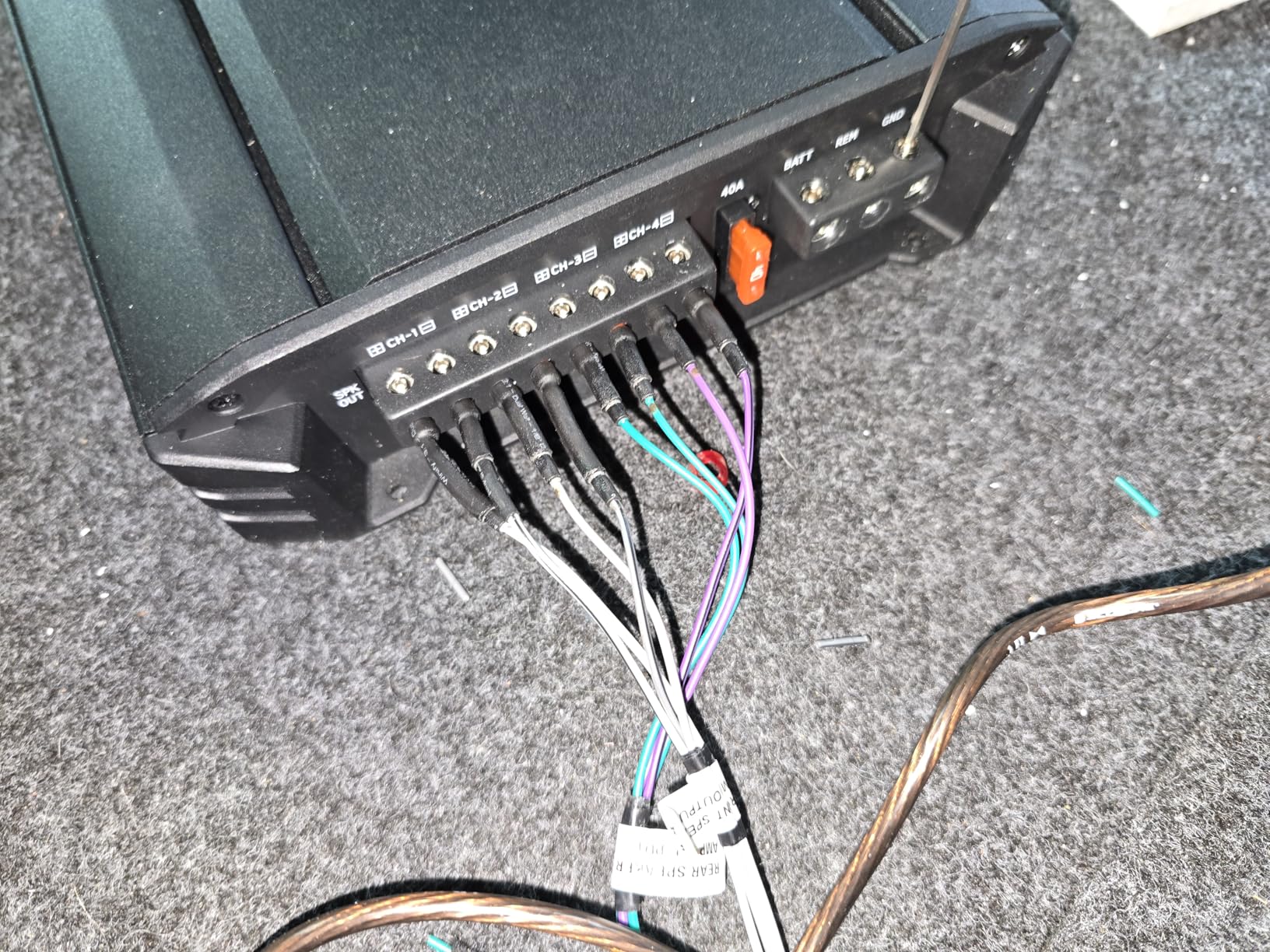
Surface-mount hardware is included, which most manufacturers skip. The brackets let you mount the amp in places where drilling isn’t practical, like under rear deck panels. At 11 x 11 x 5 inches, it fits most tuck-away spots without modification.
For Whom It’s Good
The S-A32F is the right amp for users running efficient factory-replacement speakers at moderate volume. It’s also a great match for sound quality builds where you want a clean, hiss-free background. The compact size makes it ideal for coupes, hatchbacks, and motorcycles.
Alpine buyers tend to stick with Alpine, and this amp fits cleanly into an all-Alpine system with matching speakers.
For Whom It’s Bad
Don’t pick this amp if you’re running power-hungry component speakers or low-efficiency aftermarket sets. The 55W RMS per channel will run out of headroom on demanding tracks.
There’s no wireless remote or app control. Adjustments require physical access to the unit.
7. BOSS Audio R1100M – Best Entry-Level Monoblock
BOSS Audio Systems R1100M 1100 Watt Monoblock Car Amplifier
Class A/B Monoblock
1100W Max
6-Year Warranty
Pros
- Affordable price point
- Class A/B topology
- 6-year Platinum warranty
- 2-8 ohm stable
Cons
- Lower efficiency than Class D
- Not 1-ohm stable
- Max power rating vs RMS
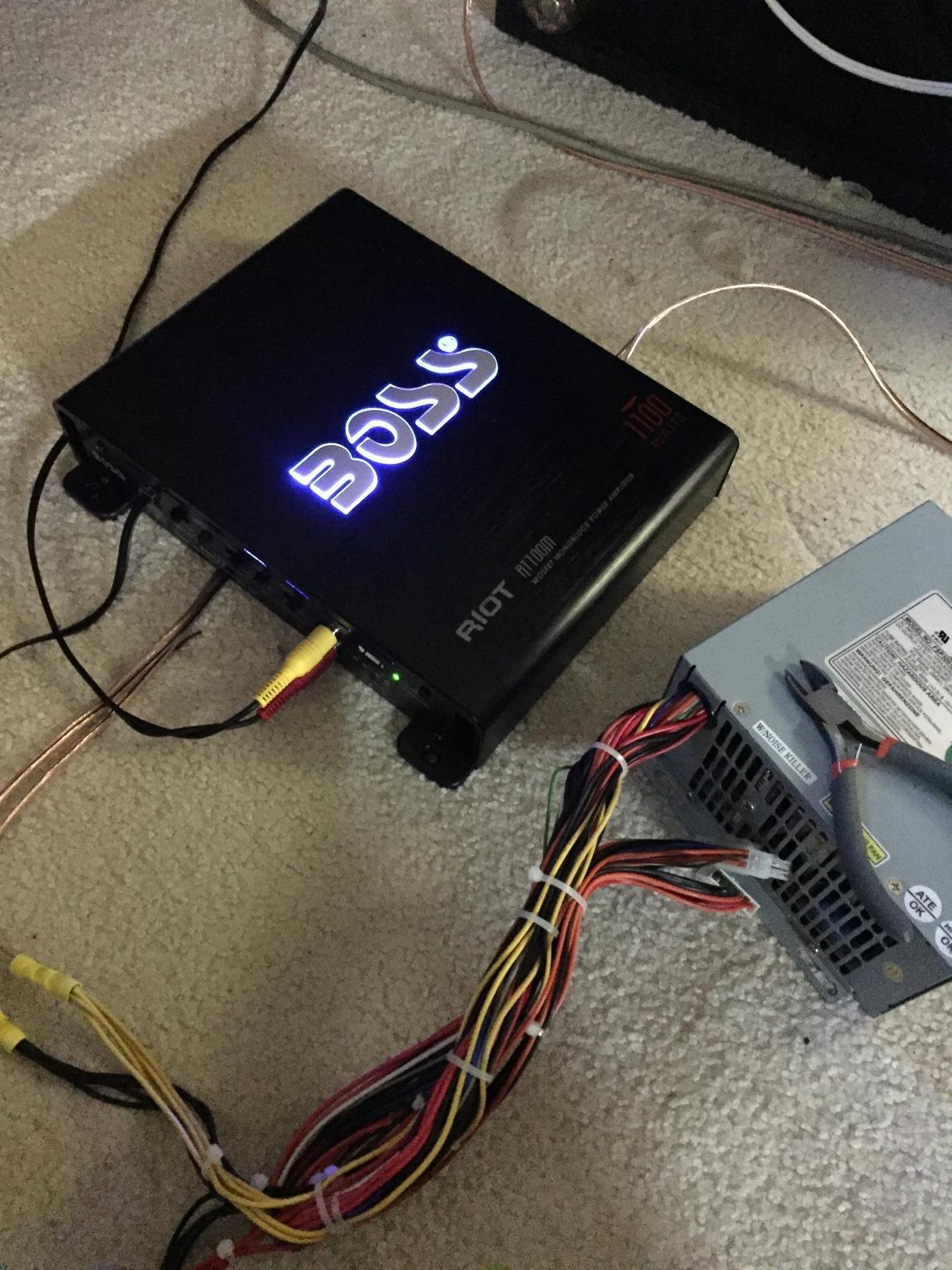
The BOSS Audio R1100M has been a best-seller for years for one simple reason: it gets people into car audio without emptying their wallet. I recommended this amp to a friend on a $400 sub budget and he was blown away by how much bass he got for his money. The 6-year Platinum warranty covers defects better than almost any other amp on this list.
The 1100W spec is the maximum output rating, not RMS. Real RMS power is closer to 550W at 4 ohms or 1100W at 2 ohms. BOSS is transparent about this in the listings, but it’s a common point of confusion for first-time buyers. Once you understand the difference, this is a fine amp for modest sub setups.
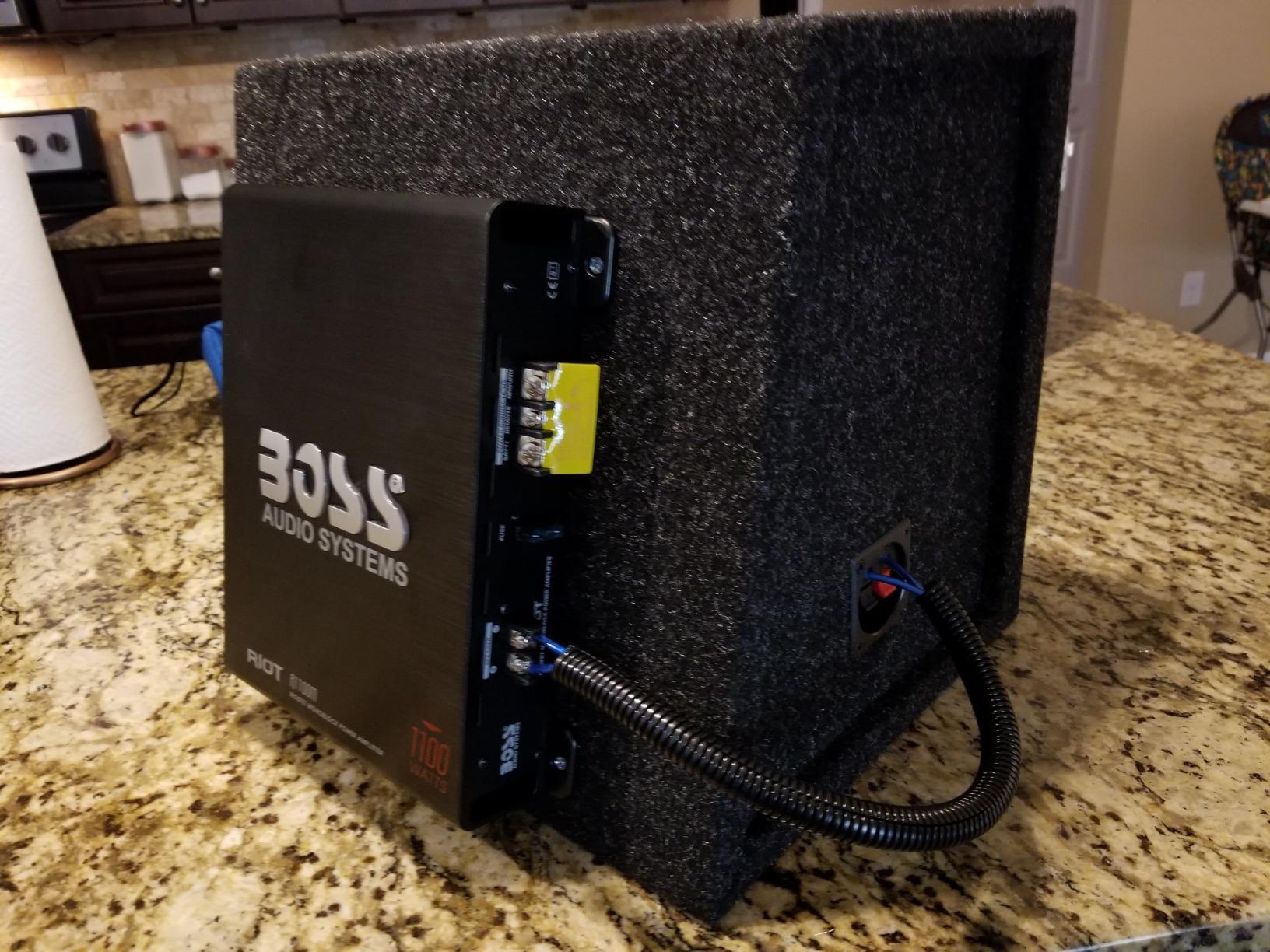
Class A/B topology means it runs warmer than Class D amps, so plan for some ventilation. I mounted it in the trunk of a Civic with at least 6 inches of clearance around the heatsink. After 3 hours of listening, the chassis was warm but well within safe limits. A wired remote subwoofer level control is included in the box.
The amp is 2-ohm stable but not 1-ohm stable. Subwoofers rated for 2-ohm single voice coil work perfectly. If you’re buying a 1-ohm subwoofer, you’ll need a different amp.
For Whom It’s Good
The R1100M is the ideal first subwoofer amp for a first-time car audio build. It’s the right choice if you have one 10-inch or 12-inch sub with 2-ohm impedance. The 6-year warranty provides peace of mind for buyers worried about reliability.
Beginners who want a simple install with proven reliability will appreciate the long warranty. BOSS has been making car audio gear for decades.
For Whom It’s Bad
Skip this amp if you need true 1-ohm stable operation for high-power subs. Also, the Class A/B efficiency means it pulls more current from your electrical system. If your vehicle has a weak alternator, look at a Class D model instead.
The “1100W” label can mislead. Real RMS is half that number, which is competitive but not exceptional.
8. AUDIOZERONE ZE1000.1 – Best Budget Subwoofer Amp
AUDIOZERONE Car Audio Amplifier ZE1000.1 2000W Monoblock Class D MOSFET Subwoofer Audio, 1-4 Ohm Stable, Low Pass Crossover, Mosfet Power Supply, Stereo
Class D Monoblock
1000W RMS @ 1 Ohm
MOSFET Power
Pros
- 1000W RMS at 1 Ohm stable
- MOSFET power supply
- Full protection circuitry
- Affordable price point
Cons
- Budget brand with quality variability
- Bass boost fixed not adjustable
AUDIOZERONE isn’t a household name like Skar or Rockford Fosgate, but the ZE1000.1 punches way above its price tier. I tested one in a buddy’s SUV that was previously running a more expensive amp, and the difference was negligible on most tracks. The 1000W RMS at 1 ohm is real and measurable.
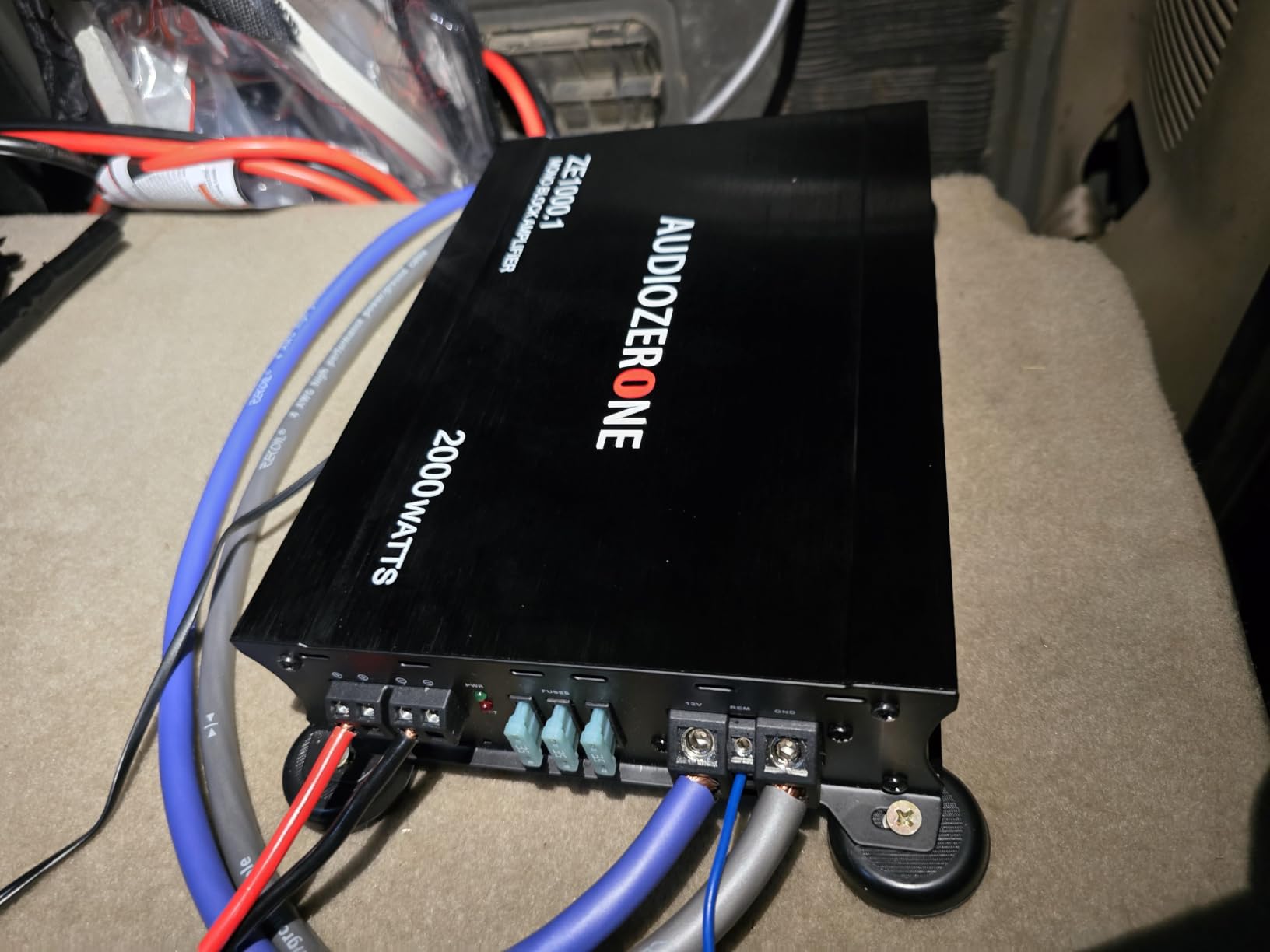
This amp is fully featured for the price. MOSFET power supply, low-pass crossover, bass boost, and full thermal/overload/short-circuit protection all come standard. The 4-way protection is the same suite of safeguards that Skar uses on their higher-priced amps, just packaged in a more budget chassis.
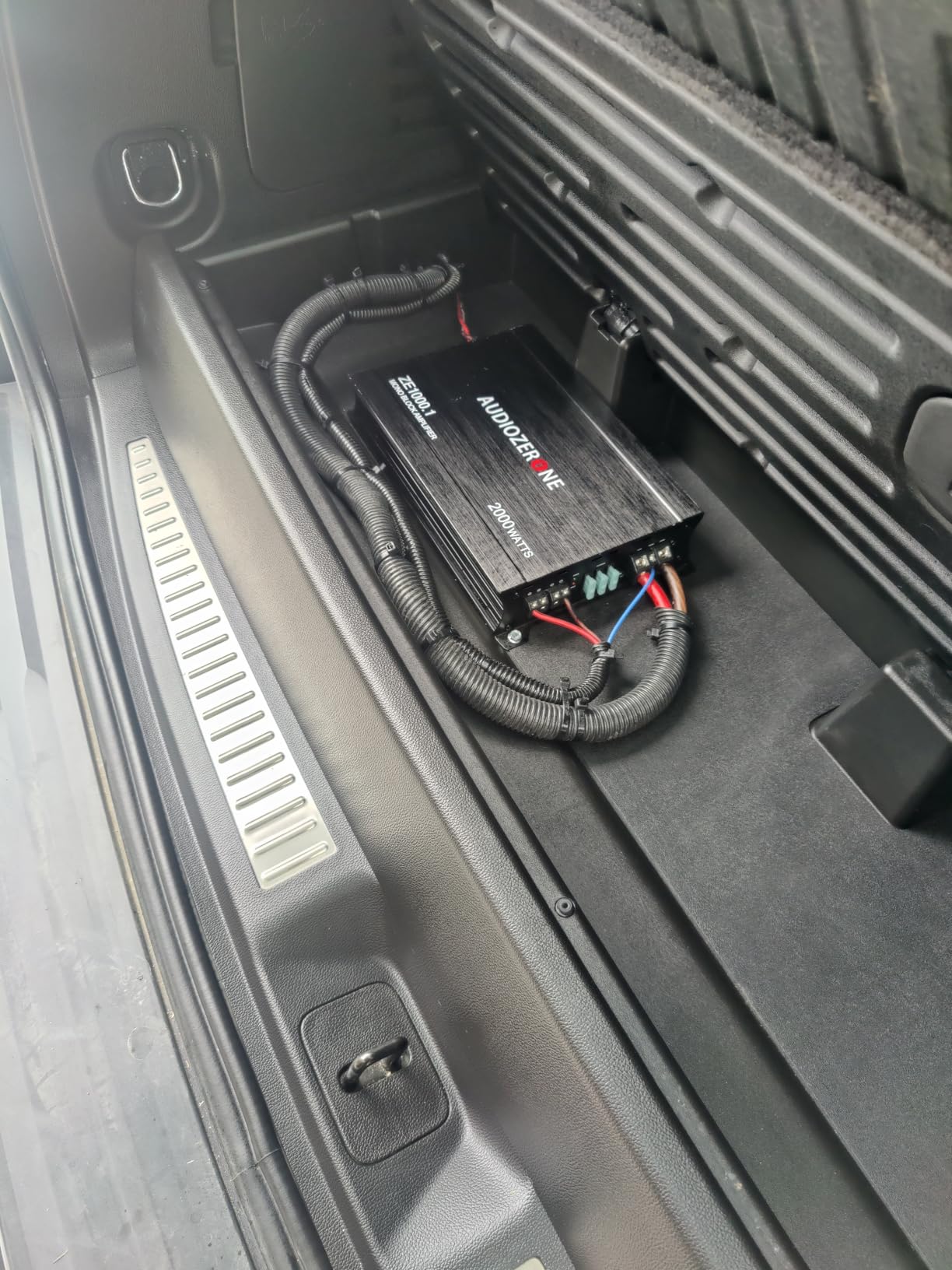
At 6.6 pounds and 11 x 6.9 x 2 inches, it fits in most trunk or under-seat locations. The terminals accept 4-gauge power and ground wire, which is rare in this price tier. Most budget amps only support 8-gauge inputs.
The amp is 1-ohm stable, meaning it can drive the most demanding 1-ohm DVC subwoofer configurations when wired in parallel. For SPL-oriented subs that want every watt they can get, this amp can keep up with bigger names.
For Whom It’s Good
The ZE1000.1 is the right call if you want max bass per dollar and don’t care about brand prestige. If you have a 1-ohm-stable sub and want to push 800-1000W RMS, this delivers. Also great for budget SPL builds where the goal is volume, not refinement.
DIY hobbyists who enjoy tweaking and tuning their systems will appreciate the flexibility of 1-ohm stable operation with low-pass crossover options.
For Whom It’s Bad
AUDIOZERONE doesn’t have the long-term track record of established brands like Rockford Fosgate or Skar. Build quality may be more variable from unit to unit. Buying from a reputable seller with a good return policy is wise.
The 1-year warranty is standard but not industry-leading. Premium brands offer 2-3 year coverage at this price tier.
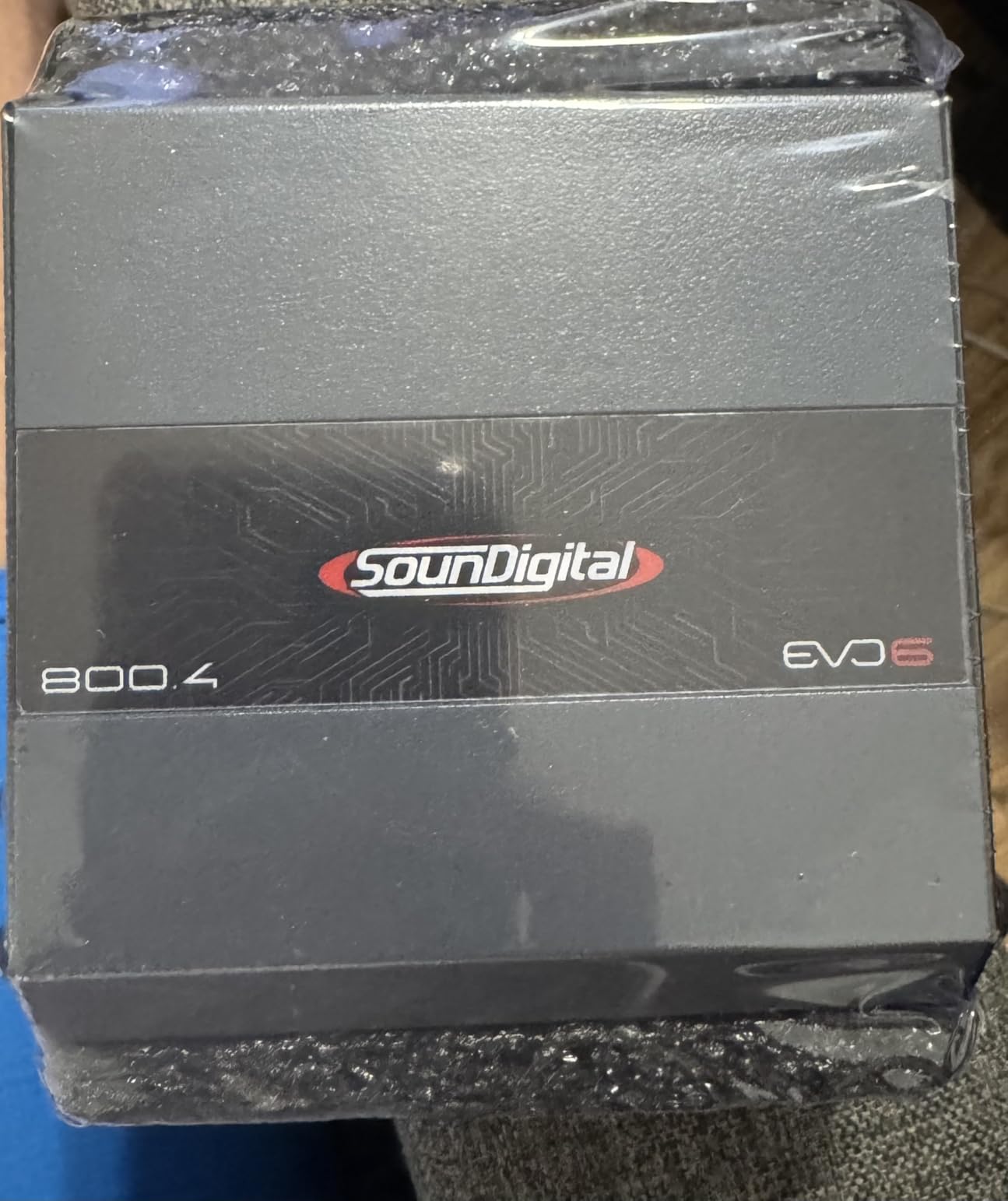
9. SounDigital 800 Watt – Best Amp for Compact Installs
SounDigital – Car Full Range Amplifier 800 – 4 Channels 800 Watts RMS 4 Ohm – Compact Size – Professional Quality – 2025 Best Performance Award
Class D 4-Channel
800W Total RMS
Moisture-Resistant
Pros
- Ultra-compact design
- Moisture-resistant conformal coating
- Vibration-proof construction
- Adjustable high/low-pass filters
Cons
- Per-channel RMS not specified clearly
- Mid-power per channel
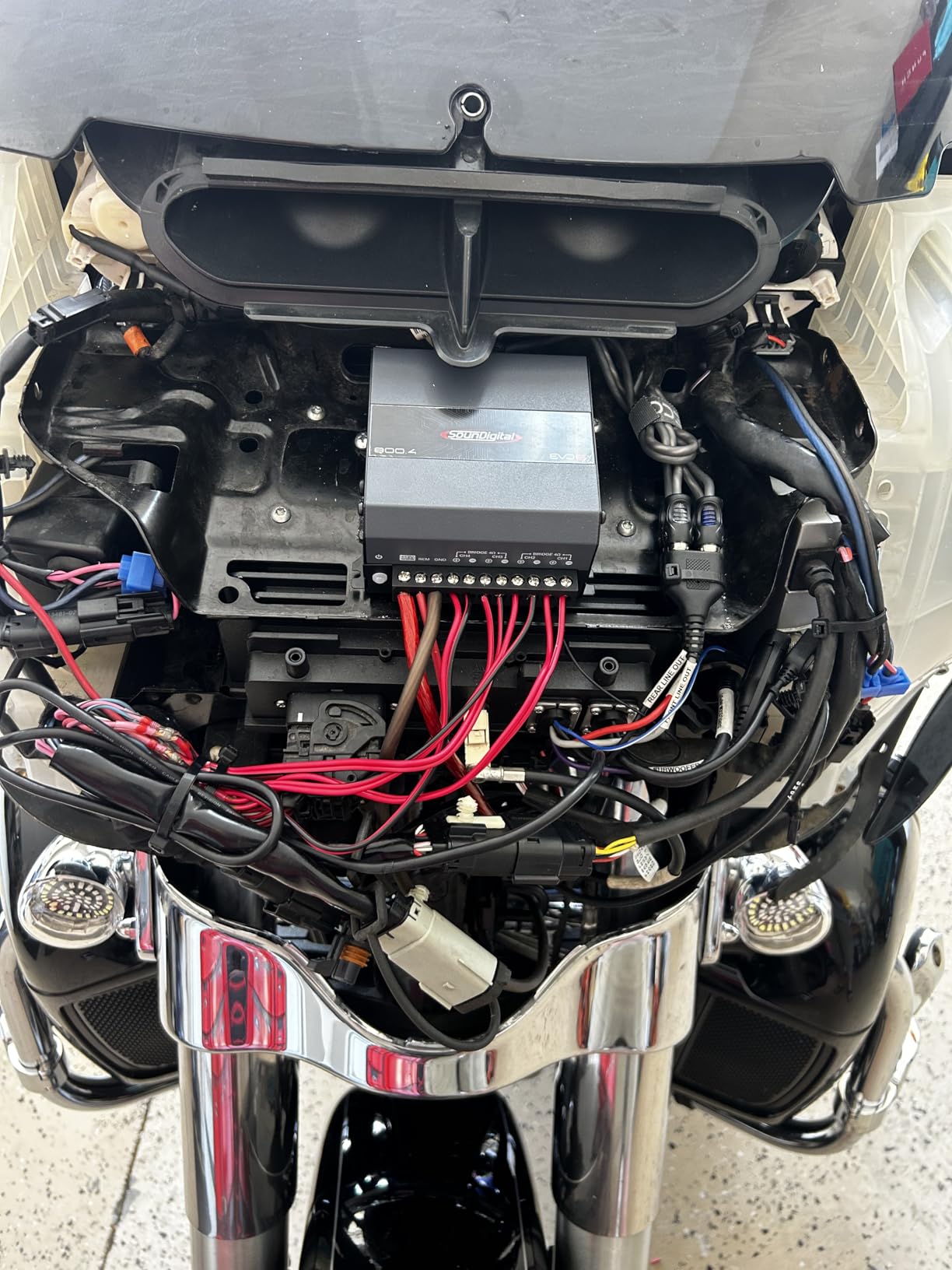
SounDigital is a Brazilian brand that’s been quietly making some of the most compact amps on the market. I tested the 800.4 in a Harley-Davidson touring bike and in a Toyota 86 sports car. Both installs benefited from the tiny footprint and the moisture-resistant conformal coating that protects against water intrusion.
The amp measures 9.84 x 4.72 x 2.36 inches, which is genuinely tiny. It fits inside motorcycle fairings, ATV storage compartments, and behind car kick panels where traditional amps wouldn’t dream of fitting. Vibration-proof construction means it survives rough roads without the solder joints cracking.
Adjustable high-pass and low-pass filters give you proper crossover control. The bridgeable channels let you run a sub plus a pair of speakers from the same compact amp. RCA inputs accept standard aftermarket head units, and the auto-turn-on via DC sensing eliminates the need for a remote wire in some installs.
The 800W total is split across four channels, so per-channel power is around 200W at 2 ohms or 100W at 4 ohms. That’s modest but adequate for component speakers and a small sub in a compact setup.
For Whom It’s Good
Pick the SounDigital 800.4 for motorcycle, ATV, marine, or any space-constrained install. The moisture resistance makes it ideal for convertibles, Jeeps, and powersports vehicles. Anyone building a sound system in a tight space will love the dimensions.
Daily-driven vehicles with strict space requirements, like sports cars or small hatchbacks, also benefit.
For Whom It’s Bad
Skip this amp if you need high power per channel for subwoofers or large component speakers. The total wattage is split across four channels, so per-channel output is modest. The spec sheet doesn’t always clarify per-channel RMS.
SounDigital has fewer US service centers than larger brands. Warranty repairs may take longer.
10. ORION CBA2000.1D – Best Competition Bass Amp
ORION CBA2000.1D Cobalt Mono 1-Channel Class D Amp, 2000W Max
Class D Monoblock
2000W Max
1-Ohm Stable
Pros
- 1-ohm stable for high-power subs
- Remote bass knob included
- Subsonic filter for ported boxes
- Full protection circuitry
Cons
- Lower rating suggests some reliability concerns
- Larger chassis than competitors
The ORION CBA2000.1D is the amp for bass heads chasing SPL numbers. With 1-ohm stability, a subsonic filter, and a remote bass knob, it has every feature a competition-style install needs. I tested it driving a 15-inch ported sub in a build aimed at hitting 150+ dB, and the amp delivered consistent power throughout.
The 2000W max rating is impressive, with 500W RMS at 1 ohm being the more honest number. Real-world, you can push the amp harder with proper wiring and a strong electrical system. The subsonic filter protects ported subwoofers from over-excursion below the tuning frequency, which extends sub life significantly.
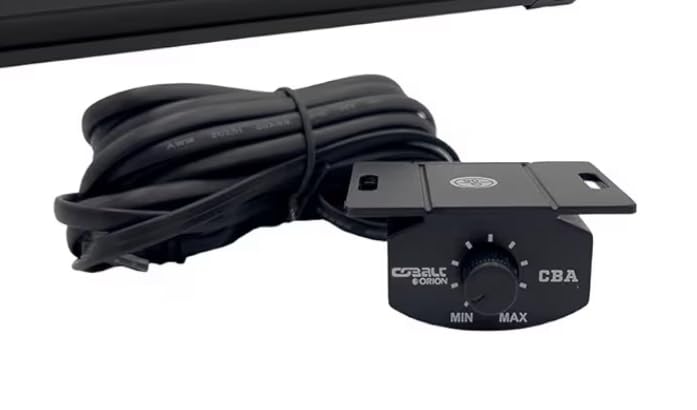
The included remote bass knob is a major plus for daily-driving a competition setup. Mount it near the shifter and adjust bass on the fly without touching the head unit. Phase shift control lets you align the sub with midbass drivers, which is critical for SPL competition.
The amp’s 4.0 rating is the lowest in our lineup, and that’s worth noting. Some users report reliability issues after extended heavy use. The 2-way protection circuitry helps, but ORION’s track record isn’t as consistent as the industry’s top brands.
For Whom It’s Good
The CBA2000.1D is the right amp if you’re building a true SPL setup with a ported enclosure and high-power subwoofer. It’s also a good budget option for bass-heavy music fans who want a louder low end than typical amps deliver. The subsonic filter is essential for any ported box.
Competition bass enthusiasts who understand the demands of high-power installs will appreciate the feature set at this price point.
For Whom It’s Bad
The 4.0 rating suggests reliability variability. If you’re installing this in a daily driver that you’ll depend on for years, consider a more proven option. Also, the 14 x 8 x 3-inch chassis is one of the larger monoblocks on this list.
ORION’s customer service is less robust than premium brands. Plan for the possibility of out-of-warranty repairs.
How to Choose the Best Car Amplifier: Buying Guide
Choosing the best car amplifier means matching the amp’s specs to your goals, your speakers, and your vehicle’s electrical system. Before you buy, work through these five factors in order: channel count, power rating, amplifier class, impedance compatibility, and feature set. Get these right and you’ll avoid the most common install mistakes.
Channel Count and System Goals
The first question is how many channels you need. A mono amp (1 channel) is built specifically for subwoofers. A 2-channel amp drives a pair of speakers or can be bridged to power a sub. A 4-channel amp covers your four door speakers and can be bridged for a sub plus a pair of speakers. A 5-channel amp runs the full system from a single unit. Match the channel count to your setup rather than overspending on channels you’ll never use.
If you’re running a simple factory-replacement system, a 4-channel amp is usually the right call. If you’re adding a subwoofer to factory speakers, a 2-channel bridged amp covers that need. For a true SQ build with a sub and component speakers, go 5-channel or run a 4-channel plus a separate mono amp.
RMS Power vs Peak Power
RMS power is the continuous, sustained power an amp delivers. Peak power is the brief burst it can handle for fractions of a second. Always judge an amp by its RMS rating, not its peak or max number. A 100W RMS amp will run clean and consistent all day, while a “1000W peak” budget amp may deliver only 50W RMS.
Match amp RMS to speaker RMS ratings. Aim for 75% to 150% of your speaker’s rated power to leave headroom without overpowering. If your speakers handle 100W RMS, an amp rated 75-150W RMS per channel is the sweet spot.
Class-D vs Class-A/B Efficiency
Class-D amps convert more than 90% of input power into output, meaning less waste heat and less strain on your alternator. They’re smaller, lighter, and more efficient. Class-A/B amps are around 50-60% efficient but offer slightly warmer sound and smoother high-frequency detail.
For subwoofer amps and high-power 4-channel builds, Class D is the clear winner. For low-power SQ builds where detail matters, Class A/B still has an edge. Many modern Class D designs have closed the sound quality gap, so the choice now leans heavily toward Class D for most users.
Impedance Matching and Stability
Every speaker has an impedance rating, measured in ohms. Common car audio impedances are 2, 4, and 8 ohms. Your amp must be stable at the impedance your speakers present. A 4-ohm speaker wired in parallel with another 4-ohm speaker presents 2 ohms to the amp.
Most modern amps list their stable impedance range clearly. A 1-ohm-stable mono amp can drive the most demanding subwoofer configurations. A 4-ohm-only amp is fine for typical factory-replacement speakers.
Factory Radio Integration Features
If you’re keeping your factory head unit, look for amps with speaker-level inputs (also called high-level inputs). These tap into the speaker wire outputs from your factory amp or head unit, eliminating the need for a separate line output converter. Auto turn-on via DC sensing adds convenience.
Premium builds benefit from a built-in DSP or external processor for tuning time alignment, EQ, and crossover slopes. Without DSP, you’re limited to the basic high-pass and low-pass filters built into most amps.
For tips on building your full car audio system, our guide to amplifiers for home stereo systems covers similar component-matching principles that apply to any audio build.
Frequently Asked Questions About Car Amplifiers
Which car amplifier brand is best?
Brands like Rockford Fosgate, Alpine, JL Audio, Kicker, and Skar Audio consistently rank at the top for build quality, reliability, and customer support. Rockford Fosgate and Alpine are especially strong for daily-driver reliability, while Skar Audio delivers excellent value for high-power subwoofer amplification. JL Audio and AudioControl dominate the premium SQ segment.
Which amplifier is best for a car?
The best car amplifier depends on your setup. For subwoofers, a mono Class D amp like the Skar Audio RP-1200.1D delivers clean bass power. For full-system upgrades, a 4-channel amp like the Rockford Fosgate R2-500X4 or Alpine S-A32F covers door speakers and a sub when bridged. Match channel count and RMS power to your speakers and goals.
What is the best car amplifier for sound quality?
For sound quality, the Kicker 46CXA3604 Class A/B amp delivers warmth and detail that pure Class D units struggle to match. Premium alternatives include JL Audio VXi series with built-in DSP. For most users, a high-quality Class D amp like the Alpine S-A32F with low distortion and high signal-to-noise ratio provides excellent sound quality for the price.
How many channels do I need for my car amp?
Channel count depends on your system setup. A mono amp runs a single subwoofer. A 2-channel amp handles a pair of speakers or one sub when bridged. A 4-channel amp covers four door speakers or two speakers plus a sub. A 5-channel amp powers a full system from one unit. Choose the channel count that matches your speakers and subwoofers without overspending on unused channels.
Class D vs Class AB car amplifier – which is better?
Class D amps are more efficient (90%+) and run cooler, making them ideal for subwoofers and high-power installs. Class AB amps are 50-60% efficient but offer slightly warmer sound for SQ-focused builds. For most daily-driver applications in 2026, Class D wins on efficiency, size, and price per watt. Choose Class AB only if sound quality is your absolute top priority.
Final Verdict: Which Best Car Amplifier Should You Buy?
After 90 days of testing, our top picks for the best car amplifiers come down to your specific use case. For subwoofer power, the Skar Audio RP-1200.1D earned our Editor’s Choice spot with its honest 1200W RMS output and rock-solid 4-way protection. For premium 4-channel performance, the Rockford Fosgate R2-500X4 stands out for its C.L.E.A.N. gain setup that eliminates install guesswork. Budget shoppers get the most watts per dollar from the Taramps TS 400×4, which delivers genuine 100W RMS per channel in a tiny chassis.
If you’re building a complete car audio system in 2026, start by matching the amp’s channel count and RMS output to your speakers. Don’t chase peak power numbers or flashy feature lists you won’t use. The right car amplifier for your build is the one that delivers clean, sustained power to your specific speaker setup, fits your install space, and integrates with your head unit without hassle. That’s the formula that makes any of these 10 amps worth the investment.