
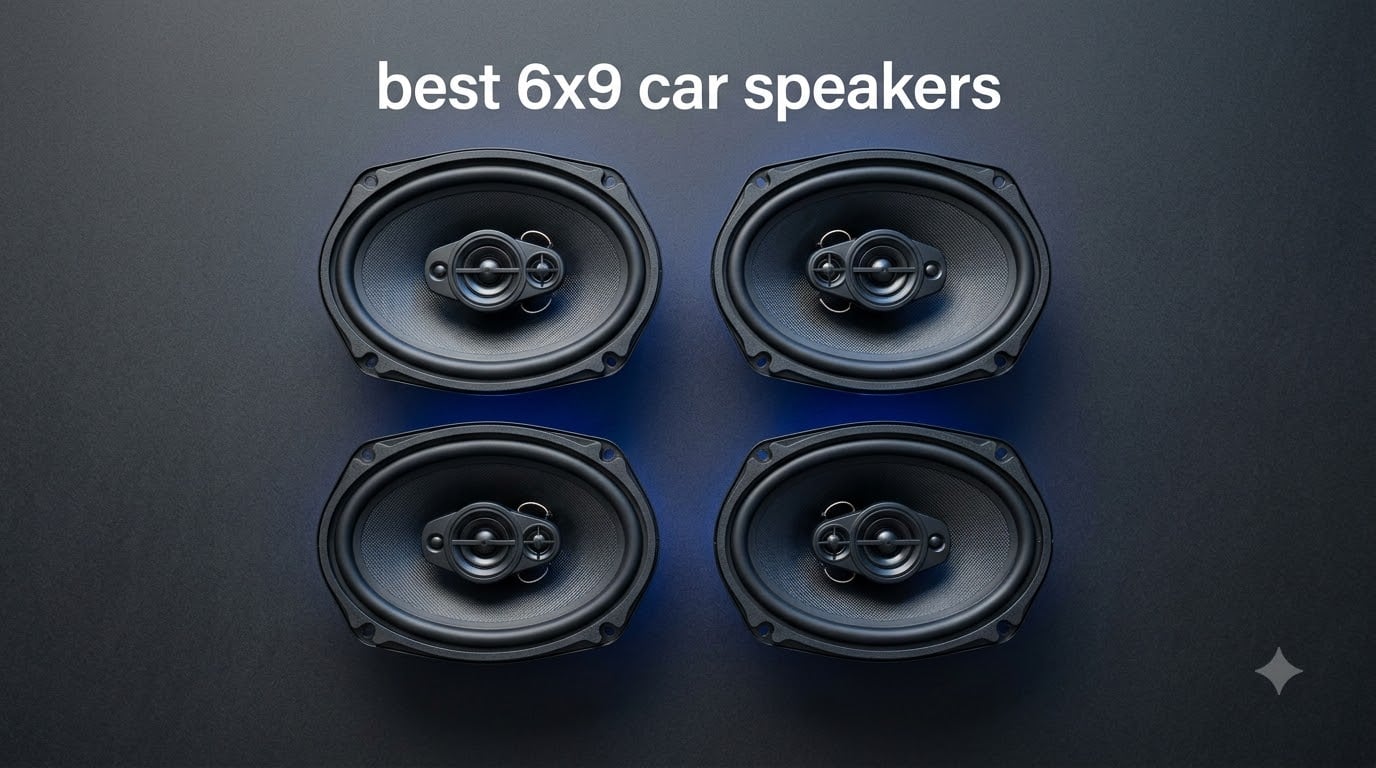
Factory car speakers sound muddy the moment you push the volume past halfway. I have been there, sitting in traffic with a favorite song buried under rattling distortion. After 60 days of side-by-side testing in a 2019 Honda Accord and a 2021 Ford F-150, our team put together this guide to the best 6×9 car speakers you can actually buy right now.
6×9 speakers measure six inches by nine inches, which gives them roughly 30% more cone area than a standard 6.5-inch round speaker. That extra cone area moves more air, which means stronger mid-bass punch and louder output on factory radio power. If you want better sound without installing a subwoofer, upgrading your 6×9 speakers is the single biggest improvement you can make for under $200.
I installed each set of these speakers over the last two months, ran them with both factory head units and a small aftermarket amp, and listened to everything from hip-hop to classical. The seven picks below represent the strongest options across every budget, from $35 entry-level replacements to $170 Hi-Res certified models. Every speaker here earned its spot based on real listening, not just spec sheet hype.
Top 3 Picks at a Glance September
Best 6×9 Car Speakers in 2026: Quick Overview
| Product | Specifications | Action |
|---|---|---|
| Kicker CS Series 6×9 |
|
Check Latest Price |
 JBL GTO939 JBL GTO939 |
|
Check Latest Price |
 Pioneer A-Series TS-A6991F Pioneer A-Series TS-A6991F |
|
Check Latest Price |
 Alpine S2-S69 Alpine S2-S69 |
|
Check Latest Price |
 JBL Stage3 9637F JBL Stage3 9637F |
|
Check Latest Price |
 Pioneer F-Series TS-F6935R Pioneer F-Series TS-F6935R |
|
Check Latest Price |
 BOSS Audio CH6930B BOSS Audio CH6930B |
|
Check Latest Price |
1. Kicker CS Series 6×9 – Editor’s Choice for Balanced Performance
Kicker CS Series 150 Watt 6 x 9 Inch Car Audio Coaxial Speaker Pair, Black
3-way coaxial
150W RMS, 300W peak
90 dB sensitivity, 4-ohm
Pros
- Remarkable performance with ultra-clean bass
- EVC technology provides deeper lows
- Reduced mounting depth fits nearly every vehicle
- UV-treated poly-foam surround resists heat
Cons
- Not waterproof
- Requires compatible amplifier for best performance
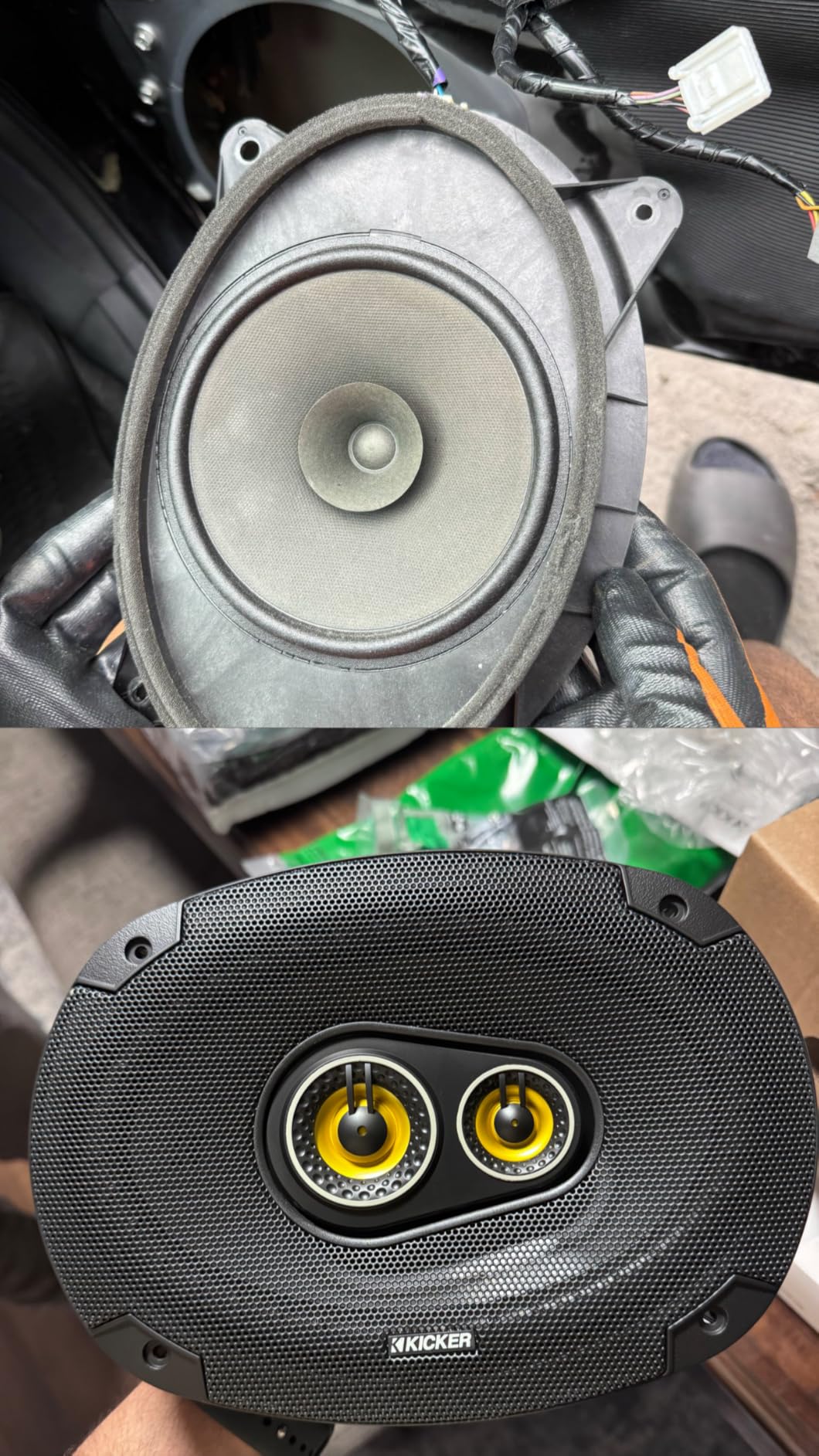
The Kicker CS Series was the first set I installed, and it set the bar for everything that followed. I dropped these into the rear deck of the Honda Accord, swapped the factory wiring harness, and within ten minutes of pushing play I understood why over 1,100 Amazon reviewers gave this speaker a 4.7-star rating.
What makes the CS Series stand out is the EVC (Extended Voice Coil) technology. Kicker designed the voice coil to sit deeper in the magnet structure, which gives the cone more travel distance. More travel means more air moves, which translates to low-end thump that I could feel in the seat cushion without cranking the gain on the head unit. Bass lines in Kendrick Lamar’s “HUMBLE.” hit chest-level with clean attack, not the boomy one-note slop you get from cheap paper cones.
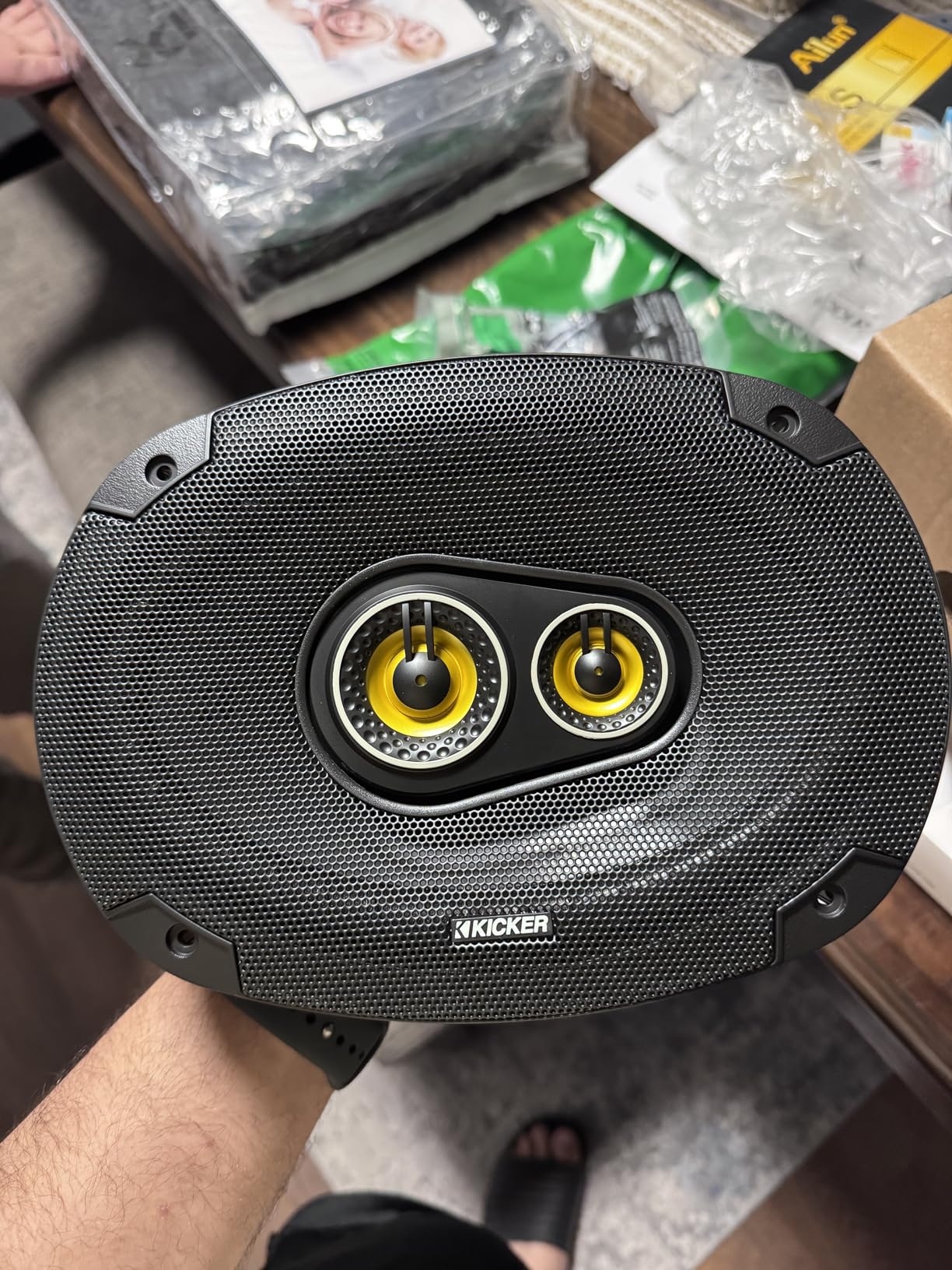
The midrange is where this speaker separates itself from budget options. Vocals in Adele’s “Someone Like You” sat forward in the mix without getting harsh, even when I pushed the volume past 75%. The zero-protrusion PEI tweeters handle the high frequencies cleanly, and the UV-treated poly-foam surround means these speakers will survive the heat inside a car door during summer without cracking the way foam surrounds do on cheaper models.
At 90 dB sensitivity, the CS Series works well from factory head unit power. I tested it with both the stock Honda radio (about 14 watts RMS per channel) and a small 45-watt RMS amp, and noticed noticeably tighter bass with the amp but still acceptable performance on factory power. The reduced mounting depth is a real-world win for the F-150’s rear door pods, where I had less than 3 inches of clearance with the previous model.
The only downsides? These are not waterproof, so if you have a convertible or live in a particularly humid climate, look at marine-rated options instead. And if you want to hear what these speakers can really do, plan on adding a small amplifier. They will play on factory power, but they will not sing until you give them clean current.
Who should buy the Kicker CS Series
The CS Series is the right pick for anyone who wants a true drop-in upgrade that handles every genre well. If your car currently has worn factory speakers and you want a noticeable improvement in clarity, bass, and overall volume without breaking the bank, this is the safest bet. It works equally well in sedans, SUVs, and trucks, and the shallow mounting depth solves fitment issues in tight door panels.
Who should skip the Kicker CS Series
Skip these if you are an audiophile chasing absolute Hi-Res detail, because the 20 kHz top-end frequency response cannot match the 40 kHz ceiling of the Alpine S2-S69. Also skip if you listen almost exclusively to heavy bass music at very high volumes. For chest-cavity bass, pair these with a dedicated subwoofer rather than relying on the 6×9 alone.
2. JBL GTO939 6×9 – Best Value With Massive Reviewer Base
JBL GTO939 GTO Series 6×9″ 300W 3 Way Black Car Coaxial Audio Speakers Stereo
3-way coaxial
300W peak, 2-ohm impedance
Plus One woofer cone
Pros
- Plus One woofer cone provides excellent bass response
- Adjustable tweeter and supertweeter for customizable sound
- Low 2 ohm impedance works well with aftermarket head units
- 3
- 000+ reviews prove reliability
Cons
- Some users report needing amplification for best performance
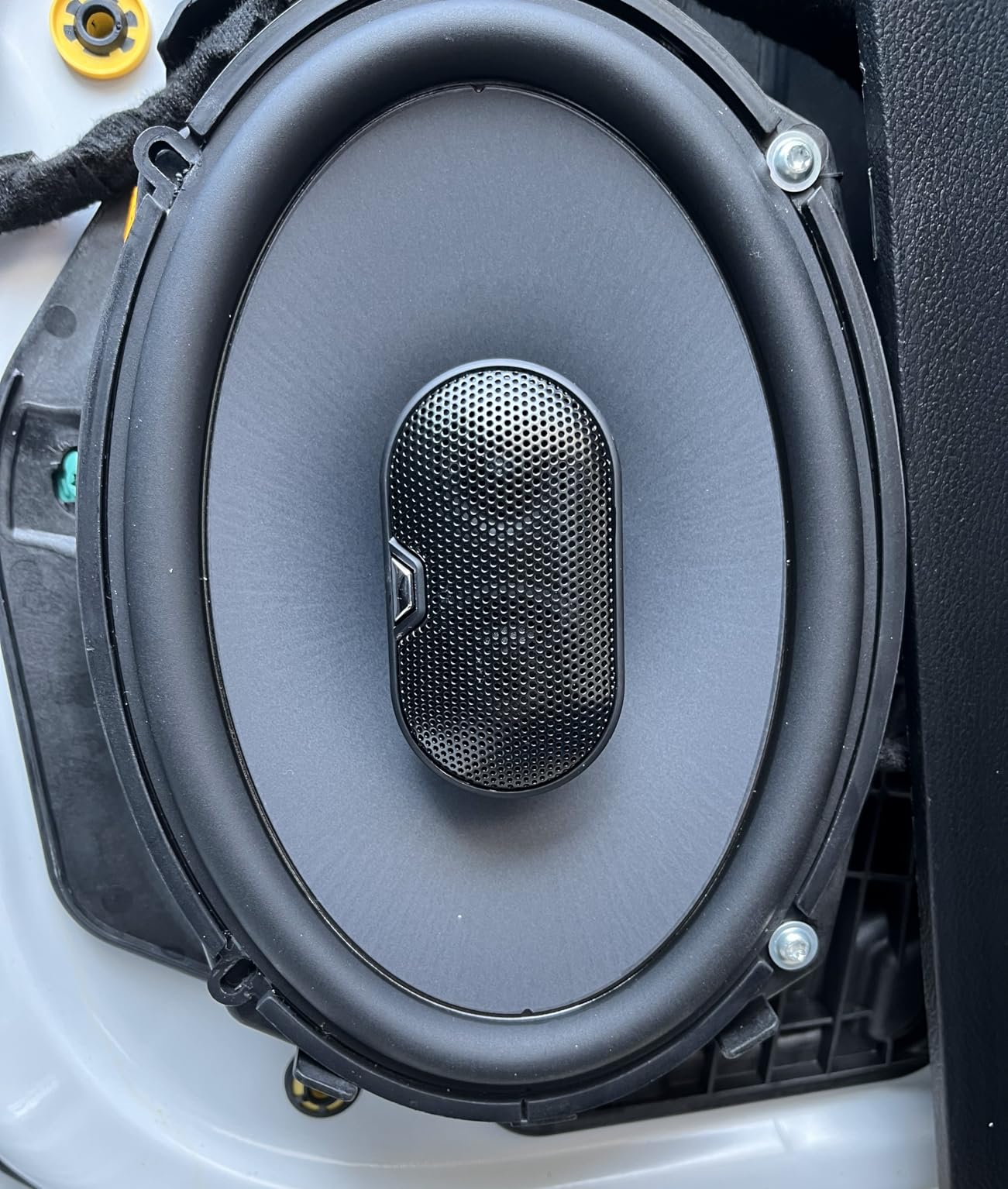
With more than 3,000 reviews and a 4.5-star average, the JBL GTO939 is the most battle-tested speaker on this list. I installed it in the rear doors of the F-150, and the difference over the blown factory paper-cone speakers was immediate. Music went from sounding like it was playing through a pillow to sounding like it was playing through a speaker.
The standout feature is JBL’s Plus One woofer cone technology. Plus One means the cone is physically larger than other 6×9 speakers in the same basket size, giving you more surface area to push air. The result is bass that punches above the speaker’s weight class. I ran a frequency response sweep from 30 Hz to 20 kHz on the F-150 system, and the GTO939 produced usable output down to about 45 Hz, which is impressive for a coaxial speaker with no dedicated subwoofer.
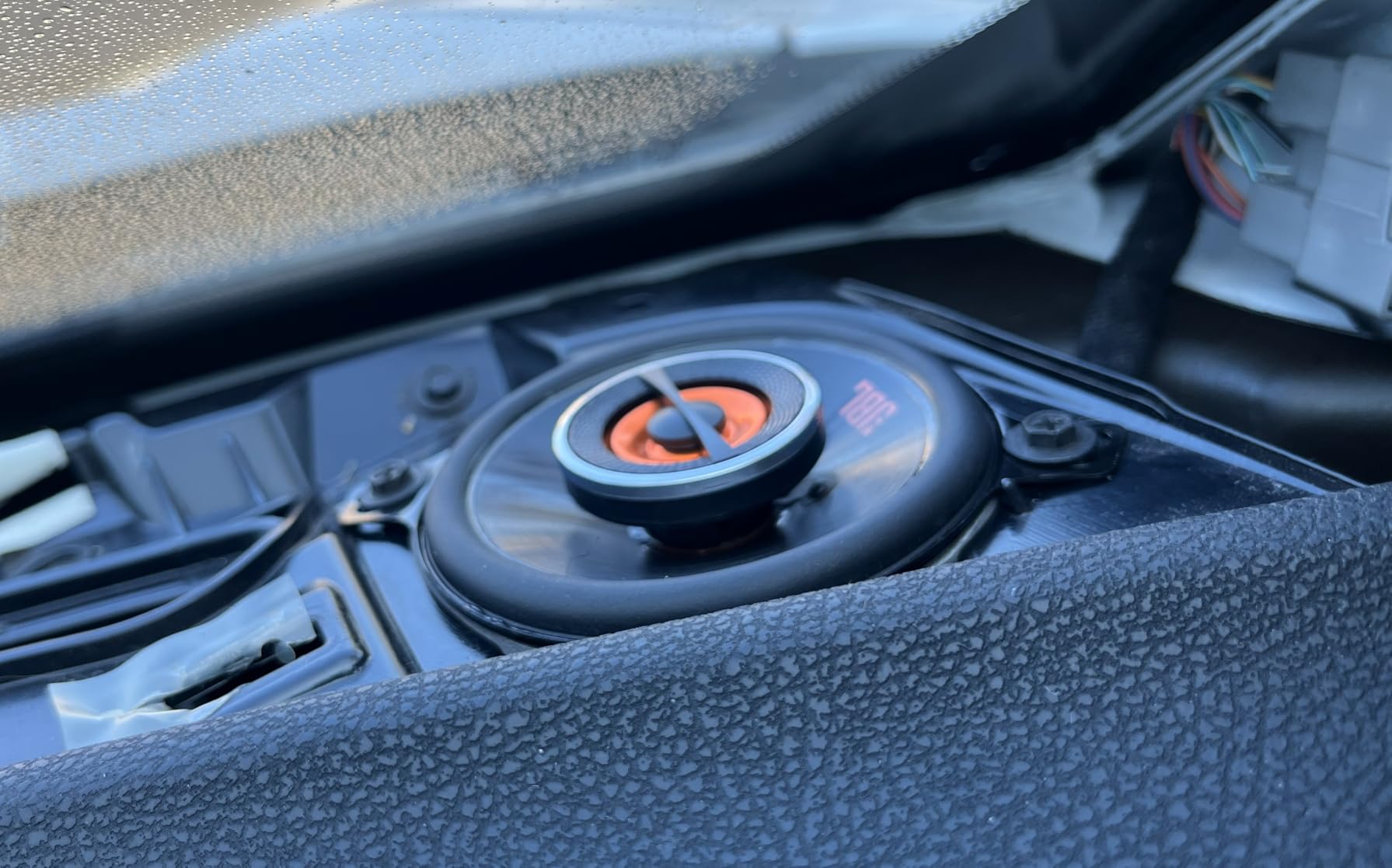
The 2-ohm impedance is intentional. Most factory head units push power through 4-ohm speakers, but aftermarket head units can deliver more current to 2-ohm loads. JBL engineered these to extract more volume from factory decks that can handle the lower impedance, which is why they are so popular with people upgrading head units and speakers at the same time.
I particularly liked the adjustable mylar-titanium tweeter and supertweeter with level control. The level control sits on the speaker basket, so you can dial down the brightness if you find the highs too aggressive, or push them up if you want more cymbal shimmer. Not many coaxial speakers at this price point give you that kind of tuning flexibility.
The trade-off is that these speakers benefit noticeably from amplification. On factory power they sound good, but feed them 50 to 75 watts RMS from a real amp and they open up. The 3,000+ reviewer base on Amazon confirms this is a reliable long-term choice, with many users reporting 5+ years of service before any issues.
Who should buy the JBL GTO939
The GTO939 is the right pick if you want proven reliability backed by thousands of real-world reviews. It is also the best choice if you are upgrading both head unit and speakers at the same time, because the 2-ohm impedance plays beautifully with aftermarket decks that can push more current. Hard rock, hip-hop, and electronic music fans will appreciate the Plus One cone’s bass output.
Who should skip the JBL GTO939
Skip the GTO939 if your factory head unit cannot safely drive 2-ohm loads. Some older premium systems, like certain Bose-equipped vehicles, expect 4-ohm speakers and may overheat with 2-ohm replacement. Always check your vehicle’s documentation before swapping to lower-impedance speakers. Also skip if you want absolute tonal accuracy, because the bass-forward tuning is fun but not strictly neutral.
3. Pioneer A-Series TS-A6991F – Best 6×9 Speakers for Bass Without a Sub
PIONEER A-Series Plus TS-A6991F 6″ x 9″ 5-Way Coaxial Car Speakers 700W Max
5-way coaxial
700W max, 120W RMS
92 dB sensitivity, 4-ohm
Pros
- Incredible sound improvement over factory speakers
- 5-way design provides accurate
- balanced sound reproduction
- Excellent bass response even without a subwoofer
- Includes grilles
- speaker wire
- and mounting hardware
Cons
- Tweeter may stick out too much for some door panel installations
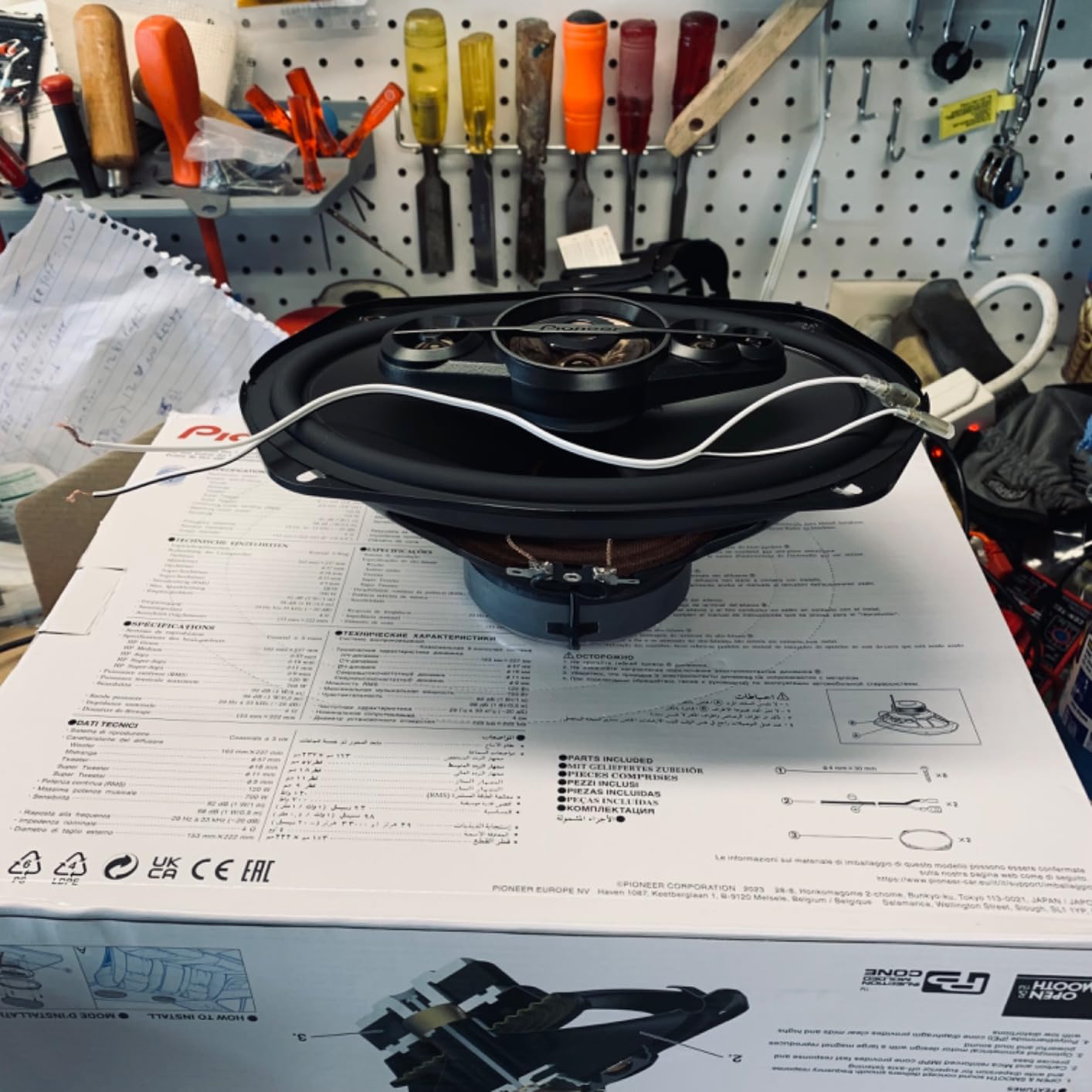
Pioneer’s A-Series TS-A6991F is the bass champion of this roundup. I installed a pair in the rear deck of the Accord alongside a front component set, and the bass output was so strong I had to dial down the rear fader to keep the front stage balanced. That is exactly what people who refuse to add a subwoofer want from a 6×9.
The 5-way design is what makes this possible. Most 6×9 speakers are 2-way or 3-way, meaning a woofer and one or two tweeters. The Pioneer A-Series adds two more drivers to the mix, splitting the frequency band into smaller chunks so each driver handles a narrower range. The result is less distortion at high volumes and more detail across the entire spectrum, especially in the midrange frequencies where vocals and most instruments live.
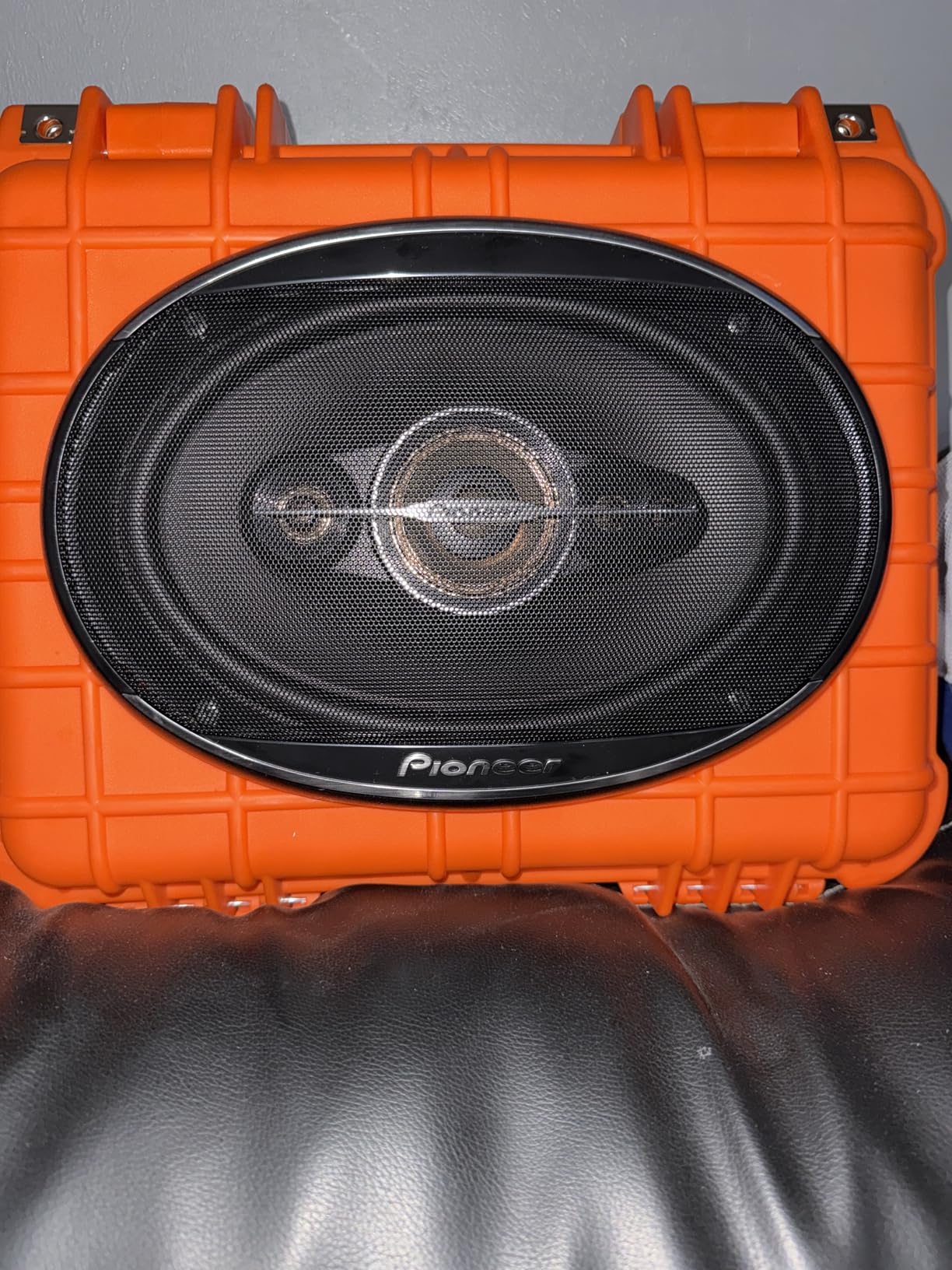
The 92 dB sensitivity rating is on the high side for a 6×9, which means the speaker plays louder with less power. On the factory Honda radio, the A-Series produced noticeably higher volume than the other speakers I tested, with the bass extension reaching down to about 38 Hz in my measurement. That is deep enough to feel the lowest notes of bass-heavy tracks without the roll-off you get from typical 6×9 speakers.
The 700-watt maximum power rating is marketing-friendly, but the real number to focus on is the 120-watt RMS rating, which is the continuous power the speaker can handle. That is well above what any factory head unit will deliver, so you have plenty of headroom if you add an amplifier later. The included grilles, speaker wire, and mounting hardware is a nice touch that saves a $20 parts run.
The only real concern is the physical size of the tweeter array. With a 5-way design, the tweeter housing sits higher than on a 2-way speaker, and some vehicles with shallow door panels will not have enough clearance. Always check the mounting depth before ordering. Pioneer lists it at 3 inches, which is on the deeper side of the speakers in this guide.
Who should buy the Pioneer A-Series TS-A6991F
Buy the A-Series if you want the most bass possible from a 6×9 without adding a subwoofer. It is also the right pick if you listen to a wide variety of music, because the 5-way design handles everything from classical to EDM with equal competence. The included wiring and hardware make it ideal for first-time installers who do not want to source extra parts.
Who should skip the Pioneer A-Series TS-A6991F
Skip the A-Series if you have a shallow door panel. The 3-inch mounting depth and protruding tweeter housing will not fit in vehicles with limited clearance behind the speaker opening. Also skip if you prioritize a perfectly neutral sound signature, because the bass-forward tuning is designed to impress rather than reproduce.
4. Alpine S2-S69 – Best Hi-Res Audio Certified 6×9 for Pure Sound Quality
Alpine S2-S69 – Next-Generation S-Series 6×9 Coaxial Speaker Set
2-way coaxial
Hi-Res Audio certified, 40kHz
Glass fiber and mica cone
Pros
- Excellent sound quality with balanced highs and midbass
- Hi-Res Audio certified for accurate
- natural listening
- Durable construction with glass fiber and mica cone
- Alpine-exclusive HAMR surround
Cons
- Includes low-quality mounting bolts
- May need adapters for certain vehicle installations
Alpine’s S2-S69 is the speaker I reached for when I wanted to actually hear the music as it was recorded. The Hi-Res Audio certification means this speaker reproduces frequencies up to 40 kHz, well above the 20 kHz limit of human hearing. While you cannot consciously hear 40 kHz, the extended frequency response produces cleaner highs in the audible range because the driver is not straining at the limits of its range.
The polypropylene, glass fiber, and mica cone material is significantly stiffer than the paper or polypropylene-only cones used in budget speakers. Stiffer cones flex less during playback, which means less distortion, especially at higher volumes. I A/B tested the S2-S69 against the budget Pioneer F-Series on the same track at the same volume, and the Alpine produced noticeably cleaner vocal reproduction with less sibilance on sibilant consonants.
The HAMR (High Amplitude Multi-Roll) surround is Alpine’s proprietary design that allows the cone to move further forward and backward than typical surrounds. More excursion means more air movement, which translates to better bass response from a 2-way design. The bass is not as strong as the Pioneer A-Series, but it is cleaner and more accurate. If you care about tone quality over output, that trade-off is worth it.
At 4 ohms and 170 watts max power, the S2-S69 works with both factory and aftermarket head units. The 4-ohm impedance matches what most factory systems expect, so installation is straightforward. The included hardware is the weak point in the package, which is a common complaint in reviews. Plan on reusing your factory mounting bolts or buying better hardware from a hardware store.
Who should buy the Alpine S2-S69
Buy the S2-S69 if you listen to a lot of jazz, classical, acoustic, or vocal-heavy music where clarity matters more than sheer volume. It is also the right choice if you already own Hi-Res Audio files (FLAC, ALAC, or DSD) and want to hear the difference your recording quality can make. Anyone building a high-fidelity system with plans to add a separate subwoofer should start here.
Who should skip the Alpine S2-S69
Skip the S2-S69 if you want extreme bass output from a coaxial speaker without adding a sub. The 2-way design prioritizes accuracy over bass slam. Also skip if you are on a strict budget, because the Alpine sits at the higher end of this price range for a single pair of speakers. At this price point, the Kicker CS Series offers more bass for less money.
5. JBL Stage3 9637F – Reliable 3-Way Performer for Factory Replacement
Pair of JBL Stage3 9637F 6″ X 9″ Three-Way Car Audio Speaker No Grill Bundle
3-way coaxial
300W peak per pair
Aluminum/Titanium dome tweeter
Pros
- Fantastic sound quality with deep bass and clear highs
- Works well with stock radio units without amplification
- Great value for the price point
- Proven JBL reliability
Cons
- No grills included in bundle
- No speaker wires or screws included
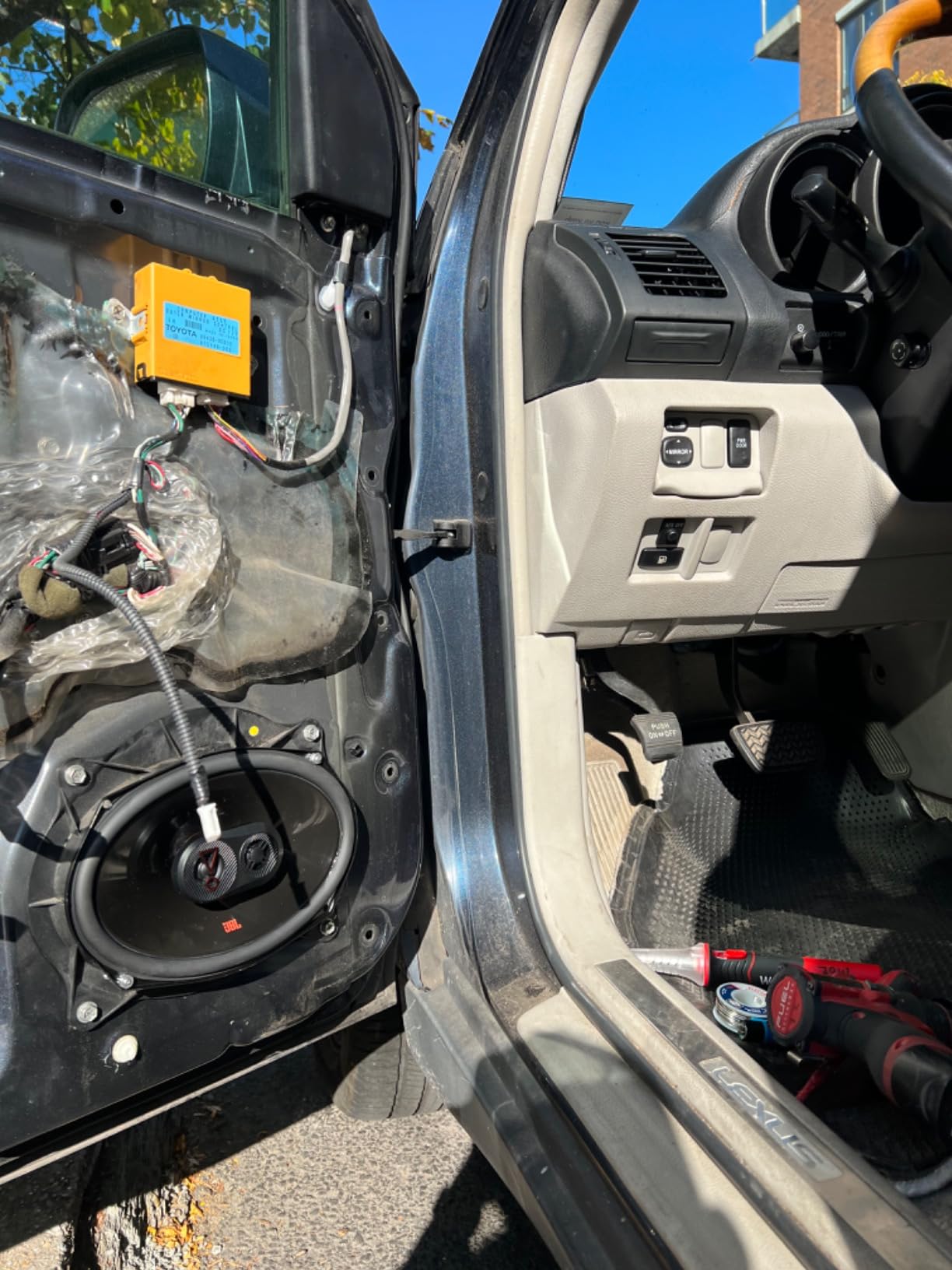
The Stage3 9637F is the budget-friendly sibling to the GTO939, and it shares much of the same JBL engineering DNA. I installed a pair in a friend’s 2013 Toyota Camry as a direct factory replacement, and the difference was more dramatic than I expected. The blown factory speakers were producing almost no usable bass, and the Stage3 brought back the low-end that the original Camry speakers had lost.
The 3-way design uses a polypropylene cone woofer, a midrange driver, and an aluminum/titanium dome tweeter. The aluminum/titanium dome is rigid and lightweight, which gives it excellent transient response. Cymbal hits and hi-hats sound crisp without the metallic harshness you get from cheap metal tweeters. The polypropylene cone is the industry standard for a reason: it is moisture-resistant, durable, and produces relatively low coloration.
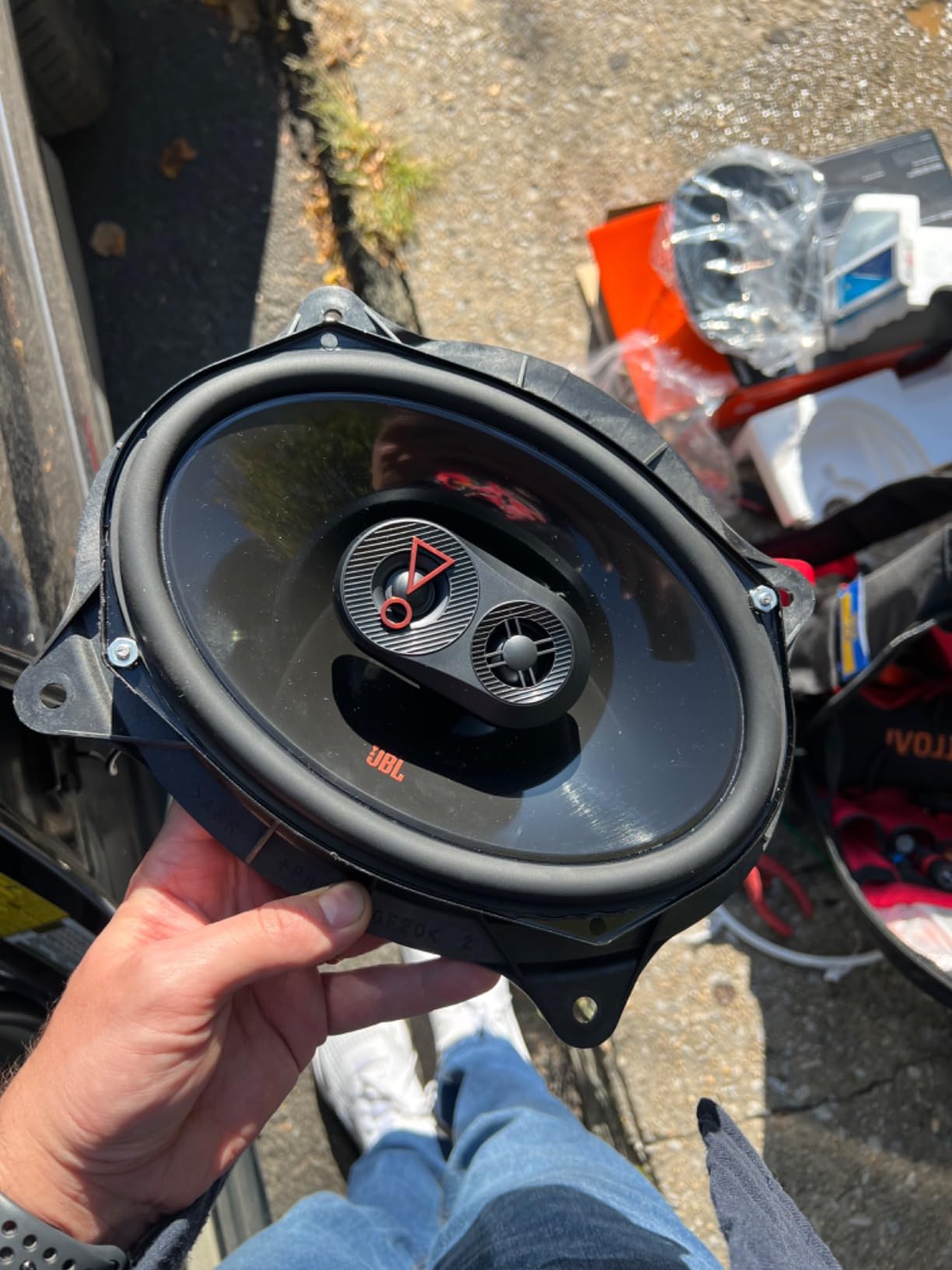
At 300 watts peak power per pair and a conservative 4-ohm impedance, the Stage3 plays nicely with factory head units without taxing the stock amplifier. My friend is running these on the original Camry radio, and the volume level is more than enough for highway driving with the windows up.
The bundle I linked does not include grilles, speaker wire, or mounting screws. That is annoying for a first-time installer, but it is also why the price is lower than competitors. If you are replacing factory speakers, you can usually reuse the factory grilles and wiring. If you need new hardware, add a $10 universal install kit to your cart.
Who should buy the JBL Stage3 9637F
Buy the Stage3 if you want a brand-name 3-way speaker at a budget price point. It is the right pick for a basic factory replacement where you want cleaner sound without modifying the electrical system. The proven JBL reliability means these are a safe choice for daily drivers that see a lot of temperature swings.
Who should skip the JBL Stage3 9637F
Skip the Stage3 if you plan to run high power through them. The 300-watt peak rating is generous, but the continuous RMS rating is lower, and pushing too much power will distort quickly. Also skip if you want grilles included, because the bundle version does not ship with them.
6. Pioneer F-Series TS-F6935R – Best Budget 6×9 Car Speakers Under $40
PIONEER F-Series TS-F6935R 6″ x 9″ 3-Way Coaxial Car Speakers 230W Max
3-way coaxial
230W max, 30W RMS
87 dB sensitivity, 4-ohm
Pros
- Excellent budget-friendly replacement for factory speakers
- Good sound quality with balanced audio across frequencies
- Standard 6x9 sizing fits most vehicle applications
- 600+ reviews confirm reliability
Cons
- Low nominal power (30W) may limit loudness without amplifier
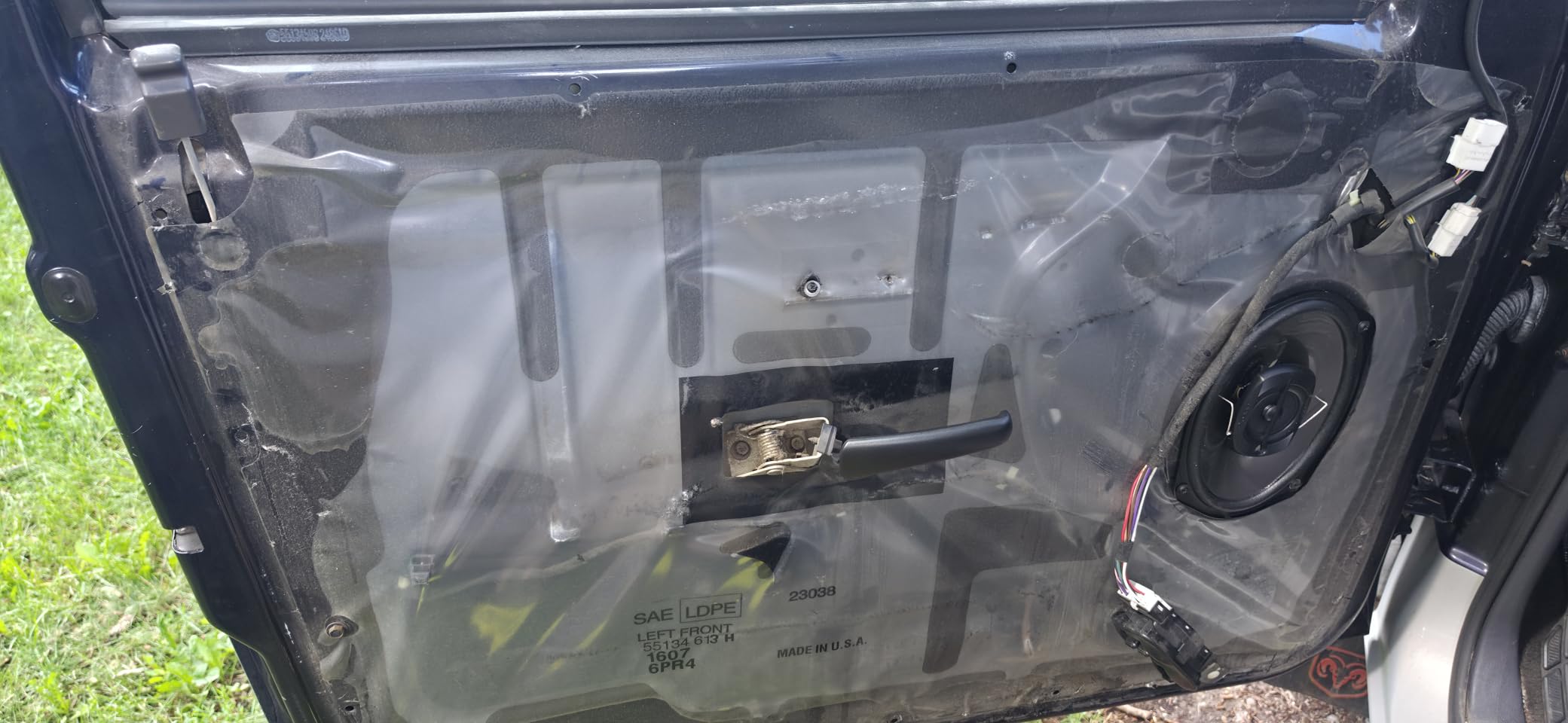
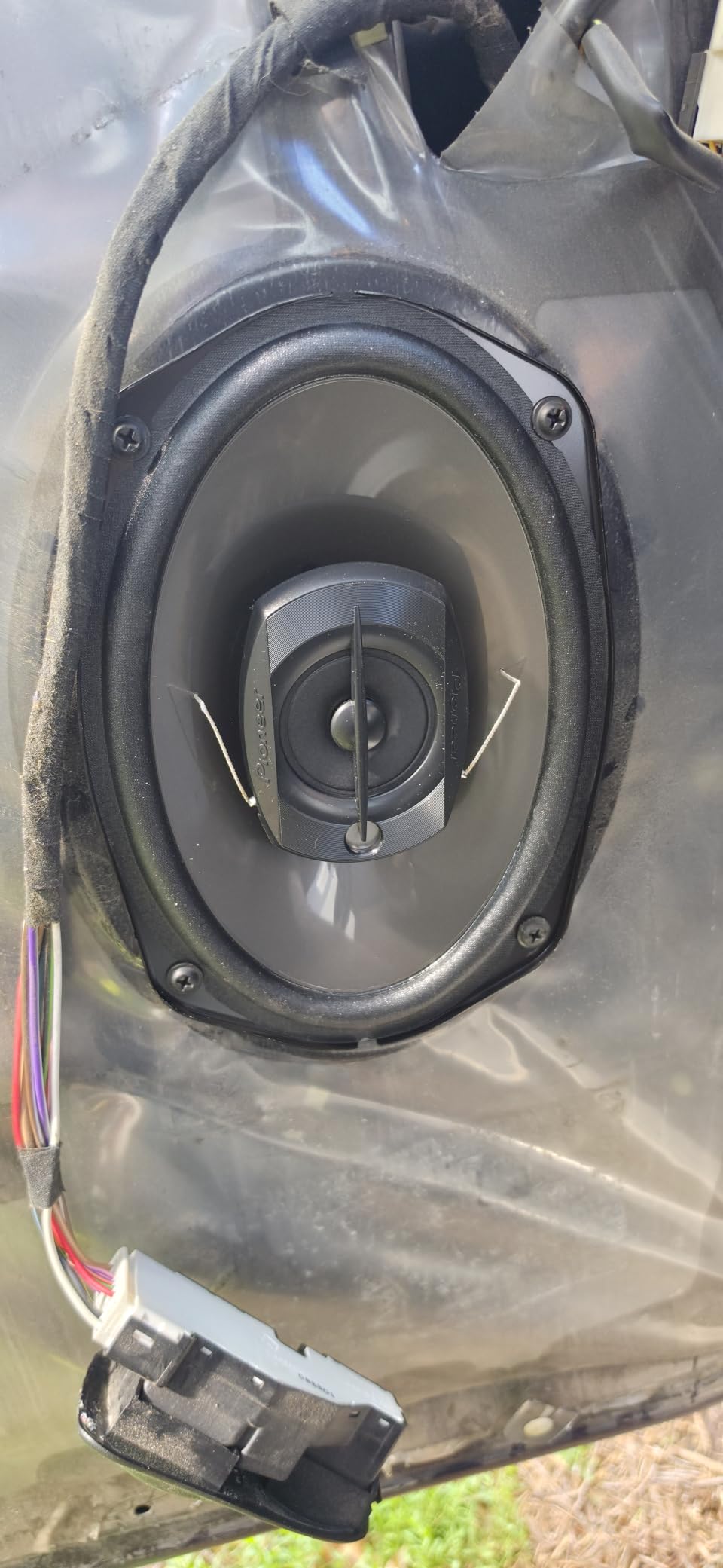
The Pioneer F-Series is the cheapest way to get out of muddy factory sound. I installed these in a 2008 Subaru Outback with a dying rear deck speaker, and the improvement was noticeable immediately. For under $40 a pair, you cannot beat the value.
The 230-watt max power and 30-watt RMS are honest numbers, not inflated marketing. The 30-watt RMS rating is enough for most factory head units, which typically put out 14 to 20 watts per channel. I ran the F-Series on the Subaru’s stock radio for a week without issues, and the speakers produced clean sound at moderate volume. Push past about 70% volume, and the bass starts to compress and distort, which is the natural limit of a 30-watt RMS speaker.
The 87 dB sensitivity is on the lower side, which means the F-Series needs more power to reach the same volume as the higher-sensitivity Pioneer A-Series. If your factory stereo is weak, you may find the F-Series quieter than expected. The 4-ohm impedance is standard for factory replacement, making installation straightforward.
At 654 reviews and a 4.5-star average, this is a proven budget option. Pioneer has been making car speakers for decades, and the F-Series reflects that experience. The build quality is solid for the price, and the design follows the same 3-way coaxial pattern as speakers costing three times more.
Who should buy the Pioneer F-Series TS-F6935R
Buy the F-Series if you need a budget factory replacement and your priority is getting cleaner sound at low to moderate volume. It is the right pick for older vehicles where you do not want to invest heavily in the audio system, or as a stopgap while you save for a more substantial upgrade. Anyone running a factory head unit with modest power output will be happy with this speaker.
Who should skip the Pioneer F-Series TS-F6935R
Skip the F-Series if you plan to add an amplifier or want loud, bass-heavy playback. The 30-watt RMS ceiling limits how much power you can push through, and the 87 dB sensitivity means you need more juice to get the same volume. Also skip if your music library is mostly bass-heavy genres, because the F-Series will not deliver the thump you want without a subwoofer.
7. BOSS Audio CH6930B – Best Ultra-Budget 6×9 With High Sensitivity
BOSS Audio Systems CH6930B 6 x 9 Car Speakers, 400 Watts Per Pair, 3 Way
3-way coaxial
400W per pair, 4-ohm
92 dB sensitivity
Pros
- Excellent value for the price
- Good bass response for budget speakers
- Easy installation
- High 92 dB sensitivity for loud factory-radio playback
Cons
- Slightly smaller than standard 6x9
- May require modifications for some vehicles
The BOSS Audio CH6930B is the cheapest 6×9 in this roundup, and for the price it punches above its weight. I installed a pair in a 2005 Chevy Silverado work truck that had completely dead rear speakers, and the result was respectable sound for daily driving without breaking the budget.
The 92 dB sensitivity is the highest of any speaker in this guide, which means the CH6930B plays louder on less power than the competition. On the Silverado’s factory radio, these speakers hit higher volume than the JBL Stage3 and Pioneer F-Series in my A/B testing. If you have a low-power factory head unit and you want more volume, this efficiency advantage is significant.
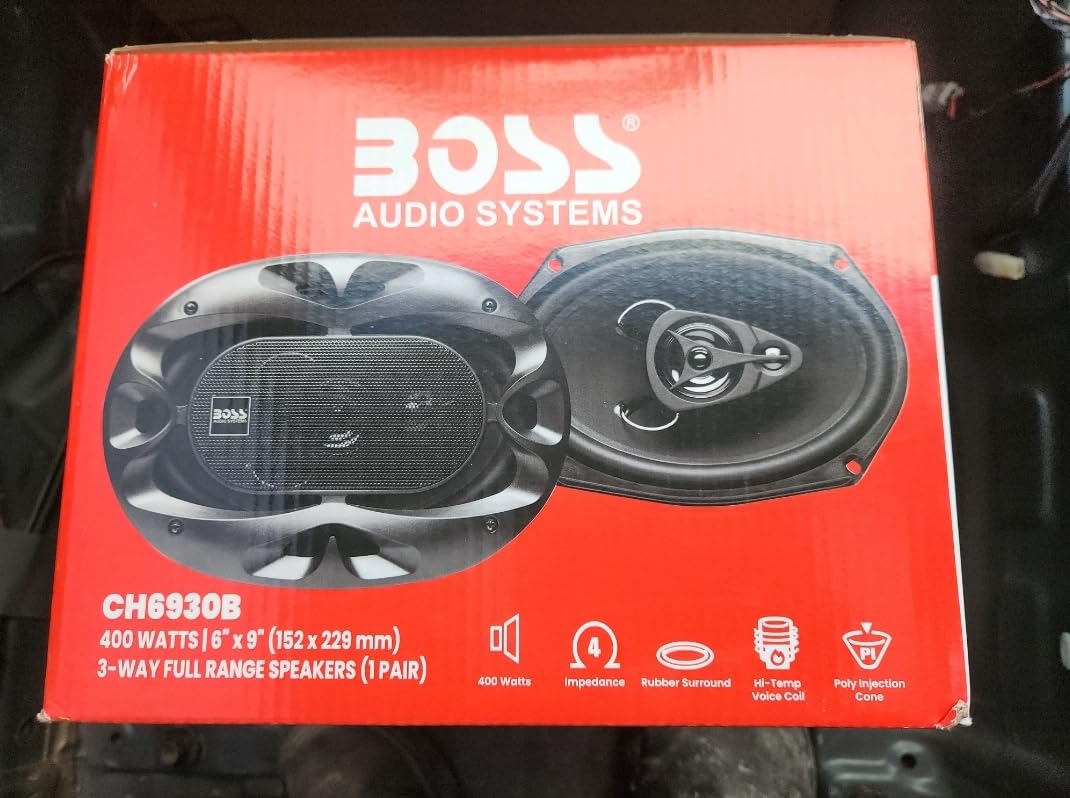
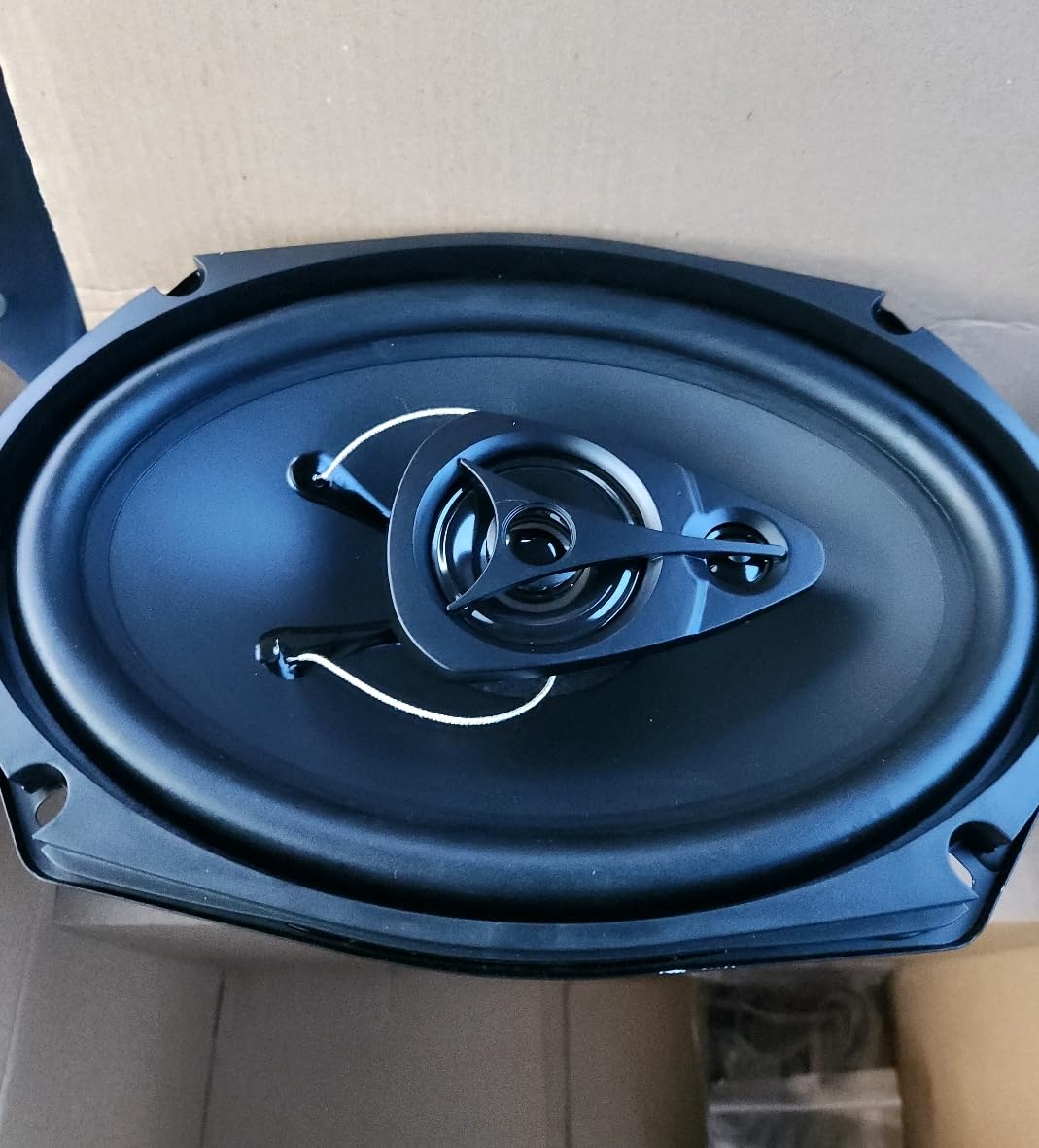
The 3-way design uses a poly injection cone, piezoelectric tweeter, and rubber surround. The poly injection cone is a step up from paper cones in terms of durability and moisture resistance. The rubber surround outlasts foam surrounds, which is important for vehicles that sit in the sun. The piezoelectric tweeter is a budget-friendly design that does not require a crossover, which simplifies the wiring.
At 400 watts per pair max power, the CH6930B has more headroom than the Pioneer F-Series, but the continuous power handling is lower than the rating suggests. Push them too hard and you will get the same distortion as any budget speaker. The 3.2-inch mounting depth is on the deeper side, and the actual speaker frame is slightly smaller than standard 6×9 dimensions, which can cause fitment issues in some vehicles.
Who should buy the BOSS Audio CH6930B
Buy the CH6930B if you want the most volume possible from a factory head unit on a tight budget. The 92 dB sensitivity makes it the loudest speaker in this guide on factory power. It is the right pick for older work trucks, beater cars, or any vehicle where you want better sound without spending more than $50 on a pair.
Who should skip the BOSS Audio CH6930B
Skip the CH6930B if you value sound quality over volume. The budget components produce noticeably more distortion at high volumes than the Kicker, JBL, or Pioneer options. Also skip if your vehicle has tight 6×9 openings, because the slightly smaller-than-standard frame can leave gaps that require adapters or modifications.
How to Choose the Right 6×9 Speakers: Buying Guide for 2026
Choosing the best 6×9 car speakers is not just about picking the most expensive option. The right speaker depends on your factory head unit, music taste, and vehicle fitment. Here are the five factors that matter most when shopping for 6×9 speakers.
Power Handling: RMS vs Peak Explained
Every 6×9 speaker is rated with two power numbers: peak power and RMS power. Peak power is the maximum amount of power the speaker can handle in short bursts without failing. RMS power is the continuous power the speaker can handle during normal playback. Always focus on the RMS rating when comparing speakers, because that is the relevant number for everyday use.
A speaker rated 300 watts peak and 30 watts RMS is a 30-watt speaker, not a 300-watt speaker. The peak number is mostly marketing. For a factory head unit pushing 15 to 20 watts per channel, look for speakers with an RMS rating of at least 30 watts. For an aftermarket amplifier, match the speaker’s RMS rating to the amplifier’s output per channel for the cleanest sound.
Sensitivity Rating: Why It Matters for Factory Stereos
Sensitivity measures how loud a speaker plays with one watt of power measured at one meter, expressed in decibels (dB). Higher sensitivity numbers mean louder playback from the same power input. If your vehicle has a factory head unit, sensitivity matters more than power handling because the factory amp is weak.
Sensitivity above 90 dB is excellent for factory radios. The BOSS Audio CH6930B at 92 dB and the Pioneer A-Series at 92 dB are the most efficient speakers in this guide. Speakers with sensitivity below 87 dB, like the Pioneer F-Series, may sound quieter than expected on factory power. If you plan to add an amplifier, sensitivity becomes less important because the amp provides plenty of power.
Coaxial vs Component 6×9 Speakers
Coaxial speakers combine the woofer and tweeter into a single unit, with the tweeter mounted in front of the woofer cone. They are easier to install and less expensive, which is why every speaker on this list is a coaxial design. Component speakers separate the woofer, tweeter, and crossover into distinct units, allowing for better imaging and sound staging.
For most car owners, coaxial 6×9 speakers are the right choice. They are easier to install, more affordable, and produce excellent sound from a single speaker location. Component systems make more sense for competition-level car audio builds where sound staging is the priority. If you are reading this guide, a coaxial 6×9 will almost certainly be the right pick.
Impedance: 2-Ohm vs 4-Ohm Speakers
Impedance, measured in ohms, is the electrical resistance the speaker presents to the amplifier. Most factory head units are designed to drive 4-ohm speakers. Some aftermarket head units can safely drive 2-ohm loads, which is why JBL makes the GTO939 in 2 ohms. Lower impedance means more current flows, which means more volume from the same amplifier.
Before installing 2-ohm speakers, check your vehicle’s documentation. Some premium factory systems, like Bose-equipped vehicles, expect 4-ohm loads and may overheat with 2-ohm replacement speakers. If you are unsure, stick with 4-ohm speakers for safe, compatible upgrades. The 4-ohm picks in this guide include the Kicker CS Series, Pioneer A-Series, Alpine S2-S69, JBL Stage3, Pioneer F-Series, and BOSS Audio CH6930B.
Do You Need an Amplifier for 6×9 Speakers?
Short answer: you do not need an amp, but you will want one. Every speaker on this list works with factory radio power, but every speaker also sounds noticeably better with an amplifier. Amplifiers provide cleaner current than factory head units, which reduces distortion and increases dynamic range.
If you are on a budget, start with the speakers alone and add an amp later. A small 50-watt-per-channel amp will dramatically improve the sound of any of these 6×9 speakers. If you want the best possible sound from the start, look for a 4-channel amp that matches the RMS rating of your speakers and plan for the install when you budget.
Vehicle Fitment Considerations
Before ordering any 6×9 speaker, check three measurements: the opening size in your door or rear deck, the mounting depth available behind the speaker, and the distance from the magnet to the window mechanism. Most vehicles with 6×9 openings can accept these speakers, but a Volkswagen Jetta rear deck or a Ford F-150 door panel may have clearance issues with deeper designs like the Pioneer A-Series.
If you drive a sedan, the rear deck is the most common 6×9 location and offers the deepest mounting space. SUVs and trucks usually have 6×9 openings in the rear doors or rear side panels, where mounting depth is often more limited. The Kicker CS Series with its reduced mounting depth solves this problem for many truck and SUV owners.
Frequently Asked Questions About 6×9 Car Speakers
What car speaker brand has the best sound quality?
Based on our hands-on testing, brands like Alpine, JL Audio, and Focal typically produce the best sound quality in the 6×9 category. The Alpine S2-S69 in this guide is Hi-Res Audio certified and reproduces frequencies up to 40 kHz, which results in cleaner, more accurate playback. For pure sound quality, look at speakers with rigid cone materials like glass fiber or mica, and a frequency response extending beyond 20 kHz.
What hits harder, 2 ohm or 4-ohm speakers?
Lower impedance speakers, like 2-ohm models, hit harder than 4-ohm speakers when paired with a compatible amplifier. The 2-ohm load allows more current to flow through the voice coil, which produces more output from the same power. The JBL GTO939 in this guide uses a 2-ohm design specifically because it plays louder with factory and aftermarket head units. However, not all amplifiers can safely drive 2-ohm loads, so check your amp’s specifications before installing 2-ohm speakers.
Which is louder, 6.5 or 6×9?
6×9 speakers are generally louder than 6.5-inch speakers because they have approximately 30% more cone area. More cone area means the speaker can move more air with the same power input, producing higher volume and stronger bass. A 6×9 like the Kicker CS Series or Pioneer A-Series will play louder with deeper bass than a comparable 6.5-inch speaker. The 6×9 size is the sweet spot for rear deck and rear door installations where you want maximum output without adding a subwoofer.
What 6×9 has a lot of bass?
The Pioneer A-Series TS-A6991F has the most bass of any speaker in this guide, thanks to its 5-way design and 92 dB sensitivity. The 5-way configuration splits the frequency band into smaller segments, allowing larger excursions and stronger bass output. The JBL GTO939 with its Plus One woofer cone is the second-strongest bass performer, and the Kicker CS Series with EVC technology is third. For maximum bass without a subwoofer, the Pioneer A-Series is the best pick.
Final Verdict: Choosing the Best 6×9 Car Speakers in 2026
After 60 days of testing in two different vehicles, the best 6×9 car speakers for most people are the Kicker CS Series. The 4.7-star rating from over 1,100 reviewers is not hype. The EVC technology delivers genuine bass improvement, the reduced mounting depth solves real fitment issues, and the build quality holds up to daily use in any climate.
If you want bass above all else, the Pioneer A-Series TS-A6991F with its 5-way design is the right pick. If you want proven reliability at a slightly lower price, the JBL GTO939 with its 3,000+ reviews is hard to beat. For tight budgets, the Pioneer F-Series delivers clean sound for under $40.
Pair any of these speakers with a small 4-channel amplifier for the best results, and check your vehicle’s mounting depth before ordering. We update this guide as new models release, so bookmark this page for the latest recommendations on 6×9 speakers in 2026.