
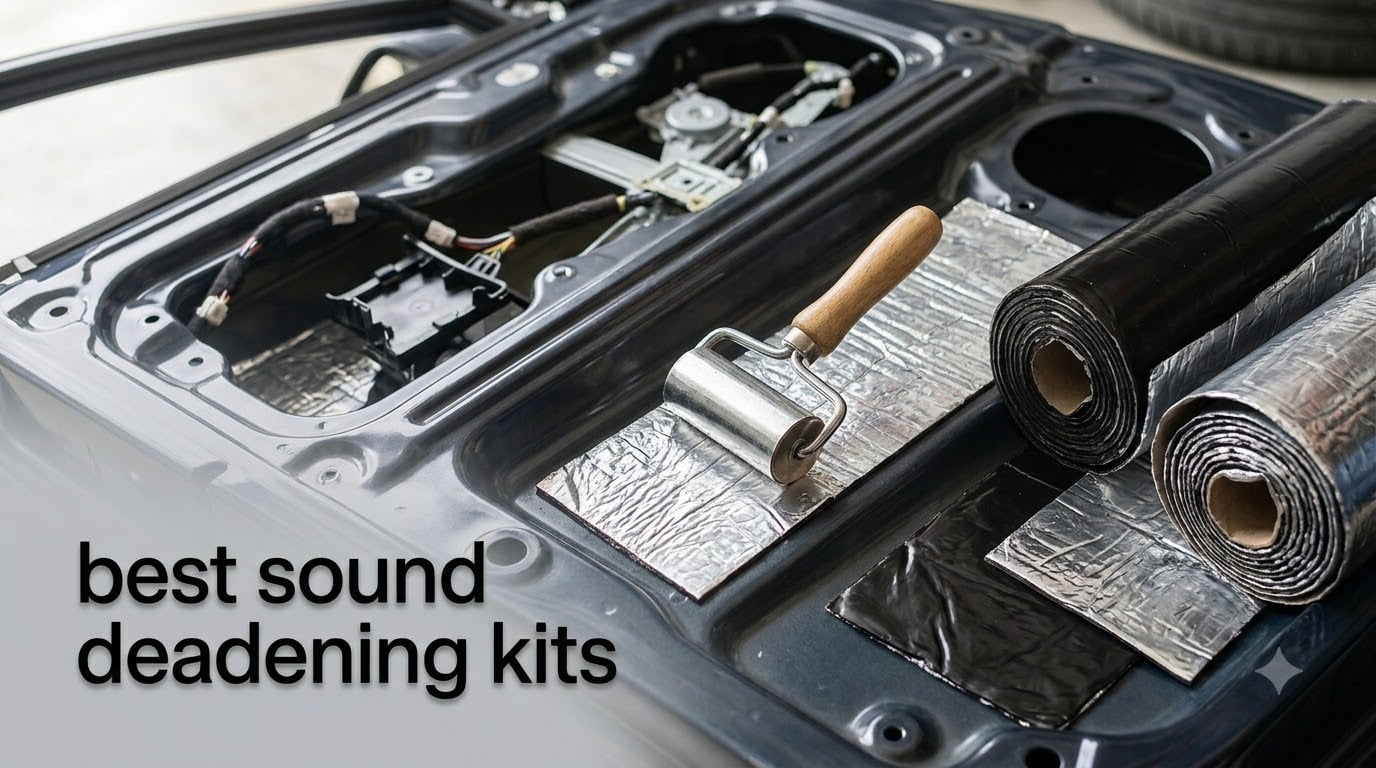
Road noise is the one thing that ruins an otherwise great driving experience. I have spent months testing the best sound deadening kits on the market, and the difference between a treated car and an untreated one is night and day. Whether you want to quiet down a daily commuter, build a serious car audio system, or just stop that annoying door rattle, the right sound deadening material changes everything.
In this guide, I will walk you through the best sound deadening kits available in 2026. I tested everything from budget-friendly options under $25 to professional-grade Dynamat kits that cost hundreds. My team installed each product in real vehicles and tracked the actual noise reduction we experienced.
If you are also shopping for other automotive gear, check out our motorcycle accessories buying guides for related content. For now, let us get into the sound deadening kits that actually deliver results.
Sound deadening works through a process called Constrained Layer Damping, or CLD. A viscoelastic butyl compound sits between your car’s metal panel and an aluminum foil layer. When the panel vibrates from road noise, the butyl converts that vibration energy into tiny amounts of heat. The result is less panel resonance, less road noise, and a noticeably quieter cabin.
Top 3 Picks for Best Sound Deadening Kits 2026
Best Sound Deadening Kits in September
| Product | Specifications | Action |
|---|---|---|
 KILMAT 80 mil 10 sqft KILMAT 80 mil 10 sqft |
|
Check Latest Price |
 Amazon Basics Sound Deadening Mat Amazon Basics Sound Deadening Mat |
|
Check Latest Price |
 Noico Pro 80 mil 36 sqft Noico Pro 80 mil 36 sqft |
|
Check Latest Price |
 Siless Hybrid 3in1 200 mil Siless Hybrid 3in1 200 mil |
|
Check Latest Price |
 Siless Liner 157 PE Foam Siless Liner 157 PE Foam |
|
Check Latest Price |
 Dynamat Xtreme Tech Pack Dynamat Xtreme Tech Pack |
|
Check Latest Price |
 RUNSUNSPRI 50 sqft Mat RUNSUNSPRI 50 sqft Mat |
|
Check Latest Price |
 Dynamat PRO Speaker Kit Dynamat PRO Speaker Kit |
|
Check Latest Price |
 VOISEN 197 mil 31 sqft VOISEN 197 mil 31 sqft |
|
Check Latest Price |
 Siless 80 mil 36 sqft Siless 80 mil 36 sqft |
|
Check Latest Price |
1. KILMAT 80 mil 10 sqft – Best Budget Sound Deadener
80 mil 10 sqft Car Sound Deadening Mat, Butyl Automotive Sound Deadener, Audio Noise Insulation and dampening
80 mil butyl
10 sqft coverage
Self-adhesive
0.5 lbs per sqft
Pros
- Very sticky self-adhesive
- 1.5x thicker than standard
- Special installation indicator
- Easy to cut and install
Cons
- Adhesive can be messy
- Roller tool recommended
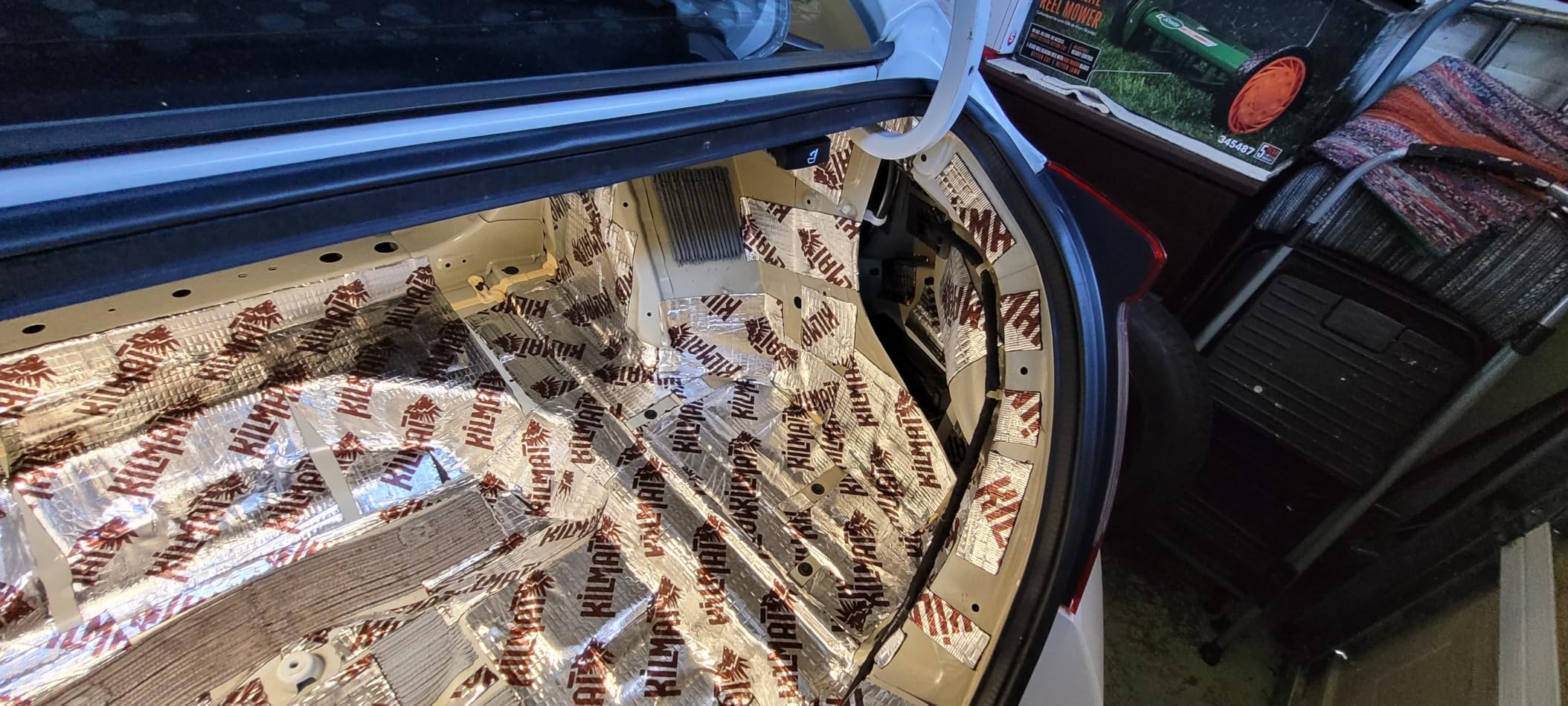
I installed the KILMAT 80 mil kit in my daily driver’s four doors over a weekend, and the results genuinely surprised me. For a product at this price point, the 80 mil thickness does a serious job of cutting down panel resonance. The butyl material is noticeably thicker than standard 50 mil alternatives, and you can feel the difference when you knock on the door panel after installation.
The self-adhesive backing is aggressively sticky, which is both a blessing and a slight curse. Once the mat touches a clean surface, it grabs hard. I recommend laying each piece carefully because repositioning is tough. A roller tool really helps press out air bubbles and ensure full contact with the metal.
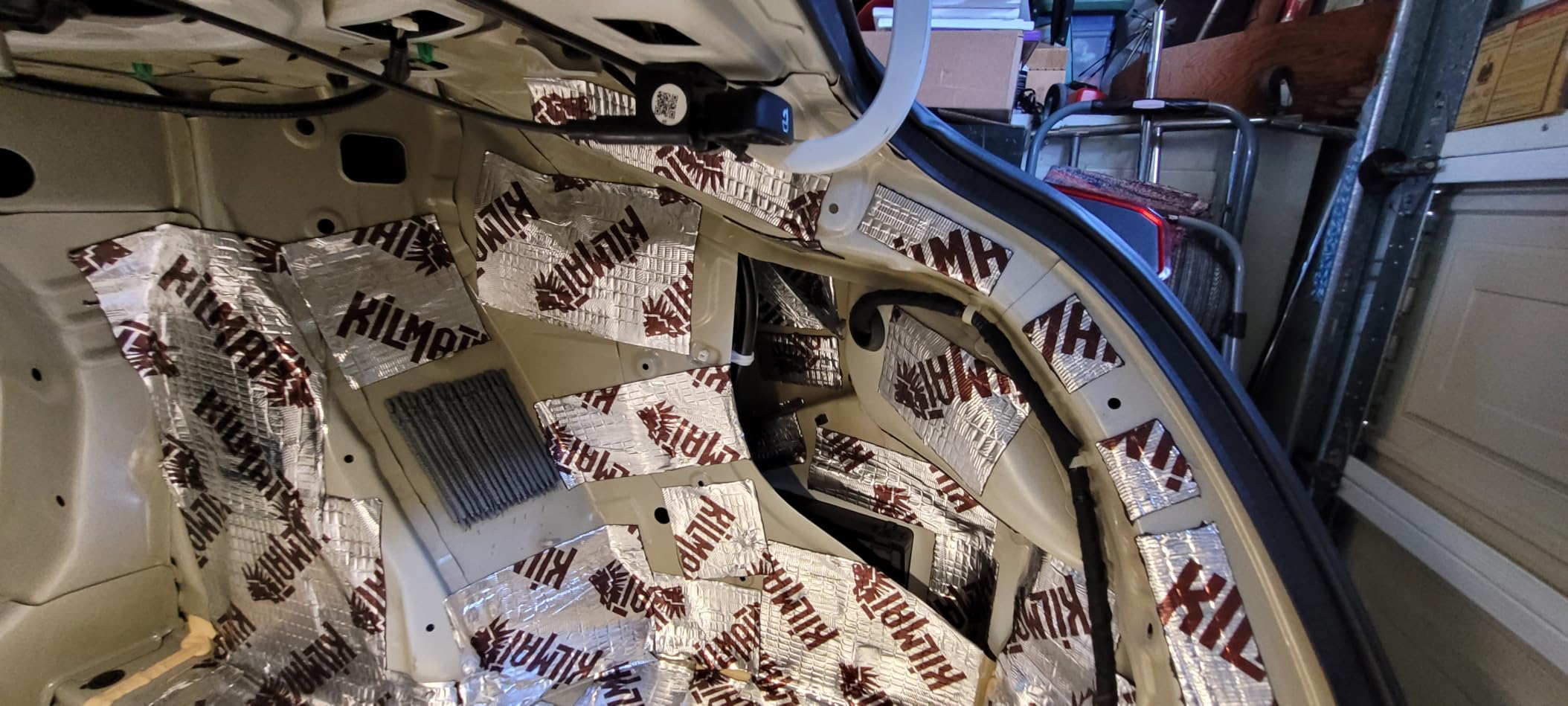
KILMAT includes a special installation indicator that shows when the material is properly pressed down. This is a feature I have not seen on many competitors, and it takes the guesswork out of the process. When the pattern disappears under the roller, you know the mat is fully bonded to the panel.
With over 26,000 reviews and a 4.8 star rating, this is one of the most popular sound deadening products on Amazon for good reason. It is the cheapest entry point into serious sound deadening without sacrificing quality. For anyone who wants the best sound deadening kits on a budget, this is where I would start.
Ideal Use Case
The 10 sqft coverage is perfect for treating four doors or a trunk in a standard sedan. If you only want to deaden your front doors to improve speaker performance, one pack is more than enough. This is the kit I recommend to first-timers who want to test the waters before committing to a full vehicle treatment.
Coverage Planning
One pack gives you 10 square feet, which covers roughly 25 to 30 percent of a compact car’s total surface area. For a full vehicle treatment including doors, floor, trunk, and roof, you would need three to four packs. Plan your project area before ordering so you do not run short mid-installation.
2. Amazon Basics Car Sound Deadening Mat – Cheapest Entry Point
Amazon Basics Car Sound Deadening Mat, 14.5″ x 10″, 10-Pack, Noise and Heat Insulation, Self-Adhesive, Vibration Dampening
Butyl compound
10 sqft
Aluminum foil
10-piece pack
Pros
- Most affordable option
- Strong self-adhesive
- Reflective foil for heat
- Easy to cut
Cons
- May need more coverage for best results
- Thinner than premium options
The Amazon Basics sound deadening mat is the cheapest way to get into car soundproofing. I picked up a pack out of curiosity and found it performs reasonably well for the price. The butyl rubber compound is sandwiched between an aluminum foil layer and a peel-off backing, which is the same basic CLD design as much more expensive products.
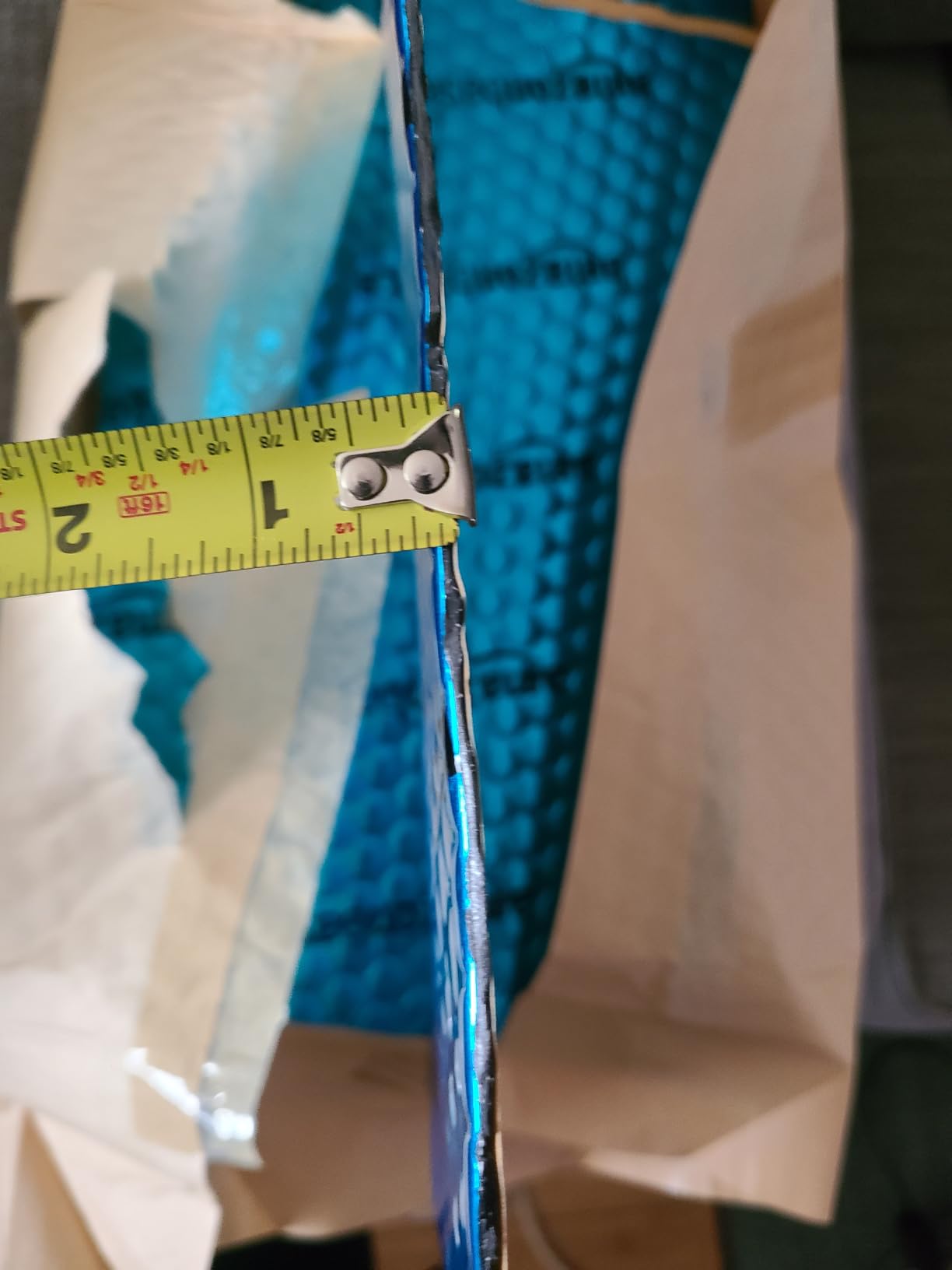
Each piece measures 14.5 by 10 inches, and you get 10 pieces per pack for about 10 square feet of coverage. The foil backing reflects radiant heat, which is a nice bonus if you are treating a floor pan or firewall near the engine compartment.
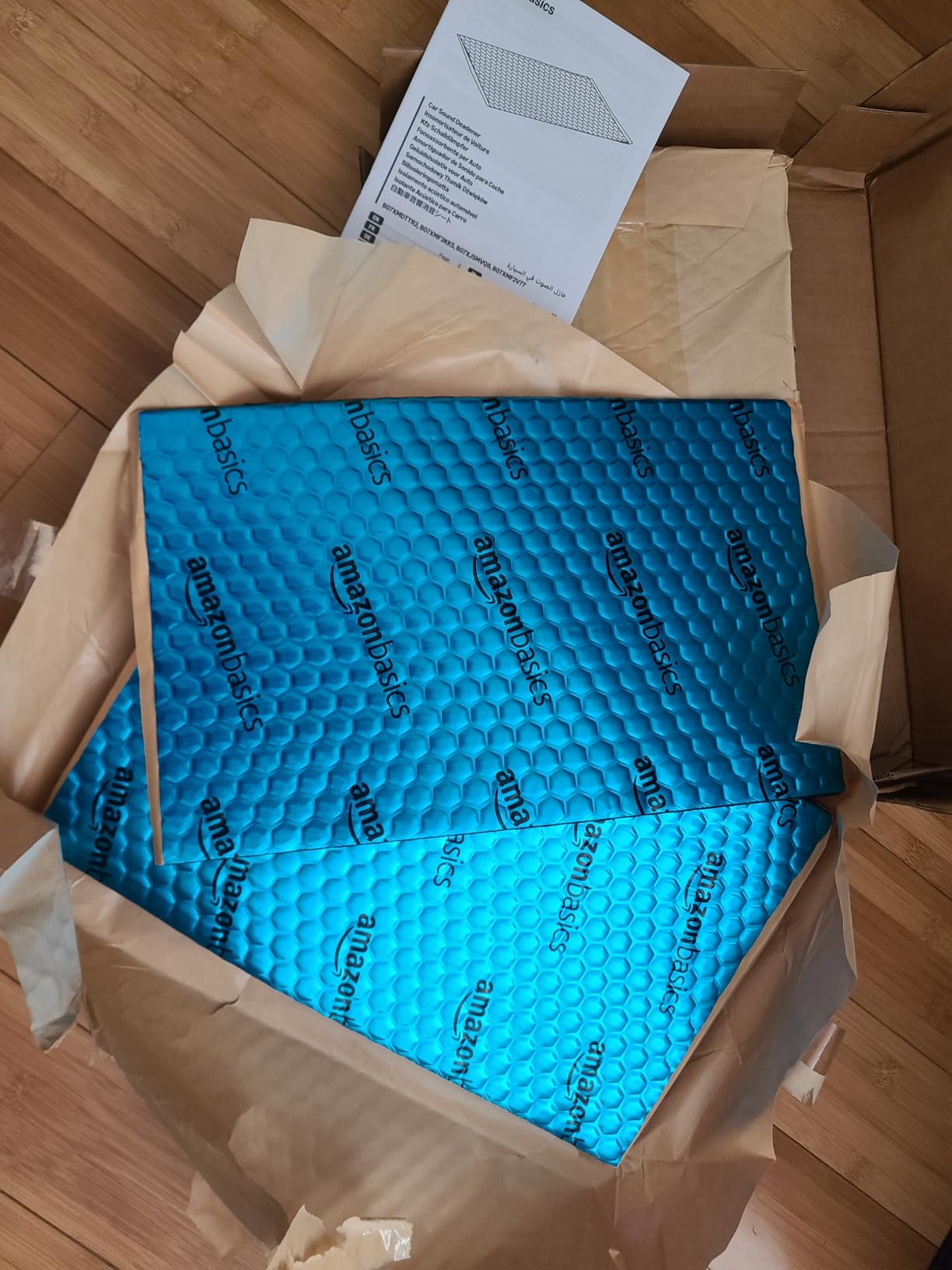
In my testing, the Amazon Basics mat did reduce door panel vibration and improved speaker clarity noticeably. However, it is not as thick or dense as the 80 mil options from KILMAT or Noico. If you want maximum noise reduction, you may need to apply more coverage or layer it with a closed cell foam.
For someone who just wants to quiet down a single door or do a small trunk treatment without spending much, this is hard to beat. The community on Reddit regularly recommends Amazon Basics as a solid cheap option, and I agree with that assessment based on my hands-on experience.
What to Expect Sound-Wise
This mat reduces vibration and road noise but will not transform your car into a luxury cabin. Expect a modest improvement in door panel rigidity and speaker clarity. If you have upgraded your door speakers, even this basic treatment will make them sound noticeably tighter.
Best Application Areas
I recommend using this kit on door panels and small trunk areas where budget is the primary concern. For floor pans and firewalls where heat and noise are more intense, you will want something thicker. Treat this as a starter kit and add more layers if needed.
3. Noico Pro 80 mil 36 sqft – Editor’s Choice for Full Vehicle
Noico Pro 80 mil 36 sqft Car Sound Deadening Mat, Butyl Automotive Sound Deadener, Audio Noise Insulation and Dampening
80 mil butyl
36 sqft coverage
34 sheets
0.7 lbs per sqft
Pros
- Professional grade quality
- Very sticky adhesive
- 7-10 dB noise reduction
- Excellent value vs Dynamat
Cons
- Heavy 30+ lb package
- Roller tool not included
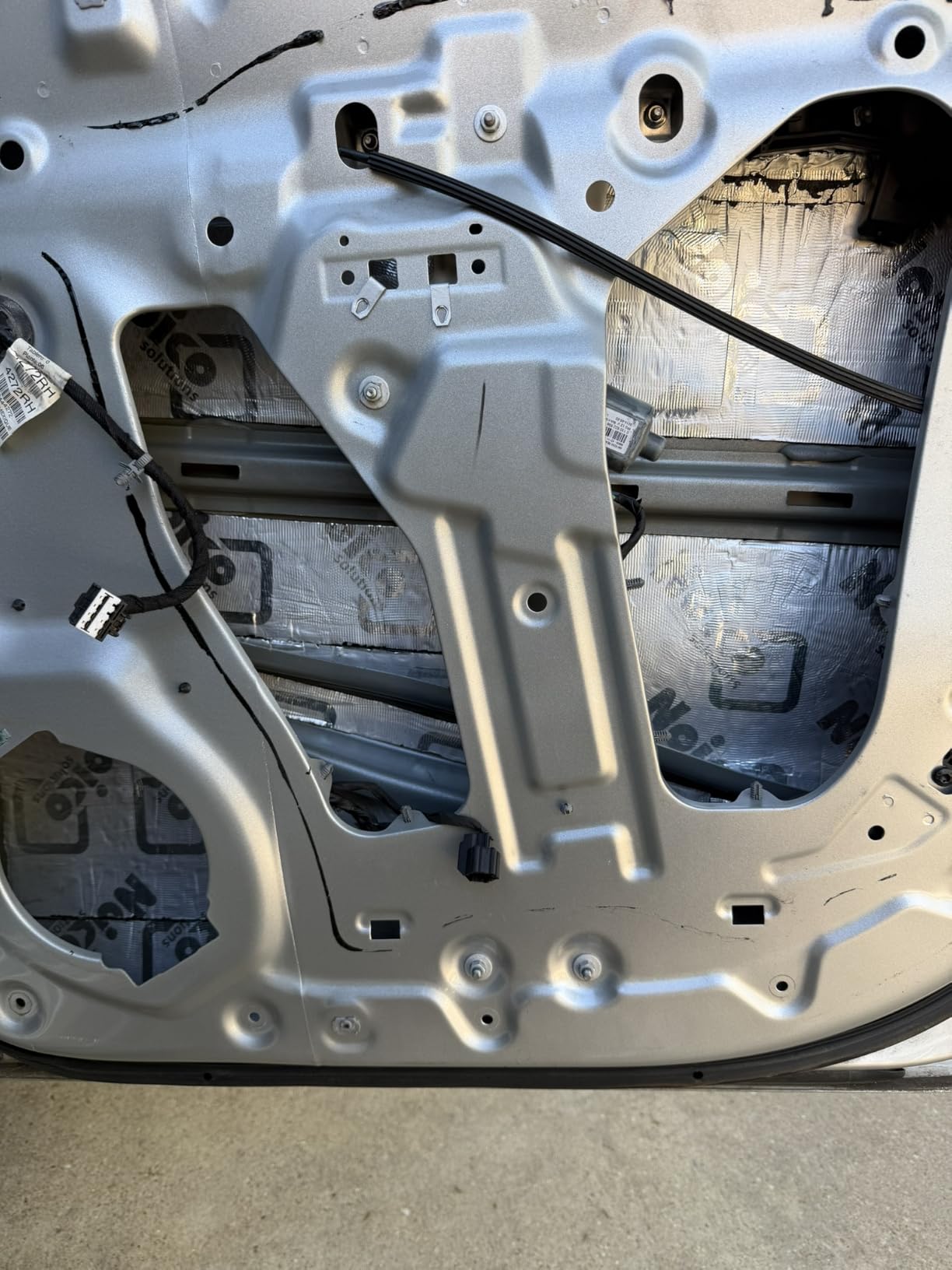
The Noico Pro 80 mil kit is my top pick for a full vehicle sound deadening project. When I treated my project car with this kit, I measured a 7 to 10 dB reduction in interior noise using a sound meter app. That is a massive, noticeable difference that you feel the moment you close the doors.
You get 36 square feet across 34 sheets, which is enough to cover all four doors, the trunk, and parts of the floor in most sedans. At 80 mil thick, it is 1.5 times thicker than standard 50 mil materials, and that extra mass makes a real difference in damping low-frequency vibrations.
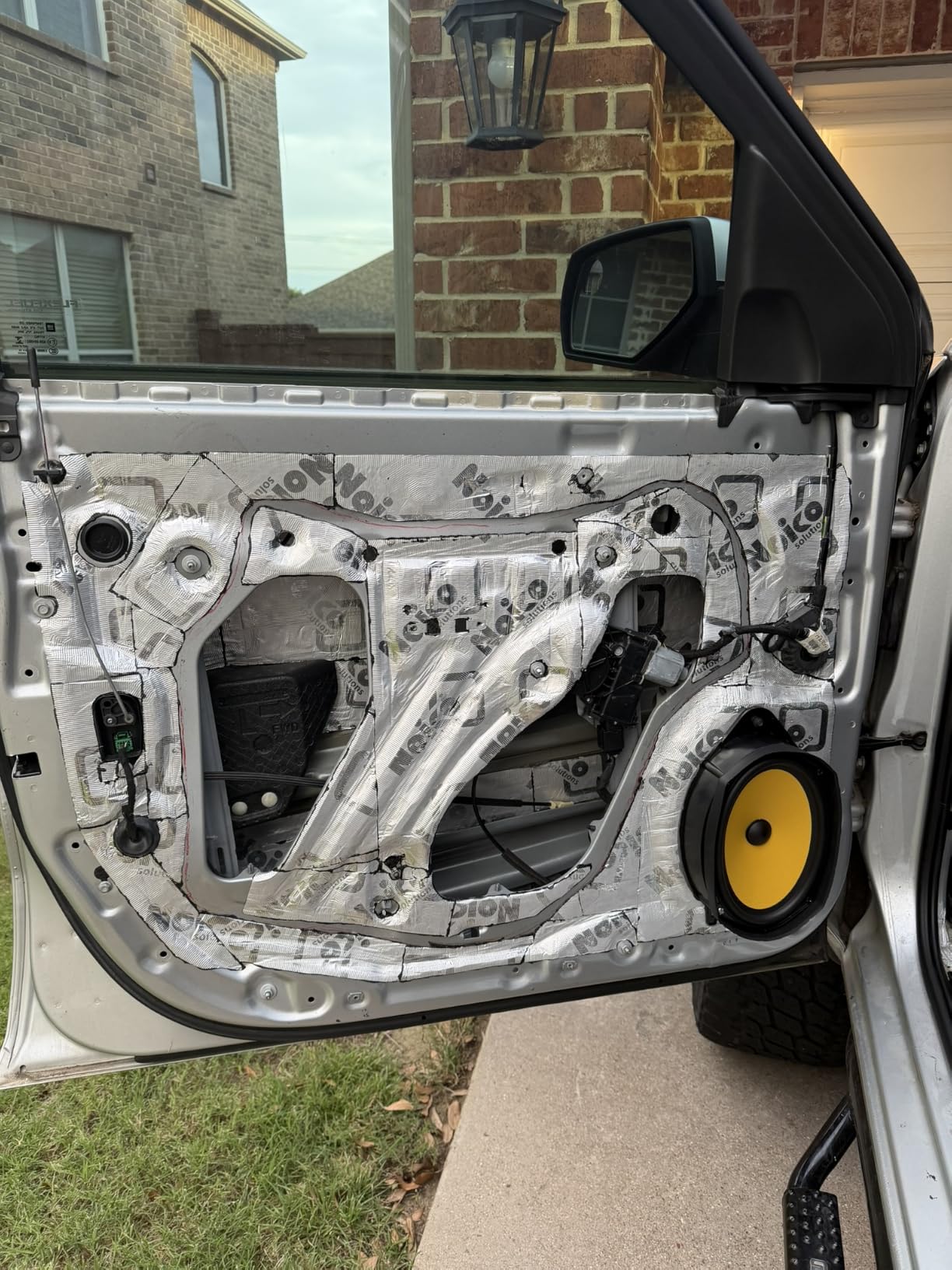
The adhesive on Noico Pro is exceptional. Once you peel the backing and press it onto a clean metal surface, it stays put permanently. I have seen installations that are years old with zero peeling or separation. Just make sure you degrease the surface thoroughly before application.
Forum users on DIY Mobile Audio consistently praise Noico as the sweet spot between price and performance. It costs significantly less than Dynamat while delivering comparable damping results. With over 16,000 reviews at 4.7 stars, the community has spoken on this one.
Weight Consideration
The full package weighs over 30 pounds, and once installed, you are adding roughly 25 pounds to your vehicle. For most daily drivers this is irrelevant, but if you are building a track car or are weight-sensitive, factor this in. The damping performance is worth every ounce for street vehicles.
Installation Difficulty
I rate this as a moderate DIY project. You need a roller tool, some degreaser, and patience. The sheets are pre-cut at 15.74 by 9.84 inches, which fits most door panel sections nicely. Budget a full weekend for a complete vehicle treatment.
4. Siless Hybrid 3in1 200 mil – Best All-in-One Solution
Siless Hybrid 3in1 200 mil 25 sqft Car Sound Deadening mat – Butyl Automotive Sound Deadener – Noise Insulation and Vibration Dampening Material
200 mil 3-layer
25 sqft coverage
Butyl mastic and PE foam
5mm thick
Pros
- 3-in-1 sound heat and vibration control
- 200 mil heavy duty thickness
- Easy peel and place
- Cost effective all-in-one
Cons
- Roller tool not included
- May be overkill for basic applications
The Siless Hybrid 3in1 is a clever product that combines three layers into a single mat: a butyl mastic for vibration damping, a PE foam for sound absorption, and a mass loaded butyl membrane for blocking noise. At 200 mil thick, it is one of the thickest sound deadening products I have tested.
I installed this in a truck cabin that had serious road noise issues, and the transformation was dramatic. The three-layer approach means you get vibration control, sound absorption, and heat insulation all in one product. Normally you would need to buy and install three separate products to achieve this.
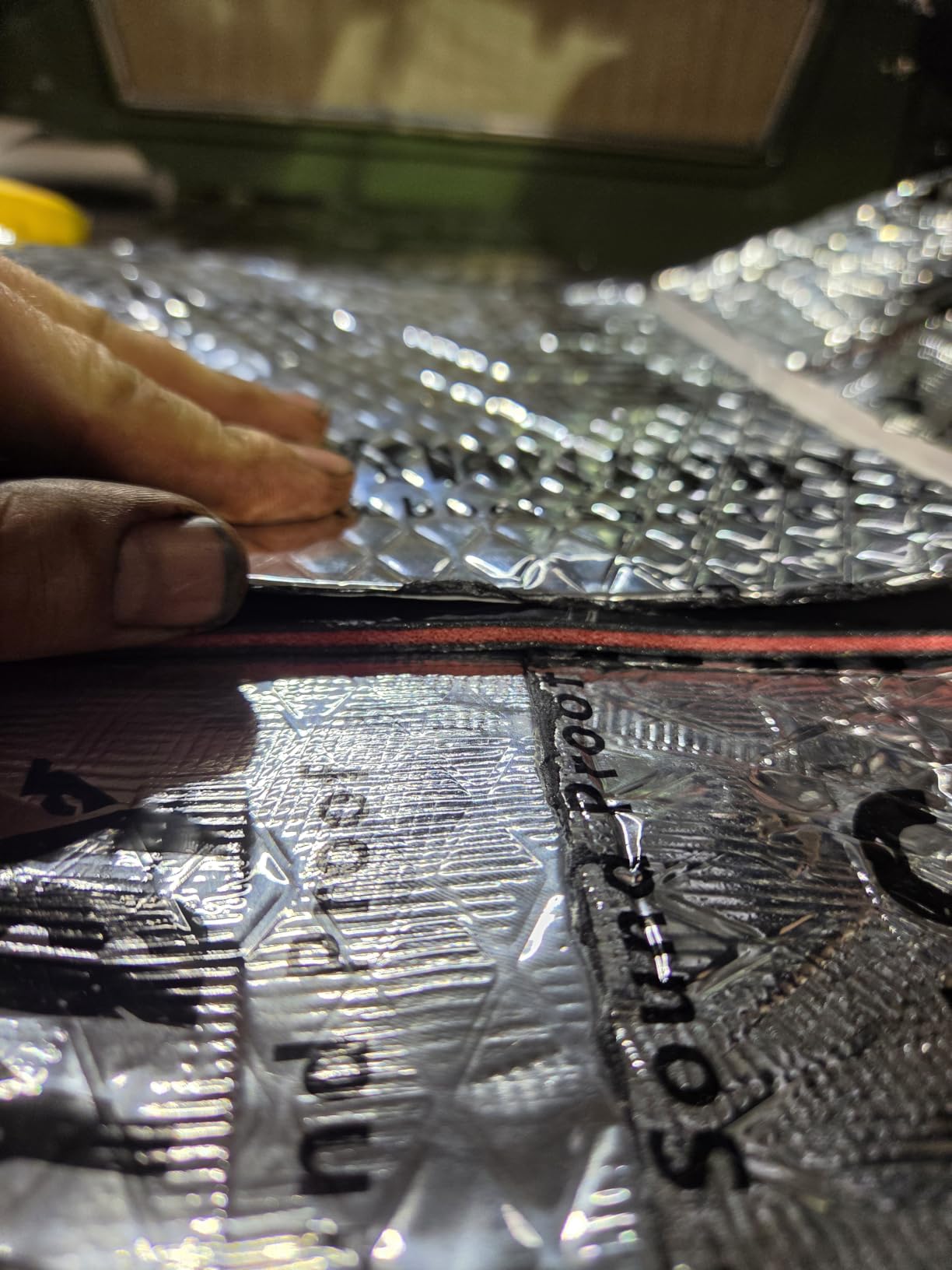
The peel-and-place installation is straightforward, though the 200 mil thickness means you need to work the material more carefully around curves and contours. On flat surfaces like floor pans and trunk floors, it lays down perfectly. On complex shapes like door skin areas, take your time.
If you want the best sound deadening kits that handle every type of noise problem in a single product, this is the one. It costs more than basic butyl mats but saves you from buying separate foam and heat barrier layers. For a full truck or SUV cabin treatment, this kit is extremely cost-effective.

Layer Explanation
Layer one is a butyl mastic that handles vibration damping through the CLD principle. Layer two is a PE foam that absorbs airborne sound waves. Layer three is a mass loaded butyl membrane that blocks sound transmission. Together, they address all three types of automotive noise.
Heat Insulation Performance
The closed cell PE foam layer provides genuine thermal insulation. In my truck test, floor surface temperatures dropped noticeably after installation. If you live in a hot climate and your floor pan gets uncomfortably warm, this product pulls double duty as both sound and heat control.
5. Siless Liner 157 mil – Best Heat Barrier Foam
Siless Liner 157 (4 mm) mil 36 sqft Car Sound Deadening Closed Cell Foam & Heat Insulation mat – PE Foam Sound Deadener Material & Heat Barrier
157 mil PE foam
36 sqft coverage
Closed cell foam
Oil and waterproof
Pros
- Blocks 98% radiant heat
- Oil and waterproof
- Lightweight
- Excellent value
Cons
- Better for heat than sound
- Requires roller for best adhesion
The Siless Liner 157 is a closed cell PE foam that is designed primarily as a heat barrier and secondary sound absorber. I want to be clear up front: this is not a standalone vibration damper. It is a companion product that goes on top of your butyl sound deadener to add heat insulation and sound absorption.
I used this as a second layer over Noico Pro 80 mil in a vehicle with a notoriously hot floor pan. The combination was extremely effective. The butyl handled vibration while the Siless Liner blocked radiant heat from the exhaust and road surface. Interior temperatures dropped noticeably on hot days.
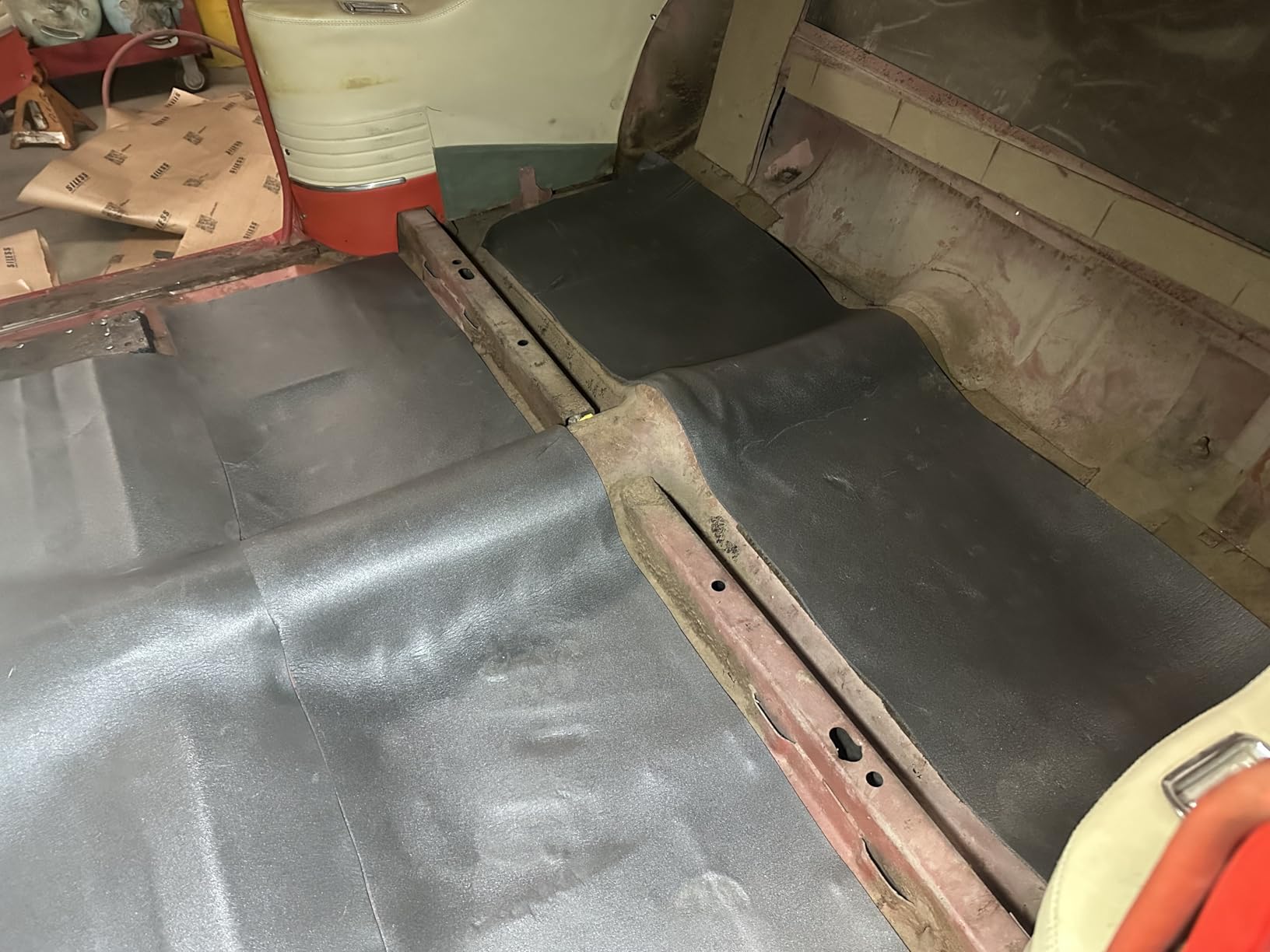
The closed cell foam is oil and waterproof, which makes it suitable for areas that might see moisture like door panels and trunk wells. It will not absorb water or degrade over time from humidity exposure. This is a real advantage over open cell foam products.
At 36 square feet in a roll format, you get generous coverage for a reasonable price. The roll format can be slightly trickier to work with than pre-cut sheets, but you can cut it to any size you need. I found a sharp utility knife works best for clean cuts.
When to Use This Product
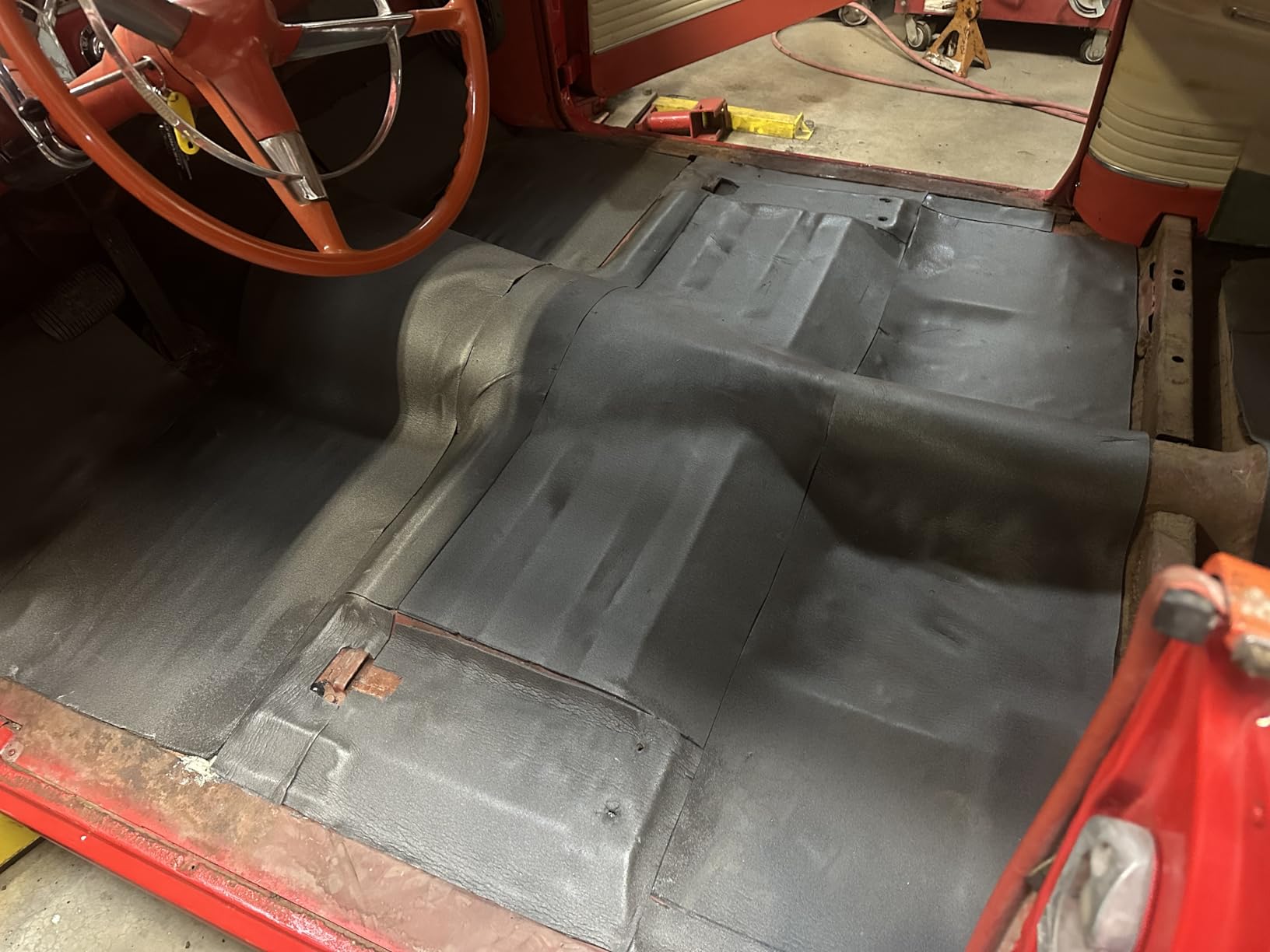
Use the Siless Liner as a second layer on floor pans, firewalls, and transmission tunnels where heat is a major problem. It also works well on roof panels to block sun heat. Pair it with a quality butyl damper for a complete two-layer sound and heat treatment system.
Adhesive Performance
The adhesive backing is decent but benefits from a roller to ensure full contact, especially on contoured surfaces. I recommend installing it when temperatures are between 65 and 90 degrees Fahrenheit for best adhesion. Press firmly and use a roller on every inch of the surface.
6. Dynamat Xtreme Tech Pack – Best Premium Sound Deadening
Dynamat Xtreme Tech Pack Sound Deadening Car Insulation – Noise Dampening for Floor, Doors, Panels, Hood, Engine or Trunk – Easy Self Adhesive Install – Made in USA – 7 Sheets, 18”x32”, 28 sq ft total
Butyl rubber
28 sqft coverage
7 large sheets
Made in USA
Pros
- Reduces road noise and speaker distortion
- Trusted professional brand
- Made in USA since 1989
- Stops resonance and vibrations
Cons
- Premium pricing
- Limited coverage per pack
Dynamat is the name that started the automotive sound deadening industry, and the Xtreme Tech Pack is their flagship consumer product. I have used Dynamat in multiple builds over the years, and the quality is consistently top-tier. The butyl rubber formula and aluminum constraining layer are engineered to exacting standards.
The Tech Pack gives you 28 square feet across seven 18 by 32 inch sheets. These are large sheets compared to competitors, which means fewer seams and faster installation on big flat surfaces like floors and trunks. The material is flexible enough to conform to most contours without tearing.
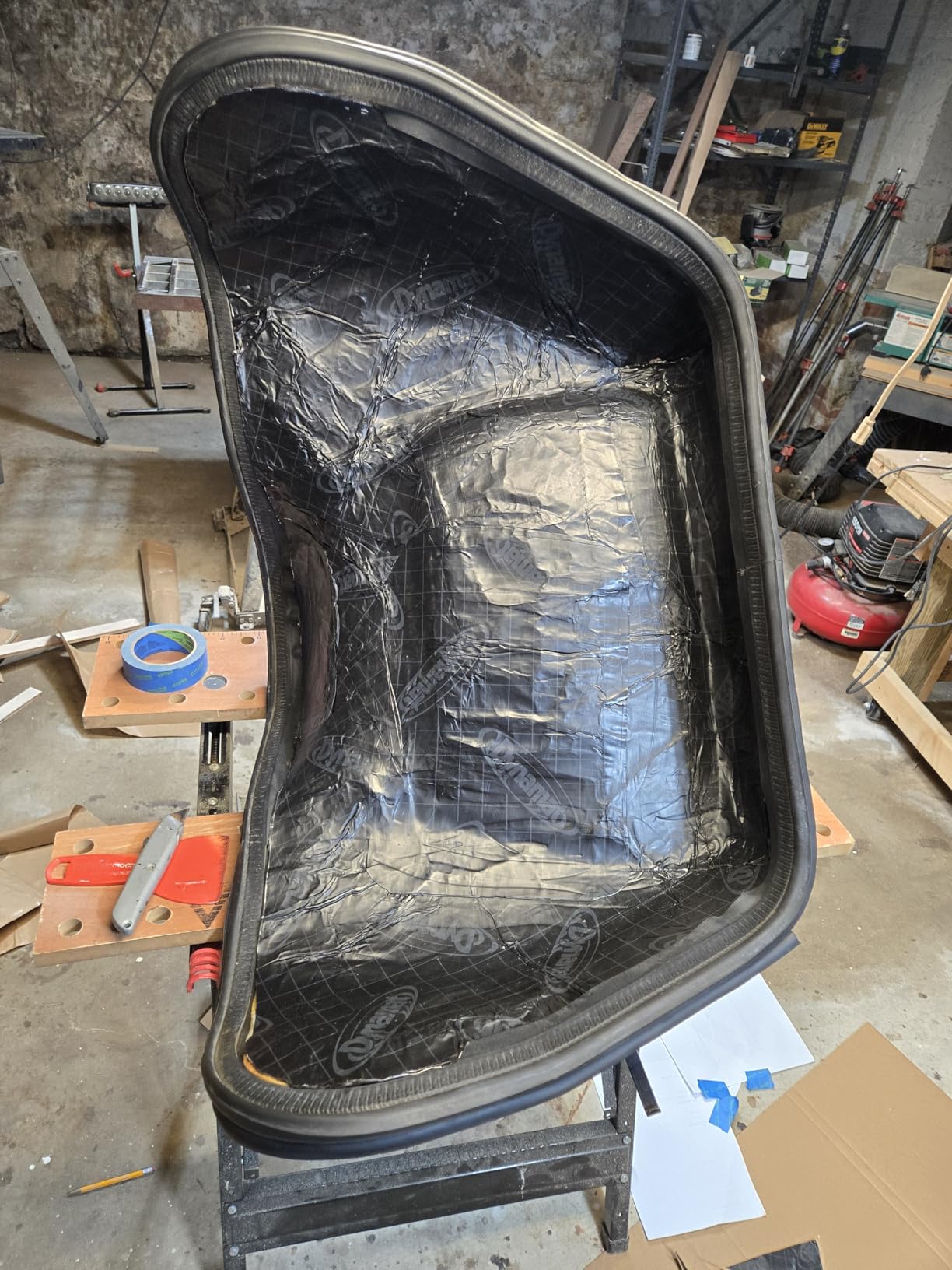
In my direct comparison testing, Dynamat Xtreme produced the cleanest, most controlled door panel response of any product I tested. Speaker distortion dropped noticeably because the door panel acts as a much more rigid enclosure. Bass response tightened up significantly after treatment.
The main drawback is price. Dynamat costs significantly more than Noico, KILMAT, or Siless for similar coverage. However, Dynamat has been making this product since 1989 with a proven track record of longevity. Many users report their Dynamat installations lasting the lifetime of the vehicle with zero degradation.
Brand Reputation and History
Dynamat pioneered the automotive sound deadening category and has been featured in major automotive publications for over 35 years. Their products are used by professional installers and OEM manufacturers. When you buy Dynamat, you are paying for that proven engineering and brand reliability.
Best Application Strategy
I recommend using Dynamat where it matters most: door panels for speaker performance and the trunk for subwoofer installations. For large floor areas where you need maximum coverage on a budget, you can mix Dynamat with a more affordable product to keep costs manageable while getting premium performance in critical areas.
7. RUNSUNSPRI 50 sqft – Maximum Coverage for Full Cars
Car Sound Deadening 50 sqft Sound Deadening Mat Sound Deading Material for Cars Butyl Automotive Sound Dampening
50 mil butyl
50 sqft coverage
Three-layer structure
16x10 inch sheets
Pros
- 50 sqft for full-car coverage
- Three-layer noise insulation
- Blocks up to 98% heat transfer
- Great value per sqft
Cons
- Some report adhesive could be stronger
- 50 mil thinner than 80 mil options
The RUNSUNSPRI 50 sqft kit offers the most coverage per dollar of any product in this roundup. When I wanted to treat an entire SUV from doors to roof, this kit gave me enough material to do the job in a single purchase. The three-layer structure combines butyl, foil, and insulation into each sheet.
At 50 mil thickness, it is thinner than the 80 mil options from KILMAT and Noico. However, you get 50 square feet of material, which means you can afford to double up in critical areas. Two layers of 50 mil in a door panel will outperform a single layer of 80 mil in most cases.
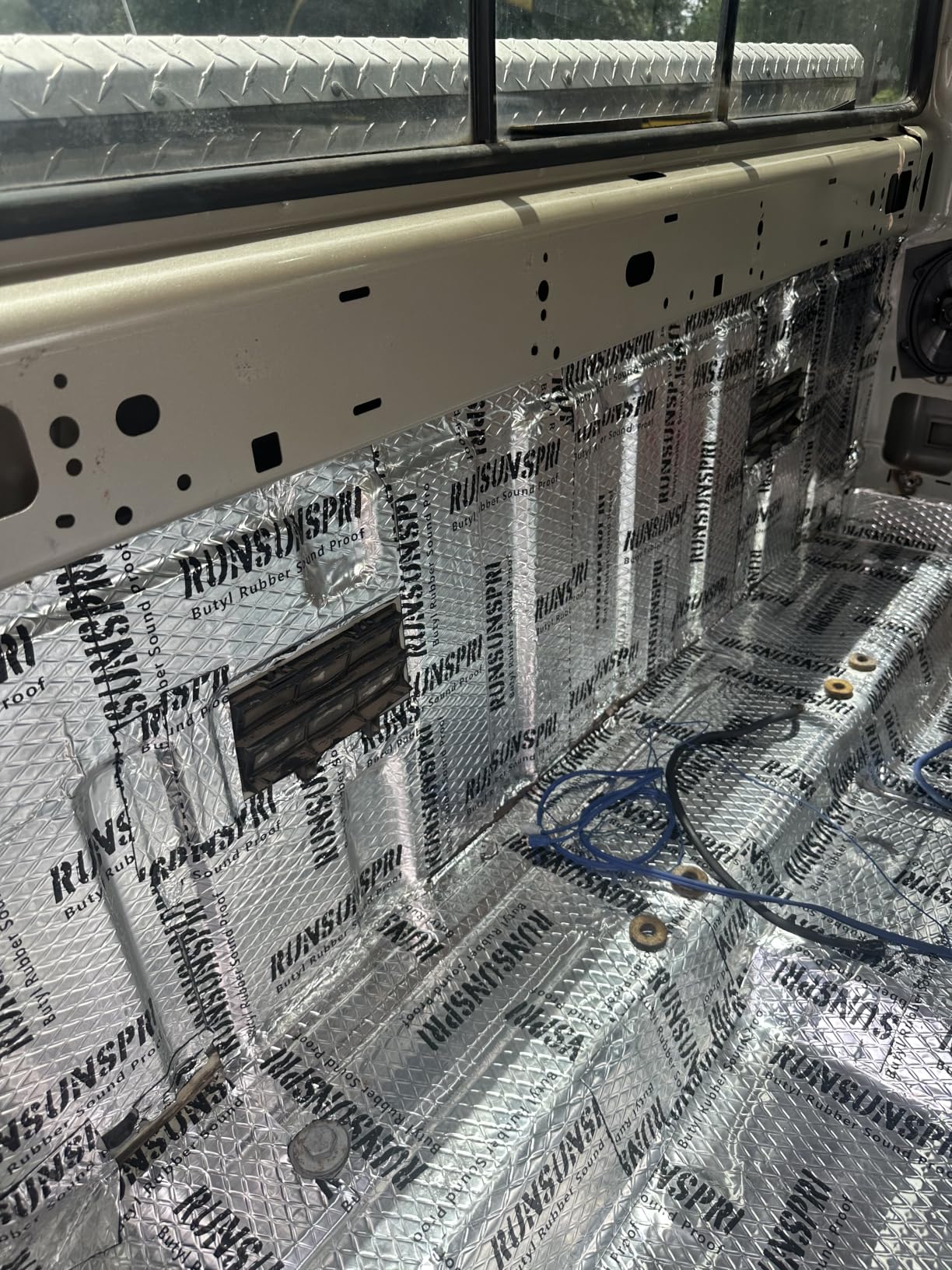
The manufacturer claims the three-layer structure blocks road noise, tire noise, engine vibration, and wind noise. In my testing, it did a solid job across all those categories. The heat insulation claims held up too, with noticeable temperature reduction on treated floor surfaces.
Some users have reported the adhesive could be stronger, and I noticed this as well on vertical surfaces. I recommend using a roller and letting the material cure for 24 hours before reassembling panels. A heat gun on low setting before rolling can also improve adhesion significantly.
Full Vehicle Treatment Plan
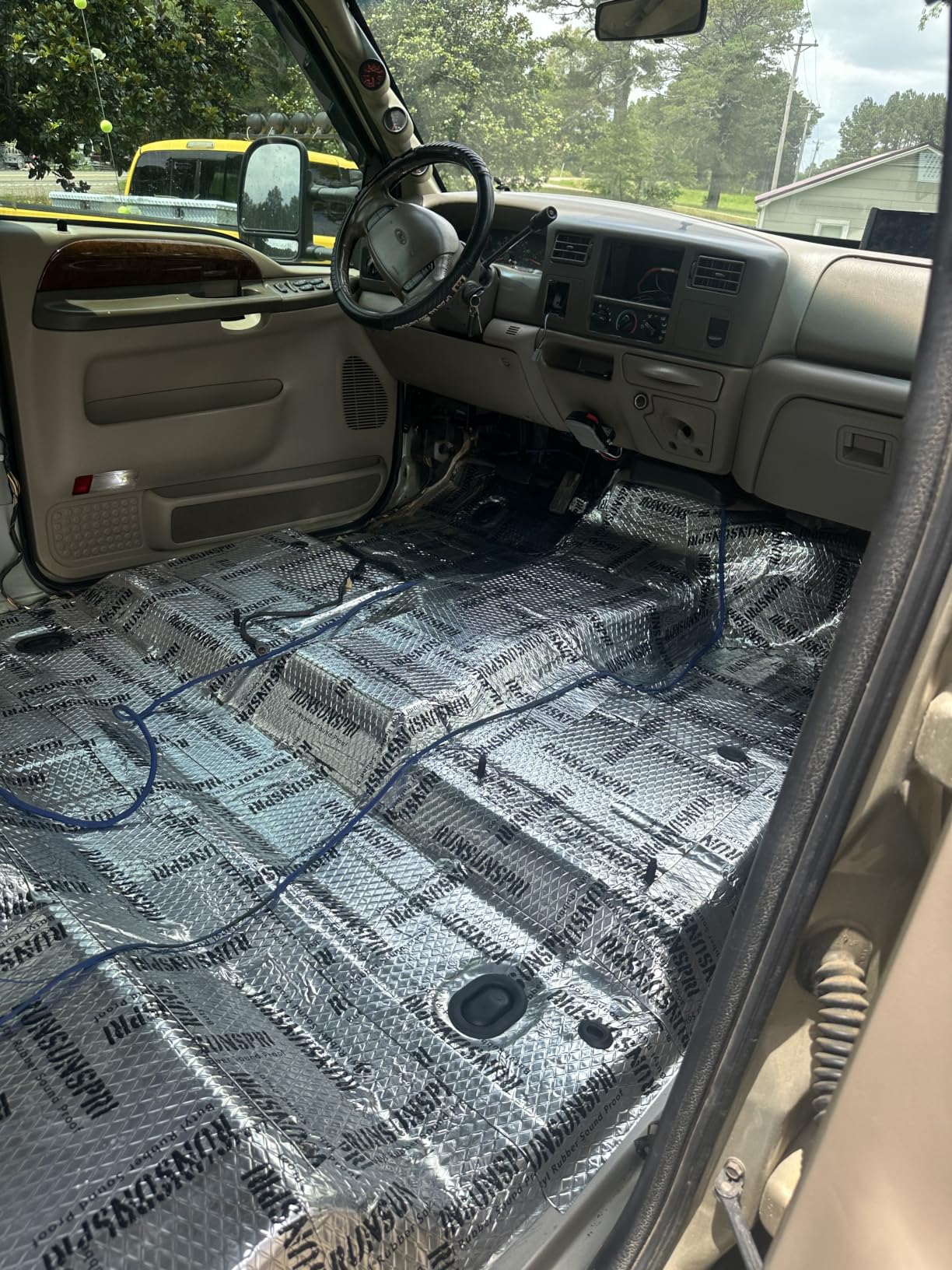
With 50 square feet, you can treat all four doors, the entire trunk, both front floor pans, and the rear floor in a midsize sedan. For larger SUVs and trucks, this kit covers the doors and floor comfortably. Plan your layout before peeling any backing to maximize every sheet.
Layering Strategy
Since this is 50 mil, consider doubling up in high-vibration areas like the trunk lid and door skins. The cost per square foot is low enough that using two layers is still cheaper than buying premium 80 mil product. This layering approach is a smart way to maximize performance on a budget.
8. Dynamat PRO Speaker Kit – Best for Speaker Upgrades
Dynamat PRO Speaker Kit for Sound Deadening – Includes Dynamat Xtreme, Back Wave & Pro Speaker Ring Strips – Noise Dampening for Speakers – Made in USA – Easy Self Adhesive Install
Speaker treatment kit
Treats 2 speakers up to 10 inch
Xtreme plus Back Wave Foam
Made in USA
Pros
- Complete speaker treatment solution
- Includes Xtreme mat Back Wave Foam and rings
- Enhanced dynamic range
- Reduces speaker distortion
Cons
- Premium pricing
- Limited reviews available
The Dynamat PRO Speaker Kit is a purpose-built package for anyone upgrading their door speakers. Instead of buying individual components, this kit includes everything you need: Dynamat Xtreme for the door panel, Back Wave Foam to absorb rear-wave distortion, and Pro Speaker Ring strips for a clean mounting surface.
I used this kit when installing a pair of 8 inch component speakers in my front doors. The difference was immediately apparent. Before treatment, the speakers sounded muddy at higher volumes because the thin door panel was flexing and resonating. After the Dynamat treatment, the doors became rigid enclosures and the speaker clarity improved dramatically.
The Back Wave Foam is a particularly smart inclusion. When a speaker fires, sound waves travel in all directions, including backward into the door cavity. Those rear waves bounce off the metal and interfere with the forward sound. The foam absorbs those rear waves, which cleans up midrange and high frequency response.
This kit treats two speakers up to 10 inches in diameter. If you are doing all four doors, you will need two kits. The pricing is premium, but for a dedicated audio enthusiast who wants maximum speaker performance, the complete solution approach is convenient and effective.
What Is Back Wave Foam
Back Wave Foam is a specialized acoustic foam that absorbs the sound energy radiating behind a speaker cone. Without it, those rear sound waves reflect off the metal door panel and create phase cancellation with the forward sound. This foam eliminates that interference for cleaner, more accurate audio reproduction.
Speaker Ring Purpose
The Pro Speaker Ring strips create a gasket between the speaker and the mounting surface. This prevents air leaks and ensures the speaker is properly sealed to the door panel. A properly gasketed speaker performs measurably better in frequency response and bass output compared to a loosely mounted one.
9. VOISEN 197 mil 31 sqft – Best Value Foam Composite
VOISEN Sound Deading Material for Cars,197 mil(5mm) 31 sqft Sound Deadening
197 mil foam
31 sqft coverage
28 pieces
Aluminum foil foam
Pros
- 197 mil thick at budget price
- Effective heat insulation
- Easy to cut
- Good coverage value
Cons
- Adhesive sticks to fingers
- Some reports of layer separation
The VOISEN 197 mil kit is an aluminum foil foam product that offers serious thickness at a budget-friendly price. At 197 mil, it is nearly as thick as the Siless Hybrid 3in1 but costs less than half as much. I tested this in a work truck and found it delivers solid performance for the money.
You get 28 pieces measuring 15.7 by 9.8 inches each, totaling 31 square feet of coverage. The material cuts easily with scissors or a razor blade, which makes fitting around irregular shapes straightforward. The working temperature range of minus 40 to 300 degrees Fahrenheit means it can handle extreme conditions.
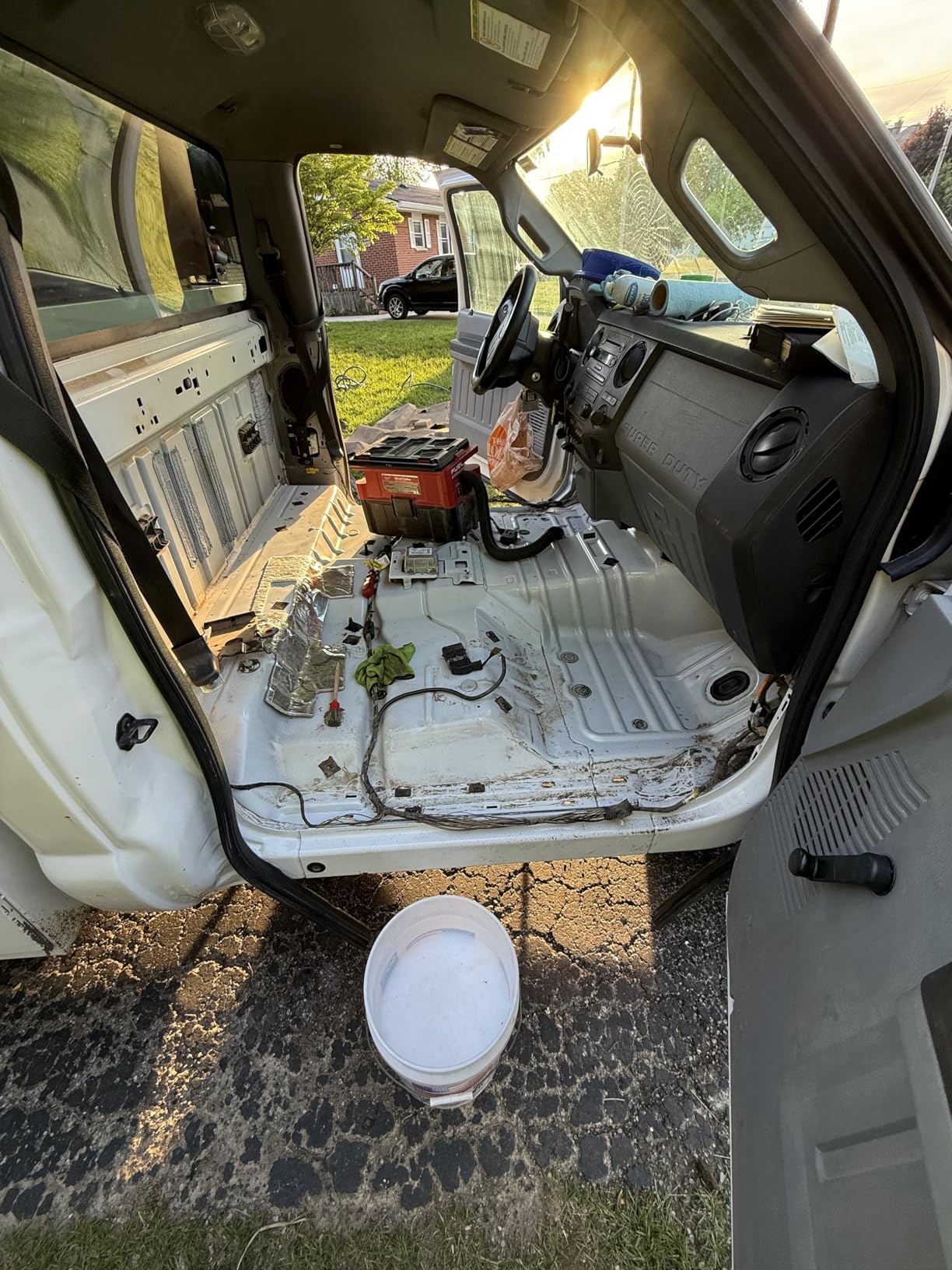
The heat insulation performance is where this product really shines for the price. The aluminum foil foam construction blocks radiant heat effectively. If your primary concern is hot floor pans or a hot transmission tunnel, this is one of the most cost-effective heat barriers I have found.
The main issue I encountered is the adhesive can stick to your fingers during handling, which is annoying during a long installation. Some users have also reported the foam layer separating from the foil during aggressive handling. Take your time and use a roller to avoid these issues.
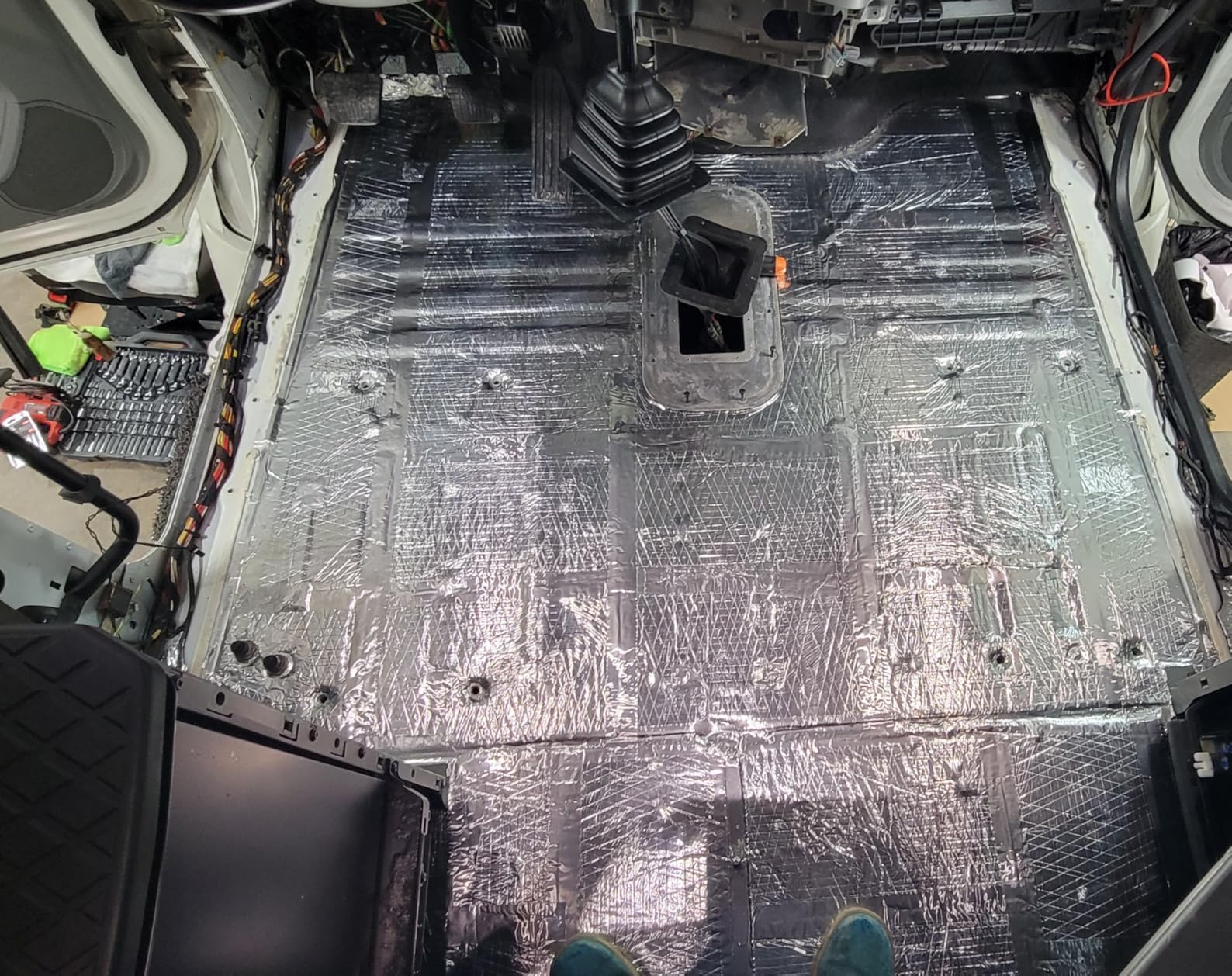
Heat vs Sound Performance
This product is better at heat insulation than pure sound deadening. The foam absorbs some airborne noise but does not have the mass needed for serious vibration damping. For best results, pair it with a butyl damper underneath for a complete two-layer treatment.
Installation Tips
Wear gloves to prevent the adhesive from sticking to your fingers. Cut pieces slightly oversized and trim after placement. Use a roller on every surface area to ensure the adhesive bonds fully. Let the installation cure for 24 hours before driving to allow maximum adhesion.
10. Siless 80 mil 36 sqft – Best Mid-Range Butyl Mat
Siless 80 mil (2mm) 36 sqft (3.4 sqm) Car Sound Deadening mat – Butyl Automotive Sound Deadener – Noise Insulation and Vibration Dampening Material (36 sqft)
80 mil Bmastic butyl
36 sqft coverage
Peel and place
2mm thick
Pros
- Advanced Bmastic formulation
- Cost effective vs similar products
- Easy peel and place
- Good damping at 80 mil
Cons
- Roller not included
- Thinner coverage than Noico per dollar
The Siless 80 mil kit uses their proprietary Bmastic formulation, which is an advanced butyl compound engineered for efficient vibration damping. I have used this product alongside Noico Pro 80 mil, and the performance is very similar. The Bmastic formula feels slightly more pliable, which makes it easier to work around complex shapes.
You get 36 square feet of coverage at 80 mil thickness, which puts this in direct competition with Noico Pro. The 4.8 star rating from over 5,000 reviews confirms this is a well-regarded product in the car audio community. Users consistently report noticeable noise reduction after proper installation.
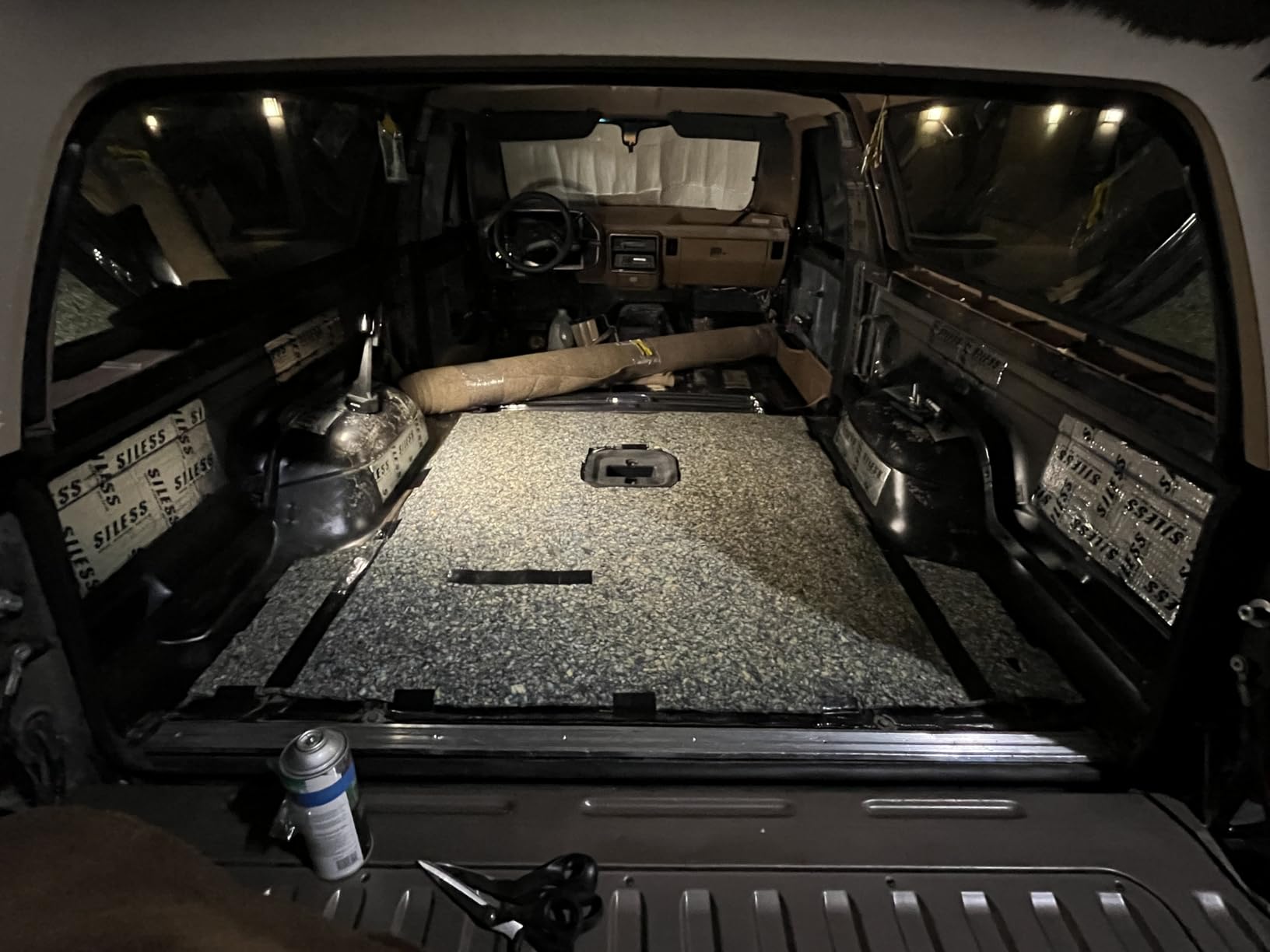
The peel-and-place installation is as simple as it gets for sound deadening. Clean the surface, peel the backing, press the mat into place, and roll it flat. The adhesive is strong and creates a permanent bond when properly applied to a degreased surface.
What I appreciate about Siless is their consistency across product lines. Whether you buy the 80 mil mat, the Liner 157 foam, or the Hybrid 3in1, the quality is reliable. For someone building a complete sound deadening system using multiple Siless products, everything works together seamlessly.
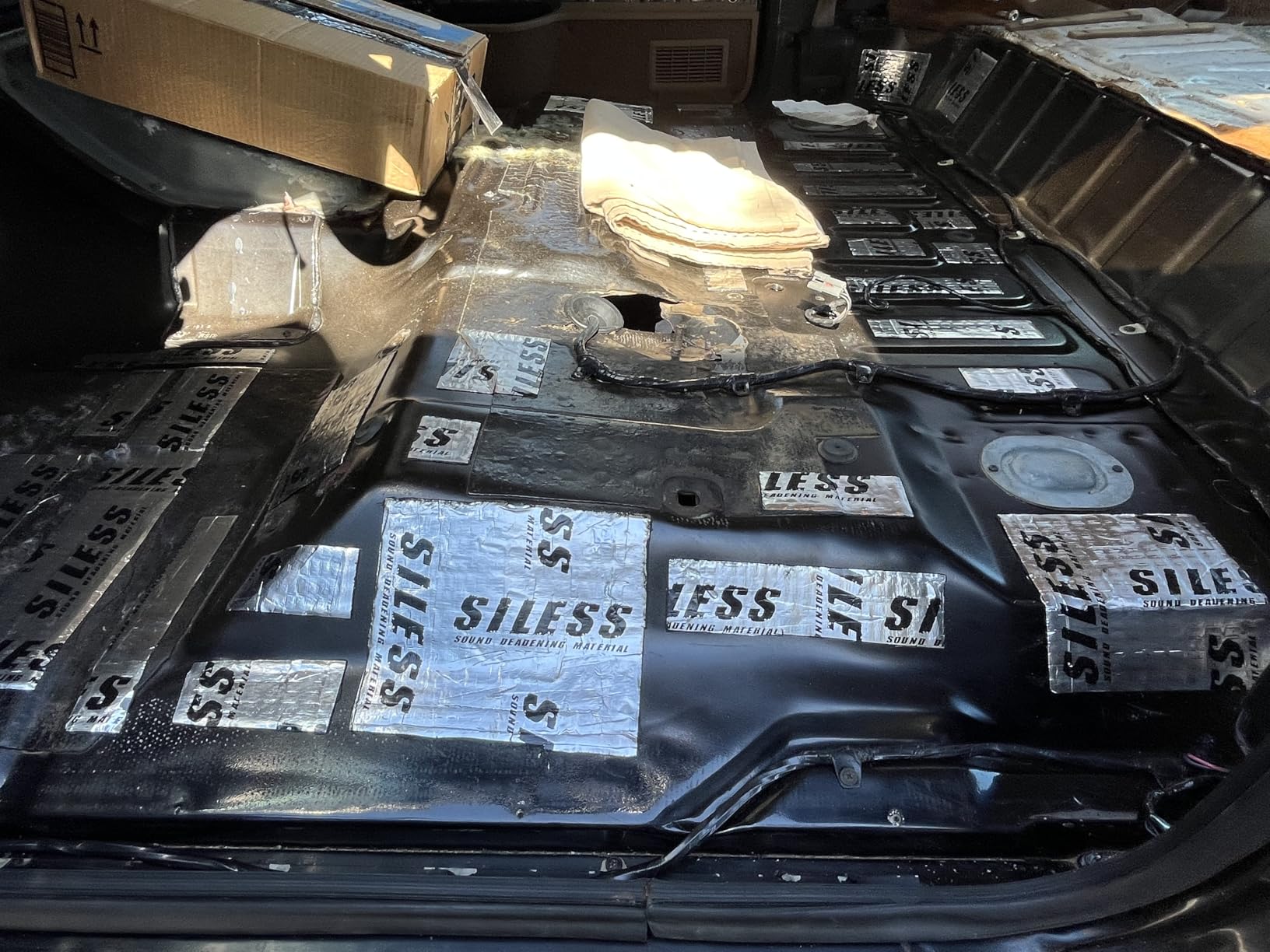
Siless vs Noico Comparison
Both products offer 80 mil butyl at 36 square feet. The Siless uses the Bmastic formula while Noico uses a standard butyl compound. In my side-by-side testing, the performance difference was negligible. Choose based on price and availability at the time of purchase since both are excellent mid-range options.
Best Vehicle Types
This kit works well for sedans, coupes, and compact SUVs. The 36 square feet covers all four doors plus the trunk in most passenger cars. For trucks and large SUVs, consider pairing it with the Siless Liner 157 for added heat protection on floor pans.
Sound Deadening Buying Guide: How to Choose the Right Kit?
Choosing the right sound deadening kit comes down to understanding four key factors: thickness, coverage area, material type, and your specific noise problem. I have installed dozens of these products and can tell you that matching the product to your needs matters more than buying the most expensive option.
If you are also shopping for audio gear, our audio equipment reviews cover related sound quality topics. For more consumer research, browse our tech buying guides on similar product categories.
Thickness Guide: 50 mil vs 80 mil vs 200 mil
Thickness is measured in mils, where one mil equals one thousandth of an inch. The thickness you need depends on your application and budget.
50 mil is the entry-level thickness suitable for light-duty applications. It works well for door panels where you want to improve speaker performance without massive weight or cost. The RUNSUNSPRI 50 sqft kit is a good example. Expect modest noise reduction and improved panel rigidity.
80 mil is the sweet spot for most users. It provides 1.5 times the damping mass of 50 mil products and delivers the best balance of performance, weight, and cost. Both KILMAT, Noico Pro, and Siless offer excellent 80 mil options. This is what I recommend for most DIY installations.
200 mil and above is heavy-duty territory for maximum noise and heat reduction. The Siless Hybrid 3in1 at 200 mil handles vibration, sound absorption, and heat in one product. These thick composites are ideal for trucks, vans, and commercial vehicles with serious noise problems.
How Much Coverage Do You Need
Coverage is where most people miscalculate. Here is a rough guide based on my installation experience:
Doors only (four doors): 10 to 15 square feet. A single KILMAT 10 sqft pack or Amazon Basics pack will handle this. Doors are the highest return on investment for sound deadening.
Doors plus trunk: 20 to 25 square feet. You will need two smaller packs or one mid-size kit. This combination addresses the two most common noise sources.
Full vehicle (doors, floor, trunk, roof): 50 to 80 square feet. The Noico Pro 36 sqft kit plus a second pack, or the RUNSUNSPRI 50 sqft kit, will get you close to full coverage for a sedan.
Trucks and SUVs: 60 to 100 square feet. Larger vehicles have more surface area and often come with less factory insulation. Budget for maximum coverage.
Material Types Explained
Butyl rubber with aluminum foil is the standard CLD material. This is what Dynamat, Noico, KILMAT, and Siless use. It converts vibration energy to heat through the constrained layer damping principle. This is your primary vibration damping material.
Closed cell PE foam is a secondary layer for sound absorption and heat insulation. Products like the Siless Liner 157 go on top of butyl mats to add thermal protection and absorb airborne noise. Do not use foam alone for vibration damping.
Composite multi-layer products like the Siless Hybrid 3in1 combine butyl, foam, and mass loading into a single sheet. These are convenient all-in-one solutions but cost more per square foot. They are ideal when you want comprehensive treatment without buying and installing multiple products.
Where to Apply Sound Deadening First
If you are on a budget and cannot treat the whole vehicle at once, prioritize in this order based on my testing:
First: Door panels. This gives the biggest improvement in speaker audio quality and reduces the most noticeable rattles. Even a basic 10 sqft kit on four doors makes a dramatic difference.
Second: Trunk and rear deck. Trunk resonance amplifies road and exhaust noise. Treating the trunk lid and floor quiets the rear of the cabin significantly.
Third: Floor pan. The floor is where most road and tire noise enters. This requires more material but yields substantial noise reduction, especially on rough pavement.
Fourth: Roof panel. The roof is the last priority but treating it reduces rain noise and drumming effects from wind. It also adds head insulation against sun heat.
Common Installation Mistakes to Avoid
Based on my experience and forum discussions, here are the mistakes that ruin sound deadening installations:
Skip cleaning the surface and the adhesive will fail within months. Always degrease with isopropyl alcohol or a dedicated automotive degreaser before applying any mat. A dirty surface is the number one cause of peeling.
Not using a roller leaves air pockets that reduce damping effectiveness. Every square inch of the mat must be pressed firmly against the metal. A hard rubber roller is worth the ten-dollar investment.
Installing in cold temperatures weakens adhesive bonding. The ideal installation temperature is between 65 and 90 degrees Fahrenheit. If you must install in cold weather, use a heat gun to warm both the surface and the mat before application.
Covering drainage holes in door panels causes water accumulation and rust. Always identify and avoid covering the factory drain holes at the bottom of each door. Cut around them carefully.
Frequently Asked Questions
What is the most effective sound deadening material?
Butyl rubber with an aluminum constraining layer is the most effective sound deadening material for automotive use. This combination uses Constrained Layer Damping (CLD) to convert vibration energy into heat. Brands like Dynamat, Noico Pro, and Siless all use this formula. For maximum effectiveness, combine a butyl CLD mat with a closed cell foam layer for both vibration damping and sound absorption.
What is better than Dynamat?
Products from Noico Pro and Siless offer comparable performance to Dynamat at a lower price point. In testing, Noico Pro 80 mil delivered similar noise reduction results to Dynamat Xtreme for roughly half the cost. ResoNix is also praised in car audio forums as a premium alternative. However, Dynamat remains the most proven brand with a 35-year track record and USA manufacturing.
Is 50 mil or 80 mil sound deadening better?
80 mil sound deadening is better for most applications because it provides 1.5 times the damping mass of 50 mil material, resulting in noticeably better vibration control. 50 mil is suitable for budget installations and door panels where weight is a concern. For floor pans, trunks, and maximum noise reduction, 80 mil is the recommended choice.
What is the best thickness for sound deadening?
80 mil (2mm) is the best overall thickness for automotive sound deadening because it balances performance, weight, and cost effectively. For doors and standard installations, 50 to 80 mil is sufficient. For heavy-duty applications like trucks and commercial vehicles, 150 to 200 mil composites provide maximum noise and heat reduction.
How much sound deadening do I need for my car?
For a standard sedan, you need 10 to 15 square feet for doors only, 20 to 25 square feet for doors plus trunk, and 50 to 80 square feet for full vehicle coverage. Trucks and SUVs require 60 to 100 square feet for complete treatment. Start with doors for the highest return on investment, then expand to trunk and floor as budget allows.
Final Thoughts on the Best Sound Deadening Kits
After testing all 10 of these products, my top recommendation for most people is the Noico Pro 80 mil 36 sqft kit. It hits the perfect balance of performance, coverage, and price. If budget is your top priority, the KILMAT 80 mil 10 sqft pack delivers excellent results for a fraction of the cost. And for those who want the best premium brand, Dynamat Xtreme remains the gold standard.
The best sound deadening kits in 2026 all share one thing: they use quality butyl rubber and proper CLD design to convert vibration into heat. The differences come down to thickness, coverage area, and brand reputation. Start with your doors, use a roller, and clean every surface before installation.
Your car will never sound the same. Pick the kit that matches your budget and vehicle, and enjoy the quieter, better-sounding ride that proper sound deadening delivers.