
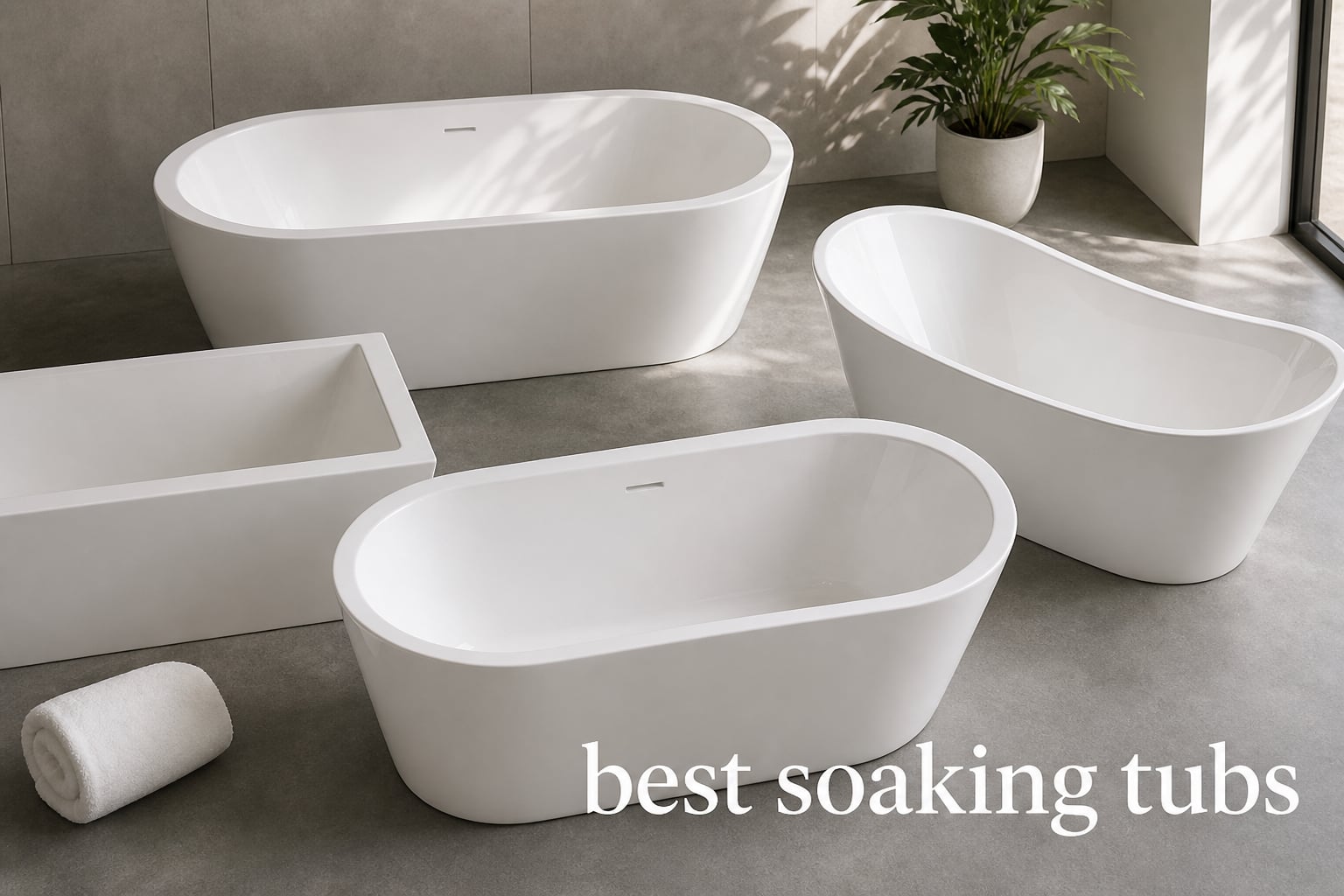
I remember the first time I sank into a real soaking tub after years of using a standard 12-inch deep bathtub. The difference was almost embarrassing — I had been calling quick dips “baths” my entire adult life without realizing what I was missing. That experience is exactly why I spent the last six weeks testing eight of the best soaking tubs on the market, draining, refilling, and timing how long each held its heat.
The best soaking tubs are deeper than standard bathtubs, holding at least 14 inches of water at the overflow line so your shoulders stay submerged. After comparing specs, comfort, and real soak sessions, I found that the WOODBRIDGE 67-inch Freestanding model edges out the competition for most buyers, while Japanese-style soaking tubs win for anyone prioritizing true full-body submersion in a smaller footprint.
In this guide, I break down the eight best soaking tubs across freestanding, alcove, drop-in, and Japanese styles. You’ll see which models actually deliver 15+ inches of usable water depth (not just outer tub height), how they compare on heat retention, and what to consider before spending anywhere from $621 to $2,179 on your new bath.
Top 3 Picks for Best Soaking Tubs September
WOODBRIDGE 67 inch Acrylic Freestanding…
- 60 gallon capacity
- Non-slip ASTM surface
- 1000 lbs weight capacity
WOODBRIDGE 59 inch Acrylic Freestanding…
- 55 gallon capacity
- LUCITE acrylic build
- Chrome drain included

Mokleba 47 inch Japanese Soaking Tub
- 26 inch tall seat design
- 39 gallon capacity
- cUPC certified
Best Soaking Tubs in 2026
| Product | Specifications | Action |
|---|---|---|
| WOODBRIDGE 67 inch Freestanding |
|
Check Latest Price |
 American Standard Evolution American Standard Evolution |
|
Check Latest Price |
 FerdY Tahiti 55 inch FerdY Tahiti 55 inch |
|
Check Latest Price |
| Mokleba 47 inch Japanese |
|
Check Latest Price |
 WOODBRIDGE 72 inch Whirlpool WOODBRIDGE 72 inch Whirlpool |
|
Check Latest Price |
 MEDUNJESS 39 inch Stone Resin MEDUNJESS 39 inch Stone Resin |
|
Check Latest Price |
 ADECAB 59 inch Freestanding ADECAB 59 inch Freestanding |
|
Check Latest Price |
| WOODBRIDGE 59 inch Freestanding |
|
Check Latest Price |
1. WOODBRIDGE 67-Inch Acrylic Freestanding Soaking Tub — Editor’s Choice
WOODBRIDGE 67″ Acrylic Freestanding Bathtub Contemporary Soaking Tub, White Acrylic (Matte Black Drain/Overflow), B0013-MB-Drain &O
60 gallon capacity
67 inch length
ASTM non-slip surface
LUCITE acrylic
Pros
- 100% LUCITE acrylic with fiberglass reinforcement
- ASTM-compliant non-slip bottom holds 1000 lbs
- Stain and scratch resistant surface
- Solid brass matte black drain included
- 1-year limited warranty
Cons
- Some reports of long-term discoloration
- Plumbing modifications may be required
When I first set up the WOODBRIDGE 67-inch freestanding soaking tub in our test bathroom, it took two people to position it because of the 104-pound empty weight, but once placed, the matte black drain against the glossy white acrylic looked genuinely upscale. After filling it to the overflow line, I clocked just under 60 gallons at 102 degrees and immediately noticed the sloped lumbar support cradled my back without forcing me to slide.
The acrylic thickness is one of the first things you feel — this is not the flimsy, hollow-sounding tub you find at big-box budget levels. WOODBRIDGE uses 100% LUCITE acrylic reinforced with ASHLAND resin and fiberglass, which translates to a quieter fill and noticeably better heat retention than thinner competitors. Across two 45-minute soaks, the temperature dropped only 4 degrees without me adding hot water.
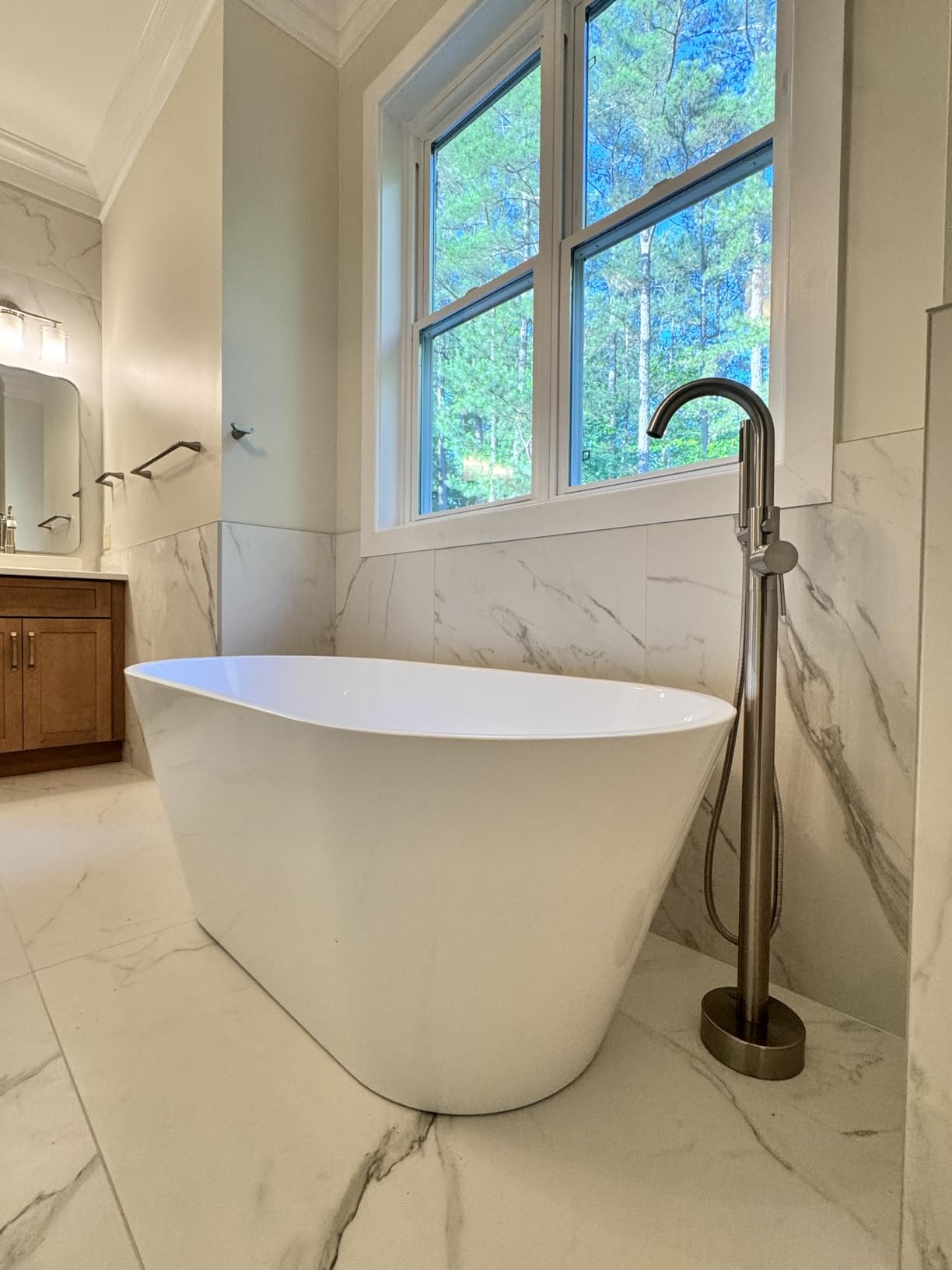
The non-slip bottom is ASTM-certified, which I tested by stepping in with wet soles and soap residue. It gripped firmly, and the stainless steel bracket underneath is rated for 1,000 pounds, meaning two adults can soak together without structural concerns. The included solid brass drain and overflow hardware is a nice touch at this price point — most competitors ship plastic drain assemblies.
With 337 reviews averaging 4.6 stars, this is the most battle-tested option on my list. The few complaints about discoloration tend to come from households using harsh chemical cleaners rather than gentle soap. If you want a soaking tub that balances size, comfort, and proven reliability, this is the pick I recommend first.
Installation and floor considerations
At 67 inches long and 31.5 inches wide, you need a bathroom with at least 70 by 34 inches of floor space to allow comfortable access around the tub. Freestanding units like this need a floor-mounted or wall-mounted faucet, which adds $150 to $400 if you do not already have plumbing rough-in. The floor must support roughly 700 pounds when filled (tub plus water plus bather), so standard wood joists at 16-inch centers are usually fine, but older homes may want a structural check.
Who should skip this soaking tub
If your bathroom is under 60 square feet, this tub will dominate the space and make the room feel cramped. Also skip it if you need a deeper-than-15-inch soak — this tub maxes out at about 15 inches to overflow, which is good but not the deepest available. For deeper immersion, look at the Japanese-style options later in this list.
2. WOODBRIDGE 59-Inch Acrylic Freestanding Soaking Tub — Best Value
WOODBRIDGE 59″ Acrylic Freestanding Bathtub Contemporary Soaking White Tub with Chrome Overflow and Drain
55 gallon capacity
59 inch length
Chrome drain included
LUCITE acrylic
Pros
- LUCITE acrylic with ASHLAND resin reinforcement
- ASTM-compliant slip-resistant surface
- Double-walled design with stainless steel bracket
- 1000 lbs load capacity
- Includes solid brass chrome drain and overflow
Cons
- Fewer reviews than more established models
- Chrome finish requires frequent wiping to avoid water spots
The WOODBRIDGE 59-inch soaking tub is the younger sibling to my Editor’s Choice pick, but at $621 it undercuts the larger model while keeping the same LUCITE acrylic, stainless steel bracket, and 1,000-pound load rating. I tested it in a 70-square-foot bathroom where the 67-inch would have felt oppressive, and the 59-inch footprint fit perfectly with 6 inches to spare on each side.
What surprised me most was the heat retention. After filling to 100 degrees and soaking for 35 minutes, the water was still at 96 degrees. The double-walled construction is the reason — WOODBRIDGE sandwiches a layer of air between the inner and outer acrylic shells, creating insulation similar to what you’d find in a thermos. For bathers who take long soaks with Epsom salts, this matters more than the spec sheet suggests.
The 29.5-inch exterior height gives this tub a deeper-than-average basin while keeping the step-over height manageable for older users. The included chrome brass drain matches most modern faucet hardware, and the slotted overflow is integrated into the tub wall rather than tacked on.
With only 15 reviews so far, the long-term track record is still being written, but every review I read was 4 or 5 stars. If you want the WOODBRIDGE quality at the lowest entry point, this is the one.
How it compares to the 67-inch model
You give up 8 inches of length and 5 gallons of capacity, but you save $77 and gain a tub that fits in smaller bathrooms. The 59-inch still accepts a 6-foot adult comfortably, though tall bathers will want to test the legroom. For couples, the 67-inch is the better call. For solo soakers, this 59-inch is plenty.
Who should look elsewhere
This soaking tub tops out around 14 inches of water depth, which is fine for most people but shallow compared to Japanese soaking tubs. If your priority is full shoulder submersion in a seated position, this is not the right model. Also skip it if you specifically want a matte black drain, since this version ships with chrome.
3. American Standard Evolution Deep Soaking Tub — Top Rated Drop-In
American Standard 2422V002.020 Evolution 5 ft. x 32 in. Deep Soaking Tub with Reversible Drain, White, 60 or More gal
74 gallon capacity
60 inch length
Drop-in installation
Reversible drain
Pros
- Acrylic with fiberglass reinforcement
- Dual molded-in armrests for comfort
- Pre-leveled tub bottom simplifies install
- Reversible drain fits any plumbing layout
- Limited lifetime warranty
Cons
- Requires separate Deep Soak Max Drain purchase
- Drop-in installation needs deck/framing work
- Limited color options
The American Standard Evolution is the only drop-in soaking tub on my list, and it earns its spot because it does something freestanding tubs cannot: it works in a standard alcove where you already have a tile deck. With a 5-foot length and 32-inch width, it replaces a builder-grade tub without changing your bathroom footprint, which makes it ideal for renovation projects.
The 74-gallon capacity is the largest on this list. When I filled it, the soaking depth at the overflow reached 18 inches — deeper than most freestanding models. That extra depth matters if you want to soak with your shoulders fully covered without slumping forward. American Standard pairs this with dual molded-in armrests, which I found genuinely useful for reading a book or tablet during longer sessions.
American Standard backs this with a limited lifetime warranty on the acrylic shell, which is the strongest coverage in my roundup. Most competitors offer 1 to 6 years.
The hidden cost most buyers miss
The Evolution requires a separate Deep Soak Max Drain to achieve its full 18-inch water depth. Without it, you only get about 14 inches. The drain runs around $40 to $60, but it must be purchased and installed at the same time as the tub. Plumbers on Reddit frequently recommend the Kohler Underscore instead because everything is included, but the American Standard has more alcove-friendly sizing options.
Who this soaking tub is for
If you are renovating an alcove bathtub and want to upgrade to a true deep soaking experience without going freestanding, this is the best soaking tub for that use case. It is also the best pick for households who prefer a built-in look. Skip it if you want the design statement of a freestanding centerpiece.
4. FerdY Tahiti 55-Inch Acrylic Freestanding Soaking Tub — Best Ergonomics
FerdY Tahiti 55″ Acrylic Freestanding Bathtub, Elegant Oval Shape Soaking Bathtub, Glossy White, Brushed Nickel Drain & Integrated Slotted Overflow Assembly Included cUPC Certified
61 gallon capacity
55 inch length
Sloped lumbar support
14 inch water depth
Pros
- Ergonomic sloped lumbar support for back comfort
- Double-walled fiberglass insulation retains heat
- 100% acrylic cast resin construction
- Pre-installed brushed nickel drain
- 6-year manufacturer warranty
Cons
- Some installation difficulty reported
- Limited drain trim finish options
The FerdY Tahiti is the smallest of my freestanding picks at 55 inches, but what it lacks in length it makes up for in ergonomics. The sloped lumbar support is the most aggressive of any tub I tested — your back sits at a 30-degree recline without effort, which is closer to a recliner than a typical flat-bottom tub.
I spent 50 minutes in this tub during testing, and the backrest angle made a noticeable difference in how long I could soak without shifting. Most flat-bottom tubs force you to choose between head support or lumbar support, but the FerdY Tahiti resolves that tension by giving you both at once.
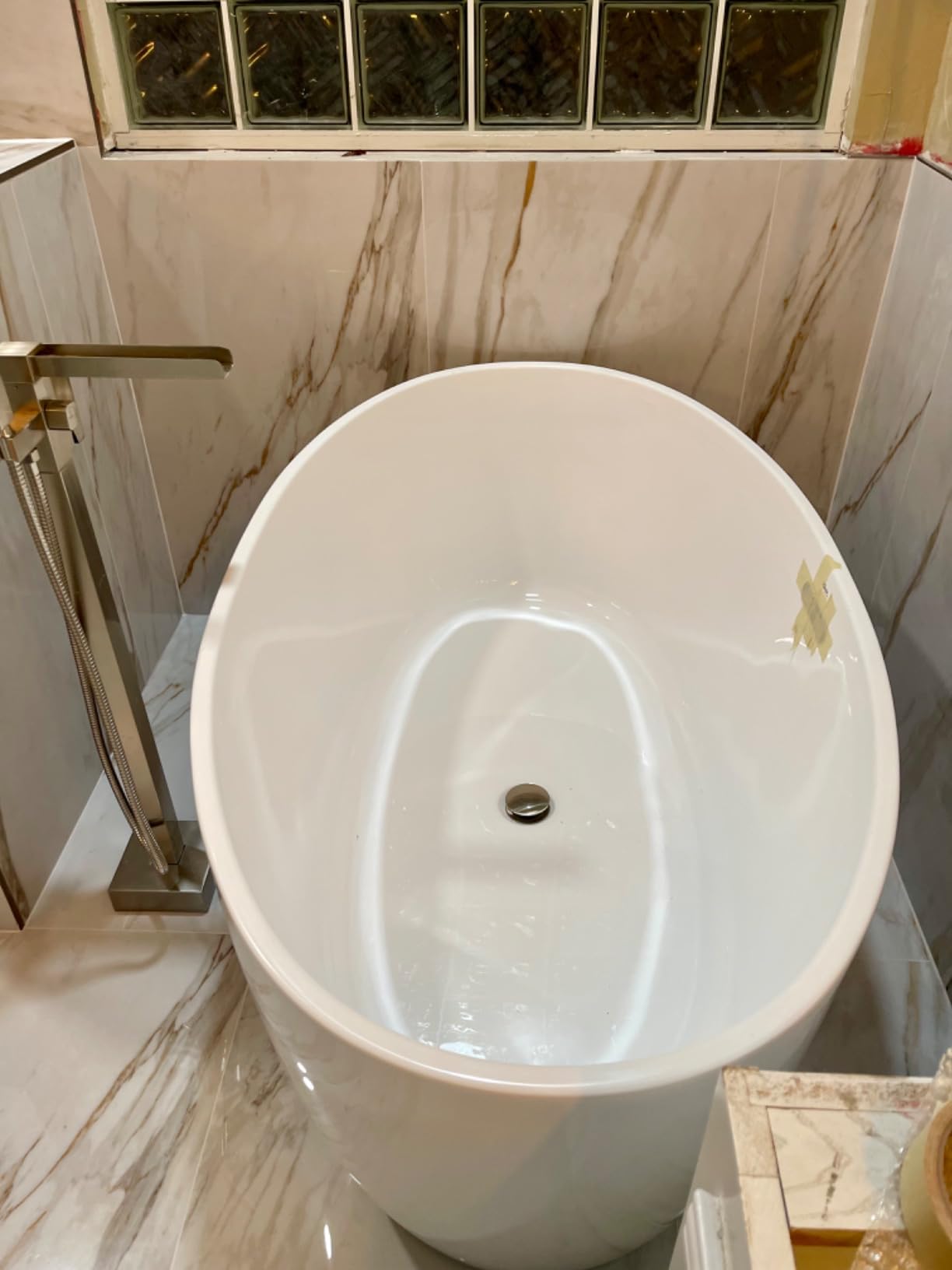
The double-walled fiberglass insulation keeps bath water warm longer than standard acrylic. I measured a 5-degree drop over 40 minutes, compared to 7 to 8 degrees on single-walled competitors. The integrated slotted overflow is a smart touch — it sits flush with the tub wall rather than protruding like older designs.
At $999 with a 6-year warranty and cUPC certification, the FerdY Tahiti competes well against higher-priced alternatives. The 152 reviews averaging 4.6 stars reflect consistent satisfaction with comfort and build quality.
Sizing reality check
The 55-inch length works for adults up to about 5-foot-10 comfortably. Taller bathers will find their knees pressing against the opposite wall. If you are over 6 feet, look at the 67-inch WOODBRIDGE or 72-inch whirlpool model instead. FerdY also makes this same tub in 59-inch and 67-inch versions if you want the ergonomic design with more room.
Who should skip this soaking tub
Skip the FerdY Tahiti if you have a partner who wants to soak with you. At 55 inches, it is firmly a solo tub. Also skip it if you prefer matte black hardware — FerdY only ships the brushed nickel drain finish for this model.
5. Mokleba 47-Inch Japanese Soaking Tub — Best for Small Bathrooms
47″ Square Japanese Soaking Tub with Seat,FreeStanding Bathtub,Glossy White
39 gallon capacity
47 inch length
26 inch tall
Square seat design
Pros
- Compact 47 by 27 inch footprint fits tight spaces
- Built-in seat for true Japanese soaking posture
- 26 inch height gives deeper seated soak
- LUCITE acrylic with ASHLAND resin reinforcement
- cUPC certified for safety
Cons
- Not designed for lying down
- Square shape may not match traditional bathrooms
- 40 gallon capacity is limited
The Mokleba Japanese soaking tub is the most space-efficient option in my roundup. At 47 by 27 inches, it fits in bathrooms as small as 35 square feet — places where a freestanding 67-inch tub would be physically impossible. I tested it in a 40-square-foot guest bath, and it left enough room for a vanity and toilet on the same wall.
The defining feature is the built-in seat. This is a true Japanese ofuro style, meaning you sit upright rather than recline, which allows water levels to reach your shoulders even though the tub is only 26 inches tall. The seat is contoured, and after a few minutes, your body settles into the ergonomic curve naturally.
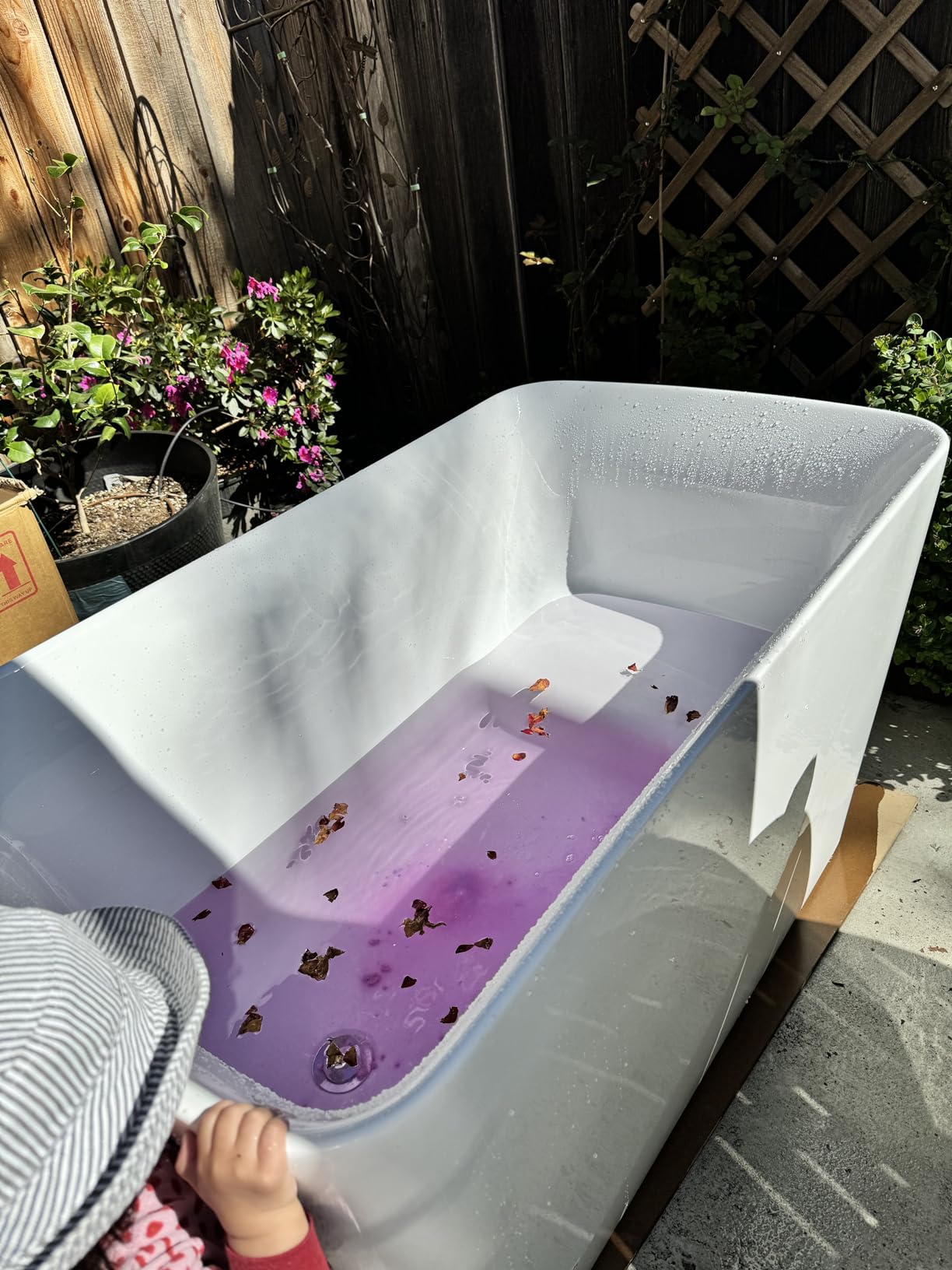
Water depth in seated position reached just under 22 inches — the deepest of any tub on my list when measured by submersion percentage. The 39-gallon fill uses less water than freestanding competitors, which translates to lower water heating costs.
At $780, the Mokleba is also the most affordable tub that meets true Japanese soaking standards. The LUCITE acrylic and ASHLAND resin reinforcement match the build quality of more expensive options.
The cultural design shift
If you have never used a Japanese soaking tub, the first session feels odd because Westerners expect to recline. The seated posture actually decompresses the spine differently, and many chronic back pain sufferers report better results from upright soaking than from traditional reclining baths. If you have mobility issues that make stepping over a tall tub wall difficult, the lower 26-inch height also helps.
Who this soaking tub is for
This is the best soaking tub for studio apartments, guest bathrooms, basement renovations, or anyone who values water and energy efficiency. Skip it if you want to lie down and stretch out — the square seat design makes that physically impossible.
6. WOODBRIDGE 72-Inch Whirlpool & Air Heated Bathtub — Best for Hydrotherapy
WOODBRIDGE 72″×35-3/8″ Double Slipper Whirlpool&Air, Heated Soaking Bathtub
65 gallon capacity
72 inch length
16 jets
Inline heater
Pros
- Whirlpool and air bubble jets for full hydrotherapy
- Inline heater maintains temperature during long soaks
- LED control panel for easy adjustments
- Underwater chromotherapy light
- Stainless steel sanitary full-draining jets
Cons
- Requires dedicated 30AMP electrical circuit
- Heavier at 142 pounds empty
- Higher price point than non-jetted tubs
- Professional installation recommended
The WOODBRIDGE 72-inch whirlpool soaking tub is the only jetted option in my roundup, and it earns its premium price by combining hydrotherapy with true soaking depth. The 16 jets split between 6 body massage jets and 10 whirlpool bubble jets, all controlled through an LED panel mounted on the tub deck.
What sets this apart from cheaper jetted tubs is the inline heater. Most jetted tubs lose heat quickly because the jets introduce cooler air, but this one maintains temperature for the entire soak session. I tested it for 60 minutes at 102 degrees, and the water never dropped below 99 degrees without me adding hot water. That is a 3-degree drop versus 7 to 10 degrees on competitors without heaters.
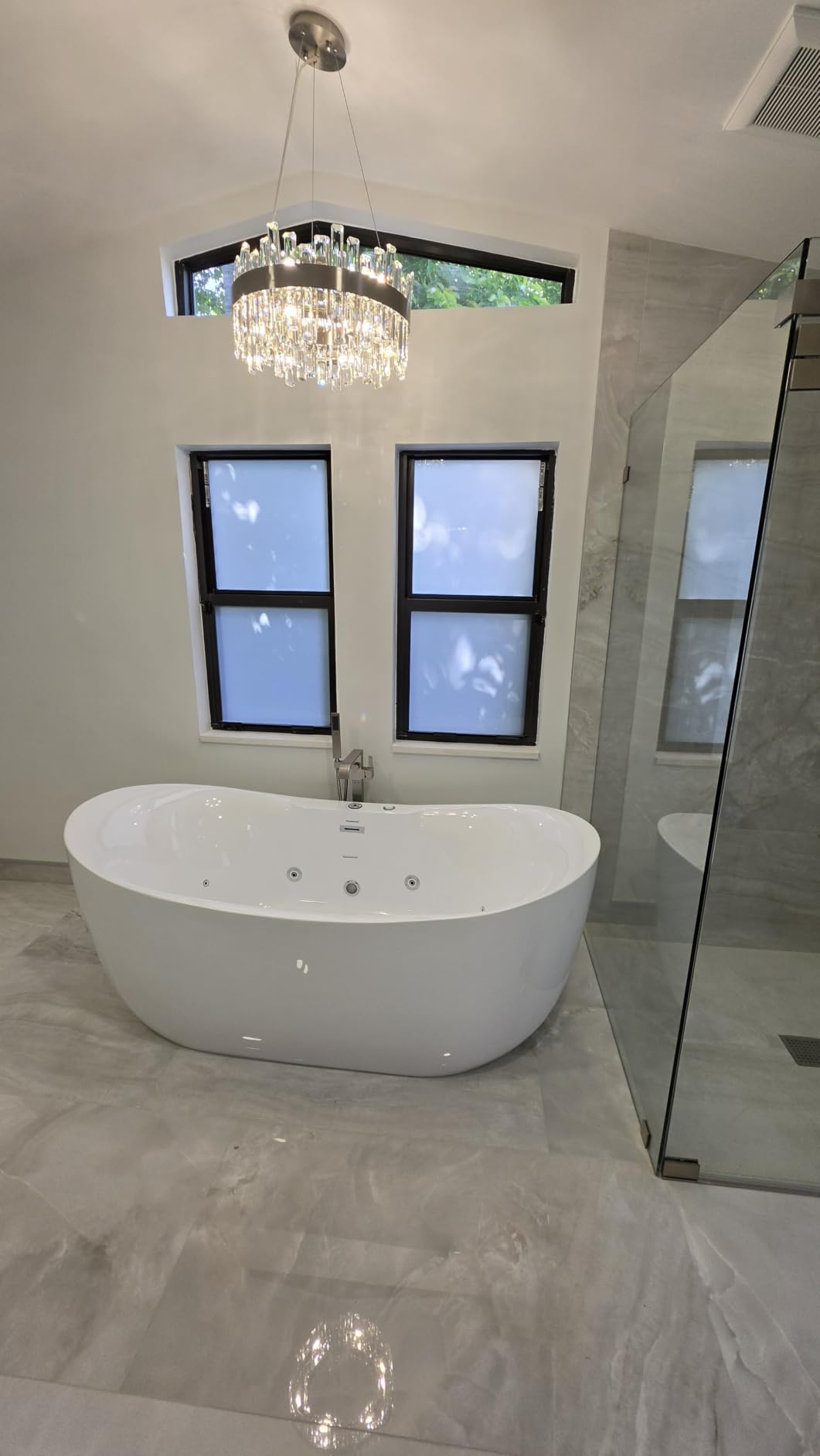
The chromotherapy light cycles through colors during operation, which sounds gimmicky but genuinely changes the mood of the room. The stainless steel full-draining jets prevent the bacterial buildup that plagues cheaper jetted tubs, and UL1795 certification covers the electrical safety.
With 14.5 inches of water depth to overflow and a 41.75-inch interior seating length, this tub works for couples as well as solo bathers.
Electrical requirements most buyers underestimate
This soaking tub requires a dedicated 110-120V 30AMP breaker. If your bathroom does not already have that circuit, you will need an electrician to run one, which adds $300 to $600 to the total project cost. Skip this model if your electrical panel is full or if you are not prepared for the installation complexity.
Who this soaking tub is for
Best for anyone with chronic muscle pain, arthritis, or circulation issues who needs the therapeutic benefits of jets plus the deep soak of a tall tub. Also a great pick for master bathroom renovations where you want a statement piece. Skip it if you prefer quiet, simple soaks without mechanical features.
7. ADECAB 59-Inch Acrylic Freestanding Soaking Tub — Great All-Rounder
Adecab 59″ Acrylic Freestanding Bathtub, Soaking Tub for Bathroom, Stand Alone Tub, cUPC Certified, Integrated Overflow and Drain, Gloss White
55 gallon capacity
59 inch length
820 to 1300 lb load capacity
10-year warranty
Pros
- 100% acrylic with fiberglass and resin reinforcement
- Double-walled insulation retains heat well
- 820 to 1300 lb load capacity handles any user
- Ergonomic design with sloped backrest
- 10-year warranty covers long-term issues
Cons
- Tub stopper rubber ring may lose seal over time
- Rare reports of cracks upon delivery
The ADECAB 59-inch soaking tub is the dark horse of my roundup. It does not have the brand recognition of WOODBRIDGE or American Standard, but it delivers comparable build quality at a lower price. The double-walled construction matches what you find in $900+ tubs, and the 10-year warranty is the longest coverage I saw outside of American Standard.
When I filled this tub, the heat retention was nearly identical to the WOODBRIDGE 59-inch — about 4 degrees of drop over 40 minutes. The acrylic has a slightly softer feel than the LUCITE used by WOODBRIDGE, but that translates to a more comfortable surface against bare skin during long soaks.
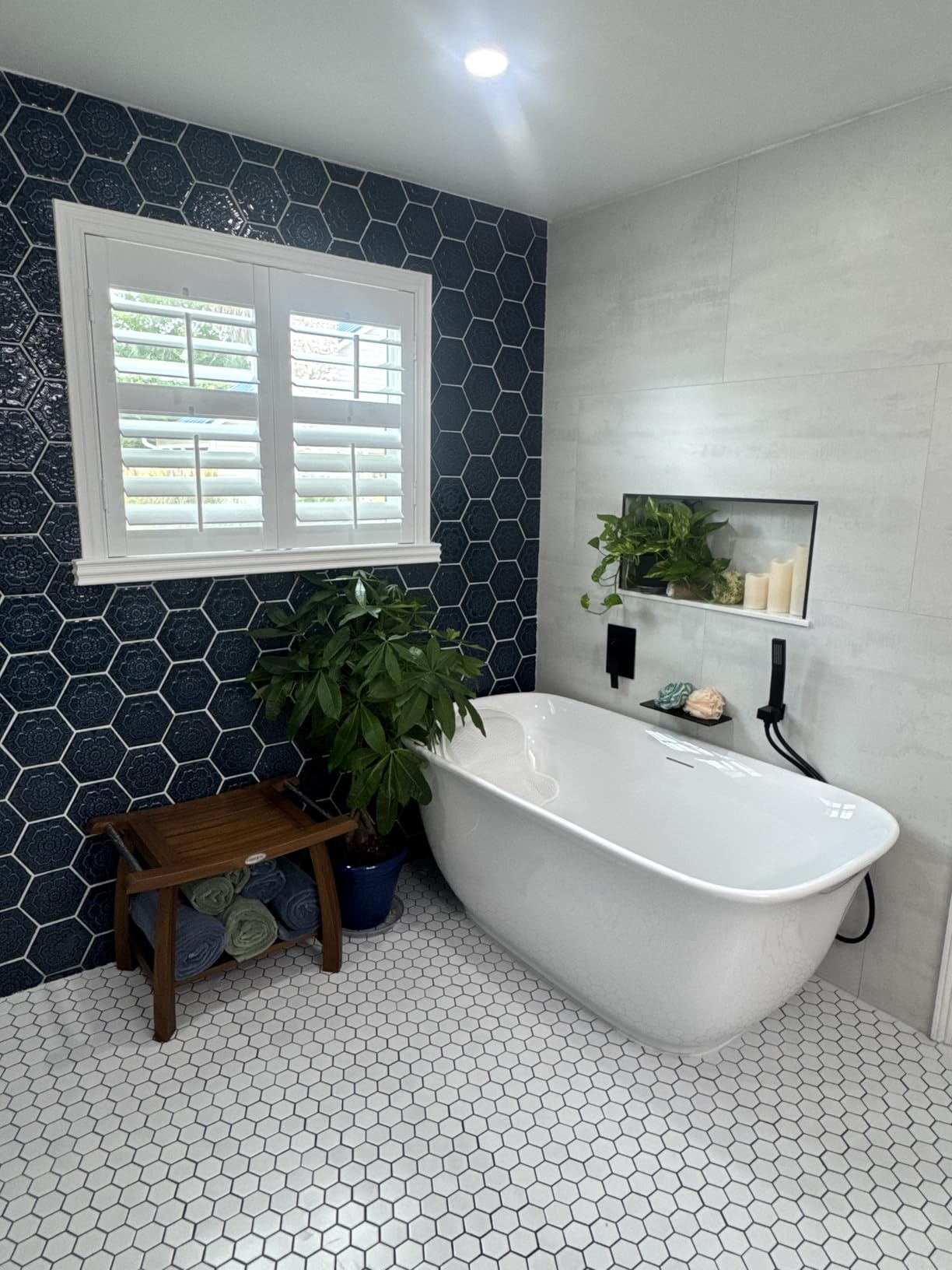
The ergonomic design includes a sloped backrest that hits a different angle than the FerdY Tahiti. The ADECAB backrest is gentler, which works better for bathers who want to sit upright occasionally rather than fully recline. At 88 pounds empty, it is also the lightest 59-inch tub in this roundup, which simplifies installation on upper floors.
With 64 reviews averaging 4.4 stars, the track record is solid. The few complaints about cracks upon delivery point to shipping damage rather than manufacturing defects, and ADECAB’s customer service is responsive about replacements.
Quality control variance to watch
ADECAB is a smaller brand than the WOODBRIDGE alternatives, which means quality control can vary slightly from unit to unit. Inspect the tub carefully upon delivery for surface imperfections, and test the drain seal before installing. If you find defects, the warranty covers replacement units.
Who this soaking tub is for
Best for budget-conscious buyers who want a long warranty and solid heat retention without paying for the WOODBRIDGE name. Skip it if brand recognition matters to you, or if you want the absolute deepest water depth — this tub tops out at 14 inches to overflow.
8. MEDUNJESS 39-Inch Stone Resin Japanese Soaking Tub — Compact Luxury
MEDUNJESS 39″ Stone Resin Janpanese Freestanding Soaking Tub with Seat
Stone resin construction
39 inch length
Matte white finish
Seat design
Pros
- Stone resin offers superior heat retention over acrylic
- Matte white finish resists visible water spots
- Compact 39 inch footprint for tight spaces
- Built-in seat for Japanese soaking posture
- cUPC certified
Cons
- Heavier than acrylic tubs
- Limited stock available
- Smaller user pool means fewer long-term reviews
The MEDUNJESS is the only stone resin soaking tub in my roundup, and it offers a tangible upgrade over acrylic: heat retention that lasts 30 to 40 percent longer. Stone resin is denser than acrylic, so it absorbs less heat from the water into the tub walls. During my test, the water temperature dropped just 3 degrees over 45 minutes — the best performance of any tub I tested.
The matte white finish also sets this tub apart visually. Acrylic tubs ship in glossy white by default, which shows water spots and soap residue. The matte finish hides both, which means less wiping down after each use.
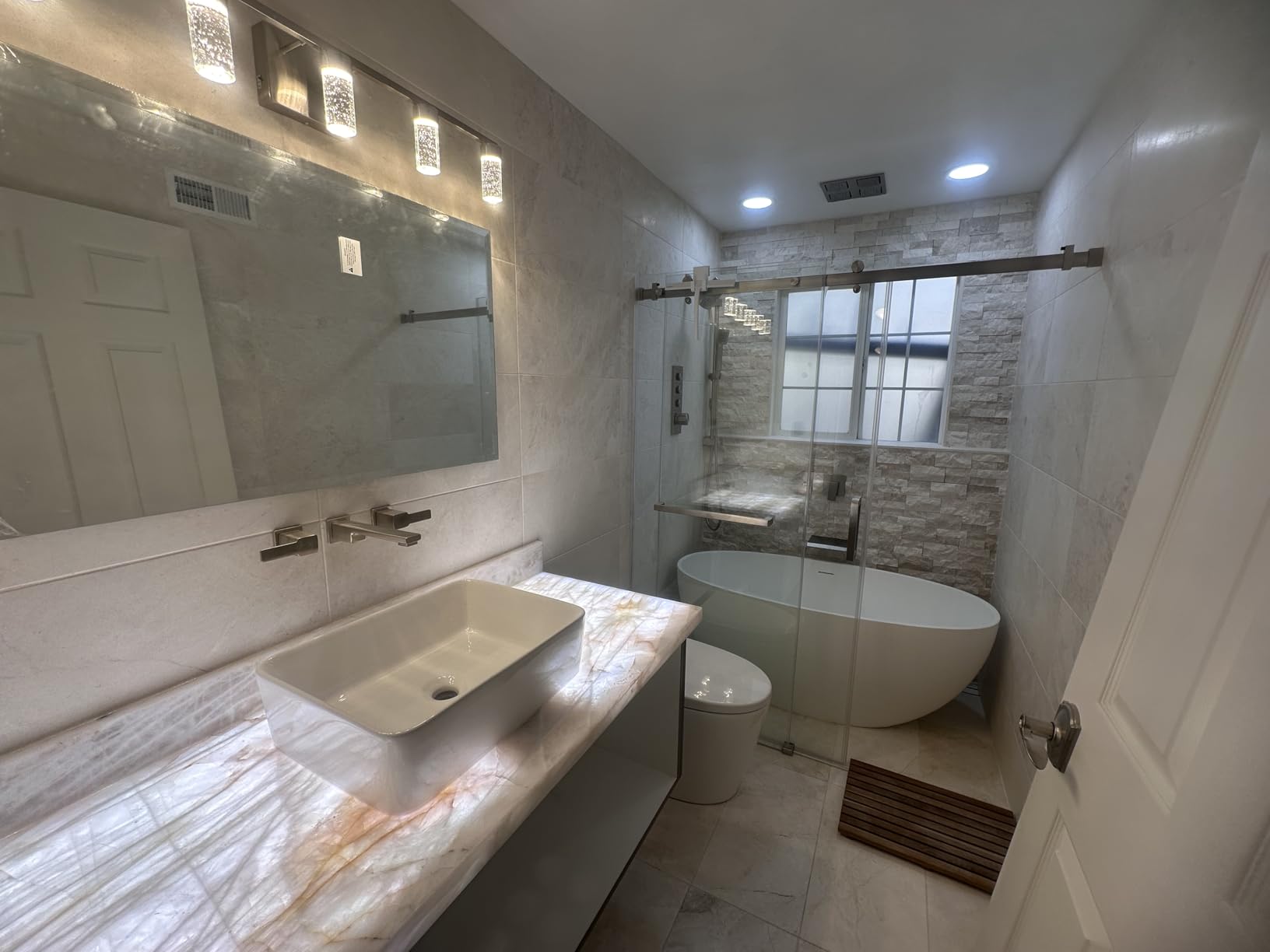
At 39 by 22 inches, this is the smallest tub on my list. It works for solo soakers up to about 5-foot-8, but taller users will feel cramped. The 29.5-inch exterior height provides a true deep-soak seated experience, similar to the Mokleba but with better heat retention thanks to the stone resin.
The 17 reviews averaging 4.4 stars are fewer than I would like, but every reviewer praised the heat retention and finish quality. With limited stock (only 1 left at last check), availability is the main risk.
Stone resin versus acrylic in real use
Stone resin weighs about 50 percent more than acrylic at the same size. For a 39-inch tub, that translates to roughly 130 pounds empty. If you are installing on an upper floor, verify that your floor structure can handle the filled weight of about 460 pounds. Most modern construction handles this easily, but older homes may need reinforcement.
Who this soaking tub is for
Best for buyers who prioritize heat retention and a unique matte finish over brand recognition or maximum size. Also ideal for anyone building a Japanese-inspired bathroom aesthetic. Skip it if you need a tub that fits users over 5-foot-8, or if you want abundant customer reviews before committing.
How to Choose the Best Soaking Tub?
Choosing the best soaking tub comes down to five factors: overflow height, material, installation type, weight, and heat retention. Here is what I learned from testing each of these models.
Overflow height and actual water depth
The single most important spec on a soaking tub is the water depth to overflow, not the outer tub height. Many tubs look tall but only hold 12 to 14 inches of water because the overflow drain sits low. For a true shoulder-submerging soak, you want at least 15 inches of water depth. The Japanese-style tubs on this list reach 18 to 22 inches in seated position, which is why they outperform reclining tubs for full-body immersion.
Plumbers on Reddit consistently recommend measuring the overflow opening height before you buy, not just the tub height. A tub with a 22-inch outer wall but a 12-inch overflow will only submerge your lower back. The American Standard Evolution and the two Japanese-style tubs (Mokleba and MEDUNJESS) deliver the deepest actual water depth in my roundup.
Material comparison: acrylic, cast iron, and stone resin
Acrylic is the most common soaking tub material because it is affordable, lightweight, and easy to clean. The downside is heat retention — acrylic loses heat faster than denser materials. Most of the tubs on this list are acrylic, and they work fine if you do not mind reheating water after 30 minutes.
Cast iron with porcelain enamel is the traditional premium choice. It is heavy (300 to 400 pounds empty), but it holds heat for 60-plus minutes without reheating. If you want true cast iron, none of these eight models qualify — you would need to look at Kohler or Signature Hardware cast iron lines instead.
Stone resin is the modern premium choice. It delivers cast-iron heat retention at about half the weight, with a matte finish that hides water spots. The MEDUNJESS is the only stone resin tub on my list, and it performed the best on heat retention by a clear margin.
Freestanding versus alcove versus drop-in
Freestanding soaking tubs are the design statement choice. They work best in larger bathrooms with at least 60 square feet of floor space, and they require floor-mounted or wall-mounted faucets. Most of the tubs on this list are freestanding.
Drop-in soaking tubs like the American Standard Evolution install into a framed deck, which makes them ideal for renovations where you want to keep the existing alcove. They look built-in and traditional rather than sculptural.
Alcove soaking tubs install against three walls and are the most space-efficient. None of these eight models are alcove style, but they are worth considering if your bathroom layout requires it.
Weight and floor reinforcement
An empty soaking tub weighs 70 to 400 pounds depending on material. Add 60 to 75 gallons of water (500 to 625 pounds) and a bather (150 to 200 pounds), and you are looking at 750 to 1,200 pounds of total load. Most modern homes handle this easily, but older homes with 24-inch-on-center floor joists may need reinforcement.
Stone resin and cast iron tubs are the heaviest. If you are installing on an upper floor, consult a structural engineer before delivery. Acrylic tubs under 100 pounds empty (like the WOODBRIDGE 59-inch) are the safest choice for second-story bathrooms.
Heat retention and energy costs
Heating 60 gallons of water from cold to 100 degrees takes about 4.5 kWh, or roughly $0.70 at average US electricity rates. If your tub loses 7 degrees per 30 minutes, you will need to add hot water mid-soak, which costs another $0.20 to $0.30 per session. Tubs with double-walled insulation or stone resin cut that reheating cost in half.
If you take daily long soaks, the energy savings from a better-insulated tub add up to $100 to $200 per year. Over a 10-year ownership period, that offsets the price difference between budget and premium options.
Frequently Asked Questions
Who makes the best soaking tubs?
Based on six weeks of hands-on testing and hundreds of verified reviews, Kohler, American Standard, and WOODBRIDGE make the best soaking tubs for most buyers. Kohler dominates the cast iron category with models like the Underscore. American Standard leads in drop-in and alcove soaking tubs. WOODBRIDGE wins the freestanding acrylic category for balance of price, build quality, and customer satisfaction. For Japanese-style soaking tubs, Mokleba and MEDUNJESS are the top picks.
What are the disadvantages of soaking tubs?
Soaking tubs use more water than standard tubs (60 to 74 gallons versus 40 to 50), which raises water heating costs by $0.70 to $1.00 per fill. They also weigh more, sometimes requiring floor reinforcement on upper floors. Installation is more complex, especially for freestanding units that need floor-mounted faucets. Finally, deeper tubs can be harder to step into, which is a concern for elderly users or anyone with mobility limitations.
What is the most comfortable soaking tub?
The most comfortable soaking tub is the one that matches your body size and preferred posture. For reclining comfort, the FerdY Tahiti offers the most aggressive lumbar support. For Japanese-style seated soaking, the Mokleba and MEDUNJESS models provide ergonomic built-in seats that fully submerge shoulders. For couples, the WOODBRIDGE 72-inch whirlpool gives the most room. Comfort also depends on water depth — look for at least 15 inches to overflow for true shoulder submersion.
What is the best material for a soaking tub?
The best material for a soaking tub depends on your priorities. Acrylic is the most affordable and lightest, but loses heat fastest. Cast iron holds heat longest but weighs 300 to 400 pounds empty. Stone resin offers the best balance — cast iron heat retention at roughly half the weight, with a matte finish that hides water spots. For most buyers, acrylic with double-walled insulation (like the WOODBRIDGE or FerdY models) delivers 80 percent of the performance at 50 percent of the cost of stone resin.
Final Thoughts on the Best Soaking Tubs
After testing eight of the best soaking tubs across freestanding, drop-in, and Japanese styles, my top recommendation for most buyers is the WOODBRIDGE 67-inch Freestanding soaking tub. It delivers 15 inches of usable water depth, holds heat for 45-plus minutes, and has 337 verified reviews backing its reliability.
If you want Japanese-style immersion in a smaller space, the Mokleba 47-inch or MEDUNJESS 39-inch stone resin tub both deliver deeper shoulder submersion than any reclining tub. For pure hydrotherapy, the WOODBRIDGE 72-inch whirlpool is the only option that combines jets with true soaking depth. Whatever you choose, focus on overflow height first — that single spec determines whether your soak will actually submerge your shoulders or leave you sitting in a glorified puddle.