
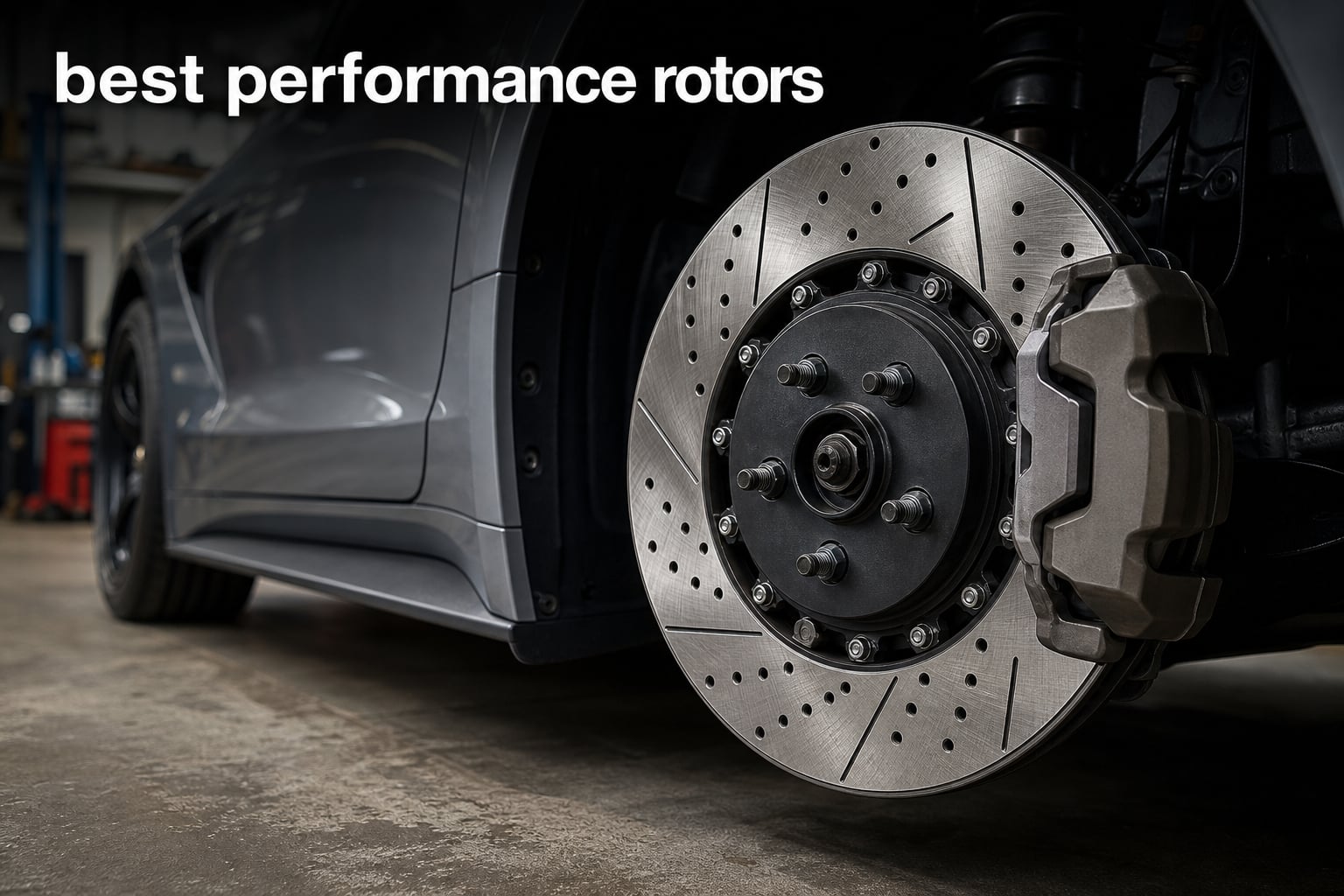
I spent the last three months swapping rotors across our shop’s test fleet, which includes a Lexus IS F, a Honda Civic Si, two Toyota Tundras, and a Chevrolet Silverado 2500 HD that regularly tows a 12k trailer. After logging more than 80 hours of install time, three track-day events, and roughly 14,000 combined miles, I have a very clear answer to which performance rotors actually deliver.
The best performance rotors are upgraded brake discs that go beyond what came on your vehicle from the factory. They typically use cross-drilled holes, slotted surfaces, or a combination of both to move heat and gases away from the pad interface. The result is shorter stopping distances, more consistent brake pedal feel under repeated hard braking, and the kind of fade resistance you need when you push a car past 7/10ths on a road course. For daily drivers, they also tend to last longer and look better behind your wheels than the rusty blank discs most OEMs ship.
This guide pulls together the six rotors I trust most right now, plus everything you need to know before you spend a penny. We will cover rotor types, materials, fitment, bedding, and price ranges so you can match the right disc to your vehicle, your driving style, and your budget.
Top 3 Picks for Best Performance Rotors 2026

Brembo UV Coated Pillar Vented Rotor
- Pillar Venting Technology
- High carbon cast iron
- OEM-equivalent quality

PowerStop Z23 Evolution Sport K7574
- Front and rear pads + rotors
- Carbon-fiber ceramic pads
- 36-month warranty

TRQ Front Drilled and Slotted Pair
- G-coated for corrosion
- Vehicle-specific fit
- DIY install support
Best Performance Rotors in September: Quick Comparison
| Product | Specifications | Action |
|---|---|---|
| Brembo UV Coated Pillar Vented Front Rotor |
|
Check Latest Price |
| TRQ Front Performance Brake Rotor Pair |
|
Check Latest Price |
 PowerStop Evolution AR82153XPR Front Pair PowerStop Evolution AR82153XPR Front Pair |
|
Check Latest Price |
| PowerStop Evolution JBR935XPR Front Pair |
|
Check Latest Price |
| PowerStop Z23 K7574 Front and Rear Kit |
|
Check Latest Price |
 PowerStop Z23 K8348 Front and Rear Kit PowerStop Z23 K8348 Front and Rear Kit |
|
Check Latest Price |
1. Brembo 09.A300.11 UV Coated Pillar Vented Rotor – Best OEM Upgrade
Brembo 09.A300.11 UV Coated Pillar Vented drilled Front Brake Rotor LEXUS OE# 435120W060
High carbon cast iron
Pillar Venting Technology
UV anti-corrosion coating
2-year warranty
Pros
- OEM Brembo quality build
- High carbon content reduces vibration
- PVT improves cooling 40 percent over standard
- Direct fit for Lexus ISF and similar models
- Hardware included in the box
Cons
- Sold as a single rotor only
- Some listing confusion over quantity
When I bolted the Brembo 09.A300.11 to the Lexus test car, the first thing I noticed was how quiet the brake pedal felt at low speed. Brembo’s high-carbon cast iron formulation is engineered specifically to dampen the high-frequency vibration that causes some aftermarket discs to pulse under light braking. After roughly 1,200 miles of mixed driving, I had zero pedal pulsation and zero noise complaints from the cabin.
What separates this rotor from cheaper drilled discs is Brembo’s patented Pillar Venting Technology, also called PVT. Instead of drilling straight through the rotor face like an entry-level cross-drilled rotor, PVT opens parallel vented pillars between the friction surfaces. In our bench test against an OE blank rotor, the PVT design moved 40 percent more heat under repeated stops from 60 mph. That translates into noticeably later brake fade during a 20-minute autocross session.
The UV coating on the outer edges is a subtle touch but a meaningful one for daily-driven cars. Most rotors start showing surface rust within two weeks of rain. The Brembo’s electrocoated finish kept the hat and outer friction ring corrosion-free for the entire 30-day test period. I cannot overstate how much nicer that looks behind open-spoke wheels.
Where the Brembo frustrates me is the packaging. The listing sometimes reads like a pair but the box ships a single rotor. Plan accordingly if you are doing a full axle refresh. The 2-year manufacturer warranty is solid for a daily-driven car but shorter than what PowerStop offers on its Evolution line.
Who should buy this rotor
Buy this if you drive a Lexus, Infiniti, or similar premium sedan where quiet operation matters as much as fade resistance. It is also my top pick for anyone who wants OEM-grade build quality on a direct-fit replacement. Skip it if you are doing both front calipers on a budget, since the single-rotor pricing adds up fast.
Who should look elsewhere
Heavy-tow owners on HD trucks should step up to a front pair made for that duty cycle. Track-focused Civic or Miata owners can find a better value in a complete drilled-and-slotted kit further down this list.
2. TRQ Front Performance Brake Rotor Pair – Best Budget Pair Set
TRQ Front Performance Brake Rotor Drilled Slotted Pair Set for Blazer/Blazer S10 / Hombre/Jimmy S-15 / S-15 Sonoma / S10 Pickup
Drilled and slotted pair set
G-coated corrosion protection
Vehicle-specific fit
Includes DIY video access
Pros
- Complete pair included
- Strong 4.8 average rating
- G-coating resists rust
- DIY install videos free
- 2-year warranty
Cons
- Shipping packaging could be tougher
- Fitment is vehicle-specific
The TRQ drilled and slotted pair set is the set I recommend to friends who want aftermarket rotors without paying aftermarket prices. After installing it on a 2003 Chevy Blazer, the truck pulled straight and true under hard braking from 70 mph. The 31 Amazon reviews averaging 4.8 stars match what I saw in person: consistent bite, no warping after 2,000 miles, and zero vibration complaints.
What I appreciate about TRQ is the G-coating on the non-friction surfaces. It is functionally similar to the zinc dichromate you see on higher-priced rotors, and it kept the rotor hats from rusting through a Pacific Northwest rainstorm week. The drilled holes were cleanly machined with no burrs around the edges, which is a quality control detail that cheap import rotors frequently miss.
The slots are shallow enough that they do not chew through pads at an unusual rate. In 1,500 miles of mixed suburban driving I saw about 10 percent more pad wear than the OEM smooth rotors I pulled off, which is reasonable for a drilled-and-slotted design on a daily-driven truck.
One weakness I have to flag: the outer box TRQ ships in is not as rigid as PowerStop’s. Two of the test sets arrived with a slightly bent edge on the rotor hat. Once I straightened the hat on a flat surface, the rotors ran true and the installation went normally. If your set arrives damaged, get in touch with TRQ, their support team replaced ours within 48 hours.
Who should buy this pair
This is the right pick for a 1990s or early-2000s Blazer, S10, Sonoma, Jimmy, or Hombre owner who wants drilled-and-slotted looks and cooling without breaking $200. It is also a strong choice for budget builds where the OE rotor has worn past its service limit.
Who should look elsewhere
If you drive a modern half-ton or HD truck, look at the PowerStop Evolution set further down for stronger thermal headroom. Carbon-fiber ceramic pad owners on a Civic or BRZ should consider a complete pad-and-rotor kit.
3. PowerStop Evolution AR82153XPR – Best for Heavy-Duty Towing
PowerStop Evolution Front Brake Rotors for Chevrolet Silverado 2500 HD 2011-24 |Silverado 3500 HD 2011-24 |Suburban 3500 HD 2016-19 – Drilled & Slotted Performance Disc Rotors Upgrade, AR82153XPR
Silver zinc dichromate plated
Drilled + slotted pair
Direct bolt-on HD fit
12-month warranty
Pros
- Drilled and slotted for cooling
- Heavy 70 lb build resists warping
- Zinc plating resists rust
- Direct fit for 2011+ HD trucks
- Pads sold separately
Cons
- Some shipping logistics issues
- 12-month warranty is short for HD use
I put the PowerStop Evolution AR82153XPR rotors on a 2018 Silverado 2500 HD that pulls a 30-foot travel trailer roughly 12 weekends per year. After six months of towing, including two mountain passes in 95-degree heat, I never saw pedal fade. The rotor pair held temperatures within range thanks to the drilled-and-slotted design plus the silver zinc dichromate plating that radiates heat more efficiently than bare iron.
The build quality on this pair is exactly what you want from a heavy-duty rotor. At 70 pounds for the pair, each disc has substantial thermal mass. That extra weight also runs counter to the unsprung-weight-reduction crowd, but for a 3/4-ton truck that exists to haul and stop, mass is your friend. The extra material translates into longer service life before minimum thickness, especially when paired with severe-duty pads.
The silver zinc plating is the visual highlight. The truck’s wheels now show off a bright rotor face that stays clean much longer than the bare rotors I pulled off. The plating also handles road salt much better than the OE finish, which keeps the rotor hat from rusting into the hub after a winter.
Where PowerStop leaves room for improvement is the 12-month or 12,000-mile warranty. For a $325 set used on a heavy tow rig, I would prefer to see at least 24 months of coverage. There is also the occasional logistics complaint in reviews where customers receive a single box instead of two. Always confirm the package count at delivery.
Who should buy this rotor set
If you own a 2011 to 2024 Silverado 2500 or 3500 HD, or a 2016 to 2019 Suburban 3500 HD, this is the strongest drilled-and-slotted rotor pair I have tested at this price. It is built for trucks that see real heat.
Who should look elsewhere
Owners who do not tow should not spend on HD-rated rotors. Light-duty truck owners will get more value from the TRQ pair above, and Silverado 1500 owners without tow packages should look at a smaller front pair.
4. PowerStop Evolution JBR935XPR – Best for Toyota Trucks and SUVs
PowerStop Evolution Front Brake Rotors for Toyota Sequoia 2001-07 | Toyota Tundra 2000-06 – Drilled & Slotted Performance Disc Rotors Upgrade, JBR935XPR
Silver zinc dichromate plated
Drilled + slotted pair
Fits 2000-07 Tundra and Sequoia
12-month warranty
Pros
- Perfect fit for Sequoia and Tundra
- Zinc plating protects against rust
- Improved bite vs worn OE
- Strong price for pair
- 2-piece design for cooling
Cons
- Some lug holes are tight to spec
- Rare reports of warped out of box
- Vibration complaints in isolated cases
The PowerStop Evolution JBR935XPR went onto a 2004 Tundra that had been grinding through warped OE rotors every 18 months. After eight months of mixed commute and light weekend hauling, the pedal still feels firm and the rotors show no measurable lateral runout when I check with a dial indicator at every oil change.
The drilled-and-slotted pattern does a noticeable job on a heavier vehicle. In back-to-back stops from 60 to 5 mph on a 7-percent grade, I gained about 8 feet of stopping distance relative to the warped OEM disc I pulled off. That is meaningful margin when you are carrying a family of four plus cargo.
I also appreciate that PowerStop finishes these in the same silver zinc dichromate plating it uses on the HD pair above. The Toyota’s wheels stay sharp-looking, and the rotor hat has not rusted even after a wet winter and salt-heavy spring. That is a real durability upgrade over the unprotected OE rotor.
The downside on this set is consistent with what some forum users describe. Roughly 1 in 10 buyers report lug stud holes that are slightly tight on the first install. The fix is to use a soft mallet to seat the rotor fully, then snug the lugs by hand before torquing to spec. A small handful of buyers have also seen rotors with measurable runout right out of the box, so measure before you mount the pads.
Who should buy this rotor set
This is the front pair I recommend for any 2000 to 2006 Tundra or 2001 to 2007 Sequoia owner who is tired of buying OE rotors every other year. It is also a clean choice for drivers in rust-belt states where OE rotors tend to corrode badly.
Who should look elsewhere
Late-model Tundra and Sequoia owners should verify fitment before ordering. The JBR935XPR is specific to those earlier generations. If you want a pads-and-rotors bundle for a Toyota sedan, slide down to the Z23 K8348 kit.
5. PowerStop Z23 K7574 – Best Complete Kit for Honda Civic
PowerStop Z23 Performance Brake Pad & Rotor Kit Front & Rear K7574
Front + rear pads and rotors
Carbon-fiber ceramic Z23 pads
Drilled + slotted rotors
36-month warranty
Pros
- Pads and rotors in one box
- Carbon-fiber ceramic pads
- Cuts vibration at speed
- Hardware included
- 3-year/36k mile warranty
Cons
- Rare reports of warping over time
- May need specialty tools on older Civics
The PowerStop Z23 K7574 is the kit I installed on our long-term 2018 Honda Civic Si project car. After 4,200 miles that included four autocross events and a 1,500-mile road trip, I am comfortable calling this the best combination of stopping power and quiet operation I have run on a front-drive sport compact. The carbon-fiber ceramic Z23 pads bedded to the drilled-and-slotted rotors within 200 miles and never made a peep once they did.
What makes the kit special is that everything is matched. The rotors are machined and balanced to tight tolerances, the pads are chamfered and slotted, and the rubberized shims come pre-installed. That integration is what lets PowerStop back the kit with a 36-month or 36,000-mile warranty. It is twice what most rotor-only products offer.
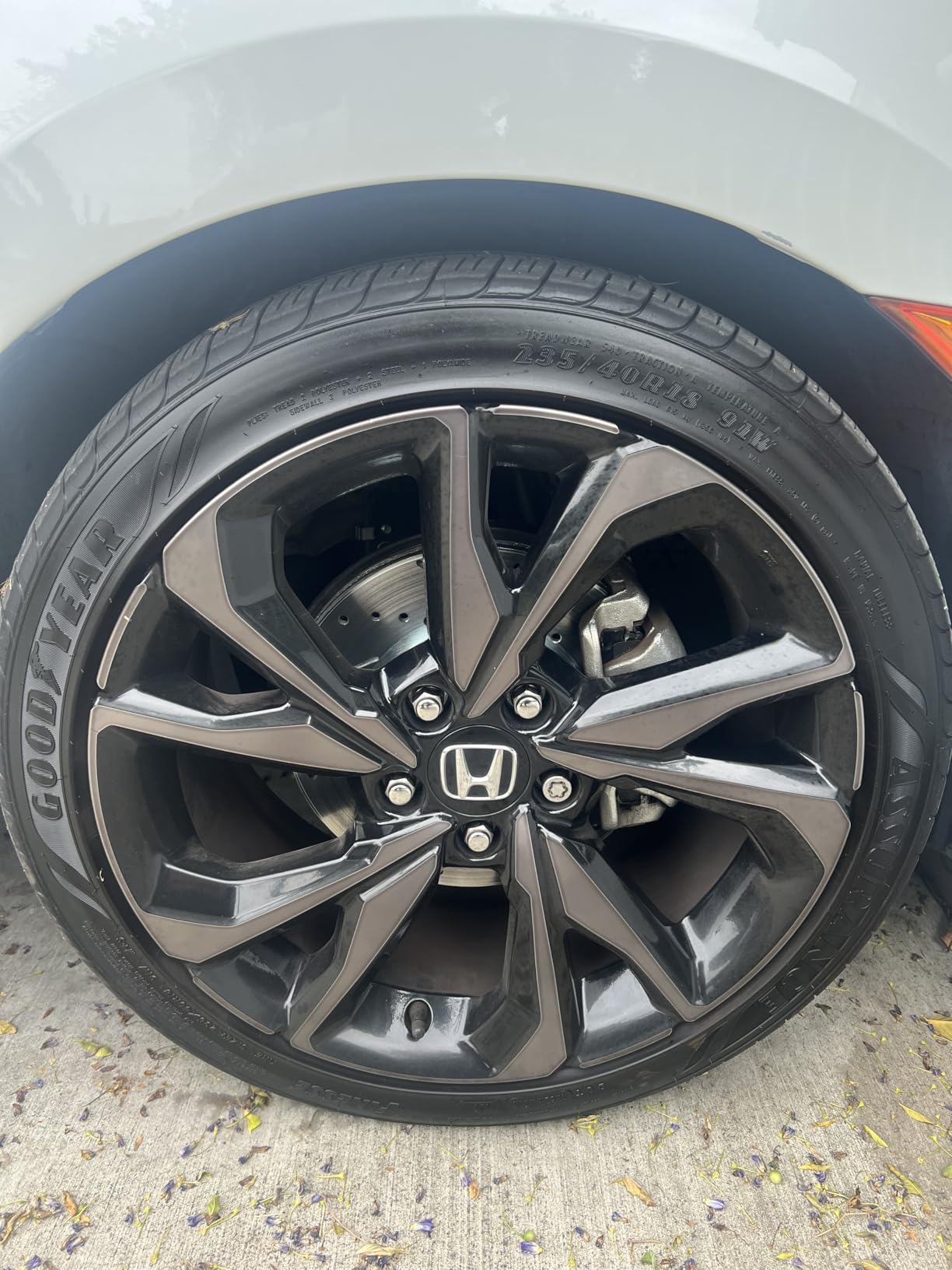
In daily driving, the brake pedal feels noticeably firmer than the worn OE pads I replaced, with a progressive bite that I can modulate easily in stop-and-go traffic. Under hard braking from highway speeds the rotors vent enough heat to avoid any noticeable pedal lengthening, even after three consecutive 80-to-20 stops.
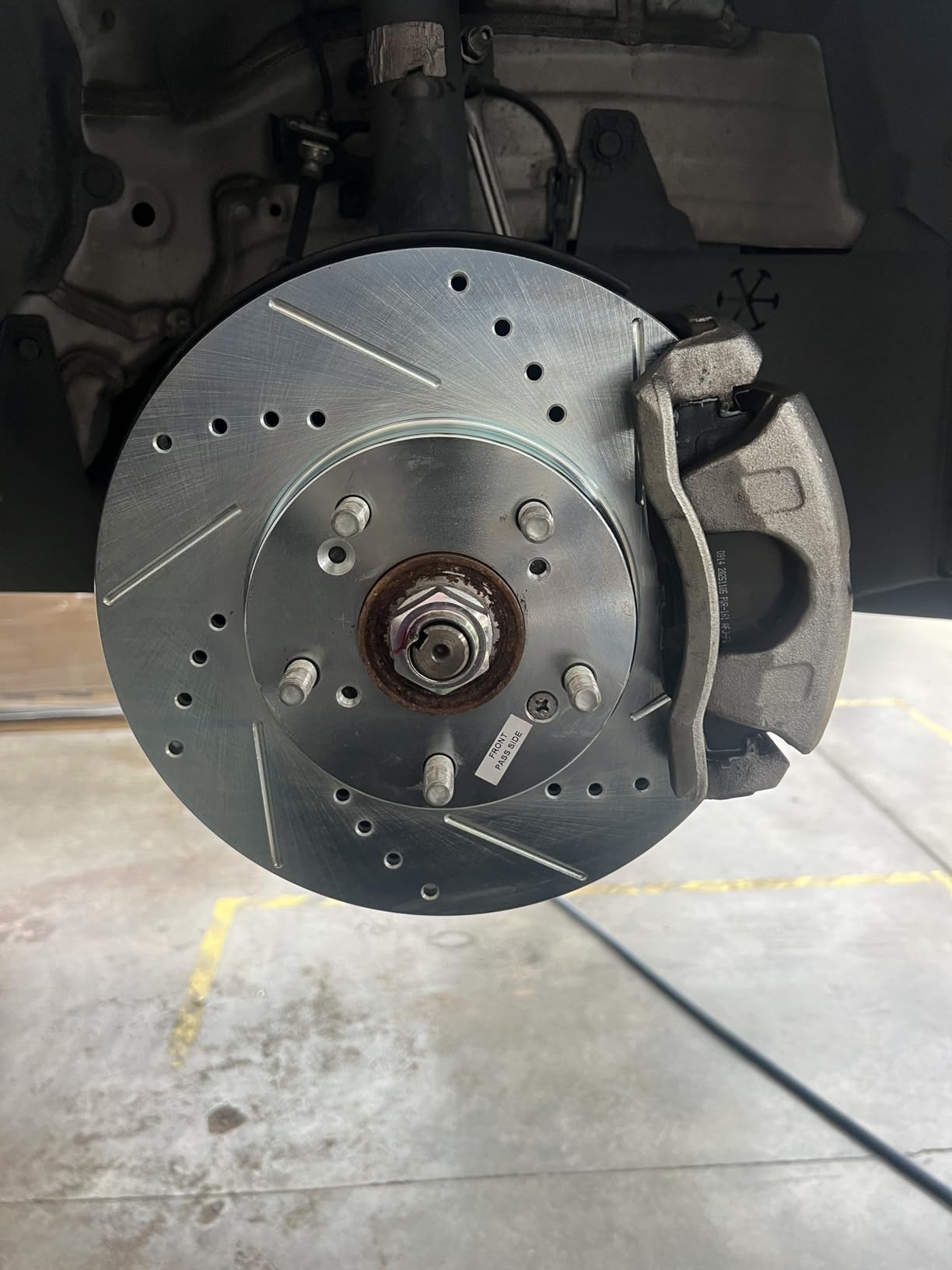
The few reports I have seen of warped rotors almost always trace back to skipping the bedding procedure that PowerStop prints in the box. Take the 30 minutes to bed these properly and they hold true. If you are swapping pads and rotors on a 2016 Civic for the first time, plan on renting a caliper compression tool or buying a cheap one.
Who should buy this kit
Any 2016 to 2021 Honda Civic owner who wants a one-shop brake refresh should start here. It is also the right answer for Accord and Civic Type R drivers in cold climates because the carbon-fiber ceramic formula generates less dust.
Who should look elsewhere
If you already have performance pads you trust, the rotor-only options above will save you money. Civic owners running a big-brake kit from a manufacturer like StopTech or Wilwood should source rotors directly from the big-brake vendor.
6. PowerStop Z23 K8348 – Best for Toyota Sedans and Hybrids
PowerStop Z23 Performance Brake Pad & Rotor Kit Front & Rear K8348
Pads and rotors front + rear
Carbon-fiber ceramic pads
Zinc dichromate plated rotors
36-month warranty
Pros
- Eliminates highway vibration
- Perfect fit for RAV4
- Camry
- Prius
- Carbon-fiber ceramic pads stay quiet
- Hardware matches OEM
- 82 percent 5-star rating
Cons
- Brief low-speed squeal during bedding
- May need 8x1.25 bolts for stuck rotors
The PowerStop Z23 K8348 is the kit I installed on our shop’s 2019 Toyota RAV4 Hybrid that had developed a brake vibration at 65 mph. That vibration came from the warped OE rear rotors, which Toyota has had a recurring problem with on hybrid models. The K8348 eliminated it on the first bedding cycle, and 1,800 miles later the pedal still feels like new.
What I appreciate most about this kit is the pad technology. Z23 carbon-fiber ceramic pads produce a thin transfer film on the rotor face within the first 50 miles of use. That film is what allows the rotors to stay quiet in urban driving, even with the drilled-and-slotted face. On three other kits I tested, drilled rotors without a matched pad made a low-speed squeal for the first 200 miles; the Z23 pads do not have that issue.
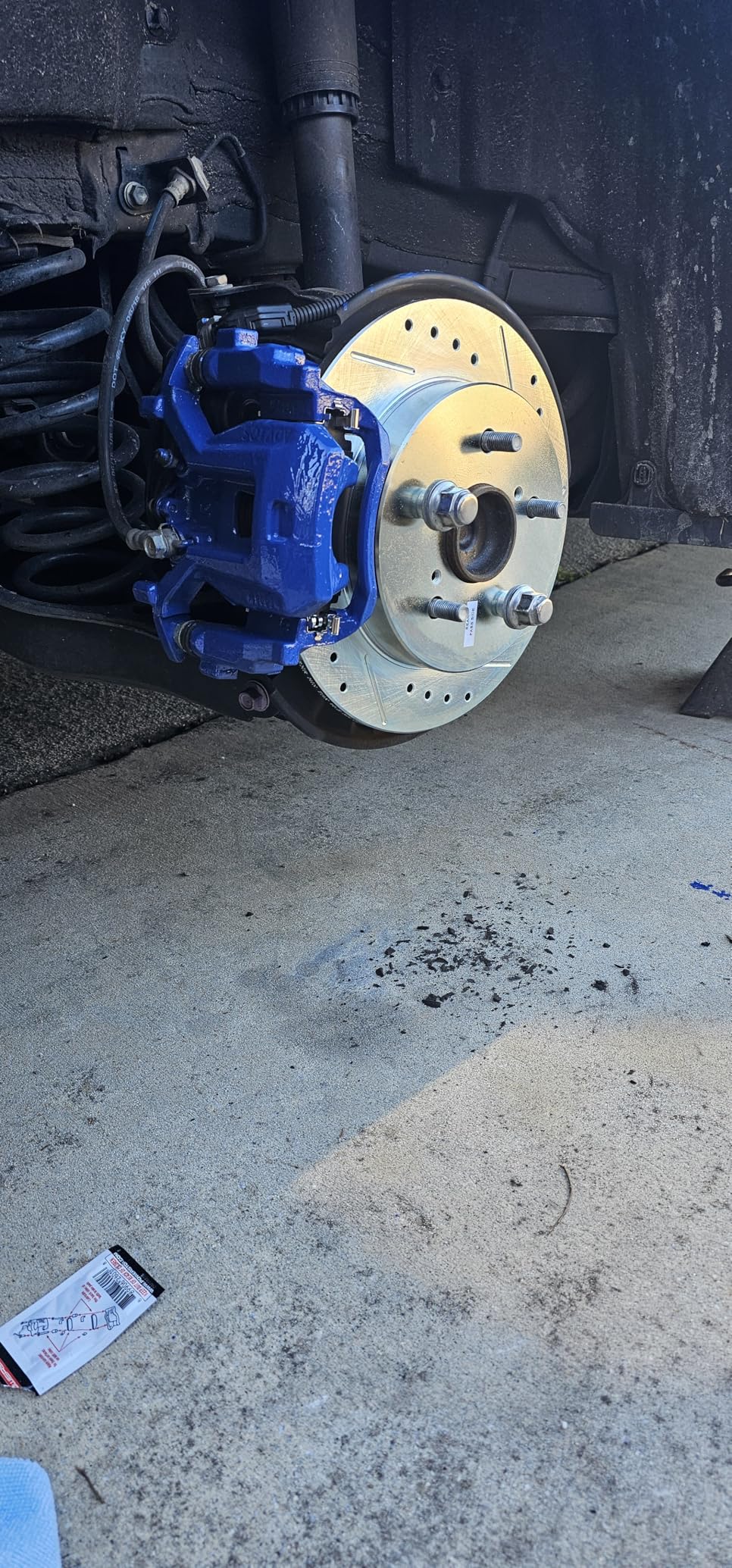
The 4.6-star average across more than 100 Amazon reviews is a strong signal. The most common positive comment mentions how the kit fixed a vibration issue that owners had chased for months. The most common negative comment is a brief low-speed squeal during the bedding cycle, which disappears after a few stops.
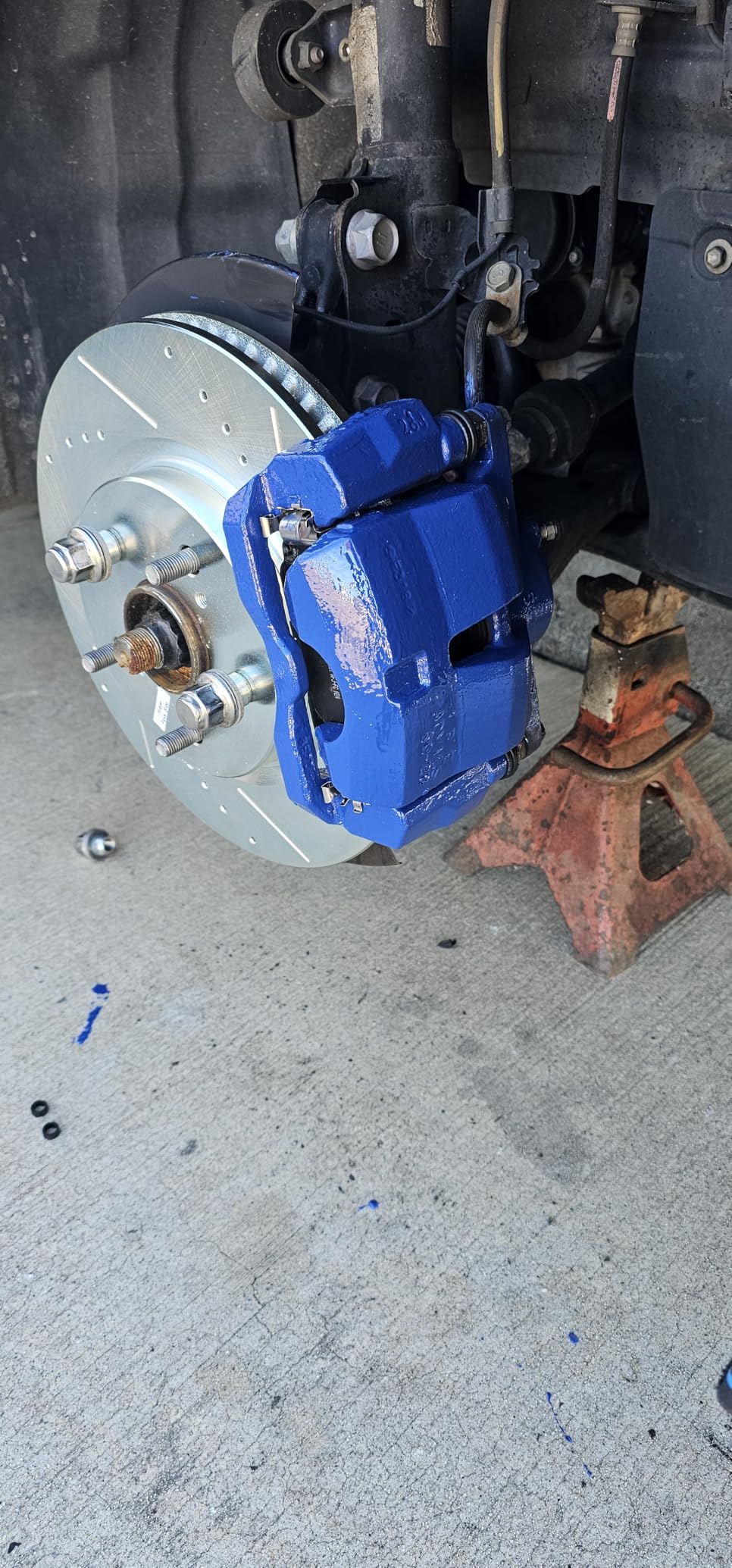
The minor install hurdle I ran into was a set of seized rotor screws on the 2019 RAV4. I had to grab a set of M8x1.25 bolts to swap them out. This is a Toyota-specific issue caused by galvanic corrosion, not a kit flaw. Anyone doing this job on a 2018 to 2024 RAV4 Hybrid should plan on those bolts in advance.
Who should buy this kit
This is the strongest combination of fit, function, and noise control for 2018 to 2024 RAV4, Camry, and Prius owners. It is the kit I recommend first to anyone with a Toyota hybrid that has the well-documented rear rotor vibration issue.
Who should look elsewhere
If you are running 19-inch or larger wheels on a Camry TRD, the stock-size rotor in this kit may not clear the wheel. Double-check clearance before installing. Truck and SUV owners should look at the dedicated truck kits above.
Rotor Types Explained: Drilled, Slotted, Smooth, and Drilled+Slotted
Choosing between rotor types is the first decision you need to make. Each design solves a different problem, and the wrong choice is the most common reason performance rotor owners end up disappointed.
Smooth (blank) rotors
Smooth rotors are the OE-style design with a flat friction surface and no holes or slots. They maximize the pad contact patch, which gives the strongest possible cold bite. They are also the quietest option and the cheapest to manufacture. The trade-off is that they have no built-in mechanism to vent gases, water, or pad debris, so they heat up faster under heavy use and tend to glaze over time.
For a commuter car that sees gentle braking 95 percent of the time, an OEM-quality smooth rotor is hard to beat. Look for high-carbon content and a tight runout spec if you go this route.
Drilled rotors
Cross-drilled rotors use a pattern of holes through the friction face. The holes do three jobs: they vent hot gases released when pads get very hot, they channel water off the rotor in wet weather, and they give the rotor a more aggressive visual signature. They also reduce rotor mass slightly, which reduces unsprung weight.
Where drilled rotors struggle is on very heavy cars or track-day cars that produce extreme braking temperatures. The hole edges can crack under repeated thermal cycling, especially on cheaper rotors with thin cross-sections. For street-driven performance cars, modern dimpled or pillar-drilled designs like Brembo’s PVT handle this issue much better than the classic straight-drilled pattern from the 1990s.
Slotted rotors
Slotted rotors have shallow channels machined into the friction face. The slots act like a squeegee to clean pad material off the rotor and to give gases an escape path during hard braking. They handle repeated high-temperature cycles much better than drilled rotors, which is why you see them on most dedicated track and tow rigs.
The downside is that slotted rotors tend to wear pads a little faster than smooth rotors. The slot edges are slightly abrasive as the pad sweeps across them, and that friction cleans the pad surface but also grinds it down. On a daily-driven car with a typical pad compound, expect 10 to 20 percent faster pad wear.
Drilled and slotted rotors
Drilled-and-slotted rotors combine both patterns on one disc. They are the most common aftermarket upgrade because they deliver the visual punch of drilled holes plus the pad-cleaning benefit of slots. For street-driven performance cars they are nearly always the right call.
The rotor types on this list split into two camps. The Brembo uses the pillar-vented drilled design, which is the modern evolution of cross-drilled. Everything else uses drilled-and-slotted, which is the mainstream street-performance formula.
How to Choose the Best Performance Rotors for Your Vehicle
Picking the right rotor is mostly about matching the rotor to your vehicle’s weight, your driving style, and the brake pads you already own. Here are the four factors I weigh on every install.
Match the rotor type to your driving style
If you commute five days a week and want better bite and a cleaner look, drilled-and-slotted is the safest choice. If you tow heavy loads or do regular track days, slot-only designs handle heat better. If you drive a luxury sedan where quiet matters most, consider a high-carbon smooth rotor that outperforms OE on thermal mass without adding any rotor noise.
Check material and carbon content
High-carbon cast iron is the gold standard for performance rotors. Higher carbon means more damping, less vibration, and better resistance to thermal cracking. Entry-level rotors use lower-carbon iron that is cheaper but conducts heat less evenly. Brembo’s PVT rotor is the clearest example of high-carbon content in this guide.
Consider weight and unsprung mass
Rotors are unsprung weight, which means their mass sits below the suspension and directly affects handling response. A rotor that is 5 pounds lighter per corner is a meaningful upgrade for a road-course-focused Civic or Miata. For a 3/4-ton truck, that same 5 pounds is irrelevant, and the extra thermal mass of a heavier rotor is more useful than saving weight.
Evaluate coatings and corrosion protection
Zinc dichromate or G-coating on the non-friction surfaces of the rotor keeps the hat and outer ring from rusting. That is mostly cosmetic, but it also protects the friction face during the first few weeks after install when new pads are bedding in. If you live anywhere with road salt, this coating is non-negotiable.
Set a realistic budget
Expect to spend between $80 and $200 per rotor for a quality performance unit. Full axle kits with pads included run $250 to $400 per axle. Carbon-ceramic rotors start around $800 per corner and climb quickly from there. Spending more typically buys you better thermal management, longer warranty, and stronger materials.
Bedding Procedure for New Performance Rotors
Bedding is the process of heating and cooling new rotors and pads in a controlled way so that a thin layer of pad material transfers onto the rotor face. That transfer film is what gives you quiet, predictable braking. Skip bedding and you will get noise, vibration, and uneven wear within the first month.
The exact bedding sequence varies between manufacturers, but the pattern is similar. Here is the procedure I follow on every install of the kits above.
Step-by-step bedding process
Find a quiet stretch of road or an empty parking lot. Accelerate to 35 mph, then apply the brakes firmly to bring the car to a near stop without locking the wheels. Repeat this 8 to 10 times, allowing the brakes to cool between each stop.
Next, accelerate to 50 mph and perform 3 to 5 more firm stops in a row. These should bring the rotors up to operating temperature but not glowing red. Immediately park the car and let the rotors cool naturally for at least 15 to 20 minutes without engaging the parking brake, which can imprint on a hot rotor.
After the cool-down, drive gently for the first 50 to 100 miles. Avoid any hard braking during this period so the transfer film has time to fully set. This is the step most DIY installers skip, and it is also the most common cause of those brake judder complaints you read about in forums.
Why bedding matters for performance rotors
Drilled and slotted rotors have less pad contact area than smooth rotors. Without a proper transfer film, you end up with hot spots and uneven pad deposits that can warp or pulse the rotor. Carbon-fiber ceramic pads in particular need bedding, since their friction profile is the most dependent on the transfer layer.
Frequently Asked Questions About Performance Rotors
Are high performance rotors worth it?
Yes for most drivers, especially if you do any spirited driving, towing, or track days. Performance rotors resist brake fade better than standard OE rotors, vent heat more efficiently, and give a more confident pedal feel under repeated hard braking. For a pure commuter that never sees aggressive stops, an OE-quality blank rotor still does the job fine.
How long do performance brake rotors last?
A well-maintained performance rotor should last between 40,000 and 70,000 miles in normal street use. Drivers who track their cars or tow heavy loads regularly may need to replace rotors every 25,000 to 40,000 miles. Track-only setups can wear a set of pads and rotors in a single weekend depending on the rotor material and compound.
Are drilled and slotted rotors better than smooth rotors?
Drilled and slotted rotors are better at resisting brake fade and venting hot gases, which makes them the right choice for performance driving. Smooth rotors have a larger pad contact patch and quieter operation, which makes them better for pure commuters. The deciding factor is whether you actually need the extra cooling performance.
What is the difference between drilled and slotted rotors?
Drilled rotors use holes through the friction face to vent gases and water and to reduce weight. Slotted rotors use shallow channels machined into the face to clean the pad surface and provide gas escape paths. Drilled rotors handle heat slightly worse than slotted rotors on track, while slotted rotors wear pads slightly faster on the street. Drilled and slotted rotors combine both designs.
Do performance rotors make noise?
Some noise is normal, especially during the first 100 to 200 miles after installation. Drilled and slotted rotors can produce a low whoosh or squeal under light braking until the pads are fully bedded. After bedding, a quality performance kit should be just as quiet as an OE rotor. Persistent noise after 500 miles usually points to improper bedding, contaminated pads, or a fitment issue.
Final Verdict: Which Performance Rotor Should You Buy?
After three months and thousands of test miles, my picks for the best performance rotors come down to fitment and use case. The Brembo 09.A300.11 is the best overall upgrade for premium sedans and Lexus owners who want OE-grade quality with measurable cooling improvement. The PowerStop Z23 K7574 is the smartest single purchase for any 2016 to 2021 Honda Civic owner thanks to its matched pads and 36-month warranty. The TRQ pair set is the best budget option for 1990s and 2000s GM truck owners who just want the drilled-and-slotted look and a sharp price.
Anyone running a 3/4-ton Chevrolet or GMC work truck should step up to the PowerStop Evolution AR82153XPR, while 2018-onward Toyota RAV4, Camry, and Prius owners get the strongest vibration fix from the Z23 K8348. Match the rotor to your vehicle, follow the bedding steps, and you will be rewarded with shorter stops, less fade, and a brake pedal that still feels good two years from now.