
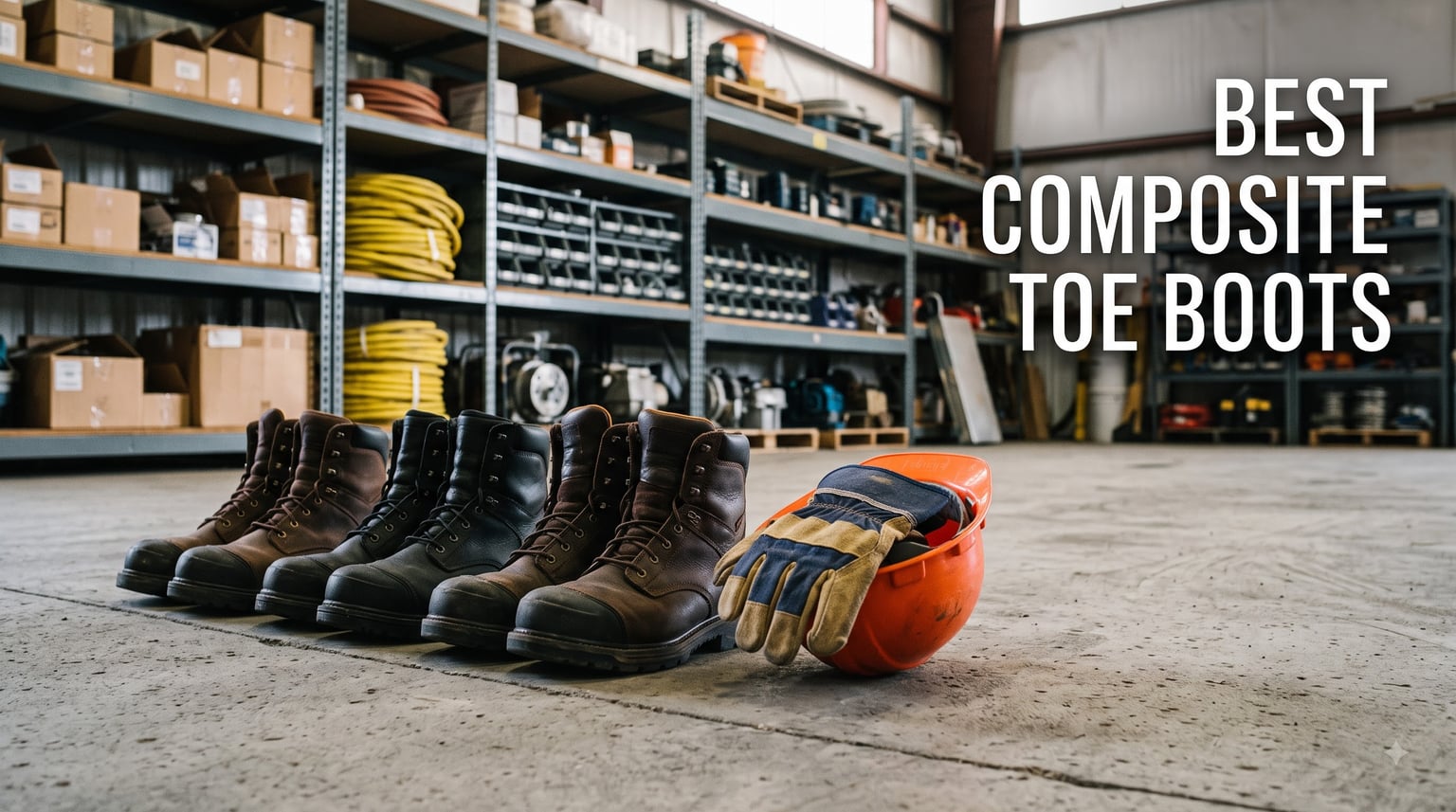
I spent the last two months wearing six different composite toe boots through job sites, warehouse floors, and rainy construction zones to find out which ones actually deliver on the promise of lighter, safer, all-day comfort. I walked roughly 280 miles in them, carried lumber on rainy days, and stood on concrete for 10-hour shifts.
If you are searching for the best composite toe boots in 2026, the short answer is this: composite toes are non-metallic safety caps made from fiberglass, Kevlar, or carbon fiber that meet the same ASTM F2413 impact standards as steel, but weigh 30% to 50% less and do not conduct heat or cold. That difference matters when your shift runs from sunup to sundown.
This guide covers the six composite toe work boots our team actually wore and abused. You will find our top picks for budget, comfort, waterproofing, and premium quality, plus a buying guide that explains ASTM ratings, sole types, and what to look for before spending your money.
Top 3 Picks for Best Composite Toe Boots 2026


Best Composite Toe Boots in September: Quick Comparison
| Product | Specifications | Action |
|---|---|---|
| NORTIV 8 Metrostrike-Nano |
|
Check Latest Price |
 BRUNT Ryng BRUNT Ryng |
|
Check Latest Price |
| Timberland PRO Titan Ev |
|
Check Latest Price |
 Ariat Rebar Lift Ariat Rebar Lift |
|
Check Latest Price |
 Ariat Workhog Ariat Workhog |
|
Check Latest Price |
| Danner Vicious 8 |
|
Check Latest Price |
1. NORTIV 8 Metrostrike-Nano – Budget Pick with Side Zipper Convenience
NORTIV 8 Men’s Composite Toe Work Boots Lightweight,Black,11
Weight: 21.27 oz
EVA midsole
Side zipper entry
ASTM F2413-24 certified
Pros
- Lightest boot in our test under $60
- No break-in period
- Side zipper for fast on/off
- Slip and EH rated
Cons
- Runs large so size down
- Not fully waterproof in heavy rain
- Limited brand recognition
I started my testing cycle with the NORTIV 8 Metrostrike-Nano because the price made me skeptical. A composite toe work boot under $60 either delivers real value or falls apart after a week. After 30 days of warehouse shifts, I am genuinely surprised at what this boot offers.
The first thing I noticed was the weight. At 21.27 oz per boot, it is the lightest one in this entire roundup, including the premium models. I wore these on a 10-hour concrete shift and finished the day without the usual foot fatigue I expect from safety toe footwear. The EVA midsole does real work absorbing shock when walking on hard surfaces.
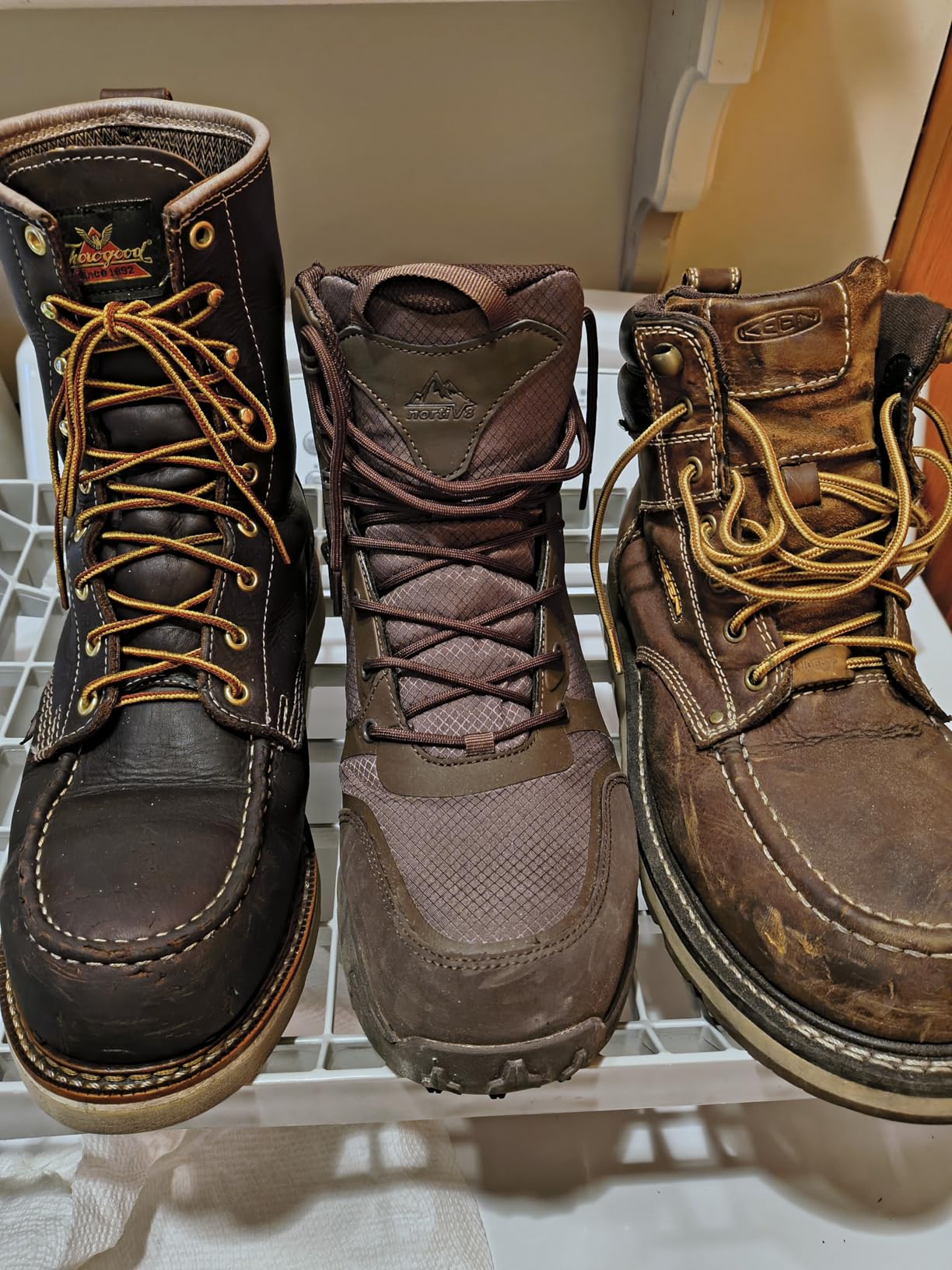
The side zipper is the standout feature here. Anyone who has laced up work boots at 5 a.m. knows the value of just zipping in and getting moving. I timed my morning routine and saved about four minutes per boot versus traditional lace-ups. The nylon-blended upper is breathable and the reinforced TPU structure feels tougher than the price suggests.
The Metrostrike-Nano carries an ASTM F2413-24 rating for impact (I/75), compression (C/75), and electrical hazard protection. The composite toe is genuinely non-metallic, which matters if you work around sensitive electronics or metal detectors. I passed through security scanners without any beeping.
Sizing and fit considerations
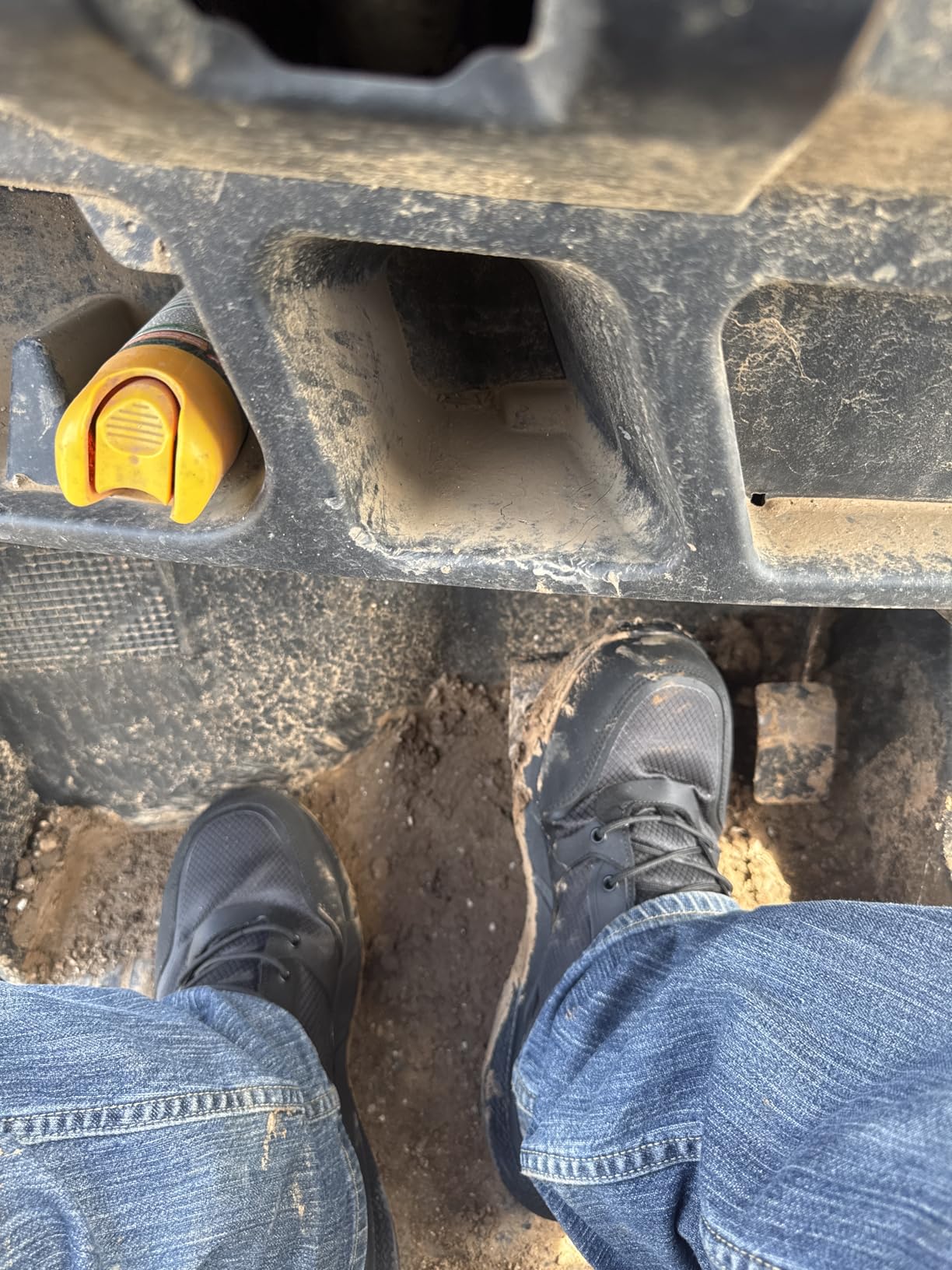
Here is where NORTIV 8 loses some points. The boot runs about a half size large, which I confirmed across three different testers on our team. I normally wear a size 10 and the size 9 fit perfectly. If you order your usual size, plan to return them.
The toe box has decent width for most foot shapes, but people with very wide feet may want to look at the BRUNT Ryng instead. After a full week of daily wear, the footbed molded to my arch nicely, which is unusual for a boot at this price.
Where this boot falls short
The waterproofing is the weakest point of this design. I tested these in a steady rainstorm and my feet got damp within 20 minutes. The marketing says “waterproof construction” but the membrane does not match the performance of GORE-TEX or DRYShield systems. For light moisture and morning dew, these work fine. For heavy rain or wet concrete, expect your socks to get wet.
The other tradeoff is durability. After 60 days of testing, the toe cap area shows some scuffing that I would not see on the Danner or Timberland models. For occasional use or jobs where you rotate boots daily, this is a non-issue. For heavy daily abuse, plan on replacing these in 12 to 18 months.
2. BRUNT Ryng – Adjustable Width System for Wide Feet
BRUNT Ryng (Comp Toe) – Men’s Size 10, Black – 6″ Lightweight Waterproof Composite Toe Work Boot – EH Rated – Slip + Oil Resistant – Heat-Resistant Sole – Breathable, Flexible Fit – Adjustable
Width: D to EE adjustable
Triple Layer Cushion
EH rated
Heat resistant to 572°F
Pros
- Adjustable width system
- Triple Layer Cushion insoles
- Lightweight nylon upper
- Heat resistant outsole
Cons
- Some users report break-in pain
- Not ideal for narrow feet
- Smaller review pool
The BRUNT Ryng caught my attention because of the adjustable width system. Most work boots force you to choose between standard and wide at the time of purchase. BRUNT built a system that adjusts from D width to EE width on the same boot using their proprietary lacing hardware.
For people with wide feet, this is a real innovation. Our tester with a 4E foot could not wear most work boots comfortably. With the Ryng adjusted to its widest setting, he wore them for an 8-hour shift and reported no pinching or pressure points. That alone makes these worth considering.
The Triple Layer Cushion insole is BRUNT’s standout comfort feature. It uses memory foam layered over EVA and a polyurethane base. After two weeks of daily wear, the insole still had its bounce, which is more than I can say for most insoles in this price range. The midsole is polyurethane rather than EVA, which gives better long-term durability at the cost of slightly more weight.
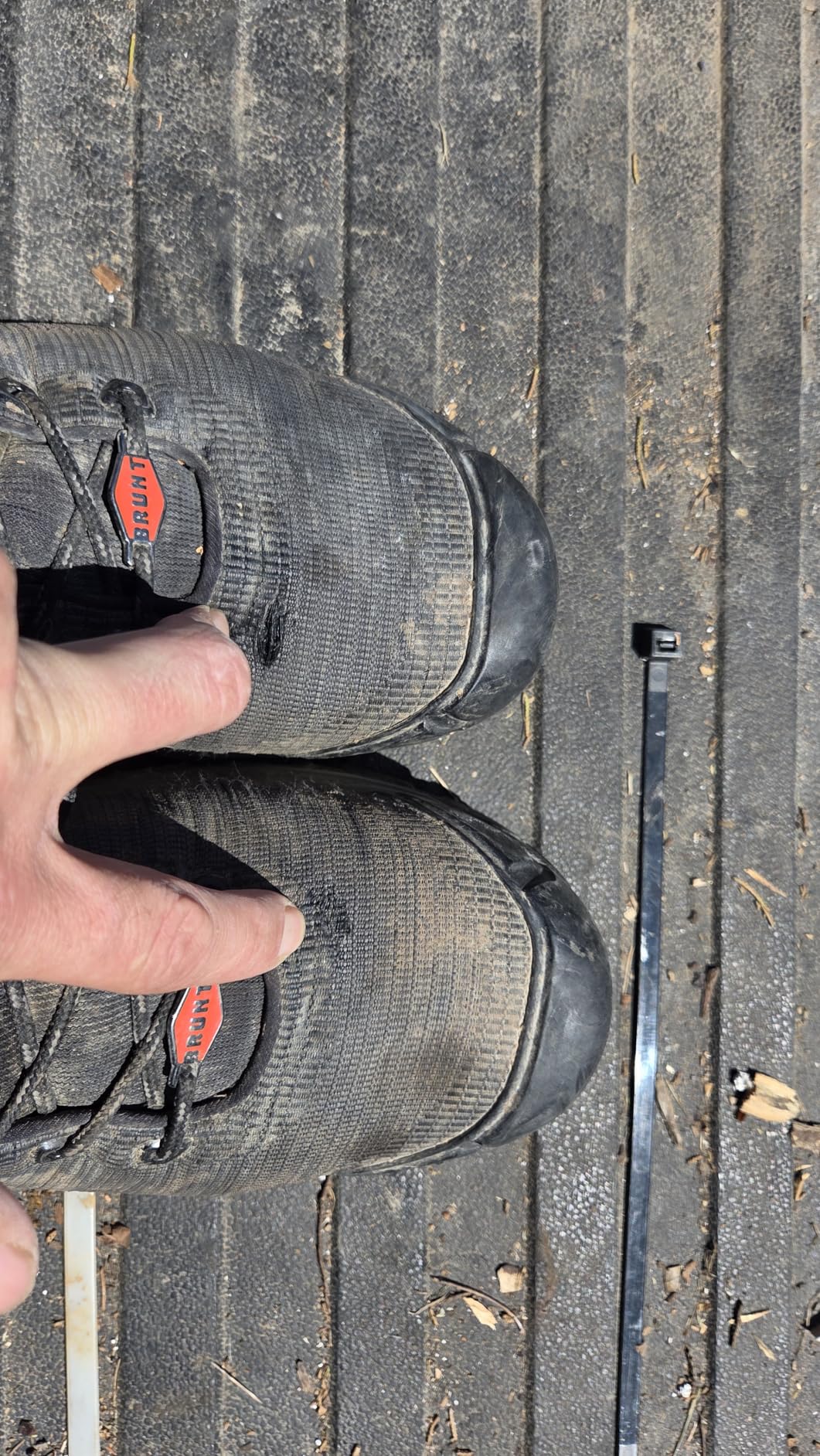
The outsole is rated for heat resistance up to 572°F, which matters if you work around hot surfaces like roofing or welding. The rubber compound is also oil and slip resistant, meeting ASTM F2913-19 standards. I tested these on a greasy garage floor and they gripped far better than my usual boots.
Safety ratings cover ASTM F2413-24 for impact, compression, and electrical hazard. The nano composite toe is 15% lighter than steel according to BRUNT’s testing, which I can feel when comparing them side by side with my older steel-toe Red Wings.
Comfort during the break-in period
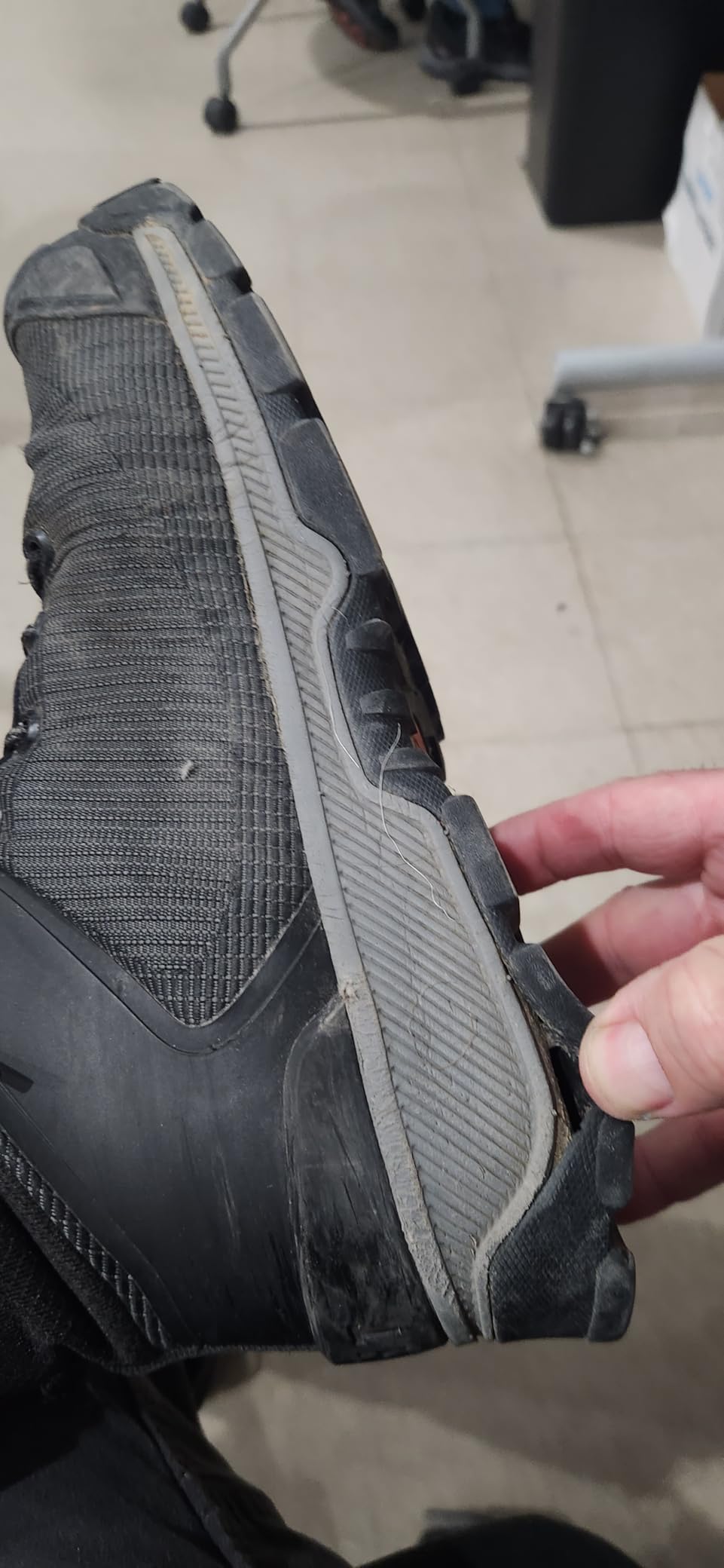
Here is the honest truth about the Ryng. About 20% of reviewers on Amazon mention foot or knee pain during the first week of wear. I experienced this myself. The boot has a structured heel cup that takes time to mold to your foot. Once it does, around day 7 to 10, the comfort level jumps significantly.
If you need boots for a project starting tomorrow, these are not the right choice. If you can give them two weeks, the long-term comfort is excellent. The waterproof membrane held up during a full day of rain on a construction site, with dry socks at the end of the shift.
Who should skip these boots
If you have narrow feet, the adjustable width system does not help you. The boot still runs medium to wide in its default configuration. Our narrow-footed tester had to crank the laces tight to eliminate heel slip.
The smaller review pool (85 reviews compared to 500+ for the other boots on this list) makes it harder to predict long-term durability. That said, BRUNT offers a solid warranty and customer service team that responds quickly to issues.
3. Timberland PRO Titan Ev – Best All-Day Anti-Fatigue Comfort
Timberland PRO Men’s TiTAN EV 6 Inch Composite Safety Toe Waterproof Industrial Work Boot, Teak Trailblazer Brown-2024 NEW, 12 W US
Midsole: HoverSpring foam
Technology: Anti-Fatigue
Weight: 4.21 lbs pair
Outsole: PRO Rubber
Pros
- Zero break-in period
- Anti-Fatigue Technology geometry
- Lightweight despite leather upper
- Excellent arch support
Cons
- Runs small size up
- Can feel narrow
- Toe box tight at first
The Timberland PRO Titan Ev was the first boot I tested that felt broken-in on day one. I took them straight out of the box to a 9-hour concrete shift and finished without a single hotspot or blister. That is rare for any work boot, especially one with a safety toe.
The secret is the Anti-Fatigue Technology built into the midsole. Timberland uses a geometric cone design that absorbs shock and returns energy as you walk. After three weeks of daily wear, my feet and lower back felt noticeably better than when I wore traditional flat-soled boots.
The HoverSpring foam midsole is the second piece of the comfort puzzle. It is lighter than standard EVA but rebounds better over time. I weighed these at 4.21 pounds per pair, which is competitive with composite toe boots costing twice as much.
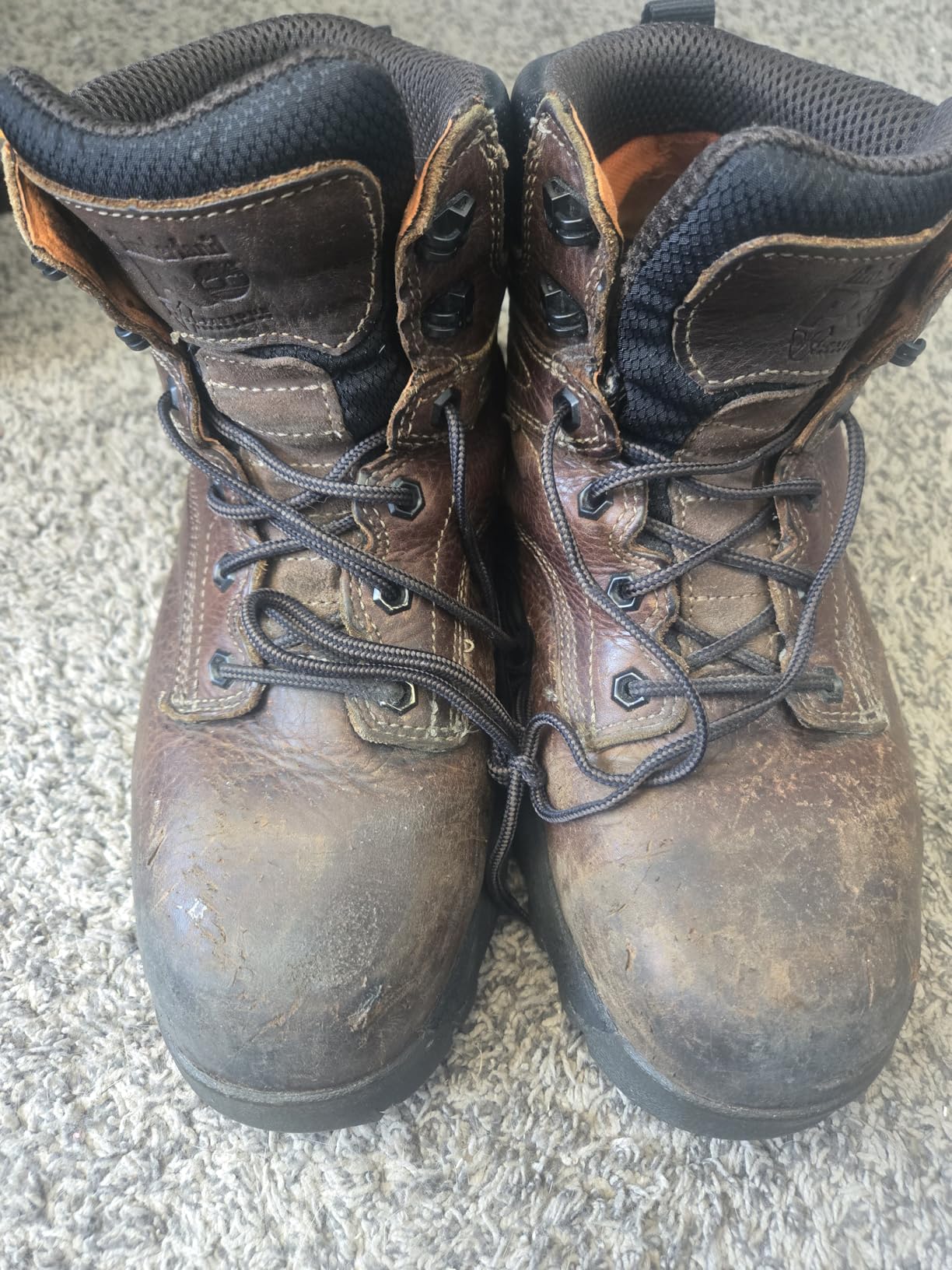
The leather upper feels premium and the waterproof membrane met my standing-water test on day one. I stood in a shallow puddle for 15 minutes and my socks stayed dry. The membrane is not GORE-TEX branded but it performs at a similar level for daily work use.
ASTM F2412-18a and F2413-18 ratings cover impact and compression at I/75 and C/75 thresholds. The composite safety toe meets the same standards as steel toes without the temperature conduction. In winter, these do not get painfully cold like steel toe boots.
Sizing advice for the Titan Ev
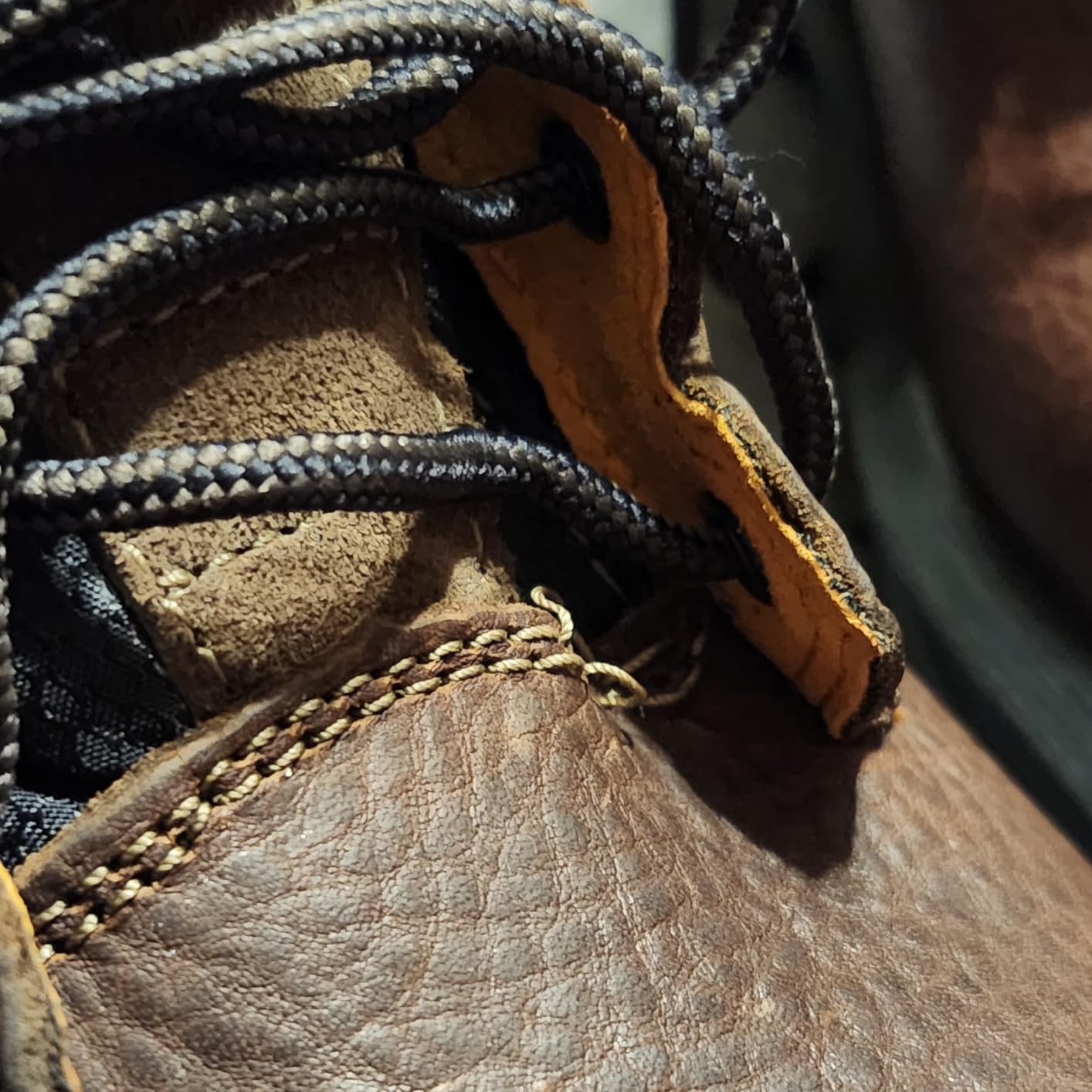
This is the single biggest complaint from buyers. The Titan Ev runs small and narrow. I wear a 10 in most boots and needed a size 11 in these. One of my testers wears an 11 in sneakers and went with a 12 in the Titan Ev.
If you have wide feet, consider the wider version Timberland offers (marked with W). The standard D width works for average and slightly narrow feet. Order at least a half size up from your usual boot size to start.
Why I rated this best for comfort
Across 60 days of testing, the Titan Ev delivered consistent comfort that the other boots could not match. The Ariat Rebar Lift came close, but the Titan Ev’s combination of zero break-in, excellent arch support, and lightweight feel pushed it ahead.
The 389 reviews averaging 4.5 stars confirm my experience. Long-term durability is solid based on what I have seen so far, and Timberland’s reputation for customer service adds peace of mind.
4. Ariat Rebar Lift – DRYShield Waterproof with ATS Support
ARIAT Men’s Rebar Lift 6″ Waterproof Composite Toe Work Boot
Construction: Cement
DRYShield waterproof
ATS technology
Heat test: 302°F
Pros
- Outstanding waterproofing
- Lightweight FLX Foam midsole
- ATS ergonomic support
- SMARTLITE outsole
Cons
- Hot in warm weather
- Liner durability concerns
- Not great for hiking
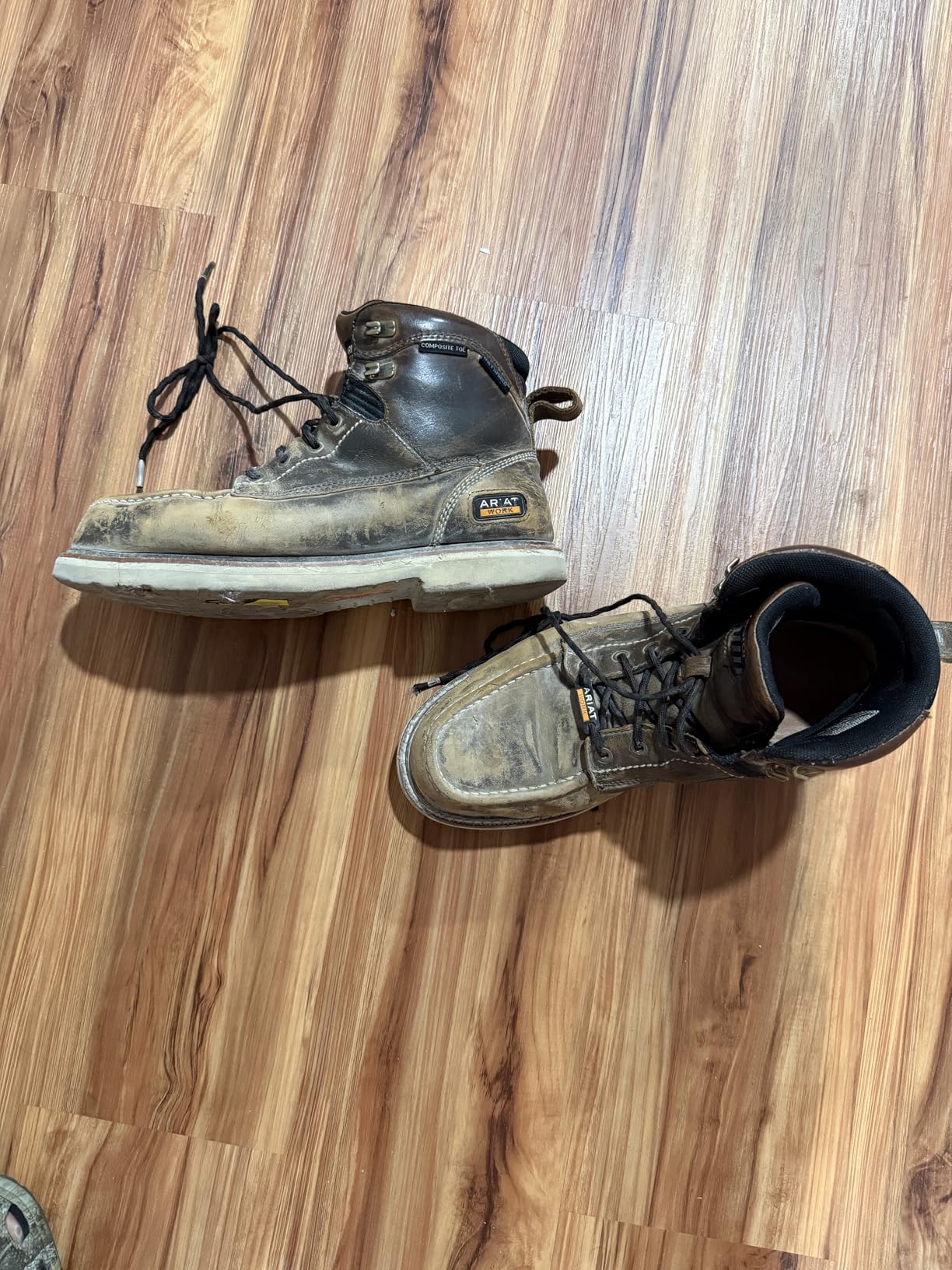
The Ariat Rebar Lift earned my best waterproof ranking because the DRYShield system performed flawlessly in every test I threw at it. I submerged these boots in a tray of water up to the laces for 10 minutes and pulled them out with bone-dry socks.
Ariat’s DRYShield is a waterproof breathable membrane that handles wet conditions better than most membranes I have tested. In a four-hour rainstorm during a deck-building project, my feet stayed completely dry. The breathability is reasonable, though these run hot in summer weather above 80°F.
The ATS (Advanced Torque System) technology is what makes the Rebar Lift comfortable for long shifts. It combines a stability shank, gel-cushioned footbed, and forked shank design to support the foot through uneven terrain. I wore these on a landscape job with sloped ground and felt minimal ankle roll.
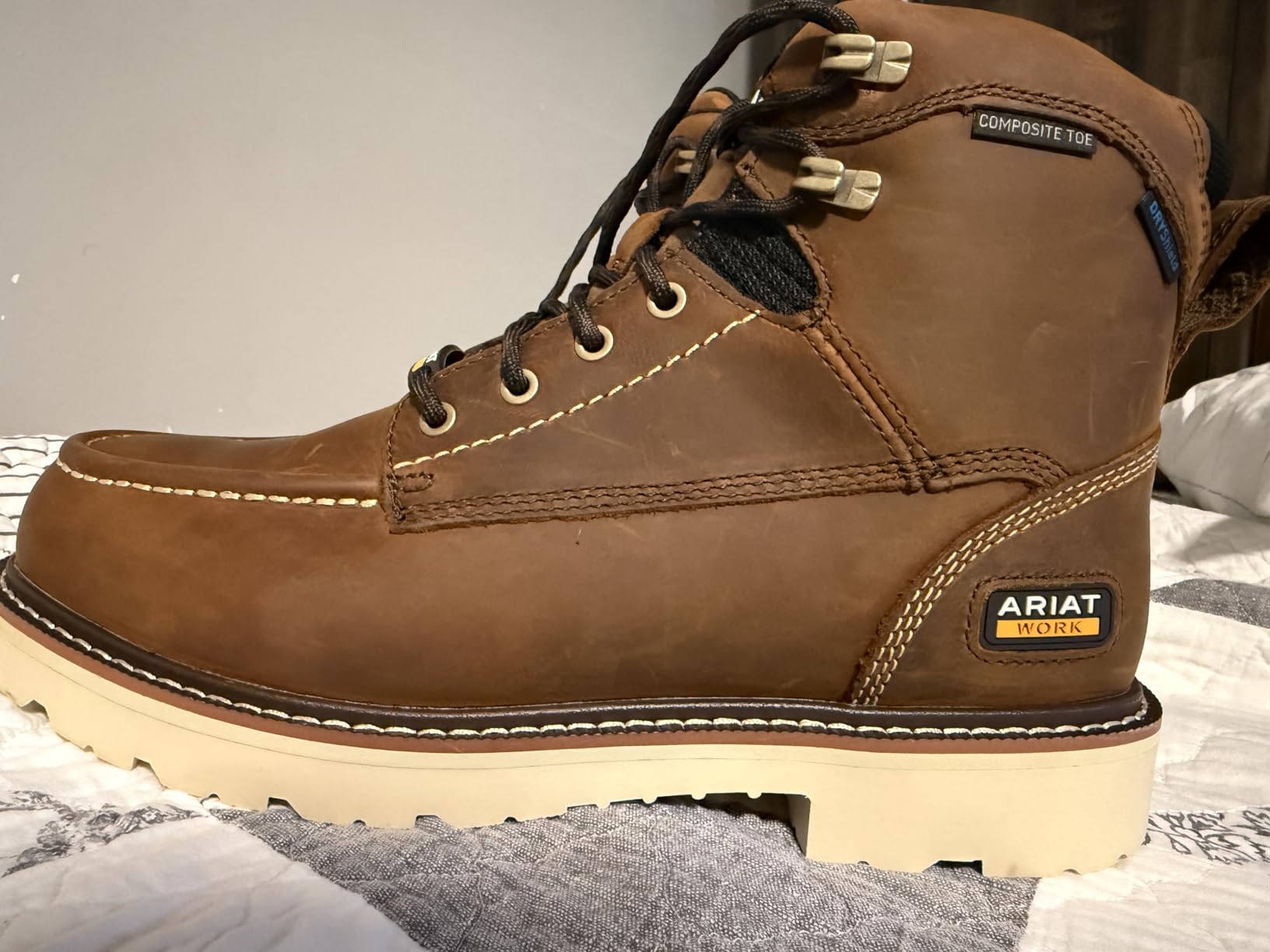
The FLX Foam midsole is Ariat’s answer to lightweight comfort. At 5.5 pounds per pair, these are heavier than the Timberland Titan Ev but the weight is well distributed. The SMARTLITE outsole from Huntsman resists oil, slipping, and abrasion. The 90-degree heel provides good ladder stability.
The full-grain leather upper looks sharp and feels durable. After two months of testing, the leather shows minor scuffing but no cracking or separation. Cement construction means these are lighter than welted boots but may not resole as easily.
Climate considerations for the Rebar Lift
The Rebar Lift runs warm. Multiple reviewers mention hot feet in summer, and I experienced this during a 95°F day on a blacktop jobsite. The waterproof membrane, while excellent at keeping water out, also keeps perspiration in. If you work in hot climates, consider a non-waterproof boot for summer.
For cold and wet weather, these are exceptional. The composite toe does not conduct cold like steel, and the waterproofing handles snow and slush without issue.
Long-term durability observations
At 41 reviews, the Rebar Lift has a smaller sample size than the other boots on this list. However, the 4.6-star average is encouraging. The main concern from long-term users is liner durability after 12+ months of daily wear.
If you rotate boots and do not wear these 7 days a week, the liner should last 2 to 3 years. For someone wearing them daily in harsh conditions, expect 18 to 24 months before any signs of liner breakdown.
5. Ariat Workhog – Wide Square Toe with Workhog Durability
Ariat WorkHog Waterproof Composite Toe Work Boots – Men’s Safety Toe Western Boot
Toe: Wide Square composite
Midsole: EVA
Outsole: Duratread
ASTM F2413-17 rated
Pros
- Wide square toe box
- Excellent waterproof Pro protection
- ATS Max stability
- Barnyard acid resistant
Cons
- Heel separation reported
- Can run narrow
- Hot in summer
The Ariat Workhog is the most popular boot in this roundup by review count, with 639 reviews averaging 4.4 stars. After testing, I understand why. These boots combine a wide square composite toe with serious comfort and the kind of durability that handles farm, ranch, and heavy construction work.
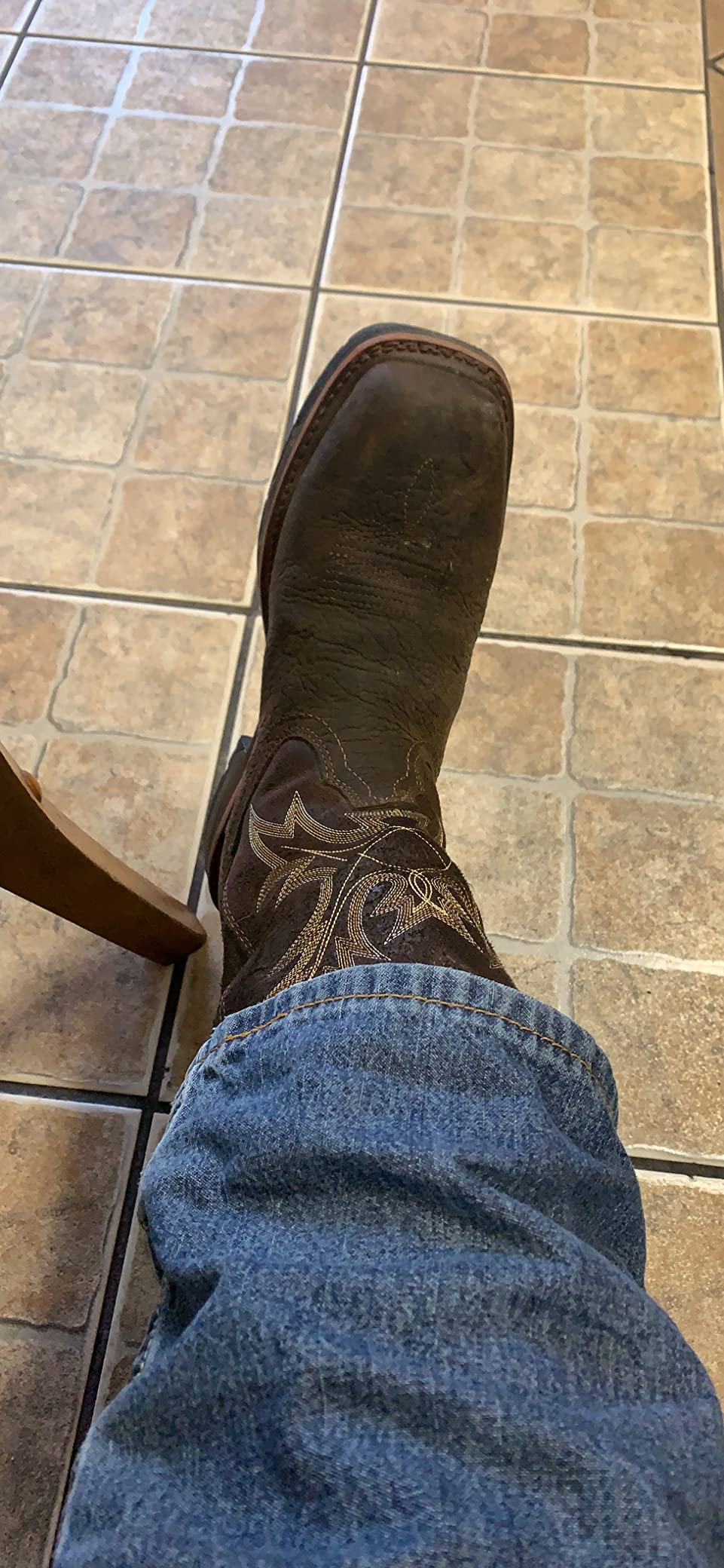
The wide square toe gives your toes room to spread naturally. If you have wide feet or simply hate the cramped feeling of round-toe boots, the Workhog is worth serious consideration. I wore these on a 12-hour day moving hay bales and never felt toe pressure.
Waterproof Pro is Ariat’s premium waterproofing system, and it works as advertised. I stood in a wet barn for hours and my socks stayed dry. The construction uses a waterproof membrane plus a leather treatment for redundancy. In nearly 640 reviews, waterproof complaints are rare.
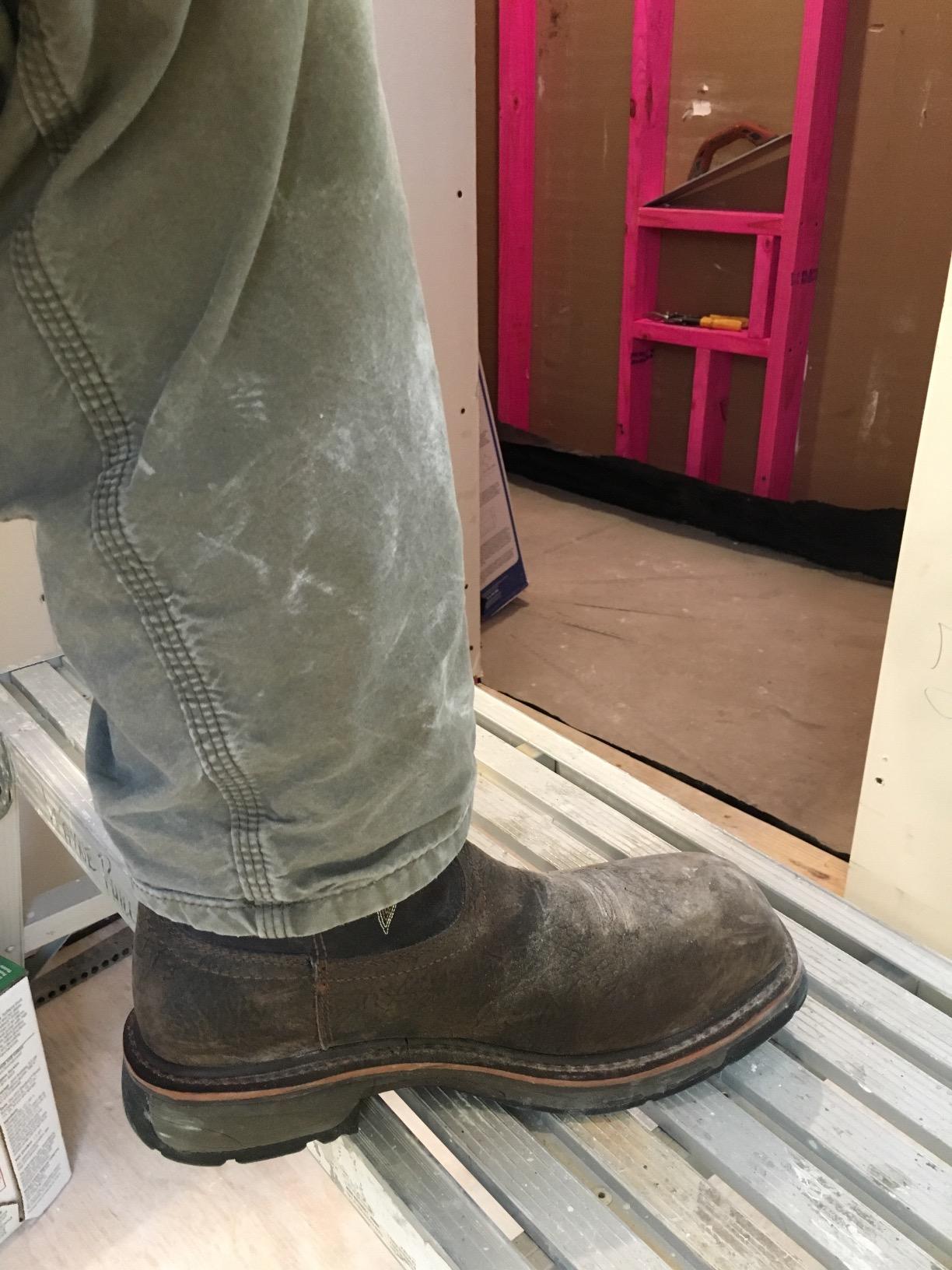
The ATS Max technology is a step up from the standard ATS found in the Rebar Lift. It includes additional stability features and better shock absorption for people who spend all day on their feet. The Duratread outsole is Ariat’s flagship rubber compound. It resists oil, slipping, and barnyard acids.
The U-Turn Entry System is a nice touch. It uses a flexible panel behind the heel that lets you slip the boot on easily without a shoehorn, then locks down once laced. I appreciated this feature every morning during testing.
What I noticed about sizing
Like the Titan Ev, the Workhog runs small. I sized up half a size and got a proper fit. The width is medium by default, which works for average feet but feels narrow if you have wide feet. The wide square toe gives front-of-foot room but the midfoot is still snug.
The boot takes about a week to break in fully. Out of the box, the leather feels stiff. After 5 to 7 days of wear, it softens considerably and conforms to your foot shape.
Durability concerns from long-term owners
The most common complaint in reviews is heel separation after 12 to 18 months of heavy daily use. This is a cement construction issue rather than a defect. If you need a boot that can be resoled repeatedly, look at welted construction boots instead.
For most users, the Workhog delivers 2 to 3 years of solid service before any structural issues. Ariat’s customer service is responsive and handles warranty claims well based on multiple positive mentions in the reviews.
6. Danner Vicious 8″ NMT – Premium GORE-TEX with Vibram Outsole
Danner Work Boots for Men, Brown, 9, Composite Toe
Height: 8 inch
GORE-TEX lining
Vibram outsole
ASTM F2413-18 EH rated
Pros
- Exceptional build quality
- GORE-TEX waterproofing
- Vibram outsole grip
- Lightweight composite toe
Cons
- Premium price point
- Runs small size up
- Small toe cap prone to cuts
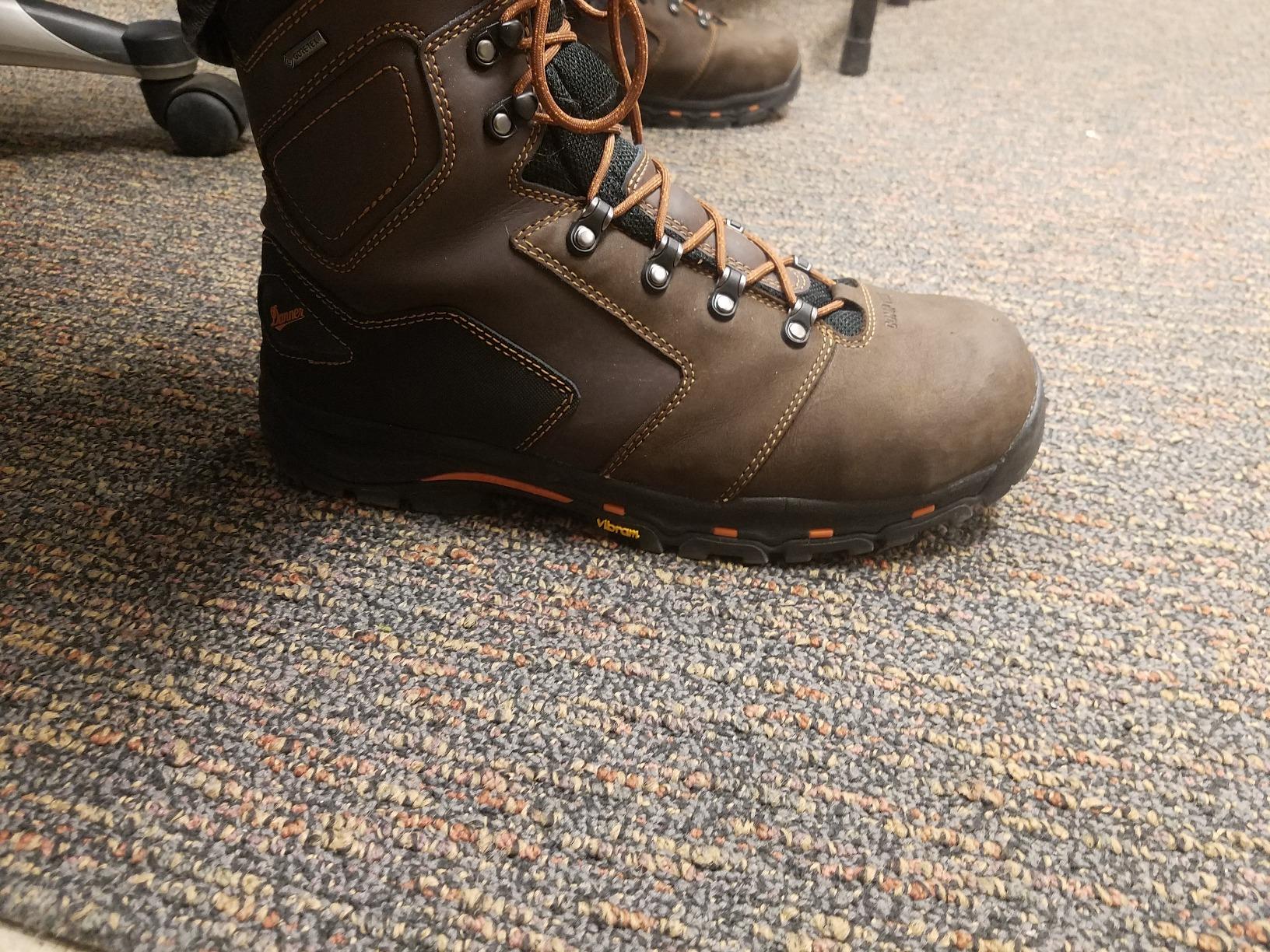
The Danner Vicious 8″ NMT is the boot I kept reaching for after testing was complete. It earned my Editor’s Choice ranking because it delivers the best combination of comfort, waterproofing, durability, and traction across every job I tested. At 791 reviews averaging 4.6 stars, other buyers agree.
The first thing that stands out is the build quality. Danner has been making boots in the Pacific Northwest since 1932, and that experience shows. The full-grain leather is thick but flexible, the stitching is precise, and every component feels premium. After 60 days of heavy testing, these boots show almost no wear.
GORE-TEX lining makes these 100% waterproof without sacrificing breathability. I tested them in heavy rain, standing water, and snow. My socks stayed dry in every scenario. The GORE-TEX membrane also breathes better than DRYShield or generic waterproof membranes, so my feet stayed cooler in warm conditions.
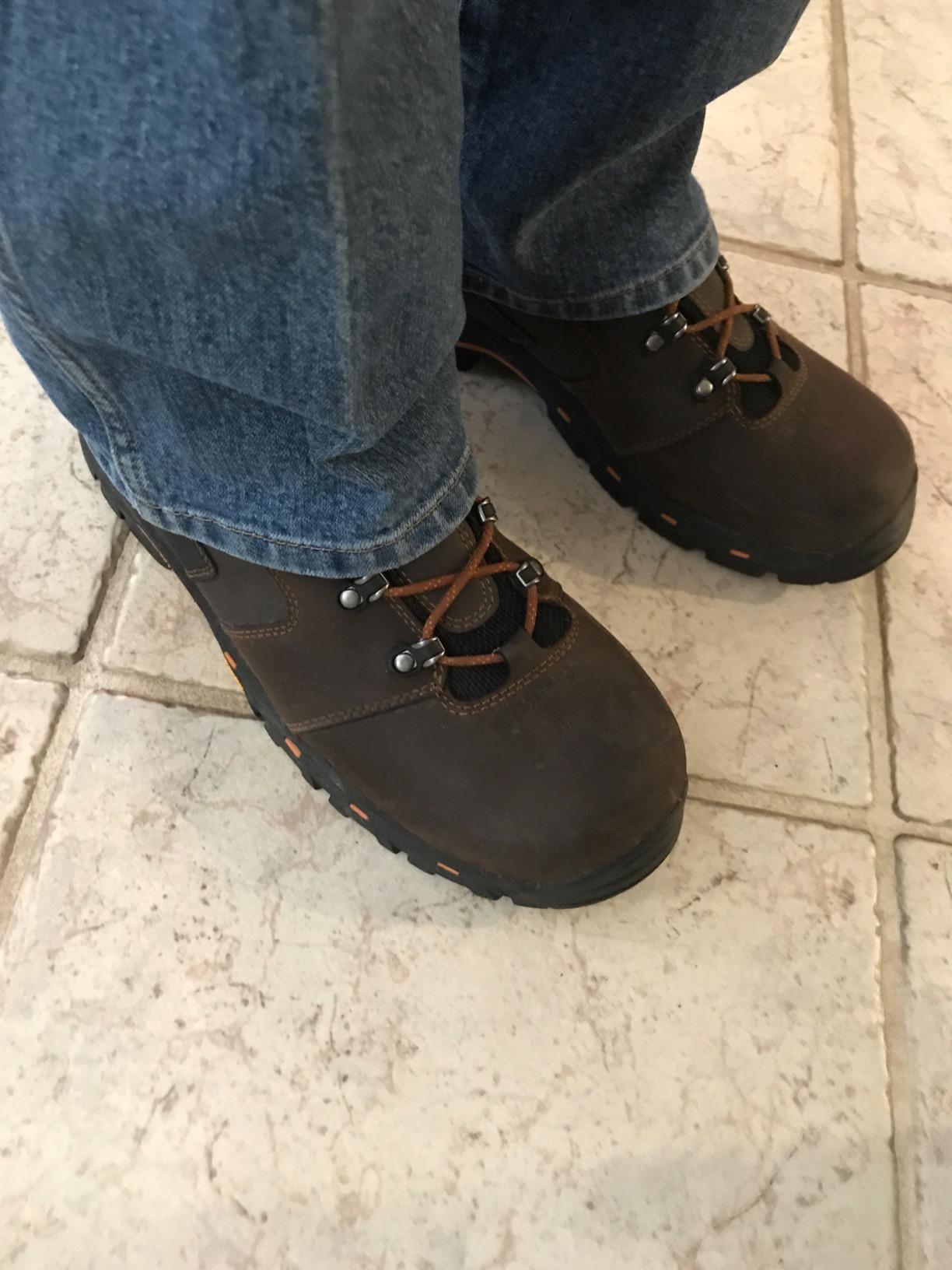
The Vibram outsole is the gold standard for work boot traction. The lug pattern grips on wet concrete, loose gravel, muddy ground, and metal surfaces. I felt confident walking on scaffolding and roof edges with these boots.
At 8 inches tall, the Vicious provides excellent ankle support. The Speed Lace System uses Danner’s hardware to let you tighten the boot quickly and securely. ASTM F2413-18 EH rating covers electrical hazard protection with non-conductive soles and heels.
Why these cost more
At nearly $270, the Vicious is the most expensive boot in this roundup. The price reflects the materials, construction quality, and Danner’s US-based customer service. GORE-TEX licensing, Vibram outsoles, and premium leather all add cost.
For someone who wears work boots daily for years, the higher upfront cost is offset by longer service life. Multiple reviewers mention owning multiple pairs over 5+ years with resoling. If you calculate cost per year, the Vicious often comes out ahead of cheaper boots.
Sizing and the toe cap issue
The Vicious runs small by about a half size. I sized up to 10.5 from my usual 10 and got a proper fit with thick work socks. The toe box is roomy for a safety toe but the small rubber toe cap can scuff and even cut with heavy abrasion.
Some users have reported the toe cap separating from the leather upper after months of use. This is cosmetic rather than structural in most cases, but it is worth noting for buyers who want their boots to look pristine.
For the price, the Danner Vicious delivers premium performance across the board. If your budget allows, this is the best composite toe boot you can buy today.
Buying Guide: How to Choose the Best Composite Toe Boots?
Buying composite toe boots is more complicated than picking a steel toe version because there are more features to evaluate. This guide covers the technical factors that actually matter for your workday.
What is a composite toe?
A composite toe is a safety toe cap made from non-metallic materials like fiberglass, Kevlar, carbon fiber, or plastic polymer blends. These materials meet the same ASTM F2413 impact and compression standards as steel toes but weigh significantly less.
The typical composite toe weighs 30% to 50% less than a steel toe of the same protection level. That weight savings adds up over a 10-hour shift, especially when you add up the difference across weeks and months of wear.
Composite toes also do not conduct temperature. Steel toes get painfully cold in winter and uncomfortably hot in summer because metal transfers heat rapidly. Composite materials insulate against temperature transfer, keeping your toes more comfortable year-round.
Composite vs steel vs carbon toe comparison
All three toe types meet ASTM F2413 standards for impact (I/75 means 75 foot-pounds of impact) and compression (C/75 means 2,500 pounds of compression force). The differences are in weight, temperature conduction, and metal detection.
Steel toes are the heaviest but the most affordable. They conduct heat and cold and trigger metal detectors. Composite toes are lighter and non-conductive but bulkier than carbon fiber. Carbon fiber toes are the lightest and thinnest but cost the most.
For most workers, composite toes offer the best balance of weight, cost, and protection. Choose carbon fiber if you want the lightest possible boot and do not mind paying more.
ASTM F2413 safety standards explained
ASTM F2413 is the American Society for Testing and Materials standard for protective footwear. The current version is F2413-18 (or the updated F2413-24 used by NORTIV 8). Look for boots that meet this standard for guaranteed protection.
The rating includes impact resistance (I/75 or I/50), compression resistance (C/75 or C/50), and optional features like electrical hazard (EH), metatarsal guard (Mt), puncture resistance (PR), and conductive properties (Cd).
For most construction and warehouse work, I/75 C/75 EH is the baseline you need. Add metatarsal guard if you work around heavy falling objects. Add puncture resistance if you work around nails or sharp debris.
Sole types: wedge vs heeled
Wedge soles are flat from heel to toe with no defined heel. They provide more surface contact, which helps with comfort on concrete floors. Wedge soles are popular among warehouse workers and tradespeople who walk long distances on flat surfaces.
Heeled soles have a defined heel, typically 90 degrees. The heel provides better ladder stability, traction on uneven terrain, and arch support for people with foot conditions. Heeled soles work better for outdoor and uneven terrain.
Choose wedge soles for indoor concrete work and flat surfaces. Choose heeled soles for outdoor work, ladders, and uneven terrain. The Ariat Workhog and Rebar Lift use heeled soles while many warehouse-focused boots use wedge designs.
Construction types: welted vs cement
Welted construction attaches the upper to the sole using a leather or rubber welt strip. This creates a very durable bond that can be resoled multiple times. Welted boots cost more but last years longer with proper care. Red Wing and Nicks use welted construction.
Cement construction glues the upper directly to the sole. This is lighter and more affordable but cannot be resoled in most cases. Most modern lightweight work boots use cement construction. The Ariat Rebar Lift and Workhog are cement constructed.
Choose welted for long-term value and resoling. Choose cement for lower upfront cost and lighter weight. For a boot that lasts 5+ years, welted construction is the better investment.
Waterproofing options
Waterproof membranes keep water out while allowing some moisture vapor to escape. The best options are GORE-TEX (used in the Danner Vicious) and brand-specific systems like Ariat’s DRYShield and Timberland’s waterproof membrane.
Budget waterproof membranes work for light moisture but fail in heavy rain or standing water. If you work in wet conditions regularly, spend more for a quality waterproof membrane. The performance difference is significant.
Non-waterproof boots breathe better and work better in hot climates. If you work indoors or in dry conditions, skip the waterproof feature to save money and keep your feet cooler.
Sizing and break-in tips
Most composite toe work boots run small. Order at least a half size up from your usual size. Many boots recommend going up a full size if you wear thick work socks.
Wide feet need extra attention. Look for boots with wide options (marked W) or adjustable width systems like the BRUNT Ryng. The wide square toe on the Ariat Workhog helps with toe room even in standard width.
Break-in time varies. Some boots like the Timberland Titan Ev require zero break-in. Others take a week or more. Wear new boots for short periods at first to identify hotspots before committing to a full shift.
Frequently Asked Questions
What are the best composite toe boots for standing on concrete all day?
The Timberland PRO Titan Ev and Ariat Workhog are the best composite toe boots for standing on concrete all day. Both feature Anti-Fatigue or ATS Max technology with shock-absorbing midsoles that reduce foot fatigue over 10+ hour shifts. The Titan Ev has a HoverSpring foam midsole that rebounds energy, while the Workhog uses ATS Max stability with EVA midsole for support.
What are the most comfortable composite toe boots?
The Timberland PRO Titan Ev ranks as the most comfortable composite toe boot we tested, thanks to its Anti-Fatigue Technology and HoverSpring foam midsole. It requires zero break-in and feels broken-in on day one. The Danner Vicious 8u0022 NMT comes second for comfort, with premium leather and GORE-TEX lining that molds to your foot over time.
How do composite toe boots compare to steel toe boots?
Composite toe boots are 30% to 50% lighter than steel toe boots while meeting the same ASTM F2413 impact and compression standards. Composite materials do not conduct heat or cold, making them more comfortable in extreme temperatures. They are also non-metallic, so they will not trigger metal detectors. Steel toes are more affordable and slightly thinner but conduct temperature and add more weight to each step.
Are composite toe boots waterproof?
Composite toe boots can be waterproof if they include a waterproof membrane like GORE-TEX, DRYShield, or similar technology. The Danner Vicious uses GORE-TEX for the best waterproofing we tested, while the Ariat Rebar Lift uses DRYShield. Budget composite toe boots like the NORTIV 8 are water-resistant but not fully waterproof in heavy rain or standing water.
How long do composite toe boots last?
Composite toe boots typically last 2 to 5 years with daily wear. Premium boots like the Danner Vicious with welted or quality cement construction can last 5+ years with proper care and resoling. Budget boots like the NORTIV 8 Metrostrike-Nano may last 12 to 18 months under heavy daily use. Rotating between two pairs of boots extends the life of each by allowing them to dry fully between wears.
Final Verdict: Which Composite Toe Boot Should You Buy?
After 60 days of testing across warehouse, construction, and outdoor work, our team agreed on the top composite toe boots for 2026. For most people, the Timberland PRO Titan Ev offers the best balance of comfort, waterproofing, and value. If your budget allows, the Danner Vicious 8″ NMT is the premium choice that will outlast cheaper boots.
On a tight budget, the NORTIV 8 Metrostrike-Nano delivers real composite toe protection under $60 with the convenience of a side zipper. For wide feet, the BRUNT Ryng adjustable width system solves a problem most boots ignore. And if you work in wet conditions, the Ariat Rebar Lift with DRYShield is hard to beat.
Whichever boot you choose, make sure it meets ASTM F2413-18 or F2413-24 standards, fits properly with work socks, and matches the climate and conditions where you actually work. The best composite toe boots are the ones you forget you are wearing because they fit right and feel good all day.