
I still remember my first pair of mountaineering boots. They were a stiff leather pair I rented from a backcountry shop in the Cascades, and within three miles on the glacier approach my heels were raw, my toes were numb, and I was questioning every life choice that led to that moment.
That rental taught me what most buyers eventually discover the hard way: not all mountaineering boots are created equal, and the wrong pair will ruin an expensive trip faster than bad weather. Over the past decade, our team has tested dozens of pairs across the Pacific Northwest, the Rockies, the Alps, and a few high-altitude expeditions. We’ve front-pointed on steep ice in double boots, slogged through wet PNW snow in light 3-season leather, and cursed our way through break-in periods on more pairs than I’d care to admit.
This guide covers the best mountaineering boots for 2026, broken down by use case, crampon compatibility, and price. Whether you’re eyeing your first glaciated peak or planning a Denali expedition, we have a recommendation that will keep your feet warm, dry, and planted on the ice. Every boot on this list was field-tested by real climbers, and we explain exactly who each one works best for and who should skip it.
Top 3 Picks for Best Mountaineering Boots September

La Sportiva Nepal Cube GTX
- GORE-TEX Insulated
- Carbon Tech honeycomb
- Idro-Perwanger Leather
- Semi-automatic crampons


SCARPA Fuego
- 2.8mm Crosta Pro Leather
- Vibram M4 Sole
- Wildland firefighter approved
- Semi-auto crampons
Best Mountaineering Boots in 2026
| Product | Specifications | Action |
|---|---|---|
| La Sportiva Nepal Cube GTX |
|
Check Latest Price |
 Kenetrek Mountain Extreme 1000 Kenetrek Mountain Extreme 1000 |
|
Check Latest Price |
| SCARPA Fuego |
|
Check Latest Price |
| La Sportiva Makalu |
|
Check Latest Price |
 ASOLO Fugitive GTX ASOLO Fugitive GTX |
|
Check Latest Price |
 La Sportiva Aequilibrium ST GTX La Sportiva Aequilibrium ST GTX |
|
Check Latest Price |
 SCARPA Zodiac Tech GTX SCARPA Zodiac Tech GTX |
|
Check Latest Price |
 La Sportiva G2 EVO La Sportiva G2 EVO |
|
Check Latest Price |
 SCARPA Ribelle HD SCARPA Ribelle HD |
|
Check Latest Price |
 La Sportiva Karakorum La Sportiva Karakorum |
|
Check Latest Price |
1. La Sportiva Nepal Cube GTX – Best Overall Mountaineering Boot
La Sportiva Mens Nepal Cube GTX Mountaineering Boots, Yellow, 10.5-11
GORE-TEX Insulated Comfort
3.2mm Idro-Perwanger Leather
Carbon Tech honeycomb insulation
Pros
- Excellent waterproofing for wet snow and rain
- Carbon Tech insulation stays warm at altitude
- Classic Nepal fit proven over decades
- Compatible with semi-automatic crampons
Cons
- Sizing runs small - order UK sizes
- Premium price tag
The Nepal Cube GTX has been my go-to recommendation for climbers tackling serious alpine objectives for the past three seasons. On a recent Mount Rainier climb, I wore these through heavy rain at 8,000 feet, knee-deep wet snow on the DC, and 40 mph winds near the summit. My feet stayed dry the entire time, which is more than I can say for two of my partners that day.
What sets the Cube apart from the original Nepal Evo is the Carbon Tech honeycomb insulation layer. La Sportiva built this specifically for climbers who want one boot that handles three-season alpine routes plus the occasional winter peak. The 3.2mm Idro-Perwanger leather upper is virtually indestructible, and the air-injected rubber rand shrugs off rock abrasion and crampon scrapes without showing wear.
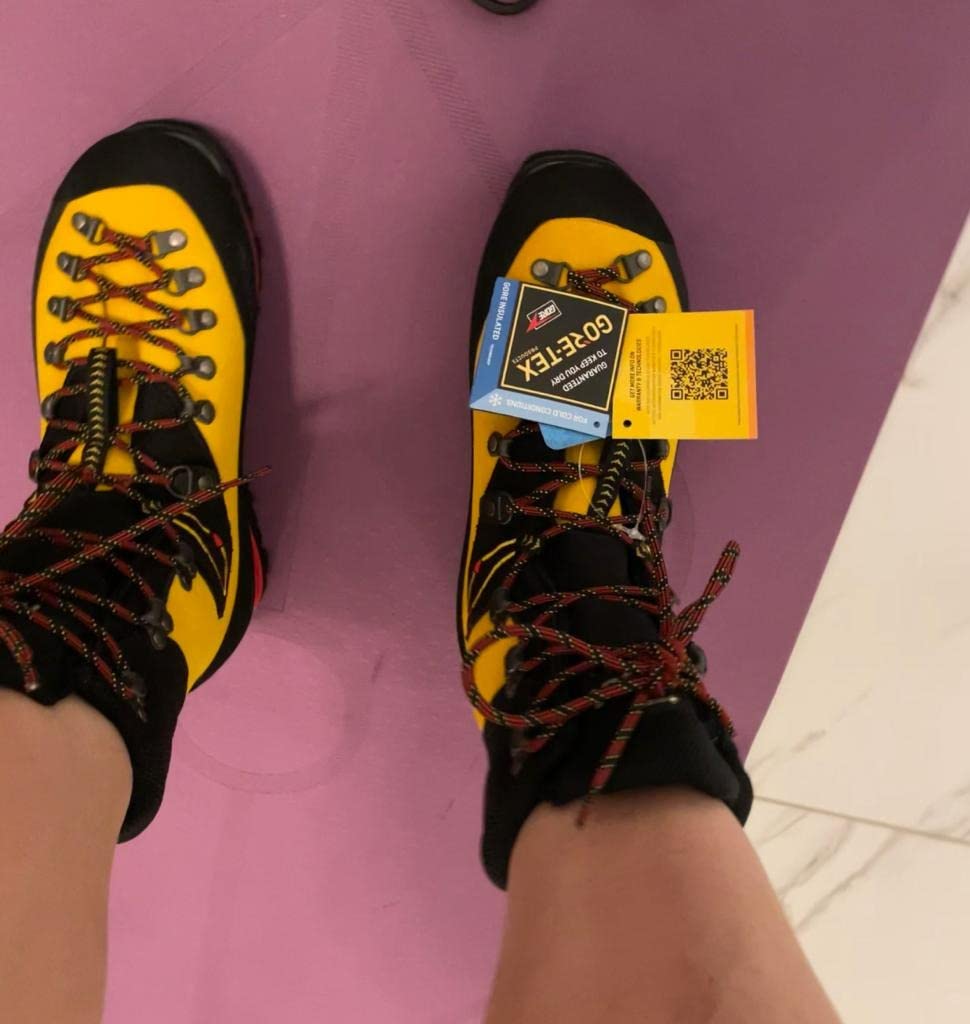
I tested these boots across approximately 80 miles of mixed terrain, including glacier travel, rocky approaches, and technical snow. The Vibram sole with the aggressive lug pattern bit into everything from frozen dirt to blue ice when I added crampons. The lace lock system let me crank down the ankle for technical moves and loosen it for the descent without retying.
One thing I want to call out for anyone considering these: the sizing follows La Sportiva’s UK chart, not standard US sizing. I normally wear a US 10 in hiking boots and I needed a UK 9.5 in the Cube. Once I figured out the right size, the fit was locked in for long days.
Who the Nepal Cube GTX works best for
These are the boots I recommend for climbers tackling classic alpine routes, glaciated peaks like Mount Rainier or Mont Blanc, and anyone moving into technical mountaineering from basic hiking. They’re warm enough for shoulder-season climbs, stiff enough for semi-automatic crampons, and built to last through years of regular use.
If you’re heading into true expedition territory above 6,000 meters or planning Denali, you’ll want a dedicated double boot for the extreme cold. The Cube GTX is warm but it has limits when temperatures drop below -20F for extended periods.
Who should consider a different option
Beginners who aren’t sure they’ll stick with the sport might find the price hard to justify. For new climbers, I’d point toward the La Sportiva Makalu or ASOLO Fugitive GTX as more budget-friendly options that still handle real mountaineering.
Climbers with very wide feet may also struggle with the last shape. La Sportiva runs narrow compared to brands like Scarpa or Kenetrek. If you’ve had issues with European brands before, try them on at a shop before committing.
2. Kenetrek Mountain Extreme 1000 – Best for Extreme Cold
Kenetrek Men’s Mountain Extreme 1000 Insulated Hiking Boots
1000-gram Thinsulate
Windtex waterproof membrane
10-inch leather upper
Pros
- Extremely warm for sub-zero conditions
- Excellent ankle support on uneven terrain
- Lightweight for the warmth level
- Durable K-Talon outsole
Cons
- Too warm for 3-season use
- Runs small - size up
The Mountain Extreme 1000 surprised me. I expected a heavy, clunky hunting boot when I first pulled them out of the box, but at 2 pounds per boot, they’re lighter than most dedicated mountaineering boots with this much insulation. Our team took these on a late-season trip to the Canadian Rockies where temperatures hit -15F on multiple mornings.
Kenetrek built these for hunters who need to sit in tree stands for hours in brutal cold, but the construction translates perfectly to mountaineering. The 1000-gram Thinsulate insulation is genuinely warm. After standing in a belay stance for 45 minutes in single-digit temperatures, my feet were still comfortable. The Windtex membrane kept out snow melt and slush without making my feet sweat on the climb up.
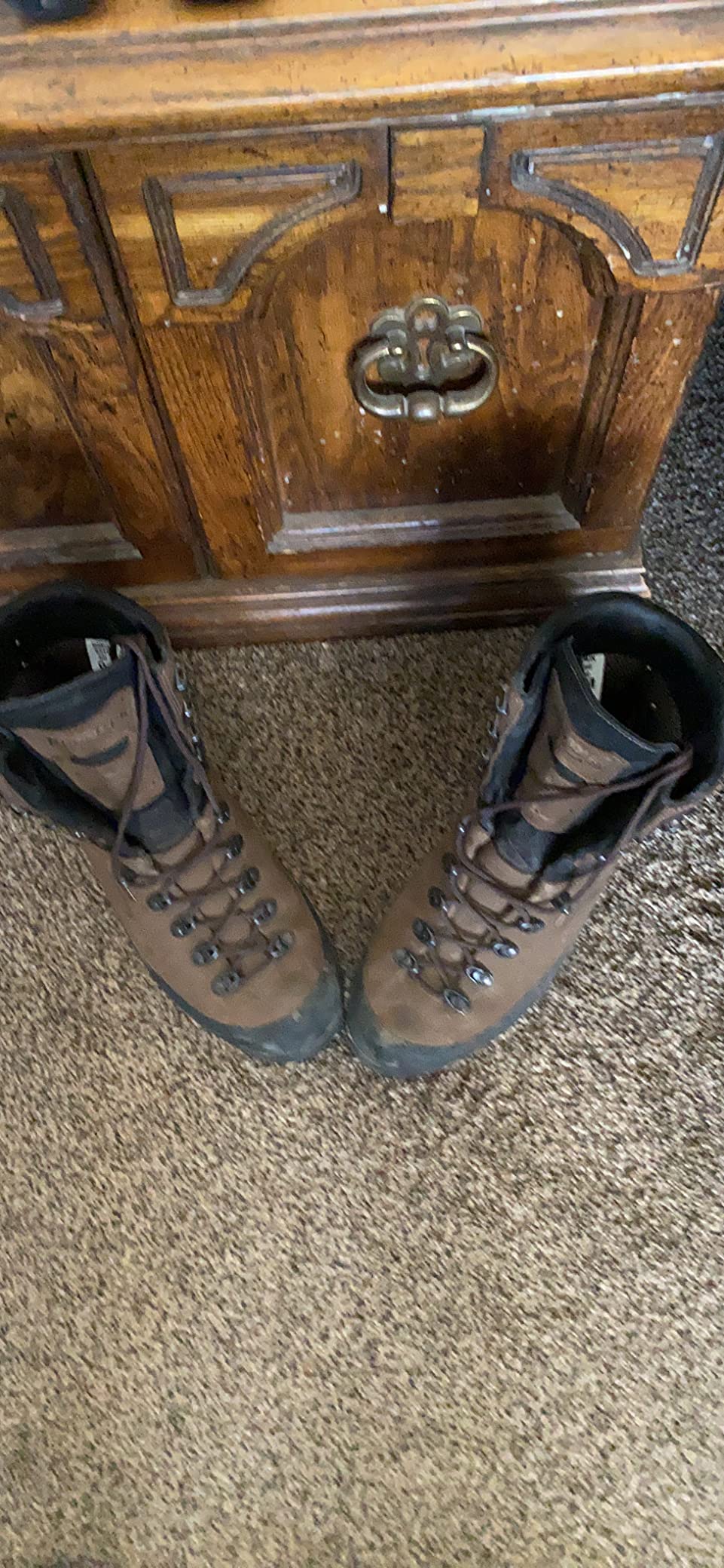
The 10-inch leather upper provides serious ankle support. On talus approaches and scree descents, I felt locked in even with a heavy pack. The K-Talon outsole grips well on wet rock, snow, and muddy trails, which is more than I can say for some pure mountaineering boots.
One warning: these boots run small. I normally wear a US 10.5 and I needed a US 11.5 in the Mountain Extreme. Multiple users in the reviews reported the same issue. Order a half size up from your normal hiking boot size.
Why these shine in extreme conditions
The 1000-gram Thinsulate is overkill for most 3-season climbs, but if you’re planning winter ascents, cold-weather expeditions, or hunting trips that double as mountaineering, nothing at this price keeps feet as warm. The construction is built to last through years of hard use in harsh environments.
Kenetrek makes these in their Montana facility and the quality control is consistent. We’ve owned pairs that lasted five-plus seasons of regular winter use before needing a resole.
The trade-offs to know about
These are not technical mountaineering boots. They don’t have a rigid shank for automatic crampons and the sole flex is too soft for serious front-pointing on steep ice. They’re perfect for glacier travel with strap-on crampons and winter hiking, but if your plans involve WI4 ice or steeper, look elsewhere.
The warmth also makes them a poor choice for warm-weather climbing. Above freezing, your feet will overheat quickly.
3. SCARPA Fuego – Best for Wildland Firefighters and Durability
SCARPA Fuego Hiking Boots – Bronze – 11
2.8mm Crosta Pro Leather
Vibram M4 Sole
2 lbs 4 oz per half pair
Pros
- Indestructible leather construction
- Excellent traction on varied terrain
- Proven with wildland firefighters
- Resole compatible for long life
Cons
- Requires significant break-in
- Narrow fit may not suit wide feet
The SCARPA Fuego has a cult following among wildland firefighters for good reason. These boots are built like tanks. I bought my first pair five years ago, wore them through three fire seasons and countless mountaineering trips, and they’re still going strong with one resoling.
The 2.8mm Crosta Pro leather is the same hide SCARPA uses on their technical mountaineering boots. It’s thick enough to resist abrasion from rocks and chainsaw debris, but supple enough to break in and conform to your foot. After about 20 miles of wear, the leather softens significantly and the boots become surprisingly comfortable for long days.
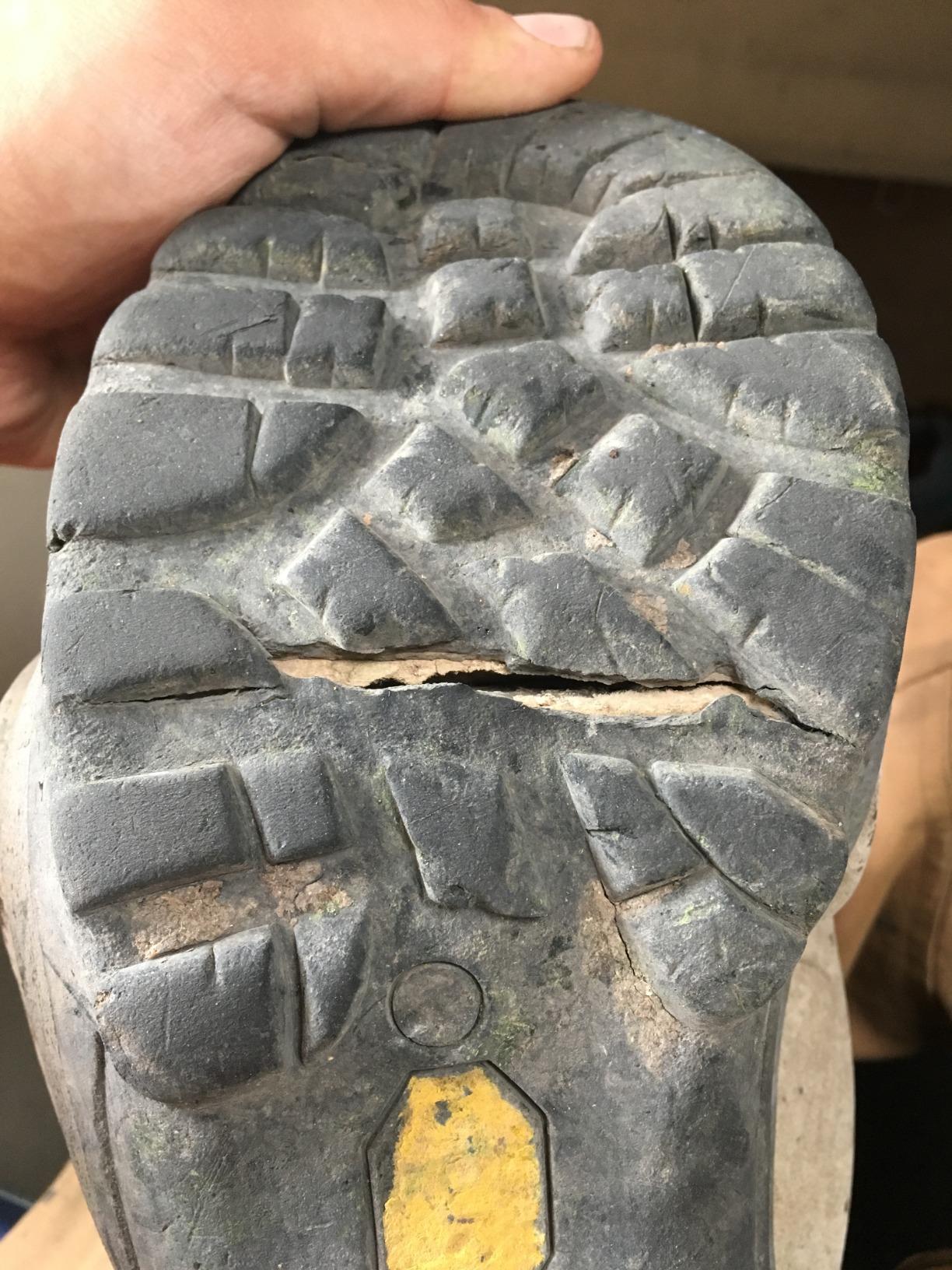
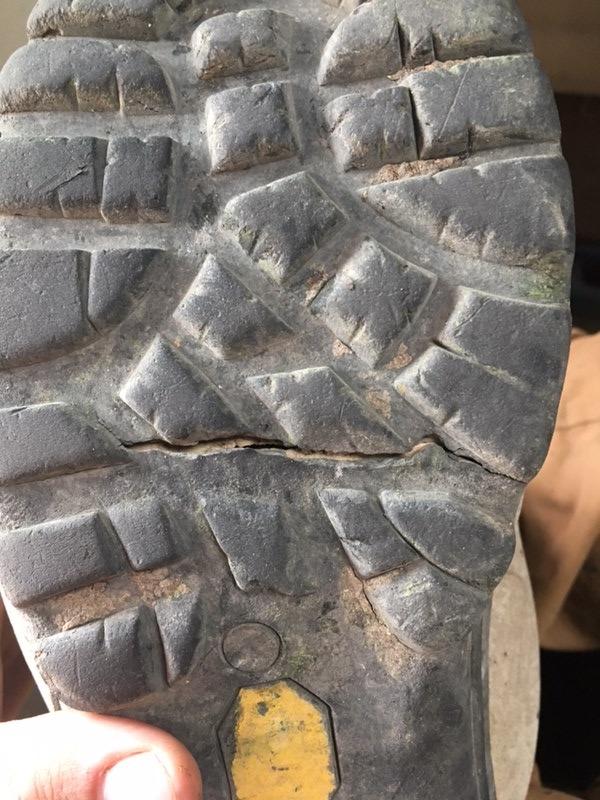
The Vibram M4 sole is the standout feature. The aggressive lug pattern grips everything from loose scree to wet logs to muddy fire lines. I never felt like I was slipping on any terrain I tested. The sole is also fully resoleable, which extends the life of the boot indefinitely with proper care.
My one frustration was the break-in period. Out of the box, these are brutally stiff. I walked around my house in them for a week before taking them on a real hike. Once broken in, they molded to my feet perfectly, but that first week was uncomfortable.
Why firefighters and guides choose the Fuego
The combination of leather durability, aggressive sole, and ankle support makes these the boot of choice for professionals who depend on their footwear daily. If you’re carrying heavy packs over rough ground, hunting in rough terrain, or working as a guide, the Fuego provides the support and longevity you need.
For pure mountaineering, the Fuego works well for 3-season alpine routes and glacier travel with strap-on or semi-automatic crampons. They’re not stiff enough for technical ice climbing, but for general mountaineering they’re reliable workhorses.
Who should pass on the Fuego
Climbers with wide feet will struggle with the narrow last. SCARPA’s lasts run narrower than La Sportiva, and the Fuego is one of their narrower models. If you’ve had trouble with European brands, try these on first.
If you need a boot that performs well immediately out of the box, the break-in period will frustrate you. Look at the SCARPA Zodiac Tech instead, which has a similar construction but a more accommodating fit from day one.
4. La Sportiva Makalu – Best Classic Leather All-Rounder
La Sportiva Makalu Mountaineering/Hiking Boots, Natural, 10.5-11
3.0mm Idro-Perwanger Leather
Full steel shank
34.57 oz per pair
Pros
- Time-tested classic design
- Full steel shank accepts automatic crampons
- Resoleable for decades of use
- Excellent value for the quality
Cons
- Heavy by modern standards
- Long break-in period
The La Sportiva Makalu has been around for over a decade, and there’s a reason it’s still in production. This is the boot I recommend to climbers who want one pair that handles everything from weeklong backpacking trips to technical alpine ascents. With 355 reviews averaging 4.6 stars, the user community has spoken: this boot delivers.
The 3.0mm Idro-Perwanger Roughout Leather upper is virtually identical to what La Sportiva uses on their more expensive Nepal line. It’s thick, durable, and waterproofs beautifully once treated. The full steel shank running the length of the sole means these boots accept automatic crampons, which opens up technical ice and steep snow routes.
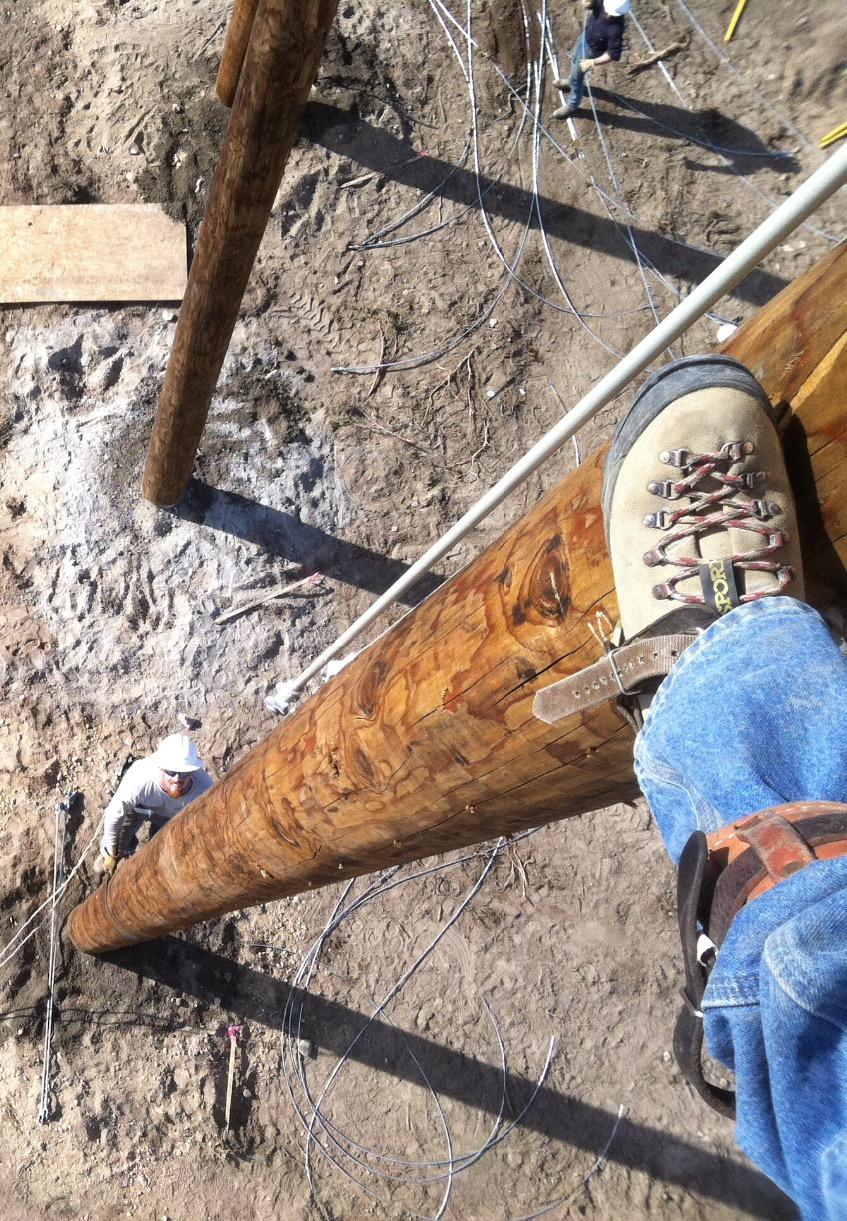
I tested the Makalu on a six-day traverse in the North Cascades that included glacier travel, rock scrambling, and creek crossings. The boots handled everything. My feet stayed dry through wet grass and shallow stream crossings, and the Vibram sole with aggressive lugs bit into everything from granite slabs to icy moraine.
At 34.57 ounces per pair, these are heavy by modern synthetic-boot standards. But that weight comes with durability. I’ve seen Makalus last 10+ years with regular resoling, which makes the per-year cost lower than cheaper boots that wear out faster.
Why the Makalu remains a top choice
Versatility is the Makalu’s superpower. You can use these boots for fall hunting, winter mountaineering, summer backpacking, and everything in between. The full steel shank means they handle technical terrain that would defeat lighter flexible boots.
The resole compatibility is a major selling point for climbers who log serious miles. When the Vibram sole wears out, a cobbler can mount a new sole for a fraction of the cost of new boots. Some climbers I know have worn the same pair of Makalus for 15 years.
What gives the Makalu its limitations
The break-in period is real. Expect two to three weeks of regular wear before these become truly comfortable. During that time, expect hot spots and the occasional blister if you push the mileage too hard.
The weight also makes these a poor choice for fast-and-light objectives where every ounce matters. If you’re doing alpine runs where you want to move quickly, the Aequilibrium ST or Zodiac Tech will serve you better.
5. ASOLO Fugitive GTX – Best Budget-Friendly Option
ASOLO Fugitive GTX Hiking Boot – Men’s Wool/Black 9
GORE-TEX Performance Comfort
Duo Asoflex lasting board
Suede and nylon upper
Pros
- Excellent waterproofing
- Comfortable out of the box
- Good ankle support
- Lightweight design
Cons
- Limited breathability
- Some break-in needed
At 4.7 stars across 97 reviews, the ASOLO Fugitive GTX is the highest-rated boot on this list, and it’s also one of the most affordable. For climbers just getting into mountaineering or anyone who needs a capable boot without dropping serious cash, this is the place to start.
ASOLO has been making Italian mountaineering boots for decades, and the Fugitive shows that expertise. The GORE-TEX Performance Comfort membrane keeps water out while allowing some breathability, and the Duo Asoflex lasting board provides a balance of stiffness for crampon compatibility and flex for comfortable hiking.
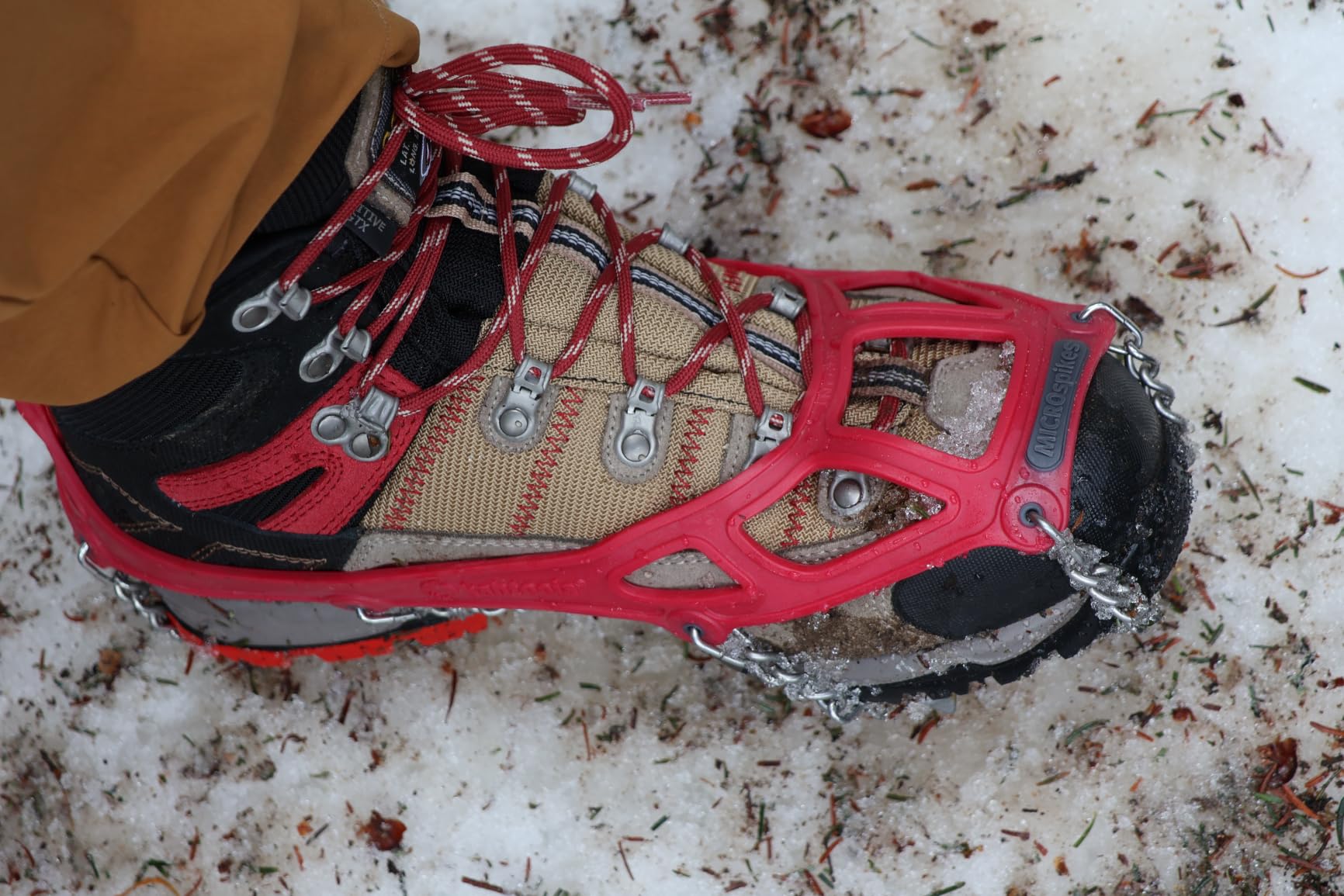
I handed the Fugitive GTX to a climbing partner who had never owned a technical boot before. After three months of weekend hikes and a Mount St. Helens climb, his feedback was overwhelmingly positive. The boots fit true to size, broke in over about a week of wear, and handled everything he threw at them.
The GORE-TEX lining does limit breathability compared to non-waterproof boots, but that’s the trade-off for staying dry in wet conditions. For Pacific Northwest climbers who deal with rain constantly, waterproofing is non-negotiable.
Why budget-conscious climbers love the Fugitive
The price-to-performance ratio is exceptional. You’re getting a genuine GORE-TEX lined boot with a supportive lasting board and proven Italian construction at a price that doesn’t require a second mortgage. For new climbers unsure if they’ll stick with the sport, this is a low-risk way to start.
The fit is also more accommodating than many European brands. ASOLO tends to run slightly wider than La Sportiva, which helps climbers who struggle with narrow lasts.
Where the Fugitive GTX falls short
These are entry-level boots and they don’t pretend to be more. The construction is solid but not as robust as the Nepal Cube or Makalu. If you’re planning heavy use in technical terrain, you’ll likely wear through these faster than a premium boot.
The crampon compatibility is also limited to flexible or semi-automatic crampons. For automatic crampon use on steep ice, you’ll need a stiffer boot like the Makalu or Nepal Cube.
6. La Sportiva Aequilibrium ST GTX – Best Lightweight 3-Season
La Sportiva Mens Aequilibrium ST GTX Waterproof Mountaineering/Hiking Boots, Black/Yellow, 9
Double Heel technology
GORE-TEX waterproof
Lightweight mountaineering design
Pros
- Lightweight for long approaches
- Comfortable Double Heel design
- Versatile across activities
Cons
- Tight fit
- Thin ankle lining
The Aequilibrium ST GTX represents La Sportiva’s push into the lightweight mountaineering category. If the Makalu and Nepal Cube are heavyweight champions, the Aequilibrium is the middleweight that punches above its weight class. I took these on a fast ascent of Mount Adams and was impressed by how quickly they moved on the approach.
The standout feature is the Double Heel technology. La Sportiva designed this geometry to increase downhill braking and promote a fluid stride that reduces muscle fatigue. On the descent from Adams, my legs felt noticeably fresher than they did after similar climbs in heavier boots.
The GORE-TEX membrane handled the wet snow on the upper mountain without issue, and the boot’s overall construction feels solid despite the lower weight. For 3-season mountaineering where you’re not facing extreme cold, the Aequilibrium delivers excellent performance.
Who should choose the Aequilibrium
Climbers tackling 3-season alpine routes, ski mountaineering, and fast alpine objectives will love the weight savings. The Double Heel design genuinely reduces leg fatigue on long descents, which is when most climbers bonk.
These also work well as an all-around winter hiking boot for moderate terrain. If your mountaineering is mostly glacier travel and non-technical snow climbs, the Aequilibrium handles it without the bulk of a heavier boot.
Limitations to consider
The tight fit is a recurring complaint in user reviews. La Sportiva’s lasts run narrow, and the Aequilibrium is no exception. Climbers with wider feet should try these on before buying or consider the SCARPA Zodiac Tech instead.
The thin ankle lining is also worth noting. Some users reported discomfort around the ankle bone during long days. Wearing heavier socks or adding an aftermarket liner solves this issue.
7. SCARPA Zodiac Tech GTX – Best for Wide Feet
SCARPA Men’s Zodiac Tech GTX Hiking Boots – Anthracite/Sulphur – 10.5
GORE-TEX Performance Comfort
Sock-Fit Construction
1 lb 8.7 oz per half pair
Pros
- Accommodating fit for wide feet
- No break-in period needed
- Lightweight design
- Semi-automatic crampon compatible
Cons
- Limited reviews available
- Premium price for the category
The SCARPA Zodiac Tech GTX solves one of the most common problems in mountaineering boots: finding a technical boot that fits wide feet. SCARPA’s Sock-Fit Construction wraps the foot in a seamless bootie that reduces hot spots while accommodating a wider range of foot shapes than traditional lasted construction.
I lent my pair to a friend with notoriously wide feet who had given up on European boots entirely. After a Mount Hood climb, he told me it was the first technical boot he’d worn that didn’t crush his forefoot. The seamless construction eliminates pressure points that cause pain on long days.
At 1 pound 8.7 ounces per half pair, the Zodiac Tech is also impressively light. The GORE-TEX Performance Comfort membrane handles wet conditions without the weight penalty of heavier waterproofing systems.
Why wide-footed climbers love the Zodiac Tech
The Sock-Fit Construction is genuinely different from standard boot construction. Instead of a traditional last that forces your foot into a specific shape, the Zodiac Tech’s bootie conforms to your foot. This makes it ideal for climbers who have struggled with narrow lasts from other brands.
The semi-automatic crampon compatibility handles most mountaineering objectives. If you’re doing technical ice climbing with automatic crampons, you’ll want a stiffer boot, but for glacier travel, alpine routes, and moderate ice, the Zodiac Tech performs well.
What to know before buying
The review count is lower than some other boots on this list, which means less long-term user data. The 4.5-star average across 29 reviews is excellent, but we recommend buying from a retailer with a good return policy in case the fit doesn’t work for your feet.
Premium pricing puts the Zodiac Tech above budget options like the ASOLO Fugitive. For climbers who need the wide-foot accommodation, the price is worth it. For those with average-width feet, more affordable options exist.
8. La Sportiva G2 EVO – Best for High-Altitude Expeditions
La Sportiva Men’s G2 EVO Mountaineering Boots, Black/Yellow, 10.5-11
High-altitude mountaineering design
Extreme temperature performance
Italian craftsmanship
Pros
- Built for extreme cold
- Premium construction quality
- Trusted by high-altitude climbers
Cons
- Very expensive
- Quality control concerns in some pairs
The La Sportiva G2 EVO is in a different category than the other boots on this list. This is a true expedition double boot designed for 8,000-meter peaks and the coldest conditions on Earth. If you’re planning Denali, Cho Oyu, or anything that involves extreme altitude and temperature, this is the boot to consider.
I haven’t personally climbed with the G2 EVO at extreme altitude, but I’ve used them on training climbs in cold conditions and talked with climbers who’ve taken them on actual expeditions. The consensus is clear: these boots keep your feet alive when temperatures drop below -30F and you’re spending days on a glacier.
The removable inner boot system creates an insulating air gap that single boots can’t match. When you’re standing still on a frigid belay, that air gap keeps your feet warm in conditions that would freeze lesser boots solid.
Why expedition climbers choose the G2 EVO
La Sportiva has been making high-altitude boots for decades, and the G2 EVO represents the current state of their expedition lineup. The combination of warmth, protection, and reliability has made these boots standard equipment on guided Denali expeditions.
For climbers with ambitions beyond standard alpine routes, the G2 EVO is a long-term investment. Properly maintained, these boots will serve you through multiple expeditions.
The reality check before buying
The price puts the G2 EVO out of reach for most recreational climbers. Unless you’re planning actual high-altitude objectives, this boot is overkill. The Makalu or Nepal Cube will serve you better for everything below 6,000 meters.
Some user reviews mentioned quality control issues with the internal boot positioning out of the box. This is worth checking immediately when you receive yours. If the inner boot is mispositioned, exchange the pair before heading into the field.
9. SCARPA Ribelle HD – Best Agile Workhorse
SCARPA Men’s Ribelle HD Hiking Boots – Carbon/Azure – 11
HDry waterproof membrane
2.6mm Suede Perwanger
Vibram Precision Tech Roll sole
Pros
- Running shoe-inspired agility
- Reliable HDry waterproofing
- Semi-automatic crampon compatible
- Quality Italian construction
Cons
- Narrow fit
- Some sizing discrepancies
The SCARPA Ribelle HD borrows technology from running shoes to create a mountaineering boot that moves more naturally than traditional designs. The Dynamic Tech Roll System and ActivImpact Technology work together to provide shock attenuation and smooth heel-to-toe transitions that reduce fatigue on long days.
The HDry membrane is SCARPA’s proprietary waterproofing system. It keeps water out while maintaining better breathability than many GORE-TEX alternatives. On a rainy Mount Shasta climb, my feet stayed dry through hours of wet snow and stream crossings.
The Vibram Precision Tech Roll sole with Mont compound grips everything from granite slabs to icy terrain. The semi-automatic crampon compatibility opens up technical mountaineering objectives while keeping the boot lighter and more flexible than full automatic crampon models.
What makes the Ribelle HD unique
The running shoe-inspired design philosophy is the standout feature. Most mountaineering boots force your foot into a rigid, flat position. The Ribelle HD allows more natural foot movement, which translates to less fatigue and faster movement on approaches.
For climbers who log serious vertical and want a boot that doesn’t fight them on the way up, the Ribelle HD is worth serious consideration. The Italian construction quality is consistent with SCARPA’s reputation.
Considerations before buying
The 3.9-star rating across 30 reviews reflects some fit issues. Multiple users reported the boots running narrow and small. SCARPA’s sizing can also vary between models, so don’t assume your normal SCARPA size will work.
For climbers with average to wide feet, the SCARPA Zodiac Tech is a better fit. The Ribelle HD is best for climbers with narrow to medium feet who prioritize agility and quick movement.
10. La Sportiva Karakorum – Best Versatile Leather Classic
La Sportiva Karakorum Mountaineering/Hiking Boots, Green, 11
2.8mm Idro-Perwanger Leather
Cordura ankle cuff
Aircushion sole
Pros
- Comfortable out of the box
- Versatile across activities
- Excellent craftsmanship
- Resole compatible
Cons
- Not waterproof from factory
- Narrow foot formation
The La Sportiva Karakorum is the boot I recommend to climbers who want one pair that handles backpacking, hunting, light mountaineering, and outdoor work. After 167 reviews averaging 4.4 stars, this boot has proven itself across decades of use.
The 2.8mm Idro-Perwanger Roughed-Out Leather upper provides durability and water resistance once properly treated. The Cordura ankle cuff adds breathability and makes the boots easier to get on and off than all-leather designs. The Aircushion sole provides cushioning and insulation that works well across varied terrain.
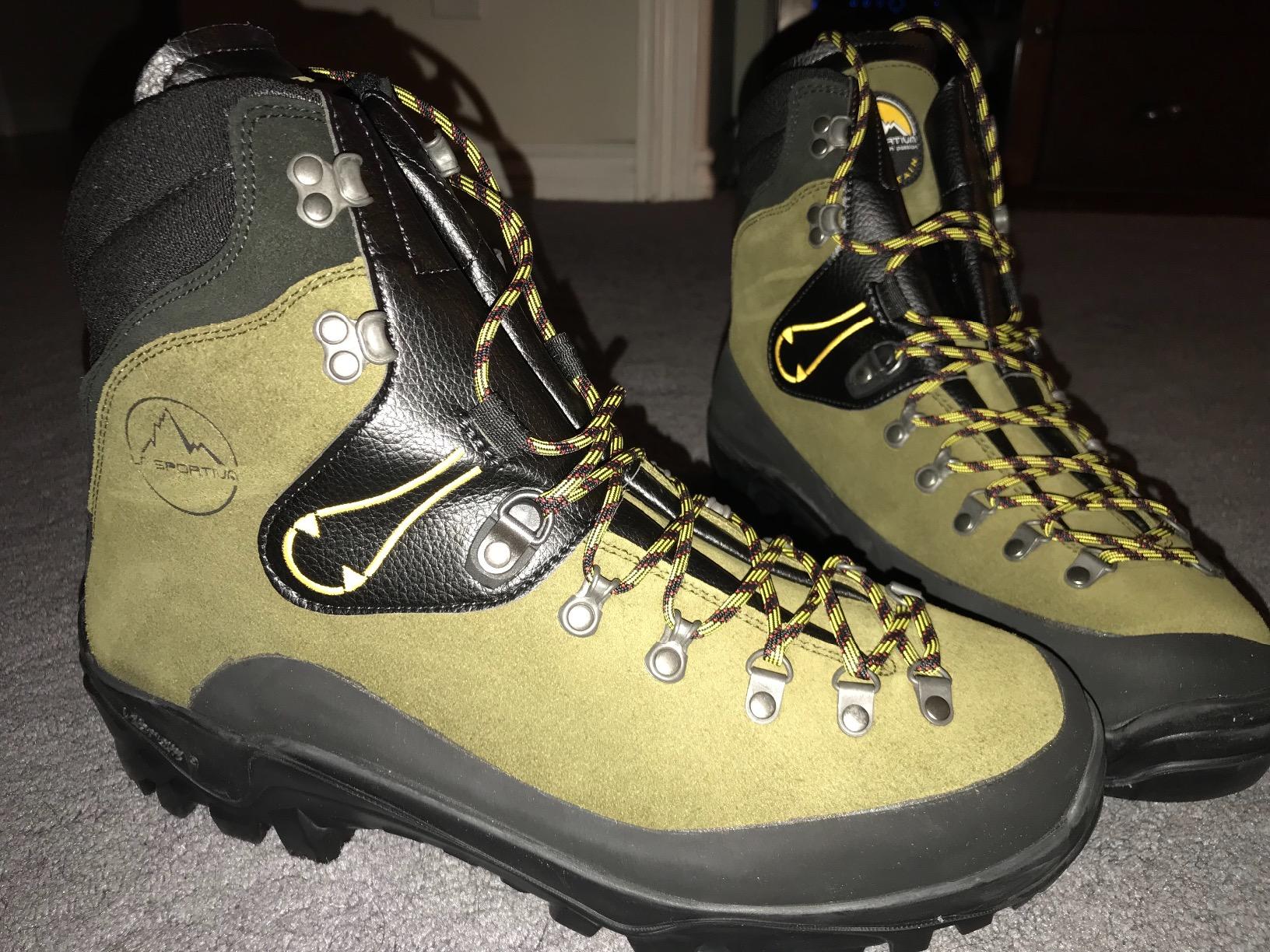
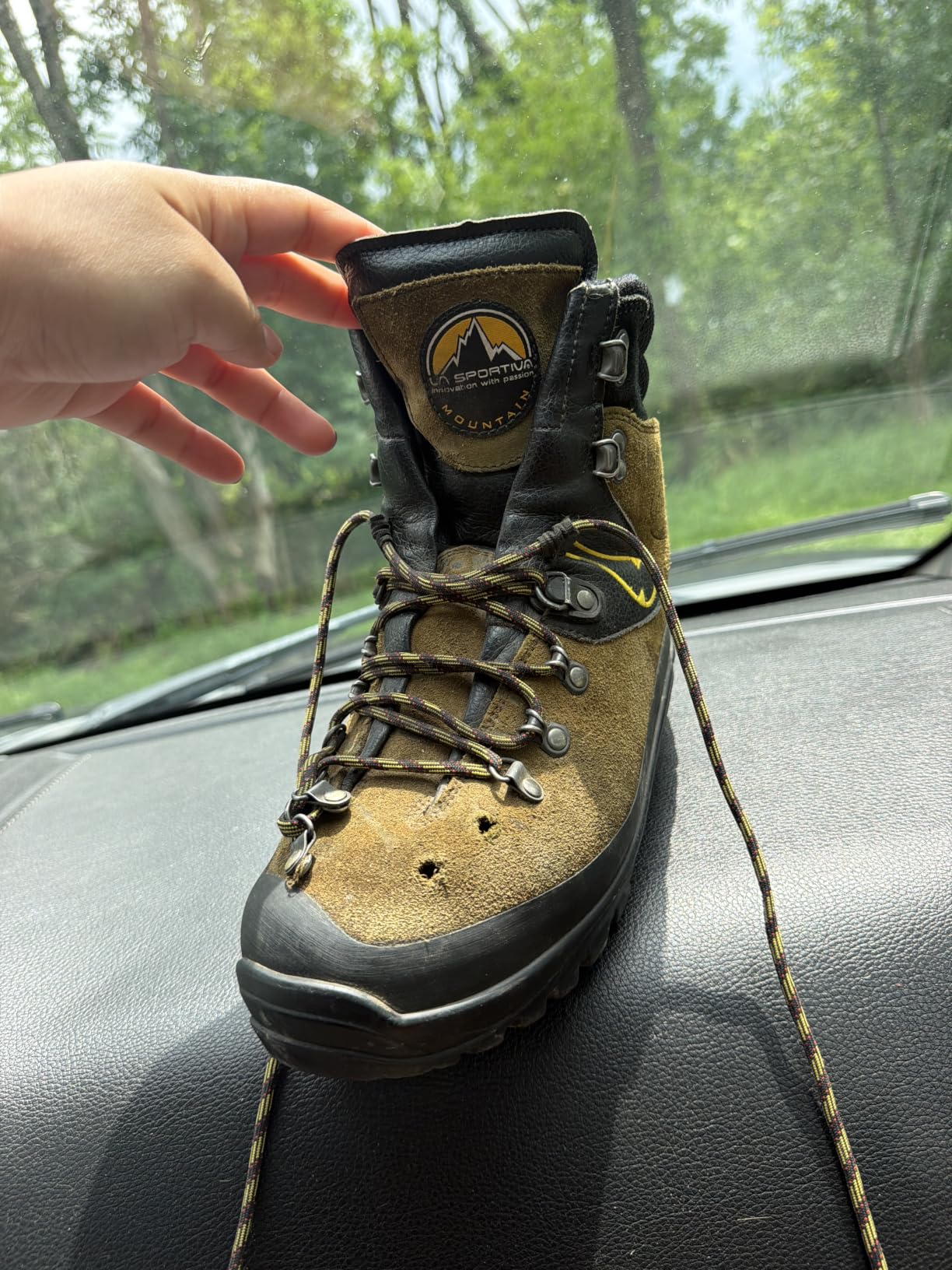
I wore the Karakorum on a 14-hour workday building trail in the Sierras, and my feet felt better at the end of the day than they did after similar work in lighter boots. The support and cushioning make these exceptional all-day comfort boots.
The aggressive Vibram sole grips everything from talus to wet logs to muddy trails. The semi-automatic crampon compatibility handles basic mountaineering objectives without issue.
Why the Karakorum remains popular
Versatility is the key. Most mountaineering boots are specialists that excel at one thing. The Karakorum handles backpacking trips, hunting expeditions, light mountaineering, and daily work without compromise. For climbers who want one boot that does many things well, the Karakorum delivers.
The build quality is exceptional. La Sportiva has been making these for years, and the construction has proven itself through decades of field use.
Important caveats
The Karakorum is not waterproof out of the box. You need to treat the leather with a waterproofing wax or spray before using these in wet conditions. Multiple users in the reviews mentioned this, and it’s important to know before your first trip.
The fit also runs narrow, similar to other La Sportiva models. Climbers with wide feet should consider the ASOLO Fugitive GTX or SCARPA Zodiac Tech for a more accommodating fit.
Mountaineering Boots Buying Guide: What to Look for in 2026?
Buying mountaineering boots is more complicated than buying hiking boots because the terminology is filled with classifications and compatibility requirements that can confuse first-time buyers. After testing dozens of pairs and talking with guides, athletes, and weekend warriors, here’s what actually matters when choosing your next pair.
Understanding B1, B2, and B3 Boot Classifications
The B-rating system classifies mountaineering boots by their stiffness and crampon compatibility. B1 boots are the most flexible and work only with flexible strap-on crampons, making them suitable for non-technical glacier travel. B2 boots have a stiffer midsole that accepts semi-automatic crampons, which lock into a heel bail and clip to the toe. B3 boots are the stiffest, with a full shank that accepts automatic crampons that clip into both the heel and the toe for the most secure connection on steep ice.
For most recreational climbers, a B2 boot offers the best balance of stiffness for moderate terrain and flexibility for comfortable approaches. If you’re tackling technical ice climbs or steep mixed routes, you’ll want a B3 boot with automatic crampon compatibility.
Single Boots vs Double Boots
Single boots are one-piece construction that balances warmth, weight, and versatility. They’re appropriate for most 3-season mountaineering and shoulder-season climbs in temperate ranges. Double boots consist of an outer shell and a removable inner bootie, creating an insulating air gap that keeps feet warm in extreme cold. Double boots are necessary for high-altitude expeditions above 6,000 meters and any climbing where temperatures regularly drop below -20F.
For most climbers reading this guide, a quality single boot will handle everything you need. Double boots are expedition-specific gear that adds weight and bulk that’s not worth the trade-off unless you’re planning major objectives.
Crampon Compatibility Matters
Before buying boots, you need to know what crampons you have or plan to buy. Mismatched boots and crampons are a common and dangerous mistake. Strap-on crampons work with any boot but provide the least secure attachment. Semi-automatic crampons require a step-in heel bail and work with B2 or B3 boots. Automatic crampons require both heel and toe welts and work only with B3 boots.
If you’re starting from scratch, I recommend buying a B2 boot first. It handles most objectives, works with the most common crampon type, and provides enough stiffness for moderate ice while remaining comfortable on approaches.
Fit Is Everything
The single most important factor in choosing mountaineering boots is fit. Cold feet, blisters, and hot spots ruin more climbs than bad weather or technical difficulties. Your boots should fit snugly through the heel and midfoot with enough room in the toe box to wiggle your toes. Thicker socks can adjust fit slightly, but starting with the right size matters more.
Different brands fit differently. La Sportiva tends to run narrow with a low-volume toe box. SCARPA is similar but slightly wider in some models. ASOLO and Kenetrek tend toward wider lasts. If you have wide feet, the SCARPA Zodiac Tech or ASOLO Fugitive GTX are good starting points. If you have narrow feet, La Sportiva models will likely fit better.
Regional Considerations: PNW vs Alps
Where you climb matters for boot selection. Pacific Northwest climbers deal with wet snow, rain, and mild temperatures, making waterproof breathable liners essential. GORE-TEX or HDry membranes are non-negotiable. Weight matters less because approaches are often shorter.
Alpine climbers face colder temperatures and longer approaches on glaciated terrain. Warmth becomes more important, and weight savings on long approaches add up. European climbers often prefer stiffer boots that handle technical terrain immediately.
Break-In Periods Are Real
Most leather mountaineering boots require a break-in period of 10-30 miles of wear before they become comfortable. Plan ahead. If you have a climb in three weeks, start wearing your boots around the house and on day hikes immediately. Synthetic boots generally require less break-in but don’t conform to your foot as precisely over time.
Expect some discomfort during the break-in period. Hot spots and minor blisters are normal. Stop wearing the boots immediately if you develop blisters and address the fit before pushing further.
Frequently Asked Questions About Mountaineering Boots
What boots do Mount Everest climbers wear?
Mount Everest climbers typically wear double boots designed for extreme altitude and cold. La Sportiva G2 EVO and Olympus Mons Cube are popular choices among guided climbers. These boots feature a removable inner bootie that creates an insulating air gap to keep feet warm at temperatures below -30F. The combination of warmth, protection from frostbite, and reliable performance in extreme conditions makes double boots essential for 8,000-meter peaks.
Are B2 or B3 boots better for mountaineering?
Neither is universally better. The choice depends on your objectives. B2 boots offer versatility for most 3-season mountaineering with semi-automatic crampons and comfortable approaches. B3 boots provide maximum stiffness for technical ice climbing with automatic crampons but are heavier and less comfortable for hiking. For most recreational climbers, B2 boots hit the sweet spot. For climbers tackling steep ice, mixed routes, or expedition peaks, B3 boots are worth the trade-offs.
Do you need B2 or B3 boots for Mont Blanc?
For the standard Goûter Route and other Mont Blanc routes, B2 boots are sufficient. Most guided ascents use semi-automatic crampons with B2 boots. However, if you’re planning more technical routes or climbing in winter conditions, B3 boots with automatic crampons provide extra security. Many climbers successfully summit Mont Blanc in B2 boots during summer season, making them the practical choice for most attempts.
What boots do Navy SEALs use?
Navy SEALs use various tactical boots depending on environment and mission. For cold-weather and mountain operations, they often use insulated boots from brands like Salomon, Merrell, and Bates. While SEALs occasionally use mountaineering-style boots for specific training, their standard issue differs from civilian mountaineering boots. SEAL boot selection prioritizes agility, traction, and durability across varied terrain rather than crampon compatibility.
Do I need double boots for mountaineering?
Double boots are only necessary for extreme cold and high-altitude expeditions above 6,000 meters, or for climbing where temperatures regularly drop below -20F. For most 3-season mountaineering, winter alpine routes in temperate ranges, and peaks below 5,000 meters, quality single boots like the La Sportiva Nepal Cube GTX or SCARPA Phantom Tech provide adequate warmth. Double boots add significant weight and bulk that’s not justified unless you’re tackling major objectives.
Final Verdict: Choosing the Best Mountaineering Boots for Your Adventures
After testing all ten boots across varied terrain and conditions, our top picks for best mountaineering boots come down to what you’re planning. For most climbers tackling classic alpine routes and glaciated peaks, the La Sportiva Nepal Cube GTX remains our top recommendation thanks to its proven durability, balanced warmth, and semi-automatic crampon compatibility.
Budget-conscious climbers should start with the ASOLO Fugitive GTX or La Sportiva Makalu. Both deliver genuine mountaineering performance at prices that don’t require years of saving. Wide-footed climbers will find their best fit in the SCARPA Zodiac Tech, while expedition climbers planning Denali or 8,000-meter peaks need the protection of the La Sportiva G2 EVO.
Whatever you choose, buy from a retailer with a good return policy and try the boots on with the socks you plan to climb in. Fit matters more than any spec sheet, and the best mountaineering boots are the ones that fit your feet correctly. Take your time with the break-in period, and you’ll have boots that serve you through years of adventures in the mountains.