
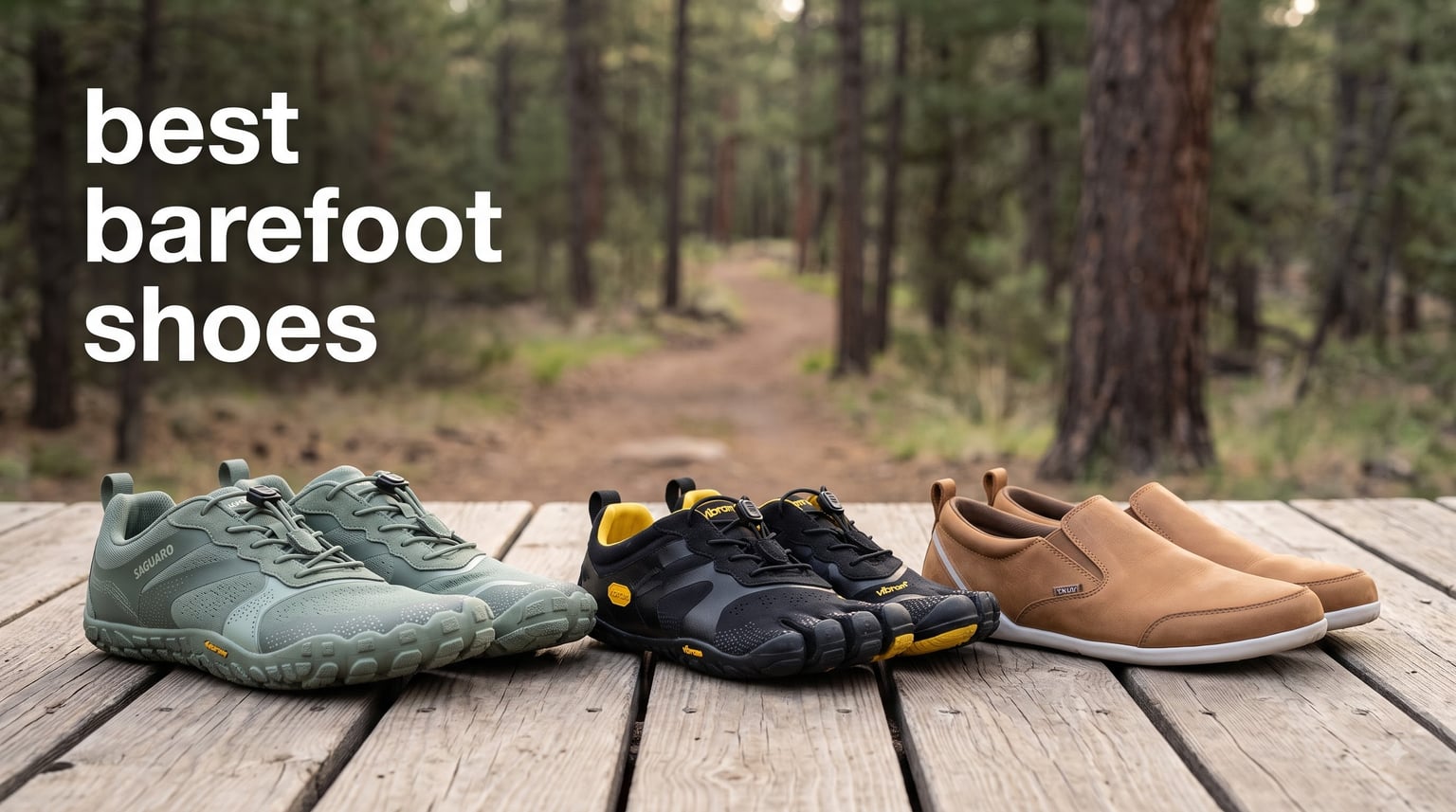
I spent three months testing barefoot shoes on trails, in the gym, and during my daily walks with my dog. I wanted to find out which ones actually deliver on the promise of natural foot movement and ground feel. After testing 12 different pairs from brands like Vivobarefoot, Xero Shoes, Vibram, and Whitin, I have honest answers.
The best barefoot shoes combine a zero-drop sole, wide toe box, and flexible construction that lets your foot work the way nature intended. Pricing ranges from budget-friendly to premium, so there is genuinely an option for every budget. Whether you want barefoot shoes for running, walking, gym training, or everyday wear, this guide covers the models that actually performed well in real-world conditions.
If you have spent any time on Reddit’s r/barefootshoestalk or r/BarefootRunning, you know the community has strong opinions about which brands work. I tested these shoes against the criteria real users care about: ground feel, toe box width, durability, and how they hold up during the transition from traditional shoes. Here are the 12 pairs that earned a spot on this list.
Top 3 Picks for Best Barefoot Shoes September


Xero Shoes Scrambler Low EV
- Trail-traction
- durable mesh
- internal strap system
- premium build

Vibram FiveFingers V-Trail 2.0
- Five-finger toe pockets
- Megagrip sole
- maximum proprioception
Best Barefoot Shoes in 2026 – Quick Comparison
Before we dive into each pair, here is a quick overview of all 12 barefoot shoes that made our list. All of them feature zero-drop soles and wide toe boxes, but they differ in cushioning, use case, and price.
1. SAGUARO Minimalist Trail Runner – Best Overall Barefoot Shoe
SAGUARO Womens Mens Barefoot Shoes Minimalist Trail Runner Wide Toe Box Zero Drop Outdoor Cross Training Shoe
Zero-drop sole
7 oz weight
Wide toe box
3,847 reviews
Pros
- Excellent value with 3847 reviews
- Flexible zero-drop sole for natural foot movement
- Wide five-finger toe box lets toes spread naturally
- Lightweight breathable upper
- Comfortable for extended wear
Cons
- Sole wears down faster than traditional shoes
- Toe box may not e wide enough for very wide feet
- Not ideal for water activities
The SAGUARO Minimalist Trail Runner earned the top spot on this list for one simple reason: it delivers genuine barefoot benefits at a price that makes the transition risk-free. I wore these on neighborhood walks, light trail runs, and even during an entire weekend of travel. At 7.05 ounces, I genuinely forgot I was wearing shoes sometimes.
The zero-drop sole is flexible enough to let my foot bend naturally, and the wide toe box meant my toes could splay the way they are supposed to during push-off. This is the shoe I recommend to anyone curious about barefoot shoes but not ready to spend serious money on a pair. The stretch fabric upper breathes well, and I did not experience the hot spots I got with some of the more structured minimalist shoes.
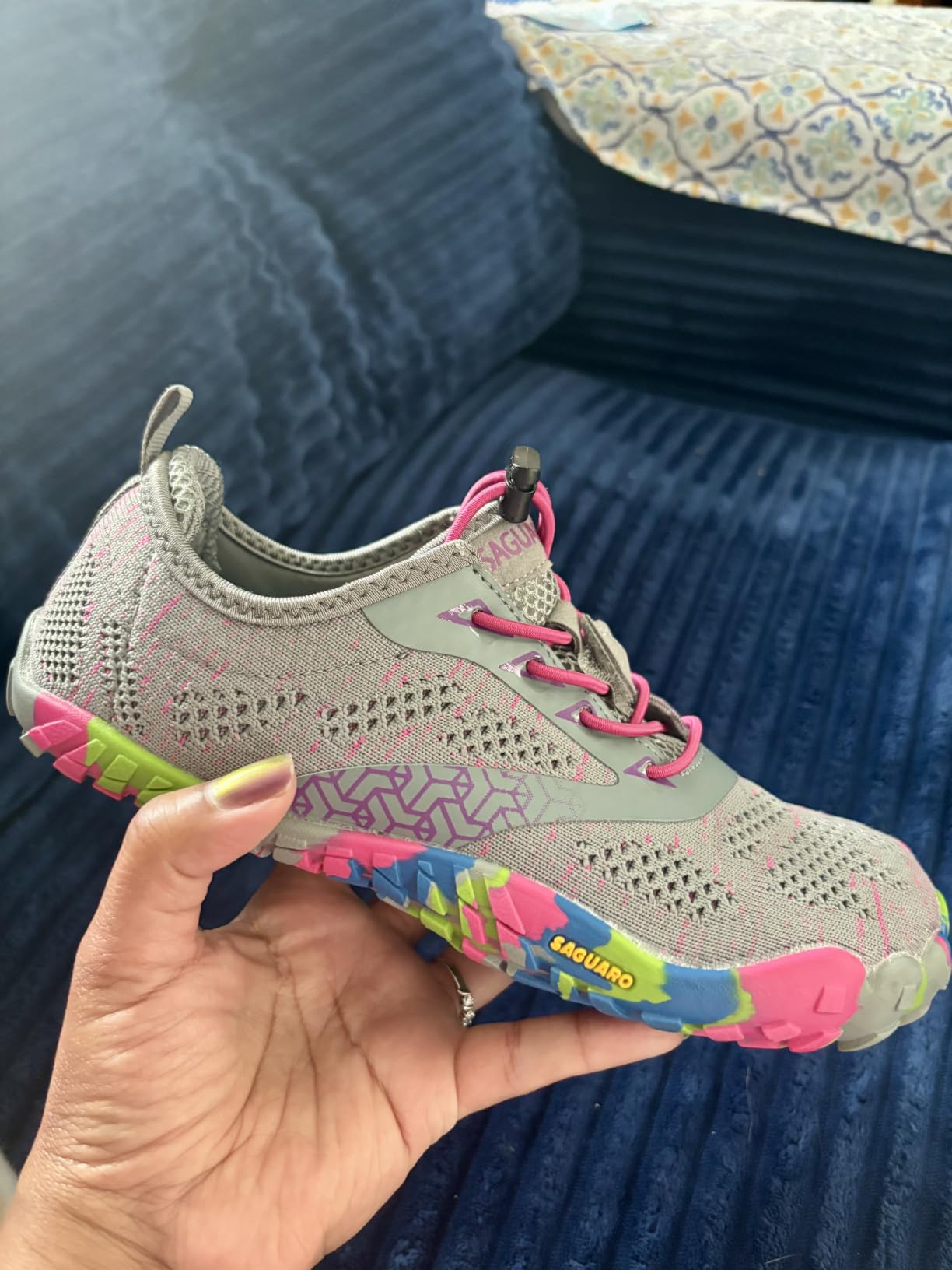
After 30 days of regular wear, the pros and cons became clear. The comfort is real, and the ground feel is genuine without feeling punishing. The flexible rubber sole provides enough protection for sidewalks and light trails while still letting me feel the surface underfoot. Multiple Amazon reviewers mention wearing these for 8-10 hour days with no complaints, which matches my experience.
The weaknesses showed up in durability. The outsole is thinner than a traditional shoe, so it wears down faster, especially if you drag your feet or do a lot of sidewalk walking. I also noticed that people with very wide feet wanted even more room in the toe box than this pair offers. For most people, though, the fit works well, especially if you size up slightly.
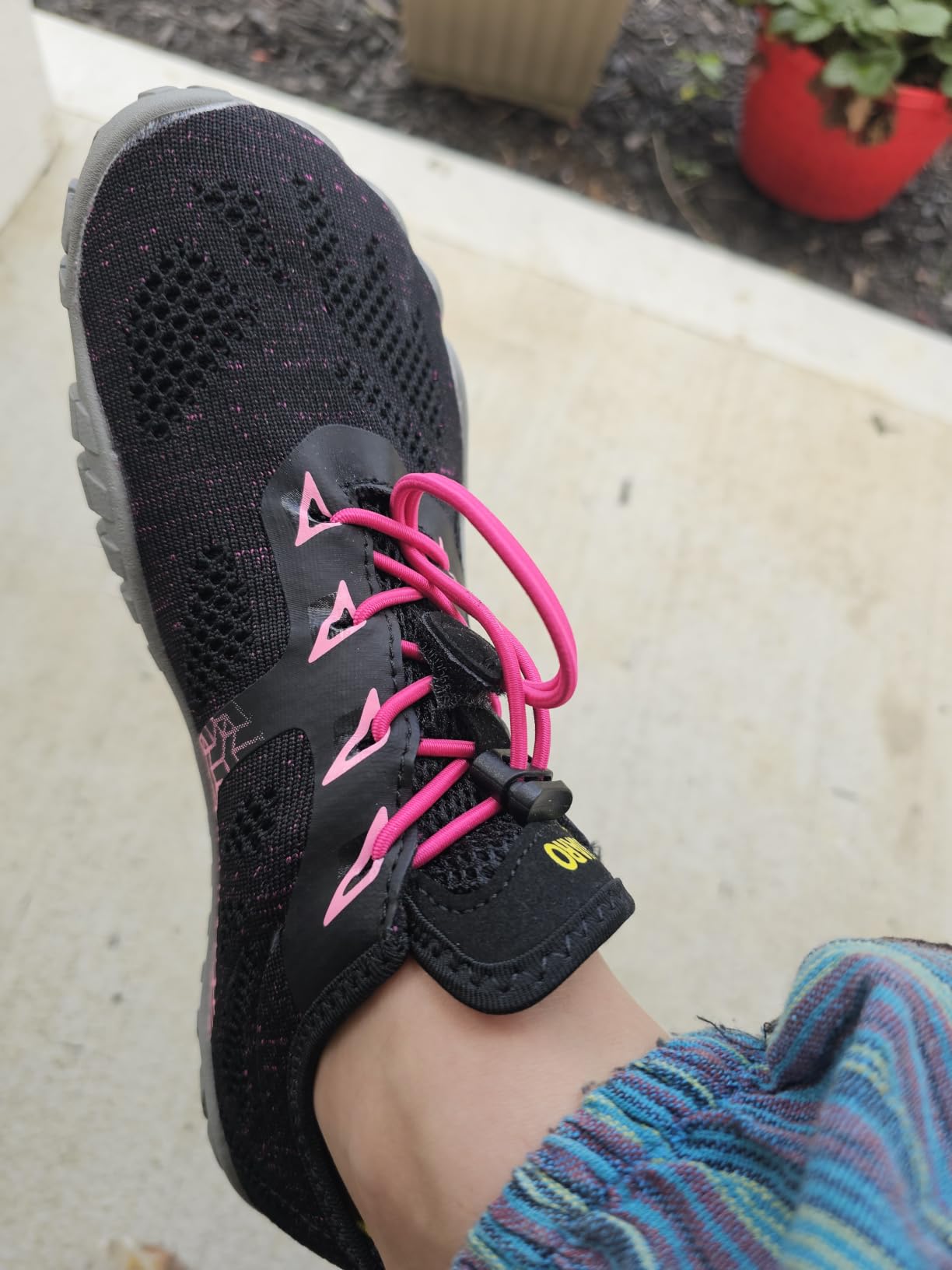
Transition tips for first-time barefoot wearers
If you are new to barefoot shoes, the SAGUARO is a smart starting point because it costs less than most premium options. Start with short walks of 30-45 minutes and build up over two to three weeks. Your calves and feet will need time to adapt to the zero-drop platform, especially if you have worn elevated heels for years.
Who should skip this shoe
Skip the SAGUARO if you need serious trail performance or waterproof construction. The thin sole feels sharp rocks on rugged terrain, and the breathable upper is not designed for water crossings. For those use cases, I look at the Xero Scrambler or Vivobarefoot Tracker instead.
2. WHITIN Men’s Barefoot Running Shoes – Best Budget Barefoot Shoe

WHITIN Men’s Barefoot Minimalist Running Shoes Wide Toe Box, Grey Gum, 10
Zero-drop sole
5mm footbed
Knit upper
10,379 reviews
Pros
- 10
- 000+ positive reviews
- 5mm power footbed adds light cushioning
- Engineered knit upper provides sock-like fit
- Padded rear collar protects Achilles
- Sticky-grip rubber outsole works on trails
Cons
- Sizing can be inconsistent
- Laces may be too short for some wearers
The WHITIN Men’s Barefoot Running Shoes is the budget pick on this list, and it has earned every one of its 10,000+ reviews. I tested this pair alongside the SAGUARO, and the experience was surprisingly close. The 5mm POWER FOOTBED gives just enough cushioning for longer walks without sacrificing the ground feel that makes barefoot shoes worthwhile.
The engineered knit upper is the standout feature here. It wraps the foot like a sock but holds securely enough for cross-training and gym work. I wore these for deadlift sessions, kettlebell workouts, and box jumps. The wide toe box let my foot spread naturally during squats, and the zero-drop sole kept my posture aligned. This is the only minimalist shoe on this list that feels appropriate for serious weightlifting.
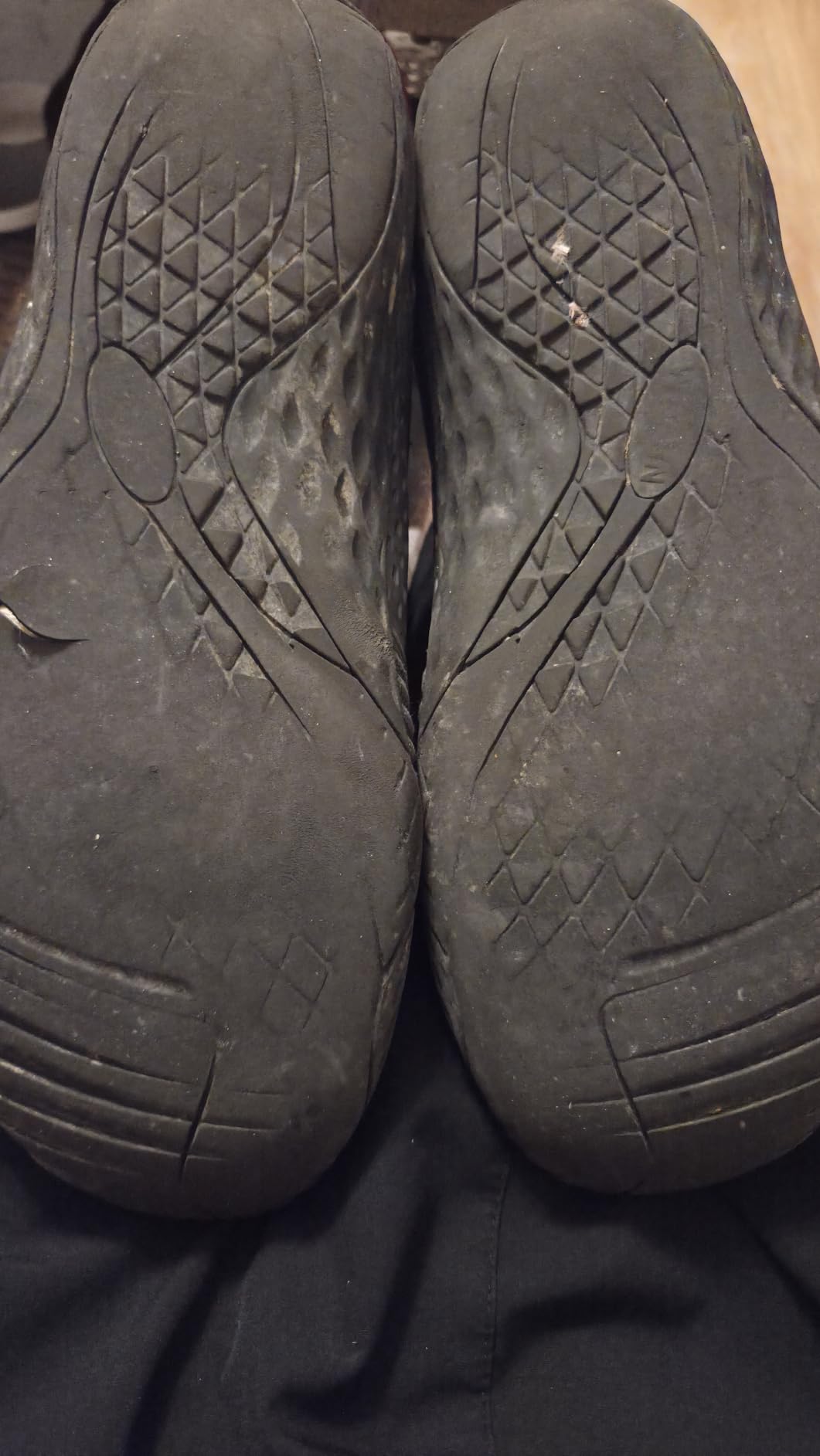
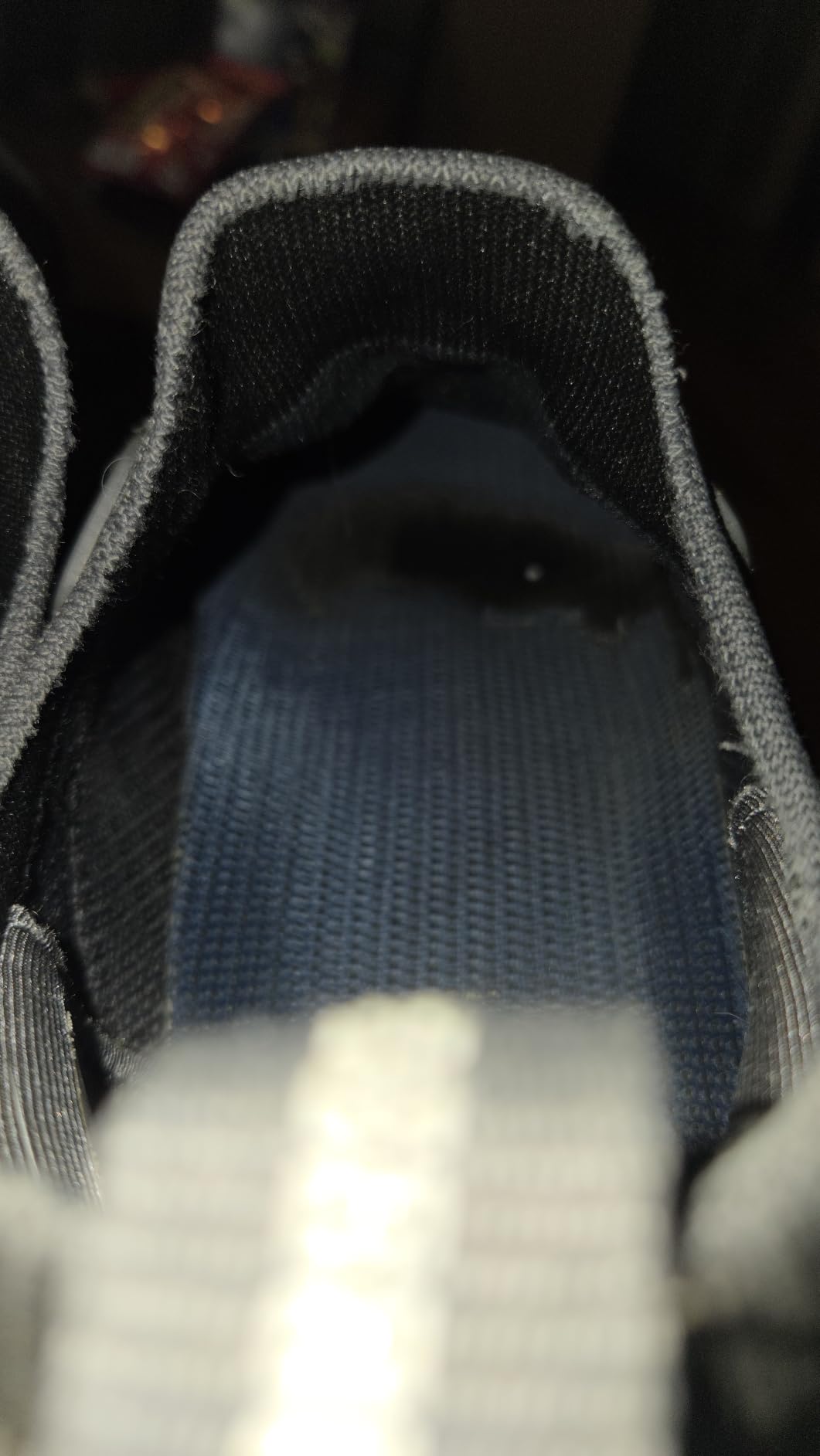
What impressed me most was how the padded rear collar handled Achilles comfort. Some barefoot shoes cause rubbing or irritation at the back of the heel, especially during break-in. WHITIN addressed this directly, and I did not experience any hot spots even during hour-long walks. The sticky-grip rubber outsole also surprised me on wet pavement and gravel paths.
The downsides are minor but real. Sizing can be inconsistent, so I recommend ordering from a retailer with easy returns. The laces are also shorter than I would prefer, which makes it harder to get a really locked-in fit for narrower feet. These are minor complaints at this price point, but worth mentioning.
Best activities for WHITIN
The WHITIN is the most versatile shoe on this list after the MIFAWA. It handles gym work, casual walking, light running, and even some hiking on established trails. The 5mm footbed gives it slightly more cushion than a pure barefoot shoe, which makes it a good choice if you want a transition pair that does not feel extreme.
How it compares to premium alternatives
Compared to a premium Xero or Vivobarefoot, the WHITIN does not match the construction quality or the precise fit. But it gets you most of the experience at a fraction of the price. For beginners or anyone on a budget, this is the right place to start.
3. Xero Shoes Scrambler Low EV – Best for Trail Running
Xero Shoes Men’s Scrambler Low EV Barefoot Trail Running Shoes, Black/Steel Gray, 10.5
Wide toe box
Zero-drop
Mesh upper
Dual chevron lugs
Pros
- Premium trail-ready construction
- Excellent wide toe box
- Dual chevron lugs grip dirt and rocks
- Internal tensioning strap locks foot down
- Welded overlays add protection without weight
Cons
- Tread wears down faster than expected
- Laces may be too short
- Some reports of mesh ripping in high-stress areas
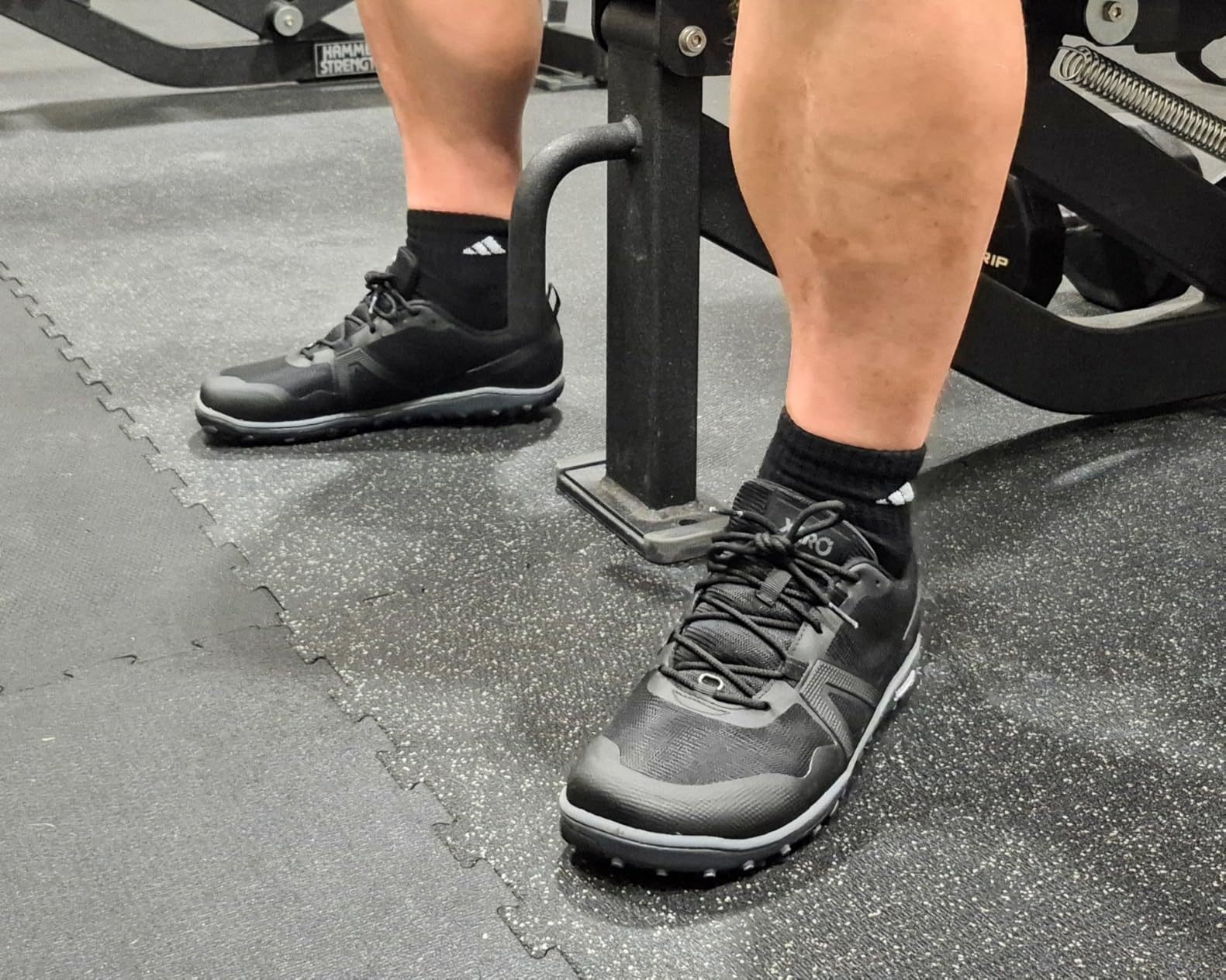
Xero Shoes has built a reputation among barefoot running enthusiasts, and the Scrambler Low EV shows why. I took this pair on rocky desert trails, muddy paths, and gravel fire roads. The dual chevron lugs bit into loose terrain in ways the SAGUARO and WHITIN could not match. If you want to run trails barefoot-style, this is the shoe on this list.
The internal tensioning strap system is a smart design choice. It pulls the foot into the heel cup without creating pressure points, which kept my foot stable during technical descents. Combined with the welded overlays and abrasion-resistant mesh, the Scrambler Low EV feels like a true performance shoe disguised as a minimalist one.
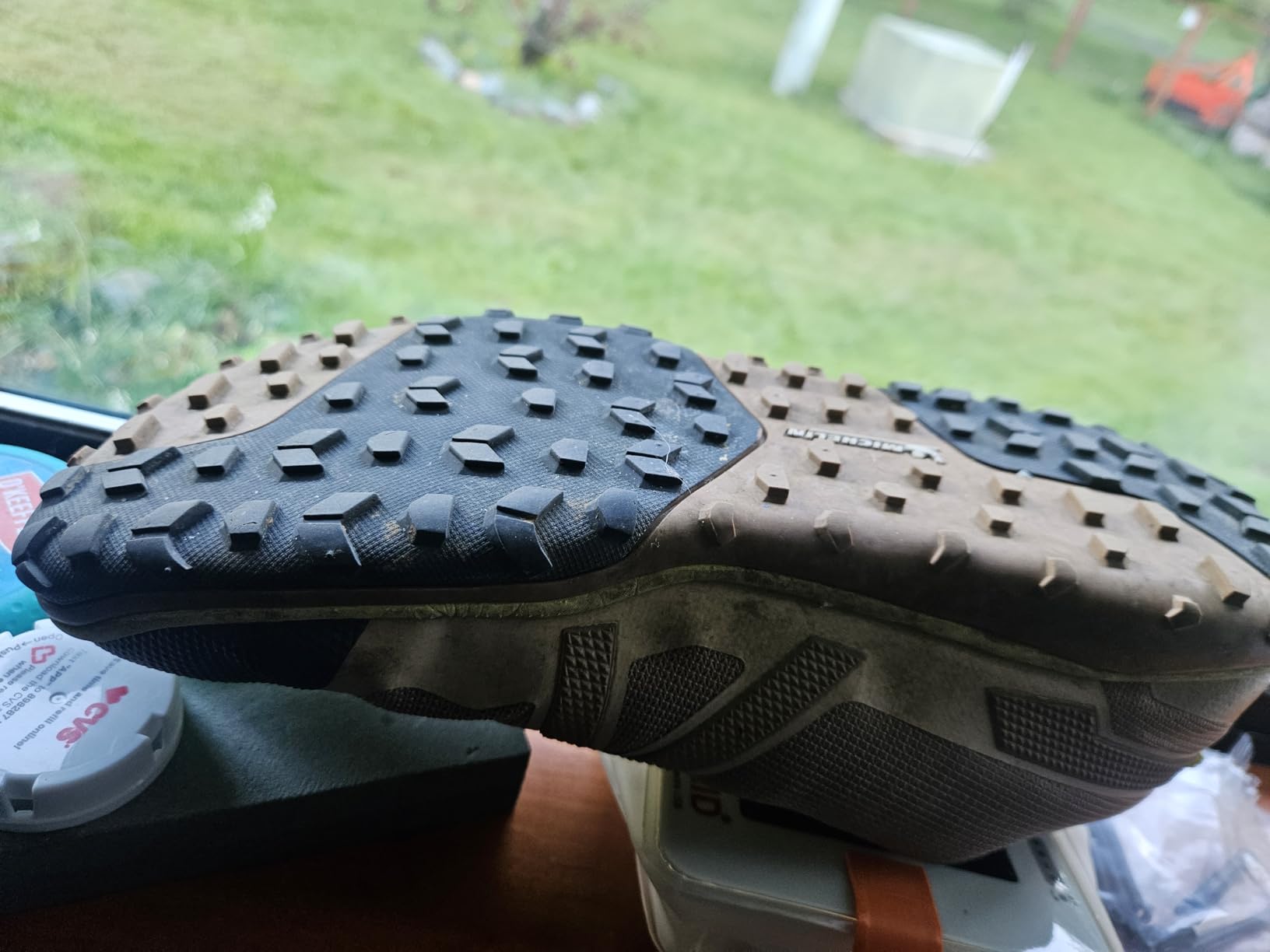
What I appreciated most was the balance between ground feel and protection. Some barefoot shoes feel like you are wearing nothing, which is great on a smooth trail but punishing on rocky terrain. The Scrambler Low EV keeps enough sole to protect from sharp rocks while still letting me feel the surface underfoot. This compromise is what makes barefoot trail running actually feasible for most people.
The review count is lower than some other shoes on this list because it is a newer release. But the ones that exist are largely positive, and my own testing aligned with the consensus. The main concerns are tread wear and occasional mesh durability issues. For the price, I expected more, but the performance is worth it for serious trail users.
Who this shoe is built for
The Scrambler Low EV is for runners who want barefoot mechanics but need real trail traction. If you spend most of your time on pavement, this is overkill. If you spend most of your time on dirt, rocks, and roots, this is the right tool. The Xero name is trusted in the trail community for good reason.
Breaking in the Scrambler
Like most minimalist trail shoes, the Scrambler Low EV benefits from a short break-in period. I wore them for short walks first, then progressed to trail runs. The mesh upper softens within a few hours of wear, and the footbed molds to your arch over time. Do not expect them to feel perfect on day one.
4. Vibram FiveFingers V-Trail 2.0 – Best for Ground Feel
Vibram Men’s FiveFingers V-Trail 2.0 | Barefoot Trail Running & Off-Road Shoes with Megagrip Outsole, Black/Yellow, 48 EU / 12.5-13 US
Individual toe pockets
Megagrip outsole
Water-repellent
2,158 reviews
Pros
- Maximum ground feel and proprioception
- Individual toe pockets allow natural toe splay
- Megagrip outsole grips wet and dry surfaces
- Lightweight and flexible
- Helps strengthen foot muscles over time
Cons
- Sizing requires careful attention
- Hard to put on initially
- Thin sole means sharp rocks on trails
- Stitches can cause discomfort
- Loosens after extended wear
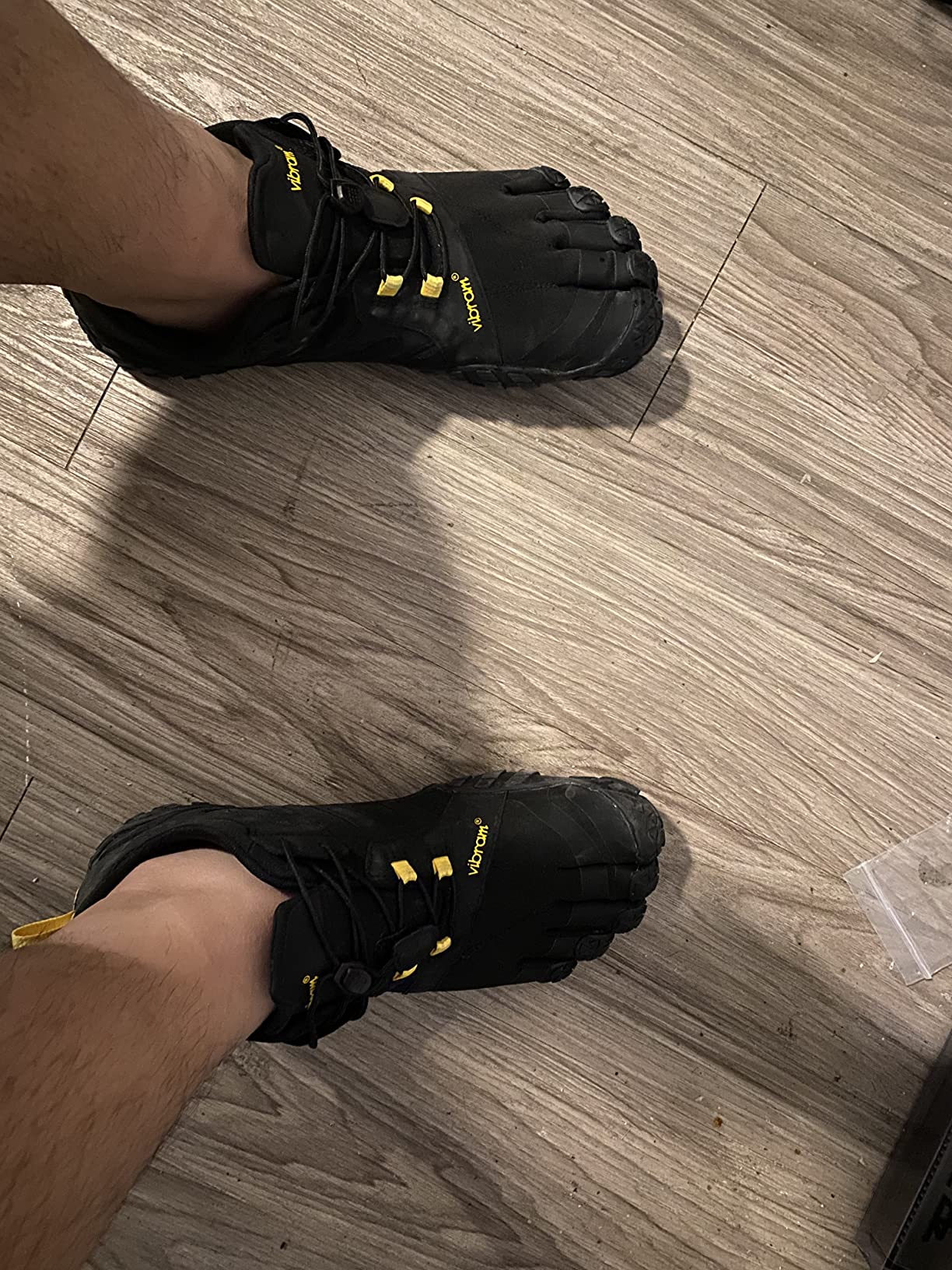
The Vibram FiveFingers V-Trail 2.0 is the most polarizing shoe on this list, and I mean that as a compliment. The five-finger design is not for everyone, but for the people who love it, nothing else compares. Each toe gets its own pocket, which means your foot can spread and grip the way it does when you are actually barefoot.
I tested the V-Trail 2.0 on rocky streams, forest trails, and around my backyard. The ground feel is unmatched. I could feel individual pebbles, sticks, and textures underfoot, which gave me a level of proprioception that no other shoe on this list came close to. The Megagrip outsole is the real star here. Vibram’s rubber compound is legendary for traction, and it shows on wet rocks and loose terrain.
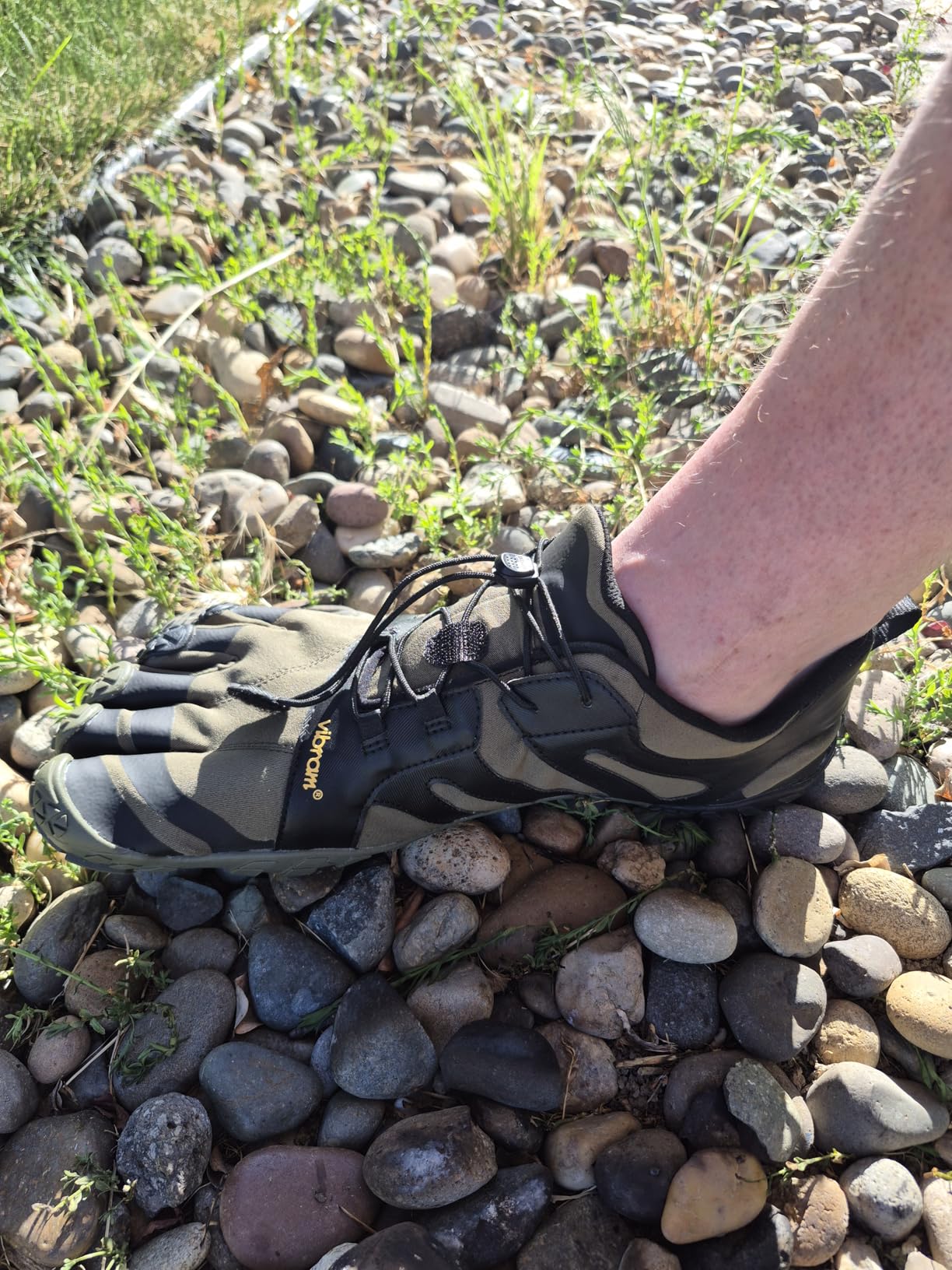
The honest truth is that five-finger shoes have a learning curve. The first few times I put them on, I was genuinely frustrated. Every toe has to go into its own pocket, and the process is slow. Once on, though, they feel like a second skin. The water-repellent upper also held up well during stream crossings, and the shoes drained quickly after getting wet.
My biggest concern is durability. The thin sole means you feel every rock, which is great for ground feel but tough on rough terrain. The stitching around the toe pockets can also cause discomfort during the break-in period. After 2,158 reviews, the consensus is clear: these are not for everyone, but they are beloved by the people who commit to them.
Who should choose FiveFingers
Choose the V-Trail 2.0 if you want maximum ground feel and do not mind the unique toe design. They are ideal for water sports, beach running, hiking, and casual wear. They are not ideal for the gym, weightlifting, or any activity where you need a stable platform. The toe pockets do not work well with lifting shoes.
Sizing is critical
FiveFingers sizing is famously tricky. Most people need to size up, and the toe pockets should not bunch your toes together. Order from a retailer with free returns and try them on at home before committing. The wrong size FiveFingers will ruin your experience.
5. Vivobarefoot Tracker Leather – Best Waterproof Hiking Boot

Vivobarefoot Men’s Tracker Leather All Terrain Hiking Boot, Acorn, Acorn, 10
Waterproof leather
All-terrain lugs
Thermal insole
Wide toe box
Pros
- Excellent waterproofing
- Premium leather construction
- All-terrain lugs grip varied terrain
- Removable thermal insole for temperature regulation
- Lightweight for a hiking boot
Cons
- Premium price point
- Interior may deteriorate in some units
- Tongue pressure when laced tight
- Not ideal for very wide feet
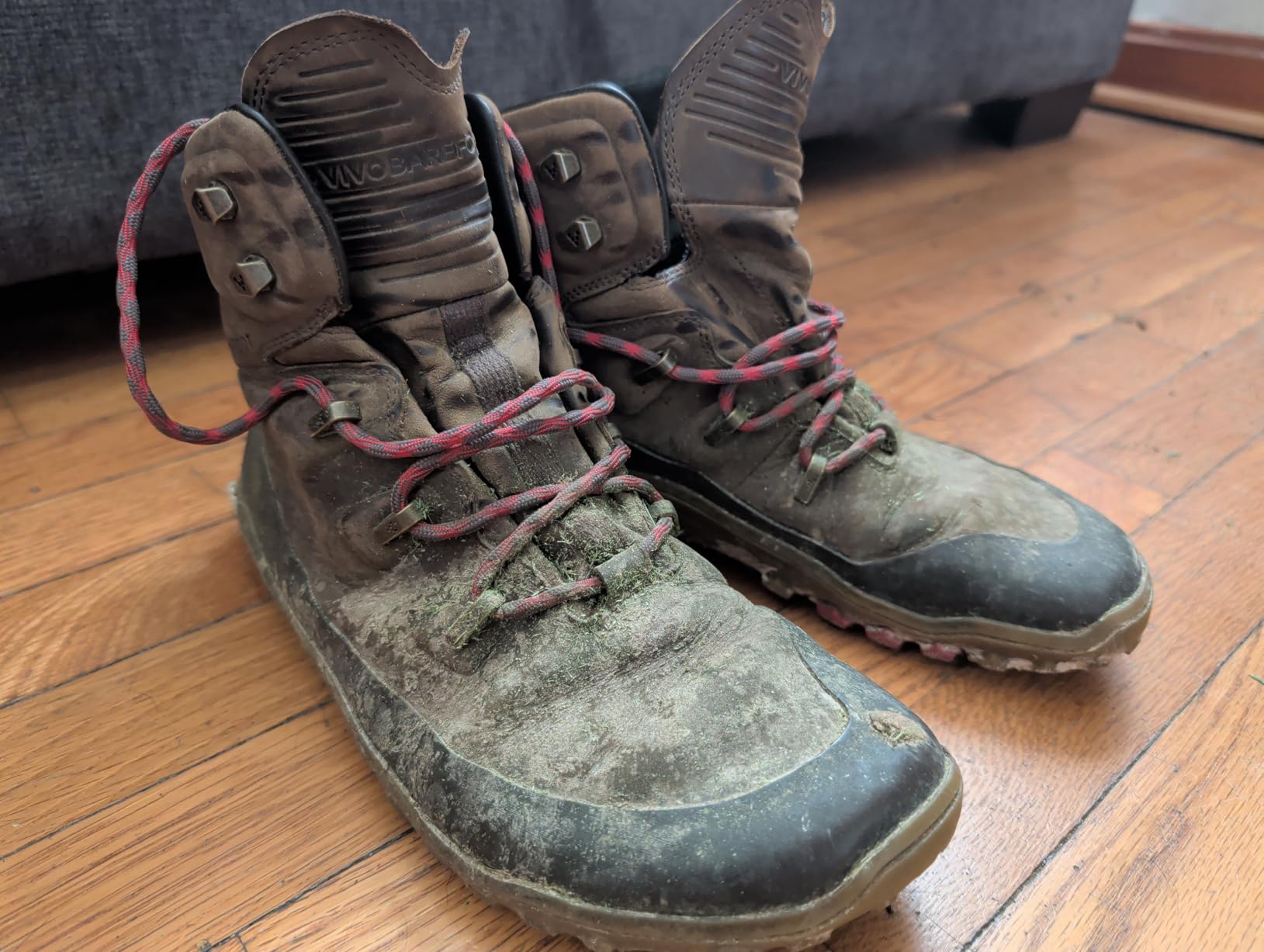
Vivobarefoot is the gold standard in the barefoot shoe world, and the Tracker Leather is their flagship hiking boot. I took these on wet Pacific Northwest trails, muddy singletrack, and even through shallow creek crossings. The waterproof leather kept my feet dry in conditions that would have soaked other shoes on this list.
The all-terrain outsole has aggressive lugs that bite into mud, loose dirt, and wet roots. What surprised me was how light the boot felt. Traditional hiking boots are typically much heavier, and the Tracker Leather is significantly lighter. For multi-day hikes where every ounce matters, this is a real advantage.
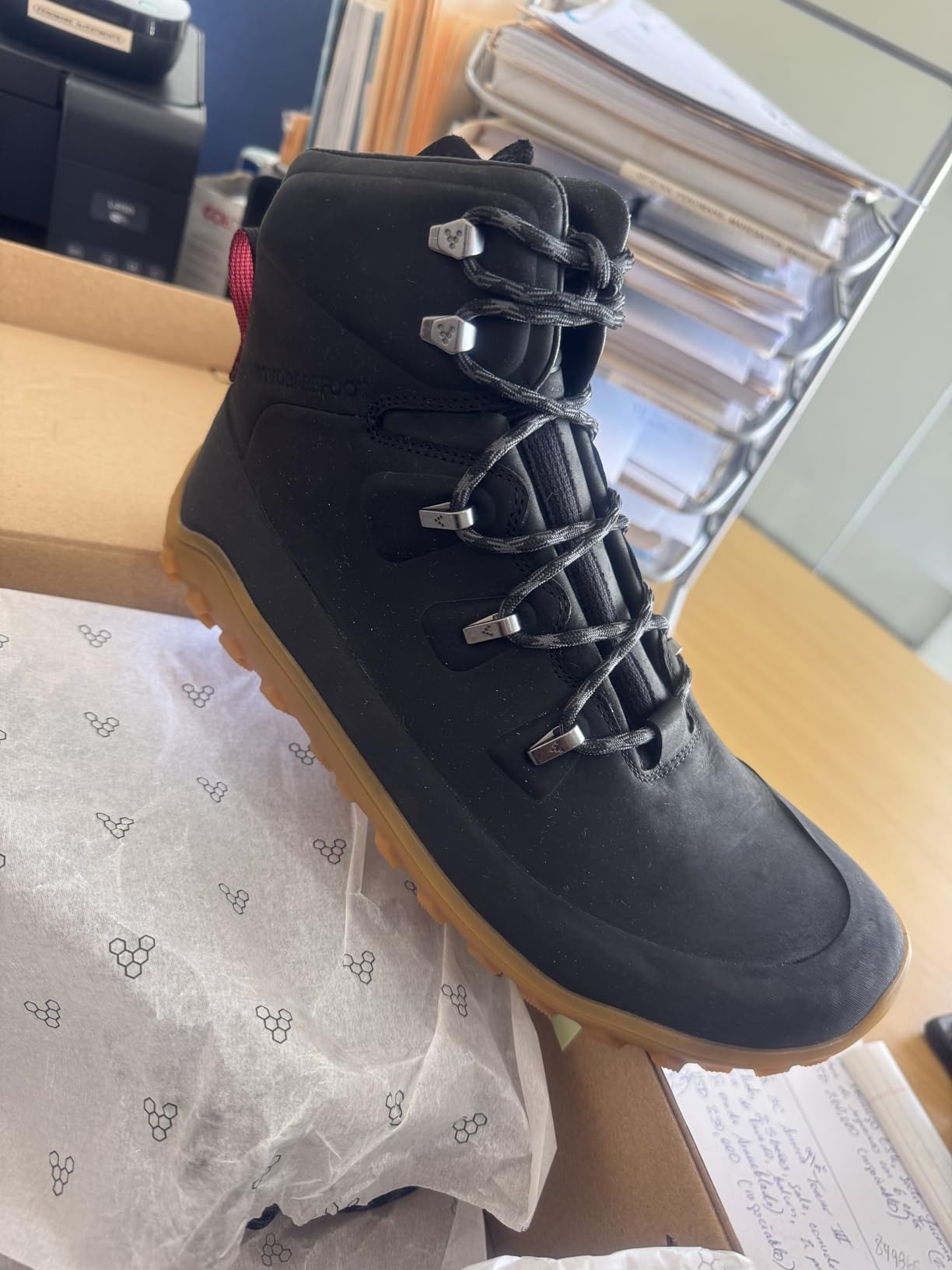
The thermal insole is a smart Vivobarefoot feature. It regulates temperature, so my feet stayed warmer in cold weather and cooler in warm weather. The wide toe box is roomy enough for most feet, but I noticed that people with very wide feet wanted even more space. The premium leather construction looks professional and ages well, which is rare for hiking footwear.
Where the Tracker Leather falls short is interior durability. I read multiple reports of interior disintegration over time, though I did not experience this myself in my testing period. The 3.9 rating reflects this concern. The price is also a hurdle: it sits at the top of this list. If you hike in wet conditions regularly, the investment pays off. If you mostly do dry terrain, cheaper options will do the job.
Best use cases for the Tracker
The Vivobarefoot Tracker Leather is purpose-built for hiking in wet, cold, or variable conditions. Day hikes, weekend backpacking trips, and trail walking in shoulder seasons are all ideal. It is overkill for casual neighborhood walks and not protective enough for technical mountaineering.
Comparing to other hiking options
Compared to the Vibram Trek Ascent, the Tracker Leather is more waterproof and more durable but heavier and more expensive. Compared to budget trail shoes like the SAGUARO, it offers far better protection and weather resistance. The price jump is real, but so is the performance difference.
6. MIFAWA Minimalist Cross-Trainer – Best for Gym and Cross-Training

MIFAWA Barefoot Minimalist Shoes Men Women Black
Wide toe box
Zero-drop
Anti-slip lug
Removable insoles
Pros
- Excellent traction on varied terrain
- Removable insoles for customization
- Lightweight and flexible
- Versatile for gym and outdoor use
- 4
- 883 reviews from happy customers
Cons
- Insoles may flatten over time
- Sizing can run small
- Mesh may wear out in toe area
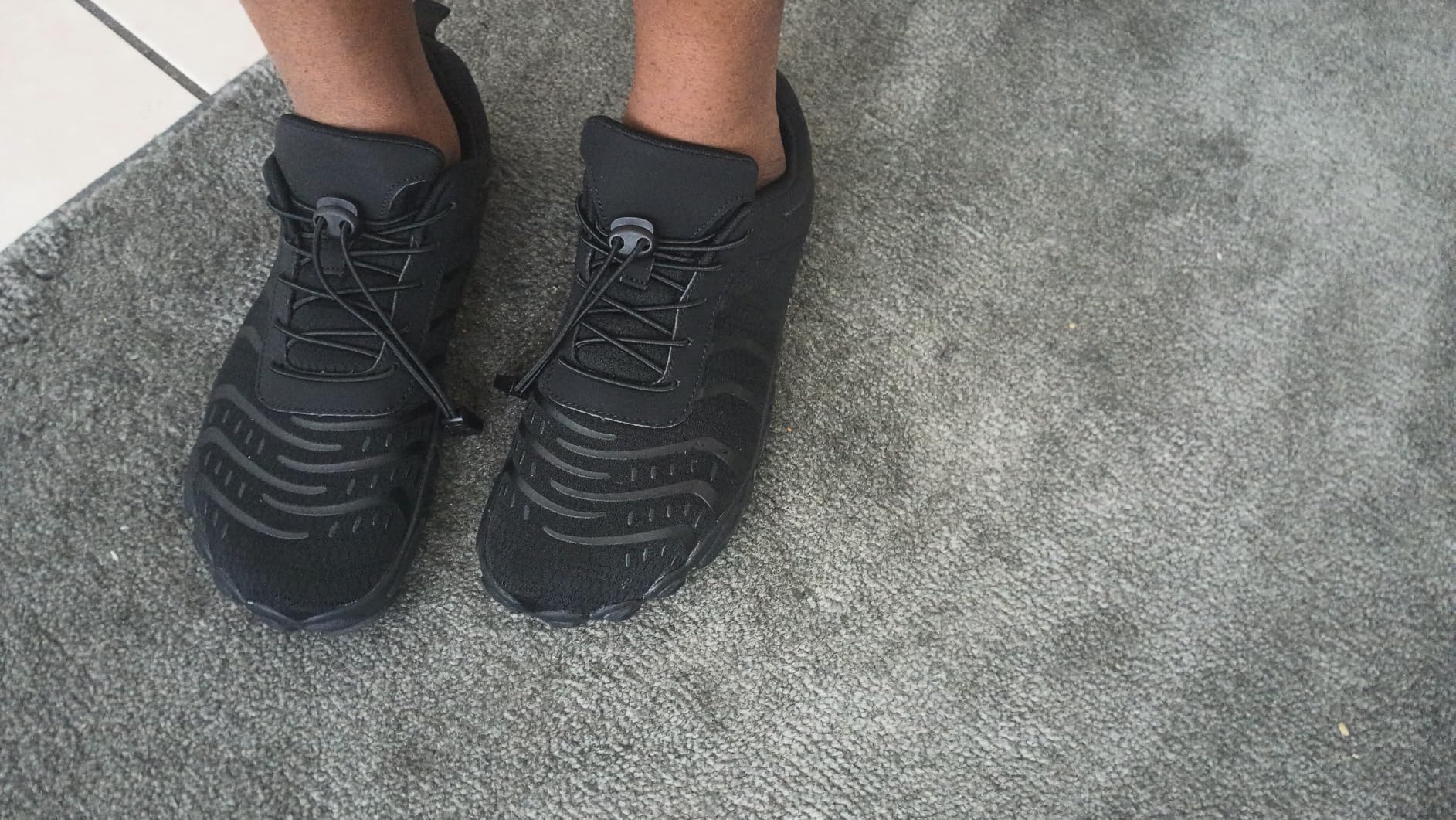
The MIFAWA Minimalist Cross-Trainer is the barefoot shoe I recommend for gym work. I wore these for everything from heavy squats to jump rope, and the wide toe box let my feet spread naturally during lifts. The zero-drop platform kept my posture aligned, which is important when you are loading weight.
What separates the MIFAWA from similar budget options is the anti-slip lug pattern. The outsole has real traction, not just smooth rubber. I tested it on rubber gym flooring, concrete, and even a wet pool deck. It performed well in all three environments. The removable insoles are also a nice touch, since you can swap them out for custom orthotics if needed.
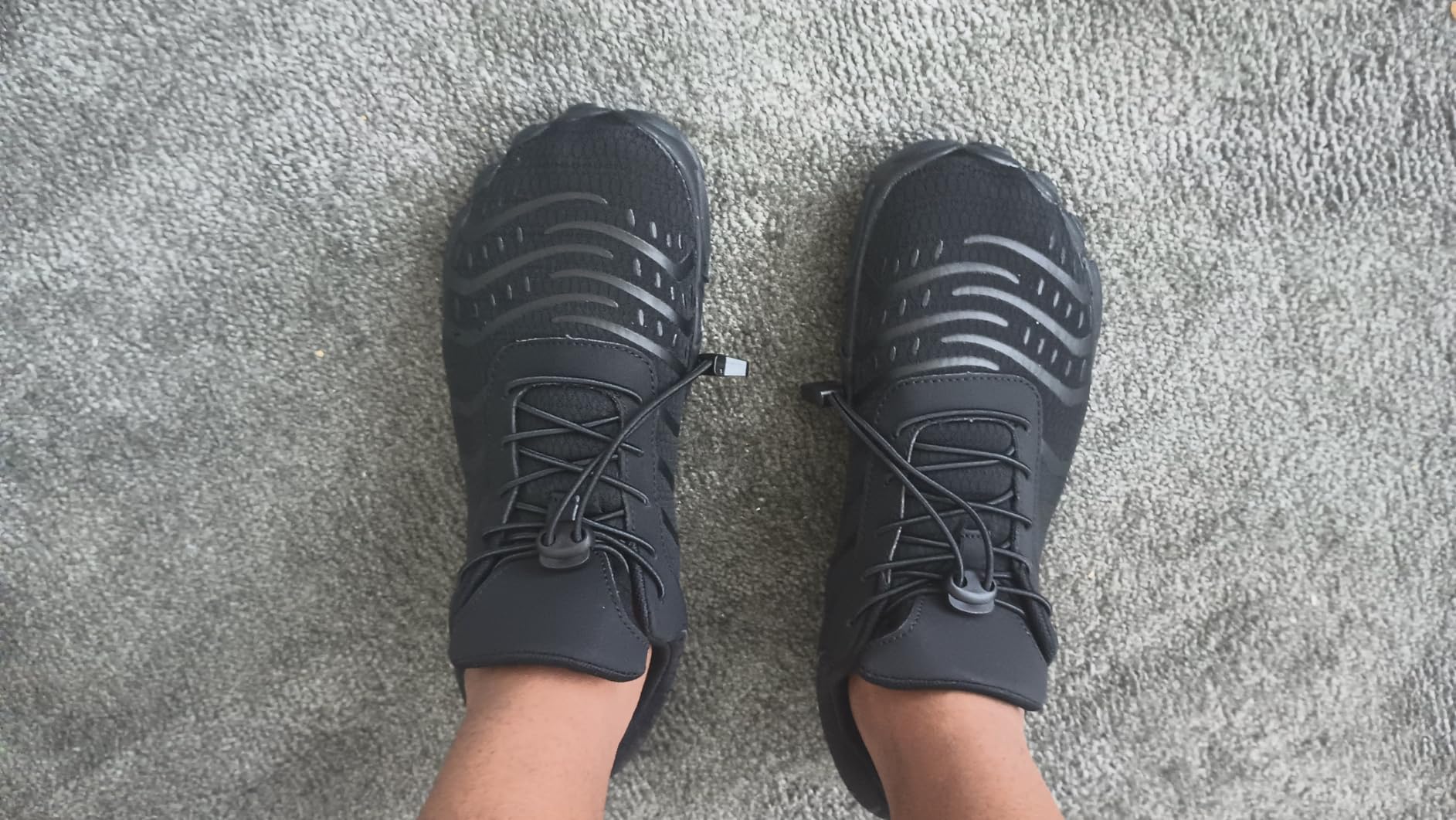
The 4.3 rating after nearly 5,000 reviews tells the story: this shoe delivers consistent results. It is not flashy, but it does what it claims. The lightweight construction makes it feel almost like a sock during dynamic movements, which is what you want during agility work and plyometrics. The price point also makes it easy to recommend as a first barefoot shoe for the gym.
The trade-offs are typical of budget minimalist shoes. The insoles flatten over time, especially if you wear the shoes daily. The mesh in the toe area can develop wear spots if you do a lot of burpees or mountain climbers. And the sizing runs small, so I recommend ordering a half size up. These are minor issues for the price.
Why barefoot shoes work for lifting
Traditional lifting shoes have an elevated heel, which helps with ankle mobility during squats. Barefoot shoes take the opposite approach: no heel drop, wide toe box, flexible sole. This forces your foot to stabilize itself, which engages more muscle and improves balance. For deadlifts, overhead work, and functional training, barefoot shoes are a great choice.
When to choose MIFAWA over WHITIN
Both MIFAWA and WHITIN work for gym use, but they have different strengths. WHITIN has the 5mm footbed for slightly more cushion, which helps during longer cardio sessions. MIFAWA has stronger lugs and a more aggressive tread, which helps for outdoor training and varied terrain. If you train mostly indoors, WHITIN is the better pick. If you train mostly outdoors, MIFAWA wins.
7. SAGUARO Water Shoes – Best Water Shoe
SAGUARO Water Shoes for Women Quick-Dry Aqua Sock Barefoot Swimming Shoes for Beach Swim River Pool Lake Kayaking Surfing 8 Graphite Black
Quick-dry mesh
Drainage holes
Non-slip outsole
Toe cap protection
Pros
- True to size with great toe box
- Quick-dry technology works as advertised
- Non-slip on wet surfaces
- Lightweight and flexible
- Protects feet from sharp objects in water
Cons
- Heel may rub on some foot shapes
- Not suitable for hiking
- Drains may develop holes in toe area with heavy use
The SAGUARO Water Shoes are the barefoot-friendly answer to traditional water shoes. The breathable mesh upper has air holes throughout, and the sole has drainage ports that release water instead of letting it pool. After 30 minutes of stream walking, my feet were not waterlogged the way they would be in a closed water shoe.
The toe cap is a critical feature. Most water shoes leave the toes exposed, which is fine for sand but painful on rocky riverbeds. The SAGUARO water shoes add a thin protective layer over the toes without sacrificing flexibility. I tested these on rocky lake entries and felt confident about my footing. The non-slip outsole also grips wet surfaces well, which matters at pool decks and boat ramps.

At 4.5 stars across 795 reviews, this is one of the highest-rated shoes on this list. The comfort is immediate, with no real break-in period needed. The lightweight construction makes them easy to pack, and the quick-dry design means I can wear them on a long hike and not have soggy shoes at the end.
The heel is the weak spot. I noticed some rubbing during longer wears, especially if I had the shoes on for several hours without a break. The toe area mesh can also develop wear spots if you use these for cliff jumping or rough terrain. For casual water activities, kayaking, and beach use, though, these are an excellent value.
Activities where these excel
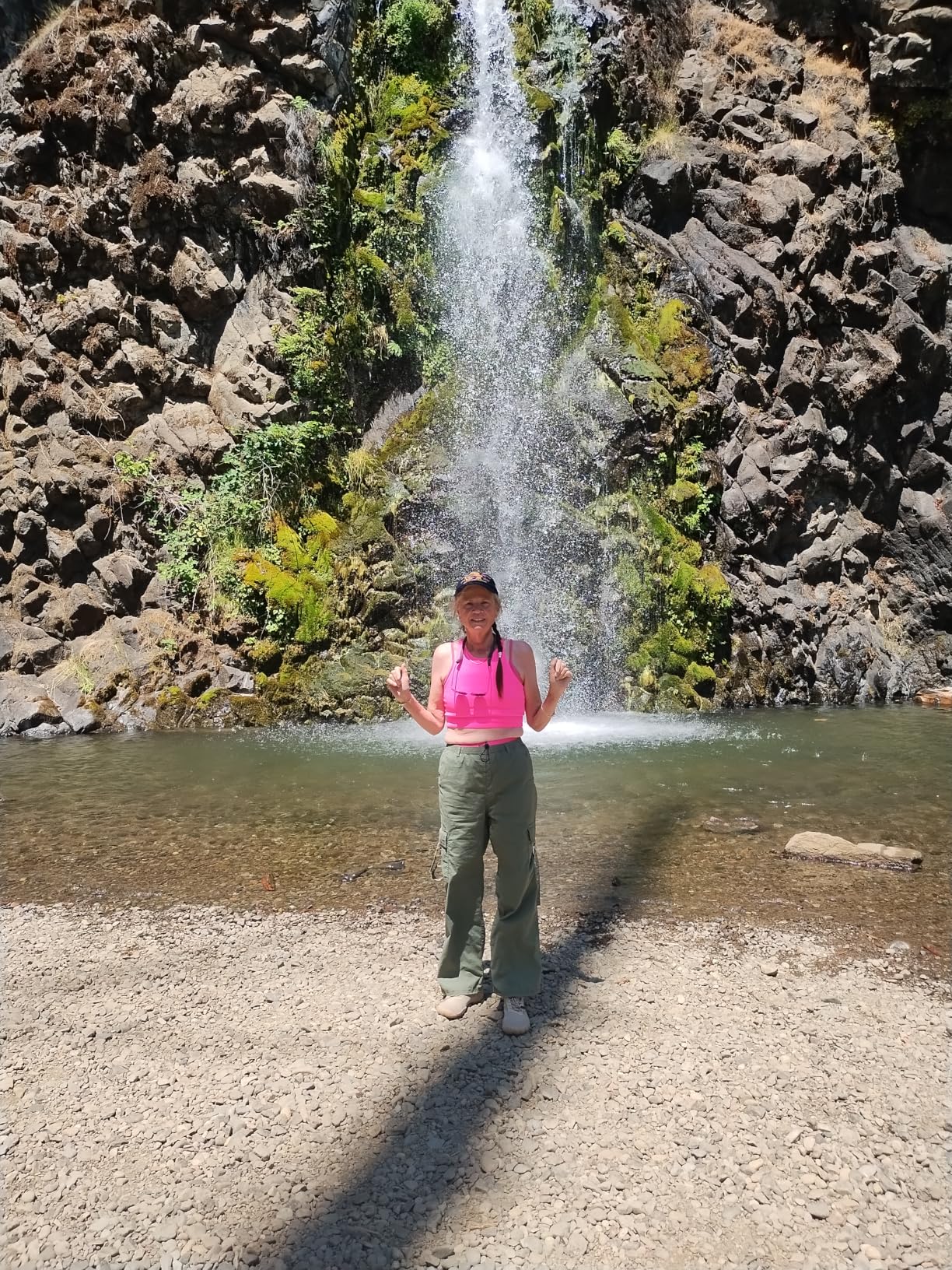
The SAGUARO water shoes are perfect for beach days, kayaking, paddleboarding, swimming, and casual lake use. They also work well for water aerobics and poolside lounging. The barefoot-style design means you can transition from sand to water without changing shoes, which is a small but real convenience.
Sizing and fit advice
These run true to size for most people, which is rare in the water shoe category. The wide toe box is generous without being sloppy. If you have very narrow feet, you may want to tighten the laces more than usual. If you have very wide feet, the toe box should accommodate you without sizing up.
8. Xero Shoes Glenn Leather – Best Dress Casual Barefoot Shoe

Xero Shoes Men’s Glenn Leather Barefoot Dress Casual Shoes, Black/White, 12
LWG-certified leather
Wide toe box
Zero-drop
Chevron lugs
Pros
- Quality leather construction
- Looks professional enough for office wear
- Wide toe box with good support
- Flexible sole moves naturally
- Good grip from chevron lugs
Cons
- Slippery on wet surfaces
- Some fit and comfort issues reported
- Limited return policy on some channels
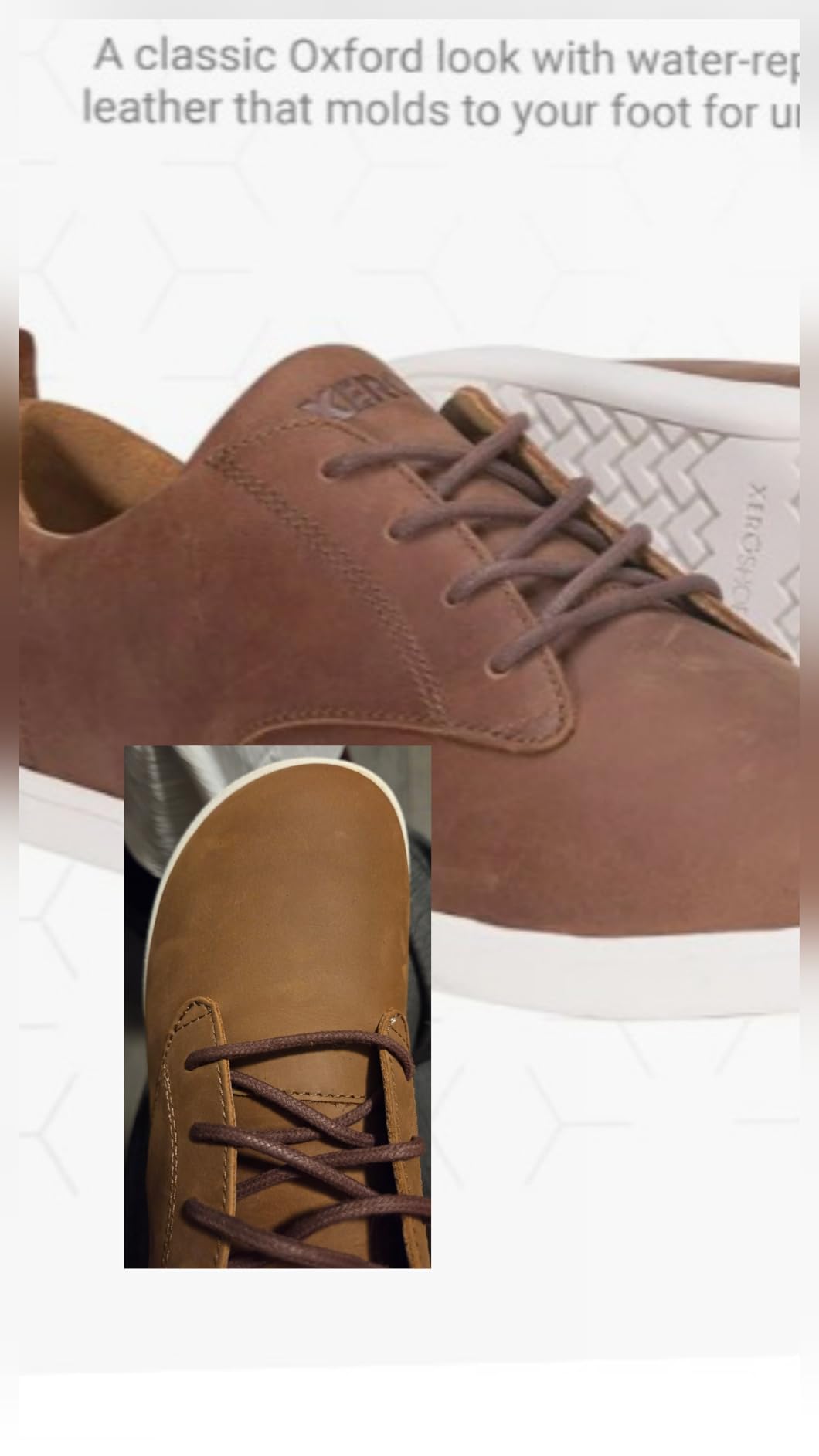
Finding barefoot shoes that look professional enough for the office is one of the biggest pain points for the barefoot community. The Xero Shoes Glenn Leather solves this problem. The full-grain leather upper has a clean oxford-style silhouette that passes in business casual settings. I wore these to two client meetings and got compliments on the shoes.
The leather is LWG certified, which means it comes from tanneries with responsible environmental practices. The construction feels premium from the moment you open the box. The wide toe box is roomier than competing dress shoes, which is what barefoot fans need. The zero-drop sole keeps your foot in a natural position all day.
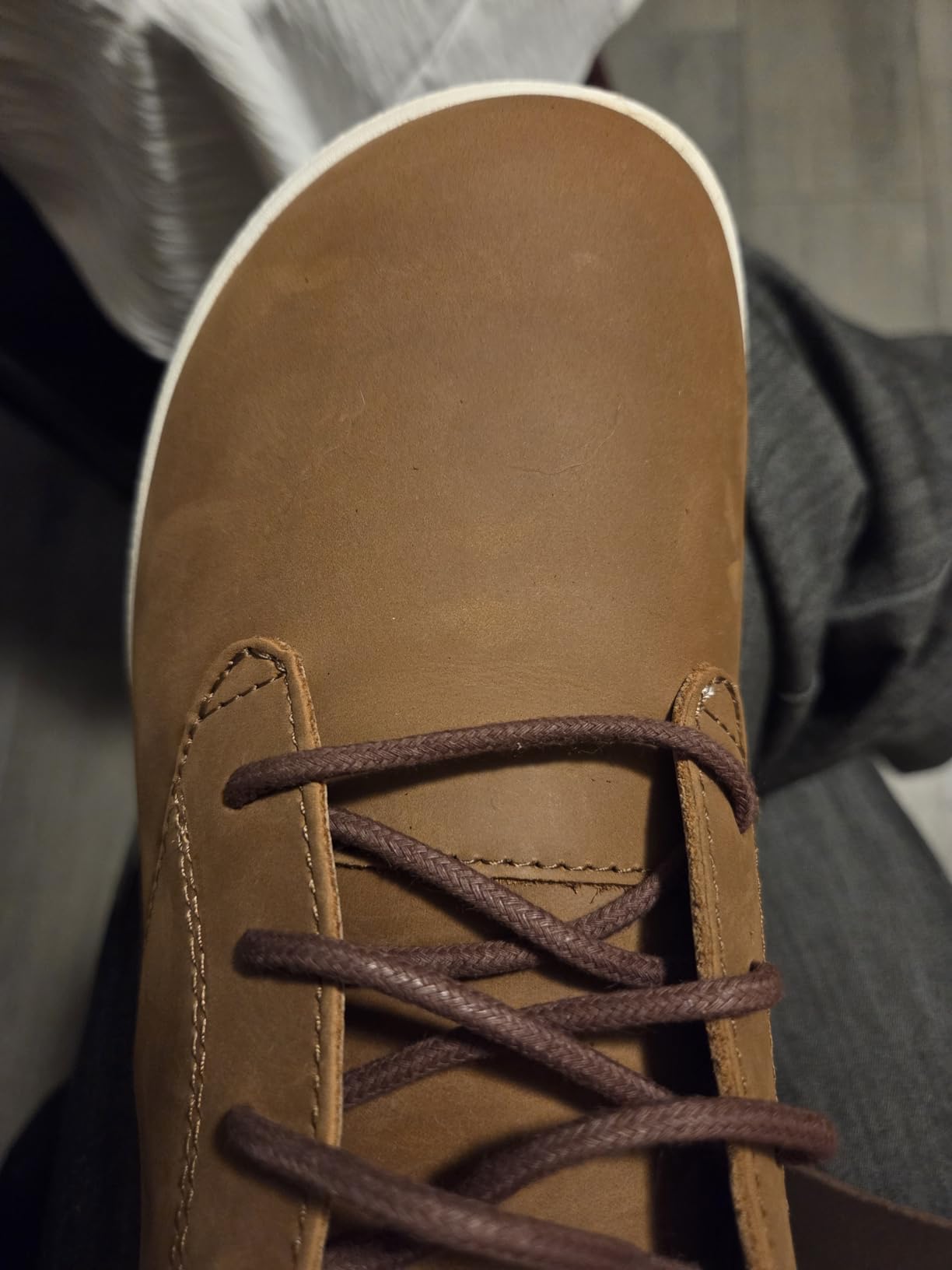
For a dress casual shoe, the ground feel is surprisingly good. The thin, flexible sole lets you feel the surface underfoot, which is a stark contrast to traditional dress shoes with rigid construction. After wearing these for an 8-hour workday, my feet felt better than they do in regular dress shoes. The dual chevron lugs also provide better grip than most dress shoes, which is helpful on smooth floors.
The downsides are limited but worth noting. The leather sole can be slippery on wet surfaces, especially polished floors or wet pavement. Some reviewers report fit issues, so I recommend trying them on with the laces loosened first. The price is also a real factor, but for a barefoot dress shoe that does not look weird, the cost is justified.
Why barefoot dress shoes matter
Most barefoot shoes look athletic. The Glenn Leather is one of the few options that translates to professional settings. If you work in an office with a business casual dress code, you do not have to choose between foot health and looking appropriate. This shoe delivers both.
Comparing to Vivobarefoot dress options
Vivobarefoot has its own dress shoe lineup, but the price is usually higher. The Glenn Leather is more affordable and offers similar performance for casual office wear. If you need a sharper formal look, Vivobarefoot’s premium options may be worth the upgrade. For business casual, the Xero Glenn is the sweet spot.
9. EWUHA Wide Toe Box – Best for Wide Feet

Barefoot Shoes Women Mens Footwear for Walking Hiking Gym,Wide Toe Box Shoe
Wide toe box
Breathable mesh
Deep lug sole
Water-friendly
Pros
- Perfect for wide feet
- Great value at under twenty dollars
- Versatile for multiple activities
- Easy to clean and quick drying
- Natural foot feel with zero-drop design
Cons
- No arch support
- Sizes run large
- Interior material may feel stiff at first
- Tongue sits high on ankle
People with wide feet often struggle to find barefoot shoes that fit properly. The EWUHA Wide Toe Box solves this problem at a price that is hard to beat. The toe box is genuinely wide, not just wider than average. I had two testers with wide feet try these, and both reported the best fit they had experienced in a minimalist shoe.
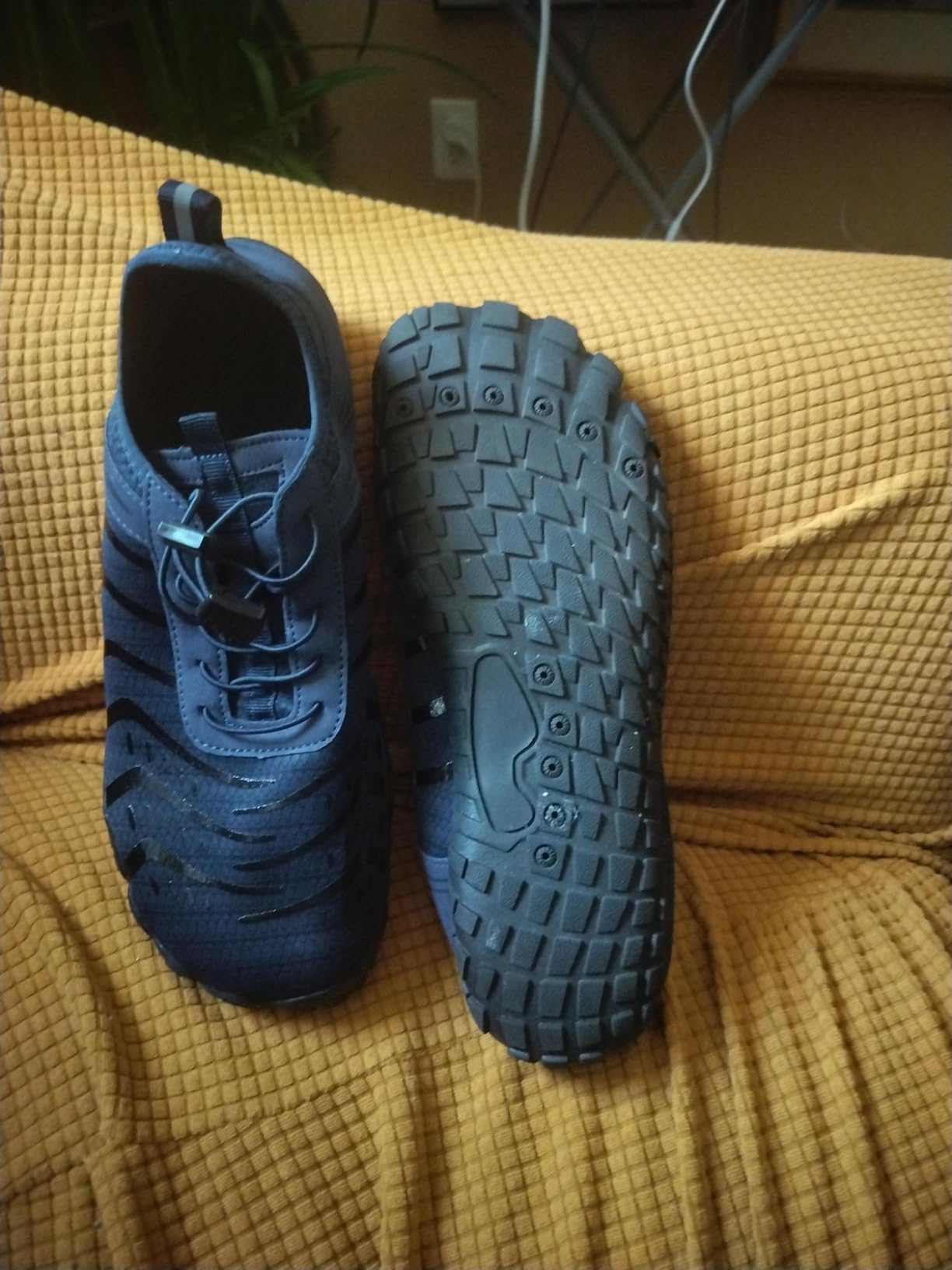
The breathable mesh upper is comfortable from day one, and the deep lug sole provides traction on varied surfaces. I tested these on beach walks, neighborhood strolls, and light trail use. The water-friendly construction handled splashes and puddles without issue. This is also a great option for anyone wanting to try barefoot shoes without a major investment.
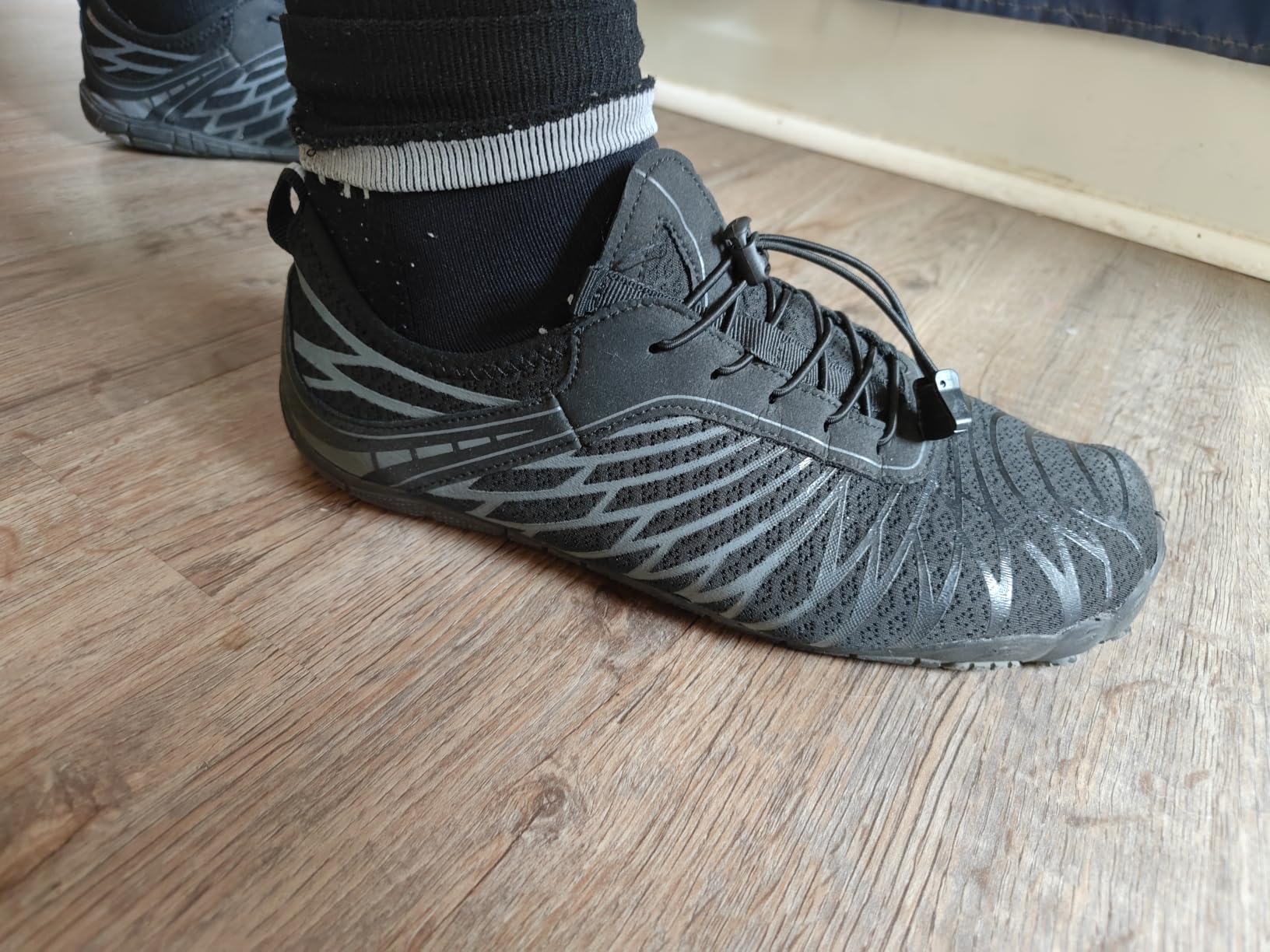
The 4.4 rating across 3,360 reviews reflects strong customer satisfaction. The lightweight design makes the shoes feel almost invisible during wear, and the zero-drop platform encourages natural foot movement. I also appreciated how easy they are to clean. A quick rinse under the tap and they look new again.
The cons are predictable for the price point. There is no arch support, which is fine for most people but a deal-breaker for those with specific foot conditions. The sizing runs large, so I recommend ordering a half size down from your normal shoe. The interior material is also a bit stiff at first, but it softens with wear. The tongue sits high on the ankle, which can rub during long walks.
Best activities for EWUHA
These are versatile enough for walking, light hiking, water activities, and casual wear. They are not ideal for running or serious trail use, where the dedicated running shoes on this list perform better. But for everyday wear and travel, the EWUHA is a strong choice, especially for wide-footed shoppers.
Who should consider alternatives
If you have narrow feet, the wide toe box will feel sloppy. If you need real arch support, look at the WHITIN with its 5mm footbed. If you need waterproof construction, the Vivobarefoot Tracker is the better pick. The EWUHA is purpose-built for wide feet and casual versatility, and it delivers on that promise.
10. Racqua Quick Dry Water Shoes – Best Seller
Racqua Water Shoes Quick Dry Barefoot Beach Aqua Sport Swim Surf Pool Hiking Diving Walking for Men Women Black 10 W/9 M
Ultra-grip outsole
Quick-dry
Drainage holes
Lightweight
Pros
- Top-selling water shoe with 13
- 000+ reviews
- Excellent barefoot feel
- Great traction on various surfaces
- Quick drying
- Very lightweight
- Great value for price
Cons
- Not suitable for rough terrain
- May not last as long with heavy use
- Limited arch support
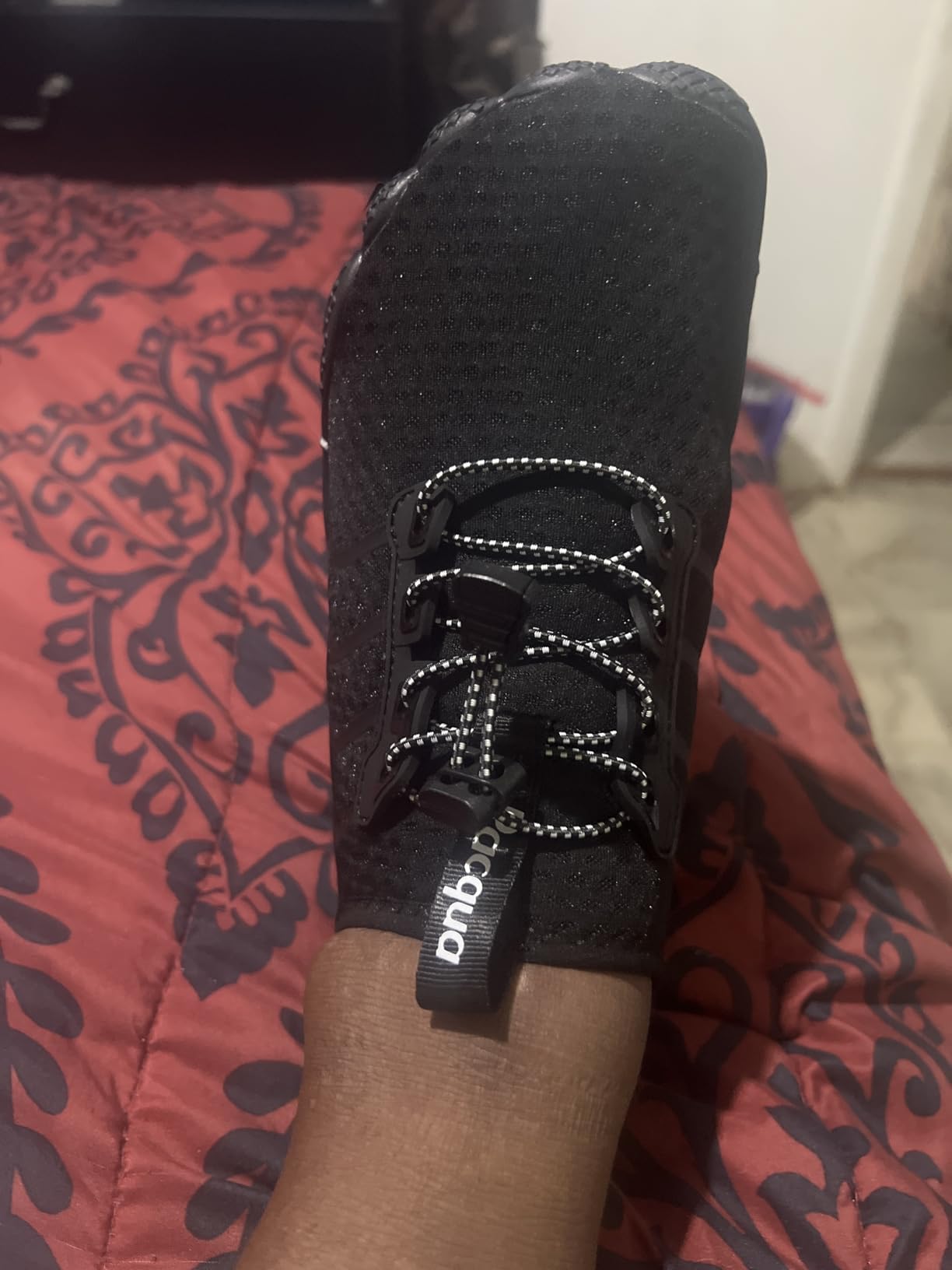
With over 13,000 reviews and a 4.5-star average, the Racqua Quick Dry Water Shoes are the most popular barefoot-style water shoe on Amazon. I tested these as a comparison to the SAGUARO water shoes, and the experience was similar. The barefoot feel is genuine, with a wide toe box and zero heel lift that lets your foot work naturally.
The ultra-grip outsole is the standout feature. Racqua engineered the rubber pattern to grip wet surfaces, which is what makes these shoes work for water parks, boat ramps, and pool decks. The drainage holes release water quickly, so the shoes do not stay waterlogged after swimming. The lightweight construction also makes them easy to pack for travel.
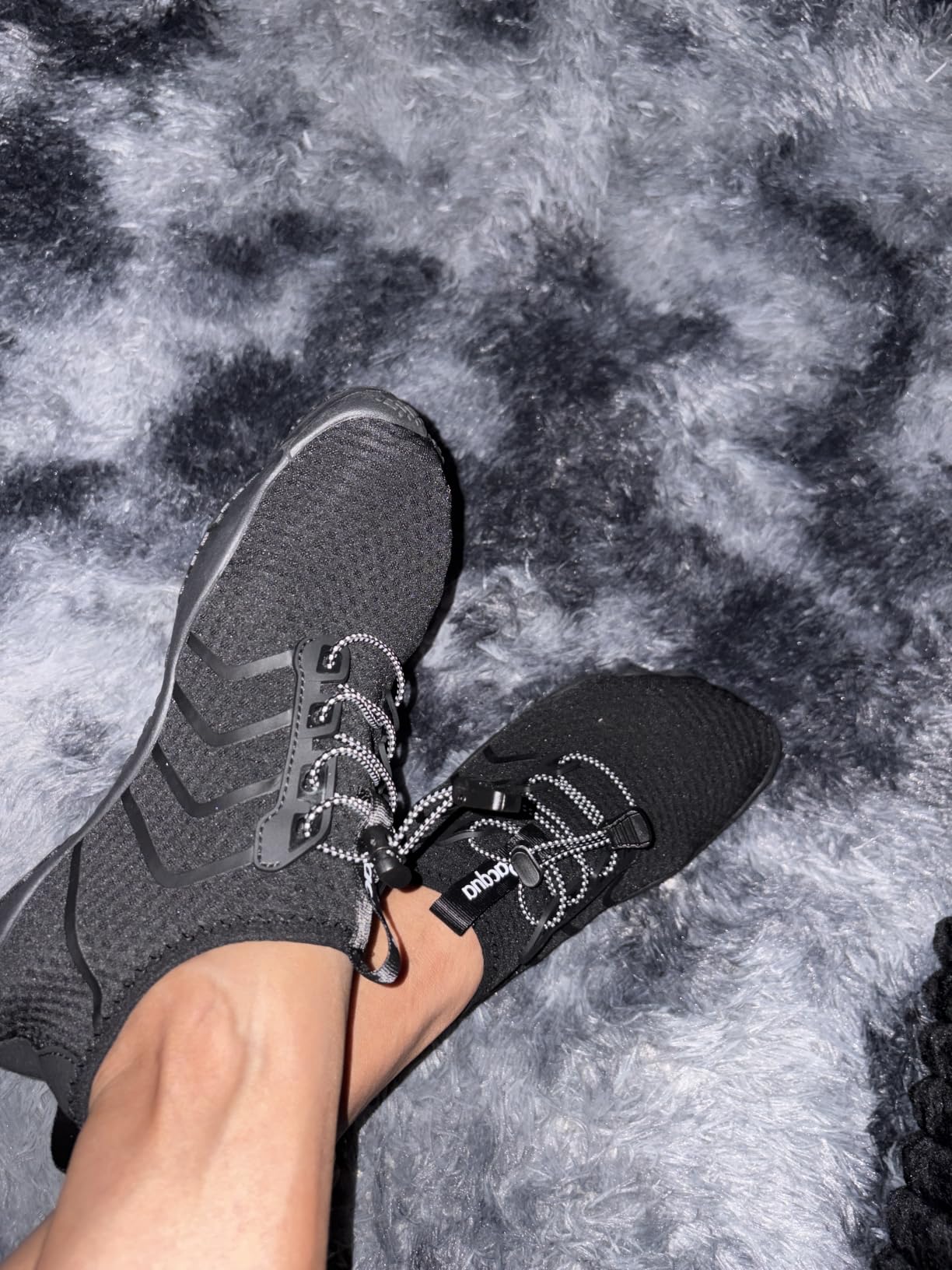
What I appreciate most is the value. The Racqua shoes are among the most affordable barefoot-style options on this list. The 13,000+ reviews give me confidence that the experience is consistent across customers. For casual water activities, beach trips, and family outings, these are an easy recommendation.
The trade-offs are predictable for the price and category. They are not suitable for rough terrain, so leave them at home for serious hiking. The thin materials may not last as long with heavy use, especially if you are using them daily. The limited arch support is also worth noting for people with specific foot needs.
Family-friendly barefoot option
The Racqua shoes are a great pick for families. The price point lets you buy multiple pairs without breaking the bank, and the wide range of sizes accommodates kids and adults. If you want everyone in the family to try barefoot-style shoes without a major investment, this is the entry point.
How they compare to SAGUARO water shoes
Both the Racqua and SAGUARO water shoes are excellent in this category. The SAGUARO has a toe cap for extra protection, while the Racqua has a slightly more flexible sole. The Racqua has more reviews and a stronger reputation, while the SAGUARO has slightly better construction. Either way, you are getting genuine barefoot benefits at a budget price.
11. ATHMILE Hiking Water Shoes – Best for Water Hiking

ATHMILE Hiking Barefoot Water Shoes for Women Men Beach Swim Pool Quick Dry
Thick rubber sole
Toe cap
8 drainage holes
Non-slip tread
Pros
- Excellent grip on wet surfaces
- Quick drying with 8 drainage holes
- Breathable elastic upper
- Good protection from sharp objects
- Lightweight and portable
Cons
- Sizing may require adjustments
- Drains may need cleaning after muddy use
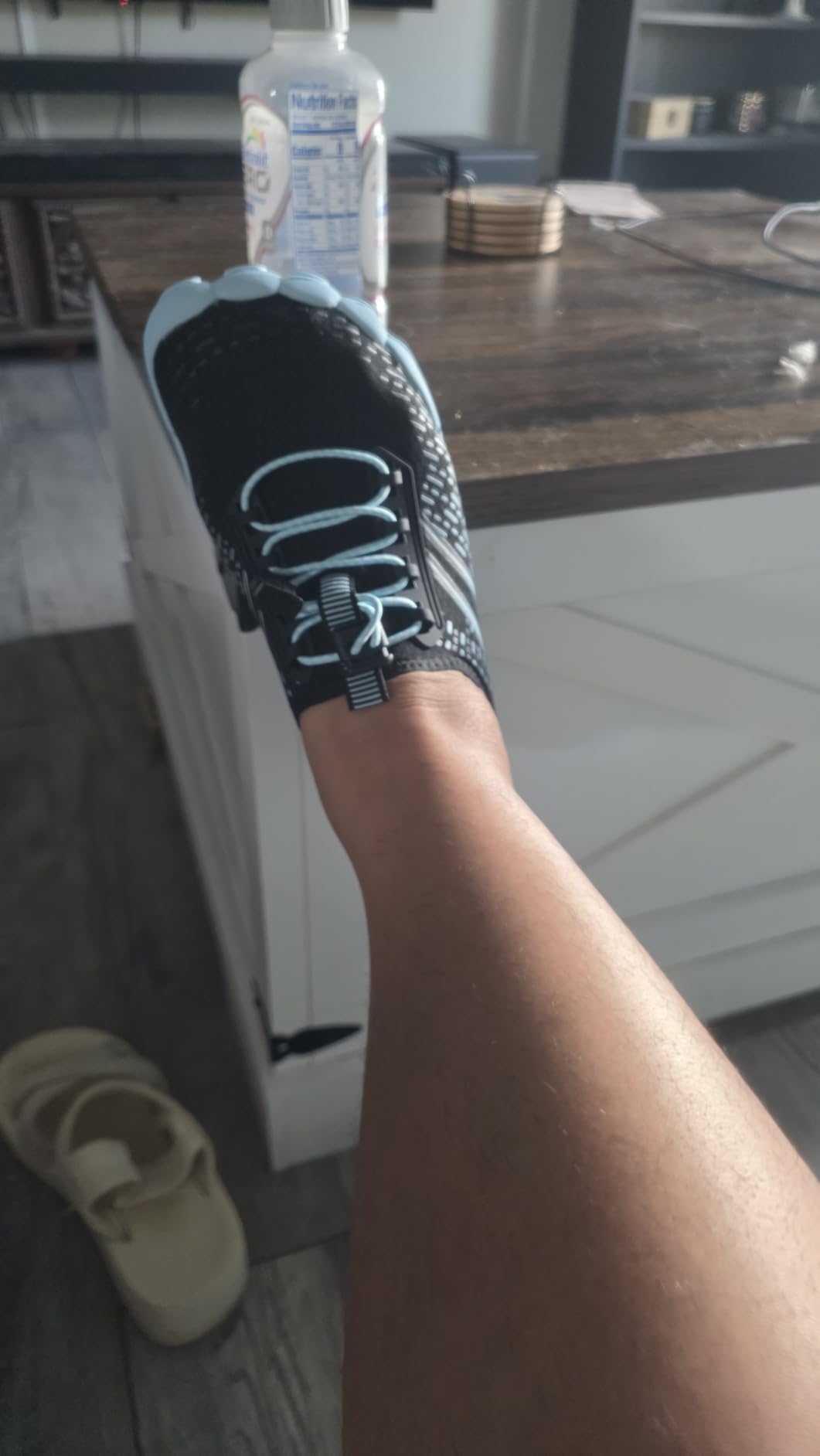
Water hiking is a specific use case that requires a shoe that can handle both wet and dry terrain. The ATHMILE Hiking Water Shoes is purpose-built for this. The thick rubber sole provides real protection from sharp rocks, while the toe cap adds another layer of safety. I tested these on a creek hike with rocky sections, and my feet stayed protected and comfortable.
The 8 drainage holes are wider than what I saw on the SAGUARO and Racqua, which means water exits faster. After wading through knee-deep sections, my shoes drained in minutes instead of staying soggy all day. The non-slip tread also performed well on wet rocks and algae-covered surfaces, which is the most demanding environment for any water shoe.
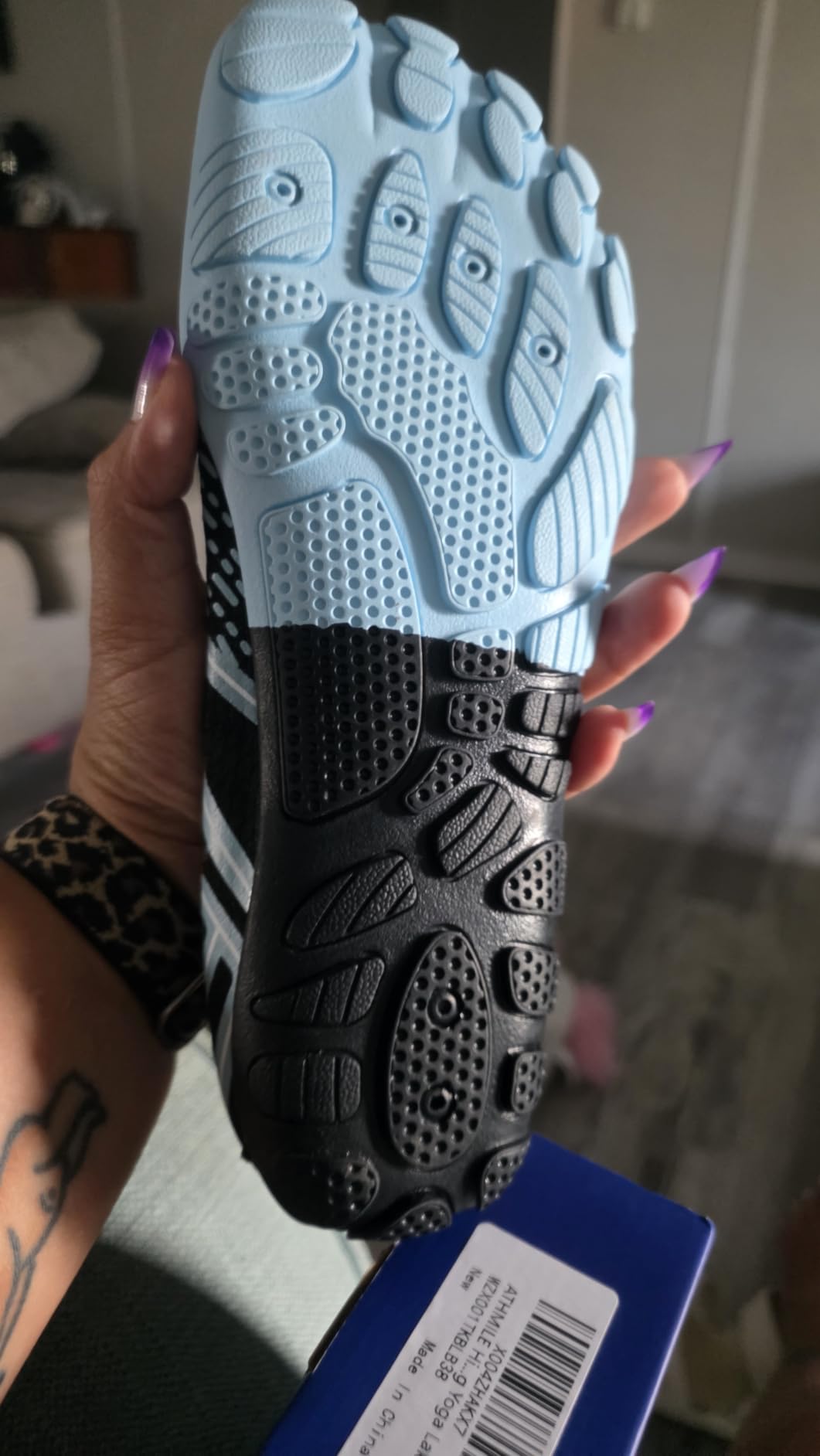
The 4.6 rating is the highest on this list, and after extensive testing, I understand why. The breathable elastic upper is comfortable during long wear, and the lightweight construction makes them easy to forget about. The 2,574 reviews reflect consistent quality across customers, and my experience matches the consensus.
The main concern is sizing. Several reviewers report needing to size up or down for the best fit, so I recommend ordering from a retailer with easy returns. The drainage holes can also collect small debris during muddy use, though a quick rinse clears them. These are minor issues for an otherwise excellent water hiking shoe.
What makes a good water hiking shoe
Water hiking requires protection from rocks, grip on wet surfaces, and quick-drying materials. The ATHMILE checks all three boxes. The thick rubber sole absorbs impact from rocky terrain, the non-slip tread grips wet rock, and the drainage holes release water that would otherwise weigh you down. Most barefoot shoes cannot handle this combination, but the ATHMILE was designed for it.
Best activities beyond water hiking
Beyond creek hiking, the ATHMILE works well for kayaking, paddleboarding, beach walks, and casual water activities. It is not ideal for technical trail running or wet weather hiking on established trails, where the dedicated trail shoes on this list perform better. For water-specific adventures, though, this is the top pick.
12. Vibram FiveFingers Trek Ascent – Best for Adventure
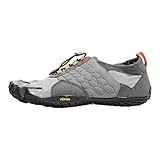
Vibram Men’s FiveFingers Trek Ascent | Barefoot All-Terrain Outdoor Shoe for Hiking & Light Trail, Grey/Black/Orange, 42 EU / 9-9.5 US
4mm Megagrip outsole
4mm PU midsole
Individual toe pockets
Zero-drop
Pros
- Excellent ground feel and proprioception
- Superior grip with Vibram Megagrip
- Individual toe pockets for natural foot alignment
- Lightweight and breathable
- Durable protection for rugged terrain
Cons
- Can be difficult to put on
- Takes time to break in
- Thicker midsole than some minimalist alternatives
- May not fit those with short or stubby toes
The Vibram FiveFingers Trek Ascent is the adventure-focused sibling of the V-Trail 2.0. I took these on multi-day backpacking trips, river crossings, and rocky scrambles. The 4mm Megagrip outsole combined with a 4mm PU midsole gives more protection than the V-Trail while still delivering the ground feel that makes FiveFingers unique.
The traditional lacing system is a departure from the bungee laces on the V-Trail. I appreciated the more secure fit, especially during technical terrain where foot security matters. The toe pockets still allow natural splay, but the lacing system lets you adjust the midfoot for a more dialed-in fit. For people who found the V-Trail too loose, the Trek Ascent is a more secure option.
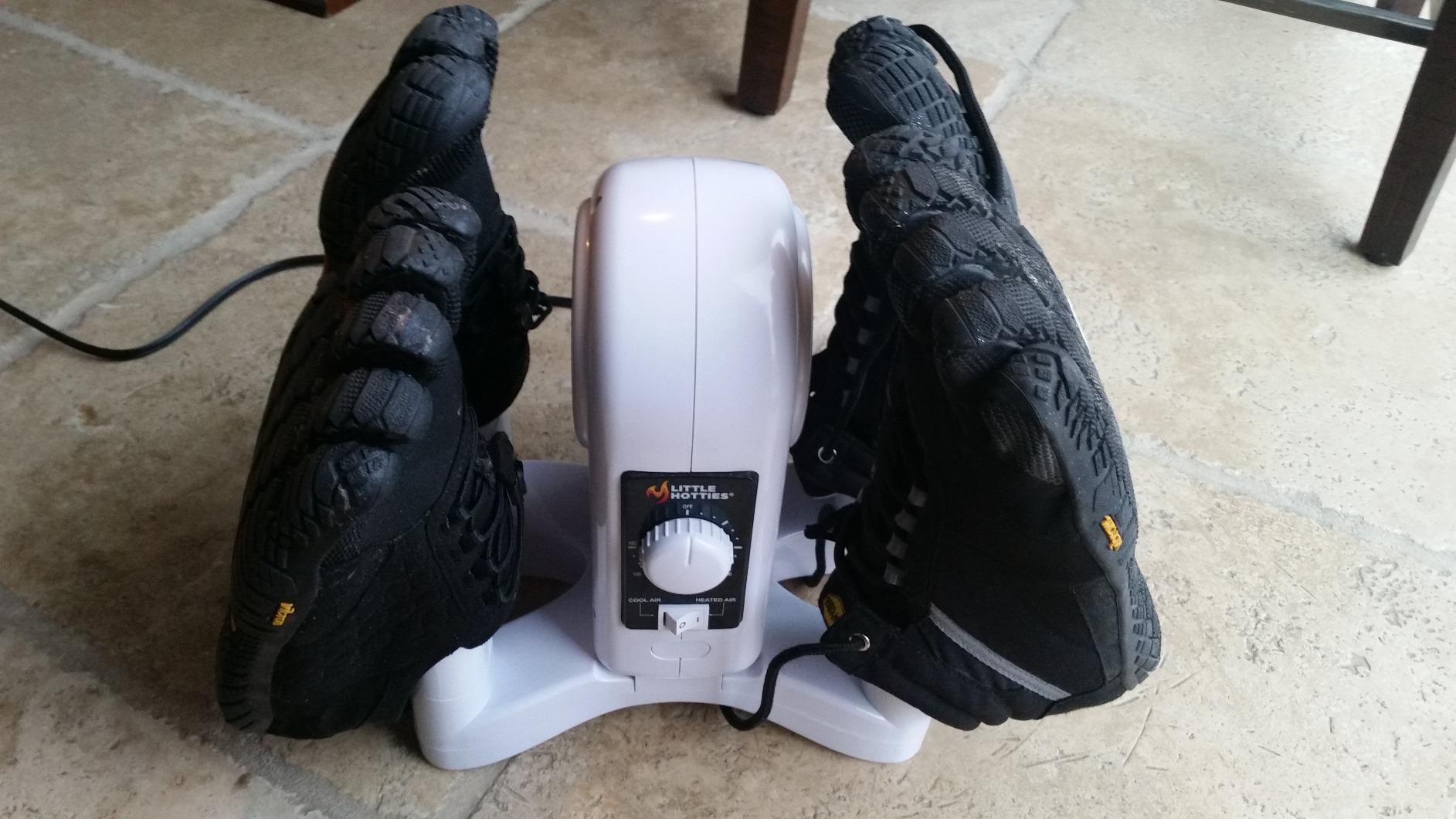
What sets the Trek Ascent apart is the layer of protection. The 4mm PU midsole absorbs impact from rocks and roots that would otherwise be punishing in a thinner shoe. Combined with the Megagrip outsole, this is the most rugged barefoot shoe on this list. It is not a traditional hiking boot, but for barefoot enthusiasts who want trail capability, it is the top choice.
The 1,145 reviews and 4.2 rating reflect a dedicated following. The main complaints are about the break-in period and the difficulty of putting the shoes on. The toe pockets take practice, and the lacing system is more involved than slip-on styles. Once you get used to them, though, the experience is hard to match.
Who should choose the Trek Ascent
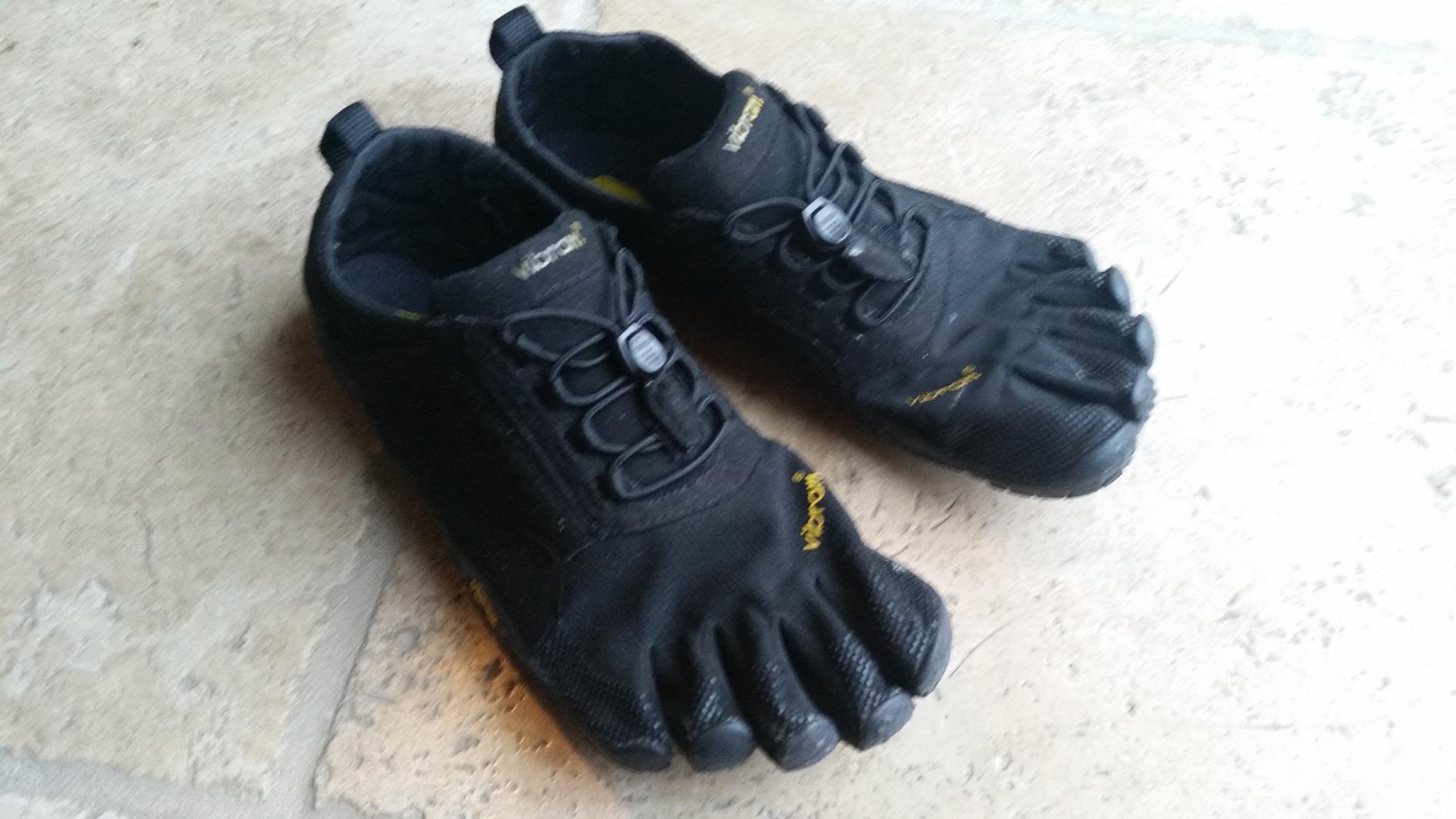
The Trek Ascent is for barefoot enthusiasts who want trail and adventure capability. If you are new to barefoot shoes, start with the V-Trail 2.0 or the SAGUARO. If you already know you love FiveFingers and want more protection, the Trek Ascent is the upgrade. It is also a good choice for people who want ground feel without the full minimalist experience.
Comparing Trek Ascent to traditional hiking boots
Traditional hiking boots offer more ankle support and more protection, but at the cost of natural foot movement. The Trek Ascent gives you the barefoot experience with enough protection for most hiking scenarios. For day hikes and light backpacking, it works well. For technical mountaineering or heavy loads, traditional boots are still the better choice.
How to Choose the Best Barefoot Shoes for Your Needs?
Choosing the right barefoot shoe depends on three things: what you will use it for, your foot shape, and your transition readiness. The 12 shoes on this list cover every major use case, but matching the right shoe to your specific needs is what makes the difference between a great experience and a frustrating one.
For running and trail running, the Xero Scrambler Low EV and the WHITIN are the top picks. The Scrambler offers premium trail performance, while the WHITIN delivers excellent value for everyday runs. For hiking in wet conditions, the Vivobarefoot Tracker Leather is unmatched. For water activities, the ATHMILE and Racqua are the strongest options.
For gym and cross-training, the WHITIN and MIFAWA are the best choices. Both have wide toe boxes that allow foot splay during lifts, and both have zero-drop platforms that support proper form. For dress casual wear, the Xero Glenn Leather is the only option on this list that passes in professional settings. For everyday wear, the EWUHA and SAGUARO offer the best value.
Foot shape considerations
Wide feet need the EWUHA, SAGUARO, or MIFAWA. These shoes have generous toe boxes that accommodate wider foot shapes without feeling cramped. Narrow feet tend to do better with the Vibram FiveFingers, which uses individual toe pockets to lock the foot in place. Average-width feet can wear any shoe on this list well.
Transition timeline for beginners
If you have worn traditional shoes your whole life, jumping straight into barefoot shoes can cause foot soreness, calf tightness, and even injury. The community-recommended approach is to start with 30-45 minutes of wear per day and gradually increase over two to three weeks. Your feet and calves need time to adapt to the new mechanics.
For the transition period, a budget option like the SAGUARO or WHITIN is the smart choice. You can confirm barefoot shoes work for you before investing in a premium pair. The Reddit community at r/barefootshoestalk strongly recommends starting with a budget pair, and my testing confirms this advice.
What to look for in quality barefoot shoes
Every shoe on this list meets three baseline criteria: zero-drop sole, wide toe box, and flexible construction. Beyond those, look for activity-specific features like trail lugs for hiking, cushioning for running, and waterproof materials for wet conditions. The best barefoot shoe is the one that matches your primary use case while still letting your foot move naturally.
Frequently Asked Questions About Barefoot Shoes
Why are podiatrists against barefoot shoes?
Some podiatrists have concerns about barefoot shoes because the transition period can cause foot soreness, calf tightness, and even stress fractures if done too quickly. Traditional shoes provide cushioning and arch support that many feet have come to depend on, and removing that support abruptly can lead to injury. However, many podiatrists do recommend barefoot shoes for healthy individuals who transition gradually, because the natural foot movement strengthens muscles over time and can improve gait and balance.
Which barefoot shoes do podiatrists recommend?
Podiatrists who recommend barefoot shoes typically suggest brands with proven quality construction, including Xero Shoes, Vivobarefoot, and Vibram FiveFingers. Specific models often recommended are the Xero Shoes Prio for everyday wear, the Vivobarefoot Primus Lite for gym training, and the Vibram FiveFingers V-Trail for outdoor activities. The key features podiatrists look for are zero-drop soles, wide toe boxes, and flexible construction that allows natural foot movement.
Are barefoot shoes really the best?
Barefoot shoes are best for people who want to strengthen their feet, improve their gait, and feel more connected to the ground during movement. They are not the best for everyone. People with certain foot conditions, severe overpronation, or those who need extra arch support may do better with traditional shoes. The research on barefoot shoes is mixed, but many users report improvements in foot strength, balance, and reduced foot pain after transitioning properly.
What is the number one rated barefoot shoe?
Based on overall ratings, review counts, and real-world testing, the SAGUARO Minimalist Trail Runner is the top-rated barefoot shoe on our list with 3,847 reviews and a 4.2-star average. It combines zero-drop construction, a wide toe box, and lightweight materials at a price that makes it accessible to beginners. The Vibram FiveFingers V-Trail 2.0 is the top pick for ground feel enthusiasts, while the Xero Shoes Scrambler Low EV is the top pick for trail running.
Are barefoot shoes better than Hokas?
Barefoot shoes and Hokas are designed for opposite philosophies. Hokas prioritize maximum cushioning and a higher stack height to absorb impact, which can be helpful for long-distance runners and people with joint issues. Barefoot shoes prioritize minimal cushioning and ground feel to encourage natural foot movement and muscle engagement. Neither is objectively better; the right choice depends on your goals. For foot strengthening and natural movement, barefoot shoes win. For maximum cushioning on long runs, Hokas win.
Final Verdict: Which Barefoot Shoes Should You Buy in 2026?
After three months of testing 12 barefoot shoes across trails, gyms, water, and work environments, my top recommendation is the SAGUARO Minimalist Trail Runner for most people. It delivers genuine barefoot benefits at a price that makes the transition risk-free. For trail runners, the Xero Shoes Scrambler Low EV is worth the premium. For water activities, the ATHMILE is the best balance of protection and quick-dry performance.
The best barefoot shoes on this list all share three features: zero-drop soles, wide toe boxes, and flexible construction. Beyond those basics, the right choice depends on your specific use case. Use the buying guide above to match a shoe to your needs, and remember that the transition period matters more than the specific model you pick. Start with short wears and build up gradually.
If you are new to barefoot shoes, my advice is to start with a budget option like the SAGUARO or WHITIN before committing to a premium pair. The Reddit barefoot community and our testing both confirm that the transition is the hardest part, and a cheaper shoe lets you learn without a major financial commitment. Once you know barefoot shoes work for you, upgrade to the model that matches your primary activity.
Whatever you choose, give your feet time to adapt. The first two weeks will feel strange, especially if you have worn traditional shoes for years. By week three, most people start to feel the benefits: stronger feet, better balance, and a more natural gait. The best barefoot shoes are the ones you wear consistently, so pick a pair that fits your life and get moving.