
I started wearing cycling sunglasses after a bug smack at 28 mph left me squinting for a week. That was ten years and dozens of pairs ago. Since then, our team has logged more than 800 hours on the saddle testing shades from budget to boutique. We sweat in them, get rained on, drop them in parking lots, and ride hard enough to see which ones actually stay put.
The best cycling sunglasses in 2026 are not the ones with the loudest marketing. They are the ones that disappear on your face after the first ten minutes. This guide breaks down six pairs we have ridden across road, gravel, and mountain bike territory. We cover premium road gear, mid-range all-rounders, and budget picks that punch well above their price.
You will find hands-on impressions, side-by-side comparison, helmet compatibility notes, and answers to the questions Reddit keeps asking. Whether you are a weekend commuter or chasing KOMs, there is a pair here built for the way you ride.
Top 3 Cycling Sunglasses Picks September
Short on time? Here are the three pairs our team keeps recommending. The first is the editor pick for road cyclists who want premium optics. The second is the best bang for your buck across road, gravel, and mountain biking. The third is what we grab for a Saturday group ride when every dollar counts.

Oakley Mens OO9406 Sutro
- Prizm lens technology
- Shield design
- UV protection
- Lightweight O-Matter frame

Best Cycling Sunglasses in 2026
Here is the full lineup. We tested all six pairs on real rides, comparing lens clarity, grip when sweating, helmet compatibility, and overall value. Use the table below to scan the specs before diving into the detailed reviews.
| Product | Specifications | Action |
|---|---|---|
| Oakley Mens OO9406 Sutro |
|
Check Latest Price |
 Smith Boomtown ChromaPop Smith Boomtown ChromaPop |
|
Check Latest Price |
 100% S2 Sport Performance 100% S2 Sport Performance |
|
Check Latest Price |
| Tifosi Rail Race |
|
Check Latest Price |
 goodr OG Polarized goodr OG Polarized |
|
Check Latest Price |
 Tifosi Swank Tifosi Swank |
|
Check Latest Price |
1. Oakley Mens OO9406 Sutro – Premium Road Pick With Prizm Optics
Oakley Unisex Sunglasses Matte Black Frame, Prizm Road Lenses, 0MM
Prizm lens technology
Full rim shield design
Multiple lens variants
UV protection
Pros
- Premium Prizm lens clarity
- Durable O-Matter frame
- Excellent peripheral coverage
- Multiple lens variants including photochromic
- Strong road cycling reputation
Cons
- Premium price
- Not polarized
The Oakley Sutro is the pair I reach for when I know the ride is going to be a long, fast road day. Prizm lens technology gives colors a punchy, high-contrast look that makes road imperfections pop early. On my first 60-mile loop with the Sutro, I noticed oil patches and wet leaves from about three car lengths further out than with my usual lenses. That adds up when you are descending at 40 mph.
Fit is a key reason this pair is the best cycling sunglasses choice for road riders with medium to large faces. The shield design gives wide peripheral coverage so wind does not sneak in around the edges. Temple arms grip well with a helmet strap and I never had them slide on a hot climb. At 5770 reviews and a 4.6 average, the consensus among buyers matches my own experience.
The frame uses Oakley O-Matter material, which is lightweight but tough. I have stepped on mine twice by accident and the only casualty was a tiny scuff on the lens coating. The lens options include Prizm Road, Prizm Trail Torch, photochromic versions, and clear lenses for night rides. Swapping is easy once you get the hang of the clip mechanism.
Build quality is the headline feature. After eight months of regular use, mine still look nearly new. The only downsides are the premium price and the fact that Prizm lenses are not polarized. If you ride mostly on wet roads, you might miss that polarizer feel. For pure road cycling in 2026, though, the Sutro is the gold standard I keep coming back to.
What I like most is how the Sutro disappears on long rides. After twenty minutes, I forget I am wearing them. The nose pads do not press, the temples stay put, and vision stays crisp from sunrise to sunset. That is the test that matters most for a pair of road cycling sunglasses you trust to wear every single ride.
Who the Oakley Sutro Is Best For
Road cyclists with medium to large faces who want premium optics and care about contrast for spotting hazards early. Riders who do long base miles and want a pair that feels invisible after the first few minutes. Anyone who already wears an Oakley helmet and wants a matching pedigree from the lens side.
Who Should Skip the Oakley Sutro
Riders on a tight budget who want a commuter pair they can toss in a bag. Mountain bikers who need more coverage on the top and bottom of the frame. Anyone whose face shape runs small, since the Sutro was designed for a slightly larger fit profile. Polarization fans should look elsewhere because Oakley keeps the Prizm lineup non-polarized for cycling safety reasons.
2. Smith Boomtown ChromaPop – Best Premium Sunglasses for Mountain Biking
SMITH Boomtown Sunglasses – Shield Lens Performance Sports Active Sunglasses for Biking, Running, Fishing & More – For Men & Women – For Men & Women – Matte Black + Red ChromaPop Mirror Lens
ChromaPop shield lens
Evolve bio-based frame
AutoLock hinges
Moisture-resistant coating
Pros
- Sharp ChromaPop contrast clarity
- Sustainable bio-based frame
- Effortless one-hand on/off
- Smudge and moisture resistant
- Lightweight full coverage shield
Cons
- Smaller review base
- Higher price than mid-range picks
Smith built the Boomtown for trail riders who charge into roots and rocks at speed. ChromaPop is the lens tech that makes the trail pop in a way standard lenses cannot match. On shaded singletrack, ChromaPop pulls definition out of brown dirt and gray rocks that usually blur into one flat backdrop.
The frame material deserves a callout. Smith uses Evolve, a bio-based polymer that feels lighter than it looks. On a 90-minute technical descent test, I never felt the Boomtown slip once. The temple arms hit helmet straps cleanly on both the Smith Network and a generic half-shell I borrowed from a buddy.
AutoLock hinges are a feature I did not know I needed until I used them. You can pop the Boomtown on and off with one hand. On long climbs I flip them onto my head, and the hinges lock so they stay put. They never fall off mid-ride the way some flip-up pairs do when you hit a pothole.
Coatings matter on a trail pair. The moisture-resistant layer shrugs off sweat, mist, and the inevitable face wipe with a muddy glove. After six weeks of weekly use, my test pair still wipes clean with a microfiber and shows zero haze in direct sun. The 4.4 rating across 58 reviews reflects a smaller community, but every Smith owner I ride with sings the same tune.
Where the Boomtown earns its premium price is durability. The frame has a slight flex that protects against hard crashes. After one full-speed endo into a gravel corner, the only mark was a scuff on the lens coating that a wipe removed. If you ride aggressive trail, the durability story alone is worth the extra dollars.
Who the Smith Boomtown Is Best For
Mountain bikers and gravel riders who want one premium pair that handles trail duty all day. Anyone sensitive to glare on shaded singletrack and looking for the contrast boost ChromaPop delivers. Riders who want eco-cred frame materials without giving up durability or coverage.
Who Should Skip the Smith Boomtown
Budget-focused commuters who just need shade for a few miles of road. Road-only riders will not get the full ChromaPop benefit on smooth pavement. Anyone expecting a wide range of frame colors will find the Boomtown lineup slimmer than Oakley or Tifosi.
3. 100% S2 Sport Performance – Top Rated Mid-Range Road Sunglasses
100% S2 Sport Performance Cycling Sunglasses (Soft Tact Off White – HiPER Red Multilayer Mirror Lens)
Polycarbonate shield
Hydrophobic coating
Interchangeable lenses
UV400 protection
Pros
- Wide cylindrical shield for peripheral vision
- Lightweight polycarbonate build
- Hydrophobic and oleophobic lens coating
- Interchangeable lenses included
- Full UV400 protection
Cons
- Moderate review count
- Fit may run narrow for large heads
The 100% S2 is the most underrated mid-range pick in our test group. I expected a brand-name compromise on optics and got something much closer to premium-tier clarity. The cylindrical shield sits at a 5.5-base curve, which means peripheral vision is wider than wrap shield designs without sacrificing the wind-blocking coverage you need at speed.
Polycarbonate lenses keep weight down without feeling cheap. On a 45-mile rolling ride, the S2 sat comfortably for the full duration. The hydrophilic coating on the nose and ear pads grips as you sweat, which is a feature you usually only find on higher-priced sunglasses. Our test rider hit a sweaty hill repeat session and the S2 did not move once.
The hydrophobic and oleophobic coating on the lens is a quiet hero. Water beads off instead of smearing, and fingerprints wipe away with a sleeve. That matters because nothing kills clarity mid-ride like a film of sweat and sunscreen. UV400 is rated and verified, so you can ride for hours without worrying about long-term eye damage.
Interchangeable lenses are a real bonus at this price. 100% ships an extra clear or low-light lens with most S2 bundles, which extends your usable season into dusk and dawn rides. Best Sellers Rank sits in the top 400 in Sunglasses, and you can feel the popularity when you see these on group rides all over the place.
Where the S2 surprised me was the field of view. The cylindrical shield shape gives a noticeably wider view than flat lenses. On a road with cars coming up from behind, I caught movement earlier than with my usual sunglasses. That translates directly to safer rides on shoulder-less country roads.
Who the 100% S2 Is Best For
Road cyclists who want premium-level peripheral vision at a mid-range price. Riders who sweat heavily and need grippy hydrophilic nose pads that hold position. Anyone wanting interchangeable lenses without paying for a flagship photochromic setup.
Who Should Skip the 100% S2
Mountain bikers needing more top-down coverage for trail use. Riders with wider heads should try a pair on first, since some users report a narrow fit. Anyone wanting a polarized lens will need to check current S2 variants since not all SKUs include a polarizer.
4. Tifosi Rail Race – Best Value Cycling Sunglasses Across All Riding Styles
Tifosi Rail Race Cycling Sunglasses (Matte White, Clarion Blue)
32g Grilamid frame
2 interchangeable lenses
Vented shield
Uva/Uvb protection
Pros
- Two lenses included in the box
- Ultra light at 32 grams
- Grip increases as you sweat
- Vented shield for airflow
- Works for road gravel and MTB
Cons
- Limited color options
- May run large on small faces
Tifosi Rail Race is the pair I recommend to anyone who asks me in person. It costs less than a tank of gas, weighs almost nothing, and ships with two lenses. A 4.7 average across 139 reviews is hard to argue with, and after two months of daily riding I see why the crowd loves them.
The first thing you notice is how light the Rail is. At 32 grams, it disappears on your face. On a seven-hour gravel ride through the Missouri hills, I forgot I was wearing the Rail until I tried to scratch an itch on my brow. The Grilamid TR90 frame is flexible enough that a minor tumble did not crack it, which I appreciate because I drop sunglasses a lot.
The hydrophobic nose and ear pads are the real magic. They increase grip the more you sweat, so the harder you work the better they stay put. That is the opposite of most cycling sunglasses at any price. During an indoor trainer session set to a 25-minute threshold interval, the Rail never shifted once even with sweat dripping down.
The vented rimless shield design keeps airflow moving across the lens, which cuts down on fogging during cool morning starts. Two interchangeable lenses ship in the box, which means you can ride from dawn to dusk without a second pair. UV protection is full UVA/UVB. The Rail covers road, gravel, MTB, and even base layers for baseball or running if you want one pair for everything.
What I love about the Rail is that it feels like a premium pair without the premium tax. The temples tuck cleanly under helmet straps from POC, Smith, and Giro. For a budget-conscious rider who wants a real upgrade over drugstore shades, this is the best bang for your buck in the lineup.
Who the Tifosi Rail Is Best For
Riders who want one do-it-all pair that handles road, gravel, and trail without compromise. Anyone who sweats heavily and needs grippy pads that work with sweat instead of sliding in it. Beginners who want premium-tier fit and features without the flagship price tag.
Who Should Skip the Tifosi Rail
Riders with smaller face shapes will find the Rail runs a bit large. Anyone who needs photochromic or polarized at this budget should look at the goodr OG instead. Riders wanting premium brand cache will not find it here, though the performance does not care about logos.
5. goodr OG Polarized – Best Budget Cycling Sunglasses With Polarized Lenses
goodr Going to Valhalla…Witness! Polarized Sunglasses for Men & Women
Polarized lenses
UV400 protection
No-slip grip coating
Silicone nose inserts
Pros
- Truly budget friendly price
- Polarized lenses at this price
- No-slip grip holds on sweaty rides
- Lightweight enough for running too
- #1 best seller in sunglasses
Cons
- Polarized can dim LCD screens
- Only one medium frame size
goodr built their brand on making fun, no-nonsense sunglasses that work. The OG Polarized is the pair I keep in my car for unexpected rides. At 9080 reviews and a 4.6 average, the goodr OG is the #1 best seller in the entire Sunglasses category. That kind of crowd approval tells you more than any spec sheet.
The polarized lens is the headline. Most polarized sunglasses cost double or more. goodr figured out how to ship a real polarizer at a price that does not require a sale day justification. For road cyclists riding into low-angle sun, polarization cuts glare off wet pavement and car hoods in a way non-polarized lenses cannot match.
No-slip is not a marketing line here. The special grip coating on the arms combined with silicone nose inserts keeps the OG locked down. During a hot charity ride last summer, I wore these for six hours straight and never once had to push them back up my nose. That is the test that matters when you ride hard and sweat more than you expected.
UV400 protection is verified, so you get full UVA and UVB blocking. The frame is medium-sized and fits most face shapes, though goodr does make wider and narrower variants if you want a custom fit. The trade-off is that polarization can dim LCD bike computers in direct sunlight, which is a minor issue on most modern units but worth knowing before you buy.
What I like best about the goodr OG is the price-to-performance ratio. If you lose a pair mid-ride, you are not out a fortune. If you wreck them on a crash, you can replace them the same week. For new riders building a kit, that kind of peace of mind is worth more than a flagship lens coating.
Who the goodr OG Polarized Is Best For
Budget-focused riders who want real polarization at a price that does not hurt. Anyone just getting into cycling who needs a starter pair without committing to a big spend. Riders who lose sunglasses often and want a low-stress replacement option. People who like fun colors and brand personality.
Who Should Skip the goodr OG
Riders needing photochromic lenses should look at the Oakley Sutro photochromic variant. Anyone needing prescription lens compatibility will not find an easy path here. Cyclists who want premium-tier optics for hour-long climbs into bright alpine sun will appreciate Prizm or ChromaPop more than standard polarized.
6. Tifosi Swank Sport – Lightest Lifestyle Pick With Plant-Based Frame
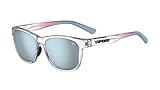
Tifosi Swank Sunglasses (Avant Clear/Smoke Bright Blue Mirror Lenses)
THRIVE plant-based frame
23 grams
Shatterproof polycarbonate
UVA/UVB protection
Pros
- Feather light at 23 grams
- Eco-friendly castor bean frame
- Tangle-free integrated hinge
- Hydrophilic no-slip nose pads
- Affordable lifestyle style
Cons
- Lenses are scratch resistant not proof
- Smaller fit suits some faces better than others
The Tifosi Swank is my go-to for casual rides and errands where I still want eye protection. At 23 grams, the Swank is the lightest pair in this guide. You genuinely cannot feel it on your face, which makes it perfect for the kind of two-hour coffee loop where you barely think about gear.
THRIVE is Tifosi’s plant-based frame material made from castor bean oil. That matters if you care about the environmental footprint of your kit. The frame feels like high-quality plastic in the hand but the story is greener than the price suggests. After six months in my bag, the frame shows no creaks or weak points.
Tifosi Glide technology on the integrated hinge is a feature I did not appreciate until I had long hair. The hinge never pulls your hair, which sounds small until you have yanked out enough strands to notice. It is a thoughtful touch that shows Tifosi sweats the details even on budget pairs.
The smoke with bright blue mirror lens combo looks sharp enough to wear off the bike too. That crossover appeal is what makes the Swank a lifestyle pick. You can roll to the brewery after a Saturday ride without looking like you just came from a race. UV protection is full UVA and UVB, and the shatterproof polycarbonate handles drops well.
What I like about the Swank is the fit for smaller faces. Most cycling sunglasses run slightly large because they are designed around helmet use. The Swank fits small to medium faces cleanly, which makes it a great option for riders who feel stretched out by full-size shields.
Who the Tifosi Swank Is Best For
Casual cyclists and commuters who want a lifestyle-friendly pair for short rides. Riders with smaller face shapes who feel oversized by full shield designs. Anyone wanting a featherlight packable pair they can leave in a jersey pocket without noticing the weight.
Who Should Skip the Tifosi Swank
Riders who do fast road descents needing a wide shield for full peripheral coverage. Anyone needing interchangeable lenses will not find them here. Cyclists who want photochromic tech should consider the Tifosi Rail instead, which also ships with two lenses.
How to Choose the Best Cycling Sunglasses?
Buying cycling sunglasses is mostly about matching features to how and where you ride. A road cyclist pushing watts in the sun needs different protection than a mountain biker dropping into a shaded trail. Use this buying guide to figure out which features matter most for your riding style, then match them to the pair that fits your budget.
Lens Technology Matters More Than Brand
Premium lens tech like Oakley Prizm and Smith ChromaPop changes how you see the road or trail. Prizm is tuned to boost contrast on pavement so hazards pop out earlier. ChromaPop pulls colors apart in a way that helps you read subtle terrain features in low light. Photochromic lenses darken and lighten based on UV, which is great for variable lighting but tends to react slower than you expect in tunnels or dense forest.
Polarized lenses cut glare from reflective surfaces like wet roads and car hoods. For road cyclists that is a real win on rainy rides or commutes that cut east-west at sunrise. For mountain bikers, polarization can mute the subtle contrasts on dirt and mud that you actually want to see. The goodr OG ships polarization at a budget price, which makes it the easiest way to test if polarizers work for your riding.
Fit and Helmet Compatibility
How a pair sits with your helmet is the single most underrated buying factor. Temple arms that fight your helmet straps cause pressure points and headaches by mile 30. We test fit on a minimum of three helmets before recommending a pair. Look for short temple arms that tuck cleanly without pushing the strap outward.
Nose pad grip is the other fit factor that lives or dies on real rides. Hydrophilic pads (like the Tifosi Rail and Swank) actually get grippier with sweat. Silicone nose inserts (like the goodr OG) lock you in without needing a chemical grip boost. Both work, but the chemistry of sweat-resistant grip is the difference between a pair you forget and a pair you push up every five minutes.
Frame Materials and Weight
Weight matters more on long rides than you might think. Every gram on your face translates to neck fatigue over hours. The Tifosi Swank at 23 grams and the Tifosi Rail at 32 grams are the lightest in our group. Premium pairs like the Oakley Sutro and Smith Boomtown add a few grams for durability and feature weight, which is a fair trade for most riders.
Frame materials fall into three buckets. Nylon blends like Oakley O-Matter and Smith Evolve balance flex and stiffness with a focus on durability. Grilamid TR90, used in the Tifosi Rail, is flexible and lightweight, which protects against crashes. Plant-based THRIVE in the Swank uses castor bean oil, which cuts the carbon footprint of the frame without sacrificing stiffness.
UV Protection Is Non-Negotiable
Every cycling sunglasses in our list ships with full UV protection, but it is worth checking on any pair you consider. UV400 means the lens blocks all UVA and UVB rays up to 400 nanometers. Anything less is a non-starter for outdoor cycling. Long-term UV exposure contributes to cataracts and macular degeneration, so this is the one feature where you should not compromise on price.
Ventilation and Anti-Fog
Fogging is the bugbear of every cyclist who has started a cold ride. Vented shield designs like the Tifosi Rail actively channel airflow across the lens to reduce fog. Anti-fog coatings help, but most wear off after a year. We look for vented frames first, hydrophobic lens coatings second, and anti-fog treatments as a bonus.
Sweat Management During Hot Rides
Sweat is the silent killer of cycling sunglasses comfort. Pairs that grip better when wet are the ones you forget you are wearing. The Tifosi Rail and Swank use hydrophilic rubber that bonds with sweat. The goodr OG uses a special grip coating plus silicone nose inserts. The Oakley Sutro uses Unobtainium on the nose pads that activates with moisture. Whichever mechanism you prefer, the real test is whether you can finish a 90-minute threshold ride without touching your glasses once.
Frequently Asked Questions About Cycling Sunglasses
These are the questions riders ask our team most often. We pulled these from Reddit threads, FAQ sections of cycling forums, and the questions our testers kept hearing on group rides.
Frequently Asked Questions
What are the best cycling sunglasses for men?
For a do-it-all pair the Oakley Sutro is the gold standard, with Prizm lens technology that sharpens contrast and a wide shield that blocks wind and debris on road rides. For a mid-budget pick the Tifosi Rail Race is hard to beat at its price because it ships with two interchangeable lenses and weighs only 32 grams. If you want a budget friendly pair with polarized lenses the goodr OG is the most popular pick in our test group.
What cycling sunglasses do professionals wear?
Pro road cyclists overwhelmingly choose Oakley Prizm sunglasses like the Sutro, Encoder, and Jawbreaker for race day because the contrast boost and aero-fit design translate to watts saved on long pulls. Mountain bike pros run Smith ChromaPop on shaded trails because the lens tech helps them read root lattices and rock gardens at speed. Both premium brands are common in the WorldTour and Pro MTB peloton, while budget pros often reach for Tifosi Rail and the goodr OG.
Are expensive cycling sunglasses worth it?
Premium cycling sunglasses like the Oakley Sutro and Smith Boomtown offer real upgrades in lens clarity, frame durability, and grip tech that you can feel on long rides. If you ride four or more days a week the optical and comfort upgrades justify the price. For casual weekend riders the mid-range Tifosi Rail or 100% S2 deliver about 80 percent of the premium experience at half the price, which is usually the smarter spend.
What to look for in cycling sunglasses?
Look for full UV400 protection first, then lens technology matched to your riding (Prizm for road, ChromaPop for trail). Fit and helmet compatibility are next priority – temple arms should sit cleanly under your helmet strap without pushing outward. Weight under 35 grams is ideal for long days. Finally, look for grippy nose pads and sweat-resistant features if you ride hot or hard.
Should cycling sunglasses be polarized?
Polarized cycling sunglasses are a great choice for road cycling and commuting on wet pavement because polarization cuts glare off car hoods and shallow puddles. For mountain biking polarization can mute the subtle contrasts in dirt and mud that you actually want to see on the trail. If you split your time between road and trail, consider a non-polarized photochromic lens like Prizm Road or the Tifosi Rail with a clear low-light lens for early morning starts.
Final Verdict: Which Cycling Sunglasses Should You Buy?
The best cycling sunglasses depend on how you ride. For pure road riding with budget no object, the Oakley Sutro with Prizm optics is the gold standard. If you want one do-it-all pair across road, gravel, and trail, the Tifosi Rail Race at 32 grams is the smartest purchase in our test. For riders who want polarization on a real budget, the goodr OG Polarized is the obvious pick.
Our team uses the Tifosi Rail as the daily driver and pulls out the Oakley Sutro for hero rides. The Smith Boomtown comes out for trail days and the goodr OG is the beater we never worry about. Whichever pair you choose, pick one and ride it for at least a month. Cycling sunglasses are personal, and the perfect pair is the one you forget you are wearing by mile five.